KNIFE STEEL
GUIDE
A practical framework for choosing blade steels by performance, finish, and budget. Optimized for OEM specification.
HOW TO CHOOSE THE RIGHT STEEL
Edge Retention
The ability of the steel blade to hold a sharp edge without frequent resharpening during prolonged use.
Corrosion Resistance
Critical for humid environments or food prep. Determines how well the steel resists rust and staining.
Toughness
Resistance to chipping or breaking under impact. Essential for hard-use outdoor and survival knives.
Grindability & Cost
Balancing ease of manufacturing (finishing) with raw material budget. Key for large-volume OEM projects.
QUICK PICKS
Recommended steels based on typical application scenarios.
EDC & Folding
Balanced Performance
Flagship / Premium
Maximum Retention
Outdoor Fixed
High Toughness
Value / OEM
Budget Friendly
Collectible & Visual
High Aesthetics
Pattern welded steel offering unique visual appeal. Performance depends on the core steel and layer composition.
STEEL COMPARISON MATRIX
Performance ratings based on typical heat treatment.
| Steel Name | Edge Retention | Corrosion | Toughness | Sharpening | Notes |
|---|---|---|---|---|---|
| 14C28N | ● | ▲ | ● | ▲ | Balanced EDC; fine grain; 58-60 HRC typical. |
| 154CM | ● | ▲ | ● | ● | Classic performer for folders. |
| AUS-10 | ● | ▲ | ● | ▲ | Good value stainless for OEM runs. |
| 440C | ● | ▲ | ○ | ▲ | Budget-friendly with good corrosion. |
| D2 | ▲ | ● | ● | ○ | Semi-stainless; strong wear resistance. |
| SK5 / 1095 | ● | ○ | ▲ | ▲ | Carbon steel; great toughness; needs care. |
| M390 | ▲▲ | ▲ | ● | ○ | Premium PM; flagship EDC choice. |
| CPM-20CV | ▲▲ | ▲ | ● | ○ | Crucible counterpart to M390. |
| Damascus | Varies heavily based on component steels | Aesthetic patterns; spec depends on stack. | |||
SURFACE FINISH OPTIONS
Selecting the right finish enhances both the aesthetics and the functional longevity of the blade. We offer a full range of customizations to meet your specific requirements.
Stonewash
A rugged, non-reflective finish that effectively hides scratches. The blade is tumbled with ceramic stones for a matte industrial look.
Satin
The classic knife finish showing fine parallel grit lines. Offers a traditional premium look and reduces glare slightly compared to polish.
DLC Coating
Diamond-Like Carbon coating provides extreme hardness and high corrosion resistance. The premium choice for black tactical blades.
PVD Coating
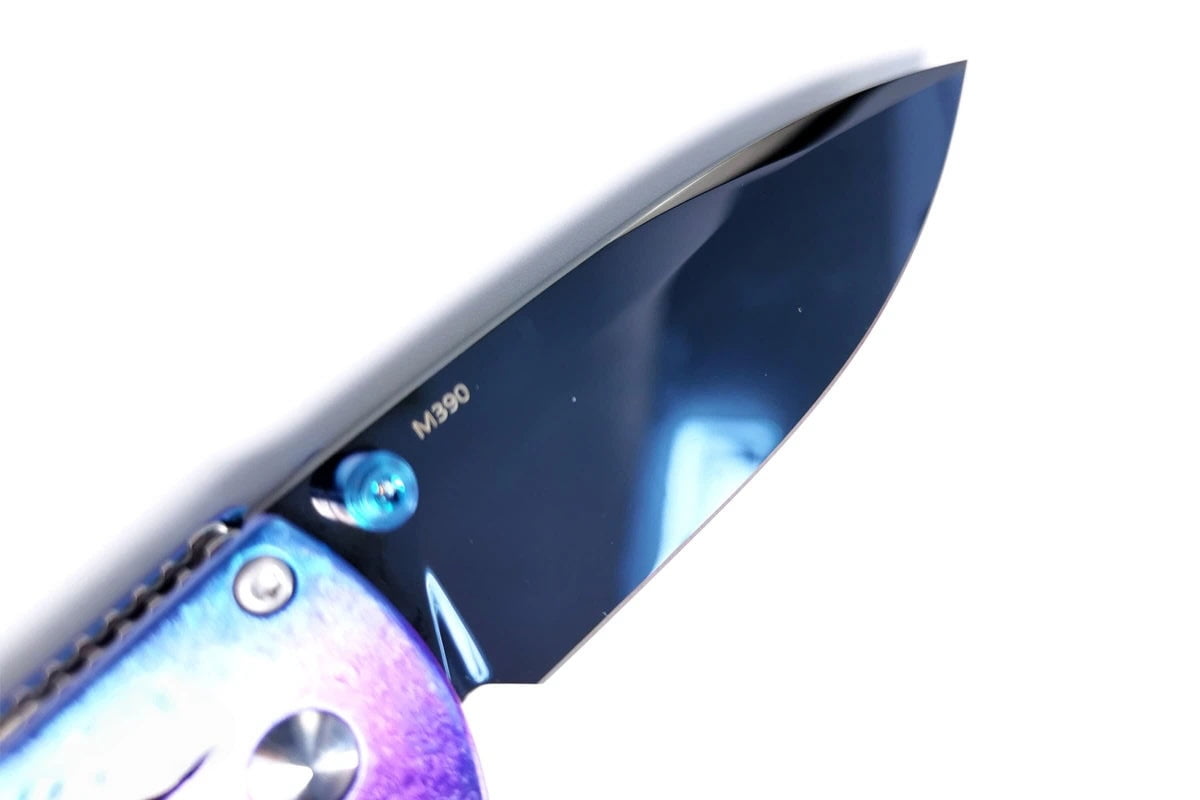
Physical Vapor Deposition creates a durable molecular bond. Available in various colors (black, gold, blue) with excellent wear resistance.
Blackwash
Combines a black coating with a stonewash tumble. Delivers a battle-worn, vintage tactical aesthetic right out of the box.
Mirror Polish
Hand-polished to a highly reflective, mirror-like shine. Offers superior corrosion resistance but requires care to avoid scratches.
FREQUENTLY ASKED QUESTIONS
What is the difference between M390 and 20CV?
They are effectively the same generation of powder metallurgy steel. M390 is produced by Bohler (Europe), while CPM-20CV is produced by Crucible (USA). They share very similar chemical compositions and performance profiles. The real-world difference often comes down to the specific heat treatment and blade geometry applied by the manufacturer.
Which steel is best for coastal or humid environments?
For high humidity or saltwater exposure, stainless steels like 14C28N, 154CM, or premium options like M390/20CV are superior choices due to their high chromium content. If using semi-stainless steels like D2, we strongly recommend adding a protective coating (like DLC or PVD) and regular maintenance.
Ready to spec the right steel for your line?
Leverage our OEM expertise to balance performance, cost, and market demand for your next knife project.