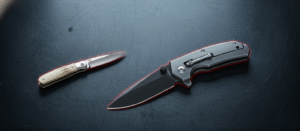
California knife laws confuse even experienced carriers. The state allows many knives but restricts how you carry them. Different rules apply to fixed blades versus folders.
California generally allows fixed-blade and folding knife possession but restricts concealed carry of fixed blades and "dirks or daggers." Folding knives under certain conditions can be carried concealed, while open carry has fewer restrictions statewide.
I've dealt with California compliance for nearly two decades of knife manufacturing. Brands constantly ask me about California-legal designs. The confusion comes from how the state separates possession from carry methods.
Who This Guide Is For (and a Quick Legal Disclaimer)?
This guide helps knife users understand California's complex carry laws. Legal penalties for violations are serious, so accurate information matters.
This guide covers California knife laws for everyday carriers, collectors, outdoor enthusiasts, and businesses. This information is educational only—not legal advice. Consult attorneys for specific legal situations or criminal charges.
I write this from experience manufacturing knives that must comply with California regulations. My customers include retailers, brands, and distributors who sell throughout California. They need clear guidance on what products work legally in the state.
However, I'm not an attorney. Laws change, interpretations evolve, and individual circumstances vary. This guide explains general principles based on current statutes and common enforcement practices.
Use this information as a starting point for understanding California knife law. For specific legal questions, criminal charges, or complex situations, consult qualified legal counsel familiar with California weapon laws.
The stakes are real. California prosecutes knife violations seriously. Felony charges are possible for certain violations. Misdemeanor convictions create criminal records. Even lawful carriers can face arrest and legal costs if they misunderstand the rules.
My goal is helping you avoid legal problems through better understanding of the law. Knowledge prevents violations, but legal advice prevents convictions.
What Counts as a Fixed-Blade vs. a Folding Knife in California?
California law treats fixed-blade and folding knives differently. Understanding these categories determines your legal carry options throughout the state.
Fixed-blade knives have non-folding blades attached permanently to handles. Folding knives have blades that pivot into handles. California restricts concealed carry of fixed blades but generally allows open carry of both types.
The mechanical difference creates the legal difference. Fixed blades include kitchen knives, hunting knives, utility blades, tactical knives, and any knife where the blade doesn't fold. The blade might be 1 inch or 10 inches—the folding mechanism matters more than size.
Folding knives include traditional pocket knives, modern folders, multi-tools with folding blades, and any knife where the blade pivots into the handle. Locking mechanisms don't change the classification. A locking liner folder is still a folding knife legally.
California Penal Code sections create this distinction for carry purposes:
| Knife Type | Legal Definition | Carry Restrictions |
|---|---|---|
| Fixed blade | Non-folding blade | Concealed carry prohibited |
| Folding knife | Blade folds into handle | Concealed carry generally allowed |
| Multi-tool | Folding blade + tools | Treated as folding knife |
The practical impact affects everyday carry choices. A 3-inch fixed-blade utility knife requires open carry. A 4-inch folding knife can be carried concealed in most situations. This explains why folders dominate California's EDC market.
Edge cases create confusion. Neck knives with fixed blades must be carried openly—wearing under a shirt counts as concealed carry. Folding knives with blade locks still count as folders. Push daggers are fixed blades regardless of size.
Some manufacturers try to blur these lines with "semi-fixed" or "folding-fixed" designs. California law looks at the actual mechanism. If the blade folds, it's a folder. If it doesn't fold, it's fixed.
Open Carry vs. Concealed Carry: Key Differences at a Glance?
California's knife laws hinge on how you carry, not just what you carry. The same knife can be legal carried one way, illegal carried another way.
Open carry means the knife is clearly visible to observers. Concealed carry means hidden from ordinary observation. California generally allows open carry of most knives but restricts concealed carry based on knife type and design.
I learned this distinction matters more than blade length or knife type. California doesn't set blade length limits for most knives. Instead, the state regulates carry method. A 6-inch fixed blade can be legal if carried openly, while a 2-inch concealed "dirk" creates criminal liability.
Open carry requires the knife to be plainly visible. Belt sheaths, pocket clips showing, lanyards hanging out—these typically qualify as open carry. The key test is whether an ordinary observer would notice you're carrying a knife.
Concealed carry means hidden from view during normal observation. Inside pockets, under clothing, in closed bags, or anywhere not readily apparent. California restricts concealed carry of certain knife types regardless of your intent or permit status.
The practical differences affect daily choices:
| Carry Method | Visibility Requirement | Legal Status |
|---|---|---|
| Open carry | Plainly visible | Generally allowed |
| Concealed carry | Hidden from view | Restricted by knife type |
| Vehicle carry | Varies by accessibility | Special rules apply |
"Locked trunk" creates a separate category. Knives stored in locked vehicle compartments face different rules than knives accessible to the driver or passengers.
The visibility standard creates gray areas. Is a knife clipped inside a pocket but with the clip showing considered open or concealed? Courts have ruled this depends on how much of the knife is visible. A clip alone might not satisfy open carry requirements.
State Law vs. Local Ordinances: How to Check Your City/County Rules?
California allows local governments to create stricter knife regulations than state law. Cities and counties can add restrictions but cannot make state law more permissive.
California state law sets minimum standards, but cities and counties can impose additional restrictions. Local ordinances might ban certain knife types, reduce blade length limits, or restrict carry in specific areas beyond state requirements.
This system creates a patchwork of regulations across California. What's legal in Los Angeles might be illegal in San Francisco. Rural counties might have different rules than urban areas. Even neighboring cities can have conflicting ordinances.
State preemption doesn't apply to California knife law like it does in some states. Local governments retain authority to exceed state restrictions. This means researching multiple law levels before carrying in any California location.
Common local variations include:
| Restriction Type | State Law | Possible Local Additions |
|---|---|---|
| Blade length | No general limit | 2-4 inch local limits |
| Carry locations | Schools, govt buildings | Parks, transit, events |
| Knife types | Specific restrictions | Broader categorical bans |
| Carry methods | Open vs concealed rules | Additional visibility requirements |
Research strategies vary by location. Major cities typically publish municipal codes online with searchable databases. Smaller jurisdictions might require phone calls to city clerks or police departments. Counties often have separate ordinances from their cities.
The practical challenge multiplies in metropolitan areas. A drive from San Diego to Los Angeles crosses multiple jurisdictions, each potentially with different knife rules. Daily commutes might involve several different sets of regulations.
Some jurisdictions focus on specific concerns. Beach cities might restrict knives in tourist areas. College towns might have broader school-zone restrictions. Transit systems often have separate rules from general municipal law.
Verification requires checking current ordinances. Local laws change through city council votes, county supervisors' decisions, or ballot measures. What was legal last year might be restricted today.
Common Legal Terms Explained: "Dirk or Dagger," "Switchblade," and More?
California knife law uses specific legal terms that don't match common language. Understanding these definitions prevents legal misunderstandings and violations.
California law defines "dirk or dagger" as knives primarily designed for stabbing, "switchblade" as automatic-opening knives, and other categories with precise legal meanings. These definitions determine carry restrictions and criminal penalties.
The terminology creates most of the confusion I see with customers and retailers. A knife that seems like a "pocket knife" in common usage might be a "dirk or dagger" under California law. The legal definition matters more than your personal description.
Key terms and their legal meanings:
| Legal Term | California Definition | Carry Implications |
|---|---|---|
| Dirk or dagger | Fixed blade primarily for stabbing | No concealed carry |
| Switchblade | Automatic opening mechanism | Restricted possession/carry |
| Ballistic knife | Detachable projectile blade | Prohibited |
| Folding knife | Blade folds into handle | Generally allowed concealed |
"Dirk or dagger" creates the most confusion. California courts have ruled that many knives qualify based on design characteristics rather than marketing or intended use. A kitchen knife, hunting knife, or tactical knife might all be "dirks or daggers" if designed primarily for thrusting.
The "primary purpose" test looks at blade shape, point design, and overall construction. Double-edged blades almost always qualify. Single-edged blades with prominent points often qualify. Even utility knives can qualify if the design emphasizes thrusting capability over cutting function.
"Switchblade" has a specific mechanical definition. Spring-loaded automatic opening mechanisms qualify. Button-activated opening qualifies. Gravity knives that open by centrifugal force might qualify depending on the specific mechanism.
"Assisted opening" creates gray areas. Knives that require manual initiation but use springs to complete opening might or might not be switchblades depending on the specific design and how much manual force is required.
California Penal Code Section 17235 defines switchblades as knives with blades that open "automatically by hand pressure applied to a button, spring or other device in the handle." The key word is "automatically"—but interpreting this in practice creates legal uncertainty.
Places with Special Restrictions: Vehicles, Schools, Government Buildings, Events?
Certain locations impose additional knife restrictions beyond general carry rules. These restrictions often apply regardless of your normal carry rights under state law.
California prohibits knives in schools, many government buildings, airports, and other sensitive locations. Vehicle carry has specific rules. Private venues and special events may impose additional restrictions beyond state requirements.
I've learned these location-based rules create the most unexpected legal problems for carriers. Someone legally carrying a knife can become a criminal by entering the wrong building or driving into a school zone.
School zones extend beyond school property. California Education Code creates "gun-free school zones" that include areas within 1,000 feet of school grounds. These zones often cover nearby businesses, parking lots, and residential areas. Knife restrictions may apply in these extended zones.
Government buildings typically mean courthouses, federal buildings, state offices, city halls, and similar facilities. Many have metal detectors and security screening. Even utility knives for work purposes are typically prohibited.
Transportation creates special considerations:
| Location | Restriction Level | Common Rules |
|---|---|---|
| Schools | Total prohibition | Zero tolerance policies |
| Airports | TSA regulations | No carry-on, restricted checked |
| Government buildings | Varies by facility | Security screening |
| Private venues | Property owner rules |