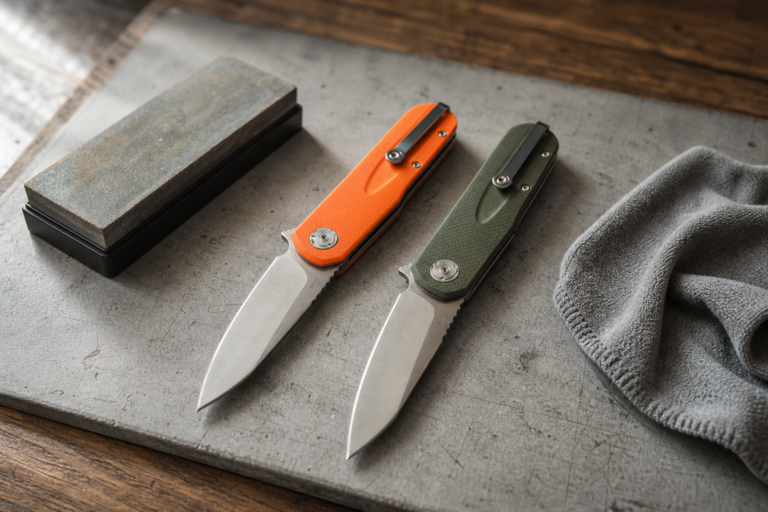
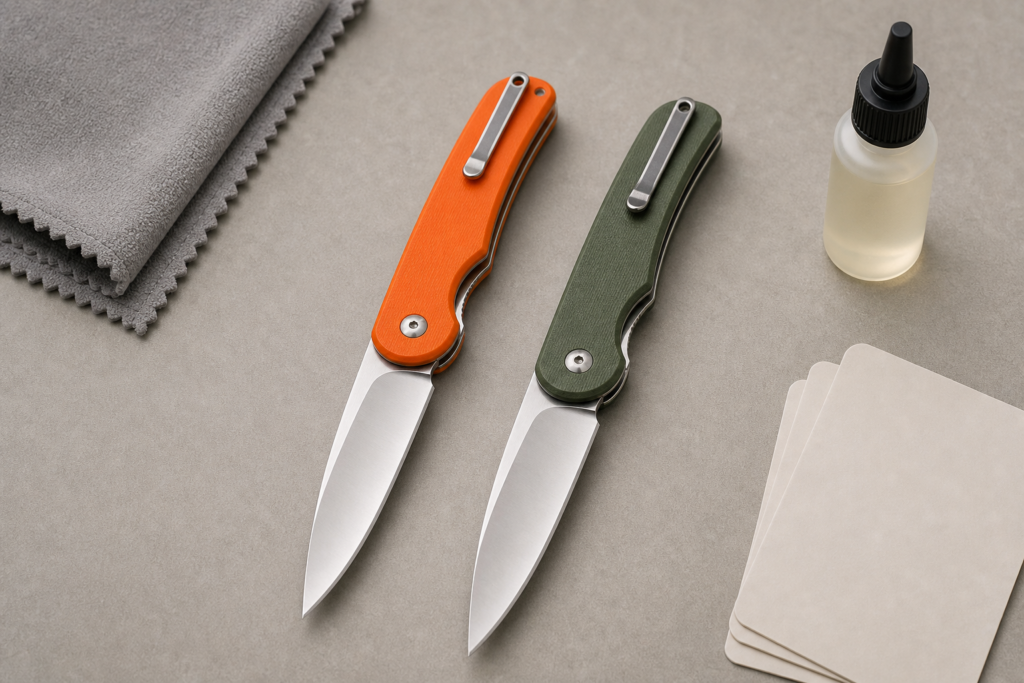
Closing a pocket knife looks simple until a customer gets cut. If the instruction is vague, support teams inherit avoidable injury, misuse, and warranty questions.
Buyers should write pocket knife closing instructions by matching the exact lock or non-lock mechanism, keeping fingers out of the blade path, requiring slow controlled closure, warning against tricks, and explaining when to stop using a damaged or dirty knife.
Quick buyer brief:
- Answer: Closing guidance should be product-specific safety copy, not a generic "push and fold" sentence.
- Buyer context: This guide is for pocket knife brands, EDC accessory sellers, private label buyers, importers, distributors, and OEM/ODM sourcing teams.
- Key checks: Opening method, lock type, blade path, hand clearance, pivot smoothness, detent or spring behavior, warning label, customer instruction card, support script, inspection method, and target-market legal review.
Developing a folding knife line for your brand?
Vast State supports OEM/ODM folding knife projects, including blade steel, lock structure, handle material, finish, logo method, packaging, and quality inspection planning.
This article explains how buyers should create safe product instructions and QC standards for pocket knife closure. It does not teach tricks, flipping, fast deployment, self-defense, intimidation, concealed carry, or weapon use.
The buyer's real task is to make the closing process clear enough for customers, support teams, inspectors, and content writers. A good instruction card should prevent fingers from entering the closing path, avoid one-size-fits-all lock descriptions, and tell customers when to stop and contact support.
Why Should Closing Instructions Be Product-Specific?
Generic instructions create confusion.
Buyers should write closing instructions for the exact knife structure because slipjoint, lockback, liner lock, frame lock, button lock, and assisted or automatic categories do not close the same way.
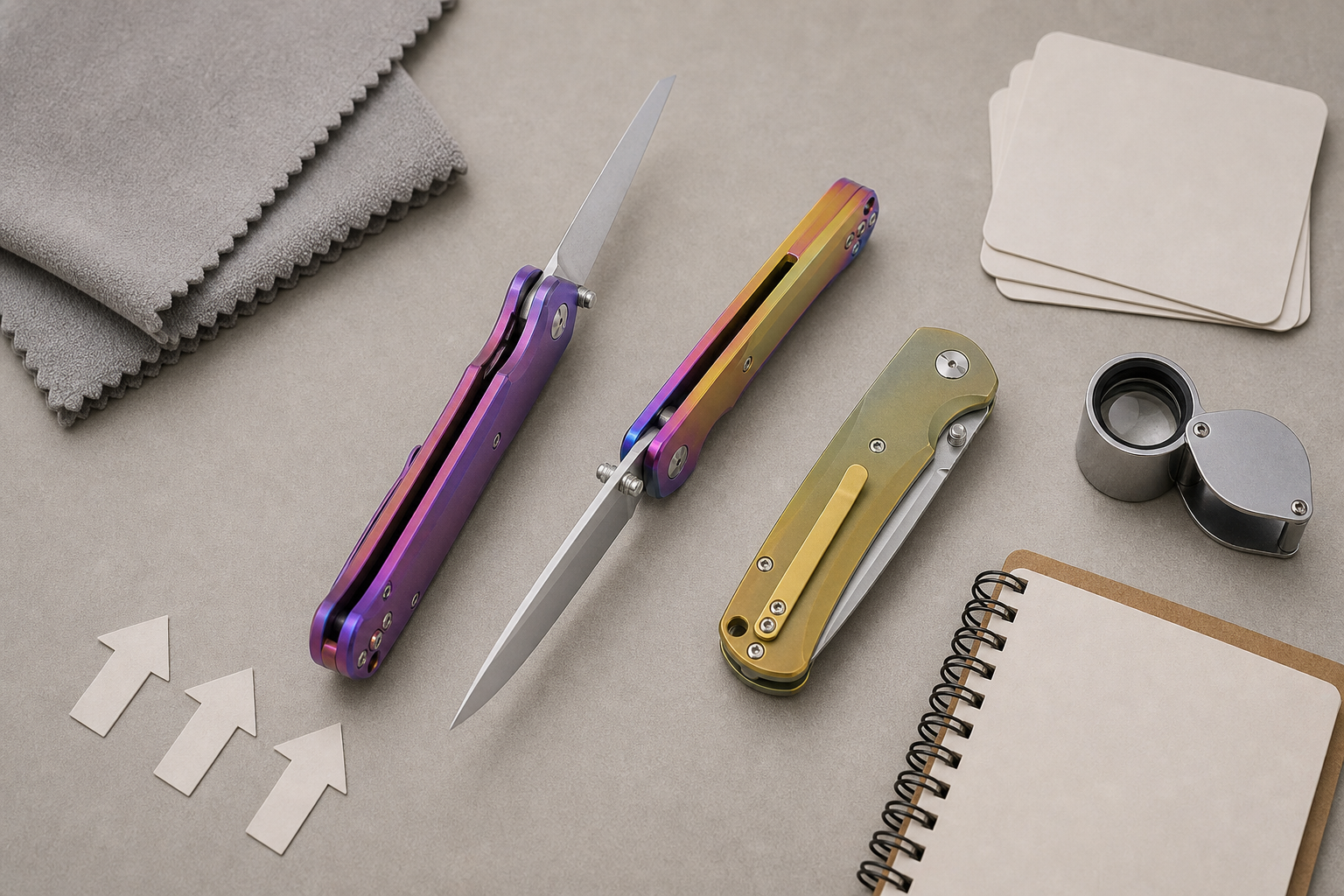
I Never Use One Closing Paragraph for Every Folder
A pocket knife is not one mechanism. A non-locking slipjoint closes differently from a lockback. A liner lock closes differently from a button-lock manual folder. A frame lock has different finger-clearance concerns. A product with assisted or automatic features may require separate legal and safety review before the buyer writes any customer-facing language.
The instruction card should match the SKU, not a category guess. If a buyer sells five folders, the buyer may need five instruction variants. This feels slower, but it reduces returns and confusing customer messages.
The RFQ should ask the supplier to define:
| Closing Variable | Buyer Question | Why It Matters |
|---|---|---|
| Lock or non-lock | Does the blade lock open? | Controls the release warning |
| Release location | Where can fingers contact the mechanism? | Controls hand position guidance |
| Blade path | Where does the edge travel while closing? | Controls injury prevention |
| Pivot feel | Is closure smooth, stiff, or spring-assisted? | Controls QC and support scripts |
| Market category | Is the mechanism regulated? | Controls legal review |
OEM/ODM RFQ Checklist
Prepare these details to help Vast State review your project and provide a more accurate quotation.
| RFQ Field | What to Prepare |
|---|---|
| Project type | OEM from drawing / ODM private label / wholesale catalog |
| Product category | Folding knife / fixed blade / multi-tool / outdoor tool |
| Design status | Idea / sketch / 2D drawing / 3D CAD / physical sample |
| Target price | Ex-factory target price or retail price range |
| MOQ expectation | 500 / 1,000 / 3,000 / 5,000+ pcs |
| Logo method | Laser engraving / etching / printing / molded logo |
| Packaging | Standard packaging / custom retail box / Amazon-ready |
| Market | USA / EU / Japan / Korea / Middle East / other |
| Compliance needs | Buyer-specified testing / documentation / labeling |
| Timeline | Sample deadline / mass production deadline |
The Canadian Centre for Occupational Health and Safety reminds users to inspect blades, store knives safely, and use the right tool for the task. Those ideas fit pocket knife instructions: the buyer should tell the user to inspect, close, store, and stop using a damaged product.
What Safety Principles Should Every Closing Guide Include?
The core safety rules should be simple.
Every pocket knife closing guide should tell customers to work slowly, keep fingers away from the blade path, point the edge away from the body, close only when stable, and store the knife closed.
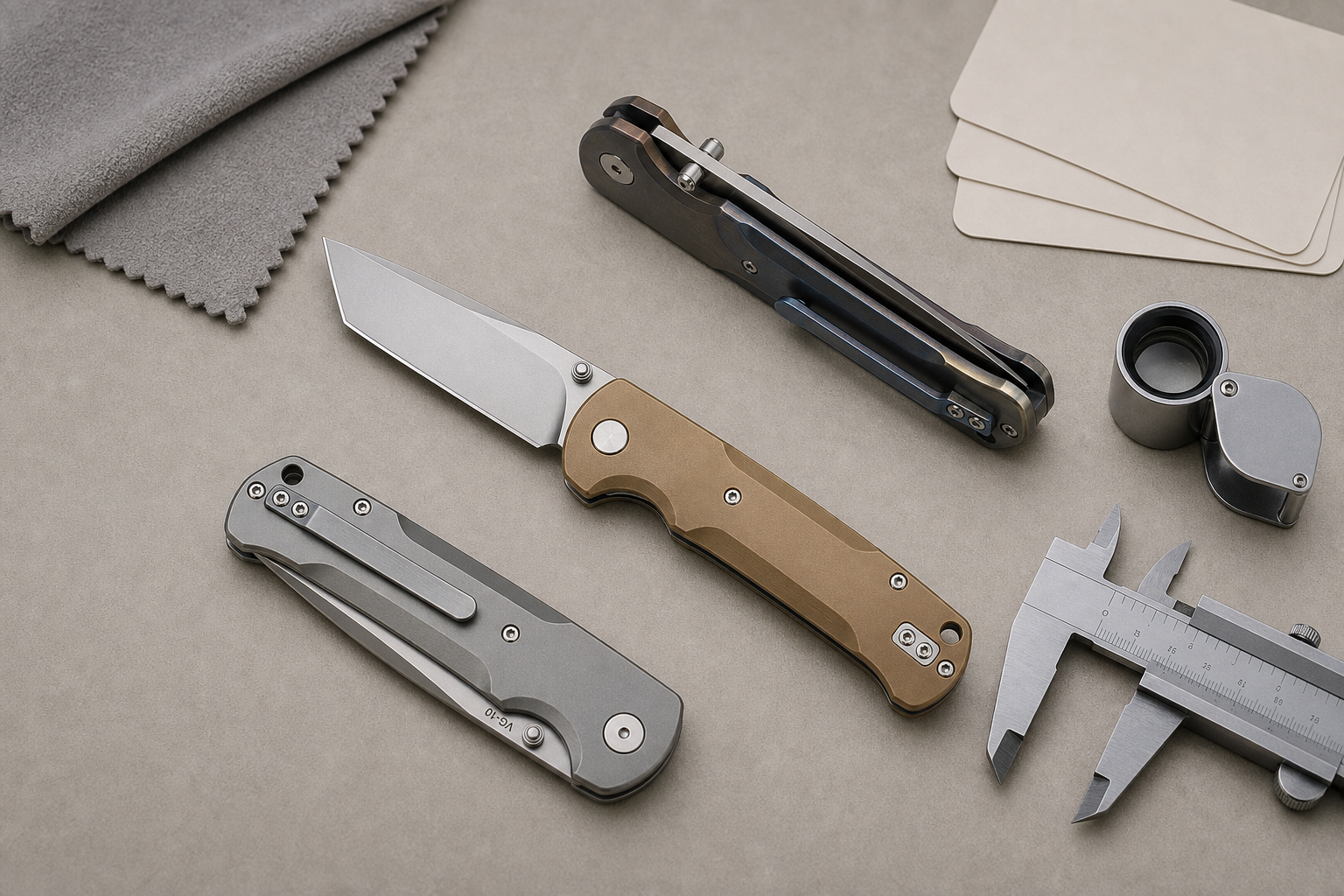
I Write for Calm Handling, Not Speed
The closing guide should not reward speed, one-handed tricks, or dramatic movement. It should teach controlled handling. The customer should hold the handle securely, avoid the closing path, release the lock only as the product manual describes, move the blade slowly toward the handle, and confirm the blade is fully seated before storage.
The wording should stay plain:
- Keep fingers clear of the blade path.
- Do not press the edge or tip.
- Do not snap the blade shut.
- Do not close the knife while walking, distracted, or unstable.
- Do not allow children to handle the knife without lawful and appropriate supervision.
- Do not use a damaged, dirty, loose, or rusty knife.
- Store the knife fully closed when not in use.
I would avoid showing fast one-handed closure images. Those images can encourage unsafe imitation and create a different product expectation. A safer photo or diagram shows a closed knife, a clear warning label, and a neutral hand-position diagram without dramatic motion.
The instruction should also tell customers that the blade remains sharp during closing. This sounds obvious, but obvious warnings are often the ones customers miss.
How Should Buyers Explain Different Lock Types?
Lock language must be exact.
Buyers should name the lock type, describe the release area in product-specific language, and warn customers to keep fingers clear before moving the blade.
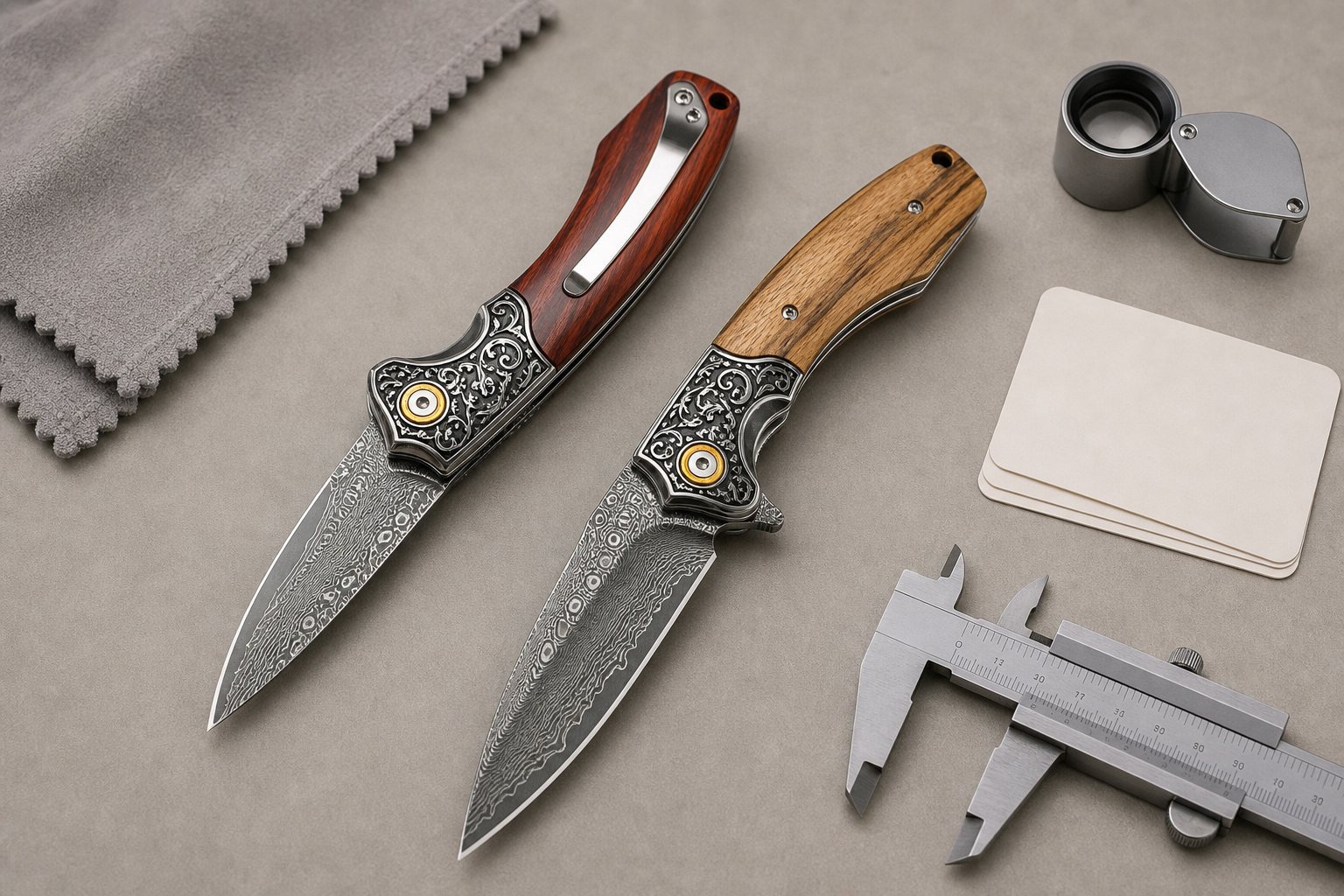
I Use Mechanism Names Only When They Are Verified
The product page and care card should not call a lock by the wrong name. Customers may search for a lock type and follow instructions for a different design. That can create unsafe handling. A buyer should verify the mechanism with the supplier, sample inspection, and final QC record.
Safe instruction planning can use a table like this:
| Lock or Structure | Instruction Focus | Support Risk |
|---|---|---|
| Slipjoint or non-locking folder | Controlled closing pressure and finger clearance | Blade can fold if misused |
| Lockback | Release area and two-hand controlled closure | Finger path confusion |
| Liner lock | Liner release and blade path warning | Finger near closing path |
| Frame lock | Frame release and hand placement | Grip pressure may affect release |
| Button-lock manual folder | Button function and slow closure | Customer may expect automatic action |
| Assisted or automatic category | Legal review and product-specific manual | Regulated mechanism risk |
U.S. Customs and Border Protection notes that switchblade and other spring-loaded knives may be prohibited, and local rules may still apply. That is why the buyer should avoid casual mechanism descriptions. If the product has a spring, button, gravity-related action, or conversion concern, the instruction card should go through compliance review before publication.
What Should Instructions Say About Maintenance Before Closing?
Dirty pivots change behavior.
Buyers should tell customers to stop closing the knife if grit, rust, loose screws, bent parts, or sticky movement makes the blade behave unexpectedly.
I Treat Hard Closing as a Support Signal
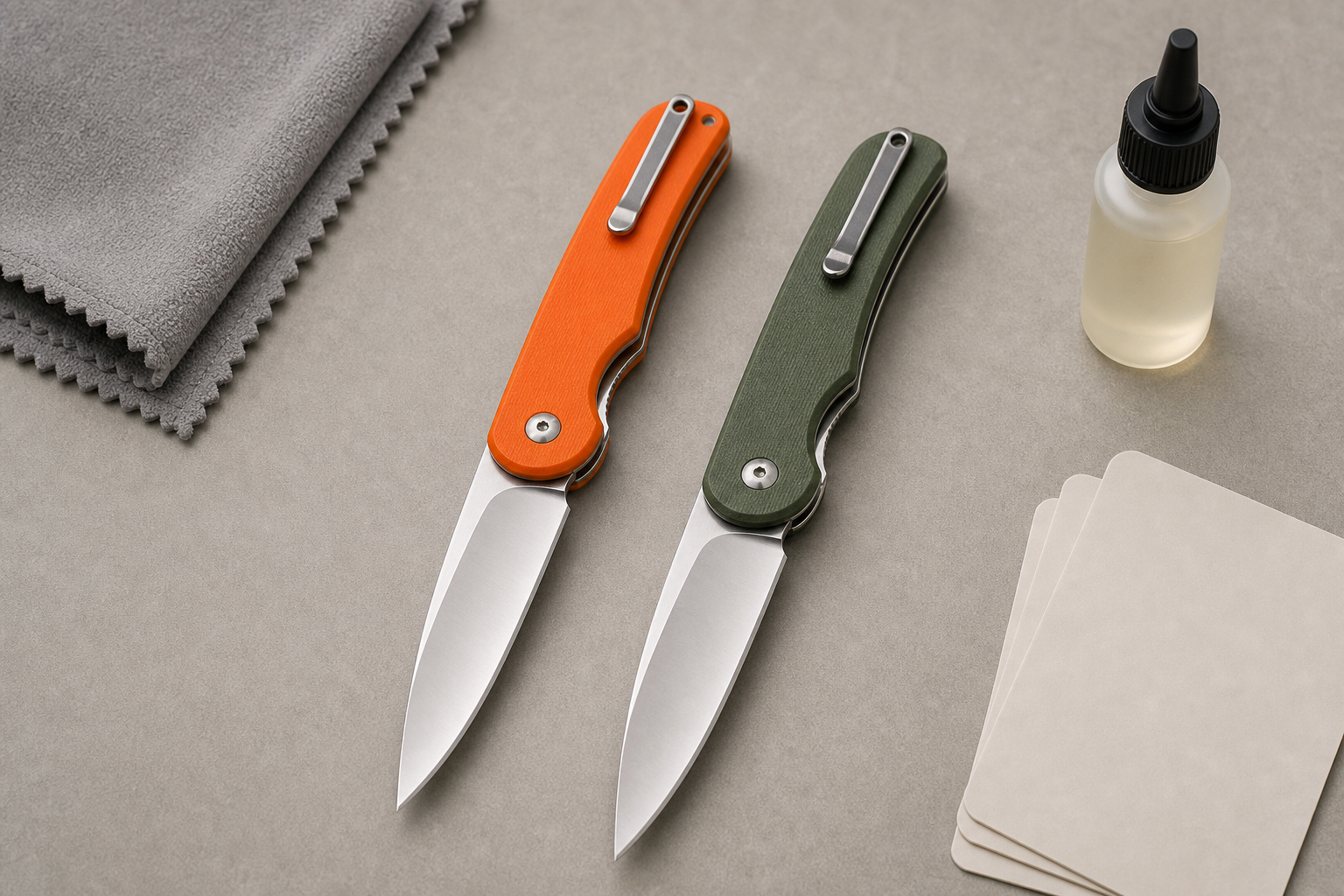
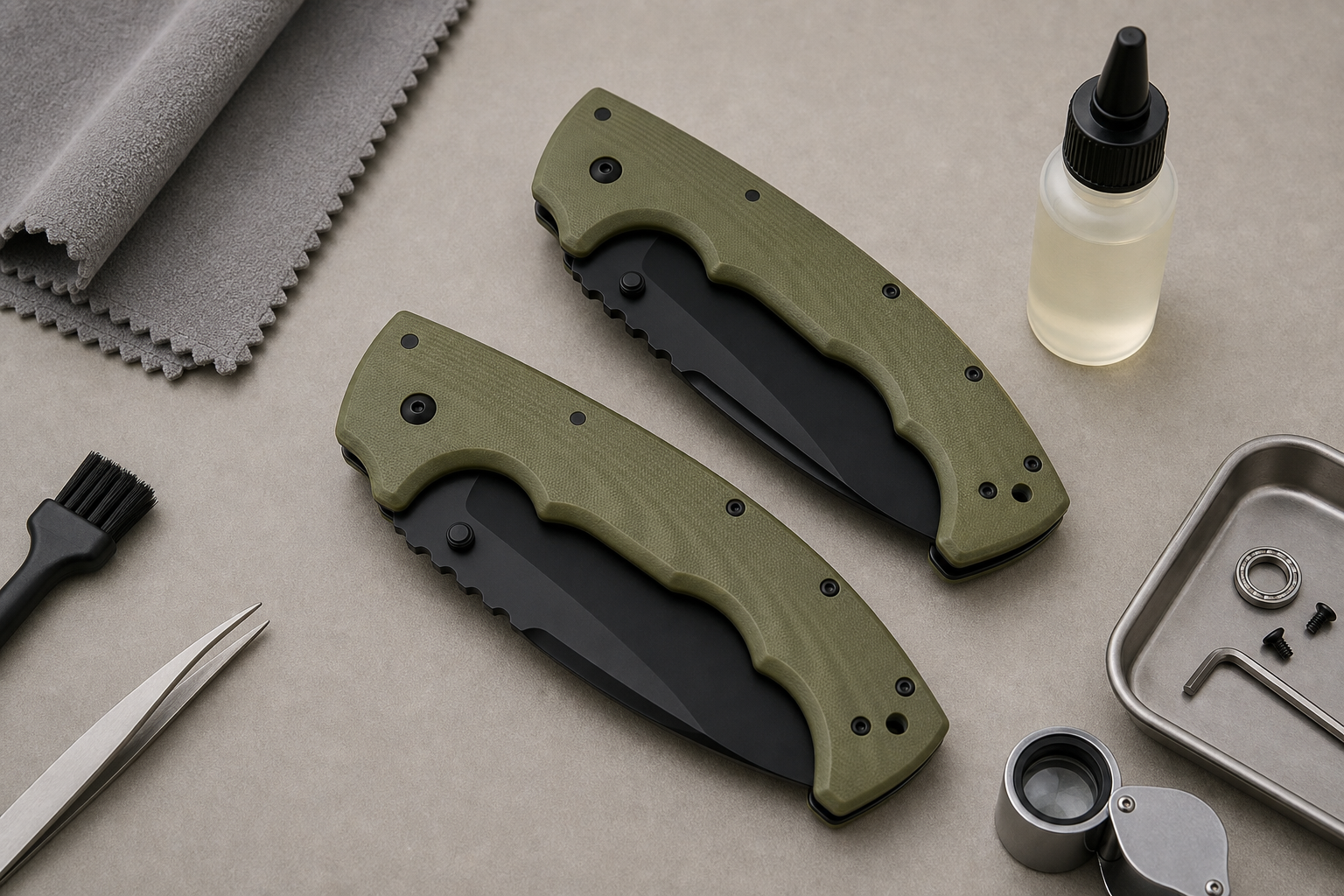
A pocket knife should not surprise the user during closing. If the pivot is gritty, the blade is bent, screws are loose, the lock is sticky, or rust is visible near the pivot, the customer should stop and contact support or follow the approved maintenance guide.
The British Stainless Steel Association explains that stainless corrosion resistance depends on a chromium-rich passive film and that this passive state can break down under some conditions. For pocket knives, this matters because a blade or pivot area can still corrode if the product is stored wet, exposed to salt, or poorly maintained.
The support script should ask:
- Is the knife clean and dry?
- Is there rust near the blade, pivot, or lock?
- Are screws loose?
- Does the blade rub the handle?
- Does the lock engage and release consistently?
- Did the knife fall, twist, or get used as a pry tool?
- Can the customer send clear photos?
This is not just customer service. It is product feedback. Repeated hard-closing complaints may point to tolerance, finishing, lubricant, screw torque, packaging moisture, or design problems in the production batch.
How Should Packaging and Travel Wording Be Written?
Storage language matters.
Packaging should tell customers to keep the knife closed, sheathed or secured when appropriate, away from children, and not to rely on broad travel or carry claims.
I Avoid "Carry Anywhere" Copy
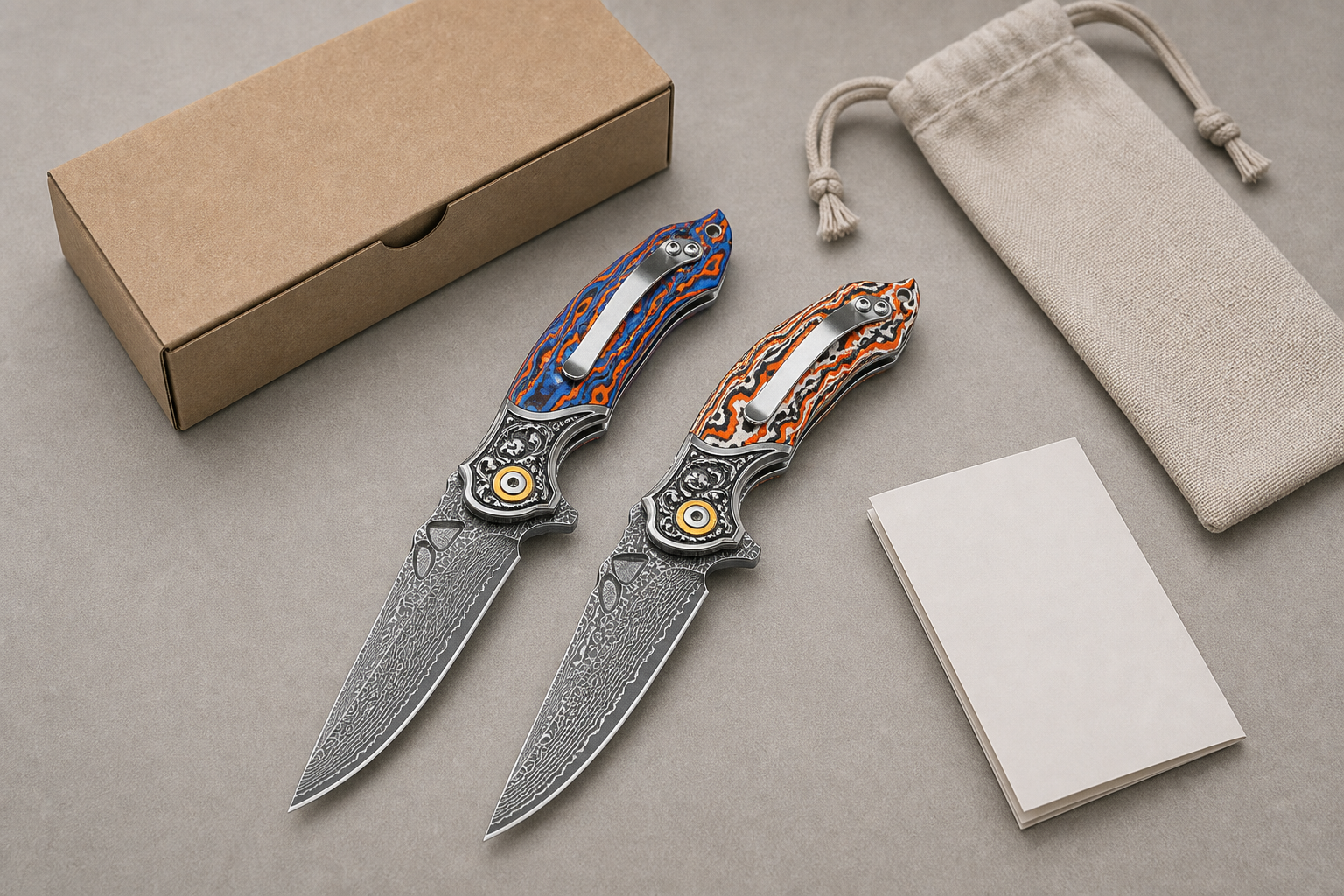
Closing instructions and storage instructions often overlap. The customer should know that the knife must be fully closed before storage, transport, cleaning, or packing. If the SKU includes a pouch, clip, keyring, or sheath-style accessory, the instruction should explain that the accessory does not remove the need to follow local rules.
The TSA's knife page states that knives are not allowed in carry-on bags, while checked bags are listed as allowed with specific exceptions, and sharp objects in checked baggage should be sheathed or securely wrapped. This is useful for product copy. A buyer should not say "travel safe," "airport ready," or "carry anywhere."
Better wording:
- Store fully closed when not in use.
- Keep the blade secured before transport or storage.
- Check local laws and venue rules before possession, transport, sale, or travel.
- Do not place knives in carry-on baggage.
- Keep away from children unless lawful supervised training applies.
This language is less exciting than marketing copy, but it is safer and easier to defend.
What Claims Should Buyers Avoid?
Safety claims need proof.
Buyers should avoid unsupported claims such as safest lock, child safe, one-hand safe, fail proof, travel approved, legal everywhere, or impossible to close accidentally.
I Write Claims From Test Evidence
Pocket knife closing copy can accidentally become a safety claim. For example, "safe one-hand closing" sounds like a feature, but it may require evidence, user limitations, warnings, and market-specific review. "Child safe" is even riskier. A folding knife is still a sharp product.
The Federal Trade Commission's advertising substantiation policy says advertisers should have a reasonable basis for objective claims before making those claims. That principle fits product pages, packaging, comparison charts, and support scripts.
Safer claim control:
| Avoid | Use Instead |
|---|---|
| Safest lock | Lock design should pass buyer-defined inspection |
| One-hand safe | Follow the product manual and keep fingers clear |
| Travel approved | Check transport and local rules before travel |
| Child safe | Keep away from children unless lawful supervised training applies |
| Cannot close accidentally | Lock engagement is inspected under the buyer's QC plan |
This keeps the article and product copy aligned with the user's rule: no rankings, no recommendations, and no overpromising.
What Should QC Inspectors Check Before Shipment?
Closure should be inspected.
QC teams should inspect lock engagement, blade centering, pivot smoothness, screw tightness, closing path clearance, warning labels, and instruction-card accuracy.
I Make Closure Part of Final Inspection
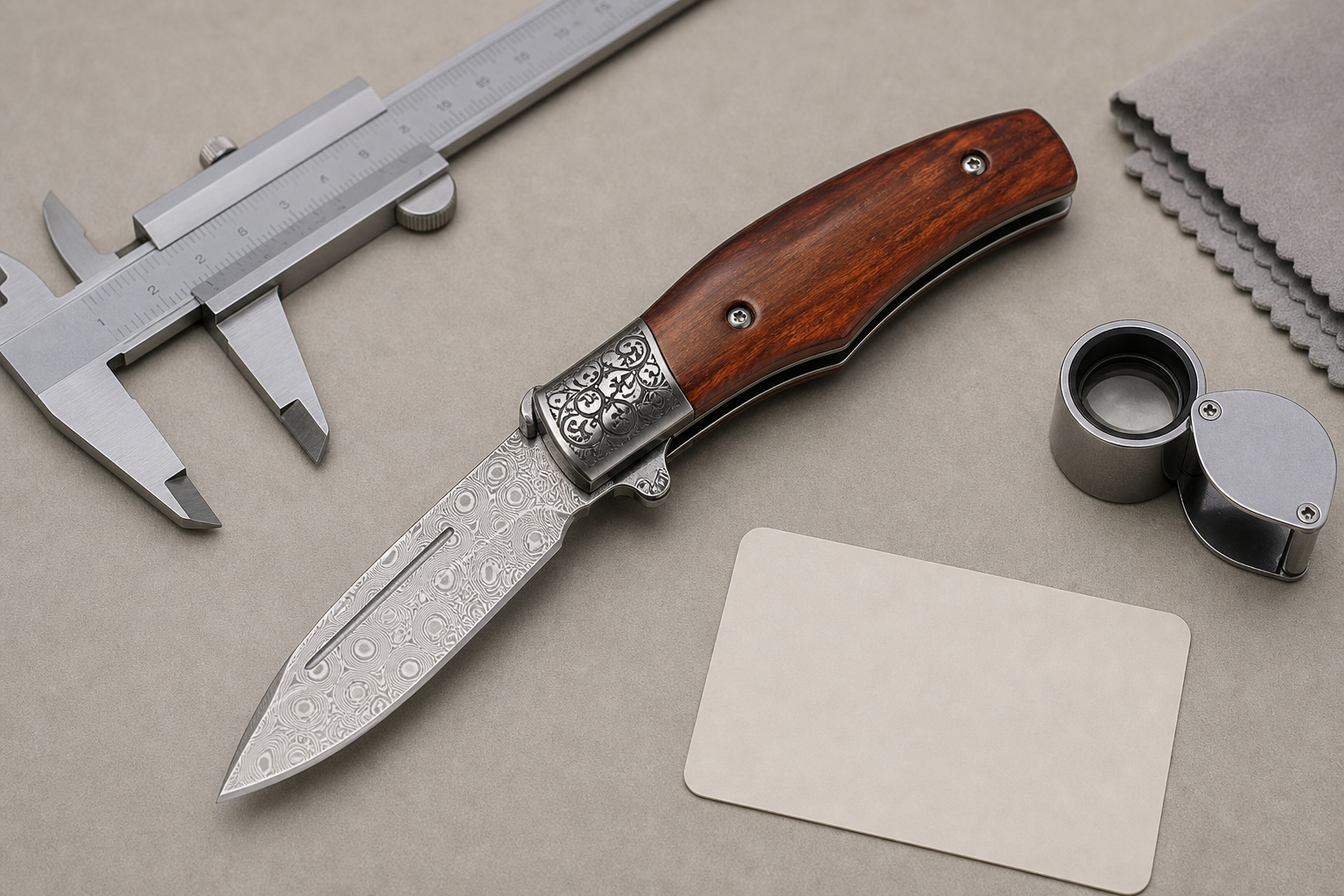
Closing safety is not only a copywriting issue. The physical sample must match the written instruction. If the card says the blade closes smoothly, but production is gritty or uneven, the copy becomes a complaint trigger.
QC should check:
- Lock engagement and release consistency
- Blade centering when closed
- Blade tip fully inside the handle
- Pivot smoothness and resistance
- Screw tightness
- Sharp edge exposure when closed
- Handle clearance around moving parts
- Clip and pouch fit
- Warning label presence
- Instruction card matched to mechanism
- Sample photos stored in the QC file
For material acceptance, ASTM E18 notes that Rockwell hardness testing provides useful information for metallic materials and commercial acceptance testing, while one location may not represent the whole part. Hardness is not a closing test by itself, but it is part of the broader material file for blade and lock-related parts.
The inspector should reject a batch if the closure behavior differs from the approved sample.
What Should the RFQ and Support Workflow Include?
The RFQ should connect design and support.
Buyers should define mechanism, lock, closing instruction, warning copy, QC checks, photo review rules, and support escalation before production.
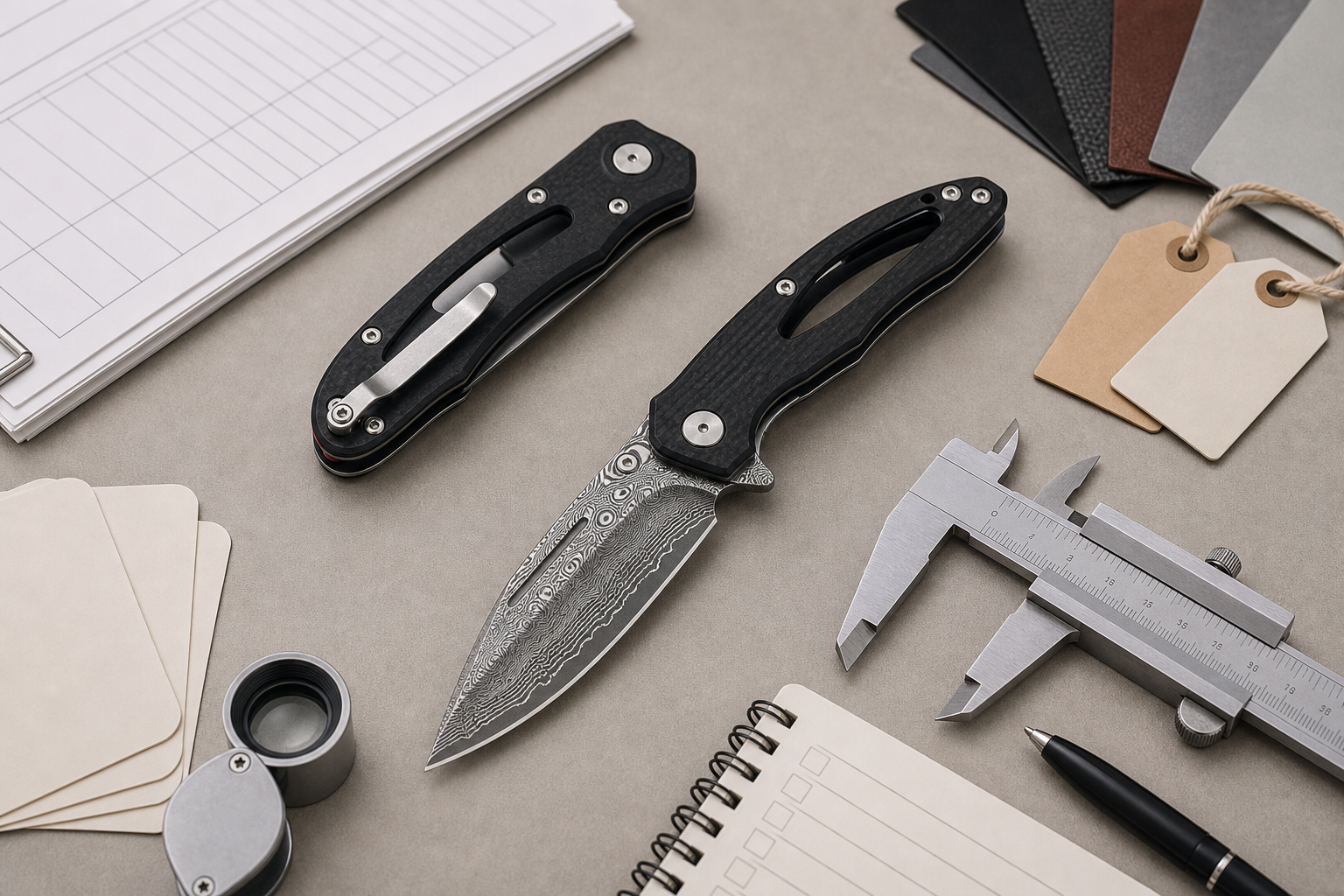
I Build the Closing Guide Before Launch
The best time to write closing instructions is before mass production, not after customer questions arrive. The buyer should approve the mechanism, test the sample, prepare the warning card, and give support teams a simple decision tree.
The RFQ should include:
- Mechanism type
- Lock or non-lock structure
- Closing instruction draft
- Required warning language
- User manual format
- Product photos or diagrams needed
- Legal review markets
- Closure QC checks
- Defect definitions
- Customer support photo checklist
- Escalation rules for hard closing, loose lock, exposed tip, rust, or broken parts
- Warranty boundary for misuse
The support workflow should start with safety. If a customer says the knife will not close correctly, the support team should tell them to stop using it, keep fingers away from the blade, secure it safely, and provide photos. The team should not suggest force, tricks, impact, or improvised repair.
Turn this article into a folding knife project.
Share your blade type, lock direction, steel preference, handle material, quantity, target market, and packaging needs. Vast State can prepare OEM/ODM options.
Conclusion
Write pocket knife closing guidance as product-specific safety copy with verified mechanisms, clear warnings, QC checks, and support rules.