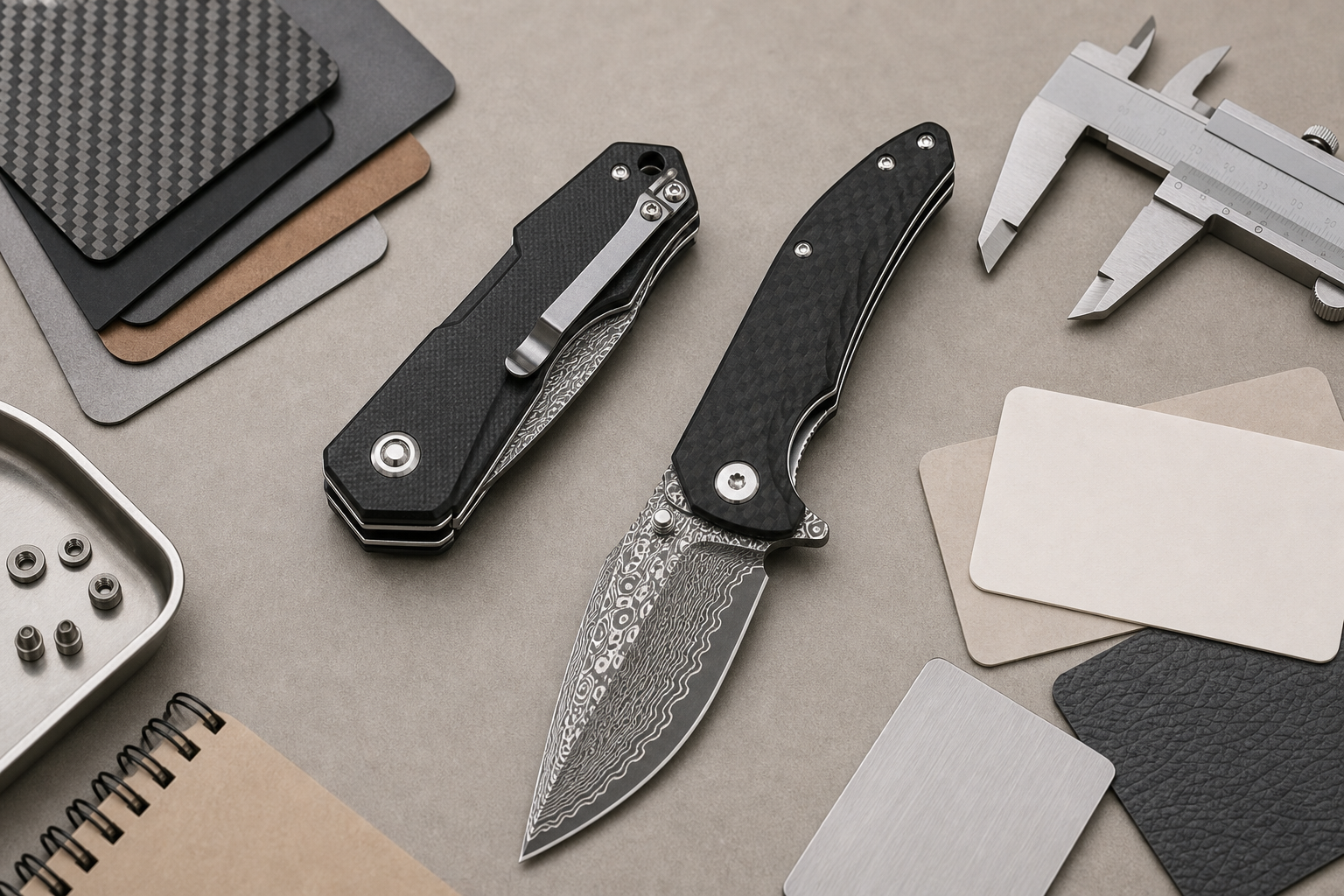
Damascus steel sells on beauty, but beauty alone can hide weak sourcing. If buyers only approve the pattern, they may miss steel, heat treatment, corrosion, and claim risk.
Buyers should specify Damascus steel knives by defining the actual construction, blade steel layers or core steel, heat treatment target, pattern and etch standard, corrosion expectations, care instructions, claim evidence, and QC tests before mass production starts.
Quick buyer brief:
- Answer: Treat Damascus as a controlled material and finish system, not just a visual decoration.
- Buyer context: This guide is for knife brands, private label sellers, outdoor tool importers, kitchen knife buyers, EDC accessory teams, and sourcing managers.
- Key checks: Construction type, layer stack, core steel, hardness target, weld integrity, pattern repeatability, etch depth, finish contrast, corrosion positioning, care card, marketing language, sample approval, and inspection records.
Planning a knife project with this steel?
Send us your target market, MOQ, price range, and blade type. Vast State can help you choose the right steel, HRC range, finish, handle material, and QC requirements for OEM/ODM production.
This article uses "Damascus steel" in the modern knife-market sense while separating historical wootz, pattern-welded steel, clad construction, and etched imitation. It does not cover weapon use, self-defense, intimidation, combat claims, or unsafe carry advice.
The practical buyer question is simple: what exactly is the supplier making, and what proof will the buyer receive? A Damascus pattern may help a knife look premium, but the product still needs clear steel selection, repeatable heat treatment, safe edges, honest labels, and after-sales care instructions.
What Does Damascus Steel Mean in a Knife RFQ?
The word can mean different things.
In an RFQ, buyers should define whether Damascus means historical-style wootz, modern pattern-welded steel, laminated Damascus cladding, powder patterned steel, or only an etched surface appearance.
I Define the Construction Before I Discuss the Pattern
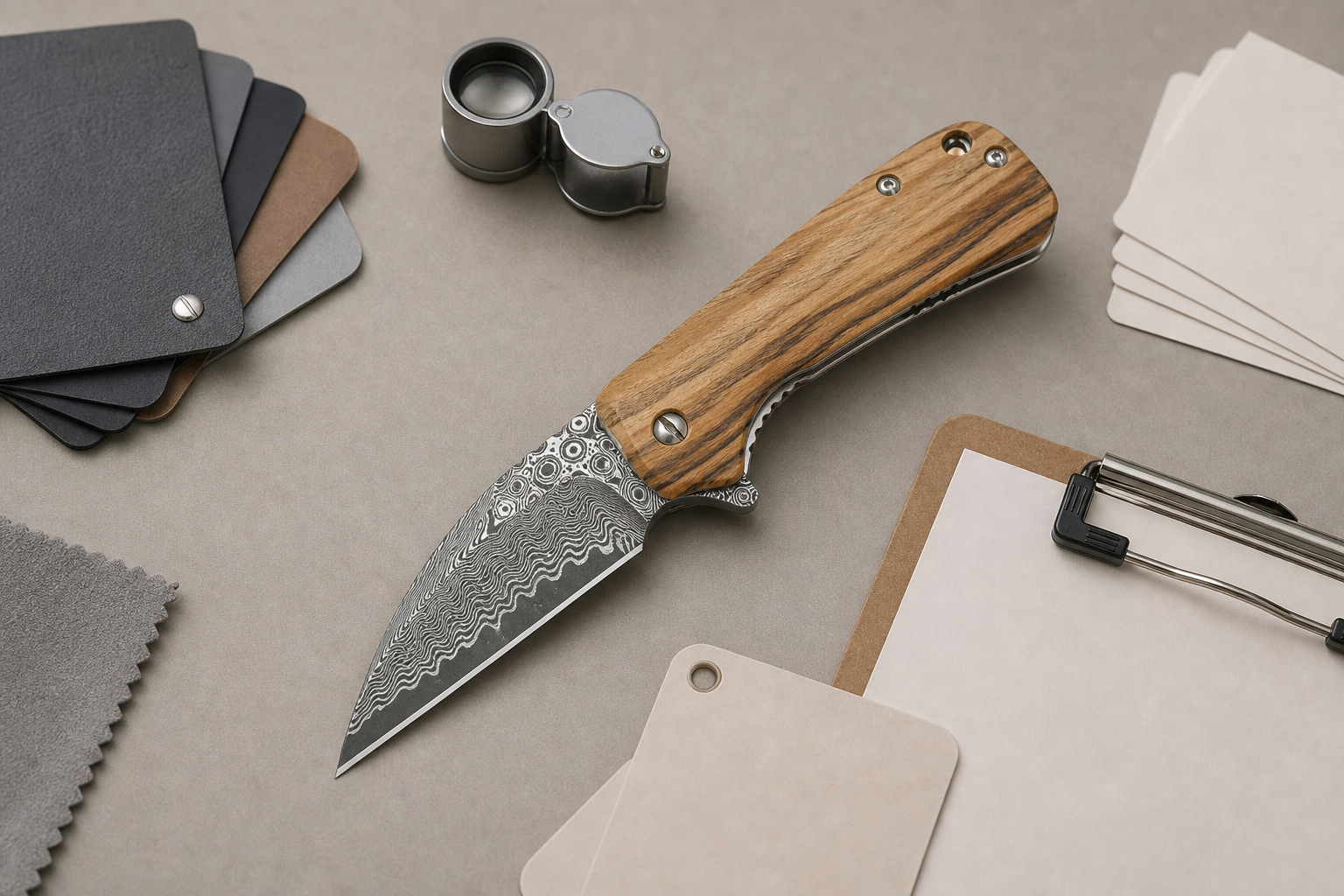
The word "Damascus" is not enough for purchasing. A buyer and a supplier may use the same word while imagining different products. One side may think of historical wootz. Another may think of modern pattern-welded billet. Another may mean a stainless core with patterned cladding. Another may mean a surface etch on ordinary steel. These are not the same product.
Britannica describes wootz as an ancient Indian steel process that produced high-carbon crucible steel used for famous medieval Damascus swords. Research published by TMS on ancient Damascus blades also links the historic surface pattern to carbide banding and small alloying elements in wootz ingots. That history is useful, but most current commercial knife projects use modern methods.
For OEM/ODM buying, the RFQ should state the construction in direct language:
| Term in RFQ | What the Buyer Must Confirm | Why It Matters |
|---|---|---|
| Pattern-welded Damascus | Which steels are forge welded together | Controls weld integrity and heat treatment |
| Damascus cladding | What core steel is used | Controls cutting performance |
| Stainless Damascus-style steel | Whether the whole stack is corrosion resistant | Controls care and claim language |
| Etched pattern only | Whether the pattern is structural or cosmetic | Prevents misleading product pages |
Quote-ready RFQ Checklist for Damascus Projects
To get an accurate OEM/ODM quote, prepare construction, core steel, pattern, layer, hardness, and etch details before contacting a knife manufacturer.
| RFQ Field | What to Prepare |
|---|---|
| Damascus construction | Pattern-welded / clad / stainless patterned / decorative etch |
| Core steel | 10Cr15CoMoV / VG10 / 14C28N / buyer-specified |
| Pattern | Random / ladder / twist / raindrop |
| Layer specification | Supplier standard or verified target |
| Target HRC | Based on core or full construction |
| Etch standard | Contrast, depth, residue and variation limits |
I would never approve a sample only because the pattern looks attractive. I would first ask what the material actually is.
Which Construction Type Fits the Product Line?
Construction changes cost and performance.
Buyers should match Damascus construction to the product line: decorative gift knives, kitchen knives, outdoor fixed blades, EDC folders, or premium display-oriented SKUs.
I Match the Steel Story to the Customer Promise
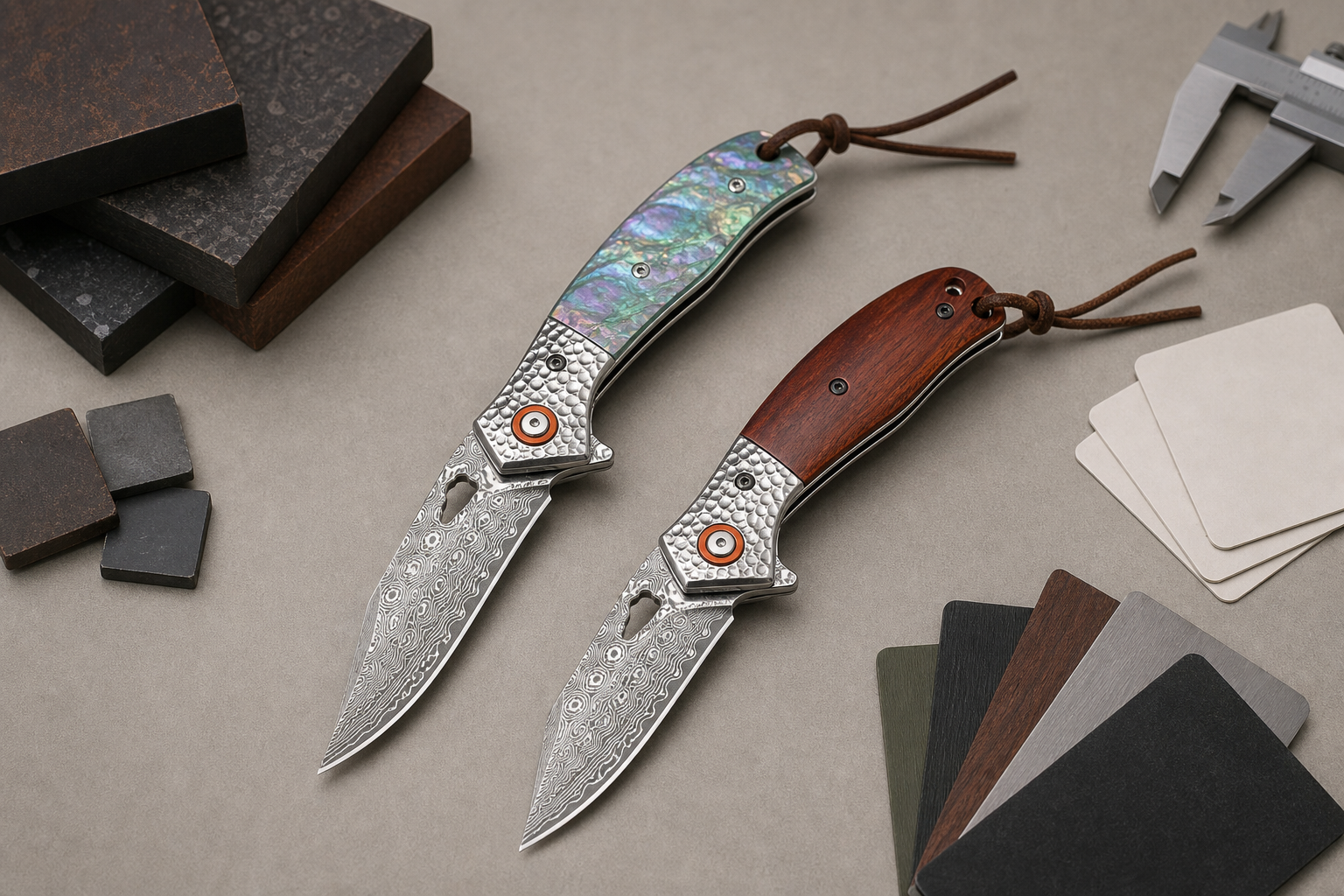
Different buyers need different Damascus choices. A kitchen knife line may need a reliable cutting core and stable food-care instructions. An outdoor fixed blade may need toughness, corrosion planning, and a sheath that keeps the blade dry. An EDC folder adds pivot parts, liners, bearings, and lock geometry, so blade material is only one part of the risk.
A decorative pattern-welded blade can be excellent when the welds are sound and heat treatment is controlled. A clad construction can give the customer a patterned look while allowing a known core steel to do the cutting work. A fully stainless patterned steel may support a lower-care positioning, but buyers still need corrosion evidence and honest care language.
The choice should be tied to the SKU goal:
| Product Goal | Better Construction Question | Buyer Risk |
|---|---|---|
| Premium kitchen knife | What is the core steel and food-care plan? | Corrosion and edge complaints |
| Outdoor fixed blade | What toughness and corrosion tests support it? | Chipping, rust, sheath moisture |
| Folding knife | Does heat treatment match lock and grind design? | QC variation and warranty returns |
| Visual gift SKU | Is the pattern real and accurately described? | Misleading claims |
The pattern is only one layer of the decision.
What Performance Details Matter Beyond the Pattern?
The blade still has to cut.
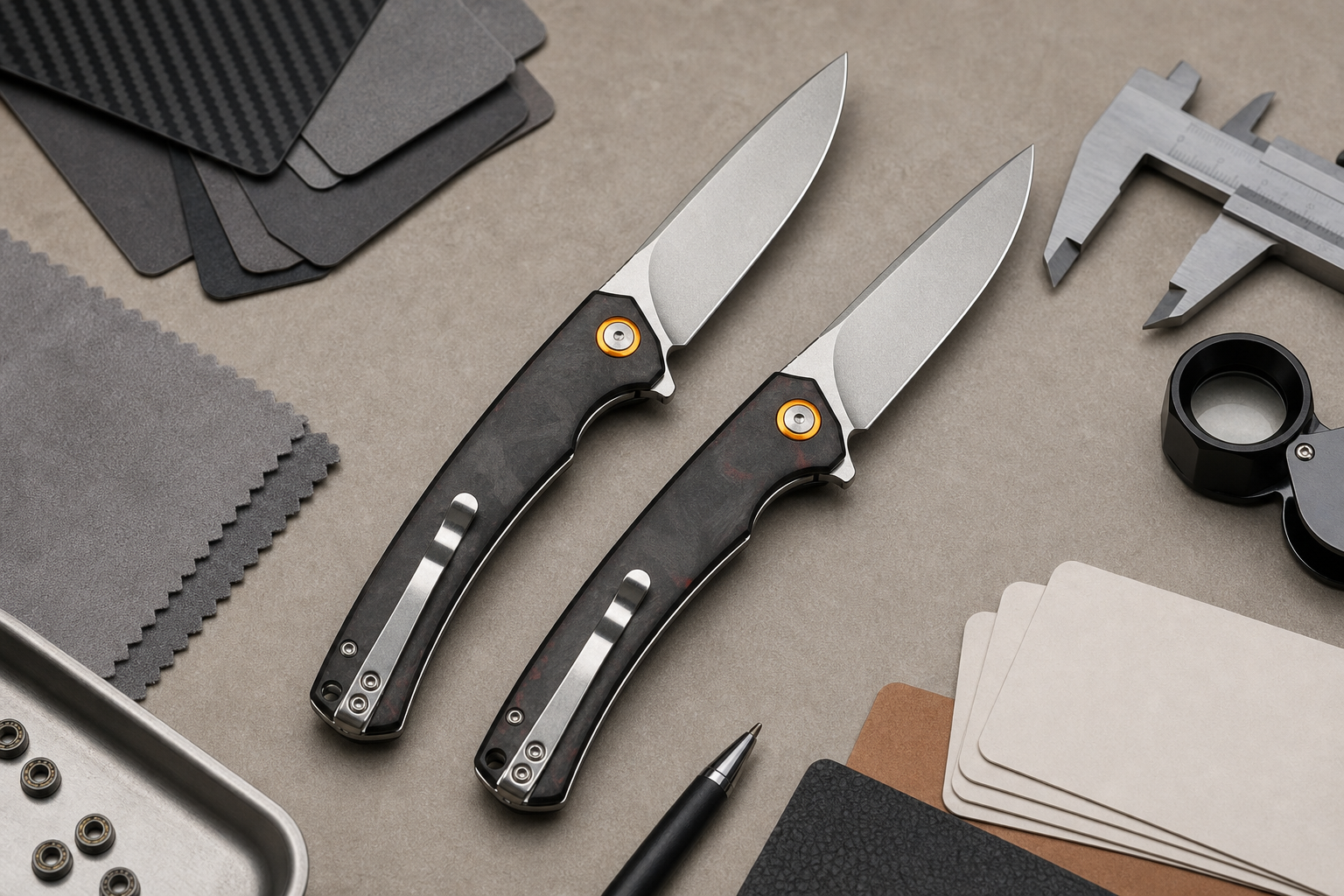
Buyers should specify steel chemistry, core steel, heat treatment, hardness range, edge geometry, toughness expectations, weld quality, and sharpening behavior.
I Do Not Let the Pattern Replace the Specification
A Damascus blade can look premium and still perform poorly if the buyer ignores the functional specification. Hardness, edge geometry, heat treatment, blade thickness, grind symmetry, and final sharpening all affect customer experience. Weld flaws, delamination, or inconsistent heat treatment can create returns even when the surface pattern is beautiful.
ASTM E18 explains that Rockwell hardness testing provides useful information about metallic materials and is widely used in commercial acceptance testing, while also warning that a test at one location may not represent the whole part. That is a useful lesson for knife QC. A buyer should not rely on one random hardness number from one sample.
The RFQ should include:
- Target hardness range and test locations
- Heat treatment process record
- Core steel or layer steel composition
- Minimum blade thickness tolerance
- Edge angle and final sharpness requirement
- Weld flaw rejection criteria
- Visual pattern approval sample
- Batch-level inspection frequency
For Damascus cladding, the core steel may matter more than the decorative layer. For pattern-welded full blades, the whole stack and heat treatment matter. The supplier should explain both.
How Should Pattern, Etch, and Finish Be Controlled?
Visual consistency needs rules.
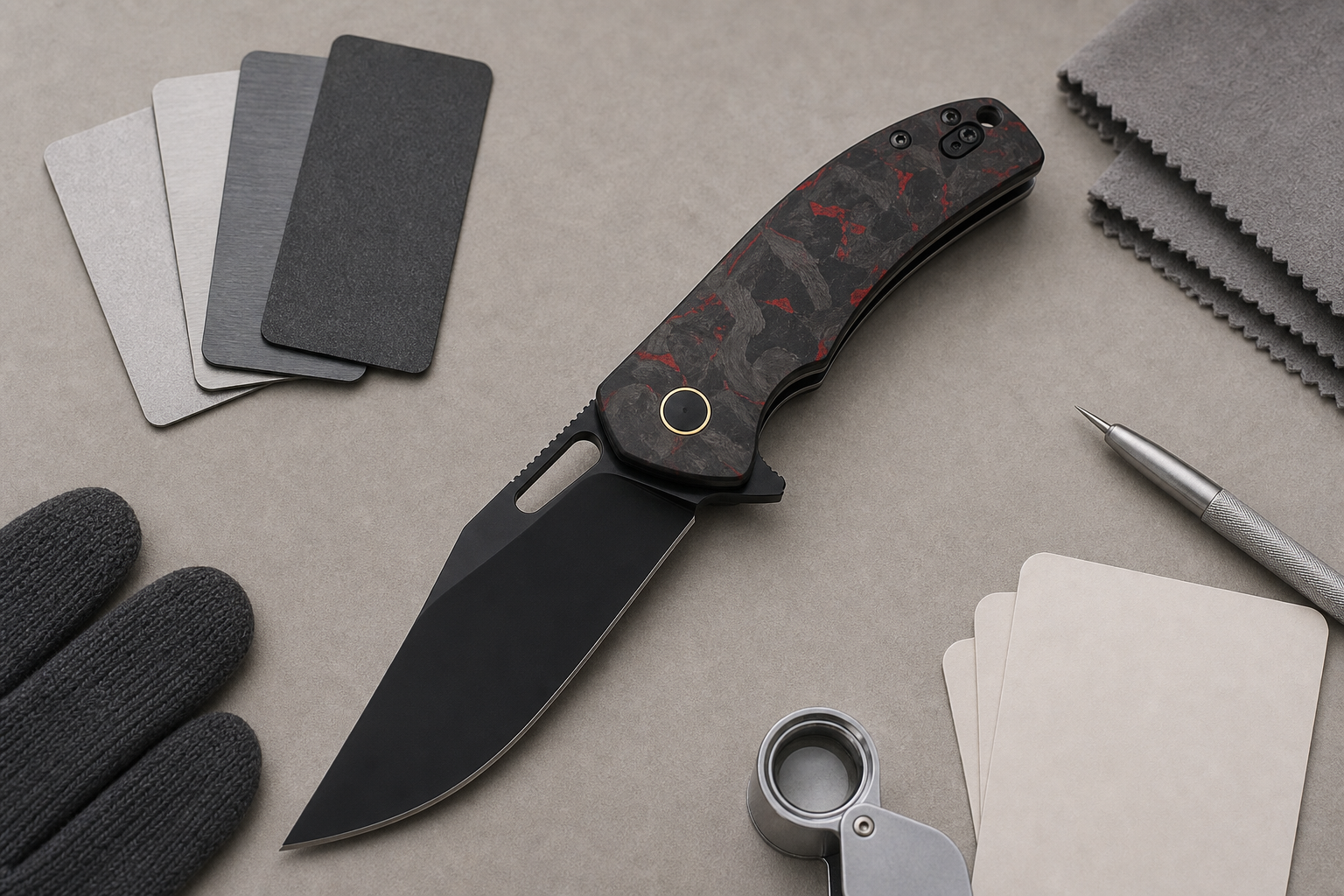
Buyers should approve a master sample for pattern style, contrast, etch depth, polish level, logo-free blade area, acceptable variation, and defect rejection.
I Turn "Looks Good" Into Inspection Language
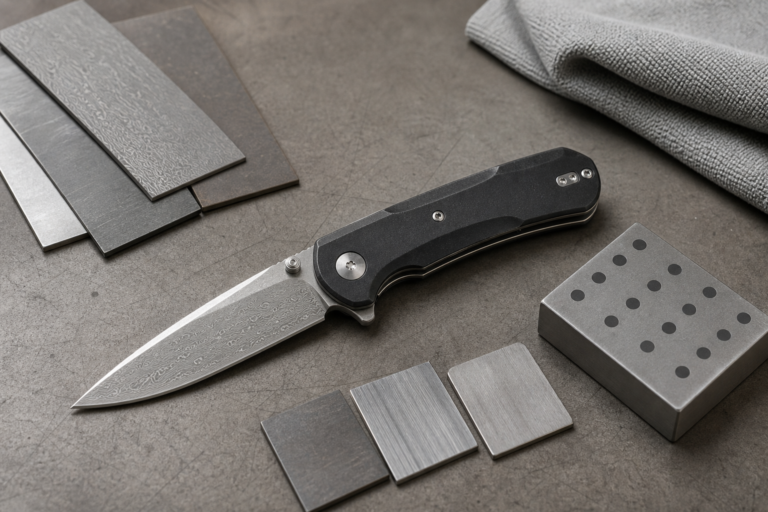
Damascus patterns naturally vary, especially in hand-finished or forged work. That variation can feel premium when the buyer controls it. It can feel sloppy when the buyer does not define it. The customer may see muddy etching, uneven contrast, over-etched texture, scratches, black residue, or a pattern that does not match the product photos.
The finish approval sheet should define:
- Pattern family, such as random, ladder-like, raindrop-like, twist-like, or linear
- Required contrast level
- Etch depth limit
- Polish direction and scratch tolerance
- Blade face cleanliness
- Edge cleanliness after etching
- Logo or marking location
- Acceptable variation from the approved sample
- Rejection examples with photos
Buyers should also control product photography. If the listing photo shows a high-contrast dramatic blade, but mass production is softer and lighter, customers may complain even if the blade is functional. The sales image, approved sample, and inspection standard should match.
For premium projects, I prefer a physical finish board or high-quality reference photos with controlled lighting. A short note like "nice Damascus pattern" is not an inspection standard.
How Should Buyers Handle Corrosion and Care Claims?
Damascus does not mean rust proof.
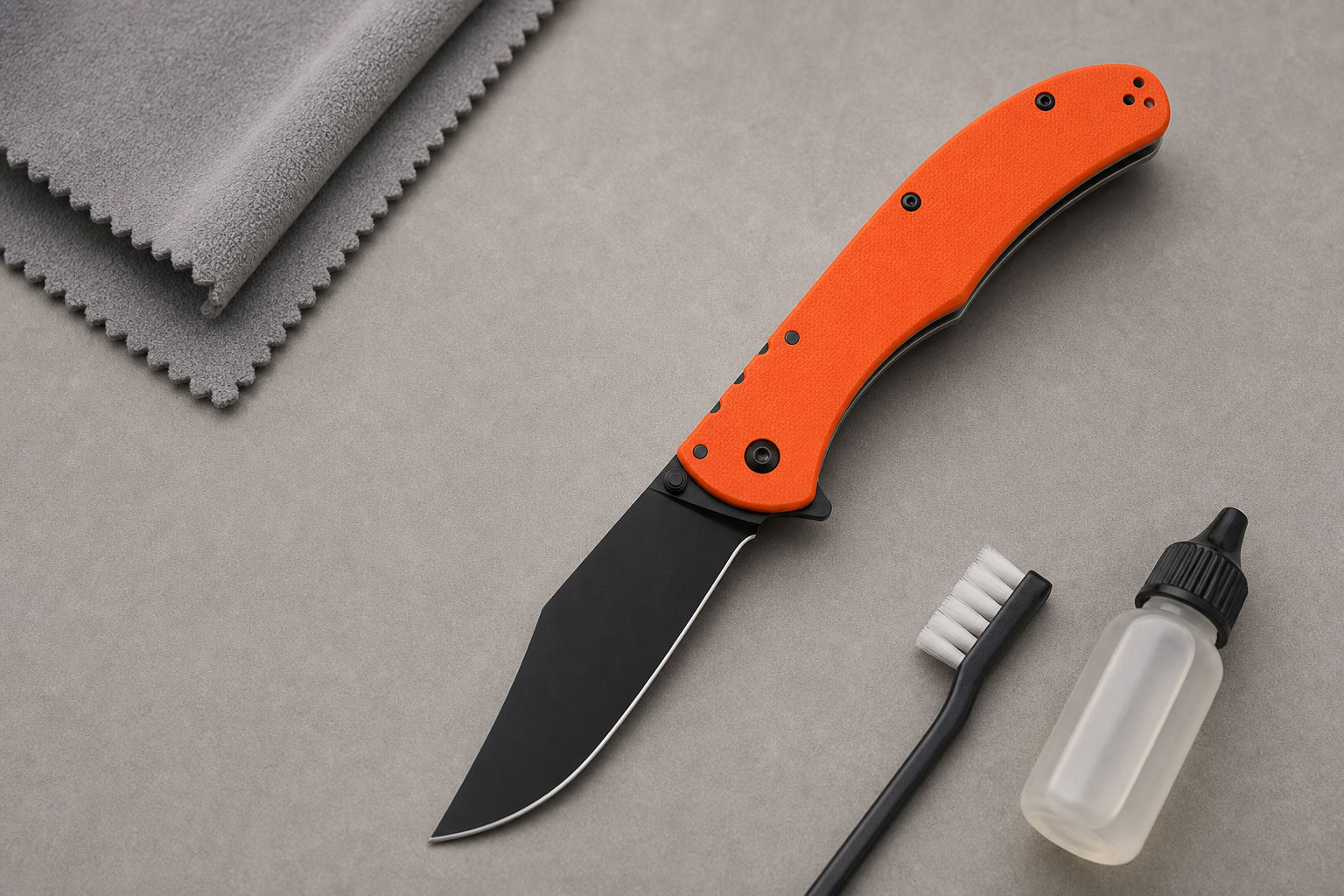
Buyers should define whether the product uses carbon steels, stainless steels, or mixed layers, then write care instructions and corrosion claims that match the actual material.
I Separate Beauty Claims From Rust Claims
Damascus-looking knives can contain carbon steel layers, stainless layers, or a stainless core with patterned cladding. The corrosion behavior depends on the actual alloy and surface finish. Buyers should avoid saying "rust proof" just because the blade looks premium.
The British Stainless Steel Association explains that stainless corrosion resistance comes from chromium and a thin chromium-rich oxide film that normally self-repairs when oxygen is available, but can break down under certain conditions. That means even stainless steel needs realistic care instructions. Pattern-welded carbon steel needs even more direct care language.
The care card should answer:
- Should the customer hand wash only?
- Should the blade be dried immediately?
- Is oil recommended for storage?
- Is dishwasher use prohibited?
- Can the knife be used around saltwater or acidic foods?
- What rust is considered misuse?
- When should the customer contact support?
If the project includes corrosion testing, ASTM B117 can provide a controlled corrosive environment for comparing metal or coated specimens, but ASTM also cautions that salt spray results alone do not reliably predict natural-environment performance. I would use test data for comparison and QC, not as a promise that the knife cannot rust.
What Documents Should Buyers Request From Suppliers?
Supplier proof prevents guessing.
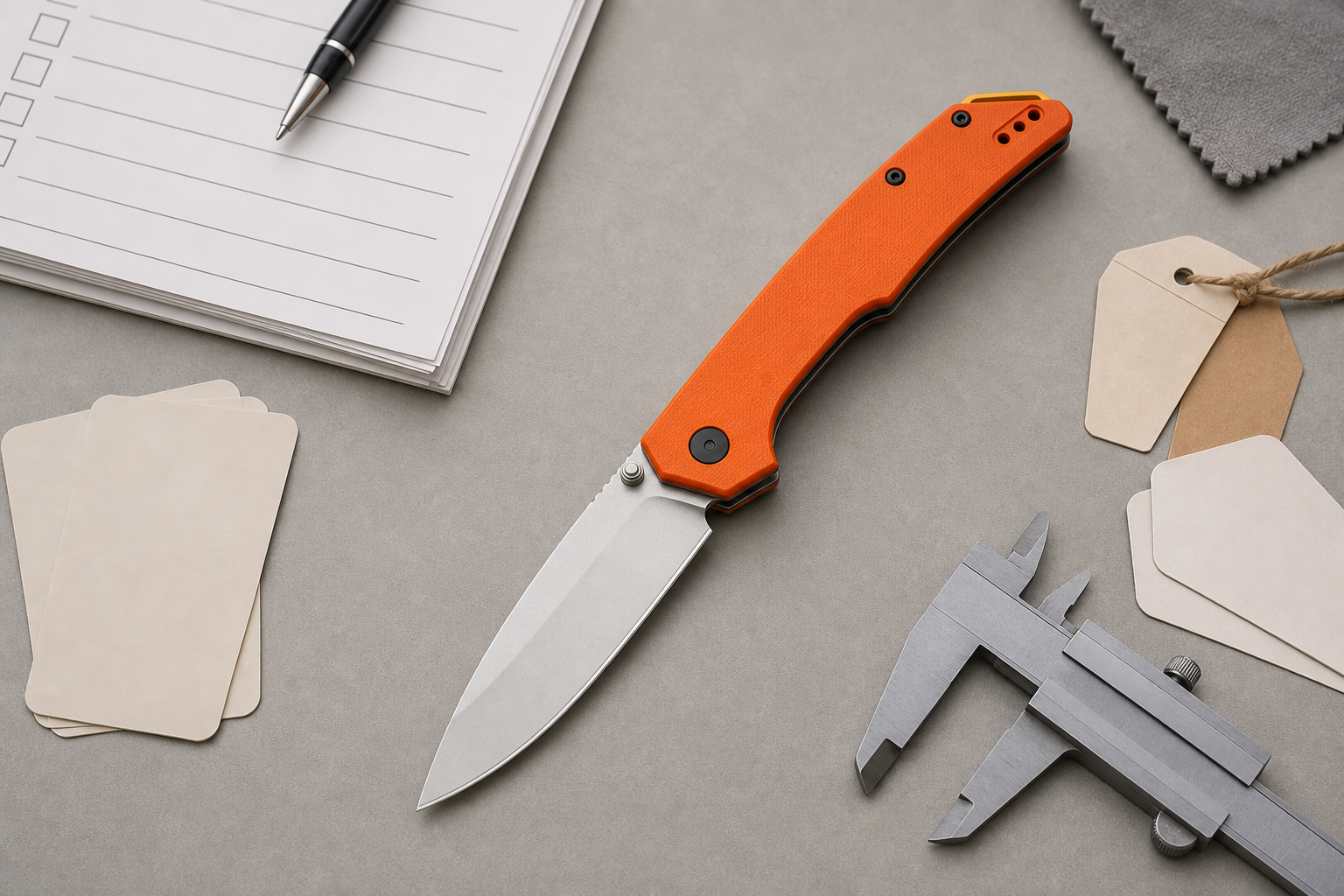
Buyers should request material certificates, steel stack details, heat-treatment records, hardness reports, corrosion or care test records, finish samples, and batch inspection photos.
I Ask for Evidence Before Production, Not After Complaints
A supplier can say "Damascus steel" in a message, but the buyer still needs evidence. Documentation does not make a weak product strong, but it helps the buyer see what was ordered, tested, approved, and shipped.
For a serious OEM/ODM project, I would request:
- Steel composition or material certificate
- Layer stack or core steel description
- Heat treatment process record
- Hardness report with test method and locations
- Finish and etch process description
- Approved sample photos
- Corrosion or care test notes if corrosion claims are used
- Edge inspection and sharpening standard
- Packaging moisture-control plan
- Care card copy
- Warranty boundary for rust, misuse, and cleaning damage
The buyer should also check whether documents match the real sample. A certificate is not useful if it refers to a different batch, different billet, or different construction. For high-value projects, destructive sample inspection may be appropriate, especially for verifying cladding, core steel, or weld consistency.
The goal is not paperwork for its own sake. The goal is a repeatable product.
How Should Marketing Language Avoid Overpromising?
Claims need support.
Marketing should avoid unsupported phrases such as ancient Damascus, rust proof, superior sharpness, unbreakable, handmade, or high-layer steel unless the buyer has evidence.
I Write the Product Page From the Evidence File
Damascus products are easy to oversell. The pattern invites dramatic language. But dramatic language can create compliance, platform, and customer-service problems if it promises more than the product can prove.
The FTC policy statement on advertising substantiation says advertisers need a reasonable basis for objective claims before they make those claims. This principle matters for B2B sourcing because the claim file should be built before the listing goes live.
Practical claim control:
| Risky Phrase | Safer Buyer Question | Safer Direction |
|---|---|---|
| Rust proof | What corrosion evidence supports this? | Say care is required unless proven otherwise |
| Ancient Damascus | Is it truly wootz or a historical reproduction? | Say modern Damascus-style or pattern-welded if accurate |
| Superior sharpness | What test supports the comparison? | Describe edge geometry and QC target |
| Handmade | Which steps are handmade? | Say hand-finished if that is the real process |
| 1000 layers | Can the supplier document the layer count? | State only verified construction details |
I prefer plain, specific language: patterned steel blade, Damascus-style cladding, visible layered pattern, approved hardness range, and hand-finished etch. These phrases are less exciting, but they are easier to defend.
What Should the RFQ and QC Plan Include?
The RFQ should close the gaps.
A strong RFQ should define construction, steel, heat treatment, hardness, pattern, etch, corrosion positioning, care copy, packaging, inspection method, and claim evidence.
I Build the Product Around Verifiable Details
The best Damascus project starts with a boring document. That document should make the supplier, buyer, inspection team, photographer, product-page writer, and support team work from the same facts.
The RFQ should include:
- Product category and intended use
- Damascus construction type
- Steel layers or core steel
- Heat treatment and hardness target
- Blade thickness and grind tolerance
- Pattern style and finish approval standard
- Etch depth and residue limits
- Corrosion expectation and care card
- Packaging moisture control
- Required reports and sample photos
- Defect definitions
- Final inspection AQL or sampling plan
- Claim evidence file
- Warranty and support workflow
This is how buyers keep the product premium without making it vague. Damascus steel can be a strong visual and commercial feature, but only when the technical, visual, and marketing standards move together.
Ready to use this material in your next knife line?
Vast State can help you compare blade steels, heat treatment ranges, handle materials, finishes, packaging options, and QC requirements based on your target market and quantity.
Conclusion
Specify Damascus knives by evidence, not romance: define construction, performance, finish, corrosion care, supplier proof, and claims before production.