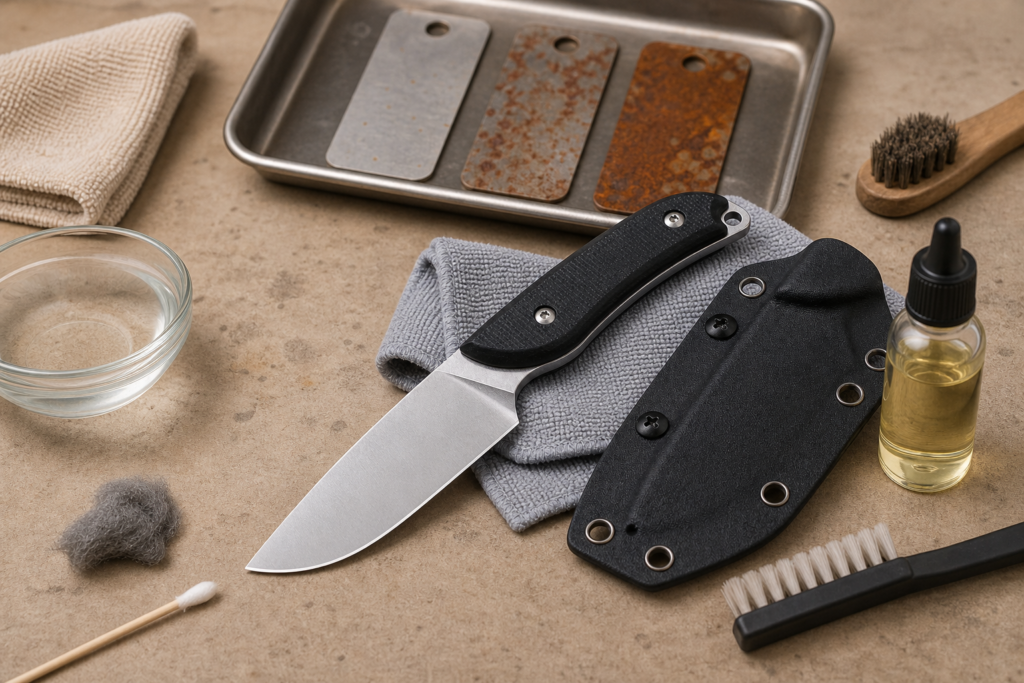
Rust on a knife can create returns fast. If care advice is vague, customers may damage the blade, contaminate food tools, or blame the brand.
Buyers should explain knife rust removal by separating light surface rust from deep pitting, giving approved cleaning steps, warning against harsh chemicals, clarifying food-contact limits, drying and storage rules, and defining when a knife should be replaced instead of restored.
Quick buyer brief:
- Answer: Rust removal should be written as a controlled care process, not a random household trick. OEM/ODM buyers should approve material-specific care instructions before shipment.
- Buyer context: This guide is for kitchen knife brands, outdoor knife brands, EDC brands, private label sellers, importers, distributors, and sourcing teams.
- Key checks: Steel type, coating, food-contact status, level of rust, approved cleaner, abrasive limit, rinse and dry instruction, oil or storage guidance, corrosion claim language, warning label, warranty boundary, and after-sales response.
Have a knife or multi-tool project in mind?
Send your sketch, CAD file, sample photo, or product idea. Vast State can review manufacturability, suggest materials, estimate MOQ, and prepare a quote for your OEM/ODM project.
This article treats rust removal as a product care, safety, labeling, and after-sales topic. It does not cover weapon use, self-defense, intimidation, or unsafe scraping methods. A buyer should never tell customers to use harsh chemicals, power tools, or aggressive grinding on a finished knife unless the product manual, material review, and safety warning support that method.
The practical goal is not to promise that every knife can be restored. The goal is to help customers handle light surface rust safely, prevent repeat rust, and recognize when corrosion has damaged the blade too much for normal use.
What Kind of Rust Problem Should Buyers Identify First?
Not all rust is equal.
Buyers should separate light surface discoloration, removable orange spots, coating damage, deep pitting, edge corrosion, and structural damage before giving any rust-removal guidance.
I Start With Triage, Not Scrubbing
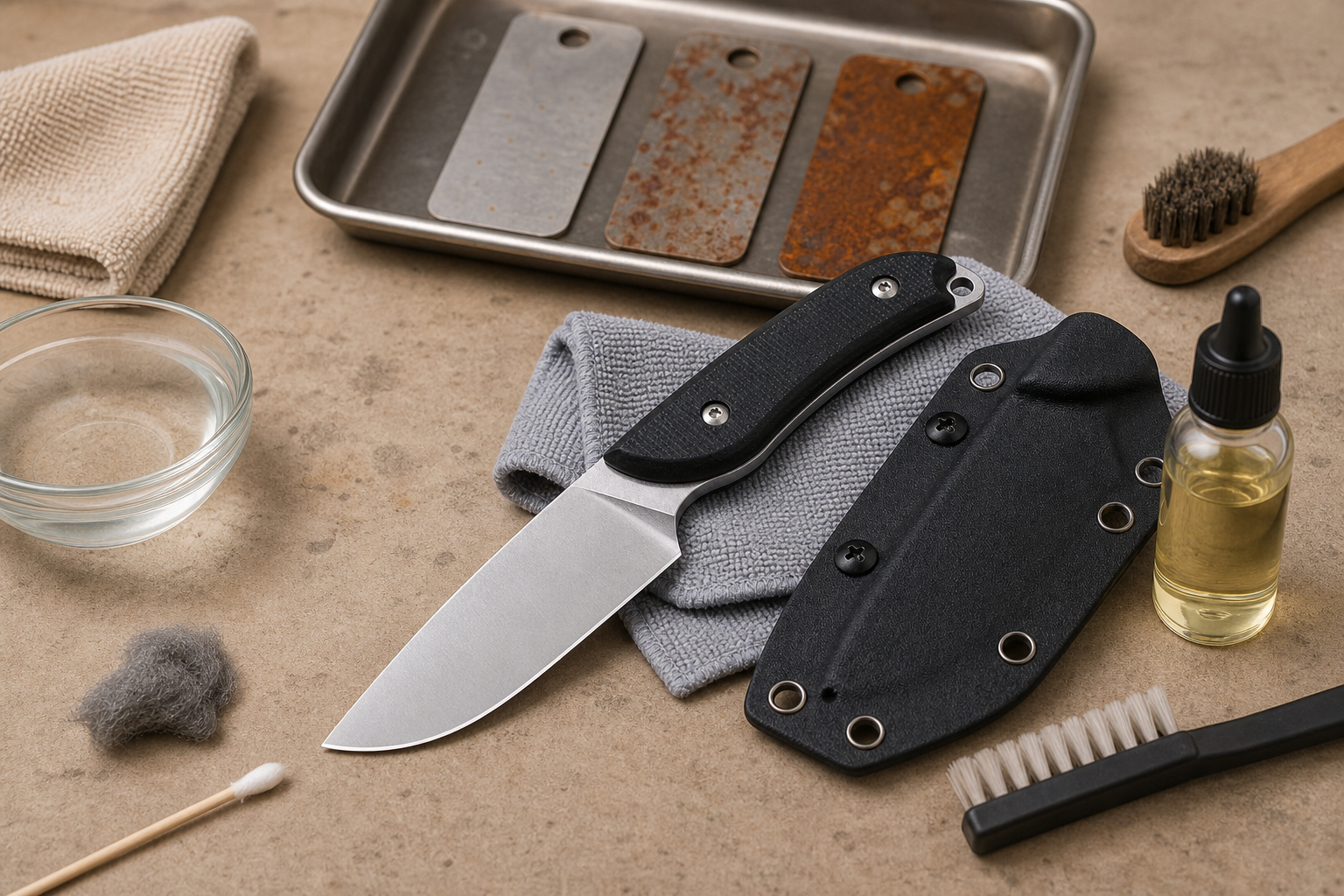
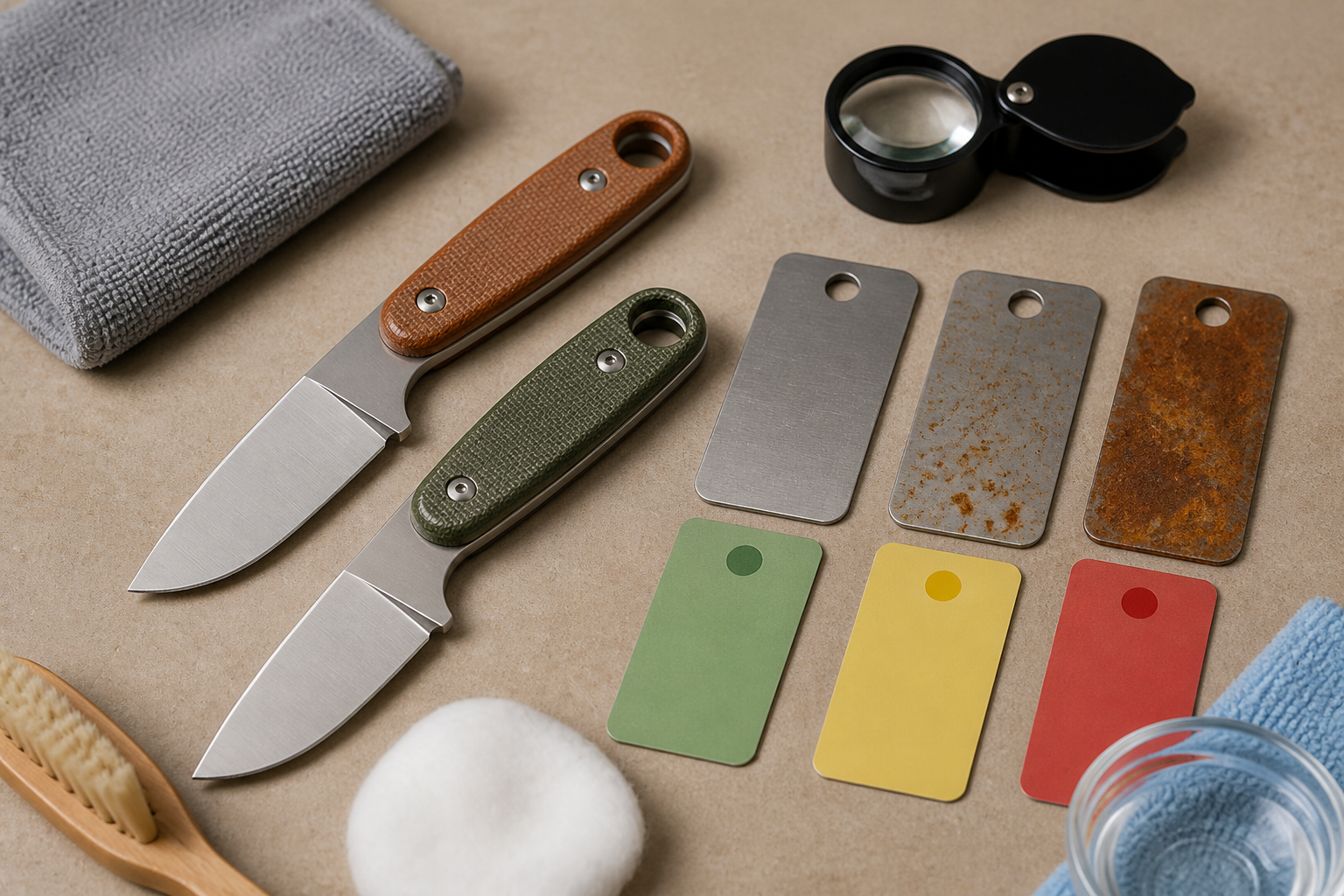
The first question is not "What cleaner should we use?" The first question is "What kind of rust are we looking at?" Light surface rust is different from deep pitting. Surface discoloration may be cosmetic. Pitting near the edge, pivot, tang, or food-contact area can be a bigger safety and performance concern.
For customer care, I would separate cases into three levels:
| Rust Level | What It Looks Like | Buyer Guidance |
|---|---|---|
| Light surface rust | Small orange spots, no deep texture | Clean gently using approved method |
| Moderate corrosion | Rough texture or repeated spots | Inspect, clean carefully, review warranty boundary |
| Severe pitting | Deep pits, weakened edge, damaged coating | Stop use and replace or service |
OEM/ODM RFQ Checklist
Prepare these details to help Vast State review your project and provide a more accurate quotation.
| RFQ Field | What to Prepare |
|---|---|
| Project type | OEM from drawing / ODM private label / wholesale catalog |
| Product category | Folding knife / fixed blade / multi-tool / outdoor tool |
| Design status | Idea / sketch / 2D drawing / 3D CAD / physical sample |
| Target price | Ex-factory target price or retail price range |
| MOQ expectation | 500 / 1,000 / 3,000 / 5,000+ pcs |
| Logo method | Laser engraving / etching / printing / molded logo |
| Packaging | Standard packaging / custom retail box / Amazon-ready |
| Market | USA / EU / Japan / Korea / Middle East / other |
| Compliance needs | Buyer-specified testing / documentation / labeling |
| Timeline | Sample deadline / mass production deadline |
This triage matters because aggressive cleaning can make a small issue worse. A customer may remove coating, scratch a blade, loosen a handle, contaminate a kitchen knife, or dull the edge while trying to remove rust. OEM care cards should tell customers when to stop and contact support.
Buyers should also ask the supplier why the rust appears. Was the blade left wet? Was the wrong steel used? Did polishing embed free iron? Did a coating fail? Was the packaging damp? Rust removal instructions help the customer, but root-cause review protects the next production batch.
Which Knife Materials Need Different Care Instructions?
Material decides the method.
Rust removal guidance should change by steel type, blade coating, handle material, pivot construction, food-contact status, and whether the knife is fixed or folding.
I Do Not Use One Care Card for Every Steel
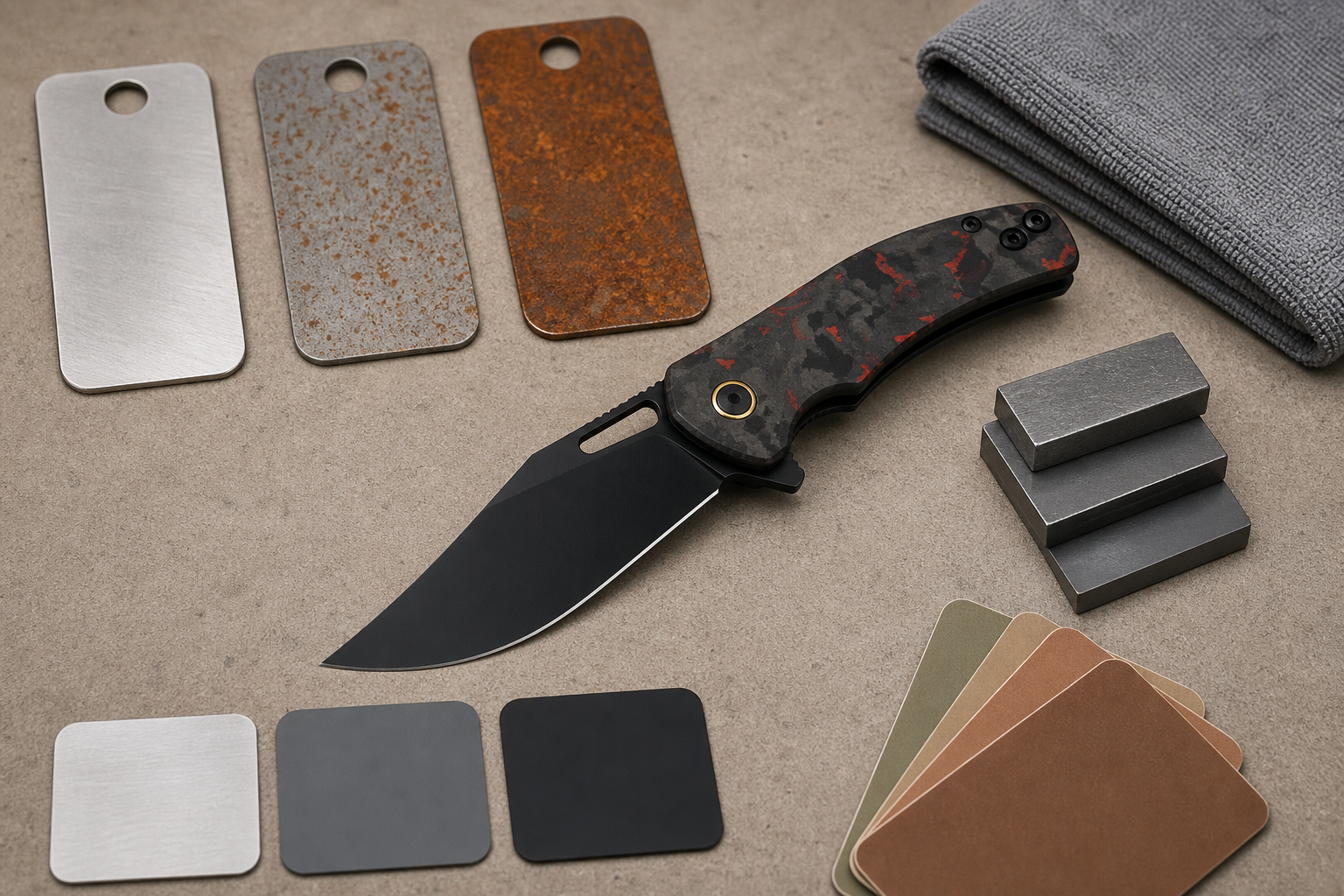
Stainless steel, carbon steel, tool steel, coated steel, Damascus-style steel, and kitchen blade steel do not behave the same way. Stainless is corrosion resistant, not magic. Carbon steel may patina and rust faster. Coated blades may need gentler treatment because aggressive abrasion can remove the coating. Folding knives add pivots, liners, springs, bearings, and handle cavities where liquid can remain.
For kitchen knives, care instructions must also consider food contact. The FDA food-contact substances page explains that food-contact substances include materials that come into contact with food, including cookware, food preparation surfaces, adhesives, and colorants. That is a useful reminder for blades, handles, coatings, adhesives, and care residues.
The RFQ should require the supplier to state:
- Blade steel
- Coating or finish
- Handle material
- Whether the blade is intended for food contact
- Approved cleaner type
- Abrasive limit
- Drying requirement
- Storage recommendation
- Whether oiling is allowed or recommended
- Warranty exclusions for misuse
The care card should be material-specific. A kitchen carbon steel knife, a coated outdoor fixed blade, and a folding EDC knife should not share one generic rust paragraph.
What Safe Basic Steps Should a Care Card Include?
Simple steps reduce damage.
For light surface rust, the care card should recommend washing, drying, gentle approved rust removal, rinsing, drying again, inspecting the edge, and storing the knife dry.
I Keep Customer Instructions Conservative
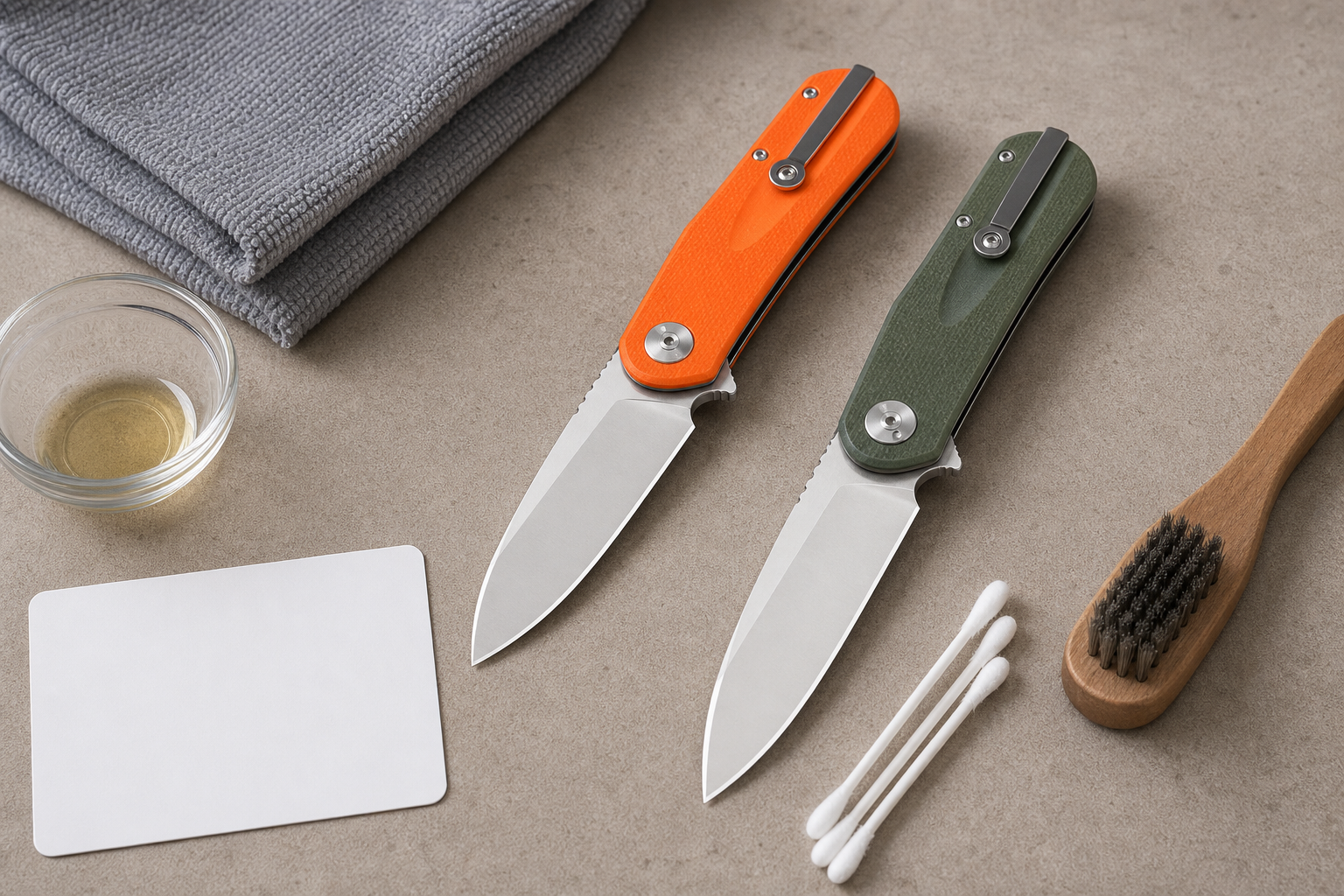
For most consumer-facing care cards, the safest approach is conservative. The customer should first clean the knife to remove food residue, salt, moisture, or dirt. FoodSafety.gov advises washing utensils and surfaces with hot, soapy water after use, especially after contact with raw meat, poultry, seafood, or eggs. That principle fits kitchen knife care.
The buyer-approved care flow may look like this:
| Step | Customer Action | Buyer Note |
|---|---|---|
| 1 | Stop using the knife for food until cleaned | Avoid contamination concerns |
| 2 | Wash with warm soapy water if appropriate | Match food-safety cleaning guidance |
| 3 | Dry completely with a clean towel | Moisture drives repeat rust |
| 4 | Use only the approved gentle rust-removal method | Avoid coating or edge damage |
| 5 | Rinse and dry again | Remove cleaner residue |
| 6 | Inspect edge, tip, handle, and pivot | Stop if damage remains |
| 7 | Store dry and protected | Prevent repeat rust |
The exact rust-removal method should come from the approved product manual. Some products may allow a mild non-scratch pad. Some may allow a rust eraser. Some kitchen products may require a food-safe approach. Some coated blades may require support contact instead of customer removal. The important thing is to avoid improvisation.
What Should Buyers Warn Customers Not to Do?
Bad cleaning can ruin the knife.
Buyers should warn customers not to use bleach, harsh acids, power grinding, aggressive steel wool, unknown rust removers, dishwasher exposure, or soaking methods unless the manual approves them.
I Put the "Do Not" List in Plain Language
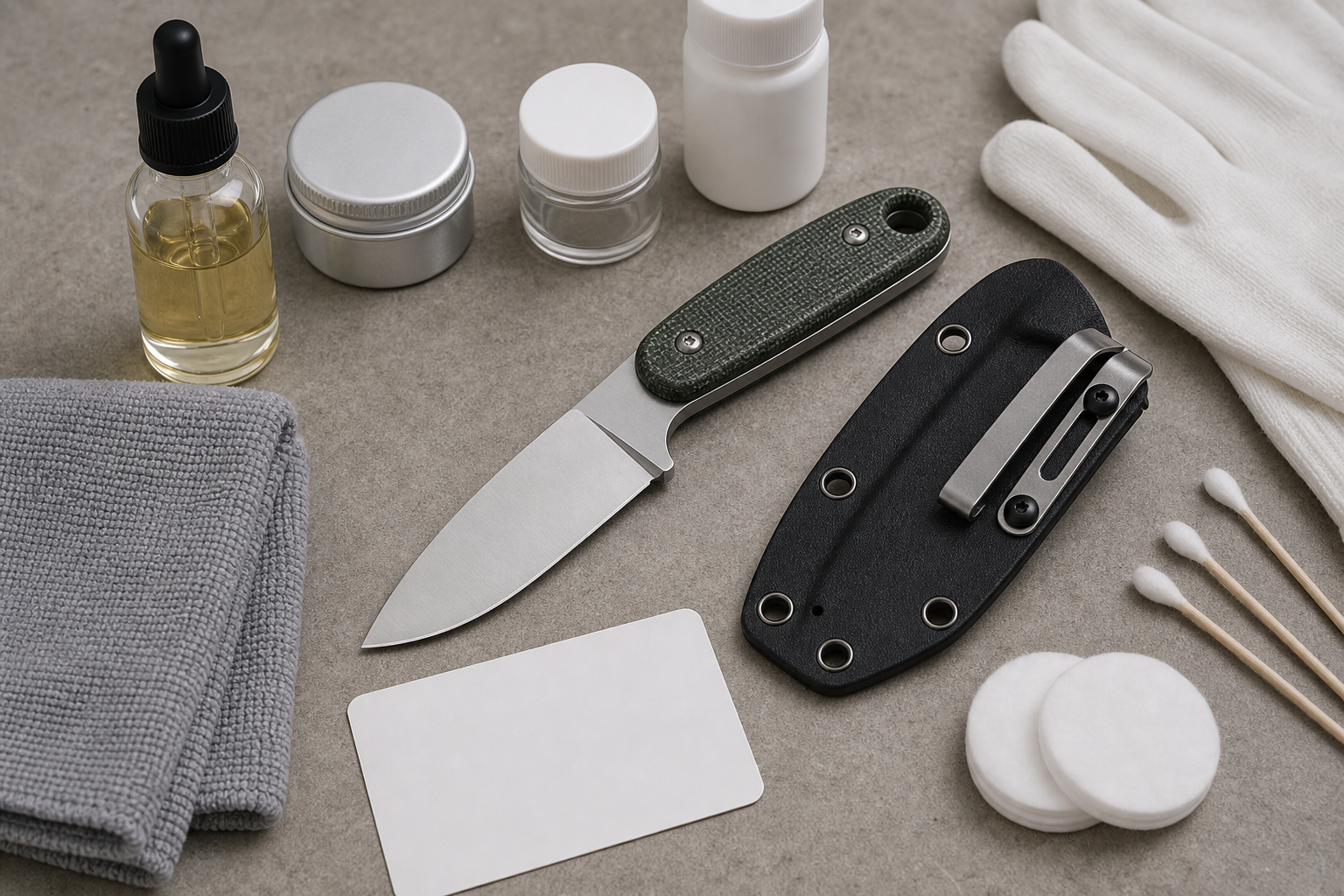
Many customer problems start after the rust appears. A customer may panic and use the strongest chemical or roughest abrasive nearby. That can remove finish, scratch the blade, damage the edge, loosen handle material, or leave residue on a kitchen knife.
The care card should warn against:
- Bleach or chlorine cleaners unless specifically approved
- Harsh acids or unknown rust removers
- Dishwasher cleaning unless the product is designed for it
- Long soaking
- Power tools or grinding wheels
- Aggressive steel wool on finished blades
- Scrubbing toward the edge
- Cleaning a folding knife without drying the pivot
- Reusing the knife for food before rinsing and drying
The CCOHS sharp blades guidance supports practical safety themes such as using the right tool and recognizing injury risks around sharp blades and edges. Rust removal should follow the same mindset. The customer should handle the blade as a sharp product during cleaning, not as a harmless piece of metal.
For OEM buyers, the warning list should be tested with real customers. If the care card is too vague, support teams will receive inconsistent photos and complaints.
How Should Kitchen Knife Rust Removal Address Food Safety?
Kitchen tools need extra care.
Kitchen knife rust guidance should include food-contact review, hot soapy washing, complete drying, residue removal, handle hygiene, and replacement guidance when corrosion is deep.
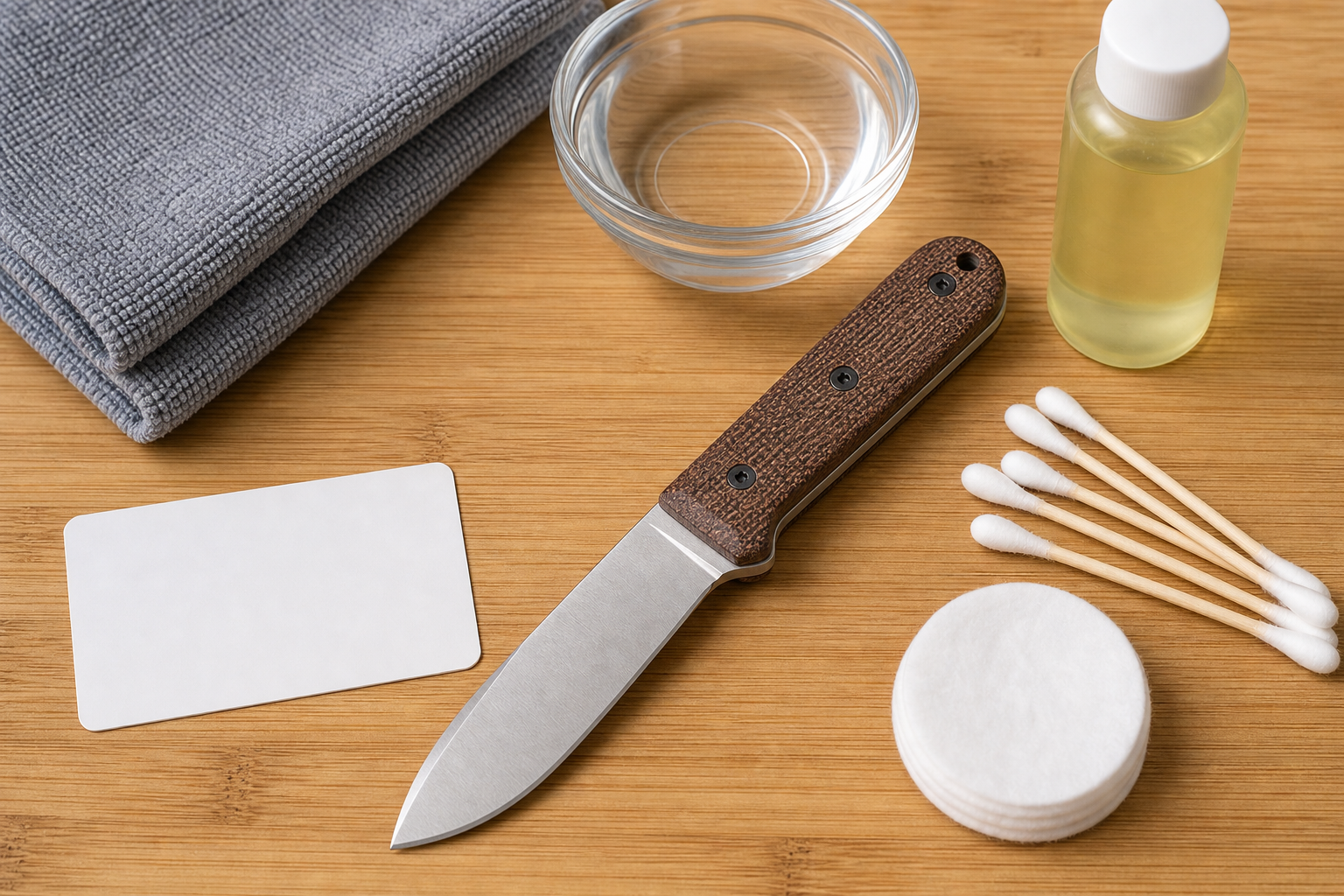
I Treat Rust Removal as Cleaning Plus Inspection
Kitchen knives touch food, so rust guidance cannot focus only on appearance. The knife must be clean, free from unsafe residues, and suitable for food contact after care. If the blade has deep pits or a damaged handle seam, the issue may be more than cosmetic.
The eCFR text for 21 CFR 117.40 states that food-contact surfaces in food manufacturing must be corrosion-resistant when in contact with food and made of nontoxic materials designed to withstand intended use, cleaning compounds, sanitizing agents, and cleaning procedures. A consumer kitchen knife is not the same as factory equipment, but the principle is useful for OEM design: the surface should tolerate realistic cleaning and should not create contamination risk.
Kitchen knife care instructions should explain:
- Wash before and after rust removal
- Use only approved food-contact-safe methods
- Rinse thoroughly
- Dry completely
- Inspect for pits near the edge
- Avoid dishwasher use if not approved
- Stop using the knife for food if corrosion is deep or handle seams are damaged
If the product is a kitchen knife, the buyer should approve care language with food-contact expectations in mind.
How Can Buyers Prevent Rust Before Customers See It?
Prevention starts before sale.
Buyers can reduce rust claims by controlling steel selection, heat treatment, finish, passivation or surface cleaning, packaging dryness, desiccant use, care labels, and warehouse conditions.
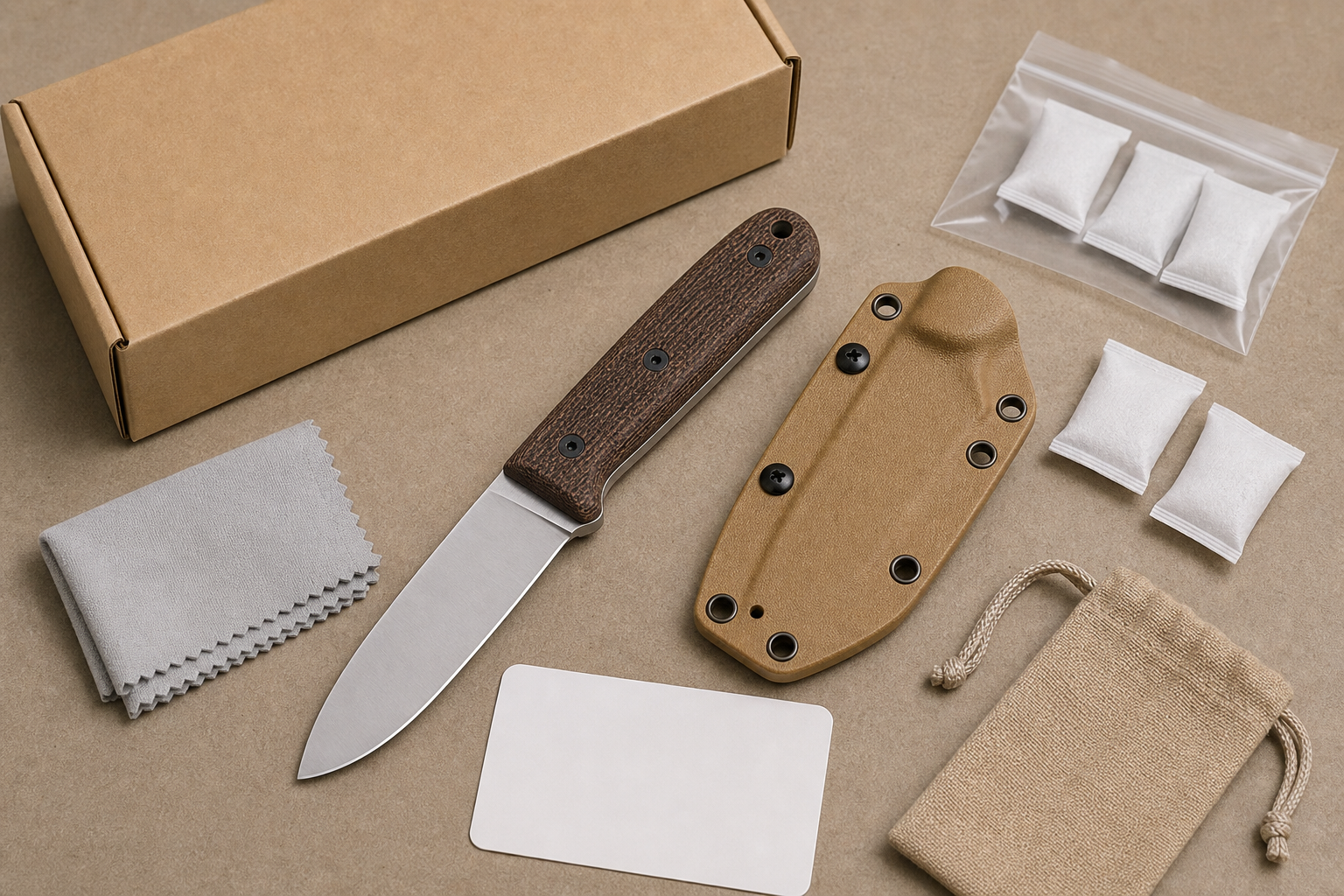
I Do Not Blame Every Rust Claim on the Customer
Some rust claims are user-care issues. Some are supplier-control issues. A buyer should look at both. Rust can appear because of wet use, salty environments, dishwasher exposure, acidic foods, poor drying, damp packaging, embedded iron contamination, low corrosion resistance, coating damage, or long storage in humid conditions.
OEM prevention should include:
- Material selection matched to use
- Finish and coating approval
- Surface cleanliness before packing
- Drying after washing or finishing
- Packaging moisture control
- Desiccant where appropriate
- Carton storage guidance
- Care card included in packaging
- Incoming and outgoing rust inspection
- Customer support photo checklist
The buyer should also control corrosion claim language. The eCFR guidance at 16 CFR 23.11 addresses misuse of terms such as rust proof, rust resistant, corrosion proof, and corrosion resistant. Even though the section sits in guides for certain industries, it is a useful warning for knife marketers: do not make rust claims stronger than the product can support.
It is usually safer to say "corrosion-resistant stainless steel" only when the material and normal-use evidence support that wording. "Rust proof" is a much higher claim.
How Should After-Sales Support Handle Rust Photos?
Support needs a script.
After-sales teams should classify rust photos by severity, ask about use and cleaning history, confirm product material, advise approved care, and escalate deep corrosion or food-contact concerns.
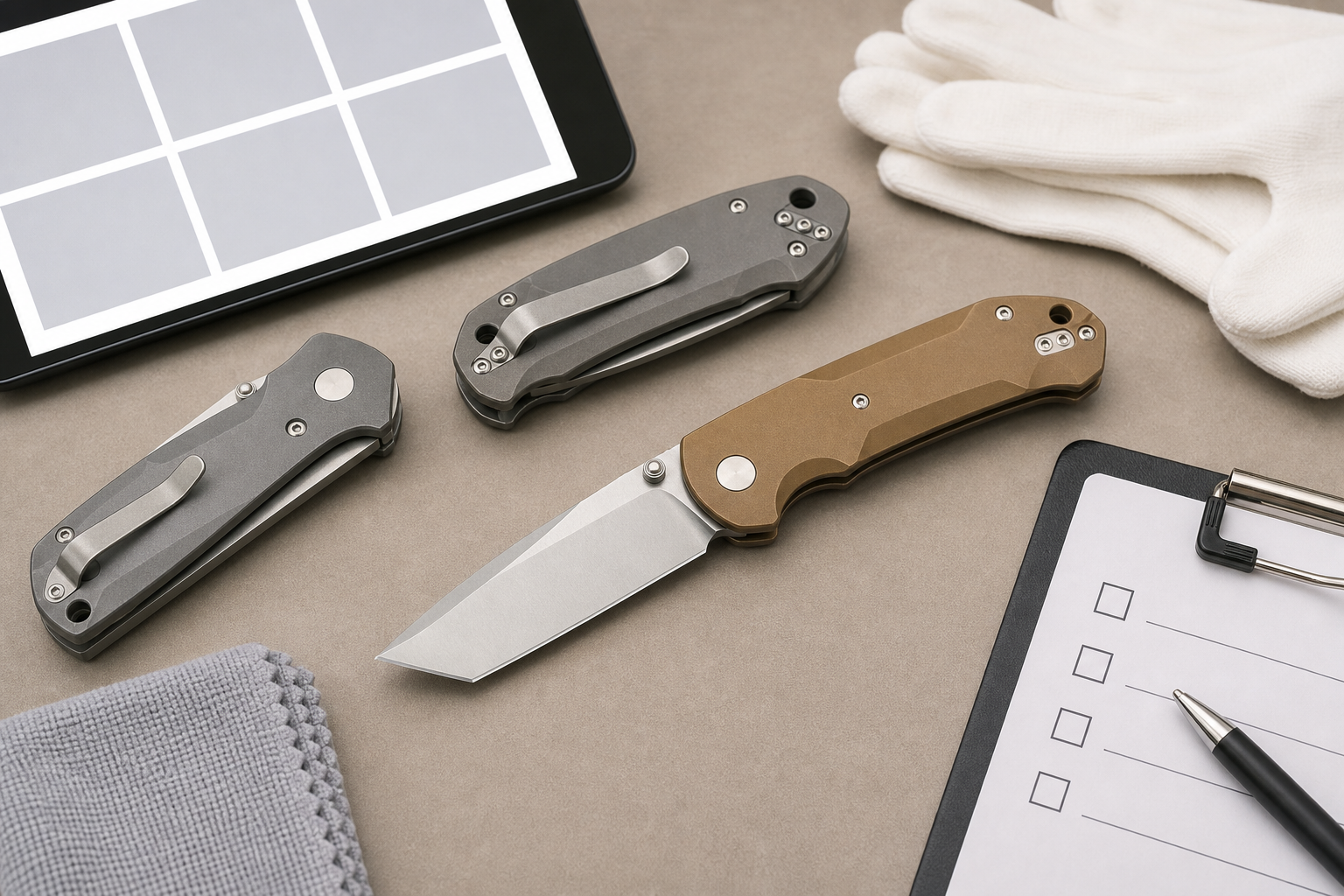
I Give Support Teams Decision Rules
Rust support can become messy if every agent gives different advice. The buyer should prepare a support workflow before launch. This protects the brand and gives customers safer answers.
Support should ask:
- Which product is it?
- How long has it been used?
- Was it used with food, saltwater, acidic food, or outdoor moisture?
- Was it washed in a dishwasher?
- Was it stored wet?
- Is the rust on the edge, blade face, pivot, handle seam, or coating?
- Is there pitting or only surface color?
- Can the customer provide clear photos?
The response should match the severity. Light surface rust may receive approved care steps. Moderate rust may require inspection and warranty review. Severe pitting, loose parts, cracked handles, or rust near food-contact seams may require replacement or disposal guidance.
The FTC advertising and marketing basics remind businesses that advertising claims must be truthful, not deceptive or unfair, and evidence-based. After-sales scripts should match the promises made on the product page.
What Should the RFQ and QC Plan Include?
Care guidance should be built in.
The RFQ should define steel type, finish, corrosion expectations, cleaning limits, care-card copy, label warnings, packaging dryness, rust inspection, and support escalation rules.
I Make Rust Care Part of Product Development
Rust care should not be written at the last minute by a marketing team. It belongs in the RFQ, sample approval, packaging design, and QC plan. If the buyer does not define care requirements, the supplier may not control finish, packaging dryness, or support evidence.
Strong RFQ items include:
- Blade steel and coating
- Food-contact status
- Corrosion-resistance expectation
- Approved cleaning method
- Disallowed cleaning method
- Drying and storage instruction
- Packaging moisture control
- Care card copy
- Sharp-edge warning
- Claim evidence file
- Rust inspection standard
- Warranty boundary
- Support escalation rules
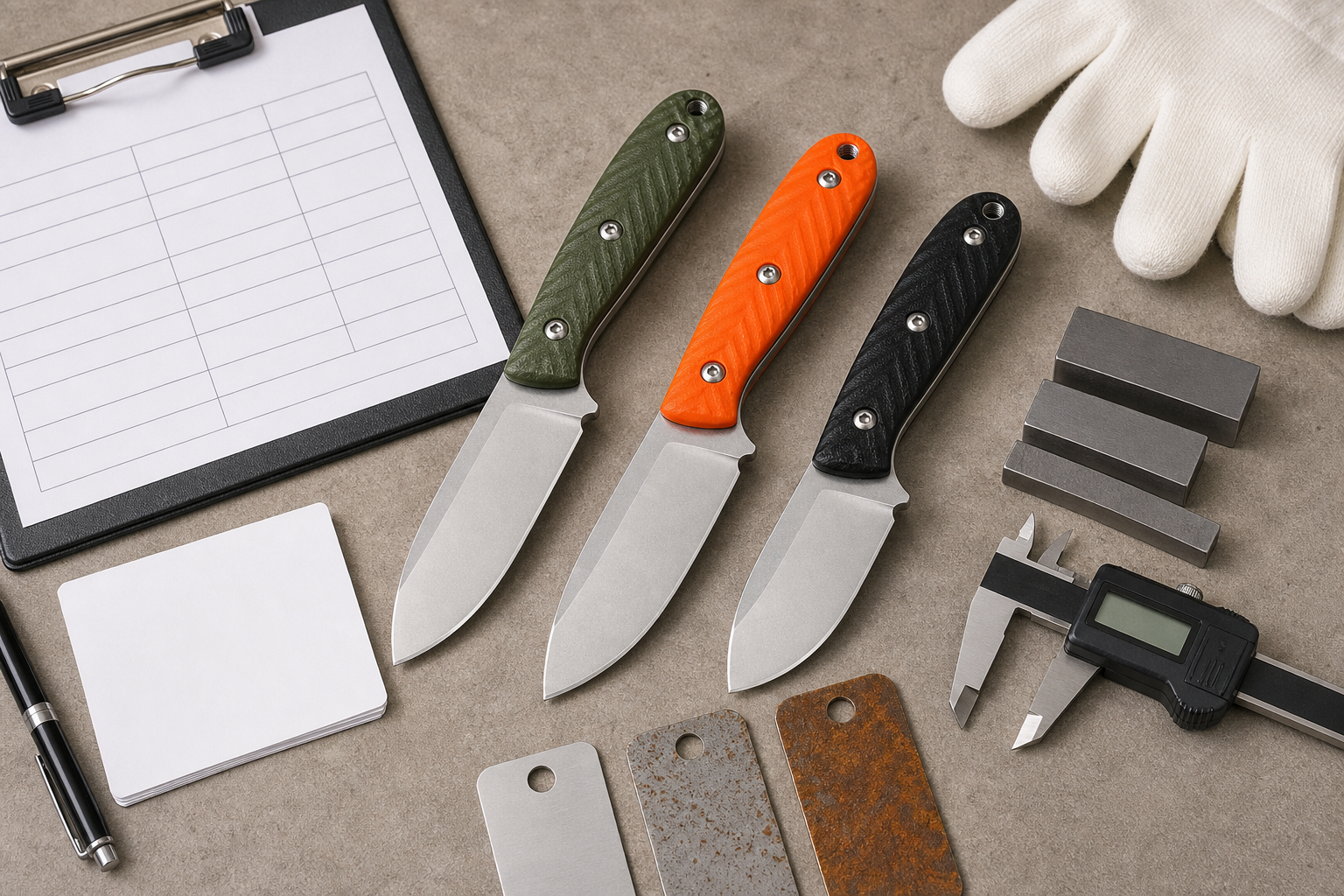
Final QC should include visible rust inspection, coating damage inspection, packaging dryness, care-card presence, label review, and approved sample comparison. For kitchen products, the buyer should also check that food-contact language and cleaning instructions are consistent with the real material and finish.
Turn your idea into a quote-ready knife project.
Share your drawing, sample photo, target quantity, market, and packaging needs. Vast State will review manufacturability and prepare OEM/ODM options.
Conclusion
Rust removal guidance should be conservative, material-specific, and food-safe where needed. Buyers should prevent rust with better specs, packaging, labels, and QC.