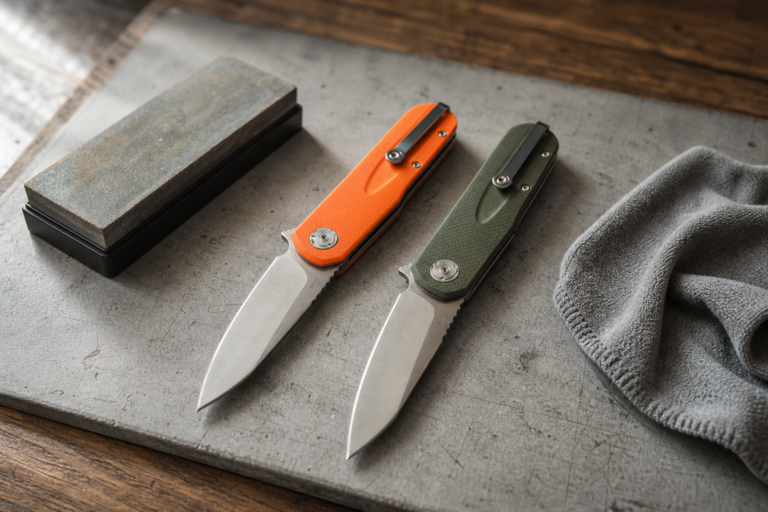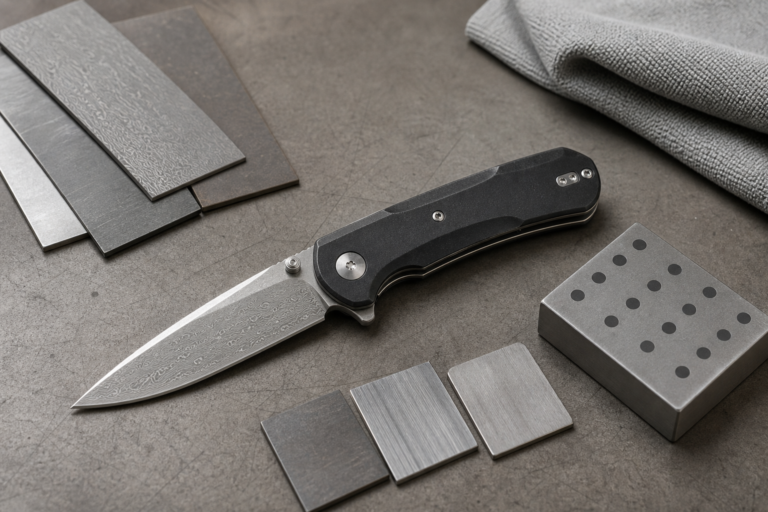
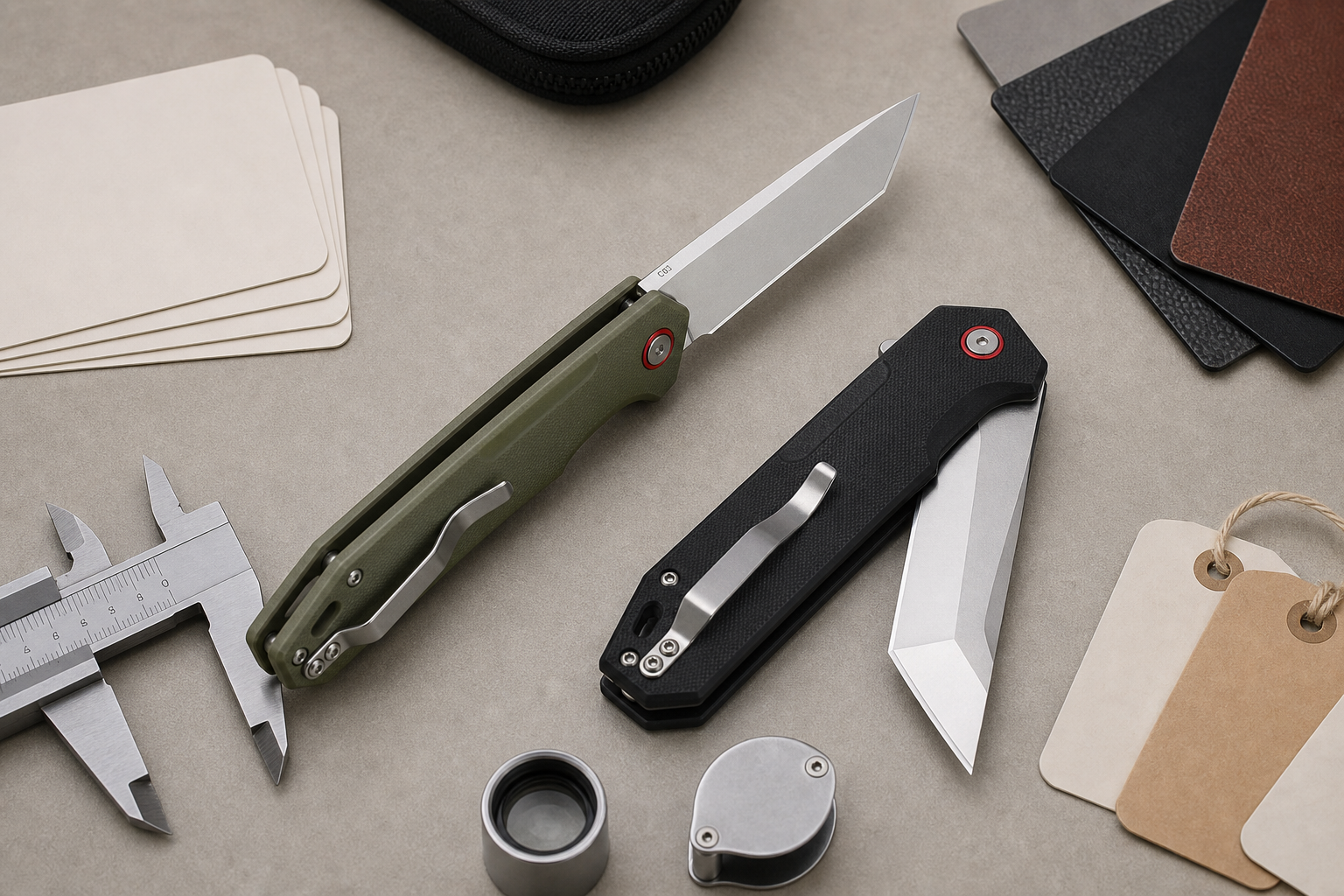
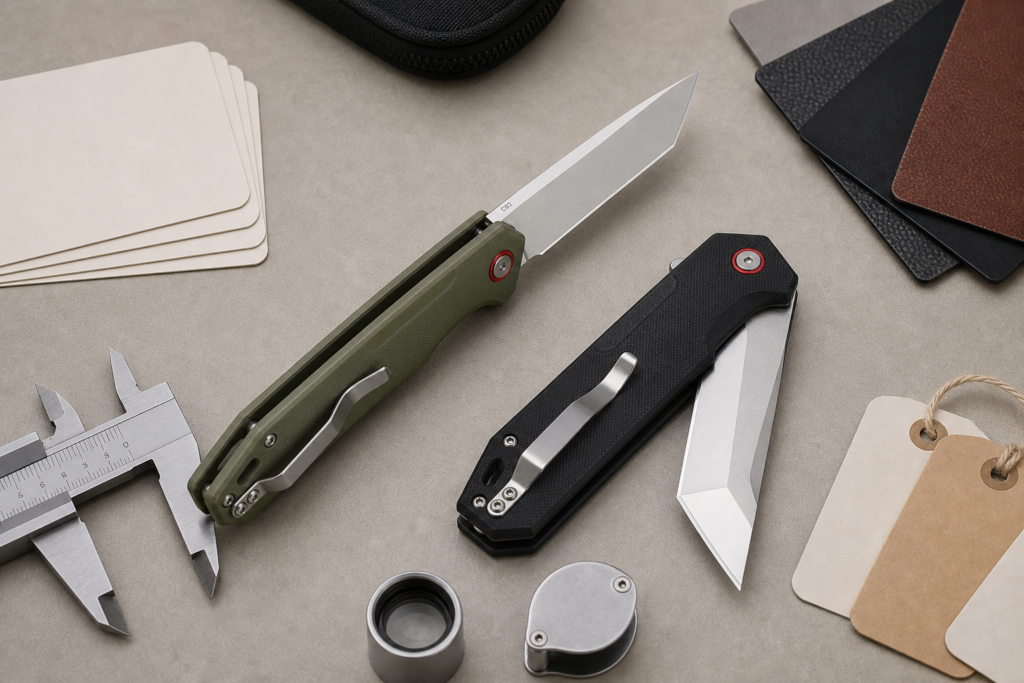
Pocket knife "types" sound simple until sourcing begins. If the type is vague, the supplier may quote the wrong mechanism, lock, blade, safety label, or compliance path.
Buyers should classify pocket knife types by mechanism, lock or non-lock structure, blade profile, size class, handle design, pocket clip, material, target market, and legal review needs instead of treating all folding knives as one product.
Quick buyer brief:
- Answer: Use pocket knife type classification as an RFQ and QC tool, not as a ranking of which knife is best.
- Buyer context: This guide is for EDC brands, outdoor accessory buyers, private label sellers, importers, distributors, and OEM/ODM sourcing teams.
- Key checks: Opening method, lock type, blade profile, blade length, edge style, steel, hardness, handle material, clip layout, closure safety, packaging warning, travel wording, market restriction review, claim file, and inspection method.
Developing a folding knife line for your brand?
Vast State supports OEM/ODM folding knife projects, including blade steel, lock structure, handle material, finish, logo method, packaging, and quality inspection planning.
This article does not rank pocket knives, recommend one type as the best, review brands, compare competitors, or explain weapon use. It treats pocket knife types as product taxonomy for safer sourcing, clearer listings, better QC, and more honest customer education.
The buyer's goal is not to list "amazing features." The goal is to decide which specifications belong in each SKU, which markets need legal review, and which wording should be avoided before the product page goes live.
What Counts as a Pocket Knife Type in an RFQ?
A type is a specification group.
In an RFQ, pocket knife type should describe structure, mechanism, lock format, blade profile, size class, handle layout, and intended utility category.
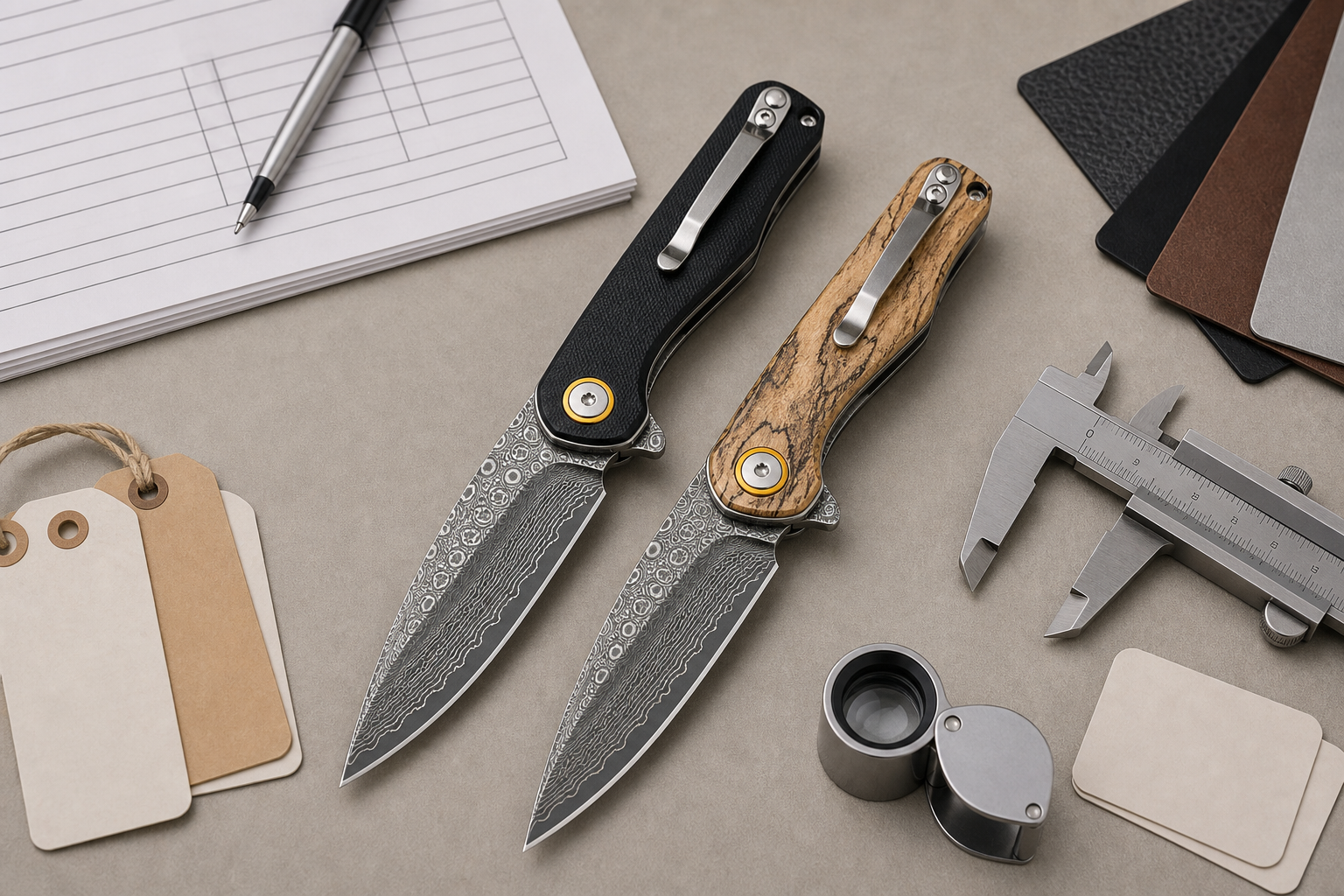
I Start With Taxonomy, Not Hype
Many product teams use "pocket knife" as a broad phrase. That is fine for casual conversation, but it is not enough for OEM/ODM sourcing. A slipjoint, lockback, liner lock, frame lock, button-lock manual folder, compact keychain folder, multi-tool folder, and assisted or automatic category may create very different compliance, QC, and support needs.
The RFQ should separate product type from sales adjectives. "Amazing features" does not tell the factory what to build. "Manual folding knife with non-locking slipjoint structure, 70 mm blade, stainless handle liners, nail nick opening, no pocket clip, and printed safety warning" gives the supplier something to quote and inspect.
I would classify a pocket knife type across these dimensions:
| Dimension | Example Question | Why It Matters |
|---|---|---|
| Mechanism | Manual, assisted, automatic, or non-locking? | Legal and safety review |
| Lock format | Locking, non-locking, back lock, liner lock, frame lock? | Closure risk and user guidance |
| Blade profile | Drop point, sheepsfoot, utility profile, or another shape? | Task positioning and packaging copy |
| Size class | Keychain, compact, standard, large? | Market rules and ergonomics |
| Carry layout | Clip, pouch, keyring, or no carry accessory? | Packaging and warning language |
OEM/ODM RFQ Checklist
Prepare these details to help Vast State review your project and provide a more accurate quotation.
| RFQ Field | What to Prepare |
|---|---|
| Project type | OEM from drawing / ODM private label / wholesale catalog |
| Product category | Folding knife / fixed blade / multi-tool / outdoor tool |
| Design status | Idea / sketch / 2D drawing / 3D CAD / physical sample |
| Target price | Ex-factory target price or retail price range |
| MOQ expectation | 500 / 1,000 / 3,000 / 5,000+ pcs |
| Logo method | Laser engraving / etching / printing / molded logo |
| Packaging | Standard packaging / custom retail box / Amazon-ready |
| Market | USA / EU / Japan / Korea / Middle East / other |
| Compliance needs | Buyer-specified testing / documentation / labeling |
| Timeline | Sample deadline / mass production deadline |
This classification helps the buyer stop mixing unrelated SKUs under one loose label.
How Should Opening Method Shape the Product Type?
Opening method changes risk.
Buyers should define the opening method early because manual, assisted, automatic, gravity-related, and kit-style mechanisms can create different sourcing and legal questions.
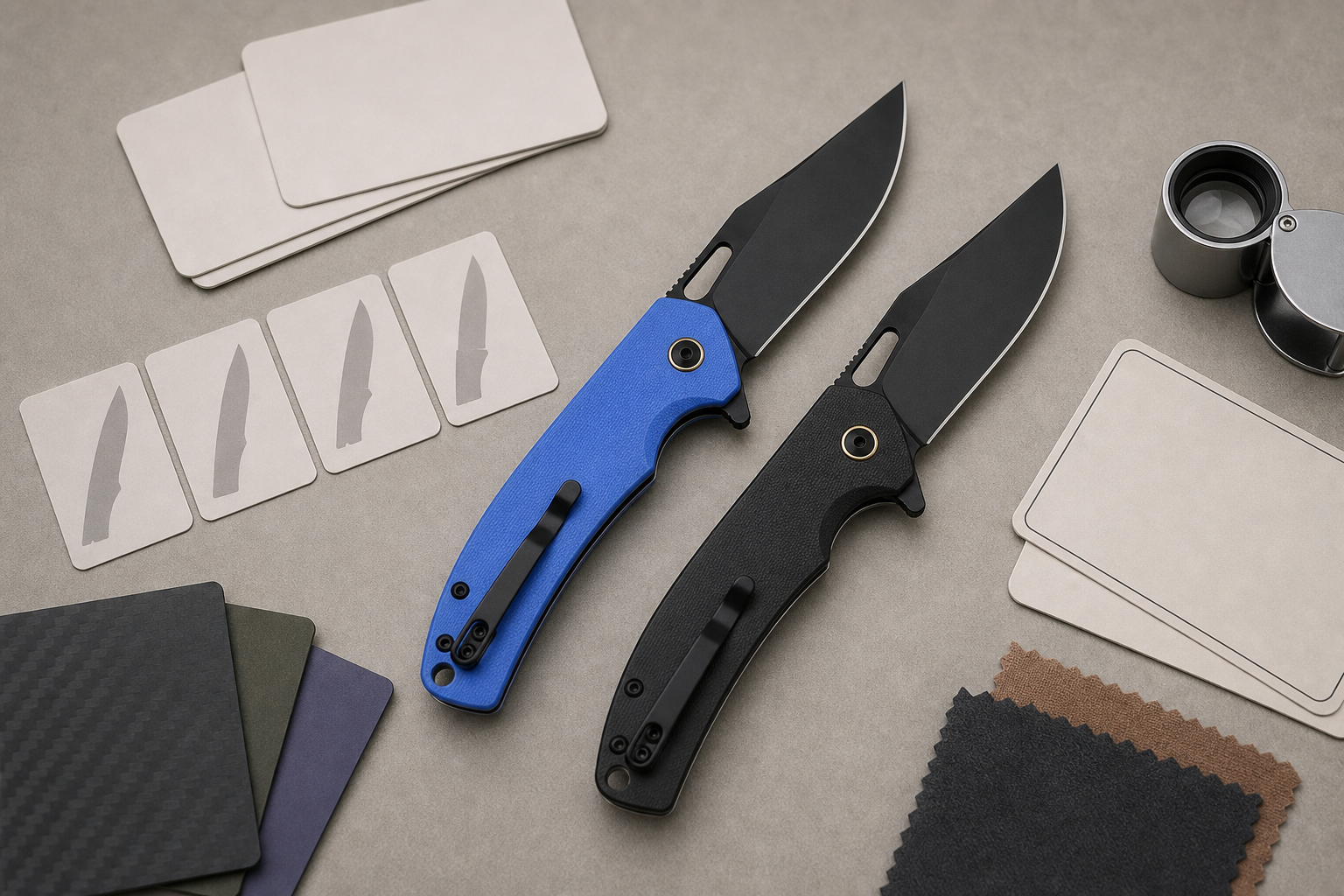
I Avoid Mechanism Ambiguity
Opening method is one of the first specifications I would lock down. A supplier may use words like manual, flipper, assisted, automatic, spring, gravity, or button casually. Those words can matter in import, platform, and local sales review. The buyer should not rely on casual chat language.
U.S. Customs and Border Protection notes that switchblade and other spring-loaded knives may be prohibited and that local rules can still apply even when a federal authority clears an item. The same CBP guidance also notes that folding knives with a blade bias toward closure are not considered switchblades under the Federal Switchblade Act. That is not a full legal opinion for every market, but it shows why buyers must define the mechanism and keep records.
The RFQ should ask:
- Is the knife manual only?
- Is there any spring, button, gravity, or inertia-related action?
- Does the blade have bias toward closure?
- Can the design be converted by adding parts?
- Is the sample identical to mass production?
- Which markets will receive the product?
I would not publish casual travel or legality claims from a supplier message. I would send mechanism samples to a qualified reviewer when the SKU may enter regulated categories.
How Should Lock Type Affect Buyer Decisions?
The lock is a safety feature, not decoration.
Buyers should classify pocket knives by lock or non-lock format, then test closure resistance, user warnings, lock access, hand clearance, and consistency across production.
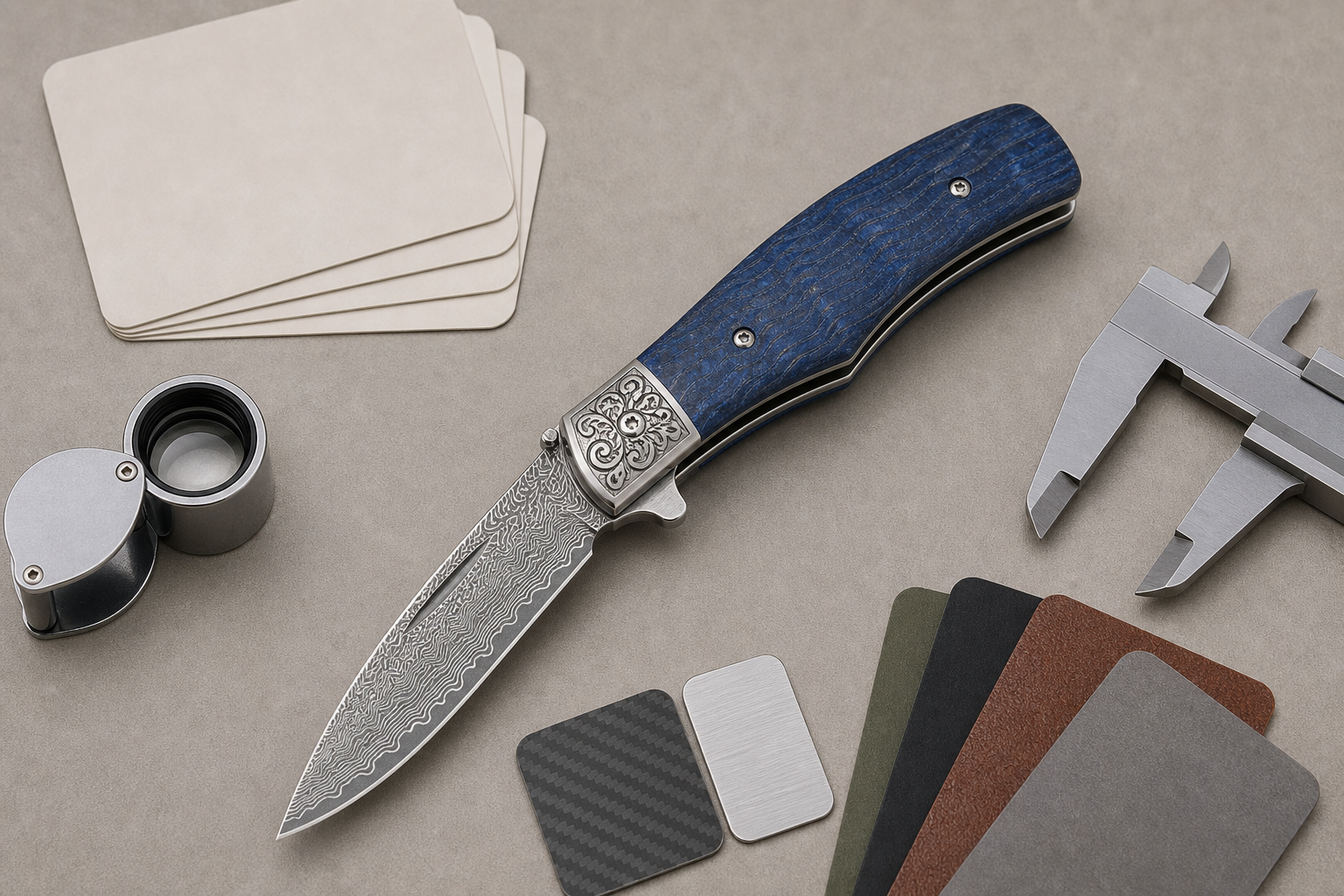
I Treat Closure Risk as a QC Topic
Lock type affects customer experience and after-sales risk. A non-locking pocket knife may be acceptable in one market or use case, while a locking folder may be preferred for another product concept. The buyer should not frame this as "better or worse" in a universal way. The buyer should ask which structure fits the market, task, warning label, and inspection plan.
The Canadian Centre for Occupational Health and Safety advises people to use the right tool for the job, inspect tools before use, store knives securely, and avoid using a knife as a pry bar, screwdriver, scraper, or other substitute tool. Those safety ideas translate well into product education. If the lock, handle, or blade style invites misuse, the packaging should make the boundary clear.
RFQ and QC items should include:
- Lock type name
- Lock engagement target
- Closing force or resistance check if used
- Blade play tolerance
- Handle clearance around the closing path
- Sharp-edge warning
- Instruction to close and store safely
- Broken, dull, or rusty blade support rule
The exact test method depends on the design. The important point is that lock classification belongs in the product file, not only in the listing title.
How Should Blade Shape Be Described Without Unsafe Claims?
Blade shape should stay task-based.
Buyers should describe blade profiles around safe utility tasks, material cutting, food preparation where applicable, packaging, outdoor chores, and maintenance boundaries.
I Use Neutral Utility Language
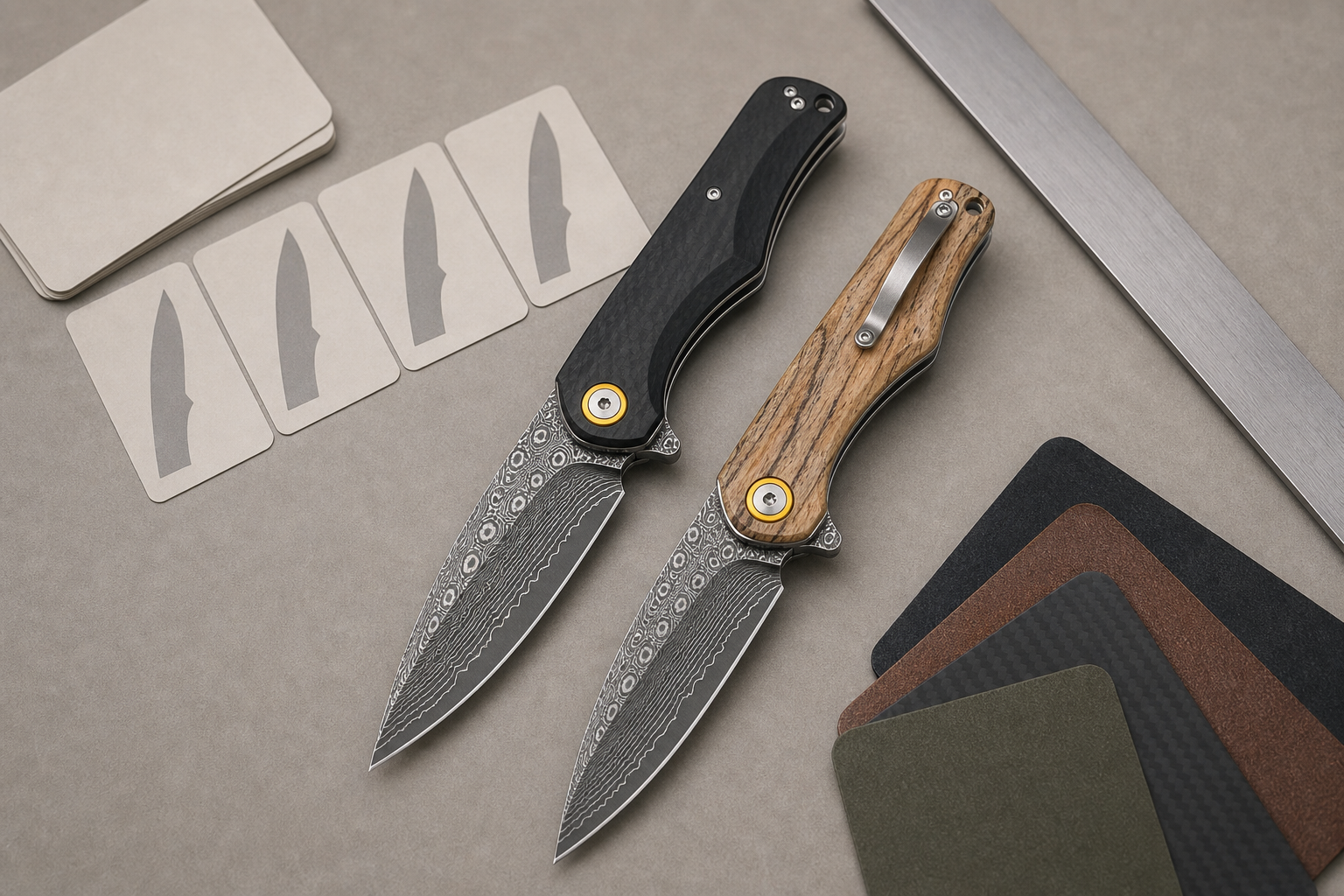
Blade shape is where product pages often drift into risky language. A drop point, sheepsfoot-style utility profile, clip point, spear-style profile, tanto-style profile, or hawkbill-style utility blade can be described in neutral product terms. The copy should not turn shape into combat value, intimidation, or self-defense positioning.
A safer product page focuses on:
- Tip control for general cutting
- Belly for slicing materials
- Straight edge sections for utility cuts
- Rounded or less aggressive tips where appropriate
- Serration only when the task needs it
- Sharpening and maintenance expectations
- Clear warnings against prying, twisting, or striking
The buyer should also separate blade shape from blade safety. A shape may look attractive in photos, but it still needs edge consistency, heat treatment, and packaging warnings. It may also affect whether the product can enter a target market.
For family, youth, hobby, or workplace-adjacent categories, I would use very plain language. Say "general utility cutting" or "controlled slicing tasks." Do not say "fighting," "defense," "tactical advantage," or "deadly."
Which Materials and Finish Details Should Buyers Specify?
Materials decide durability.
Buyers should specify blade steel, hardness range, surface finish, handle material, pivot hardware, clip material, corrosion expectations, and care instructions.
I Make Material Claims Verifiable
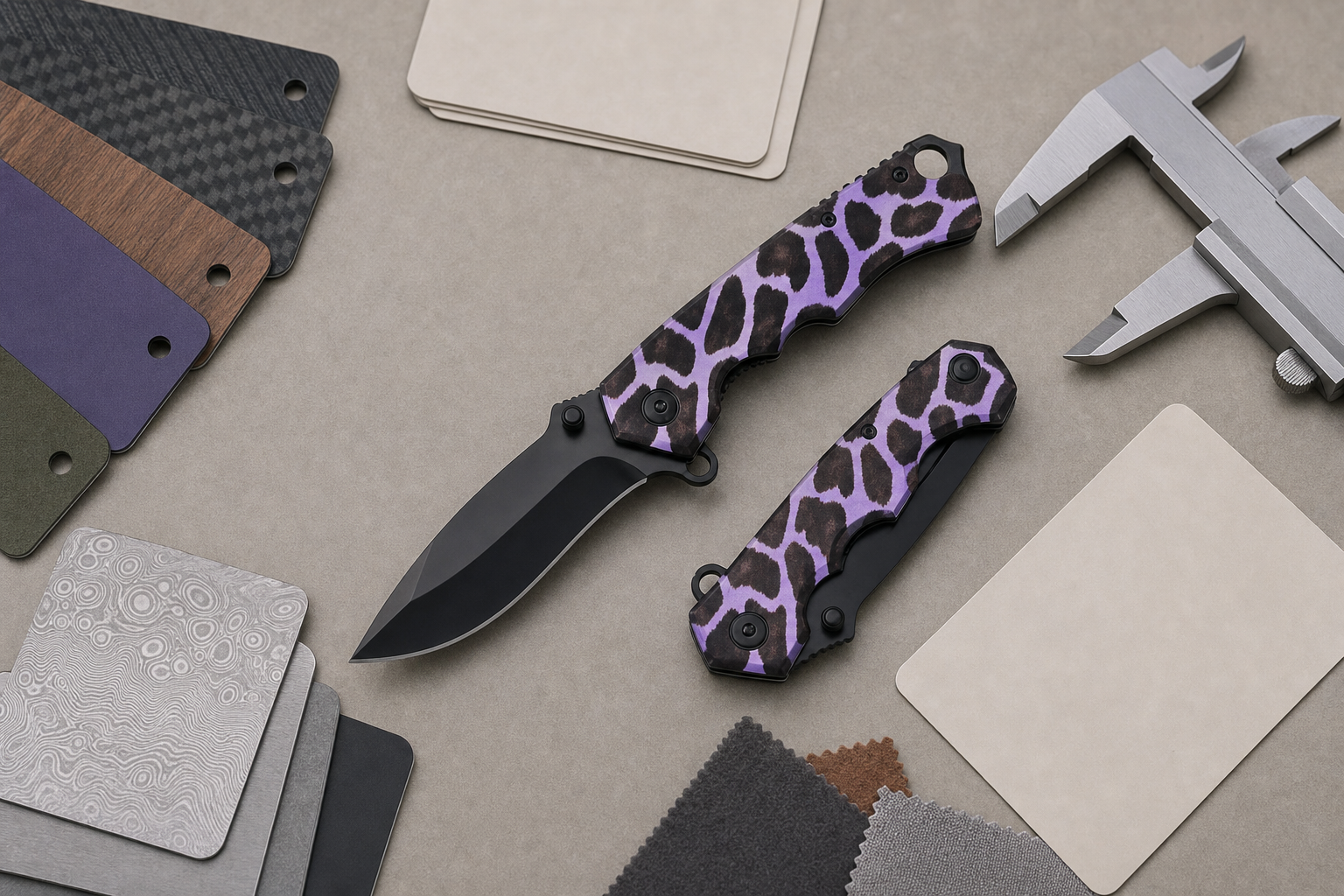
Pocket knife type is not only mechanism and shape. Materials decide how the product feels, wears, corrodes, and returns. A compact folder with low-cost stainless steel and plastic handles belongs in a different SKU logic than a premium folder with upgraded steel, machined handle scales, ball bearings, and a coated clip.
ASTM E18 explains that Rockwell hardness testing can provide useful information about metallic materials and is used for commercial acceptance testing, while a measurement at one location may not represent the whole part. For pocket knives, I would require defined test locations, sample counts, and acceptance ranges.
For corrosion positioning, the British Stainless Steel Association explains that stainless corrosion resistance comes from chromium and a thin chromium-rich oxide film that can normally self-repair when oxygen is available, but the passive state can break down under some conditions. So "stainless" still needs care instructions.
Specification fields should include:
- Blade steel grade or agreed equivalent
- Target hardness range
- Finish type and scratch tolerance
- Handle scale material
- Liner or frame material
- Pivot and screw material
- Clip material and coating
- Care card and rust boundary
If the buyer cannot verify a material claim, the listing should not make it.
How Should Carry, Packaging, and Travel Wording Be Controlled?
Carry wording can create problems.
Buyers should control pocket clip, pouch, keyring, and travel language carefully, and should not imply unrestricted carry, airport permission, or universal legality.
I Avoid "Carry Anywhere" Claims
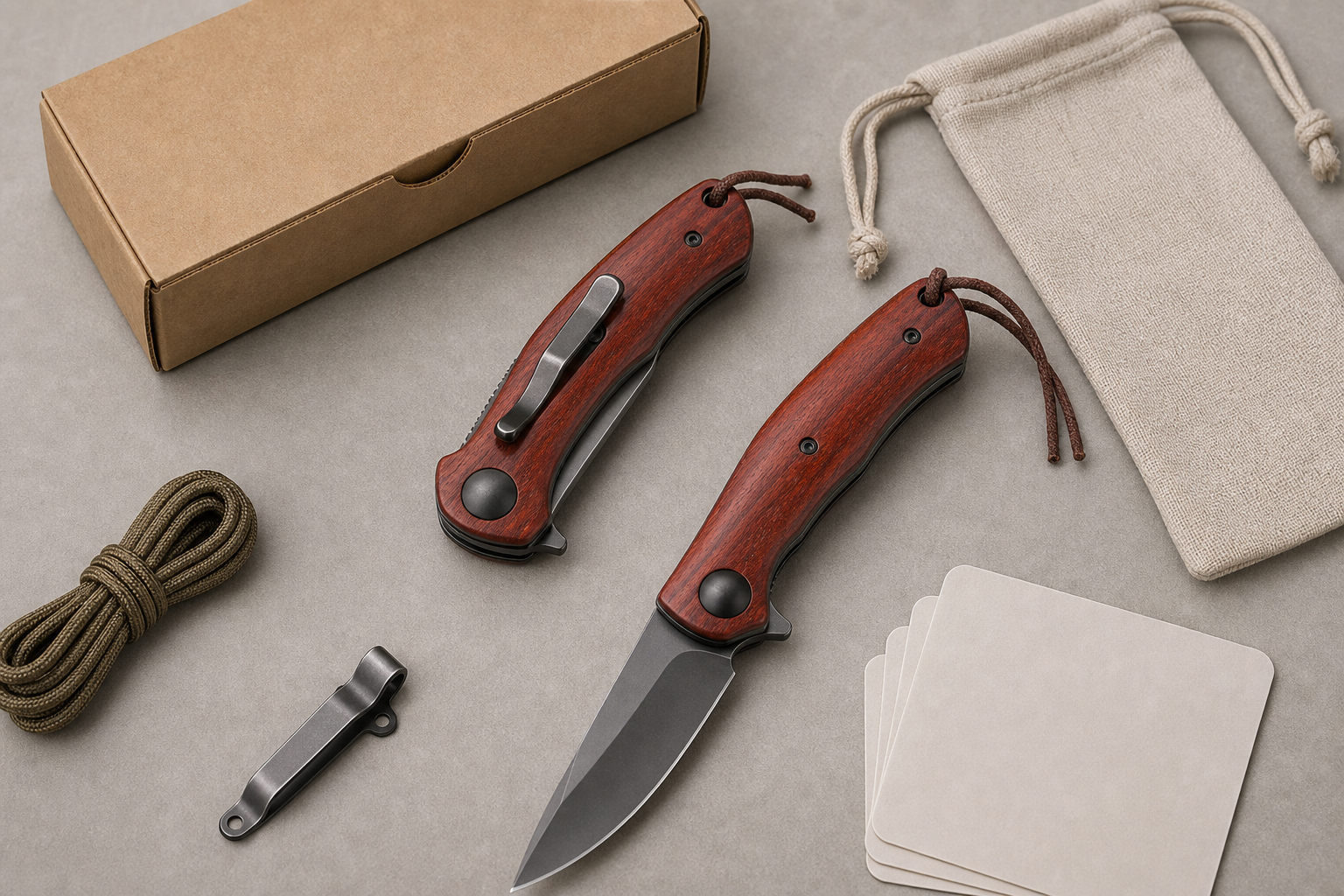
Pocket knives are often sold with clips, pouches, or keyring attachments. Those features can be useful, but the product page should not say or imply that the customer can carry the knife anywhere. Rules vary by country, state, city, building, transport system, workplace, school, and event venue.
The TSA's knife page states that knives are not allowed in carry-on bags, while checked bags are listed as allowed with an exception for certain blunt or plastic cutlery; it also says sharp objects in checked bags should be sheathed or securely wrapped. This is exactly why "travel-friendly pocket knife" can be misleading unless the claim is tightly qualified.
Better wording:
- Includes pocket clip for storage convenience where lawful.
- Store closed and secured when not in use.
- Check local rules before possession, transport, sale, or travel.
- Not for carry-on baggage.
- Keep away from children unless the product is specifically designed and supervised for an allowed training context.
The packaging should be clear, not dramatic.
How Can Buyers Avoid Ranking and Recommendation Language?
Taxonomy should not become a ranking.
Buyers can explain pocket knife types without saying one type is the best, most useful, safest, strongest, or ideal for every customer.
I Prefer Fit Language Over Best Language
The user already made the direction clear: brand topics, reviews, recommendations, rankings, and competitor lists should be removed. That same rule should guide the final article and the WordPress upload table. A pocket knife type guide can still be useful if it explains classification and buyer decision criteria without ranking.
The Federal Trade Commission's advertising substantiation policy says advertisers need a reasonable basis for objective claims before making them. A claim like "safest lock," "strongest pocket knife," "best everyday carry," or "most reliable mechanism" can become objective or implied objective language. If the buyer does not have testing and market-specific context, the safer route is to avoid the claim.
Safer phrasing:
| Avoid | Use Instead |
|---|---|
| Best pocket knife type | Type fit depends on target market and specification |
| Safest lock | Lock design should pass buyer-defined safety checks |
| Travel-friendly knife | Check transport and local rules before travel |
| Strongest blade | State tested material and hardness range |
| Perfect EDC | Describe intended utility category |
This keeps the article upload-ready without drifting back into recommendation content.
What Should the RFQ and QC Plan Include?
The RFQ should make type measurable.
A pocket knife type RFQ should define mechanism, lock, blade, size, material, finish, clip, packaging, warnings, claim evidence, and inspection criteria.
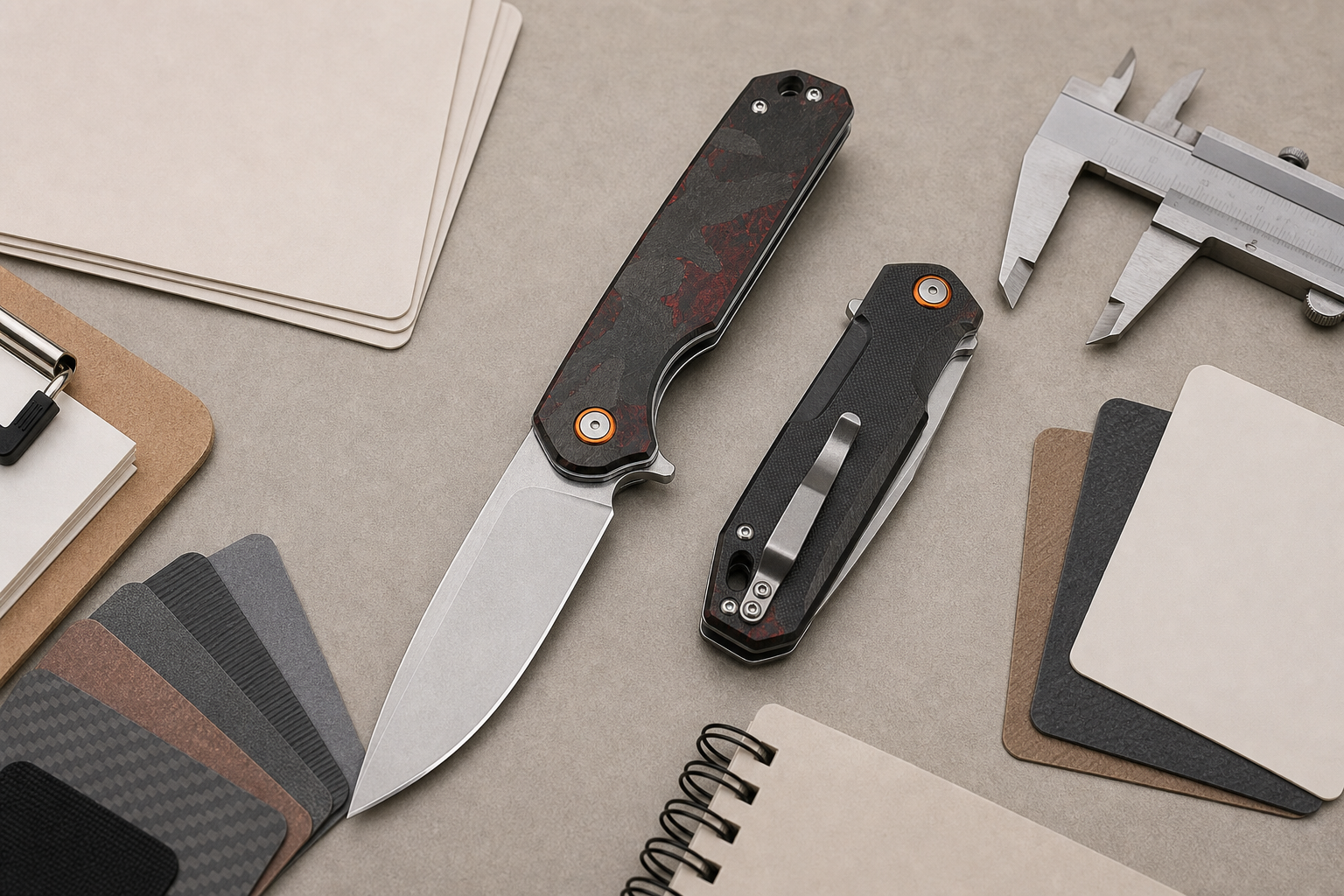
I Turn Type Names Into Acceptance Criteria
The finished RFQ should not stop at "pocket knife." It should make the type measurable. That helps the supplier quote correctly and helps the inspector reject inconsistent production.
The RFQ should include:
- Product type category
- Manual, assisted, automatic, or other mechanism review
- Lock or non-lock structure
- Blade length, thickness, and profile
- Edge type and sharpening requirement
- Blade steel and hardness range
- Handle, liner, pivot, screw, and clip materials
- Closed length and open length
- Weight target
- Surface finish and coating
- Packaging warning copy
- Legal review status by market
- Claim evidence file
- Inspection sample size and defect list
- Support script for closure, rust, broken tip, and loose screw complaints
This is the practical way to handle pocket knife types. The buyer is not choosing a winner. The buyer is building a controlled product family.
Turn this article into a folding knife project.
Share your blade type, lock direction, steel preference, handle material, quantity, target market, and packaging needs. Vast State can prepare OEM/ODM options.
Conclusion
Classify pocket knives by measurable structure, safety, materials, market rules, claims, and QC standards, not by hype or rankings.