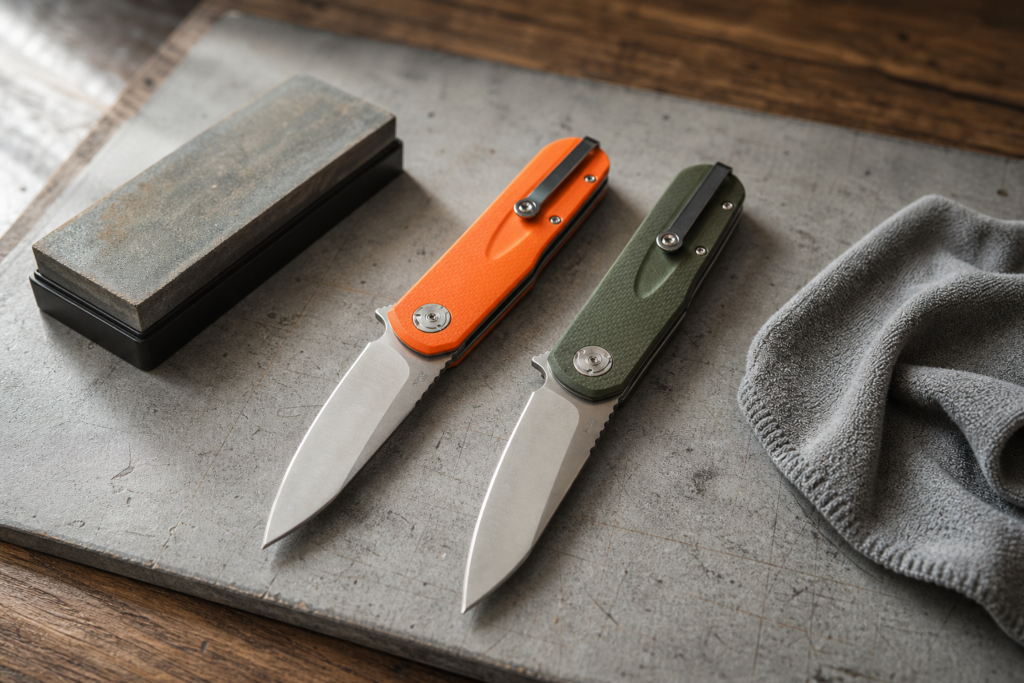
A dull pocket knife creates more support trouble than most buyers expect. Customers press harder, damage the edge, blame the steel, and return a product that only needed safer care instructions.
Buyers should explain pocket knife sharpening as controlled maintenance: inspect the knife first, follow the approved edge angle and tool type, avoid powered shortcuts, remove burrs safely, clean and dry the blade, document material limits, and tell users when to stop and seek service.
Quick buyer brief:
- Answer: Build sharpening guidance around safety, inspection, approved maintenance methods, realistic claims, and clear stop rules.
- Buyer context: This guide is for knife brands, EDC buyers, outdoor product teams, private label importers, distributors, and OEM/ODM sourcing managers.
- Key checks: Blade damage, lock or slip-joint condition, steel type, factory bevel, approved sharpening tool, no power-grinding shortcut, burr removal, cleaning, corrosion care, claim evidence, customer support script, and QC record.
Developing a folding knife line for your brand?
Vast State supports OEM/ODM folding knife projects, including blade steel, lock structure, handle material, finish, logo method, packaging, and quality inspection planning.
This article discusses pocket knife sharpening for product-care copy, customer support, QC, and OEM/ODM specification work. It does not teach tricks, flipping, fast deployment, self-defense, intimidation, concealed carry, or weapon use.
The goal is not to turn every customer into a sharpening expert. The goal is to reduce accidents, returns, broken tips, damaged edges, rust complaints, and unsupported product claims.
What Should Buyers Check Before Sharpening a Pocket Knife?
Sharpening should not start with the stone. It should start with inspection, because a damaged folding knife can turn simple maintenance into a safety issue.
Buyers should tell users to inspect the blade, pivot, lock, handle, screws, rust, chips, and edge damage before sharpening. If anything feels loose, cracked, bent, or unsafe, sharpening should stop.
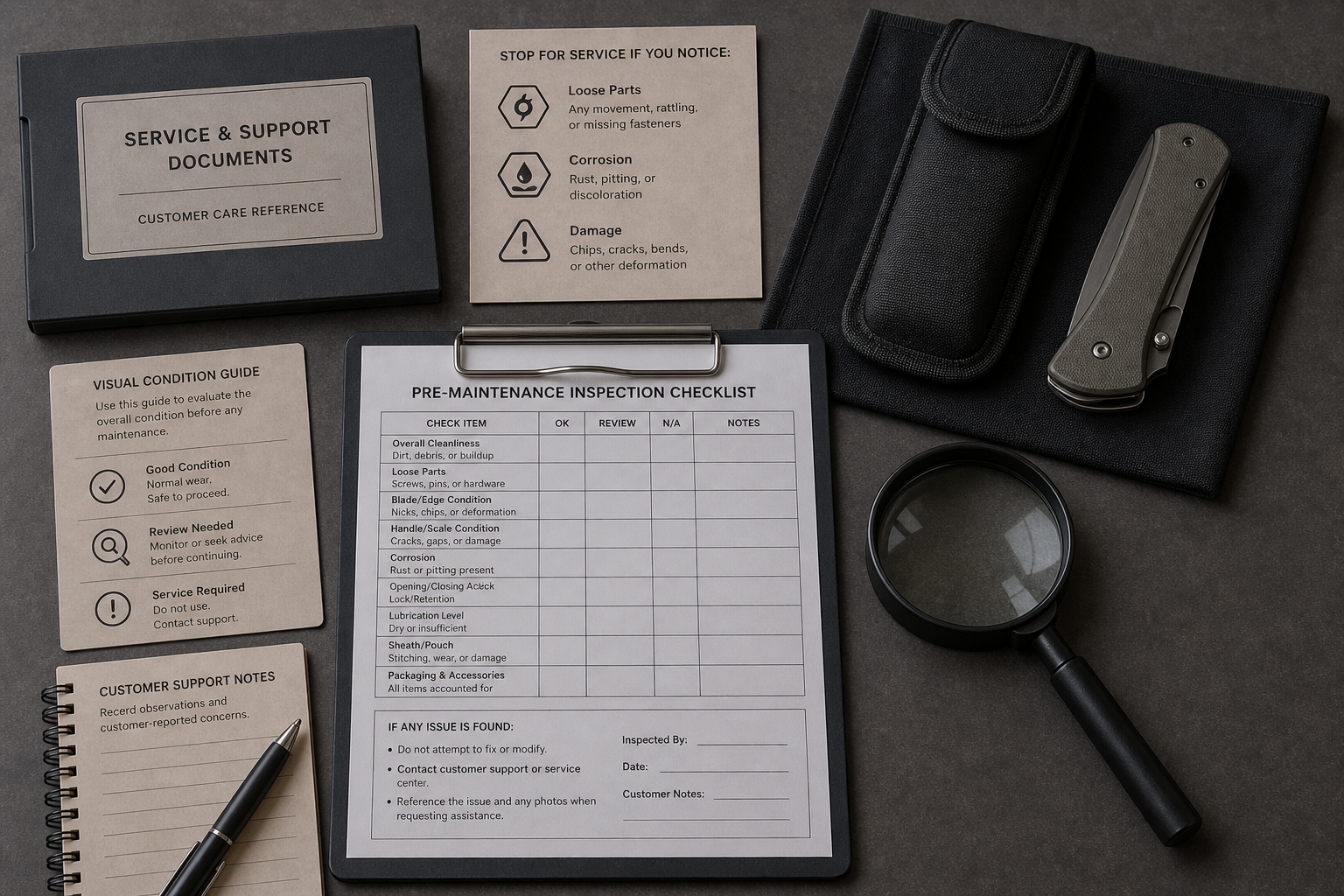
I Start With a Stop Rule
Many care cards begin too late. They say "sharpen the edge" before they say "check whether the knife is safe to maintain." For a folding knife, that order matters. The blade edge is only one part of the product. The pivot, lock, liner, spring, handle, screws, clip, and stop pin can all affect safe maintenance.
I would place a short inspection box before any sharpening wording. The user should check whether the blade opens and closes normally, whether the lock or slip-joint feels stable, whether the blade wobbles, whether the tip is broken, whether there are deep chips, and whether rust or dirt is blocking movement. If the answer is yes, the customer should contact support or a qualified service provider instead of continuing.
CCOHS guidance on sharp blades supports this kind of safety-first thinking. It highlights inspection, using the right tool, stable work surfaces, keeping body parts out of the cutting path, and not using excessive pressure. Those ideas translate well into a customer-facing knife-care card.
| Pre-Sharpening Check | Buyer Copy Should Say | Support Risk It Reduces |
|---|---|---|
| Loose blade or pivot | Stop and contact support | Lock or movement complaint |
| Broken tip or deep chip | Do not force repair at home | Edge geometry damage |
| Rust or residue | Clean safely before maintenance | Corrosion return |
| Unknown steel or coating | Follow SKU care guidance | Wrong tool or finish damage |
| Unsafe work area | Use stable, well-lit surface | Cut injury or product slip |
OEM/ODM RFQ Checklist
Prepare these details to help Vast State review your project and provide a more accurate quotation.
| RFQ Field | What to Prepare |
|---|---|
| Project type | OEM from drawing / ODM private label / wholesale catalog |
| Product category | Folding knife / fixed blade / multi-tool / outdoor tool |
| Design status | Idea / sketch / 2D drawing / 3D CAD / physical sample |
| Target price | Ex-factory target price or retail price range |
| MOQ expectation | 500 / 1,000 / 3,000 / 5,000+ pcs |
| Logo method | Laser engraving / etching / printing / molded logo |
| Packaging | Standard packaging / custom retail box / Amazon-ready |
| Market | USA / EU / Japan / Korea / Middle East / other |
| Compliance needs | Buyer-specified testing / documentation / labeling |
| Timeline | Sample deadline / mass production deadline |
This first section should be simple enough for packaging, but clear enough for customer support to enforce.
Which Sharpening Method Should Customer Instructions Allow?
Bad sharpening copy invites improvisation. Customers may use power tools, random abrasives, or excessive force, then blame the knife.
Buyers should approve only safe, controlled maintenance methods for the SKU, such as a suitable manual stone, guided sharpener, or ceramic rod, and should discourage power grinding unless handled by trained service staff.
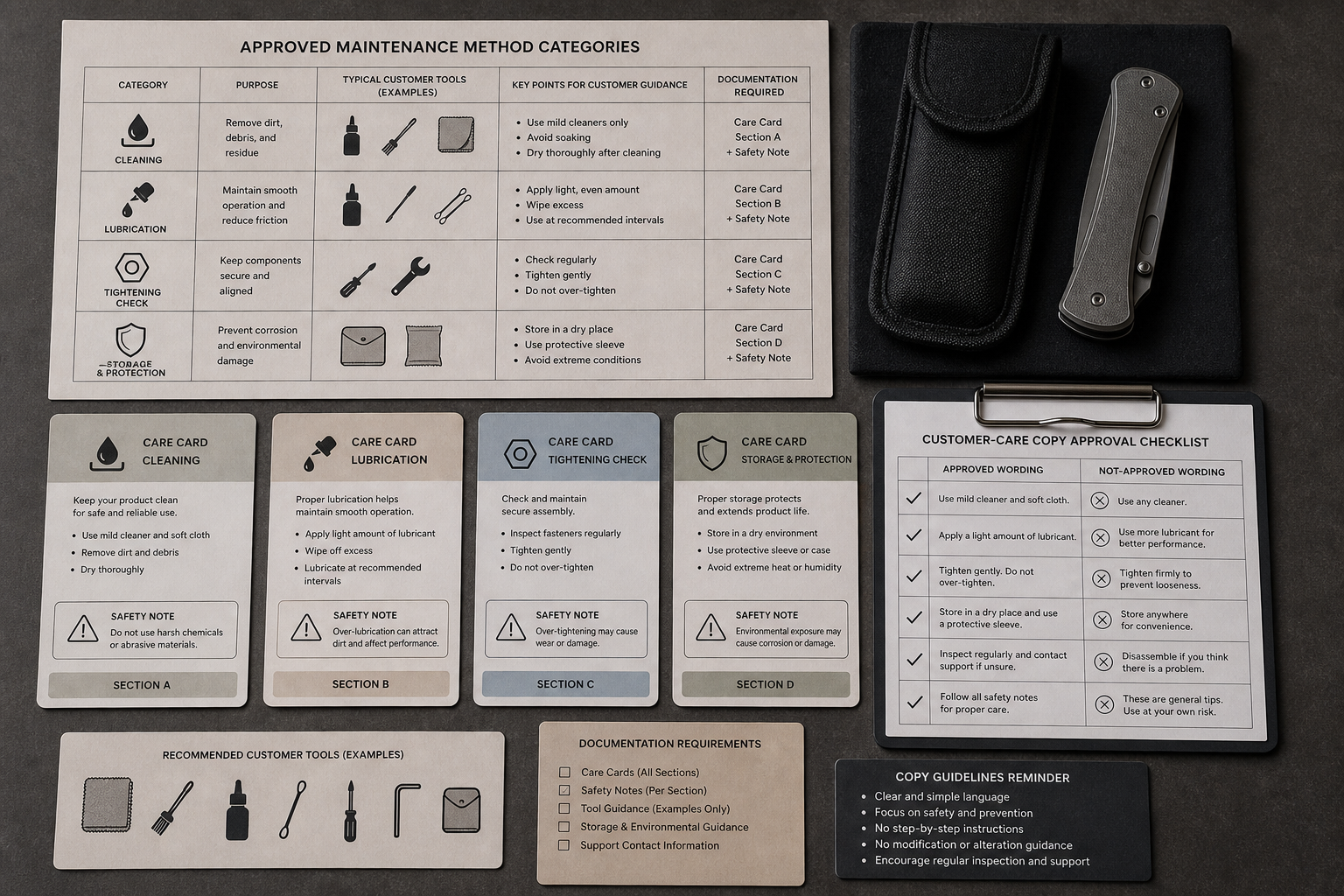
I Keep the Method Broad but Controlled
I do not like care cards that read like a workshop tutorial. They often become too specific, and then the buyer owns every misunderstanding. A better product-care page explains the allowed tool type, the need to preserve the factory bevel, and the cases where service is safer than home maintenance.
For most pocket knife projects, the buyer can ask the supplier to recommend a maintenance method by SKU. The recommendation should match the blade steel, coating, grind, edge geometry, hardness, and target customer. A small EDC folding knife with a thin edge does not need the same care language as a heavy outdoor folder. A coated blade may also need finish-protection notes.
OSHA's hand and power tools booklet is workplace focused, not consumer packaging, but its basic ideas are useful: maintain tools, use the right tool for the job, inspect tools before use, follow manufacturer instructions, and use proper PPE when hazards exist. Those principles help buyers avoid sloppy "use anything" copy.
| Instruction Area | Safer Buyer Wording | Wording to Avoid |
|---|---|---|
| Tool type | Use the approved manual sharpening tool for this SKU | Use any grinder |
| Edge shape | Maintain the original bevel as much as possible | Reprofile freely |
| Pressure | Use light, controlled pressure | Press hard |
| Damage | Stop if the edge is chipped, bent, or unstable | Keep working until fixed |
| Service | Contact support for major damage | Any user can repair anything |
The copy should reduce risk, not create a challenge for the customer.
How Should Edge Angle and Blade Steel Be Explained?
Customers ask for exact angles, but exact angles can mislead when the factory geometry, steel, and heat treatment are not documented.
Buyers should explain edge angle by SKU when known, connect sharpening guidance to blade steel and hardness, and avoid universal promises such as one perfect angle for every pocket knife.
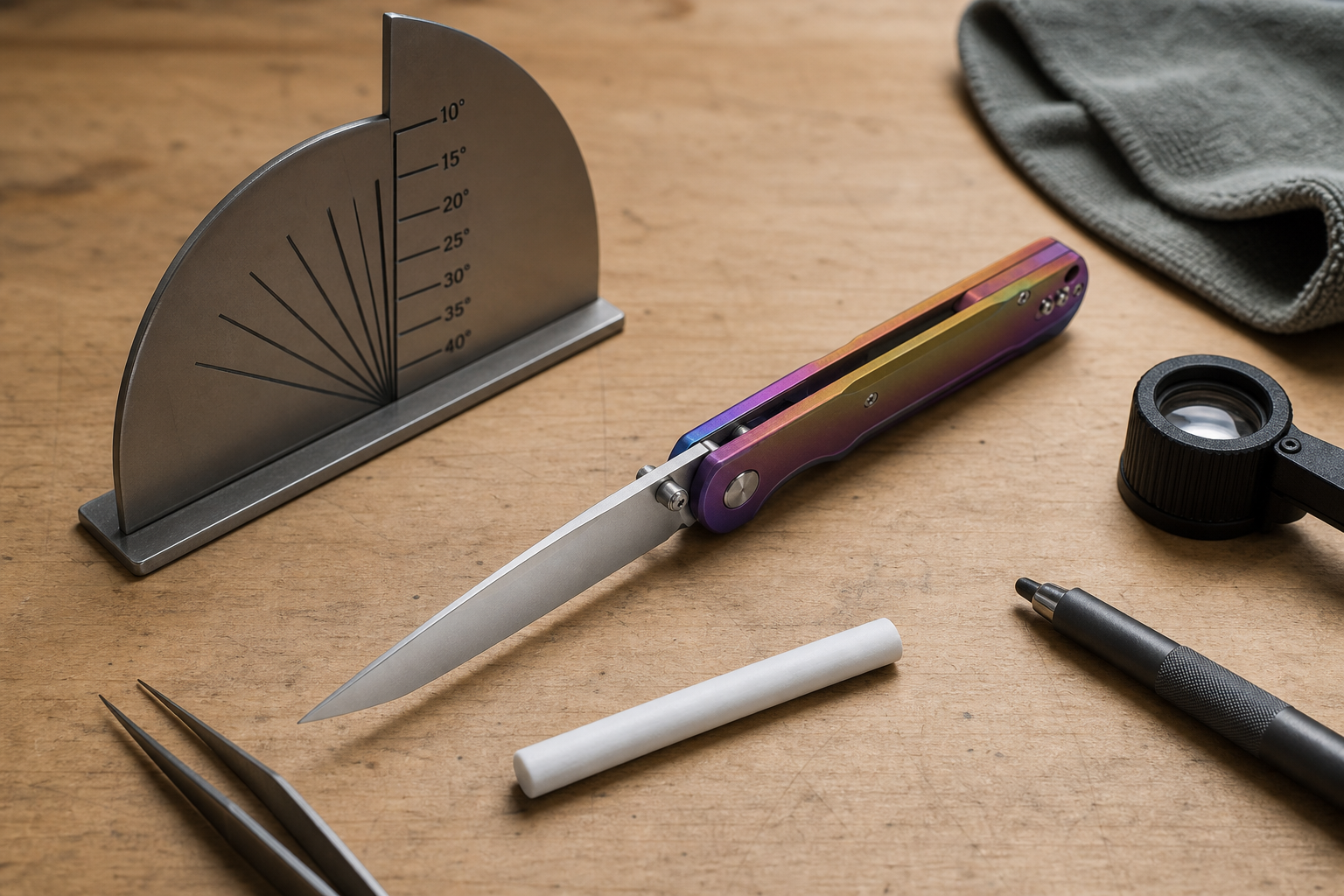
I Ask the Factory for a Care Standard, Not a Guess
The sharpening section should come from product engineering, not from generic internet advice. The supplier should provide the factory edge style, target bevel, steel grade, heat treatment record, target hardness range, coating notes, and sharpening recommendation. The buyer can then turn that information into plain customer language.
This matters because blade steel and hardness affect care. A harder edge may hold an edge longer, but it may also be less forgiving if a customer uses a rough method. A softer edge may be easier to maintain, but it may need more frequent touch-up. A coated blade may require extra care so the user does not scratch the finish near the edge.
ASTM E18 covers Rockwell hardness testing for metallic materials. ASTM notes that Rockwell hardness can support quality control and commercial acceptance, while a test at one location may not represent the whole part. For buyers, that means hardness should be part of the QC file, but it should not become a careless marketing shortcut.
| Spec Item | RFQ Question | Customer-Copy Result |
|---|---|---|
| Steel grade | What steel is used? | Care language can match material |
| Hardness range | What is the target HRC range? | Claims stay realistic |
| Factory bevel | What edge geometry leaves the factory? | Sharpening copy preserves design |
| Coating or finish | Can abrasives damage the finish? | Warning can protect appearance |
| Service limit | What damage is not user maintenance? | Support avoids unsafe advice |
If the buyer cannot get this data, the care copy should be conservative.
What Safety Warnings Should the Care Card Include?
Short warnings are better than hidden paragraphs. Customers need to see the safety rule before they handle the edge.
A pocket knife sharpening card should warn users to work slowly, use a stable surface, keep fingers away from the edge path, avoid distractions, avoid excessive force, and stop if the knife feels unstable.
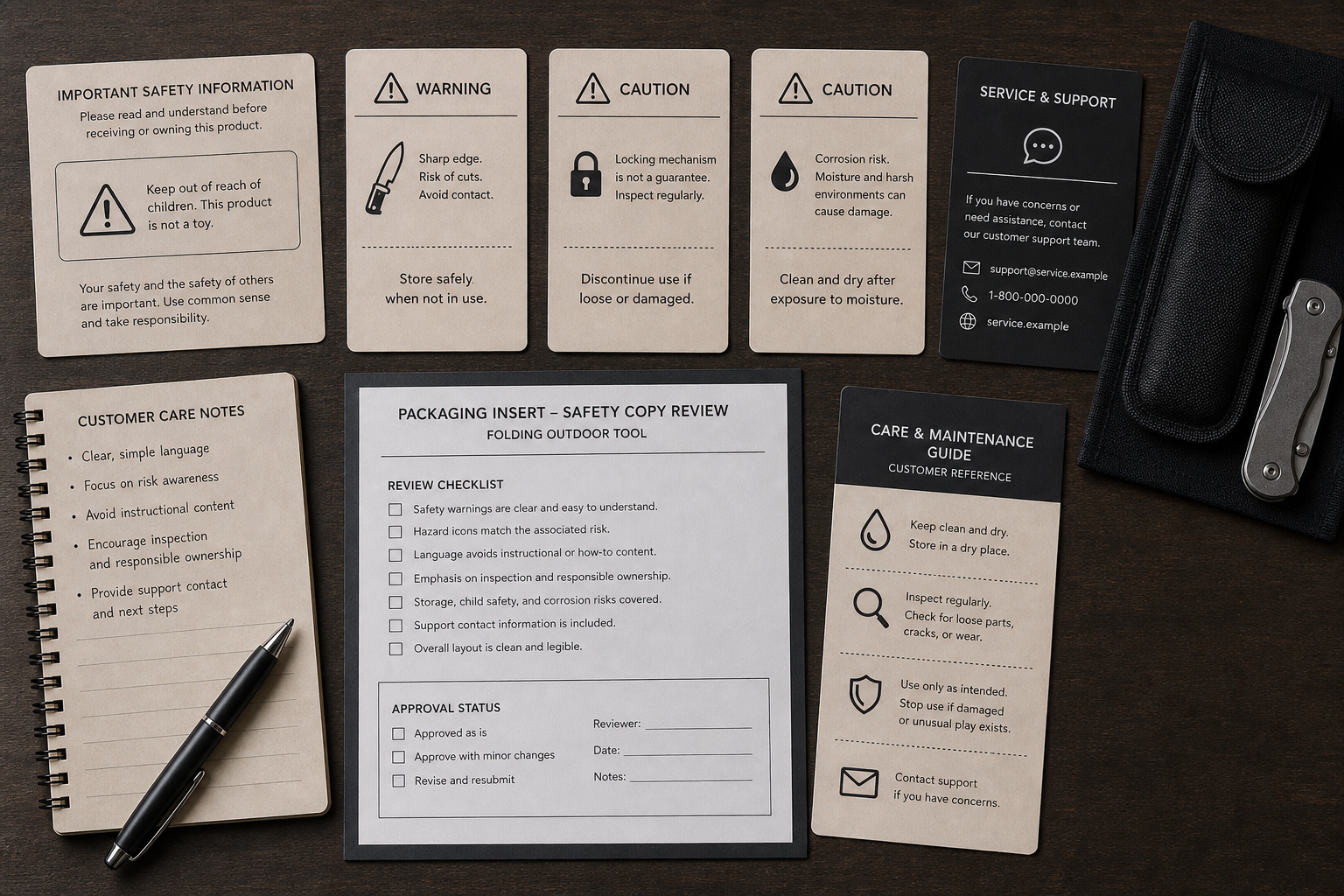
I Make Safety Visible Before Technique
The care card should be practical. It should not bury the safety warning at the bottom. If the user scans only one line, that line should reduce risk.
I would write the warning in plain English:
| Safety Point | Customer-Facing Copy |
|---|---|
| Work surface | Use a stable, well-lit surface. |
| Body position | Keep fingers and body parts away from the edge path. |
| Force | Do not use excessive pressure. |
| Attention | Stop sharpening if you are distracted or tired. |
| Knife condition | Stop if the blade, pivot, lock, or handle feels loose. |
| Storage | Clean, dry, close, and store the knife securely after maintenance. |
The warning should also match the product type. A locking folder, slip-joint folder, liner-lock folder, frame-lock folder, and small keychain folder may need different wording. If the model has a removable blade, replaceable component, or coated finish, the buyer should add a SKU-specific note.
I would avoid dramatic language. The warning should not make the product sound like a weapon. It should sound like a maintenance instruction for a sharp tool.
How Should Folding Knife Mechanisms Change the Guidance?
Pocket knives are not fixed blades. Sharpening copy must respect the pivot, lock, handle, and closing path.
Buyers should tell users to secure the knife only as directed by the product manual, keep hands away from the closing path, avoid force on the pivot, and stop if the mechanism moves unexpectedly.
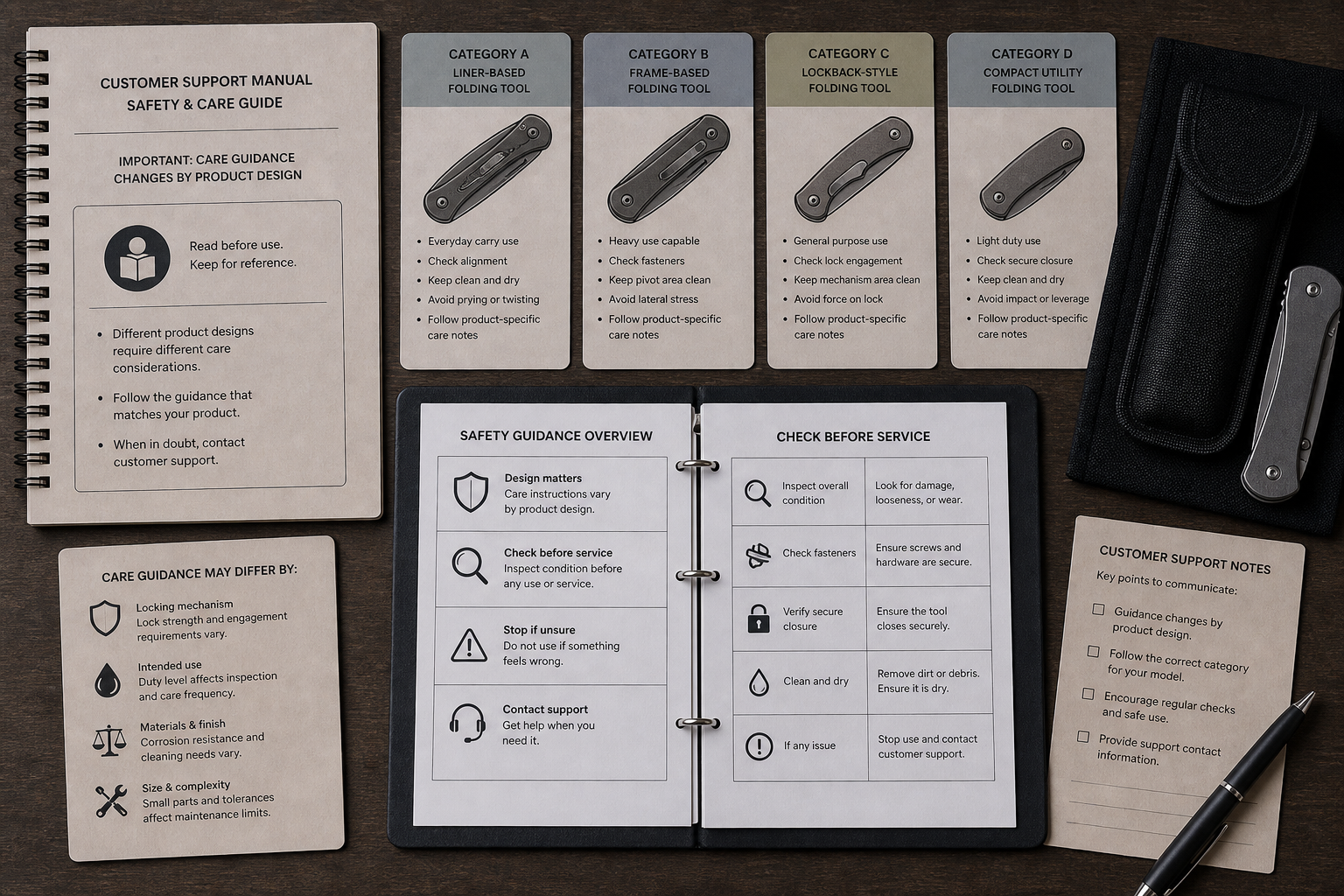
I Treat the Mechanism as Part of the Maintenance Risk
A folding knife can move. That simple fact changes the care copy. Buyers should not copy fixed-blade sharpening instructions and paste them onto a pocket knife listing. A pocket knife has a pivot, handle scales, fasteners, stop surfaces, and sometimes a lock or spring. If the customer applies side pressure, clamps the knife badly, or ignores blade play, the knife may be damaged.
The care card should not teach mechanism manipulation. It should teach caution. I would use wording such as "Follow the product manual for safe blade position during maintenance" rather than giving a complicated holding method. If the user cannot keep the knife stable, the user should stop.
Customer support should also have a clear photo checklist. Ask for photos of the edge, pivot area, handle, screw heads, and blade alignment before advising a customer to sharpen again. This protects both sides. The customer gets better help, and the buyer avoids telling someone to maintain a knife that should be repaired or replaced.
| Mechanism Issue | Safer Support Response |
|---|---|
| Blade play | Stop sharpening and inspect under warranty terms |
| Lock does not engage | Do not continue maintenance |
| Screw damage | Do not force adjustment without instructions |
| Grit in pivot | Clean according to manual before edge work |
| Blade moves during care | Stop and seek service |
The safest copy is usually short, but the support script behind it should be detailed.
How Should Cleaning, Burr Removal, and Storage Be Handled?
Sharpening leaves residue. If the knife is not cleaned and dried, the customer may turn a sharpness issue into a corrosion issue.
Buyers should include safe burr removal, wiping, drying, light lubrication where suitable, and secure storage language, while reminding customers that stainless steel still needs care.
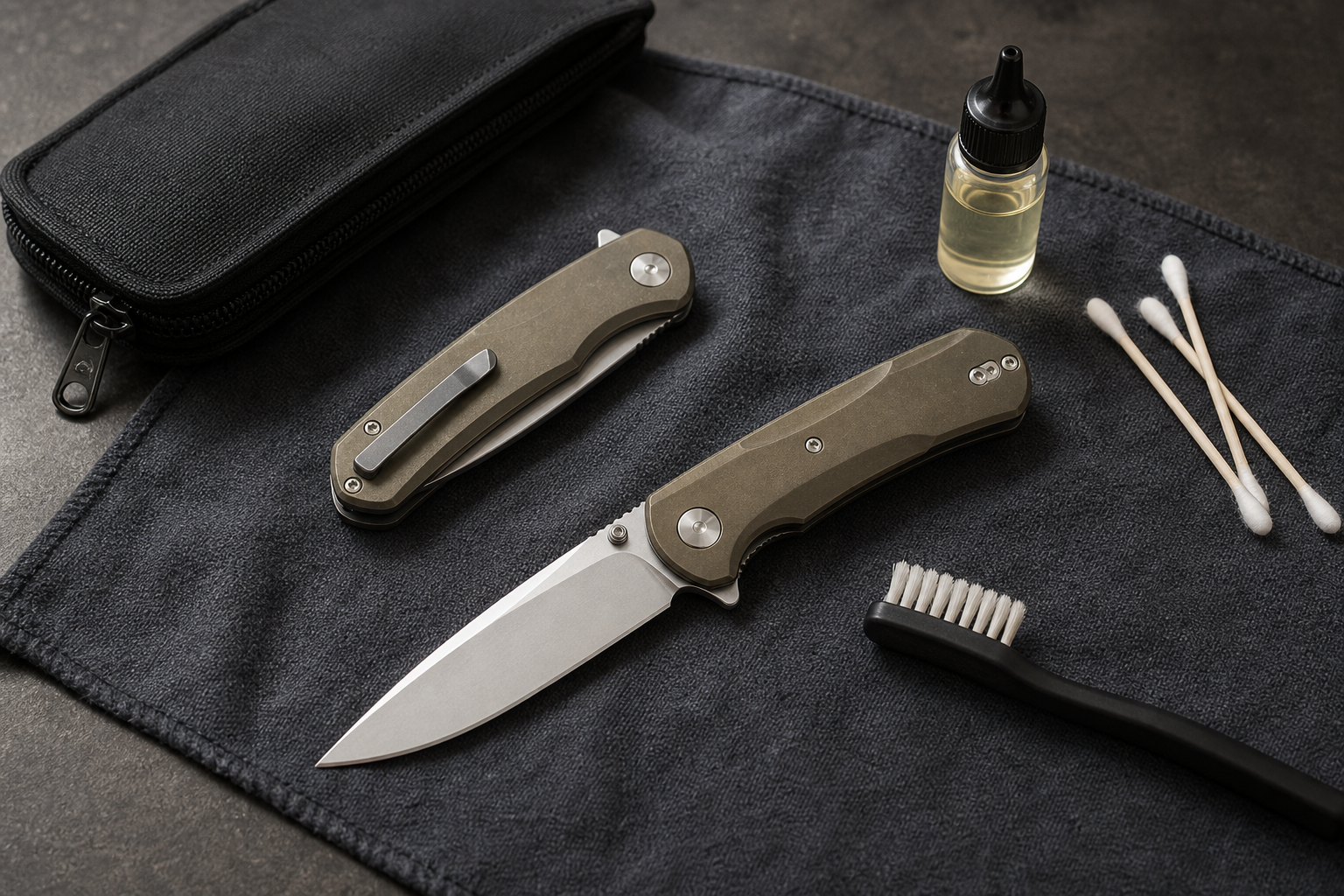
I Connect Edge Care With Rust Care
Many returns happen after the sharpening moment, not during it. Metal filings, water, abrasive residue, fingerprints, and trapped moisture can all create complaints. The customer may say the blade "rusted after sharpening" when the real problem was cleaning, drying, or storage.
The buyer should ask the supplier whether the blade is stainless, carbon steel, coated, stonewashed, bead blasted, polished, or Damascus-style. Then the care card should tell the customer how to clean and dry the edge after maintenance. If oil is recommended, the copy should say what kind of use case it fits. Food-contact items need separate review.
The British Stainless Steel Association explains that stainless steel corrosion resistance depends on a chromium-rich passive oxide film, and that this passive condition can break down under certain conditions. That is a useful reminder for buyers: "stainless" should not become "maintenance-free."
| After-Sharpening Step | Buyer Reason |
|---|---|
| Remove residue safely | Reduces grit and stain complaints |
| Dry the blade and pivot area | Reduces moisture risk |
| Use approved light oil if suitable | Supports smoother storage and corrosion care |
| Close or sheath securely | Reduces accidental contact |
| Store away from moisture | Supports long-term customer satisfaction |
The care copy should be humble. Good maintenance language prevents overpromising.
What Product Claims Should Buyers Avoid?
Sharpening articles often create claim risk. Strong phrases sound good until a customer asks for proof.
Buyers should avoid claims like "never dulls," "razor sharp forever," "safest," "easy for everyone," "professional result," or "maintenance-free" unless the claim file supports them.
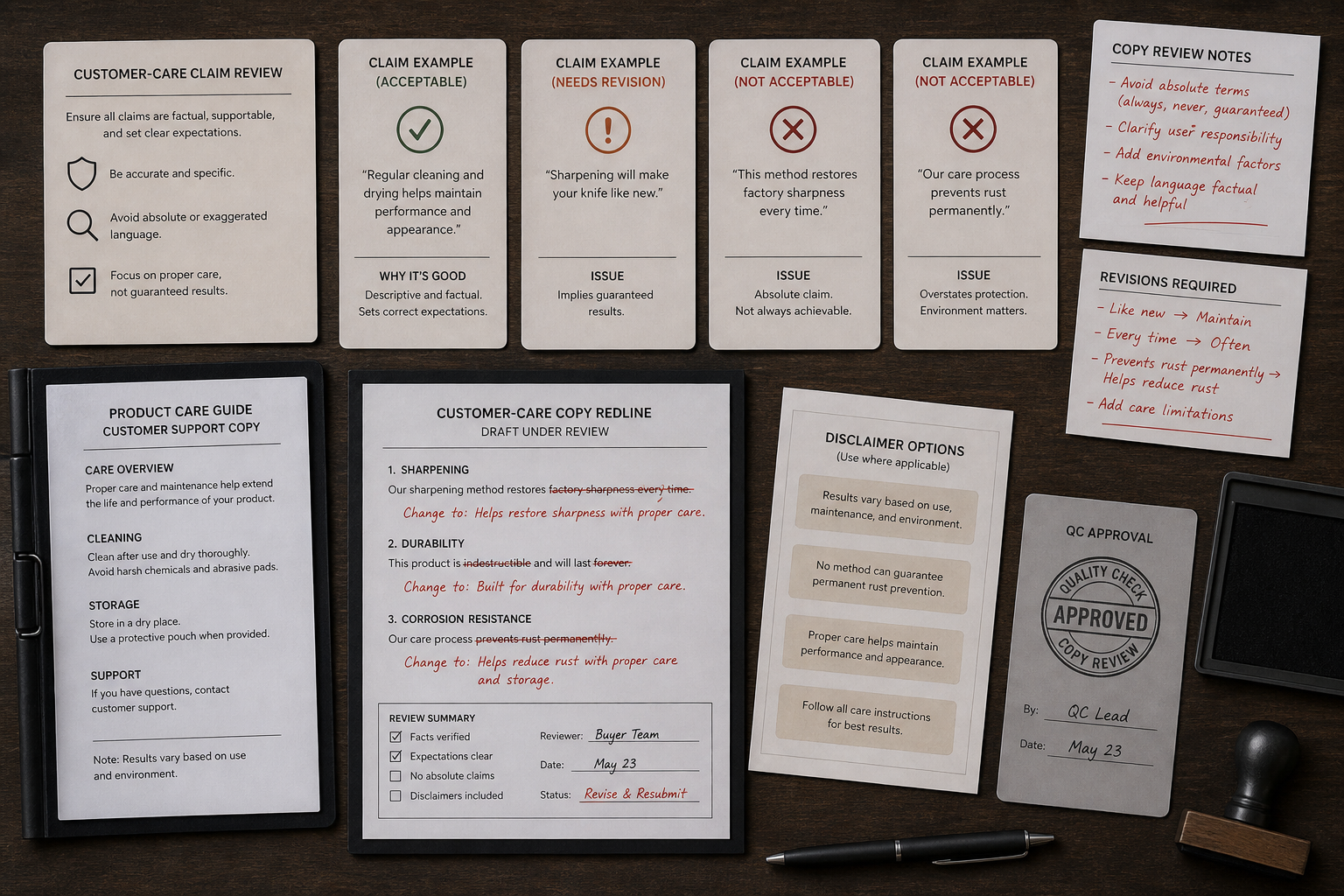
I Prefer Plain Claims That Can Survive Support
Marketing teams like strong words. Support teams live with those words after the sale. Sharpening claims should be written for both teams.
The FTC advertising substantiation policy says advertisers should have a reasonable basis for objective claims before making them. That principle is simple enough for product copy. If a page claims a knife stays sharp longer, needs less maintenance, sharpens easily, or performs better after repeated sharpening, the buyer should know what test, material record, or customer-use assumption supports that claim.
Here is how I would soften risky copy:
| Risky Claim | Safer Version |
|---|---|
| Razor sharp forever | Designed for practical edge maintenance |
| Maintenance-free | Follow the care guide after use and sharpening |
| Easy for everyone | Use only if you can maintain the knife safely |
| Professional result at home | For major edge damage, contact service |
| Safest pocket knife | Includes safety-focused care guidance |
This is not weak marketing. It is durable marketing. It gives customers a clear expectation and gives support teams a defensible script.
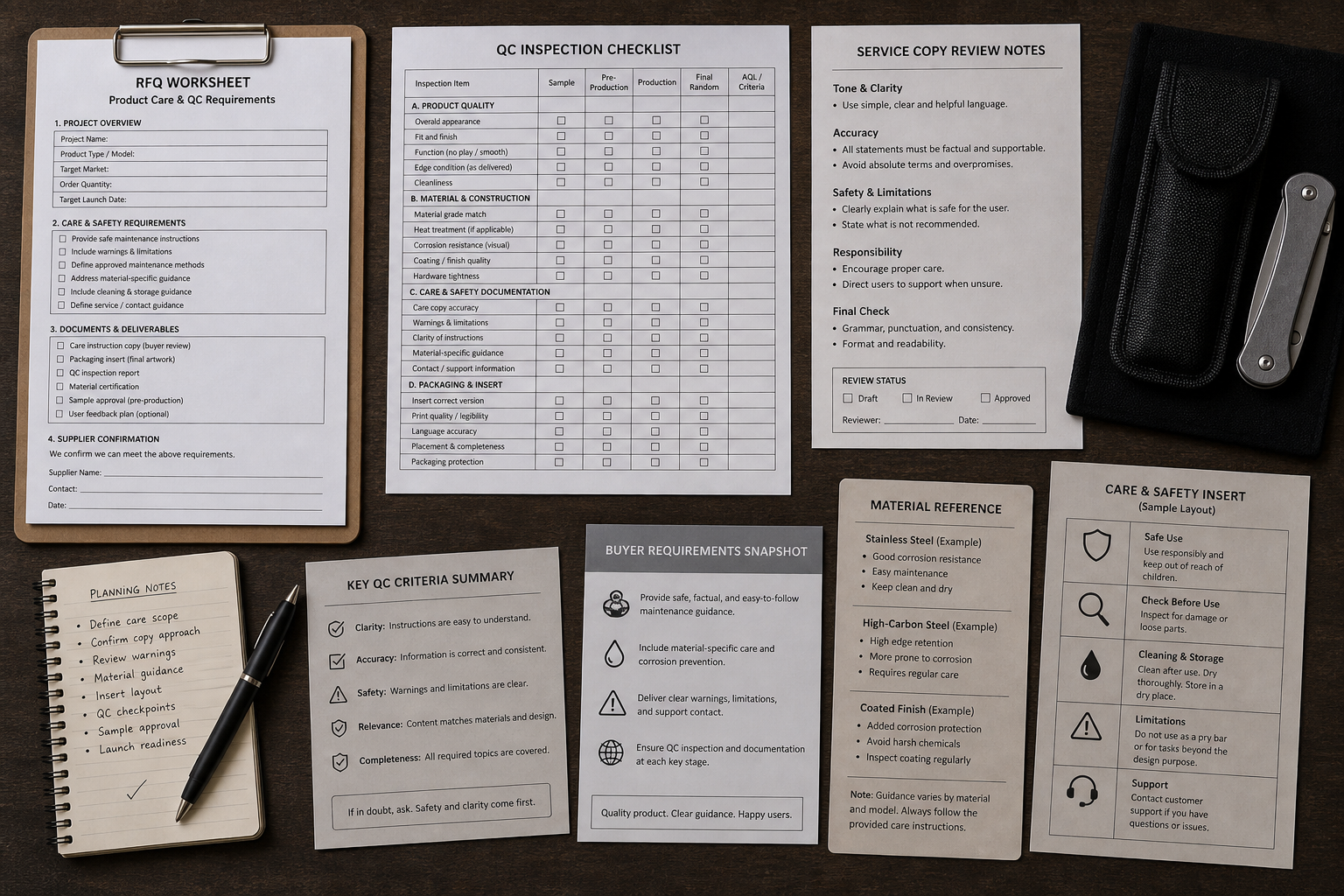
What Should the RFQ and QC Plan Include?
Good sharpening instructions begin before production. The RFQ should define the edge, not just ask for a sharp knife.
A pocket knife RFQ should include steel, hardness range, factory bevel, edge finish, coating limits, sharpening recommendation, care-card copy, warning text, QC checks, and after-sales service rules.
I Put the Care Guide Into the Product Spec
The final buyer mistake is treating sharpening instructions as a packaging detail. I would put sharpening guidance into the product specification from the beginning. The supplier should know what edge standard the buyer expects, how sharpness will be checked, what customer-care language will be printed, and which sharpening methods the brand will approve.
The RFQ should include:
- Blade steel and coating or finish
- Target hardness range and test method
- Factory bevel and edge finish
- Accepted edge consistency standard
- Approved sharpening tool type for customer care
- Warning and stop-rule copy
- Cleaning and storage guidance
- Corrosion-care language
- Claim evidence file
- Customer support photo checklist
- Warranty boundary for user-caused edge damage
- Packaging insert and product-page copy review
For travel-oriented products, the buyer should also review market-specific transport wording. The TSA What Can I Bring database lists knife-related restrictions for air travel and notes that sharp objects in checked bags should be sheathed or securely wrapped. Product pages should not imply unrestricted travel use.
| RFQ Field | Why It Belongs in the Spec |
|---|---|
| Edge geometry | Prevents vague "sharp enough" acceptance |
| Hardness range | Connects steel choice to QC |
| Care-card copy | Reduces unsafe maintenance advice |
| Claim evidence | Keeps marketing realistic |
| Support script | Makes after-sales handling consistent |
When the RFQ includes the care guide, the product feels more professional after the sale.
Turn this article into a folding knife project.
Share your blade type, lock direction, steel preference, handle material, quantity, target market, and packaging needs. Vast State can prepare OEM/ODM options.
Conclusion
Explain pocket knife sharpening as safe maintenance: inspect first, use approved methods, preserve the factory edge, clean after care, avoid big claims, and define QC.