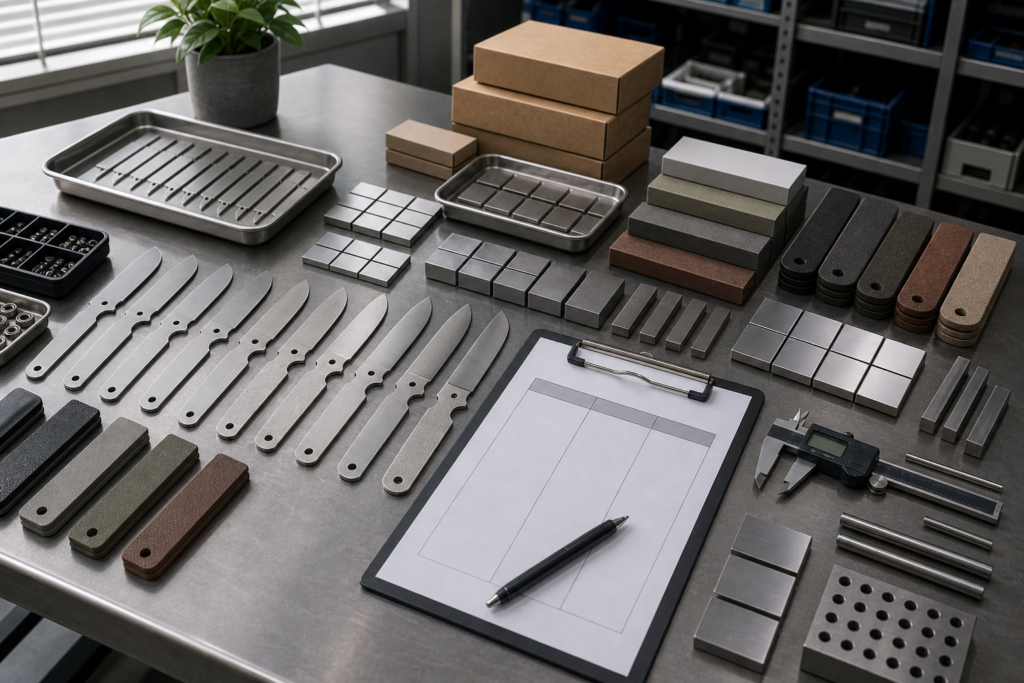
14C28N gets praised often, but praise can confuse buyers. If the steel is used in the wrong product, the value story becomes weak.
14C28N is often underrated when buyers need a stainless knife steel with toughness, corrosion resistance, easy sharpening, and efficient production. It becomes overhyped only when sellers promise premium powder-steel edge retention without matching the steel to use case, heat treatment, and edge geometry.
Quick buyer brief:
- Answer: 14C28N is a strong value steel, not a magic super steel.
- Buyer context: This helps knife brands, importers, wholesalers, and private label buyers position mid-range stainless knives clearly.
- Key checks: Confirm target HRC, heat treatment, quench speed, edge geometry, finish, sharpening process, and inspection records.
Planning a knife project with this steel?
Send us your target market, MOQ, price range, and blade type. Vast State can help you choose the right steel, HRC range, finish, handle material, and QC requirements for OEM/ODM production.
When I discuss 14C28N with a knife buyer, I try to remove the hype first. This steel is not the answer to every knife project. It is also not just another cheap stainless steel. It sits in a useful middle place. It can help a brand build a practical EDC, outdoor, fishing, hunting, or kitchen line with good user experience and reasonable manufacturing logic. The key is to sell the balance honestly and control the process carefully.
What Is the Practical Answer for 14C28N?
Buyers often ask for a simple rating. But a steel rating without product context can push the wrong knife into the wrong market.
14C28N is underrated for practical stainless knives that need toughness, corrosion resistance, edge stability, and easy sharpening. It is overhyped only when it is marketed like a high-wear powder metallurgy steel.
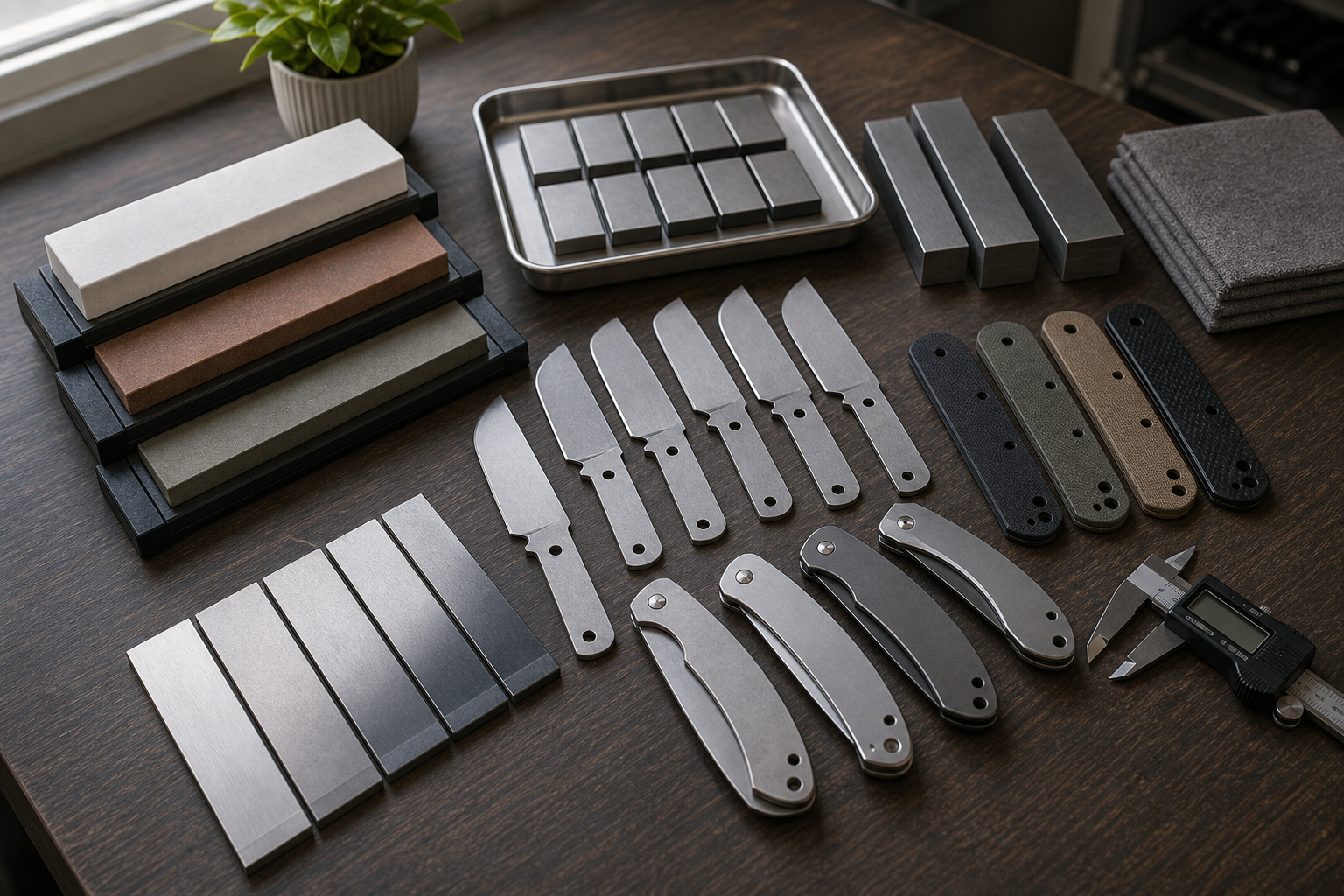
I Treat 14C28N as a Balance Steel
The most useful way to understand 14C28N is to see what it balances. It does not chase the highest edge retention. It does not need the most expensive production story. It is a fine-carbide stainless steel that can give a strong mix of toughness, corrosion resistance, edge stability, and sharpenability. For many real product lines, that balance is more useful than one extreme property.
The Alleima 14C28N knife steel page describes the steel as optimized for excellent edge performance, high hardness, and good corrosion resistance. It also gives a recommended hardness range of 55-62 HRC and says 14C28N is suitable for pocket knives, chef's knives, hunting knives, and fishing knives. That is already a wide application range.
Knife Steel Nerds gives the other side of the story. In its article on budget knife steels, it describes 14C28N as having high toughness, above-average corrosion resistance, and decent edge retention. That is why I see it as underrated for many OEM/ODM projects. It is not a steel for exaggerated claims. It is a steel for honest product design.
| Buyer question | Practical answer | Manufacturing meaning |
|---|---|---|
| Is it premium? | It is a high-value stainless steel, not a super steel | Position it honestly |
| Is it tough? | It is strong in toughness for its class | Use suitable blade geometry |
| Is it stainless? | It has good corrosion resistance when processed well | Control heat treatment and finish |
| Is it easy to sharpen? | Usually yes, compared with high-vanadium steels | Match it to broad users |
Quote-ready RFQ Checklist for This Steel
To get an accurate OEM/ODM quote, prepare these details before contacting a knife manufacturer.
| RFQ Field | What to Prepare |
|---|---|
| Product type | Folding knife / fixed blade / multi-tool / kitchen knife |
| Target market | US / EU / outdoor retail / promotional / tactical / EDC |
| Steel option | 4116 / 14C28N / D2 / N690 / Nitro-V |
| Target HRC | Example: 55-57 HRC, 58-60 HRC |
| Blade finish | Satin / stonewash / black coating / bead blast |
| Handle material | G10 / micarta / aluminum / stainless steel / wood |
| Lock or structure | Liner lock / frame lock / slip joint / full tang |
| Estimated quantity | 500 / 1,000 / 3,000 / 5,000+ pcs |
| Packaging | White box / color box / blister / pouch / gift box |
| Required documents | Drawing / sample photo / logo file / packaging artwork |
Why Does 14C28N Feel Different From Many Budget Stainless Steels?
Many budget steels feel similar in marketing copy. But composition, carbide size, nitrogen, and heat treatment can change the final knife.
14C28N uses about 0.62 percent carbon, 14 percent chromium, and 0.11 percent nitrogen. This chemistry helps support hardness, corrosion resistance, edge stability, and a fine-carbide structure.
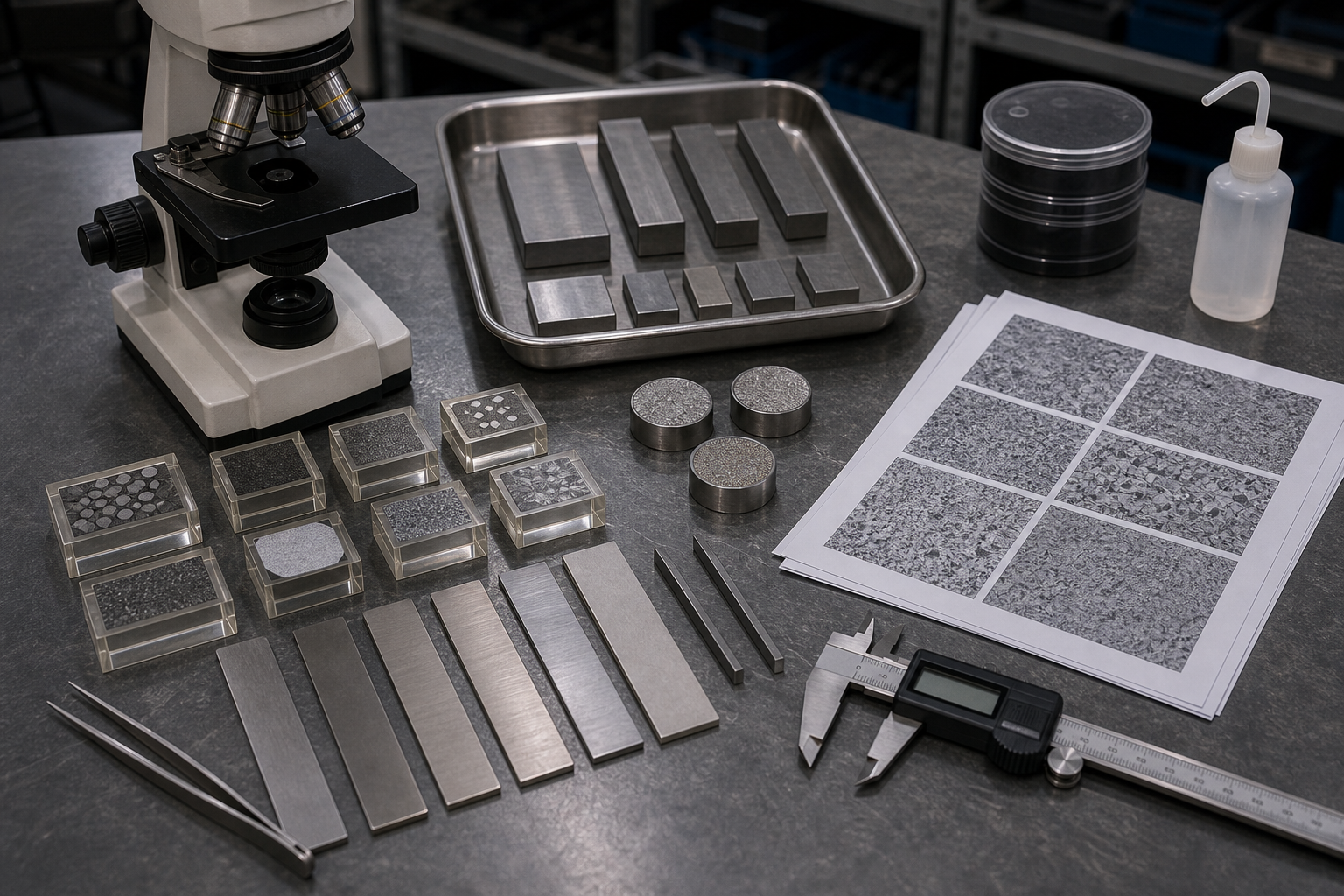
I Look at the Chemistry Before the Claim
The current Alleima 14C28N datasheet lists nominal composition as 0.62 carbon, 14 chromium, and 0.11 nitrogen, with smaller amounts of silicon and manganese. The datasheet says the chemistry is optimized for high quality professional knife applications and gives a combination of excellent edge performance, very high hardness, and good corrosion resistance.
That nitrogen matters. It supports corrosion resistance and allows a knife steel design that does not rely only on high carbon. In practical terms, 14C28N can have a fine structure and good edge stability. This helps with thin edges, clean sharpening, and lower chipping risk compared with coarser carbide stainless steels. It also helps factories make knives that feel sharp and useful out of the box.
But chemistry only gives potential. Alleima's datasheet says hardening and tempering are needed to achieve the correct finish and meet end-user properties. It lists 1050 C hardening temperature, 5 minutes holding time, and oil quenching in the datasheet. It also warns that brittleness and loss of corrosion resistance can occur with tempering above 450 C. I read that as a production reminder: 14C28N is forgiving in use, but not careless in manufacturing.
| Material feature | Why it matters | Buyer takeaway |
|---|---|---|
| 14 percent chromium | Supports stainless behavior | Good for outdoor, kitchen, fishing, and EDC |
| Nitrogen addition | Helps corrosion and edge stability | Useful for balanced stainless performance |
| Fine-carbide behavior | Helps toughness and sharpening | Good for broad user groups |
| Heat-treatment sensitivity | Process controls still matter | Ask for target HRC and records |
Where Is 14C28N Strongest in Real Knife Projects?
A good steel can still fail in the wrong project. 14C28N shines when the product needs balance, not a single extreme number.
14C28N is strongest in EDC folders, outdoor knives, fishing knives, kitchen knives, and practical private label lines where buyers need stainless behavior, toughness, easy sharpening, and stable user satisfaction.
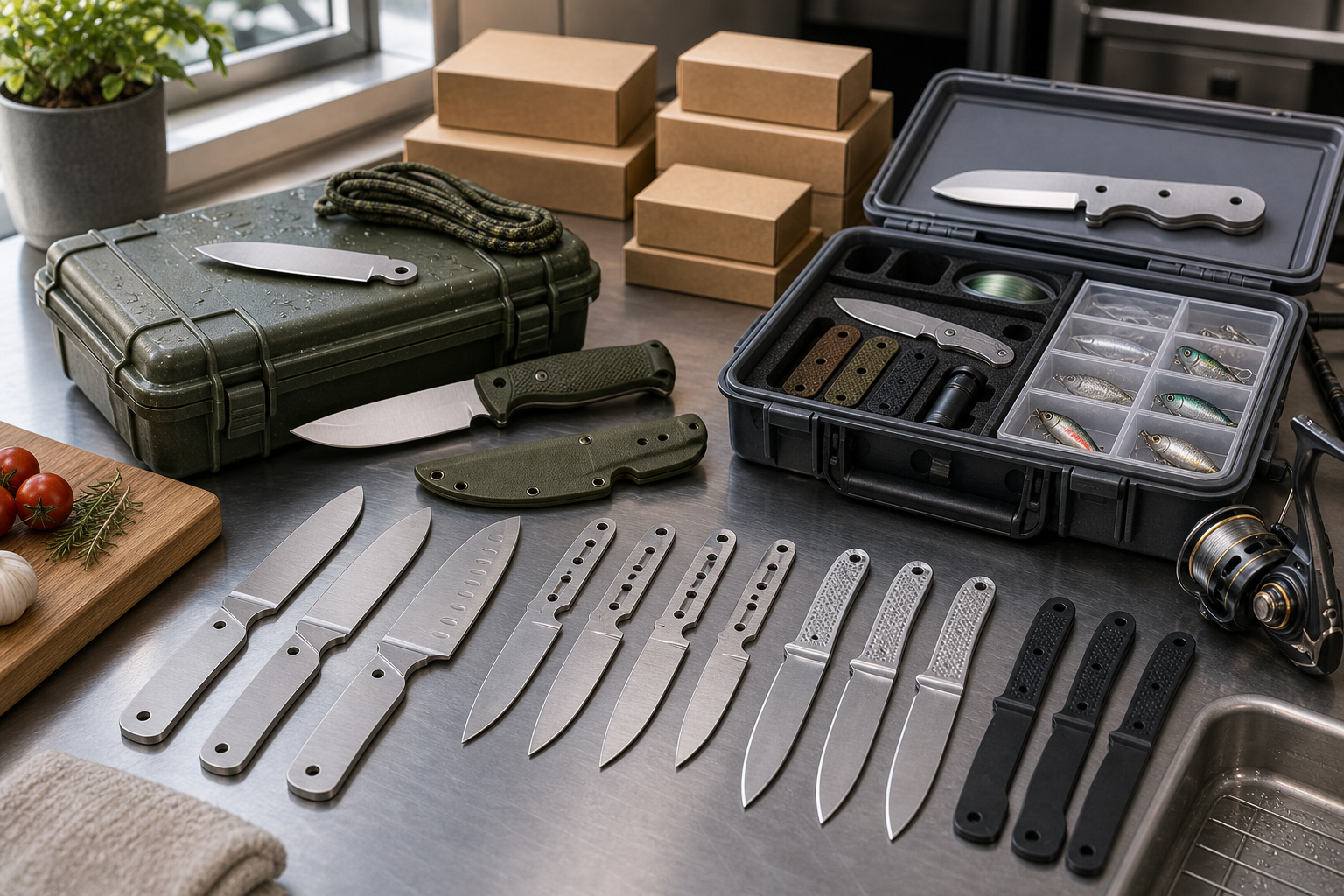
I Use 14C28N When User Experience Matters
For many knife brands, the main problem is not that customers need the highest edge retention. The main problem is that customers want a knife that cuts well, resists rust, does not chip easily, and can be sharpened without special equipment. This is where 14C28N can be a very strong option. It gives enough performance to feel like an upgrade, but it does not force the same cost or sharpening expectations as high-vanadium powder metallurgy steels.
Alleima says 14C28N is recommended for knife applications with high demands on edge sharpness, edge stability, and corrosion resistance. I connect that directly with product categories. For a pocket knife, edge stability and corrosion resistance reduce daily-use complaints. For fishing knives, corrosion resistance and easy sharpening matter. For kitchen knives, a fine edge and rust resistance are important. For outdoor knives, toughness and serviceable sharpening help users trust the tool.
The B2B value is also practical. Knife Steel Nerds notes that 14C28N is fine blankable and easy to sharpen with common stones, and that grindability and polishability help reduce manufacturing cost. This matters in OEM production. A steel that works well for the user and also supports efficient processing can help a buyer keep the product commercially realistic.
| Product type | Why 14C28N fits | What I would specify |
|---|---|---|
| EDC folder | Balanced stainless performance | HRC, edge angle, pivot action |
| Outdoor knife | Toughness and easy sharpening | Edge thickness and tip strength |
| Fishing knife | Corrosion resistance and serviceability | Finish, oiling, packaging moisture control |
| Kitchen knife | Fine edge and rust resistance | Thin geometry and clean final sharpening |
Where Can 14C28N Become Overhyped?
Hype starts when one real advantage becomes a universal promise. That is how a good steel creates disappointed customers.
14C28N becomes overhyped when sellers promise super-steel edge retention, ignore heat treatment, run it too soft, use poor edge geometry, or put it in a product that needs high wear resistance.
I Avoid Promising What the Steel Does Not Do
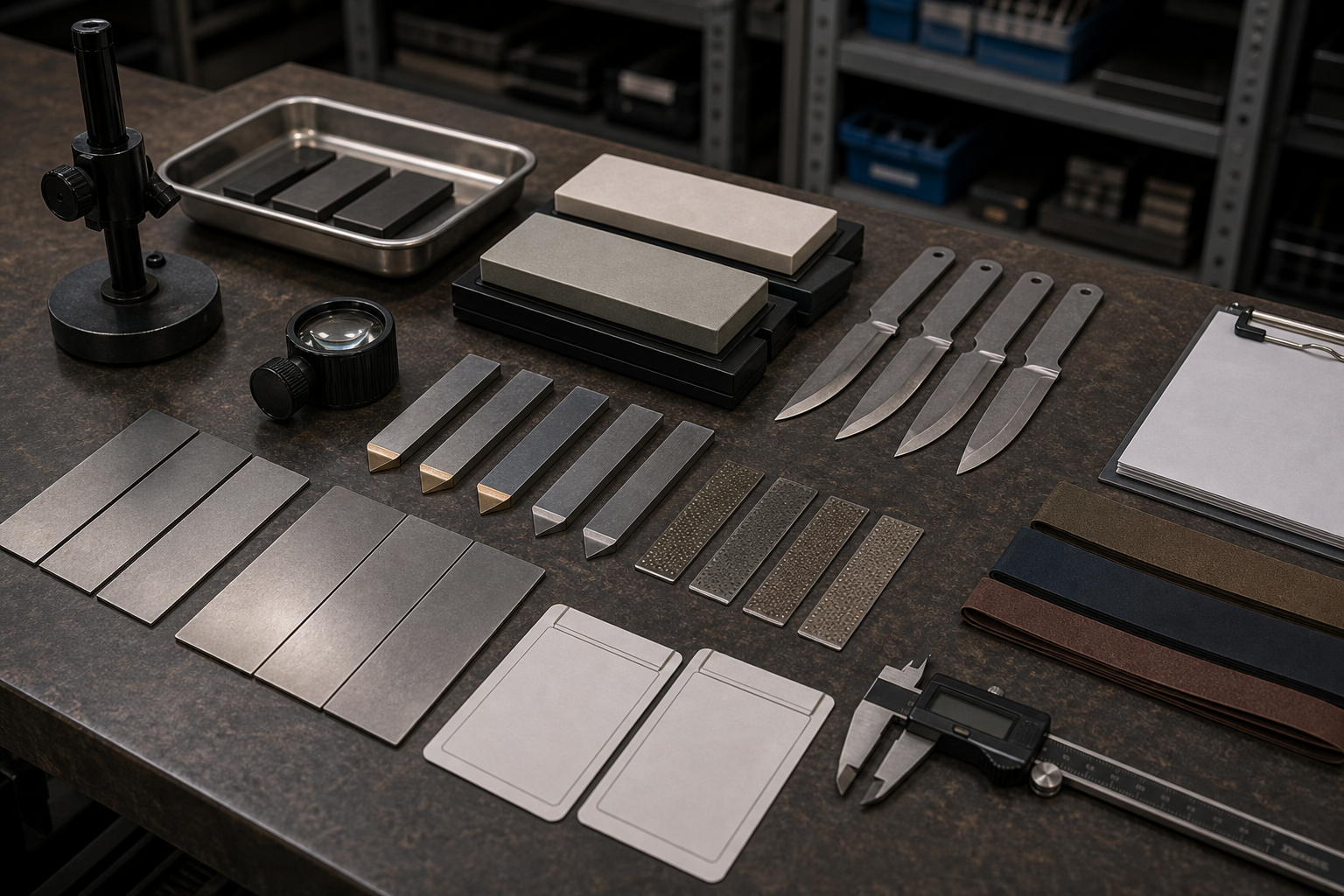
14C28N is not a high-wear steel in the same way as S30V, S90V, M390, or other high-carbide steels. Knife Steel Nerds explains in its steel ratings article that toughness and edge retention are often opposing properties. It also explains that higher carbon and higher vanadium steels generally have higher wear resistance and edge retention but lower toughness. This is why 14C28N should not be sold as if it has everything at once.
I also watch hardness claims carefully. Alleima lists 55-62 HRC as the recommended range on the knife steel page. A buyer should not assume every production knife in 14C28N is run near the top of that range. If the blade is run too soft, edge retention can disappoint users. If the geometry is too thick, cutting performance suffers even if the steel is good. If the finish is too rough, corrosion resistance can be hurt in wet markets.
This is the honest message I prefer: 14C28N is excellent when the goal is balanced real-world performance. It is not the best steel for buyers who mainly want maximum abrasive edge retention. In that case, a high-wear powder metallurgy steel may be better if the target price supports it.
| Overhype risk | What can go wrong | Better wording |
|---|---|---|
| "Super steel" claim | Buyers expect S90V-style edge life | Balanced stainless performance |
| Soft heat treatment | Edge dulls faster than expected | Define HRC and inspection |
| Thick geometry | Knife cuts poorly | Match edge to target use |
| Wrong market | Wear-focused users complain | Offer higher-wear steel option |
What Manufacturing Controls Should Buyers Specify?
Steel selection is only the start. Without process control, a good steel name can become an inconsistent production batch.
Buyers should specify material verification, hardening method, quench speed, target HRC, tempering limits, edge geometry, grinding heat control, finish, sharpening standard, and final inspection.
I Translate the Datasheet Into Factory Checks
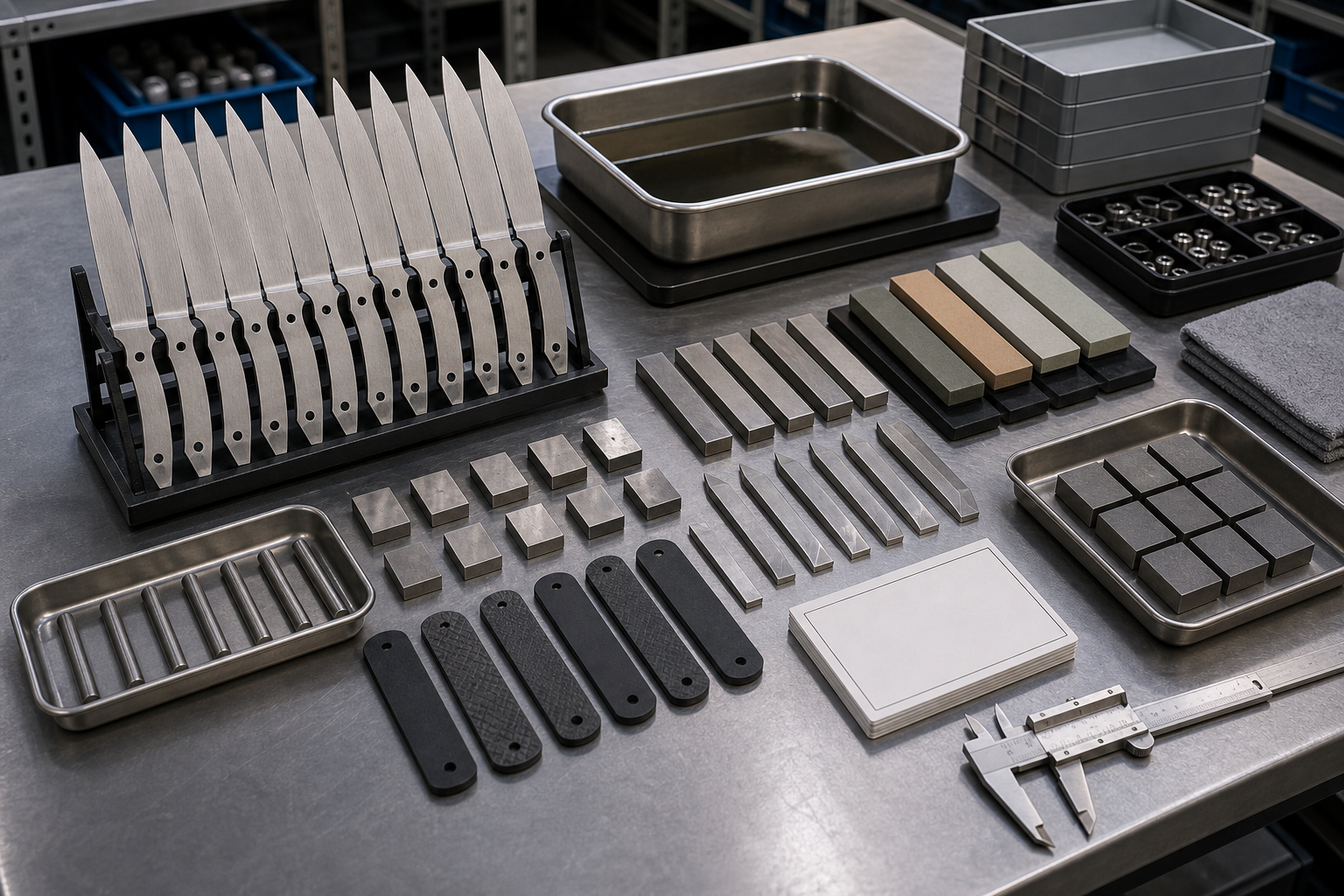
Alleima's datasheet gives several production warnings that buyers should respect. It says a low hardening temperature gives low hardness and reduced corrosion resistance. It says too long holding time at the optimal hardening temperature increases retained austenite and lowers hardness. It also says high cooling rate after hardening is necessary to avoid brittleness and reduced corrosion resistance. Those are not small details. They are the difference between a good 14C28N knife and a disappointing one.
For mass production, I want the RFQ to define the target HRC and the inspection plan. The NIST Rockwell hardness guide is useful because it explains why measurement practice matters. In factory language, that means buyers should specify test position, sample quantity, acceptable range, and how results are recorded.
I also care about the edge after grinding. A blade can have the right steel and the right bulk hardness, but still lose value if the edge overheats during sharpening or if burr removal is poor. For 14C28N, I usually want a clean edge, controlled belt condition, and a geometry that matches the use. If the buyer wants a slicer, we can run thinner geometry. If the buyer wants an outdoor knife, I keep more strength behind the edge.
| Control point | What to specify | Why it matters |
|---|---|---|
| Steel identity | 14C28N certificate or incoming check | Prevents wrong material |
| Heat treatment | Target HRC and process record | Turns chemistry into performance |
| Quench speed | Follow suitable cooling practice | Protects hardness and corrosion resistance |
| Edge geometry | Thickness, grind, and edge angle | Matches steel to actual use |
| Final inspection | HRC, sharpness, function, finish | Protects repeat orders |
How Should Buyers Build an RFQ Around 14C28N?
A vague RFQ creates a vague knife. If buyers only write "14C28N," suppliers may quote very different products.
Buyers should include knife type, target market, target price, MOQ, blade geometry, HRC range, finish, handle material, lock type, packaging, inspection needs, and trade terms in a 14C28N RFQ.
I Quote 14C28N as a Product System
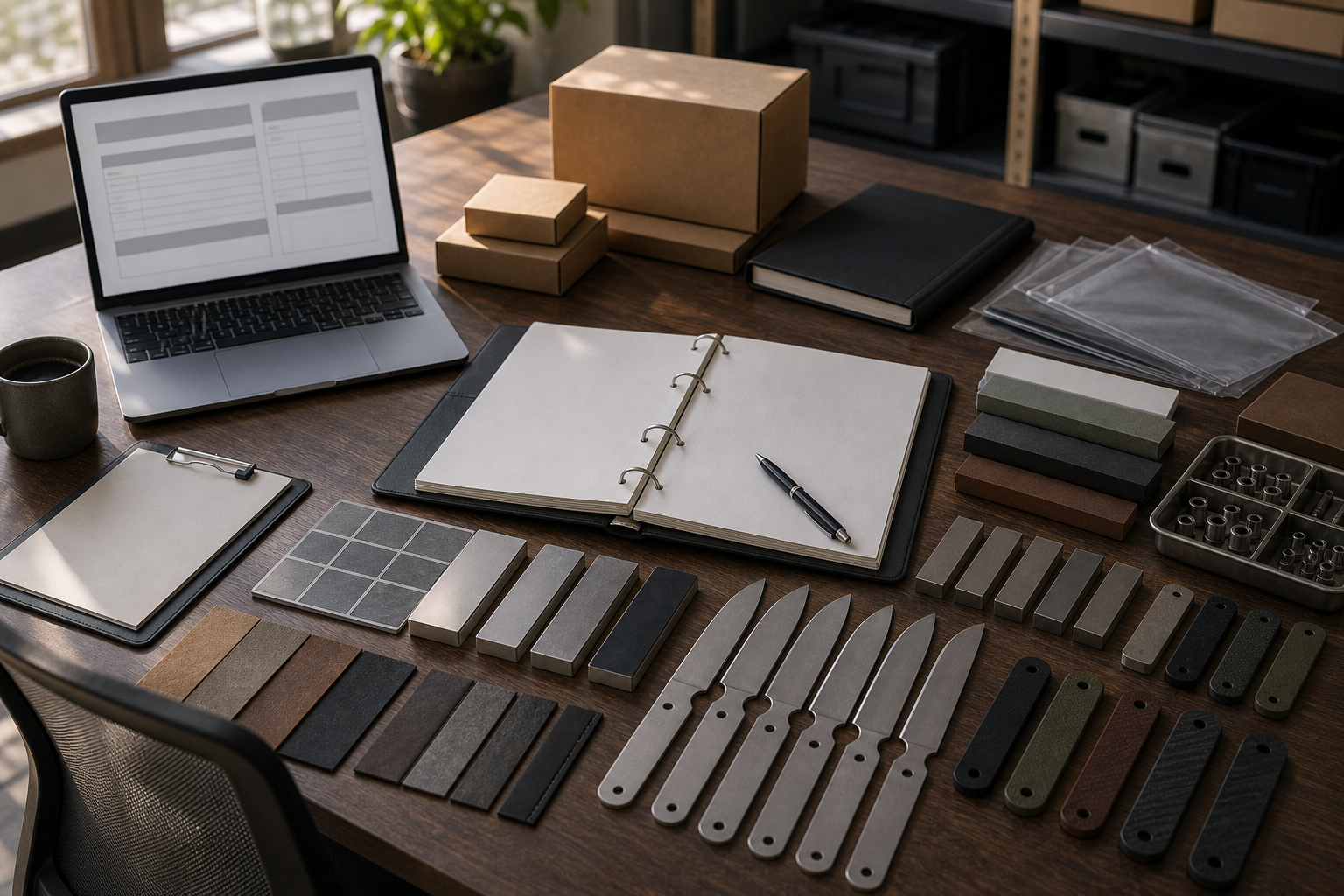
When a buyer asks for 14C28N, I want to know the whole product plan. Is it an EDC folder? A fishing knife? A kitchen knife? A compact outdoor fixed blade? The answer changes the thickness, grind, finish, HRC target, handle material, lock type, and packaging. 14C28N can work in many categories, but the product should not be designed by steel name alone.
The RFQ should also explain the market position. If the buyer wants an upgrade from 8Cr13MoV or 420HC, 14C28N may be a smart middle step. If the buyer wants a premium line with maximum edge retention, S30V, S35VN, MagnaCut, or another steel may be a better discussion. A good RFQ lets the supplier compare these options without guessing.
Trade terms should be clear too. The U.S. International Trade Administration explains that Incoterms define buyer and seller responsibilities, costs, and risks in export transactions. Quality terms also matter. The ISO 9001 page explains that ISO 9001 covers quality management system requirements. I do not use that as a casual certification claim. I use it as a reminder that buyers should ask how the supplier controls incoming material, heat treatment, in-process inspection, final inspection, and corrective action.
| RFQ field | What to ask | Why it helps |
|---|---|---|
| Product use | EDC, outdoor, fishing, kitchen, rescue | Guides geometry and finish |
| Steel and HRC | 14C28N with target range | Makes heat treatment measurable |
| Finish | Stonewash, satin, polish, coating | Affects corrosion and positioning |
| Handle and lock | Material and mechanism | Aligns cost and user experience |
| Inspection plan | Material, HRC, function, edge, appearance | Reduces batch risk |
| Trade term | EXW, FOB, CIF, DDP, or agreed term | Clarifies cost and risk |
Ready to use this material in your next knife line?
Vast State can help you compare blade steels, heat treatment ranges, handle materials, finishes, packaging options, and QC requirements based on your target market and quantity.
Conclusion
I see 14C28N as underrated for balanced knife lines, but overhyped only when buyers expect premium powder-steel edge retention.
Source Notes
- Alleima 14C28N knife steel page supports the recommended hardness range, knife applications, corrosion and edge-stability positioning, and fineblanking context.
- Alleima 14C28N datasheet supports composition, heat-treatment guidance, quench-speed warnings, and hardening effects.
- Knife Steel Nerds budget steel article supports the practical view that 14C28N has strong balance, high toughness, above-average corrosion resistance, and decent edge retention.
- Knife Steel Nerds steel ratings article supports the broader tradeoff between toughness, edge retention, corrosion resistance, heat treatment, and edge geometry.
- NIST Rockwell hardness guide supports the need for careful hardness measurement practice.
- Trade.gov Incoterms page supports RFQ advice about trade responsibilities, costs, and risks.
- ISO 9001:2015 page supports quality-management context, but it does not prove any supplier certification.