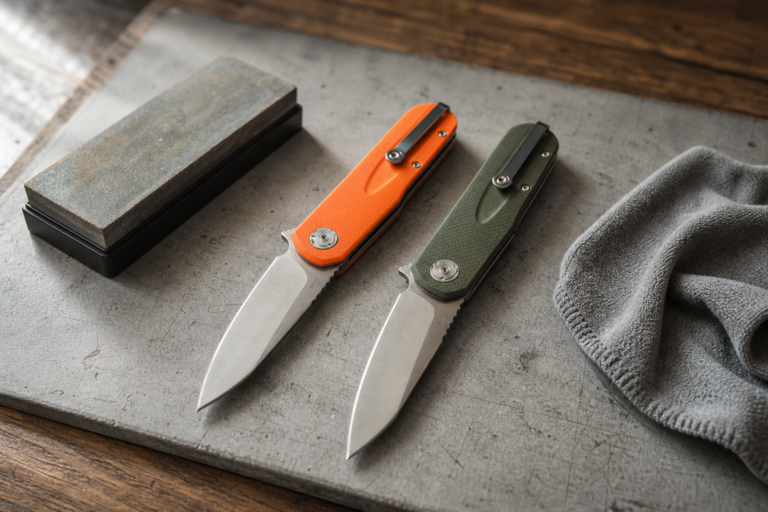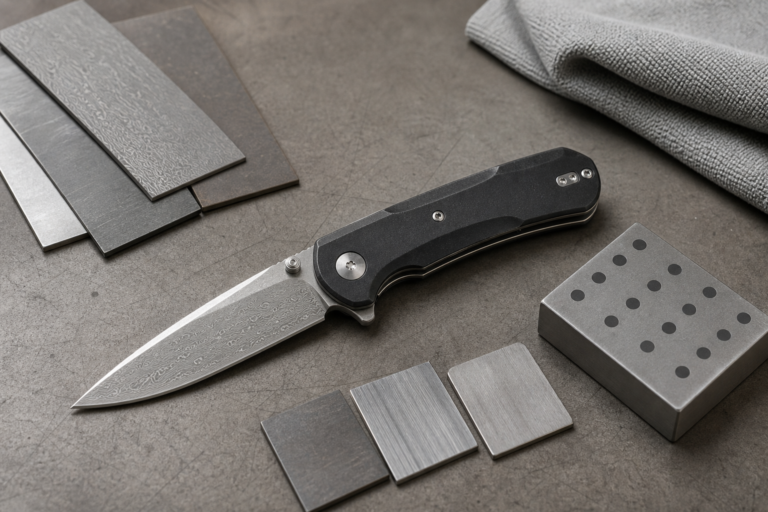
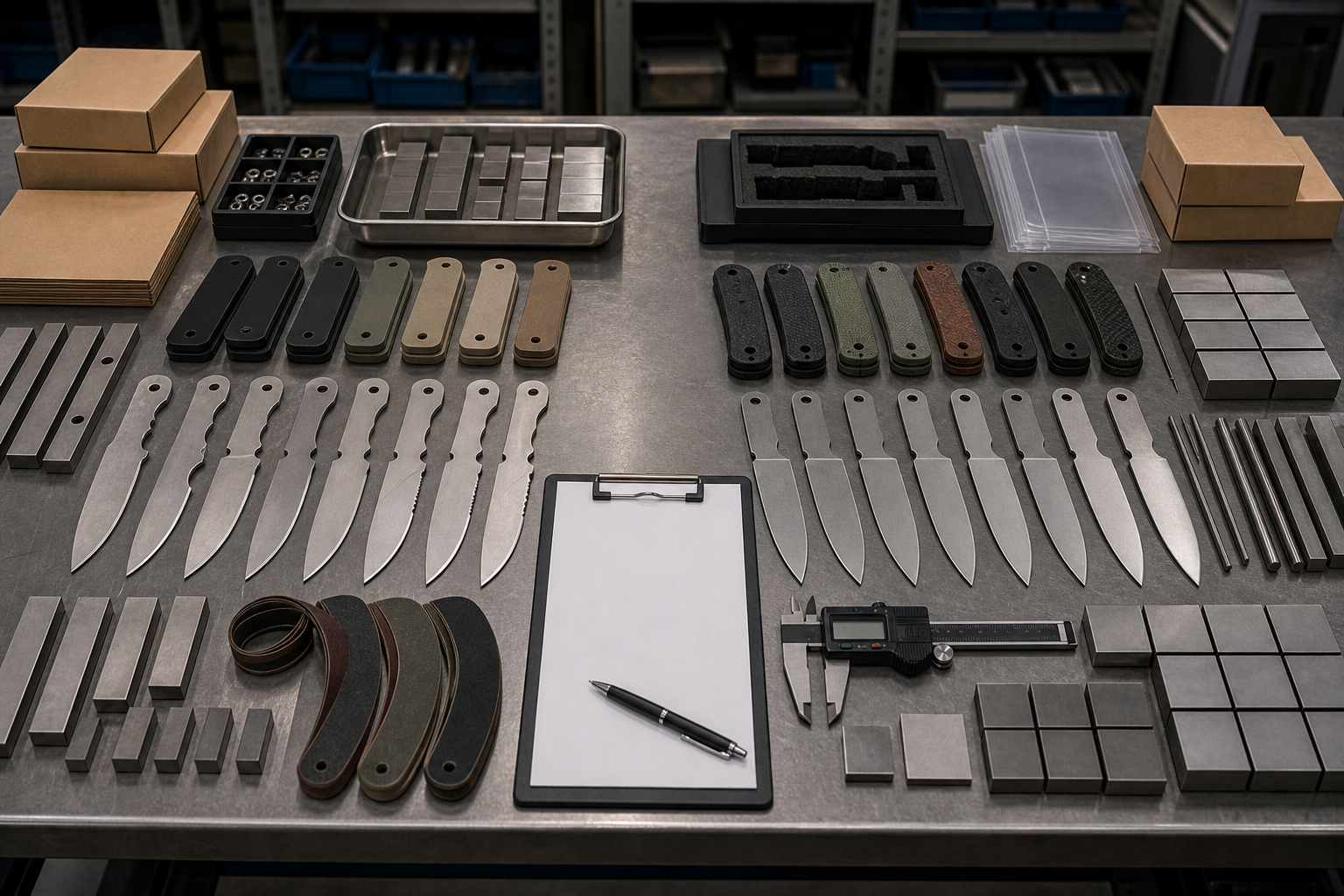
A steel upgrade can look profitable on paper. But if the market will not pay for it, the margin disappears. Value starts with the buyer.
420HC usually gives better value for cost-sensitive knives that need toughness, corrosion resistance, easy sharpening, and simple maintenance. S30V gives better value when the product line can charge for higher edge retention, premium positioning, and tighter heat-treatment and grinding control.
Quick buyer brief:
- Answer: Choose 420HC for practical value and S30V for premium edge-retention value.
- Buyer context: This helps knife brands, importers, wholesalers, and private label buyers plan steel tiers.
- Key checks: Confirm target price, user expectations, HRC range, heat treatment, edge geometry, finish, inspection records, and warranty risk.
Planning a knife project with this steel?
Send us your target market, MOQ, price range, and blade type. Vast State can help you choose the right steel, HRC range, finish, handle material, and QC requirements for OEM/ODM production.
When I compare 420HC and S30V for a customer, I do not ask only which steel is better. I ask which knife line can sell the value. A low-price utility knife may need easy sharpening and stable cost more than long edge retention. A premium EDC knife may need S30V because the customer expects a stronger steel story and longer edge life. Both steels can make sense. The mistake is using either one without matching the market, heat treatment, geometry, and quality control.
What Is the Short Answer for 420HC vs. S30V Value?
Steel value is easy to misunderstand. A higher-grade steel can still be the wrong commercial choice if the buyer cannot recover the added cost.
420HC is usually the better value for budget and work-focused knives. S30V is the better value for premium EDC lines where customers will pay for edge retention, powder metallurgy, and stronger steel positioning.
I Separate Product Value From Steel Prestige
I have seen buyers spend too much time asking whether S30V is better than 420HC. Technically, S30V is the more advanced steel. It has powder metallurgy production, much higher carbon, more molybdenum, and 4 percent vanadium. The Niagara S30V data sheet describes it as a martensitic stainless steel designed to balance toughness, wear resistance, and corrosion resistance. It also lists S30V at 145 percent CATRA edge retention relative to 440C ESR.
But value is not only performance. Value is performance that the buyer can sell, support, and repeat. 420HC can be a good value steel when the knife needs field sharpening, corrosion resistance, toughness, and a lower finished cost. The Ulbrich 420HC data sheet describes 420HC as martensitic stainless steel with good corrosion resistance and increased strength and hardness compared with 410. That is a practical starting point for many work knives, rescue-style tools, and broad retail products.
| Product line goal | Better starting point | Why it can be better value |
|---|---|---|
| Budget utility knife | 420HC | Lower cost and easy maintenance |
| Broad outdoor retail line | 420HC | Toughness and corrosion resistance matter |
| Premium EDC folder | S30V | Stronger edge-retention story |
| Brand upgrade tier | S30V | Supports higher price positioning |
Quote-ready RFQ Checklist for This Steel
To get an accurate OEM/ODM quote, prepare these details before contacting a knife manufacturer.
| RFQ Field | What to Prepare |
|---|---|
| Product type | Folding knife / fixed blade / multi-tool / kitchen knife |
| Target market | US / EU / outdoor retail / promotional / tactical / EDC |
| Steel option | 4116 / 14C28N / D2 / N690 / Nitro-V |
| Target HRC | Example: 55-57 HRC, 58-60 HRC |
| Blade finish | Satin / stonewash / black coating / bead blast |
| Handle material | G10 / micarta / aluminum / stainless steel / wood |
| Lock or structure | Liner lock / frame lock / slip joint / full tang |
| Estimated quantity | 500 / 1,000 / 3,000 / 5,000+ pcs |
| Packaging | White box / color box / blister / pouch / gift box |
| Required documents | Drawing / sample photo / logo file / packaging artwork |
How Do Chemistry and Heat Treatment Change the Decision?
A steel name is not a finished blade. Chemistry gives potential, but heat treatment decides how much of that potential becomes useful.
420HC has lower carbon and chromium around the 13 percent range, so it favors toughness and corrosion resistance. S30V has higher carbon, 14 percent chromium, molybdenum, and vanadium carbides for higher wear resistance.
I Read Chemistry as a Production Map
The chemistry difference is large. Ulbrich lists 420HC with carbon at 0.40-0.45 percent and chromium at 12.5-13.5 percent. Latrobe's 420 HC data sheet lists a typical composition of 0.46 carbon, 13.00 chromium, and 0.30 vanadium. This lower carbide level helps explain why 420HC can be easy to sharpen and forgiving in daily use. It also means it will not compete with S30V in abrasive edge retention.
S30V is different by design. Niagara lists S30V with 1.45 carbon, 14.00 chromium, 2.00 molybdenum, and 4.00 vanadium. The data sheet explains that S30V chemistry promotes vanadium carbides, which are harder and more effective than chromium carbides for wear resistance. This is useful for premium folding knives, but it also affects manufacturing. More wear resistance means more careful grinding, more abrasive cost, and a stronger need to avoid overheating the edge.
Heat treatment is the bridge between chemistry and value. Latrobe says LSS 420 HC has an attainable hardness of approximately 55 HRC, and its heat-treatment response table shows hardness can vary with austenitizing temperature. Niagara gives S30V an aim hardness of 58-61 HRC. A buyer should never treat these numbers as decoration. The RFQ should define the target range and how it will be checked.
| Decision factor | 420HC | S30V |
|---|---|---|
| Carbon and carbide level | Lower, more forgiving | Higher, better wear resistance |
| Typical value message | Tough, stainless, easy to maintain | Premium, longer edge life |
| Heat-treatment focus | Avoid soft blades and protect corrosion resistance | Control retained austenite and target HRC |
| Production concern | Consistent hardness at budget cost | Grinding, abrasive use, and edge overheating |
When Does 420HC Make More Commercial Sense?
Some buyers over-upgrade steel and underfund the product. That creates a knife with a premium label but weak market logic.
420HC makes more commercial sense when the knife needs practical toughness, corrosion resistance, easy sharpening, lower cost, and broad user tolerance more than high edge retention.
I Use 420HC When the Whole Product Needs to Stay Practical
420HC can be a smart choice for knives where the buyer wants a dependable stainless blade without moving the product into a premium price tier. It fits many work-focused folders, general utility knives, outdoor backup knives, rescue-style products, and multi-tool blades. These products often sell on practical usefulness, not steel prestige. The user may sharpen with basic tools. The buyer may care about lower returns, stable supply, and repeatable production more than long cutting-card results.
Knife Steel Nerds gives useful context in its article on budget knife steels. It explains that steel choice does not predict knife performance by itself. Edge geometry, heat treatment, and handle comfort still matter. It also notes that lower-carbon steels such as 420HC can have toughness similar to tougher stainless options, but with lower edge retention than vanadium-alloyed powder metallurgy steels such as S30V or M390.
In OEM planning, this means 420HC should be paired with the right edge geometry. I would not make a 420HC knife too soft just to avoid complaints. A blade that rolls too easily still creates user frustration. I would also not oversell it as a premium edge-retention steel. The honest message is better: practical stainless steel, easy field maintenance, good toughness for daily use, and a cost structure that lets the buyer build a complete product.
| 420HC use case | Why it fits | What I would control |
|---|---|---|
| Budget EDC | Easy sharpening and lower cost | HRC range and final edge consistency |
| Rescue or work tool | Toughness and simple maintenance | Tip strength and corrosion-prevention finish |
| Multi-tool blade | Practical stainless behavior | Assembly fit and blade safety |
| Large retail order | Lower cost pressure | Incoming steel and batch inspection |
When Does S30V Justify the Higher Product Position?
Premium steel can help a product line. But it only works when the customer understands and pays for the benefit.
S30V justifies the higher position when the knife line targets premium EDC, outdoor, or enthusiast buyers who value longer edge retention, stronger steel recognition, and better technical product copy.
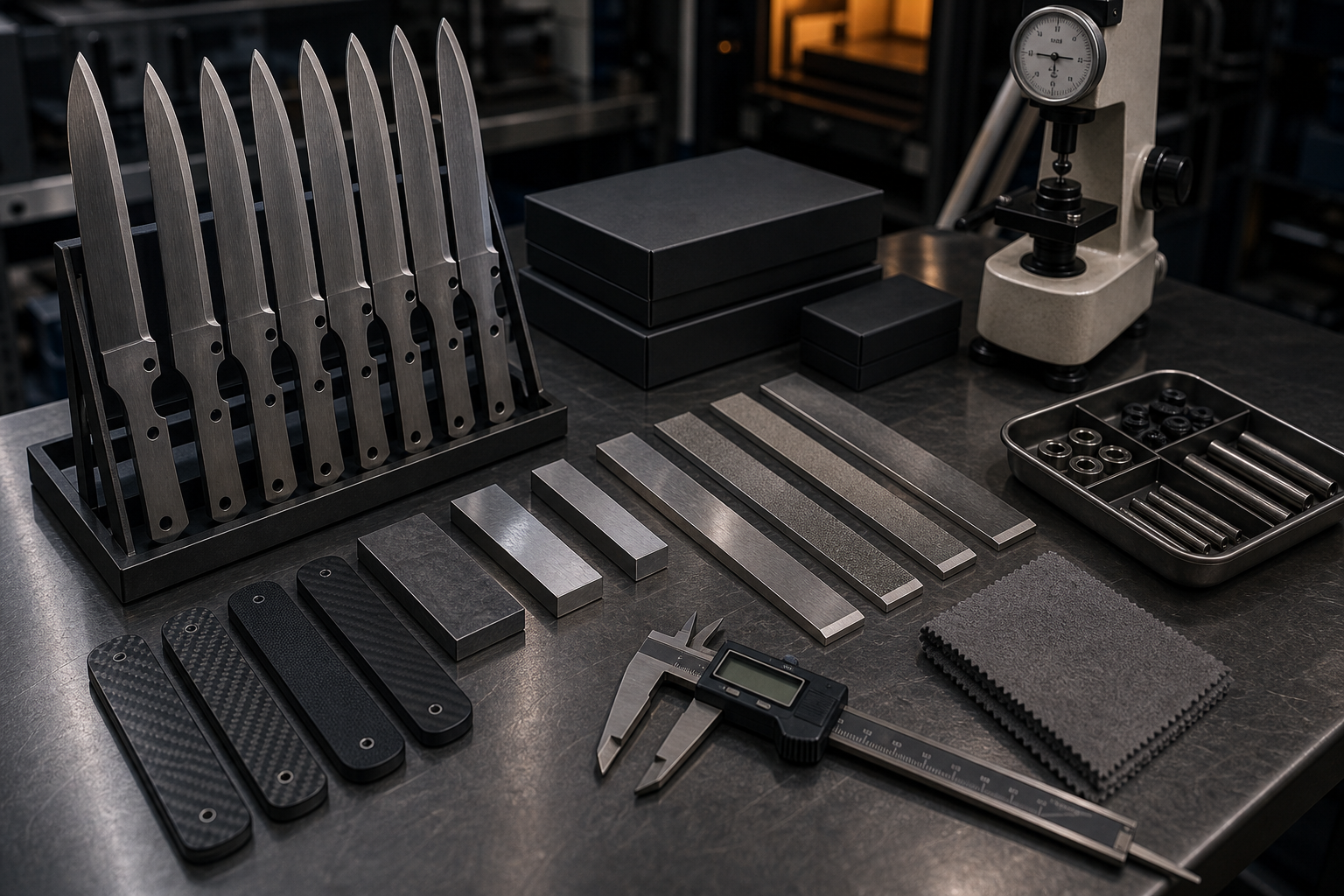
I Use S30V When the Market Can Carry the Steel Story
S30V can be a strong upgrade when the buyer is building a premium tier. The steel is known in the knife market. It can support product copy about edge retention, powder metallurgy, and higher wear resistance. Niagara's S30V data sheet gives several reasons for that position. It says the CPM process produces homogeneous steel with dimensional stability, grindability, and toughness compared with conventionally produced steels. It also lists S30V's transverse Charpy C-notch impact energy at 10.0 ft-lbs, compared with 2.5 ft-lbs for 154-CM and 440C ESR in the same table.
This does not mean S30V should replace 420HC in every line. S30V raises the cost of steel and processing. It may require better abrasives, tighter grinding control, and clearer sharpening expectations. Knife Steel Nerds explains that sharpening high-vanadium steels can be harder with common aluminum oxide abrasives because aluminum oxide is softer than vanadium carbide, while diamond and CBN stones make those steels easier to sharpen. This matters when a brand sells to casual users.
For a B2B buyer, S30V makes sense when the extra cost supports a higher retail price, better brand positioning, or a clear upgrade path. It is less attractive when the target customer will not recognize the steel or will not pay for the difference. In that case, the buyer may be better served by improving handle material, lock feel, finish, packaging, or QC consistency.
| S30V value driver | Buyer benefit | Production responsibility |
|---|---|---|
| Edge retention | Longer use between sharpening | Control heat treatment and edge finish |
| Steel recognition | Easier premium positioning | Avoid exaggerated performance claims |
| Powder metallurgy | Better carbide distribution for high alloy design | Use suitable grinding practice |
| Upgrade tier | Supports higher price line | Match handle, lock, and packaging level |
What QC Risks Should Buyers Control Before Mass Production?
The wrong QC plan can erase steel value. A good sample means little if the mass-production batch does not repeat it.
Buyers should control material verification, target HRC, heat-treatment records, edge geometry, grinding heat, corrosion-prevention finish, sharpening consistency, and final functional inspection.
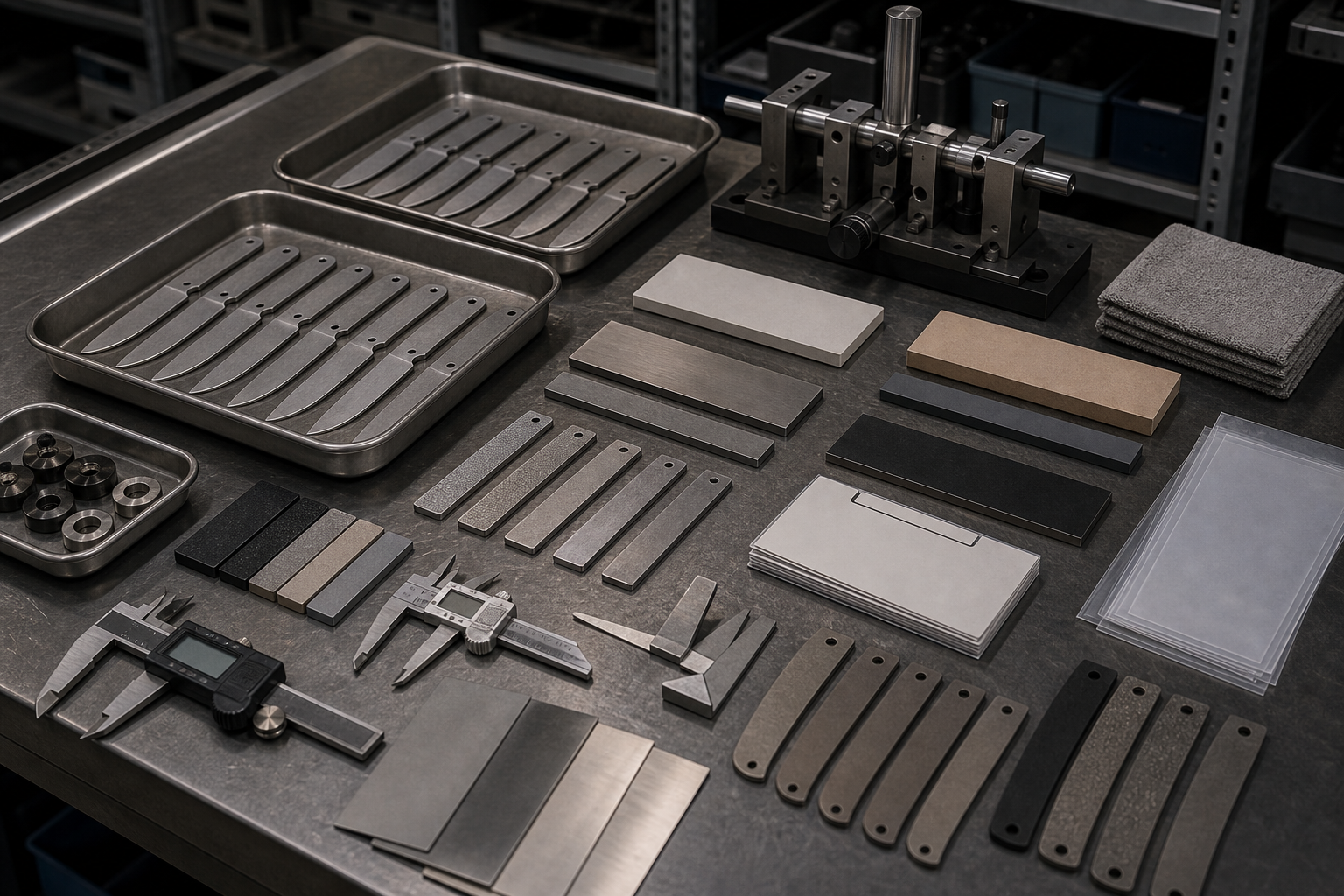
I Turn Steel Claims Into Inspection Points
For 420HC, the most common risk is under-performing heat treatment. A buyer may choose 420HC for toughness and ease of sharpening, but the blade still needs enough hardness and edge stability to cut well. Ulbrich states that maximum corrosion resistance is attained only in the fully hardened condition. Latrobe also warns that tempering in the 800-1025 F range will decrease both corrosion resistance and toughness. These details matter because corrosion resistance and toughness are not just steel-name properties. They depend on process choices.
For S30V, the risk is different. The steel has more potential edge retention, but that potential can be hurt by poor grinding, overheated edges, or unclear hardness targets. Niagara recommends S30V aim hardness of 58-61 HRC. If a buyer does not define the HRC range and inspection method, the quotation is incomplete. The NIST Rockwell hardness guide explains that good Rockwell measurement practice helps reduce errors and variability. That is why I prefer to define test location, sample size, accepted range, and records before production.
Final inspection should include more than a hardness number. I would check blade play, lockup, centering, opening feel, edge sharpness, burr removal, surface finish, screw security, packaging, and moisture protection. A steel upgrade cannot compensate for a rough pivot or poor packaging.
| QC risk | 420HC control | S30V control |
|---|---|---|
| Wrong hardness | Define target range and sample plan | Define target range and sample plan |
| Edge damage | Avoid overly soft edge and poor burr removal | Avoid overheating and too-thin geometry |
| Corrosion complaints | Hardened condition, finish, oiling, packaging | Finish, cleaning, and packaging moisture control |
| Batch inconsistency | Incoming material and process checks | Heat treatment and grinding records |
How Should Buyers Build an RFQ Around 420HC or S30V?
A vague RFQ makes the steel decision harder. Suppliers may quote different knives while using the same steel name.
Buyers should ask for separate 420HC and S30V quotations with target market, target price, MOQ, blade geometry, HRC range, finish, handle material, lock type, packaging, inspection plan, and trade terms.
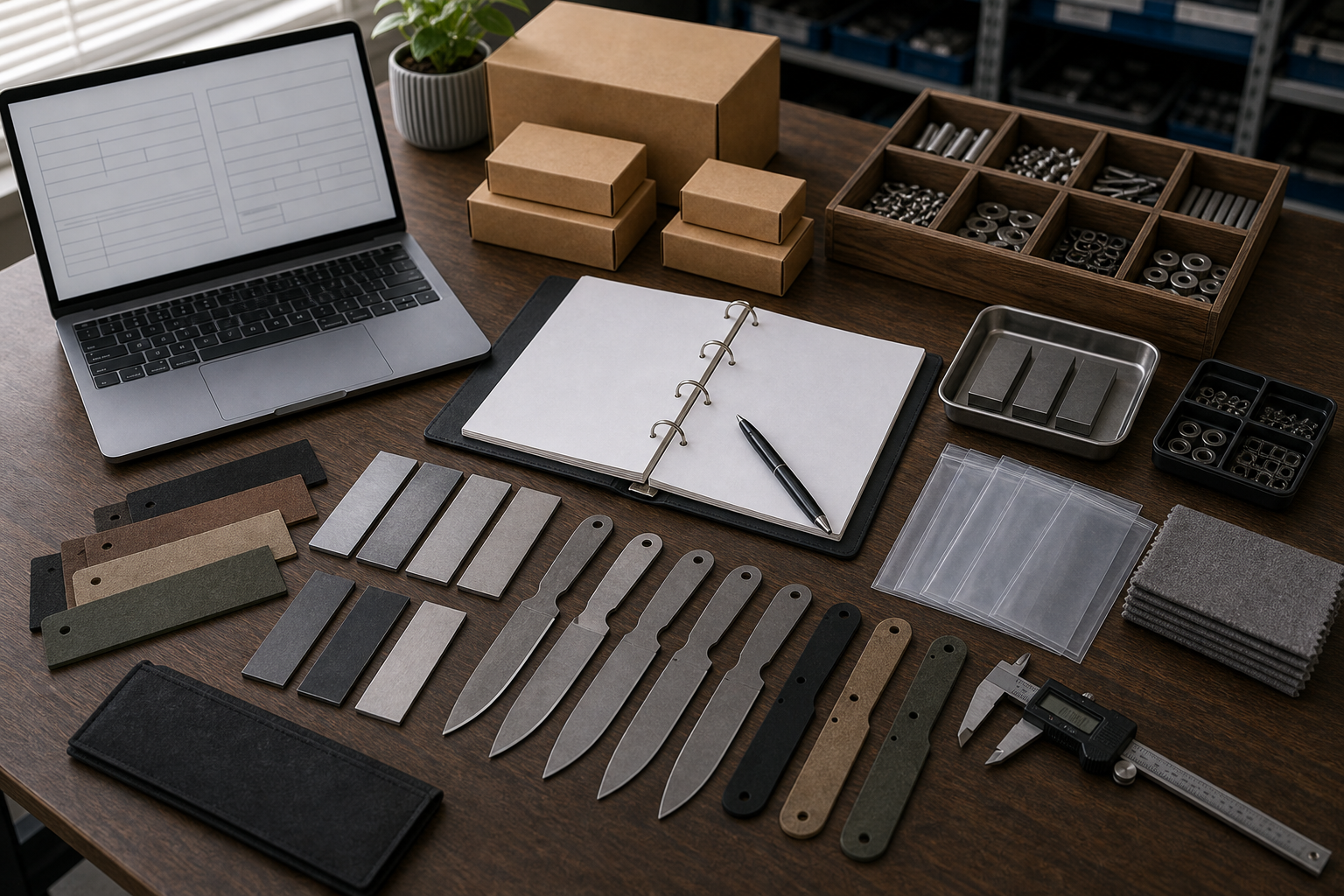
I Quote Steel as a Product System
When a buyer is unsure, I like to quote two paths. Path A uses 420HC and focuses on practical value. Path B uses S30V and focuses on premium positioning. Then we compare not only blade steel cost, but also processing cost, rejection risk, packaging level, retail price, and after-sales expectations. Sometimes S30V is clearly worth it. Sometimes 420HC leaves more budget for better handle material, smoother action, safer lockup, or stronger packaging.
The RFQ should be specific. It should say the knife type, blade length, blade thickness, edge use, target HRC, finish, handle material, lock type, logo method, packaging, MOQ, inspection requirements, and target market. If the buyer sells in a market with special restrictions, compliance checks should be discussed early. If the buyer compares suppliers internationally, trade terms should be defined too. The U.S. International Trade Administration explains that Incoterms clarify buyer and seller responsibilities, costs, and risks in export transactions.
Quality language also helps. The ISO 9001 page explains that ISO 9001 covers establishment, maintenance, and continual improvement of quality management systems. I do not use that as a loose certification claim. I use it as a reminder that a buyer should ask how the supplier controls material, heat treatment, in-process inspection, final inspection, and corrective action. A good RFQ turns the steel choice into a controlled product plan.
| RFQ field | What to ask | Why it matters |
|---|---|---|
| Steel option | Quote 420HC and S30V separately | Shows true value difference |
| Target user | Budget utility, outdoor, EDC, premium | Guides steel and geometry |
| Target HRC | Define range and sample quantity | Makes heat treatment measurable |
| Edge geometry | Thickness, grind, and edge angle | Connects steel to use |
| Inspection plan | Material, HRC, function, appearance | Protects repeat production |
| Trade term | EXW, FOB, CIF, DDP, or agreed term | Clarifies cost and risk |
Ready to use this material in your next knife line?
Vast State can help you compare blade steels, heat treatment ranges, handle materials, finishes, packaging options, and QC requirements based on your target market and quantity.
Conclusion
I choose 420HC for practical value and S30V for premium edge retention, but only after the product tier, RFQ, and QC plan are clear.
Source Notes
- Ulbrich 420HC data sheet supports 420HC composition, martensitic stainless positioning, corrosion context, and hardness reference.
- Latrobe 420 HC data sheet supports 420HC composition, attainable hardness, heat treatment, and tempering cautions.
- Niagara S30V data sheet supports S30V composition, CPM process context, CATRA edge-retention comparison, toughness comparison, and heat-treatment range.
- Knife Steel Nerds budget steel article supports the guidance that steel choice alone does not predict knife performance and that 420HC-type value depends on use and geometry.
- Knife Steel Nerds steel ratings article supports the broader tradeoff between toughness, edge retention, corrosion resistance, heat treatment, and edge geometry.
- NIST Rockwell hardness guide supports the need for careful hardness measurement practice.
- Trade.gov Incoterms page supports RFQ advice about trade responsibilities, costs, and risks.
- ISO 9001:2015 page supports quality-management context, but it does not prove any supplier certification.