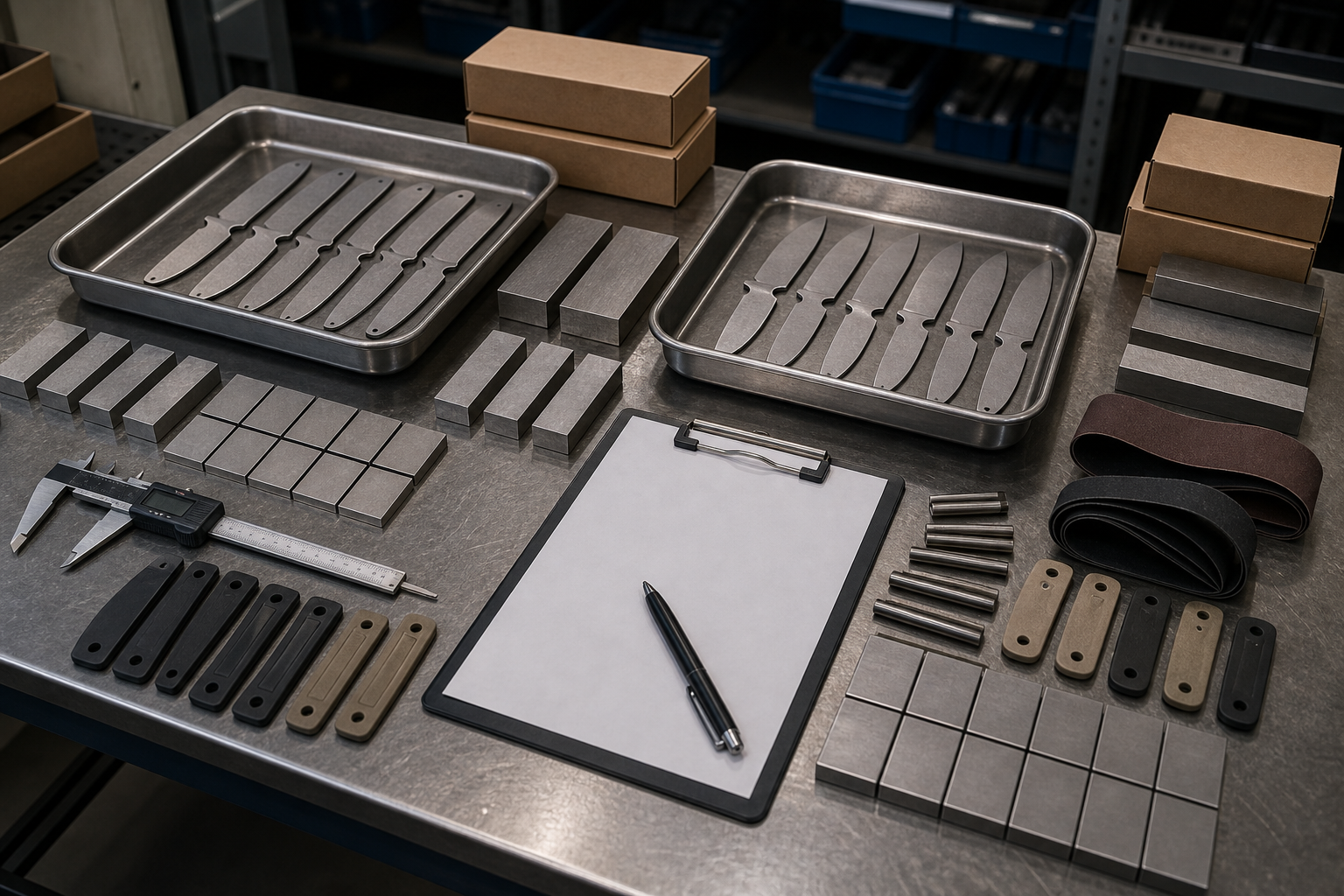
Budget steel choices look simple until returns start. If the blade chips, rusts, or dulls too fast, margin disappears. The right choice starts with use.
Knife sellers should choose 8Cr13MoV for broad budget EDC knives that need toughness, easy sharpening, and stable cost. They should choose 440C when the product needs better wear resistance, higher chromium content, and a more traditional stainless-steel selling point, with tighter heat-treatment and grinding control.
Quick buyer brief:
- Answer: 8Cr13MoV is usually the safer budget choice for easy-use EDC. 440C fits higher-wear budget knives when QC is tighter.
- Buyer context: This helps knife brands, importers, wholesalers, and private label buyers set realistic steel claims.
- Key checks: Confirm steel identity, target HRC, heat treatment, blade geometry, corrosion needs, sharpening expectations, and inspection records.
Planning a knife project with this steel?
Send us your target market, MOQ, price range, and blade type. Vast State can help you choose the right steel, HRC range, finish, handle material, and QC requirements for OEM/ODM production.
I do not treat 8Cr13MoV and 440C as a simple winner-loser question. I treat them as two production paths. One path supports a practical entry-level knife with easy maintenance. The other path can support stronger wear-resistance messaging, but it needs more control in heat treatment, grinding, and final inspection. In OEM/ODM knife work, the best steel is the one that fits the buyer's price point, customer expectations, and repeat-production plan.
What Is the Practical Short Answer for 8Cr13MoV vs. 440C?
A steel name can sound like a product answer. It is not. If the use case is wrong, even a known steel disappoints buyers.
8Cr13MoV is usually better for practical budget EDC knives that need toughness and easy sharpening. 440C is better when a buyer wants higher wear resistance, higher chromium content, and can control heat treatment and finishing.
I Start With the Product Position
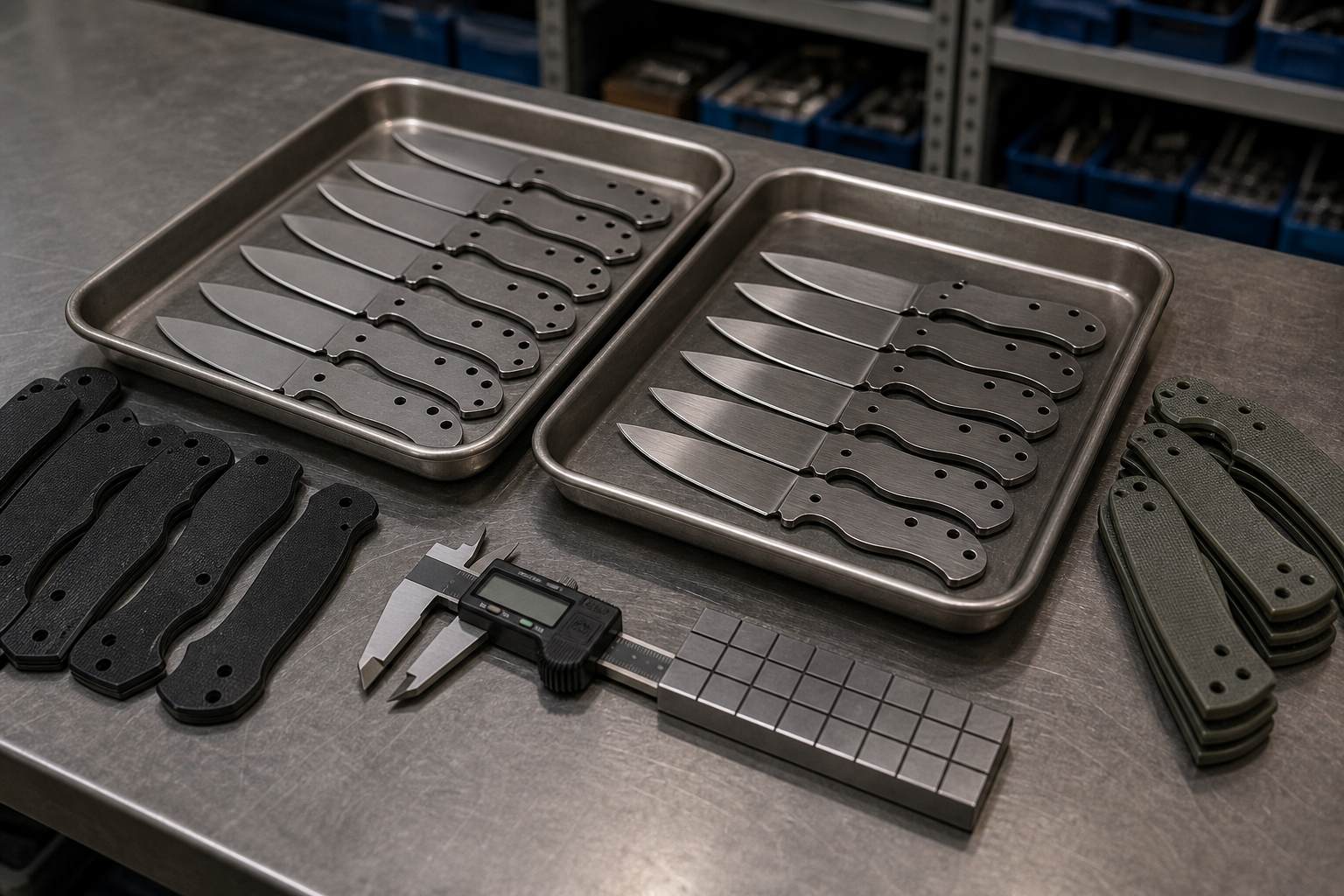
When a customer asks me which one is better, I first ask what kind of buyer will use the knife. A low-price EDC knife, a promotional pocket knife, a camping backup knife, and a harder-use utility folder do not need the same steel story. 8Cr13MoV often works well when the product promise is honest: useful sharpness, easy maintenance, good toughness for the class, and stable cost. Knife Steel Nerds tested 8Cr13MoV/8Cr14MoV and concluded that buyers should not treat the steel itself as junk if the heat treatment is done properly.
440C has a different appeal. Carpenter Technology describes 440C stainless as a high-carbon chromium steel designed to provide stainless properties with maximum hardness. That can help a seller who wants stronger wear-resistance language than a basic entry-level steel. But I would not use 440C only because it sounds more familiar. I would use it when the design, thickness behind the edge, finish, and heat treatment plan all support the claim.
| Buyer goal | Better starting point | Why I would choose it |
|---|---|---|
| Broad budget EDC | 8Cr13MoV | Easier user maintenance and forgiving toughness |
| Higher wear-resistance message | 440C | Higher carbon and chromium support that positioning |
| First private label order | 8Cr13MoV | Lower risk when the target price is tight |
| More technical product copy | 440C | Needs stronger QC proof and clearer performance claims |
Quote-ready RFQ Checklist for This Steel
To get an accurate OEM/ODM quote, prepare these details before contacting a knife manufacturer.
| RFQ Field | What to Prepare |
|---|---|
| Product type | Folding knife / fixed blade / multi-tool / kitchen knife |
| Target market | US / EU / outdoor retail / promotional / tactical / EDC |
| Steel option | 4116 / 14C28N / D2 / N690 / Nitro-V |
| Target HRC | Example: 55-57 HRC, 58-60 HRC |
| Blade finish | Satin / stonewash / black coating / bead blast |
| Handle material | G10 / micarta / aluminum / stainless steel / wood |
| Lock or structure | Liner lock / frame lock / slip joint / full tang |
| Estimated quantity | 500 / 1,000 / 3,000 / 5,000+ pcs |
| Packaging | White box / color box / blister / pouch / gift box |
| Required documents | Drawing / sample photo / logo file / packaging artwork |
How Do Chemistry and Carbide Structure Change Performance?
Two steels can both be stainless but behave very differently. Chemistry changes carbides, sharpening, corrosion, grinding time, and buyer expectations.
8Cr13MoV has about 0.8 percent carbon, around 13 percent chromium, and small molybdenum and vanadium additions. 440C has higher carbon and 16-18 percent chromium, which supports higher hardness and wear resistance.
I Look at Chemistry as a Production Signal
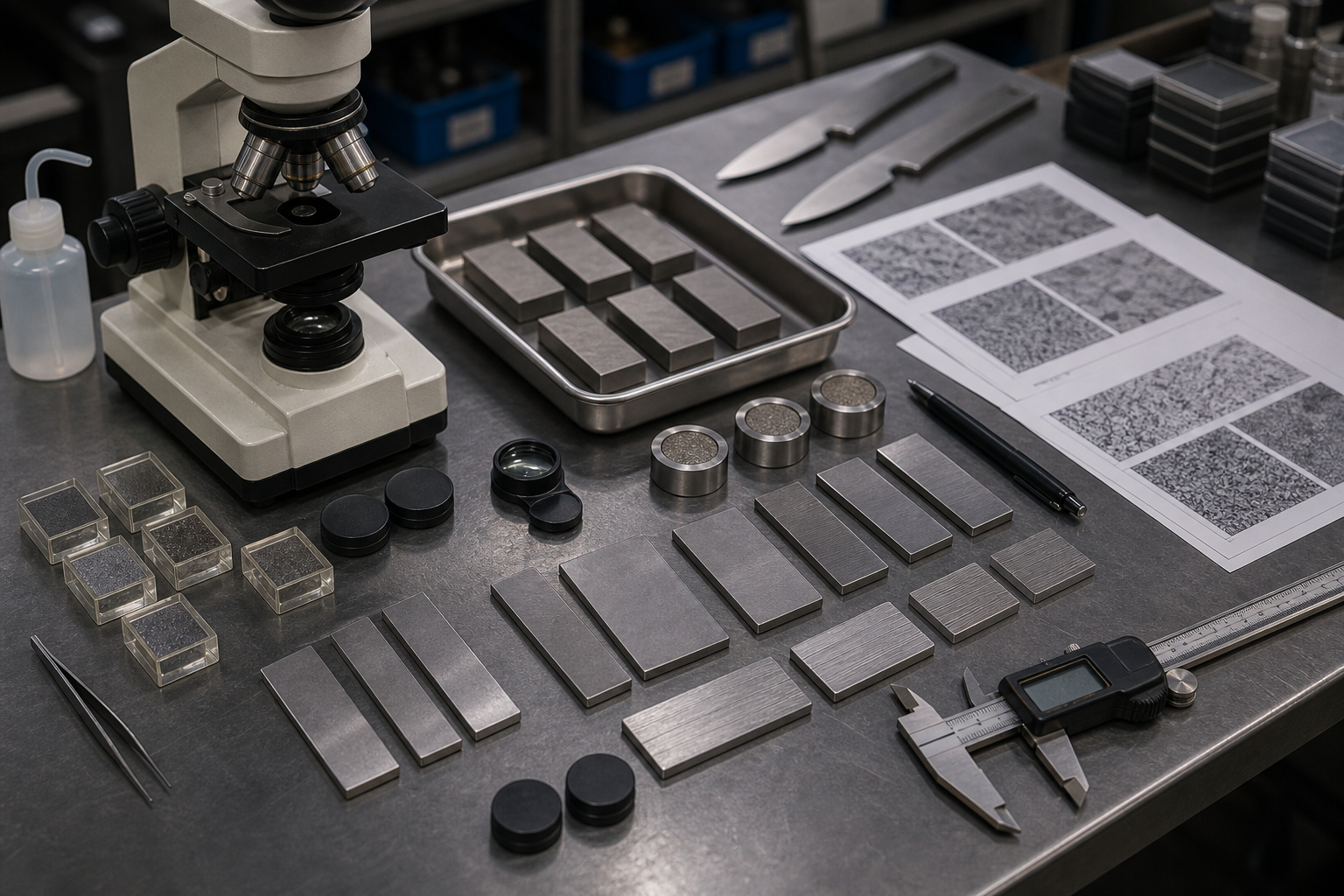
Knife Steel Nerds explains that 8Cr13MoV is a generic Chinese designation connected to AUS-8 type chemistry. The name points to about 0.8 percent carbon and about 13 percent chromium, with molybdenum and vanadium additions. The same article also notes that published compositions for 8Cr13MoV and 8Cr14MoV are often treated the same, apart from some chromium-range differences in published tables. For a buyer, this means the steel family is practical, familiar, and cost-focused, but incoming material control still matters.
440C starts from a higher-carbon and higher-chromium position. Carpenter lists 440C with carbon at 0.95-1.20 percent and chromium at 16.00-18.00 percent, with molybdenum listed at 0.75 percent. That chemistry can create more carbides. More carbides can help wear resistance, but they can also reduce toughness and make sharpening or grinding less friendly than lower-carbide stainless steels. This is why I never compare only the chromium number. I also ask what blade shape, edge angle, thickness, and finish will be used.
| Chemistry point | 8Cr13MoV meaning | 440C meaning |
|---|---|---|
| Carbon level | Moderate for budget stainless knives | Higher, supports hardness and wear |
| Chromium level | Stainless class with practical corrosion resistance | Higher chromium range, strong stainless positioning |
| Carbide behavior | Usually easier to sharpen and grind | More wear-resistant but less forgiving |
| OEM concern | Verify material consistency | Control heat treatment and grinding heat |
Which Steel Gives Better Edge Retention and Sharpening Experience?
Sellers love edge-retention claims. Users remember sharpening pain. If the steel promise is wrong, both marketing and after-sales suffer.
440C generally has the edge-retention advantage over 8Cr13MoV because of higher carbon and carbide content. 8Cr13MoV usually gives easier sharpening and a more forgiving ownership experience for budget EDC users.
I Match Edge Claims to Real Users
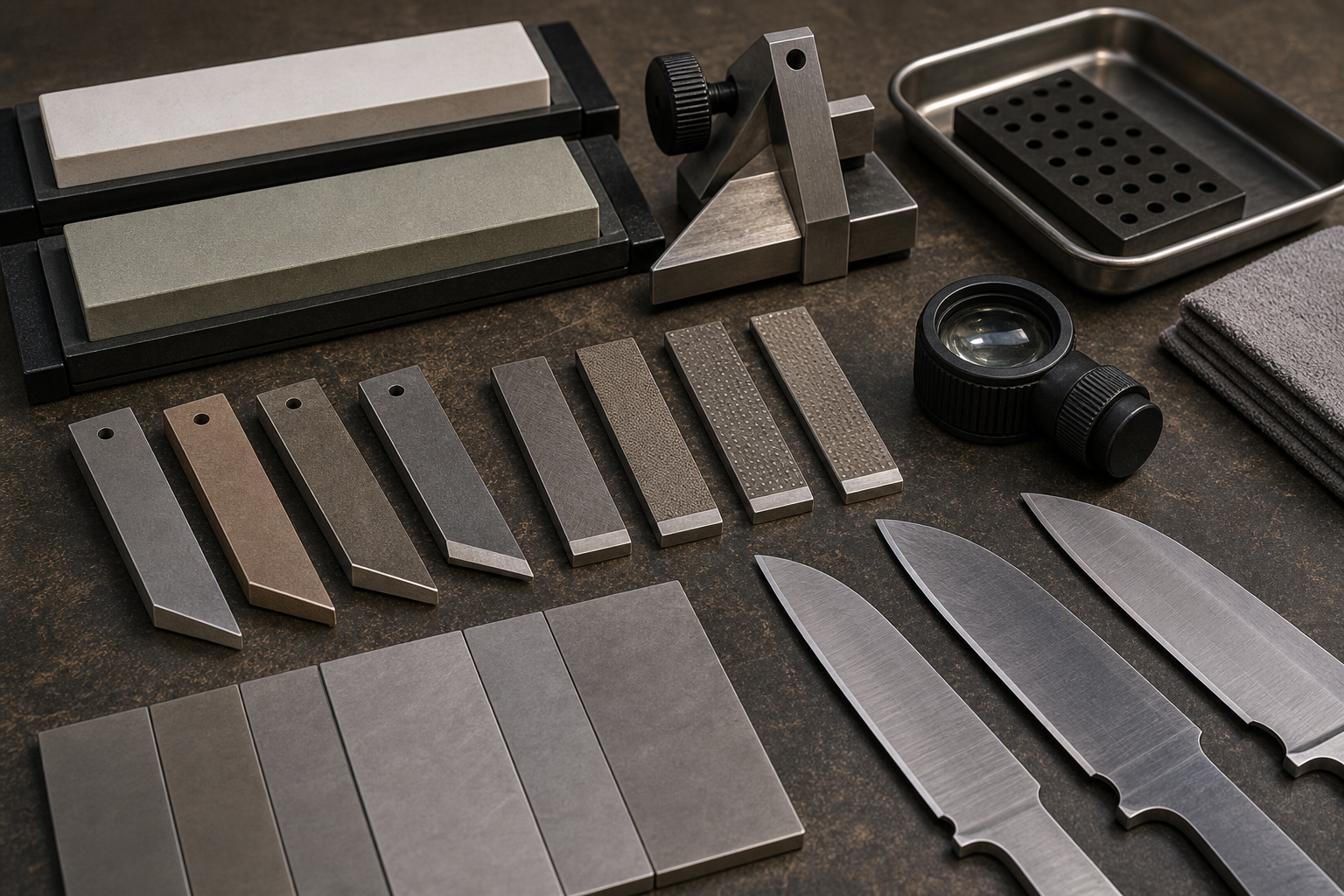
Knife Steel Nerds tested 8Cr13MoV/8Cr14MoV and found its CATRA edge-retention result about where expected for its composition. The article explains that it sits below higher-carbon steels such as 440C, VG10, and 154CM, while still being reasonable for its class. I see this as useful guidance for product planning. If a brand wants a low-cost knife for users who sharpen casually, 8Cr13MoV can be easier to explain and easier to support.
440C can hold an edge better when heat treated and ground well. But a harder-wearing edge can also be slower for some end users to sharpen. That may not be a problem for experienced users, but it can matter in broad retail channels. I would not sell 440C as a miracle upgrade. I would position it as a traditional high-carbon stainless option for buyers who want more wear resistance and can accept the production controls behind it.
In mass production, edge retention also depends on edge angle, thickness behind the edge, sharpening belt condition, burr removal, and final QC. A clean 8Cr13MoV edge can perform better in the market than a poorly finished 440C edge. The steel is only part of the system.
| Performance factor | 8Cr13MoV | 440C |
|---|---|---|
| Edge retention | Practical for budget EDC | Usually better when processed well |
| Sharpening | More user-friendly | Can take more effort |
| Marketing risk | Overclaiming makes it look cheap | Overclaiming creates QC pressure |
| Best product fit | Entry-level pocket knives and promo EDC | Budget knives needing higher wear-resistance story |
Which Steel Is Safer for Toughness, Chipping Risk, and Corrosion?
A blade can stay sharp but still fail the buyer. Chipping, edge damage, and rust complaints can cost more than the steel upgrade.
8Cr13MoV is generally safer for toughness in budget knives. 440C can offer strong hardness and stainless positioning, but its higher carbide content means edge geometry and heat treatment must be controlled carefully.
I Separate Stainless From Care-Free
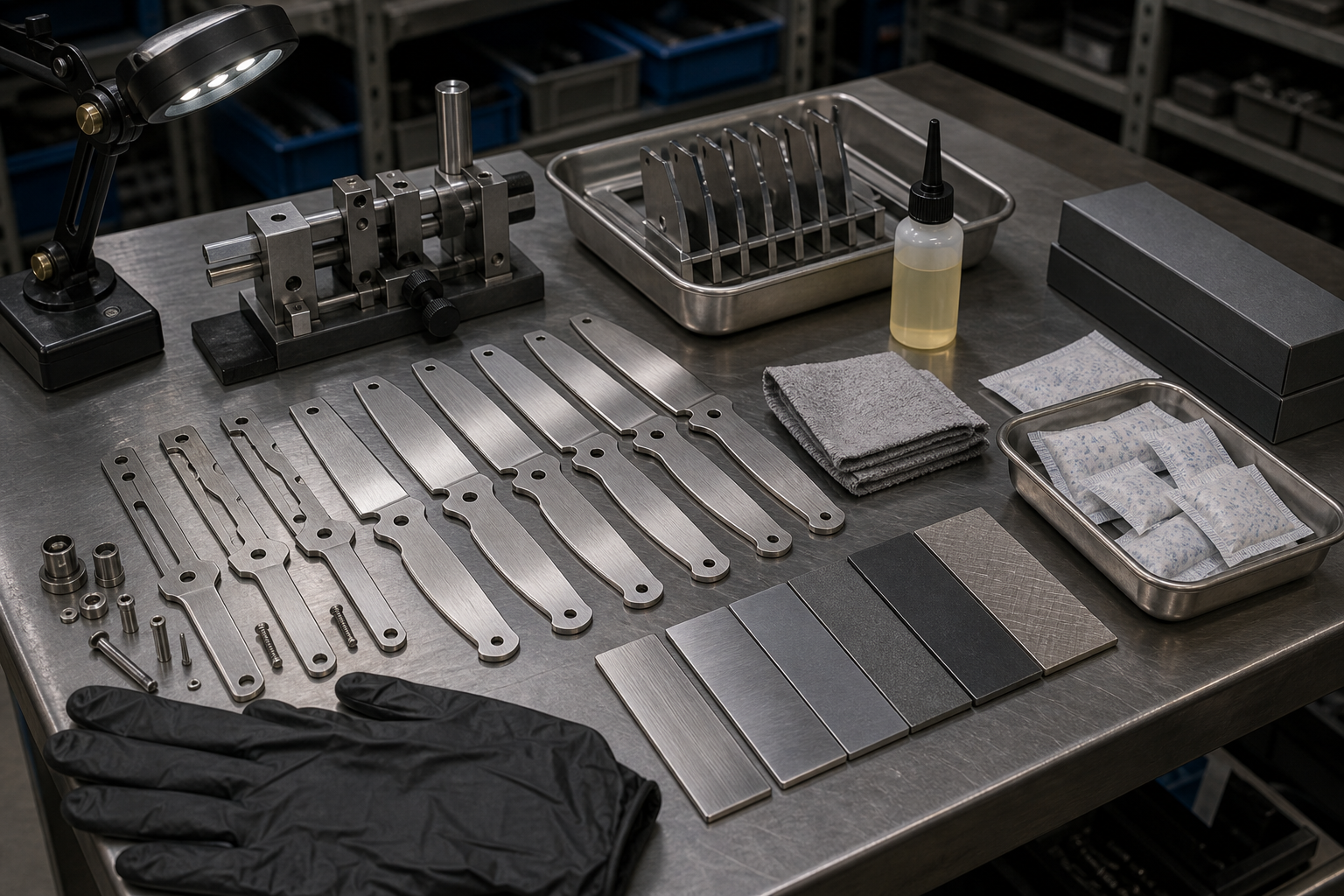
Knife Steel Nerds reported that 8Cr13MoV toughness is better than many conventional high-carbon stainless steels such as 440C, VG10, and 154CM, although it is not as tough as finer-carbide steels such as AEB-L or 14C28N. That matters for budget folders. Many buyers in this price range want a knife that survives daily use, not a knife that wins a lab chart.
440C should not be treated as weak. Carpenter notes that heat-treated 440C can reach about Rockwell C 60 and has been used in hardened and tempered condition. But the same chemistry that helps hardness and wear also asks more from blade geometry. I would avoid very thin edges on cheap 440C knives unless the factory has strong heat treatment, grinding control, and sharpening control. A budget product should not need expensive after-sales support.
Corrosion also needs honest wording. 440C has more chromium in the listed composition than 8Cr13MoV, so it has a stronger stainless story. But corrosion resistance in a finished knife depends on heat treatment, polish, bead blast, coating, user cleaning, and packaging moisture. I would not promise that either steel is rust-proof. I would tell buyers to match the finish to the market. A humid outdoor market may need smoother finishing, corrosion-resistant packaging choices, and clearer care instructions.
| Risk area | 8Cr13MoV advantage | 440C advantage |
|---|---|---|
| Toughness | More forgiving for budget folders | Acceptable if geometry is controlled |
| Chipping risk | Usually easier to manage | Needs edge and hardness discipline |
| Corrosion story | Practical stainless for daily use | Higher chromium range helps positioning |
| Buyer warning | Do not run it too soft | Do not chase hardness without toughness |
What Manufacturing Controls Matter More Than the Steel Name?
Steel names sell samples, but process control ships orders. If the factory cannot repeat the result, the buyer only bought a label.
The most important controls are steel verification, heat-treatment recipe, target HRC, grinding heat, edge geometry, sharpening consistency, corrosion-prevention steps, and final functional inspection.
I Write the Steel Choice Into the Process
For 8Cr13MoV, I want the supplier to prove that the blade is not only cheap, but consistent. Knife Steel Nerds shared an important sourcing lesson in its 8Cr13MoV testing article: a supplied bar expected to be 8Cr13MoV was tested and turned out to be 440C. That story is useful for B2B buyers because it shows why material verification matters. In OEM production, a steel name on a quote is not enough.
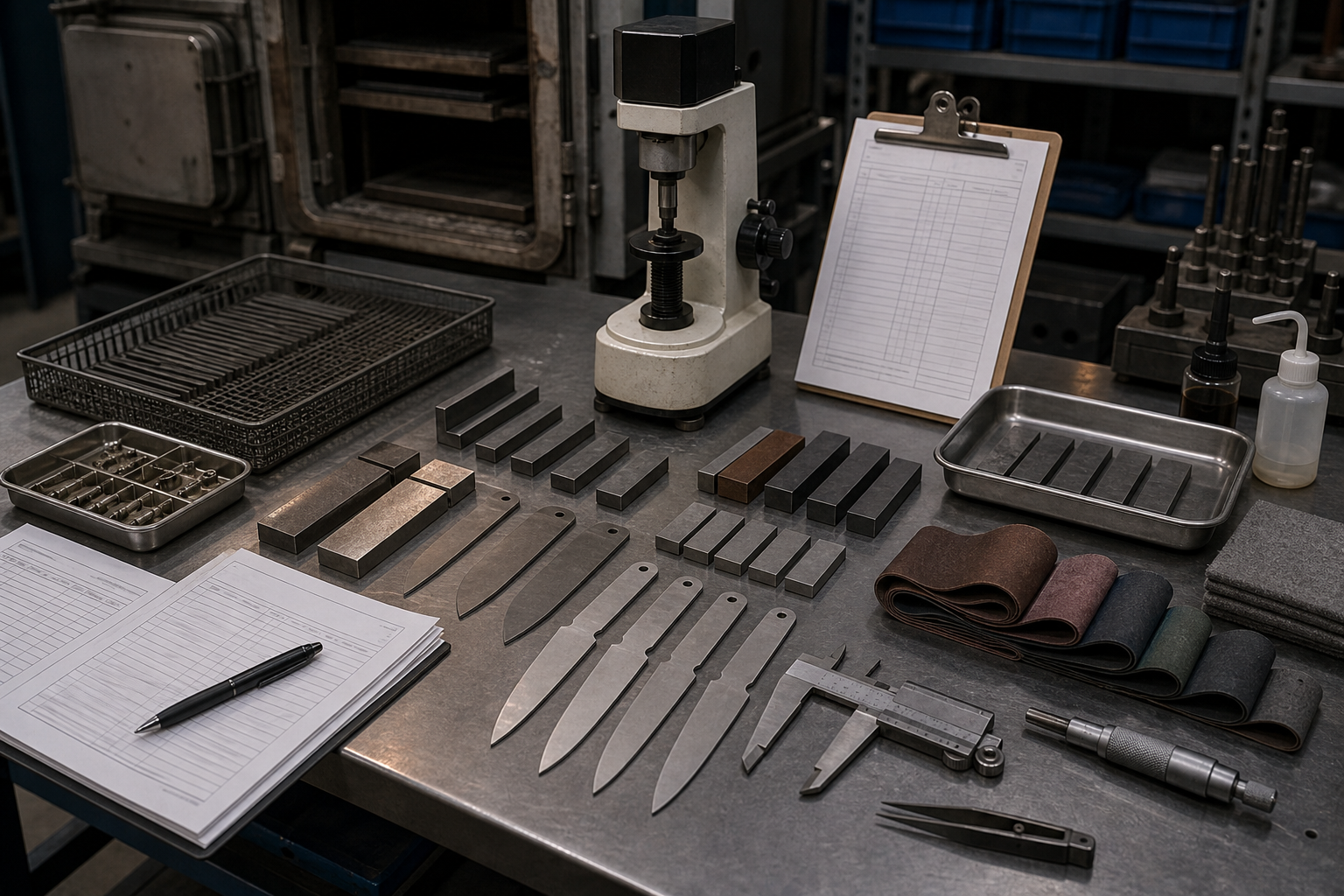
For 440C, I focus more on heat treatment and grinding discipline. If the hardness is too low, the buyer loses the reason for choosing 440C. If the hardness is pushed too high without the right geometry, the edge can become less forgiving. The NIST Rockwell hardness guide explains why good hardness measurement practice helps reduce measurement errors. In practical factory terms, that means the RFQ should define where hardness is tested, how many blades are checked, what range is accepted, and how the supplier handles out-of-range results.
I also care about grinding heat. A blade can have a good bulk hardness and still suffer at the edge if sharpening overheats the steel. This is especially important for budget knives because high production speed can hide small problems until the customer uses the knife.
| Control point | What I ask the factory to confirm | Why it matters |
|---|---|---|
| Material identity | Steel certificate or incoming check | Prevents wrong steel substitution |
| Heat treatment | Recipe, target HRC, batch record | Makes the steel choice real |
| Grinding | Coolant, belt condition, edge thickness | Protects the working edge |
| Final QC | Sharpness, lockup, blade play, corrosion check | Protects repeat orders |
How Should Buyers Write an RFQ for These Budget Steels?
A vague RFQ creates vague knives. If buyers only write "8Cr13MoV or 440C," suppliers may quote different products.
Buyers should include target market, steel option, blade shape, thickness, target HRC, finish, lock type, handle material, packaging, MOQ, inspection needs, and trade terms in the RFQ.
I Turn Steel Choice Into a Quote Checklist
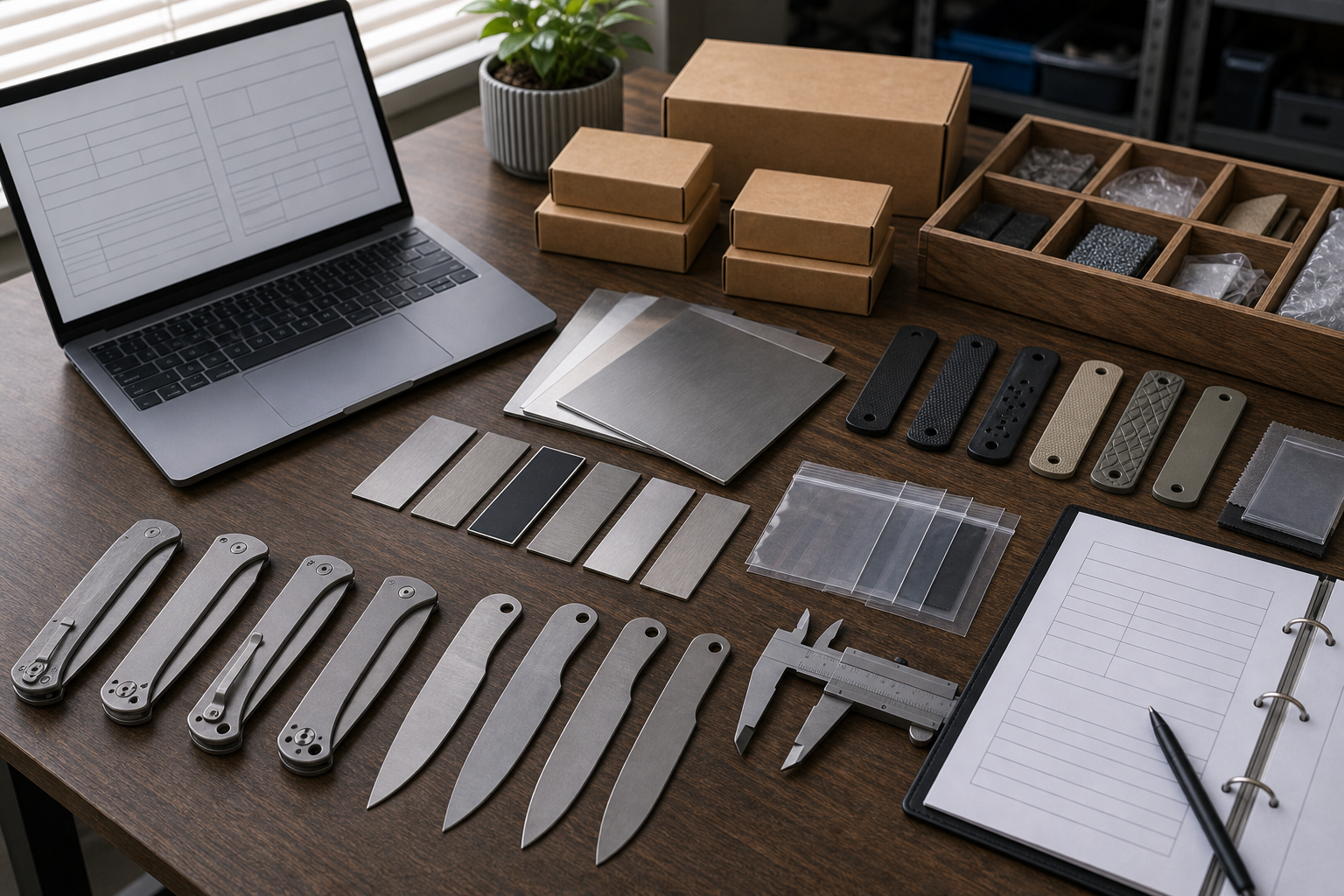
For a buyer, 8Cr13MoV and 440C should not be the only line in the RFQ. I would ask for two versions if the target market is not yet fixed. Version A can use 8Cr13MoV for practical entry-level positioning. Version B can use 440C for higher wear-resistance positioning. Then I would compare not only blade cost, but also heat treatment, grinding time, rejection risk, sharpening process, packaging, and after-sales risk.
The RFQ should also define the product around the steel. A thin slicer, a work knife, a camping folder, and a private label gift knife have different edge needs. Buyers should send target price, estimated MOQ, blade length, blade thickness, finish, handle material, lock type, logo method, packaging style, target market, and any compliance concerns. If the quote is international, trade terms need to be clear. The U.S. International Trade Administration explains that Incoterms define buyer and seller responsibilities, costs, and risks in export transactions.
Quality terms matter too. The ISO 9001 page explains that the standard covers establishment, maintenance, and continual improvement of quality management systems. I do not use that as a casual certification claim. I use it as a reminder that buyers should ask how the supplier controls incoming material, in-process inspection, final inspection, and complaint feedback. The best RFQ makes the supplier's process visible before mass production starts.
| RFQ field | What to write | Why it helps |
|---|---|---|
| Steel option | Quote 8Cr13MoV and 440C separately | Shows true cost and process difference |
| Target HRC | Define desired range and test method | Prevents vague heat-treatment promises |
| Edge geometry | Blade thickness, grind, edge angle target | Connects steel to real cutting use |
| Inspection plan | Incoming, in-process, final checks | Reduces batch inconsistency |
| Trade term | EXW, FOB, CIF, DDP, or agreed term | Clarifies cost and risk responsibility |
Ready to use this material in your next knife line?
Vast State can help you compare blade steels, heat treatment ranges, handle materials, finishes, packaging options, and QC requirements based on your target market and quantity.
Conclusion
I choose 8Cr13MoV for practical budget EDC and 440C for controlled higher-wear positioning, but only after RFQ and QC details are clear.
Source Notes
- Knife Steel Nerds on 8Cr13MoV/8Cr14MoV supports the 8Cr13MoV performance discussion, toughness comparison, CATRA context, and heat-treatment caution.
- Carpenter 440C alloy page supports the 440C composition, high-carbon chromium positioning, and hardness context.
- NIST Rockwell hardness guide supports the need for careful hardness measurement practice.
- Trade.gov Incoterms page supports RFQ guidance about trade responsibilities, costs, and risks.
- ISO 9001:2015 page supports quality-management context, but it does not prove any supplier certification.