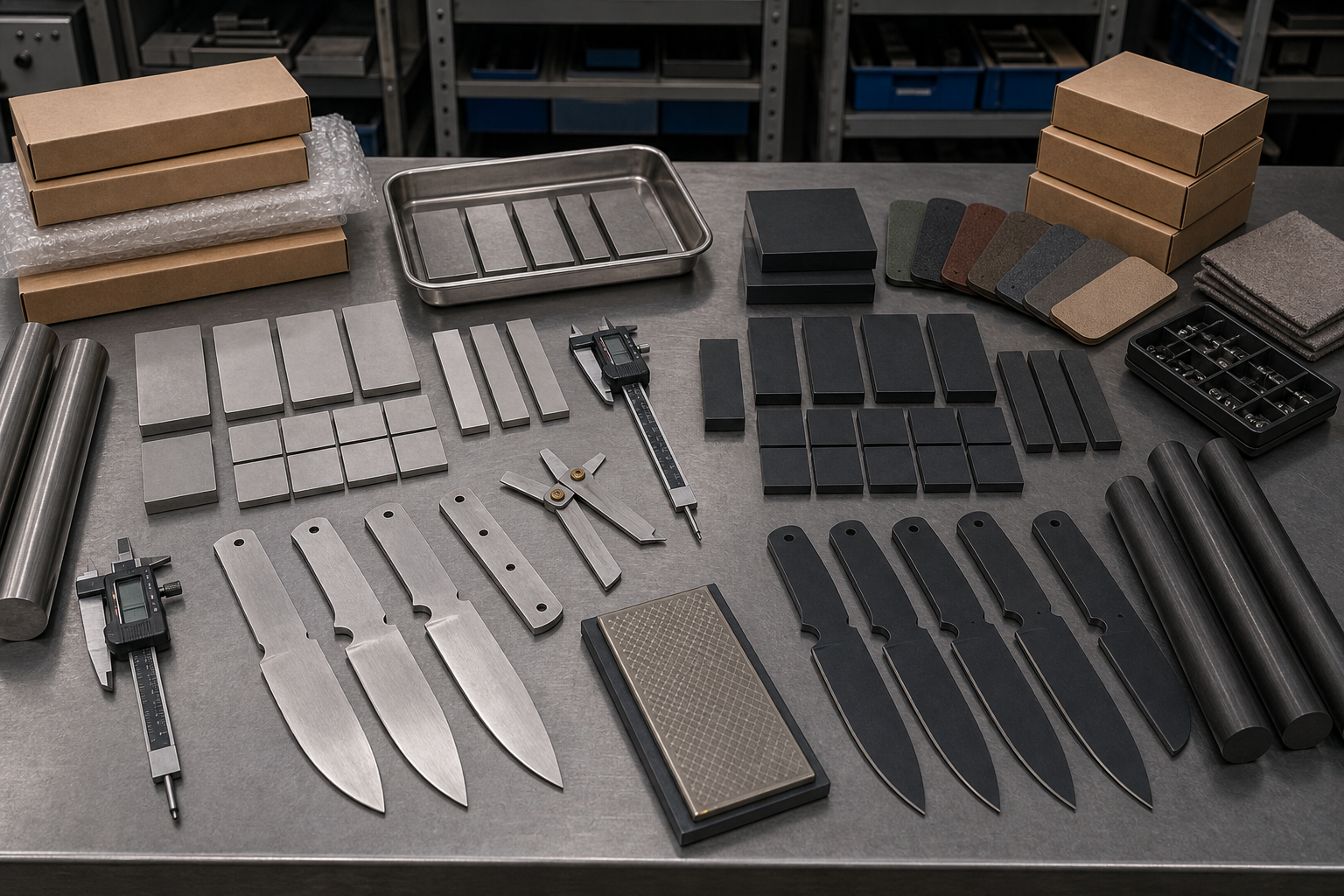
Premium steel can make a product easier to sell. It can also make production slower, sharpening harder, and complaints more specific.
S30V is the better choice for broad premium EDC and outdoor knife lines that need balance, toughness, corrosion resistance, and practical production. S90V is better for specialist premium knives where long abrasive edge retention matters more than ease of grinding, sharpening, and cost control.
Quick buyer brief:
- Answer: Use S30V for balanced premium knife lines and S90V for high-wear specialist models.
- Buyer context: This helps knife brands, outdoor brands, importers, wholesalers, distributors, and private label buyers plan clear steel tiers.
- Key checks: Target user, cutting media, price tier, steel availability, HRC target, grinding time, sharpening expectation, edge geometry, finish, MOQ, QC plan, and backup steel.
Planning a knife project with this steel?
Send us your target market, MOQ, price range, and blade type. Vast State can help you choose the right steel, HRC range, finish, handle material, and QC requirements for OEM/ODM production.
When I compare S30V and S90V with a buyer, I do not ask which steel sounds more premium. I ask what the user will cut, how often the user will sharpen, how much the knife can cost, and what production risk the buyer can accept. S30V was built as a balanced premium knife steel. S90V was built for much higher wear resistance. Both can be useful, but they should not serve the same product role. A good seller turns that difference into a clear product ladder.
What Is the Short Answer for S30V vs. S90V?
Many buyers want one winner. That can mislead a product line because S30V and S90V solve different sales problems.
S30V is better for mainstream premium EDC, outdoor, and dealer-friendly knife lines. S90V is better for high-end slicing, dry cutting, collector, and steel-enthusiast models where long edge life is worth higher cost and sharpening difficulty.
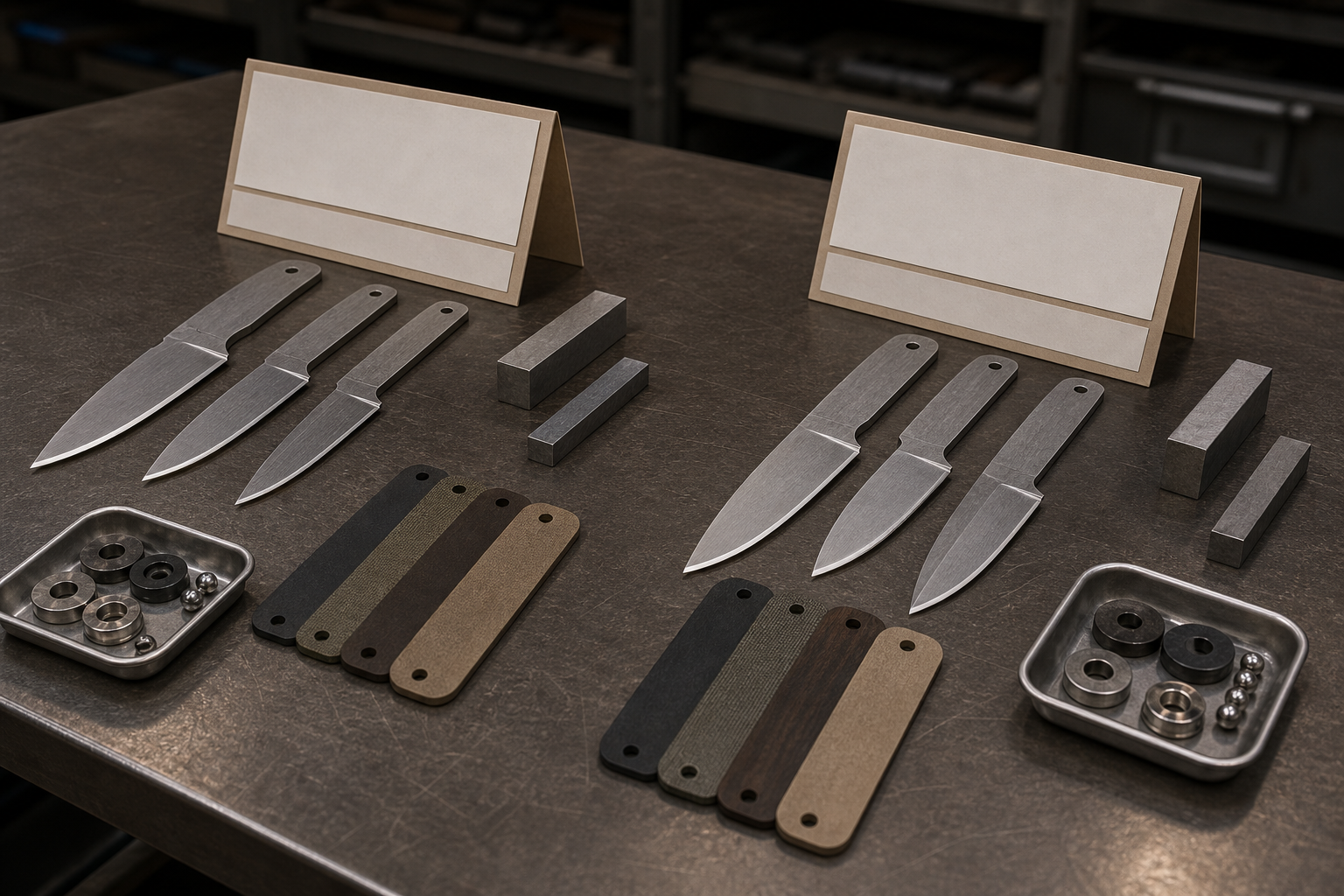
I Use S30V as the Balanced Premium Baseline
The Niagara S30V data sheet describes CPM S30V as a martensitic stainless steel designed to offer a strong combination of toughness, wear resistance, and corrosion resistance. It lists S30V composition as 1.45 carbon, 14.00 chromium, 2.00 molybdenum, and 4.00 vanadium. It also says S30V is much easier to machine than S90V in the annealed condition.
The Niagara S90V data sheet tells a different story. It lists S90V with 2.30 carbon, 14.00 chromium, 1.00 molybdenum, and 9.00 vanadium. That high vanadium level supports very high wear resistance. The same page explains that S90V has a high volume of vanadium carbides for exceptionally good wear resistance.
For sellers, this creates a simple product ladder. S30V can be the strong premium baseline. It gives buyers a known high-end steel without making the product too specialized. S90V can be the high-edge-retention upgrade for customers who understand the tradeoff. I would not make every SKU S90V just because it looks stronger on a spec sheet.
| Product-line goal | Better starting point | Why it fits |
|---|---|---|
| Broad premium EDC | S30V | Balanced and easier to sell to more users |
| High-edge-retention model | S90V | Stronger wear-resistance story |
| Dealer-friendly premium line | S30V | Easier sharpening and practical production |
| Collector or steel-enthusiast SKU | S90V | Clear specialist upgrade |
Quote-ready RFQ Checklist for This Steel
To get an accurate OEM/ODM quote, prepare these details before contacting a knife manufacturer.
| RFQ Field | What to Prepare |
|---|---|
| Product type | Folding knife / fixed blade / multi-tool / kitchen knife |
| Target market | US / EU / outdoor retail / promotional / tactical / EDC |
| Steel option | 4116 / 14C28N / D2 / N690 / Nitro-V |
| Target HRC | Example: 55-57 HRC, 58-60 HRC |
| Blade finish | Satin / stonewash / black coating / bead blast |
| Handle material | G10 / micarta / aluminum / stainless steel / wood |
| Lock or structure | Liner lock / frame lock / slip joint / full tang |
| Estimated quantity | 500 / 1,000 / 3,000 / 5,000+ pcs |
| Packaging | White box / color box / blister / pouch / gift box |
| Required documents | Drawing / sample photo / logo file / packaging artwork |
How Do Composition and Carbide Design Change the Decision?
Steel names hide the real tradeoff. The difference between 4 percent and 9 percent vanadium changes production and user experience.
S30V uses 4 percent vanadium to improve wear resistance while keeping a balanced knife-steel profile. S90V uses 9 percent vanadium and higher carbon to create much higher vanadium carbide volume, stronger wear resistance, slower grinding, and harder sharpening.
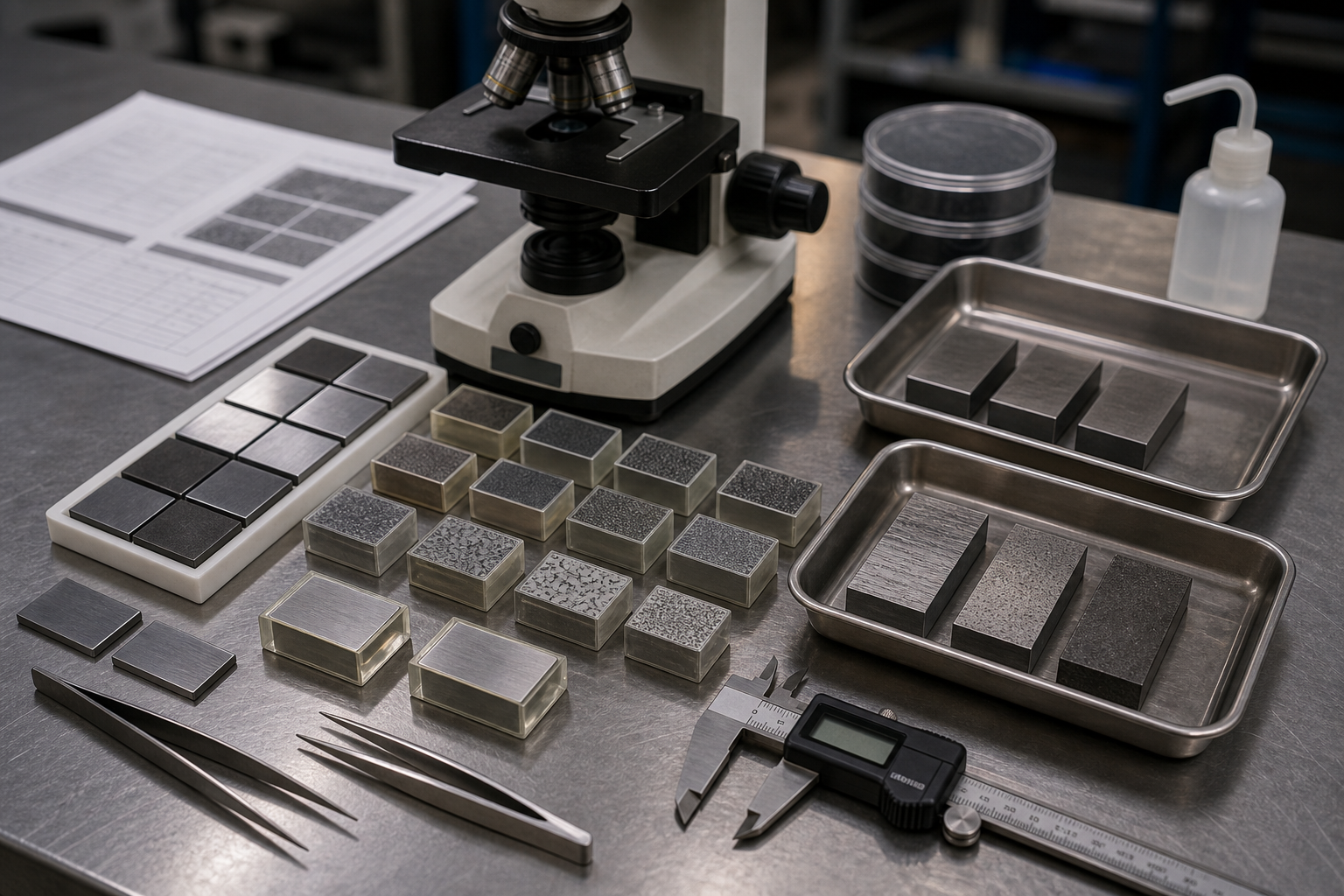
I Watch Vanadium Before I Watch the Name
Vanadium carbide is very hard. It helps an edge resist abrasive wear. It also makes grinding, finishing, and sharpening more demanding. That is the core difference between S30V and S90V. S30V has enough vanadium to give strong premium edge retention while staying more practical for manufacturing and end-user maintenance. S90V pushes much further toward wear resistance.
Knife Steel Nerds gives useful history in its article on S30V steel. The article explains that S30V was promoted as a knife-specific steel and that S90V never became a mainstream knife steel mainly because its high wear resistance also meant poor grindability. That is exactly the issue I see in OEM planning. A high-wear steel can be great for the right model, but it can slow production and raise expectations.
Knife Steel Nerds also explains in its S90V and S125V article that S90V was designed with lower chromium than earlier high-chromium PM stainless steels so more vanadium carbide could form. That helps wear resistance, but it also makes S90V more specialized. The chemistry is not only science. It becomes cost, belt life, sharpening advice, and product copy.
| Steel factor | S30V direction | S90V direction |
|---|---|---|
| Vanadium | 4 percent | 9 percent |
| Main carbide story | Balanced vanadium carbide use | Very high vanadium carbide volume |
| Manufacturing impact | More practical premium processing | Slower grinding and finishing |
| User impact | Easier to live with | Longer edge life but harder sharpening |
Which Steel Gives Better Edge Retention and Sharpening Experience?
Edge retention is attractive in marketing. But sellers must also think about who will resharpen the knife later.
S90V has much stronger abrasive edge retention than S30V because of its high vanadium carbide content. S30V has lower wear resistance, but it is easier to sharpen and better for users who want premium performance without specialist maintenance.
I Sell Edge Life With the Sharpening Tradeoff
Niagara's S30V data sheet lists CATRA edge retention relative to 440C ESR at 145 percent for S30V. Niagara's S90V page does not use the same CATRA table in the visible page, but it describes S90V as having exceptionally good wear resistance and shows wear values far above 440C and D2 in its crossed-cylinder wear comparison. Knife Steel Nerds gives the practical knife perspective: S90V and S125V have the highest edge retention of any stainless knife steels it had tested with CATRA at the time of that article.
This supports the basic seller message. S90V is for customers who want long edge life in abrasive cutting. It can be a good fit for premium folders used on cardboard, rope, packaging, and synthetic materials. It can also attract steel enthusiasts who understand what the steel name means.
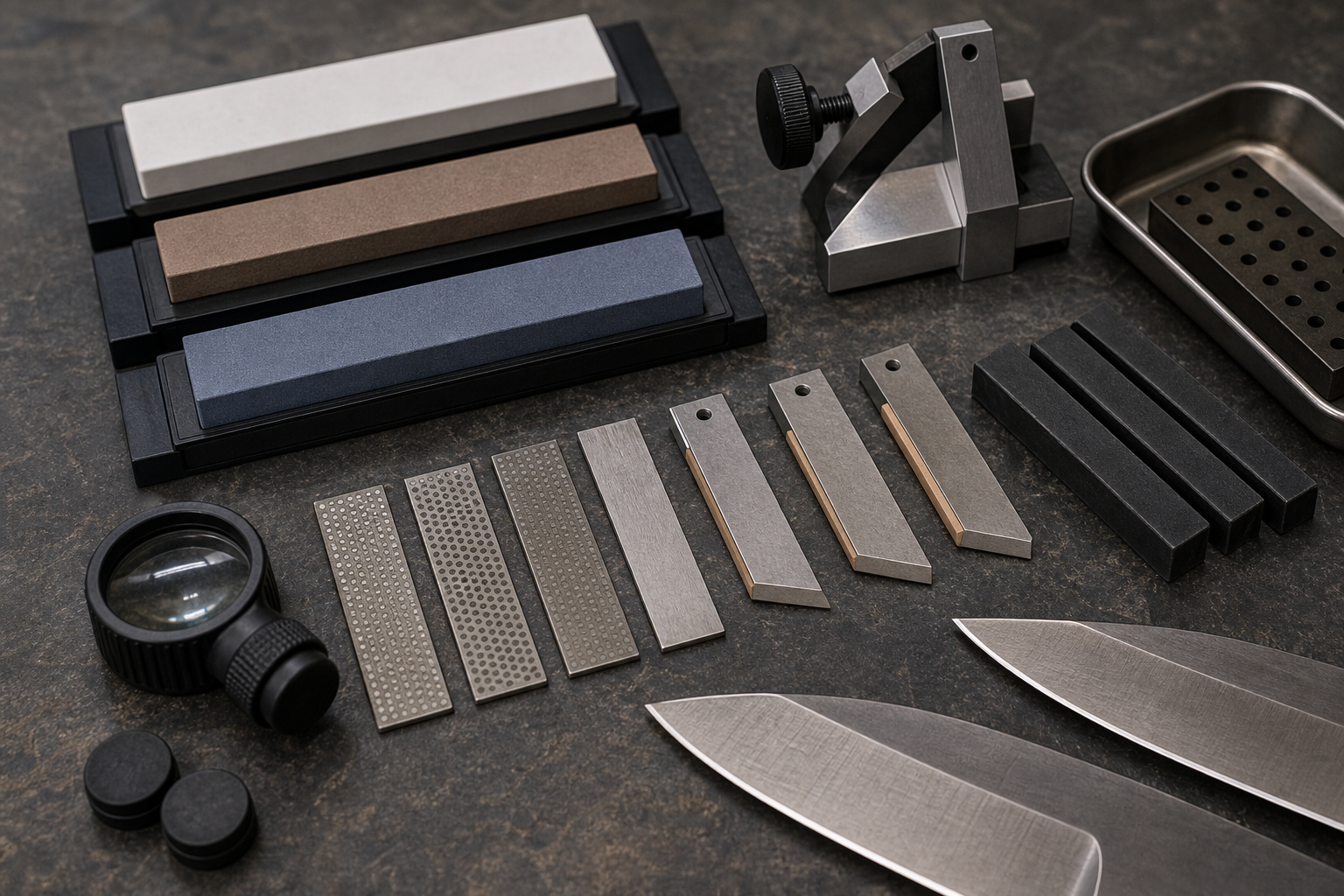
But I always add the sharpening note. Knife Steel Nerds explains that vanadium carbides are harder than aluminum oxide, which is common in many stones, belts, and sandpaper. Diamond or CBN abrasives make sharpening easier. A seller who hides this point may get complaints later. S30V is not weak. It gives good edge retention with a more forgiving ownership experience. For many users, that is the better product.
| User question | S30V answer | S90V answer |
|---|---|---|
| Will it hold an edge well? | Yes, for premium daily use | Yes, much stronger in abrasive cutting |
| Is it easy to sharpen? | Easier than S90V | Harder and slower |
| Does it need special abrasives? | Less often | Diamond or CBN helps a lot |
| Best customer type | Broad premium user | Steel enthusiast or heavy cutter |
Which Steel Is Better for Toughness, Chipping Risk, and Corrosion?
Long edge life is not the whole knife. Chipping, rust, geometry, and user abuse can matter more than pure wear resistance.
S30V is usually the safer balanced choice for toughness and chipping resistance in broader knife lines. S90V has useful stainless corrosion resistance, but its high carbide volume and specialist wear-resistance focus make geometry and heat treatment more important.
I Do Not Let Wear Resistance Hide Geometry Risk
Niagara's S30V data sheet says S30V has higher transverse toughness than 154CM and 440C in its Charpy C-notch comparison. The same page says these toughness results make S30V more resistant to chipping and breaking in applications that may encounter side loading. That is one reason S30V became a practical premium knife steel for broad use.
S90V is not fragile by default. Niagara's S90V data sheet says S90V offers higher impact toughness than 440C ESR at comparable hardnesses. But S90V's very high carbide volume means edge geometry deserves more attention. A too-thin edge, a poor sharpening finish, or an unrealistic use case can create chipping complaints. S90V should be designed as a specialist premium steel, not simply dropped into a general EDC design without adjustment.
Corrosion needs careful wording too. Both steels have 14 percent chromium in the listed composition and are martensitic stainless steels. Niagara says S30V's corrosion resistance is equal to or better than 440C ESR in various environments, and S90V has corrosion resistance equal to or better than 440C ESR. Still, corrosion depends on heat treatment, finish, cleaning habits, and environment. For fishing, saltwater, or wet-use products, I would discuss other steels too. S30V and S90V are stainless, but not magic.
| Risk area | S30V position | S90V position |
|---|---|---|
| Chipping risk | More forgiving for broad use | Needs careful edge geometry |
| Toughness | Balanced premium stainless profile | Useful but more specialist |
| Corrosion | Good stainless behavior | Good stainless behavior, not saltproof |
| Product copy | Easy to explain | Must explain sharpening and use case |
What Manufacturing and QC Details Should Buyers Control?
S90V can look good in a catalog and still hurt margin. The factory work behind it is more demanding.
Buyers should control steel source, target HRC, heat treatment route, grinding method, edge geometry, sharpening abrasive, finish, hardness testing, blade flatness, and final inspection. S90V especially needs extra attention to grinding time and sharpening expectations.
I Treat Premium Steel as a Process Plan
Niagara's S30V data sheet gives a recommended heat treatment with an aim hardness of 58-61 HRC. It also gives austenitizing, quenching, tempering, and freezing treatment guidance. Niagara's S90V data sheet gives an aim hardness of 56-59 HRC and warns that tempering between about 800 and 1000 F is not recommended because martensitic stainless steels suffer embrittlement in that range. It also notes that S90V's high vanadium carbide content makes machinability and grindability more difficult than D2 or 440C ESR.
For a buyer, these details affect price and schedule. S90V may need more grinding time, more careful abrasive selection, and more patient sharpening. It may also increase scrap risk if heat treatment, grinding heat, or edge geometry are not controlled. S30V is still a premium PM stainless steel, but it is more practical for repeated production and broader dealer channels.
Hardness testing also needs discipline. The NIST Rockwell hardness guide is useful because it shows why measurement practice matters. In OEM production, I want the RFQ to define test location, sample quantity, acceptable range, and what happens if a batch falls outside the agreed range. Steel name alone does not protect the buyer.
| Control point | What to specify | Why it matters |
|---|---|---|
| Target HRC | S30V or S90V range by product | Avoids vague performance claims |
| Grinding plan | Belt, wheel, finish, and heat control | S90V can increase time and cost |
| Edge geometry | Thickness behind edge and final angle | Controls cutting and chipping risk |
| Inspection method | HRC, centering, lockup, finish, edge | Supports repeat production |
How Should Sellers Build an RFQ Around S30V or S90V?
A steel request alone is not enough. The supplier needs the product promise, user type, and production target.
An RFQ should list steel choice or backup option, knife type, blade geometry, target HRC, finish, handle material, lock type, packaging, MOQ, target price, target market, sharpening expectation, inspection plan, and trade term.
I Ask Buyers to Define the User First
When a buyer asks for S30V or S90V, I ask who will use the knife. A general EDC buyer, a warehouse worker, a collector, and an outdoor user do not need the same blade. S30V is often the cleaner answer when the seller wants a broad premium product that many users can maintain. S90V is better when the seller can explain harder sharpening and higher abrasive edge retention clearly.
The RFQ should include the full product. I need knife type, blade length, blade thickness, grind, edge angle, finish, lock type, handle material, clip, logo method, packaging, target quantity, target price, and target market. If S90V is requested, I also want to know whether the seller will include sharpening advice or recommend diamond abrasives. That small detail can reduce customer friction later.
Commercial terms matter too. The U.S. International Trade Administration explains that Incoterms define tasks, costs, and risks between buyer and seller. Quality planning also matters. An ISO 9001 quality-management mindset is useful because buyers need process control, not just one good sample. For S30V and S90V, a good RFQ turns a steel idea into a manufacturable product plan.
| RFQ item | What the buyer should provide | Why it affects the quote |
|---|---|---|
| Steel plan | S30V, S90V, or accepted backup | Controls sourcing and price |
| User and market | EDC, outdoor, collector, work knife | Controls steel fit |
| Geometry and finish | Blade thickness, grind, edge, coating | Controls performance and cost |
| QC and trade terms | HRC checks, inspection, Incoterm | Makes quotes comparable |
Ready to use this material in your next knife line?
Vast State can help you compare blade steels, heat treatment ranges, handle materials, finishes, packaging options, and QC requirements based on your target market and quantity.
Conclusion
I choose S30V for balanced premium lines and S90V for specialist high-wear models with clear sharpening and production expectations.
Source Notes
- Niagara S30V data sheet supports S30V composition, balanced property positioning, CATRA context, toughness data, heat treatment, and easier machining than S90V.
- Niagara S90V data sheet supports S90V composition, high vanadium carbide volume, wear resistance, corrosion context, heat treatment, and grindability concerns.
- Knife Steel Nerds S30V history supports S30V's knife-specific history and S90V's limited mainstream use due to grindability.
- Knife Steel Nerds S90V and S125V supports S90V's high wear-resistance design, sharpening difficulty, and specialist role.
- NIST Rockwell hardness guide supports the need for careful hardness measurement practice.
- Trade.gov Incoterms page supports RFQ advice about clarifying trade responsibilities, costs, and risks.
- ISO 9001:2015 page supports quality-management context, but it does not prove any supplier certification.