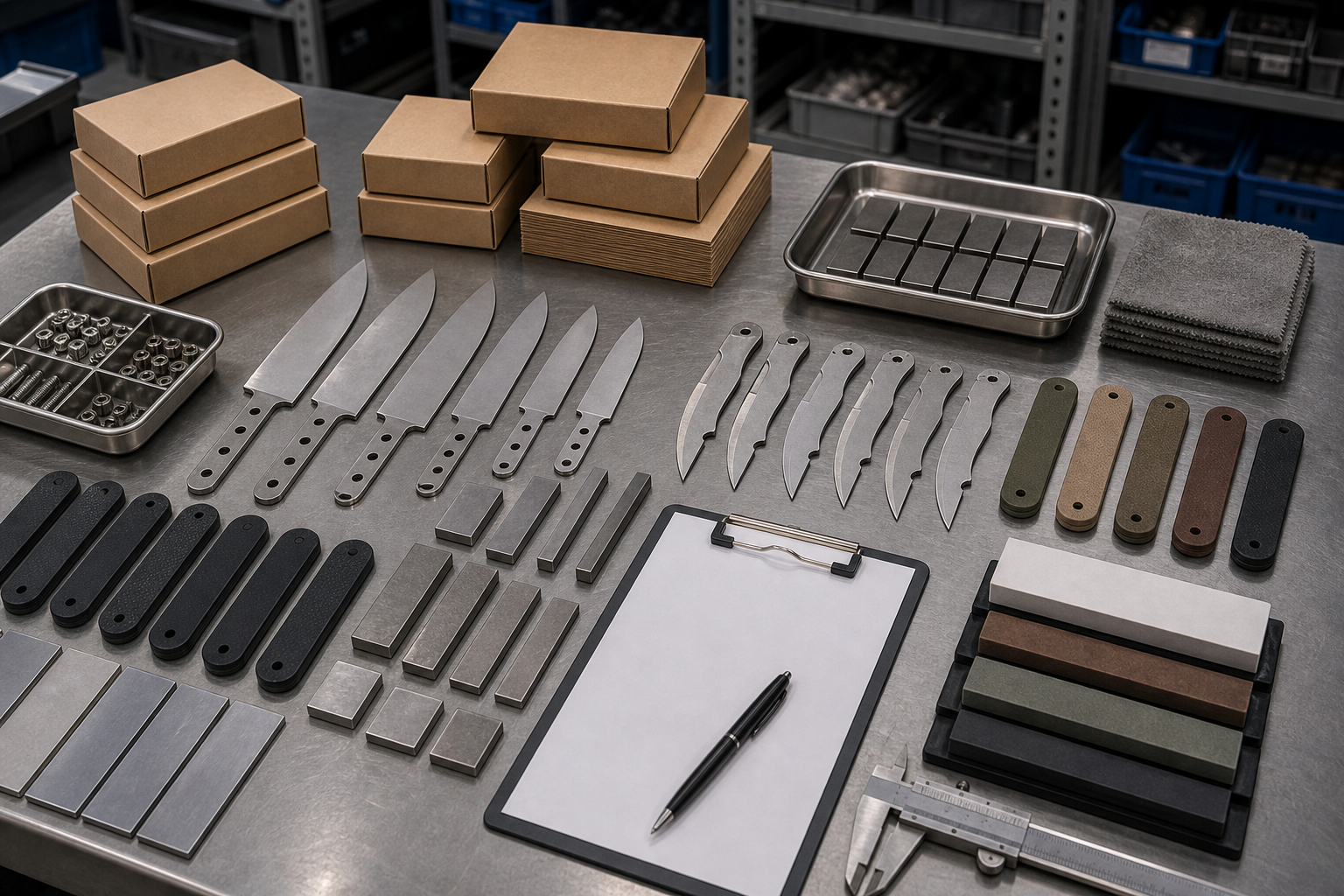
Budget steel can protect margin or damage trust. If sellers promise too much from 5Cr15MoV, buyers remember the disappointment.
5Cr15MoV is good enough for cost-sensitive kitchen knives, entry-level pocket knives, gift sets, and light-use utility knives when the product needs corrosion resistance, easy sharpening, and low cost. It is not ideal for premium edge retention, hard-use outdoor knives, or brands that need a strong performance story.
Quick buyer brief:
- Answer: 5Cr15MoV is a practical entry-level stainless steel, not a premium performance steel.
- Buyer context: This helps knife brands, importers, wholesalers, and private label buyers set honest steel tiers.
- Key checks: Confirm steel identity, hardness target, heat treatment, edge geometry, finish, packaging moisture control, and final inspection.
Planning a knife project with this steel?
Send us your target market, MOQ, price range, and blade type. Vast State can help you choose the right steel, HRC range, finish, handle material, and QC requirements for OEM/ODM production.
When a buyer asks me whether 5Cr15MoV is good, I answer with another question: good for what product and what customer? This steel can be a sensible choice for a low-cost knife line if the expectations are clear. It can also hurt a brand if it is sold as something it is not. In OEM/ODM work, I treat 5Cr15MoV as a practical entry-level option that needs honest positioning, controlled heat treatment, and careful final edge work.
What Is the Short Answer for 5Cr15MoV?
A low-cost steel can sound risky. But the real risk is not the steel name. The real risk is using it in the wrong product tier.
5Cr15MoV is a usable entry-level stainless steel for light-duty knives. It is good when corrosion resistance, easy sharpening, and cost matter more than high edge retention or premium steel positioning.
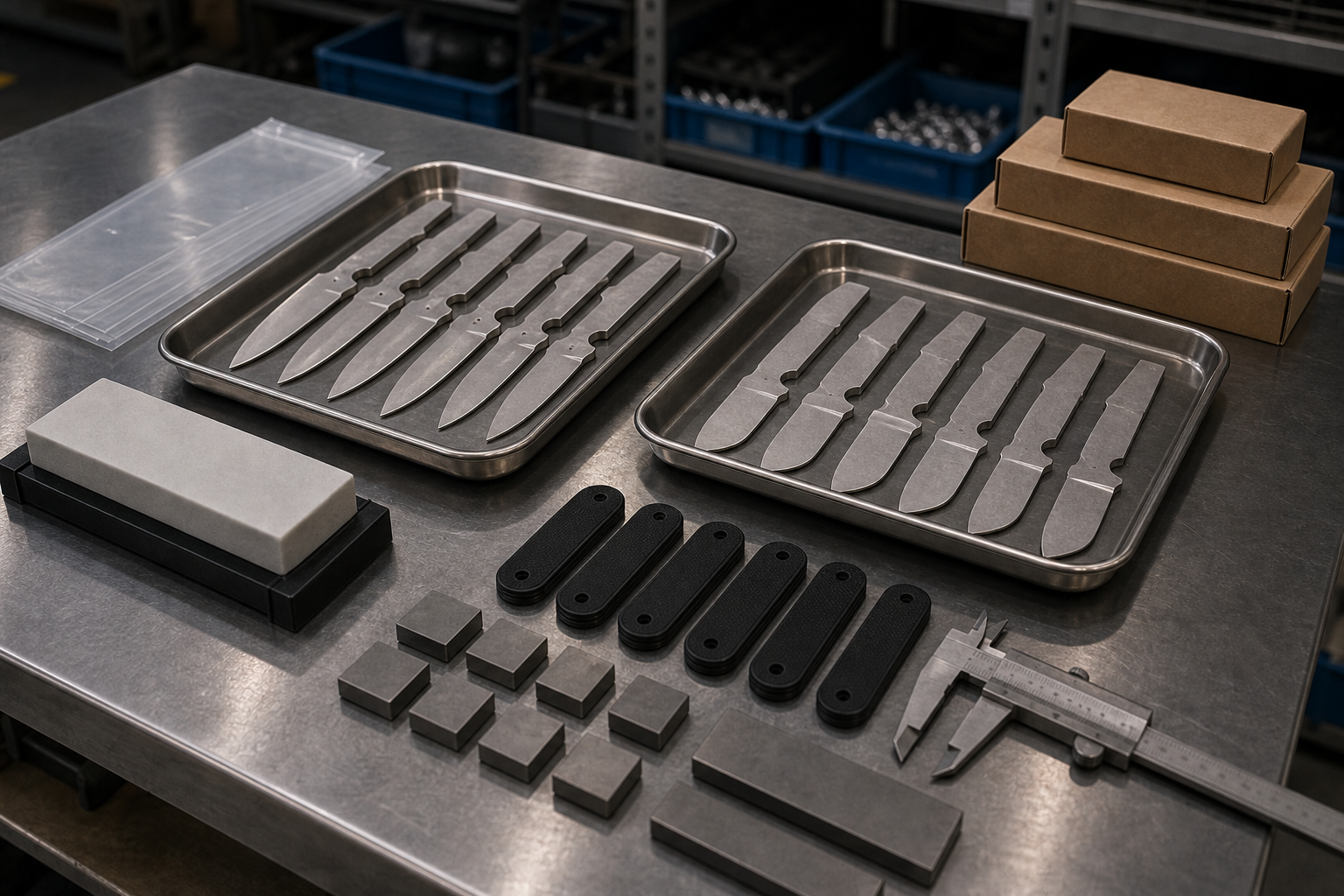
I Treat 5Cr15MoV as an Honest Entry-Level Option
5Cr15MoV is often discussed as the Chinese counterpart to X50CrMoV15 or 1.4116. I am careful with that wording. I do not tell buyers that every 5Cr15MoV batch is automatically the same as every European 1.4116 batch. I say the chemistry family is close enough that 1.4116 references can help buyers understand the basic property direction, but material verification still matters.
The Acerinox ACX 380 data sheet identifies 1.4116 / X50CrMoV15 as a martensitic stainless steel used for cutting tools, high quality knives, and cutlery. It lists carbon at 0.45-0.55 percent, chromium at 14.00-15.00 percent, molybdenum at 0.50-0.80 percent, and vanadium at 0.10-0.20 percent. That gives the basic story: stainless behavior, moderate hardness potential, easy maintenance, and lower wear resistance than higher-carbon or high-vanadium knife steels.
For sellers, the main value is not technical prestige. The value is commercial fit. 5Cr15MoV can work when the buyer wants a knife that is affordable, stainless, easy to sharpen, and acceptable for light use. It should not be the first choice for premium EDC, hard-use camping knives, or claims about long edge life.
| Product tier | 5Cr15MoV fit | Why |
|---|---|---|
| Entry-level kitchen knife | Good fit | Corrosion resistance and easy sharpening matter |
| Gift or promotion knife | Good fit | Cost and appearance often matter most |
| Budget pocket knife | Possible fit | Works for light daily use |
| Premium outdoor knife | Weak fit | Edge retention and toughness story may be too limited |
Quote-ready RFQ Checklist for This Steel
To get an accurate OEM/ODM quote, prepare these details before contacting a knife manufacturer.
| RFQ Field | What to Prepare |
|---|---|
| Product type | Folding knife / fixed blade / multi-tool / kitchen knife |
| Target market | US / EU / outdoor retail / promotional / tactical / EDC |
| Steel option | 4116 / 14C28N / D2 / N690 / Nitro-V |
| Target HRC | Example: 55-57 HRC, 58-60 HRC |
| Blade finish | Satin / stonewash / black coating / bead blast |
| Handle material | G10 / micarta / aluminum / stainless steel / wood |
| Lock or structure | Liner lock / frame lock / slip joint / full tang |
| Estimated quantity | 500 / 1,000 / 3,000 / 5,000+ pcs |
| Packaging | White box / color box / blister / pouch / gift box |
| Required documents | Drawing / sample photo / logo file / packaging artwork |
How Does 5Cr15MoV Compare With 1.4116 or X50CrMoV15?
Equivalence claims can be useful but dangerous. A similar chemistry range does not remove the need for incoming material control.
5Cr15MoV is commonly treated as close to X50CrMoV15 or 1.4116. The family usually points to about 0.5 percent carbon, 14-15 percent chromium, molybdenum, and small vanadium.
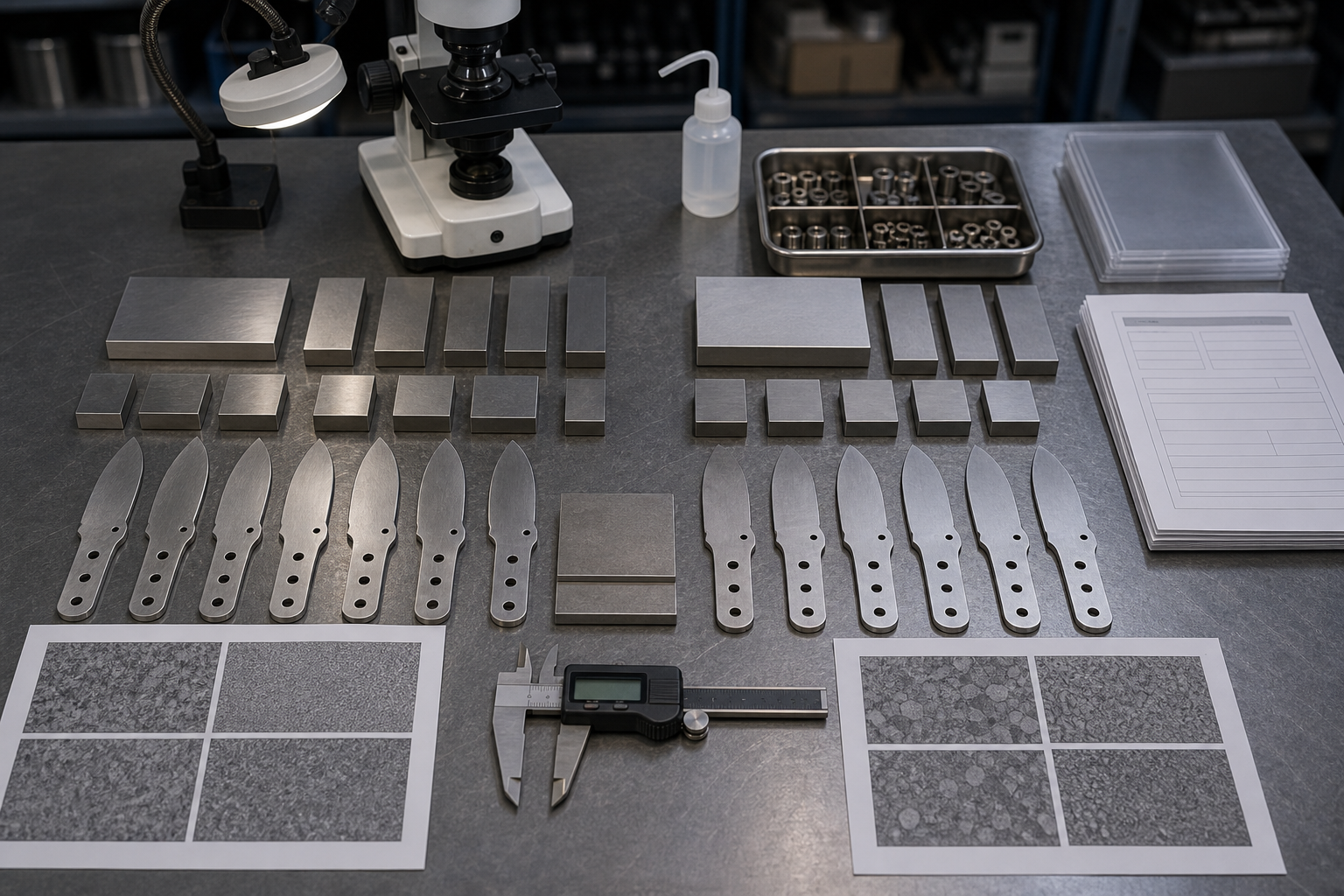
I Use Equivalent Grades as a Guide, Not a Shortcut
The EN 10088-3 X50CrMoV15 / 1.4116 listing gives a useful standard reference for this chemistry family. It lists carbon at 0.45-0.55 percent, chromium at 14.0-15.0 percent, molybdenum at 0.50-0.80 percent, and vanadium at 0.10-0.20 percent. Those numbers line up with the common way sellers describe 5Cr15MoV. ZKnives also describes GB 5Cr15MoV as a Chinese equivalent of German X50CrMoV15 and notes that it is widely connected with mainstream kitchen knife steels.
But equivalence language should not replace supplier discipline. In B2B sourcing, I still want a steel certificate or an agreed incoming material check. A buyer may approve a sample that cuts well, but the mass-production batch must repeat the same chemistry and hardness. If the seller only writes "German-style steel" or "5Cr15MoV stainless" without a specification, the buyer has little protection.
The second issue is heat treatment. Even if the chemistry is correct, the final knife can feel very different depending on hardness, geometry, and edge finish. A softer blade may reduce chipping complaints, but it can also roll or dull quickly. A harder blade may cut better longer, but only if the geometry and heat treatment are right.
| Reference point | What it helps explain | What it does not prove |
|---|---|---|
| X50CrMoV15 | Chemistry family and knife-use history | Every 5Cr15MoV batch is identical |
| 1.4116 | European designation and material data | Finished knife performance |
| 5Cr15MoV | Chinese market naming | Heat treatment quality |
| Steel certificate | Material identity | Edge geometry or sharpening quality |
Where Does 5Cr15MoV Work Best for Sellers?
A budget steel should solve a budget product problem. If the product needs premium performance, the quote is already pointing the wrong way.
5Cr15MoV works best in cost-sensitive kitchen knives, utility knives, small pocket knives, gift sets, promotional tools, and light-use private label lines where easy sharpening and corrosion resistance matter.
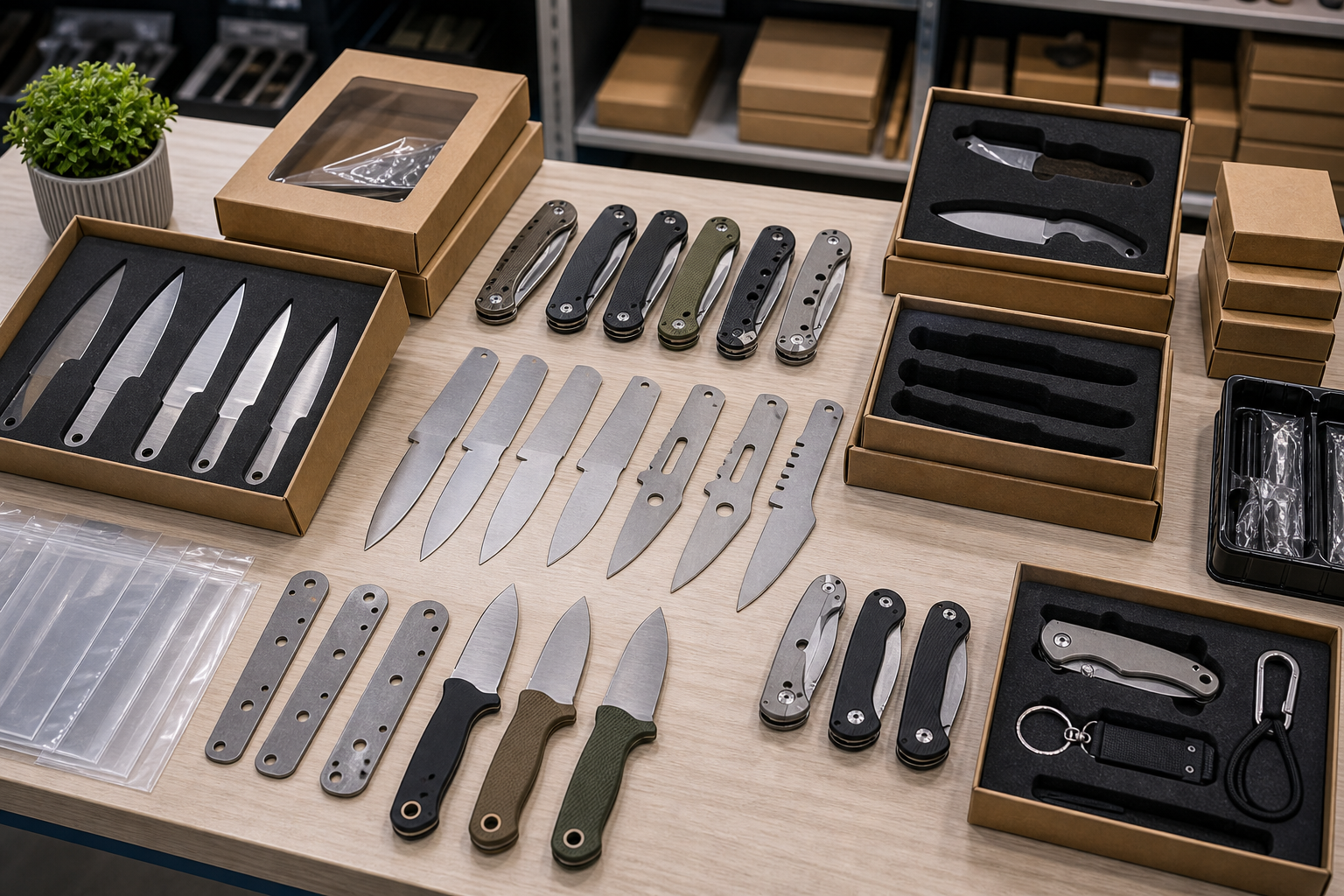
I Match It to Light-Use Buyers
For kitchen knives, 5Cr15MoV can make sense because many customers care about rust resistance, simple sharpening, and a reasonable price. They may not need long edge retention from high-carbide steel. They need a knife that works, cleans easily, and can be maintained without special equipment. This is why steels in the X50CrMoV15 family have a long history in kitchen and cutlery products.
For entry-level folding knives, 5Cr15MoV can work if the seller is honest. I would use it for light EDC, promotional pocket knives, gift knives, and low-cost private label lines. I would avoid using it for tactical-style claims, hard outdoor use, or a product that asks the user to cut abrasive material often. In those cases, the customer may expect edge retention that the steel does not naturally provide.
The product design must support the steel. If the knife is a kitchen knife, I want a clean thin edge and a finish that supports corrosion resistance. If the knife is a small folder, I want safe lockup, stable blade centering, and a durable edge angle. If the knife is a gift set, I want packaging that protects the blade from moisture and scratches. Good entry-level products are not made by steel alone.
| Product type | Why 5Cr15MoV can work | What I would control |
|---|---|---|
| Kitchen knife | Stainless behavior and easy sharpening | Thin geometry and clean edge |
| Utility knife | Low cost and simple maintenance | Edge angle and burr removal |
| Gift knife | Cost and appearance | Finish and packaging protection |
| Budget folder | Light-use EDC positioning | Lock function and final sharpness |
What Are the Main Weaknesses of 5Cr15MoV?
Every steel has limits. With 5Cr15MoV, the limit usually appears when sellers promise too much edge retention or hard-use ability.
The main weaknesses are modest edge retention, limited premium appeal, possible softness in mass production, and sensitivity to poor heat treatment, thick geometry, or weak sharpening control.
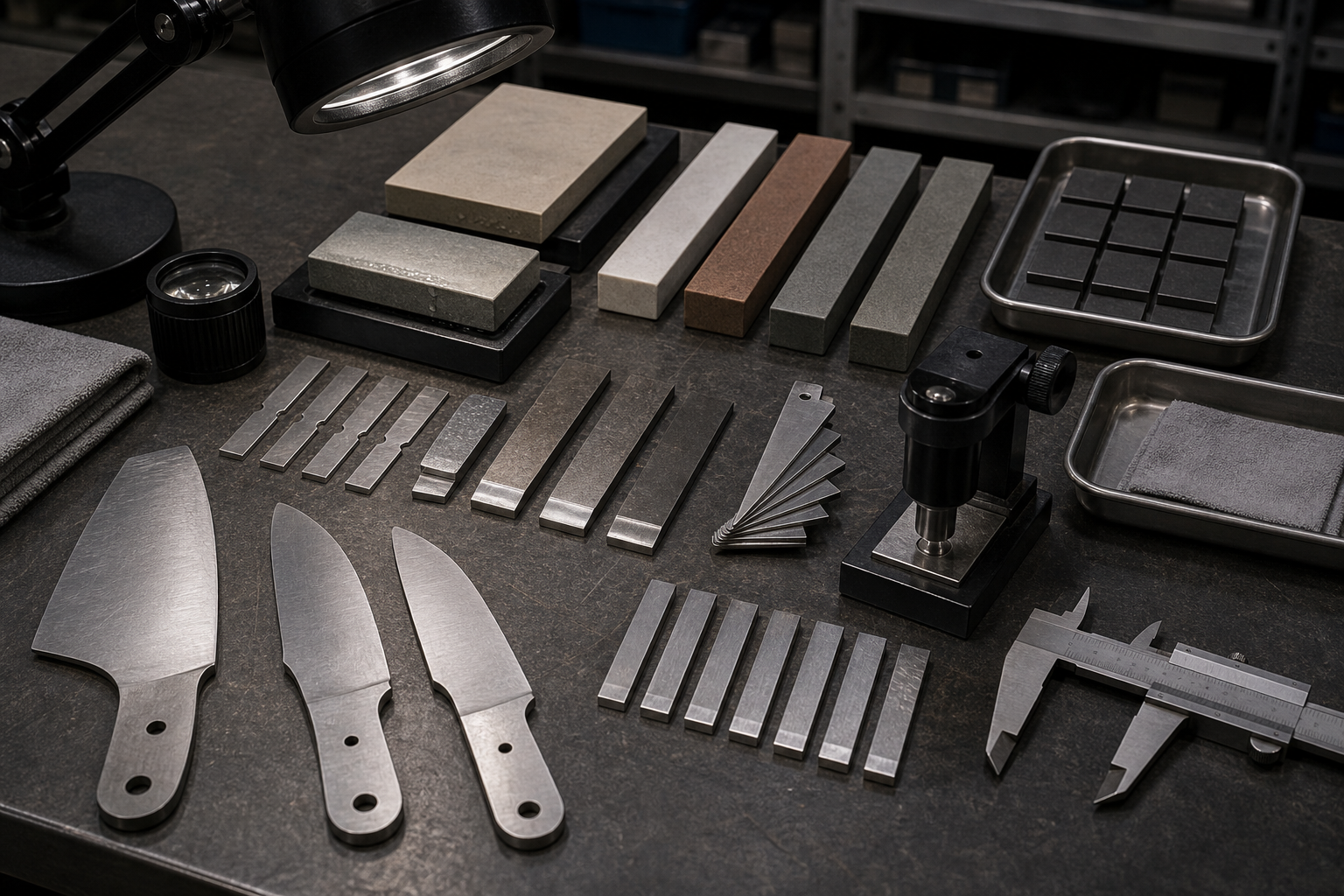
I Avoid Premium Claims on Entry-Level Steel
5Cr15MoV does not have the same wear-resistance story as D2, 14C28N, S30V, or higher-end powder metallurgy steels. The carbon level is moderate. The vanadium level is small. The steel can be easy to sharpen, but it will not keep an edge like a high-carbide steel. That is not a defect if the seller positions the product correctly. It becomes a problem only when marketing copy promises more than the steel and geometry can deliver.
Knife Steel Nerds gives useful microstructure context in its article on micrographs of knife steels. It says X50Cr15MoV / 1.4116 usually has a fine microstructure, but occasional large carbides may be present and may hurt toughness. That means buyers should not assume every batch or every maker will produce the same final result. Manufacturing quality matters.
ZKnives notes that 5Cr15MoV is often hardened around 54-56 HRC in knife use. I treat that as market context, not a rule. If the blade is too soft, it can lose sharpness quickly. If it is pushed harder without good process control, it may create other problems. The best approach is to set a realistic HRC target with the supplier and confirm it by inspection.
| Weakness | Buyer risk | Practical response |
|---|---|---|
| Modest edge retention | Users complain about dulling | Sell it as easy-maintenance steel |
| Low premium appeal | Hard to support high price | Use it in entry-level tiers |
| Soft heat treatment | Edge rolls or dulls fast | Define HRC and sampling |
| Poor geometry | Knife cuts badly even when sharp | Control grind and edge angle |
What QC Controls Should Buyers Require?
A cheap steel still needs serious control. If the batch is inconsistent, low cost turns into returns and lost trust.
Buyers should require material verification, target HRC, heat-treatment records, edge geometry checks, sharpening consistency, corrosion-prevention finish, packaging moisture control, and final functional inspection.
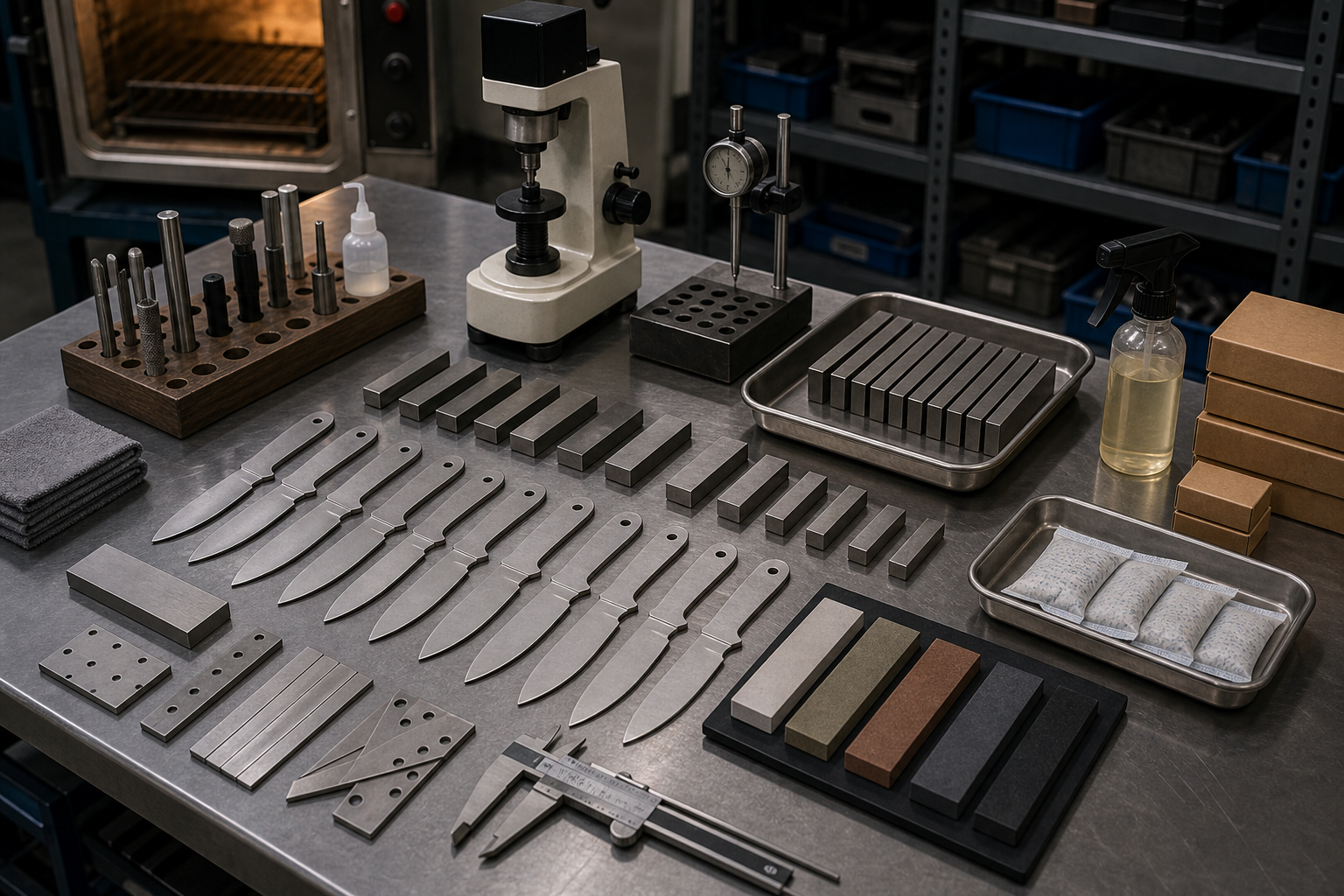
I Make the Entry-Level Product Repeatable
For 5Cr15MoV, I would not overcomplicate the project, but I would still make the important points measurable. First, the buyer should define the steel grade and ask how the supplier verifies incoming material. Second, the buyer should define the target hardness range. Third, the buyer should specify edge geometry and sharpening standard. Fourth, the buyer should include corrosion and packaging checks, especially for kitchen and humid-market products.
The NIST Rockwell hardness guide supports why measurement practice matters. In practical factory terms, the RFQ should say where hardness is tested, how many pieces are tested, what range is acceptable, and how the supplier records results. A single number in a quote is not enough.
Final inspection should also include function. For folders, I check opening, closing, lockup, blade play, centering, screw security, and handle fit. For kitchen knives, I check blade straightness, edge uniformity, handle fit, finish consistency, and packaging protection. The customer may not know the steel chemistry, but the customer will feel poor sharpening, rough finishing, or loose assembly immediately.
| QC item | What to check | Why it matters |
|---|---|---|
| Material identity | Certificate or incoming check | Prevents wrong steel use |
| HRC sampling | Test range and sample quantity | Controls edge behavior |
| Edge geometry | Thickness, bevel, burr removal | Controls cutting feel |
| Finish | Polish, satin, stonewash, coating | Affects appearance and corrosion |
| Packaging | Moisture and scratch protection | Reduces arrival complaints |
How Should Sellers Position 5Cr15MoV in an RFQ?
A vague RFQ invites vague quotes. If sellers only ask for low cost, they may get a knife that is hard to sell twice.
Sellers should position 5Cr15MoV as an entry-level stainless option and define product use, target market, target price, MOQ, hardness, edge geometry, finish, packaging, inspection, and trade terms.
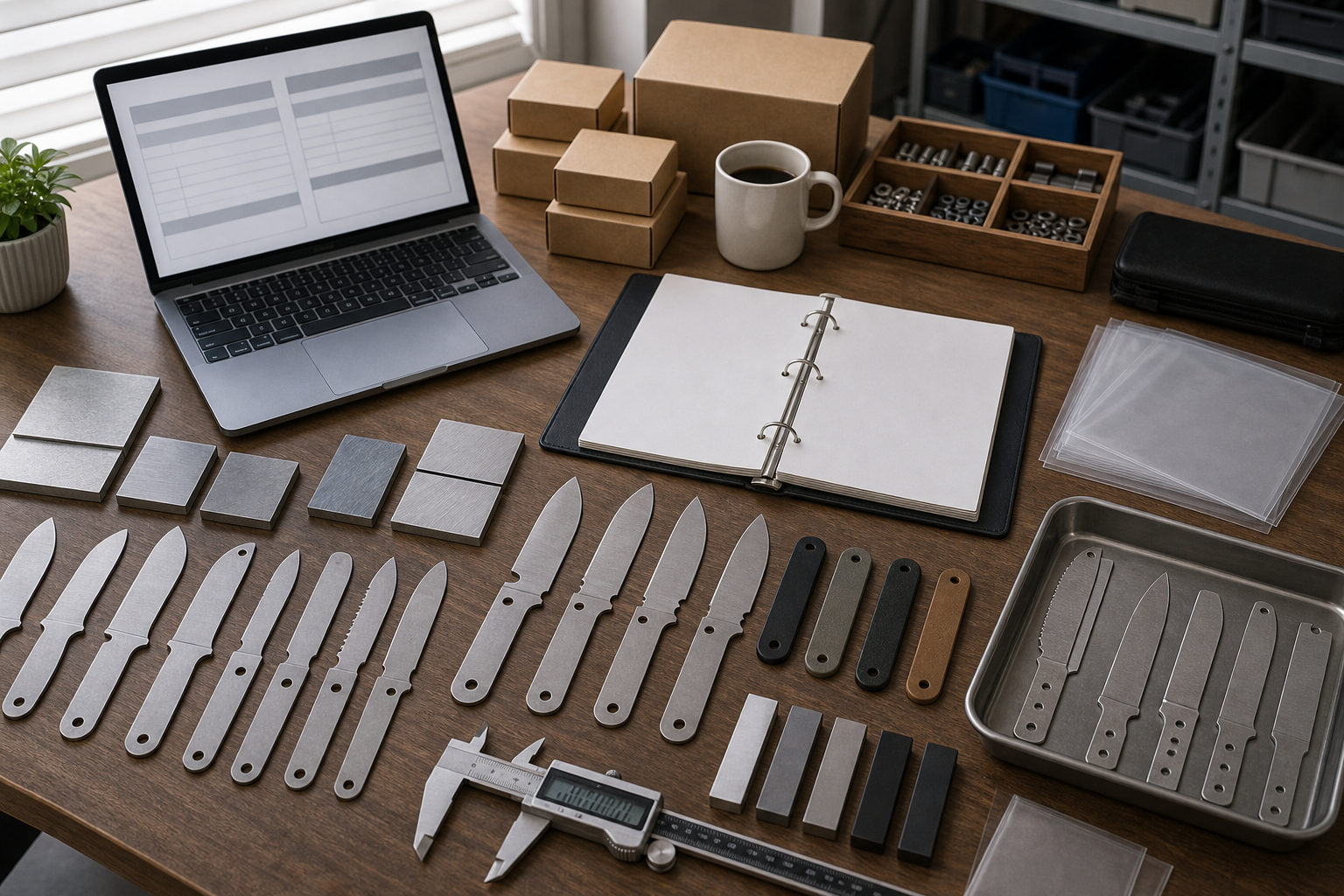
I Write the RFQ Around the Product Tier
For a 5Cr15MoV project, I would not write the RFQ like a premium knife project. I would write it around practical value. The buyer should explain whether the product is a kitchen knife, gift set, budget folder, utility tool, or promotional item. The supplier should know the target price, MOQ, blade length, blade thickness, handle material, finish, packaging, and inspection requirements.
If the buyer wants a better steel tier, the RFQ can ask for comparison options. For example, a buyer may request 5Cr15MoV as the entry version and 8Cr13MoV, 420HC, or 14C28N as upgrade options. This helps the buyer see the true cost difference instead of guessing. It also helps the seller build a clear product ladder.
Trade terms should be stated clearly. The U.S. International Trade Administration explains that Incoterms define buyer and seller responsibilities, costs, and risks in international transactions. Quality language should also be clear. The ISO 9001 page explains quality management system requirements, which is useful as process-control context. I do not use that as a certification claim unless a supplier provides a valid certificate.
| RFQ field | What to write | Why it helps |
|---|---|---|
| Product use | Kitchen, gift, budget folder, utility | Matches steel to expectations |
| Steel option | 5Cr15MoV and optional upgrade steels | Shows cost ladder |
| HRC range | Supplier recommendation plus sampling | Prevents vague heat treatment |
| Edge geometry | Grind, edge angle, sharpness target | Controls user experience |
| Packaging | Box, blister, sleeve, barcode, moisture control | Protects sellable condition |
| Trade term | EXW, FOB, CIF, DDP, or agreed term | Clarifies cost and risk |
Ready to use this material in your next knife line?
Vast State can help you compare blade steels, heat treatment ranges, handle materials, finishes, packaging options, and QC requirements based on your target market and quantity.
Conclusion
I use 5Cr15MoV for honest entry-level knives, not premium promises. It works when cost, corrosion resistance, and easy sharpening lead the project.
Source Notes
- Acerinox ACX 380 / 1.4116 data sheet supports the 1.4116 / X50CrMoV15 composition, knife and cutlery applications, and corrosion-resistance context.
- EN 10088-3 X50CrMoV15 / 1.4116 listing supports the standard composition range used as a reference for the 5Cr15MoV comparison.
- ZKnives 5Cr15MoV page supports the common industry comparison between GB 5Cr15MoV and X50CrMoV15, but it is a knife-steel database rather than an official standard.
- Knife Steel Nerds micrograph article supports the microstructure caution for X50Cr15MoV / 1.4116 and the importance of carbide size and distribution.
- NIST Rockwell hardness guide supports the need for careful hardness measurement practice.
- Trade.gov Incoterms page supports RFQ advice about trade responsibilities, costs, and risks.
- ISO 9001:2015 page supports quality-management context, but it does not prove any supplier certification.