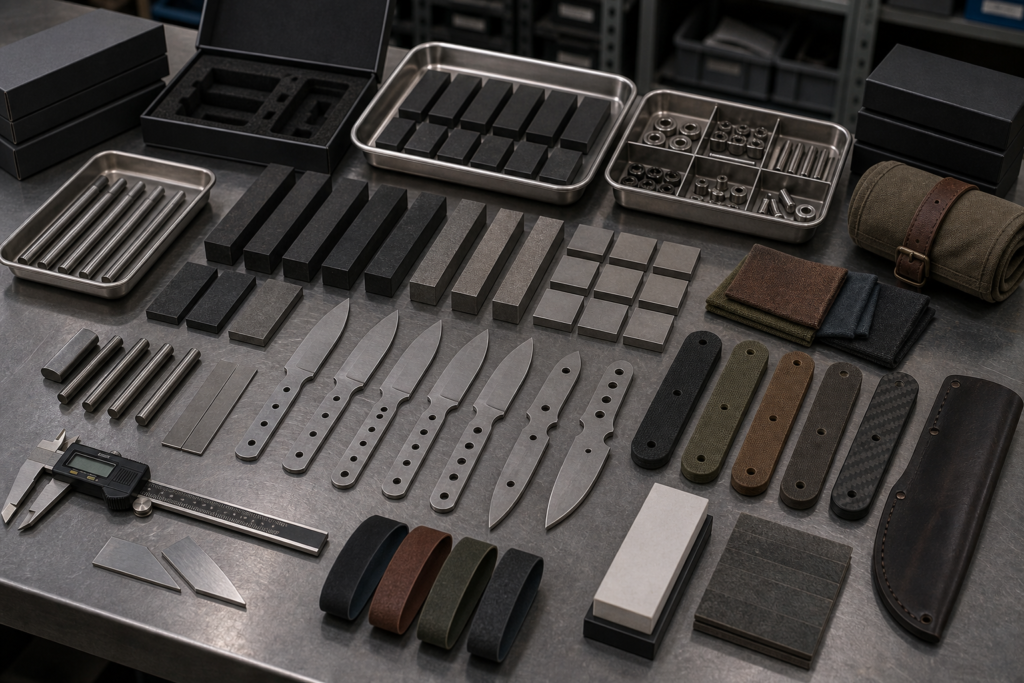
CPM Cru-Wear sounds exciting, but steel hype can mislead buyers. The right question is whether its performance fits the product and customer.
CPM Cru-Wear is a strong choice for performance knife lines that need toughness, edge stability, and respectable wear resistance, but it is not a corrosion-first steel. It works best when the brand can explain maintenance, specify heat treatment, and control blade geometry.
Quick buyer brief:
- Answer: Choose CPM Cru-Wear for tough premium work knives, not for maximum rust resistance.
- Buyer context: This helps knife brands, outdoor brands, importers, wholesalers, and private label buyers plan steel tiers.
- Key checks: Confirm material source, target HRC, heat treatment, edge geometry, finish, corrosion expectations, MOQ, and inspection plan.
Planning a knife project with this steel?
Send us your target market, MOQ, price range, and blade type. Vast State can help you choose the right steel, HRC range, finish, handle material, and QC requirements for OEM/ODM production.
When I discuss CPM Cru-Wear with a buyer, I do not start by calling it a super steel. That phrase is too vague. I start with the product job. Is the knife a hard-use folder, an outdoor fixed blade, an enthusiast EDC model, or a private label upgrade? CPM Cru-Wear can be very attractive when the knife needs a stable edge and better toughness than many high-wear stainless options. But it also needs a buyer who understands non-stainless maintenance and a factory that can repeat the heat treatment and finishing process.
What Is CPM Cru-Wear in Practical Knife Terms?
A steel name can sound premium before the buyer knows what it means. That creates weak product planning and confused marketing.
CPM Cru-Wear is an air-hardening powder metallurgy tool steel. In knives, I use it as a tough performance steel for stronger edges, hard-use cutting, and premium positioning where corrosion resistance is not the main promise.
I Treat It as a Tough Tool Steel, Not a Magic Label
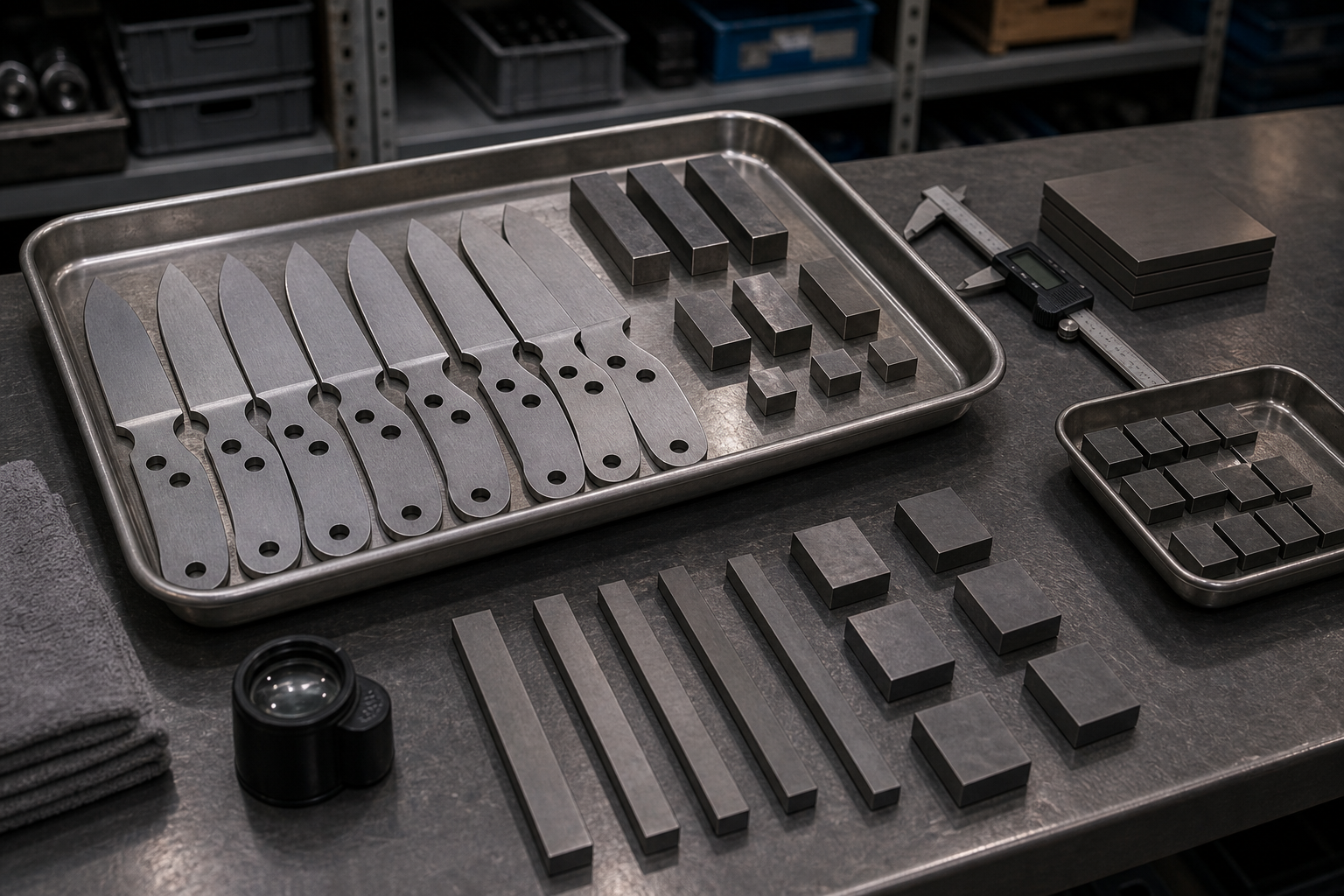
The CPM Cru-Wear data sheet lists it as a powder metallurgy tool steel that can be heat treated to about HRC 60-65. That matters because buyers often ask for a steel name before they define how the knife will be used. CPM Cru-Wear is not only a label for premium marketing. It is a steel system that needs the right heat treatment, grind, finish, and after-sales explanation.
The typical composition is around 1.15 carbon, 7.5 chromium, 1.0 tungsten, 1.6 molybdenum, and 2.4 vanadium. I read that composition as a balance design. It has enough alloy content for wear resistance and hardness, but it is not a stainless steel. The chromium number alone can confuse people. In knife use, I would not position CPM Cru-Wear as the first option for saltwater, kitchen humidity, or careless wet storage.
For B2B buyers, the practical value is this: CPM Cru-Wear can support a premium working knife story. It is useful when the buyer wants better resistance to chipping than many wear-focused steels, while still keeping enough edge life for serious EDC or outdoor cutting. But the factory must make it measurable. I want target HRC, heat treatment route, blade thickness, edge angle, finish, and inspection standards in the project file.
| Practical question | My answer | Buyer action |
|---|---|---|
| Is it stainless? | No, I treat it as non-stainless tool steel | Set correct maintenance and finish expectations |
| Is it tough? | Yes, toughness is one of its main attractions | Match it with hard-use geometry |
| Is it high edge retention? | Good, but not the highest-wear category | Do not oversell it as Maxamet or S90V |
| Is it easy for every factory? | No, it needs controlled heat treatment and grinding | Confirm supplier experience and QC |
Quote-ready RFQ Checklist for This Steel
To get an accurate OEM/ODM quote, prepare these details before contacting a knife manufacturer.
| RFQ Field | What to Prepare |
|---|---|
| Product type | Folding knife / fixed blade / multi-tool / kitchen knife |
| Target market | US / EU / outdoor retail / promotional / tactical / EDC |
| Steel option | 4116 / 14C28N / D2 / N690 / Nitro-V |
| Target HRC | Example: 55-57 HRC, 58-60 HRC |
| Blade finish | Satin / stonewash / black coating / bead blast |
| Handle material | G10 / micarta / aluminum / stainless steel / wood |
| Lock or structure | Liner lock / frame lock / slip joint / full tang |
| Estimated quantity | 500 / 1,000 / 3,000 / 5,000+ pcs |
| Packaging | White box / color box / blister / pouch / gift box |
| Required documents | Drawing / sample photo / logo file / packaging artwork |
Which Properties Make CPM Cru-Wear Attractive for Knife Buyers?
Some premium steels win on one feature and lose badly elsewhere. That can create knives that look impressive but disappoint real users.
CPM Cru-Wear is attractive because it balances toughness, hardness, wear resistance, and sharpening feel. Its main selling point is not one extreme number, but a useful mix for hard-use EDC, outdoor, and specialty knives.
I Look for Balance Before I Look for Extremes
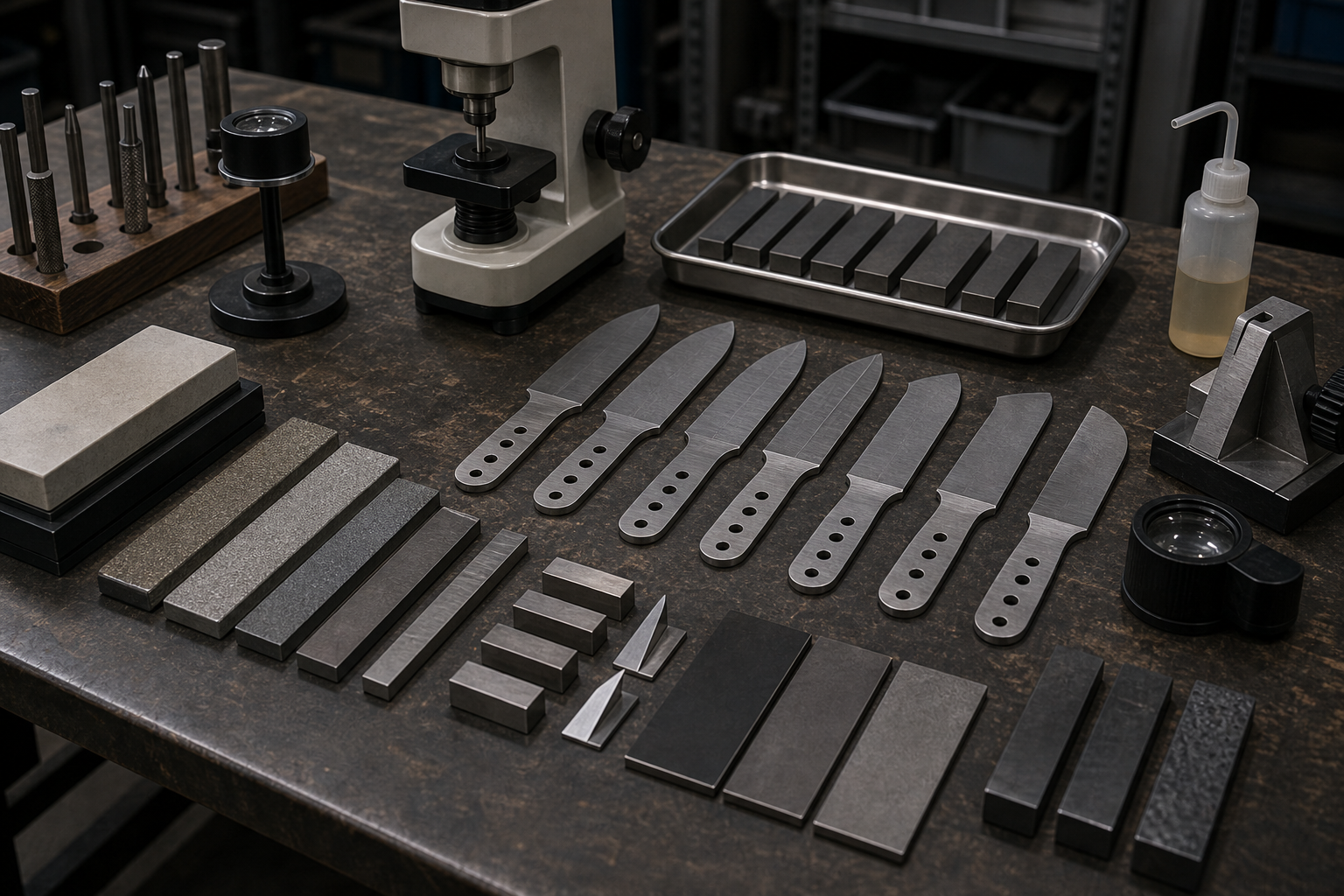
The data sheet compares CPM Cru-Wear with steels such as D2, A2, M2, and S7. It presents CPM Cru-Wear as stronger than D2 in toughness and wear resistance while also offering high attainable hardness. For a knife buyer, that is a meaningful position. D2 is familiar and cost-effective, but it can chip if the heat treatment and edge geometry are not right. CPM Cru-Wear gives a stronger premium story when the product needs more toughness and a more refined steel choice.
Knife Steel Nerds also gives a useful warning in its knife steel ratings. Steel choice is always a tradeoff between toughness, edge retention, corrosion resistance, and edge geometry. I like that framing because it keeps buyers honest. A CPM Cru-Wear knife still needs correct blade design. A thin slicer, a rescue tool, and a compact outdoor folder should not share the same grind just because the steel is tough.
In my own sourcing discussions, I position CPM Cru-Wear as a performance option for customers who want a knife that feels strong in real use. It is not the first steel I suggest for a low-price utility knife. It is also not the first choice when the buyer wants the easiest maintenance story. It works best when the buyer can sell a practical message: good toughness, strong working edge, premium tool-steel identity, and honest care instructions.
| Property | What it means for knives | What I check in production |
|---|---|---|
| Toughness | Better resistance to chipping and fracture | Edge angle, blade thickness, heat treatment |
| Wear resistance | Longer working edge than basic steels | Carbide structure and sharpening plan |
| Hardness potential | Supports premium performance targets | HRC test location and sample size |
| Corrosion behavior | Needs care because it is not stainless | Finish, coating, oiling advice, packaging insert |
How Does Powder Metallurgy Change CPM Cru-Wear Performance?
Buyers often hear "CPM" and assume it only means expensive. That misses the real manufacturing reason behind the process.
Powder metallurgy helps CPM Cru-Wear form a finer and more uniform carbide structure than conventional processing. This can improve toughness and consistency, especially in high-alloy tool steels where large carbides can reduce edge stability.
I Explain CPM as Process Value, Not Decoration
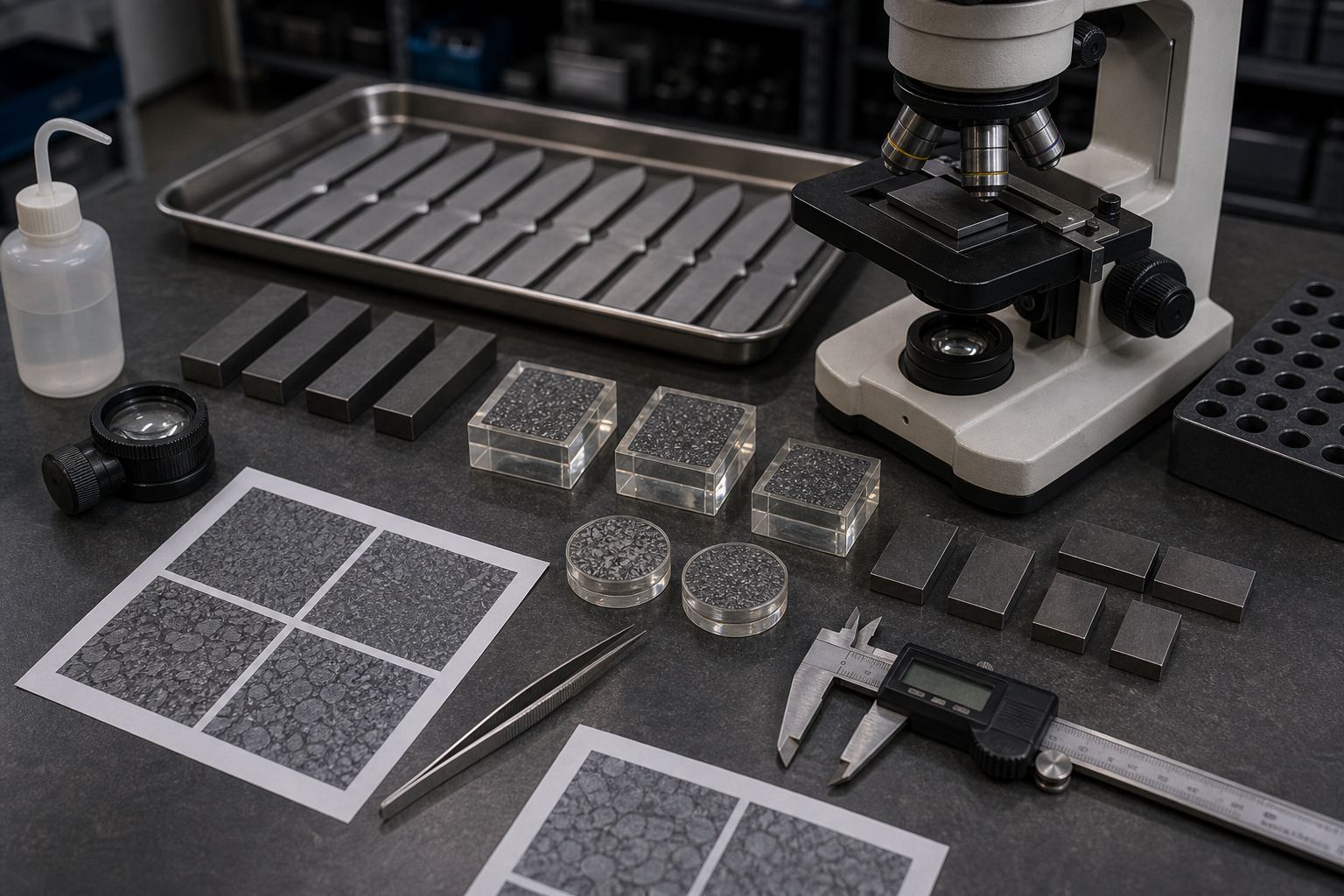
Knife Steel Nerds has a clear explanation of powder metallurgy. The short version for buyers is simple. Instead of cooling one large ingot slowly, the steel is atomized into powder particles that solidify very quickly. Those particles are then consolidated into solid steel. This route helps reduce large carbide problems and gives a finer carbide structure in high-alloy steels.
That matters for CPM Cru-Wear because the steel uses alloy elements such as vanadium, molybdenum, and tungsten. These elements help wear resistance and hardness, but carbide size and distribution still affect toughness and edge behavior. A fine and uniform carbide structure is one reason CPM Cru-Wear can be attractive for knives that need both working edge strength and premium cutting performance.
However, I do not tell buyers that CPM alone guarantees a good knife. Powder metallurgy gives a better starting material. The knife still needs correct blanking, grinding, heat treatment, tempering, straightening, surface finishing, sharpening, and final inspection. If the edge is overheated during grinding, if the hardness is outside the agreed range, or if the knife is too thin for its intended work, the steel name cannot save the product.
For OEM and ODM projects, I use the CPM story only when it helps the customer sell honestly. Enthusiast buyers may understand the value. General outdoor buyers may need simpler language, such as "tough premium tool steel for working knives." Both approaches can work, but the product copy must match the buyer's market.
| CPM benefit | Practical effect | Limitation |
|---|---|---|
| Finer carbides | Better toughness potential | Heat treatment still matters |
| More uniform structure | Better consistency across material | Material traceability still required |
| High-alloy design freedom | Useful toughness and wear balance | Cost is higher than basic steels |
| Premium steel story | Stronger product positioning | Needs honest maintenance message |
How Should CPM Cru-Wear Compare With D2, 3V, M4, and MagnaCut?
Comparison charts can become noisy. If the buyer asks the wrong comparison question, the final knife may target the wrong customer.
Compared with D2, CPM Cru-Wear offers a stronger toughness story. Compared with 3V, it usually leans more toward edge holding. Compared with M4, it is more balanced. Compared with MagnaCut, it gives up corrosion resistance.
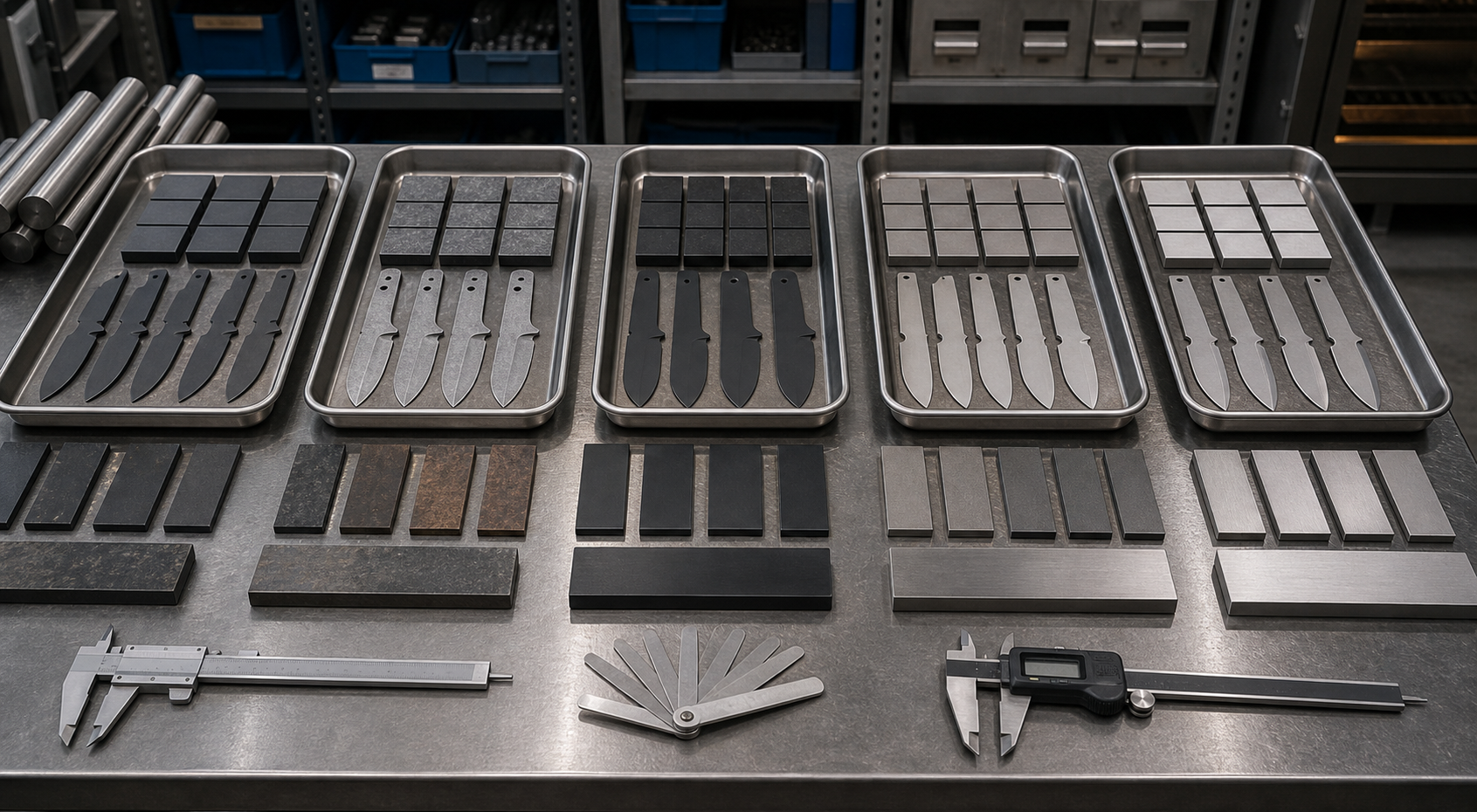
I Compare by Product Role, Not by Winner
D2 is the easiest comparison because many buyers know it. D2 can be a strong value steel, but CPM Cru-Wear is normally positioned above it for toughness and premium use. The CPM Cru-Wear data sheet also frames it as an upgrade route from A2 and D2, with better wear resistance, greater toughness, and higher hardness potential. That does not mean every D2 knife is weak. It means CPM Cru-Wear gives the buyer a better story for a higher-end working knife.
CPM 3V is different. If the buyer wants a very tough outdoor fixed blade, 3V may still be the first comparison. CPM Cru-Wear can make more sense when the product needs a stronger balance between toughness, hardness, and edge retention for folders and hard-use EDC knives. CPM M4 often brings a stronger wear-resistance and high-speed-tool-steel story, but it can be more sharpening-demanding and still needs corrosion care.
MagnaCut is the comparison buyers ask about often. I handle it carefully. MagnaCut is a stainless knife steel with excellent corrosion positioning. CPM Cru-Wear is not. If the product is for wet, coastal, fishing, food, or low-maintenance buyers, MagnaCut or another stainless option may be easier to sell. If the product is for an enthusiast or outdoor user who accepts maintenance and values toughness, CPM Cru-Wear can still be compelling.
| Steel comparison | CPM Cru-Wear advantage | Other steel advantage |
|---|---|---|
| D2 | Tougher premium tool-steel story | Lower cost and broad familiarity |
| CPM 3V | More balanced edge-holding story for some folders | Extreme toughness positioning |
| CPM M4 | More balanced toughness and sharpening feel | Higher wear-resistance story |
| MagnaCut | Strong tool-steel toughness identity | Much stronger corrosion-resistance story |
What Manufacturing Risks Should Buyers Control With CPM Cru-Wear?
Premium steel can still fail in production. A poor heat treatment, hot grind, weak geometry, or unclear inspection plan can damage the product.
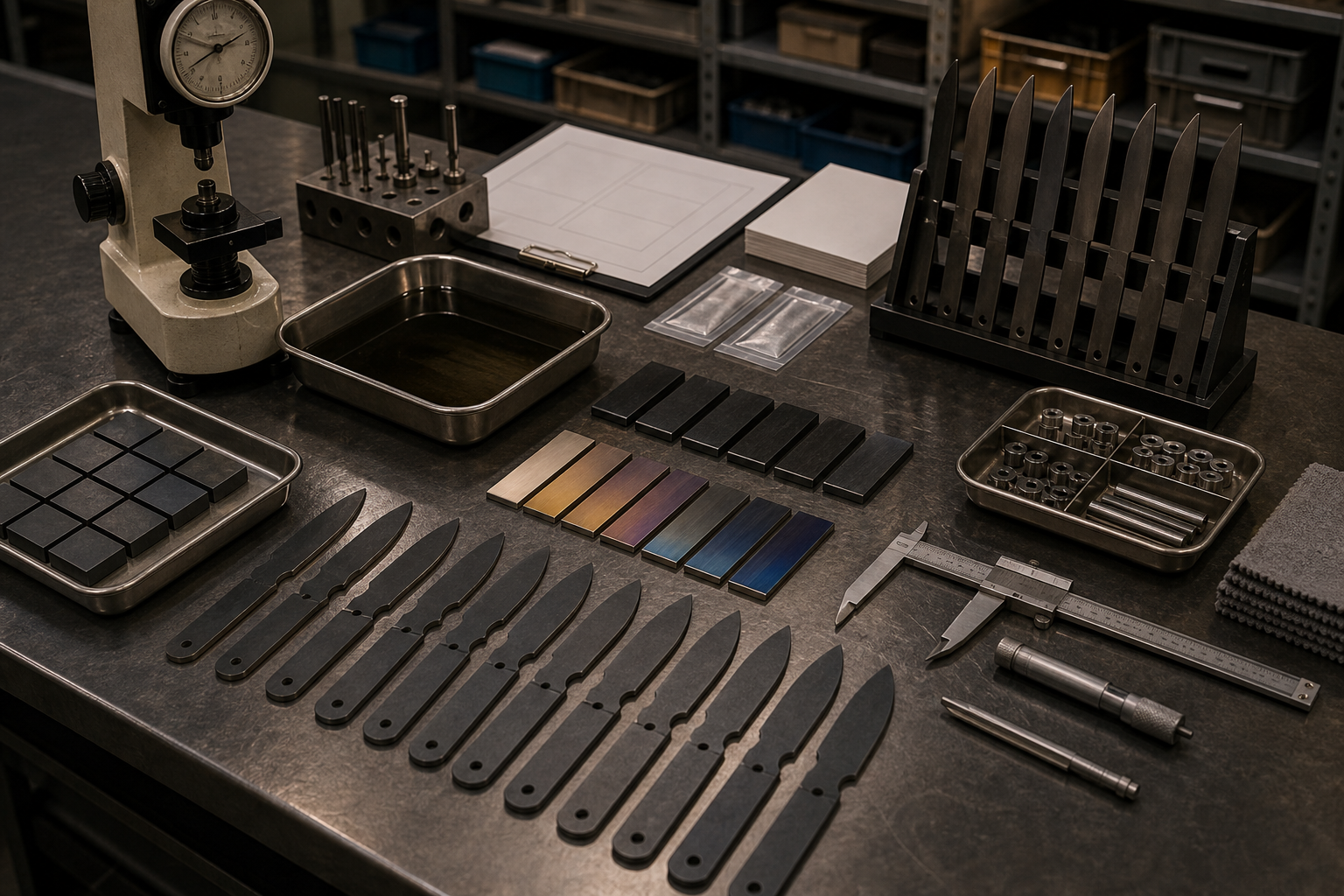
Buyers should control material traceability, heat treatment, target hardness, grinding heat, straightness, edge geometry, corrosion-prevention finish, sharpening consistency, and final function checks for CPM Cru-Wear projects.
I Make the Premium Steel Measurable
The data sheet gives heat treatment guidance, including preheat, austenitizing, quench, and multiple tempering recommendations. It also notes that higher austenitizing temperatures can raise hardness with some decrease in impact resistance. That is exactly why a buyer should not write only "CPM Cru-Wear" in the RFQ. The steel name is not enough. The buyer should define the desired hardness range, intended use, and geometry.
Knife Steel Nerds has a detailed Cru-Wear and Z-Wear toughness article that shows why heat treatment details matter. It discusses how austenitizing temperature, tempering, cryo, and powder metallurgy versions affect toughness and hardness. I do not turn that into one universal recipe because production equipment and blade geometry vary. Instead, I use it as evidence that heat treatment must be controlled, recorded, and checked.
Hardness testing is also not just a number on a sales sheet. The NIST Rockwell hardness guide explains why good measurement practice helps reduce errors. In a knife project, I want to know the tester condition, test location, sample quantity, acceptable range, and how nonconforming pieces are handled.
Grinding is another risk. CPM Cru-Wear can support a strong edge, but overheated grinding can weaken the edge area. For folding knives, I also check pivot holes, lock contact, blade centering, detent feel, and opening action. Premium blade steel does not excuse loose tolerances.
| Risk area | What can go wrong | Control point |
|---|---|---|
| Material identity | Wrong steel or mixed batches | Supplier certificate and batch traceability |
| Heat treatment | Too brittle or too soft | Target HRC and process record |
| Grinding | Edge overheating or uneven bevels | Cool grinding and visual inspection |
| Corrosion expectation | Buyer assumes stainless behavior | Finish choice and maintenance insert |
| Assembly | Good blade with poor knife action | Pivot, lockup, centering, screw torque |
How Should Brands Position CPM Cru-Wear in an RFQ and Product Line?
A buyer can choose a good steel and still build the wrong product. The RFQ must connect performance, cost, MOQ, and target market.
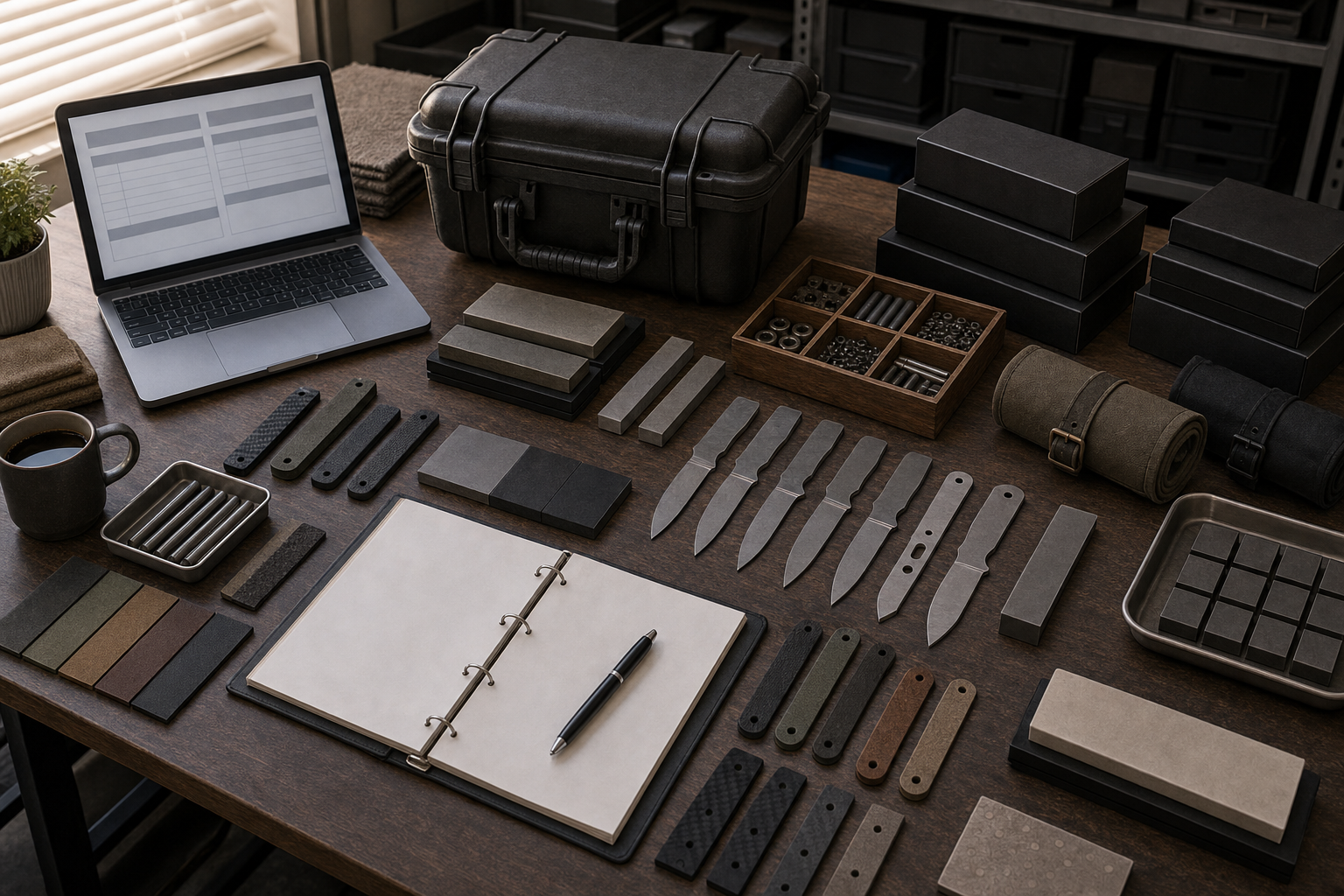
Brands should position CPM Cru-Wear as a premium working steel for buyers who value toughness and edge stability. The RFQ should define knife type, use case, target HRC, finish, geometry, packaging, QC, and trade terms.
I Build the RFQ Around the Buyer's Customer
For a knife brand, CPM Cru-Wear should not be a random upgrade. It should solve a customer problem. If the target customer cuts rope, cardboard, straps, wood, or outdoor materials and cares about a tough edge, CPM Cru-Wear can be a good story. If the target customer wants low maintenance near water, another steel may be easier. If the target customer is an enthusiast, the product page can explain tool steel tradeoffs. If the target customer is a general retail buyer, the explanation should be simpler and more practical.
The RFQ should include the knife category, blade length, blade thickness, grind, edge angle, lock type, handle material, finish, target HRC, logo method, packaging, MOQ, sample requirement, and inspection plan. I also ask buyers to define the target price and sales channel. A premium steel can push cost upward, so the full product must still fit the customer's margin and shelf position.
For international orders, trade terms also need to be clear. The U.S. International Trade Administration explains that Incoterms define responsibilities, costs, and risks between buyer and seller in export transactions. Quality language should be clear too. The ISO 9001 page is useful as a quality-management reference because it explains process control, customer requirements, and continual improvement. I treat this as a quality framework reference, not as a claim that any supplier is certified unless documents prove it.
If a buyer sends me only "quote CPM Cru-Wear folding knife," I need to ask many follow-up questions. If the buyer sends a clear RFQ, I can respond with better material advice, more realistic cost control, and fewer surprises in sampling.
| RFQ field | What to specify | Why it matters |
|---|---|---|
| Knife type | Folder, fixed blade, EDC, outdoor, rescue | Sets geometry and structure |
| Steel and HRC | CPM Cru-Wear and target hardness range | Makes heat treatment measurable |
| Finish | Stonewash, satin, coating, bead blast | Affects appearance and corrosion care |
| Edge geometry | Grind, behind-edge thickness, edge angle | Controls cutting and chipping risk |
| QC plan | Material, HRC, sharpness, lockup, appearance | Protects repeat production |
| Commercial terms | MOQ, target price, packaging, Incoterm | Keeps the project practical |
Ready to use this material in your next knife line?
Vast State can help you compare blade steels, heat treatment ranges, handle materials, finishes, packaging options, and QC requirements based on your target market and quantity.
Conclusion
I choose CPM Cru-Wear when a knife needs tough premium tool-steel performance and the buyer accepts honest maintenance, controlled heat treatment, and clear QC.
Source Notes
- Niagara Specialty Metals CPM CruWear data sheet supports composition, HRC range, D2/A2 comparison, thermal treatment guidance, and surface treatment context.
- Knife Steel Nerds steel ratings supports the tradeoff framework between toughness, edge retention, corrosion resistance, heat treatment, and edge geometry.
- Knife Steel Nerds powder metallurgy article supports the explanation of PM processing and finer carbide distribution.
- Knife Steel Nerds Cru-Wear toughness article supports the importance of heat treatment choices and the difference between conventional and PM versions.
- NIST Rockwell hardness guide supports careful hardness measurement practice.
- Trade.gov Incoterms page supports RFQ advice about trade responsibilities, costs, and risks.
- ISO 9001:2015 page supports quality-management context, but it does not prove any supplier certification.