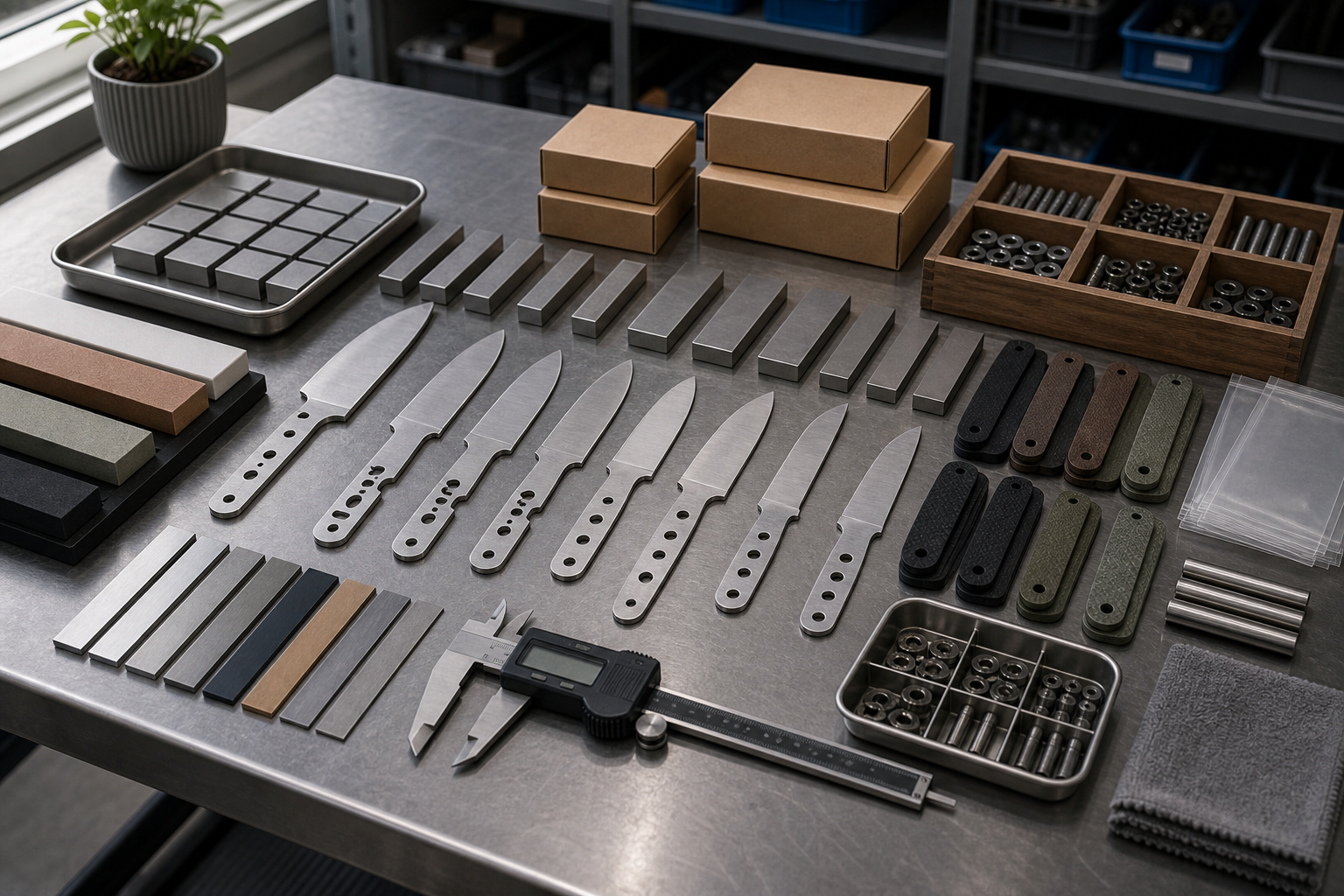
Nitro V sounds modern, but steel names can hide tradeoffs. Buyers need a practical answer before they build a product line around it.
Nitro V is a practical stainless knife steel for OEM brands that need toughness, fine edges, easy sharpening, good corrosion resistance, and reasonable production handling. It is not a high-wear super steel, so buyers should position it as a balanced working steel, not a premium edge-retention champion.
Quick buyer brief:
- Answer: Nitro V is best for balanced EDC, outdoor, kitchen, and utility knives with fine-edge performance.
- Buyer context: This helps knife brands, outdoor brands, importers, wholesalers, and private label buyers choose a clear steel tier.
- Key checks: Confirm steel source, target HRC, heat treatment, cryo or freezer step, edge geometry, finish, sharpening standard, and QC plan.
Planning a knife project with this steel?
Send us your target market, MOQ, price range, and blade type. Vast State can help you choose the right steel, HRC range, finish, handle material, and QC requirements for OEM/ODM production.
When I discuss Nitro V with a buyer, I try to remove the mystery first. Nitro V can make a very useful knife. It can support thin edges, clean sharpening, practical corrosion resistance, and strong everyday use. But it should not be sold as if it competes directly with high-carbide powder steels for abrasive edge retention. In OEM/ODM work, this matters. A buyer who understands the steel can position it correctly, price it correctly, and write a better RFQ.
What Is Nitro V Steel in Practical Knife Terms?
A steel name can sound more advanced than the product really needs. If the buyer misunderstands the steel, the whole line can be positioned badly.
Nitro V is a nitrogen-and-vanadium-modified stainless knife steel related to the AEB-L family. I treat it as a tough, fine-edged, easy-to-use steel for practical knives, not as a high-carbide super steel.
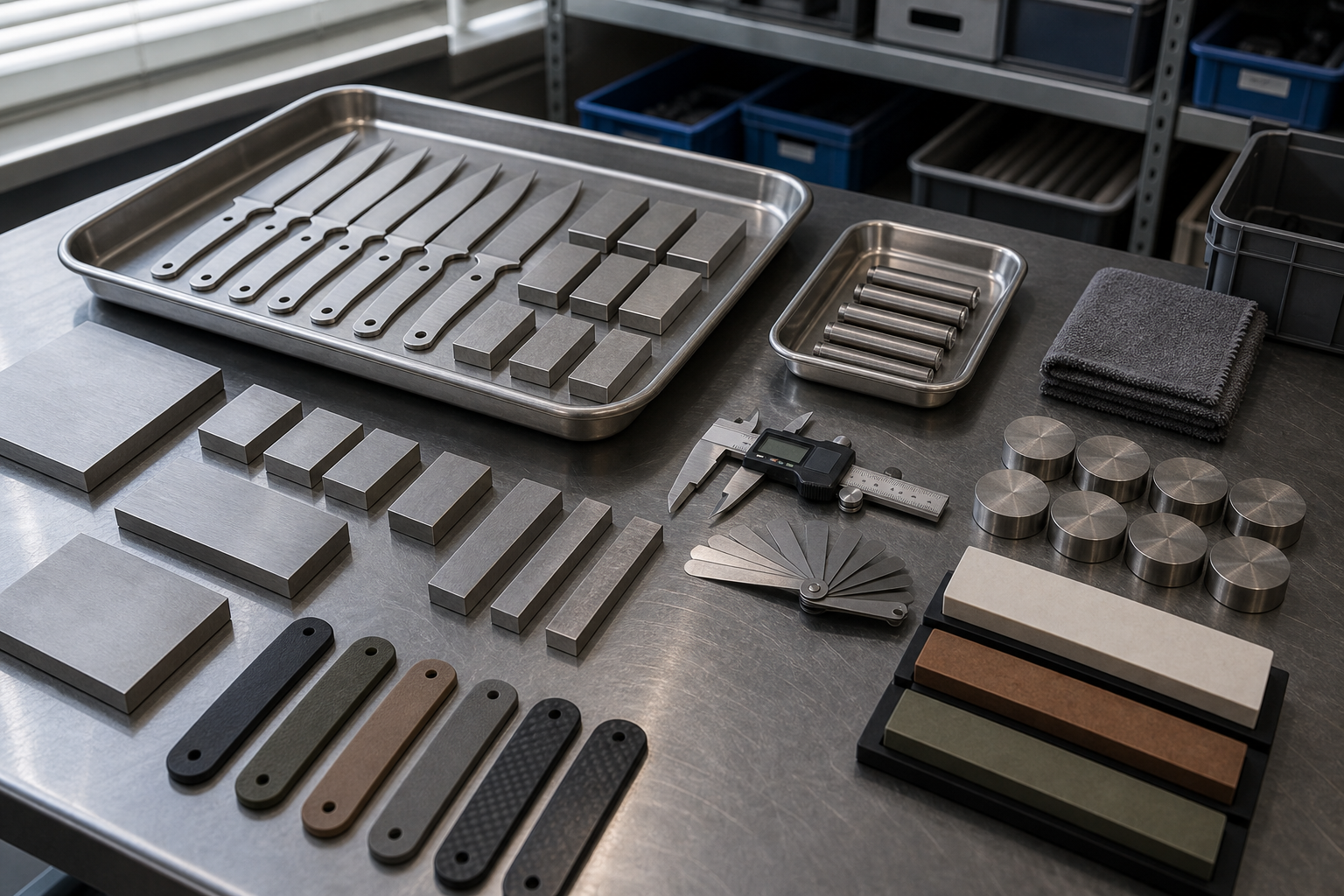
I Start With the Steel Family, Not the Name
Nitro V is often written as Nitro-V in technical sources. Knife Steel Nerds explains that it was designed as a version of AEB-L modified with nitrogen and vanadium. The same article compares it with 14C28N because both steels sit in the same broad family of fine-carbide stainless knife steels. This is the right starting point for B2B buyers. Nitro V is not trying to be S90V, M390, or Maxamet. It is trying to be a practical stainless steel with good toughness and fine-edge behavior.
The New Jersey Steel Baron Nitro V data document, hosted by Knife Steel Nerds, describes Nitro V as a high-carbon stainless with nitrogen and vanadium additions. It also emphasizes ease of finishing, maintenance, and heat treatment compared with more expensive boutique stainless steels. I read this as a commercial advantage for private label projects. A steel can be valuable because it helps the buyer control cost, finishing, sharpening, and user experience.
For Vast State OEM/ODM projects, I would consider Nitro V when the customer wants a better story than basic 8Cr or 5Cr steels, but does not need the price, machining burden, or marketing promise of premium powder metallurgy steels. It works well when the brand can say: fine edge, practical stainless performance, easy maintenance, and good value.
| Practical question | My answer | Buyer action |
|---|---|---|
| Is Nitro V stainless? | Yes, I treat it as a stainless knife steel | Still choose finish and care instructions wisely |
| Is it a super steel? | No, it is a balanced fine-carbide steel | Avoid exaggerated edge-retention claims |
| What is the main benefit? | Toughness, fine edge, easy sharpening, practical corrosion resistance | Match it with EDC, utility, kitchen, or outdoor use |
| What must be controlled? | Heat treatment, hardness, edge geometry, finish | Put these items into the RFQ |
Quote-ready RFQ Checklist for This Steel
To get an accurate OEM/ODM quote, prepare these details before contacting a knife manufacturer.
| RFQ Field | What to Prepare |
|---|---|
| Product type | Folding knife / fixed blade / multi-tool / kitchen knife |
| Target market | US / EU / outdoor retail / promotional / tactical / EDC |
| Steel option | 4116 / 14C28N / D2 / N690 / Nitro-V |
| Target HRC | Example: 55-57 HRC, 58-60 HRC |
| Blade finish | Satin / stonewash / black coating / bead blast |
| Handle material | G10 / micarta / aluminum / stainless steel / wood |
| Lock or structure | Liner lock / frame lock / slip joint / full tang |
| Estimated quantity | 500 / 1,000 / 3,000 / 5,000+ pcs |
| Packaging | White box / color box / blister / pouch / gift box |
| Required documents | Drawing / sample photo / logo file / packaging artwork |
What Does Nitro V Composition Tell Knife Buyers?
Composition charts can look technical without helping the buyer. The real value is knowing which elements affect the product story.
Nitro V typically contains about 0.66-0.70 carbon, 12.5-14.5 chromium, 0.05-0.10 vanadium, and 0.10-0.12 nitrogen. This supports stainless behavior, fine carbides, toughness, and clean sharpening more than extreme wear resistance.
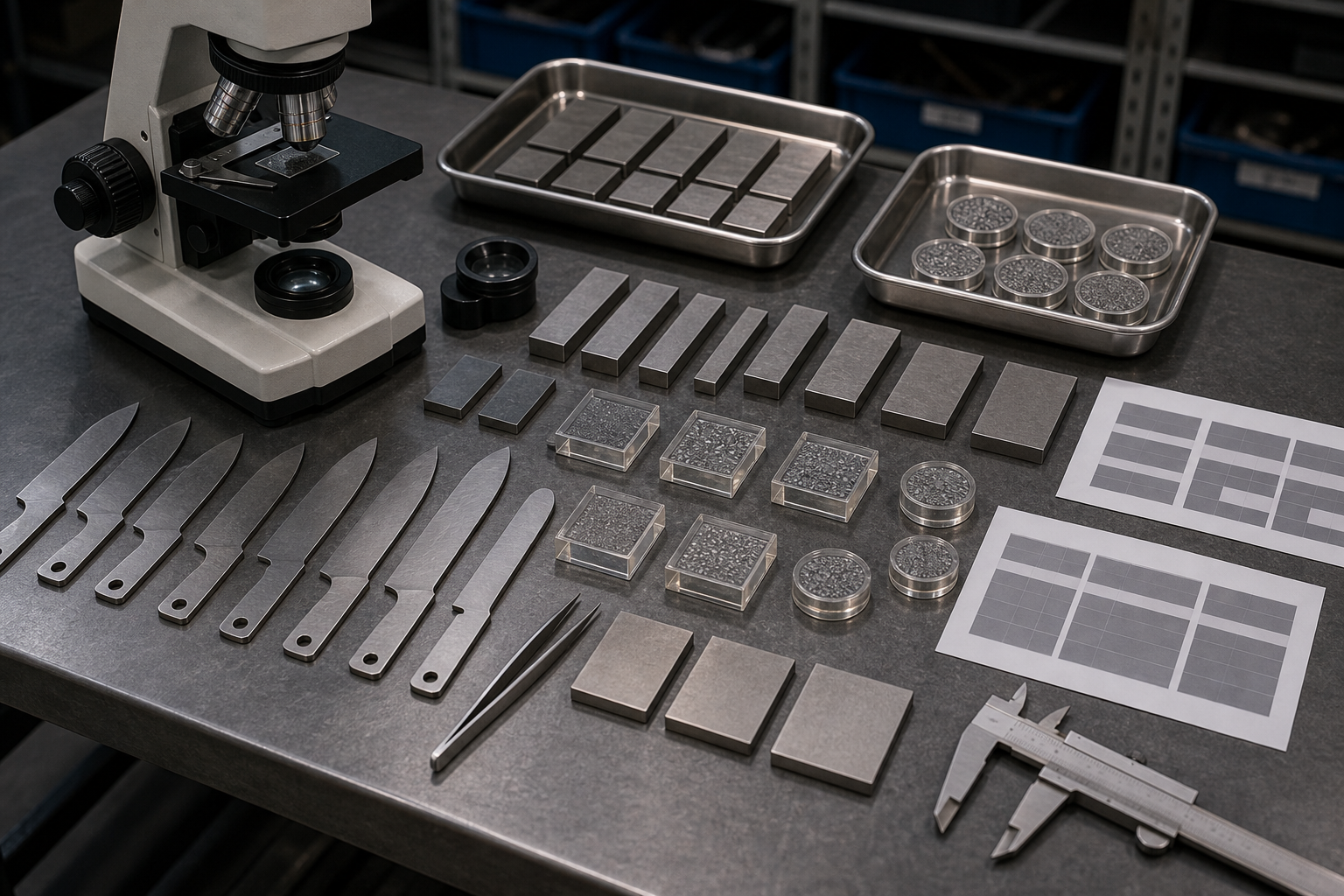
I Translate Chemistry Into Product Decisions
The Buderus Nitro V datasheet identifies the grade as X70CrVN13 and lists a typical analysis around 0.68 carbon, 13.5 chromium, 0.10 vanadium, and 0.11 nitrogen. The NJSB data document gives a similar practical story. The carbon helps hardness. The chromium supports stainless behavior. The nitrogen may help corrosion resistance. The vanadium addition is small, so I do not treat Nitro V as a vanadium-carbide wear-resistance steel.
Knife Steel Nerds makes this point clearly. It says Nitro V looks very similar to AEB-L with nitrogen and vanadium additions. It also explains that the vanadium level is likely too small to contribute much to wear resistance and edge retention. That is important for honest sales copy. A buyer should not say Nitro V has high vanadium edge retention. That would be misleading. The better claim is that Nitro V has a fine microstructure and good toughness for a stainless knife steel.
This chemistry also helps me decide which products fit Nitro V. Thin utility knives, EDC folders, compact fixed blades, kitchen-style outdoor tools, and slicers can benefit from a steel that sharpens cleanly and holds a fine edge without being brittle. For very abrasive cutting, I would compare higher-carbide steels. For saltwater use, I would compare more corrosion-focused steels. Nitro V belongs in the middle: useful, honest, and easy to explain.
| Element or feature | Practical meaning | What I tell buyers |
|---|---|---|
| Carbon | Supports hardness and edge strength | Define target HRC, not only steel name |
| Chromium | Supports stainless behavior | Still check finish and care needs |
| Nitrogen | May help pitting resistance | Do not oversell it as saltwater steel |
| Small vanadium | Does not create a high-vanadium wear steel | Avoid high-edge-retention hype |
| Fine carbide structure | Helps toughness and clean edges | Use thin, useful geometry where suitable |
How Does Nitro V Perform in Real Knife Use?
Performance claims can become too simple. A steel can be tough and easy to sharpen while still losing to premium steels in wear resistance.
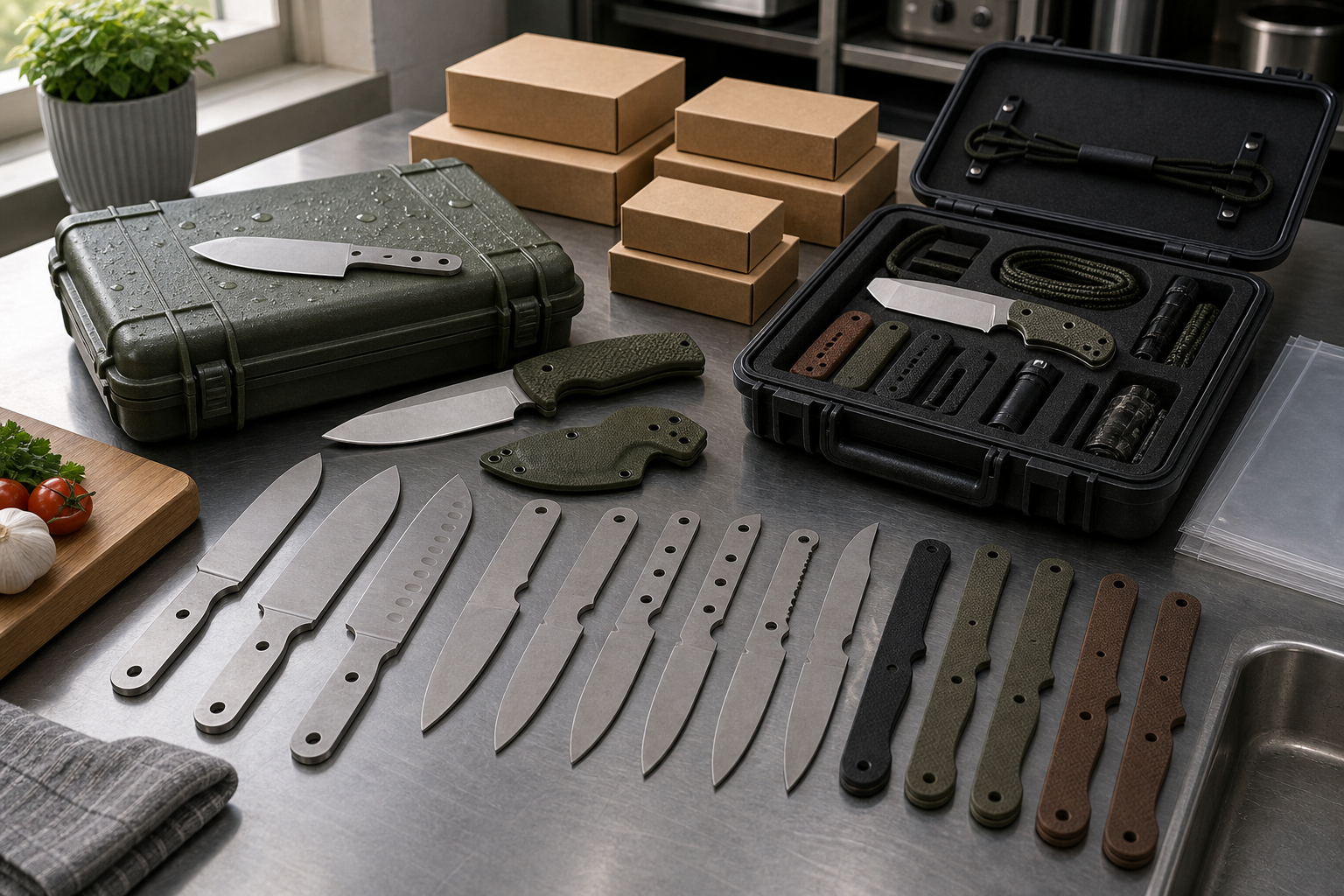
Nitro V performs best as a tough, fine-edged stainless steel with good sharpening behavior and practical corrosion resistance. Its edge retention is expected to be close to AEB-L, below high-carbide stainless steels, but more forgiving.
I Sell the Balance, Not One Extreme
Knife Steel Nerds reports that Nitro V has a very fine microstructure and very good toughness compared with other steels. It also states that Nitro V is expected to have wear resistance and edge retention similar to AEB-L because the composition and carbide content are similar. That means a buyer should expect good daily cutting behavior, but not the abrasive edge life of steels with much higher carbide volume.
This is not a weakness if the product is positioned correctly. Many customers do not sharpen high-carbide steels easily. Many buyers complain less when a knife is easy to maintain, cuts well, and does not chip easily. Nitro V can be useful for users who value a clean edge and simple maintenance. It is especially suitable when the knife is designed for slicing, everyday cutting, food preparation, light outdoor use, or utility work.
I would be careful with two claims. First, I would not call Nitro V a high-edge-retention steel. Second, I would not call it the best corrosion-resistant steel for every environment. Knife Steel Nerds suggests that nitrogen may improve corrosion resistance somewhat compared with AEB-L, but it also says 14C28N is expected to have better corrosion resistance because it has more chromium in solution. That is enough nuance for honest product copy.
For OEM work, the blade geometry is the final translator. A Nitro V blade with good heat treatment and correct thin geometry can feel excellent. A thick and poorly sharpened Nitro V blade can feel ordinary. The steel gives opportunity. The factory process turns that opportunity into a product.
| Performance factor | Nitro V strength | Buyer caution |
|---|---|---|
| Toughness | Very good for a stainless knife steel | Heat treatment still controls the result |
| Edge retention | Practical for daily use | Not a high-carbide wear steel |
| Sharpening | Usually friendly and clean | Edge angle still matters |
| Corrosion resistance | Useful stainless behavior | 14C28N or other steels may be better for tougher corrosion targets |
| User experience | Balanced and forgiving | Must match target price and market story |
How Should Nitro V Compare With AEB-L, 14C28N, D2, and S35VN?
Steel comparisons can mislead buyers when they ask only which steel is better. The right question is which steel fits the knife.
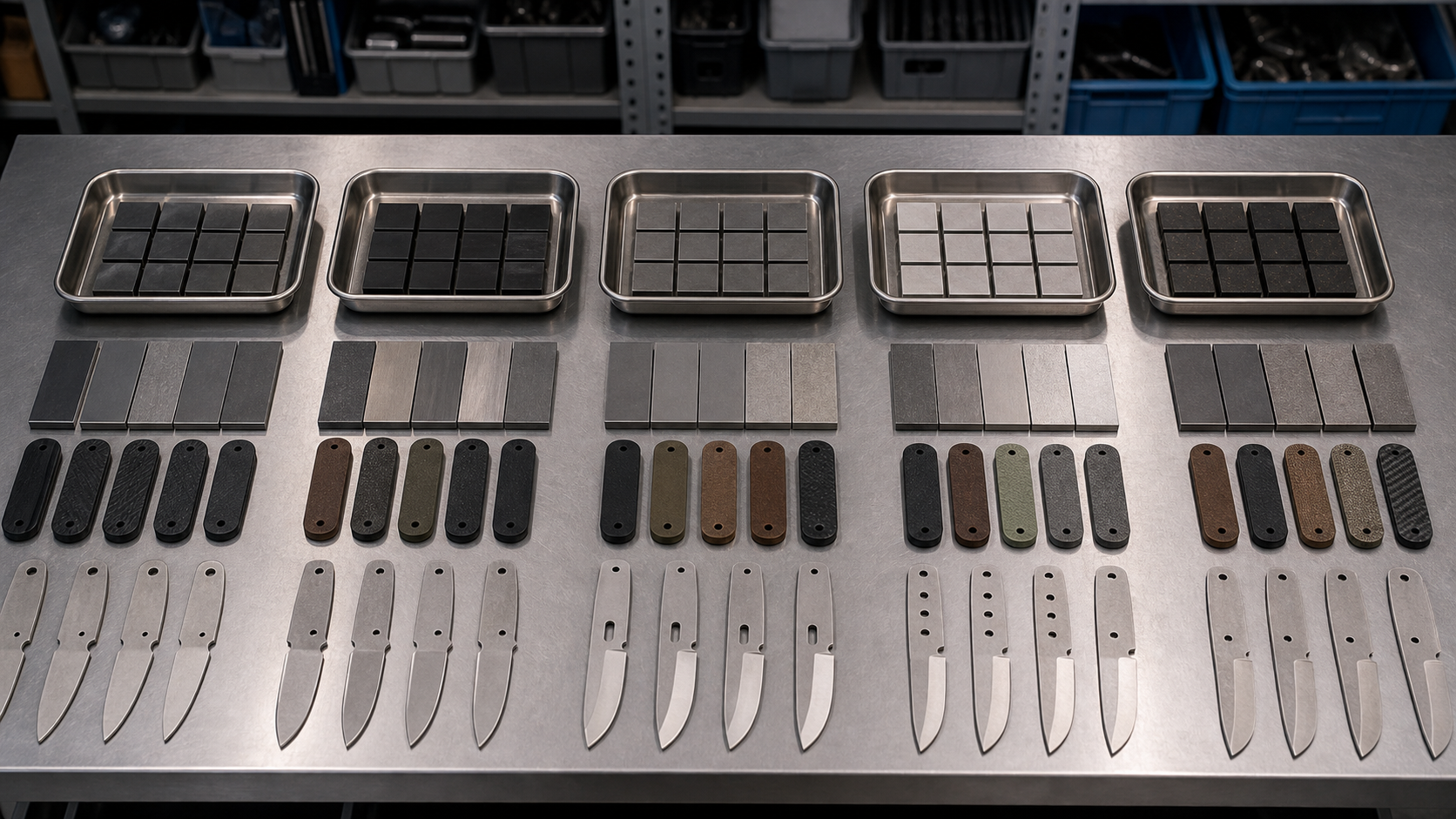
Compared with AEB-L, Nitro V is very similar with nitrogen and vanadium additions. Compared with 14C28N, it may have less corrosion advantage. Compared with D2, it is easier to maintain. Compared with S35VN, it is usually less wear-focused but tougher and simpler.
I Compare by Market Tier and User Need
AEB-L is the closest comparison. If a buyer already understands AEB-L, I explain Nitro V as a similar fine-carbide stainless option with nitrogen and vanadium additions. Knife Steel Nerds expects Nitro V to behave broadly like AEB-L, with perhaps some corrosion improvement. That makes Nitro V useful when the buyer wants AEB-L-style fine-edge behavior but also wants a distinct steel name for the market.
14C28N is also close. It has strong credibility in practical stainless knife use, and Knife Steel Nerds expects it to have better corrosion resistance than Nitro V because of chromium-in-solution differences. If the buyer's market is wet, humid, or corrosion-sensitive, I would compare Nitro V and 14C28N carefully. I would not choose only by name recognition.
D2 is a different story. D2 can give stronger wear-resistance positioning at a value price, but it is not stainless in the same practical way. It can also be less friendly for maintenance. If the buyer wants a simple retail message, Nitro V may be easier: stainless, tough, easy to sharpen, good daily use. If the buyer wants a harder-wearing budget tool and accepts coating or care instructions, D2 may still fit.
S35VN belongs in a higher premium stainless category. It can carry a stronger premium steel name and better wear-resistance positioning. But it may not be needed for every product. Nitro V can be smarter when the buyer needs a practical, comfortable steel tier without forcing the whole knife into a premium price point.
| Comparison | Nitro V advantage | Other steel advantage |
|---|---|---|
| AEB-L | Similar fine-edge story with a distinct nitrogen-modified name | AEB-L has long technical familiarity |
| 14C28N | Practical toughness and fine-edge behavior | Often stronger corrosion-resistance positioning |
| D2 | Easier stainless maintenance and sharpening | Higher wear-resistance story at value pricing |
| S35VN | Lower-cost balanced working steel positioning | Stronger premium recognition and wear-resistance story |
What Heat Treatment and QC Controls Matter for Nitro V?
Nitro V can perform well, but poor heat treatment can waste the steel. A vague RFQ leaves too much room for inconsistent results.
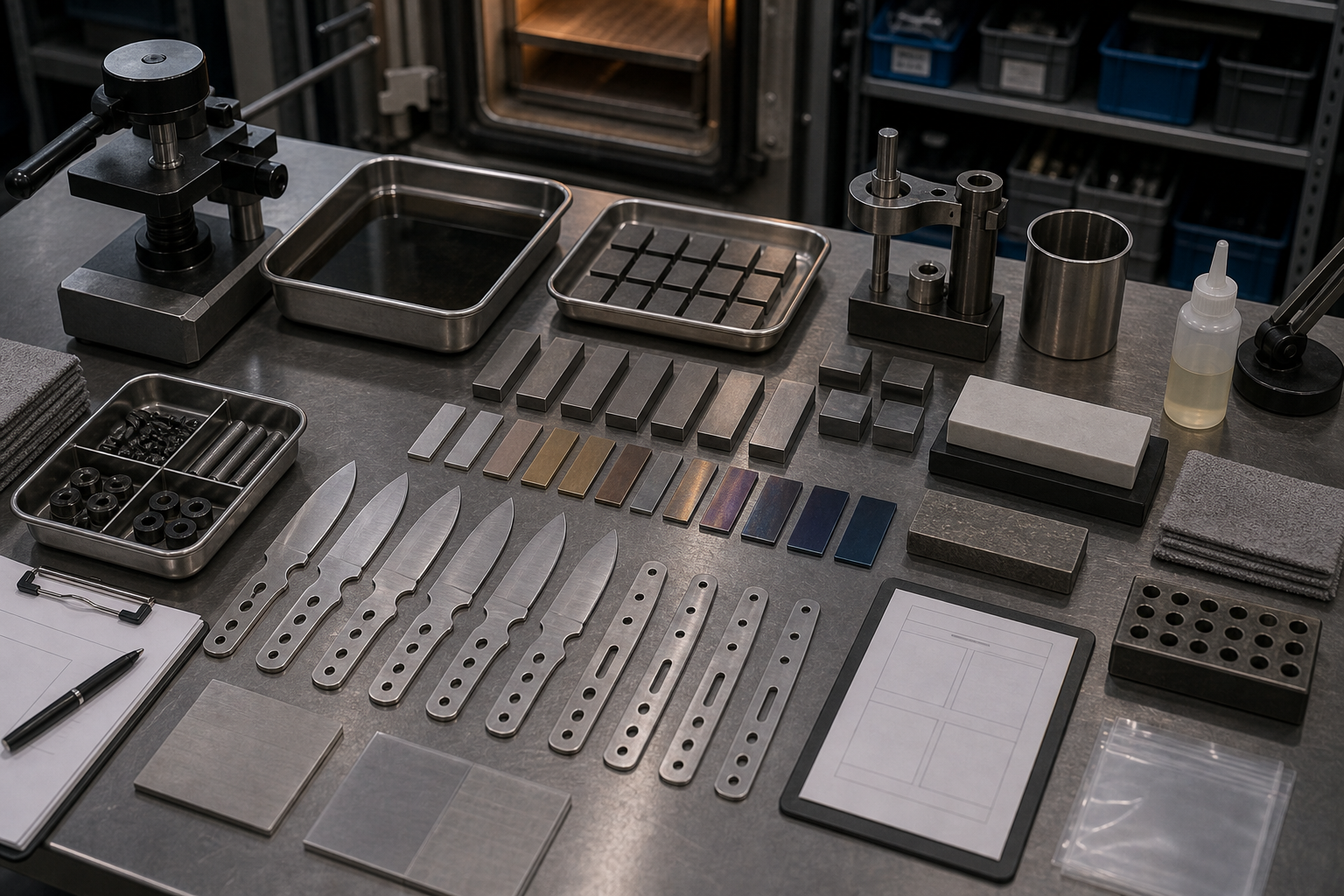
Buyers should define Nitro V heat treatment, cold treatment or freezer step, target HRC, tempering range, hardness testing, blade geometry, grinding heat control, finish, sharpness, and final function checks.
I Make the Heat Treatment Visible in the Project File
The NJSB data document gives heat treatment guidance with and without cryo. It also warns that final hardness values depend on the conversion to martensite and that reliable hardness testing is needed. Knife Steel Nerds gives a more experimental view. It reports good results from austenitizing between 1900 and 1950 F followed by plate quench and cryo, then tempering between 300 and 350 F depending on desired hardness. It also warns that 450 F tempering reduced toughness in testing.
I would not copy one recipe blindly into every OEM project. Blade thickness, furnace control, atmosphere protection, quench method, cold treatment, and factory equipment all matter. But I would require the supplier to state the process it will use and to provide a target HRC range. For example, many Nitro V knife projects may aim around the low 60s HRC, but the correct target depends on the knife type and edge geometry.
Hardness testing must also be controlled. The NIST Rockwell hardness guide explains that good practice helps reduce measurement error. In a B2B knife order, I want the RFQ to define sample quantity, test location, acceptable range, and what happens if readings fall outside the agreed range.
Grinding and assembly still matter. Nitro V can support fine edges, but an overheated edge can lose performance. A folding knife also needs correct pivot fit, lock contact, detent feel, blade centering, and screw control. A good steel cannot hide poor assembly.
| QC area | What to control | Why it matters |
|---|---|---|
| Material identity | Steel certificate, batch tracking, supplier source | Prevents substitution or mixed material |
| Heat treatment | Austenitizing, quench, cold treatment, temper | Controls hardness and toughness |
| HRC testing | Tester, location, sample plan, acceptance range | Makes performance measurable |
| Grinding | Heat control, bevel symmetry, edge thickness | Protects edge stability |
| Final inspection | Sharpness, finish, lockup, centering, packaging | Protects sellable quality |
How Should Brands Position Nitro V in an RFQ and Product Line?
A good steel can still fail commercially if the buyer gives it the wrong price tier or promise. Positioning must match the customer.
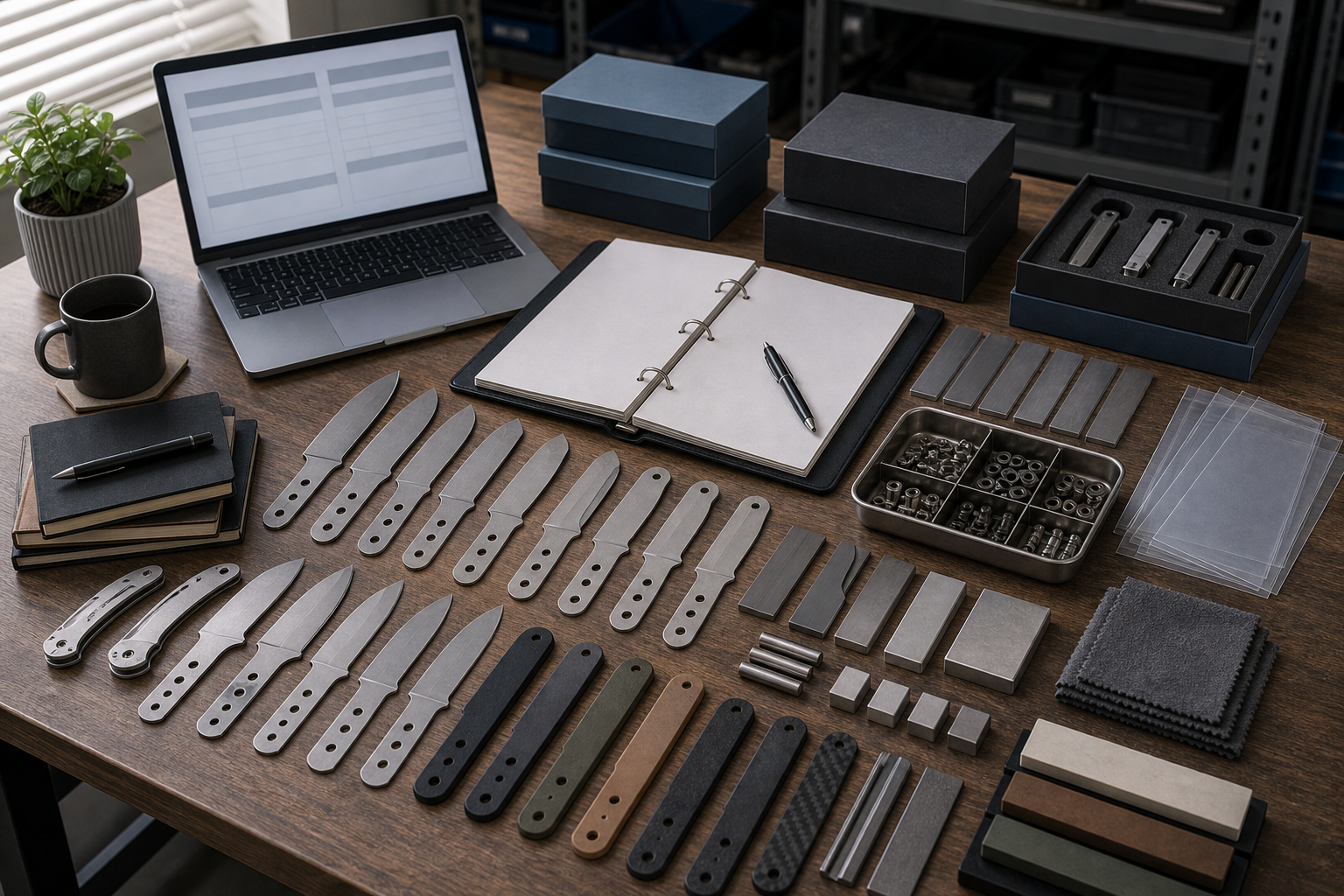
Brands should position Nitro V as a practical stainless upgrade for fine-edge, tough, easy-maintenance knives. The RFQ should define product use, target price, MOQ, heat treatment, HRC, geometry, finish, packaging, and inspection.
I Build the Steel Choice Around the Sales Channel
For an EDC brand, Nitro V can be positioned as a useful everyday stainless steel with good toughness and easy sharpening. For an outdoor brand, it can work in compact fixed blades, camping tools, and utility knives where the buyer wants corrosion resistance but not a high premium steel cost. For a kitchen or food-prep-oriented outdoor tool, Nitro V can be attractive because it supports fine edges and reasonable maintenance. For tactical-style products, it can work if the product story focuses on function rather than extreme wear resistance.
The RFQ should not say only "Nitro V knife." It should include knife type, blade length, blade thickness, grind, edge angle, lock type, handle material, finish, target HRC, logo method, packaging, MOQ, sample requirement, and inspection plan. I also ask for target price and sales channel. Nitro V can be a smart choice only if the full product fits the buyer's margin and brand position.
For international sourcing, the commercial terms should be clear. The U.S. International Trade Administration explains that Incoterms define responsibilities, costs, and risks between buyer and seller. Quality language also needs structure. The ISO 9001 page explains quality management system requirements and process improvement. I use that as a process-control reference, not as a casual certification claim.
If a buyer wants a balanced steel tier between basic stainless and premium powder metallurgy, Nitro V can be a strong candidate. If the buyer wants top edge retention or maximum corrosion resistance, I would compare other steels before finalizing.
| RFQ field | What to specify | Why it matters |
|---|---|---|
| Product use | EDC, outdoor, kitchen, utility, rescue | Sets the real performance target |
| Target HRC | Supplier-recommended range or buyer range | Connects heat treatment with use |
| Edge geometry | Grind, edge angle, behind-edge thickness | Controls cutting feel and chipping risk |
| Finish | Satin, stonewash, bead blast, coating | Affects appearance and corrosion behavior |
| Packaging | Private label box, pouch, insert, care note | Supports brand positioning and maintenance |
| Commercial terms | MOQ, target price, Incoterm, sample timing | Keeps the project practical |
Ready to use this material in your next knife line?
Vast State can help you compare blade steels, heat treatment ranges, handle materials, finishes, packaging options, and QC requirements based on your target market and quantity.
Conclusion
I choose Nitro V when a buyer needs a tough, fine-edged stainless steel with honest value, clear heat treatment, and practical product positioning.
Source Notes
- Knife Steel Nerds Nitro-V article supports Nitro V history, AEB-L comparison, hardness, microstructure, toughness, corrosion nuance, and heat-treatment guidance.
- Buderus Nitro V datasheet supports the X70CrVN13 grade reference, chemistry range, typical analysis, and general heat-treatment context.
- NJSB Nitro V data document supports Nitro V positioning, heat-treatment options, cryo guidance, finishing context, and hardness guidance.
- Knife Steel Nerds steel ratings supports the tradeoff framework between toughness, edge retention, corrosion resistance, heat treatment, and edge geometry.
- NIST Rockwell hardness guide supports careful hardness measurement practice.
- Trade.gov Incoterms page supports RFQ advice about international trade responsibilities, costs, and risks.
- ISO 9001:2015 page supports quality-management context, but it does not prove any supplier certification.