An OBM brand can have a good product and still fail. Without clear distribution, stock sits, dealers hesitate, and buyers lose trust.
An OBM knife or outdoor tool brand builds distribution by matching product positioning, channel partners, pricing, packaging, compliance, logistics, and repeat production. The goal is not only to sell products, but to make the brand easy for distributors, retailers, and importers to carry.
Quick buyer brief:
- Answer: OBM distribution works when brand, product, channel, compliance, logistics, and production stay aligned.
- Buyer context: This helps knife brands, outdoor brands, importers, wholesalers, and private label buyers planning brand-owned sales.
- Key checks: Trademark, product line, margin, MOQ, packaging, import role, Incoterms, inventory plan, and after-sales support.
Have a knife or multi-tool project in mind?
Send your sketch, CAD file, sample photo, or product idea. Vast State can review manufacturability, suggest materials, estimate MOQ, and prepare a quote for your OEM/ODM project.
Main image prompt:
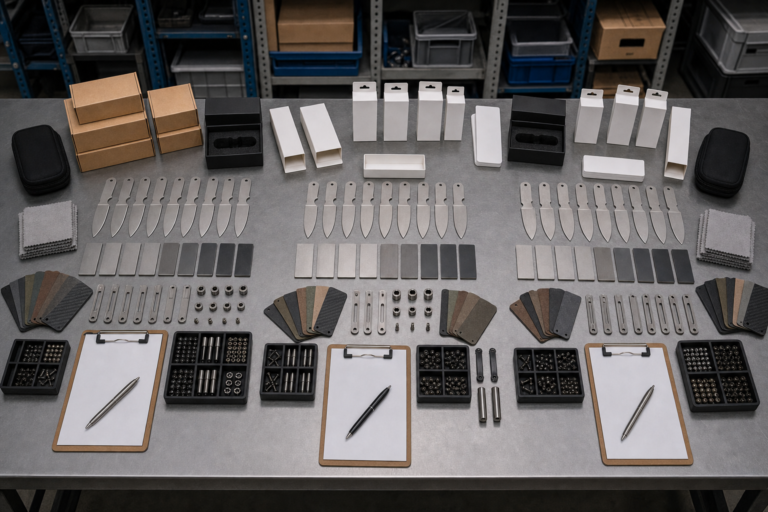
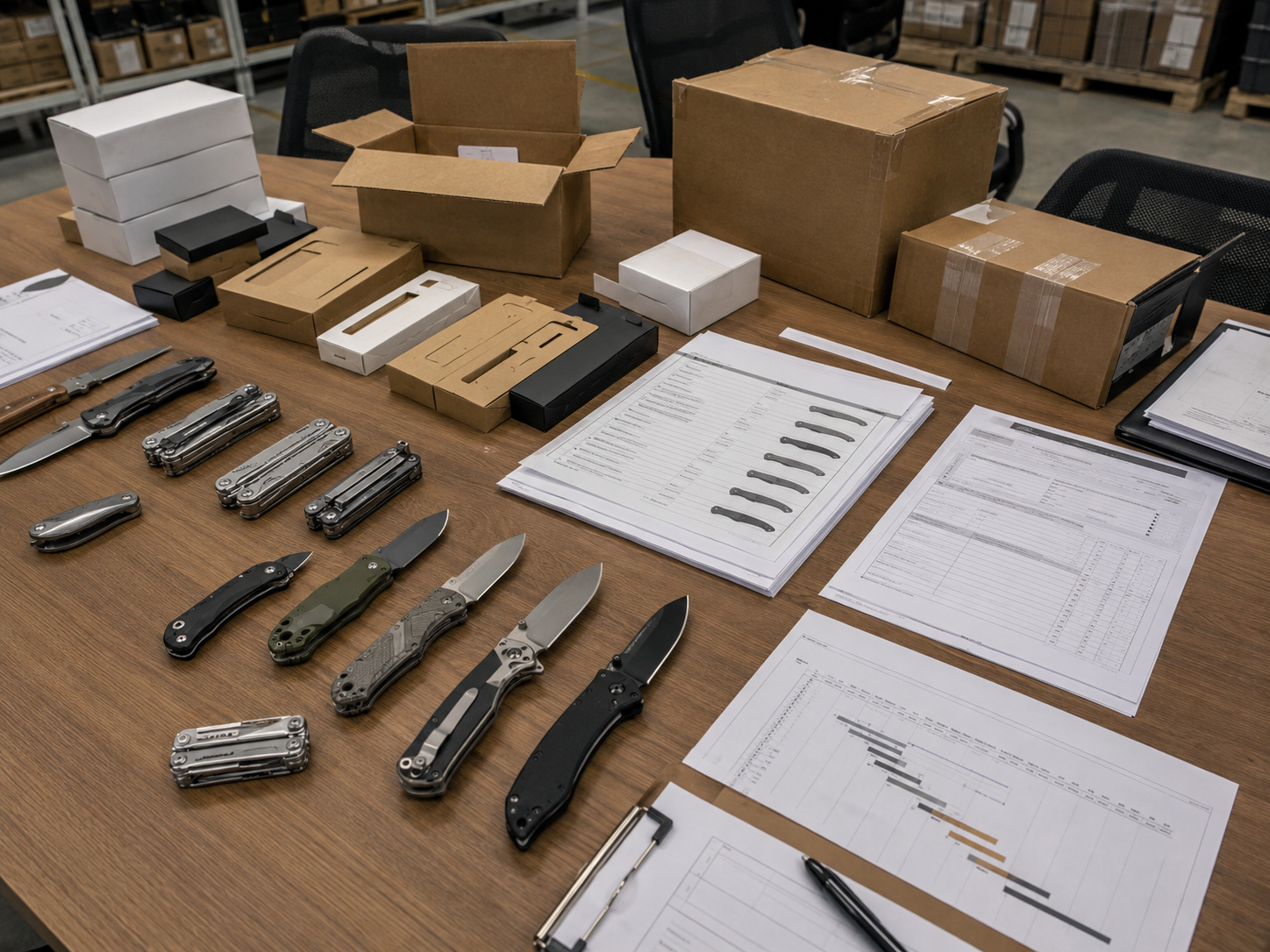
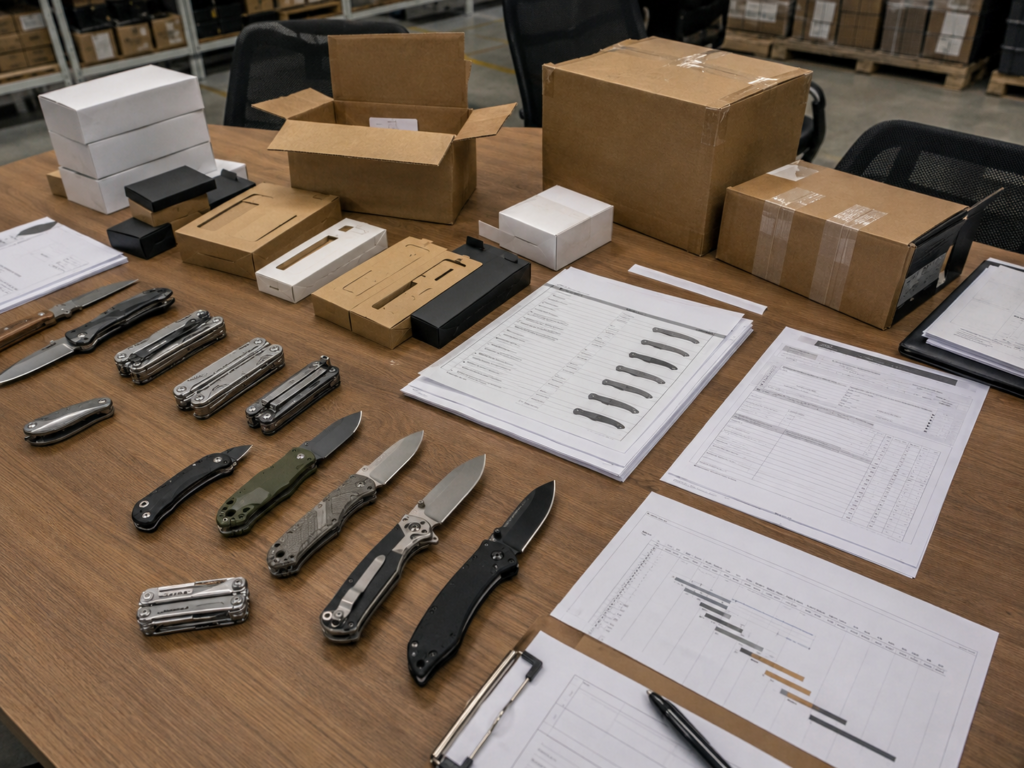
Use ChatGPT Image 2. Avoid AI-looking knife shapes, fantasy blades, fake mechanisms, impossible screws, distorted multi-tools, and overly perfect 3D-rendered surfaces. Realistic industrial product photography of an OBM knife and outdoor tool distribution planning desk, showing folding knives, multi-tools, packaging samples, dealer line sheets, carton labels, shipping documents, product roadmap, and quality checklist on a clean factory meeting table, neutral lighting, sharp focus, no text, no logo, no watermark, no violence, no blood.
When I think about OBM brand distribution, I do not think only about selling more products. I think about whether the brand can be carried by real channels. A distributor wants a product line that makes commercial sense. A retailer wants clear packaging and repeat supply. An importer wants documents, product safety awareness, and stable communication. A factory needs a design that can be produced consistently. If these parts do not connect, the brand may look good online but become hard to scale.
What Does OBM Distribution Mean for Knife and Outdoor Tool Brands?
OBM sounds attractive because the brand owns the market position. But without supply, pricing, and channel control, ownership becomes pressure.
OBM distribution means the brand sells products under its own brand identity through selected channels. For knives and outdoor tools, it needs product planning, manufacturing control, compliance review, and channel support.
I Treat OBM as a Brand System, Not Only a Logo
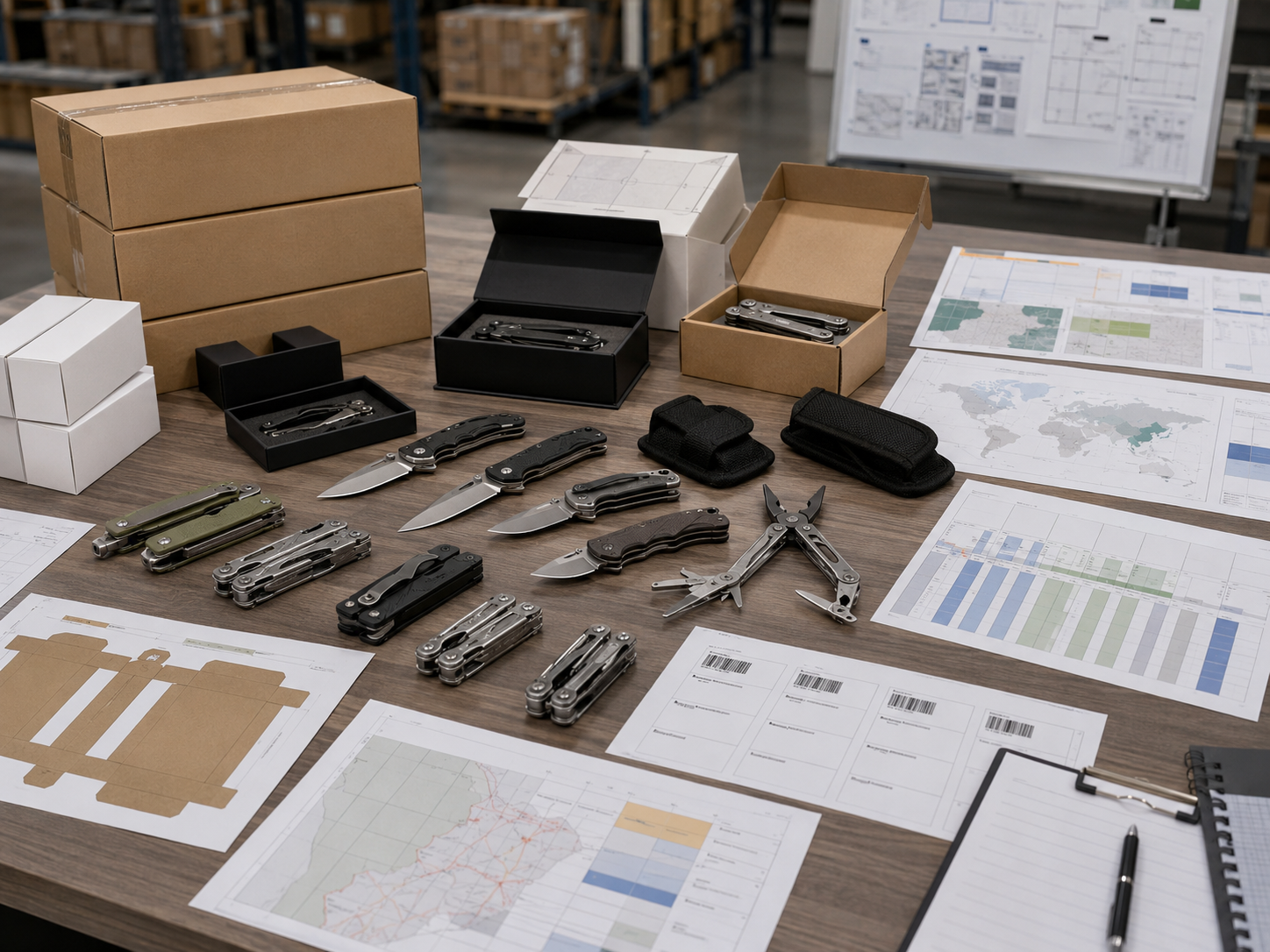
OBM usually means the business is not only asking a factory to make a product. The business is building its own brand position, product promise, distribution plan, and customer relationship. That makes the sourcing work more serious. A weak product can damage the brand. A confusing channel plan can upset distributors. Poor packaging can reduce retail confidence. Unstable supply can make repeat orders difficult.
For knife and outdoor tool buyers, I always suggest starting with the channel. A product for distributors should be easy to explain, easy to stock, and easy to reorder. A product for outdoor retailers needs stronger packaging and clearer product information. A direct-to-consumer line may need more visual identity and more flexible SKU planning. A promotional or wholesale line may need cost control first.
OBM also changes how I think about customization. The logo is only one part. The brand needs a product family, material logic, packaging system, finish options, and quality standard. When these parts match, distributors can understand the line faster.
| OBM element | What I check | Why it matters |
|---|---|---|
| Brand position | EDC, outdoor, camping, utility, rescue | It guides product style and price |
| Product family | Core models and future SKUs | It helps distributors plan repeat orders |
| Manufacturing base | Materials, structure, finish, QC | It protects consistency |
| Channel plan | Distributor, retailer, online, wholesale | It controls packaging and margin logic |
OEM/ODM RFQ Checklist
Prepare these details to help Vast State review your project and provide a more accurate quotation.
| RFQ Field | What to Prepare |
|---|---|
| Project type | OEM from drawing / ODM private label / wholesale catalog |
| Product category | Folding knife / fixed blade / multi-tool / outdoor tool |
| Design status | Idea / sketch / 2D drawing / 3D CAD / physical sample |
| Target price | Ex-factory target price or retail price range |
| MOQ expectation | 500 / 1,000 / 3,000 / 5,000+ pcs |
| Logo method | Laser engraving / etching / printing / molded logo |
| Packaging | Standard packaging / custom retail box / Amazon-ready |
| Market | USA / EU / Japan / Korea / Middle East / other |
| Compliance needs | Buyer-specified testing / documentation / labeling |
| Timeline | Sample deadline / mass production deadline |
How Should an OBM Brand Choose the Right Distribution Channel?
The wrong channel can make a good product look weak. A price, package, or MOQ that fits one channel may fail in another.
An OBM brand should choose channels by target customer, margin structure, inventory risk, after-sales needs, compliance responsibility, and the product support each channel expects.
I Match Channel Needs Before I Push SKUs
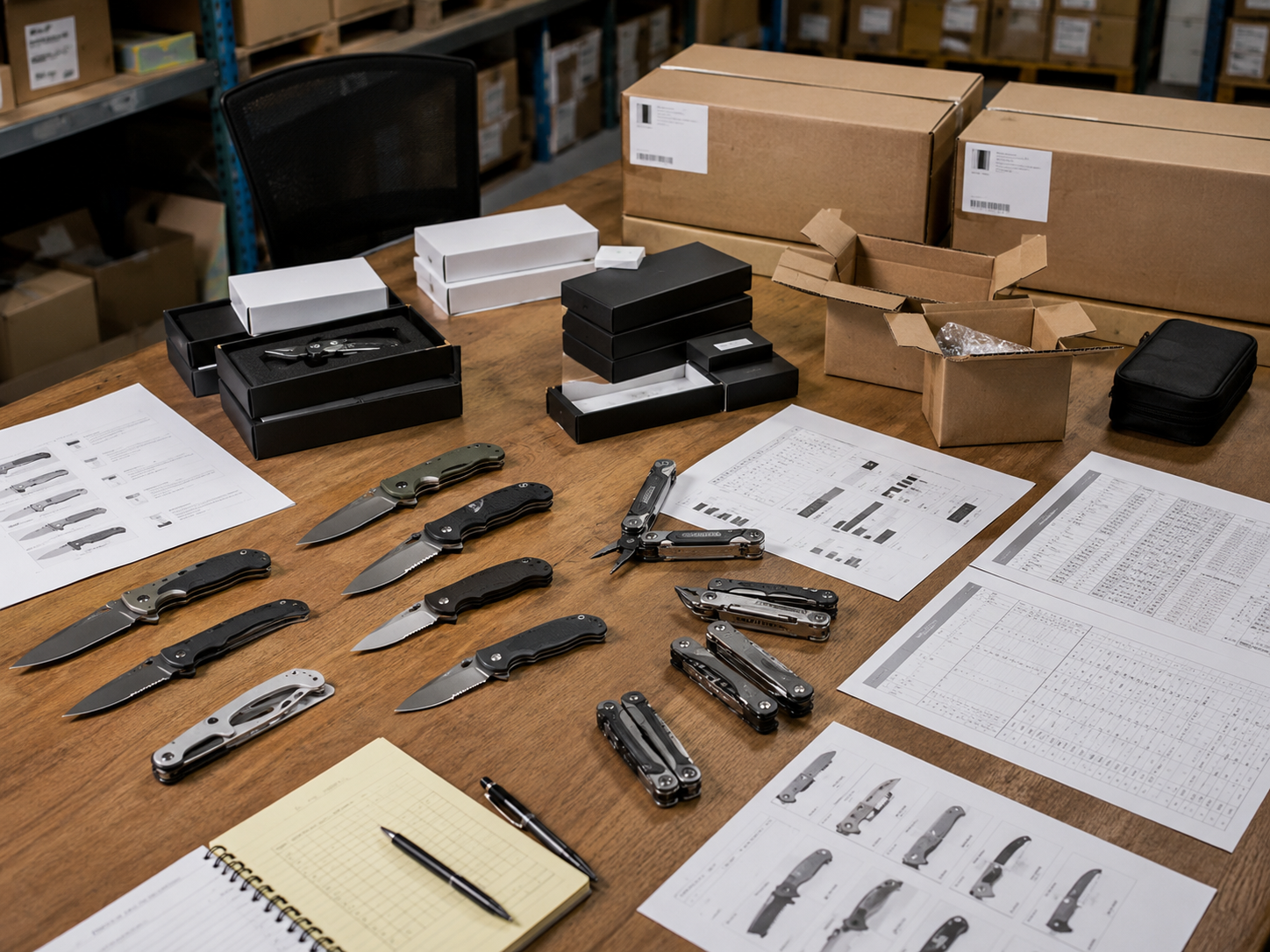
A distributor usually wants a line that can move across several accounts. That means the product should have clear use cases, stable pricing, practical packaging, and enough margin room. A retailer may care more about shelf presentation, barcodes, point-of-sale information, and product story. An online channel may need stronger photography, clearer specifications, and lower damage risk in parcel delivery. A wholesale buyer may care most about price, carton quantity, and delivery stability.
I do not believe every OBM brand should enter every channel at once. It is better to choose one or two channels and build the product around them. If the first channel is outdoor retail, the packaging and product explanation should be stronger. If the first channel is distributor wholesale, the SKU range should be easier to manage. If the first channel is online, the brand needs clear product details and a controlled after-sales plan.
Logistics should also be part of channel selection. The World Bank Logistics Performance Index ranks countries by areas such as customs, infrastructure, shipment arrangement, tracking, and timeliness. I use that as a reminder that distribution is not only sales. Delivery stability also affects brand reputation.
| Channel | What it needs | Manufacturing and packaging focus |
|---|---|---|
| Distributor | Repeatable line and margin room | Stable SKUs, carton planning, reorder support |
| Retailer | Shelf value and clear product message | Packaging, barcode, finish consistency |
| Online seller | Strong specs and parcel-safe packaging | Product photos, inserts, protective packing |
| Wholesaler | Cost control and simple replenishment | MOQ, batch consistency, efficient cartons |
How Do Product Line, Pricing, and Packaging Make Distribution Easier?
Distributors do not only buy products. They buy a line they can explain, price, stock, and reorder without too much friction.
Product line, pricing, and packaging make OBM distribution easier by giving channel partners clear choices, stable margins, readable product information, and consistent brand presentation.
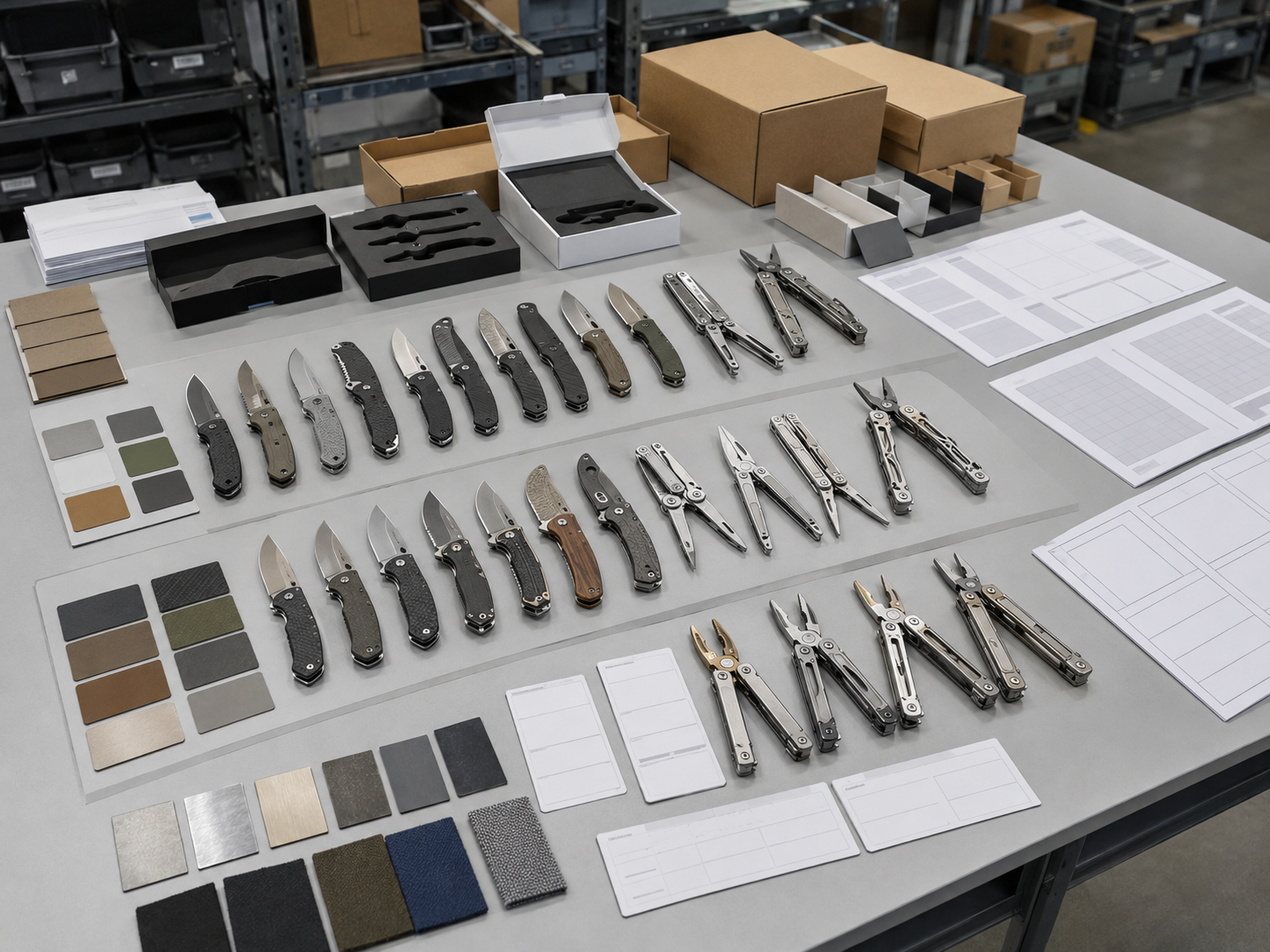
I Build the Line Around Commercial Logic
A strong OBM line does not need too many models at the beginning. I often prefer a focused structure. One entry model can bring volume. One mid-range model can show better material and finish. One special model can give the brand a stronger identity. This is easier for distributors to understand than a random list of products with no pricing logic.
Pricing must connect to production. Blade steel, handle material, lock type, tool count, coating, packaging, and inspection standard all affect cost. A buyer may want a very strong product at an entry-level price, but the factory still has to make the numbers work. This is why I like to discuss target price, target market, and expected margin before sampling. A sample that cannot support the channel price is not useful.
Packaging also matters more in OBM distribution than many buyers expect. A plain package may work for bulk wholesale, but it may not support retail. A strong package can explain use, protect the product, and make the brand easier to sell. However, packaging should not make unsupported claims. It should be practical, clear, and suitable for the target market.
| Distribution asset | Practical role | What I suggest checking |
|---|---|---|
| Entry SKU | Supports volume | Simple structure and stable cost |
| Mid-range SKU | Builds brand value | Better material, finish, and feel |
| Hero SKU | Creates identity | Distinct design without production risk |
| Packaging system | Supports channel confidence | Clear specs, protection, brand consistency |
What Compliance, Trademark, and Import Checks Should Come Before Expansion?
A brand can expand too fast and meet avoidable problems. Trademark gaps, unclear import roles, and product safety issues can slow distribution.
Before expansion, an OBM brand should check trademark protection, product safety duties, importer responsibility, local knife rules, labeling, packaging claims, Incoterms, and customs documentation.
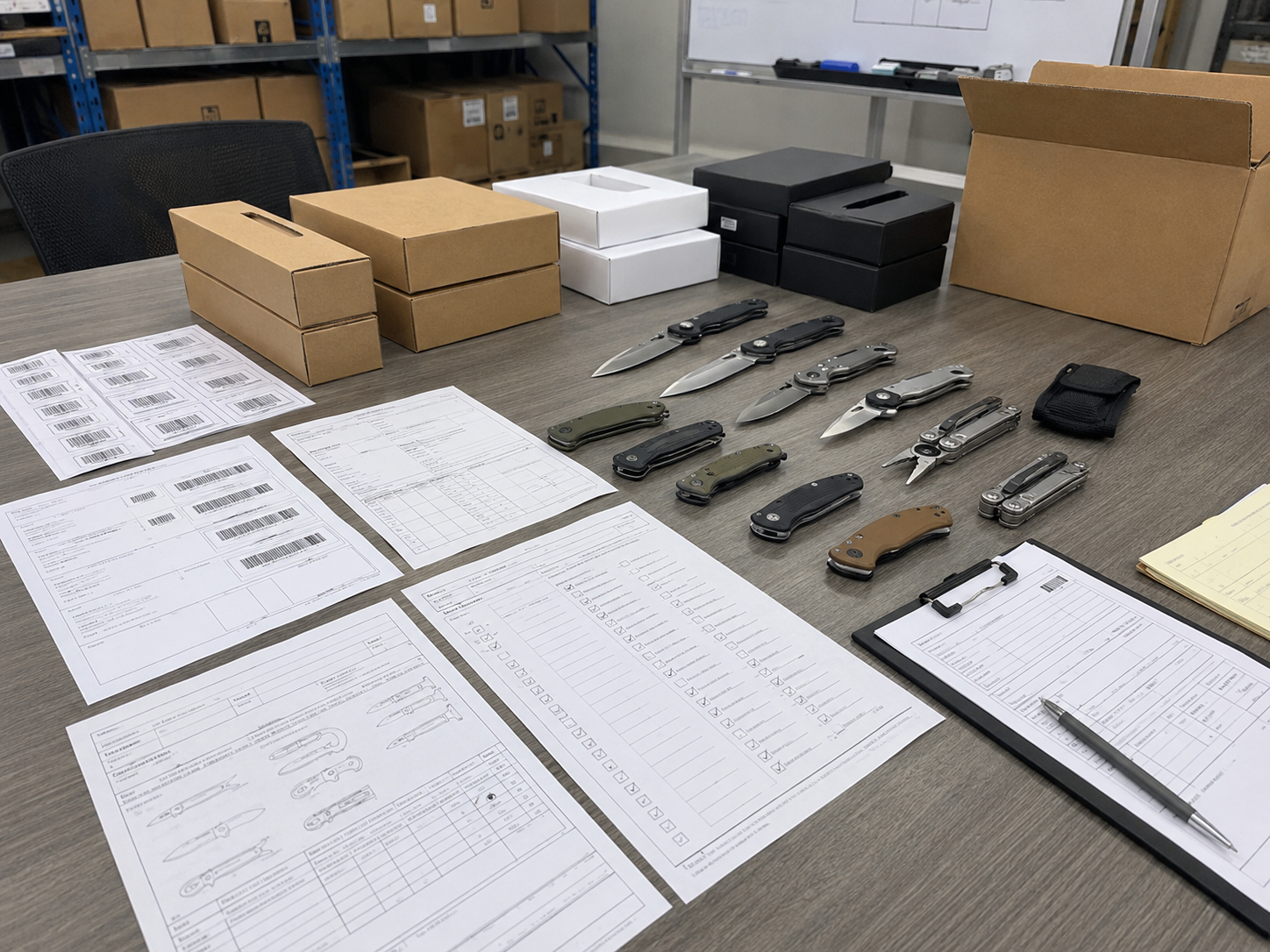
I Check the Boring Details Before They Become Expensive
OBM distribution is brand work, so trademark planning matters. The WIPO Madrid System gives brand owners a centralized way to seek trademark protection in multiple markets, but it also requires a national or regional base application or registration. I do not treat this as legal advice. I treat it as a reminder: do not build packaging, distributor agreements, and market expansion around a brand name that has not been checked.
Product safety and import responsibility also matter. For the European Union, the European Commission page on General Product Safety Regulation points to Regulation (EU) 2023/988 and related standards support. For the United States, CPSC eFiling guidance explains that the importer can be the Importer of Record and may be connected to testing and certification responsibility for consumer products. These sources do not classify every knife or tool. They show why OBM brands need clear responsibility.
Trade terms also affect distribution. The U.S. International Trade Administration explains that Incoterms define seller and buyer responsibilities for delivery under sales contracts. For OBM brands, this affects landed cost, distributor pricing, and who handles freight, insurance, tariffs, and import steps.
| Check area | What to confirm | Why it matters |
|---|---|---|
| Trademark | Brand name and market coverage | Prevents brand conflict during expansion |
| Product safety | Target-market duties and documents | Supports channel and importer confidence |
| Import role | Importer of record and compliance owner | Avoids unclear responsibility |
| Incoterms | FOB, CIF, DAP, DDP, or other term | Clarifies cost, risk, and delivery scope |
How Should Manufacturing Support Keep OBM Distribution Stable After Launch?
A launch can succeed and still fail later. If repeat production changes too much, distributors lose confidence quickly.
Manufacturing support keeps OBM distribution stable through controlled specifications, approved samples, repeatable QC, packaging control, reorder planning, spare-part logic, and clear communication after launch.
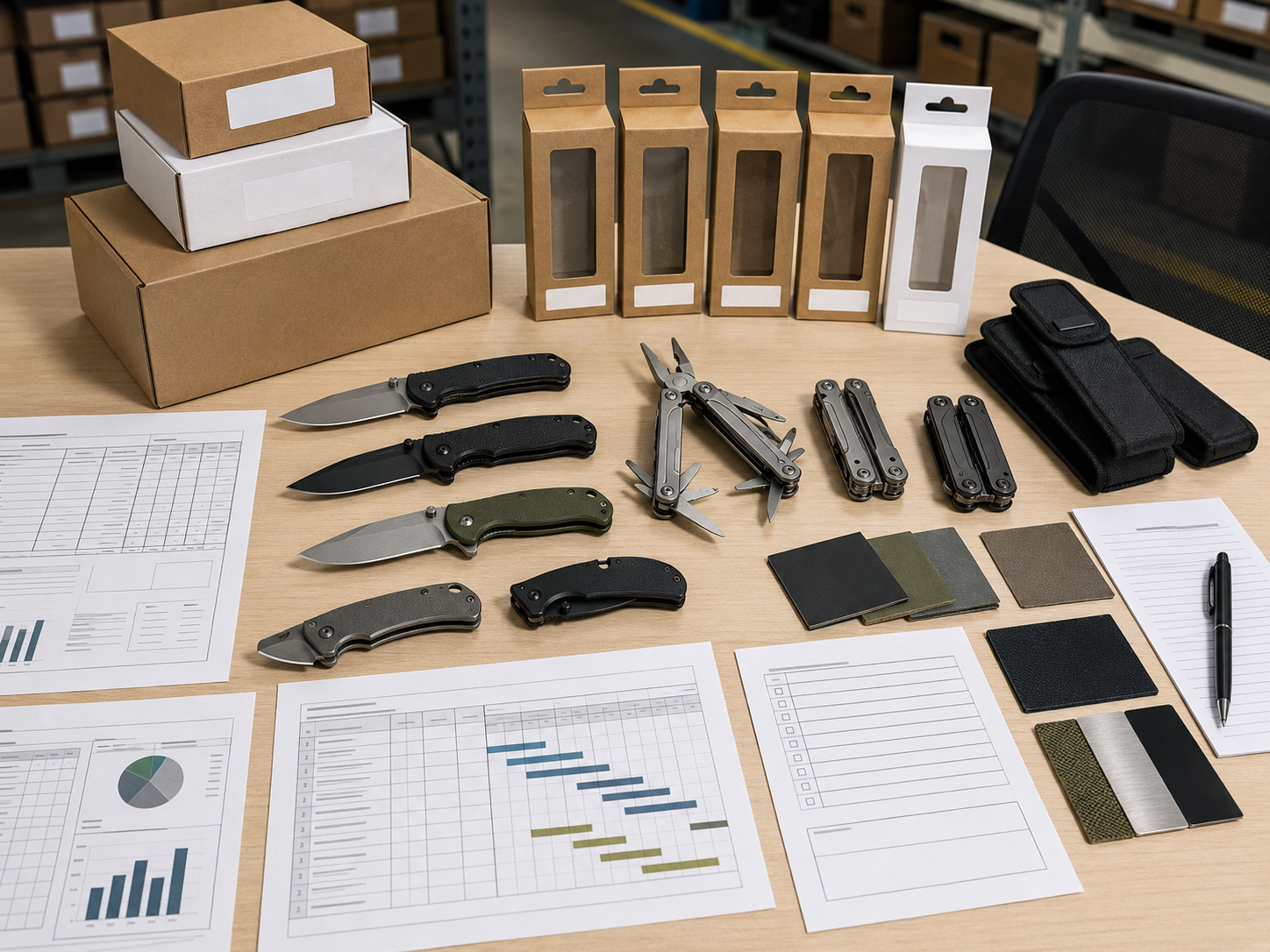
I Protect the Channel by Protecting Repeat Production
The first production order is important, but the second and third orders often tell the truth. A distributor needs confidence that the same model will not change randomly. The handle color should stay consistent. The finish should match the approved sample. The lock or tool action should feel stable. The packaging should not shift in size, material, or print quality without approval. If these details move too much, the distributor has to explain problems to customers.
This is where OEM/ODM manufacturing support connects directly with OBM distribution. I prefer to freeze the approved sample, material specification, finish requirement, packaging file, inspection points, and carton standard. I also like to discuss reorder timing early. If a brand plans seasonal sales, the factory needs enough time to prepare materials, confirm packaging, and schedule production.
Quality systems help here. The ISO 9001:2015 page explains quality management as a framework for meeting customer expectations, improving performance, and maintaining processes. I do not use that to claim certification. I use it to show the mindset OBM distribution needs. A brand grows when the product, factory, and channel repeat the same promise.
| Support area | What I control | Distribution benefit |
|---|---|---|
| Approved sample | Structure, finish, action, packaging | Gives the channel a fixed standard |
| QC checklist | Function, appearance, sharpness, packing | Reduces repeat-order surprises |
| Reorder planning | Material, packaging, production schedule | Protects stock stability |
| Communication | Change notices and issue follow-up | Builds distributor trust |
Turn your idea into a quote-ready knife project.
Share your drawing, sample photo, target quantity, market, and packaging needs. Vast State will review manufacturability and prepare OEM/ODM options.
Conclusion
OBM distribution works best when brand strategy, product design, compliance checks, channel pricing, logistics, packaging, and repeat production are planned together.
Source Notes
- WIPO Madrid System supports the trademark planning discussion for international brand expansion.
- European Commission product safety supports the EU product safety and documentation point.
- CPSC eFiling resources supports the importer responsibility discussion for consumer products in the U.S. context.
- ITA Incoterms overview supports the point that trade terms clarify delivery, cost, risk, and responsibility.
- World Bank LPI supports the logistics planning discussion.
- ISO 9001:2015 supports the process-based quality management point.