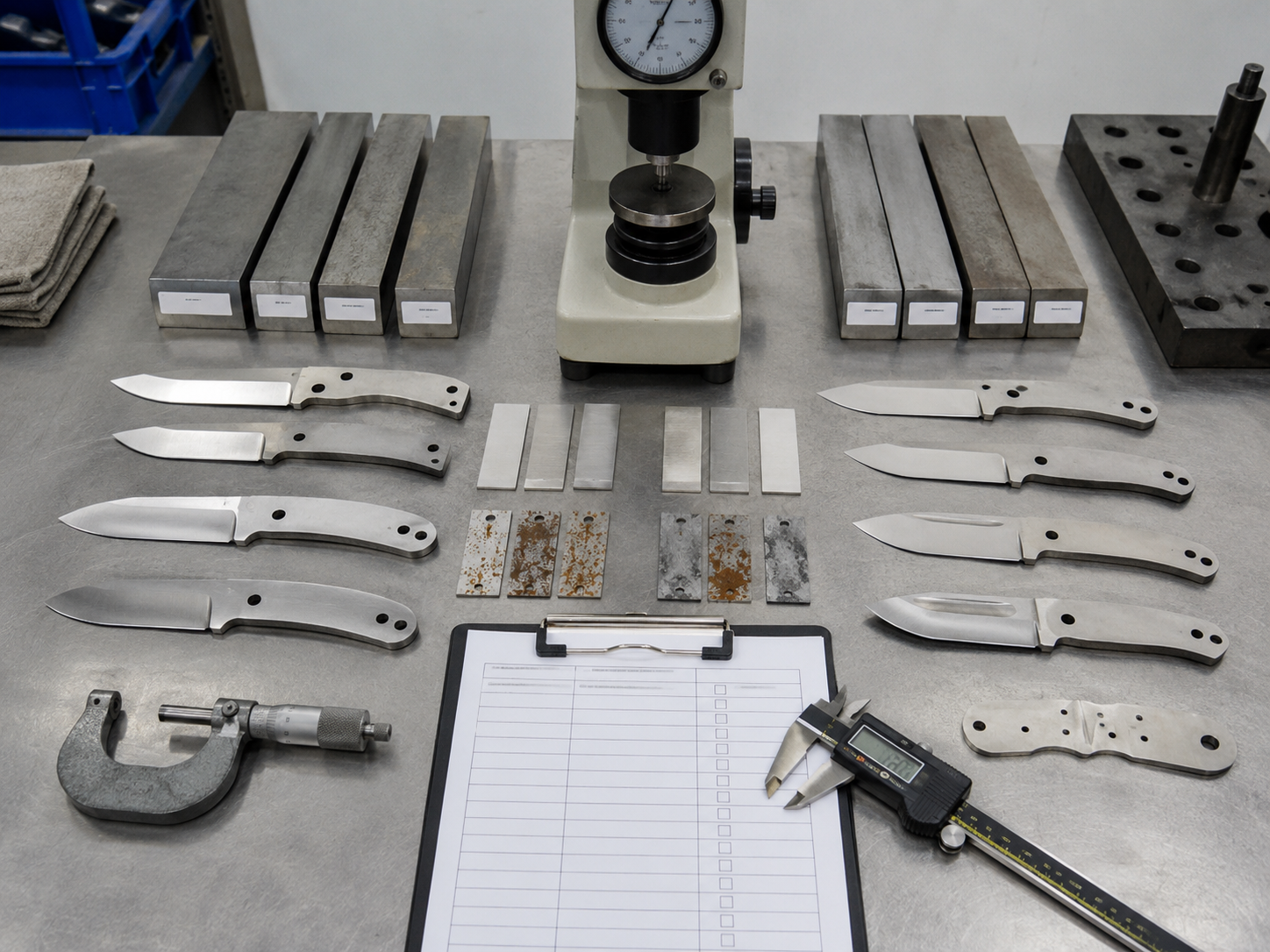
A steel name can sound simple but hide real sourcing risk. If buyers compare “9Cr” and D2 too loosely, the final knife may miss its market.
Choose 9Cr18MoV when corrosion resistance, easier maintenance, and cost control matter more. Choose D2 when wear resistance and stronger edge retention matter more, and the buyer can accept more care against rust and tighter heat-treatment control.
Quick buyer brief:
- Answer: 9Cr18MoV is usually better for practical stainless value; D2 is usually better for stronger wear resistance.
- Buyer context: This helps knife brands, outdoor brands, importers, wholesalers, distributors, and private label buyers.
- Key checks: Exact steel grade, target market, heat treatment, hardness range, corrosion need, edge geometry, finish, cost, and QC testing.
When a buyer asks me whether 9Cr or D2 is better, I first slow the question down. “9Cr” is often used casually in knife sourcing, but buyers should confirm the exact grade. Many projects mean 9Cr18MoV, but not always. D2 is also not automatically better for every knife. A camping knife, a budget EDC folder, a premium private label knife, and a wholesale pocket knife can all need different steel logic. The best steel is the one that fits the market, price, heat treatment, geometry, and user expectation.
What Does “9Cr” Usually Mean in Knife Sourcing?
A short steel name can create confusion. If the buyer says only “9Cr,” the factory may not know the exact grade or performance target.
In knife sourcing, “9Cr” often means 9Cr18MoV or a related Chinese stainless steel, but buyers should confirm the exact grade, composition, hardness target, and heat-treatment plan.
I Ask for the Full Steel Grade Before Quoting
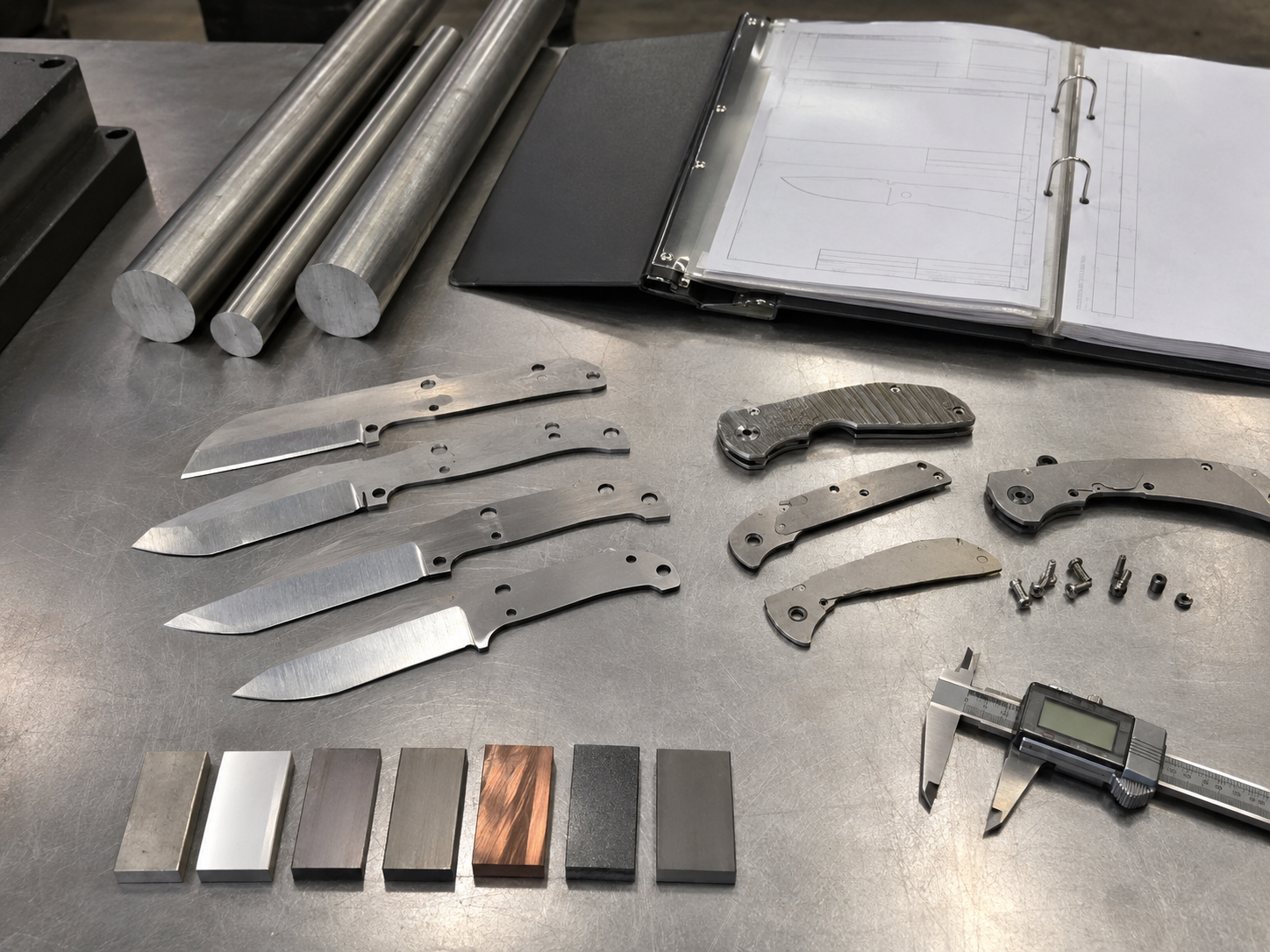
When I hear “9Cr,” I do not treat it as enough information. I ask whether the buyer means 9Cr18MoV, 9Cr18, 9Cr13, or another related grade. This matters because different grades can have different carbon, chromium, molybdenum, vanadium, and heat-treatment behavior. In B2B sourcing, a short name may be fine for casual discussion, but the purchase order should use the full grade and approved specification.
For knife projects, 9Cr18MoV is often chosen because it offers a practical stainless direction. It can fit folding knives, pocket knives, outdoor utility knives, and private label products where corrosion resistance, reasonable cost, and familiar sharpening behavior matter. A knife steel database such as ZKnives 9Cr18MoV lists 9Cr18MoV as a Chinese stainless steel and shows its alloy elements, but I still treat supplier material certificates and production testing as the real project documents.
This is important for buyers. If the RFQ says only “9Cr,” the quotation may be fast but not precise. A good RFQ should say the exact steel grade, hardness target, finish, blade thickness, edge geometry, and inspection requirement. That makes the comparison with D2 much more useful.
| Buyer phrase | What I clarify | Why it matters |
|---|---|---|
| 9Cr | Exact steel grade | Prevents wrong material selection |
| 9Cr18MoV | Composition and heat treatment | Supports consistent sourcing |
| Stainless steel | Corrosion and price expectation | Avoids vague performance claims |
| Budget knife steel | Target market and user need | Matches steel to product position |
When Is 9Cr18MoV the Better Choice for a Knife?
A knife used outdoors can face humidity, sweat, food, and light neglect. If corrosion resistance matters, D2 may not be the easiest choice.
9Cr18MoV is often better for value-focused folding knives, pocket knives, and outdoor tools where stainless performance, easier maintenance, reasonable cost, and repeatable mass production matter.
I Choose 9Cr18MoV When the Market Needs Practical Stainless Value
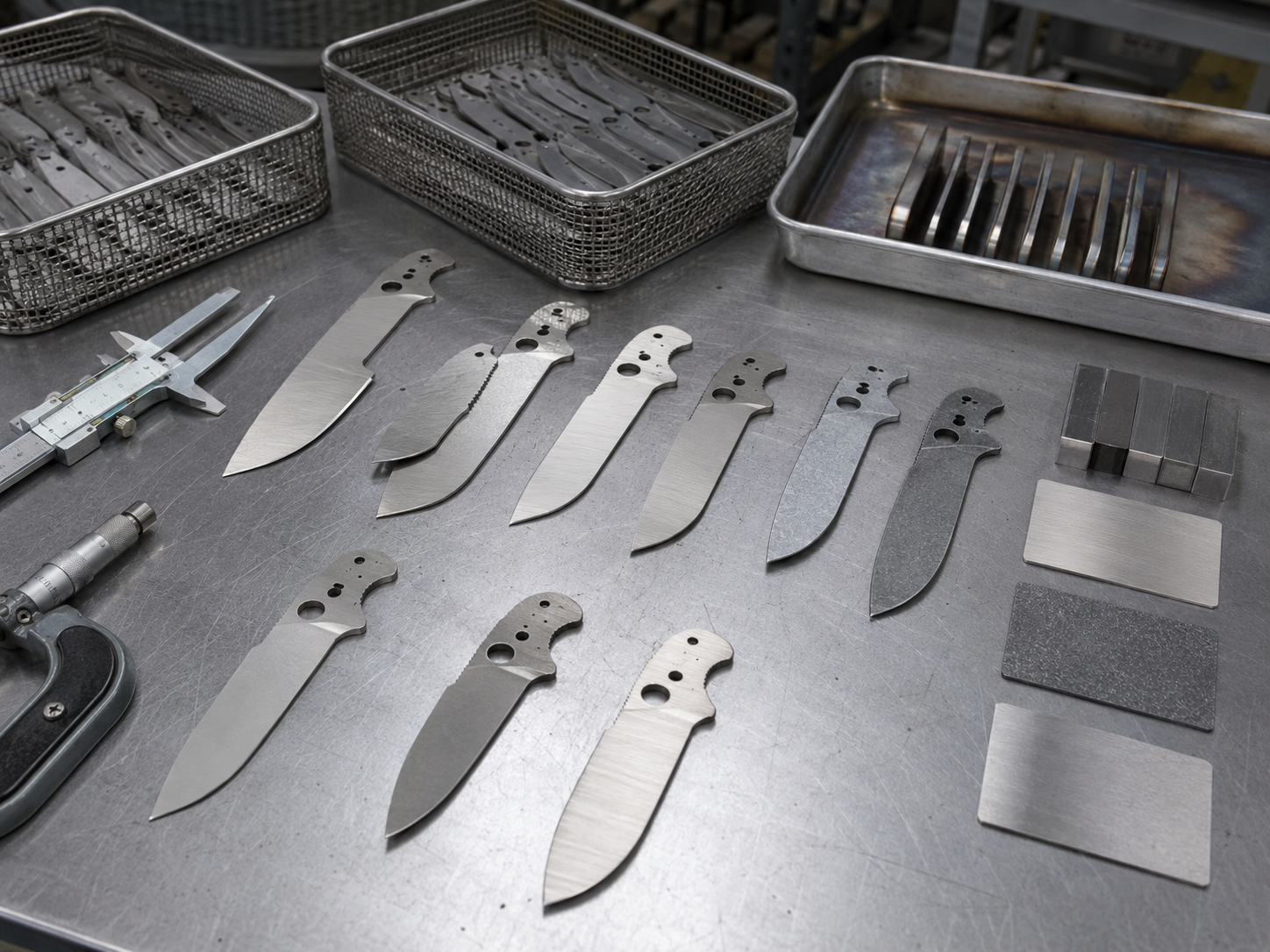
9Cr18MoV can be a strong practical choice when the buyer wants a knife that is easier for common users to maintain. Many EDC, camping, fishing, and general utility customers care about corrosion resistance. They may not clean or oil the blade carefully after every use. For these users, a stainless-oriented steel can reduce complaints and support a more forgiving product experience.
I also like 9Cr18MoV for price-sensitive private label projects where the buyer still wants a better story than very low-end steel. It can support a clean product position when heat treatment, grinding, and QC are controlled. It can also work well when the buyer needs a stable supply path and wants to build a repeatable SKU for distributors or online sales.
However, I do not oversell it. 9Cr18MoV is not automatically better than D2 in edge retention. It still needs proper heat treatment and blade geometry. A poor heat treatment can make any steel disappointing. A thick edge can make a good steel feel weak. So I use 9Cr18MoV when corrosion resistance, cost, and practical use matter more than maximum wear resistance.
| 9Cr18MoV advantage | Why it helps buyers | What I still check |
|---|---|---|
| Stainless direction | Better daily corrosion resistance | Finish, cleaning, and target market |
| Practical cost | Supports private label margins | Steel source and batch consistency |
| Easier user care | Better for general buyers | Edge geometry and sharpening plan |
| Repeatability | Good for volume SKUs | Heat treatment and hardness testing |
When Is D2 the Better Choice for a Knife?
Some buyers want stronger edge retention and a more performance-driven story. But D2 also asks for more care and better process control.
D2 is often better for knives that need higher wear resistance, stronger edge retention, and a more performance-focused market position, as long as corrosion risk and heat treatment are managed.
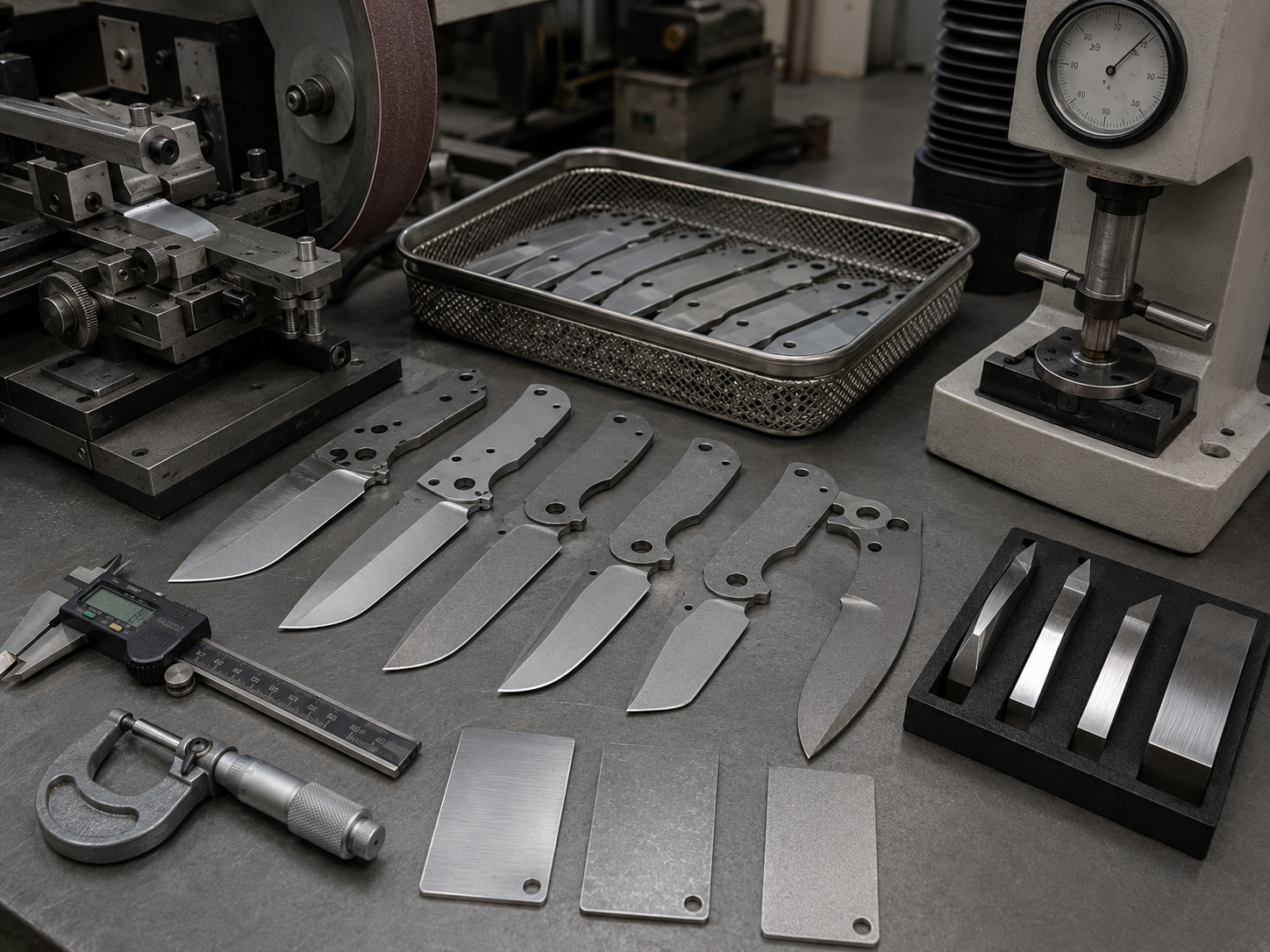
I Use D2 When Wear Resistance Supports the Product Position
D2 is a high-carbon, high-chromium tool steel. Official tool steel references such as Uddeholm Sverker 21 describe a D2-type steel with high wear resistance, high compressive strength, and good through-hardening properties. Bohler K110 is also positioned as a D2 or 1.2379 type cold work tool steel with strong wear-resistance use. For knives, this helps explain why D2 is often chosen when buyers want better edge retention than many budget stainless options.
D2 can fit outdoor, EDC, hunting-style, utility, and higher-positioned private label knives when the buyer’s customer understands steel care. It can hold an edge well when heat treatment and geometry are right. It can also give the product a stronger performance story.
But D2 is not stainless in the same user-friendly way as 9Cr18MoV. It has high chromium, but much of that chromium can be tied up in carbides. In practical use, D2 can need more care against staining or rust. This matters for humid markets, fishing products, food-prep-adjacent use, and general users who do not maintain tools carefully. I choose D2 when wear resistance is worth that tradeoff.
| D2 advantage | Why it helps buyers | What I still check |
|---|---|---|
| Wear resistance | Supports edge retention story | Heat treatment and carbide control |
| Strong performance image | Helps higher-positioned SKUs | Buyer education and packaging wording |
| Tool steel identity | Fits hard-use utility positioning | Corrosion expectations |
| Edge stability potential | Good with proper geometry | Grind, sharpening, and final QC |
How Do Heat Treatment and Edge Geometry Change the Result?
Steel choice matters, but steel alone does not make a good blade. A poorly treated D2 can lose to a well-made 9Cr18MoV.
Heat treatment and edge geometry strongly affect knife performance. Hardness, toughness, corrosion behavior, cutting geometry, grinding quality, and sharpening all decide how 9Cr18MoV or D2 performs.
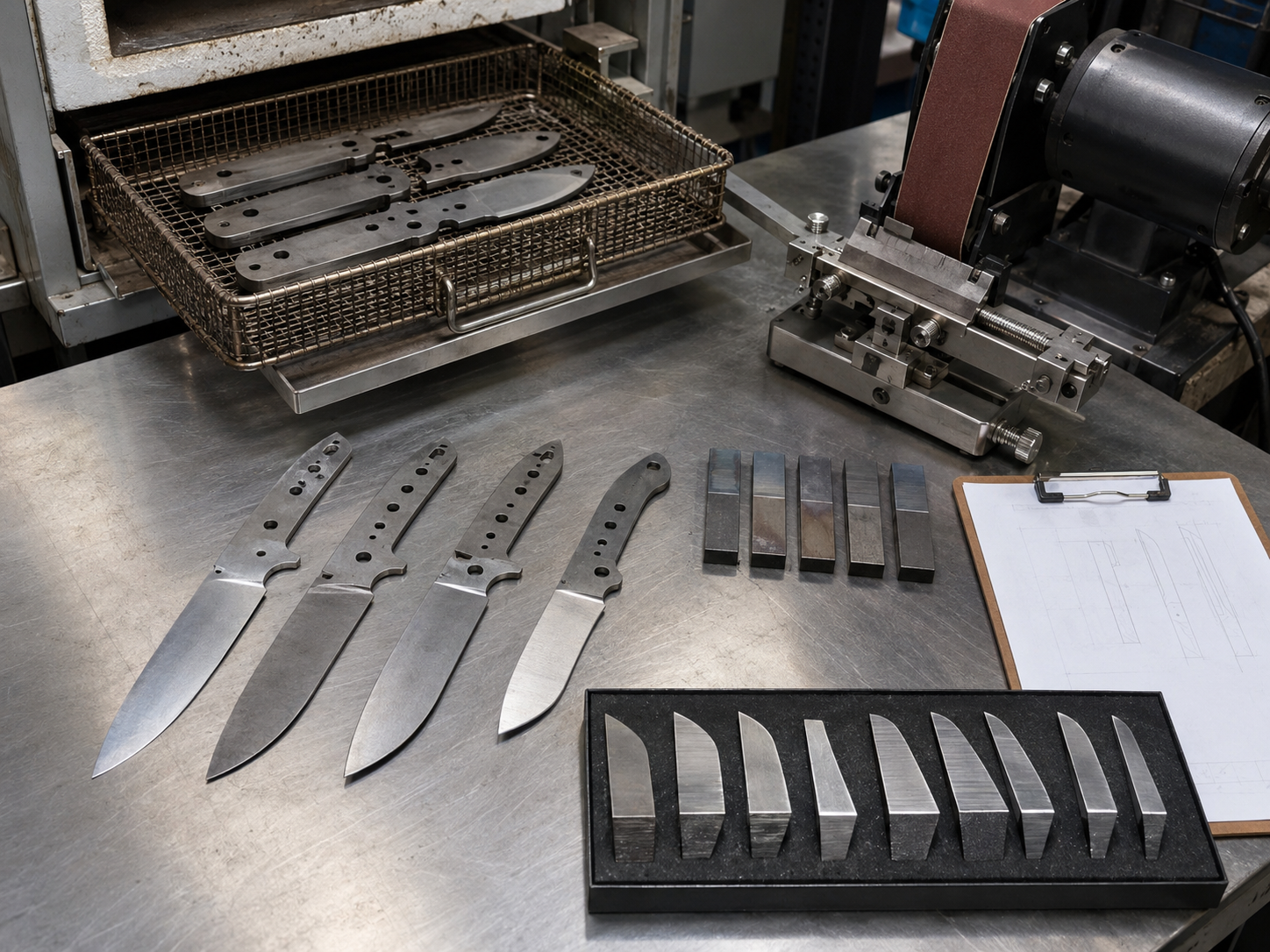
I Never Judge Steel Without the Process Behind It
A buyer may ask, “Which steel is better?” I usually answer, “Better for what process and what user?” A steel grade gives potential. Heat treatment turns that potential into real blade behavior. The same grade can feel very different if hardening, tempering, grinding, and sharpening are not controlled.
For D2, heat treatment is especially important because the buyer usually expects strong wear resistance and edge retention. If the process is not controlled, the blade may become too brittle, too soft, or difficult to sharpen cleanly. For 9Cr18MoV, heat treatment also matters because the buyer expects stainless value and useful edge performance. Both steels need a reasonable hardness range, not just the highest possible number.
Hardness testing should also be done carefully. The NIST Rockwell hardness measurement guide explains why correct testing practice matters. In production, hardness is not the whole story, but it is an important process signal. I also check blade thickness, bevel angle, grinding heat, edge symmetry, and final sharpening. A well-balanced blade gives users a better experience than a steel name printed on packaging.
| Process factor | Why it matters | Buyer action |
|---|---|---|
| Heat treatment | Builds hardness and toughness balance | Confirm hardness target and testing |
| Bevel geometry | Controls cutting feel | Match edge to use case |
| Grinding control | Prevents heat damage and uneven bevels | Review samples carefully |
| Sharpening | Affects first user impression | Define sharpness expectation |
How Should Buyers Choose Between 9Cr18MoV and D2 by Market?
The best steel is not universal. A knife for fishing, camping, EDC, or distributor wholesale may need a different tradeoff.
Choose 9Cr18MoV for practical stainless value and easier user care. Choose D2 for stronger edge retention and performance positioning when the market accepts more maintenance.
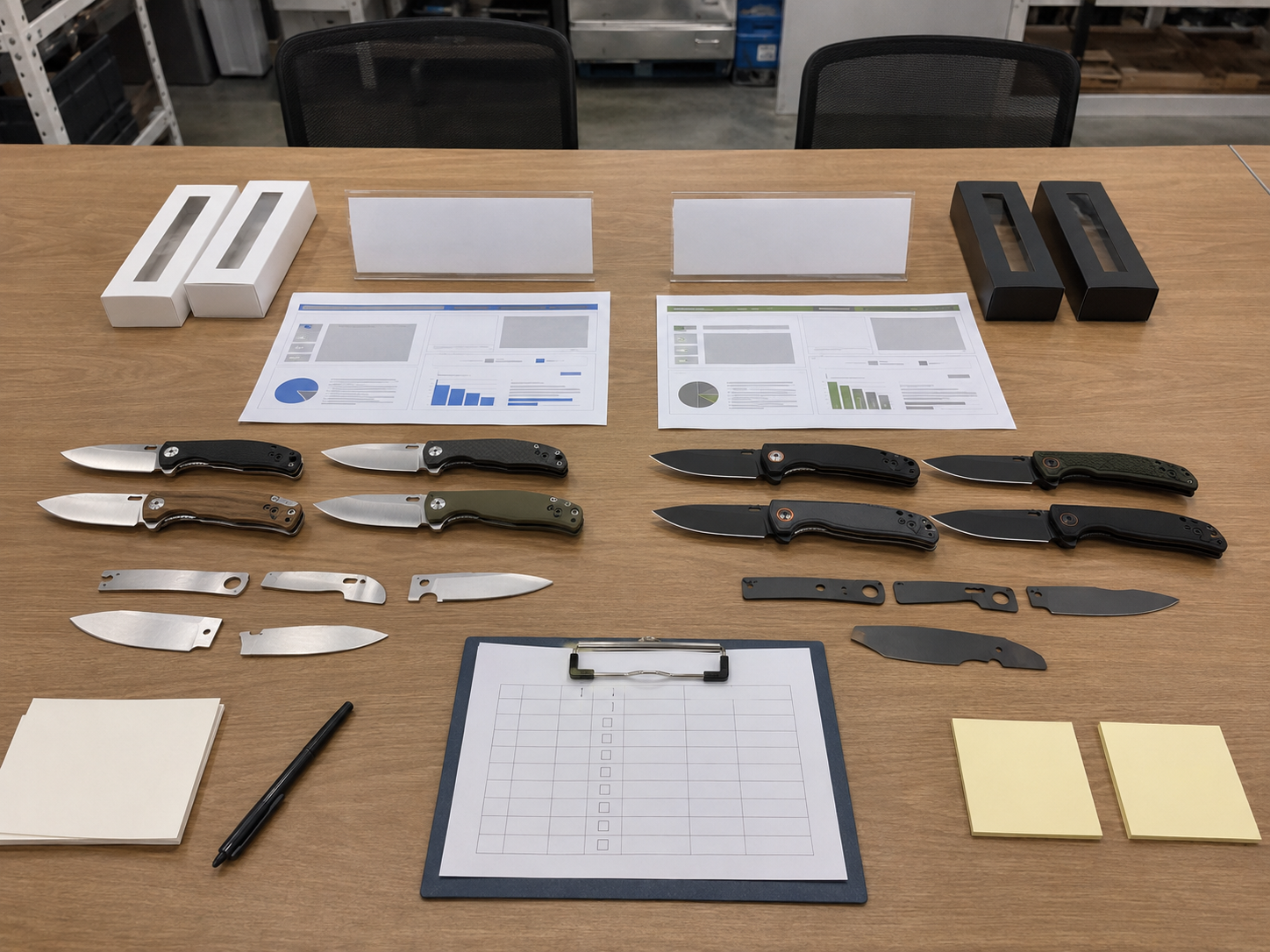
I Match Steel to the Buyer’s Channel, Price, and User
For general EDC, outdoor retail, fishing-adjacent use, and cost-sensitive private label knives, I often lean toward 9Cr18MoV when the buyer wants practical stainless value. It gives a cleaner answer for users who may care more about corrosion resistance and easy ownership than maximum edge retention. It can also support broader distribution when user education is limited.
For a performance-focused pocket knife, work knife, or higher-positioned outdoor knife, D2 can make more sense. It gives the buyer a stronger edge-retention story and a familiar tool-steel identity. But the buyer should be honest about corrosion care. If the product will be sold in humid markets or to casual users, packaging and product information should not create unrealistic expectations.
I also consider the selling channel. A distributor may prefer fewer complaints and easier repeat sales. An enthusiast-facing brand may prefer a stronger steel story. An importer may care about stable cost and consistent QC. A retailer may care about how the steel is explained on the box. So I do not choose steel from a chart alone. I choose it from the full product plan.
| Market need | Better direction | Reason |
|---|---|---|
| General EDC value | 9Cr18MoV | Practical stainless use and cost control |
| Fishing or humid use | 9Cr18MoV | Easier corrosion resistance story |
| Edge-retention marketing | D2 | Stronger wear-resistance position |
| Enthusiast or premium budget line | D2 | More performance-focused steel identity |
What Should Buyers Put in the RFQ Before Choosing 9Cr18MoV or D2?
A steel name alone does not protect the order. The RFQ must define the steel, process, finish, inspection, and use case.
The RFQ should include exact steel grade, target hardness, heat-treatment expectation, blade thickness, edge geometry, finish, target market, corrosion needs, packaging wording, quantity, and inspection standard.
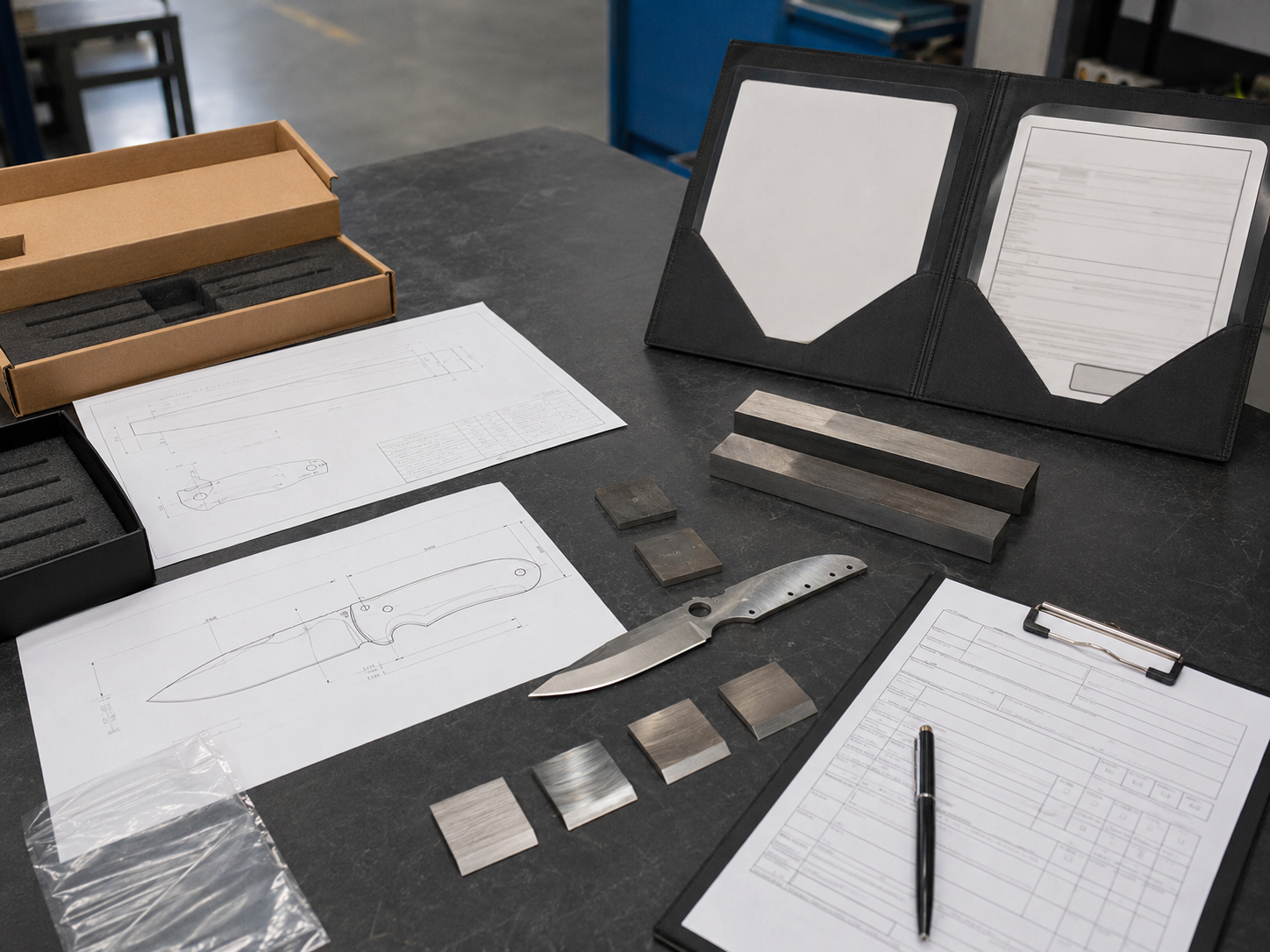
I Ask for Steel Details That Can Be Checked Later
A good RFQ should not say only “9Cr or D2.” It should define the exact steel grade and the product target. If the buyer wants 9Cr18MoV, the RFQ should say 9Cr18MoV, not only 9Cr. If the buyer wants D2, the RFQ should confirm the D2 direction, hardness target, blade thickness, finish, and expected market.
I also like to connect steel to packaging. If the buyer writes “D2 steel” on the packaging, the blade should match that approved material. If the buyer wants to claim stainless performance, the steel and product use should support the message. Unsupported packaging claims can create customer complaints and channel risk.
Inspection should include material confirmation when needed, hardness testing, blade centering for folding knives, lockup, finish, edge sharpness, corrosion-sensitive finish review, and packaging check. The ISO 9001:2015 page supports the idea that quality management depends on defined processes, customer requirements, and improvement. In knife sourcing, this means the RFQ, sample, PO, and inspection checklist should all tell the same story.
| RFQ detail | 9Cr18MoV note | D2 note |
|---|---|---|
| Exact grade | Do not write only “9Cr” | Confirm D2 direction and supplier source |
| Hardness target | Balance edge and toughness | Avoid over-hard brittle result |
| Finish | Helps corrosion and appearance | Important for rust expectation |
| Packaging wording | Practical stainless value | Performance steel with care notes |
Conclusion
I choose 9Cr18MoV for practical stainless value and D2 for stronger wear resistance, then let heat treatment, geometry, and market fit decide the final choice.
Source Notes
- ZKnives 9Cr18MoV provides partial reference for 9Cr18MoV naming and alloy elements.
- Uddeholm Sverker 21 supports the D2-type steel discussion around high wear resistance and tool-steel positioning.
- Bohler K110 supports the D2 or 1.2379 cold work tool steel reference.
- NIST Rockwell hardness guide supports the need for careful hardness testing.
- ISO 9001:2015 supports the process-based quality control mindset for steel selection and repeat production.