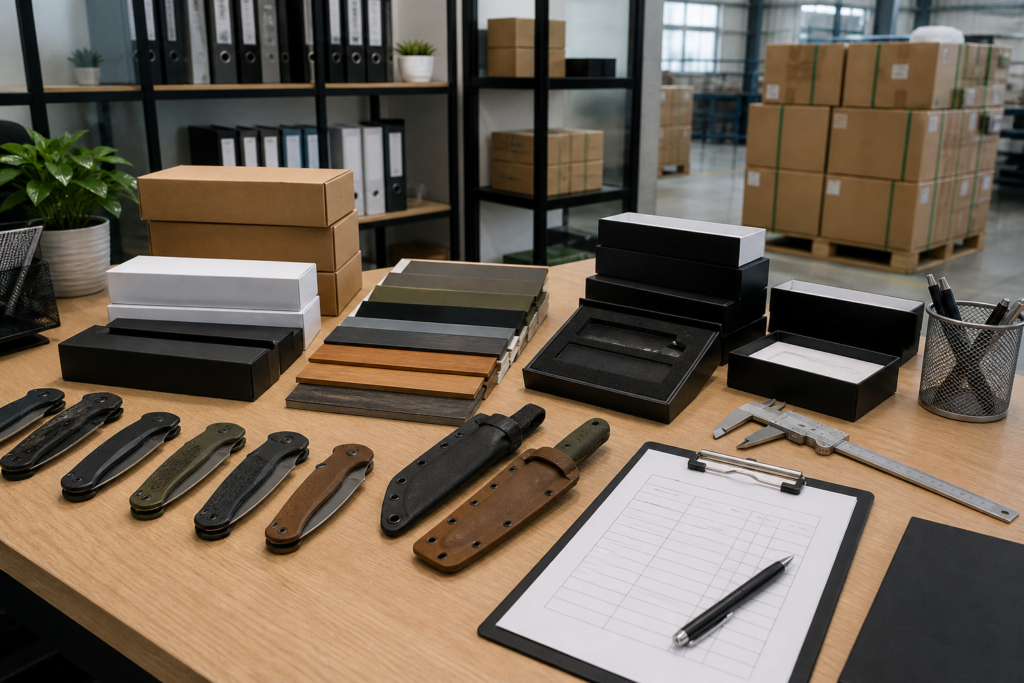
Buying knives wholesale looks simple until the first shipment fails. Poor specs, unclear laws, weak QC, and bad packaging can erase the margin.
Retailers should buy knives wholesale by defining the target customer, product type, price tier, compliance needs, supplier role, MOQ, landed cost, sample approval, inspection plan, packaging, and reorder rules before placing the first bulk order.
Quick buyer brief:
- Answer: Start with product fit, supplier verification, landed cost, compliance, QC, and reorder planning.
- Buyer context: This helps retailers, importers, wholesalers, private label buyers, and sourcing managers avoid weak wholesale orders.
- Key checks: Confirm knife type, market restrictions, steel, lock, finish, packaging, MOQ, Incoterm, inspection standard, and supplier response quality.
Need bulk pricing or ODM catalog options?
Tell us your product category, quantity range, target market, and packaging needs. Vast State can suggest available ODM models and OEM options.
When I help a retailer or importer plan a wholesale knife order, I do not start with a catalog page. I start with the sales channel. A knife for an outdoor shop, an online EDC store, a hardware distributor, and a private label brand should not be sourced the same way. Wholesale buying is not only about getting a low unit price. It is about choosing a product that can sell, arrive correctly, pass inspection, stay compliant, and be reordered without surprises.
What Should Retailers Decide Before Asking for Wholesale Knife Prices?
A quote without a product direction is weak. It can give a low price, but it cannot protect the buyer from poor fit.
Retailers should decide the target user, knife category, price tier, sales channel, legal market, packaging need, and expected margin before asking for wholesale knife prices.
I Define the Buyer Before I Define the Knife
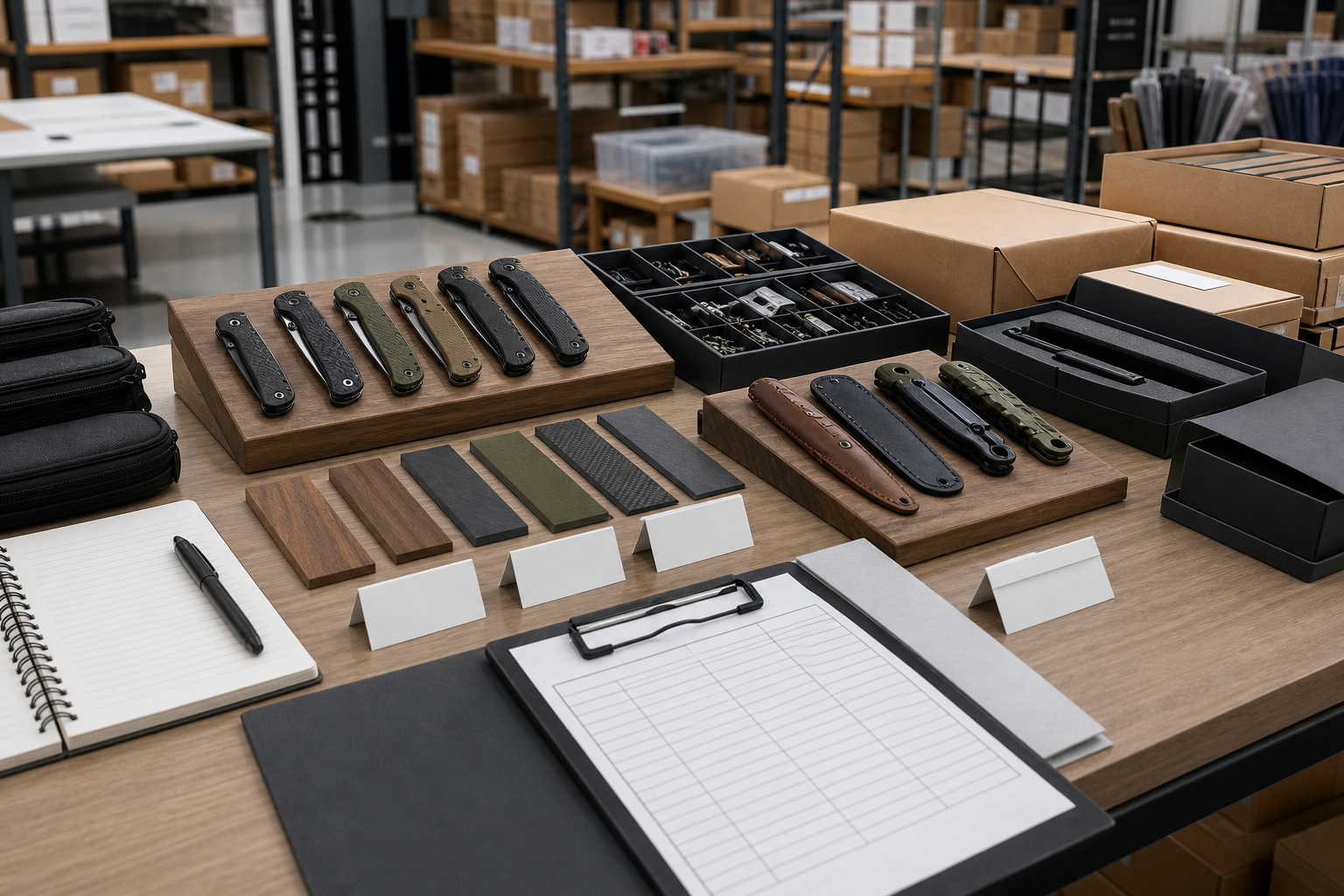
The first mistake I see in wholesale knife buying is starting with a random model. A buyer asks for a folding knife, a fixed blade, or a multi-tool, but does not explain who will buy it. That makes the supplier guess. A supplier may quote a cheap model that looks attractive in photos, but the knife may not match the buyer's customer, display method, local restrictions, packaging expectations, or return-risk tolerance.
I prefer to define the sales case first. Is the knife for EDC customers who compare blade steel online? Is it for outdoor buyers who care more about grip, sheath, and corrosion resistance? Is it for a hardware store where packaging, barcode, and repeat availability matter more than enthusiast specifications? Is it for a private label launch where the brand needs a consistent visual family?
Once the sales case is clear, the wholesale discussion becomes much easier. The buyer can ask for suitable blade steel, handle material, lock type, finish, packaging, MOQ, and inspection standards. Vast State can then suggest practical options instead of sending a scattered list. For retailers, this saves time and protects margin. A low price is useful only if the knife can sell to the right customer and repeat consistently.
| Decision | What to define | Why it matters |
|---|---|---|
| Target customer | EDC, outdoor, camping, hardware, rescue, gift | Shapes the knife type and features |
| Price tier | Entry, mid-range, premium, private label | Controls material and packaging choices |
| Sales channel | Online, retail shelf, wholesale distributor | Affects packaging, barcode, photos, and content |
| Market area | Country, state, customer group | Helps screen legal and compliance risks |
| Reorder plan | One-time promotion or repeat SKU | Changes supplier and inventory priorities |
Bulk Order RFQ Checklist
Prepare these details so Vast State can suggest ODM models, MOQ ranges, packaging choices, and quotation options.
| RFQ Field | What to Prepare |
|---|---|
| Buyer type | Importer / distributor / wholesaler / retail brand / promotional buyer |
| Product category | Folding knife / fixed blade / multi-tool / outdoor tool |
| Quantity range | 500 / 1,000 / 3,000 / 5,000+ pcs |
| Target price | Ex-factory target price or retail price range |
| Market | USA / EU / Japan / Korea / Middle East / other |
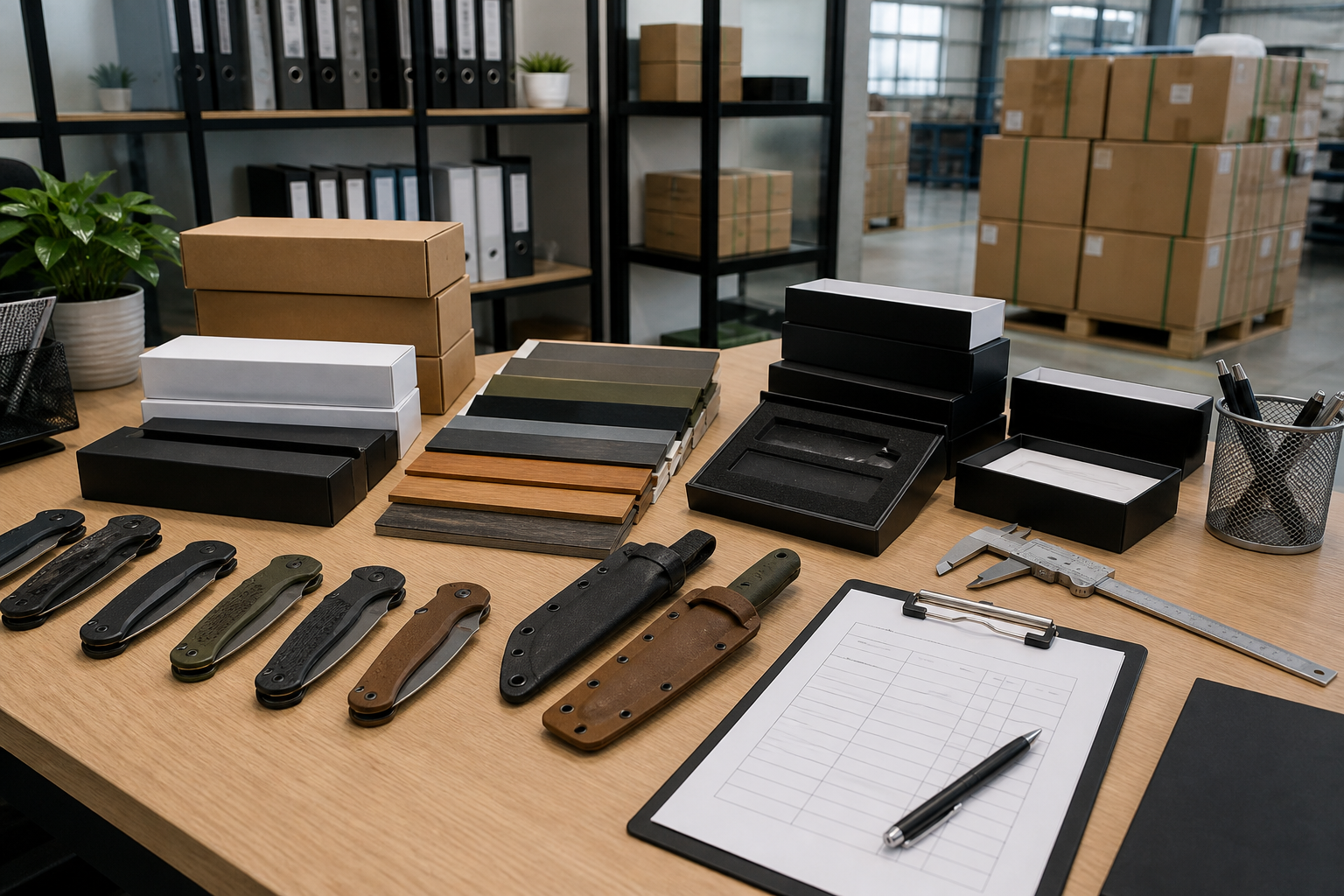
| Packaging | Standard packaging / custom retail box / Amazon-ready |
| Logo method | Laser engraving / etching / printing / molded logo |
| Timeline | Sample deadline / mass production deadline |
How Should Retailers Choose Between Stock Wholesale, Private Label, OEM, and ODM?
Many buyers use the word wholesale for every buying method. That creates confusion when they really need customization or product development.
Retailers should choose stock wholesale for speed, private label for branding, OEM for production from existing designs, and ODM when they need design support, structure suggestions, and manufacturable product development.
I Match the Buying Method to the Business Goal
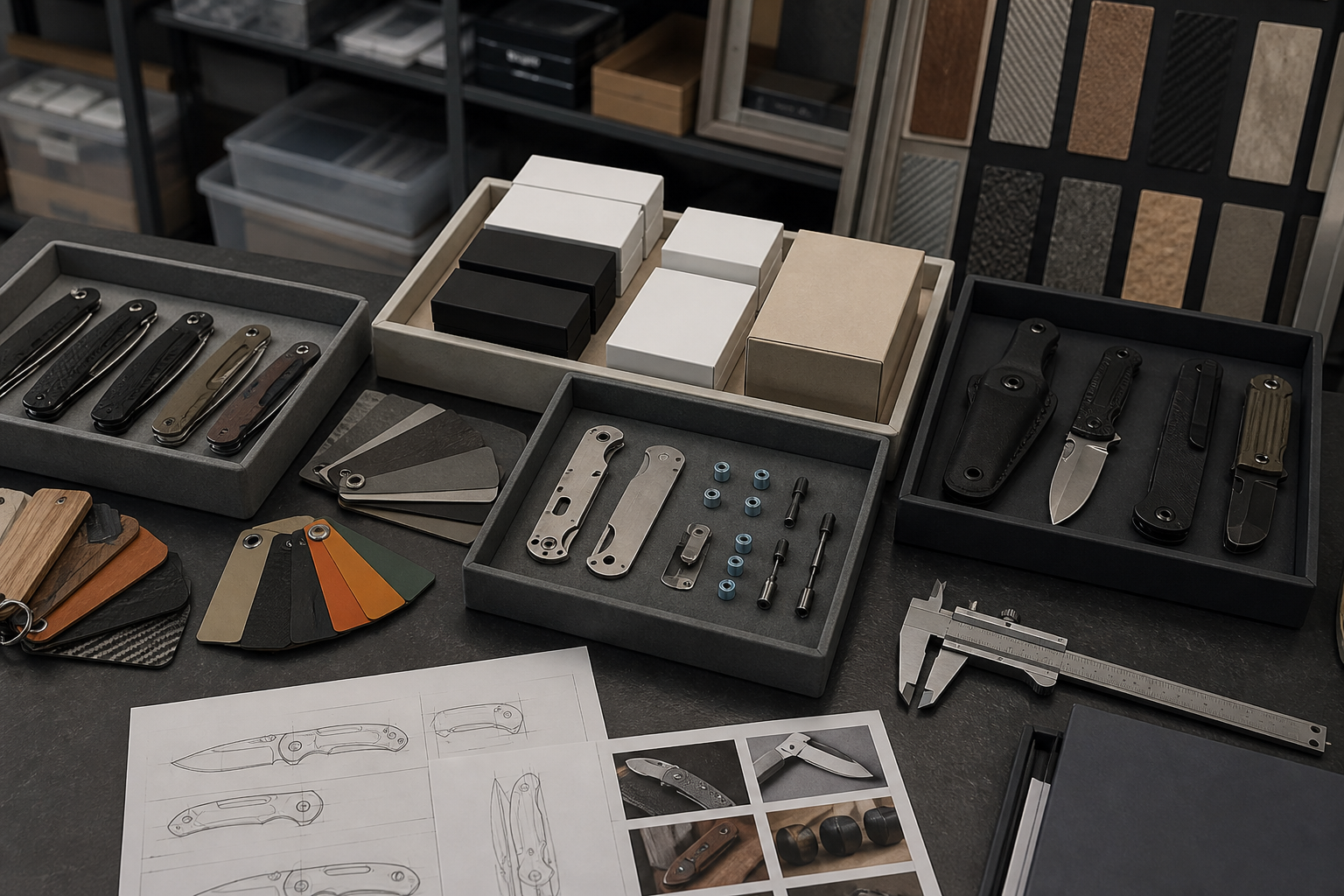
Stock wholesale is the fastest path when a retailer needs existing models. The buyer may choose from available designs, colors, packaging options, and order quantities. This can work for testing a category, filling a shelf, or buying a seasonal product. The tradeoff is limited differentiation. Other buyers may sell similar products unless the supplier controls channels carefully.
Private label is the next step. The product may be based on an existing model, but the retailer adds a logo, packaging, color, finish, or bundle. This is useful when the buyer wants brand ownership without full development cost. The buyer should still confirm logo method, packaging artwork, minimum order quantity, and sample approval.
OEM and ODM are different. OEM means the buyer has a design or clear specification and needs manufacturing support. ODM means the buyer needs more development help. Vast State often supports concept review, material selection, lock and structure suggestions, finish options, prototype development, packaging customization, and production follow-up. ODM is useful when a buyer has a market idea, target price, or rough concept but needs a manufacturable knife.
The right path depends on time, budget, differentiation, and risk. I do not push every buyer into customization. A retailer testing a new category may need stock wholesale first. A brand building long-term value may need private label, OEM, or ODM.
| Buying path | Best for | Main risk |
|---|---|---|
| Stock wholesale | Fast category testing or shelf fill | Limited differentiation |
| Private label | Brand entry with lower development work | Packaging and logo details must be controlled |
| OEM | Buyer-owned design or clear spec | Design must be manufacturable |
| ODM | Product idea, target price, or new line planning | Needs deeper communication and sampling |
What Supplier Checks Matter Before a Wholesale Knife Order?
A supplier can look good online and still be weak in production. Retailers need evidence before trusting a bulk order.
Retailers should check supplier experience, product range, communication speed, sample quality, material options, customization ability, QC process, export experience, packaging support, and problem-solving behavior.
I Judge the Supplier by How They Think
A good wholesale knife supplier should do more than quote a price. I look at how the supplier asks questions. Does the supplier ask about target market, knife type, blade steel, handle material, lock type, finish, packaging, quantity, and inspection needs? Does the supplier explain tradeoffs, or only say yes to everything? Does the supplier warn about cost, structure, MOQ, or production risk before the order?
For retailers, communication is part of quality control. A supplier that cannot explain the difference between a liner lock and a frame lock may not be the right partner for folding knives. A supplier that ignores packaging requirements may create retail problems even when the knife itself is acceptable. A supplier that cannot discuss repeat production may be risky for a SKU that must stay on the shelf.
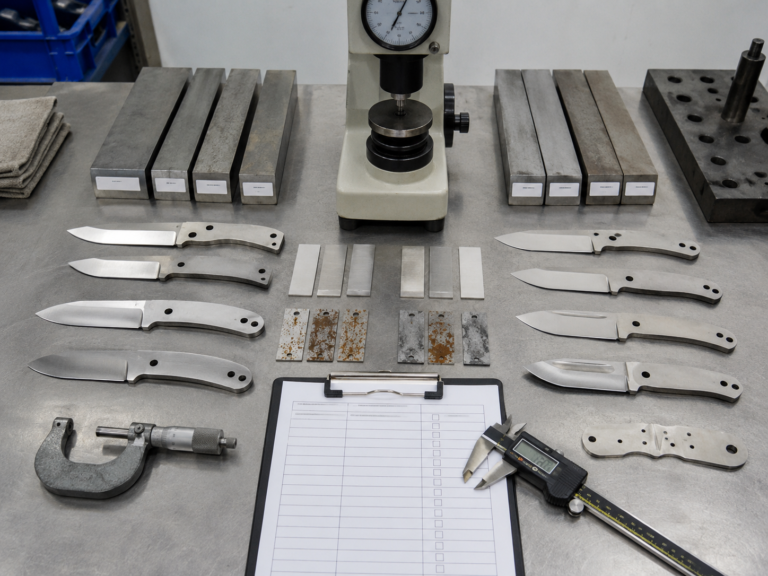
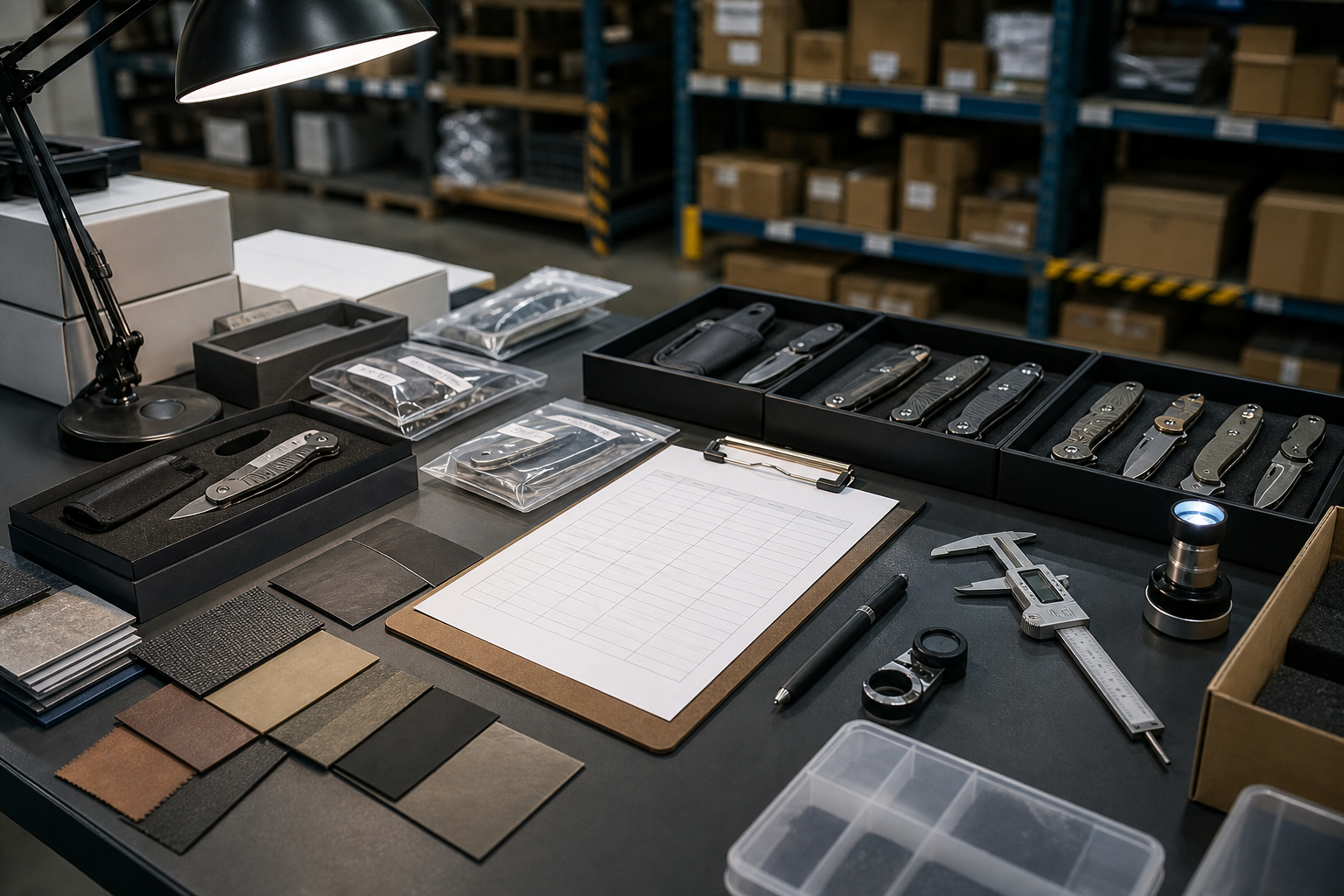
I also like to see how samples are handled. A pre-production sample should be checked for appearance, sharpness, lockup, blade play, centering, handle finish, hardware, logo, packaging, and barcode or label placement. If the buyer approves a sample casually, the factory has no clear reference. If the buyer documents the approval, mass production becomes easier to control.
The ISO 9001 page is useful as a general quality-management reference because it explains customer requirements, process control, and improvement. I do not use it to claim a supplier is certified unless the certificate is verified. I use it as a reminder that good quality comes from a controlled system, not final inspection alone.
| Supplier check | Good sign | Warning sign |
|---|---|---|
| Product knowledge | Supplier asks about use and structure | Supplier only sends price |
| Sample process | Clear sample approval and revisions | No written approval reference |
| QC thinking | Incoming, in-process, and final checks | Only final photo before shipment |
| Export support | Understands cartons, labels, documents | Cannot explain shipping documents |
| Problem solving | Offers practical tradeoffs | Says yes to impossible specs |
How Should Retailers Compare MOQ, Unit Price, and Landed Cost?
The cheapest unit price can become expensive after tooling, packaging, freight, duty, inspection, and returns. Retailers need a full cost view.
Retailers should compare wholesale knife offers by landed cost, not only unit price. MOQ, packaging, customization, inspection, freight, duty, payment terms, defects, and reorder stability all affect real margin.
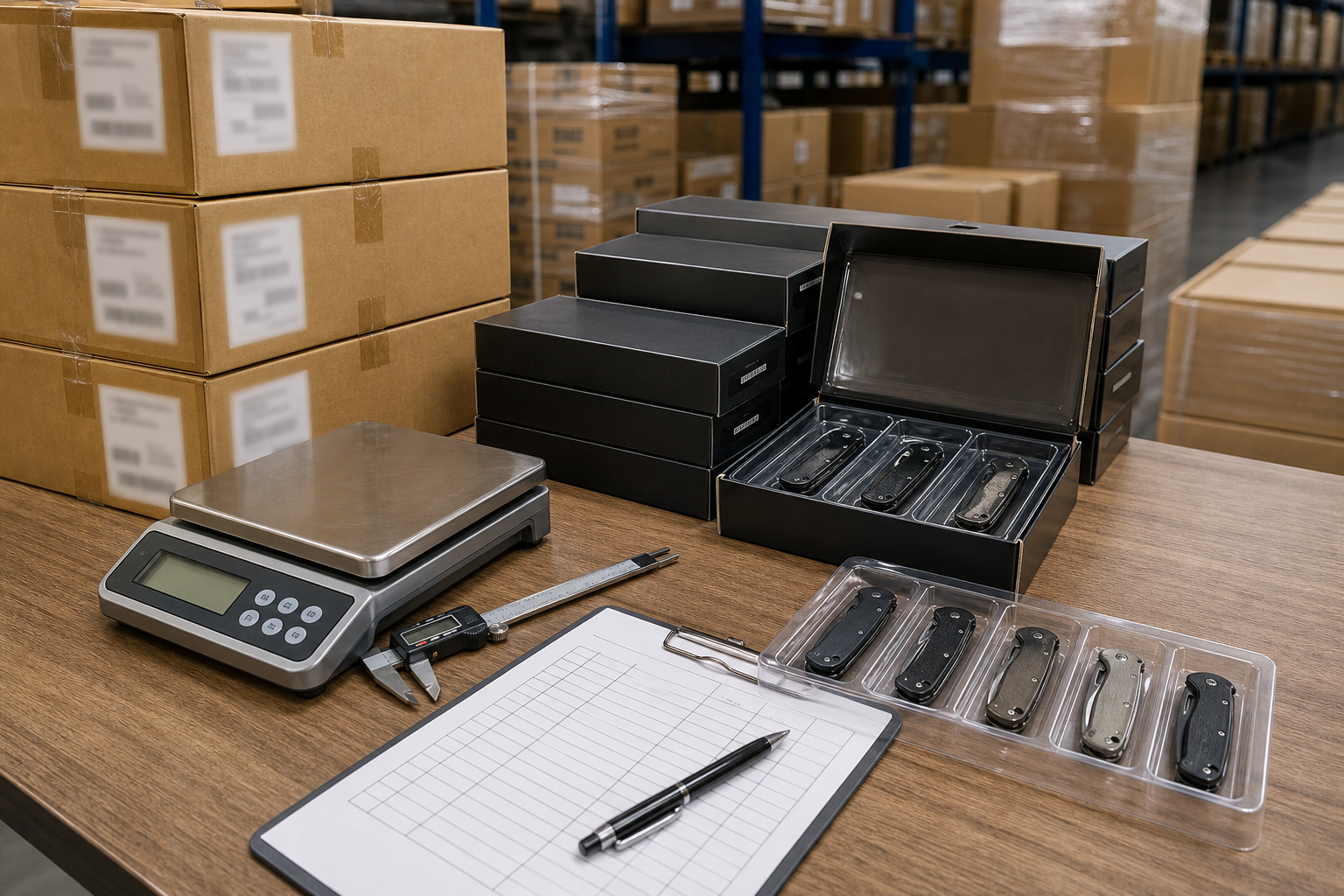
I Compare the Real Margin, Not the First Price
MOQ is not only a supplier rule. It is a production reality. A custom color, special blade finish, upgraded steel, logo method, or custom box may require a higher MOQ because the factory must buy material, set up finishing, prepare packaging, and organize production. If a buyer wants a very low MOQ and many custom details, the unit price may rise or the project may become inefficient.
Unit price is only one part of the total cost. A retailer should also estimate packaging cost, carton size, freight, duty, payment fees, inspection cost, sample cost, replacement allowance, storage, and marketing assets. For international sourcing, the Trade.gov Incoterms page explains that Incoterms define responsibilities, costs, and risks between buyer and seller. This is why a FOB price and a DDP price cannot be compared casually. They include different responsibilities.
Import responsibility also matters. Under 19 USC 1484, an importer of record is responsible for entry documentation using reasonable care, including declared value, classification, and duty-related information. I am not giving legal advice here, but I do recommend that retailers work with a broker or experienced logistics partner when importing knives.
The best wholesale choice is often not the lowest quoted price. It is the offer that gives the buyer a sellable product, clear cost, acceptable risk, stable reorder path, and enough margin after all costs.
| Cost item | Why it matters | What to ask |
|---|---|---|
| MOQ | Controls production setup and material buying | What changes if quantity increases? |
| Unit price | Starting point for margin | What specs are included? |
| Packaging | Affects retail value and freight volume | Is custom packaging included? |
| Freight and duty | Changes landed cost | Which Incoterm is quoted? |
| Inspection | Prevents expensive returns | Who checks before shipment? |
| Reorder stability | Protects repeat sales | Can the same spec repeat later? |
What Compliance and Market Restrictions Should Retailers Check?
Knives are tools, but they are also regulated differently by market. A retailer should not assume one model is acceptable everywhere.
Retailers should check target-market knife laws, restricted mechanisms, blade length rules, import requirements, country-of-origin marking, advertising claims, age policies, and platform rules before buying wholesale knives.
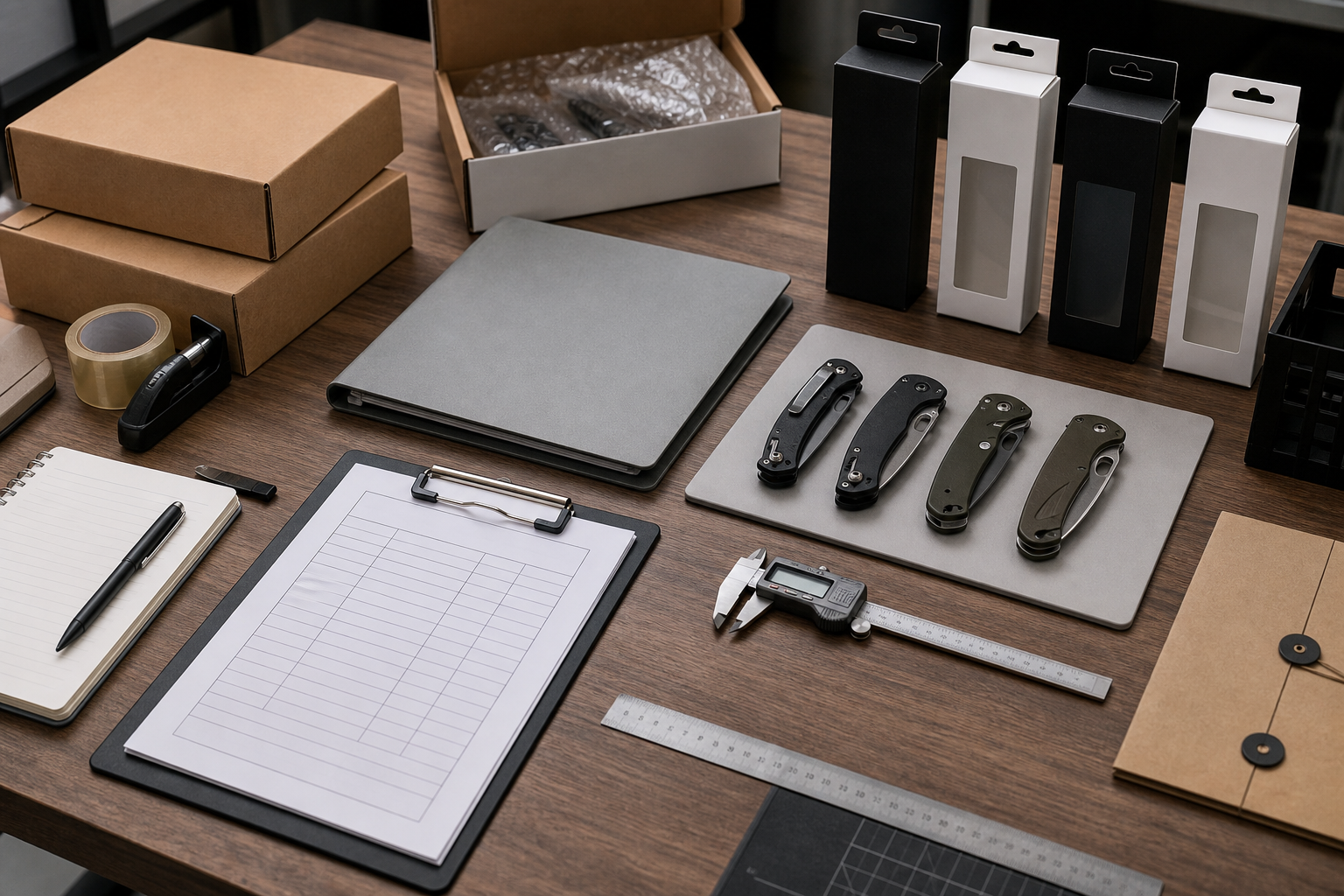
I Treat Compliance as a Product Filter
Compliance should come before bulk ordering. A retailer should check whether the knife type is allowed in the target market, whether the mechanism creates restrictions, whether blade length affects sale or carry rules, and whether the retail platform has its own policies. This is especially important for automatic knives, assisted-opening knives, butterfly knives, gravity-style mechanisms, concealed designs, or models with aggressive marketing.
The American Knife & Tool Institute state knife laws page provides state-level summaries and warns that its material is a reference, not legal advice. I like that wording because it is realistic. Knife laws can involve state, local, and mechanism-specific rules. Retailers should verify their own markets and seek professional advice when needed.
Federal law also matters for some mechanisms. The U.S. Code definition of switchblade knives in 15 USC 1241 is a useful reference point for understanding why automatic-opening mechanisms need extra care. I do not use that page as a full sales guide. I use it as a reminder that mechanism choice is not only a design decision.
Origin and marketing claims must also be controlled. The FTC Made in USA guidance explains that unqualified Made in USA claims require the product to be all or virtually all made in the United States. If a retailer imports knives from China, it should be careful with packaging, online copy, and implied origin claims. Clear, truthful labeling protects the business.
| Compliance topic | Retailer action | Why it matters |
|---|---|---|
| Knife laws | Check country, state, local, and platform rules | Prevents unsellable inventory |
| Mechanism | Review automatic, assisted, butterfly, gravity-style risks | Mechanism can change legal status |
| Blade length | Confirm target-market limits | A small design change can matter |
| Origin marking | Use truthful country-of-origin information | Avoids misleading labels |
| Marketing copy | Avoid unsupported claims | Protects brand trust and compliance |
What QC and Reorder Controls Protect a Wholesale Knife Business?
One good sample does not guarantee repeat production. Retailers need controls that protect both the first order and later reorders.
Retailers should use approved samples, written specifications, incoming material checks, in-process checks, final inspection, packaging inspection, defect rules, photo records, and reorder reference files.
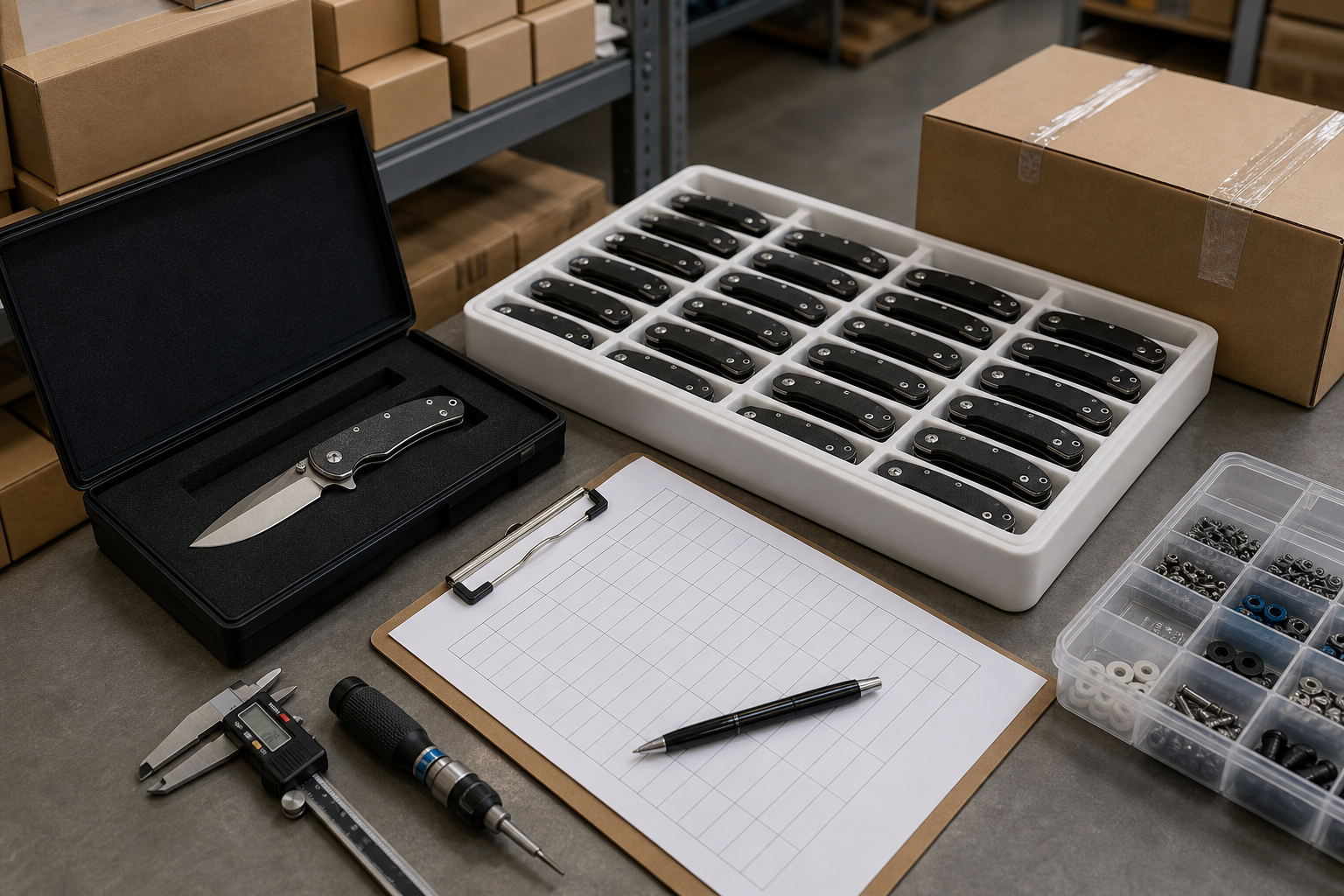
I Build the Order Around Repeatability
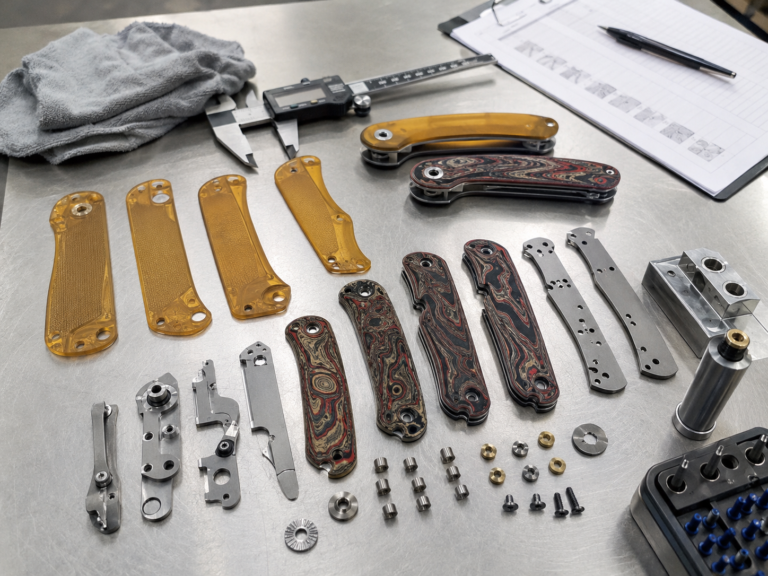
Wholesale knife buying should not end when the first order ships. If the knife sells well, the retailer needs the same product again. That is why I like to create a reference file for every repeatable SKU. The file should include blade steel, hardness target, blade length, blade thickness, handle material, lock type, hardware color, finish, logo method, packaging artwork, carton marks, inspection checklist, and approved sample photos.
The inspection plan should match the risk. For folding knives, I check opening action, lock engagement, blade centering, side play, screw tightness, sharpness, edge consistency, surface scratches, handle fit, clip assembly, and packaging. For fixed blades, I check blade finish, handle fit, sheath fit, edge, point, logo, and packaging. For multi-tools, I check tool deployment, joint tension, surface finish, accessory fit, and packaging.
Retailers should also define defect handling before shipment. What counts as a critical defect? What counts as a major cosmetic defect? How many samples are checked? Who approves replacement, rework, or shipment hold? If the buyer waits until after delivery to define these rules, the discussion becomes harder.
At Vast State, I see wholesale buying as a long-term process. The buyer wants products that sell. The factory wants clear requirements. Both sides benefit when the order is written clearly, samples are approved carefully, and repeat production has a stable reference.
| Control point | What to record | Why it protects the retailer |
|---|---|---|
| Approved sample | Photos, measurements, packaging, finish | Sets the mass production reference |
| Product spec | Steel, HRC, handle, lock, hardware, finish | Reduces misunderstanding |
| Inspection plan | Function, appearance, sharpness, packaging | Finds issues before shipment |
| Defect rules | Critical, major, minor, rework limits | Makes decisions faster |
| Reorder file | Same SKU reference for future orders | Protects repeat inventory |
Need catalog models, MOQ, or bulk price direction?
Tell us the category, quantity range, target market, price level, and packaging needs. Vast State can suggest catalog and OEM/ODM options for your channel.
Conclusion
I buy wholesale knives by controlling product fit, supplier proof, landed cost, compliance, QC, packaging, and reorder stability before bulk production.
Source Notes
- Trade.gov Incoterms supports the need to define shipping responsibilities, costs, and risk when comparing wholesale quotes.
- 19 USC 1484 supports the point that import entry requires reasonable care, documentation, declared value, classification, and duty-related information.
- AKTI state knife laws supports the advice to check target-market knife law summaries, while noting that the source is a reference and not legal advice.
- 15 USC 1241 supports the warning that automatic-opening mechanisms need legal review.
- FTC Made in USA guidance supports the warning about country-of-origin and Made in USA claims.
- ISO 9001:2015 page supports quality-management context, but it does not prove any supplier certification.