Premium steel names sell attention. But the wrong steel story can raise cost, slow sourcing, and disappoint real users.
MagnaCut is usually the better choice for flagship outdoor, wet-use, and hard-use knives that need toughness and corrosion resistance. M390 and 20CV are better for premium EDC knives where high wear resistance, long slicing edge life, and familiar luxury positioning matter more.
Quick buyer brief:
- Answer: Use MagnaCut for balanced toughness and corrosion resistance; use M390 or 20CV for high-wear premium EDC positioning.
- Buyer context: This helps knife brands, outdoor brands, importers, wholesalers, distributors, and private label buyers choose premium OEM steel tiers.
- Key checks: Target use, buyer price tier, steel source, HRC target, heat treatment, blade geometry, finish, sharpening plan, MOQ, inspection method, and backup steel.
When a buyer asks me whether MagnaCut is better than M390 or 20CV, I first ask what the knife must prove in the market. A premium EDC folder with a thin slicing blade may not need the same steel as an outdoor fixed blade or a fishing knife. M390 and 20CV have strong reputations for high wear resistance and premium positioning. MagnaCut has a stronger modern story around toughness, corrosion resistance, and balanced performance. For OEM production, I do not choose by hype. I choose by product promise, manufacturing control, and how easy the final customer will understand the upgrade.
What Is the Short Answer for MagnaCut vs. M390 and 20CV?
Buyers often want one winner. That can be risky because these steels win in different product situations.
MagnaCut fits outdoor, fishing, humid-market, and hard-use knives where toughness and corrosion resistance carry the value. M390 and 20CV fit premium EDC and collector-positioned folders where high wear resistance and established luxury steel recognition matter.
I Choose by Product Promise First
MagnaCut, M390, and 20CV all belong in the premium conversation, but they do not send the same message. The Niagara MagnaCut data sheet describes MagnaCut as a powder metallurgy stainless tool steel designed to avoid chromium carbide in the heat-treated microstructure. This design supports a strong balance of toughness, wear resistance, and corrosion resistance. That is why I see MagnaCut as a good fit for outdoor, fishing, rescue, and premium hard-use products.
M390 and 20CV sit in a different position. Bohler presents M390 Microclean as a powder metallurgy plastic mold steel with very high wear resistance and corrosion resistance. Niagara's CPM 20CV data sheet describes 20CV as having outstanding wear and corrosion resistance. In knife markets, both steels are already familiar premium names.
For a brand, the real question is not which name sounds strongest. It is which promise the knife will make. If the knife must cut a long time in normal EDC use and feel premium, M390 or 20CV can make sense. If the knife must handle moisture, impact risk, thinner geometry, or outdoor use, MagnaCut is often easier to defend.
| Product promise | Better starting point | Practical reason |
|---|---|---|
| Premium slicing EDC folder | M390 or 20CV | Strong high-wear and luxury steel message |
| Outdoor fixed blade | MagnaCut | Better toughness and corrosion story |
| Fishing or coastal knife | MagnaCut | Better fit for wet-use claims |
| Collector-style premium folder | M390 or 20CV | Established high-end market recognition |
How Are M390 and 20CV Related, and Why Does That Matter?
Some buyers treat M390 and 20CV as totally different. Others treat them as the same. Both views can cause RFQ mistakes.
M390 and 20CV are closely related high-chromium powder metallurgy stainless steels with very similar knife-market roles. Buyers should still confirm steel source, availability, heat treatment, finish, and inspection instead of assuming every supply chain behaves the same.
I Separate Steel Family From Supply Detail
M390 and 20CV are often discussed together because they share a similar high-carbon, high-chromium, high-vanadium powder metallurgy stainless steel concept. Knife Steel Nerds gives helpful background in its article on M390, 20CV, and 204P. For a buyer, that background matters because many product listings treat these steels as direct alternatives.
In OEM sourcing, I still avoid saying they are automatically interchangeable in every practical detail. Availability, supplier stock, minimum order quantity, sheet thickness, certification, pricing, and heat-treatment partner experience can differ. A buyer may request M390 because the brand wants the Bohler name. Another buyer may accept 20CV if performance positioning and price fit the project better. These are not only metallurgy questions. They are commercial and supply-chain questions.
This is why I ask buyers to write the RFQ carefully. If the brand requires M390 specifically, the RFQ should say so. If 20CV is acceptable as an alternative, the RFQ should say that too. If the buyer only wants a high-wear premium stainless steel and does not care about the exact brand name, the supplier can propose the practical option. Clear steel substitution rules prevent slow quotations and awkward sample changes later.
| Question | M390 / 20CV buying issue | What I ask the buyer to confirm |
|---|---|---|
| Steel identity | Similar role but different commercial names | Required grade or acceptable alternatives |
| Supply | Stock and MOQ can differ | Thickness, quantity, and lead time |
| Marketing | M390 may carry specific brand value | Whether the steel name appears in sales copy |
| QC | Similar claim still needs verification | Certificate, heat treatment, and HRC check |
Which Steel Gives the Better Performance Story?
Performance charts can mislead buyers. A knife is not a lab table; geometry, heat treatment, and use case change the result.
M390 and 20CV usually give the stronger high-wear edge-retention story. MagnaCut gives the stronger balanced story because it combines useful edge retention with better toughness and corrosion-resistance positioning for hard-use and wet-use knives.
I Avoid One-Number Decisions
Many buyers want one number for edge retention, toughness, or corrosion resistance. I understand why. A number feels simple. But in manufacturing, a number can hide too much. Niagara's MagnaCut page includes comparative tables for CATRA edge retention and toughness. The page shows 20CV with higher listed CATRA edge retention than MagnaCut under its table conditions, while MagnaCut shows much stronger toughness than 20CV. That supports the practical view I use in product planning: M390 and 20CV are excellent high-wear premium stainless choices, while MagnaCut is stronger when the knife must balance wear, toughness, and corrosion.
Corrosion is also important. M390 and 20CV both have strong stainless reputations because they use high chromium. MagnaCut uses a different design path. Its lower chromium number does not tell the full story because its design avoids chromium carbide after heat treatment. That can leave more chromium available for stainless behavior. This is the part buyers often miss when they only compare the headline chromium percentage.
The final knife still depends on design. A thick MagnaCut blade with a poor edge may cut worse than a well-ground 20CV blade. A badly heat-treated M390 blade can disappoint users. This is why I prefer performance claims that are tied to a real design: blade thickness, grind, edge angle, finish, hardness, and intended use.
| Performance area | MagnaCut message | M390 / 20CV message |
|---|---|---|
| Edge retention | Strong enough for premium use | Stronger high-wear selling point |
| Toughness | Strong advantage for hard-use design | More limited compared with MagnaCut |
| Corrosion resistance | Strong wet-use and outdoor story | Strong stainless story, but design differs |
| Buyer risk | Hype can create unrealistic claims | Chipping or sharpening complaints if geometry is wrong |
What Heat Treatment and Geometry Details Should Buyers Control?
A premium steel label cannot fix weak process control. Heat treatment and geometry decide whether the finished knife feels honest.
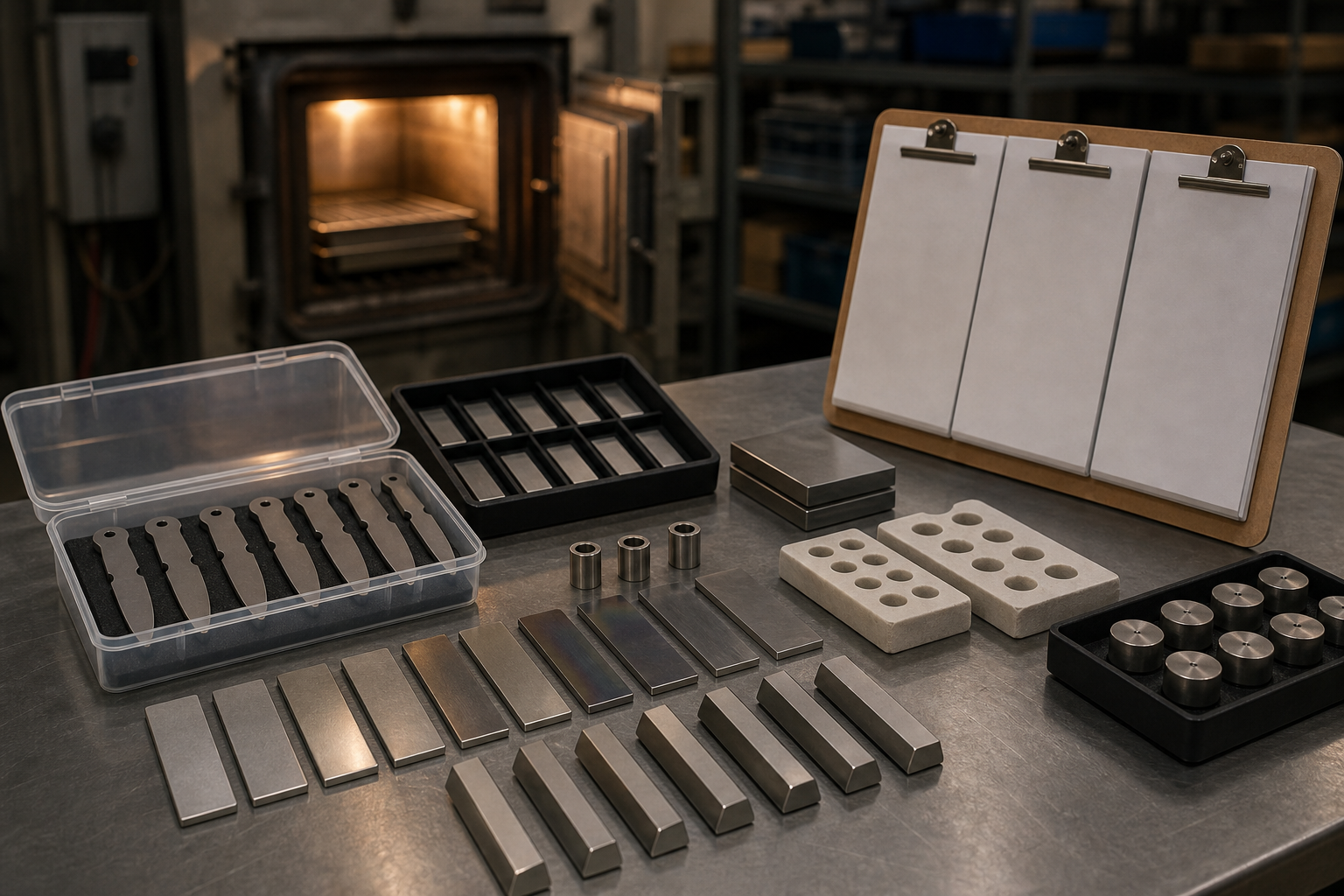
Buyers should specify target hardness, heat-treatment route, blade thickness, edge geometry, finish, sharpening standard, and hardness inspection. MagnaCut, M390, and 20CV all need controlled process records before mass production.
I Treat Steel Choice as a Process Specification
When a buyer writes "MagnaCut," "M390," or "20CV" in an RFQ, I still need the working target. Niagara's MagnaCut data sheet gives an aim hardness of 60-63 HRC. Niagara's 20CV data sheet gives heat-treatment guidance and shows a high-hardness range after tempering options. Bohler's M390 page focuses on material properties and processing context rather than finished knife performance. These sources are useful, but the factory still needs a product-specific target.
Hardness testing also needs discipline. The NIST Rockwell hardness guide is useful because it shows that Rockwell measurement has good-practice requirements. In knife production, I do not want HRC to be a marketing number only. I want to know where it is tested, when it is tested, how many samples are checked, and what tolerance is acceptable.
Geometry matters just as much. M390 and 20CV can hold a long edge, but a too-thin edge on the wrong product can create chipping complaints. MagnaCut can support tougher design goals, but it still needs the correct edge angle and finish. The buyer should approve samples based on cutting feel, sharpening, lock function, blade centering, corrosion-risk expectations, and final appearance. That is how a steel decision becomes a sellable knife.
| Control point | What to specify | Why it matters |
|---|---|---|
| Target HRC | Range by steel and product type | Prevents vague performance claims |
| Heat-treatment record | Austenitize, quench, temper, cryo if used | Supports repeat production |
| Edge geometry | Thickness behind edge and sharpening angle | Controls cutting feel and chipping risk |
| Inspection plan | Hardness, finish, lockup, centering, packaging | Connects steel choice to QC |
Which Product Lines Should Use MagnaCut, M390, or 20CV?
Using the most famous steel everywhere can hurt margin. A strong product line needs a clear steel ladder.
Use MagnaCut for flagship outdoor, fishing, rescue, humid-market, and hard-use knives. Use M390 or 20CV for premium EDC folders, collector-style folders, titanium-handle models, and products where long slicing edge life is the main sales point.
I Build the Line Before I Choose the Upgrade
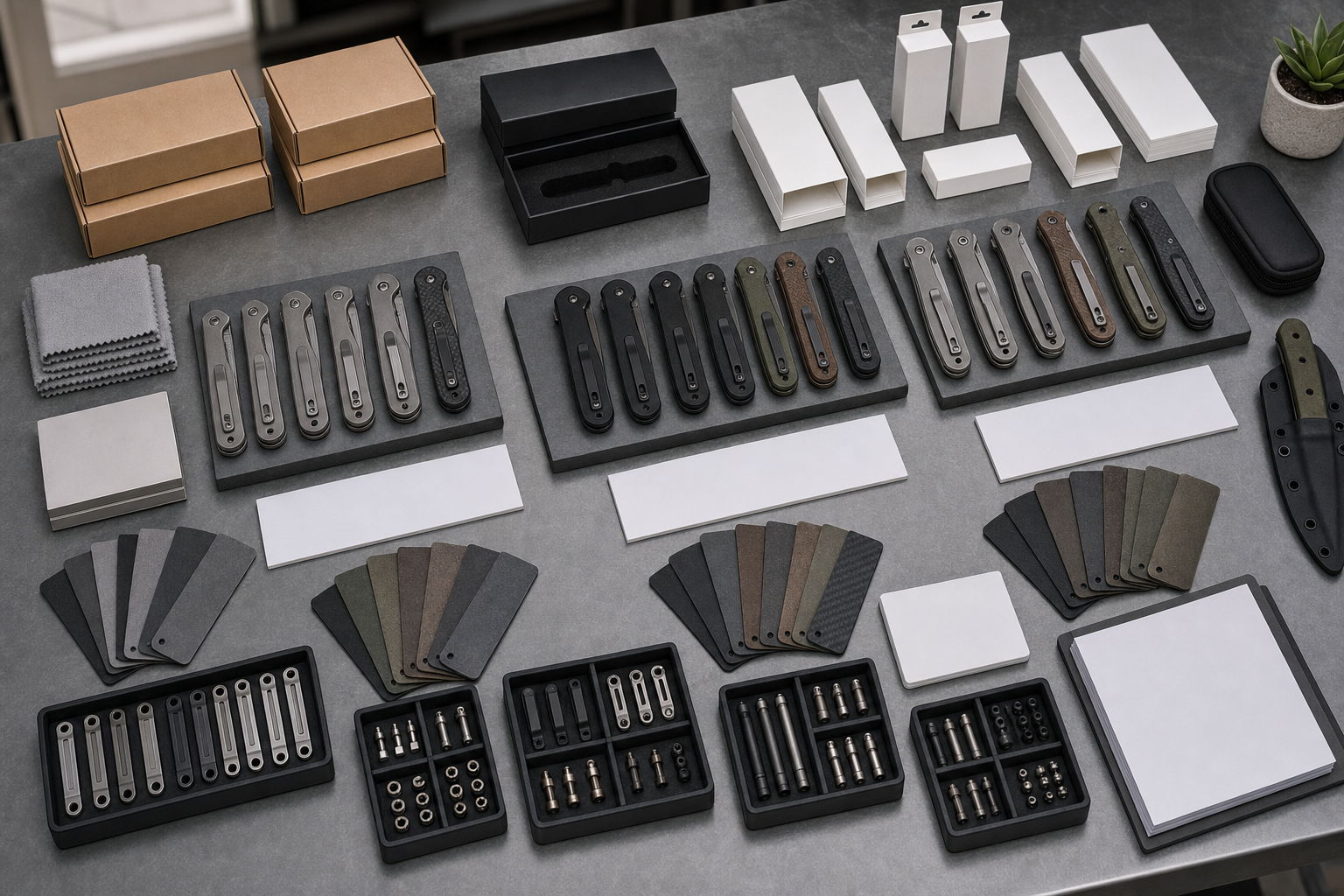
For B2B buyers, steel is part of the product ladder. A buyer may use D2, 14C28N, or 9Cr18MoV for value models. The buyer may use S35VN, S45VN, M390, 20CV, or MagnaCut for premium models. The point is not to use the highest-cost steel in every knife. The point is to make each tier easy to understand and profitable to repeat.
M390 and 20CV are strong choices for premium folders with titanium handles, carbon fiber inlays, precision machining, and a collector-friendly look. They match a luxury EDC story. The user expects long cutting life, clean finishing, strong fit, and a steel name that already has market recognition. If the knife is mainly an urban EDC folder, these steels can be easier to position.
MagnaCut is stronger when the product story includes real use in difficult conditions. I would consider it for outdoor fixed blades, fishing knives, rescue tools, camping knives, and humid-market EDC models. It can also work for a flagship folding knife if the brand wants a modern balanced steel story. But the rest of the product must support that story. Handle grip, lock strength, screw security, edge geometry, and packaging all need to feel like the same level.
| Product line | Best steel direction | Reason |
|---|---|---|
| Premium urban EDC folder | M390 or 20CV | Strong high-wear and luxury positioning |
| Flagship outdoor folder | MagnaCut | Balanced toughness and corrosion story |
| Fishing or rescue tool | MagnaCut | Better wet-use logic |
| Titanium collector folder | M390 or 20CV | Familiar premium market signal |
How Should Buyers Write an RFQ for These Premium Steels?
Premium steel RFQs fail when they are too short. The supplier then has to guess the real product, price, and quality target.
An RFQ should state steel grade or accepted alternatives, target HRC, blade geometry, finish, structure, handle material, packaging, MOQ, target price, inspection plan, trade term, and target market before quotation.

I Ask Buyers to Make Substitution Rules Clear
The RFQ should not only say "quote MagnaCut" or "quote M390." It should explain the product. I want to know the knife type, blade length, blade thickness, blade finish, grind, edge angle, lock type, handle material, clip design, screw color, logo method, packaging, expected quantity, target price, sales market, and inspection level. This saves time because premium steel affects more than material cost. It affects heat treatment, grinding, sharpening, QC, marketing, and sometimes delivery planning.
Substitution rules are especially important with M390 and 20CV. Some brands require M390 because of its name. Some brands accept 20CV as an alternative. Some only need a premium high-wear stainless steel and are open to the most practical supply. I prefer to decide this before sampling. It prevents a sample from being approved with one steel and then changed later under cost pressure.
Export terms also belong in the RFQ. The U.S. International Trade Administration explains that Incoterms define responsibilities, costs, and risks in trade. A buyer comparing quotes should know whether the quotation is EXW, FOB, CIF, DAP, or another term. Quality planning also needs attention. An ISO 9001 quality-management mindset helps buyers think about process control, records, and repeatability, even when the article is not claiming a specific supplier certification.
| RFQ field | What to include | Why it affects the project |
|---|---|---|
| Steel rule | Required grade and acceptable alternatives | Prevents surprise substitutions |
| Target result | HRC, edge geometry, finish, use case | Connects steel to real performance |
| Product detail | Lock, handle, clip, screws, packaging | Affects cost and assembly |
| Commercial detail | MOQ, target price, trade term, delivery need | Makes quotes comparable |
Conclusion
I choose MagnaCut for balanced hard-use performance and M390 or 20CV for premium high-wear EDC positioning.
Source Notes
- Niagara MagnaCut data sheet supports MagnaCut's composition, no-chromium-carbide design, toughness, CATRA context, and heat-treatment guidance.
- Niagara 20CV data sheet supports 20CV composition, wear-resistance positioning, corrosion-resistance positioning, and heat-treatment context.
- Bohler M390 Microclean page supports M390's powder metallurgy positioning and high wear and corrosion resistance.
- Knife Steel Nerds on M390, 20CV, and 204P gives technical background on the relationship and tradeoffs among these steels.
- NIST Rockwell hardness guide supports the need for controlled hardness measurement practice.
- Trade.gov Incoterms page supports RFQ advice about clarifying trade responsibilities, costs, and risks.
- ISO 9001:2015 page supports quality-management context, but it does not prove any supplier certification.