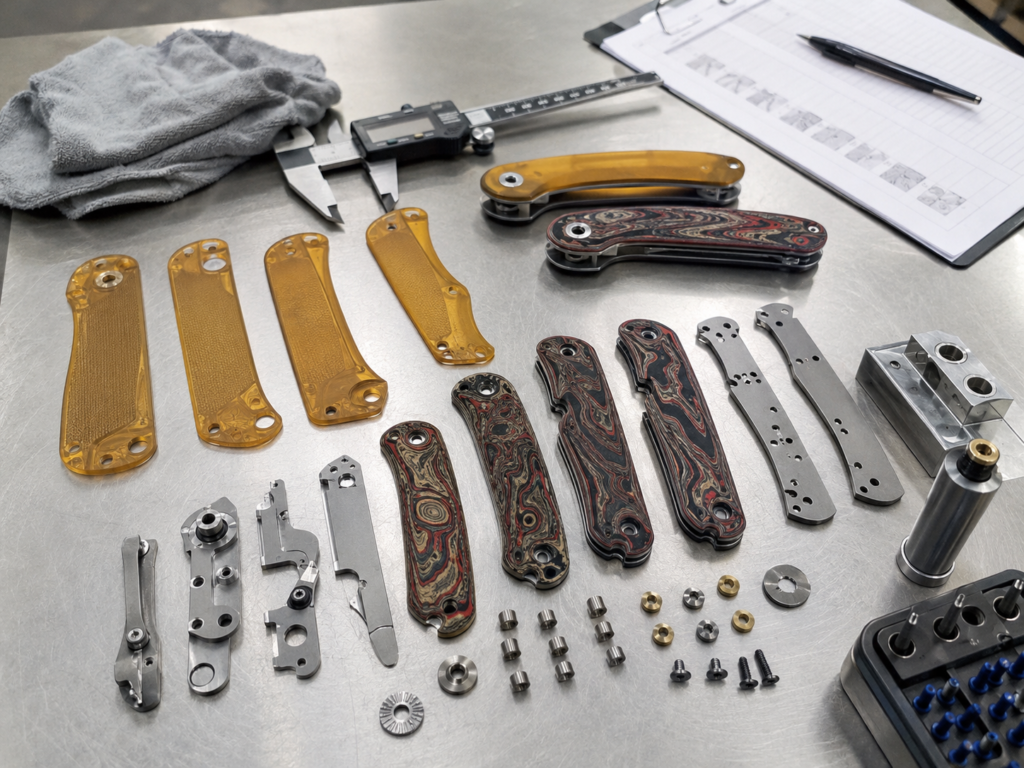
A handle material can make a knife look special or make production harder. The wrong choice creates cost, finish, and repeat-order problems.
PEI is better for buyers who need stable engineering performance, dimensional control, and repeatable production. RAFFIR is better for buyers who want premium visual depth, unique handle patterns, and stronger storytelling for higher-positioned folding knives.
Quick buyer brief:
- Answer: Choose PEI for repeatable technical positioning; choose RAFFIR for premium visual differentiation.
- Buyer context: This helps knife brands, outdoor brands, importers, wholesalers, distributors, and private label buyers.
- Key checks: Target market, price level, handle thickness, CNC process, polish finish, scratch concern, MOQ, and batch consistency.
Developing a folding knife line for your brand?
Vast State supports OEM/ODM folding knife projects, including blade steel, lock structure, handle material, finish, logo method, packaging, and quality inspection planning.
When I help a buyer choose a folding knife handle material, I do not ask only which material looks better. I ask what the product needs to achieve. Is the knife for a repeatable EDC line? Is it for a premium collector-style release? Does the buyer need stable color across thousands of pieces, or does the buyer want every handle to look slightly different? PEI and RAFFIR can both be attractive, but they solve different product problems.
What Are PEI and RAFFIR in Folding Knife Handles?
Two materials can both look premium but behave differently in production. If buyers treat them the same, the sample and mass order may not match.
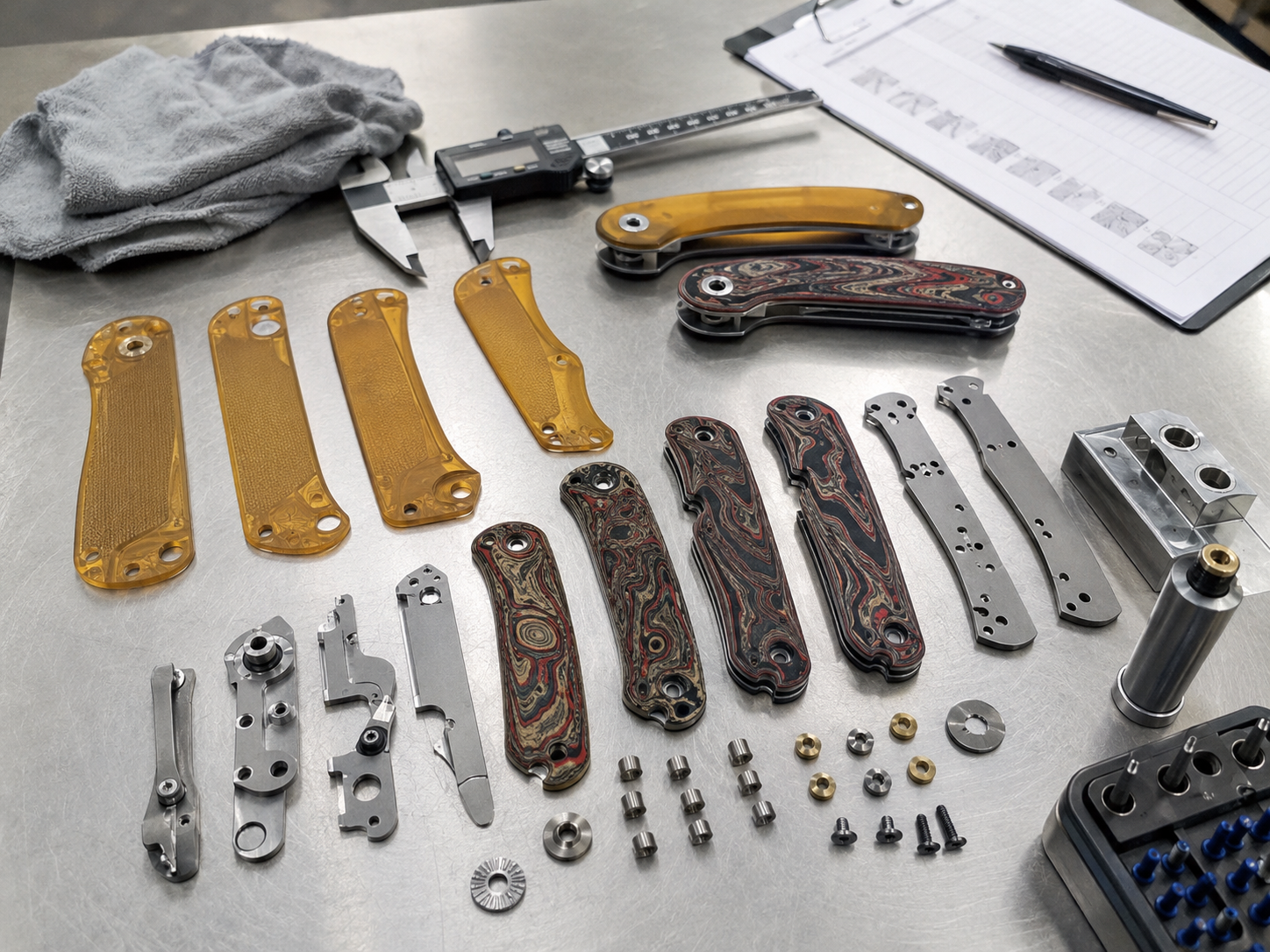
PEI is an engineering thermoplastic often recognized through ULTEM-style amber materials. RAFFIR is a family of stabilized woods, fossils, and resin-based composites designed for decorative, high-end handle applications.
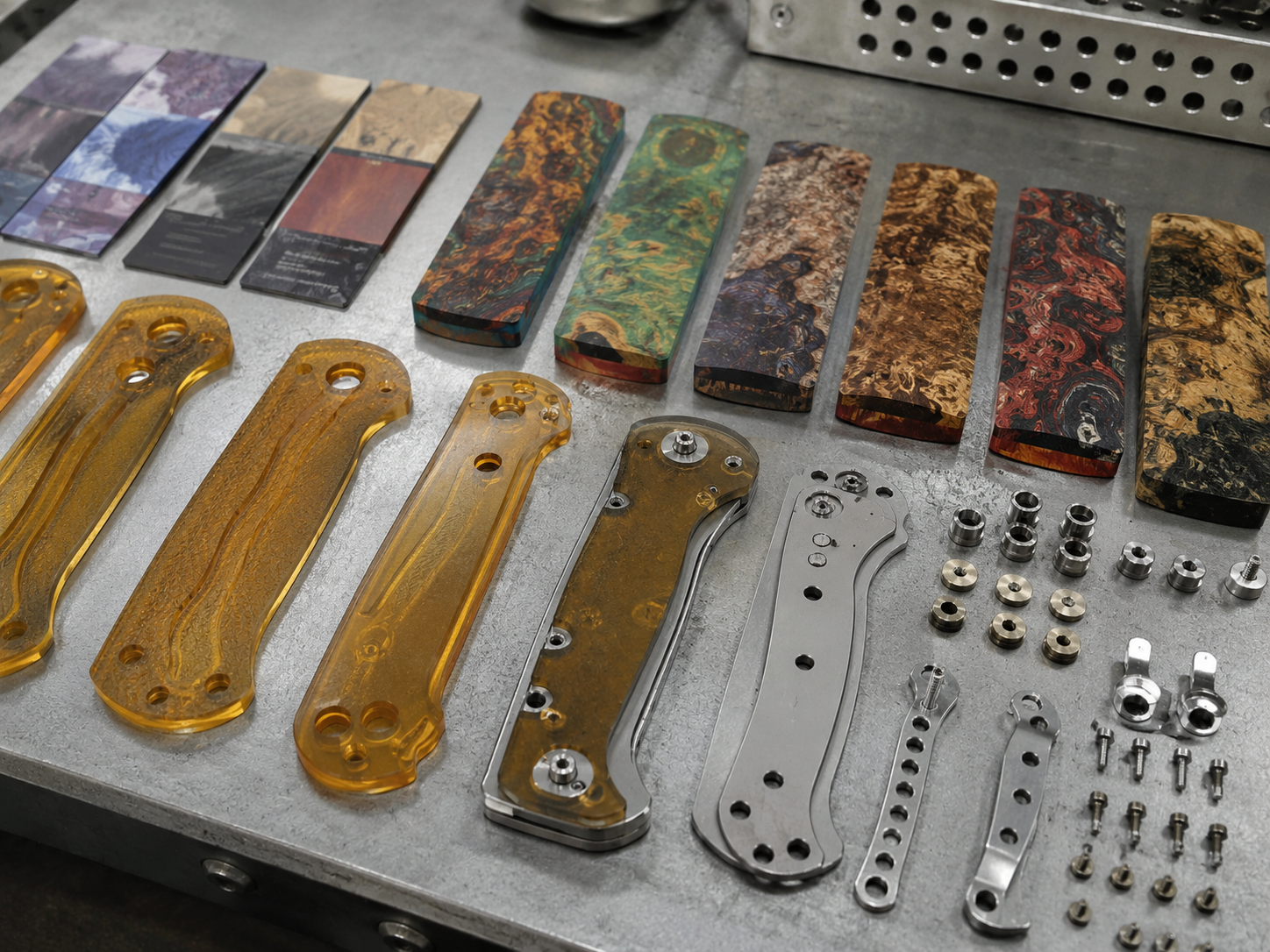
I Separate Engineering Plastic From Decorative Composite
PEI is short for polyetherimide. In knife discussions, buyers often connect PEI with amber translucent ULTEM-style handle scales. SABIC describes its ULTEM resin family as amorphous PEI materials with high heat resistance, strength, stiffness, dimensional stability, and chemical resistance. For a folding knife handle, that means PEI can support a technical product story and repeatable machining when the design is practical.
RAFFIR is different. RAFFIR describes its materials as stabilized wood, stabilized fossils, and special composites, often treated with resin to improve strength, durability, water resistance, polishability, and visual depth. RAFFIR materials are often chosen because they look special. They can make a folding knife feel more artistic, premium, or collectible.
This difference matters for B2B buyers. PEI is easier to position as a technical handle material. RAFFIR is easier to position as a visual and emotional material. If the buyer’s market wants a clean modern EDC knife, PEI may fit better. If the buyer wants a high-impact handle for a limited run or premium SKU, RAFFIR may be more suitable.
| Material | Main identity | Practical meaning |
|---|---|---|
| PEI | Engineering thermoplastic | Stable, technical, modern, repeatable |
| RAFFIR Wood | Stabilized natural wood | Natural grain with resin support |
| RAFFIR Fossils | Stabilized rare fossil material | High story value and unique appearance |
| RAFFIR Composites | Resin with fibers or metals | Strong visual depth and decorative effect |
OEM/ODM RFQ Checklist
Prepare these details to help Vast State review your project and provide a more accurate quotation.
| RFQ Field | What to Prepare |
|---|---|
| Project type | OEM from drawing / ODM private label / wholesale catalog |
| Product category | Folding knife / fixed blade / multi-tool / outdoor tool |
| Design status | Idea / sketch / 2D drawing / 3D CAD / physical sample |
| Target price | Ex-factory target price or retail price range |
| MOQ expectation | 500 / 1,000 / 3,000 / 5,000+ pcs |
| Logo method | Laser engraving / etching / printing / molded logo |
| Packaging | Standard packaging / custom retail box / Amazon-ready |
| Market | USA / EU / Japan / Korea / Middle East / other |
| Compliance needs | Buyer-specified testing / documentation / labeling |
| Timeline | Sample deadline / mass production deadline |
When Is PEI the Better Handle Material Choice?
A buyer may want a premium look but still need tight repeatability. In that case, a highly decorative material may create more control work.
PEI is usually better when the folding knife needs a modern technical look, stable machining, predictable batches, lower visual variation, and a product story around engineering performance.
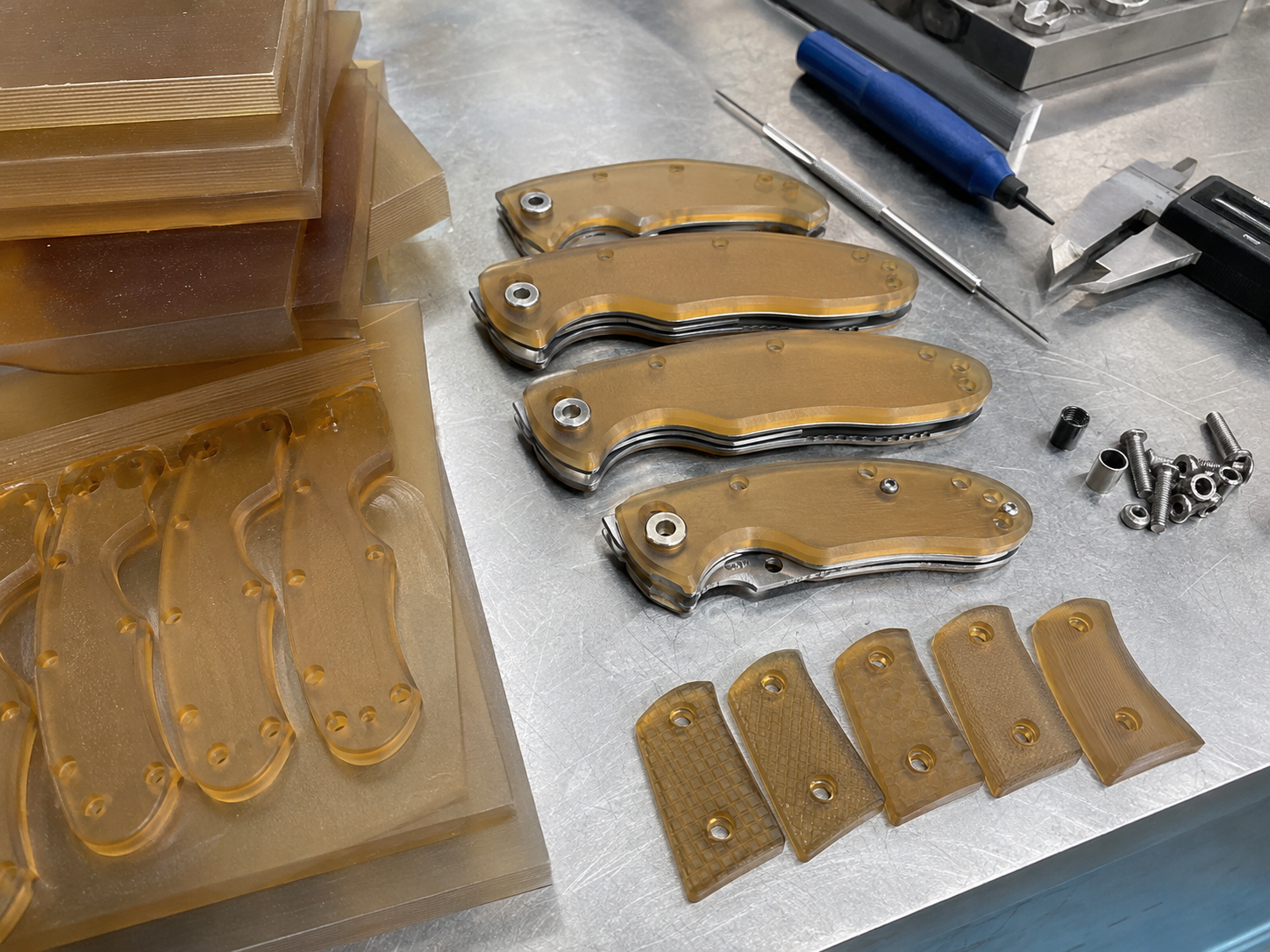
I Use PEI When Repeatability Matters More Than Unique Pattern
PEI can be a smart choice for EDC and modern outdoor knives when the buyer wants a technical, clean, and repeatable product identity. The material can have a translucent amber appearance, which many buyers connect with a high-performance industrial style. It can also be machined into handle scales with clean holes, chamfers, and pocket clip areas when the design is controlled.
From a production view, PEI is useful because the buyer can expect less natural pattern variation than wood-based or decorative composite materials. This helps when the brand wants consistent product photos, consistent batch appearance, and easier reorder matching. It also helps when the handle design needs stable screw positions, accurate countersinks, and controlled thickness.
However, PEI is not magic. It can scratch. It can show internal marks or machining marks if finishing is poor. It may not give the warm or luxury feeling of RAFFIR. It also needs correct design around screw pressure, clip contact, and edge finishing. I would not choose PEI only because it is popular. I would choose it when the product needs technical positioning, clean repeatability, and practical production control.
| PEI advantage | Why it helps | What I still check |
|---|---|---|
| Technical look | Supports modern EDC positioning | Surface finish and scratch visibility |
| Dimensional control | Helps handle fit and screw alignment | Thickness and countersink tolerance |
| Batch consistency | Supports repeat orders | Color and sheet quality |
| Machinability | Supports CNC scale production | Edge polish and burr control |
When Is RAFFIR the Better Handle Material Choice?
Some knives need more than technical function. They need a handle that catches attention and gives the buyer a stronger product story.
RAFFIR is usually better when the folding knife needs premium visual depth, unique patterns, high-gloss polish, natural or artistic character, and stronger differentiation in a higher-positioned product line.
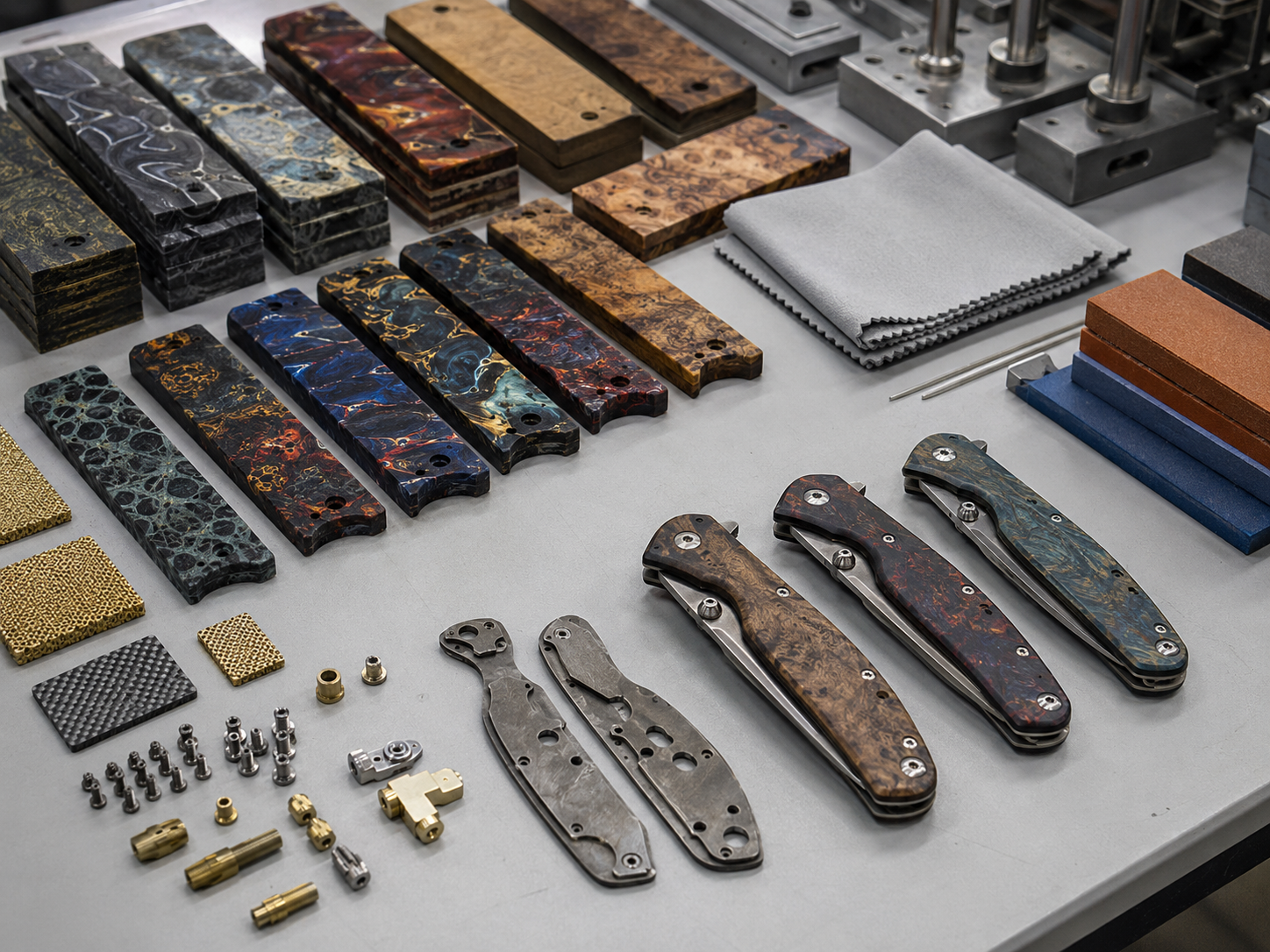
I Use RAFFIR When the Handle Must Sell the Story
RAFFIR is attractive because it can make the handle become the visual center of the knife. RAFFIR explains that its stabilized wood is filled to the core with resin, improving hardness, strength, water resistance, and polishability while keeping natural grain patterns. It also describes fossil and composite materials that bring rare natural structure or strong 3D visual effects. For a buyer building a higher-positioned SKU, that kind of material can support a stronger brand story.
This is useful for limited editions, gift products, premium retail knives, collector-style folders, and brands that want something less common than G10, aluminum, or stainless steel. The handle can look more individual. That individuality can be a selling point.
But RAFFIR also needs careful planning. Pattern variation may be part of its beauty, but it can make batch matching harder. Polishing and finishing must be controlled. Some RAFFIR types may cost more and may be better for smaller runs or premium lines than for aggressive entry-level pricing. A buyer should also confirm material availability before building a product launch around one specific look. I treat RAFFIR as a strong design material, not a simple commodity handle option.
| RAFFIR advantage | Why it helps | What I still check |
|---|---|---|
| Visual depth | Helps the knife stand out | Pattern variation across batches |
| Premium story | Supports higher-positioned SKUs | Material availability and cost |
| High polish potential | Improves retail appearance | Finishing labor and scratch concern |
| Unique character | Good for limited runs | Product photo and sample matching |
How Do PEI and RAFFIR Compare in Production and Quality Control?
A handle material decision is also a production decision. The buyer must compare machining, finishing, inspection, and repeat-order stability.
PEI is usually easier to standardize in repeat production. RAFFIR can create stronger visual value, but it needs more careful sample approval, pattern control, polishing review, and batch communication.
I Compare the Whole Production Path, Not Only the Material Block
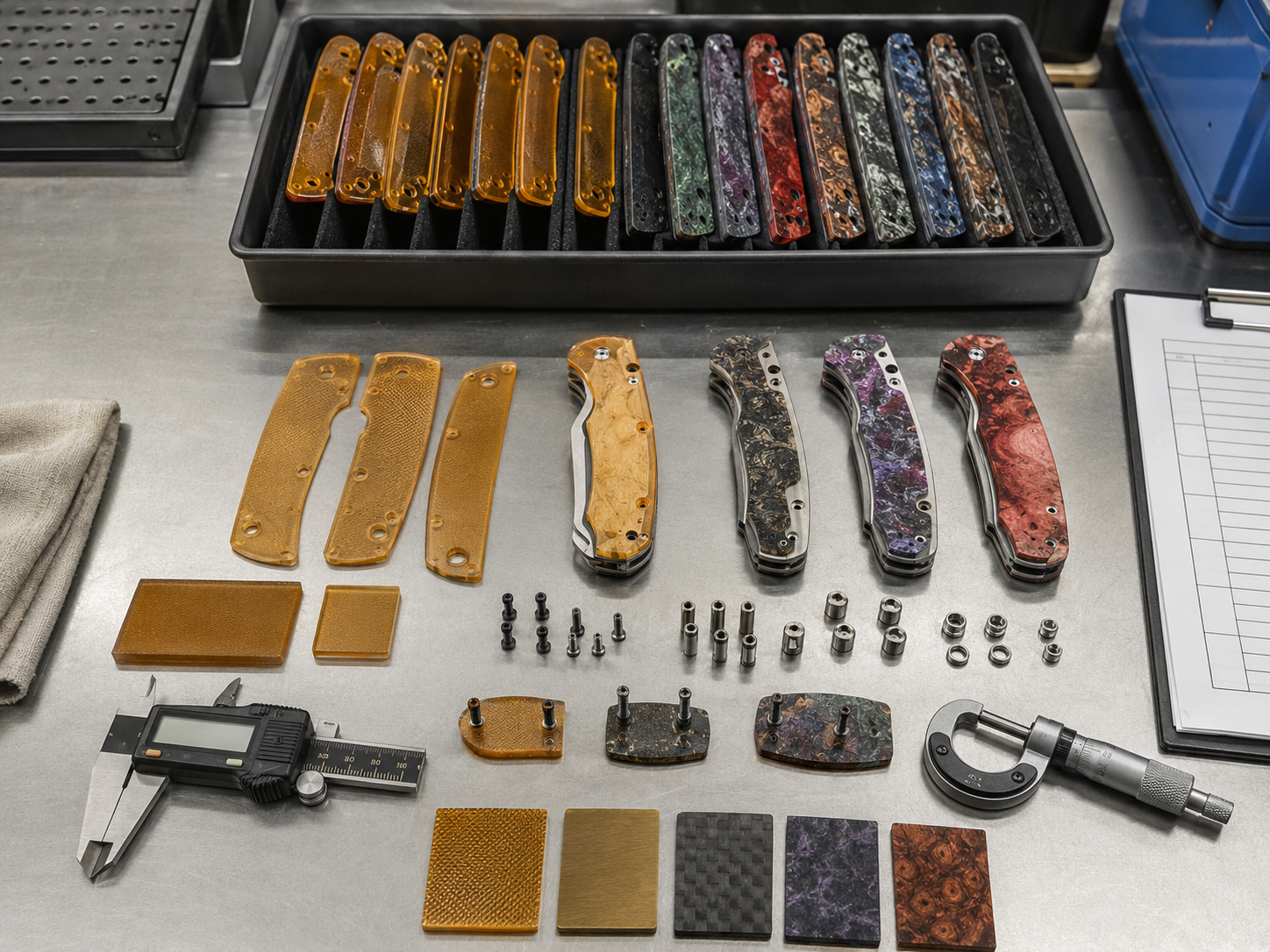
When buyers compare PEI and RAFFIR, I ask them to look at the complete handle process. The material must be cut, machined, drilled, chamfered, finished, assembled, inspected, packed, and repeated. A material that looks beautiful in a small sample can become difficult if the production quantity is large or the appearance expectation is too strict.
PEI usually gives better predictability. The handle color, thickness, and machining result can be easier to control when the material supply is stable. It fits projects where the buyer needs consistent online photos, repeatable batch appearance, and clean technical styling. The QC focus is mainly on dimensions, screw fit, surface marks, edge finish, and assembly pressure.
RAFFIR needs a different QC mindset. Since the pattern is part of the appeal, the buyer should approve a range, not only one perfect photo. The factory should confirm acceptable color variation, pattern direction, polish level, visible inclusions, and edge finish. If the buyer expects every piece to match one sample exactly, RAFFIR may create tension. If the buyer accepts natural or artistic variation, RAFFIR can create a stronger product identity.
| QC area | PEI focus | RAFFIR focus |
|---|---|---|
| Appearance | Color, scratches, machining marks | Pattern range, polish, visual depth |
| Dimensions | Hole position, thickness, countersink | Same, plus material structure variation |
| Assembly | Screw pressure and clip contact | Avoid cracking, gaps, or uneven polish |
| Reorder | Batch color consistency | Material availability and pattern approval |
How Should Buyers Choose Between PEI and RAFFIR for Their Market?
A buyer should not choose a handle material because it is trending. The right material depends on the market, product level, price, and story.
Choose PEI for technical EDC products, modern outdoor knives, and repeatable private label lines. Choose RAFFIR for premium, limited, gift, collector, or story-driven folding knives.
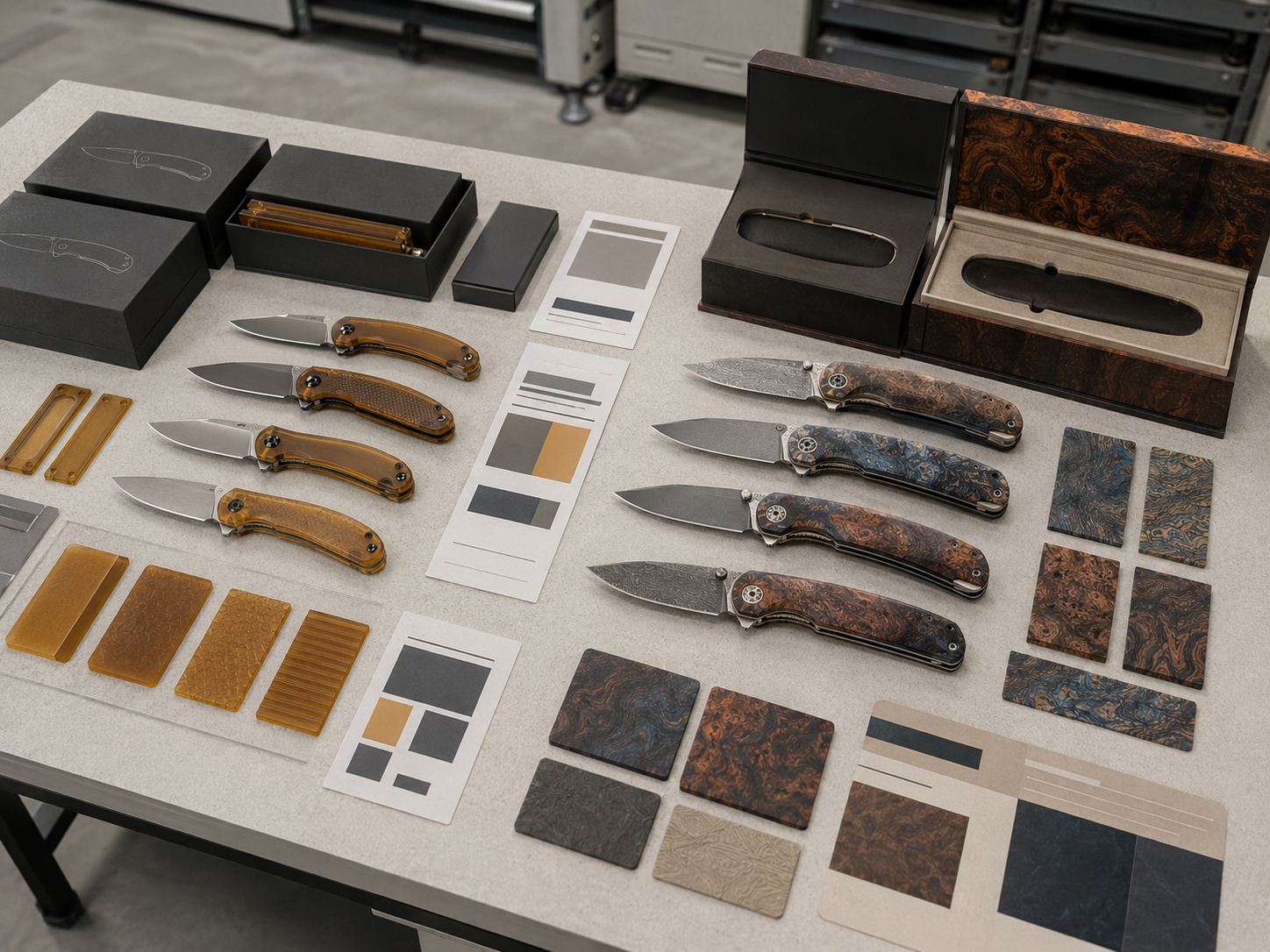
Image prompt:
Use ChatGPT Image 2. Avoid AI-looking knife shapes, fantasy blades, fake mechanisms, impossible screws, distorted multi-tools, and overly perfect 3D-rendered surfaces. Realistic industrial product photography of PEI and RAFFIR folding knife market positioning, showing two product lines with PEI handled folding knives for modern EDC and RAFFIR handled folding knives for premium retail, packaging mockups, price tier cards without readable text, and material swatches on a clean table, neutral lighting, no text, no logo, no watermark, no violence, no blood.
I Match the Material to the Buyer’s Channel and Price
If the buyer is building an EDC line for online sales, distributor wholesale, or repeat retail orders, PEI may be easier to manage. It gives the product a modern industrial look and supports a clearer repeat-production plan. It can also work well when the buyer wants a recognizable handle style but does not want strong natural pattern variation.
If the buyer is building a higher-positioned knife, RAFFIR may create more emotional value. It can make the handle feel more collectible. It can help the product stand out in photos and on a retail shelf. It can also support a limited-edition strategy where each handle has some individual character.
For B2B sourcing, the best decision comes from the full product plan. I ask the buyer to define target market, sales channel, target price, expected quantity, handle thickness, surface finish, packaging level, and reorder plan. If the buyer needs strict color consistency and large repeat orders, PEI is often safer. If the buyer wants visual impact and can accept variation, RAFFIR may be the better choice.
| Buyer goal | Better choice | Reason |
|---|---|---|
| Technical EDC image | PEI | Modern look and repeatable production |
| Premium visual impact | RAFFIR | Strong pattern and product story |
| Large repeat order | PEI | Easier batch standardization |
| Limited edition | RAFFIR | Variation becomes part of the value |
What Should Buyers Put in the RFQ Before Choosing PEI or RAFFIR?
A material name alone is not enough for a quotation. Without details, the factory may quote a handle that does not fit the product.
The RFQ should include target market, price level, quantity, handle thickness, scale shape, screw layout, finish level, polish expectation, packaging, acceptable variation, and sample approval standard.
I Ask for the Details That Control Cost and Repeatability
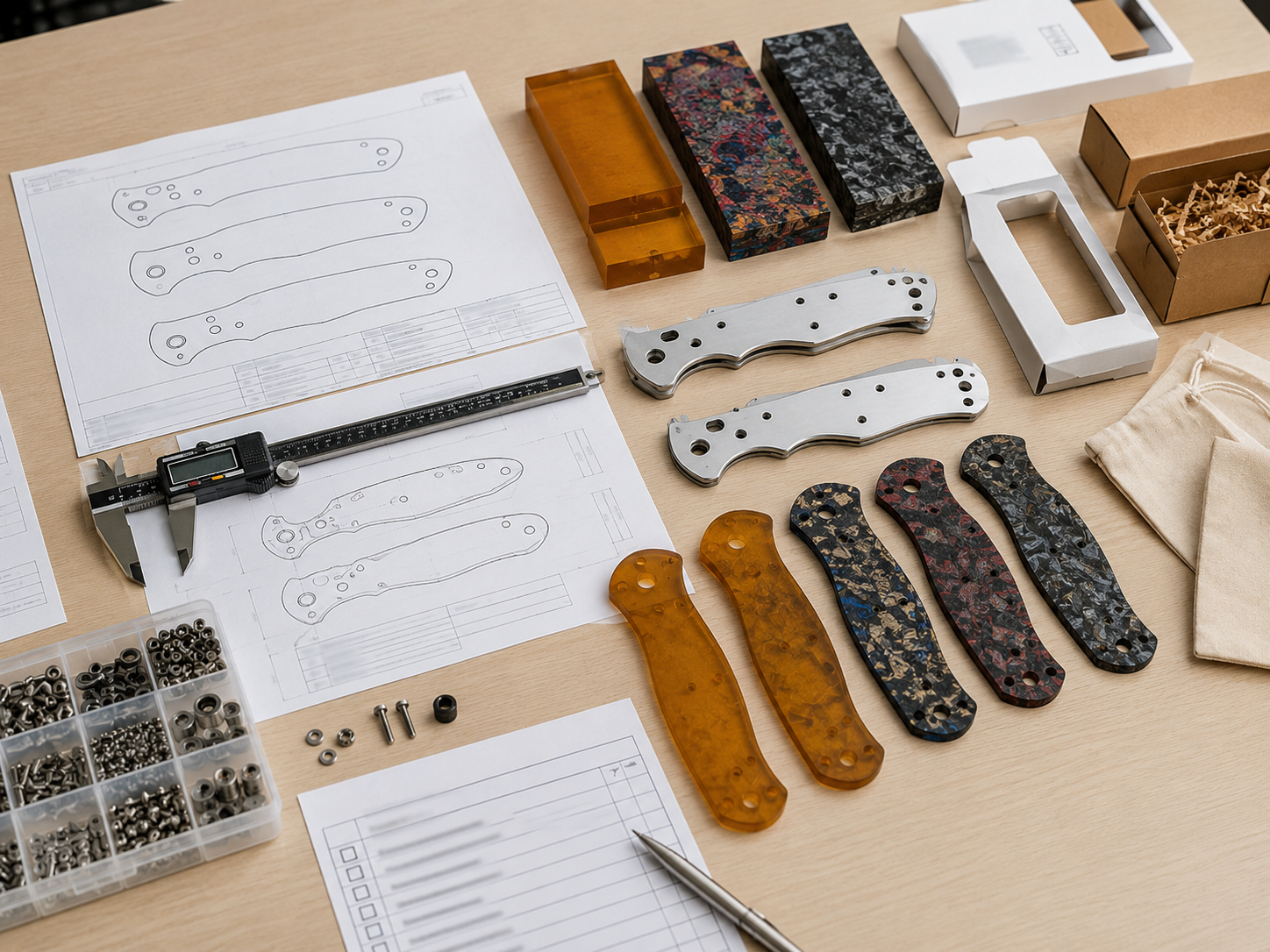
Before I quote PEI or RAFFIR handles, I want more than the material name. I need the folding knife type, handle size, scale thickness, liner structure, screw position, pocket clip plan, surface texture, edge polish, and packaging level. I also need to know the target price and expected order quantity. These details decide whether the material is practical.
For PEI, I check sheet thickness, color, transparency, machining marks, edge finish, screw pressure, and clip contact. If the buyer wants a very clean translucent look, the finishing standard must be clear. For RAFFIR, I check the specific RAFFIR type, pattern range, block or sheet format, polish level, acceptable variation, and sample matching. If the buyer wants every unit to look exactly like the first photo, we need to discuss that early.
I also connect the material to inspection. A PEI handle inspection should include scratches, burrs, hole fit, scale flatness, and assembly pressure. A RAFFIR inspection should include polish, visible gaps, pattern acceptability, edge finish, and material defects. This makes the approved sample useful for mass production.
| RFQ detail | PEI note | RAFFIR note |
|---|---|---|
| Handle design | Control holes, clip, countersinks | Control pattern direction and layout |
| Finish | Watch machining marks and scratches | Confirm polish and acceptable variation |
| Quantity | Good for repeatable lines | Better when material supply is confirmed |
| Sample approval | Color and machining reference | Pattern range and polish reference |
Turn this article into a folding knife project.
Share your blade type, lock direction, steel preference, handle material, quantity, target market, and packaging needs. Vast State can prepare OEM/ODM options.
Conclusion
I choose PEI for technical repeatability and RAFFIR for premium visual impact, then match the material to the buyer’s market, price, and production plan.
Source Notes
- SABIC ULTEM resin supports the PEI discussion on heat resistance, strength, stiffness, dimensional stability, and chemical resistance.
- SABIC ULTEM 1010E supports the point that PEI can be transparent amber and used in custom colors.
- RAFFIR supports the discussion of stabilized wood, fossils, resin treatment, durability, water resistance, polishability, and knife handle applications.
- RAFFIR company profile supports the point that RAFFIR materials are used for knife handles and other premium products.
- ISO 9001:2015 supports the process-based quality control mindset for material selection, sampling, and repeat production.