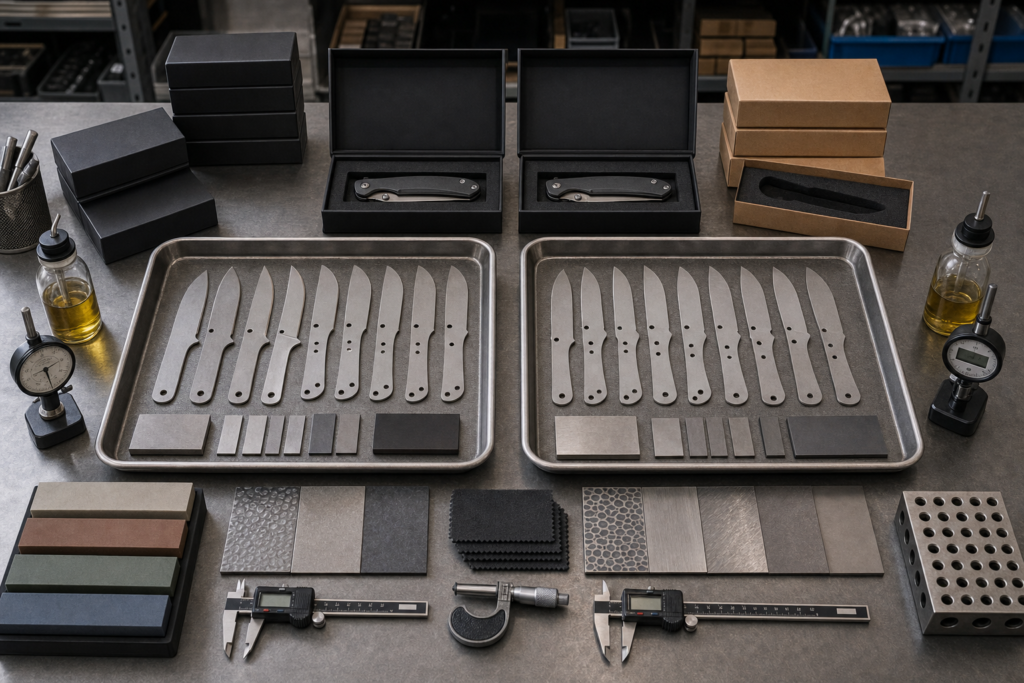
S35VN and M390 both sound premium. But if the steel story is wrong, the knife can cost more and still disappoint users.
Knife brands should choose M390 when they need stronger wear-resistance and corrosion-resistance positioning. They should choose S35VN when they want a tougher, easier-finished premium stainless steel with lower chipping risk and broader everyday usability.
Quick buyer brief:
- Answer: M390 sells higher wear resistance. S35VN sells balanced toughness, machinability, and practical premium use.
- Buyer context: This helps knife brands, importers, wholesalers, and private label buyers build premium steel tiers.
- Key checks: Confirm steel source, target HRC, heat treatment, edge geometry, finish, sharpening expectations, QC records, and product positioning.
Planning a knife project with this steel?
Send us your target market, MOQ, price range, and blade type. Vast State can help you choose the right steel, HRC range, finish, handle material, and QC requirements for OEM/ODM production.
When I compare S35VN and M390 for a buyer, I do not ask which steel is "better" first. I ask what the product must do. A premium slicer, a hard-use EDC knife, a collector-focused folder, and a broad retail private label knife all need different tradeoffs. M390 gives a stronger high-wear and high-corrosion story. S35VN gives a more forgiving premium steel story. The better choice depends on the market, the geometry, the heat treatment, and the buyer's after-sales risk.
What Is the Short Answer for S35VN vs. M390?
A premium steel name can sell a knife, but it can also create wrong expectations. Buyers need a simple decision rule first.
S35VN is the safer premium choice for toughness, easier finishing, and broad everyday use. M390 is the stronger choice for high wear resistance, corrosion resistance, and higher-end product positioning when the knife geometry and heat treatment are controlled.
I Start With the User, Not the Steel Label
S35VN and M390 are both premium stainless knife steels, but they do not solve the same problem. The Niagara S35VN data sheet describes S35VN as a martensitic stainless steel designed to improve toughness over S30V and to be easier to machine and polish. That matters for OEM production because a steel that is easier to finish can reduce production friction and cosmetic risk.
The Bohler M390 product page describes M390 Microclean as a powder metallurgy martensitic chromium steel with very high wear resistance and good corrosion resistance. That gives M390 a stronger premium story for users who compare steel names and expect long edge life.
I usually explain it this way. M390 is more attractive when the product needs a top-tier steel story and the buyer is willing to pay for the steel, heat treatment, and sharpening expectation. S35VN is more attractive when the product needs a serious premium steel but must remain more forgiving, easier to finish, and less risky for wider users. Neither steel wins every use. The wrong choice is choosing by hype instead of product purpose.
| Buyer priority | Better starting point | Why I would choose it |
|---|---|---|
| High wear-resistance story | M390 | Stronger carbide and high-end positioning |
| Lower chipping risk | S35VN | Better balanced toughness story |
| Easier finishing | S35VN | Data sheet notes easier machining and polishing than S30V |
| Premium collector appeal | M390 | Stronger high-end steel recognition |
| Broad EDC reliability | S35VN | More forgiving for mixed daily use |
Quote-ready RFQ Checklist for This Steel
To get an accurate OEM/ODM quote, prepare these details before contacting a knife manufacturer.
| RFQ Field | What to Prepare |
|---|---|
| Product type | Folding knife / fixed blade / multi-tool / kitchen knife |
| Target market | US / EU / outdoor retail / promotional / tactical / EDC |
| Steel option | 4116 / 14C28N / D2 / N690 / Nitro-V |
| Target HRC | Example: 55-57 HRC, 58-60 HRC |
| Blade finish | Satin / stonewash / black coating / bead blast |
| Handle material | G10 / micarta / aluminum / stainless steel / wood |
| Lock or structure | Liner lock / frame lock / slip joint / full tang |
| Estimated quantity | 500 / 1,000 / 3,000 / 5,000+ pcs |
| Packaging | White box / color box / blister / pouch / gift box |
| Required documents | Drawing / sample photo / logo file / packaging artwork |
How Do Chemistry and Carbides Change the Decision?
Two stainless steels can both be premium and still behave very differently. Chemistry explains why the user feels the difference.
S35VN has about 1.40 carbon, 14 chromium, 2 molybdenum, 3 vanadium, and 0.5 niobium. M390 has about 1.90 carbon, 20 chromium, 1 molybdenum, 4 vanadium, and 0.6 tungsten.
I Translate Chemistry Into Product Risk
Niagara lists S35VN typical composition as 1.40 carbon, 0.50 niobium, 14.00 chromium, 2.00 molybdenum, and 3.00 vanadium. It also explains that S35VN forms niobium carbides along with vanadium and chromium carbides. This rebalanced carbide design helps improve toughness and chipping resistance compared with S30V.
Bohler lists M390 average composition as 1.90 carbon, 20.00 chromium, 1.00 molybdenum, 4.00 vanadium, and 0.60 tungsten. That is a very different alloy design. The high carbon, chromium, and vanadium support high carbide volume, wear resistance, and corrosion resistance. This is why M390 can carry a stronger high-performance marketing story.
Knife Steel Nerds gives useful nuance in its M390 history and properties article. It explains that M390 has high carbide volume and a larger carbide structure compared with lower-carbide stainless steels such as S35VN. This supports wear resistance, but it also reduces toughness. That is the tradeoff a buyer should understand before writing product copy.
For OEM projects, chemistry becomes a production decision. More carbides can mean better abrasive wear resistance, but also more care in grinding, sharpening, and edge design. A thin M390 edge can be impressive in cutting, but it may be less forgiving under side load or impact. S35VN may not sell the same high-wear story, but it gives more room for practical everyday use.
| Chemistry point | S35VN | M390 |
|---|---|---|
| Carbon | 1.40 percent | 1.90 percent |
| Chromium | 14 percent | 20 percent |
| Vanadium | 3 percent | 4 percent |
| Special addition | 0.5 percent niobium | 0.6 percent tungsten |
| Product meaning | Balanced premium stainless | High-wear, high-corrosion premium stainless |
Which Steel Gives Better Edge Retention and Sharpening Experience?
Edge retention can sell a product page. But sharpening experience affects customer satisfaction after the sale.
M390 generally gives better abrasive wear resistance and longer working edge potential. S35VN is usually easier to sharpen, easier to deburr, and more forgiving for buyers who do not want a demanding high-carbide steel.
I Keep Edge Claims Honest
M390 has a stronger edge-retention story because it has more carbide volume and a high-wear alloy design. Bohler describes M390 as having very high wear resistance. Knife Steel Nerds also describes M390 as having excellent edge retention, while explaining that this comes from high carbide content and vanadium addition.
S35VN is different. Knife Steel Nerds explains in its S35VN article that S35VN was modified from S30V for better toughness and machinability, with some edge-retention cost. It also discusses CATRA-related values that place S35VN below S30V in some tests. This does not make S35VN weak. It means the buyer should not sell it as the longest-cutting option.
Sharpening matters because most retail users do not have perfect tools or technique. M390 can keep a working edge longer, but it can also take more time to sharpen well. S35VN often feels more manageable. It gives a premium stainless story without pushing the end user into the same maintenance and sharpening expectations as higher-carbide steels.
For knife brands, the product copy should match the truth. I would position M390 as a high-wear premium steel for users who value long working edge life. I would position S35VN as a balanced premium stainless steel for users who want serious performance, easier upkeep, and lower chipping risk.
| User concern | S35VN | M390 |
|---|---|---|
| Abrasive edge life | Good premium performance | Stronger advantage |
| Sharpening effort | Usually easier | More demanding, especially for casual users |
| Deburring | More forgiving | Needs better process and tools |
| Product copy | Balanced premium steel | High-wear premium steel |
| Retail expectation | Easy to explain broadly | Best for educated premium buyers |
Which Steel Is Better for Toughness, Chipping Risk, and Real Use?
A knife can have great wear resistance and still disappoint if the edge chips. Toughness is not a side detail.
S35VN is usually the better choice for toughness and lower chipping risk. M390 can work very well, but its high carbide volume makes edge geometry and heat treatment more important for hard-use knives.
I Think About Warranty Risk Before Marketing
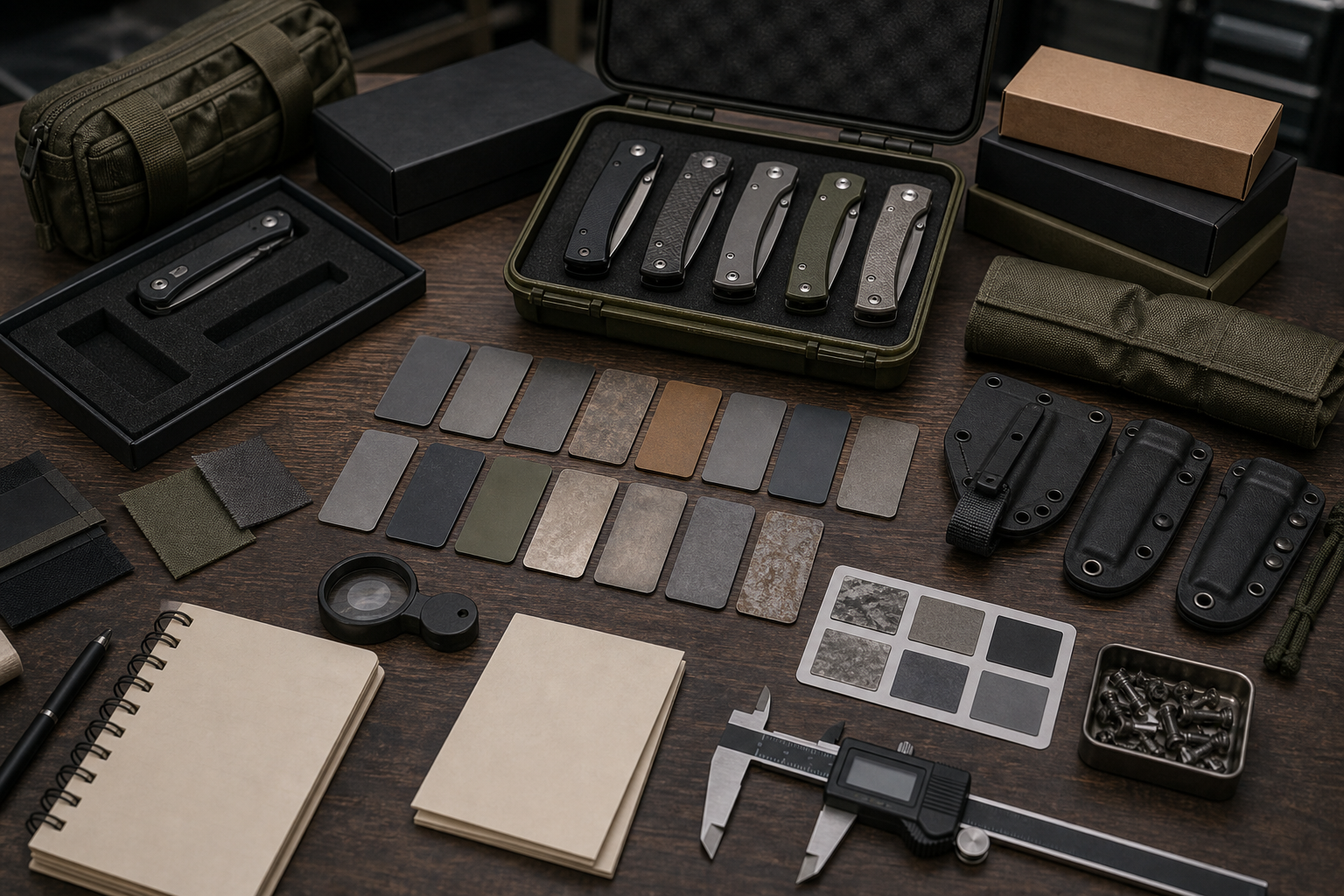
Niagara says S35VN is about 15 to 20 percent tougher than S30V in its data sheet framing, and it notes better resistance to edge chipping. The same page lists S35VN transverse impact energy above S30V in its comparison table. For a buyer, that matters because chipping complaints are expensive. A customer who expects a premium knife may accept normal dulling, but may react badly to a chipped edge.
Knife Steel Nerds also concludes that S35VN has good toughness, edge retention, and corrosion resistance, without excelling in one extreme category. That is exactly why I like S35VN for broad premium EDC. It is not the most dramatic steel on paper, but it is a practical one.
M390 needs a more careful message. Knife Steel Nerds says M390 has excellent corrosion resistance, potential hardness, and edge retention, but also says the microstructure is relatively coarse for a powder metallurgy steel and the high carbide volume means toughness is relatively low. It can still be acceptable in knives, but not with very thin edge geometry or high-impact use.
This is where OEM design choices matter. If a buyer wants M390 for a gentleman's folder, premium slicer, or collector-oriented EDC model, it can be excellent. If the buyer wants a hard-use work knife for rough prying, twisting, or impact-like tasks, S35VN may be safer. I never design the edge geometry by steel name alone.
| Use case | Better fit | Why |
|---|---|---|
| Broad EDC folder | S35VN | Better toughness and easier upkeep |
| Premium slicer | M390 | Strong wear and corrosion story |
| Rougher outdoor folder | S35VN | More forgiving edge stability |
| Collector steel upgrade | M390 | Stronger high-end recognition |
| Private label premium line | Depends on buyer market | S35VN for reliability, M390 for steel appeal |
How Should Brands Position S35VN and M390 in a Product Line?
Premium product lines can become confusing fast. If the buyer cannot explain the steel tier, customers may not understand the price.
Brands should position S35VN as a balanced premium stainless steel and M390 as a higher-wear, higher-status stainless option. The rest of the knife must support that promise.
I Build the Steel Tier Around the Brand Promise
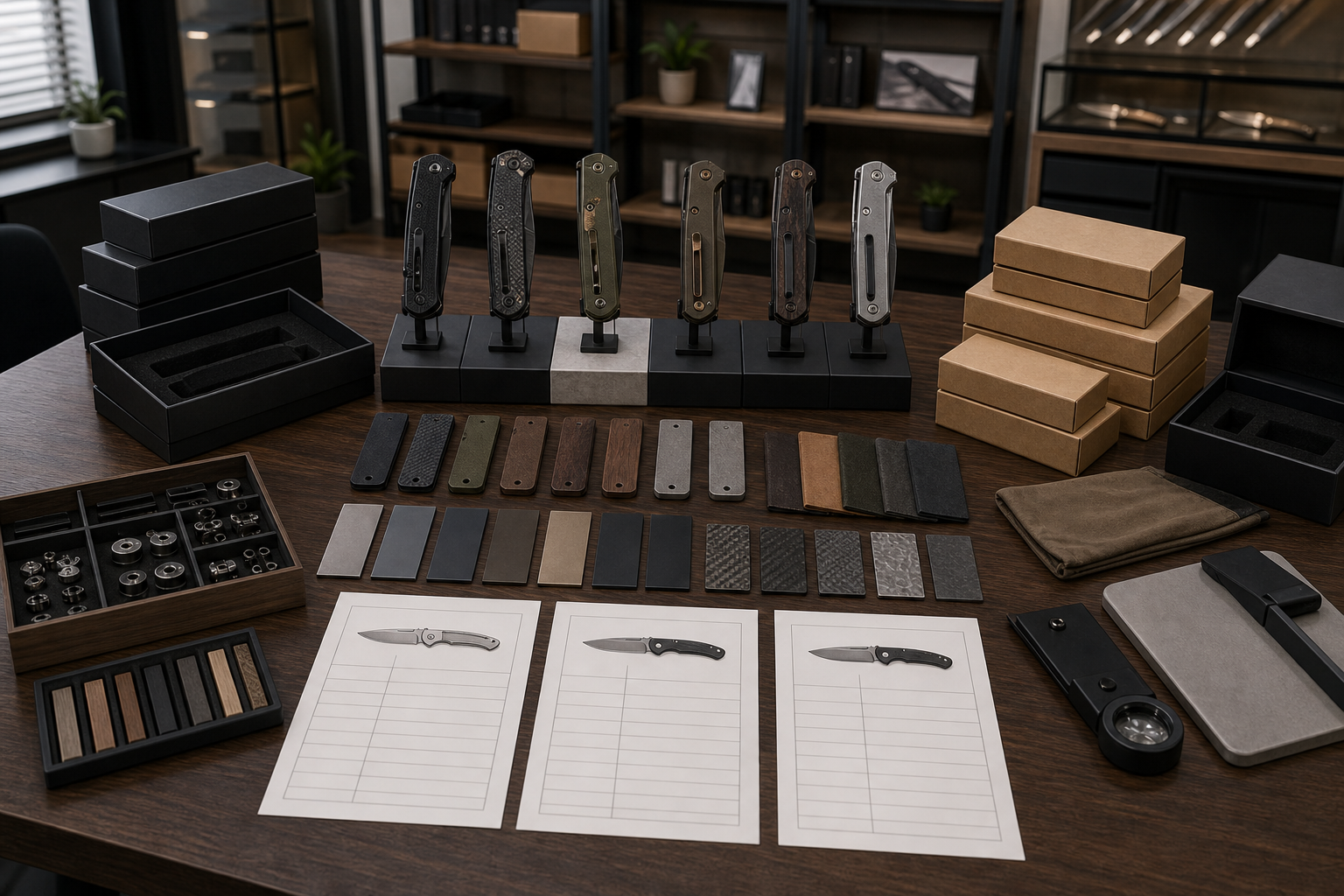
If the brand sells to practical users, S35VN can be easier to explain. The message can be simple: premium stainless steel, good toughness, good corrosion resistance, easier sharpening, and lower chipping risk than more extreme high-carbide choices. This works well for EDC brands, outdoor brands, private label buyers, and importers who want fewer after-sales problems.
If the brand sells to enthusiasts or premium collectors, M390 can be stronger. Many buyers recognize the name. Bohler's positioning gives the brand a clear high-wear and good-corrosion story. It also works well when the rest of the product feels high-end: clean machining, good lockup, quality handle material, smooth action, refined finish, and premium packaging.
The mistake is using M390 on a knife that does not feel premium elsewhere. A high-end blade steel cannot hide rough action, poor centering, weak packaging, or inconsistent finishing. The other mistake is using S35VN but writing weak copy. S35VN is not a compromise steel when the goal is balance. It is a serious premium choice when the buyer values practical use.
For Vast State OEM/ODM work, I would often offer both options when the buyer is unsure. One quotation can use S35VN for a practical premium tier. Another can use M390 for a higher steel tier. Then the buyer can compare cost, MOQ, heat treatment, and market story before final selection.
| Product tier | Steel direction | What else must match |
|---|---|---|
| Practical premium EDC | S35VN | Clean lockup, good edge, simple packaging |
| Enthusiast upgrade | M390 | Strong finish, premium handle, clear steel story |
| Outdoor premium | S35VN or M390 | S35VN for toughness, M390 for corrosion and wear |
| Private label launch | S35VN | Lower risk and easier customer education |
| High-end limited model | M390 | Better material proof and refined QC |
What RFQ and QC Details Should Buyers Control?
A steel name alone cannot protect the buyer. The wrong heat treatment or geometry can make either steel underperform.
Buyers should specify steel grade, material proof, target HRC, heat treatment, cold treatment, blade geometry, finish, sharpening standard, functional checks, packaging, inspection sample plan, and trade terms.
I Make the Steel Choice Measurable
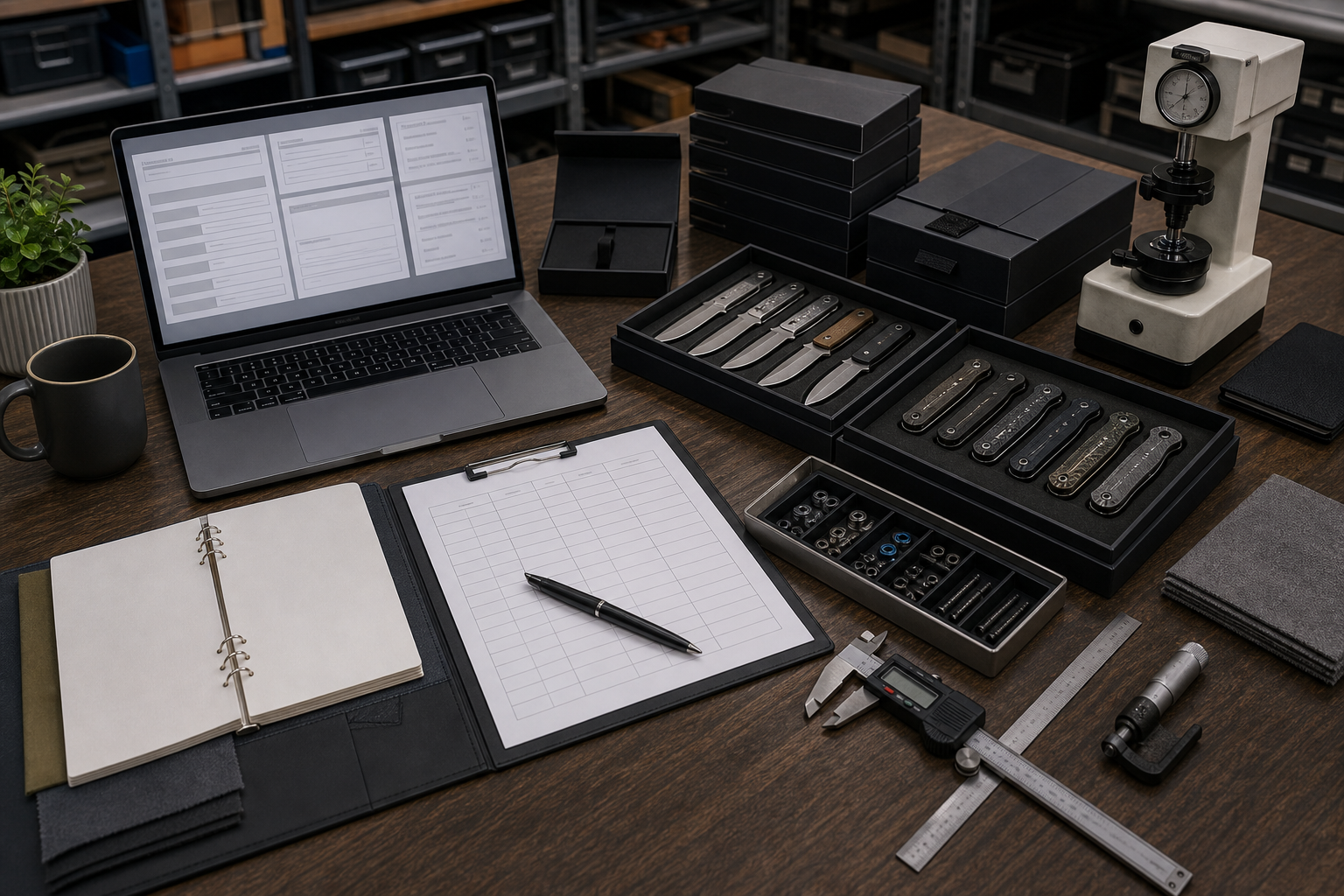
For S35VN, Niagara gives a recommended heat treatment with an aim hardness of 58 to 61 HRC. Knife Steel Nerds suggests that S35VN can reach higher hardness with specific heat treatment, cryo, and tempering choices. For M390, Bohler gives the material identity and performance direction, while Knife Steel Nerds warns that heat treatment and retained austenite can affect real behavior. The key point is simple: the RFQ should not stop at the steel name.
The RFQ should define the target use. A thin slicer and a hard-use folder need different edge geometry. M390 may need more conservative geometry if the knife will see lateral stress. S35VN may allow a more forgiving design, but it still needs controlled heat treatment and grinding.
Hardness testing must be handled carefully. The NIST Rockwell hardness guide supports careful measurement practice. In a knife project, I want to define test location, sample quantity, acceptable range, and what happens if the reading is outside the agreed range.
Commercial terms also matter. The U.S. International Trade Administration explains that Incoterms define buyer and seller responsibilities, costs, and risks. Quality language should also be process-based. The ISO 9001 page gives useful quality-management context, but I do not treat it as a supplier certification unless documents prove it.
| RFQ field | What to ask | Why it matters |
|---|---|---|
| Steel option | S35VN, M390, or quote both | Shows true cost and positioning difference |
| Material proof | Mill source, certificate, batch traceability | Reduces substitution risk |
| Target HRC | Range and sample plan | Makes heat treatment measurable |
| Edge geometry | Grind, edge angle, behind-edge thickness | Controls cutting and chipping risk |
| Finish | Satin, stonewash, coating, polish | Affects appearance and corrosion behavior |
| Final inspection | Lockup, centering, sharpness, finish, packaging | Protects sellable quality |
Ready to use this material in your next knife line?
Vast State can help you compare blade steels, heat treatment ranges, handle materials, finishes, packaging options, and QC requirements based on your target market and quantity.
Conclusion
I choose M390 for high-wear premium positioning and S35VN for balanced toughness, easier finishing, and broader everyday reliability.
Source Notes
- Niagara S35VN data sheet supports S35VN composition, toughness, machinability, carbide design, heat treatment, and aim hardness.
- Bohler M390 product page supports M390 composition, powder metallurgy process, very high wear resistance, good corrosion resistance, and custom hand knife application.
- Knife Steel Nerds S35VN article supports S35VN history, edge retention nuance, corrosion context, toughness, and heat-treatment guidance.
- Knife Steel Nerds M390 article supports M390 history, carbide structure, corrosion resistance, edge retention, toughness limits, and heat-treatment cautions.
- NIST Rockwell hardness guide supports careful hardness measurement practice.
- Trade.gov Incoterms page supports RFQ advice about trade responsibilities, costs, and risks.
- ISO 9001:2015 page supports quality-management context, but it does not prove any supplier certification.