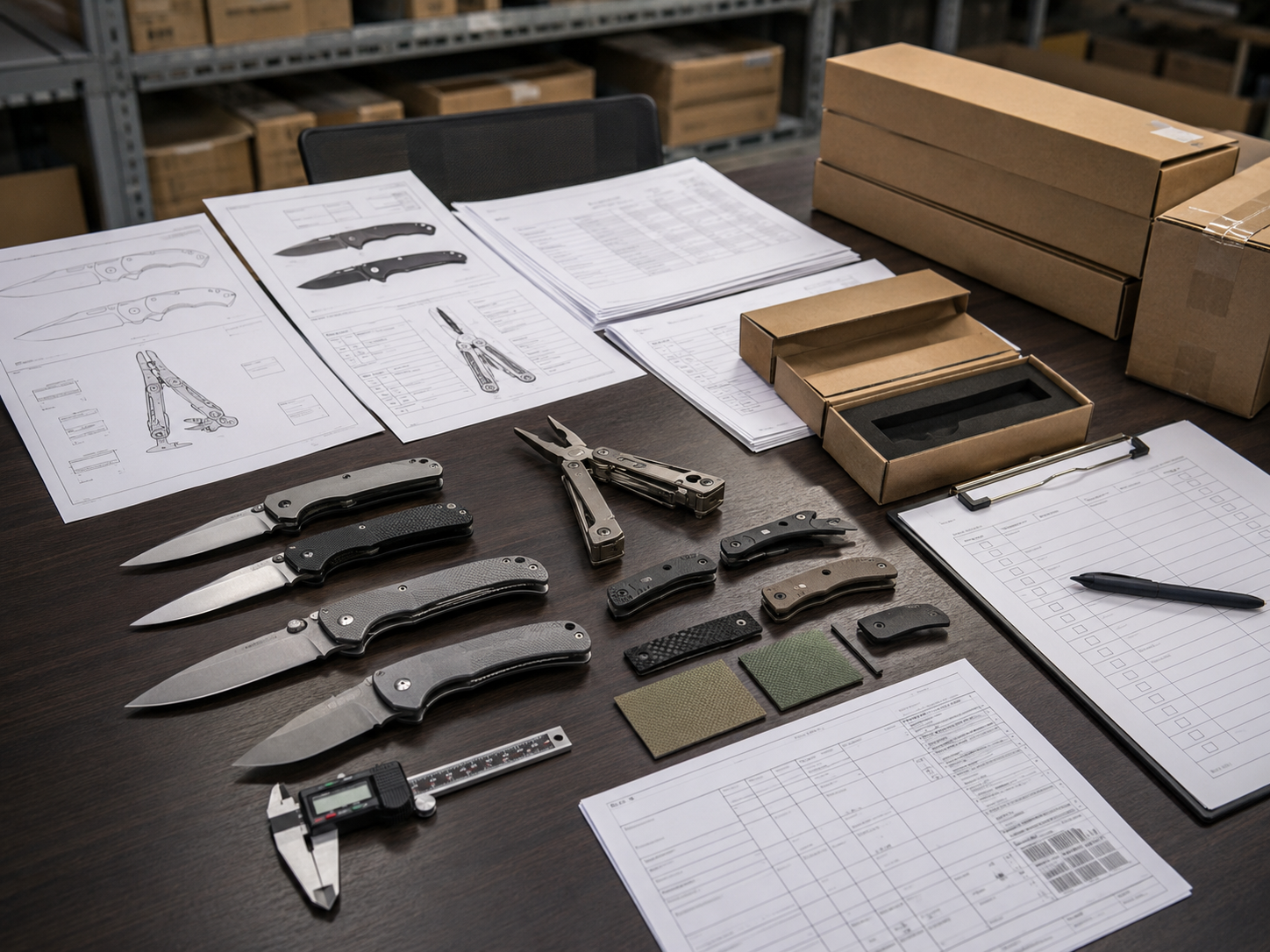
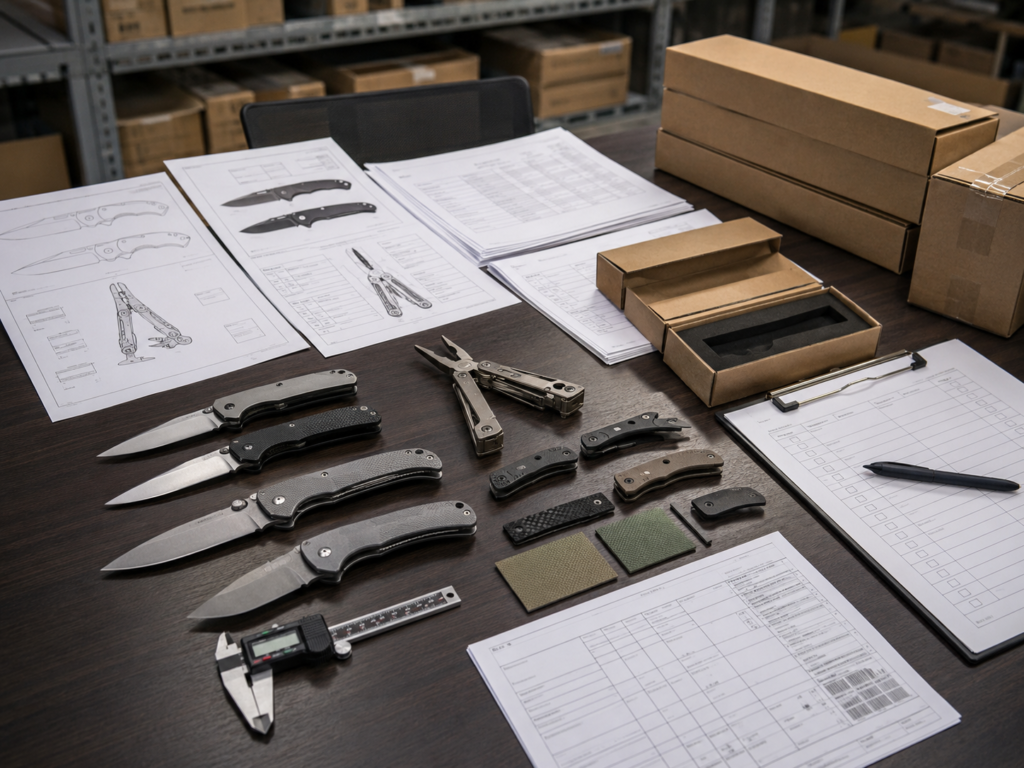
ODM procurement can look simple at first. But unclear briefs, weak samples, and vague responsibility can turn a good idea into production risk.
An ODM procurement process should move from market need, product brief, supplier evaluation, quotation, prototype, sample approval, compliance review, purchase order, production follow-up, inspection, shipment, and reorder planning. Each step should connect product design with cost, quality, timeline, and target-market requirements.
Quick buyer brief:
- Answer: ODM procurement works best when buyers control the brief, sample review, compliance checks, PO terms, QC, logistics, and reorders.
- Buyer context: This helps knife brands, outdoor brands, importers, wholesalers, distributors, and private label buyers.
- Key checks: Target market, target price, product type, blade steel, handle material, lock structure, packaging, compliance, inspection, Incoterms, and reorder plan.
Have a knife or multi-tool project in mind?
Send your sketch, CAD file, sample photo, or product idea. Vast State can review manufacturability, suggest materials, estimate MOQ, and prepare a quote for your OEM/ODM project.
When I support an ODM project, I do not start by asking only what product the buyer wants. I ask what market the product must fit. A folding knife for outdoor retail, a compact multi-tool for distributors, and a private label camping tool for online sales should not follow the same procurement path. ODM sourcing is useful because the manufacturer can help shape the product, but it only works well when the buyer gives clear direction and reviews each step carefully.
What Does ODM Procurement Mean Before the RFQ Starts?
ODM sounds fast, but it can become confusing if the buyer does not define the commercial goal before asking for prices.
ODM procurement means buying a manufacturer-developed or co-developed product that can be customized for the buyer’s market, brand, price range, packaging, and quality requirements.
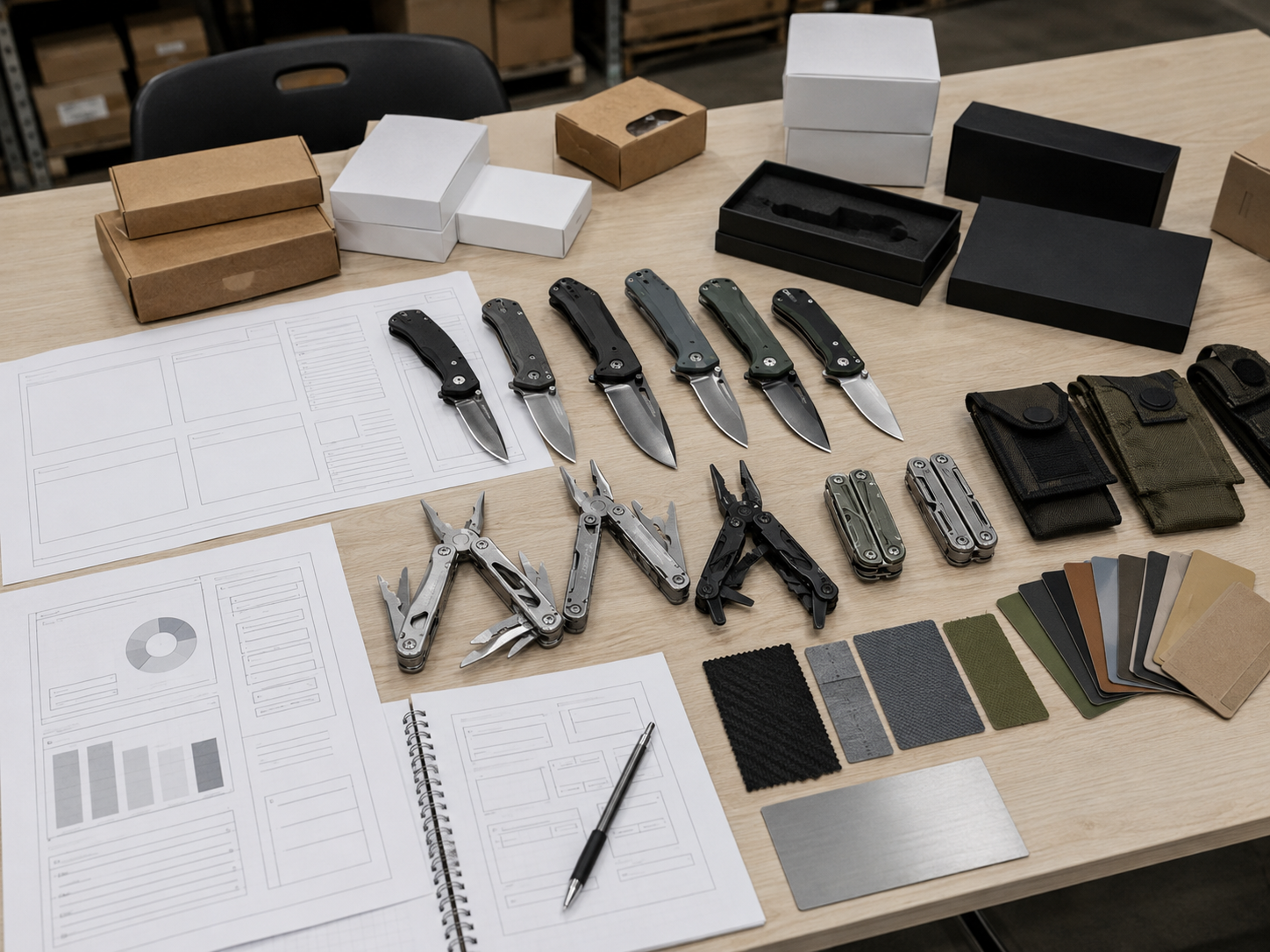
I Define the Buying Goal Before I Discuss the Product
ODM is different from simple product purchasing. The buyer may start from an existing factory concept, a semi-developed model, or a product direction that needs engineering support. The manufacturer helps with structure, material, finish, packaging, and production planning. That is useful, but it also means both sides must agree on the goal early.
Before RFQ, I want to know the target market, sales channel, product type, target price, order quantity, and brand position. A buyer who sells through outdoor retailers may need stronger packaging and cleaner product information. A distributor may need a stable product family and margin room. An online seller may need parcel-safe packaging and clear specifications. A private label buyer may need logo, color, finish, and box customization.
This early stage should also include risk thinking. If the product is a folding knife, I need to know the lock type, opening method, blade length, and market restrictions. If the product is a multi-tool, I need to understand the function list and tool layout. Clear direction helps the manufacturer suggest a realistic ODM route instead of quoting a product that later becomes too expensive or difficult to sell.
| Before RFQ | What I ask | Why it matters |
|---|---|---|
| Target market | Country, region, channel, user type | It affects compliance and product design |
| Product goal | EDC, camping, rescue, utility, multi-tool | It guides structure and materials |
| Target price | Buyer margin and retail position | It controls process and component choices |
| Customization | Logo, finish, color, packaging | It defines ODM scope and sample needs |
OEM/ODM RFQ Checklist
Prepare these details to help Vast State review your project and provide a more accurate quotation.
| RFQ Field | What to Prepare |
|---|---|
| Project type | OEM from drawing / ODM private label / wholesale catalog |
| Product category | Folding knife / fixed blade / multi-tool / outdoor tool |
| Design status | Idea / sketch / 2D drawing / 3D CAD / physical sample |
| Target price | Ex-factory target price or retail price range |
| MOQ expectation | 500 / 1,000 / 3,000 / 5,000+ pcs |
| Logo method | Laser engraving / etching / printing / molded logo |
| Packaging | Standard packaging / custom retail box / Amazon-ready |
| Market | USA / EU / Japan / Korea / Middle East / other |
| Compliance needs | Buyer-specified testing / documentation / labeling |
| Timeline | Sample deadline / mass production deadline |
How Should Buyers Prepare a Clear ODM Product Brief?
A weak product brief creates weak quotations. The supplier may guess the material, function, quality level, and packaging, then the project drifts.
A clear ODM product brief should include target market, use case, price range, quantity, product size, material preferences, lock or tool structure, finish, branding, packaging, compliance concerns, and inspection needs.
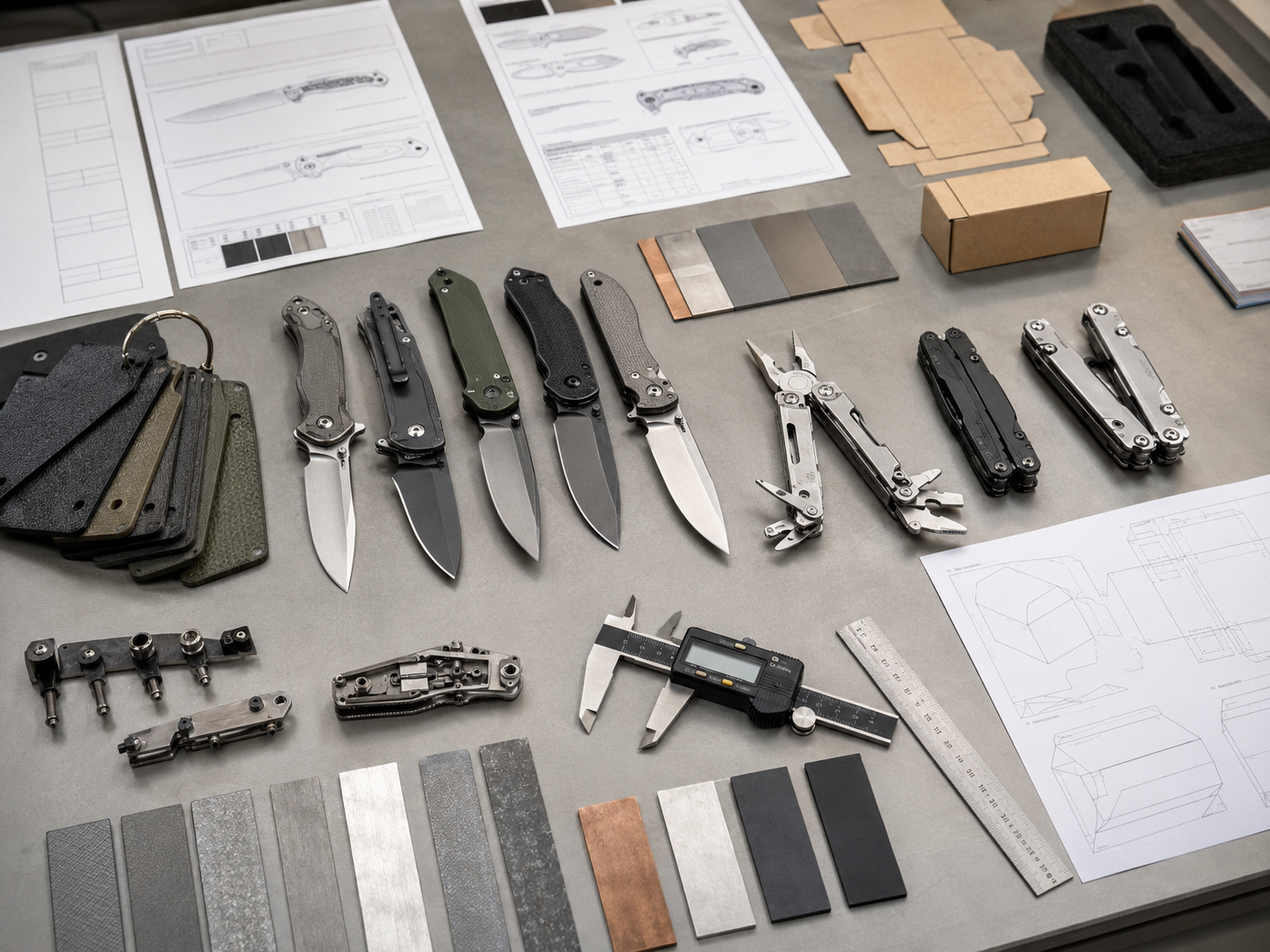
I Make the Brief Practical Enough for Engineering
A good brief does not need to be long, but it must be useful. I prefer a brief that tells me what the product must achieve. For a folding knife, the buyer should describe the blade style, steel preference, handle material, lock type, opening method, size range, finish, packaging, and target market. For a multi-tool, the buyer should list required functions and rank them by importance. Tool quantity alone is not enough. A useful plier, screwdriver, blade, saw, or file needs space, material, and assembly control.
Material choices should also match the price and use case. A buyer may ask for better corrosion resistance, easier sharpening, or stronger edge stability. Official material references can help this discussion. For example, Alleima 14C28N knife steel is described by the manufacturer as a knife steel for edge sharpness, edge stability, and corrosion resistance. This kind of reference helps buyers understand that steel selection affects more than marketing words.
The brief should also mention packaging. Retail box, pouch, blister, insert card, barcode, and carton structure all affect cost and delivery. If packaging is added late, the timeline can stretch.
| Brief item | What to include | Practical benefit |
|---|---|---|
| Product specification | Size, function, structure, material | Makes quotation more accurate |
| Target price | Unit price range or price level | Helps the factory suggest realistic options |
| Branding | Logo, color, finish, packaging | Defines customization scope |
| Inspection needs | Function, sharpness, lockup, packaging | Reduces later quality disputes |
How Do Quotation, Prototype, and Sample Approval Work in ODM Procurement?
A cheap quotation can hide missing details. A beautiful sample can also hide production risk if it is not reviewed correctly.
Quotation, prototype, and sample approval should confirm specification, cost, material, function, finish, packaging, timeline, MOQ, tooling needs, and mass-production repeatability before the purchase order.
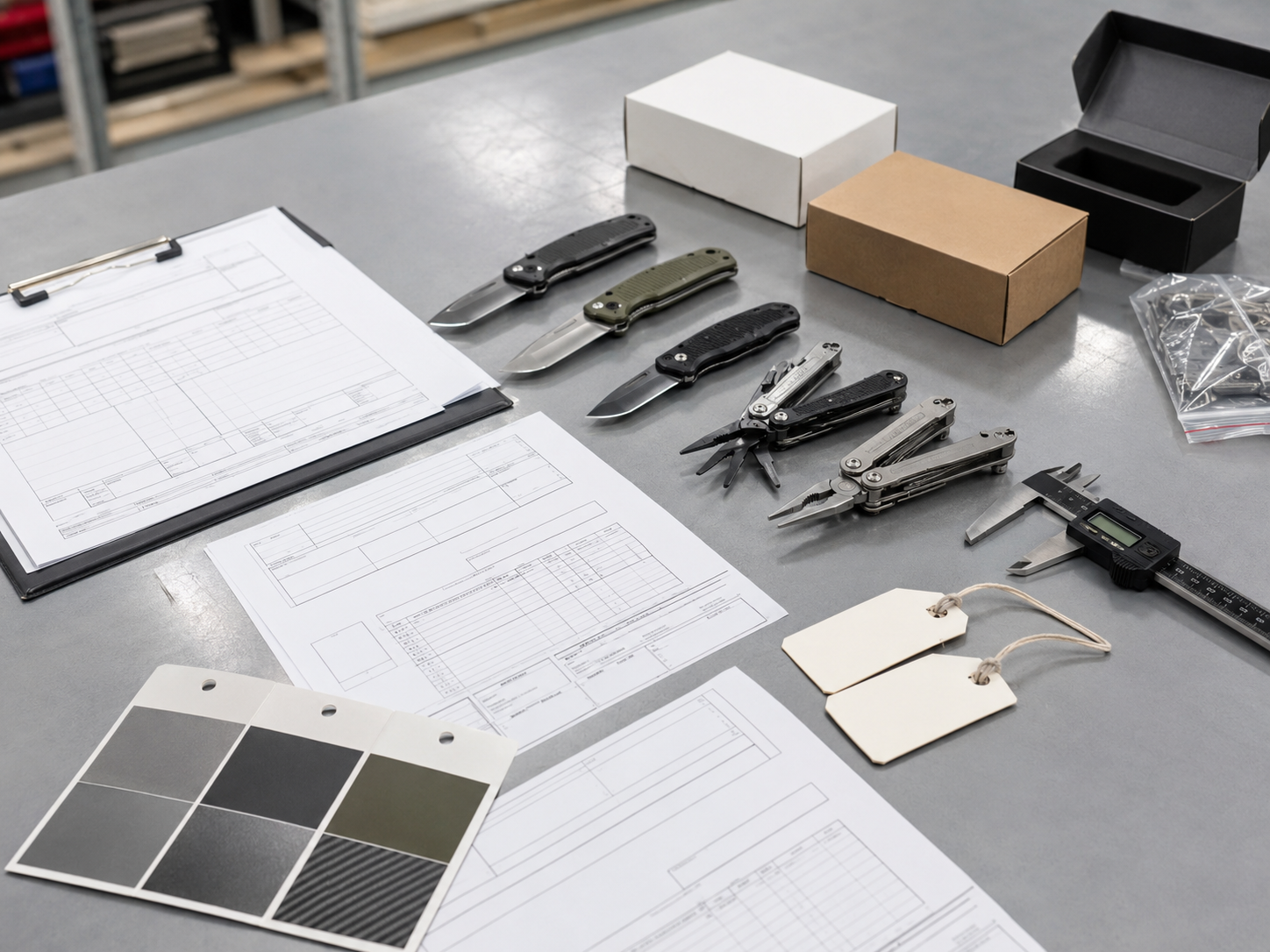
I Review the Sample as a Production Promise
After the brief, the quotation should not be only a number. It should explain what is included. I like to confirm material, finish, packaging, logo method, MOQ, sample cost, tooling cost if needed, lead time estimate, inspection standard, and shipping term. If the quotation does not define these items, the buyer may compare prices that are not actually comparable.
Prototype and sample review are even more important. A sample is not only a photo for approval. It is a working reference for production. I check blade centering, lockup, tool action, handle feel, screw fit, surface finish, logo position, sharpness, packaging fit, and overall user experience. If the sample needs adjustment, the feedback should be written clearly. “Make it better” does not help the factory. “Reduce side play,” “improve blade centering,” or “change handle texture” is much more useful.
For ODM projects, I also check repeatability. A sample that requires too much hand adjustment may not be safe for larger orders. A design that looks impressive but needs slow assembly can raise cost and delay delivery. I prefer a sample that shows both product appeal and manufacturing stability.
| Stage | What to confirm | Risk if ignored |
|---|---|---|
| Quotation | Material, packaging, MOQ, lead time, terms | Prices become hard to compare |
| Prototype | Structure, function, size, finish | Design problems appear late |
| Sample approval | Approved standard for production | Mass production has no clear reference |
| Engineering feedback | Written changes and updated specs | Revisions become confusing |
What Quality, Compliance, and Packaging Checks Should Happen Before Production?
Many buyers wait until final inspection to think about quality. That is too late for ODM products with structure, packaging, and market requirements.
Before production, buyers should confirm product safety needs, target-market rules, material specification, approved sample, QC checklist, packaging artwork, carton protection, labeling, and importer responsibilities.
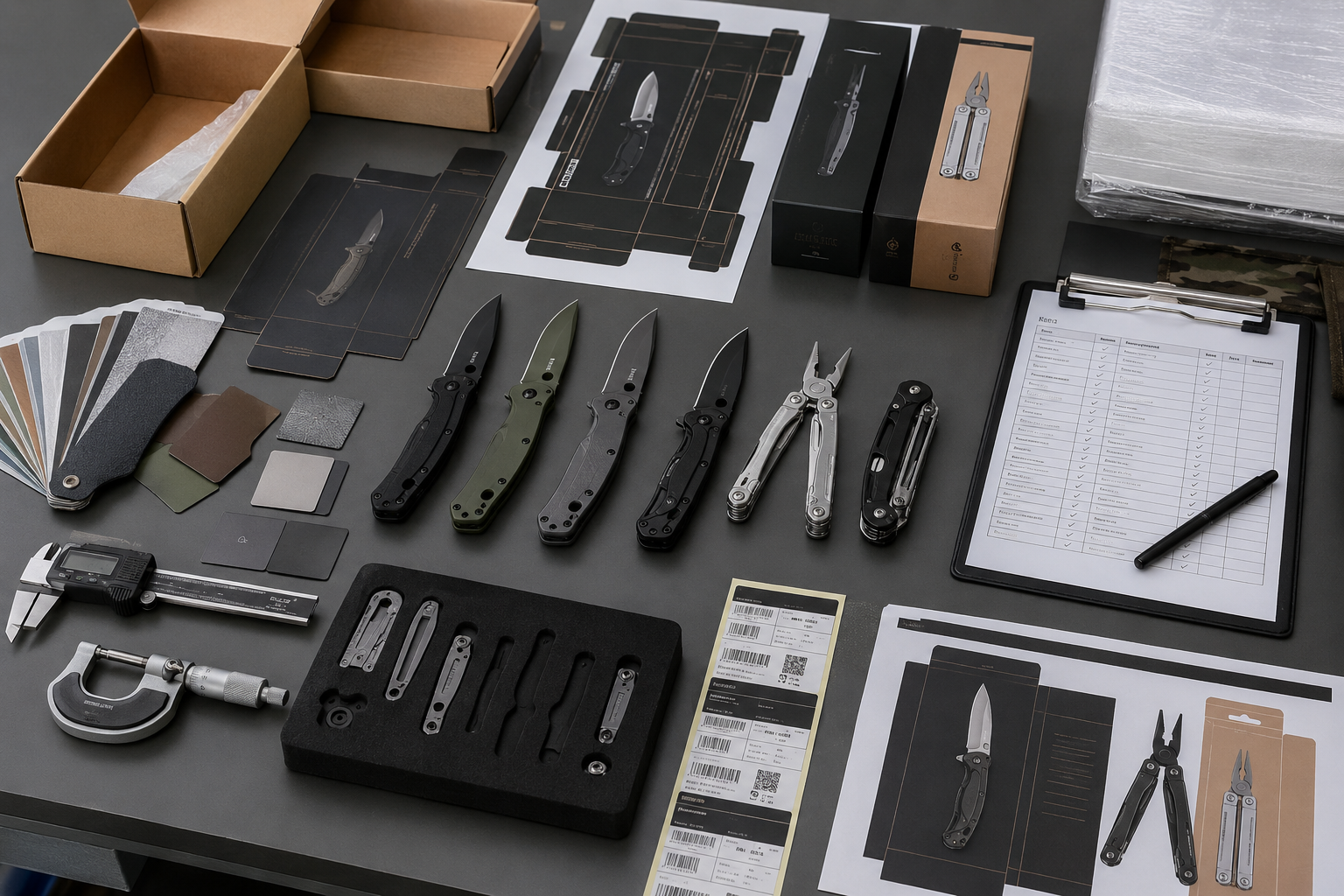
Image prompt:
Use ChatGPT Image 2. Avoid AI-looking knife shapes, fantasy blades, fake mechanisms, impossible screws, distorted multi-tools, and overly perfect 3D-rendered surfaces. Realistic industrial product photography of ODM quality compliance and packaging control, showing approved knife samples, QC checklist, packaging artwork proofs, carton test setup, product labels, inspection tools, and material reference samples on a clean QC table, neutral lighting, no text, no logo, no watermark, no violence, no blood.
I Move Quality Control Upstream
Quality control should begin before production starts. The approved sample should be frozen. The material list should be confirmed. The packaging artwork should be checked. The inspection checklist should be written. For a folding knife, I want to check blade play, lock engagement, opening and closing feel, sharpness, screw stability, finish, and packaging. For a multi-tool, I also check each tool function, plier alignment, spring tension, and tool rubbing.
Compliance is also part of procurement. For the European Union, the European Commission page on General Product Safety Regulation explains that EU product safety rules aim to ensure only safe products are available on the market. For the United States, CBP tells new importers to understand customs procedures and commodity-specific entry requirements before importing. CPSC also explains that the importer may be the Importer of Record in consumer product eFiling contexts. These sources do not replace legal advice, but they remind buyers to confirm responsibility.
Packaging should not be treated as decoration. It protects the product, supports retail sales, and carries product information. If packaging claims are unclear or unsupported, the buyer may create unnecessary channel risk.
| Control point | What I check | Why it matters |
|---|---|---|
| Approved sample | Product function and appearance | Sets the mass-production reference |
| QC checklist | Inspection points and acceptance level | Reduces disputes during shipment |
| Compliance review | Target market, import role, product safety | Prevents late channel problems |
| Packaging proof | Artwork, label, insert, carton | Protects brand and delivery quality |
How Should Purchase Order, Production Follow-Up, and Shipment Be Managed?
An ODM order can go wrong after sample approval. If PO details, production updates, and shipping terms are unclear, delays and disputes grow.
The purchase order should confirm specification, approved sample, quantity, price, packaging, payment terms, production timeline, inspection plan, shipping term, documents, and change-control rules.
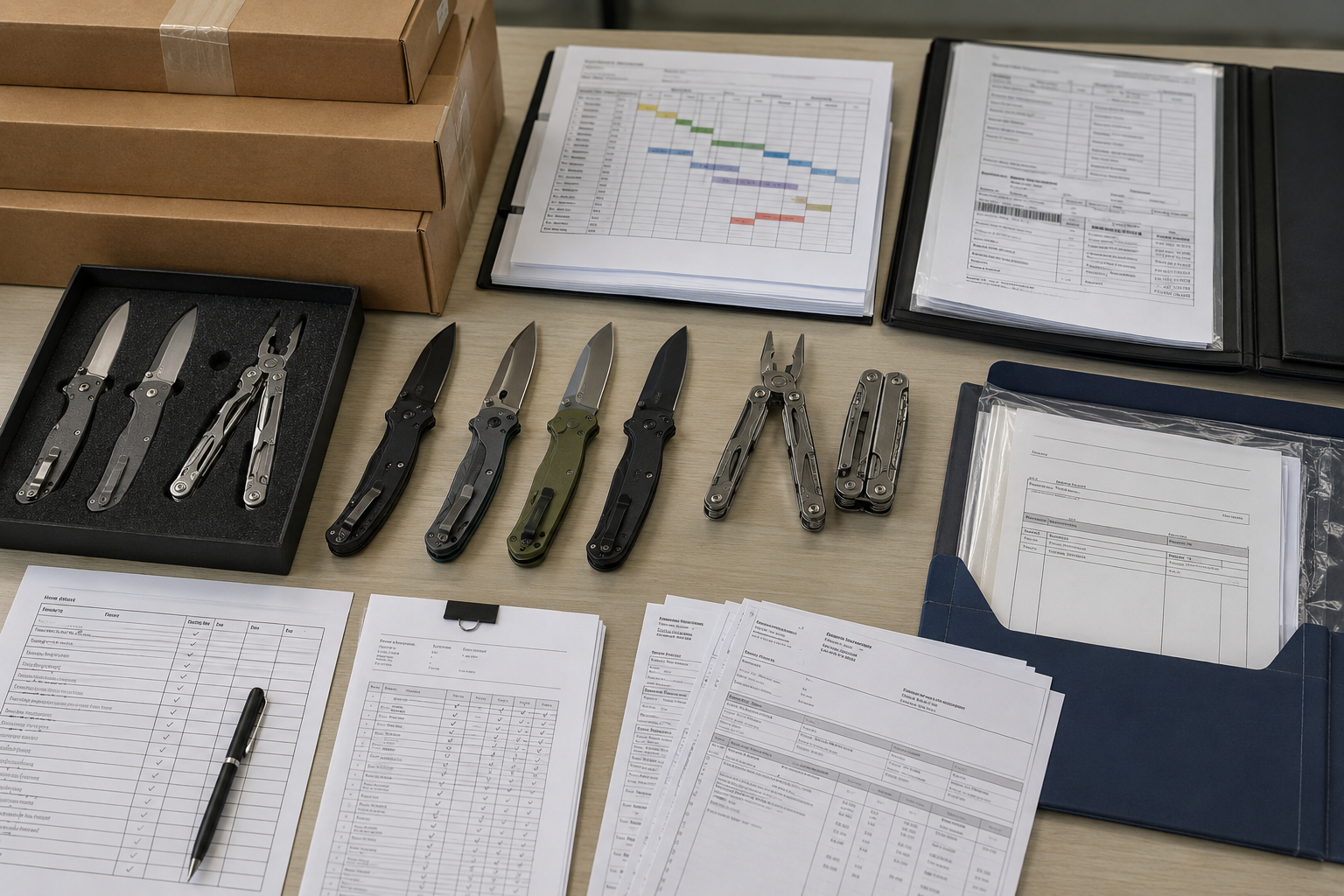
I Keep the Order Connected to the Approved Standard
Once the purchase order is placed, the project should not rely on memory. The PO should match the quotation and approved sample. It should include product name, model, specification, quantity, unit price, packaging, logo method, payment terms, delivery time, inspection requirement, and trade term. If anything changes, both sides should confirm it in writing.
Production follow-up should be practical. I usually track material preparation, component processing, heat treatment when relevant, surface finishing, assembly, packaging, in-process checks, final inspection, and shipment preparation. This helps the buyer understand where the order is and whether any issue needs a quick decision. It also helps the factory avoid last-minute surprises.
Shipping terms matter too. The U.S. International Trade Administration explains that Incoterms define seller and buyer responsibilities for delivery in international transactions. For ODM buyers, FOB, EXW, CIF, DAP, and DDP can create different cost and responsibility structures. Buyers should not choose a term only because it sounds familiar. They should choose it based on logistics control, importer role, landed cost, and experience.
| PO and shipment item | What to define | Why it matters |
|---|---|---|
| Product specification | Final approved version | Prevents wrong production |
| Timeline | Sample, production, inspection, shipment | Helps stock and launch planning |
| Incoterm | Delivery point, cost, risk, documents | Clarifies responsibility |
| Change control | Written approval for changes | Protects both buyer and factory |
How Should Buyers Plan Reorders and Long-Term ODM Cooperation?
A first order can succeed by effort. Long-term ODM cooperation needs stable specifications, communication, quality records, and practical improvement.
Buyers should plan reorders by keeping approved samples, tracking defects, updating specifications, forecasting demand, reviewing packaging, confirming materials, and improving the product without changing it randomly.
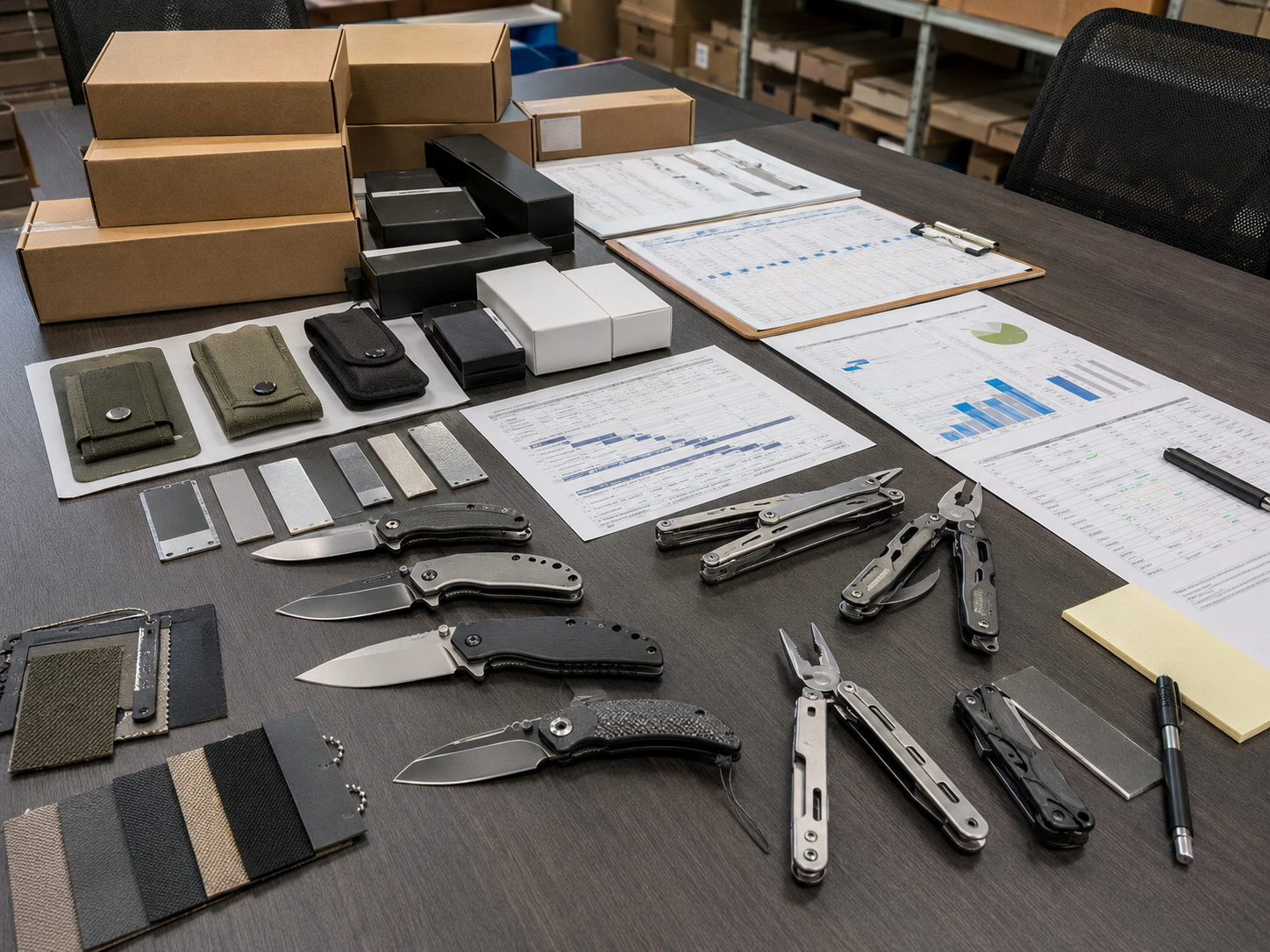
I Treat the Second Order as the Real Test
The first order proves that the buyer and factory can launch a product. The reorder proves whether the cooperation can continue. For knife and outdoor tool projects, repeat production depends on stable materials, clear specifications, controlled finishes, packaging consistency, and honest communication. If the buyer changes the product without updating the specification, the factory may follow the old standard. If the factory changes a process without approval, the buyer may see inconsistent quality.
I like to keep a golden sample, final drawings or specifications, packaging files, QC records, and issue logs. If the first order has problems, the reorder should not simply repeat them. We should review defect photos, customer feedback, production notes, and inspection results. Then we decide what should change and what should stay fixed.
Quality management thinking helps here. The ISO 9001:2015 page explains quality management as a framework for meeting customer expectations, improving performance, and maintaining processes. I do not use that to claim certification. I use it to explain why ODM procurement should become a repeatable system. The best long-term projects improve without losing control.
| Reorder item | What to keep | What to improve |
|---|---|---|
| Golden sample | Structure, finish, action, packaging | Use as reference for every batch |
| QC record | Defects, corrections, inspection results | Improve weak points next order |
| Forecast | Expected timing and quantity | Prepare materials earlier |
| Communication | Written changes and approvals | Avoid uncontrolled product drift |
Turn your idea into a quote-ready knife project.
Share your drawing, sample photo, target quantity, market, and packaging needs. Vast State will review manufacturability and prepare OEM/ODM options.
Conclusion
ODM procurement works when buyers turn ideas into clear briefs, approved samples, controlled production, practical QC, and repeatable long-term cooperation.
Source Notes
- Alleima 14C28N supports the material-selection discussion for knife steel performance.
- European Commission product safety supports the need to consider product safety in target markets.
- CBP importer tips supports the point that buyers should understand customs and commodity-specific entry requirements.
- CPSC eFiling resources provides partial context for importer responsibility in U.S. consumer product entry workflows.
- ITA Incoterms overview supports the trade-term and delivery responsibility discussion.
- ISO 9001:2015 supports the process-based quality management discussion.