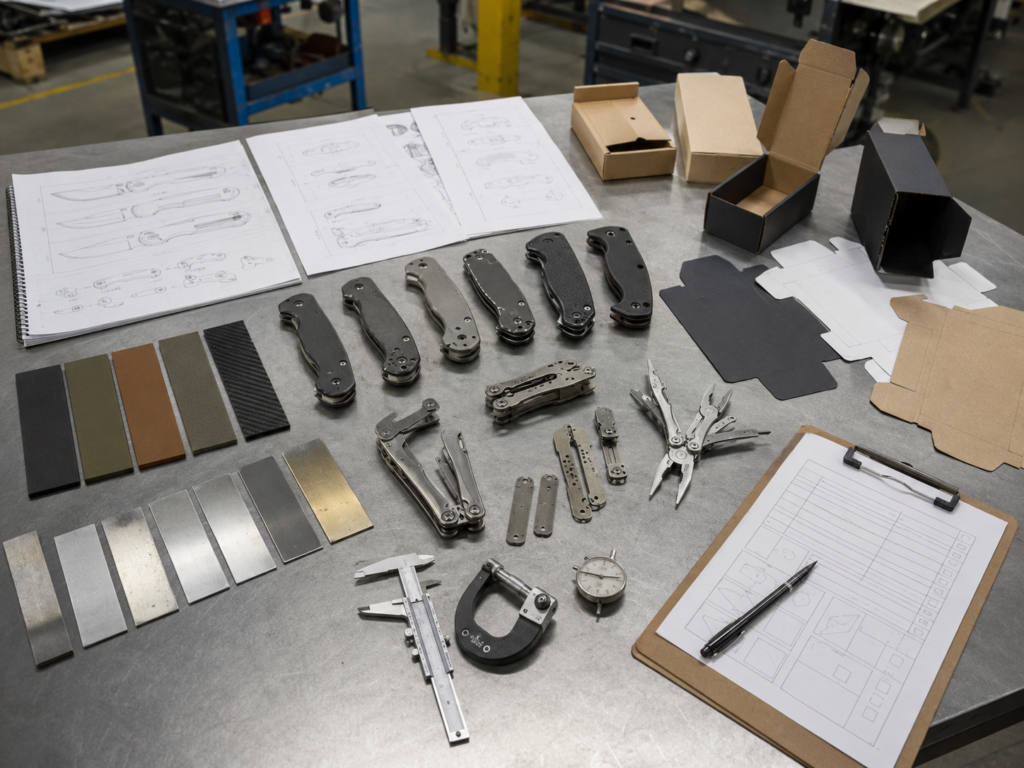
A product idea can look strong and still fail. If development skips market, structure, cost, or testing, the final product becomes risky.
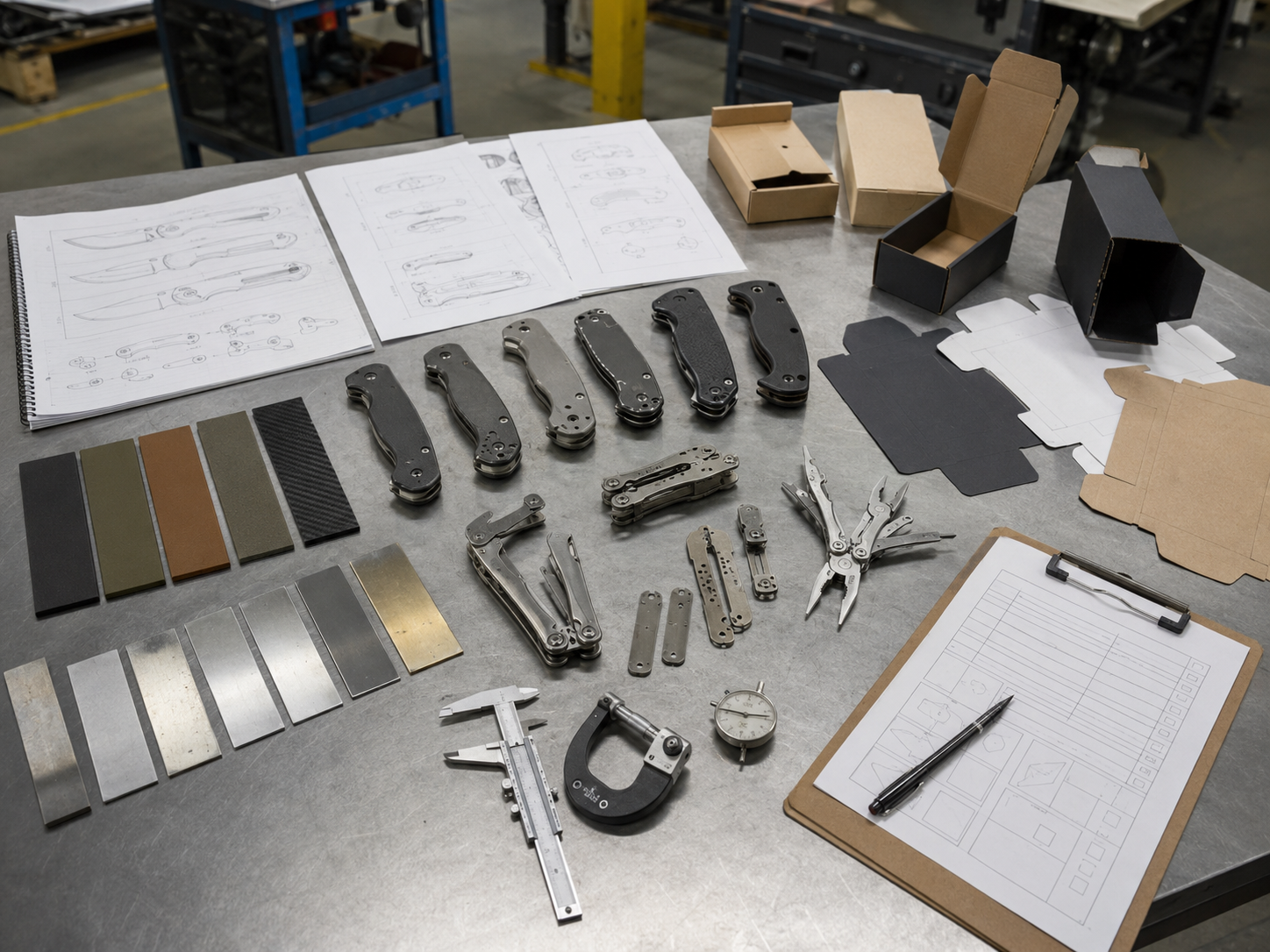
The product development process turns an idea into a market-ready knife or outdoor tool through market review, product brief, concept design, feasibility study, material selection, prototype, testing, sample approval, production planning, quality control, packaging, and launch follow-up.
Quick buyer brief:
- Answer: Product development connects market need, engineering, cost, quality, compliance, and production.
- Buyer context: This helps knife brands, outdoor brands, importers, wholesalers, distributors, and private label buyers.
- Key checks: Target user, target price, blade steel, handle material, lock structure, prototype, testing, packaging, compliance, and final QC.
Have a knife or multi-tool project in mind?
Send your sketch, CAD file, sample photo, or product idea. Vast State can review manufacturability, suggest materials, estimate MOQ, and prepare a quote for your OEM/ODM project.
When I develop a knife or outdoor tool with a buyer, I do not start from appearance alone. I start from the market problem. Who will use the product? What price should it hit? What material can support that price? What structure can be produced consistently? What packaging will help the buyer sell it? A good product development process answers these questions step by step. It makes the final sample easier to approve and mass production easier to control.
Why Should Product Development Start With Market and Buyer Needs?
A product that starts only from a drawing can miss the market. It may look good but fail on cost, function, or channel fit.
Product development should start with market and buyer needs because the target user, price range, sales channel, and brand position decide the product structure, materials, packaging, and quality standard.
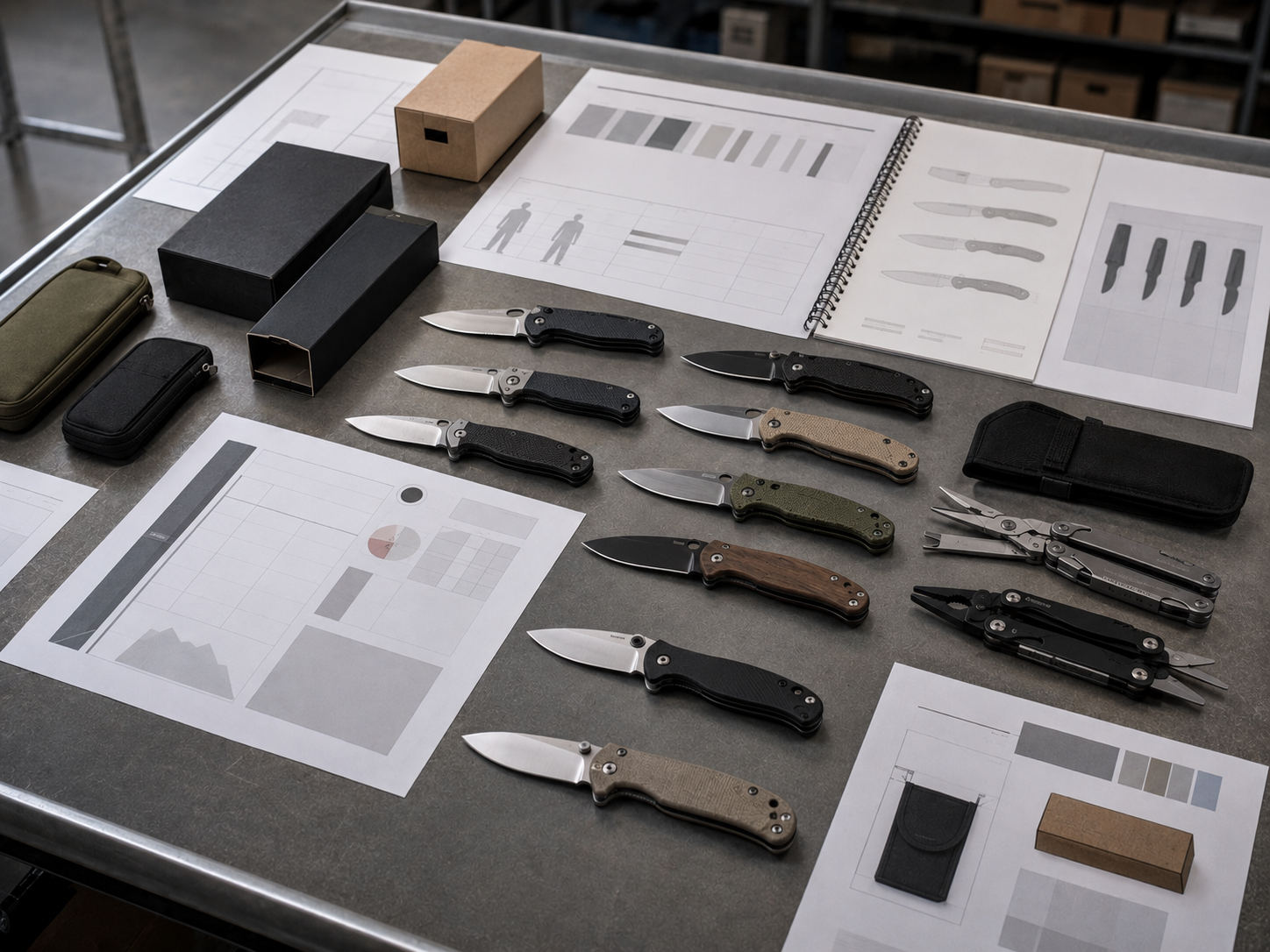
I Define the Commercial Goal Before the Product Shape
I usually ask buyers to define the market before I discuss the design details. A folding knife for EDC, a camping knife for outdoor retail, a rescue tool for work use, and a compact multi-tool for distributors should not follow the same path. The target user affects size, weight, blade shape, handle grip, lock type, and packaging. The sales channel affects price, carton planning, product information, and MOQ. The buyer’s brand position affects finish, material, and visual details.
This early stage also protects the project from overdevelopment. Some product ideas become too expensive because every feature is added too early. Some ideas become too simple because cost control is pushed too hard. I prefer to define the product level first. Is it an entry model, a mid-range private label product, or a higher-positioned brand item? This decision helps the factory suggest realistic material and process options.
The ISO 56002 innovation management page supports the idea that innovation can be managed through a system, not only through random inspiration. In practical OEM/ODM work, that system begins with a clear market need.
| Starting point | What I ask | Why it matters |
|---|---|---|
| Target user | EDC, outdoor, camping, fishing, utility | Guides function and structure |
| Sales channel | Retail, distributor, online, wholesale | Guides packaging and SKU planning |
| Target price | Entry, mid-range, higher-positioned | Controls material and process choices |
| Brand goal | Private label, ODM line, new product family | Guides customization and product story |
OEM/ODM RFQ Checklist
Prepare these details to help Vast State review your project and provide a more accurate quotation.
| RFQ Field | What to Prepare |
|---|---|
| Project type | OEM from drawing / ODM private label / wholesale catalog |
| Product category | Folding knife / fixed blade / multi-tool / outdoor tool |
| Design status | Idea / sketch / 2D drawing / 3D CAD / physical sample |
| Target price | Ex-factory target price or retail price range |
| MOQ expectation | 500 / 1,000 / 3,000 / 5,000+ pcs |
| Logo method | Laser engraving / etching / printing / molded logo |
| Packaging | Standard packaging / custom retail box / Amazon-ready |
| Market | USA / EU / Japan / Korea / Middle East / other |
| Compliance needs | Buyer-specified testing / documentation / labeling |
| Timeline | Sample deadline / mass production deadline |
How Does a Product Brief Turn an Idea Into a Workable Direction?
A vague idea creates vague samples. If the brief is unclear, the factory must guess materials, size, function, and quality level.
A product brief turns an idea into a workable direction by defining use case, dimensions, target price, material preference, lock or tool structure, finish, packaging, inspection needs, and target market.
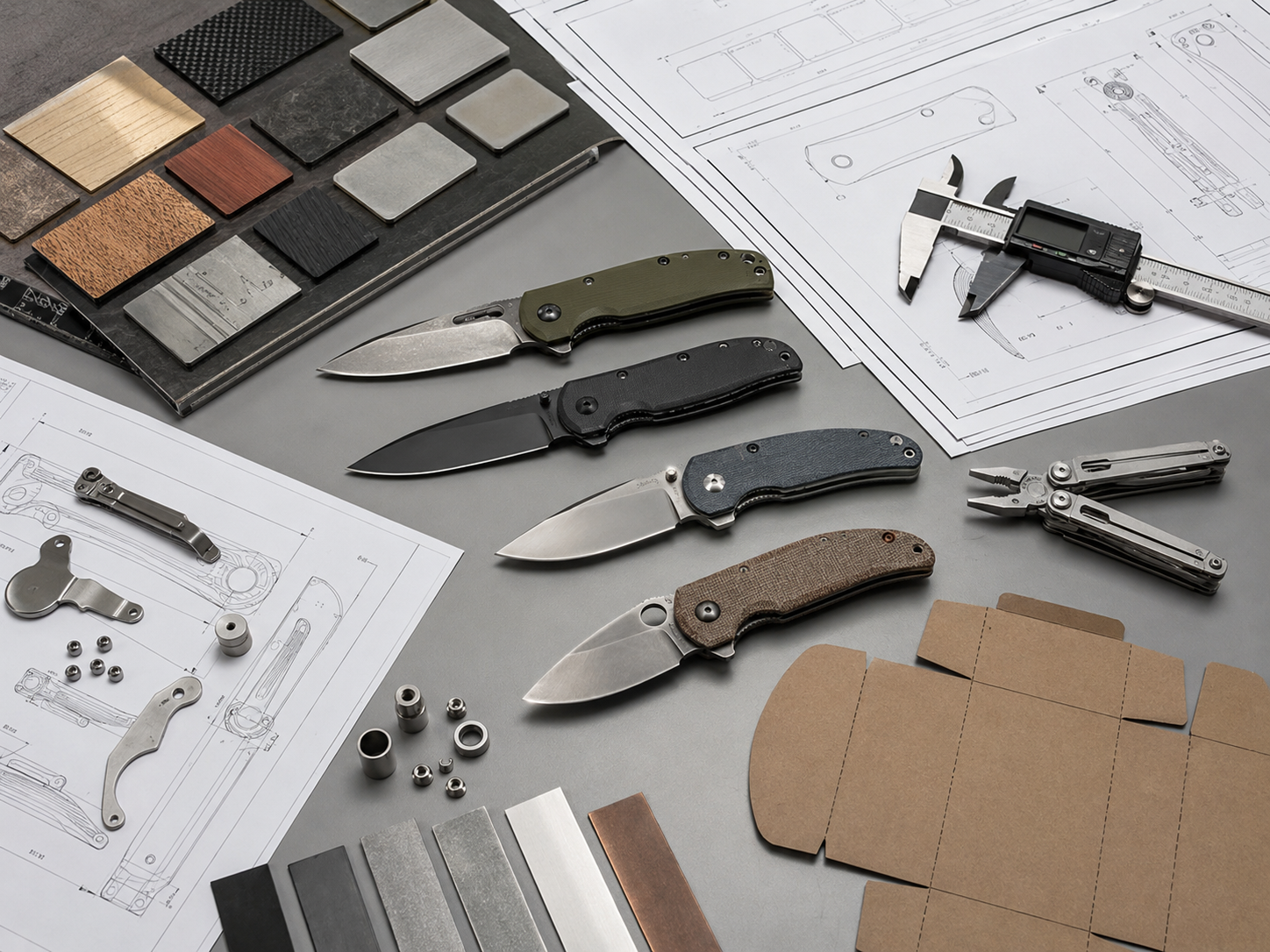
I Make the Brief Useful for Engineering and Quotation
A good brief does not need fancy language. It needs clear information. For a folding knife, I want to know blade length, blade shape, steel preference, handle material, lock type, opening method, finish, logo method, packaging style, and target market. For a multi-tool, I want the function list and the priority of each function. Tool quantity alone is not enough. A plier, screwdriver, saw, scissors, or file must have enough space and strength to work correctly.
The brief should also include the commercial target. If the buyer needs a certain price range, I can suggest steel, handle material, finish, packaging, and structure that fit it. If the buyer has a higher-positioned product in mind, I can suggest better finishing, tighter assembly checks, or a more detailed packaging plan. Without this information, a quotation can look attractive but become unrealistic later.
Material references are helpful at this point. For example, Alleima 14C28N knife steel gives buyers a useful reference for blade steel discussions around corrosion resistance, hardness, and edge performance. The best steel still depends on the project, but an official material page makes the conversation more concrete.
| Product brief item | What to define | Practical benefit |
|---|---|---|
| Product type | Folding knife, fixed blade, multi-tool, camping tool | Sets the development path |
| Core specification | Size, material, function, structure | Makes quotation clearer |
| Target cost | Price range and margin need | Prevents overdesign |
| Packaging need | Box, pouch, blister, private label | Avoids late-stage delays |
How Do Concept Design and Feasibility Review Prevent Production Problems?
A design can look beautiful but still be hard to make. If feasibility is ignored, the sample may not repeat in mass production.
Concept design and feasibility review check whether the product shape, structure, material, lock, tooling, process, cost, and assembly method can support stable production.
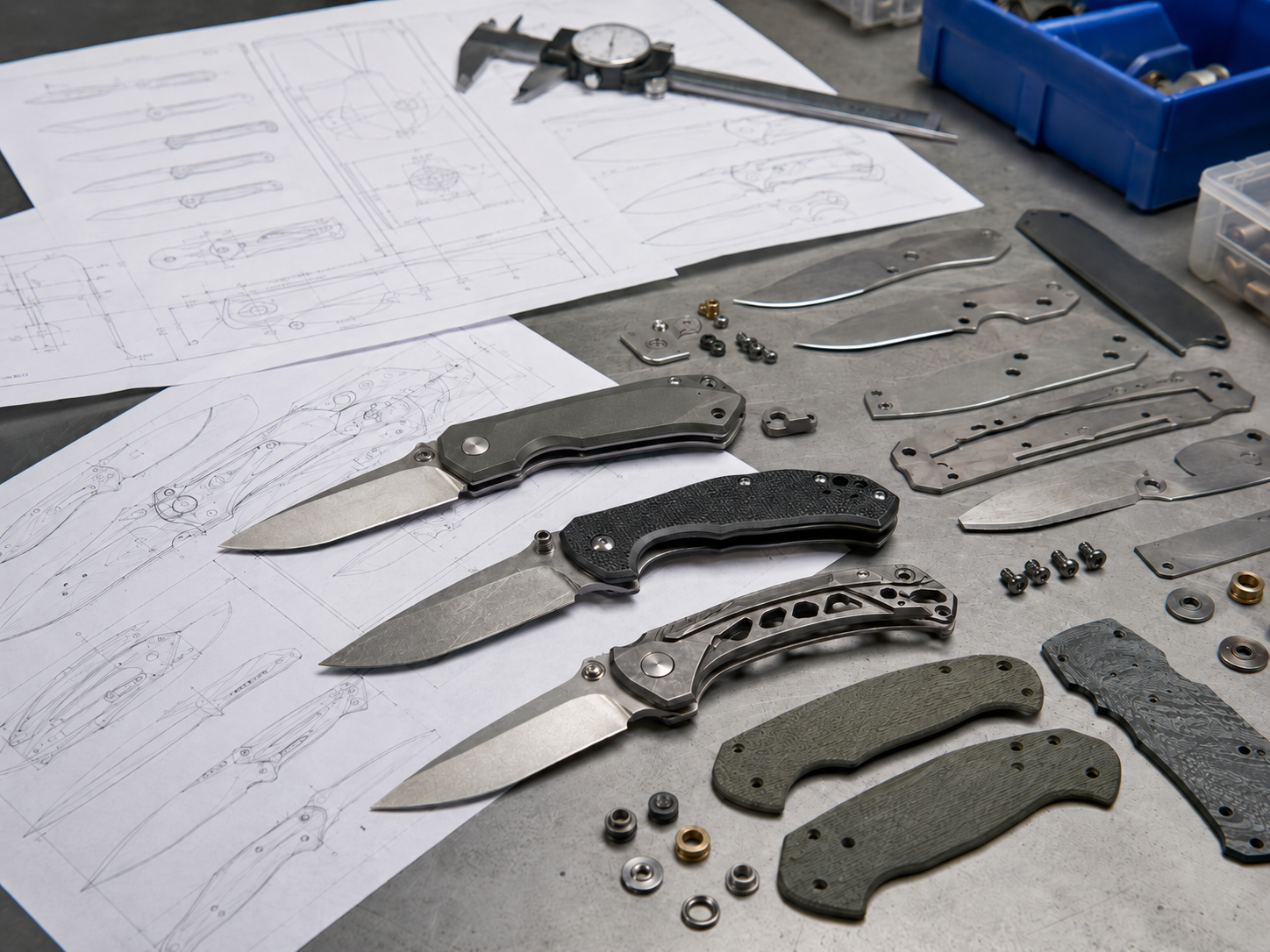
I Check the Design Before It Becomes an Expensive Sample
Concept design is where the idea becomes a product shape. This stage can include sketches, 2D drawings, 3D models, tool layout, handle shape, blade profile, lock position, screw placement, clip position, and packaging direction. I like to review these details before making samples because small design choices can create large production issues.
For folding knives, the pivot hole, stop pin area, blade tang, lock face, liner thickness, handle scale, and screw position must work together. If one part is wrong, the knife may have blade play, poor centering, weak lockup, or rough opening. For multi-tools, the problem can be even more complex. Each tool layer needs clearance. A spring must hold tools correctly. The plier head must align. The handle must close smoothly.
Feasibility review also includes cost. Some designs require too much CNC time, too many special parts, or too much hand adjustment. A design that needs heavy manual correction may be risky for repeat orders. I prefer to adjust the concept early, while changes are still cheap and fast. This is where practical manufacturing experience protects the buyer’s timeline and budget.
| Feasibility check | What I review | Production risk reduced |
|---|---|---|
| Structure | Pivot, lock, handle, tool layout | Poor action or weak fit |
| Material | Steel, handle, hardware, finish | Cost or performance mismatch |
| Process | Cutting, machining, grinding, assembly | Slow or unstable production |
| Packaging | Size, protection, retail use | Late artwork or carton changes |
How Do Prototype, Testing, and Sample Approval Reduce Risk?
A prototype is not just a photo. If buyers approve samples too quickly, mass production may repeat hidden problems.
Prototype, testing, and sample approval reduce risk by checking function, size, material, finish, lockup, sharpness, tool movement, packaging fit, and repeat-production feasibility before order confirmation.
I Use the Sample as a Production Reference
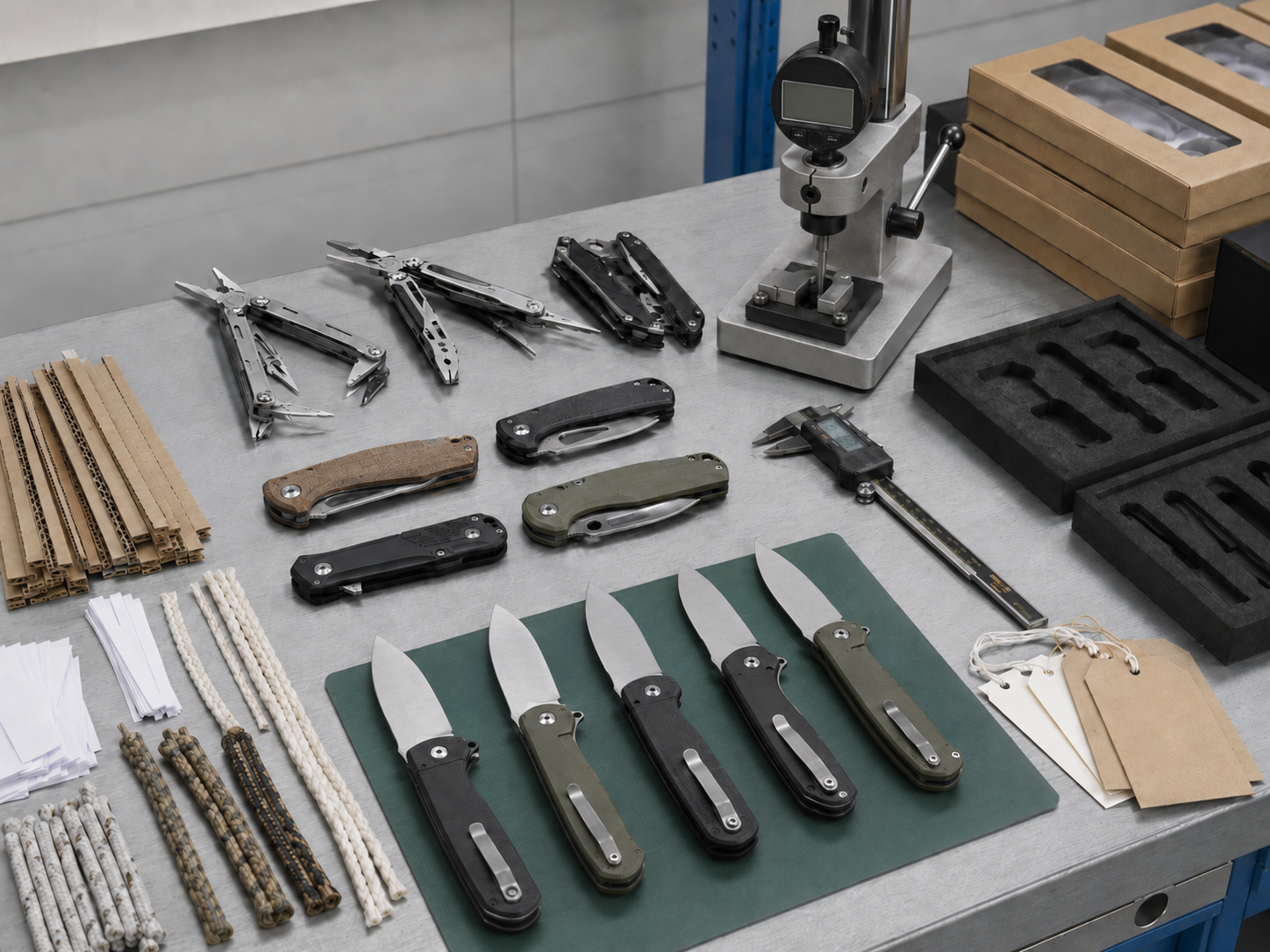
Prototype review should be detailed. I check whether the product matches the brief. I look at the user feel. I open and close the knife. I check the lock, blade centering, handle comfort, screw fit, finish, sharpness, logo position, and packaging fit. For multi-tools, I check each function, plier alignment, tool rubbing, spring tension, and tool access. A sample should not only look right. It should work right.
Testing depends on the product. For cutting tools, heat treatment and hardness checking may be important. The NIST Rockwell hardness measurement guide supports the point that hardness measurement needs good practice. In manufacturing, hardness testing helps confirm process control, but it does not replace functional review. A blade also needs suitable geometry, grinding, sharpening, and real product fit.
Sample approval should be written and specific. I prefer to record the approved sample, material, finish, packaging, logo method, inspection points, and any allowed tolerance. If the sample needs changes, feedback should be clear. “Improve quality” is too vague. “Reduce side play,” “adjust lock release feel,” or “change the handle texture” gives the factory something real to act on.
| Sample review item | What I check | Why it matters |
|---|---|---|
| Function | Opening, closing, lockup, tool action | Confirms real user experience |
| Material and finish | Steel, handle, coating, logo | Confirms product level |
| Measurement | Size, fit, hardness when needed | Supports process control |
| Packaging | Box, insert, pouch, carton | Prevents late shipment problems |
How Does Production Planning Turn an Approved Sample Into Repeatable Goods?
A good sample does not guarantee a good batch. If production planning is weak, approved details can drift during mass production.
Production planning turns an approved sample into repeatable goods by freezing specifications, preparing materials, controlling processes, writing QC points, confirming packaging, and tracking production changes.
I Freeze the Standard Before Mass Production Starts
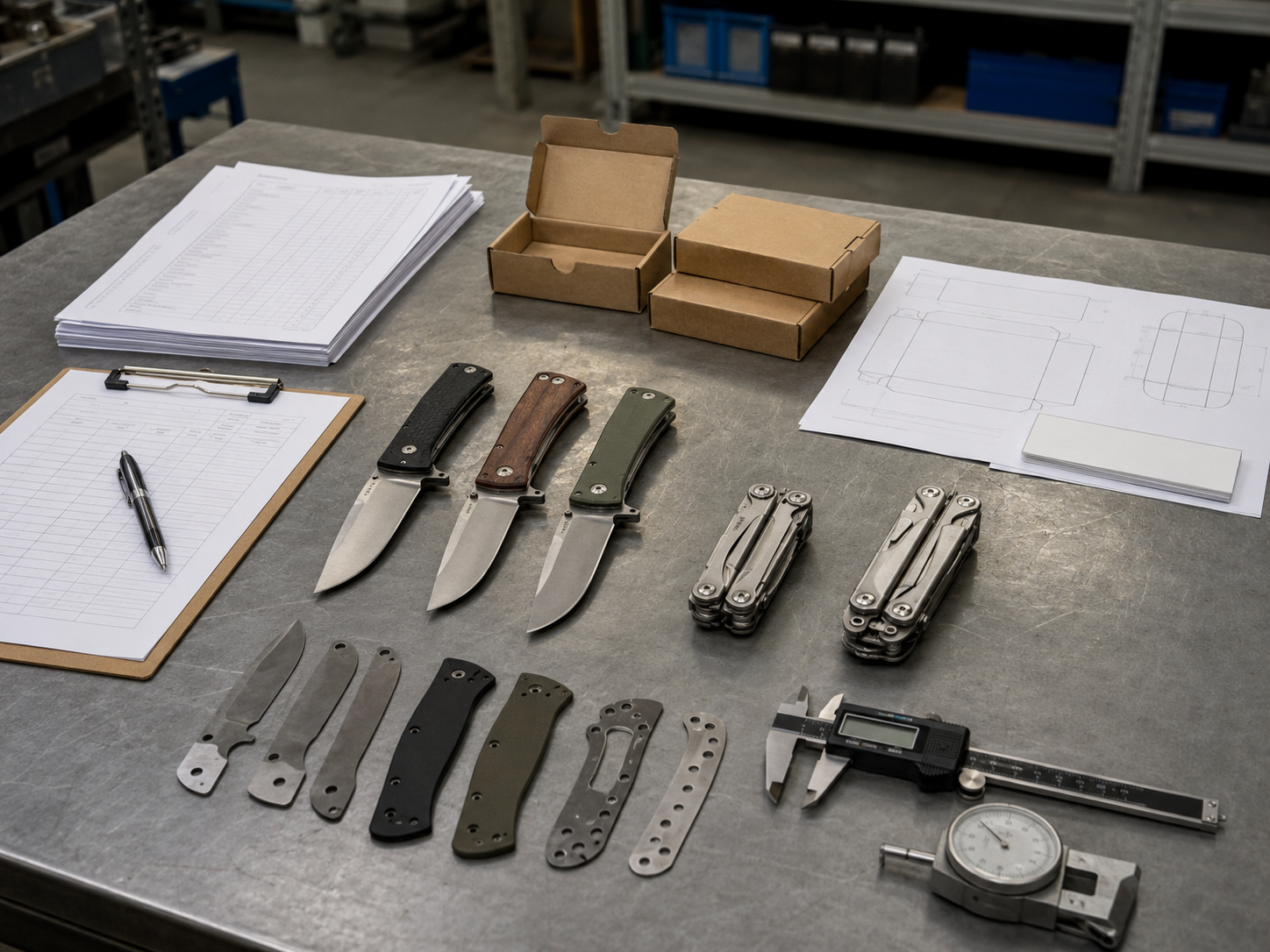
After sample approval, I like to treat the approved product as the production standard. The material list should be clear. The blade steel, handle material, screw type, lock structure, finish, packaging, and logo method should be documented. The QC checklist should also be ready. If the buyer changes something after this point, the change should be written and confirmed by both sides.
Production planning includes many small steps. Materials must be ordered. Blade parts must be cut, machined, ground, heat treated, finished, assembled, sharpened, inspected, and packed. Handle parts need machining or forming. Packaging needs artwork confirmation, printing, and carton planning. If any of these steps moves late, the whole delivery can be affected.
Quality management helps make this process repeatable. The ISO 9001:2015 page describes quality management as a way to meet customer and applicable requirements and improve customer satisfaction. I do not use that to claim certification. I use it to explain the mindset. A product development process should create records, standards, checks, and improvement loops. That is what makes repeat orders easier.
| Production planning item | What to freeze | Why it matters |
|---|---|---|
| Approved sample | Function, appearance, packaging | Gives production a reference |
| Material specification | Steel, handle, hardware, finish | Prevents batch differences |
| QC checklist | In-process and final checks | Reduces disputes |
| Change control | Written approval for changes | Protects buyer and factory |
How Should Packaging, Compliance, and Launch Feedback Complete the Process?
A product is not finished when it leaves assembly. Weak packaging, unclear safety review, or ignored feedback can damage the launch.
Packaging, compliance, and launch feedback complete the product development process by protecting the product, supporting sales, checking target-market duties, and improving future production.
I Use Launch Feedback to Improve Without Losing Control
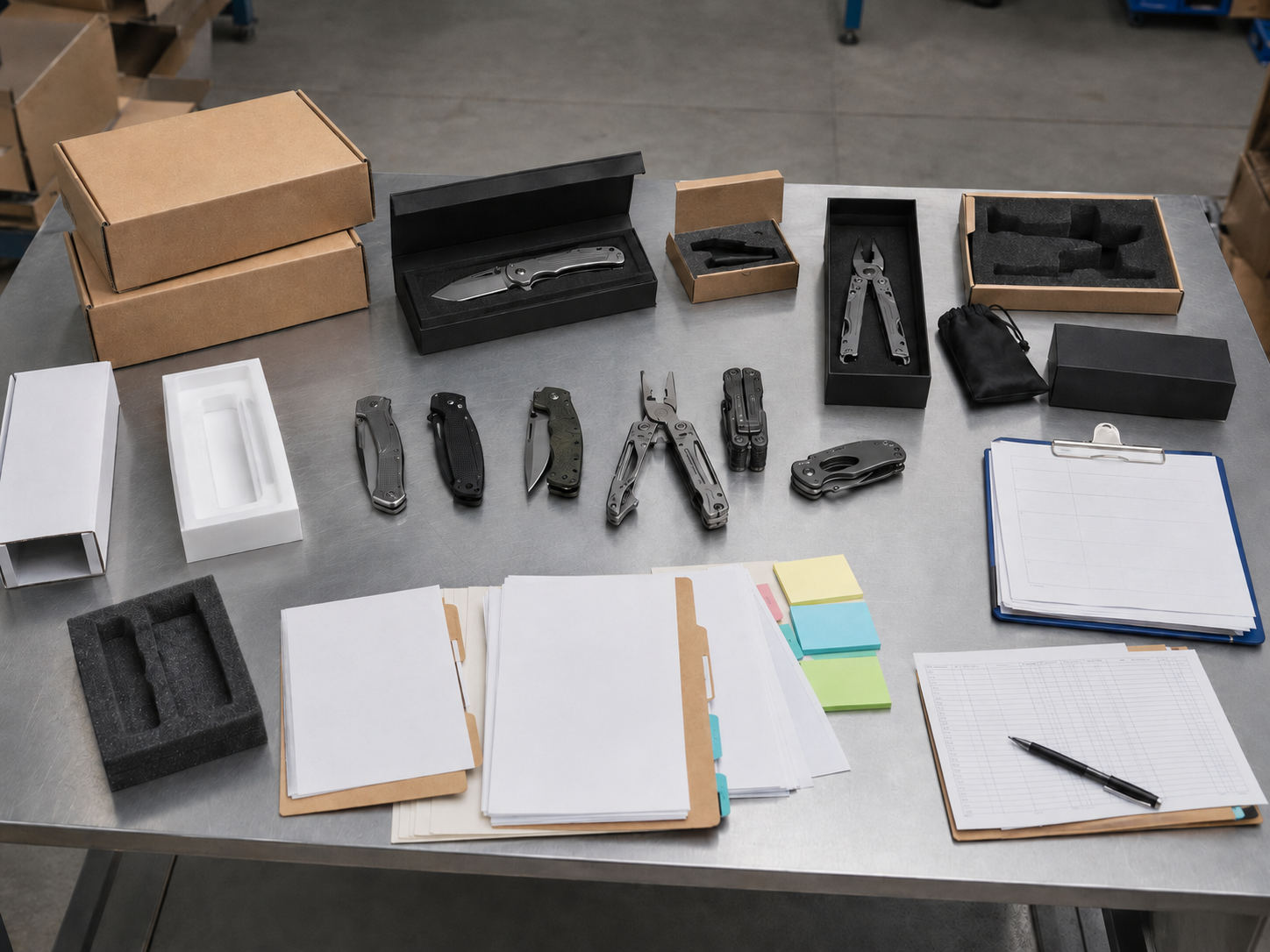
Packaging is part of the product experience. A retail box, pouch, insert card, blister, or bulk carton should protect the item and support the buyer’s sales channel. The packaging should be clear and practical. It should not make unsupported claims. It should also match the target market and importer requirements.
Compliance should be reviewed before launch. For products sold in the EU, the European Commission product safety page explains that product safety rules aim to ensure that only safe products are available on the market. This is general guidance, not knife-specific legal advice. It still reminds buyers to think about product safety, labeling, importer responsibility, instructions, and risk review. For knife and tool products, buyers should also confirm local rules in their target markets.
After launch, feedback matters. If customers report stiff action, loose screws, weak packaging, or unclear product information, the next production should improve. But improvement should be controlled. I prefer to keep the golden sample and update the specification only when both buyer and factory agree. This avoids random product drift. A mature product development process does not stop at shipment. It becomes a repeatable cycle of feedback, correction, and stable reordering.
| Final stage | What I check | Long-term value |
|---|---|---|
| Packaging | Protection, retail use, carton strength | Reduces damage and supports sales |
| Compliance review | Target-market safety and import duties | Reduces launch risk |
| Feedback | Customer comments and defect records | Improves future batches |
| Reorder update | Controlled specification changes | Keeps quality stable |
Turn your idea into a quote-ready knife project.
Share your drawing, sample photo, target quantity, market, and packaging needs. Vast State will review manufacturability and prepare OEM/ODM options.
Conclusion
A strong product development process turns ideas into practical, tested, market-ready products that buyers can produce, sell, and reorder with confidence.
Source Notes
- ISO 56002:2019 supports the idea that innovation and product development can be managed through structured systems.
- Alleima 14C28N supports the material-selection discussion for knife steel performance.
- NIST Rockwell hardness guide supports the point that hardness testing needs good measurement practice.
- ISO 9001:2015 supports the process-based quality management discussion.
- European Commission product safety supports the need to consider product safety before launch.