Budget blade steel looks simple until returns start. A small steel choice can affect price, claims, sharpening, and repeat production.
Knife buyers should choose 8Cr13MoV when cost, China supply, and entry-level EDC value matter most. They should choose AUS-8 when the project needs a Japanese steel story, familiar mid-range positioning, and stable all-around performance. Heat treatment, geometry, and QC matter more than the steel name alone.
Quick buyer brief:
- Answer: 8Cr13MoV is usually the practical value choice; AUS-8 can support a stronger material story.
- Buyer context: This helps knife brands, importers, wholesalers, and private label buyers plan budget and mid-range knife programs.
- Key checks: Confirm steel source, composition expectation, HRC target, heat treatment, grind, edge angle, corrosion test, packaging claim, MOQ, Incoterm, and inspection method.
Planning a knife project with this steel?
Send us your target market, MOQ, price range, and blade type. Vast State can help you choose the right steel, HRC range, finish, handle material, and QC requirements for OEM/ODM production.
When I discuss 8Cr13MoV and AUS-8 with buyers, I do not start with internet rankings. I start with the product line. A $15 retail utility folder, a private label outdoor knife, and a mid-range EDC model do not need the same steel story. The buyer needs a blade that fits the market, the margin, the user expectation, and the production plan. That is where this comparison becomes useful.
What Is the Real Difference Between 8Cr13MoV and AUS-8?
Two steels can look similar on a chart but behave differently in a product. Buyers need the practical difference, not only the steel names.
8Cr13MoV and AUS-8 are both budget-friendly stainless knife steels with similar carbon and chromium ranges. The real difference is often sourcing, brand perception, heat treatment control, and how the supplier builds the knife around the steel.
I Compare Them as Product Materials, Not as Forum Labels
In practical knife sourcing, 8Cr13MoV and AUS-8 sit in a similar product zone. They are not powder metallurgy super steels. They are also not meaningless mystery stainless if the supplier controls the source, heat treatment, grinding, and inspection. For many budget EDC, utility, promotional, and private label knives, both steels can be useful.
The Knife Country steel composition chart lists 8Cr13MoV at about 0.70-0.80 carbon and 13-14.5 chromium, and AUS-8 at about 0.70-0.75 carbon and 13-14.5 chromium. That is why many buyers see them as close alternatives. The same chart also shows small differences in elements such as manganese, nickel, silicon, molybdenum, and vanadium. Those details matter, but they do not automatically decide the final knife quality.
ZKnives describes Aichi AUS8 knife steel as a mid-range stainless steel from Japan and notes that it is similar to 440B. That supports the common market story around AUS-8: it has a recognizable Japanese steel identity. 8Cr13MoV, on the other hand, is widely used in China-made production knives and can fit cost-sensitive OEM programs well.
For B2B buyers, I would not ask, "Which steel is better?" I would ask, "Which steel supports the price, claim, user, and inspection plan?" A controlled 8Cr13MoV blade can sell better than a poorly executed AUS-8 blade. A well-positioned AUS-8 knife can justify a different product story than a basic 8Cr13MoV knife.
| Comparison point | 8Cr13MoV | AUS-8 |
|---|---|---|
| Typical role | Entry-level and value EDC knives | Budget to mid-range EDC and outdoor knives |
| Market story | Cost-effective Chinese stainless steel | Recognized Japanese stainless steel story |
| Composition zone | Similar carbon and chromium range | Similar carbon and chromium range |
| Buyer risk | Low-cost sourcing can vary by supplier | Higher material story can raise price expectations |
| Best use | Value programs with tight margin | Programs needing a familiar steel name |
Quote-ready RFQ Checklist for This Steel
To get an accurate OEM/ODM quote, prepare these details before contacting a knife manufacturer.
| RFQ Field | What to Prepare |
|---|---|
| Product type | Folding knife / fixed blade / multi-tool / kitchen knife |
| Target market | US / EU / outdoor retail / promotional / tactical / EDC |
| Steel option | 4116 / 14C28N / D2 / N690 / Nitro-V |
| Target HRC | Example: 55-57 HRC, 58-60 HRC |
| Blade finish | Satin / stonewash / black coating / bead blast |
| Handle material | G10 / micarta / aluminum / stainless steel / wood |
| Lock or structure | Liner lock / frame lock / slip joint / full tang |
| Estimated quantity | 500 / 1,000 / 3,000 / 5,000+ pcs |
| Packaging | White box / color box / blister / pouch / gift box |
| Required documents | Drawing / sample photo / logo file / packaging artwork |
Which Steel Gives Better Value for Entry-Level Knife Programs?
A buyer can overpay for a steel name. A buyer can also save too much and damage the brand with weak execution.
8Cr13MoV often gives better value when the goal is an affordable knife with decent stainless performance. AUS-8 can give better value when the sales channel benefits from a known Japanese steel name and slightly higher product positioning.
I Link Steel Choice to the Retail Promise
When a customer asks me whether to use 8Cr13MoV or AUS-8, I first ask about the retail position. If the knife must hit a very sharp price point, 8Cr13MoV is often easier to justify. It can work well for basic folding knives, pocket knives, utility knives, gift sets, and private label models where the buyer needs stable function without a premium steel cost.
AUS-8 can make sense when the buyer wants a stronger material line in the product page. Some consumers recognize AUS-8 from older production knives and outdoor knives. That can help a seller explain the product as more than a generic stainless blade. But the steel name alone does not protect the product. If the knife has poor lockup, weak detent, uneven grind, soft heat treatment, or rough sharpening, the customer will judge the whole knife, not only the steel.
I also watch the channel. A hardware or promotional channel may care more about cost, corrosion resistance, easy sharpening, packaging, and fast repeat orders. An EDC brand may care more about steel naming, action, blade centering, lock feel, handle material, and review language. An importer may care about MOQ, lead time, quality consistency, and after-sales risk. These buyers can all choose different steels for good reasons.
For Vast State projects, I prefer to make the steel decision after the blade shape, target price, MOQ, finish, handle material, lock type, and packaging plan are clear. Steel should support the whole product, not control it blindly.
| Product goal | Better starting choice | Why I would start there |
|---|---|---|
| Lowest practical price | 8Cr13MoV | It often supports value-line margins better |
| Familiar material story | AUS-8 | It carries a known Japanese steel identity |
| Private label starter knife | 8Cr13MoV | It balances cost and basic stainless performance |
| Mid-range EDC listing | AUS-8 | It may support stronger product copy |
| Large repeat order | Depends on supplier control | Stable process matters more than the name |
How Should Heat Treatment and Hardness Change the Decision?
A steel name cannot fix weak heat treatment. If hardness varies too much, the knife can feel soft, brittle, or inconsistent.
Buyers should set a realistic HRC target, confirm the heat treatment process, and check hardness by batch. Both 8Cr13MoV and AUS-8 usually need balanced hardness rather than maximum hardness for production knives.
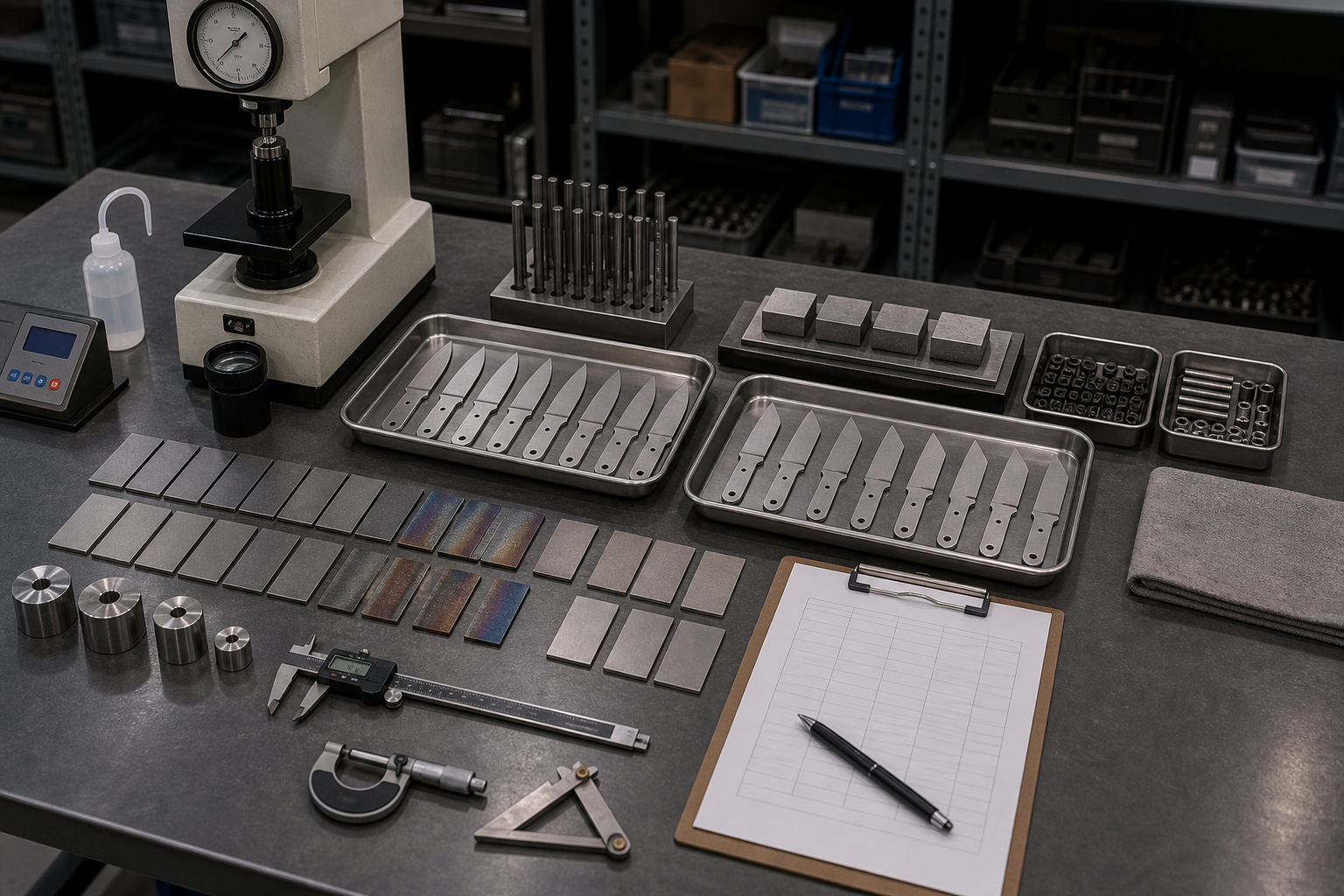
I Treat HRC as a Control Point, Not a Marketing Number
Many buyers want the highest hardness they can put in the listing. I understand why. A high HRC number looks strong. But for production knives, I care more about a realistic hardness window and stable results. If the blade is too soft, the edge may roll or dull too quickly. If the blade is pushed too hard without the right process, the edge may chip more easily. This is especially important for budget stainless steels because buyers often expect easy sharpening and everyday toughness.
The NIST Rockwell hardness guide explains that Rockwell hardness testing is used to assess product properties and that good practice helps reduce measurement errors. That matters in factory work. A hardness number is useful only when the test method, surface preparation, calibration, and sampling are controlled.
In an RFQ, I prefer to see an HRC target range instead of a loose phrase like "high hardness." For example, the buyer can ask the supplier to recommend a range based on blade thickness, blade shape, grind, steel, and use case. The buyer can also request batch hardness records, inspection sampling, and a clear action plan if results fall outside the agreed range.
Heat treatment also connects to grinding. A good blade can lose edge quality if grinding creates too much heat near the edge. I want the supplier to control not only furnace conditions but also post-heat-treatment straightening, surface finishing, bevel grinding, sharpening, and final inspection. The steel name starts the discussion. The process finishes it.
| Heat-treatment item | What buyers should ask | Why it matters |
|---|---|---|
| HRC target | Recommended range by steel and use | Prevents unrealistic hardness claims |
| Batch testing | Sample plan and records | Protects consistency |
| Warpage control | Blade straightness after heat treat | Helps assembly and edge geometry |
| Grinding control | Heat control during bevel work | Protects edge quality |
| Failure response | Rework or rejection rule | Prevents bad batches from shipping |
What Should Buyers Check for Edge Retention, Toughness, and Corrosion?
Steel charts are helpful, but they do not show the whole knife. Edge angle, blade geometry, finish, and use case change performance.
Buyers should compare edge retention, toughness, and corrosion as a balance. 8Cr13MoV and AUS-8 can both serve everyday knives, but the final result depends strongly on heat treatment, edge geometry, finish, care, and inspection.
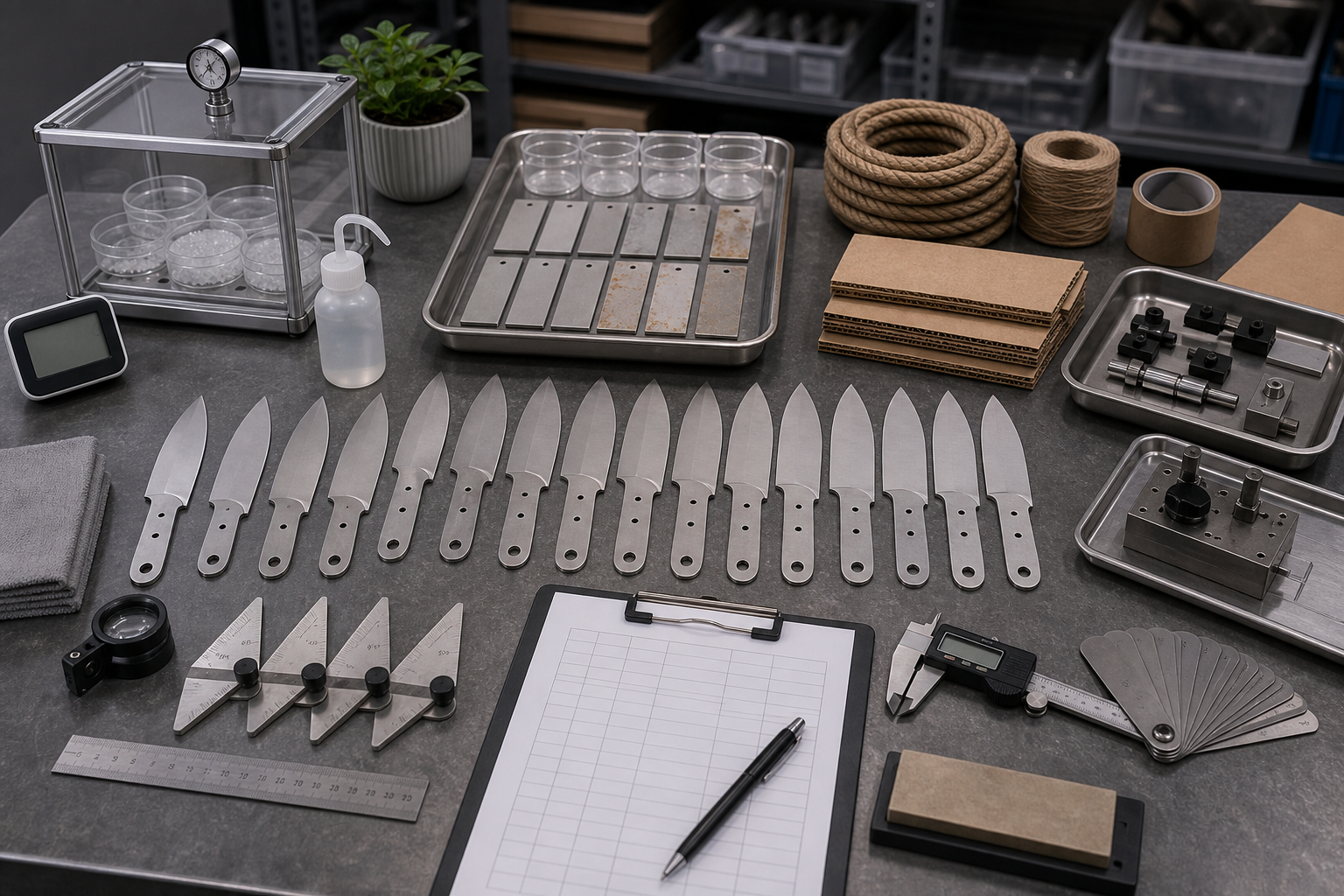
I Avoid One-Word Performance Claims
When buyers compare 8Cr13MoV and AUS-8, they often ask which one has better edge retention. I answer carefully. Edge retention depends on steel chemistry, carbide structure, hardness, edge angle, sharpening finish, and the material being cut. A thin, well-sharpened 8Cr13MoV blade may feel better than a thick AUS-8 blade with a rough grind. A better steel choice can be wasted by poor geometry.
Knife Steel Nerds makes this point clearly in its article on knife steel toughness, edge retention, and corrosion resistance. The article explains that toughness and edge retention are often opposing properties, and it also warns that steel ratings do not predict exactly how a finished knife will cut or resist damage because edge geometry and sharpening matter greatly. I use that idea often in production discussions.
For both 8Cr13MoV and AUS-8, I would position the product around everyday cutting, easy maintenance, and good value. I would not call either one a high-end edge-retention steel. If the buyer wants a premium selling point, I may suggest another steel. If the buyer wants a practical, affordable knife for opening boxes, cutting straps, camping tasks, light outdoor work, and general carry, these steels can still make sense.
Corrosion also needs practical thinking. Both steels have stainless chromium levels, but a stainless knife is not maintenance-free. Surface finish, moisture, salt, sweat, food acids, packaging storage, and user care all matter. A black coating or stonewash finish may change the product look, but it should not become an excuse to ignore material choice and inspection.
| Performance factor | Buyer question | Practical answer |
|---|---|---|
| Edge retention | Will it stay sharp long enough for the price point? | Check steel, hardness, edge angle, and cutting task |
| Toughness | Will the edge roll or chip under normal use? | Match hardness and geometry to use |
| Corrosion | Will it resist normal moisture and handling? | Check finish, care instructions, and storage |
| Sharpening | Can users touch it up easily? | Budget steels often benefit from easy maintenance |
| Consistency | Will batch two match batch one? | Require sampling and inspection records |
How Do Manufacturing, Supply Chain, and Branding Affect the Choice?
A buyer may choose a steel for performance and then lose the deal on MOQ, cost, lead time, or weak product copy.
Manufacturing and branding affect the steel choice because 8Cr13MoV often fits China OEM value production, while AUS-8 can support a more recognized material story. The right choice must match MOQ, lead time, cost, packaging, and channel expectations.
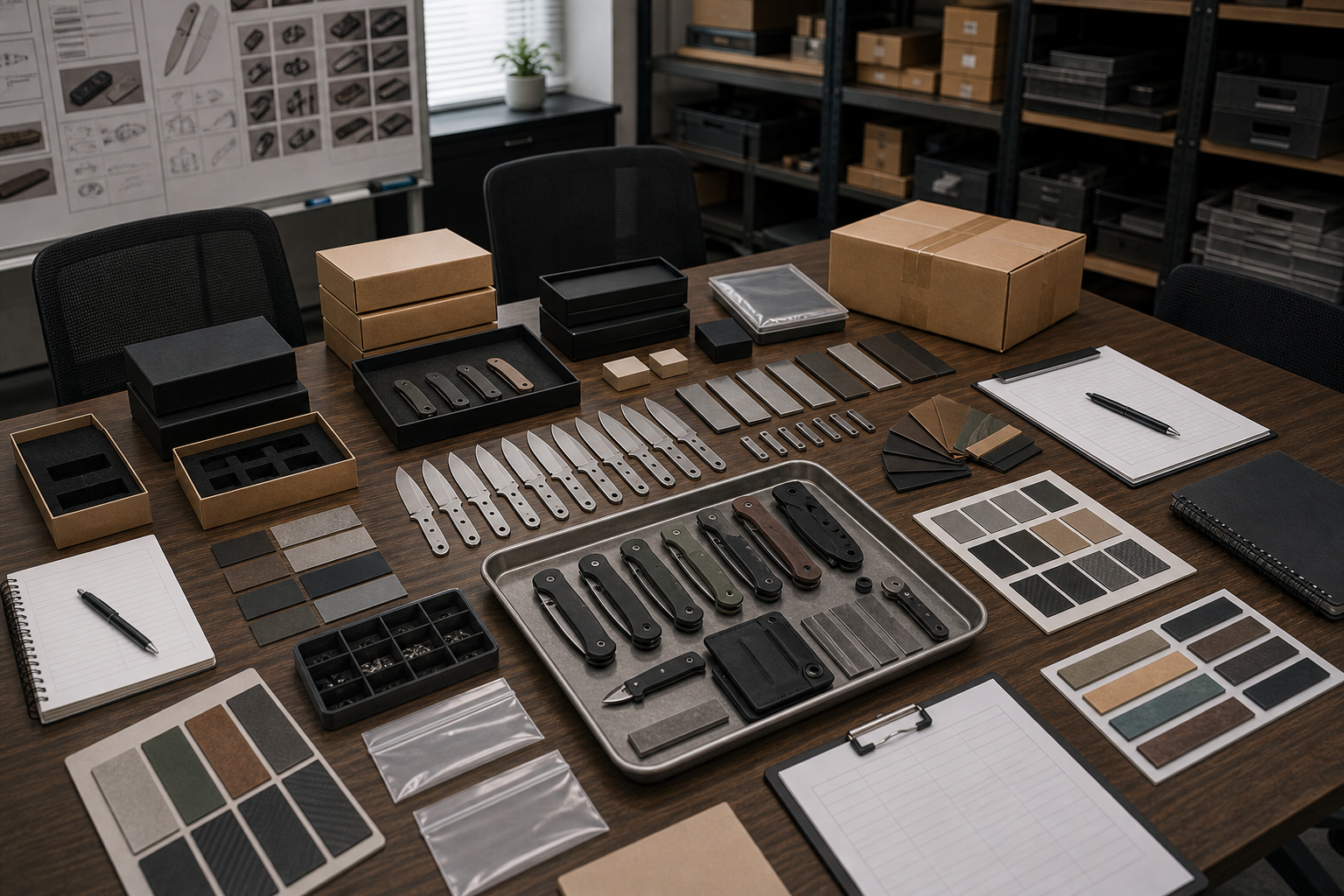
I Put the Steel Into the Full Product System
In OEM and ODM work, steel choice affects more than the blade. It affects the cost sheet, heat treatment plan, sharpening work, packaging claim, sales copy, MOQ, and customer expectation. If the project is a value-line folder, 8Cr13MoV may allow the buyer to spend more budget on handle material, lock smoothness, packaging, or better QC. That can make the finished knife more competitive than spending too much on the steel name.
AUS-8 may be the better choice when the buyer's market understands the steel. Some channels like a known Japanese steel because it gives the sales team a cleaner story. But if the target buyer only cares about a low retail price and basic use, that added story may not return enough value. This is why I ask customers about sales channels before confirming steel.
Supply chain matters too. A supplier may have stable access to one steel and less stable access to another. If the buyer plans repeat orders, material availability and batch consistency matter. A steel that looks slightly better on paper can become a problem if delivery is unstable or if replacement batches do not match the approved sample.
The packaging should also be honest. I would not write "premium super steel" for either 8Cr13MoV or AUS-8. Better wording is "stainless steel blade," "easy to sharpen," "practical EDC use," "balanced value," or a specific steel callout if the buyer has confirmed the material. The brand promise should be useful and defensible.
| Business factor | Why it affects steel choice | What I would check |
|---|---|---|
| MOQ | Some material choices affect minimum order planning | Confirm material availability early |
| Lead time | Steel sourcing and heat treatment affect schedule | Ask for realistic production timing |
| Packaging copy | Steel name changes the product story | Avoid exaggerated claims |
| Target channel | Users value different benefits | Match steel to retail expectation |
| Repeat order | Batch stability protects the brand | Keep sample, spec, and QC records |
What Should Buyers Put in the RFQ and QC Plan?
A short RFQ creates long problems. If steel is not defined clearly, the final product can drift from the sample.
Buyers should specify steel grade, hardness target, blade shape, thickness, grind, edge angle, finish, handle material, lock type, packaging, MOQ, Incoterm, inspection criteria, and required documents before sample confirmation.
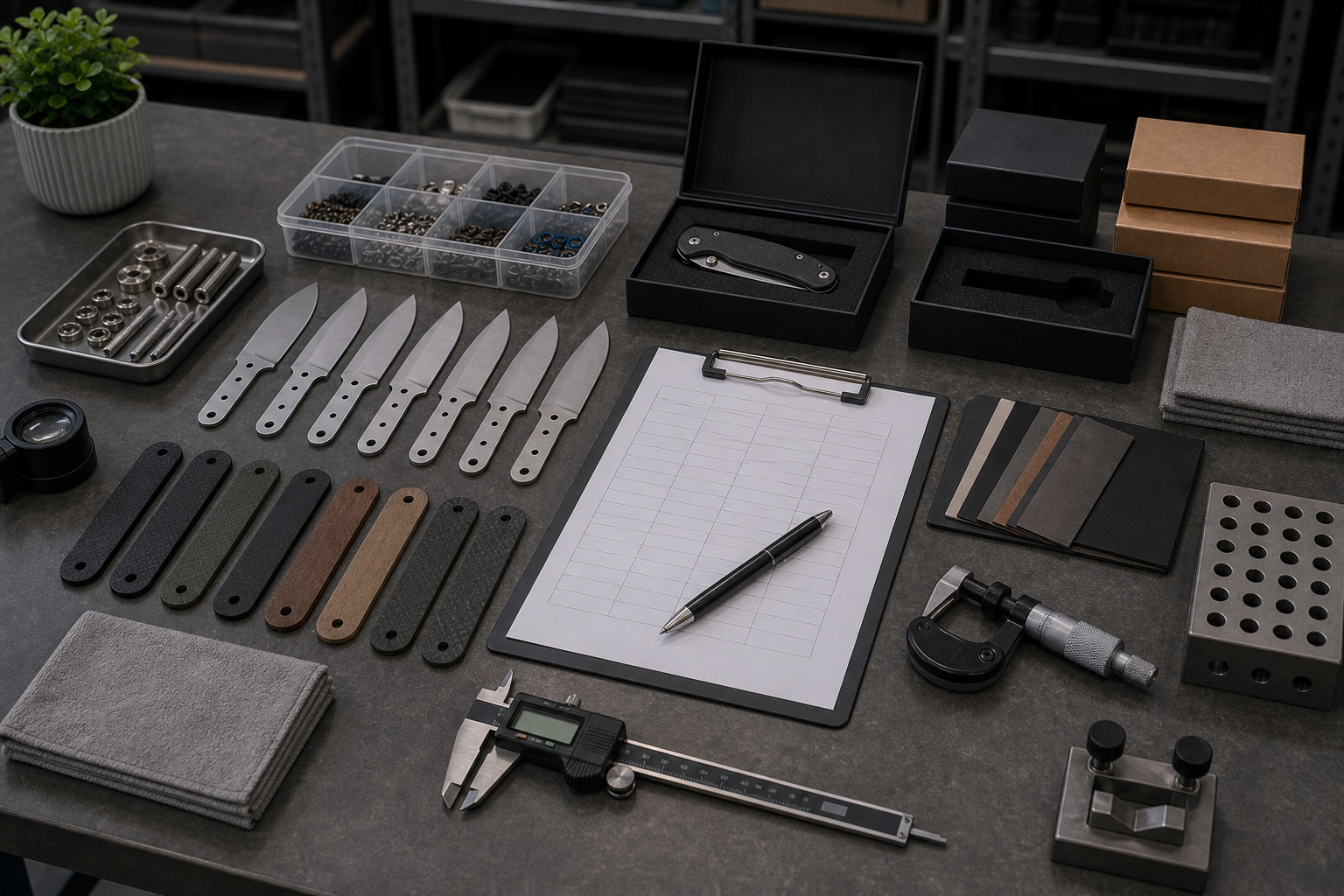
I Turn the Steel Choice Into Measurable Requirements
For an 8Cr13MoV or AUS-8 project, I want the RFQ to be specific. The buyer should include the knife type, blade length, blade thickness, blade steel, target HRC, grind type, edge angle target, finish, handle material, lock type, hardware color, logo method, packaging style, target market, MOQ expectation, and inspection requirement. If the buyer already has a drawing, that helps. If the buyer only has a target price and product idea, we can help create a practical direction.
The QC plan should connect directly to the RFQ. If the buyer specifies HRC, we need a sampling method. If the buyer specifies a stonewash or black coating, we need finish standards. If the buyer specifies smooth action, we need assembly checks for pivot tension, blade centering, side play, lock engagement, and safe closing. If the buyer specifies packaging, we need barcode, insert, carton, and labeling checks.
For international orders, commercial terms also need clarity. The U.S. International Trade Administration explains that Incoterms define buyer and seller responsibilities, costs, and risks in export transactions. That is useful when buyers compare FOB, CIF, DDP, and other terms. Quality language should also be process-based. The ISO 9001 page explains that the standard covers quality management requirements such as operation, performance evaluation, and improvement. I use that as a useful quality framework, not as a claim that any supplier is certified unless documents prove it.
The best RFQ makes comparison easier. It lets the buyer compare 8Cr13MoV and AUS-8 samples under the same shape, grind, finish, and test method. That is the only fair way to judge the steel in a real product.
| RFQ or QC item | What to define | Why it matters |
|---|---|---|
| Steel grade | 8Cr13MoV or AUS-8, with approved source | Prevents material confusion |
| HRC target | Supplier-recommended range and test method | Controls edge behavior |
| Blade geometry | Thickness, grind, edge angle, blade shape | Changes cutting feel |
| Finish | Satin, stonewash, coating, bead blast | Affects appearance and corrosion care |
| Functional checks | Lockup, centering, side play, action | Protects user experience |
| Trade terms | FOB, CIF, DDP, or agreed Incoterm | Clarifies cost and risk |
Ready to use this material in your next knife line?
Vast State can help you compare blade steels, heat treatment ranges, handle materials, finishes, packaging options, and QC requirements based on your target market and quantity.
Conclusion
I choose 8Cr13MoV for controlled value and AUS-8 for stronger material positioning, but I always let heat treatment, geometry, and QC decide.
Source Notes
- Knife Country steel composition chart supports the composition comparison for 8Cr13MoV and AUS-8; it is a useful chart, not a mill certificate.
- ZKnives AUS8 steel page supports AUS8 naming, Aichi association, country context, and similar-steel notes.
- Knife Steel Nerds supports the point that steel choice must balance toughness, edge retention, corrosion, heat treatment, and edge geometry.
- NIST Rockwell hardness guide supports the need for good hardness-measurement practice.
- Trade.gov Incoterms page supports RFQ advice about buyer and seller responsibilities, costs, and risks.
- ISO 9001:2015 page supports quality-management context, but it does not prove supplier certification.