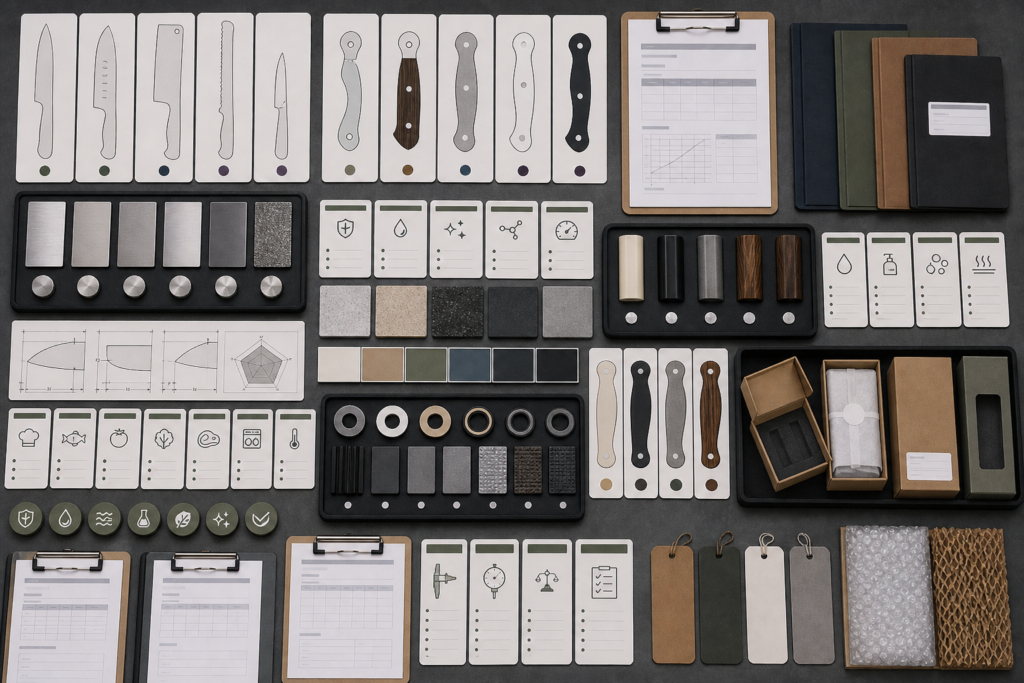
A butcher knife may look simple. But poor blade shape, handle material, or cleaning design can quickly damage buyer trust.
Buyers should develop a butcher knife by defining the target kitchen or meat-processing use, blade profile, steel, heat treatment, handle material, cleanability, packaging, and inspection records. A practical OEM/ODM butcher knife must cut well, clean easily, resist corrosion, and fit the buyer's price tier.
Quick buyer brief:
- Answer: Treat a butcher knife as a food-preparation tool with clear function, material, hygiene, and QC requirements.
- Buyer context: Useful for kitchenware brands, restaurant suppliers, butcher supply channels, wholesalers, and private label buyers.
- Key checks: Blade profile, steel, target HRC, handle cleanability, food-contact material review, packaging, and batch inspection.
Planning a fixed blade or outdoor knife project?
Share your target use, blade size, steel preference, handle direction, sheath needs, quantity range, and packaging plan. Vast State can help turn it into a quote-ready specification.
When a buyer asks for a butcher knife, I first ask where the knife will be sold and how it will be used. A butcher supply channel, a restaurant supply catalog, a home kitchenware brand, and a wholesale meat-processing buyer do not need the same product. The blade must feel strong, but it must also be cleanable. The handle must be comfortable, but it must also survive washing and repeated use. In OEM/ODM work, the best butcher knife is not the biggest or heaviest one. It is the one that fits the user's job, the buyer's market, and the factory's repeatable process.
What Is a Butcher Knife in a Modern Kitchen Product Line?
The name sounds familiar, but buyers often use it loosely. That can create samples that do not match the real selling channel.
A butcher knife is a heavy-duty kitchen knife for portioning, trimming, and general meat preparation. In OEM/ODM sourcing, buyers should define the exact blade shape, size, thickness, edge, handle, and market tier before sampling.
I Define the Use Before the Shape
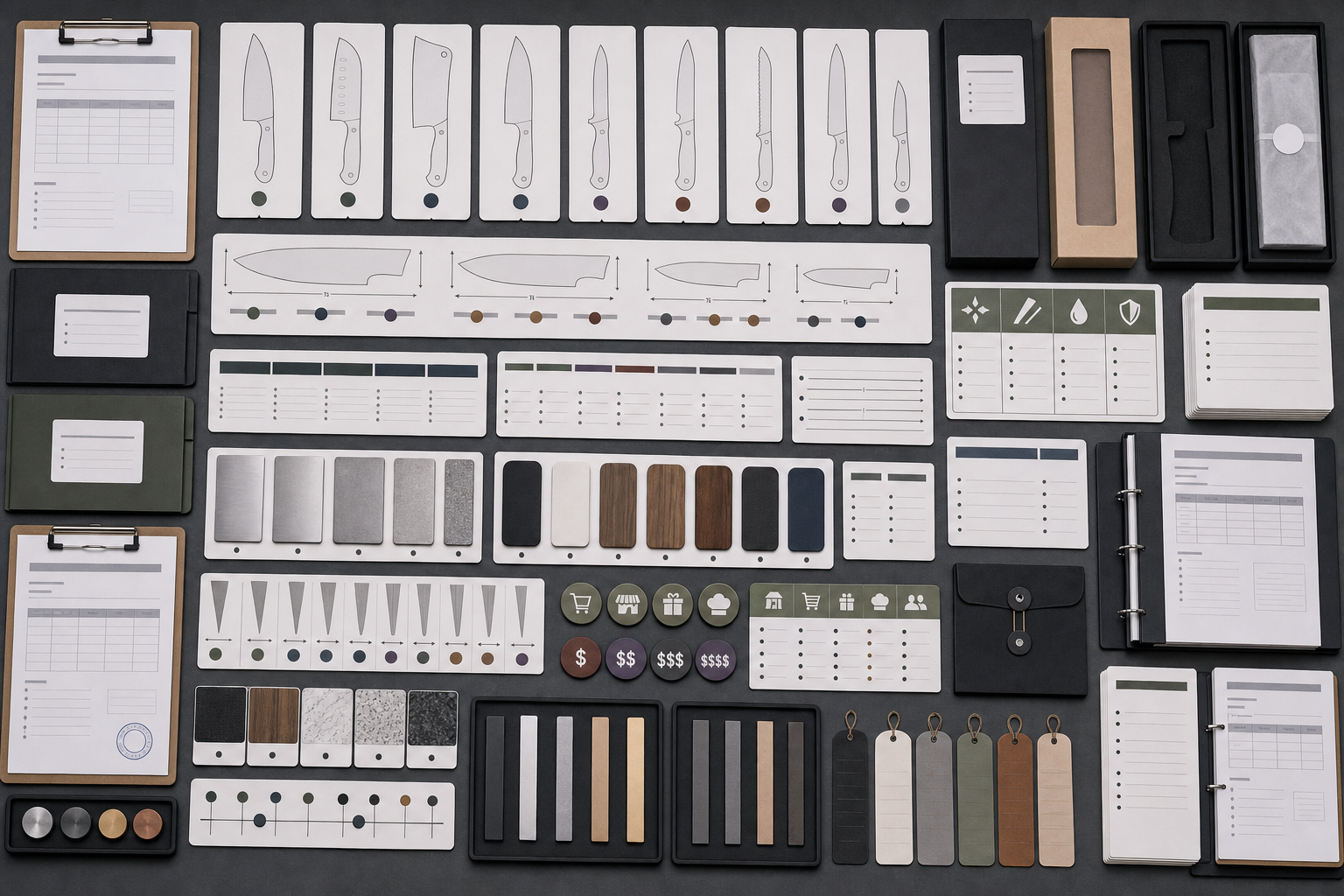
In buyer conversations, "butcher knife" can mean several things. Some buyers mean a broad meat knife with a curved cutting edge. Some mean a heavier breaking knife. Some mean a butcher-style knife for home kitchen sets. Some mean a professional knife for restaurant and butcher shop supply. These are different products. If the buyer does not define the use, the supplier may quote a blade that looks right in a photo but feels wrong in the hand.
I usually ask about the target channel first. Is the knife for home users, professional kitchens, meat counters, outdoor cooking, or a value kitchenware set? The answer affects blade length, blade thickness, steel, handle material, edge angle, packaging, and inspection standard. A home kitchenware buyer may need attractive packaging and simple care language. A restaurant supplier may care more about cleanability, durability, and replacement consistency. A wholesale channel may need strong cost control. The product name is only the starting point. The real product is the full set of decisions behind it.
| Definition point | What I ask | Why it matters |
|---|---|---|
| Use case | Home kitchen, restaurant, butcher shop, or food service | Guides size and material |
| Blade style | Butcher, breaking, boning-adjacent, or cleaver-adjacent | Prevents wrong sampling |
| Price tier | Entry, mid-range, or professional supply | Controls steel and handle choice |
| Packaging role | Retail box, sleeve, bulk pack, or set packaging | Affects cost and shelf presentation |
OEM/ODM RFQ Checklist
Prepare these details to help Vast State review your project and provide a more accurate quotation.
| RFQ Field | What to Prepare |
|---|---|
| Project type | OEM from drawing / ODM private label / wholesale catalog |
| Product category | Folding knife / fixed blade / multi-tool / outdoor tool |
| Design status | Idea / sketch / 2D drawing / 3D CAD / physical sample |
| Target price | Ex-factory target price or retail price range |
| MOQ expectation | 500 / 1,000 / 3,000 / 5,000+ pcs |
| Logo method | Laser engraving / etching / printing / molded logo |
| Packaging | Standard packaging / custom retail box / Amazon-ready |
| Market | USA / EU / Japan / Korea / Middle East / other |
| Compliance needs | Buyer-specified testing / documentation / labeling |
| Timeline | Sample deadline / mass production deadline |
Which Buyers and Channels Fit Butcher Knife Projects?
A butcher knife can serve many markets. But each channel expects a different balance of cost, durability, and presentation.
Butcher knife projects fit kitchenware brands, restaurant supply companies, meat-processing supply channels, butcher shops, wholesalers, distributors, private label buyers, and cooking gift lines when the product matches the channel's real use.
I Match the Knife to the Sales Channel
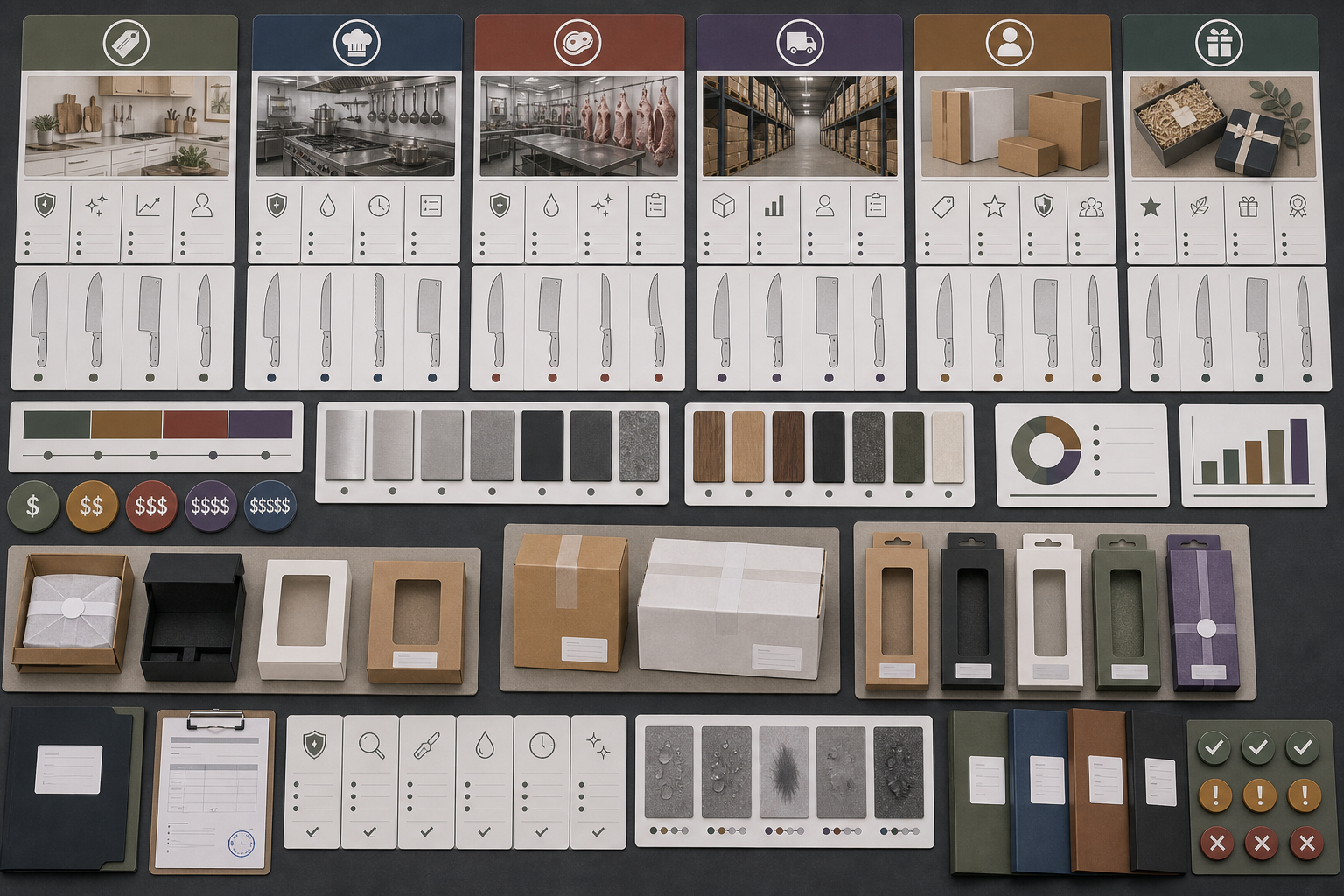
For kitchenware brands, a butcher knife may need good visual appeal, a comfortable handle, and retail packaging that explains the function clearly. For restaurant supply channels, the buyer may prefer simpler packaging, stable replacement quality, and easy cleaning. For meat-processing supply channels, blade durability, handle grip, and resistance to washing environments become more important. For wholesalers, MOQ, price, carton packing, and consistent appearance often matter most.
Private label buyers need one more layer. They need the product to fit their brand position. A budget private label knife may use a practical stainless steel and molded handle. A higher-position kitchen line may use a better stainless steel, cleaner finish, and stronger packaging. A gift line may use wood-style handles or a more refined box, but the buyer must still consider cleaning and food-contact expectations. I try to prevent the common mistake of designing one knife for every channel. A butcher knife that is right for a meat counter may not be right for a retail gift set.
| Buyer type | Main concern | Product direction |
|---|---|---|
| Kitchenware brand | Retail appeal and user comfort | Balanced blade, clean finish, branded packaging |
| Restaurant supplier | Durability and easy replacement | Simple handle, easy cleaning, stable QC |
| Butcher supply channel | Grip and repeated work | Strong blade, secure handle, practical sheath or guard |
| Wholesaler | Price and carton efficiency | Controlled materials and simple packaging |
| Private label buyer | Brand fit and margin | Clear tier and customized packaging |
How Should Blade Shape and Size Be Chosen?
Blade shape decides the user experience. A knife that is too thick, too long, or badly balanced can feel tiring fast.
Buyers should choose butcher knife blade length, thickness, belly curve, point shape, spine height, edge angle, and balance based on the intended cutting task, user type, and target price.
I Turn Function Into Dimensions
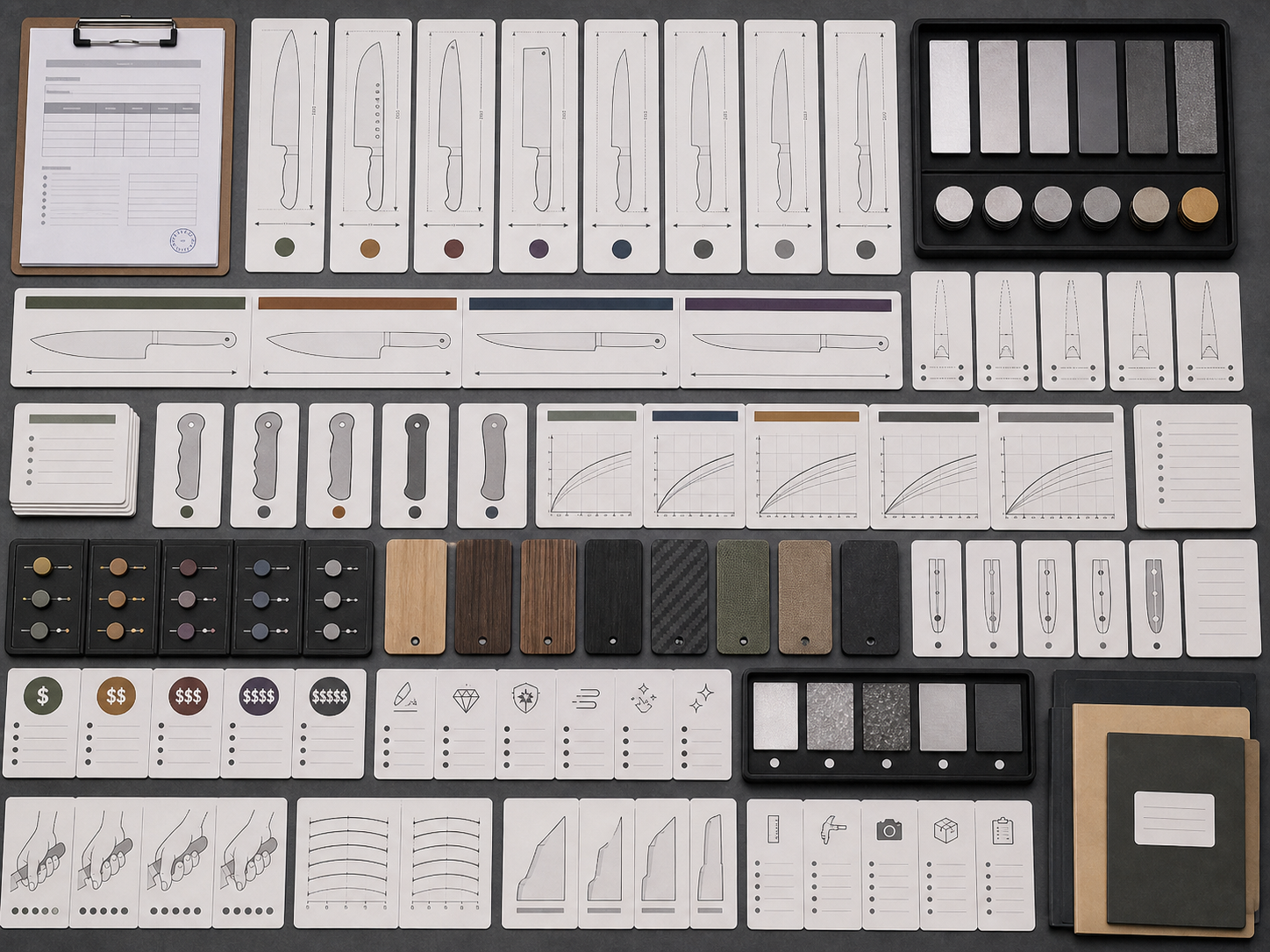
The blade profile should match the task. A butcher knife often needs a strong cutting edge, enough blade height for control, and a shape that supports rocking, slicing, trimming, or portioning depending on the product direction. A longer blade can improve reach, but it also increases weight and shipping size. A thicker blade can feel strong, but it may reduce cutting comfort if the grind is too heavy. A broad blade can look professional, but it can make the knife feel clumsy for smaller users.
Before sampling, I define blade length, overall length, thickness, edge curve, tip shape, tang structure, handle length, and target weight. I also ask whether the buyer wants a hanging hole, blade guard, sheath, or retail sleeve. The factory can make a sample faster when these choices are clear. The buyer also gets a more useful first sample. If the first sample is only a rough shape, the project may require too many rounds of correction. Good blade geometry saves time.
| Geometry choice | What it affects | Practical guidance |
|---|---|---|
| Blade length | Reach, weight, package size | Match user and channel |
| Blade thickness | Strength and cutting feel | Avoid overbuilding without reason |
| Edge curve | Cutting motion | Match slicing, trimming, or portioning use |
| Tang structure | Balance and handle strength | Choose based on cost and durability |
| Overall weight | User fatigue and perceived quality | Keep weight controlled |
Which Steel and Heat Treatment Fit Butcher Knives?
Steel choice can make a kitchen knife easier to sell. But heat treatment and edge geometry decide how it actually performs.
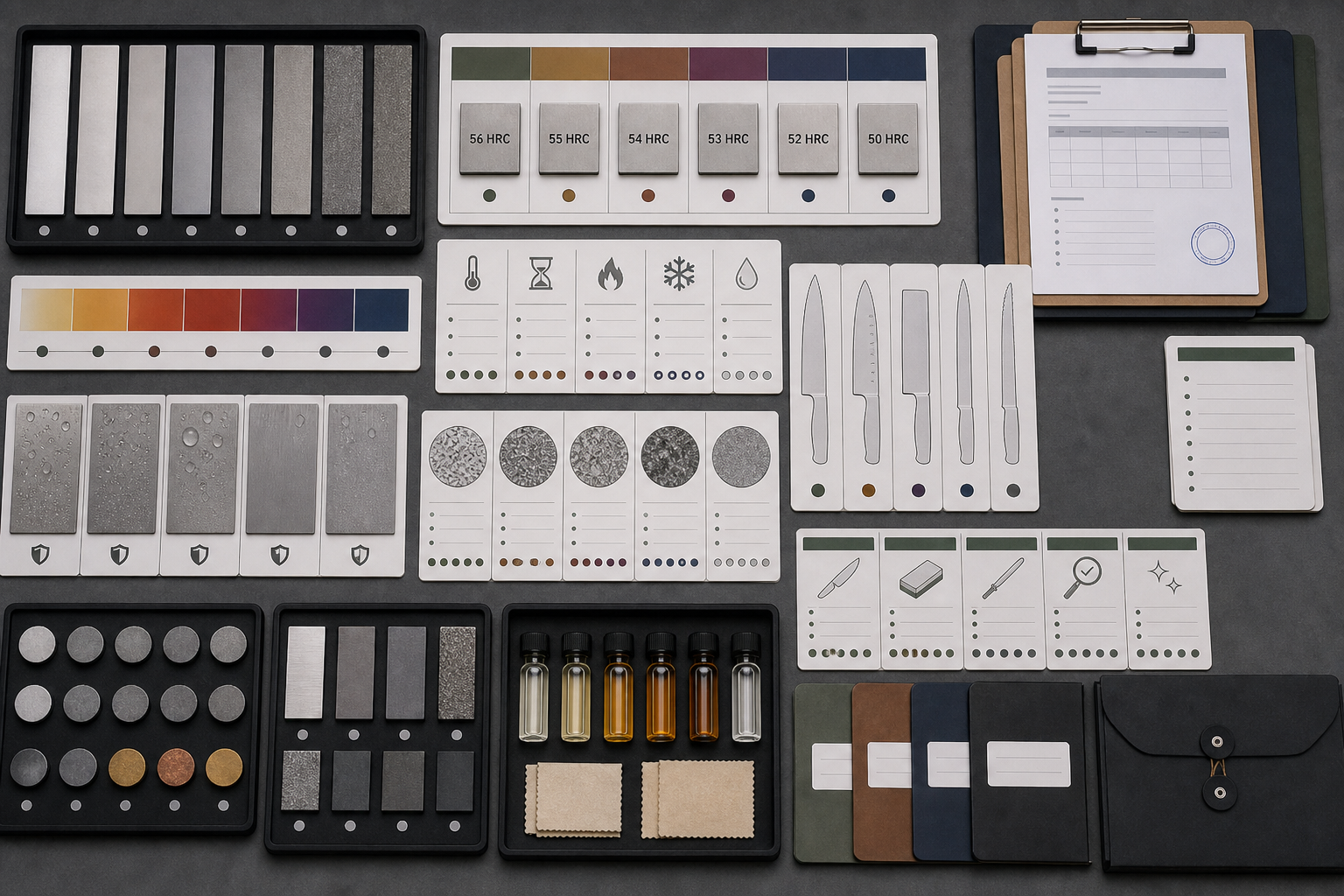
Butcher knives usually need stainless or easy-care blade steel, stable heat treatment, practical hardness, corrosion resistance, edge toughness, and easy sharpening. Buyers should define steel grade and target HRC before production.
I Balance Corrosion Resistance With Edge Feel
For butcher knives, stainless behavior is often important because the knife may contact moisture, food residue, cleaning agents, and repeated washing. Buyers may choose steels such as 3Cr13, 5Cr15MoV, 8Cr13MoV, 12C27, 14C28N, or another agreed grade depending on the price tier. A value retail line may not need a premium steel. A professional line should not be built around a steel that cannot support the product promise.
The Alleima 12C27 knife steel page lists chef's knives among recommended applications and describes edge performance, toughness, hardness, and corrosion resistance. The Alleima 14C28N knife steel page also lists chef's knives and emphasizes edge stability and corrosion resistance. These sources help buyers understand why food-preparation knives often need a balanced stainless steel rather than only maximum wear resistance. I also ask for HRC readings. The NIST Rockwell hardness guide explains why good hardness measurement practice matters. A steel name without a heat-treatment record is not enough for repeat production.
| Steel decision | Buyer should define | Why it matters |
|---|---|---|
| Grade | Budget, value, or professional stainless option | Aligns cost and product story |
| Target HRC | Practical hardness range | Balances edge life and toughness |
| Edge angle | Sharpening and cutting feel | Affects user satisfaction |
| Heat-treatment record | Batch process and checks | Supports repeat production |
| Corrosion expectation | Normal kitchen use or heavier washing | Guides steel and finish choice |
How Should Handle Design Support Cleaning and Grip?
The handle can create more complaints than the blade. Gaps, weak texture, or absorbent material can make cleaning harder.
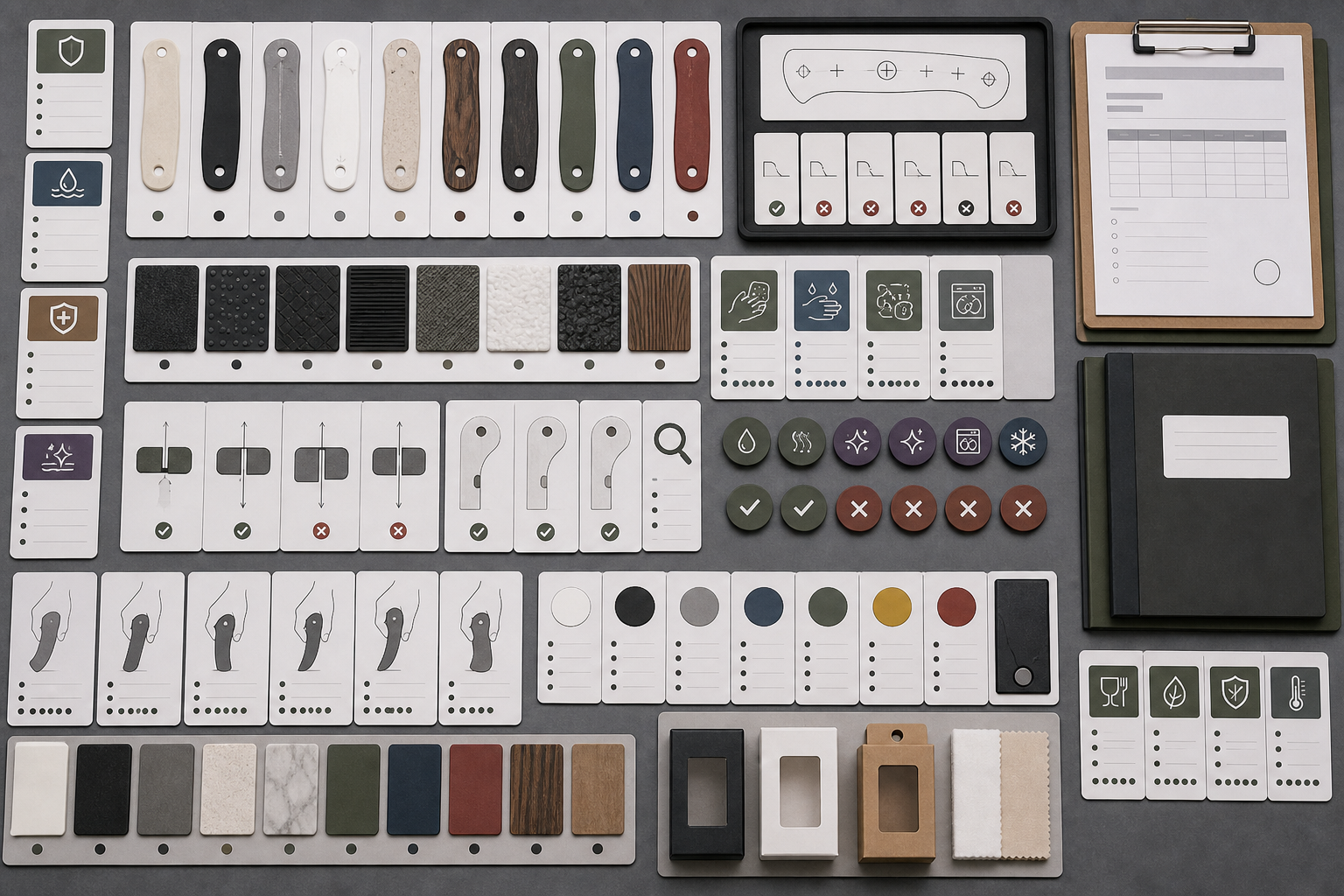
Butcher knife handles should be comfortable, secure, nonabsorbent where required, easy to clean, durable under washing, and matched to the buyer's food-preparation channel and price tier.
I Design the Handle Around Both Hand Feel and Hygiene
A kitchen knife handle must feel comfortable, but that is not enough. It should also support cleaning. The FDA Food Code says materials used for utensils and food-contact surfaces should be safe, durable, corrosion-resistant, nonabsorbent, thick enough for repeated warewashing, smooth, easily cleanable, and resistant to pitting, chipping, scratching, and other damage. This is not a private label design checklist by itself, but it is a useful food-service mindset.
The eCFR section 21 CFR 117.40 also says equipment and utensils used in food manufacturing and processing must be adequately cleanable and maintained to protect against contamination, and food-contact surfaces must be corrosion-resistant and made of nontoxic materials. For buyer projects, I turn that into practical handle decisions. I check whether the handle material absorbs water, whether rivets or seams create cleaning problems, whether the surface texture traps residue, and whether the handle can handle the expected washing method. A beautiful handle that is hard to clean may not fit a professional channel.
| Handle feature | What I check | Why it matters |
|---|---|---|
| Material | TPR, PP, POM, stainless, wood, or composite | Affects cleanability and price |
| Seam and gap control | Fit between blade, tang, and handle | Reduces cleaning concerns |
| Texture | Grip without deep dirt traps | Balances comfort and hygiene |
| Rivets or molding | Assembly method | Affects durability and appearance |
| Color coding | Optional channel requirement | Helps food-service organization |
What Manufacturing and QC Controls Matter Most?
Kitchen knives are judged quickly. Uneven edges, poor balance, rust spots, or handle gaps can hurt repeat orders.
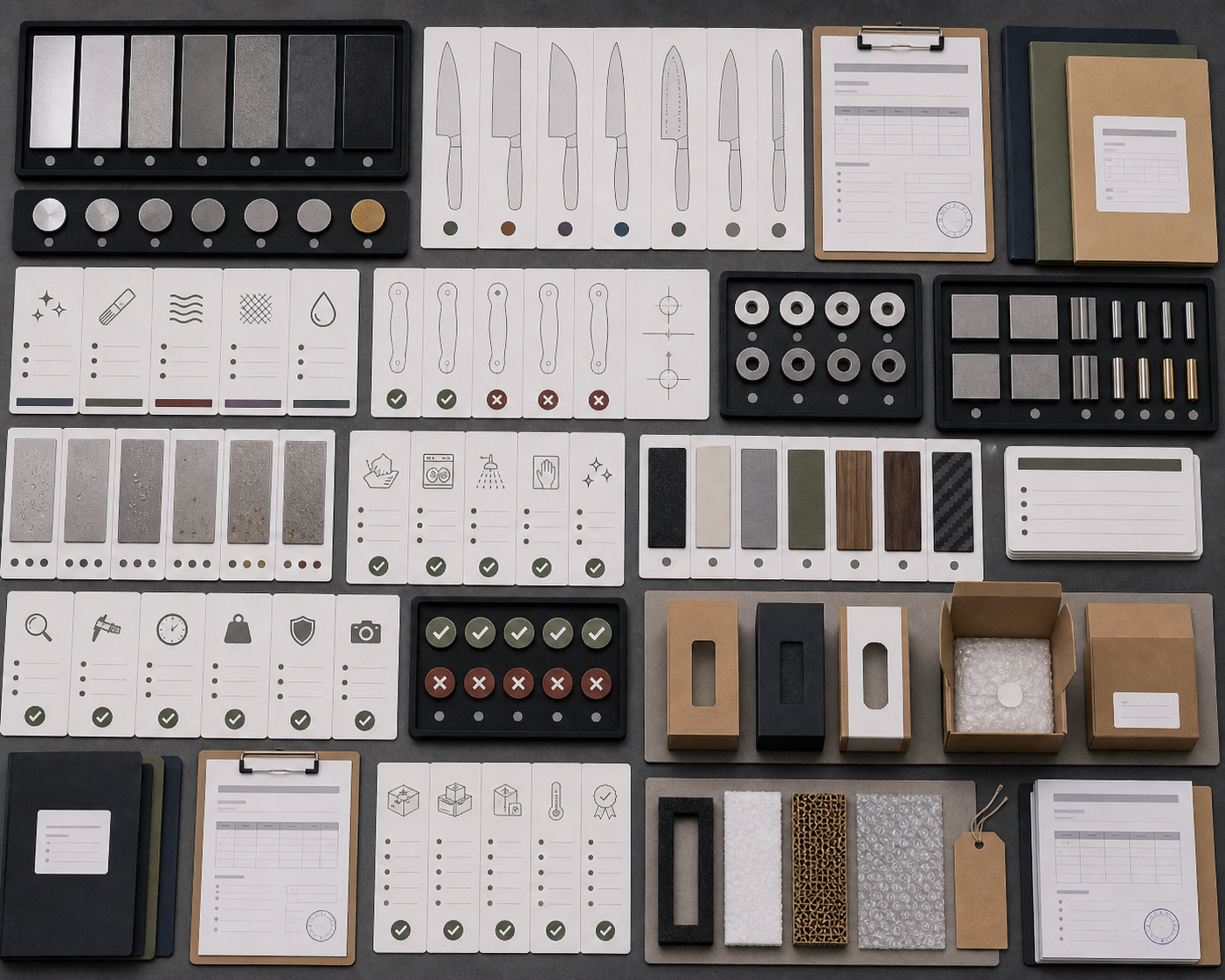
Manufacturing controls should cover blade blanking, grinding, heat treatment, polishing, handle assembly, edge sharpening, cleaning, corrosion checks, packaging protection, and final inspection records.
I Inspect the Details That Repeat Across Batches
For butcher knives, the first sample must not be treated as the full answer. The real question is whether the factory can repeat the same edge, finish, handle fit, and packaging across the order. I check blade profile accuracy, spine thickness, bevel symmetry, edge burrs, hardness, surface finish, handle bonding or rivet fit, handle color, logo quality, and packaging protection. If the knife is part of a set, I also check visual consistency across the set.
Food-preparation knives need clean surfaces. A rough polish may trap residue and reduce perceived quality. A handle gap may look small in a photo but feel serious to a food-service buyer. A carton method that lets knives move during shipping can damage edges or packaging. The ISO 9001 page is useful background because it focuses on customer requirements, controlled operations, performance evaluation, and improvement. I translate that into practical batch controls: approved sample, incoming material checks, in-process checks, final inspection, and clear records.
| QC control | What to inspect | Buyer benefit |
|---|---|---|
| Material check | Steel certificate and handle material | Reduces substitution risk |
| Heat treatment | Target HRC and sample readings | Supports edge consistency |
| Grinding | Bevel symmetry and burr control | Improves cutting experience |
| Handle assembly | Gaps, rivets, molding, and finish | Protects cleanability and comfort |
| Packaging | Edge protection and carton fit | Reduces shipment damage |
What Food-Contact and Cleanability Points Should Buyers Review?
A kitchen knife is not only a cutting product. It is also a tool that may touch food, washing water, and cleaning agents.
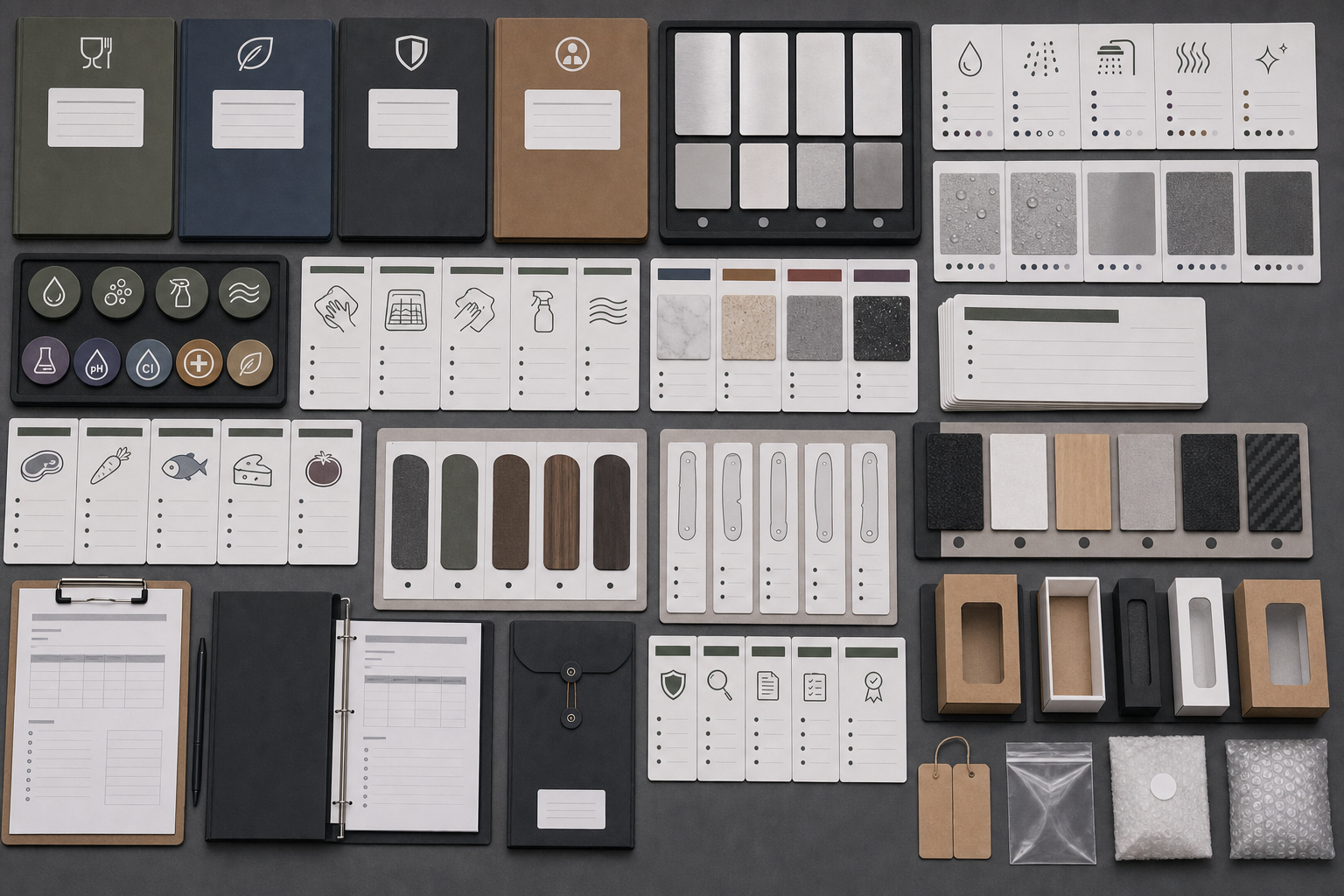
Buyers should review food-contact material expectations, corrosion resistance, smooth surfaces, handle cleanability, labeling, washing guidance, and target-market requirements before approving butcher knife production. This is not legal advice.
I Separate Design Guidance From Formal Compliance
I do not treat a blog article as legal or regulatory advice. Buyers should confirm target-market requirements with their own compliance team. But I do use official food-safety and food-equipment references to guide product questions. The FDA Food Code expects utensil and food-contact materials to be safe, durable, corrosion-resistant, nonabsorbent, smooth, and easily cleanable under normal use. eCFR 21 CFR 117.40 also points to cleanable, corrosion-resistant, nontoxic food-contact surfaces that withstand intended use and cleaning.
NSF also gives useful industry context. The NSF food equipment standards page says NSF/ANSI 2 covers food protection and sanitation requirements for materials, design, fabrication, construction, and performance of food handling and processing equipment. It also says NSF/ANSI 51 covers materials and finishes used in commercial foodservice equipment. Even if a buyer is not asking for certification, these ideas help shape better RFQ questions. I ask about smoothness, cleaning method, handle gaps, corrosion resistance, packaging claims, and whether the buyer needs formal test reports.
| Review point | Buyer question | Practical result |
|---|---|---|
| Food-contact material | What material touches food? | Supports compliance review |
| Cleanability | Are there gaps, pits, or rough areas? | Reduces hygiene concerns |
| Corrosion resistance | Will blade and handle handle washing? | Protects product life |
| Labeling | What claims appear on packaging? | Avoids unsupported statements |
| Documentation | Are test reports or certificates needed? | Clarifies quote and lead time |
What Should a Butcher Knife OEM/ODM RFQ Include?
A short inquiry can get a quick quote. But it may not get the correct knife.
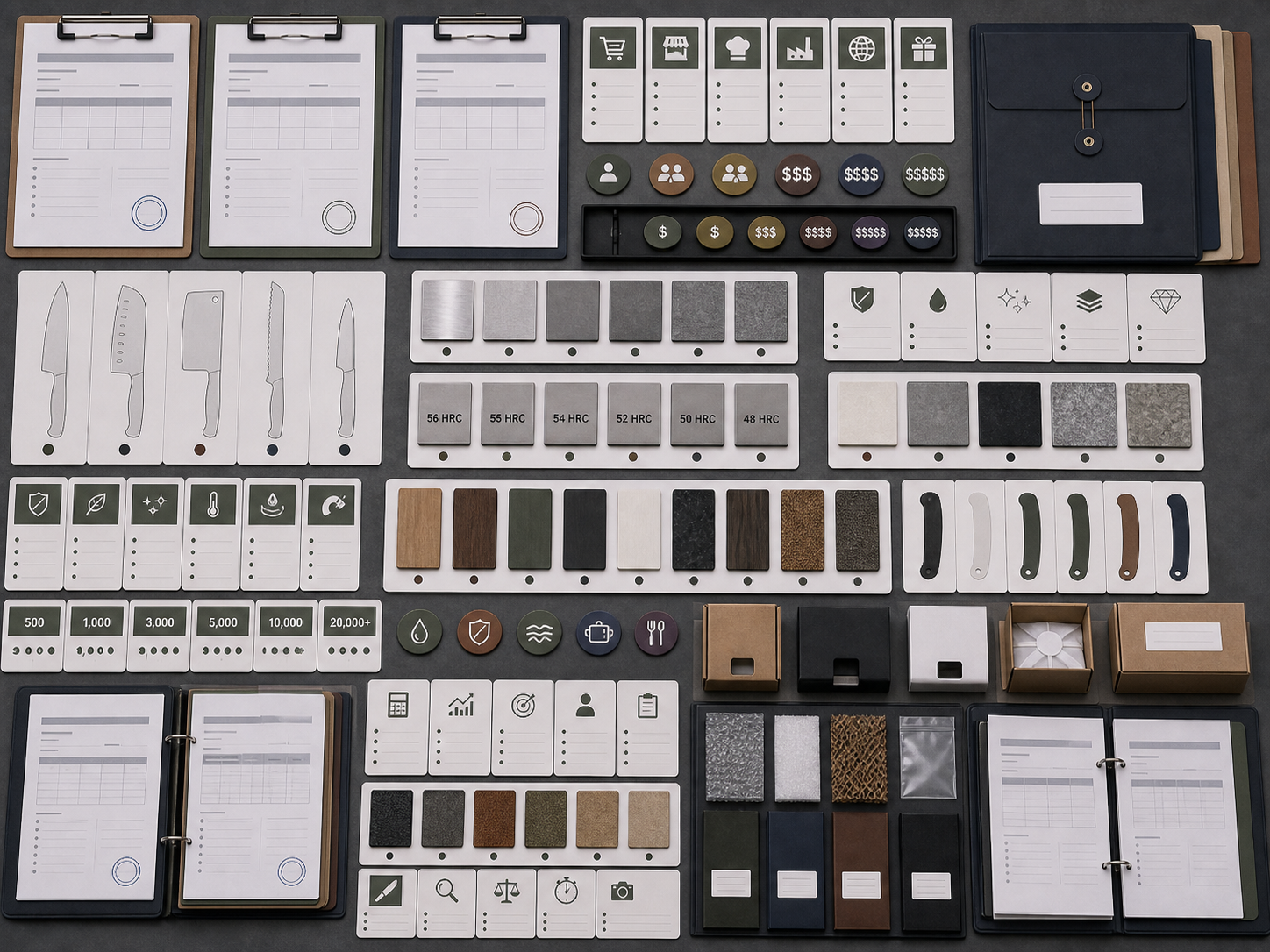
A butcher knife RFQ should include target channel, blade style, dimensions, steel, target HRC, handle material, edge requirement, packaging, branding, food-contact documentation needs, quantity, target price, and inspection records.
I Use the RFQ to Lock the Real Product
The RFQ should explain what the buyer wants the knife to become. I ask for target market, channel, retail tier, blade length, blade thickness, steel, target hardness, grind type, edge requirement, handle material, handle color, logo method, packaging type, quantity, target price, and sample timing. If the buyer has reference photos or drawings, those help, but dimensions and material requirements still need to be written clearly.
I also ask about food-contact or cleanability documentation. Some buyers need only normal product records. Some buyers need specific test reports, certifications, or retailer documents. These requirements can affect cost and lead time, so they should appear in the RFQ early. For a butcher knife, I also include QC needs: material certificate, HRC readings, blade thickness, edge inspection, handle gap check, finish review, packaging drop risk, and final inspection report. A complete RFQ makes the supplier's answer more useful. It also helps the buyer compare quotes fairly.
| RFQ field | What to include | Why it helps |
|---|---|---|
| Product definition | Butcher knife type, channel, and target user | Prevents wrong samples |
| Blade details | Length, thickness, steel, HRC, grind, edge | Supports accurate production |
| Handle details | Material, color, texture, assembly method | Controls comfort and cleaning |
| Packaging | Sleeve, box, blister, gift box, or bulk pack | Aligns cost and retail plan |
| Documentation | Certificates, test reports, QC records | Supports buyer compliance review |
Turn this article into a fixed blade project.
Send your target use, blade size, steel, handle direction, sheath needs, quantity, and packaging plan. Vast State can help shape it into a quote-ready project.
Conclusion
I develop better butcher knives by matching blade function, cleanable materials, heat treatment, packaging, and QC to the buyer's real channel.
Source Notes
- FDA Food Code 2022 supports the need for safe, durable, corrosion-resistant, nonabsorbent, smooth, and easily cleanable materials for utensils and food-contact surfaces.
- 21 CFR 117.40 supports cleanable, corrosion-resistant, nontoxic food-contact surface expectations in food manufacturing and processing contexts.
- NSF food equipment standards provide context for food equipment sanitation, materials, design, and finishes.
- Alleima 12C27 knife steel supports stainless kitchen knife steel selection context.
- Alleima 14C28N knife steel supports edge stability and corrosion resistance context for chef's knife applications.
- NIST Rockwell hardness guide supports controlled hardness measurement.
- ISO 9001 provides quality-management context for process control and customer requirements.