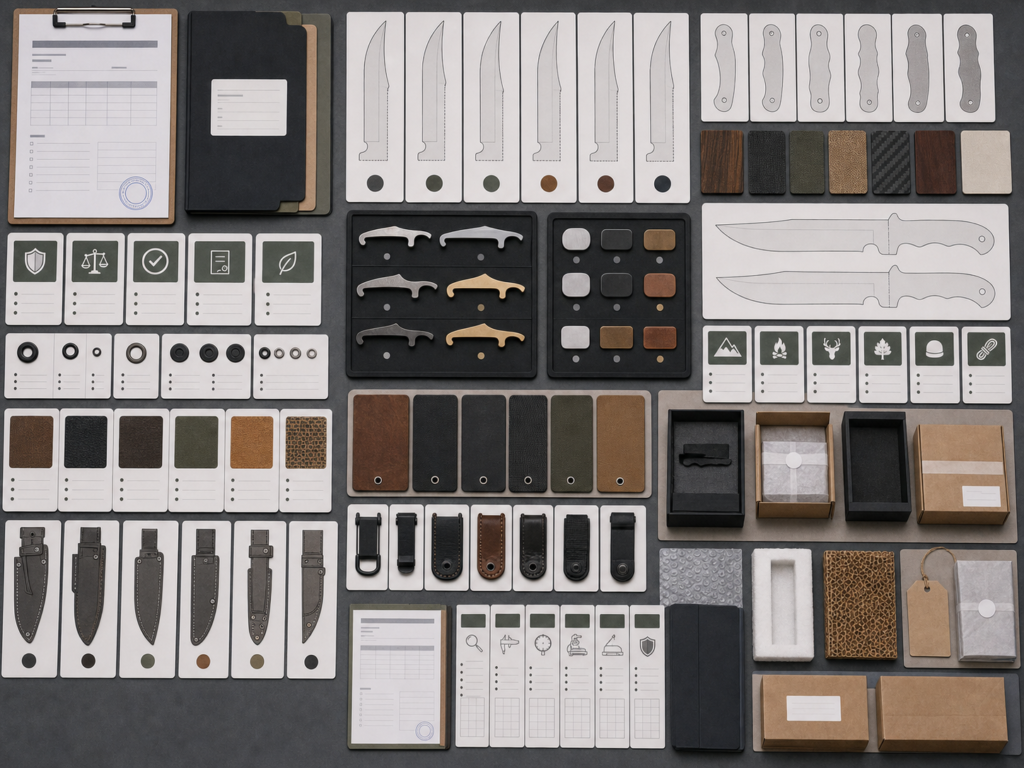
A Bowie-style knife can look impressive. But if the design becomes only nostalgia, buyers may face cost, compliance, and market-fit problems.
Bowie-inspired knives can fit modern OEM/ODM projects when buyers treat the style as a fixed blade product platform, not only a legend. The project should control blade shape, handle comfort, steel choice, finish, packaging, target market, compliance review, and inspection records.
Quick buyer brief:
- Answer: Use Bowie inspiration for heritage-style fixed blade projects with clear utility and market positioning.
- Buyer context: Useful for outdoor brands, collector-style lines, gift programs, hunting retailers, and private label fixed blade ranges.
- Key checks: Blade length, clip point shape, guard design, handle material, sheath, steel, finish, packaging, local compliance, and QC records.
Planning a fixed blade or outdoor knife project?
Share your target use, blade size, steel preference, handle direction, sheath needs, quantity range, and packaging plan. Vast State can help turn it into a quote-ready specification.
When a buyer sends me a Bowie-style idea, I do not start by copying an old silhouette. I first ask what the product must do today. Is it an outdoor fixed blade, a gift item, a collector-style SKU, a hunting-market product, or a heritage-inspired brand piece? The answer changes the blade size, steel, handle, sheath, packaging, and even the way the product should be described. A Bowie-inspired knife can carry strong cultural meaning, but modern B2B production still needs clear engineering and responsible product positioning.
What Makes a Bowie-Inspired Knife Different From a Normal Fixed Blade?
Many fixed blades are simple. A Bowie-inspired knife has a stronger visual identity, so every proportion becomes more visible to the buyer.
A Bowie-inspired knife is usually a large fixed blade with a clip point, cross guard, and strong handle presence. Modern OEM/ODM versions should keep the recognizable style while controlling comfort, safety, manufacturability, and target price.
I Treat the Style as a Design System
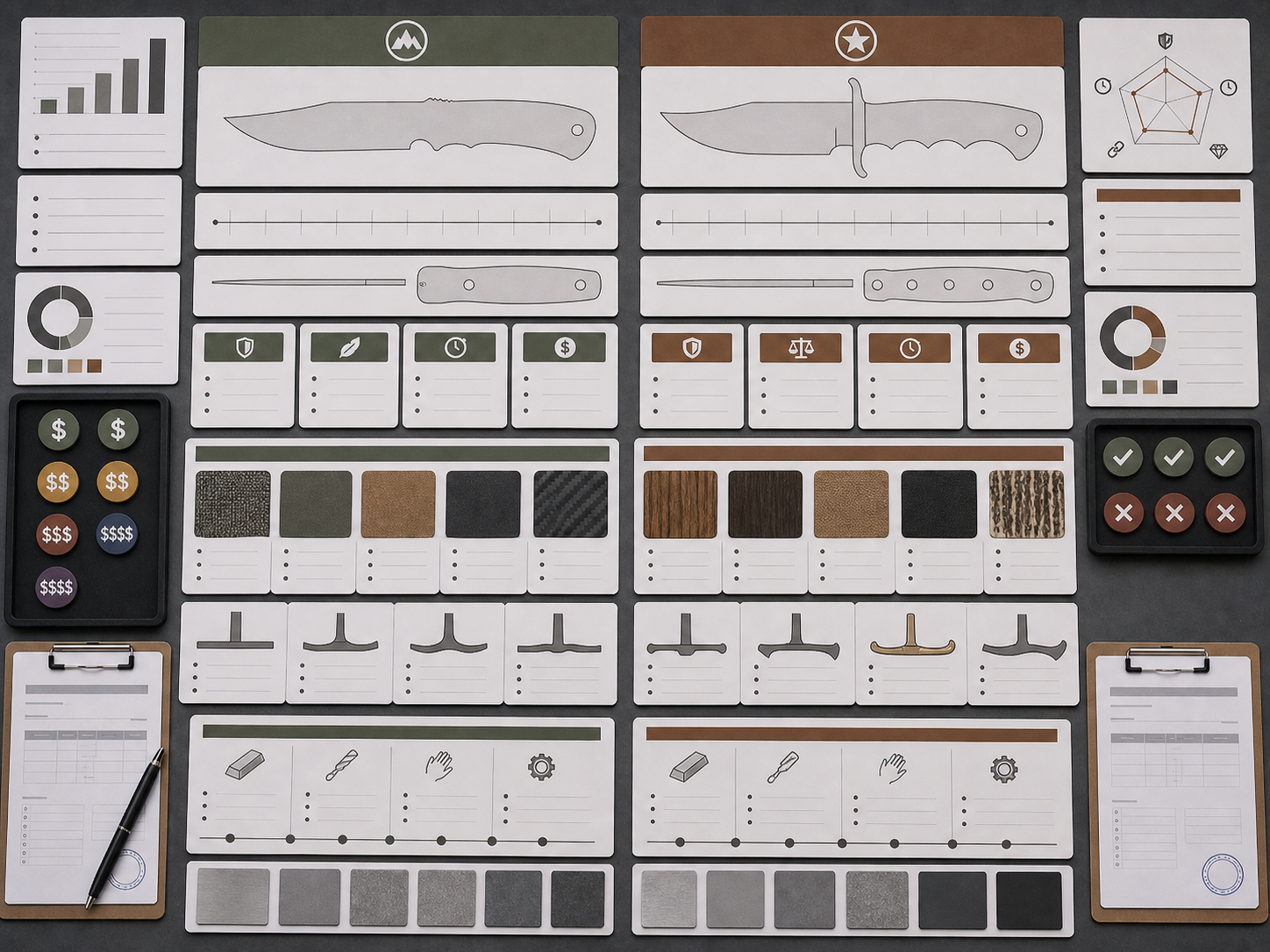
The term "Bowie knife" has a broad history. The Encyclopedia of Arkansas Bowie Knife entry says the term began to be used in the early 1830s and notes that today it is usually defined as a large knife with a cross guard and a clipped point. For modern sourcing, that definition is useful because it gives buyers a starting structure. A Bowie-inspired knife is not only any large fixed blade. It carries a shape language.
In production, I break that shape into parts. The blade length must match the market and legal review. The clip point must look right without becoming fragile. The guard must protect the hand without making assembly difficult. The handle must feel stable, not just decorative. The sheath must support storage and retail value. A buyer who wants only a dramatic outline may get a product that looks good in a drawing but feels awkward in hand. I prefer to turn the visual style into a manufacturable design system.
| Design feature | What I check | Why it matters |
|---|---|---|
| Clip point blade | Tip shape, thickness, grind, and strength | Controls the visual identity and practical use |
| Cross guard | Size, fit, finish, and assembly method | Affects hand comfort and product cost |
| Handle profile | Grip length, contour, pins, and balance | Decides how the knife feels |
| Sheath | Material, retention, belt option, and packaging fit | Supports storage and retail presentation |
OEM/ODM RFQ Checklist
Prepare these details to help Vast State review your project and provide a more accurate quotation.
| RFQ Field | What to Prepare |
|---|---|
| Project type | OEM from drawing / ODM private label / wholesale catalog |
| Product category | Folding knife / fixed blade / multi-tool / outdoor tool |
| Design status | Idea / sketch / 2D drawing / 3D CAD / physical sample |
| Target price | Ex-factory target price or retail price range |
| MOQ expectation | 500 / 1,000 / 3,000 / 5,000+ pcs |
| Logo method | Laser engraving / etching / printing / molded logo |
| Packaging | Standard packaging / custom retail box / Amazon-ready |
| Market | USA / EU / Japan / Korea / Middle East / other |
| Compliance needs | Buyer-specified testing / documentation / labeling |
| Timeline | Sample deadline / mass production deadline |
How Should Buyers Translate Bowie History Into Modern Product Positioning?
History can help a product. But vague nostalgia can also create confusing copy and unrealistic customer expectations.
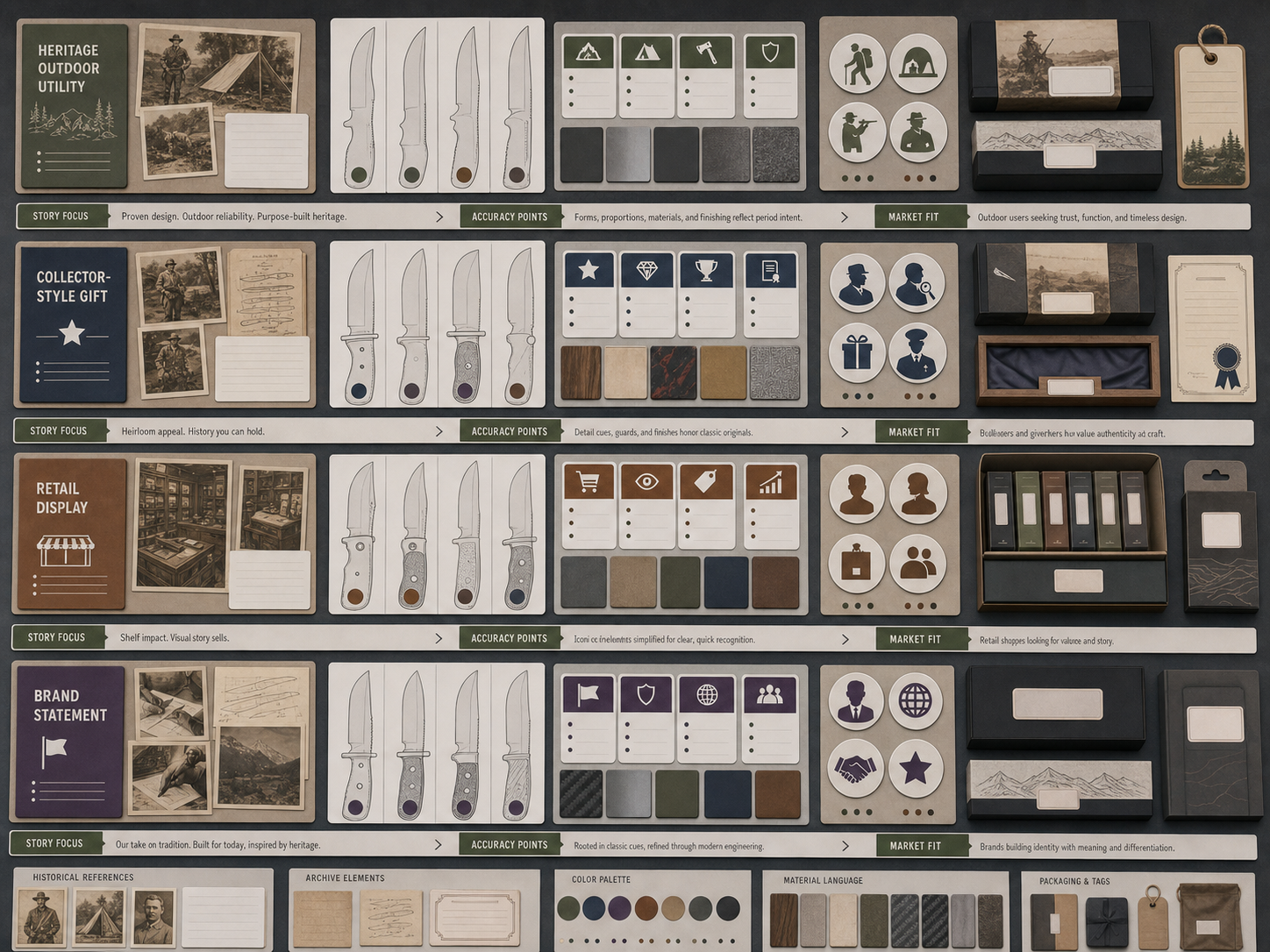
Buyers should translate Bowie history into a clear product story: heritage-inspired fixed blade, outdoor utility knife, collector-style gift, or brand statement. The story should be accurate, practical, and suitable for the target market.
I Use Heritage Without Overclaiming
The history is attractive, but it should be handled carefully. The Historic Arkansas Museum Knife Gallery presents the Bowie knife as part of Arkansas history, bladesmithing, and a collection that includes historical and modern knives. It also connects James Black, Sheffield cutlers, and the term "Arkansas Toothpick" with the growth of the style. The Bullock Texas State History Museum artifact page shows how a Samuel Bell Bowie knife connects craft, Texas history, and icon status.
For a modern product page, I would not claim that a new OEM knife is a historical reproduction unless the buyer has done serious research and controls every detail. I would call it "Bowie-inspired" or "heritage-style" unless it is truly a replica project. This language is safer and more honest. It gives the brand room to use the cultural signal while still designing for modern production, retail channels, and customer use. Good positioning should help the buyer sell the knife, not trap the buyer in claims that the product cannot prove.
| Positioning path | Good use case | What to avoid |
|---|---|---|
| Heritage-inspired fixed blade | Outdoor and gift lines | Claiming exact historical reproduction without proof |
| Collector-style SKU | Display, gift, and brand story | Overbuilding cost beyond the retail tier |
| Outdoor utility knife | Hunting and camp retail channels | Making the knife too decorative for use |
| Brand statement item | Anniversary or limited program | Ignoring MOQ, packaging, and compliance needs |
Which Customer Segments Can Fit Bowie-Inspired Knives?
A strong shape does not fit every customer. If the channel is wrong, the product may become expensive inventory.
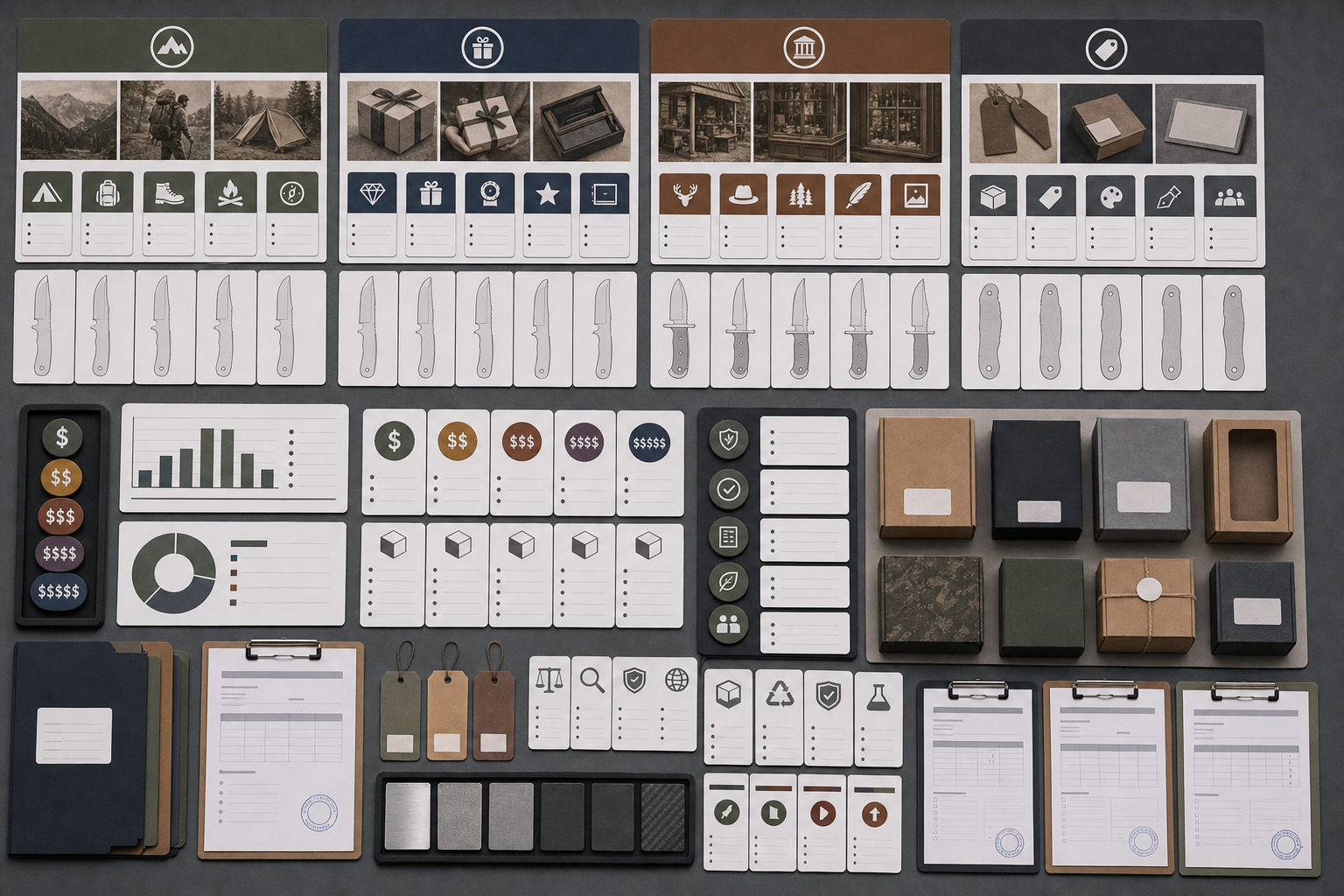
Bowie-inspired knives can fit outdoor brands, hunting retailers, gift and collector channels, heritage lifestyle brands, and private label fixed blade programs when the design matches price, packaging, and buyer expectations.
I Match the Knife to the Channel Before Sampling
Different buyers want different versions of the same visual idea. A hunting retailer may want practical grip, a durable sheath, and a simple stainless or carbon steel. A gift channel may care more about handle material, box presentation, and perceived finish. A collector-style private label buyer may want a more traditional guard, wood handle, leather sheath, and a stronger story. An outdoor brand may prefer modern materials such as G10, micarta, or TPR for better grip and easier repeat production.
The most important question is not "Can we make a Bowie-style knife?" We can. The better question is "Who will buy this exact version, at this exact price, in this exact package?" A long blade, thick stock, metal guard, premium handle, and fitted sheath can raise cost quickly. If the buyer's channel is price-sensitive, the design needs to be simplified. If the channel is gift-focused, the packaging and finish may deserve more budget than extreme blade steel. Segment clarity protects both product development and inventory planning.
| Customer segment | Product focus | Practical sourcing note |
|---|---|---|
| Outdoor brand | Usability and durability | Control grip, sheath, and corrosion expectation |
| Hunting retailer | Practical fixed blade role | Balance blade size and field comfort |
| Gift program | Appearance and packaging | Match finish and box to price tier |
| Collector-style buyer | Heritage look and materials | Clarify replica or inspired positioning |
| Distributor catalog | Repeatable cost and MOQ | Keep structure simple and stable |
What Blade Geometry Should Be Decided Before Sampling?
A Bowie-style blade can look powerful in a drawing. But wrong geometry can make the sample heavy, weak, or costly.
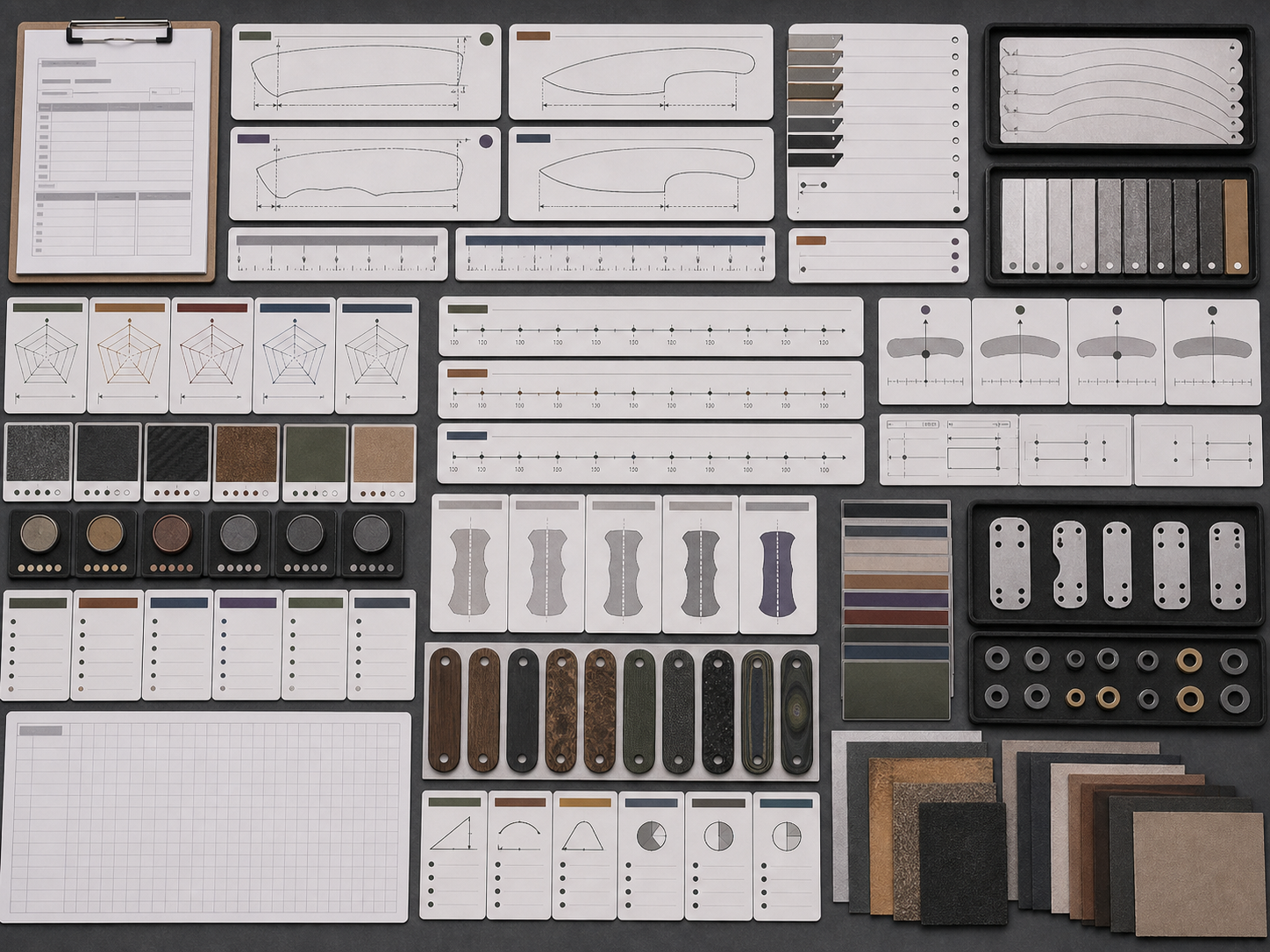
Before sampling, buyers should decide blade length, thickness, clip point shape, grind type, edge angle, tang structure, guard fit, balance point, and sheath clearance for the Bowie-inspired knife.
I Turn the Drawing Into Dimensions
For a Bowie-inspired knife, blade geometry drives cost and feel. A longer blade may look more traditional, but it increases material use, grinding time, heat-treatment risk, shipping weight, and compliance review. A thicker blade may feel strong, but it can cut poorly if the grind is too steep. A dramatic clip point may look attractive, but it needs enough steel behind the tip for practical use. The tang must also be planned early. Full tang, hidden tang, and stick tang designs create different costs and assembly risks.
I usually ask for target blade length, blade thickness, overall length, handle length, balance point, grind type, and edge angle before the first quote. If the buyer does not know these numbers, I help suggest a practical range based on target market and price. A good sample starts with clear dimensions. Otherwise, the factory may create something that looks close but does not feel right. With this style, small proportion changes can make the knife look refined or clumsy.
| Geometry item | Buyer decision | Production impact |
|---|---|---|
| Blade length | Compact, standard, or large | Affects cost, weight, and compliance review |
| Blade thickness | Light, medium, or heavy stock | Affects grinding and cutting feel |
| Clip point | Mild, classic, or dramatic | Affects appearance and tip strength |
| Tang structure | Full tang or hidden tang | Affects handle process and cost |
| Grind | Flat, hollow, or saber style | Affects edge performance and finish work |
Which Materials and Finishes Fit a Bowie-Inspired Product Tier?
Material choices can make the knife feel authentic or mismatched. A premium handle on a weak blade creates an uneven product.
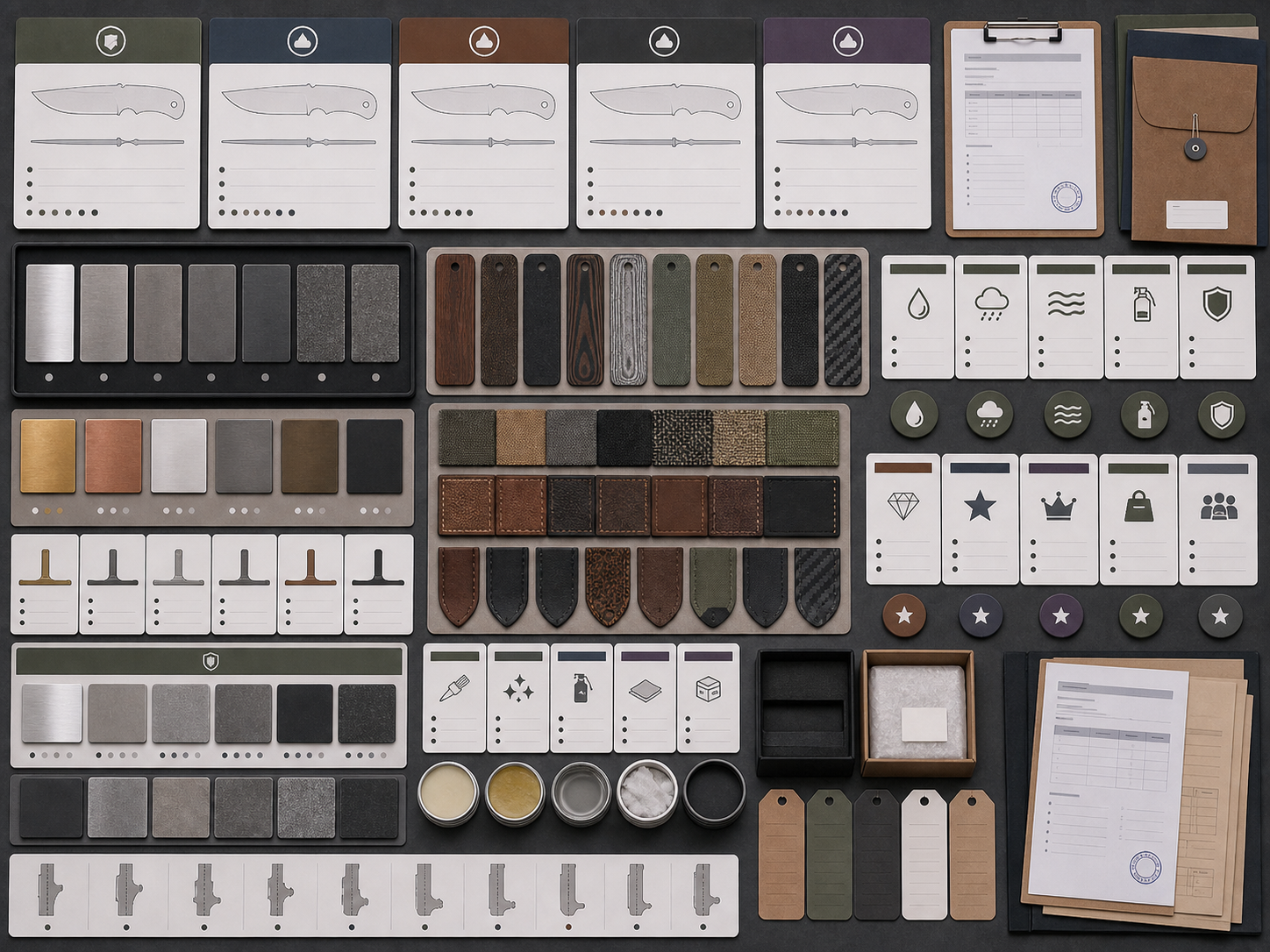
Buyers should choose blade steel, handle material, guard material, sheath material, and finish based on product tier, target price, corrosion expectation, display value, and repeat production stability.
I Build the Material Stack Around the Price Tier
A Bowie-inspired knife can move in many directions. It can be a practical outdoor tool with 5Cr15MoV, 8Cr13MoV, 14C28N, D2, or another agreed steel. It can be a more traditional gift item with wood handle, brass guard, polished finish, and leather-style sheath. It can be a modern outdoor version with G10 or micarta, stonewashed blade, stainless hardware, and a molded sheath. Each direction has a different cost structure.
The mistake is mixing signals. A low-cost steel with a very expensive handle may confuse the retail story. A high-grade steel with a weak sheath may hurt the user experience. A mirror finish may look good in photos but may raise polishing cost and scratch concerns. A black coating may match some markets, but coating quality and edge finishing need attention. I usually build the material stack from the target retail tier backward. The knife should feel like one coherent product, not a collection of disconnected parts.
| Product tier | Common material direction | What I watch |
|---|---|---|
| Entry fixed blade | Basic stainless steel, polymer handle, simple sheath | Cost and consistency |
| Mid-range outdoor | 8Cr13MoV, 14C28N, D2, G10 or micarta | Performance story and finish control |
| Heritage gift | Wood handle, brass or stainless guard, polished blade | Surface quality and packaging |
| Collector-style line | Upgraded steel and refined materials | MOQ, detail tolerance, and claims |
| Distributor catalog | Stable steel and easy assembly | Repeatability and lead time |
How Should Manufacturing and Quality Control Be Managed?
A big fixed blade is not automatically easier to make. Size can make warping, grinding, and handle fit more visible.
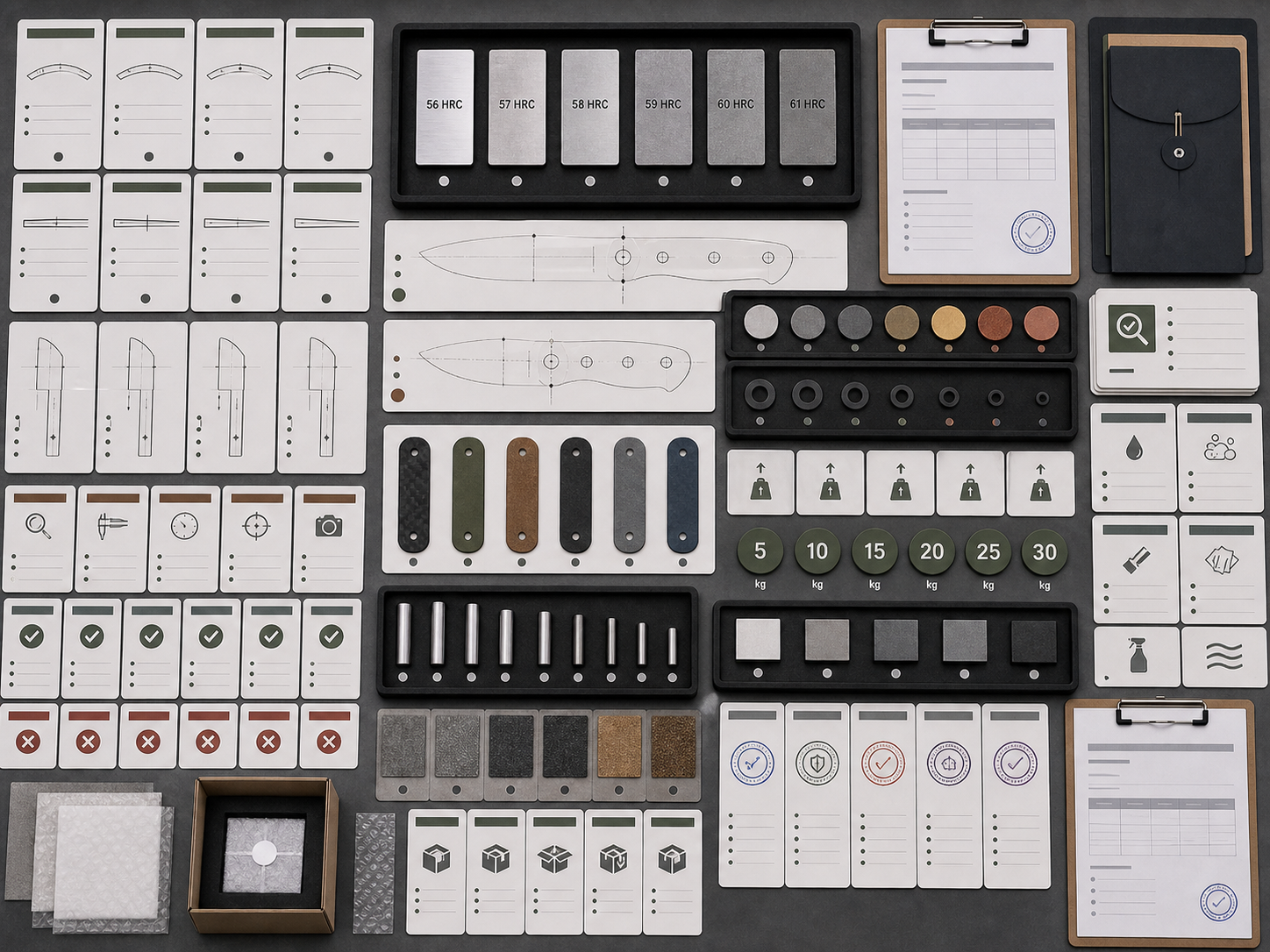
Manufacturing and QC should control blank cutting, heat-treatment flatness, hardness, bevel symmetry, guard fit, handle gaps, pin finish, sheath retention, edge quality, cleaning, packaging, and final inspection.
I Inspect the Places the Customer Will Notice First
Large fixed blades expose mistakes. Uneven bevels are easy to see. A loose guard feels poor. Handle gaps look cheap. Pins can sit proud or sink unevenly. A sheath that scratches the blade or holds the knife poorly can damage the whole product experience. This is why I set inspection points before mass production, not only after final packing.
For blade quality, I check steel certificate, heat-treatment record, hardness readings, straightness, bevel symmetry, edge condition, and surface finish. The NIST Rockwell hardness guide is useful because it reminds buyers that hardness testing needs good practice to reduce measurement error. For system control, the ISO 9001 page is useful background because it focuses on customer requirements, process control, performance evaluation, and improvement. In practical terms, buyers should ask for a clear approved sample, batch checks, and final inspection photos or reports when the order risk is high.
| QC area | What I check | Why it matters |
|---|---|---|
| Blade blank | Profile, tang, holes, and straightness | Protects assembly and appearance |
| Heat treatment | HRC readings and flatness | Supports consistent blade performance |
| Guard and handle | Fit, gaps, pins, and finish | Affects perceived value |
| Edge and bevel | Symmetry, sharpness, and burr control | Affects user satisfaction |
| Sheath and packing | Retention, scratches, and protection | Reduces shipping and storage complaints |
What Compliance and Packaging Issues Should Buyers Review?
Beautiful packaging cannot fix a restricted product. Buyers must check market rules before they approve size, copy, or retail channel.
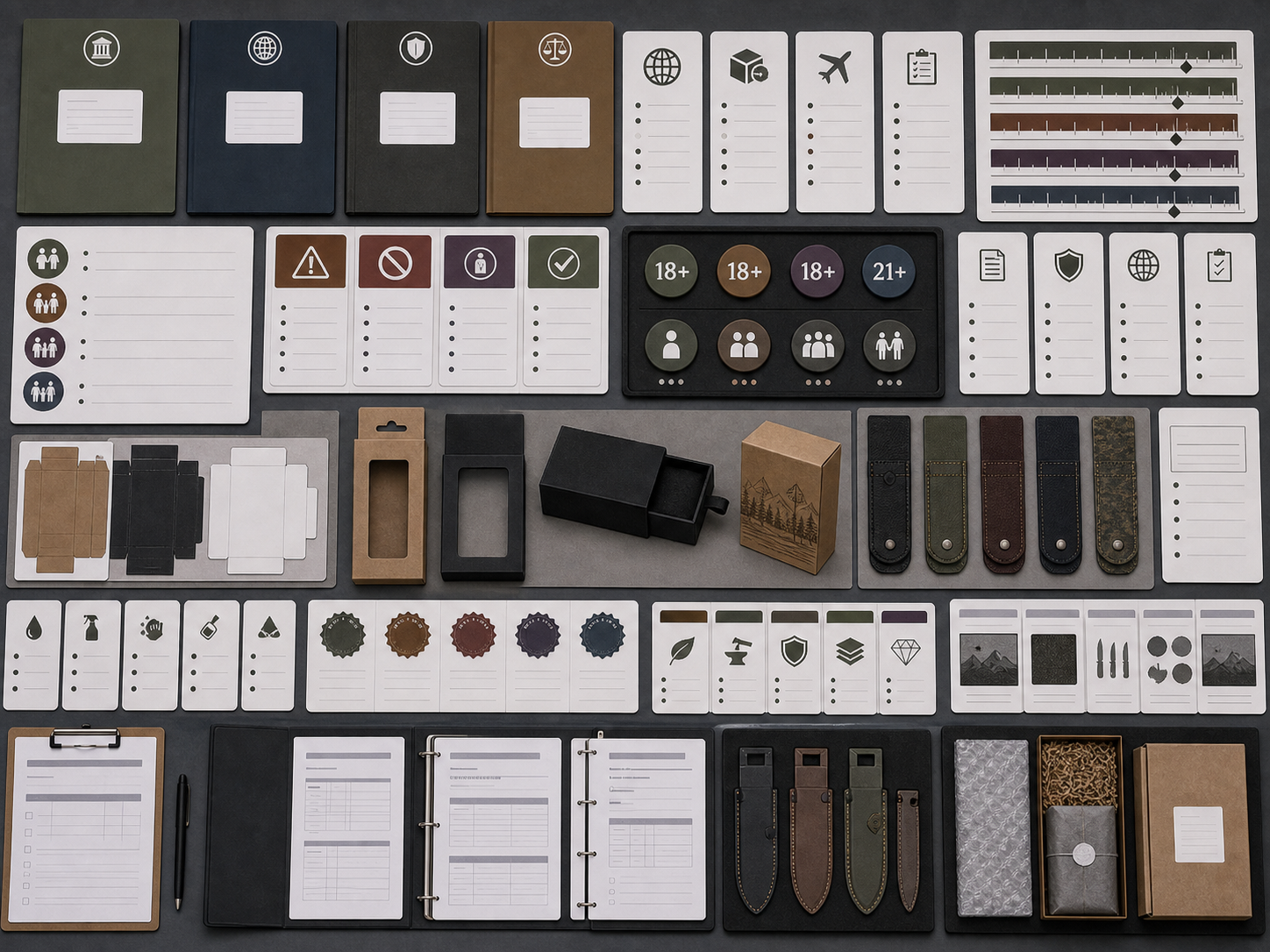
Buyers should review local knife rules, import requirements, blade length, sheath style, labeling, age-related retail controls, packaging claims, and product descriptions before ordering Bowie-inspired knives. This is not legal advice.
I Separate Product Story From Legal Review
Bowie-inspired knives can be sensitive in some markets because size, fixed blade format, sheath style, and retail channel rules differ. I do not give legal advice. I ask the buyer to check target-country and target-state rules before finalizing the product. That review should happen before tooling, packaging copy, and mass production. If the buyer sells through major retailers or platforms, the platform policy may be just as important as local law.
Packaging also needs care. If the knife is a heritage-inspired outdoor product, the packaging should explain materials, care, sheath, and intended market without dramatic language. If the product is a gift item, the box should protect the finish and support the retail price. If the product is for distributors, clear barcode, carton marks, and packing method matter. I also recommend simple safety and care information where appropriate. The buyer should avoid claims that cannot be supported, such as exact historical reproduction, special steel performance, or certification that the product does not have.
| Review point | Buyer should check | Why it matters |
|---|---|---|
| Local rules | Blade size and fixed blade retail limits | Reduces market-entry risk |
| Import details | Classification, documents, and labeling | Supports smoother logistics |
| Packaging copy | Product story and material claims | Avoids unsupported claims |
| Retail channel | Marketplace and retailer policies | Prevents listing problems |
| Care information | Finish, sheath, and storage guidance | Helps reduce complaints |
What Should a Bowie-Inspired OEM/ODM RFQ Include?
A sketch is not enough for this product type. The RFQ must define both the visual style and the production boundary.
A Bowie-inspired OEM/ODM RFQ should include target market, blade length, blade thickness, steel, tang structure, guard, handle, sheath, finish, packaging, quantity, target price, compliance notes, and inspection records.
I Use the RFQ to Control Style, Cost, and Risk
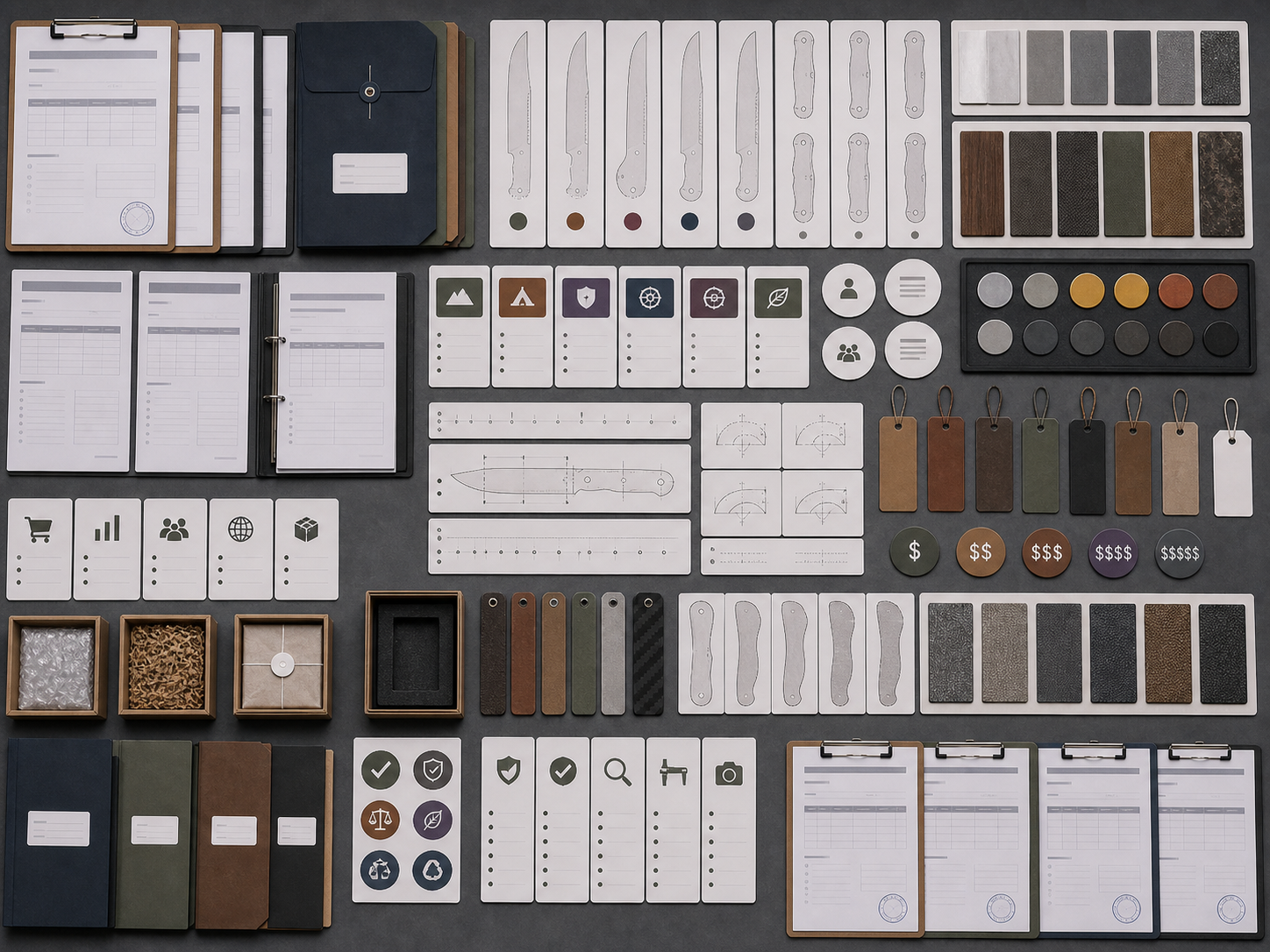
For a Bowie-inspired project, the RFQ should be more detailed than a normal fixed blade inquiry. The buyer should send the target market, expected retail tier, quantity, target price, drawing or reference style, blade length, blade thickness, steel, hardness target, tang type, handle material, guard material, sheath material, finish, logo method, packaging style, and compliance requirements. If the buyer does not have a drawing, I can help turn the concept into a manufacturable direction.
I also ask whether the buyer wants a traditional look or a modern outdoor look. That decision changes everything. A traditional version may need wood, brass, polishing, and gift packaging. A modern version may need micarta, G10, stonewash, and molded sheath options. The buyer should also say whether the product is a catalog SKU, custom private label item, limited program, or development project. At Vast State, I prefer to solve these details before sampling because it makes the sample more useful and the mass production path more stable.
| RFQ field | What to include | Why it helps |
|---|---|---|
| Product direction | Heritage-inspired, outdoor, gift, or collector-style | Aligns design and story |
| Blade details | Length, thickness, steel, tang, grind, HRC | Supports accurate production planning |
| Handle and guard | Materials, shape, pins, finish | Controls cost and user feel |
| Sheath and packaging | Material, retention, box, carton method | Supports retail and shipping |
| Risk controls | Compliance notes, QC report, approved sample | Protects repeat production |
Turn this article into a fixed blade project.
Send your target use, blade size, steel, handle direction, sheath needs, quantity, and packaging plan. Vast State can help shape it into a quote-ready project.
Conclusion
I treat Bowie-inspired knives as modern fixed blade projects: heritage matters, but manufacturability, positioning, compliance review, and QC decide success.
Source Notes
- Historic Arkansas Museum Knife Gallery supports the historical and bladesmithing context behind the Bowie knife.
- Encyclopedia of Arkansas Bowie Knife supports the early use of the term and the modern shape definition.
- Bullock Texas State History Museum Samuel Bell Bowie Knife supports the artifact and American icon context.
- Texas General Land Office Alamo exhibit notice supports the Bowie knife's frontier and cultural influence context.
- NIST Rockwell hardness guide supports careful hardness measurement practice.
- ISO 9001 provides quality-management context for process control and customer requirements.