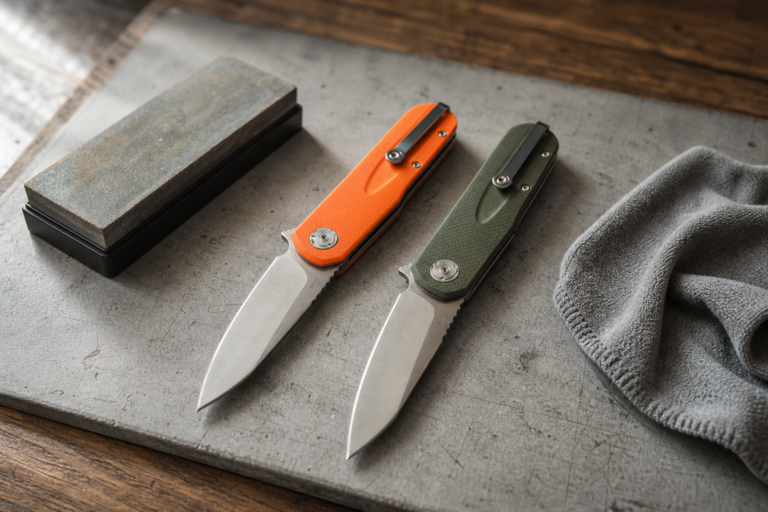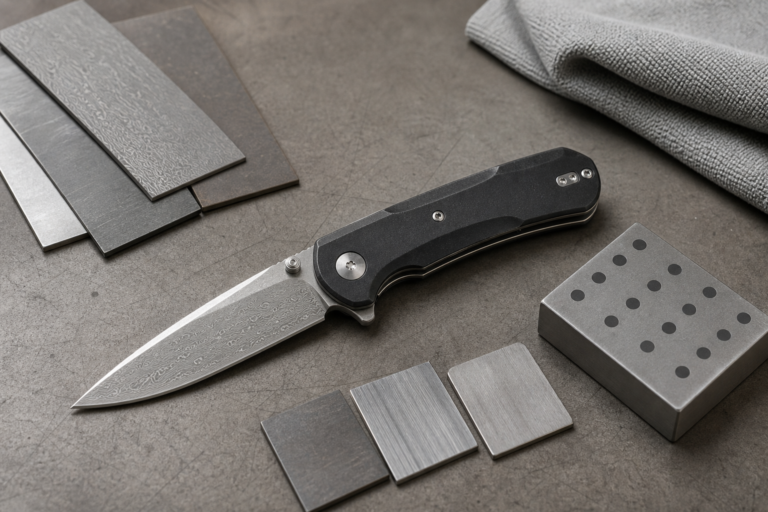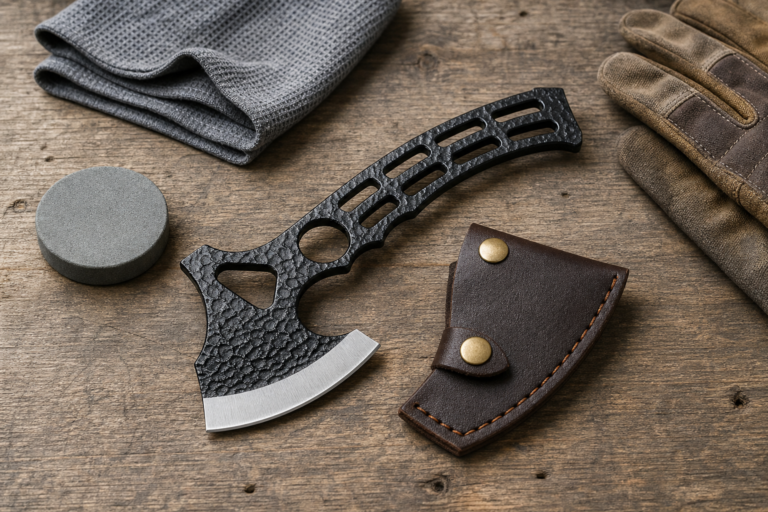
14C28N sounds like an easy upgrade. But without the right project fit, buyers can still waste money and create unclear positioning.
14C28N steel is a practical choice for OEM/ODM knives when buyers need a stainless value steel with good edge stability, corrosion resistance, easy sharpening, and strong market recognition. It fits EDC, pocket, outdoor, fishing, kitchen, and mid-range private label knives when heat treatment and QC are controlled.
Quick buyer brief:
- Answer: Use 14C28N when the project needs a balanced stainless upgrade, not a cheap entry steel.
- Buyer context: Useful for brands that want better value than basic budget steels without jumping to high-cost premium steels.
- Key checks: Official grade source, target HRC, heat-treatment route, blade geometry, finish, corrosion expectation, and QC records.
Planning a knife project with this steel?
Send us your target market, MOQ, price range, and blade type. Vast State can help you choose the right steel, HRC range, finish, handle material, and QC requirements for OEM/ODM production.
When a buyer asks me about "Sandvik 14C28N," I usually slow the conversation down. The steel has a good reputation, but reputation alone does not make a good product. I need to know the target user, retail tier, blade thickness, finish, sharpening plan, packaging level, and the steel options the buyer wants to compare. In OEM/ODM work, 14C28N is often a smart middle path. It can lift a knife above basic budget steels while keeping the project realistic for volume production. The value comes from matching the steel to the right design and controlling the process.
What Is 14C28N Steel in a Knife Sourcing Project?
Steel names can become messy in sourcing. If a buyer only says "Sandvik steel," the factory still needs the exact grade and data source.
14C28N is a martensitic stainless chromium knife steel currently listed by Alleima as optimized for professional knife applications. It uses about 0.62% carbon, 14% chromium, and 0.11% nitrogen by nominal composition.
I Start With the Official Material Data
Many buyers still use the older market name "Sandvik 14C28N" because the steel has been known that way for years. In current sourcing work, I prefer to check the official Alleima pages and data sheets. The Alleima 14C28N knife steel page describes the grade as a knife steel with edge performance, high hardness, and corrosion resistance. The Alleima 14C28N technical data sheet gives nominal chemistry of 0.62% carbon, 14% chromium, and 0.11% nitrogen.
For B2B buyers, this matters because 14C28N is not just a marketing word. It should be a material requirement on the RFQ, purchase order, and inspection plan. I ask buyers to confirm whether they require original 14C28N strip, whether equivalent steels are allowed, and what certificate is needed. I also check blade thickness because the data sheet lists strip supply ranges, and knife designs must match available stock. A clear material definition protects cost, quality, and brand trust.
| Sourcing point | What I check | Why it matters |
|---|---|---|
| Grade name | 14C28N, current supplier name, and certificate wording | Prevents vague steel claims |
| Chemistry | Carbon, chromium, and nitrogen content | Confirms the steel family and performance logic |
| Supply form | Strip thickness and available format | Affects blade design and costing |
| Equivalent policy | Whether substitutes are allowed | Protects buyer positioning |
Quote-ready RFQ Checklist for This Steel
To get an accurate OEM/ODM quote, prepare these details before contacting a knife manufacturer.
| RFQ Field | What to Prepare |
|---|---|
| Product type | Folding knife / fixed blade / multi-tool / kitchen knife |
| Target market | US / EU / outdoor retail / promotional / tactical / EDC |
| Steel option | 4116 / 14C28N / D2 / N690 / Nitro-V |
| Target HRC | Example: 55-57 HRC, 58-60 HRC |
| Blade finish | Satin / stonewash / black coating / bead blast |
| Handle material | G10 / micarta / aluminum / stainless steel / wood |
| Lock or structure | Liner lock / frame lock / slip joint / full tang |
| Estimated quantity | 500 / 1,000 / 3,000 / 5,000+ pcs |
| Packaging | White box / color box / blister / pouch / gift box |
| Required documents | Drawing / sample photo / logo file / packaging artwork |
Why Do Buyers See 14C28N as a Value Steel?
A value steel is not simply cheap. It must give buyers more useful performance per dollar in the right product tier.
Buyers see 14C28N as a value steel because it offers a strong balance of stainless behavior, edge stability, hardness potential, and easy maintenance while still fitting many mid-range OEM/ODM knife programs.
I Treat Value as a Commercial Balance
In OEM/ODM knife manufacturing, value is not a single number. A buyer may pay more for 14C28N than for a basic steel, but the product may become easier to sell because the buyer can explain the upgrade honestly. It is stainless. It has a known knife-steel identity. It can support a better EDC or outdoor story than many entry steels. It can also avoid some of the maintenance concerns buyers face when they choose semi-stainless or non-stainless tool steels for wet markets.
The official Alleima page recommends 14C28N for pocket knives, hunting knives, fishing knives, and kitchen knives where edge sharpness, edge stability, and corrosion resistance matter. That application range is why I see it as a flexible B2B option. It can fit many categories without forcing a buyer into one narrow product story. But I still do not call it a miracle steel. It is a balanced stainless grade. The value appears when the knife design, heat treatment, finish, and retail promise all support that balance.
| Value factor | Buyer benefit | My sourcing view |
|---|---|---|
| Stainless behavior | Easier care for general users | Useful for outdoor and fishing markets |
| Edge stability | Cleaner user experience | Depends on heat treatment and geometry |
| Market recognition | Easier product explanation | Helps mid-range private label SKUs |
| Cost position | Less expensive than many premium steels | Good when pricing must stay controlled |
What Performance Balance Should Buyers Expect From 14C28N?
Good steel choices still need clear limits. If buyers promise everything, even a strong value steel can disappoint users.
Buyers should expect 14C28N to balance sharpness, corrosion resistance, toughness, and easy sharpening. It is usually stronger as an all-round stainless knife steel than as an extreme wear-resistance steel.
I Explain the Balance Before Sampling
The biggest mistake is to compare 14C28N only by one point. If a buyer asks, "Does it hold an edge longer than every steel in this price range?" the answer becomes too narrow. I prefer to explain the total package. 14C28N can support a fine edge. It can resist corrosion better than many non-stainless steels. It can be easier to sharpen than high-wear steels. It can also be friendly for daily users who do not want difficult maintenance.
That balance makes it useful for EDC, outdoor, fishing, kitchen, and utility knives. It does not mean it beats D2 in wear resistance. It also does not mean it replaces higher-cost powder steels in premium products. The right buyer expectation is simple: 14C28N is a high-value stainless choice for practical knives. It is especially useful when the customer cares about clean cutting, normal outdoor exposure, easy care, and repeatable production. I write product copy around that balance instead of making extreme claims.
| Performance area | What buyers can expect | What buyers should avoid |
|---|---|---|
| Sharpness | Supports a clean fine edge | Do not ignore edge angle and grinding |
| Corrosion resistance | Strong for general stainless knife use | Do not sell it as maintenance-free |
| Toughness | Good for many practical designs | Do not use weak geometry |
| Edge life | Good value balance | Do not compare it to premium wear steels too broadly |
How Should Heat Treatment and Hardness Be Controlled?
14C28N has useful potential. But poor heat treatment can turn a good steel choice into an average knife.
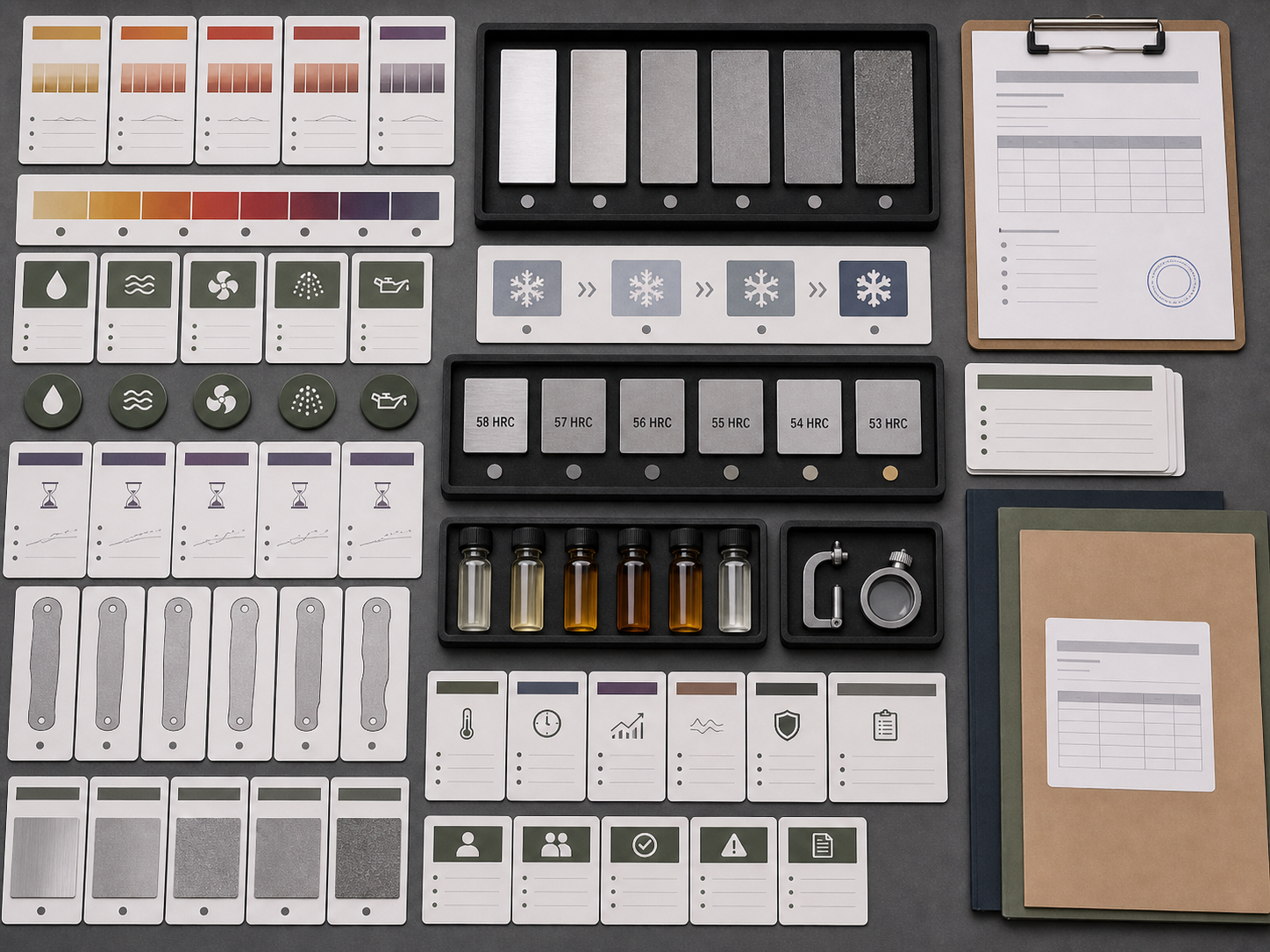
Buyers should control 14C28N through agreed hardening temperature, holding time, quenching method, tempering plan, target HRC, optional deep freezing, and batch hardness records.
I Make Heat Treatment Part of the RFQ
The Alleima data sheet lists a hardening example of 1050 C, 5 minutes holding time, and oil quenching for 14C28N. It also warns that tempering above 450 C can cause brittleness and loss of corrosion resistance. These details are important because 14C28N is not only a steel name. It is a process. The same steel can perform differently when the heat treatment changes.
Alleima's hardening and tempering guide explains the general purpose clearly: hardening increases hardness, and tempering reduces brittleness while balancing toughness and sharpness retention. The NIST Rockwell hardness measurement guide also reminds buyers that hardness testing needs good practice because measurement variation can mislead decisions. For B2B orders, I ask for target HRC and batch readings. I also ask whether deep freezing is part of the process, because Alleima notes that deep freezing can increase hardness by about 1-2 HRC. This is not always required, but the buyer should know what process is being quoted.
| Heat-treatment item | What to define | Why it matters |
|---|---|---|
| Hardening route | Temperature, hold time, quench method | Controls microstructure and hardness |
| Tempering plan | Temperature and time | Balances hardness and toughness |
| Target HRC | Practical range for knife type | Prevents vague performance targets |
| Sampling record | HRC readings by batch | Supports repeat production |
| Deep freezing | Included or not included | Affects cost and hardness potential |
Which Knife Types Fit 14C28N Best?
Some steels look good on paper but do not fit the product. A good knife steel still needs the right use case.
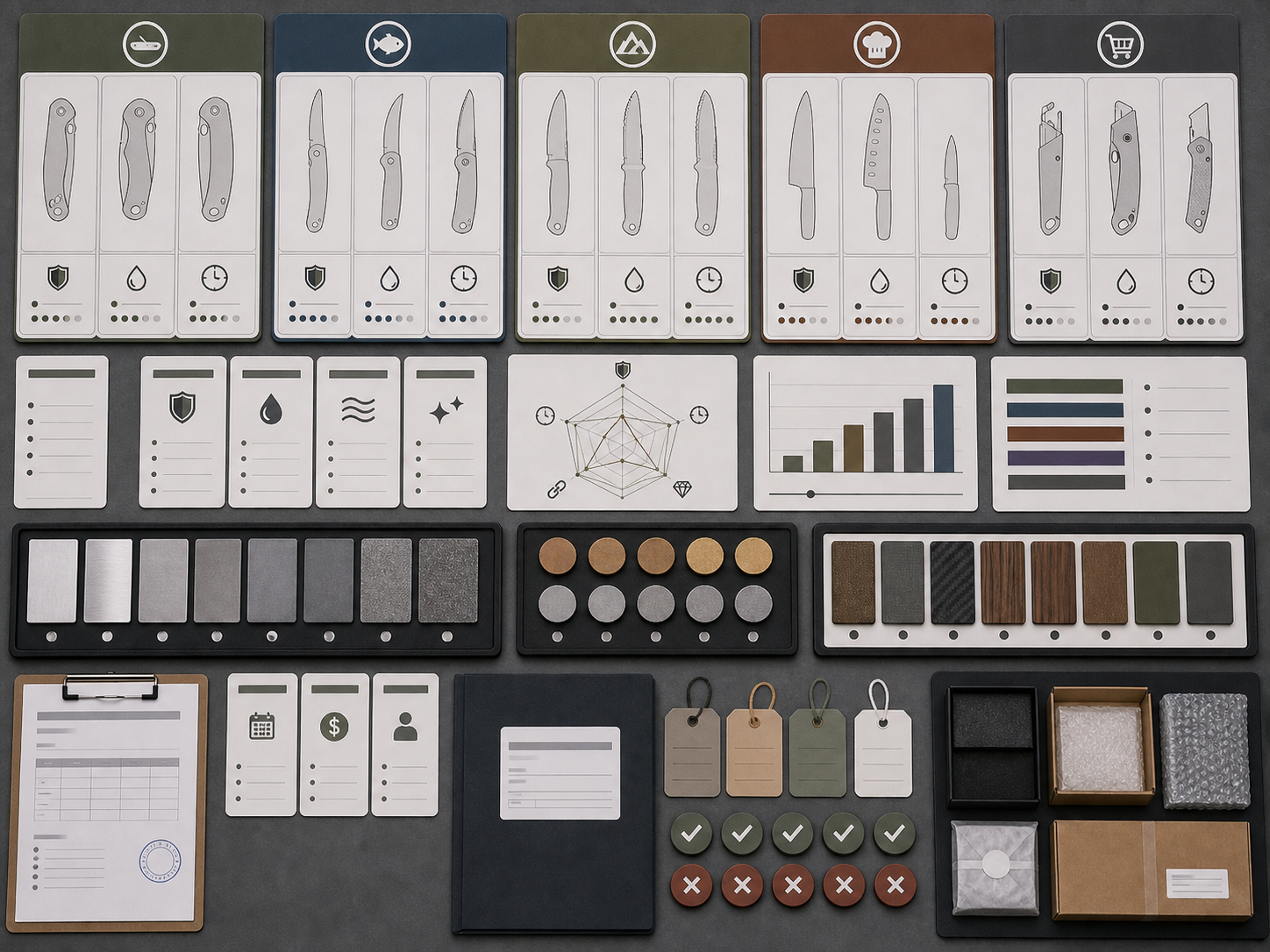
14C28N fits mid-range pocket knives, EDC folders, fishing knives, outdoor knives, kitchen knives, and private label utility knives where stainless behavior and clean edge performance matter.
I Match the Steel to the User Environment
I often recommend 14C28N when the knife may see moisture, food contact, outdoor use, or daily pocket carry. For fishing knives and outdoor knives, corrosion resistance is a strong selling point. For pocket knives and EDC folders, users often like a steel that sharpens without too much trouble. For kitchen-style utility knives, the stainless behavior and clean edge potential can be useful. The official Alleima application examples include pocket knives, chef's knives, hunting knives, and fishing knives, which supports this broad fit.
The design still matters. A thin kitchen blade and a compact folding knife do not need the same grind or heat-treatment target. A fishing knife may need a finish that helps cleaning. A private label EDC folder may need a stronger handle and smoother lock action because buyers will compare the full product, not only the blade steel. I also consider packaging. If the brand wants to market 14C28N clearly, the packaging should explain the steel in simple and accurate language. The product should not be overbuilt beyond its price tier, but it should feel coherent.
| Knife type | Why 14C28N can fit | Design focus |
|---|---|---|
| EDC folder | Balanced stainless performance | Smooth action, edge angle, compact size |
| Fishing knife | Corrosion resistance matters | Finish, cleaning, handle grip |
| Outdoor knife | General use and easy care | Tough geometry and stable handle |
| Kitchen utility knife | Fine edge and stainless behavior | Thin grind and clean finish |
| Private label pocket knife | Strong value story | Packaging and repeatable QC |
What Manufacturing Details Matter for 14C28N Blades?
A good material can still be wasted. Poor grinding, weak fit, or rough finishing can hide the value of 14C28N.
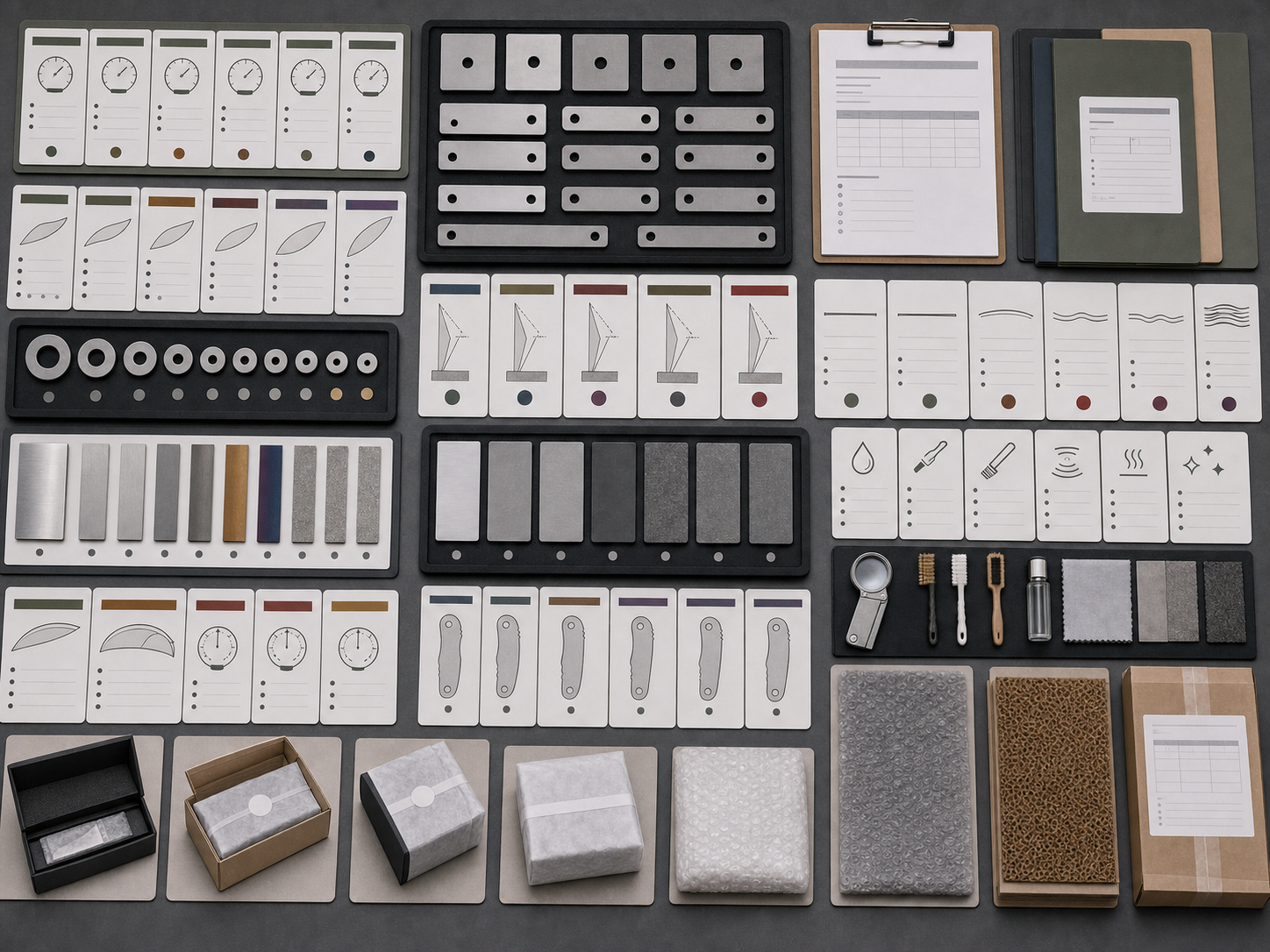
For 14C28N blades, buyers should control blade thickness, blank cutting, pivot holes, bevel grinding, heat-treatment distortion, surface finish, sharpening angle, cleaning, and packaging protection.
I Control the Process Around the Steel
14C28N is often supplied as strip steel, so blade thickness planning starts early. If a buyer changes blade thickness after the first quote, the cost and lead time may change. Cutting and hole processing must be accurate for folding knives because pivot alignment and lock contact affect user feel. Grinding must be consistent because the edge geometry decides how the knife cuts. A good steel with a poor bevel will not impress the customer.
Finishing also matters. Satin, stonewash, bead blast, polishing, and coatings all create different costs and user expectations. For stainless value knives, I usually choose finishes that match the product tier and reduce complaint risk. If the knife is for humid environments, I avoid finishes that make cleaning difficult or create avoidable corrosion concerns. For folding knives, I also pay attention to the lock face, stop pin area, washers, bearings, and screw torque. The buyer may choose 14C28N for the blade, but the user judges the whole knife. A strong value steel needs a clean value product around it.
| Manufacturing area | Risk if ignored | Practical control |
|---|---|---|
| Blade thickness | Cost or function mismatch | Confirm stock and design early |
| Pivot and holes | Rough action or poor assembly | Inspect location and tolerance |
| Bevel grinding | Weak cutting performance | Approve grind and edge standard |
| Finish | Wrong market look | Match finish to target retail tier |
| Final assembly | Good blade feels cheap | Check centering, lockup, and screw torque |
How Should 14C28N Compare With 12C27, 8Cr13MoV, D2, and N690?
Comparisons can mislead buyers. A steel matrix should support the product plan, not just create a ranking.
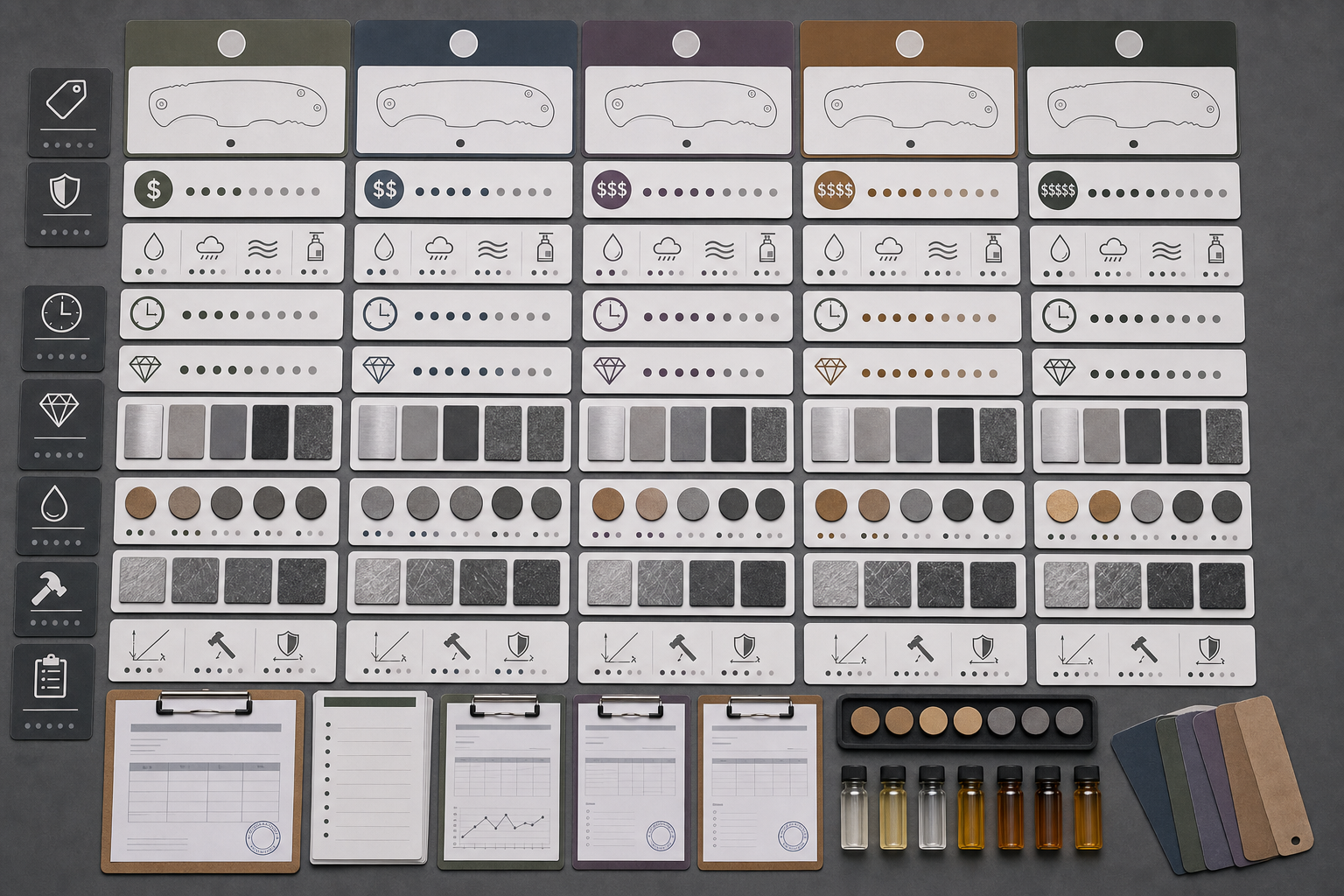
14C28N usually sits above basic budget steels and near 12C27-style stainless value steels, with better corrosion and easy-care positioning than D2, but below higher-cost premium steels such as N690 in many brand stories.
I Compare by Buyer Need, Not Internet Ranking
If the buyer is moving up from entry steels, 14C28N can feel like a clear upgrade. It gives a more recognized stainless value story than many low-cost steels. If the buyer is comparing it with 12C27, I see both as clean stainless knife steels from the same broad Scandinavian value family, but 14C28N has nitrogen and is often chosen when the buyer wants stronger corrosion and edge-stability positioning. The Alleima 12C27 page lists 12C27 as a long-developed knife steel with good corrosion resistance and a 54-61 HRC range, so the comparison should be specific, not dismissive.
Compared with D2, 14C28N is usually easier to position for wet or low-maintenance use. D2 can offer a stronger wear-resistance story, but it is not the same stainless-care story. Compared with N690, 14C28N may be more cost-friendly for many mid-range programs, while N690 may support a more premium European stainless story. I ask the buyer where the product will sit in the catalog. If the steel name creates the right customer expectation and the target price works, then the choice is practical.
| Steel option | Best sourcing role | My practical view |
|---|---|---|
| 14C28N | Balanced stainless value | Strong mid-range choice |
| 12C27 | Proven stainless knife steel | Good clean value option |
| 8Cr13MoV | Budget value category | Useful when cost is tighter |
| D2 | Wear-resistance value story | Strong edge story but different care needs |
| N690 | Higher-position stainless option | Better for premium private label lines |
What Should a 14C28N OEM/ODM RFQ Include?
The steel name alone is not enough. A vague RFQ can turn a good material into an unclear quote.
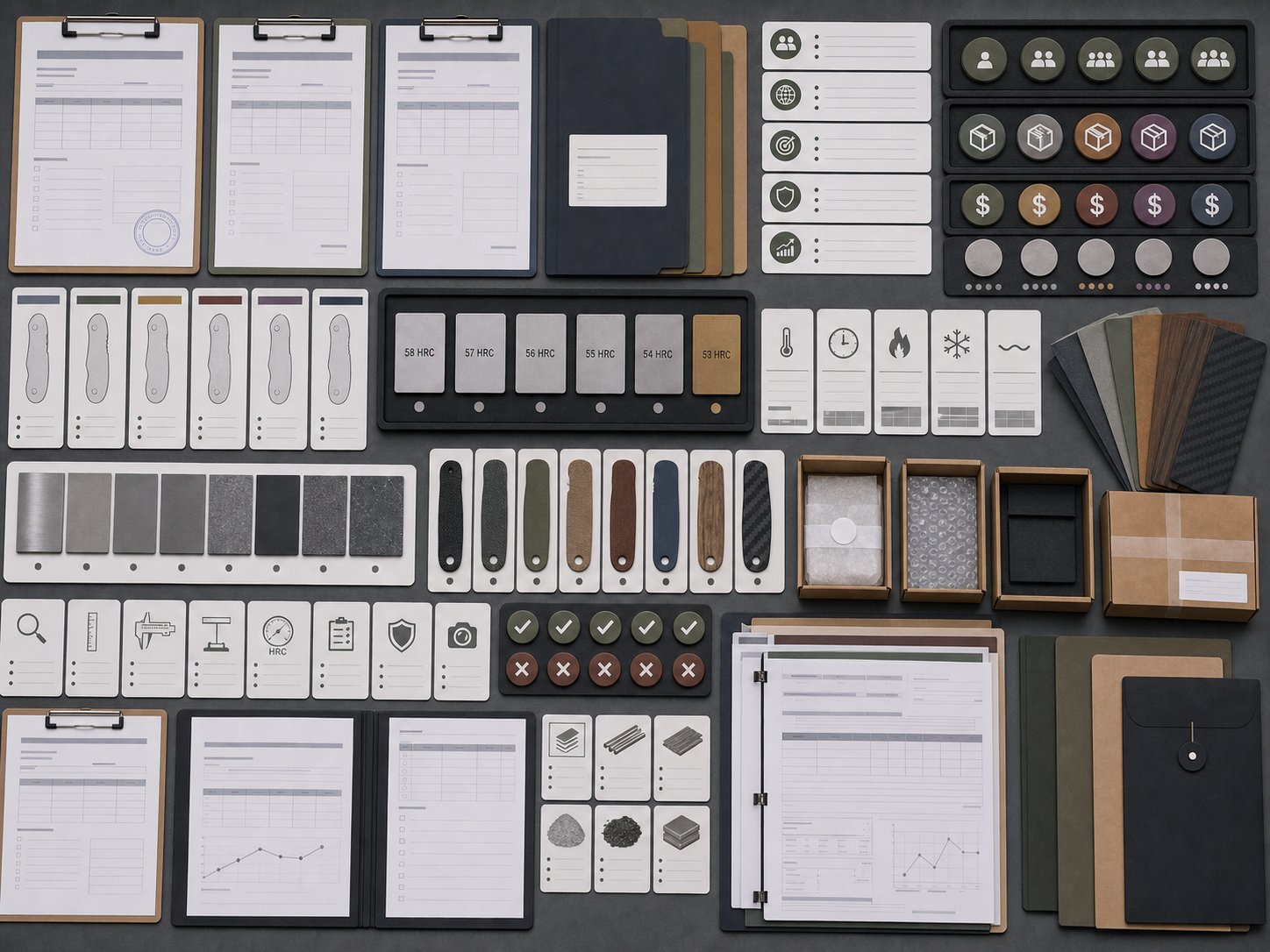
A 14C28N RFQ should include knife type, target market, quantity, target price, blade thickness, steel certificate requirement, target HRC, heat treatment, finish, handle material, lock type, packaging, and inspection records.
I Use the RFQ to Protect the Value Story
When a buyer chooses 14C28N, the RFQ should protect that decision. The buyer should state whether original 14C28N is required, whether a certificate is needed, and whether any substitute is allowed. The RFQ should also define the target HRC range, heat-treatment expectations, blade thickness, finish, handle material, lock type, and packaging level. These details help the supplier quote the same product the buyer actually wants.
Quality records should not be skipped. A practical RFQ can request material certificate, heat-treatment record, HRC sampling, blade thickness check, edge inspection, functional inspection, and packaging inspection. The ISO 9001 page is useful background because it focuses on controlled processes, customer requirements, performance evaluation, and improvement. For knife manufacturing, that means the buyer should look for repeatable controls, not only a nice sample. At Vast State, I prefer to discuss these points before sampling. It saves time, protects cost, and makes the finished knife easier to sell with confidence.
| RFQ field | What to include | Why it helps |
|---|---|---|
| Material requirement | 14C28N certificate or approved policy | Protects the steel claim |
| Heat treatment | Target HRC and process expectation | Controls real performance |
| Product design | Blade size, lock, handle, finish | Supports accurate costing |
| Commercial terms | Quantity, MOQ, target price, lead time | Keeps the quote practical |
| QC documents | Certificate, HRC readings, inspection report | Supports repeat orders |
Ready to use this material in your next knife line?
Vast State can help you compare blade steels, heat treatment ranges, handle materials, finishes, packaging options, and QC requirements based on your target market and quantity.
Conclusion
I use 14C28N when buyers need a balanced stainless value steel with clear positioning, controlled heat treatment, and repeatable OEM/ODM production.
Source Notes
- Alleima 14C28N knife steel supports the recommended knife applications and 55-62 HRC range.
- Alleima 14C28N technical data sheet supports the nominal chemistry, heat-treatment example, supply form, and process cautions.
- Alleima hardening and tempering guide supports the general relationship between hardening, tempering, hardness, brittleness, toughness, and sharpening performance.
- NIST Rockwell hardness guide supports the need for good practice in hardness measurement.
- Alleima 12C27 knife steel provides partial comparison context for another stainless value knife steel.
- ISO 9001 provides quality-management context for controlled processes, customer requirements, performance evaluation, and improvement.