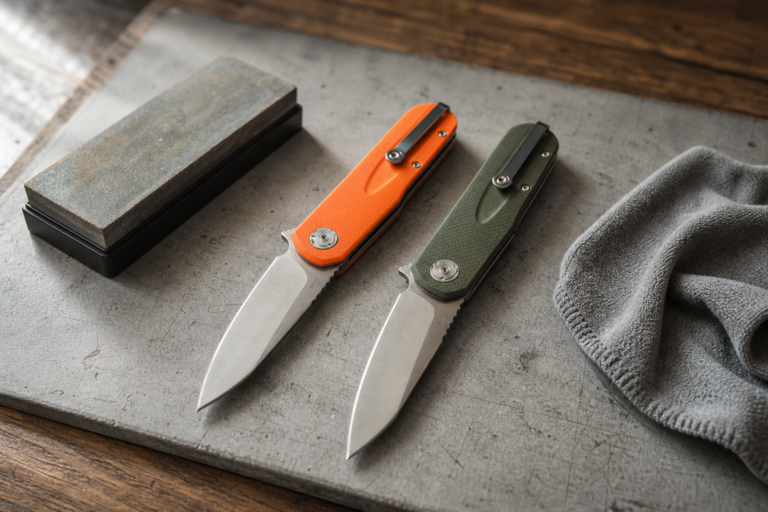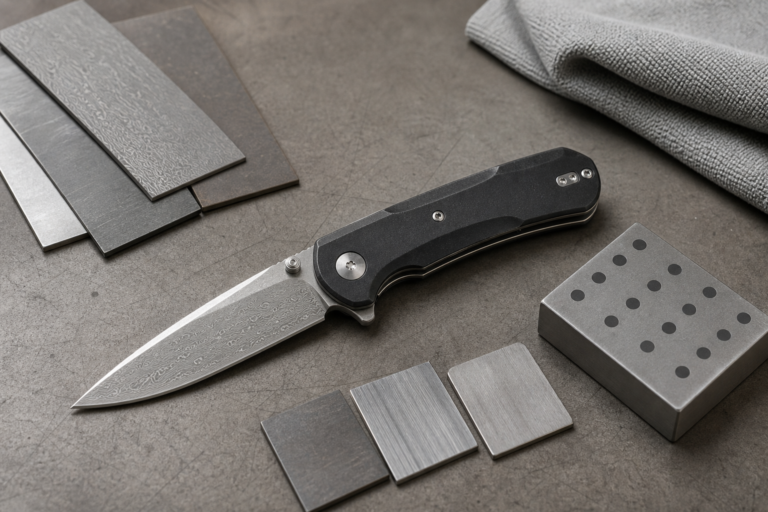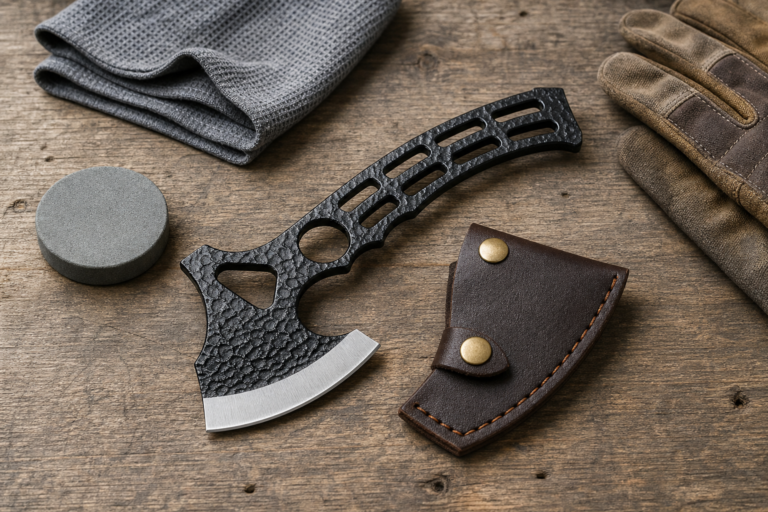
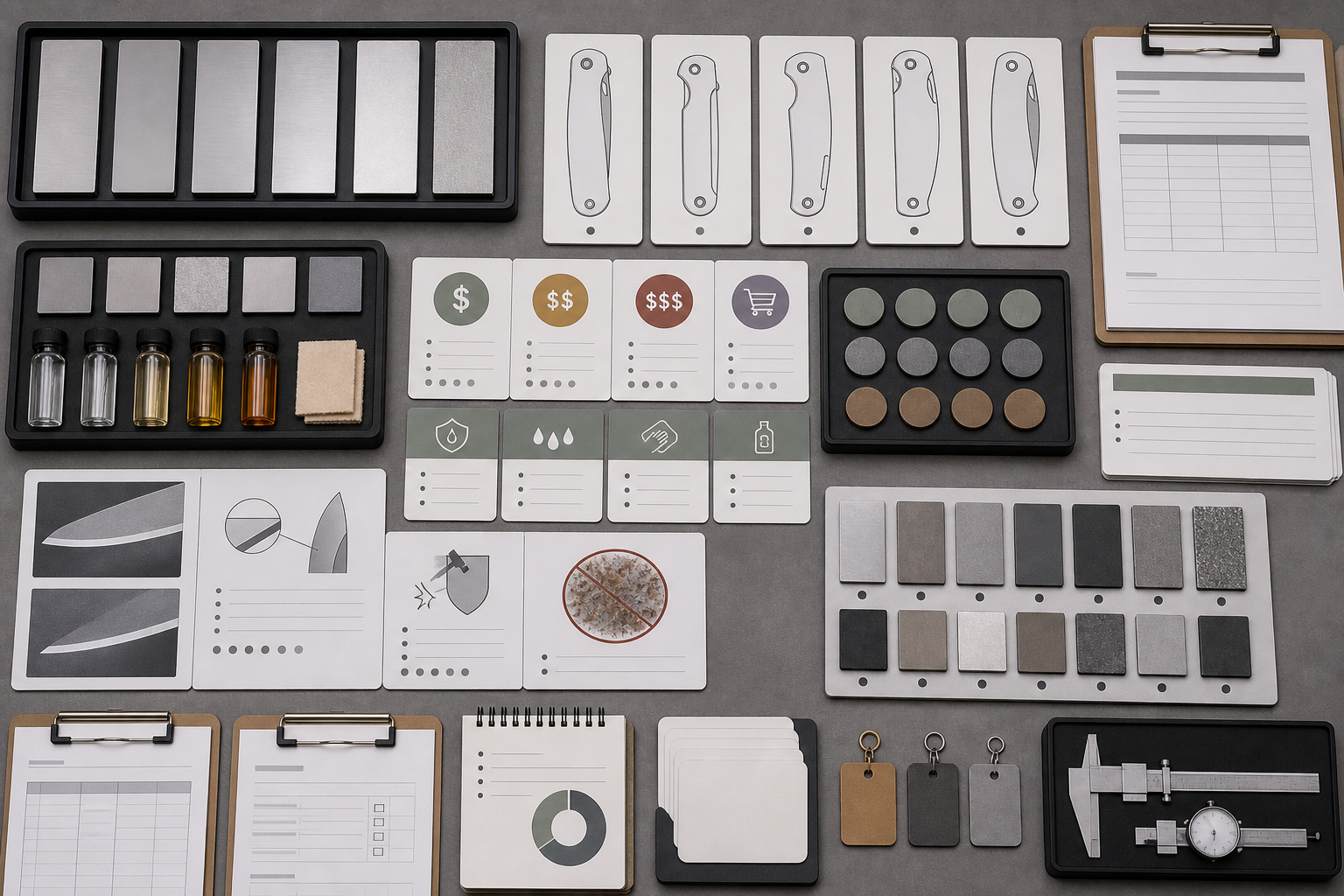
3Cr13 can keep a knife affordable. But if buyers expect premium edge life, the steel choice will disappoint quickly.
3Cr13 steel is a practical choice for OEM/ODM knives when the project needs low cost, stainless behavior, easy sharpening, and simple utility performance. It is not the right choice for premium edge retention, high-end positioning, or demanding outdoor use unless the buyer accepts its limits.
Quick buyer brief:
- Answer: Use 3Cr13 for cost-sensitive utility knives, not for premium performance claims.
- Buyer context: Useful for catalog brands, promotional SKUs, entry-level outdoor tools, and high-volume orders.
- Key checks: Steel certificate, equivalent grade, target HRC, blade thickness, finish, corrosion expectation, and QC record.
Planning a knife project with this steel?
Send us your target market, MOQ, price range, and blade type. Vast State can help you choose the right steel, HRC range, finish, handle material, and QC requirements for OEM/ODM production.
When I discuss 3Cr13 with B2B buyers, I do not start with whether it is "good" or "bad." I start with the product goal. A low-cost pocket knife, basic camping tool, simple utility blade, or promotional SKU can make sense with 3Cr13 if the buyer controls the design and product copy. A premium knife, high-retention EDC knife, or high-price private label project should usually look at another steel. The job is not to praise or reject 3Cr13. The job is to match it with the right order.
What Is 3Cr13 Steel in a Knife Sourcing Project?
Steel names can shift across markets. If the buyer only writes "3Cr13," the factory still needs a clear certificate target.
In knife sourcing, 3Cr13 is usually treated as an entry-level martensitic stainless steel in the 13% chromium family. I ask buyers to confirm the exact certificate name, such as 30Cr13, X30Cr13, 1.4028, or 420B-style equivalents when applicable.
I Confirm the Grade Before I Quote the Price
3Cr13 is often used as a simple knife steel name in export conversations. In more formal material documents, buyers may see related names such as 30Cr13, X30Cr13, 1.4028, or 420B-style references. A Walzwerke Einsal material page for 1.4028 X30Cr13 lists it as X30Cr13, AISI 420/420B, and UNS S42020, with carbon around 0.26-0.35% and chromium around 12.0-14.0%. A Zapp data sheet for 1.4028 instrument steel also describes it as a stainless martensitic chromium steel.
For OEM/ODM work, I do not assume all these names are identical in every supply chain. I ask the steel supplier or blade factory to confirm the certificate name and chemical range. This protects the buyer from vague quotes. It also helps the buyer compare 3Cr13 with 420J2, 5Cr15MoV, 8Cr13MoV, and other budget steels. The right question is not only "Is 3Cr13 cheap?" The right question is whether the steel certificate, heat treatment, blade geometry, and product promise all match the target market.
| Sourcing question | What I check | Why it matters |
|---|---|---|
| What grade name is on the certificate? | 3Cr13, 30Cr13, X30Cr13, 1.4028, or related name | Reduces substitution confusion |
| What carbon and chromium range is used? | Around 0.3% carbon and 12-14% chromium when mapped to X30Cr13/1.4028 | Supports basic material review |
| What market is targeted? | Entry, utility, promotional, or mid-level | Keeps expectations realistic |
| What product claim is planned? | Stainless behavior, easy sharpening, or low cost | Prevents overpromising |
Quote-ready RFQ Checklist for This Steel
To get an accurate OEM/ODM quote, prepare these details before contacting a knife manufacturer.
| RFQ Field | What to Prepare |
|---|---|
| Product type | Folding knife / fixed blade / multi-tool / kitchen knife |
| Target market | US / EU / outdoor retail / promotional / tactical / EDC |
| Steel option | 4116 / 14C28N / D2 / N690 / Nitro-V |
| Target HRC | Example: 55-57 HRC, 58-60 HRC |
| Blade finish | Satin / stonewash / black coating / bead blast |
| Handle material | G10 / micarta / aluminum / stainless steel / wood |
| Lock or structure | Liner lock / frame lock / slip joint / full tang |
| Estimated quantity | 500 / 1,000 / 3,000 / 5,000+ pcs |
| Packaging | White box / color box / blister / pouch / gift box |
| Required documents | Drawing / sample photo / logo file / packaging artwork |
When Does 3Cr13 Make Sense for Budget and Utility Knives?
A low-cost steel is not automatically a bad choice. It becomes bad when the buyer expects the wrong performance tier.
3Cr13 makes sense for budget pocket knives, entry-level camping tools, simple utility blades, and promotional products where cost, corrosion behavior, easy sharpening, and high-volume production matter more than premium edge retention.
I Use 3Cr13 When Price Is a Real Design Requirement
Some buyers need a knife that sells at a low retail price. In that case, steel choice must support the business model. 3Cr13 can be a practical option for a simple folding knife, light-duty utility knife, basic outdoor kit tool, or high-volume promotional item. It can offer stainless behavior and easy sharpening at a cost level that helps the buyer protect margin.
The key is honesty. I do not recommend 3Cr13 for a brand that wants a premium edge-retention story. I also do not recommend it when the product will be compared directly with D2, N690, 14C28N, or similar upgrade steels. But for a starter SKU, basic private label line, or distributor catalog product, 3Cr13 can be good enough if the design is simple and the end-user expectation is clear. I usually pair it with practical blade thickness, simple finishes, and straightforward packaging. The buyer should sell it as an affordable utility product, not as a high-performance steel product.
| Good fit for 3Cr13 | Why it works | Buyer benefit |
|---|---|---|
| Entry-level pocket knife | Low material cost | Protects target price |
| Basic camping tool | Stainless behavior helps general use | Easier product care |
| Promotional knife | Price and volume matter most | Supports high-volume programs |
| Simple utility blade | Easy sharpening is useful | Reduces user frustration |
What Tradeoffs Should Buyers Expect From 3Cr13?
Every low-cost choice has a limit. If the buyer ignores that limit, after-sale complaints become more likely.
Buyers should expect 3Cr13 to offer affordability, stainless behavior, and easy sharpening, but weaker edge retention and lower premium value than steels such as 8Cr13MoV, D2, N690, or 14C28N.
I Explain the Weakness Before the Buyer Approves Packaging
The main tradeoff is edge retention. 3Cr13 has lower carbon than many upgrade knife steels, so it usually cannot support the same long edge life as D2, 440C, N690, or 14C28N. This does not make it useless. It simply means the product should be positioned as light-duty, easy to sharpen, and cost-effective.
Corrosion behavior is another point. 3Cr13 is stainless in the martensitic chromium family, but finish and heat treatment still matter. The Zapp 1.4028 data sheet says best corrosion resistance is achieved with a polished surface in the quenched and tempered condition, and it notes sufficient resistance in moderate, non-chlorine-containing media. That helps explain why surface finish and storage conditions matter. I would not sell 3Cr13 as a saltwater or high-corrosion solution. I would sell it as a practical low-cost stainless option for normal use. Clear product copy protects the buyer more than dramatic steel claims.
| Tradeoff | What can happen | How I control it |
|---|---|---|
| Edge retention | User expects too much | Position as light-duty utility |
| Premium value | Product looks low-end beside upgrade steels | Use it in the right catalog tier |
| Corrosion expectation | Buyer overstates stainless behavior | Use accurate care language |
| Heat treatment | Blade becomes too soft or inconsistent | Define target HRC and sampling |
How Should Heat Treatment and Hardness Be Controlled?
Low-cost steel still needs process control. A weak heat treatment can make 3Cr13 feel much worse than it should.
For 3Cr13 knife orders, buyers should define the certificate grade, target hardness range, heat-treatment process, tempering plan, flatness control, and Rockwell hardness checks before mass production.
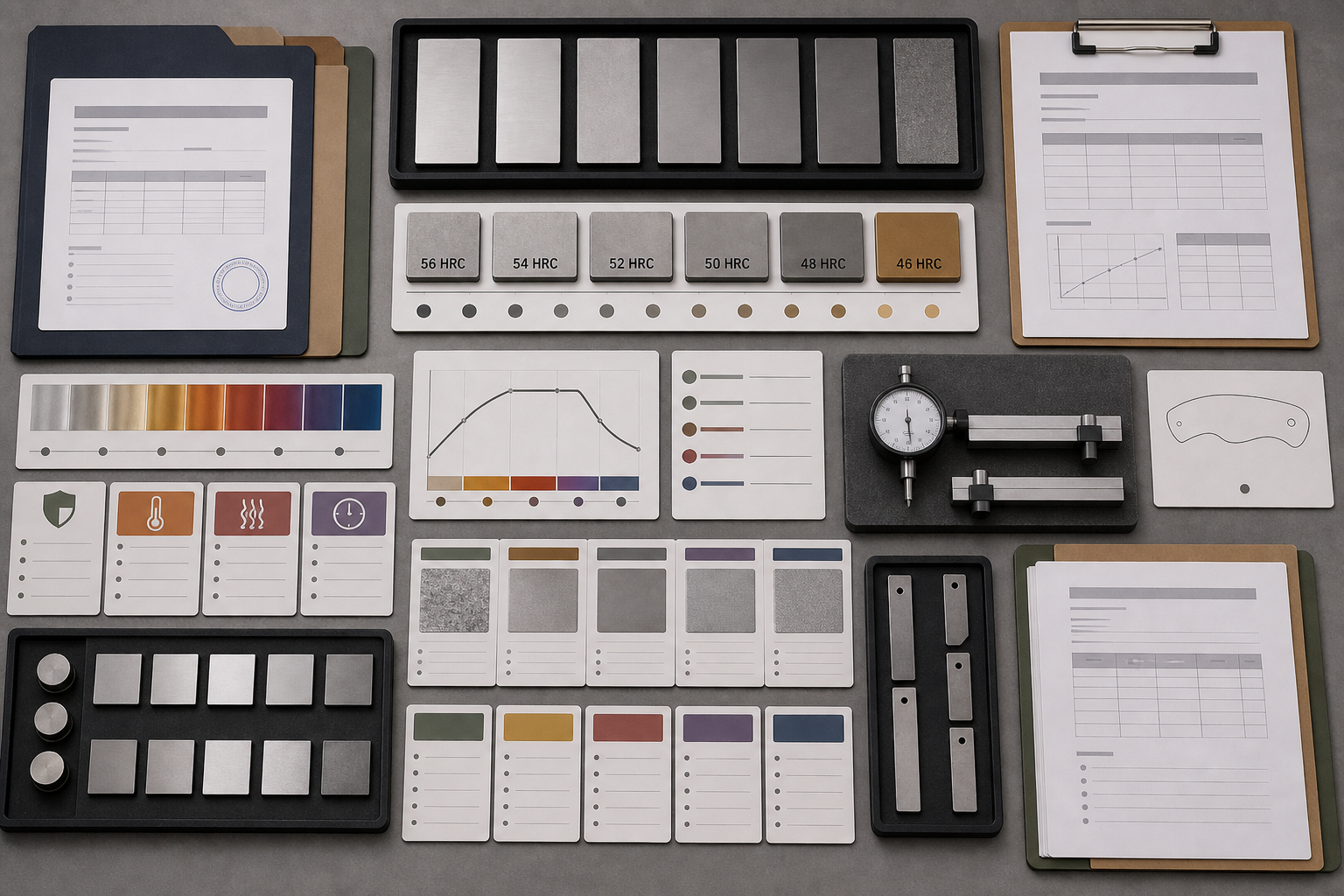
I Set a Practical Hardness Target Instead of Chasing a Big Number
For 3Cr13, the buyer should not chase the highest hardness possible. The goal is a practical balance. If the blade is too soft, edge retention becomes poor. If the target is pushed too high for the design and process, toughness and production consistency can suffer. Zapp's 1.4028 data sheet shows heat-treatment ranges for hardening and tempering, while Walzwerke Einsal lists soft-annealed mechanical data for X30Cr13/1.4028. These sources remind me that condition matters.
For knife steel in general, Alleima's hardening and tempering guide explains that hardening creates hardness while tempering helps reduce brittleness. The NIST Rockwell hardness measurement guide is also useful because HRC readings should be measured, not guessed. For B2B orders, I ask for sample checks and batch records. Even a budget steel needs a controlled process if the buyer wants repeatable quality.
| Heat-treatment control | Buyer should request | Why it matters |
|---|---|---|
| Target HRC range | Practical range by knife type | Controls edge and toughness balance |
| Heat-treatment record | Batch process information | Supports repeat production |
| Flatness check | Warpage after heat treatment | Protects grinding and assembly |
| HRC sampling | Readings from approved locations | Confirms process consistency |
How Does 3Cr13 Compare With 420J2, 5Cr15MoV, 8Cr13MoV, and D2?
Steel comparisons can become emotional. Buyers need a commercial answer, not a forum argument.
3Cr13 usually sits in the entry-level stainless category. It is often more cost-focused than 5Cr15MoV or 8Cr13MoV, and it offers less edge-retention value than D2, but it can still fit simple utility products.
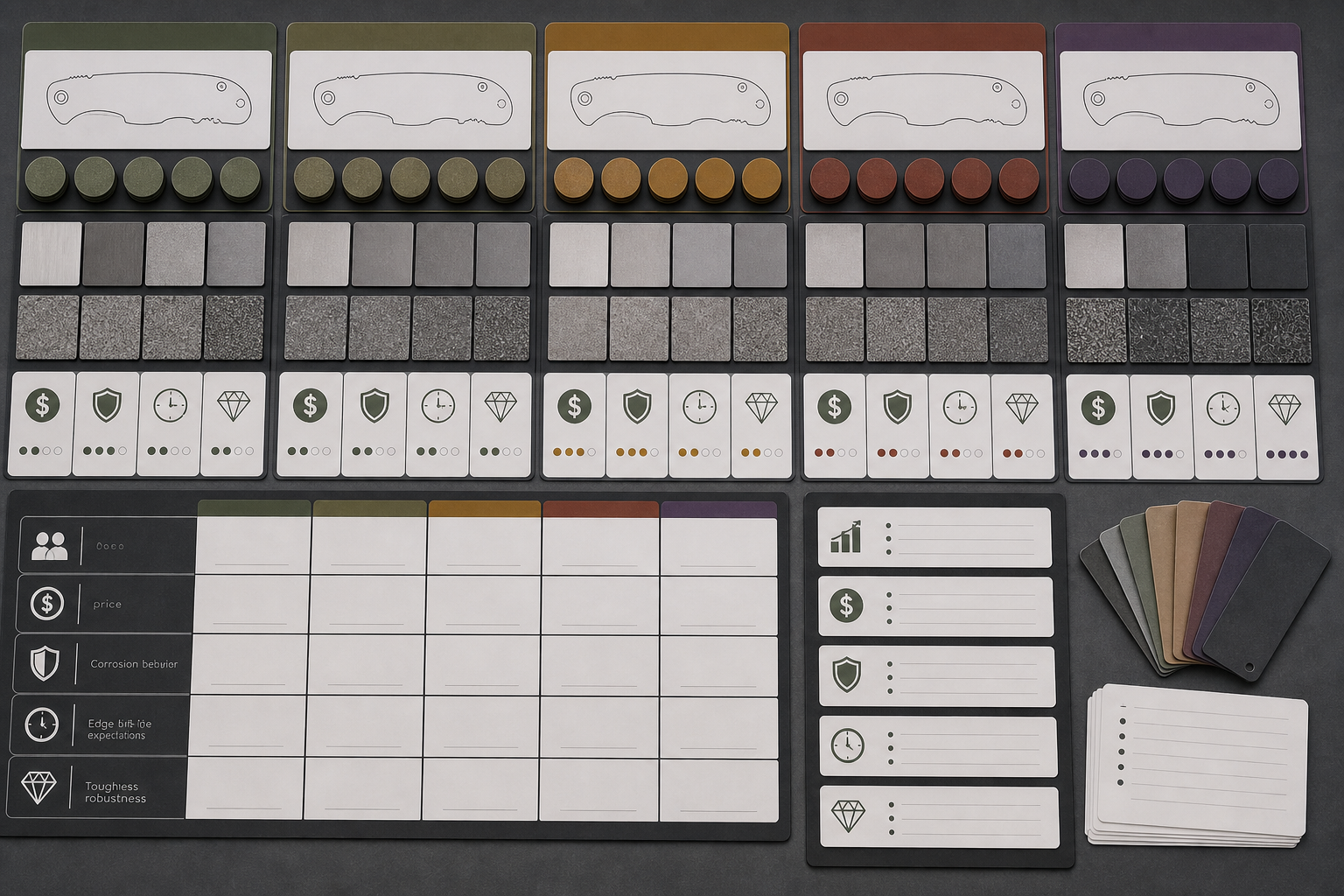
I Compare Steel by the Retail Tier
If the buyer wants the lowest practical stainless option, 3Cr13 can compete with 420J2-style choices. If the buyer wants a better edge story while staying affordable, 5Cr15MoV or 8Cr13MoV may be easier to sell. If the buyer wants strong wear resistance and does not need true stainless behavior, D2 may create a stronger performance story. The right choice depends on the catalog tier and target user.
I usually place 3Cr13 in the entry tier. It can be a smart choice when cost matters more than long edge life. It is not a smart choice when the product will be advertised as a serious EDC upgrade. A buyer should also consider handle materials and structure. A knife with a low-cost steel but expensive handle may feel mismatched. A knife with 3Cr13, simple handle material, and honest packaging can make commercial sense. The product should feel coherent from blade steel to final retail price.
| Steel option | Typical sourcing role | My practical view |
|---|---|---|
| 3Cr13 | Entry stainless option | Good for low-cost utility SKUs |
| 420J2 | Very basic stainless category | Useful for simple blades and components |
| 5Cr15MoV | Slightly stronger budget story | Better for entry retail knives |
| 8Cr13MoV | Popular value knife steel | Stronger upgrade from 3Cr13 |
| D2 | Value tool steel upgrade | Better edge story, more care needed |
What Manufacturing and Finishing Issues Should Buyers Plan For?
A budget steel still needs a clean process. Poor grinding or finish can make an affordable knife feel cheap in the wrong way.
For 3Cr13 knives, buyers should plan blade thickness, cutting method, bevel grinding, surface finish, polishing, corrosion protection, handle fit, sharpening, and packaging protection before production.
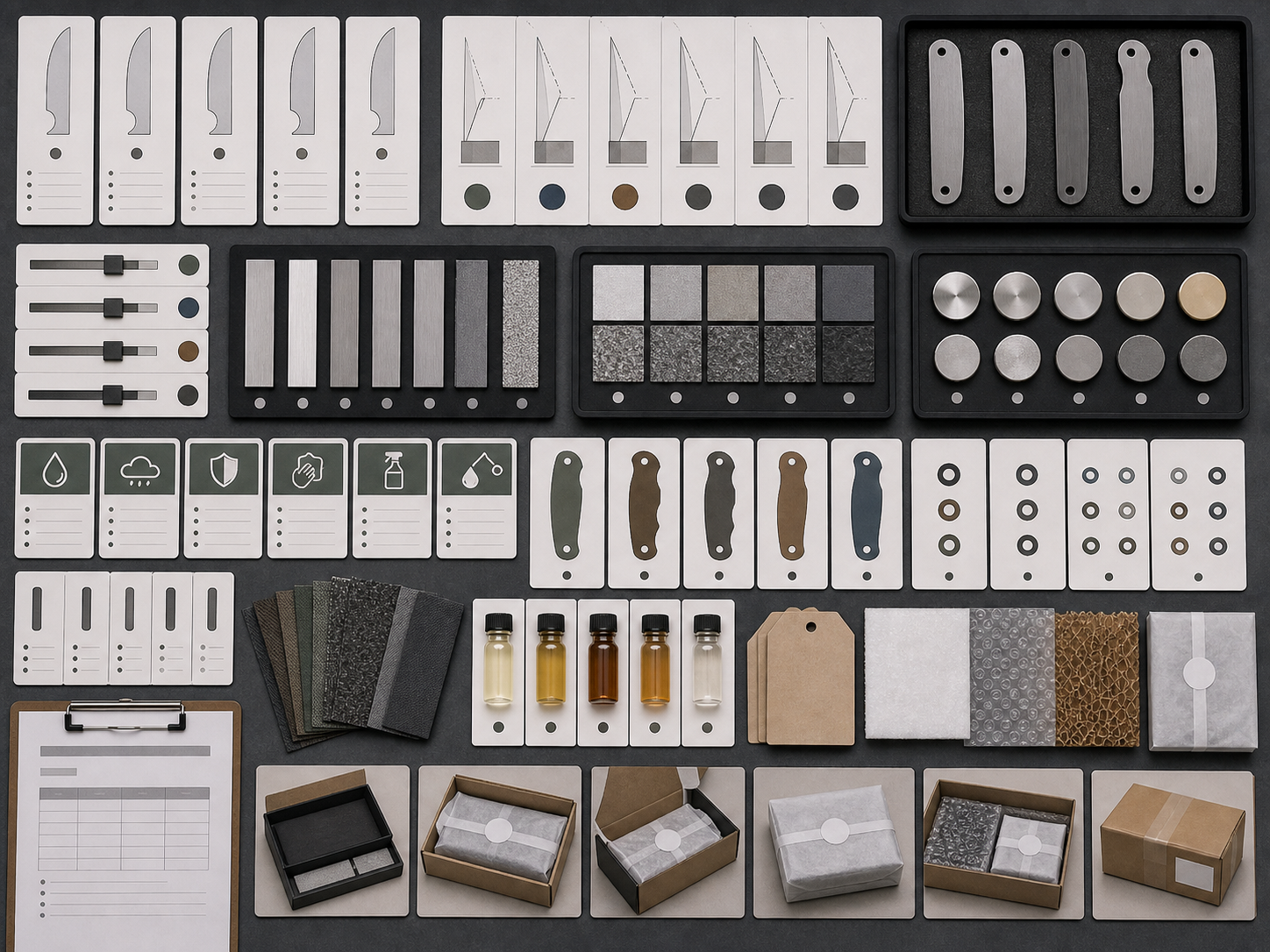
I Use Process Control to Make a Budget Knife Feel Honest
The goal with 3Cr13 is not to pretend it is a premium steel. The goal is to make a clean, consistent, affordable tool. Blade cutting should be accurate. Grinding should be even. The edge should be sharpened to a practical angle. The handle should fit without gaps. Screws should be stable. Packaging should protect the blade during storage and shipment.
Finish choice matters. Zapp notes that the best corrosion resistance for 1.4028 can be achieved with polished surface in the quenched and tempered condition. Swiss Steel's 1.4028 data sheet also lists cutlery and blades as applications and says the grade is suited to polishing. In knife production, this means a better surface can improve both appearance and corrosion behavior. But polishing costs money. If the product is extremely price-sensitive, the buyer may choose satin, bead blast, or a simpler finish. That decision should be made before sampling. A low-cost knife can still look controlled if the design, finish, and packaging are consistent.
| Process area | Buyer risk | Practical control |
|---|---|---|
| Blade grinding | Edge feels uneven | Inspect bevel and sharpening |
| Surface finish | Product looks too cheap | Approve finish standard sample |
| Corrosion protection | Stains appear in storage | Clean and pack correctly |
| Assembly fit | Low-cost knife feels loose | Check pivot, screws, and handle gaps |
What QC Records Should Buyers Request for 3Cr13 Orders?
Budget orders often skip records. That is exactly why quality problems can repeat batch after batch.
For 3Cr13 orders, buyers should request material certificate, heat-treatment record, HRC readings, dimensional checks, edge inspection, finish review, functional checks, packaging inspection, and approved sample reference.
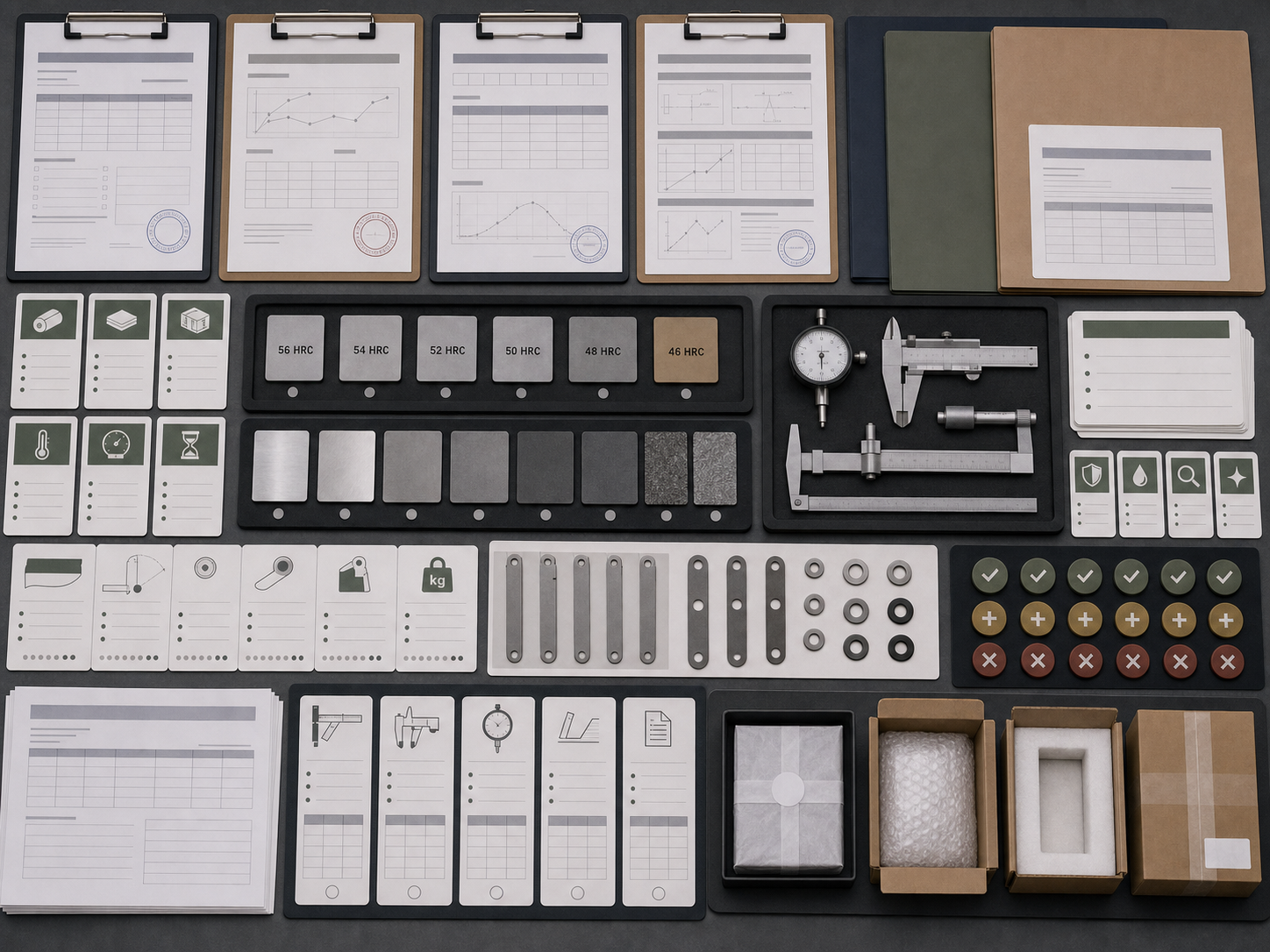
I Keep QC Simple but Real
3Cr13 projects are often price-sensitive, so the QC plan should be practical. It does not need unnecessary paperwork, but it should confirm the essentials. First, the material certificate should match the quoted grade or approved equivalent. Second, the heat-treatment record and HRC readings should confirm that the blade is not too soft. Third, dimensional checks should confirm blade thickness, pivot holes, lock surface, handle fit, and final assembly.
Final inspection should focus on what the buyer's customer will notice: edge sharpness, finish consistency, blade centering, lock action, screw condition, packaging, and cleanliness. The ISO 9001 standard page is useful as a quality-management reference because it focuses on customer requirements and controlled processes. For a low-cost knife, this mindset is very important. The buyer needs repeatability more than fancy language. A stable entry-level knife can support repeat orders if the factory controls the simple things well.
| QC record | What it confirms | Why buyers need it |
|---|---|---|
| Material certificate | Grade or approved equivalent | Reduces substitution confusion |
| Heat-treatment record | Process control | Supports consistent hardness |
| HRC readings | Hardness range | Confirms blade condition |
| Edge inspection | Sharpening and bevel quality | Protects basic user experience |
| Packaging inspection | Clean and protected shipment | Reduces low-cost returns |
What Should a 3Cr13 OEM/ODM RFQ Include?
A low-cost RFQ still needs detail. If everything is left open, the cheapest quote may create the most trouble.
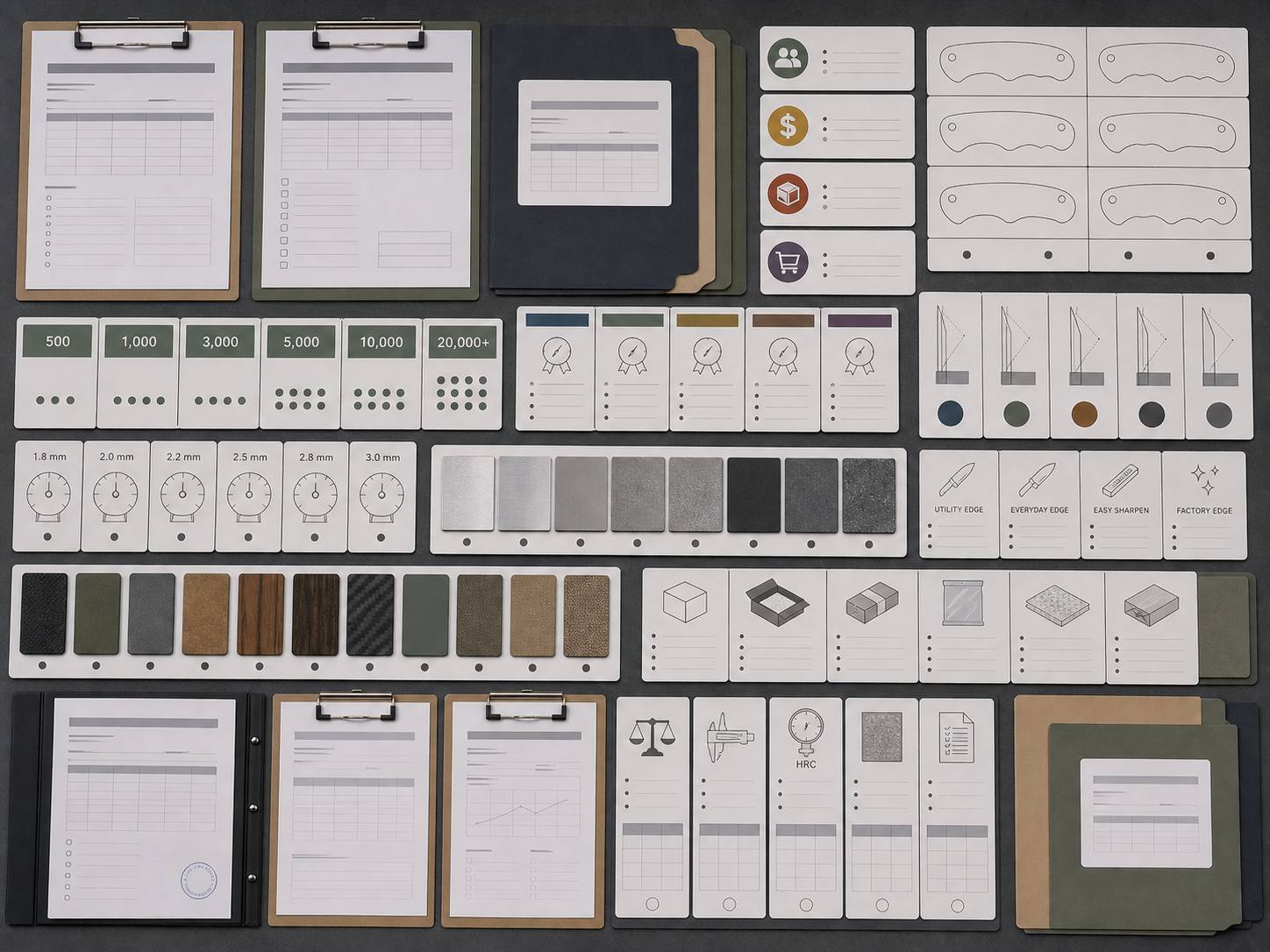
A 3Cr13 RFQ should include product type, target price, approved equivalent grades, blade thickness, target HRC, finish, handle material, lock type, sharpening requirement, packaging, quantity, lead time, and QC records.
I Use the RFQ to Keep the Product Honest
If a buyer only writes "3Cr13 knife," the supplier can quote many different quality levels. The buyer should explain the product type, target retail tier, target price, quantity, blade size, handle material, lock type, finish, logo method, packaging, and inspection needs. If the buyer allows equivalent grades, the RFQ should say which names are acceptable and what certificate is required.
The RFQ should also define the product story. Is the knife an entry-level pocket knife, basic camping tool, utility blade, or promotional item? Should it be easy to sharpen? Should it prioritize low cost? Does the buyer need better corrosion behavior through polishing or coating? These questions help the factory suggest the right structure. At Vast State, I prefer to be direct with 3Cr13. It can be practical, but only when the buyer positions it correctly. If the buyer needs a stronger edge story, I will suggest another steel before sampling.
| RFQ field | What to include | Why it helps |
|---|---|---|
| Steel requirement | 3Cr13, 30Cr13, or approved equivalent | Prevents unclear material quotes |
| Performance target | Target HRC, edge angle, sharpening level | Aligns factory process with buyer expectation |
| Product details | Knife type, size, handle, lock, finish | Supports accurate costing |
| Commercial details | Quantity, MOQ, target price, lead time | Keeps quote realistic |
| Documentation | QC report, certificate, approved sample | Supports repeat production |
Ready to use this material in your next knife line?
Vast State can help you compare blade steels, heat treatment ranges, handle materials, finishes, packaging options, and QC requirements based on your target market and quantity.
Conclusion
I use 3Cr13 for honest entry-level knives where cost, simple stainless behavior, easy sharpening, and stable production matter most.
Source Notes
- Walzwerke Einsal X30Cr13/1.4028 page supports the 13% chromium martensitic stainless grade family, composition range, standards, and equivalent naming context.
- Zapp 1.4028 instrument steel data sheet supports X30Cr13/1.4028/420B identity, chemistry, corrosion notes, polishability, and heat-treatment ranges.
- Swiss Steel 1.4028 data sheet supports the cutlery/blade application context, polishing suitability, and moderate corrosion discussion.
- NIST Rockwell hardness guide supports hardness measurement control.
- Alleima hardening and tempering guide supports the general heat-treatment principle.
- ISO 9001 standard page supports the quality-management and repeatability discussion.