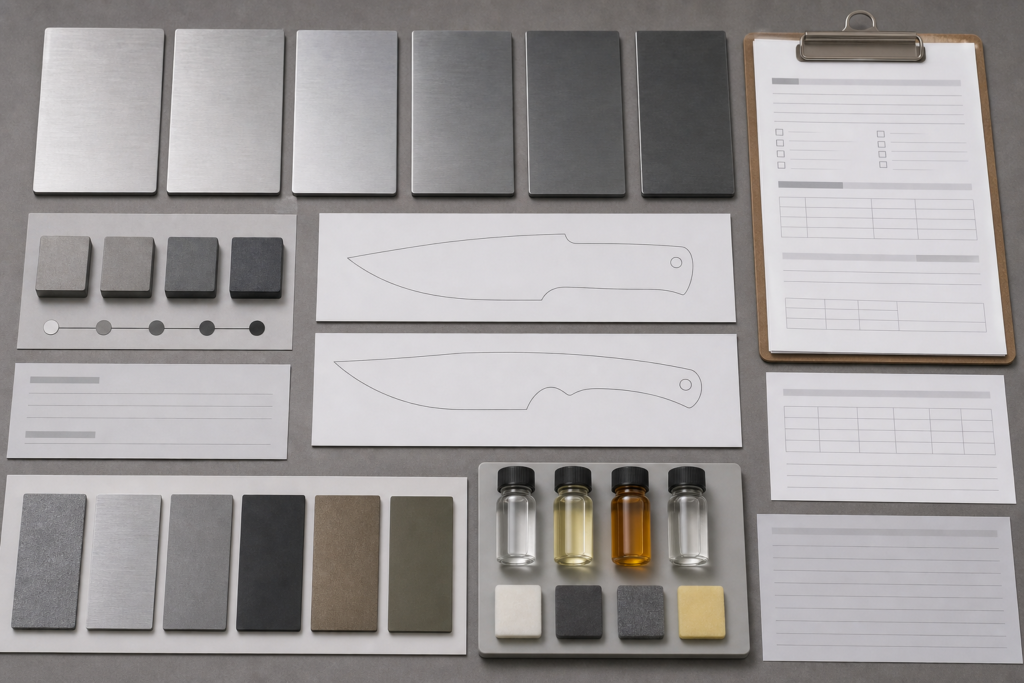
D2 can make a knife sound stronger. But if buyers ignore corrosion, heat treatment, and grinding, the steel name becomes a problem.
D2 steel is a practical choice for many OEM/ODM knives when buyers need strong wear resistance, edge retention, and a cost-effective upgrade story. It needs controlled heat treatment, realistic corrosion expectations, careful grinding, accurate product copy, and clear QC records.
Quick buyer brief:
- Answer: D2 is useful for value-focused upgrade knives, but it is not a simple stainless substitute.
- Buyer context: Best for buyers who want edge-holding value without premium steel cost.
- Key checks: Steel source, target HRC, heat treatment, finish, corrosion expectations, edge geometry, and QC records.
Planning a knife project with this steel?
Send us your target market, MOQ, price range, and blade type. Vast State can help you choose the right steel, HRC range, finish, handle material, and QC requirements for OEM/ODM production.
When I talk with buyers about D2, I usually see two opposite mistakes. Some buyers treat it like a miracle budget steel. Other buyers reject it because they heard it can stain. The practical answer sits between those two opinions. D2 can be a very useful blade steel for pocket knives, folding knives, fixed-blade utility knives, and private label products. But it must be matched to the right market, finish, hardness range, packaging, and customer expectation. If the buyer wants stainless behavior, easy sharpening, or maximum toughness, D2 may not be the best starting point.
What Is D2 Steel in a Knife Sourcing Project?
A steel name does not tell the full story. D2 is useful, but only when the buyer understands what kind of steel it is.
D2 is an air-hardening, high-carbon, high-chromium tool steel known for strong wear resistance. In knife sourcing, I treat it as a value upgrade steel, not as a true stainless steel.
I Start by Separating Tool Steel From Stainless Steel
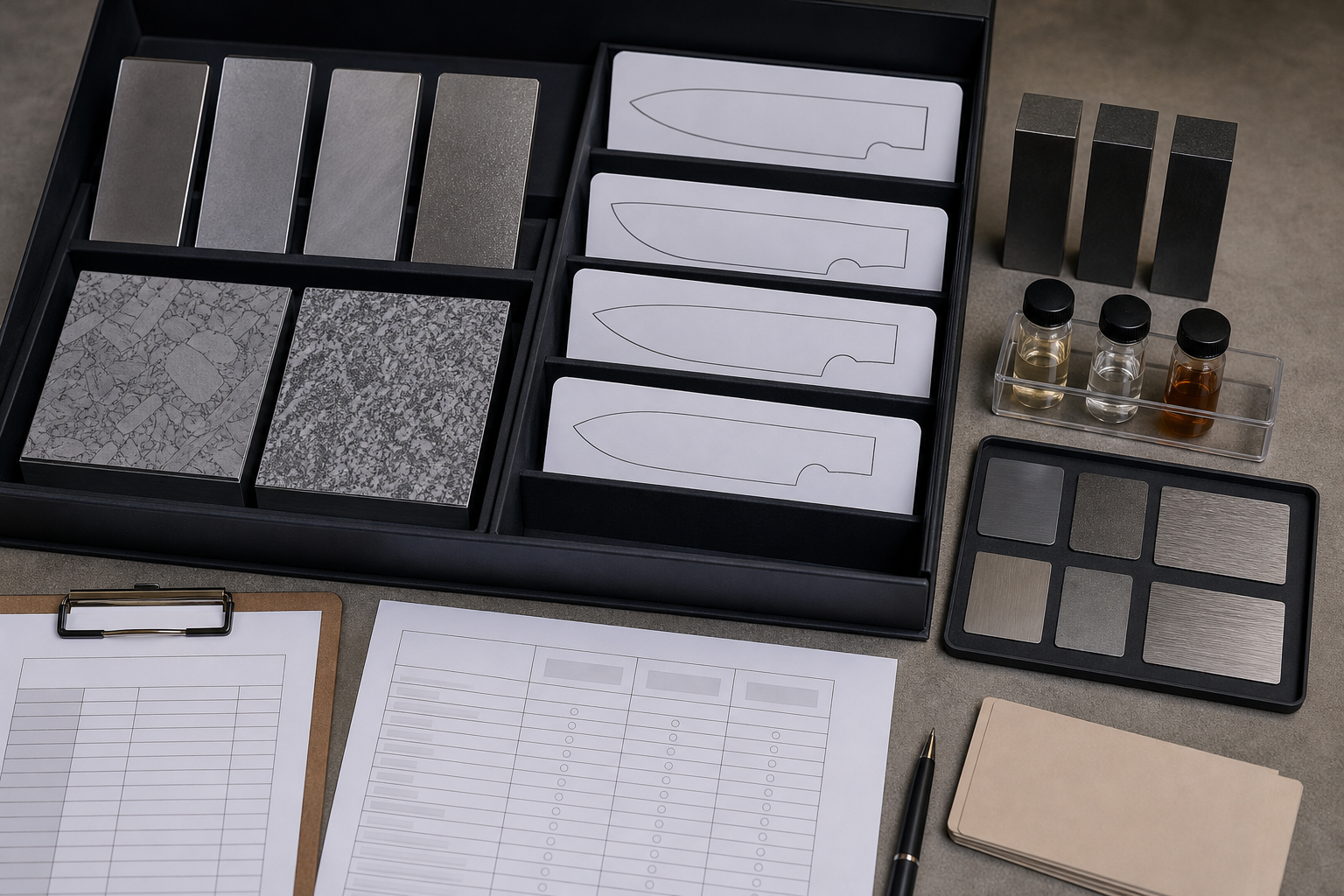
Carpenter Technology describes D2 as an air-hardening, high-carbon, high-chromium tool steel with extremely high wear resistant properties and mild corrosion resisting properties in the hardened condition. Niagara Specialty Metals also describes D-2 cold work tool steel as high-carbon, high-chromium, air-hardening, and heat treatable to high hardness. These descriptions matter because they explain both the strength and the limitation.
For knife sourcing, D2 is not just a cheaper substitute for stainless steel. It is a tool steel with good edge-holding potential and better corrosion behavior than many simple carbon steels, but it should not be marketed as maintenance-free stainless. I normally recommend D2 when a buyer wants a harder-working edge story, a stronger upgrade from basic steels, and a price level that still fits a value or mid-level product. The buyer must accept that finish, oiling, packaging, and user communication matter more than they do for some stainless options.
| Sourcing question | What I check | Why it matters |
|---|---|---|
| Is D2 really required? | Grade name and substitution rule | Prevents unclear material quotes |
| Is the buyer expecting stainless behavior? | Product copy and target market | Avoids wrong claims |
| What product level is planned? | Value, mid-level, or upgrade SKU | Keeps cost and performance aligned |
| What records are needed? | Material certificate and heat-treatment record | Supports repeat production |
Quote-ready RFQ Checklist for This Steel
To get an accurate OEM/ODM quote, prepare these details before contacting a knife manufacturer.
| RFQ Field | What to Prepare |
|---|---|
| Product type | Folding knife / fixed blade / multi-tool / kitchen knife |
| Target market | US / EU / outdoor retail / promotional / tactical / EDC |
| Steel option | 4116 / 14C28N / D2 / N690 / Nitro-V |
| Target HRC | Example: 55-57 HRC, 58-60 HRC |
| Blade finish | Satin / stonewash / black coating / bead blast |
| Handle material | G10 / micarta / aluminum / stainless steel / wood |
| Lock or structure | Liner lock / frame lock / slip joint / full tang |
| Estimated quantity | 500 / 1,000 / 3,000 / 5,000+ pcs |
| Packaging | White box / color box / blister / pouch / gift box |
| Required documents | Drawing / sample photo / logo file / packaging artwork |
When Does D2 Make Sense for Pocket and Folding Knives?
D2 is popular because it gives buyers a strong material story. But popularity alone is not a product strategy.
D2 makes sense for pocket and folding knives when the buyer wants strong edge retention, value-focused upgrade positioning, and acceptable corrosion care in a product that will be explained honestly.
I Use D2 When the Buyer Wants Edge Value
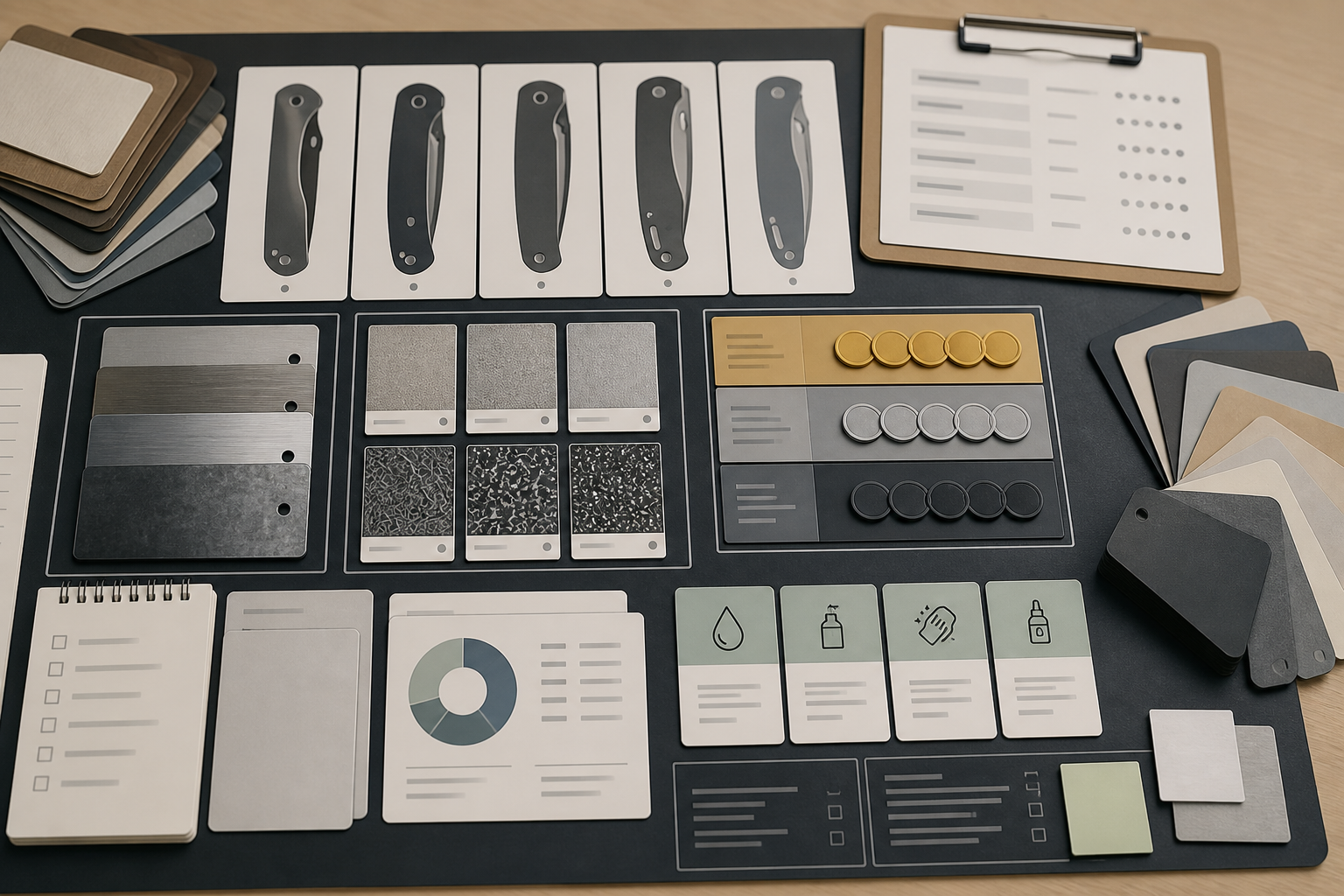
D2 often works well when a buyer wants to move above basic entry-level steels without paying for higher-priced stainless or powder metallurgy options. It can support an EDC folder, outdoor utility knife, work knife, or value-focused private label SKU. It also gives the buyer a material name that many knife customers recognize.
The product still needs the right design. A thin, slicy pocket knife may benefit from D2's wear resistance, but the edge angle and grinding quality must be controlled. A larger outdoor folder may need more attention to toughness and corrosion care. A private label buyer may need packaging that explains D2 honestly: good edge-holding potential, high wear resistance, and normal care requirements. If the end customer expects a low-maintenance saltwater knife, I would usually steer the buyer toward another steel. D2 is strong when the buyer wants cutting-edge durability for normal dry or mixed environments and is willing to communicate care clearly.
| Good fit for D2 | Why it works | Buyer benefit |
|---|---|---|
| Value EDC folder | Strong material story at practical cost | Better upgrade positioning |
| Work utility knife | Wear resistance matters | Longer edge life potential |
| Outdoor pocket knife | Good edge story for dry use | Stronger catalog appeal |
| Private label mid-tier SKU | Recognized steel name | Easier product tier separation |
What Tradeoffs Should Buyers Expect From D2?
Every steel choice asks for something in return. D2 gives wear resistance, but it does not remove corrosion and toughness questions.
Buyers should expect D2 to offer strong wear resistance and edge retention, while requiring realistic corrosion expectations, careful heat treatment, more controlled grinding, and clear maintenance language.
I Do Not Sell D2 as an Easy Stainless Replacement
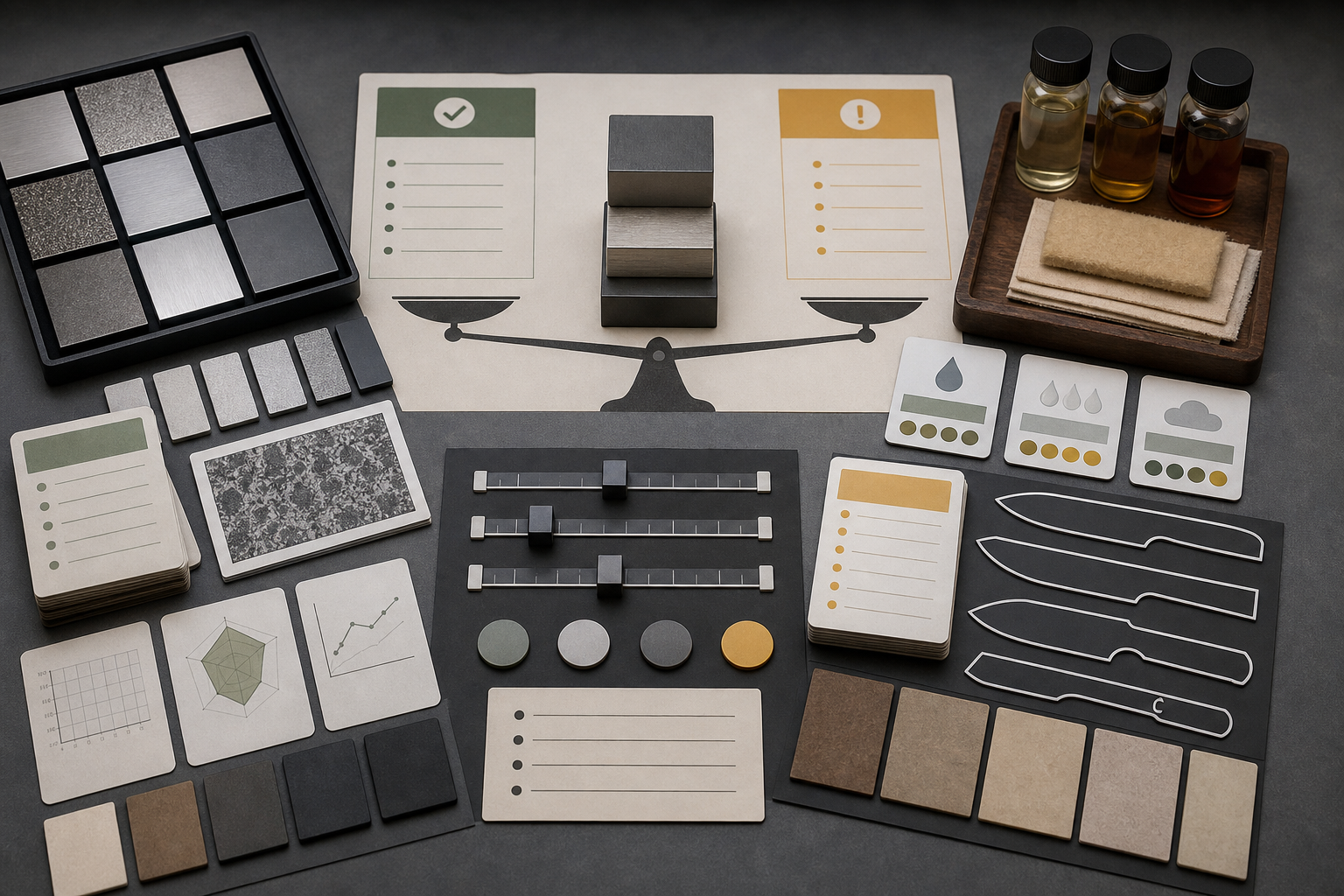
The biggest D2 mistake is a marketing mistake. Some buyers want to call it stainless because it contains a high amount of chromium. I do not like that shortcut. Carpenter's page says D2 has mild corrosion resisting properties in the hardened condition, not that it behaves like a true stainless knife steel. For B2B sales, that distinction matters. If the customer uses the knife in humid, salty, or acidic conditions, finish and care become important.
Another tradeoff is toughness. D2's wear resistance comes from hard carbides. That can help edge life, but it also means blade geometry should be chosen carefully. A very thin edge, a large blade, or rough use expectations may need a different steel or a different heat-treatment target. D2 is not weak, but it should not be treated as a universal answer. It is a practical steel when the buyer wants edge retention and value. It becomes a poor choice when the buyer expects stainless ease, very high toughness, or careless product claims.
| Tradeoff | What can happen | How I control it |
|---|---|---|
| Corrosion expectations | Buyer overstates the steel | Use honest product copy |
| Toughness balance | Edge can become less forgiving | Match hardness to blade geometry |
| Sharpening feel | Hard carbides can feel slower to sharpen | Set user expectation |
| Grinding control | Heat or uneven bevels reduce value | Inspect bevel and edge quality |
How Should Heat Treatment and Hardness Be Controlled?
D2 can reach high hardness, but the wrong heat treatment can create a brittle or inconsistent blade.
For D2 knife orders, buyers should define the target hardness range, heat-treatment cycle, tempering plan, flatness control, sample testing, and Rockwell hardness records before mass production.
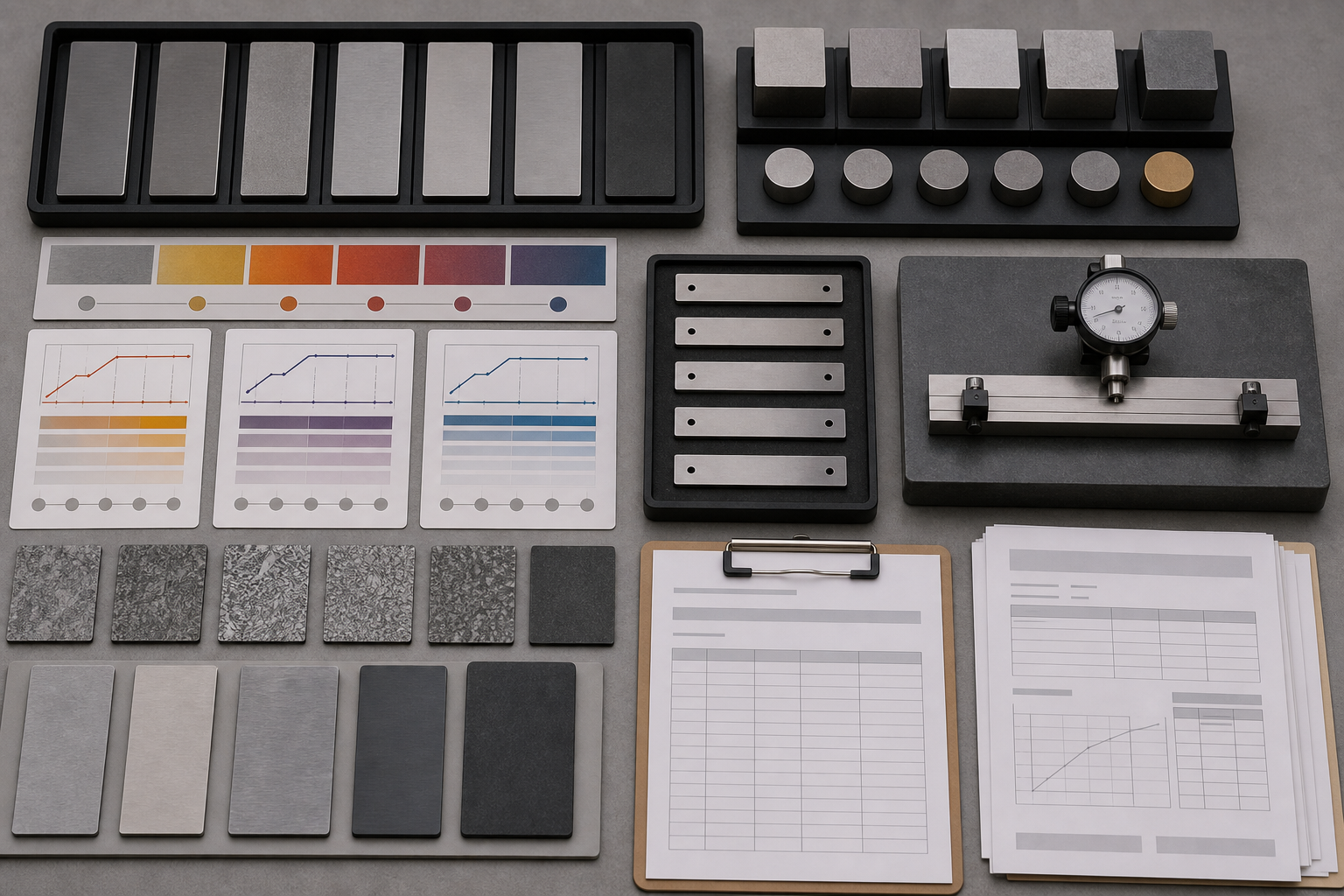
I Treat High Hardness as a Controlled Target
Niagara's D-2 data sheet says D-2 is heat treatable to HRC 60-62 and provides detailed thermal treatment information. That does not mean every D2 knife should simply be pushed to the highest number. A knife blade is not a punch or die. It needs an edge, a point, a usable geometry, and enough toughness for its real use. A compact folding knife and a thicker fixed blade may need different targets.
For knife steel in general, Alleima explains in its hardening and tempering guide that hardening and tempering work together to create hardness while reducing brittleness. I use the same thinking for D2. The buyer should define a target HRC range and request batch records. The NIST Rockwell hardness measurement guide is useful because it reminds buyers that hardness must be measured correctly. A product page number is not enough. Production needs readings.
| Heat-treatment control | Buyer should request | Why it matters |
|---|---|---|
| Target HRC range | Practical range by knife type | Balances edge and toughness |
| Tempering record | Supplier process confirmation | Reduces brittle behavior |
| Flatness check | Warpage control after heat treatment | Protects grinding and assembly |
| HRC sampling | Readings from approved locations | Confirms batch consistency |
How Does D2 Compare With 8Cr13MoV, 14C28N, 440C, and N690?
Steel comparison charts can hide the business question. The better steel is the one that fits the product and customer.
D2 usually offers stronger wear resistance than many budget stainless steels, but 14C28N, 440C, and N690 may offer more stainless behavior. The right choice depends on price, care expectations, and product positioning.
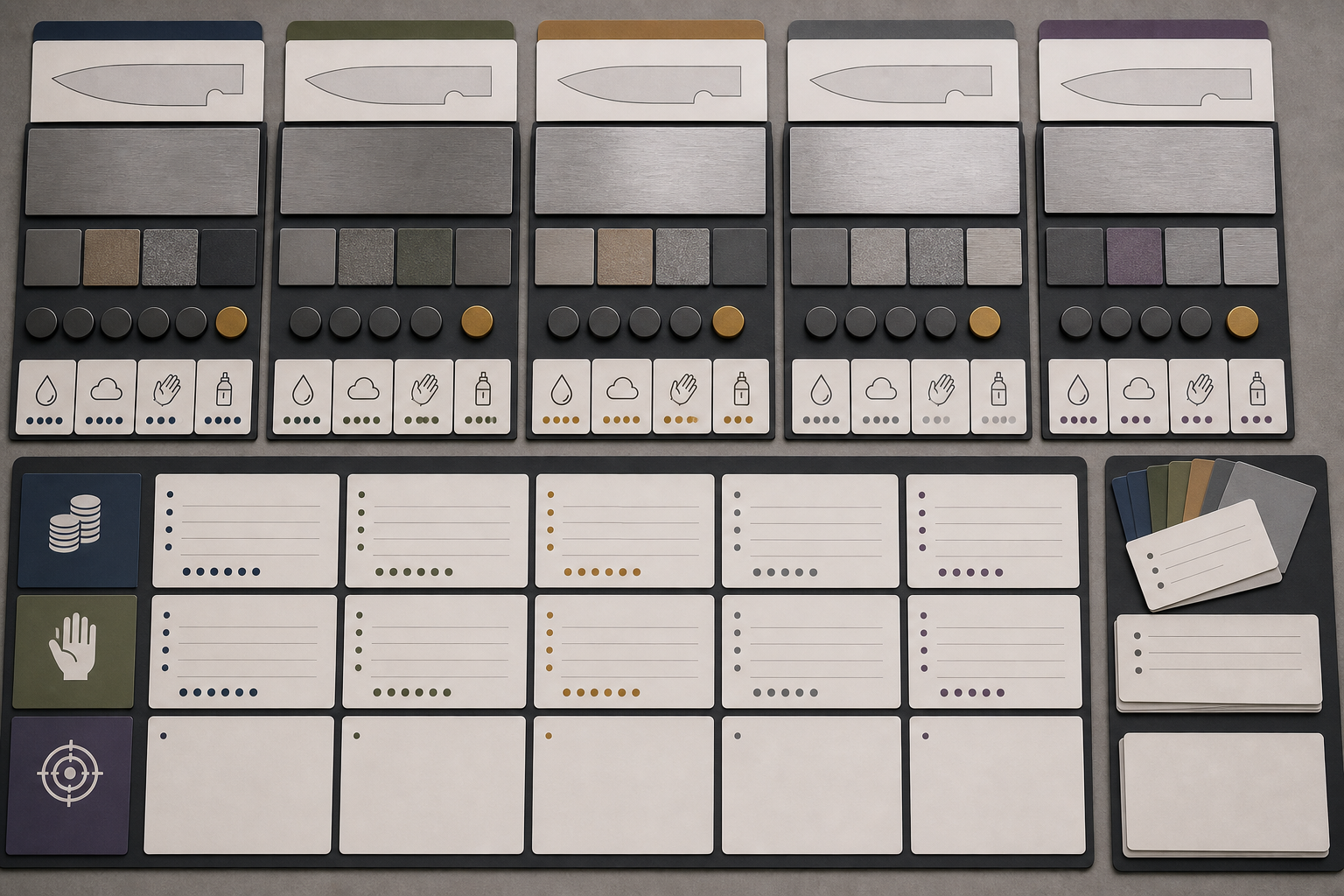
I Compare Steel by Customer Expectation
If a buyer asks whether D2 is better than 8Cr13MoV, my answer usually depends on the product tier. D2 can give a stronger edge-retention story and a more serious upgrade image, but it may require more care and better processing. Compared with 14C28N, D2 may offer stronger wear resistance, while 14C28N can be attractive for stainless behavior, toughness, and easier maintenance. Compared with 440C, D2 gives a different tool-steel story, while 440C gives a clearer stainless direction. Compared with N690, D2 may fit value upgrade projects, while N690 may fit buyers who want stainless positioning and a European steel story.
This is why I avoid saying D2 is simply better or worse. It is a strong answer for a buyer who values edge retention, price control, and product differentiation. It is a weaker answer for a buyer who wants low-maintenance corrosion behavior or a softer sharpening experience. The best steel choice should match the catalog tier, end-user environment, warranty expectation, and retail price.
| Steel option | Typical sourcing role | My practical view |
|---|---|---|
| D2 | Value upgrade tool steel | Strong wear story, needs honest care language |
| 8Cr13MoV | Budget stainless option | Good for price-sensitive SKUs |
| 14C28N | Practical stainless knife steel | Strong balance for EDC and outdoor projects |
| 440C | Established stainless option | Useful when stainless identity matters |
| N690 | Higher stainless upgrade option | Good for stronger material positioning |
What Manufacturing and Finishing Issues Should Buyers Plan For?
D2 can hold an edge well, but poor grinding or weak surface protection can damage the product experience quickly.
For D2 knives, buyers should plan blade thickness, cutting method, bevel grinding, heat control, surface finish, corrosion protection, cleaning, oiling, and packaging before production starts.
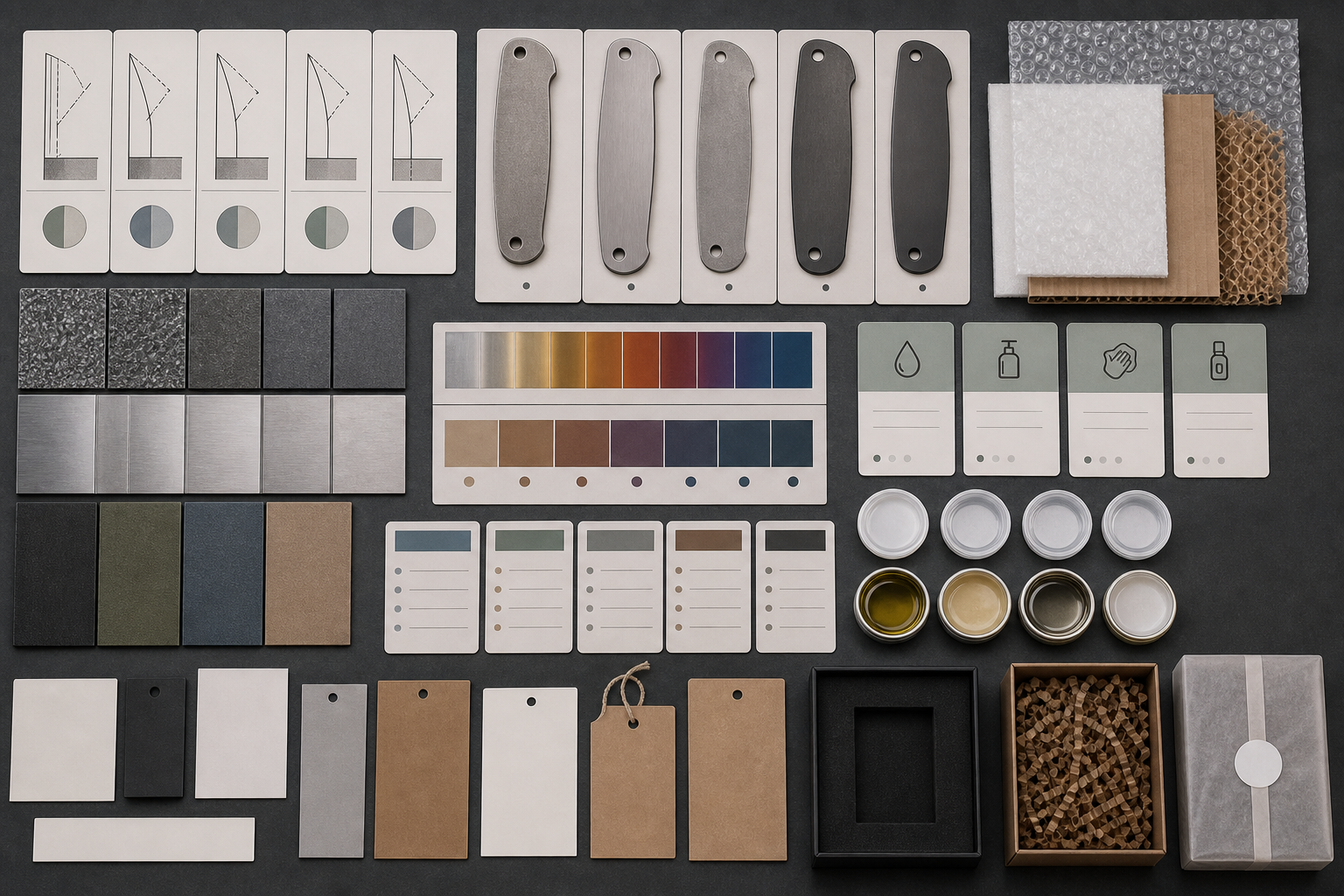
I Protect D2 With Process and Finish Choices
D2's value depends heavily on process control. Blade profile cutting should be accurate. Pivot holes and lock surfaces must be controlled for folding knives. Grinding should be even and should avoid overheating the edge area. If the grinding burns the edge or leaves uneven geometry, the buyer loses the benefit of the steel.
Finish choice matters even more with D2 than with some stainless options. Satin can look clean, but it can show marks and may need careful protection. Stonewash can suit EDC and outdoor positioning and can hide small handling marks. Coating can add corrosion support and style, but coating adhesion and edge wear need attention. A simple oiling or protective packing step can also matter for shipment and storage. I prefer to decide these details during sample development. The buyer should not wait until mass production to ask how D2 blades will be cleaned, protected, and packed.
| Process area | Buyer risk | Practical control |
|---|---|---|
| Blade cutting | Poor geometry affects assembly | Check profile and hole tolerance |
| Bevel grinding | Heat can reduce edge quality | Control speed, cooling, and inspection |
| Surface finish | Staining or marks appear quickly | Choose finish and protection early |
| Packaging protection | Humidity affects shipment | Use cleaning, oiling, and protective packing |
What QC Records Should Buyers Request for D2 Orders?
If a buyer only checks final appearance, the most important D2 risks may already be hidden inside the blade.
For D2 orders, buyers should request material certificate, heat-treatment record, HRC readings, dimensional checks, grind inspection, surface protection review, functional checks, and final packaging inspection.
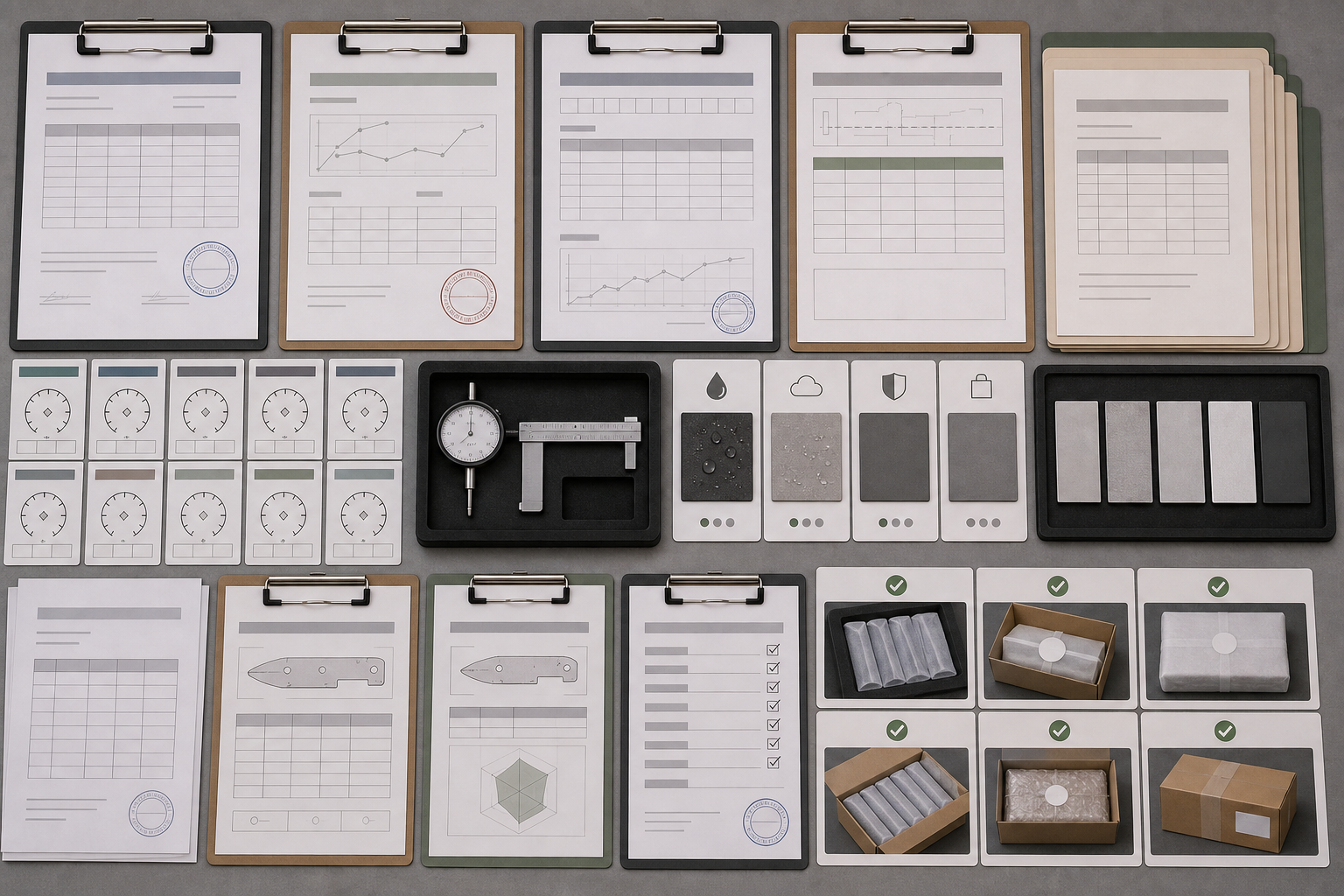
I Want Records That Explain the Result
Quality control should start with material confirmation. If the buyer ordered D2, the supplier should confirm the steel grade and any substitution rule. Then heat treatment should be recorded by batch. HRC readings should be taken and reported in a way that the buyer can understand. Dimensional checks should cover blade thickness, pivot hole, stop area, lock surface, and final blade fit for folding knives.
I also want surface and packaging checks. D2 can stain if it is handled, stored, or packed poorly. Final inspection should include finish consistency, edge condition, cleaning, oiling or protection if required, screw assembly, blade centering, lock function, and packaging. The ISO 9001 standard page is useful as a quality-management reference because it focuses on controlled processes and customer requirements. In practical knife manufacturing, that means requirements should be defined before production and checked during production, not guessed after delivery.
| QC record | What it confirms | Why buyers need it |
|---|---|---|
| Material certificate | D2 grade and source | Reduces substitution risk |
| Heat-treatment record | Process and batch control | Supports edge-performance consistency |
| HRC readings | Hardness range | Confirms process result |
| Surface review | Finish and protection | Reduces staining complaints |
| Functional inspection | Opening, closing, lockup, blade play | Protects user experience |
What Should a D2 OEM/ODM RFQ Include?
A vague RFQ creates a vague quote. D2 needs enough detail to protect both cost and performance.
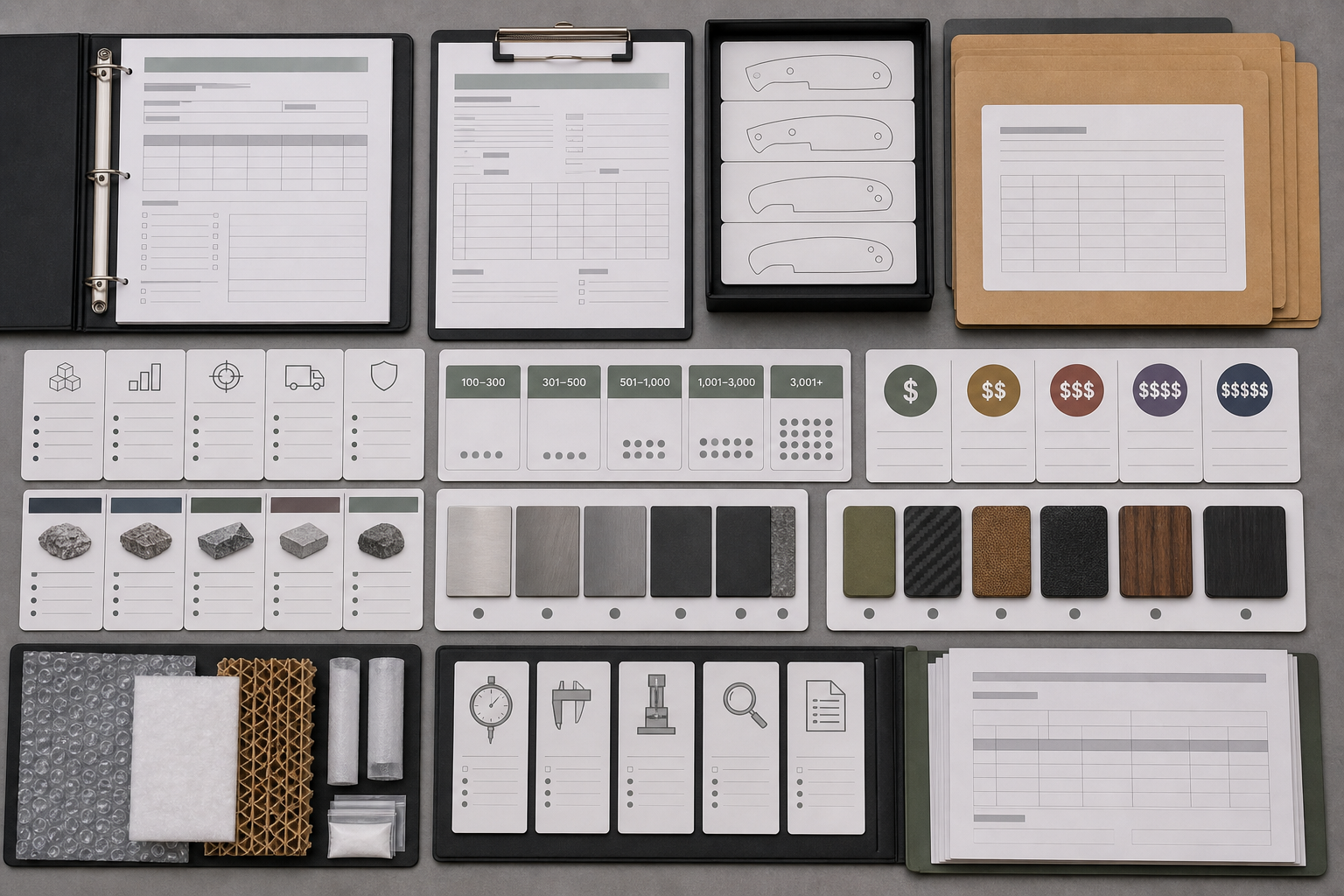
A D2 RFQ should include product type, target market, target price, steel source, substitution rules, blade thickness, target HRC, finish, corrosion-protection plan, handle material, lock type, packaging, quantity, and QC records.
I Use the RFQ to Prevent Wrong Steel Expectations
If a buyer only writes "D2 folding knife," the supplier still has too many questions. Is the knife for EDC, outdoor, work utility, distributor catalog, or private label retail? What price level must it hit? Should the factory quote true D2 only, or can it suggest an alternative? What hardness range is expected? What finish should be used? Should the blade be oiled, coated, stonewashed, or packed with special protection?
The RFQ should also include commercial details. MOQ, target price, sample quantity, packaging type, lead time, logo method, inspection report, and shipping terms all affect the quote. For D2 projects, I always want corrosion expectations written clearly. If the buyer expects stainless-like care, I will suggest a different steel or a different product story. If the buyer wants a value upgrade edge story and accepts normal care language, D2 can be very practical. A good RFQ helps both sides reach that conclusion before sampling.
| RFQ field | What to include | Why it helps |
|---|---|---|
| Steel requirement | D2, source, certificate, substitution rule | Prevents unclear material quotes |
| Performance target | HRC range, edge geometry, finish | Aligns process with buyer expectation |
| Corrosion plan | Coating, stonewash, oiling, packaging | Reduces after-sale issues |
| Product details | Knife type, size, handle, lock, hardware | Supports accurate costing |
| Documentation | QC report, packaging spec, sample approval | Supports repeat production |
Ready to use this material in your next knife line?
Vast State can help you compare blade steels, heat treatment ranges, handle materials, finishes, packaging options, and QC requirements based on your target market and quantity.
Conclusion
I use D2 when buyers need edge-retention value and are ready to control heat treatment, finish, care language, and QC.
Source Notes
- Carpenter D2 alloy page supports D2's identity as high-carbon, high-chromium, air-hardening tool steel with high wear resistance and mild corrosion resisting properties.
- Niagara D-2 data sheet supports composition, heat-treatment response, HRC range, abrasion resistance, and application context.
- NIST Rockwell hardness guide supports hardness measurement control.
- Alleima hardening and tempering guide supports the general heat-treatment principle.
- ISO 9001 standard page supports the quality-management and repeatability discussion.