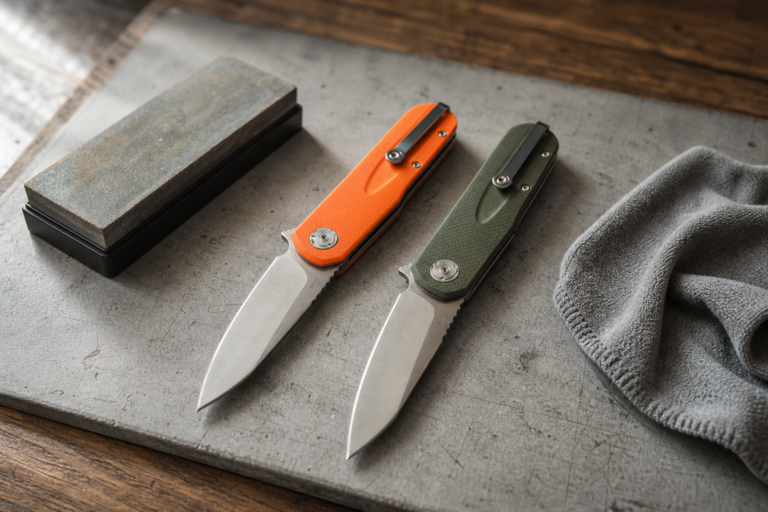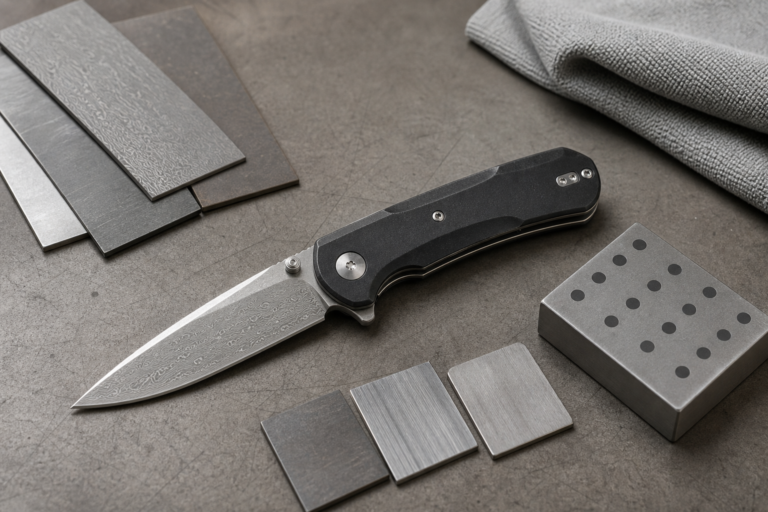
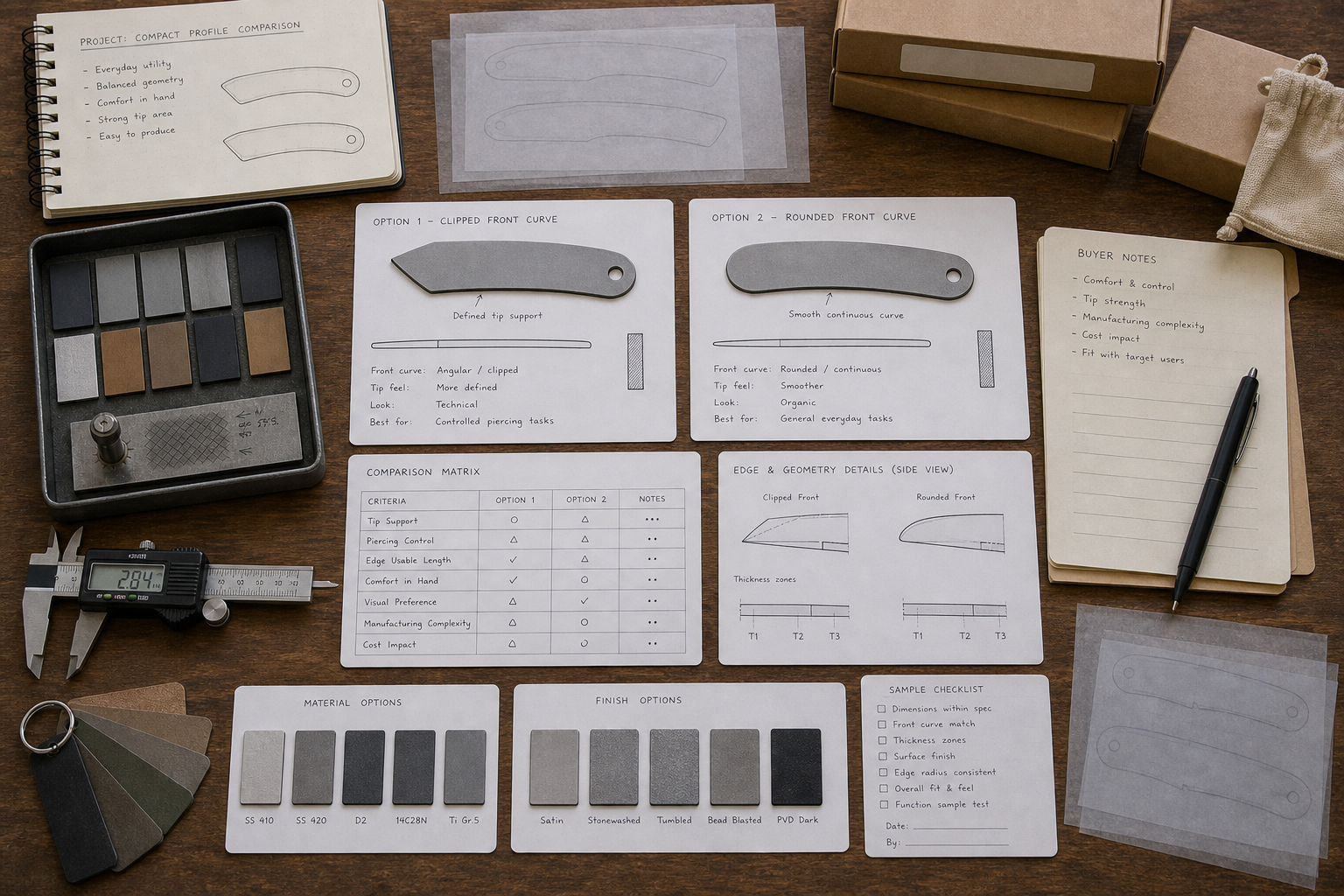
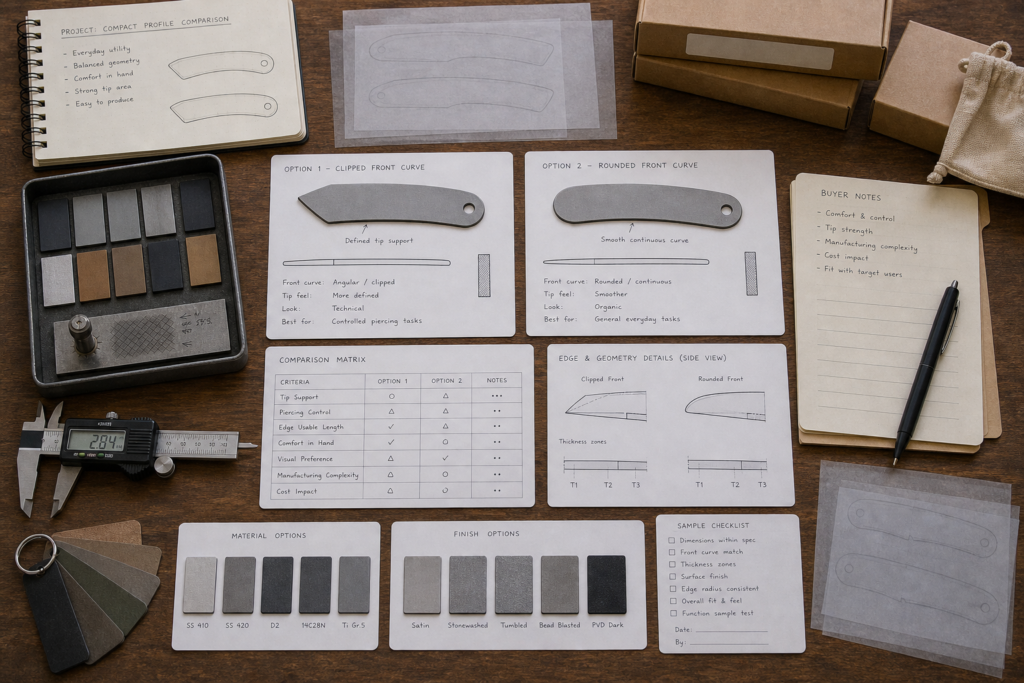
Clip point and drop point blades both sell well, but choosing by style alone is risky. The wrong geometry can hurt use, cost, and consistency.
Knife buyers should choose between clip point and drop point blades by comparing tip strength, point control, slicing belly, target market, steel, heat treatment, handle design, finish, safety expectations, QC needs, and RFQ clarity.
Quick buyer brief:
- Answer: Choose clip point for a finer point and classic style; choose drop point for broader utility and stronger tip support.
- Buyer context: This helps knife brands, outdoor brands, importers, wholesalers, distributors, and private label buyers select blade geometry before OEM sampling.
- Key checks: Confirm use case, tip strength, clip or spine curve, belly, steel, hardness, grind, handle, lock or sheath, finish, packaging, and inspection standard.
Have a knife or multi-tool project in mind?
Send your sketch, CAD file, sample photo, or product idea. Vast State can review manufacturability, suggest materials, estimate MOQ, and prepare a quote for your OEM/ODM project.
When a buyer asks whether clip point or drop point is better, I do not answer with one winner. I ask what the knife must do and who will buy it. A clip point can give a fine point, classic look, and strong visual identity. A drop point can give broader utility, a controlled point, and better tip support for many outdoor and EDC projects. Both can be good. Both can be wrong. In OEM and ODM sourcing, the real decision is not the name of the blade shape. It is how the blade shape supports the target market, cost, manufacturing process, quality control, and repeat production.
What Is the Main Difference Between Clip Point and Drop Point Blades?
The two shapes can look similar to new buyers. But the spine and tip geometry create different product behavior.
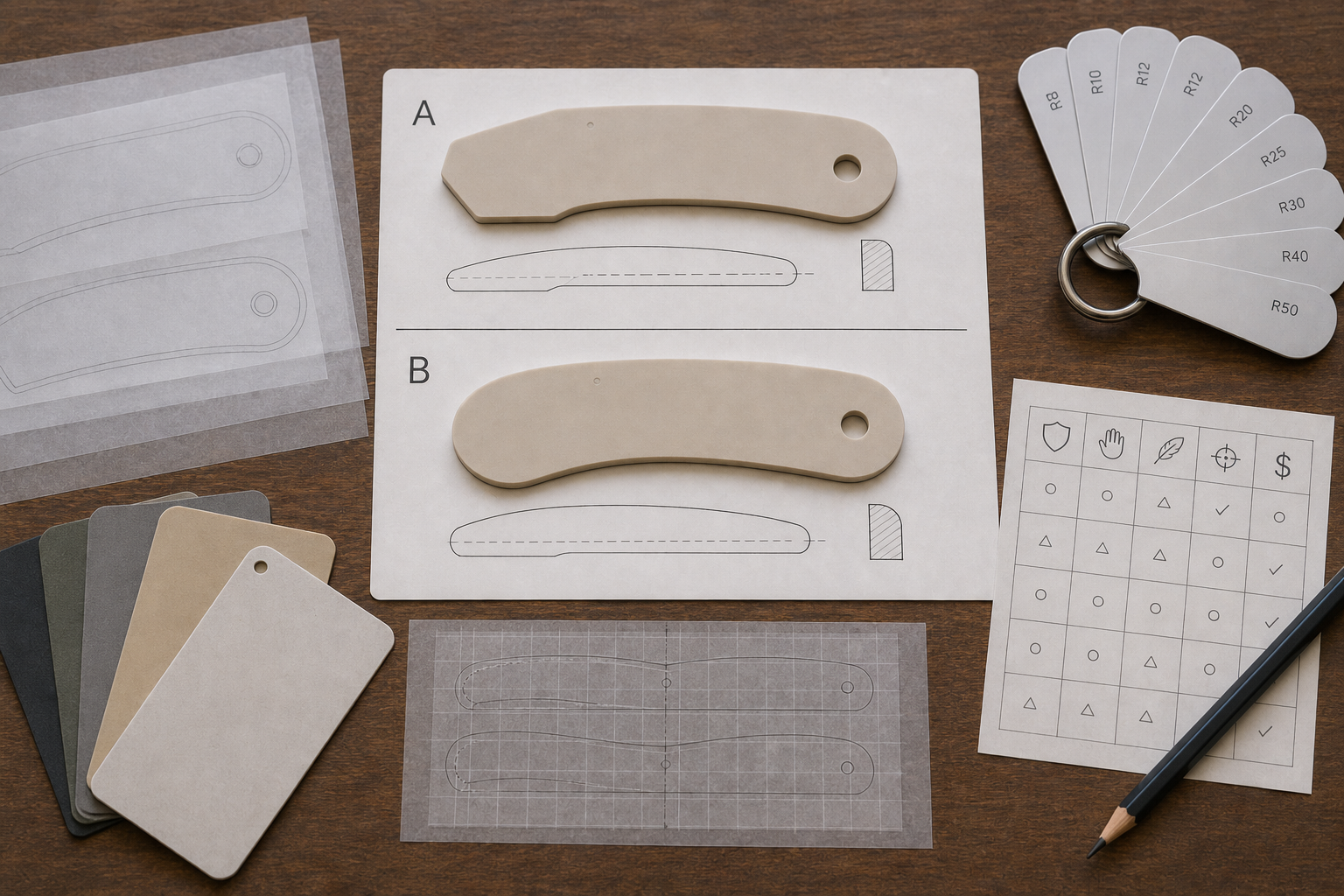
A clip point has a clipped spine section that creates a finer point. A drop point has a spine that slopes down toward the tip, usually giving stronger tip support and broader utility.
I Compare the Spine First
The clip point removes or lowers part of the front spine. That clip can be straight, concave, subtle, long, decorative, swedged, or sharpened. This can create a finer point and a classic pocket knife or outdoor look. But it can also reduce material behind the tip if the clip is too deep or too thin.
The drop point uses a spine that slopes down toward the tip. This can leave more material behind the point and often makes the blade feel more controlled for general use. It usually gives a friendly and versatile profile for EDC, camping, outdoor, and work utility knives.
Gear Patrol's blade-shape guide gives useful public context for both blade names. It describes clip point as a common shape with a front spine section that appears clipped off, and drop point as a common shape with a spine that slopes down toward the point. I use this as a definition reference, not a production standard. In the factory, I still need the buyer to define exact geometry, steel, grind, finish, and quality checks.
| Comparison point | Clip point | Drop point |
|---|---|---|
| Spine shape | Clipped front spine | Sloping spine toward tip |
| Tip feel | Finer and more pointed | Stronger and more controlled |
| Visual style | Classic, traditional, outdoor, Bowie-style | Modern, EDC, outdoor, general utility |
| Sourcing risk | Tip can become too thin | Shape can become too blunt or heavy |
OEM/ODM RFQ Checklist
Prepare these details to help Vast State review your project and provide a more accurate quotation.
| RFQ Field | What to Prepare |
|---|---|
| Project type | OEM from drawing / ODM private label / wholesale catalog |
| Product category | Folding knife / fixed blade / multi-tool / outdoor tool |
| Design status | Idea / sketch / 2D drawing / 3D CAD / physical sample |
| Target price | Ex-factory target price or retail price range |
| MOQ expectation | 500 / 1,000 / 3,000 / 5,000+ pcs |
| Logo method | Laser engraving / etching / printing / molded logo |
| Packaging | Standard packaging / custom retail box / Amazon-ready |
| Market | USA / EU / Japan / Korea / Middle East / other |
| Compliance needs | Buyer-specified testing / documentation / labeling |
| Timeline | Sample deadline / mass production deadline |
When Should Buyers Choose a Clip Point Blade?
A clip point can make a knife feel classic and precise. But it should not be chosen only because it looks familiar.
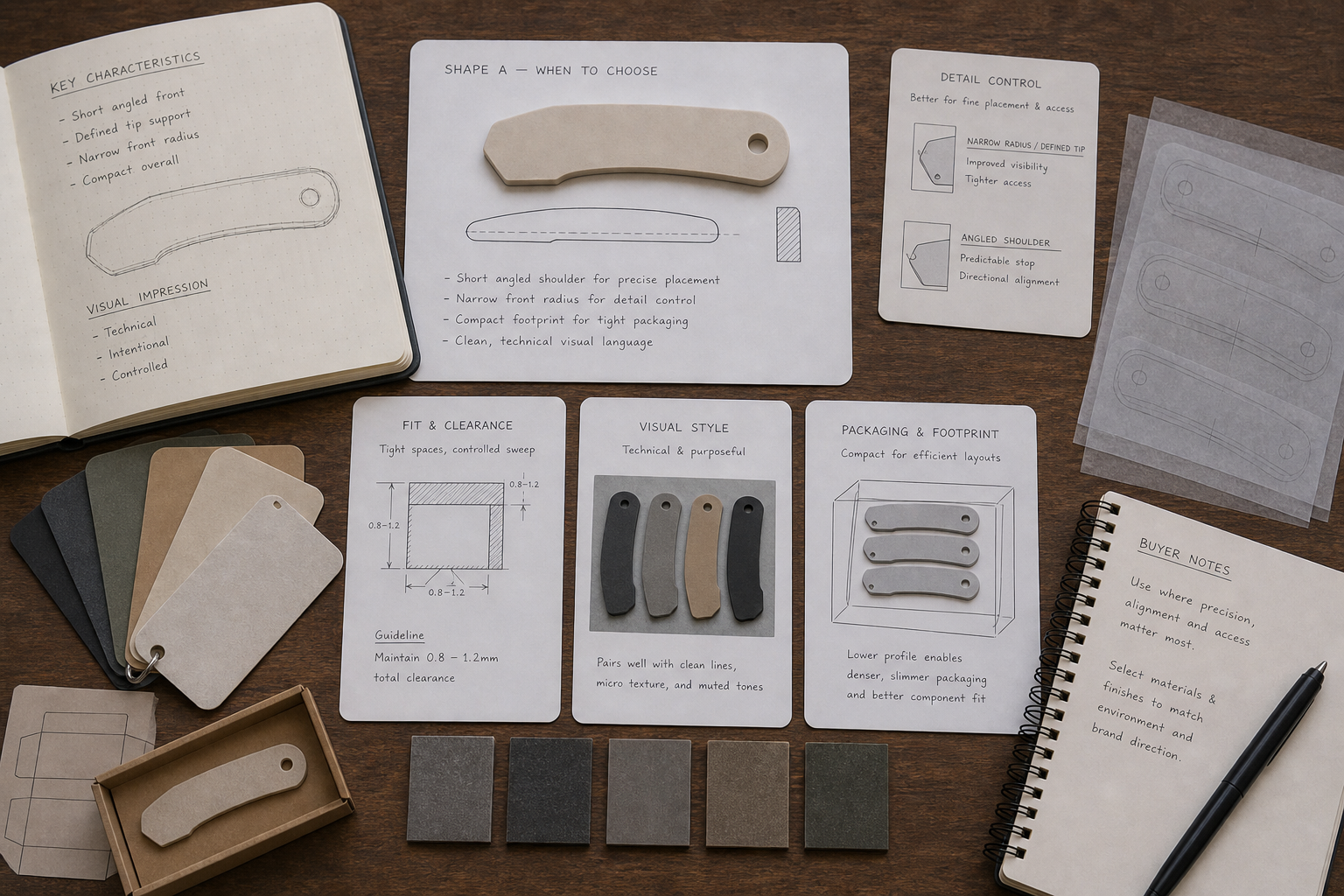
Buyers should choose a clip point when the product needs a finer point, classic visual identity, traditional pocket knife style, outdoor heritage look, or controlled detail work with clear tip-strength expectations.
I Choose Clip Point for Point Control and Style
Clip point blades are useful when the buyer wants a fine point and a classic blade language. This can fit traditional pocket knives, heritage-style outdoor knives, hunting-style fixed blades, and private label collections that need a familiar shape. A subtle clip can work well for modern EDC knives because it adds point control without making the knife too aggressive. A longer clip can create a stronger outdoor or heritage look, but it needs more careful tip review.
The buyer should decide whether the clip is decorative, a swedge, or sharpened. This is a big sourcing detail. A decorative clip changes appearance. A swedge reduces thickness near the point. A sharpened clip may affect safety, packaging, legality, and sales channel review. I prefer to define this in the first RFQ, not after the sample is finished.
Clip point blades also need careful quality control around the tip. If the clip line varies from piece to piece, the batch looks inconsistent. If the tip is ground too thin, the knife may feel fragile. If the swedge is polished unevenly, the buyer may reject the sample. Clip point is a strong choice when the buyer accepts these controls and wants the style.
| Clip point fit | Why it works | What to control |
|---|---|---|
| Traditional pocket knife | Familiar classic pattern | Clip line and blade finish |
| Outdoor fixed blade | Strong heritage style | Tip thickness and sheath fit |
| Detail utility | Fine point helps control | Avoid over-thinning the tip |
| Private label series | Easy visual identity | Define swedge and logo placement |
When Should Buyers Choose a Drop Point Blade?
A drop point is often the safer commercial choice. But even a versatile shape needs clear geometry and production standards.
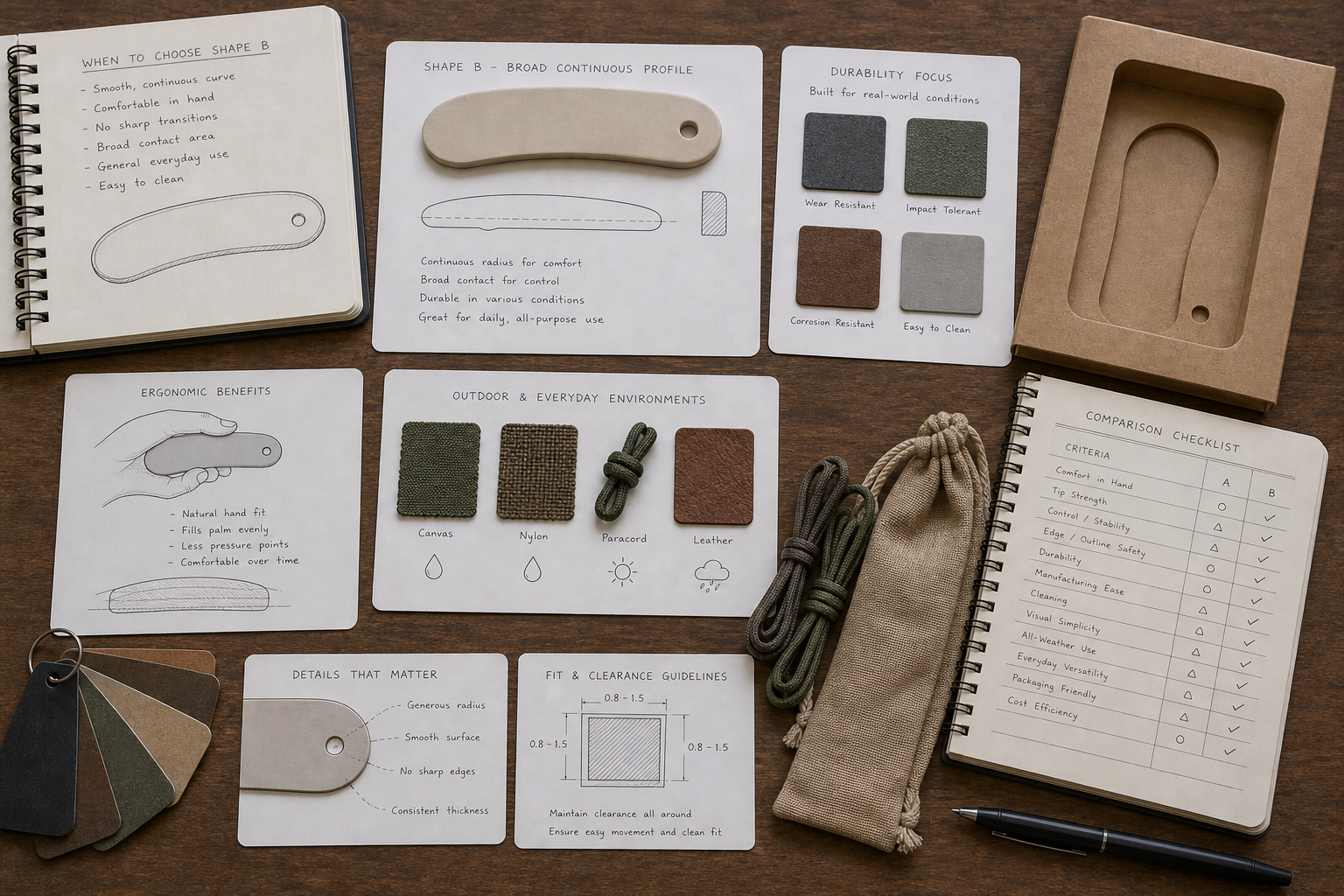
Buyers should choose a drop point when the product needs broad utility, stronger tip support, everyday carry appeal, outdoor usefulness, easier market positioning, and balanced slicing performance.
I Choose Drop Point for Broad Utility
Drop point is often a good first choice when the buyer wants one shape to cover many normal cutting tasks. A drop point folder can fit EDC, packaging, cord, light outdoor use, and general utility. A fixed blade drop point can fit camping, hunting-style, outdoor, and work utility markets. The shape can feel less aggressive than some fine-point or tactical-style profiles, which can help broader retail positioning.
The drop point is not automatically perfect. If the blade stock is too thick, the knife can feel heavy and cut poorly. If the tip is too low, the blade can feel blunt. If the belly is too large, the blade may become tall and harder to fit into a compact handle. If the grind is too shallow, cutting performance can suffer. So I still define spine curve, tip height, blade thickness, belly, and primary grind before sampling.
For many OEM buyers, drop point is easier to adapt across price levels. A budget version can use a simple handle and cost-controlled steel. A mid-range version can upgrade steel, lock action, handle texture, and finish. A higher-positioned version can use better materials, tighter action, and refined packaging. The geometry must still match the product promise.
| Drop point fit | Why it works | What to control |
|---|---|---|
| EDC folder | Broad daily utility | Thickness, action, and carry comfort |
| Outdoor fixed blade | Stronger tip support | Steel, handle grip, and sheath fit |
| Camping knife | General cutting profile | Belly and edge sharpness |
| Private label line | Easy market explanation | Geometry consistency across versions |
How Do Tip Strength and Cutting Control Compare?
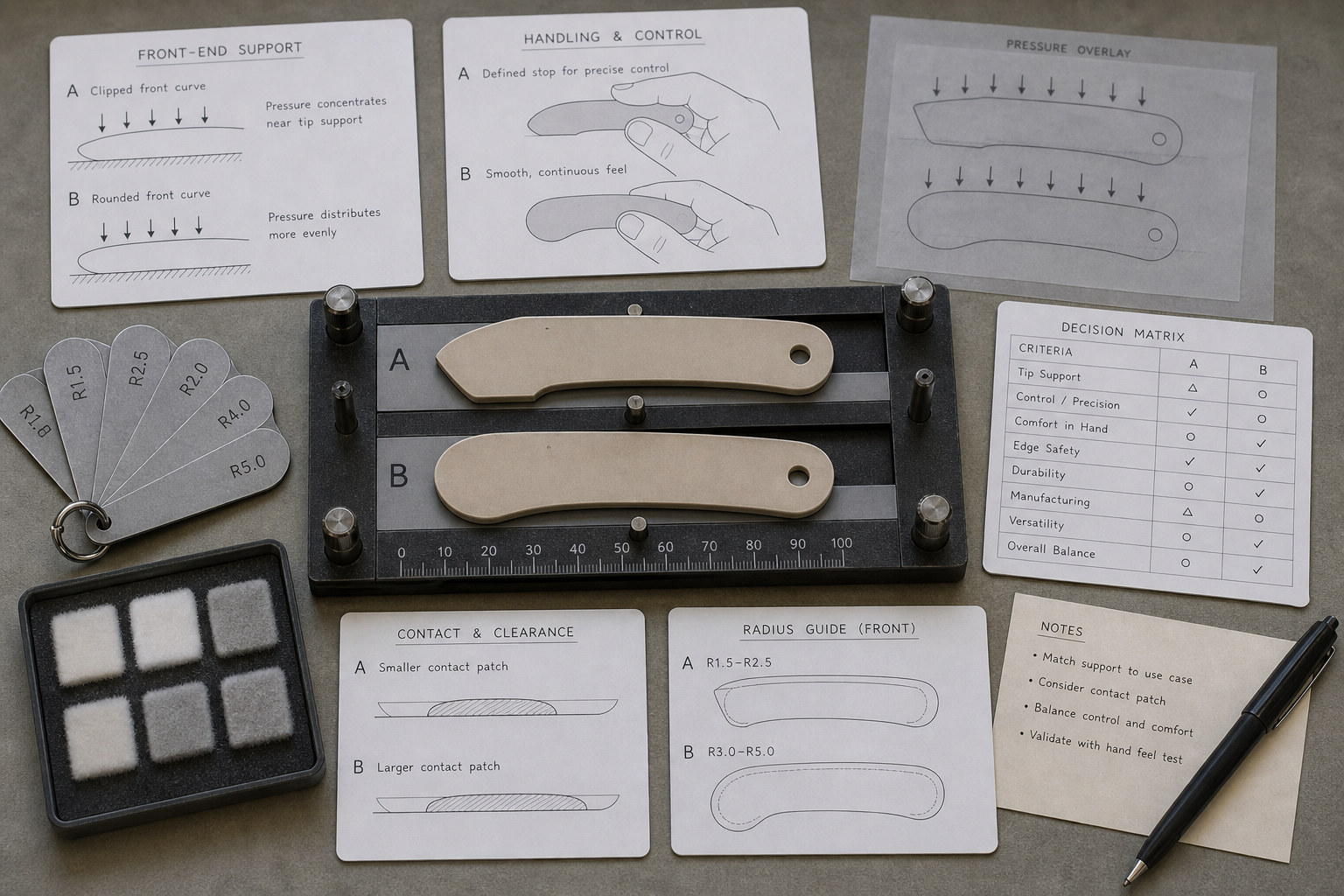
The tip is where many blade-shape decisions become real. A fine point and a strong point are not the same thing.
Clip point usually offers finer point control but can be more fragile if over-thinned. Drop point usually offers stronger tip support and broader utility but may feel less precise for fine point work.
I Match the Tip to the Real Task
If the buyer wants fine point access, a clip point can be attractive. It can help with controlled point work, precise cuts, and traditional styling. But the buyer should not expect a very fine clip point tip to perform like a reinforced drop point tip under hard use. Geometry matters. Steel matters. Heat treatment matters. User expectation matters.
If the buyer wants a general-purpose knife for broader use, a drop point can be safer. It often keeps more material behind the point and supports common cutting tasks. This does not mean the drop point is indestructible. A poor grind, poor heat treatment, or overly thin tip can still fail. But the shape is often more forgiving for EDC and outdoor utility.
This is why I do not compare the two shapes only by appearance. I compare point thickness, spine support, edge angle near the tip, blade thickness, primary grind, and steel. I also ask whether the buyer expects users to pry, puncture, slice, open packaging, cut rope, prepare outdoor materials, or carry the knife mainly as a pocket tool. The more general the use case, the more I lean toward a balanced drop point. The more the buyer wants classic style and fine point control, the more I consider clip point.
| Tip question | Clip point answer | Drop point answer |
|---|---|---|
| Fine point control | Usually stronger advantage | Good but often less fine |
| Tip support | Must be engineered carefully | Usually stronger by shape |
| Broad utility | Good if geometry is balanced | Usually easier to position |
| Hard-use expectation | Needs careful caution | Still needs steel and heat control |
How Do Steel and Heat Treatment Affect Both Blade Choices?
Blade shape cannot rescue poor material decisions. A weak heat treatment can make either blade shape disappoint.
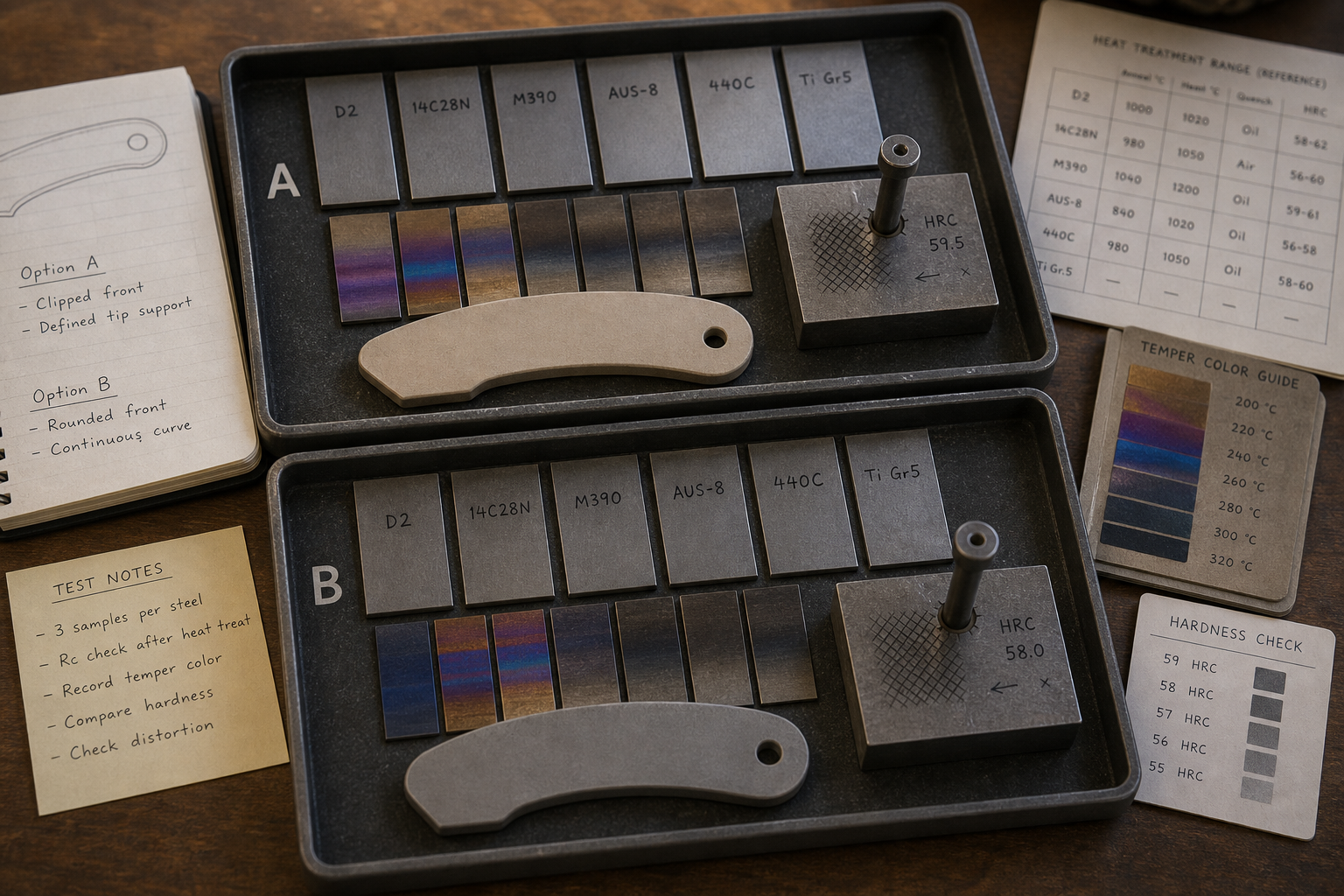
Both clip point and drop point blades need steel and heat treatment matched to edge retention, toughness, corrosion resistance, hardness, sharpening ease, finish compatibility, cost, and repeatability.
I Choose Material After I Understand the Use Case
Steel choice should not start with the most famous name. It should start with target price, target market, corrosion environment, cutting task, and maintenance expectation. A budget EDC knife may need a cost-controlled stainless option. A mid-range outdoor drop point may need better corrosion resistance and edge stability. A heritage-style clip point may need a steel that fits the brand story and sharpening expectation. A work utility knife may need easy maintenance and repeatable heat treatment more than a fancy steel name.
Alleima describes 14C28N knife steel as a knife steel designed for applications where hardness, edge performance, and corrosion resistance matter. I use this as a useful reference for balancing properties. It does not mean every buyer should use 14C28N. Buyers may choose 8Cr, 9Cr, D2, 14C28N, or another steel depending on budget and positioning.
Heat treatment is just as important as steel grade. A clip point with a fine tip needs enough toughness. A drop point with a thicker profile still needs good edge performance. The NIST guide to Rockwell hardness measurement supports the need for controlled hardness measurement. In sourcing work, I ask for target hardness range, batch check method, and sample review after grinding and finishing.
| Material factor | Clip point concern | Drop point concern |
|---|---|---|
| Toughness | Protect the finer point | Support outdoor or utility tasks |
| Corrosion resistance | Match pocket or outdoor use | Match moisture and maintenance needs |
| Edge retention | Keep fine edge useful | Support repeated utility cutting |
| Hardness control | Avoid brittle thin tips | Avoid soft edges and inconsistent batches |
How Do Handle, Lock, and Sheath Choices Change the Decision?
The blade shape gets attention, but the handle and structure decide how the knife feels in real use.
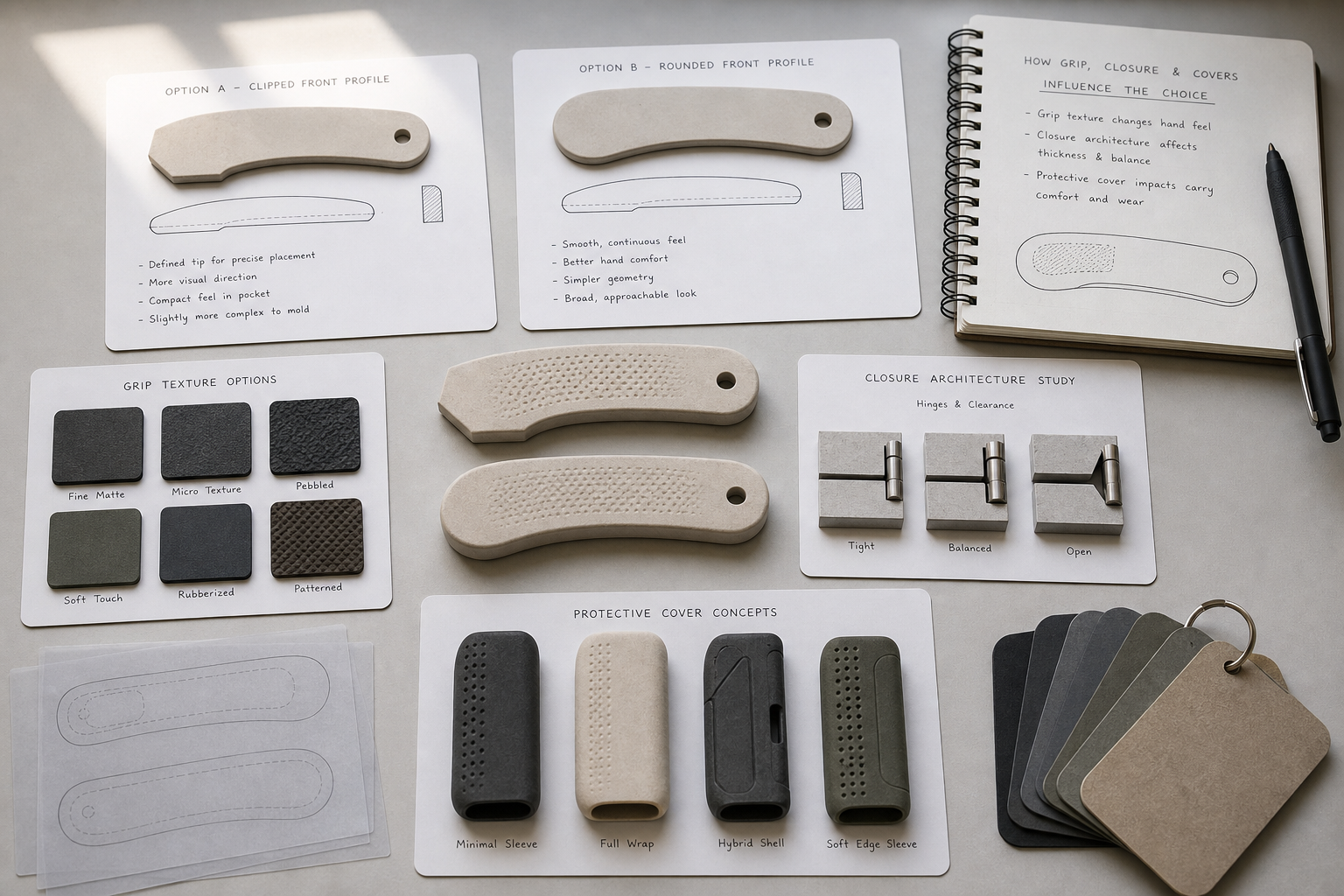
Clip point and drop point knives both need handle, lock, and sheath choices that support grip security, finger clearance, opening control, lock engagement, blade centering, closed safety, carry, and stable hand posture.
I Design the Structure Around the User's Hand
The handle should support the blade's likely use. A clip point chosen for precise point control needs a handle that gives confidence near the tip. A drop point chosen for general utility needs a handle that works across common cutting positions. If the handle is slippery, too thin, too short, or poorly balanced, the blade shape will not save the product.
The CCOHS hand tool ergonomics guide discusses tool fit, grip, neutral wrist posture, handle dimensions, and non-slip material. I apply that thinking by checking handle contour, texture, finger clearance, balance, clip position, and opening method. I also check whether the handle material fits the price and market. G10, FRN, aluminum, stainless steel, wood, micarta, and rubber-like materials all create different cost, weight, grip, and finishing results.
For folding knives, the lock and closed position matter. Clip point tips can be fine and must be safely covered. Drop point blades with large bellies may need enough handle clearance. I check lockup, blade centering, detent, opening action, closing path, and screw control. For fixed blades, I check sheath retention, draw path, edge clearance, tip protection, and packaging movement. The blade shape decision is never separate from the structure.
| Structure area | Clip point focus | Drop point focus |
|---|---|---|
| Handle grip | Support fine point control | Support broad cutting positions |
| Lock design | Protect tip and point alignment | Protect action and centering |
| Sheath fit | Guard fine point and clip line | Guard belly, edge, and tip |
| Carry comfort | Avoid aggressive feel if not intended | Keep thickness and weight balanced |
Which Shape Is Easier to Manufacture Consistently?
Buyers often assume drop point is easier and clip point is harder. That is usually true, but not always.
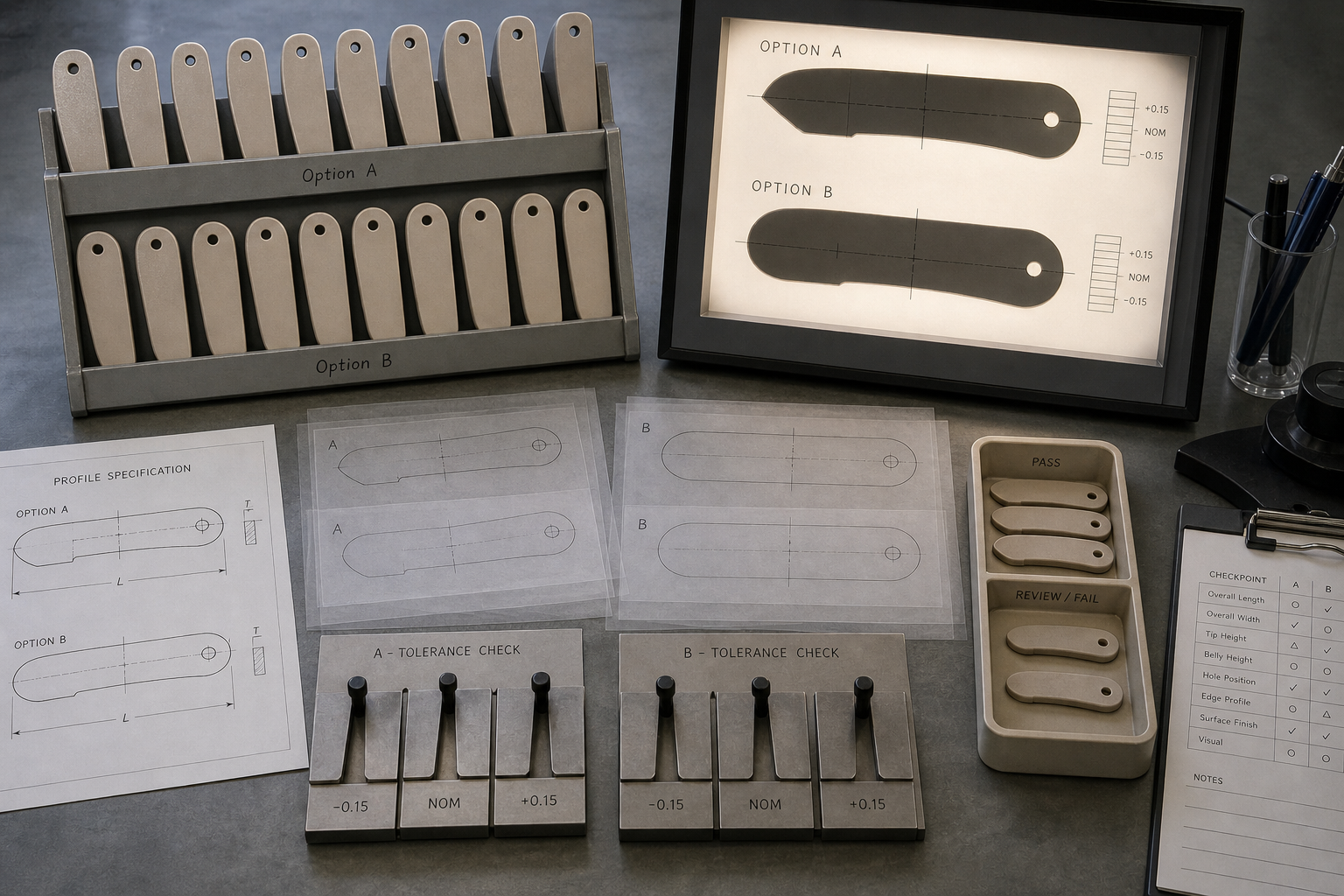
Drop point is often easier to position for broad production, while clip point needs tighter control of the clip line, swedge, and tip. Both still require profile, grind, heat treatment, and assembly checks.
I Compare the Real Process, Not Only the Shape Name
Clip point production can be more sensitive around the clipped spine, swedge, and tip. A small clip-line variation can change the blade's identity. A swedge can be uneven. A long clip can make the tip thinner. A coated or satin clip point can show grinding marks clearly. This does not mean clip point is a bad choice. It means the buyer should define the clip standard and inspect it.
Drop point production can be more forgiving, but it still has risks. The spine curve can vary. The belly can become too flat or too round. A thick blade can cut poorly. A wide blade may need careful handle clearance. A folder may have blade rub or centering issues. A fixed blade may need sheath adjustment. Common does not mean automatic.
I prefer to approve production-intent samples for both shapes. The sample should use real steel, real heat treatment, real finish, real handle material, and real assembly method. A soft prototype can hide grinding and heat-treatment problems. The production sample shows whether the knife can repeat at order quantity and whether the buyer's product story is realistic.
| Production item | Clip point risk | Drop point risk |
|---|---|---|
| Profile cutting | Clip line variation | Spine curve variation |
| Grinding | Uneven swedge or thin tip | Uneven bevel or thick edge |
| Finishing | Clip marks show clearly | Belly and grind lines must stay clean |
| Assembly | Fine tip needs safe closure | Wide belly needs handle clearance |
How Should Finish, Edge Style, and Branding Influence the Choice?
Finish can change how buyers read the blade. The same profile can feel traditional, tactical, outdoor, or modern.
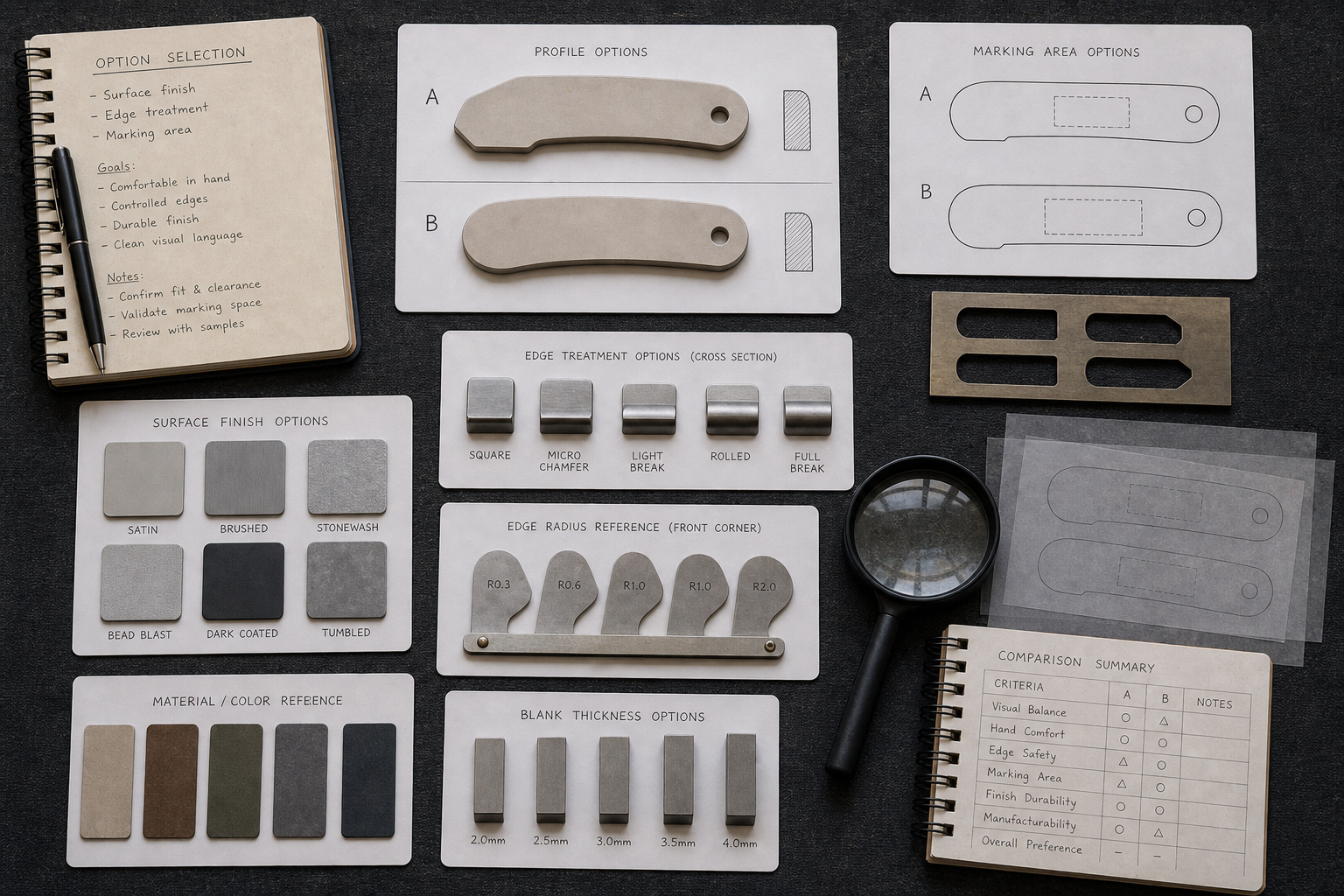
Buyers should choose finish, edge style, and branding after deciding the blade's market role. Satin, stonewash, coating, plain edge, serration, swedge, and logo placement all affect perception and inspection.
I Let the Finish Support the Sales Story
A satin clip point can look classic and refined. A stonewashed drop point can look practical and outdoor-ready. A coated clip point can look stronger and more tactical, but the fine tip and clip line need careful inspection. A coated drop point can be a good outdoor or utility option, but the buyer should not claim that coating makes the knife maintenance-free.
Edge style also affects the decision. A plain edge is easier to sharpen and inspect. Partial serration can help with rope, webbing, and fibrous material, but it increases grinding and maintenance complexity. If the clip area is sharpened, the product becomes a different sourcing discussion. If the drop point is partially serrated, the buyer should define where the serrations start and how they affect useful plain-edge length.
Branding should be planned early. Clip point blades can look crowded if the logo sits too close to the clip, swedge, or grind transition. Drop point blades often give more simple placement options, but the logo still needs to avoid the edge, pivot, and coating conflict. Packaging should also match the product level and include realistic care language.
| Option | Clip point effect | Drop point effect |
|---|---|---|
| Satin finish | Classic and refined | Clean and modern |
| Stonewash finish | Practical heritage or outdoor look | Strong utility positioning |
| Plain edge | Good for classic utility | Good for broad market utility |
| Partial serration | Adds rope-cutting story | Useful only if task requires it |
What Quality Control Should Buyers Use for the Comparison?
The best blade choice still fails if the sample cannot repeat. QC should compare the risks of each shape directly.
Buyers should inspect clip point and drop point knives for profile accuracy, tip strength, edge sharpness, hardness, grind consistency, finish, lockup, centering, closed safety, sheath fit, packaging, and batch consistency.
I Build QC Around the Chosen Risk
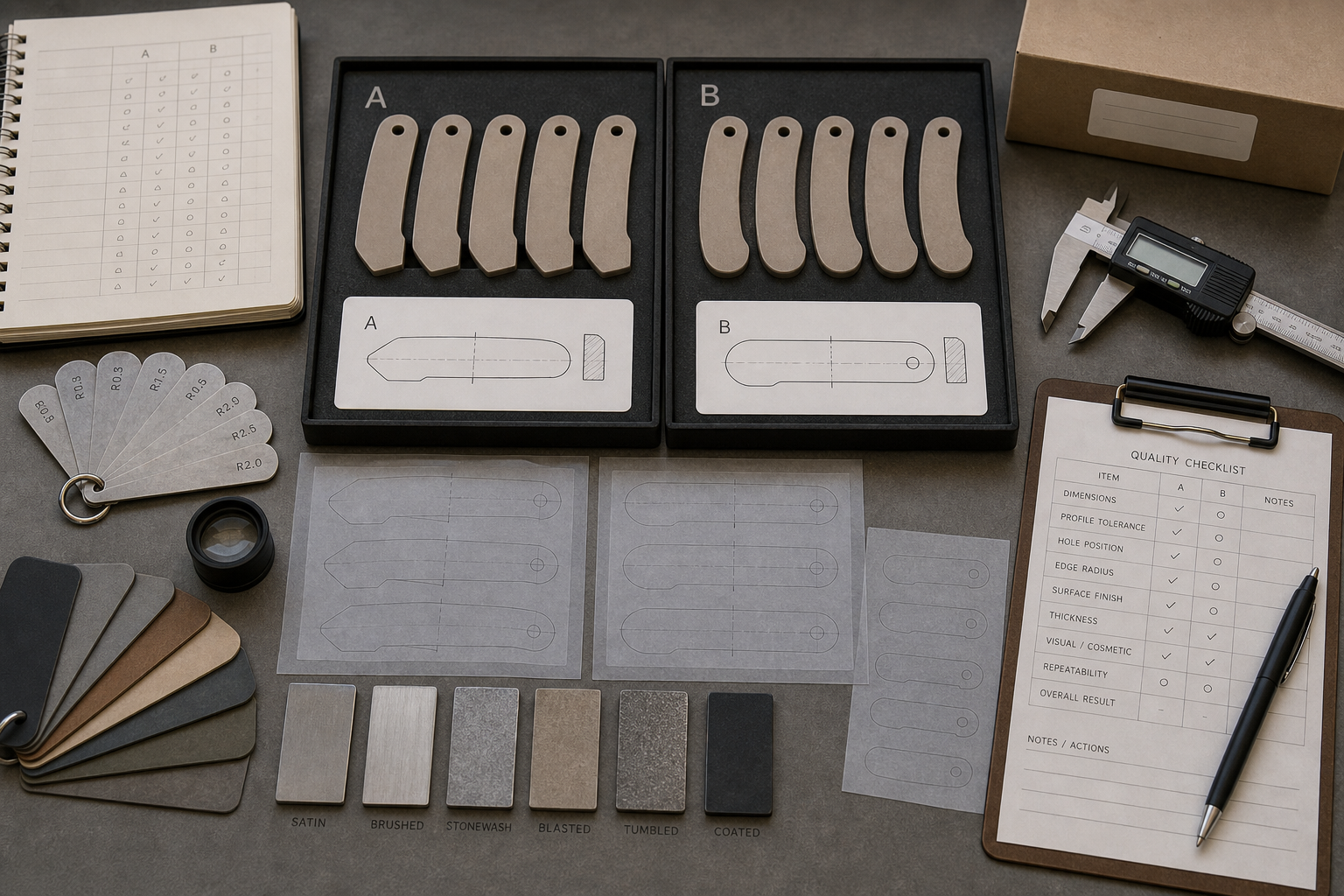
For clip point knives, I pay extra attention to the clip line, tip thickness, swedge symmetry, sharpened or unsharpened clip status, and logo placement. For drop point knives, I watch spine curve, belly, blade thickness, tip position, and handle clearance. For both shapes, I check heat treatment, bevel consistency, edge sharpness, finish, assembly, packaging, and batch consistency.
The inspection should happen in stages. Incoming material check protects steel and hardware. Blade blank inspection protects profile. Heat-treatment inspection protects hardness and straightness. Grinding inspection protects edge geometry. Assembly inspection protects lockup and blade centering. Final inspection protects appearance, sharpness, packaging, and sellable condition.
ISO describes ISO 9001 quality management as a standard for quality management system requirements. I use that idea as a process mindset. Buyers do not need to turn every order into a paperwork project, but they should ask how the supplier controls repeat production. Final inspection finds defects. Process control reduces repeated defects.
| QC stage | Clip point focus | Drop point focus |
|---|---|---|
| Blade blank | Clip line, tip, swedge | Spine curve, belly, point |
| Heat treatment | Hardness and fine-tip distortion | Hardness and straightness |
| Assembly | Fine tip closure and centering | Belly clearance and centering |
| Final inspection | Finish, edge, logo, packaging | Finish, edge, action, packaging |
What Should Buyers Put in a Clip Point vs Drop Point RFQ?
A comparison RFQ should not ask the supplier to guess. It should show the decision logic and target market.
A clip point vs drop point RFQ should include target market, primary use, preferred blade shape, alternate blade shape, geometry notes, steel, hardness, grind, handle, lock or sheath, finish, packaging, quantity, target price, and inspection needs.
I Ask Buyers to Compare Samples With the Same Brief
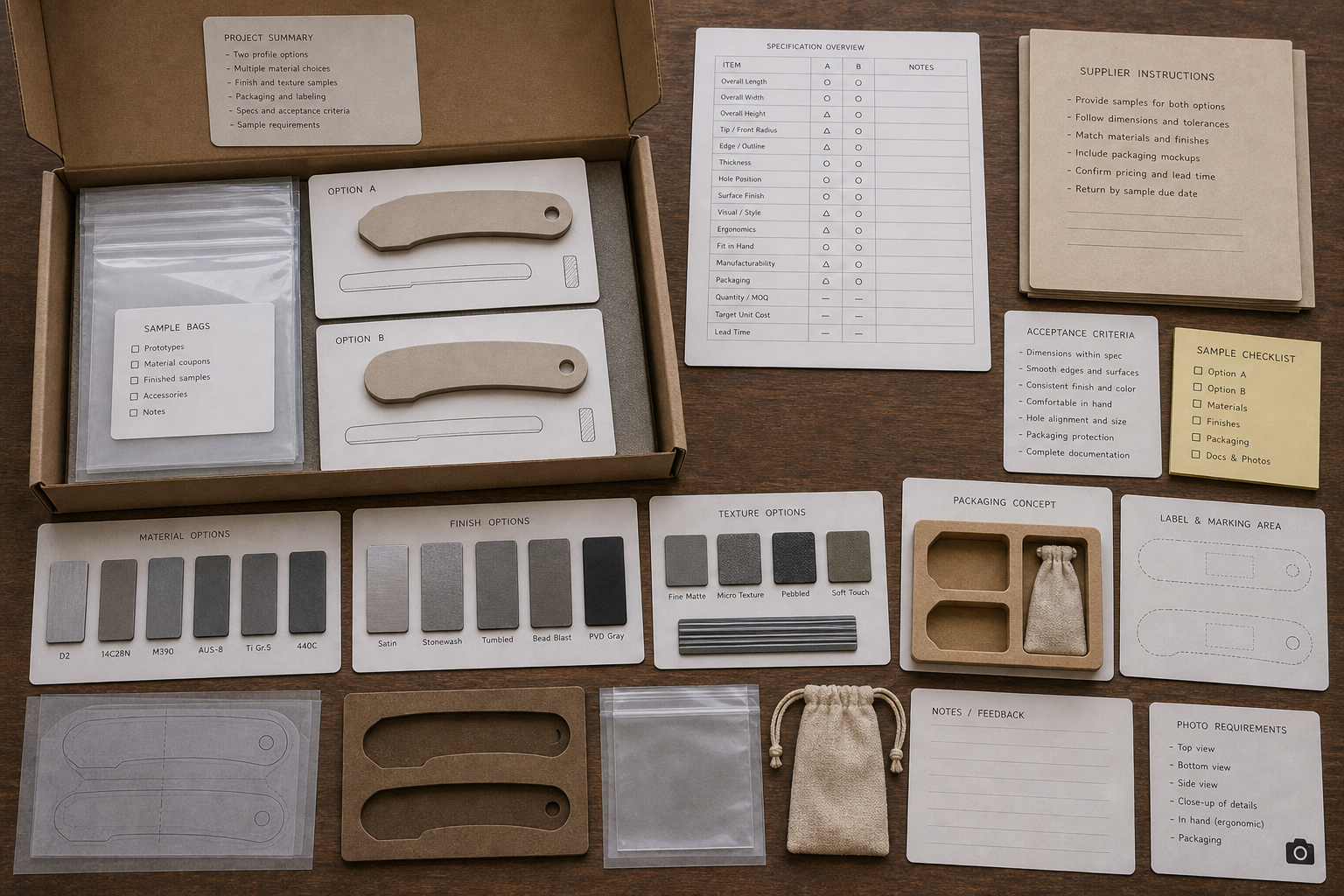
If a buyer is unsure, I suggest comparing one clip point sample and one drop point sample under the same business goal. The comparison should use the same target market, steel class, handle material, lock type, finish level, and packaging direction. This makes the blade-shape decision clearer. If the drop point cuts better but the clip point looks better, the buyer can decide which matters more for the sales channel. If the clip point creates too much tip risk, the buyer can adjust the clip or move to drop point.
The RFQ should state what the buyer wants the knife to do. It should include blade length, blade thickness, clip shape or spine curve, belly, steel preference, hardness target, primary grind, edge style, handle material, lock type, sheath type, opening method, finish, logo method, packaging style, expected quantity, target price, and inspection requirements.
Buyers should also mention compliance concerns early. Blade length, locking mechanisms, assisted opening, sharpened clips, sheath carry, and packaging claims can matter by market. I cannot replace legal review, but I can help buyers identify design details that need review before sampling. A clear RFQ gives the supplier enough information to make practical recommendations instead of guessing.
| RFQ field | What to specify | Why it helps |
|---|---|---|
| Decision goal | Clip point, drop point, or sample comparison | Guides development path |
| Geometry | Clip line or spine curve, belly, thickness | Prevents vague blade shape requests |
| Product structure | Folder, fixed blade, lock, sheath | Controls tooling and assembly plan |
| Inspection needs | Tip, hardness, sharpness, lockup, packaging | Makes quality expectations clear |
Turn your idea into a quote-ready knife project.
Share your drawing, sample photo, target quantity, market, and packaging needs. Vast State will review manufacturability and prepare OEM/ODM options.
Conclusion
I choose clip point for fine point and classic style, and drop point for broader utility, stronger tip support, and easier market positioning.
Source Notes
- Gear Patrol blade-shape guide provides general context for clip point and drop point definitions.
- HSE knife guidance supports matching knives to tasks, keeping knives sharp, and safe handling.
- OSHA food preparation guidance supports appropriate knife selection, safe storage, guarded handles, and sharp-tool precautions.
- CCOHS hand tool ergonomics supports handle fit, grip, neutral wrist posture, and non-slip material thinking.
- Alleima 14C28N knife steel gives material context for hardness, edge performance, and corrosion resistance.
- NIST Rockwell hardness guidance supports the need for controlled hardness measurement.
- ISO 9001 supports the value of quality management systems and documented process control.