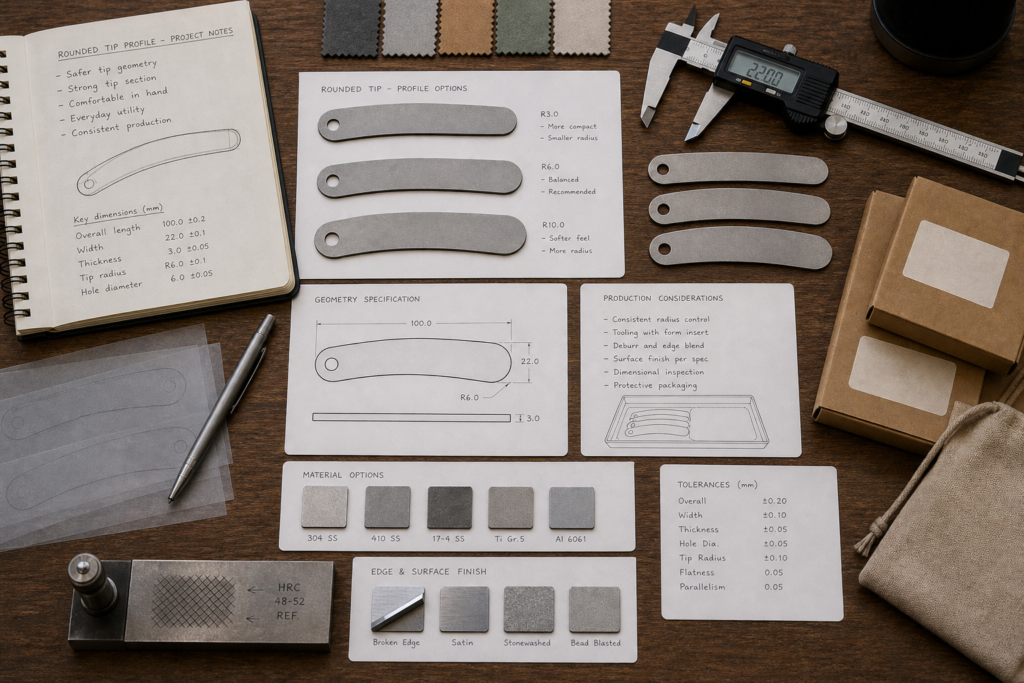
A drop point blade is easy to recommend, but that popularity can hide weak details. Poor geometry can still create dull, heavy, or fragile knives.
Knife buyers should source drop point blades by defining the spine curve, tip strength, blade belly, steel, heat treatment, grind, handle control, finish, quality checks, packaging, and RFQ details around the product's real use case.
Quick buyer brief:
- Answer: A drop point blade is a versatile blade shape, but the geometry still needs clear sourcing standards.
- Buyer context: This helps knife brands, outdoor brands, importers, wholesalers, distributors, and private label buyers develop drop point folders or fixed blades.
- Key checks: Confirm tip position, belly, spine curve, steel, hardness, grind, handle grip, lock or sheath design, finish, packaging, compliance notes, and inspection standard.
Have a knife or multi-tool project in mind?
Send your sketch, CAD file, sample photo, or product idea. Vast State can review manufacturability, suggest materials, estimate MOQ, and prepare a quote for your OEM/ODM project.
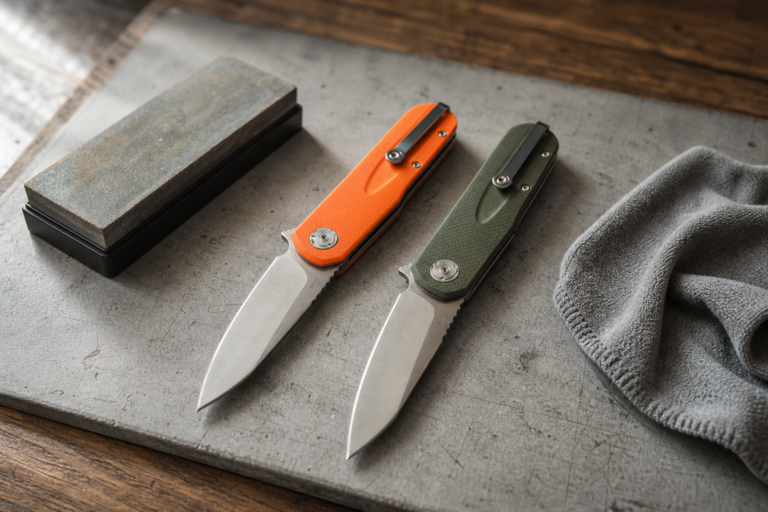
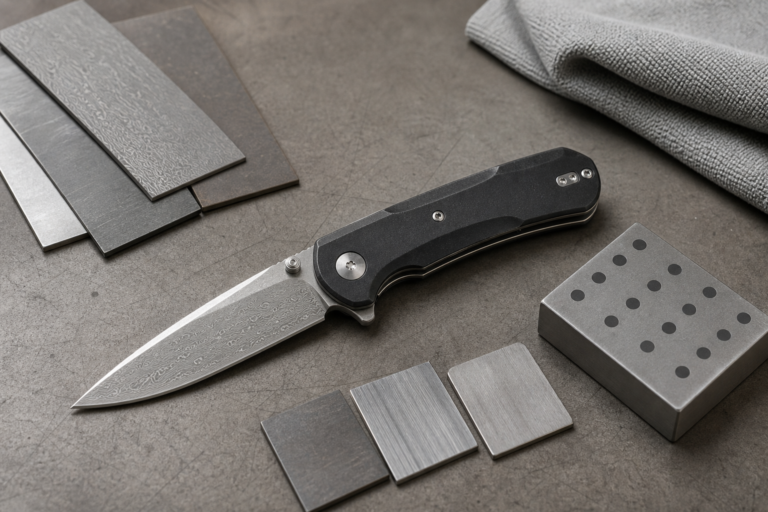
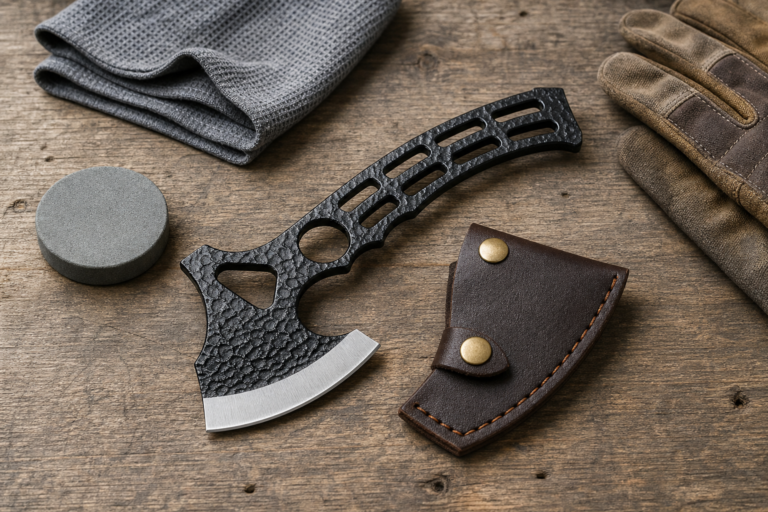
When a buyer asks for a versatile knife shape, the drop point is often the first option I consider. It gives a controlled point, useful belly, and a stable shape for EDC, outdoor, hunting-style, camping, and general utility knives. But I do not treat it as automatic. A drop point can become too thick, too blunt, too heavy, or too weak if the geometry is not defined. The spine curve, tip height, edge belly, blade thickness, grind, steel, handle, lock, and finish must work together. In OEM and ODM sourcing, a drop point blade is not only a safe choice. It is a shape that must be tuned to the buyer's market, price range, and product promise.
What Makes a Drop Point Blade Different in OEM Sourcing?
Many buyers call drop point the safe choice. That is partly true, but safe does not mean undefined.
A drop point blade has a spine that slopes down toward the tip, usually creating a strong point and useful belly. Buyers should define the curve, tip height, blade thickness, and grind before sampling.
I Treat the Drop as a Design Control
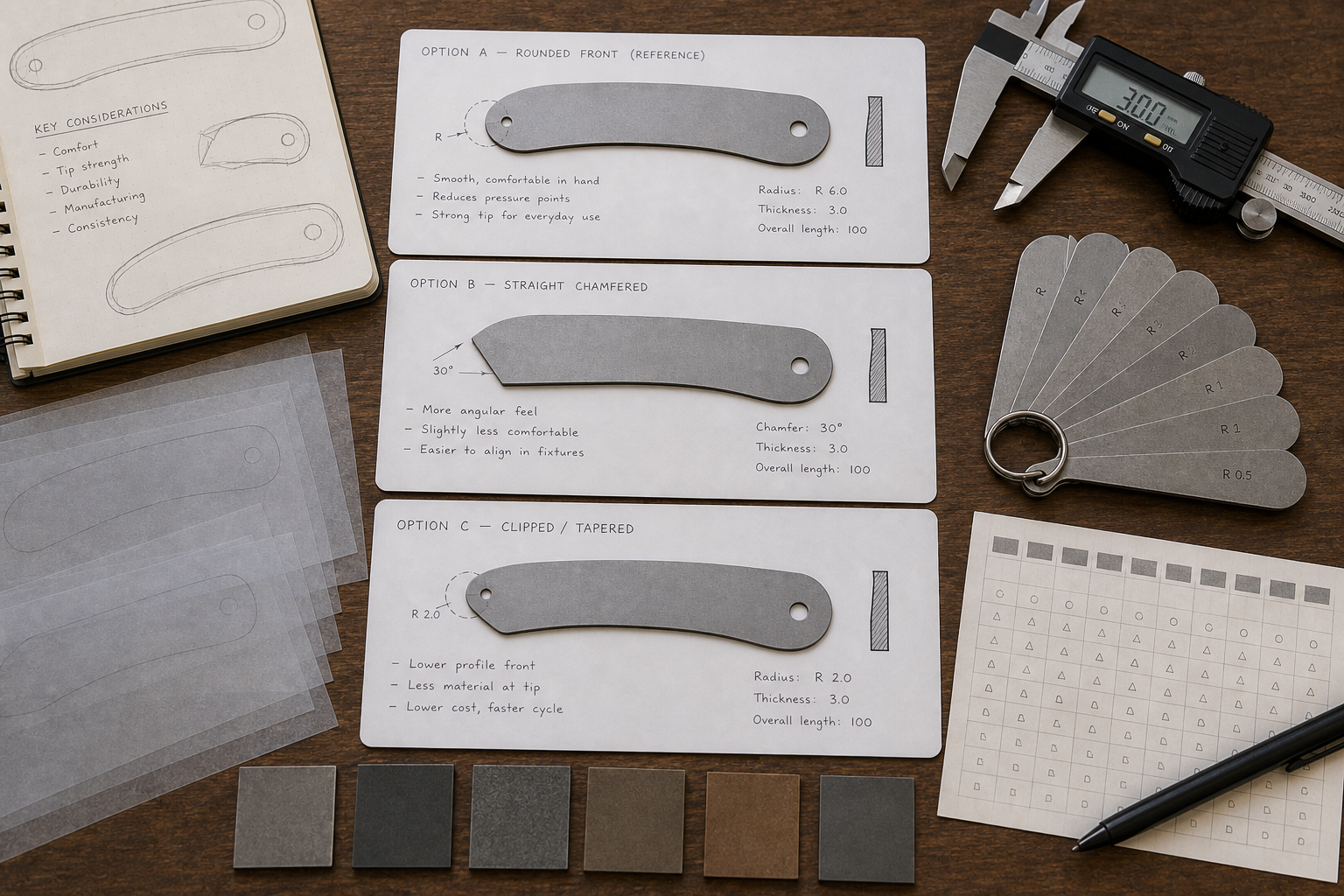
The main feature of a drop point blade is the downward spine curve toward the tip. This shape can put more material behind the point than a very fine clip point. It can make the tip feel controlled for general utility tasks. It can also give enough belly for slicing. That is why buyers often choose drop point knives for broad markets.
Gear Patrol describes a drop point blade as a common blade shape with a spine that slopes down to the point and gives a strong point for general use. I use that as a public definition, but a factory needs more detail. The buyer should define how much the spine drops, where the tip sits, how much belly the edge has, how thick the blade is, and what grind is required.
A drop point can be slim and modern. It can be wide and outdoor-focused. It can be compact for EDC or stronger for a fixed blade. The name alone does not tell the supplier which version to make. A good sourcing brief turns the blade name into a geometry standard that can be sampled, measured, inspected, and repeated.
| Drop point element | What to define | Why it matters |
|---|---|---|
| Spine curve | Gentle, medium, or deep drop | Controls tip position and style |
| Tip height | Near centerline or lower | Affects control, strength, and cutting angle |
| Belly | Shallow or generous curve | Controls slicing and general utility |
| Blade thickness | Slim, balanced, or reinforced | Affects weight, strength, and cost |
OEM/ODM RFQ Checklist
Prepare these details to help Vast State review your project and provide a more accurate quotation.
| RFQ Field | What to Prepare |
|---|---|
| Project type | OEM from drawing / ODM private label / wholesale catalog |
| Product category | Folding knife / fixed blade / multi-tool / outdoor tool |
| Design status | Idea / sketch / 2D drawing / 3D CAD / physical sample |
| Target price | Ex-factory target price or retail price range |
| MOQ expectation | 500 / 1,000 / 3,000 / 5,000+ pcs |
| Logo method | Laser engraving / etching / printing / molded logo |
| Packaging | Standard packaging / custom retail box / Amazon-ready |
| Market | USA / EU / Japan / Korea / Middle East / other |
| Compliance needs | Buyer-specified testing / documentation / labeling |
| Timeline | Sample deadline / mass production deadline |
Why Do Buyers Choose Drop Point Blades for EDC and Outdoor Knives?
Versatile blade shapes sell well only when they match real use. A broad claim can still fail if the knife feels wrong.
Buyers choose drop point blades because they balance tip control, slicing belly, durability, carry comfort, and familiar market appeal for EDC, outdoor, camping, hunting-style, and utility knives.
I Match Versatility to a Real Buyer
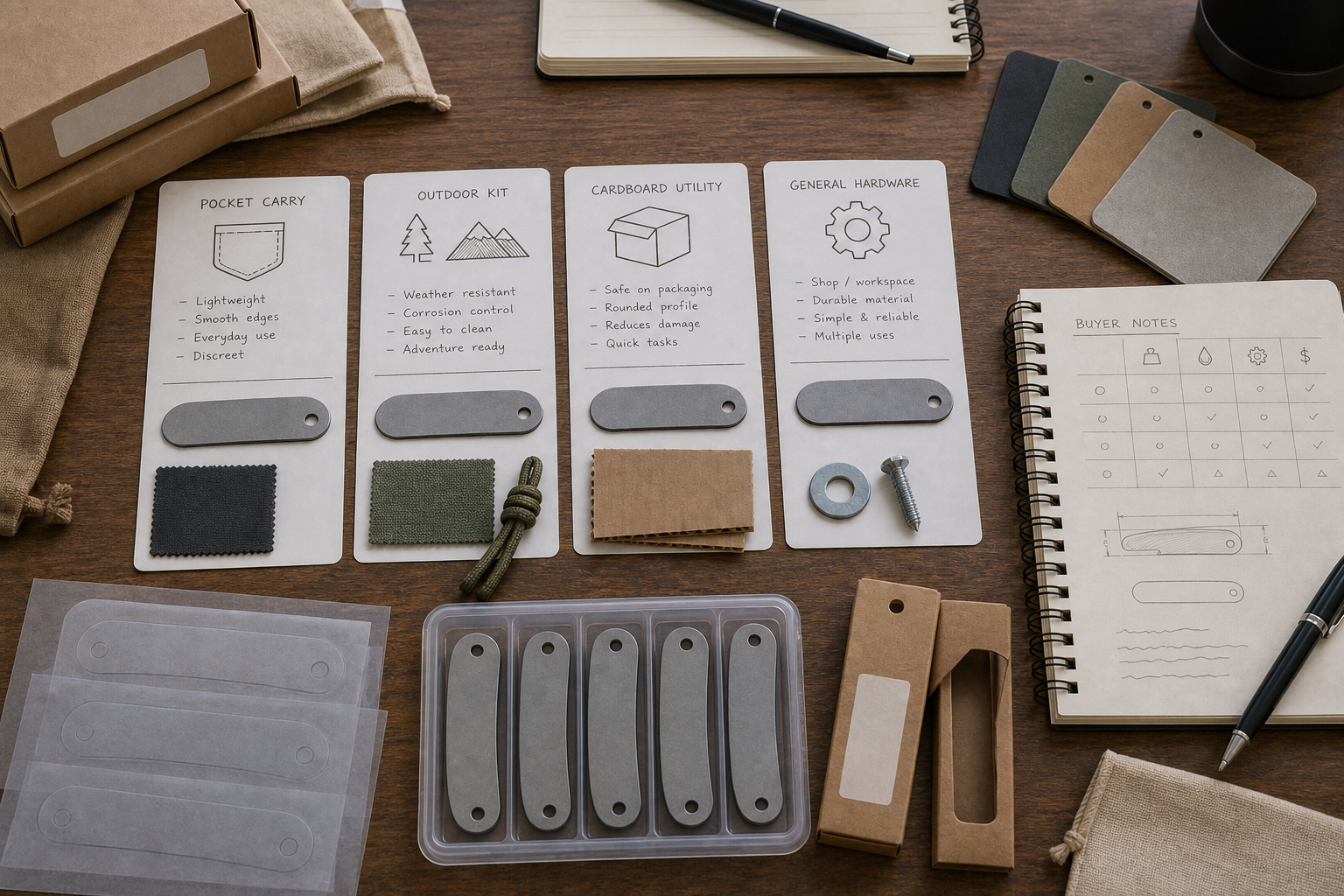
Drop point blades work well when the buyer needs one shape to cover many practical tasks. A drop point folder can fit EDC buyers who want everyday cutting, packaging, cord, and light outdoor use. A fixed blade drop point can fit camping, outdoor, hunting-style, and general utility markets. A compact drop point can feel less aggressive than some other shapes, which may help private label buyers selling into broader retail channels.
But I still ask the buyer to define the main task. A warehouse utility knife, a camping fixed blade, an EDC folder, and a hunting-style knife all need different proportions. The same blade name cannot cover all of them without adjustment. A compact EDC drop point may need thin stock and easy sharpening. A fixed outdoor drop point may need more toughness and a stronger tip. A higher-positioned model may justify better steel, smoother action, and more refined handle material.
Safety guidance supports this task-first thinking. The UK HSE guidance on safe knife use says users should use a knife suitable for the task and keep knives sharp. OSHA food preparation guidance also says to use the appropriate knife for the cutting job and store sharp tools safely. These sources do not define drop point geometry, but they support the sourcing principle that the tool should fit the work and user.
| Product use | Drop point advantage | Buyer caution |
|---|---|---|
| EDC folder | Familiar shape and broad utility | Avoid making it too thick or heavy |
| Outdoor fixed blade | Strong tip and useful belly | Match steel and handle to environment |
| Camping knife | Good general cutting profile | Sheath and packaging protection matter |
| Private label line | Easy to adapt across price levels | Define geometry, not only blade name |
How Should Buyers Define Drop Point Geometry Before Sampling?
A drop point can be too blunt, too thin, too tall, or too heavy. Geometry decisions should happen before the sample is made.
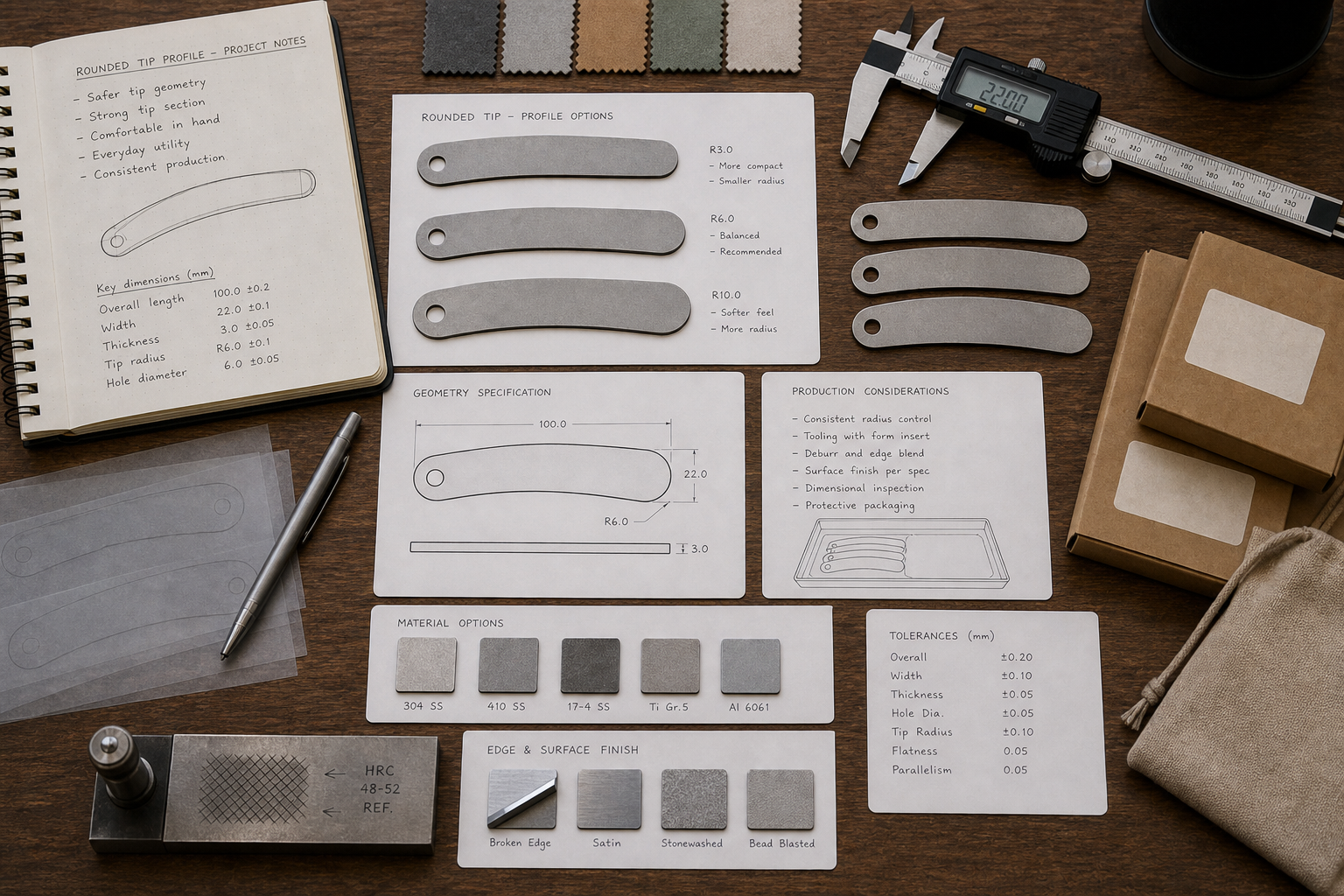
Buyers should define spine curve, tip position, belly, blade length, blade thickness, primary grind, edge angle, distal taper, and closed-handle clearance before approving a drop point sample.
I Tune the Shape to the Product Level
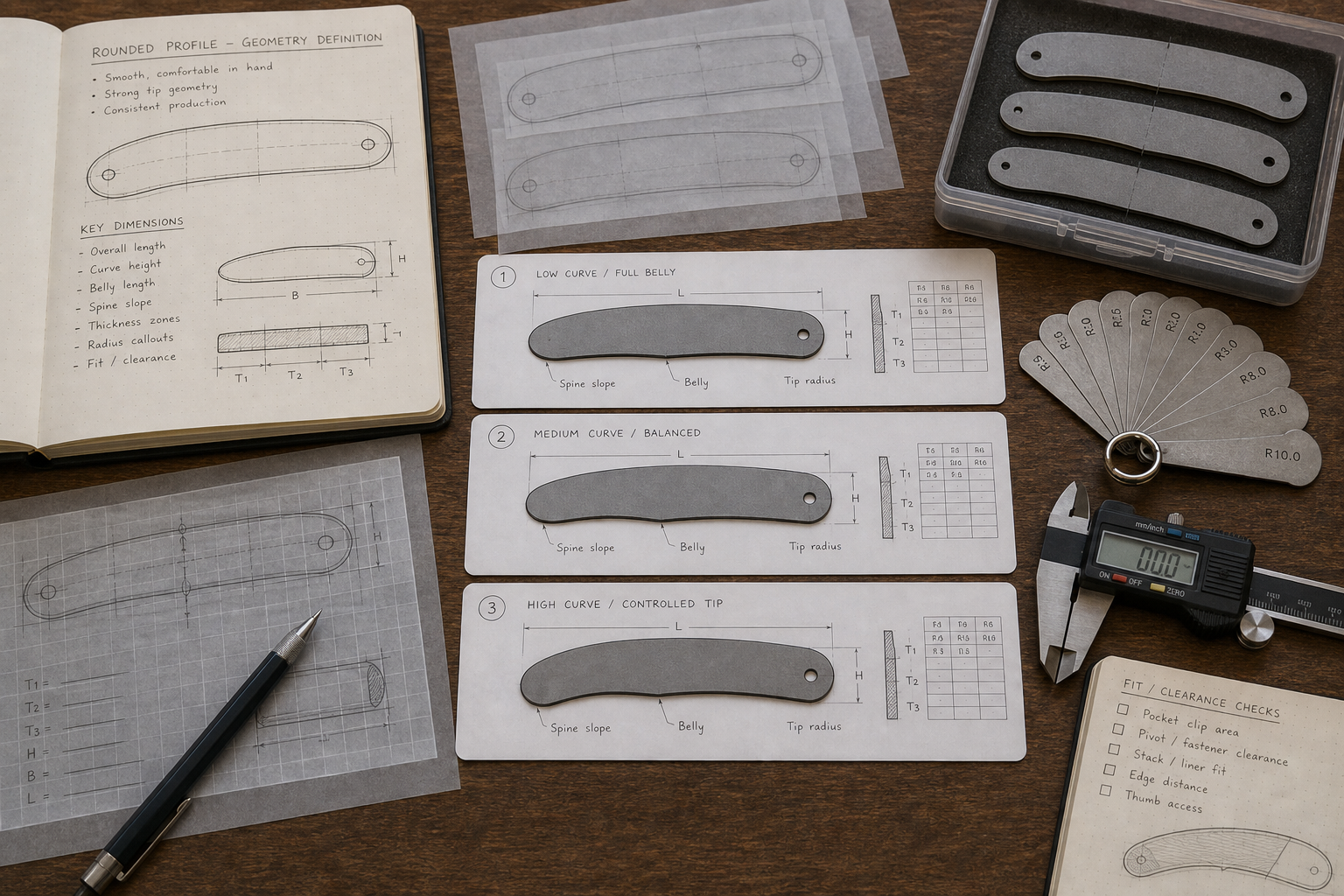
The drop point shape has a wide design range. A gentle drop can look sleek and modern. A deeper drop can make the blade feel stronger and more outdoor-oriented. A higher tip can improve point control in some tasks. A lower tip can make the blade feel safer and stronger, but it may reduce piercing precision. A larger belly improves slicing, but it can make the blade feel taller and heavier.
Blade thickness is another important decision. Thick stock can make a knife feel strong, but it increases weight and can reduce cutting efficiency if the grind is not correct. Thin stock can cut well and carry easily, but it may not fit heavy outdoor use. The primary grind should match the blade size and product promise. A full flat grind can improve slicing. A saber grind can keep more strength. A hollow grind can look refined but may need tighter process control.
For folding knives, I also check how the blade closes into the handle. The tip should be fully covered. The edge should not touch backspacers, liners, or screws. The pivot, stop pin, detent, lock face, and blade centering should all match the blade shape. For fixed blades, I check sheath retention, tip protection, and handle balance. The buyer should approve a production-intent sample, not only a drawing.
| Geometry decision | Practical effect | Buyer checkpoint |
|---|---|---|
| Spine curve | Sets style and point position | Match to market and cutting task |
| Blade belly | Controls slicing ability | Keep enough curve for utility work |
| Blade thickness | Controls strength and weight | Avoid overbuilding compact knives |
| Primary grind | Affects cutting and cost | Match grind to steel and product level |
Which Steel and Heat Treatment Choices Matter for Drop Point Blades?
The drop point shape can be forgiving, but poor steel or heat treatment still creates edge complaints.
Steel and heat treatment for drop point blades should balance toughness, edge retention, corrosion resistance, hardness, sharpening ease, finish compatibility, cost, and repeatability.
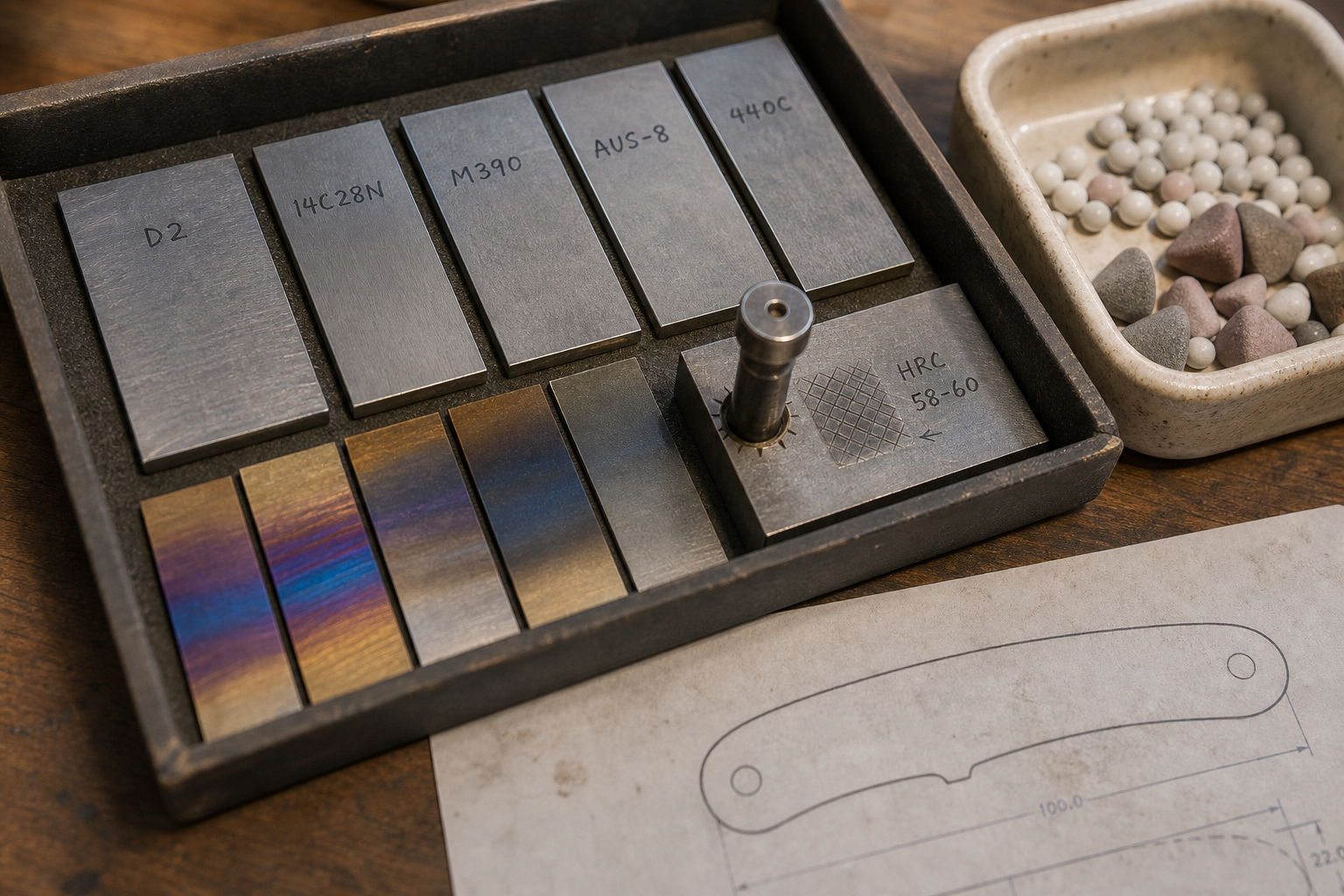
I Choose Steel Around Use, Price, and Maintenance
The steel choice should follow the market. A budget EDC drop point may need a stainless steel that balances price and easy care. A mid-range outdoor knife may need better corrosion resistance and edge stability. A work utility knife may need easy sharpening and controlled cost. A higher-positioned model may justify a steel with stronger edge performance, but the buyer should still think about sharpening difficulty and customer maintenance.
Alleima describes 14C28N knife steel as a knife steel designed for applications where hardness, edge performance, and corrosion resistance matter. I use this as a useful material reference, not as the only answer. Buyers may choose 8Cr, 9Cr, D2, 14C28N, or other steels based on target price, brand positioning, and use environment. The point is to connect steel choice with the real product.
Heat treatment turns the blade profile into a working tool. If hardness is too low, the edge may lose performance quickly. If hardness is too high for the geometry and steel, the edge or tip may become less forgiving. The NIST guide to Rockwell hardness measurement supports the need for controlled hardness measurement. In sourcing work, I ask for target hardness range, batch check method, and sample review after grinding and finishing.
| Steel factor | Why it matters | Buyer checkpoint |
|---|---|---|
| Toughness | Supports tip and edge durability | Match hardness to blade thickness |
| Corrosion resistance | Supports EDC and outdoor use | Match steel to moisture and care needs |
| Edge retention | Supports repeated utility cutting | Confirm heat treatment and edge angle |
| Sharpening ease | Affects customer maintenance | Avoid over-promising difficult steels |
How Do Handle, Lock, and Sheath Details Affect Drop Point Knives?
A drop point blade is versatile, but the handle and lock decide whether the user feels control.
Handle, lock, and sheath design should support grip security, finger clearance, opening control, lock engagement, blade centering, closed safety, sheath retention, pocket carry, and stable hand posture.
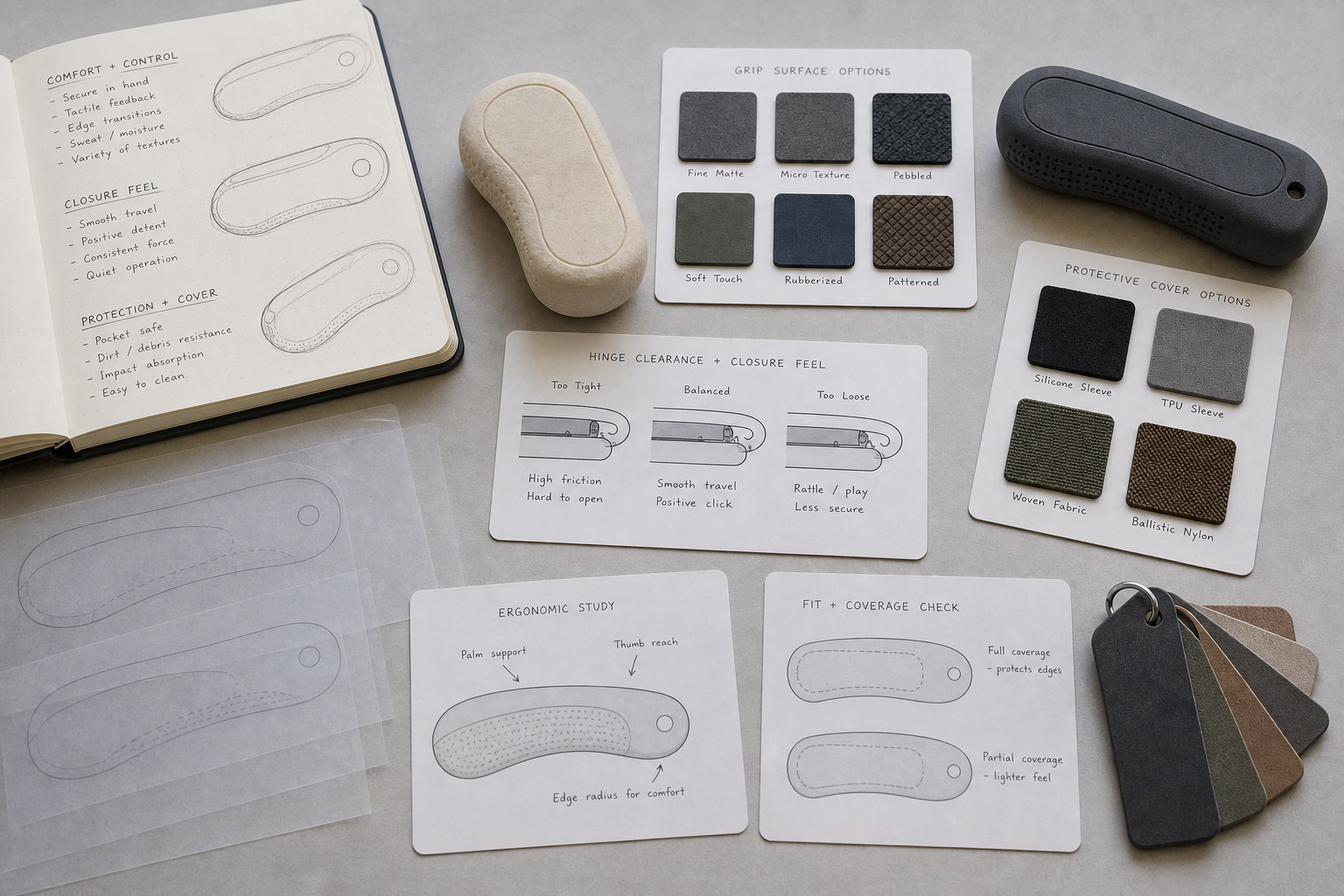
I Build the Knife Around the User's Grip
The drop point blade is often sold as a general-purpose shape. That means the handle must support many common cutting positions. A slippery handle can make a good blade feel unsafe. A handle that is too thin may reduce control. A handle that is too large may make a compact knife feel clumsy. The handle contour, texture, finger clearance, guard or finger stop, pocket clip, and opening method all affect the final product.
The CCOHS hand tool ergonomics guide explains that tool design should fit the user and task. It also discusses grip, neutral wrist position, handle dimensions, and non-slip material. I apply that thinking to drop point knives by checking handle length, thickness, texture, balance, and how the knife sits in different hand positions. I do not want a knife that looks good on a table but feels awkward during cutting.
For folding knives, the lock and closed position are critical. A liner lock, frame lock, back lock, button lock, or crossbar-style lock can work if the geometry is right. The blade should center well. The tip should be fully covered when closed. The lock should engage safely without excessive blade play. For fixed blades, sheath retention and draw path matter. A strong drop point fixed blade still needs a sheath that protects the edge, tip, finish, and user.
| Design area | What I check | Why it matters |
|---|---|---|
| Handle texture | Grip under dry or wet use | Improves control and confidence |
| Lock geometry | Engagement, release, and blade play | Protects folding knife function |
| Closed position | Tip coverage and edge clearance | Protects pocket and packaging safety |
| Sheath fit | Retention, draw path, and rub marks | Protects fixed blade edge and finish |
What Manufacturing Challenges Should Buyers Expect With Drop Point Blades?
A drop point blade is easier than some shapes, but repeat production still needs control. Small changes can alter the feel.
Drop point manufacturing challenges include spine-curve consistency, tip position, belly accuracy, heat-treatment distortion, bevel alignment, grinding heat control, sharpening near the point, finishing, blade centering, and packaging protection.
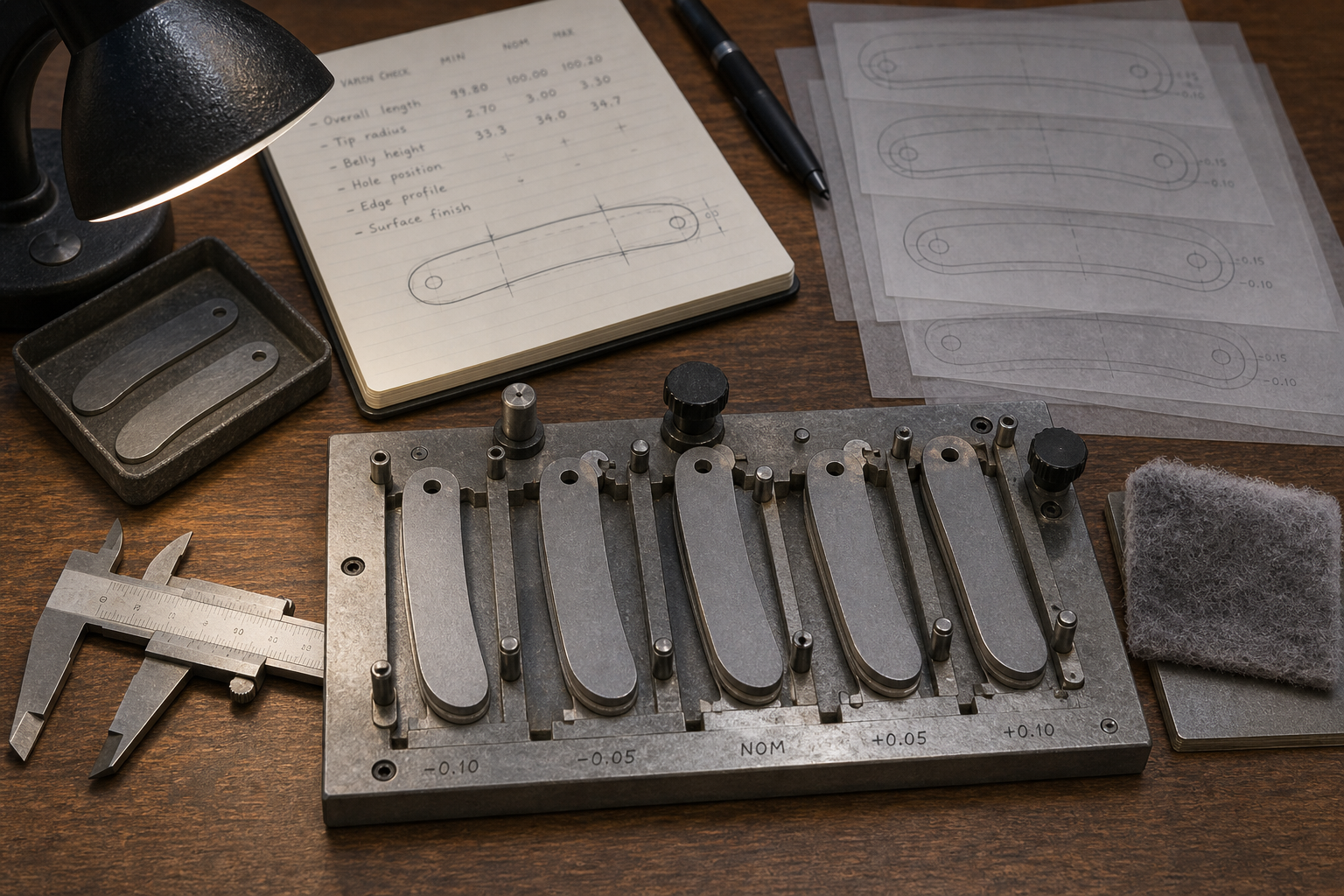
I Watch Consistency More Than Drama
Drop point blades are common, but that does not mean every factory sample will match the approved shape. The spine curve can shift. The tip can move higher or lower. The belly can become too flat or too round. The bevel can rise unevenly. These changes may look small, but they affect cutting feel and batch consistency.
Heat treatment can also create distortion, especially on thinner blades or long fixed blades. Grinding after heat treatment must control heat at the edge and tip. Sharpening should keep the edge even through the belly and point. If the blade is coated, the finish can show grinding marks. If the blade is stonewashed, small marks may be hidden, but the profile and edge still need control.
For folders, I check pivot fit, stop pin contact, detent track, lock face, blade centering, and closed position. A drop point with a wide belly may need careful handle clearance. For fixed blades, I check handle fit, blade balance, sheath retention, and packaging protection. A production-intent sample is important because it shows whether the blade can be repeated with the real material, real finish, and real assembly process.
| Manufacturing point | Main risk | Control method |
|---|---|---|
| Profile cutting | Spine curve variation | Use profile templates or CNC tolerance checks |
| Bevel grinding | Uneven grind height | Define visual and dimensional standards |
| Heat treatment | Warping or hardness variation | Check hardness and straightness by batch |
| Assembly | Blade rub or poor centering | Test pivot, lock, and closed position |
Which Finish, Edge, and Branding Options Work Best?
A drop point blade can look modern, outdoor, tactical, or traditional. Finish should support the market, not confuse it.
Drop point blades can use satin, stonewash, bead blast, coated, black oxide, plain edge, partial serration, or logo marking, but each option changes cost, maintenance, perception, and inspection.
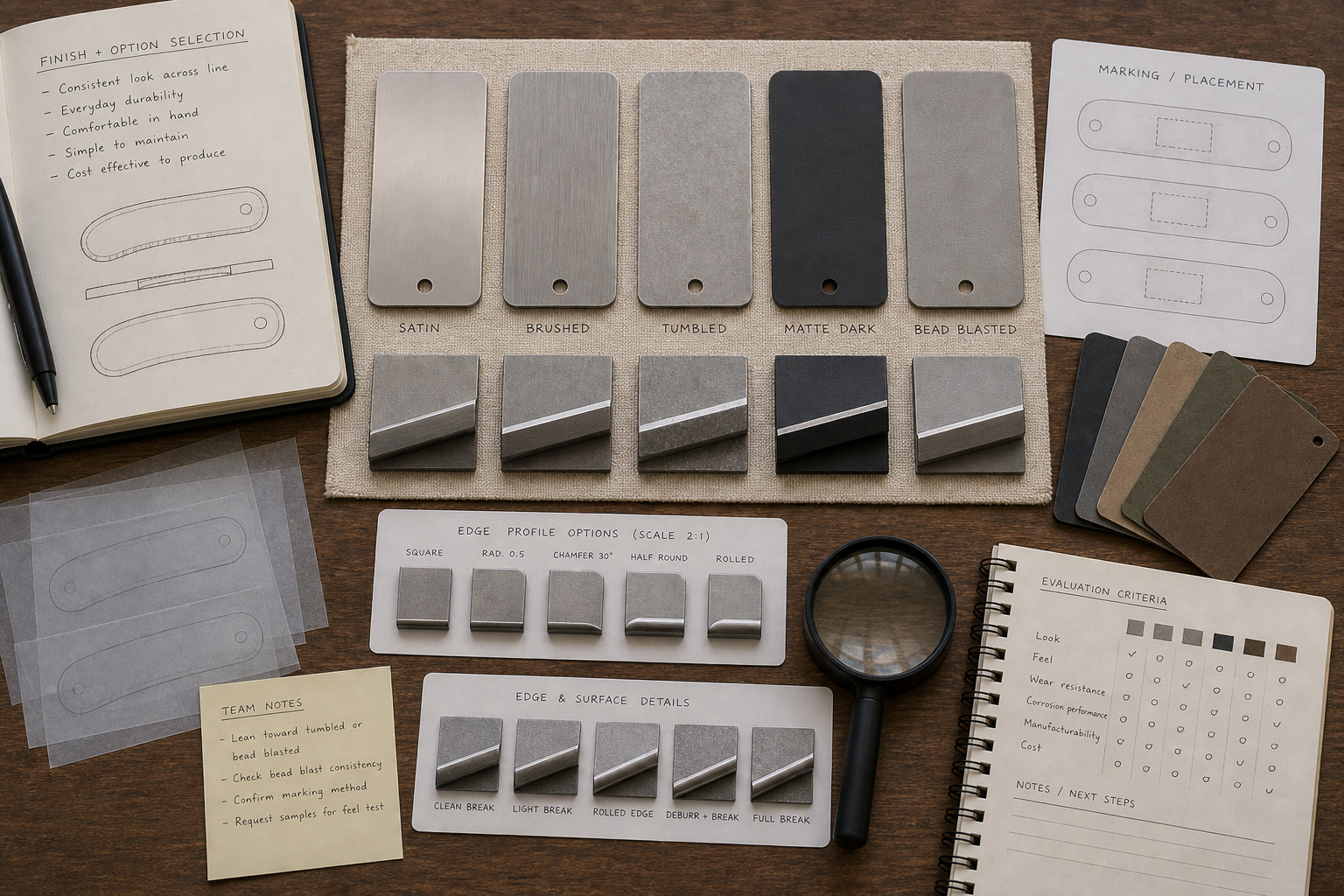
I Match Finish to the Product Promise
A satin drop point can look clean and refined. It may fit mid-range or higher-positioned folders. A stonewashed drop point can fit outdoor and utility markets because it hides small wear marks better. A bead blast finish can look matte, but the buyer should think about corrosion care depending on steel. A coated finish can support color, low reflection, or surface protection goals, but buyers should not claim that a coating makes the blade maintenance-free.
Edge style also needs a practical decision. A plain edge is easier for most users to sharpen and easier for the factory to inspect. A partial serration can help with rope, webbing, and fibrous material, but it adds grinding and maintenance complexity. For many broad-market drop point knives, I prefer a clean plain edge unless the buyer has a clear reason for serrations.
Branding should be planned before finishing. Laser marking on a satin blade looks different from marking on stonewash or coating. A logo placed too near the grind line, tip, or pivot can look crowded. Packaging should also match the product level. A low-cost utility knife does not need overly complex packaging. A higher-positioned outdoor knife may need better protection, clearer care language, and a stronger unboxing impression.
| Option | Good fit | Buyer caution |
|---|---|---|
| Satin finish | Clean and refined product line | Shows scratches more easily |
| Stonewash finish | Outdoor or utility positioning | Can soften crisp visual lines |
| Plain edge | Easier maintenance and inspection | Must be sharp through belly and tip |
| Partial serration | Rope or fibrous material | Harder to sharpen and inspect |
What Quality Control Should a Drop Point Blade Order Include?
Drop point quality is not only a sharp edge. The buyer should check the geometry, action, finish, and packaging together.
Drop point QC should check spine curve, tip position, belly, edge sharpness, hardness, bevel consistency, finish, lockup, blade centering, closed safety, sheath fit, packaging, and batch consistency.
I Inspect the Whole Product, Not Only the Blade
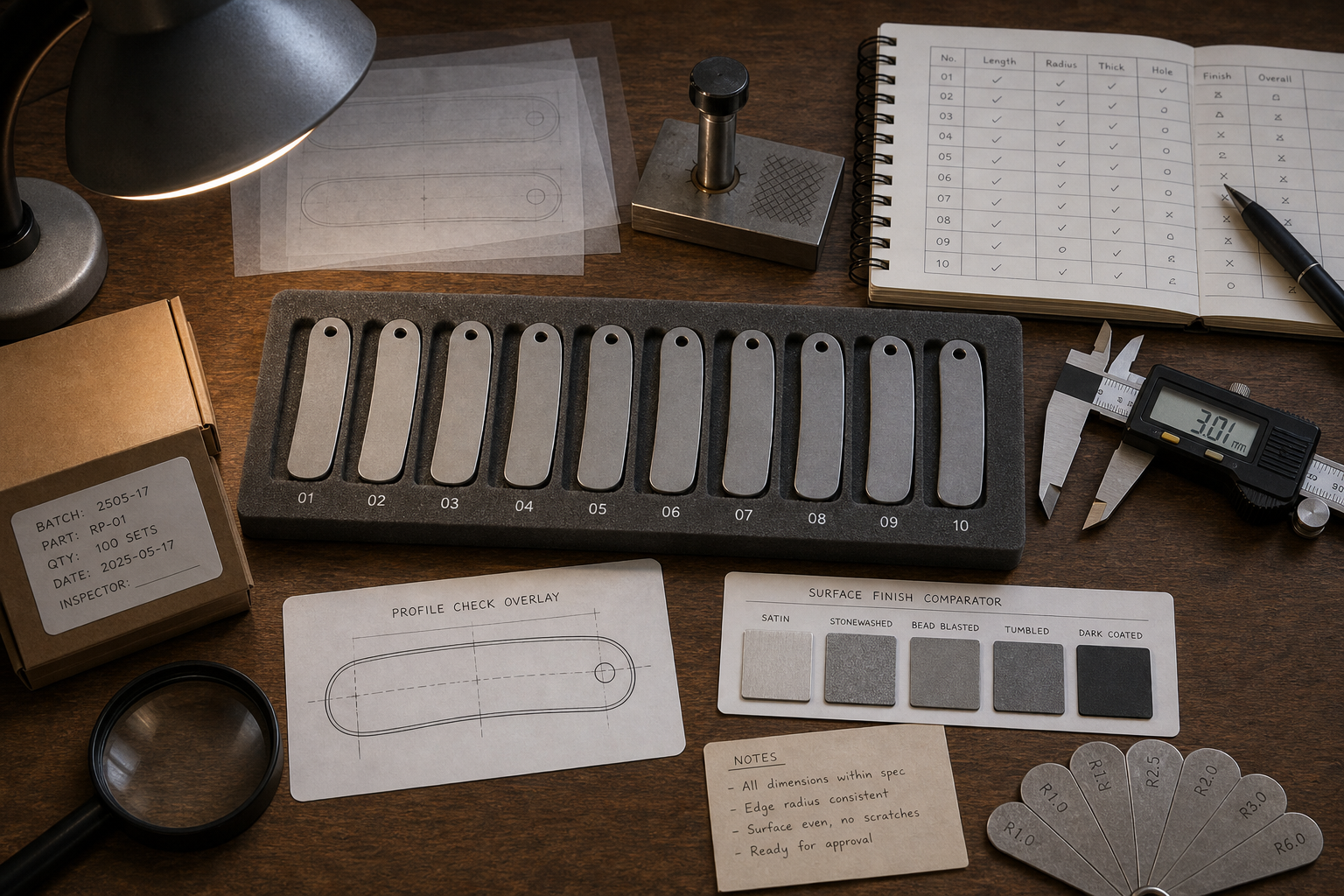
Quality control should begin with the blade blank. The spine curve, point, belly, pivot hole, tang, and stop area should match the approved sample. After heat treatment, hardness and distortion should be checked. After grinding, the bevel should be even and the edge should not show overheating. After finishing, scratches, color, coating, stonewash, or satin direction should match the approved sample.
After assembly, I check lockup, side play, vertical play, detent, opening action, closing path, blade centering, screw tightness, and whether the tip is fully enclosed. For fixed blades, I check handle fit, sheath retention, draw path, edge protection, and packaging movement. A drop point knife often sells as a dependable general-use product, so the quality control should support that promise with process checks.
ISO describes ISO 9001 quality management as a standard for quality management system requirements. I treat that as a process mindset. Buyers should ask how the supplier controls incoming materials, heat treatment, grinding, assembly, and final inspection. Final inspection can catch problems, but stable process control helps prevent repeated defects.
| QC stage | What I check | Why it matters |
|---|---|---|
| Blade blank | Spine curve, belly, point, holes, tang | Protects geometry and assembly fit |
| Heat treatment | Hardness range and distortion | Protects edge and tip performance |
| Assembly | Lockup, centering, closed safety | Protects user experience |
| Final inspection | Sharpness, finish, packaging | Protects sellable condition |
What Should Buyers Put in a Drop Point Knife RFQ?
If a buyer only says drop point, the supplier still has to guess the product level, blade thickness, and finish.
A drop point knife RFQ should include target market, knife type, blade length, spine curve, belly, steel, hardness, grind, handle material, lock or sheath type, finish, branding, packaging, quantity, target price, and inspection needs.
I Turn a Common Shape Into a Clear Production Brief
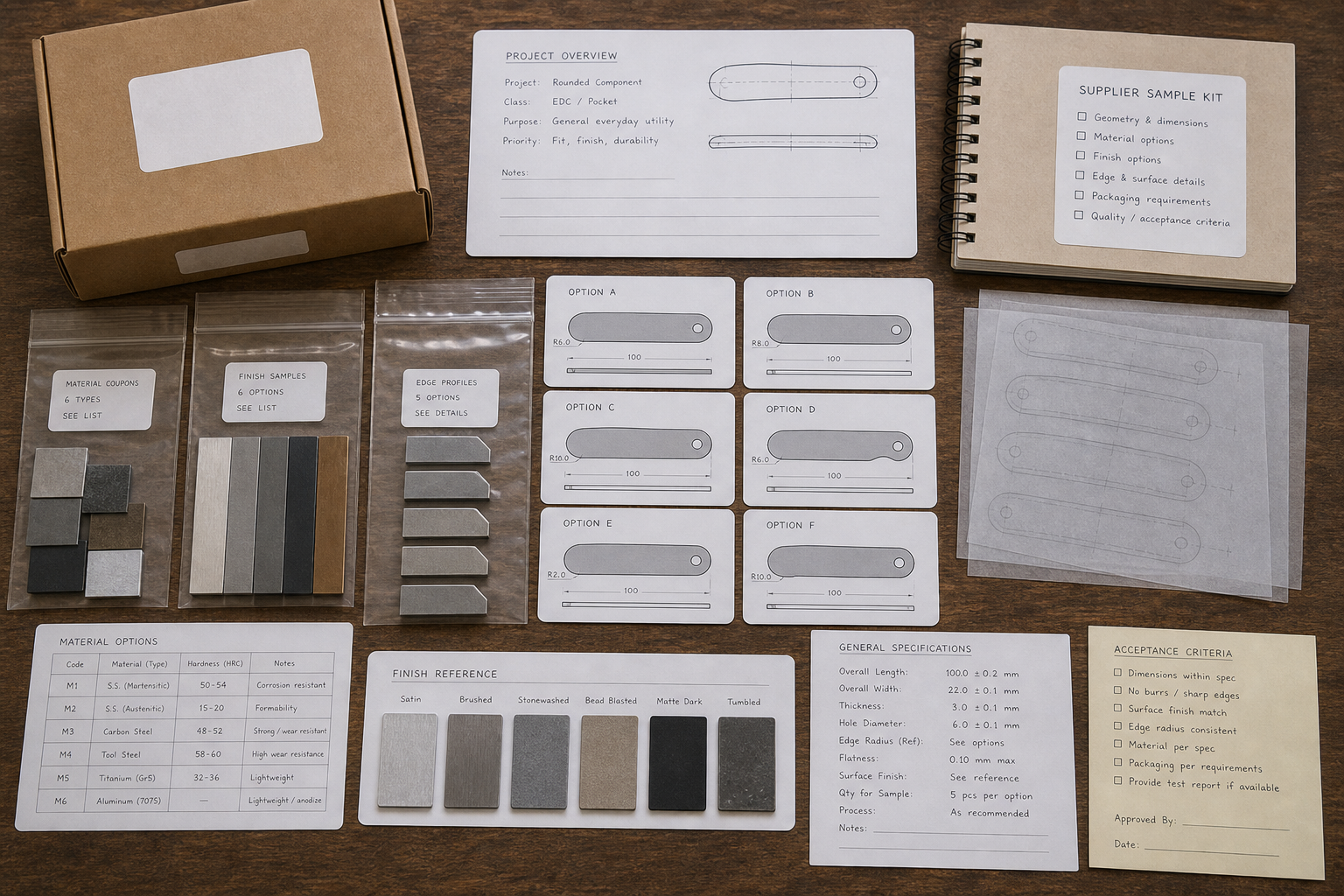
A clear RFQ saves time because it turns a familiar blade shape into a manufacturable project. I want to know whether the buyer wants an EDC folder, outdoor fixed blade, camping knife, hunting-style knife, work utility knife, or private label collection. Then I need the blade length, blade thickness, spine curve, belly, steel preference, hardness target, primary grind, handle material, lock type, sheath type, opening method, finish, logo method, packaging style, expected quantity, target price, and inspection requirement.
If the buyer has a drawing, I review manufacturability. If the buyer has only a reference idea, I can help turn it into a practical direction. But I still need the business goal. A low-cost EDC folder should not use the same thickness, steel, finish, and packaging plan as a higher-positioned outdoor fixed blade. A broad-market product should also avoid claims that are too strong for the material, finish, or price.
Buyers should mention market restrictions early. Blade length, lock type, assisted opening, sheath carry, and packaging claims may matter in different markets. I cannot replace legal review, but I can help buyers identify which design details need review before production. A clear RFQ helps the supplier quote more accurately and helps the buyer compare samples fairly.
| RFQ field | What to specify | Why it helps |
|---|---|---|
| Product use | EDC, outdoor, camping, work, or specialty | Guides geometry and material choice |
| Geometry | Spine curve, belly, thickness, grind | Prevents vague sample direction |
| Structure | Folder, fixed blade, lock, sheath | Controls tooling and assembly plan |
| Inspection needs | Hardness, sharpness, lockup, packaging | Makes quality expectations clear |
Turn your idea into a quote-ready knife project.
Share your drawing, sample photo, target quantity, market, and packaging needs. Vast State will review manufacturability and prepare OEM/ODM options.
Conclusion
I source better drop point knives by defining the geometry, steel, handle, finish, quality checks, packaging, and RFQ details before sampling.
Source Notes
- Gear Patrol blade-shape guide provides general context for drop point definition and common blade-shape language.
- HSE knife guidance supports matching knives to tasks, keeping knives sharp, and safe handling.
- OSHA food preparation guidance supports appropriate knife selection, safe storage, guarded handles, and sharp-tool precautions.
- CCOHS hand tool ergonomics supports handle fit, grip, neutral wrist posture, and non-slip material thinking.
- Alleima 14C28N knife steel gives material context for hardness, edge performance, and corrosion resistance.
- NIST Rockwell hardness guidance supports the need for controlled hardness measurement.
- ISO 9001 supports the value of quality management systems and documented process control.