CruWear and MagnaCut both sound premium. But if the buyer ignores corrosion, coating, and user care, the wrong steel can damage the product promise.
Choose CruWear when the knife needs high toughness, strong working-edge behavior, coating options, and users accept more care. Choose MagnaCut when the knife needs stainless corrosion resistance, balanced toughness, thin-edge confidence, and broader outdoor or EDC appeal.
Quick buyer brief:
- Answer: CruWear is a tough tool-steel choice; MagnaCut is the safer stainless premium choice.
- Buyer context: This helps knife brands, outdoor brands, importers, wholesalers, distributors, and private label buyers choose steel for OEM knives.
- Key checks: Target user, wet-use risk, coating need, HRC target, heat treatment, edge geometry, finish, care instructions, QC plan, MOQ, and price tier.
Planning a knife project with this steel?
Send us your target market, MOQ, price range, and blade type. Vast State can help you choose the right steel, HRC range, finish, handle material, and QC requirements for OEM/ODM production.
When I compare CruWear and MagnaCut with B2B buyers, I do not treat them as simple upgrades of each other. They are different design choices. CruWear is a strong powder metallurgy tool steel for buyers who value toughness, working performance, high tempering, and surface treatment options. MagnaCut is a stainless powder metallurgy steel for buyers who want toughness, corrosion resistance, and a cleaner message for outdoor and EDC customers. The better choice depends on what the buyer wants users to do, how much care users will accept, and how the factory will control heat treatment.
What Is the Short Answer for CruWear vs. MagnaCut?
Steel debates can become too technical. Buyers still need a simple answer that protects product positioning and after-sales risk.
CruWear is better for tough dry-use working knives, coated blades, and users who understand tool steel care. MagnaCut is better for stainless outdoor, EDC, fishing, humid-market, and broad retail knives where corrosion resistance matters.
I First Ask About User Care
CruWear and MagnaCut can both make excellent knives, but they do not create the same ownership experience. CruWear is a tool steel choice. I look at it when the buyer wants a tough working knife, a coated tactical-style folder, a hard-use fixed blade, or a product aimed at users who already understand blade maintenance. The Niagara CruWear data sheet describes CPM CruWear as an air-hardening powder metallurgy tool steel that can be heat treated to HRC 60-65. It also explains that CruWear was designed as an upgrade to A2 and D2 for better wear resistance, greater toughness, and higher attainable hardness.
MagnaCut creates a different buyer promise. The Niagara MagnaCut data sheet describes it as a powder metallurgy stainless tool steel designed to eliminate chromium carbide in the heat-treated microstructure. This gives MagnaCut a strong message around toughness, wear resistance, and improved corrosion resistance. For many broad retail buyers, that is easier to support because users may not oil, dry, or maintain a blade carefully.
So my short answer is direct. CruWear is a strong specialist choice. MagnaCut is the safer premium stainless choice for most modern outdoor and EDC programs.
| Buyer goal | Better starting point | Why it helps |
|---|---|---|
| Tough coated working knife | CruWear | High toughness and surface-treatment fit |
| Wet outdoor or fishing knife | MagnaCut | Stronger corrosion-resistance story |
| Enthusiast hard-use EDC | CruWear or MagnaCut | Depends on care expectations |
| Broad retail premium EDC | MagnaCut | Easier user-care message |
Quote-ready RFQ Checklist for This Steel
To get an accurate OEM/ODM quote, prepare these details before contacting a knife manufacturer.
| RFQ Field | What to Prepare |
|---|---|
| Product type | Folding knife / fixed blade / multi-tool / kitchen knife |
| Target market | US / EU / outdoor retail / promotional / tactical / EDC |
| Steel option | 4116 / 14C28N / D2 / N690 / Nitro-V |
| Target HRC | Example: 55-57 HRC, 58-60 HRC |
| Blade finish | Satin / stonewash / black coating / bead blast |
| Handle material | G10 / micarta / aluminum / stainless steel / wood |
| Lock or structure | Liner lock / frame lock / slip joint / full tang |
| Estimated quantity | 500 / 1,000 / 3,000 / 5,000+ pcs |
| Packaging | White box / color box / blister / pouch / gift box |
| Required documents | Drawing / sample photo / logo file / packaging artwork |
How Do Composition and Steel Type Change the Decision?
The chemistry is not just a lab detail. It affects corrosion, carbides, coating choices, and user complaints.
CruWear uses carbon, chromium, tungsten, molybdenum, and vanadium as a tough PM tool steel. MagnaCut uses carbon, chromium, vanadium, molybdenum, niobium, and nitrogen as a stainless PM knife steel with no chromium carbide design.
I Separate Tool Steel From Stainless Steel
Niagara lists CPM CruWear with 1.15 carbon, 7.50 chromium, 1.00 tungsten, 1.60 molybdenum, and 2.40 vanadium. That combination explains its tool-steel character. It is designed around toughness, wear resistance, hardness response, and compatibility with surface treatments. Niagara also notes that CPM CruWear has less carbon and less chromium than D2, but more vanadium and tungsten. This lower carbide content compared with D2 helps make CruWear tougher than D2.
MagnaCut is designed differently. Niagara lists MagnaCut with 1.15 carbon, 10.70 chromium, 4.00 vanadium, 2.00 molybdenum, 2.00 niobium, and 0.20 nitrogen. The important point is that MagnaCut is designed to avoid chromium carbide in the heat-treated microstructure. That lets the steel keep useful chromium in solution for corrosion resistance while using small vanadium and niobium carbides for wear resistance.
This difference shapes the product story. CruWear is a tough tool steel that can be excellent when users accept more corrosion-care responsibility. MagnaCut is a stainless premium knife steel that gives the brand a cleaner corrosion message. I do not choose only by hardness or edge retention. I choose by the full ownership experience.
| Steel factor | CruWear direction | MagnaCut direction |
|---|---|---|
| Steel type | PM tool steel | PM stainless knife steel |
| Chromium role | Lower chromium than stainless steel families | Designed for corrosion resistance without chromium carbide |
| Carbide story | Vanadium, tungsten, and molybdenum support wear and hardness | Small vanadium and niobium carbides support balance |
| Buyer risk | Rust or staining if care is poor | Higher market expectation and steel cost pressure |
Which Steel Performs Better for Toughness, Edge Stability, and Corrosion?
A knife can fail by chipping, dulling, staining, or bad geometry. One steel score does not cover all of that.
CruWear is strong for toughness, hard-use edge stability, and coated dry-use knives. MagnaCut is stronger for stainless corrosion resistance while still keeping high toughness and useful edge stability for thin outdoor and EDC blades.
I Think in Failure Modes, Not Only Rankings
Niagara says CPM CruWear offers better wear resistance than AISI D2, approaching AISI M2, and greater toughness than D2, approaching A2. It also lists example data at 1950 F austenitizing with HRC 62, impact toughness of 35 ft-lb, and adhesive wear resistance of 6-7. This supports CruWear as a serious working steel. For dry cutting, coated hard-use models, and buyers who value toughness, CruWear can be very attractive.
MagnaCut's value is that it brings much of the tough working-steel idea into a stainless knife-steel package. Niagara lists MagnaCut toughness at 38 ft-lb at 62.5 HRC and notes that high toughness makes it good for bigger blades and fine cutting knives with thinner edges and reduced chipping risk. The same data sheet also frames MagnaCut's improved corrosion resistance as a result of being free from chromium carbide.
Knife Steel Nerds explains why this matters. Edge retention is not only wear resistance. A knife can lose sharpness through deformation, chipping, wear, and corrosion. That is the practical reason MagnaCut often wins for broad-use outdoor knives. CruWear can be excellent, but the buyer must decide whether corrosion care, coatings, and user education fit the target market.
| Performance area | CruWear | MagnaCut |
|---|---|---|
| Toughness | Strong hard-use tool-steel story | Very strong stainless balance |
| Edge stability | Good when heat treatment and geometry are right | Strong, especially for thinner edges |
| Corrosion resistance | Needs more care and often coating planning | Stronger stainless positioning |
| Best user fit | Enthusiasts and work users | Outdoor, EDC, humid, and broader retail users |
What Heat Treatment and Surface Treatment Details Matter?
The same steel can perform very differently with different heat treatment. This is where many premium projects go wrong.
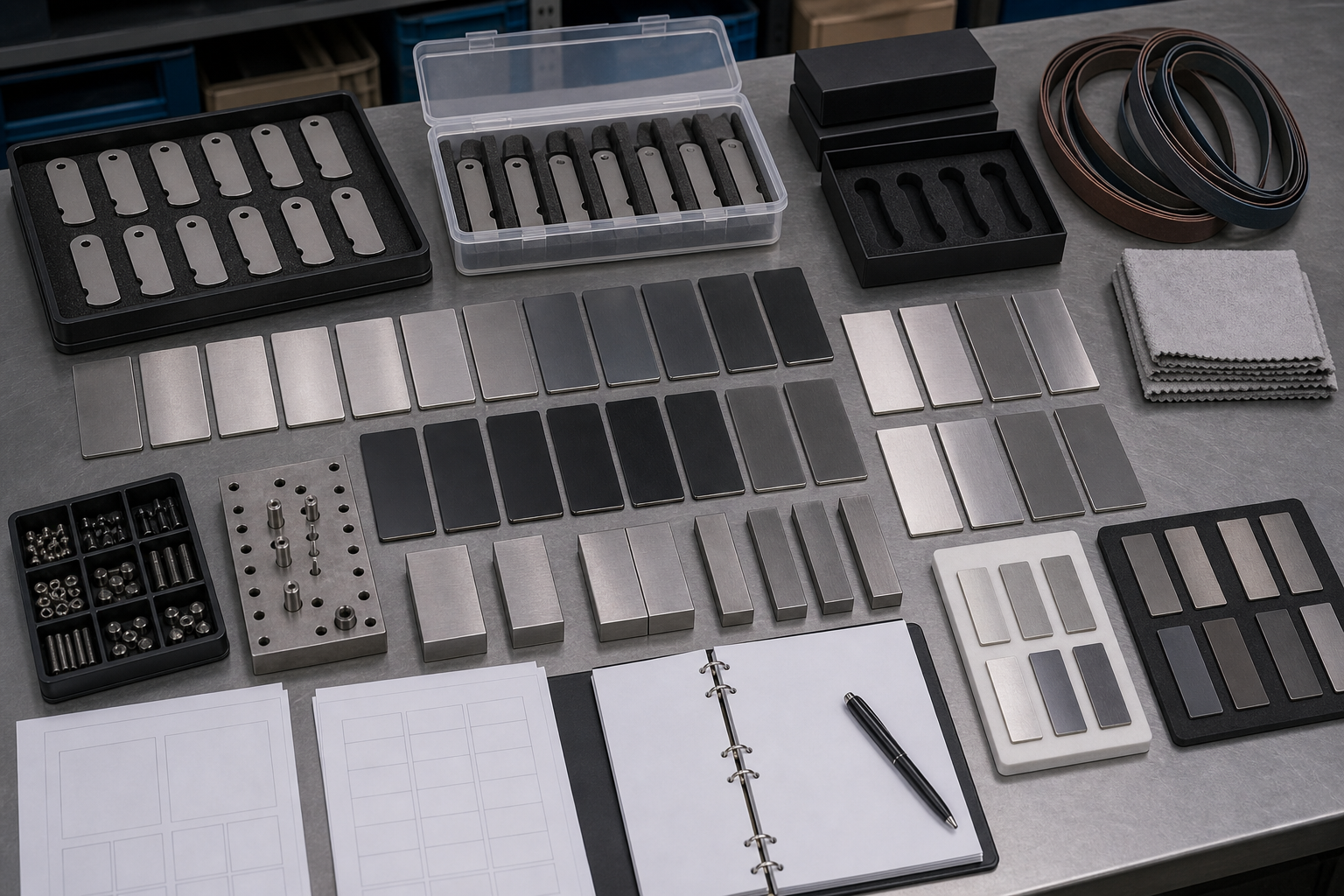
Buyers should define HRC target, austenitizing temperature, tempering plan, number of tempers, coating or nitriding needs, grinding method, edge geometry, hardness testing, and final inspection.
I Make the Process Part of the RFQ
CruWear has a heat-treatment route that buyers should understand before sampling. Niagara lists hardening at 1850-2050 F, air or positive pressure quench below 125 F, tempering at 900-1050 F, mandatory double tempering, and recommended triple tempering. It recommends 1950 F austenitize and three tempers at 1000 F for the best combination of toughness and wear resistance, with an aim hardness of HRC 62. This high tempering range also makes CruWear suitable for nitriding, PVD coating, or similar surface treatments.
MagnaCut follows a different heat-treatment path. Niagara lists a recommended heat treatment of 2050 F austenitize, quench below 125 F, double temper at 350 F, and optional freeze treatment after quench. It lists an aim hardness of 60-63 HRC. It also warns that tempering above 750 F can reduce corrosion resistance. That is a different process mindset from CruWear.
For buyers, the lesson is simple. Do not ask only for "CruWear" or "MagnaCut." Ask for the process plan. I want the HRC range, test points, coating plan, edge thickness before sharpening, final bevel angle, finish standard, and corrosion-care copy defined before the sample is approved. NIST's Rockwell hardness guide is useful because it reminds buyers that hardness testing has variation and requires good practice.
| Process item | CruWear focus | MagnaCut focus |
|---|---|---|
| HRC target | Often around HRC 62 for balance | Often 60-63 HRC for balance |
| Tempering | High tempering range and multiple tempers | Lower tempering range for corrosion balance |
| Surface treatment | PVD or nitriding can fit well | Coating is optional, not the main corrosion solution |
| Inspection | HRC, coating, edge, flatness, finish | HRC, corrosion-care, edge, flatness, finish |
Which Knife Projects Fit CruWear or MagnaCut Better?
The best steel on paper may be wrong for the shelf. Product category and buyer education decide a lot.
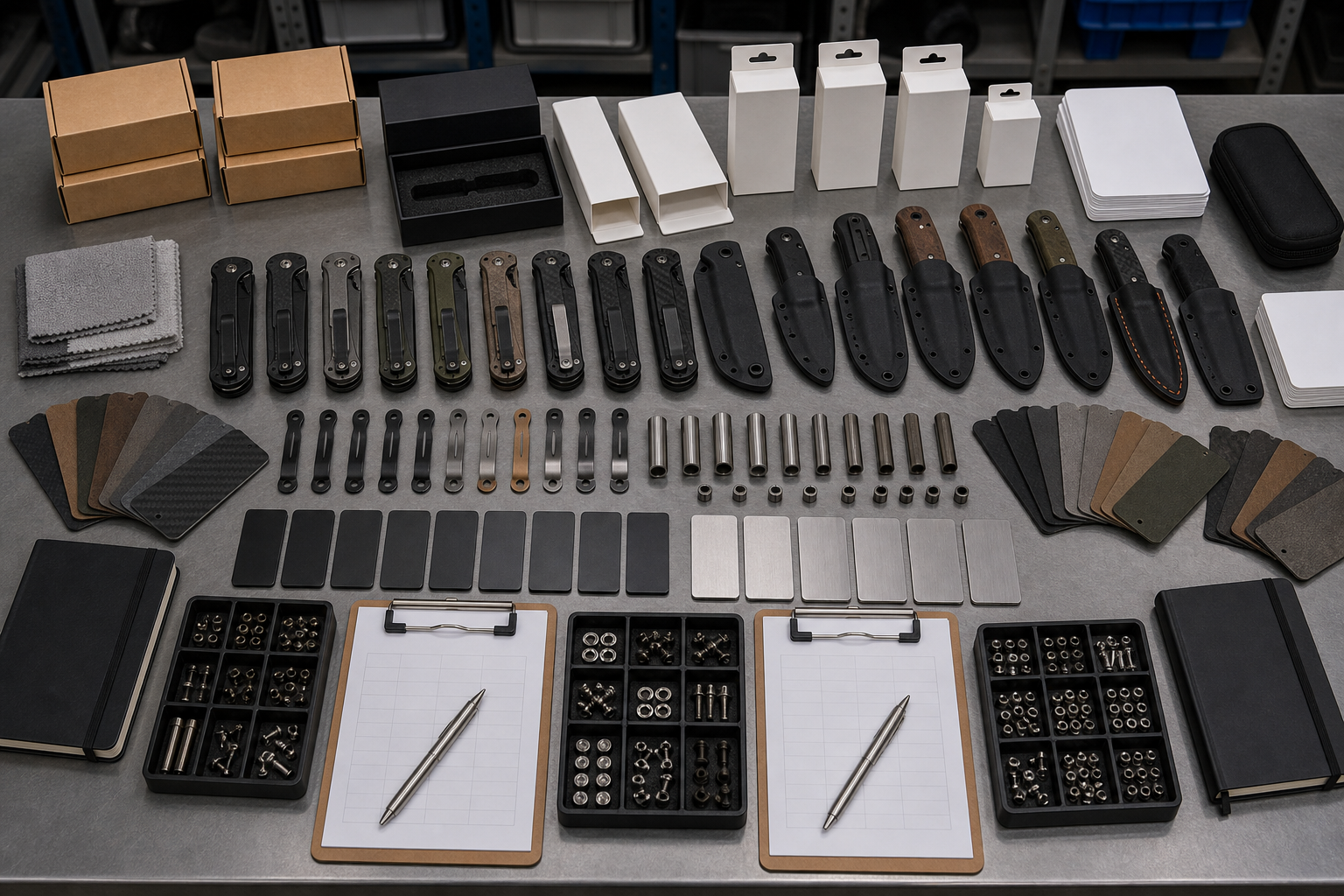
CruWear fits coated working folders, tactical-style EDC, survival knives, and enthusiast hard-use products. MagnaCut fits outdoor, fishing, hunting, premium EDC, humid-market, and broader retail products that need stainless performance.
I Match the Steel to the Customer's Care Habits
CruWear can be a very good choice when the customer understands what they are buying. Some users value tough tool steels because they trust them for demanding cutting and hard-use tasks. A coated CruWear blade can also support a tactical or working-knife style. If the buyer has an enthusiast audience, this can be a strong product story. But if the product is sold to casual outdoor users who may leave the knife wet, dirty, or uncleaned, CruWear needs careful packaging and care instructions.
MagnaCut is easier for many modern retail programs. It gives the brand a stainless premium story and reduces the need to explain care limits. It can work for folding knives, outdoor fixed blades, fishing knives, hunting knives, and daily carry knives. It also gives more confidence when the product will face sweat, humidity, food prep, rain, or coastal air.
I also think about price and supply. CruWear and MagnaCut are both premium choices. The buyer should confirm material availability, sample timing, coating cost, heat treatment plan, and final retail position before choosing. Sometimes CruWear is perfect because the brand wants a tough working knife. Sometimes MagnaCut is better because the brand needs fewer user-care barriers.
| Product type | Better fit | Reason |
|---|---|---|
| Coated hard-use folder | CruWear | Tough tool-steel story and surface-treatment fit |
| Fishing or coastal knife | MagnaCut | Stronger stainless corrosion story |
| Enthusiast working fixed blade | CruWear or MagnaCut | Depends on care expectations and coating |
| Broad premium EDC line | MagnaCut | Easier to explain to casual users |
How Should Buyers Build an RFQ for CruWear or MagnaCut?
A steel name alone does not create a quote. Buyers need a full product brief before sampling and pricing make sense.
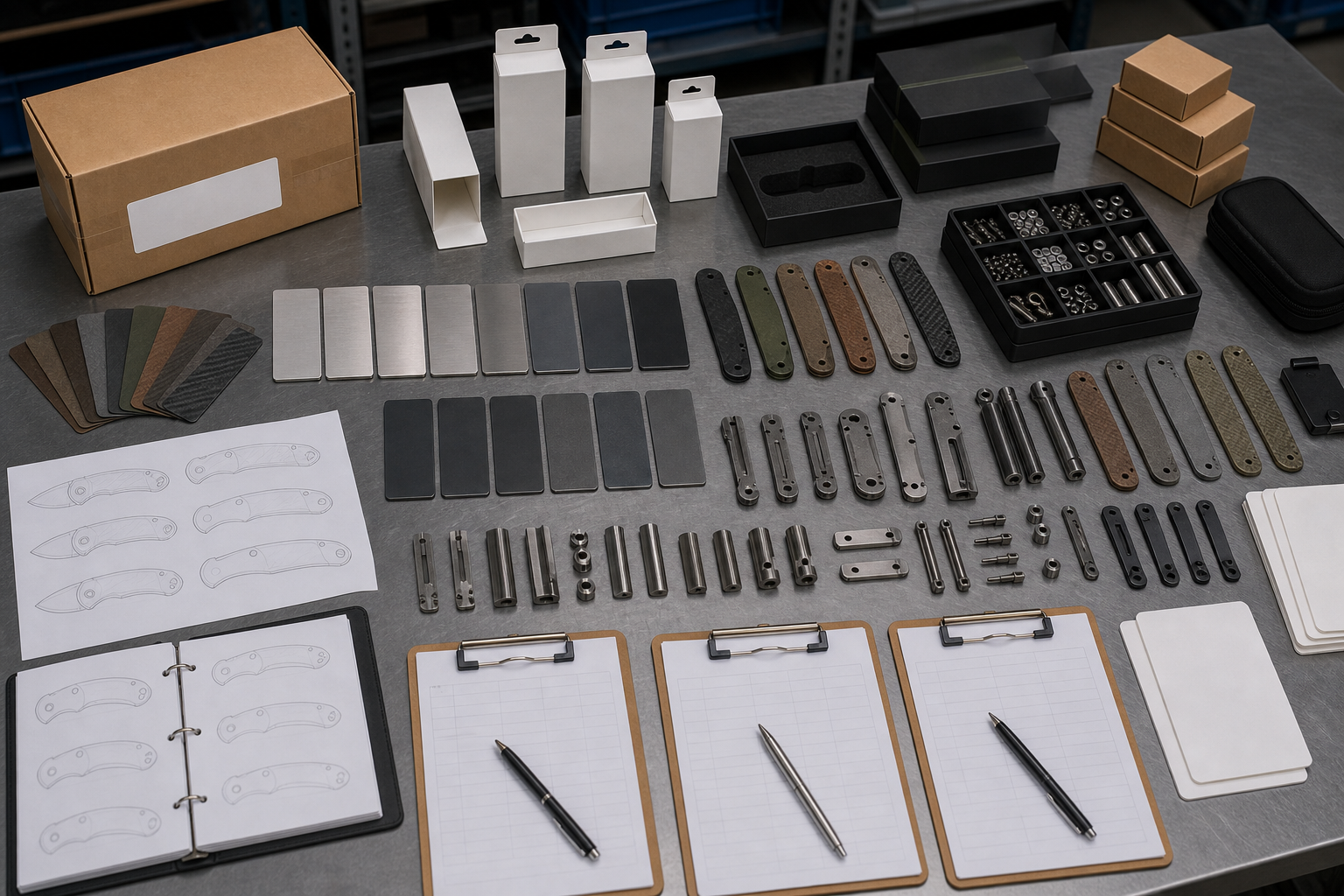
An RFQ should include knife type, target user, steel choice, backup steel, HRC target, coating or finish, blade geometry, handle material, lock type, packaging, care-copy needs, MOQ, target price, and delivery term.
I Turn the Steel Debate Into a Sourcing Checklist
When a buyer asks Vast State to quote CruWear or MagnaCut, I ask what the knife must survive and what the customer will accept. Is it a coated tactical-style folder, a hunting knife, a camping fixed blade, a fishing knife, or a premium EDC product? Will users clean and oil the blade? Does the market expect stainless behavior? Will the brand include care instructions? These questions decide whether CruWear is practical or whether MagnaCut is safer.
Then I turn the answer into a measurable RFQ. The buyer should include blade length, blade thickness, edge angle, grind style, finish or coating, HRC target, handle material, lock type, clip, packaging, inspection requirements, target price, expected MOQ, and target market. For CruWear, I also ask whether the buyer wants PVD, DLC-style coating, nitriding, or another surface treatment. For MagnaCut, I ask whether the buyer wants a satin, stonewash, bead blast, or coating finish and how the corrosion claim will be worded.
The commercial side also matters. Trade.gov explains that Incoterms clarify buyer and seller responsibilities, costs, and risks in export transactions. For quality planning, ISO 9001 is useful because it frames quality as customer requirements, process control, evaluation, and improvement. That is the mindset I want before approving a premium steel sample.
| RFQ field | What to include | Why it helps |
|---|---|---|
| Steel plan | CruWear, MagnaCut, and backup option | Reduces sourcing risk |
| Surface plan | Coating, stonewash, satin, or other finish | Controls cost and corrosion message |
| Technical target | HRC, edge angle, blade thickness | Makes samples measurable |
| Commercial plan | MOQ, target price, Incoterm, schedule | Makes quotation realistic |
Ready to use this material in your next knife line?
Vast State can help you compare blade steels, heat treatment ranges, handle materials, finishes, packaging options, and QC requirements based on your target market and quantity.
Conclusion
I choose CruWear for tough coated tool-steel knives and MagnaCut for stainless outdoor balance, then I lock the choice with process, finish, and QC.
Source Notes
- Niagara CruWear data sheet supports CruWear composition, tool-steel positioning, toughness, wear resistance, heat treatment, coating compatibility, and grindability notes.
- Niagara MagnaCut data sheet supports MagnaCut composition, no-chromium-carbide design, toughness, corrosion framing, CATRA data, and heat treatment guidance.
- Knife Steel Nerds on MagnaCut supports the broader explanation that edge retention includes deformation, chipping, wear, and corrosion.
- NIST Rockwell hardness guidance, ISO 9001, and Trade.gov Incoterms support testing, process control, and RFQ clarity.