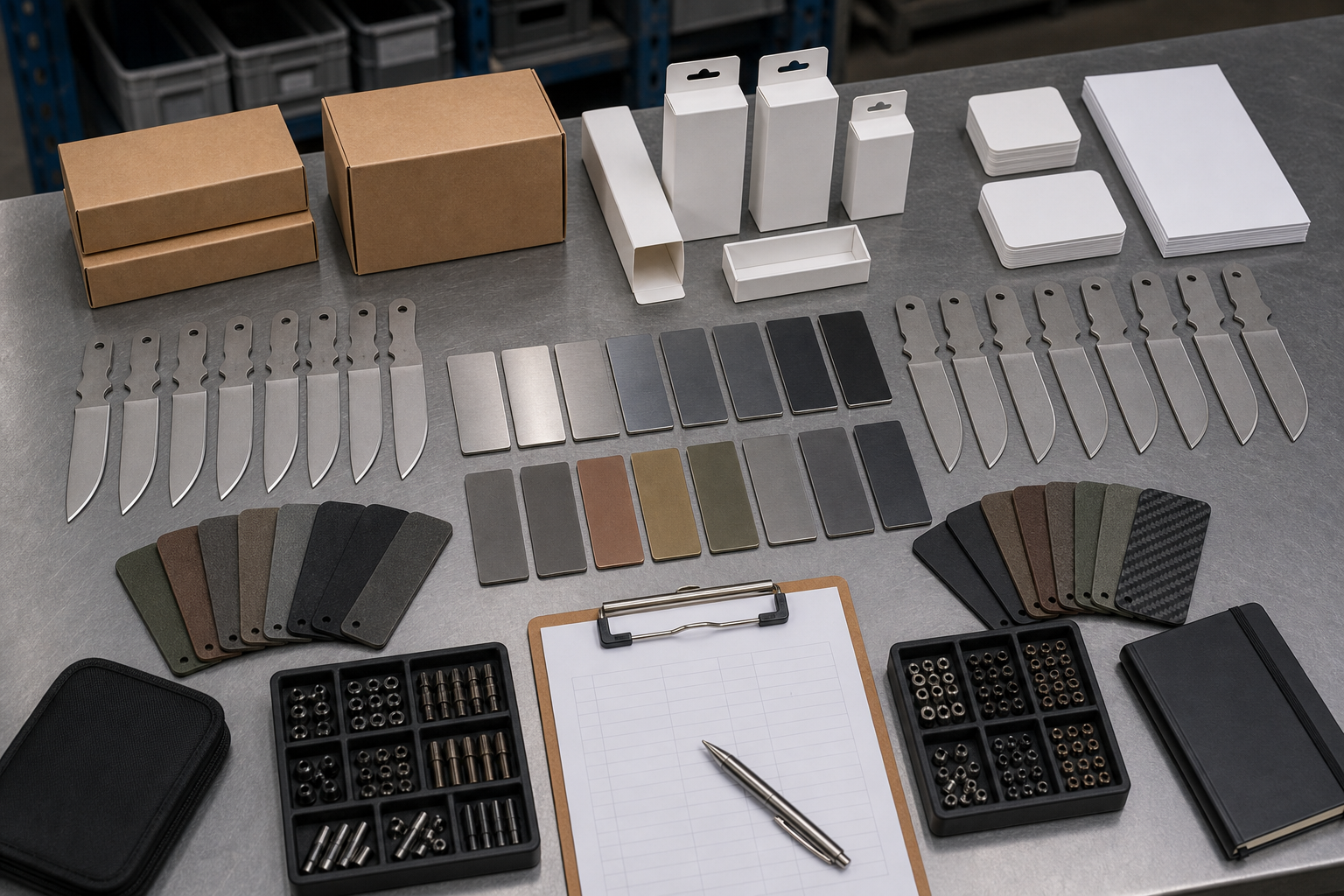
Premium steel can lift a knife brand. But the wrong choice can raise cost, complicate heat treatment, and disappoint the final user.
MagnaCut is usually better for premium knives that need stronger toughness, corrosion resistance, and modern market appeal. Elmax is better when buyers want a proven European PM steel with high wear resistance, good corrosion resistance, fine finishing, and a classic premium story.
Quick buyer brief:
- Answer: Choose MagnaCut for modern balanced performance and Elmax for proven premium wear-corrosion balance.
- Buyer context: This helps knife brands, outdoor brands, importers, wholesalers, distributors, and private label buyers choose steel for premium OEM knives.
- Key checks: Target user, steel supply, HRC target, heat treatment route, grinding and polishing needs, corrosion expectation, edge geometry, QC plan, and price tier.
Planning a knife project with this steel?
Send us your target market, MOQ, price range, and blade type. Vast State can help you choose the right steel, HRC range, finish, handle material, and QC requirements for OEM/ODM production.
When a buyer asks me about Elmax and MagnaCut, I do not answer with a ranking chart only. I ask what kind of premium knife they want to build. A high-end EDC folder, a fishing knife, a hunting knife, a kitchen-style outdoor slicer, and a collector-focused private label model all need different steel logic. Elmax has a long premium reputation and strong finishing appeal. MagnaCut has a newer and stronger story around toughness and corrosion resistance. The best choice is the one that matches the product promise and can be produced consistently.
What Is the Short Answer for Elmax vs. MagnaCut?
Buyers often ask which steel is best. That question becomes useful only after the product's job and target customer are clear.
MagnaCut is usually the better choice for wet, outdoor, thin-edge, and hard-use premium knives. Elmax is still a strong choice for premium EDC, hunting, and custom-style knives where wear resistance, polishability, corrosion resistance, and brand familiarity matter.
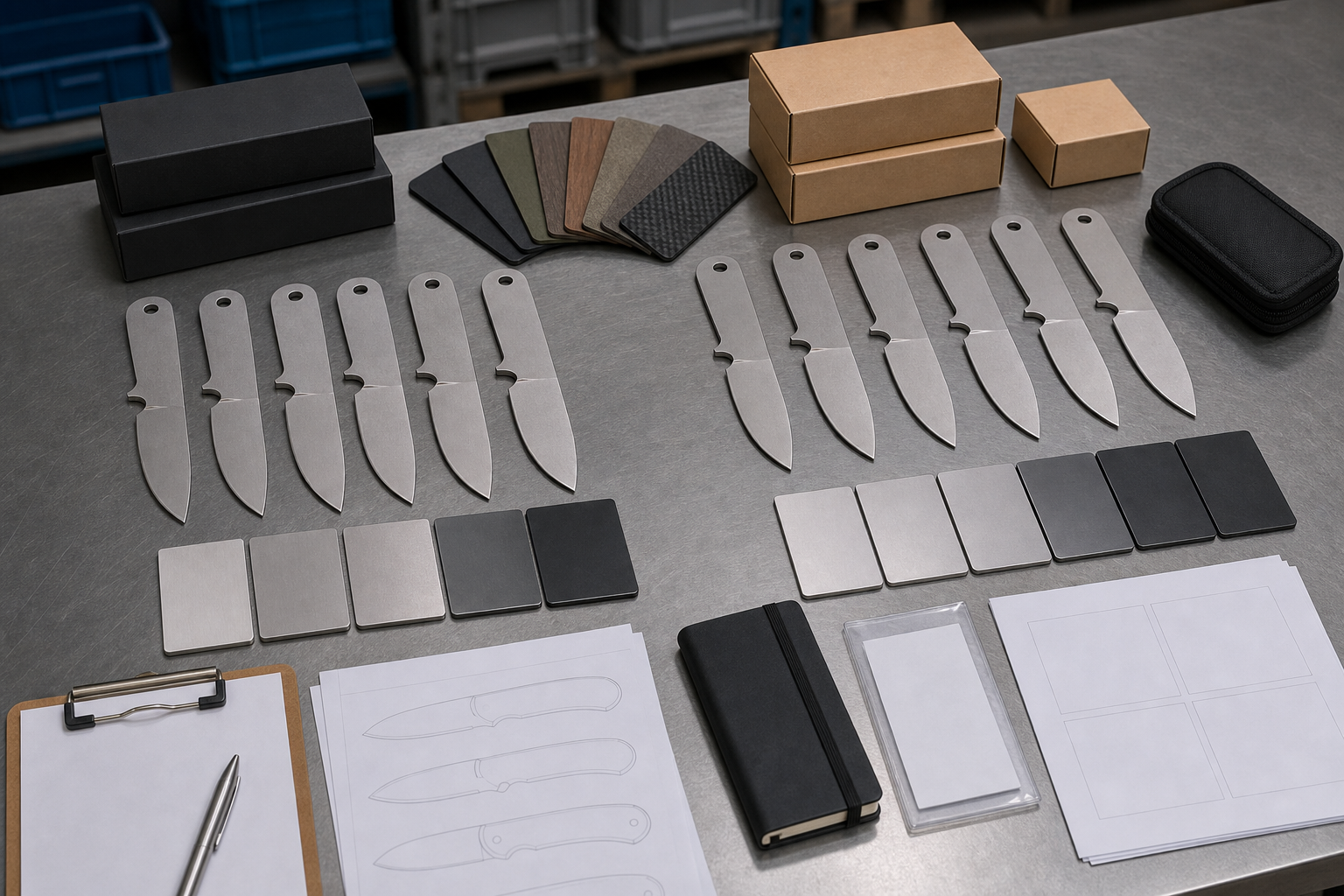
I Start With the Brand Promise
Elmax and MagnaCut are both premium stainless powder metallurgy steels, but they create different buyer expectations. Elmax has been known for a long time as a high-end European PM steel. It gives a product a mature premium story, especially when the buyer wants high wear resistance, good corrosion resistance, polishability, and a clean finished look. Uddeholm describes Elmax SuperClean as a powder metallurgically produced steel with very good wear resistance, corrosion resistance, and dimensional stability.
MagnaCut has a newer market story. The Niagara MagnaCut data sheet describes it as a powder metallurgy stainless tool steel designed to eliminate chromium carbide in the heat-treated microstructure. That design gives it a strong story around toughness, wear resistance, and corrosion resistance. It is a very attractive steel for outdoor, EDC, fishing, and hard-use premium knives.
For OEM buyers, I usually frame the decision this way. If the brand wants a classic premium steel with strong finishing and a proven reputation, Elmax can still work very well. If the brand wants a modern performance story and stronger corrosion-toughness confidence, MagnaCut often has the advantage.
| Buyer goal | Better starting point | Practical reason |
|---|---|---|
| Modern premium outdoor story | MagnaCut | Stronger toughness and corrosion positioning |
| Classic premium European steel story | Elmax | Proven PM steel reputation and polishability |
| Wet or coastal use | MagnaCut | Better corrosion-resistance story |
| Premium EDC with clean finish | Elmax or MagnaCut | Depends on price, supply, and geometry |
Quote-ready RFQ Checklist for This Steel
To get an accurate OEM/ODM quote, prepare these details before contacting a knife manufacturer.
| RFQ Field | What to Prepare |
|---|---|
| Product type | Folding knife / fixed blade / multi-tool / kitchen knife |
| Target market | US / EU / outdoor retail / promotional / tactical / EDC |
| Steel option | 4116 / 14C28N / D2 / N690 / Nitro-V |
| Target HRC | Example: 55-57 HRC, 58-60 HRC |
| Blade finish | Satin / stonewash / black coating / bead blast |
| Handle material | G10 / micarta / aluminum / stainless steel / wood |
| Lock or structure | Liner lock / frame lock / slip joint / full tang |
| Estimated quantity | 500 / 1,000 / 3,000 / 5,000+ pcs |
| Packaging | White box / color box / blister / pouch / gift box |
| Required documents | Drawing / sample photo / logo file / packaging artwork |
How Do Composition and Carbide Design Affect the Choice?
Steel names hide the real design. Composition and carbide type affect grinding, edge stability, corrosion, and the final user experience.
Elmax uses high chromium with carbon, molybdenum, and vanadium to combine wear resistance and corrosion resistance. MagnaCut uses lower chromium carbide formation with vanadium, niobium, molybdenum, and nitrogen for a newer toughness-corrosion balance.
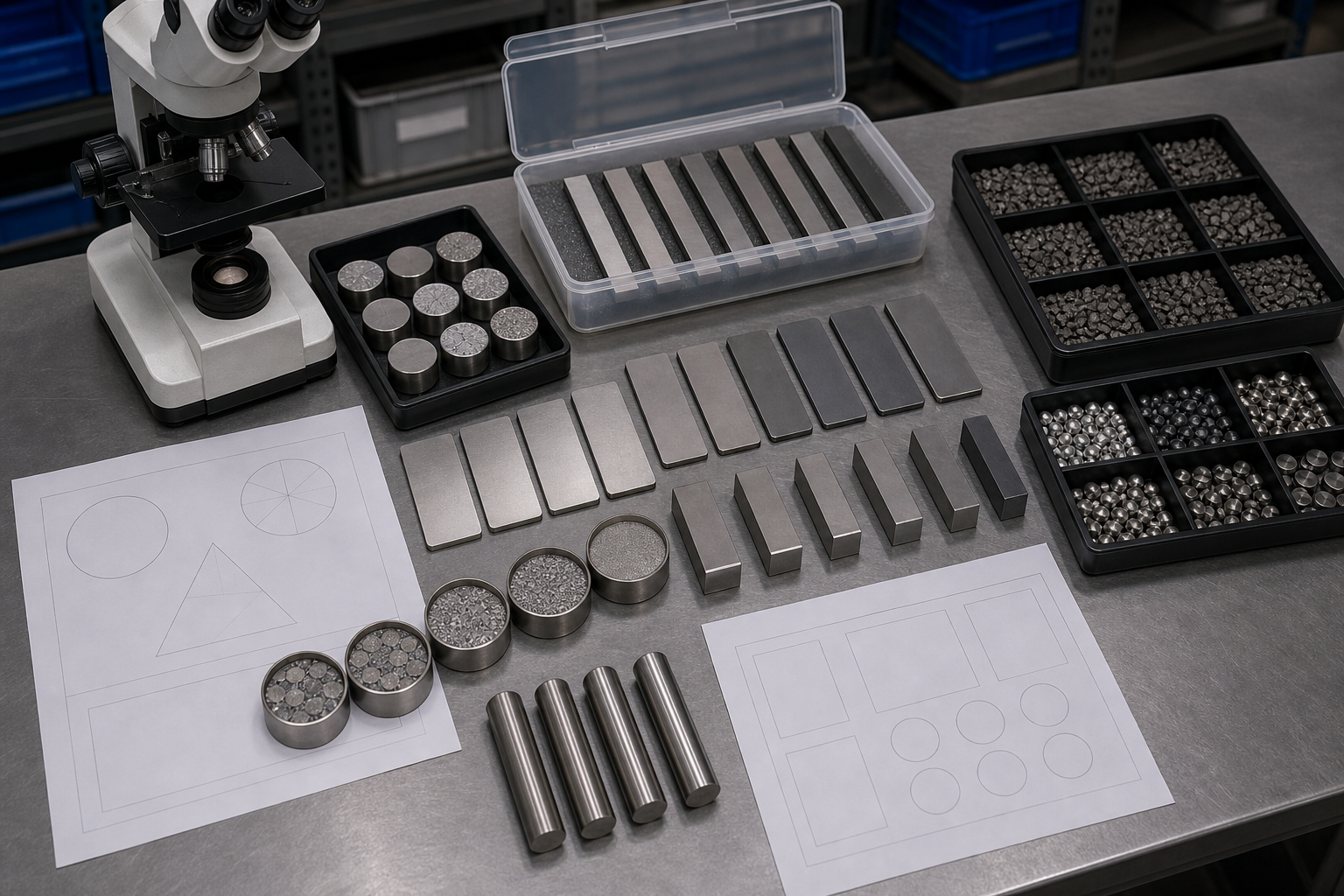
I Look Beyond the Steel Label
The Uddeholm technical brochure lists Elmax SuperClean with 1.7 carbon, 18.0 chromium, 1.0 molybdenum, and 3.0 vanadium. This explains why Elmax has a strong wear-corrosion balance. High chromium helps the corrosion story, while vanadium and the powder metallurgy route help wear resistance and fine structure. Uddeholm also says Elmax can be used for industrial and custom knives where a combination of corrosion resistance and wear resistance is required.
MagnaCut uses a different idea. Niagara lists MagnaCut with 1.15 carbon, 10.70 chromium, 4.00 vanadium, 2.00 molybdenum, 2.00 niobium, and 0.20 nitrogen. The important point is not only the chromium number. The data sheet says MagnaCut eliminates chromium carbide in the heat-treated microstructure. That means more chromium can stay useful for corrosion resistance, while small vanadium and niobium carbides support wear resistance.
This difference matters in buyer communication. Elmax is easy to explain as a high-chromium PM steel with strong wear resistance and good corrosion resistance. MagnaCut is better explained as a modern steel design that improves the balance between toughness, edge performance, and corrosion resistance. Both can be premium. They simply tell different technical stories.
| Steel factor | Elmax direction | MagnaCut direction |
|---|---|---|
| Main design idea | High chromium PM steel | No-chromium-carbide PM design |
| Carbide story | Wear resistance with PM structure | Small vanadium and niobium carbides |
| Buyer message | Proven premium wear-corrosion balance | Modern balance of toughness and corrosion |
| Product risk | Avoid overclaiming toughness | Avoid assuming it is always the highest edge-retention steel |
Which Steel Gives Better Edge Retention, Toughness, and Corrosion Resistance?
One number cannot describe a knife. Edge retention, toughness, corrosion resistance, and geometry all interact.
Elmax is strong for wear resistance and edge retention in premium stainless knives. MagnaCut is usually stronger when the buyer wants a broader balance of toughness, corrosion resistance, edge stability, and thinner-edge confidence.
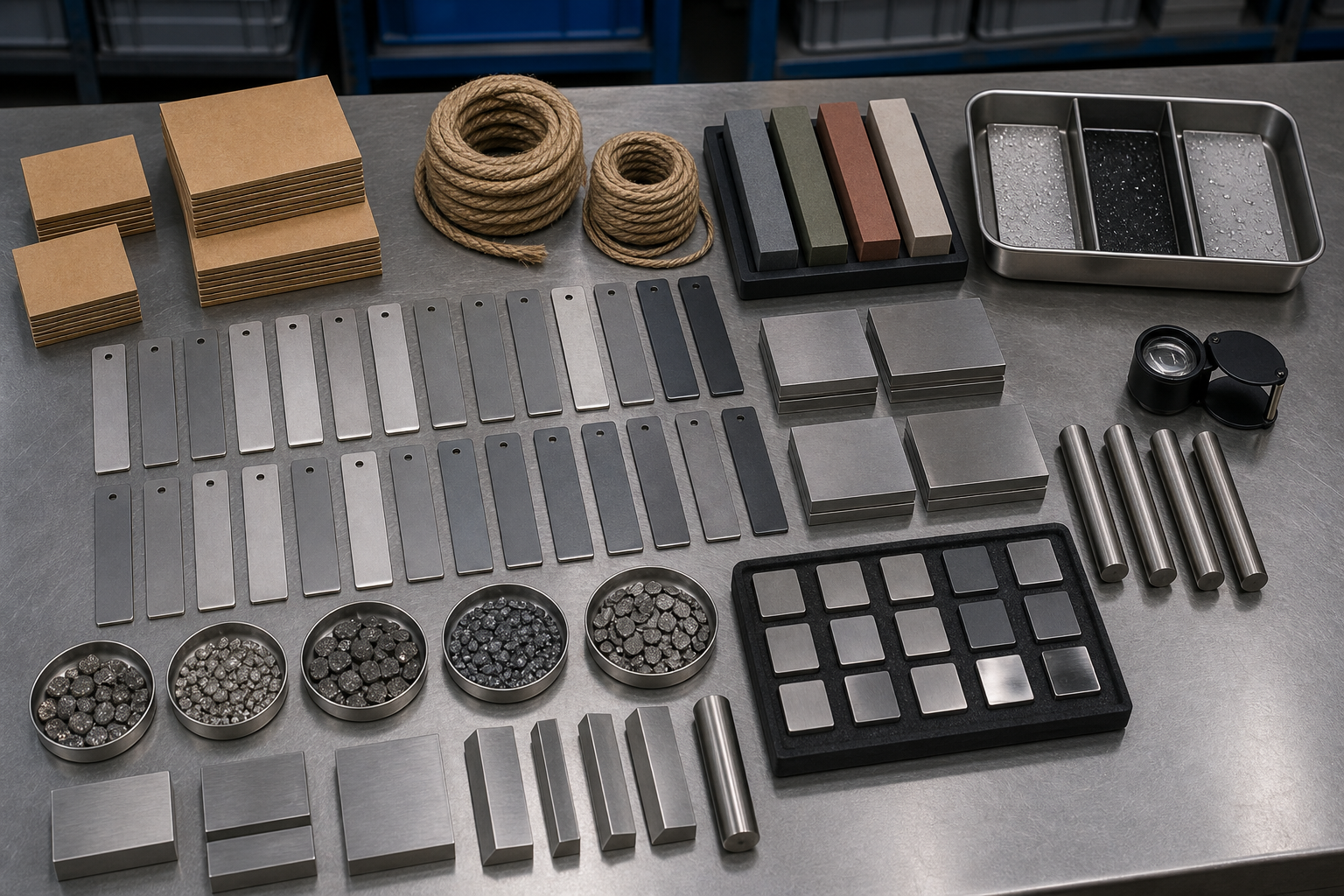
I Do Not Treat Edge Retention as Wear Only
Elmax has a strong edge-retention reputation because it combines wear resistance, fine powder metallurgy structure, and high hardness potential. Uddeholm's knife steel brochure calls Elmax a balanced PM grade that can reach well over 60 HRC with good corrosion resistance and excellent edge retention. It also says the SuperClean process and small powder and carbide size support trouble-free grinding and polishing. For premium knives with clean finishing and controlled use, that is valuable.
MagnaCut's advantage is the wider performance balance. Niagara lists strong toughness values for MagnaCut and states that high toughness makes it good for bigger blades and fine cutting knives with thinner edges and reduced chipping risk. Knife Steel Nerds also explains that edge retention is more than wear resistance because sharpness can be lost through deformation, chipping, wear, or corrosion.
For a premium knife brand, this becomes a market decision. Elmax can support a polished, premium, long-wearing EDC or hunting knife. MagnaCut can support a tougher and more corrosion-conscious premium story. If the customer will use the knife in rain, sweat, fishing, camping, or coastal conditions, I usually lean toward MagnaCut. If the buyer values classic premium appeal and fine finishing, Elmax remains attractive.
| Performance area | Elmax | MagnaCut |
|---|---|---|
| Edge retention story | Strong premium wear resistance | Strong, but balance is the main story |
| Toughness story | Good for its category when processed well | Stronger modern premium positioning |
| Corrosion story | Good stainless PM behavior | Stronger corrosion-resistance positioning |
| Best user promise | Premium cutting and finish | Outdoor balance and edge stability |
What Heat Treatment and Grinding Details Should Buyers Control?
Premium steel does not forgive a vague process. Heat treatment, grinding, and QC decide whether the steel name becomes real performance.
Buyers should define hardness target, austenitizing range, tempering plan, cryo or sub-zero treatment, grinding sequence, finishing requirement, edge geometry, hardness testing, and final inspection.
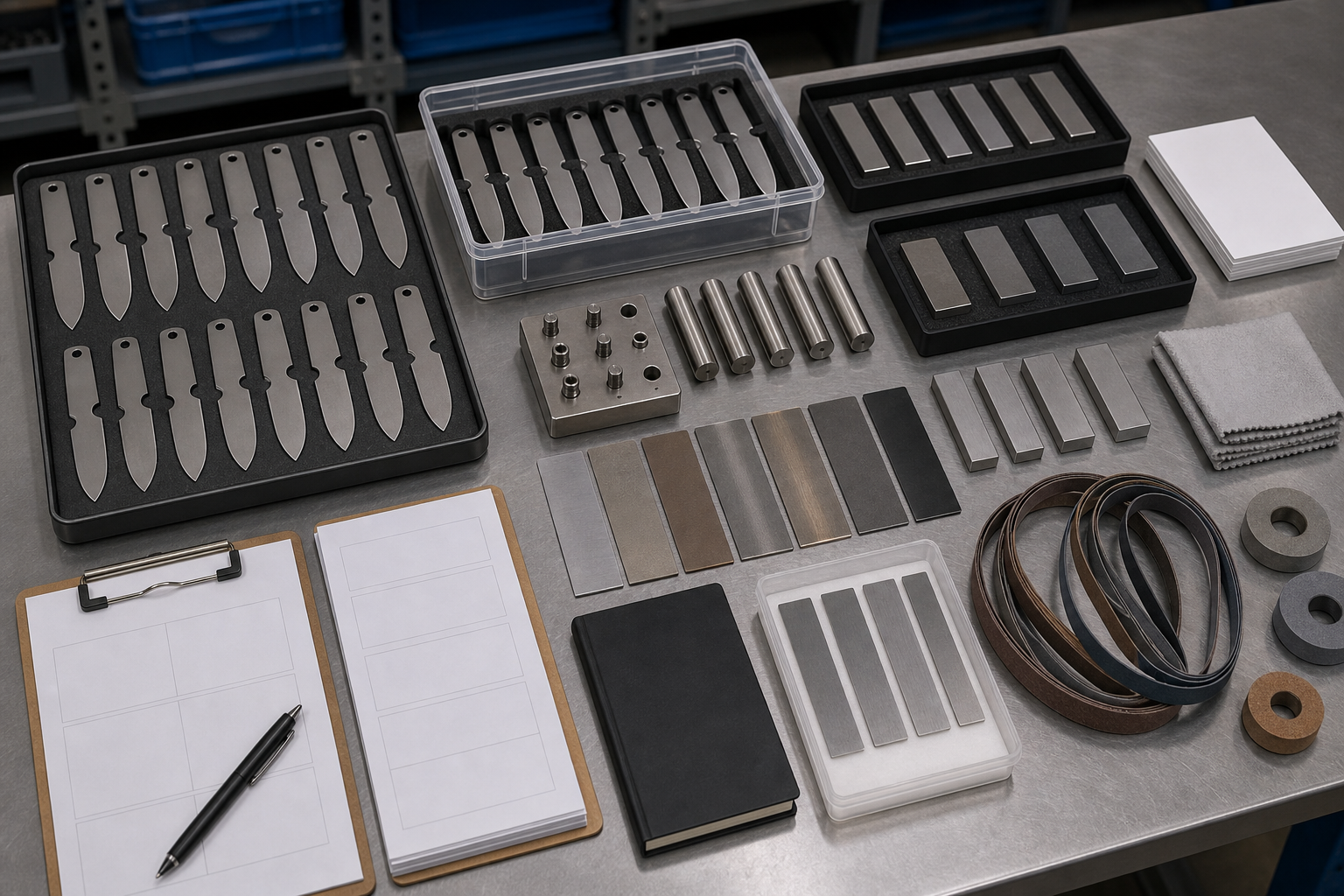
I Make Premium Steel Measurable
Uddeholm's Elmax technical brochure lists hardening with preheating at 600-850 C, austenitizing at 1050-1100 C, normally 1080 C, and example hardness before tempering of 60 HRC at 1050 C and 61 HRC at 1080 C. It also says Elmax should be tempered twice with intermediate cooling to room temperature, and that sub-zero treatment can be used where dimensional stability is required. These details matter because Elmax is often chosen for fine finishing and premium appearance. Poor heat treatment or poor grinding can damage that value.
MagnaCut has its own route. Niagara lists a recommended heat treatment of 2050 F austenitize, quench below 125 F, double temper at 350 F, and optional freeze treatment after quench. It lists an aim hardness of 60-63 HRC. MagnaCut can deliver excellent results, but buyers still need a sample plan. The steel name does not prove the final knife.
I also ask buyers to define finish expectations early. Elmax has a strong polishability story. MagnaCut can also finish well, but the project should define satin, stonewash, bead blast, coating, or polish before quotation. NIST's Rockwell hardness guidance is useful because it reminds buyers that hardness testing has variation and needs good practice. For premium OEM projects, I want recorded HRC readings, edge thickness checks, flatness checks, finish approval, and final functional inspection.
| Process check | Why it matters | Buyer action |
|---|---|---|
| Hardness target | Controls edge stability and toughness | Put the HRC range in the RFQ |
| Cryo or sub-zero plan | Affects retained austenite and stability | Confirm the route before samples |
| Grinding and finish | Changes cost and premium feel | Define finish level early |
| Final QC | Protects the brand promise | Inspect HRC, edge, flatness, finish, and assembly |
Which Premium Knife Projects Fit Elmax or MagnaCut Better?
The same steel can be smart in one knife and wasteful in another. Product fit should lead the decision.
Elmax fits premium EDC folders, hunting knives, custom-style models, and polished premium knives. MagnaCut fits outdoor, fishing, hard-use EDC, humid-market, and thin-edge knives where toughness and corrosion resistance matter more.
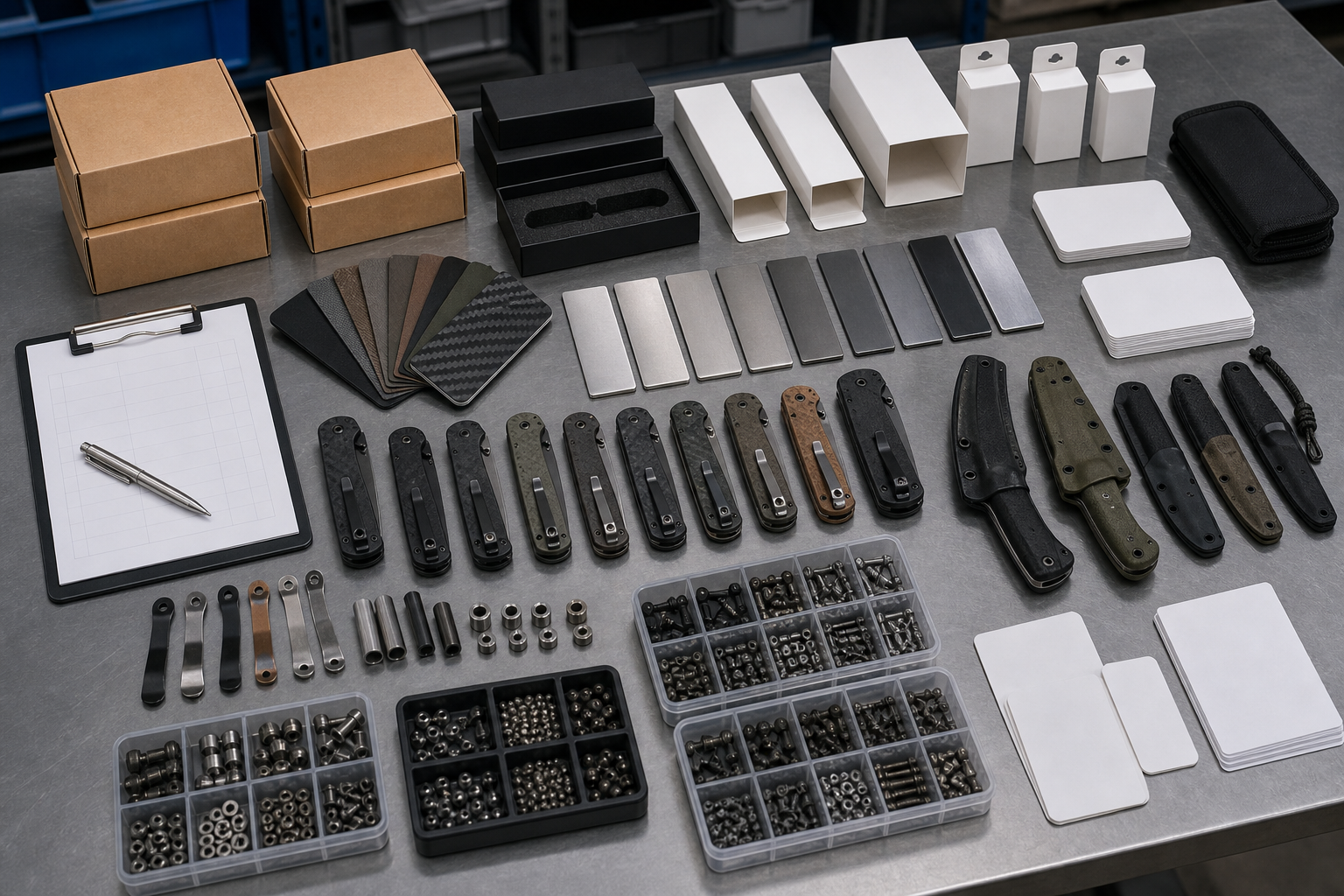
I Fit the Steel to the Sales Channel
For premium EDC knives, both steels can work. Elmax gives a mature, clean, premium message. It can be attractive for brands that want a European PM steel story and a refined finished product. It also fits products where polishability, dimensional stability, and high wear resistance support the brand image. A boutique-style folding knife or private label hunting model can use Elmax well if the price tier accepts it.
For outdoor and fishing markets, MagnaCut often has the clearer story. It gives the buyer stronger language around corrosion resistance and toughness. It also fits users who may not maintain the knife carefully after wet use. If the brand wants to reduce complaints about staining or chipping in real outdoor use, MagnaCut can be easier to defend.
I also think about customer education. Elmax may need more explanation in some markets because many newer buyers now ask for MagnaCut by name. But Elmax still carries strong credibility with experienced knife users. MagnaCut may create higher expectations because of current market attention. That means the buyer must support the claim with correct heat treatment, geometry, and QC.
| Product type | Better fit | Reason |
|---|---|---|
| Premium EDC folder | Elmax or MagnaCut | Depends on price and marketing story |
| Polished collector-style knife | Elmax | Strong polishability and classic PM appeal |
| Outdoor fixed blade | MagnaCut | Toughness and corrosion story are stronger |
| Fishing or humid-market knife | MagnaCut | Better corrosion-resistance positioning |
How Should Buyers Build an RFQ for Elmax or MagnaCut?
A steel request without product context leads to vague quotes. Premium steel needs a full production brief.
An RFQ should include knife type, target user, preferred steel, backup steel, HRC target, blade geometry, finish, handle material, lock type, packaging, MOQ, target price, inspection plan, and delivery term.
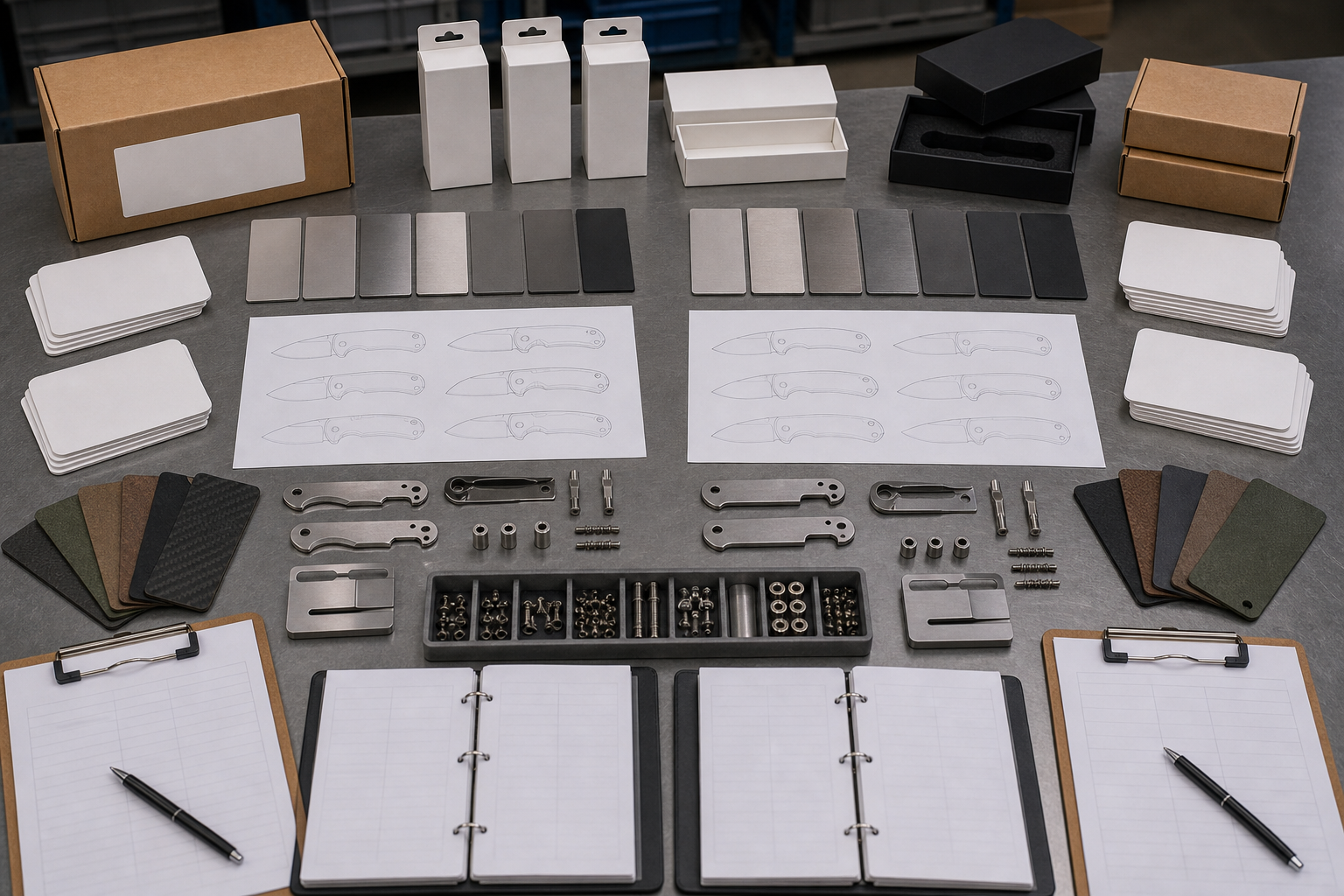
I Turn the Steel Choice Into a Workable Brief
When a buyer asks Vast State to compare Elmax and MagnaCut, I ask for the product goal first. Is the knife a premium EDC folder, hunting knife, outdoor fixed blade, fishing knife, or collector-style limited model? What is the target retail price? What blade finish does the brand want? Does the market care more about corrosion resistance, edge holding, toughness, polish, or steel-name demand?
Then I ask for technical fields. The buyer should define blade length, blade thickness, edge angle, grind style, finish, HRC target, handle material, lock type, pocket clip, packaging, and inspection requirements. For folders, the steel choice must also work with pivot design, lockup, blade centering, and opening action. For fixed blades, the sheath and carry method must be discussed early.
The commercial side should not be left until the end. Trade.gov explains that Incoterms clarify buyer and seller responsibilities, costs, and risks in export transactions. For OEM knife sourcing, I want FOB, EXW, CIF, or another term clear before final quotation. I also connect this with process control. ISO 9001 is useful because it frames quality as customer requirements, process control, evaluation, and improvement. That is the mindset premium steel projects need.
| RFQ field | What to include | Why it helps |
|---|---|---|
| Steel plan | Elmax, MagnaCut, and backup option | Reduces sourcing and launch risk |
| Technical target | HRC, geometry, finish, edge angle | Makes samples measurable |
| Product context | Use case, user, market, price tier | Prevents the wrong steel story |
| Commercial plan | MOQ, target price, Incoterm, schedule | Makes quotation realistic |
Ready to use this material in your next knife line?
Vast State can help you compare blade steels, heat treatment ranges, handle materials, finishes, packaging options, and QC requirements based on your target market and quantity.
Conclusion
I choose MagnaCut for modern outdoor balance and Elmax for proven premium wear-corrosion appeal, then I verify heat treatment, finish, geometry, and QC.
Source Notes
- Uddeholm Elmax SuperClean supports Elmax composition, wear resistance, corrosion resistance, dimensional stability, polishability, and hand-knife application context.
- Uddeholm Elmax technical brochure supports Elmax heat treatment, hardening, tempering, and sub-zero treatment discussion.
- Uddeholm Premium Steel for Knives supports Elmax knife-positioning claims around hardness, corrosion resistance, edge retention, grinding, polishing, and edge stability.
- Niagara MagnaCut data sheet supports MagnaCut composition, no-chromium-carbide design, toughness, CATRA data, corrosion framing, and heat treatment guidance.
- Knife Steel Nerds on MagnaCut supports the broader explanation that edge retention is more than wear resistance.
- NIST Rockwell hardness guidance, ISO 9001, and Trade.gov Incoterms support testing, process, and RFQ clarity.