Premium steel can improve a knife. But choosing by name alone can waste budget, confuse users, and complicate production.
MagnaCut is usually better for OEM knives that need higher toughness, stronger corrosion positioning, and modern premium appeal. S30V is better when buyers want a proven stainless powder steel with balanced edge retention, corrosion resistance, toughness, and easier market familiarity.
Quick buyer brief:
- Answer: Choose MagnaCut for balanced premium outdoor performance and S30V for proven all-around value.
- Buyer context: This helps knife brands, outdoor brands, importers, wholesalers, distributors, and private label buyers plan OEM steel choices.
- Key checks: Target user, steel availability, hardness target, edge geometry, grinding cost, corrosion expectation, retail price, QC method, and backup steel.
Planning a knife project with this steel?
Send us your target market, MOQ, price range, and blade type. Vast State can help you choose the right steel, HRC range, finish, handle material, and QC requirements for OEM/ODM production.
When I compare MagnaCut and S30V for B2B buyers, I do not start with online rankings. I start with the product plan. A folding knife for daily carry, an outdoor fixed blade, a fishing knife, and a private label mid-range folder do not need the same steel story. S30V is a respected and proven CPM stainless steel. MagnaCut is newer and gives a stronger story around toughness and corrosion resistance. The right answer depends on what the buyer wants the knife to promise and what the factory can repeat in production.
What Is the Short Answer for MagnaCut vs. S30V?
Many buyers ask which steel is best. That question is too broad unless the target market and knife use are already clear.
MagnaCut is the stronger choice for premium outdoor and corrosion-conscious knives. S30V is the practical choice for proven EDC knives where balanced performance, familiar positioning, and cost control matter more.
I Choose by Product Promise First
MagnaCut and S30V both belong in premium knife conversations, but they solve different buyer problems. I see S30V as a mature, proven, all-around stainless powder steel. It has been used for many premium and mid-premium knives because it offers useful edge retention, corrosion resistance, and toughness without becoming too specialized. It is not the newest name, but that can be an advantage. Many buyers and users already understand it.
MagnaCut gives a different message. It is a newer stainless powder steel designed around a better balance of toughness, wear resistance, and corrosion resistance. The Niagara MagnaCut data sheet explains that it avoids chromium carbide in the heat-treated microstructure and uses small vanadium and niobium carbides. This helps explain why many knife brands use MagnaCut for outdoor, fishing, EDC, and hard-use premium products.
For OEM buyers, the decision should connect to the retail promise. If the knife must look modern, resist corrosion better, and support thinner edges, I lean toward MagnaCut. If the buyer wants a proven premium stainless steel with a familiar name and a more controlled commercial story, S30V can still be very smart.
| Buyer goal | Better starting point | Why it helps |
|---|---|---|
| Modern premium outdoor story | MagnaCut | Stronger toughness and corrosion positioning |
| Proven EDC steel story | S30V | Familiar all-around performance |
| Humid or coastal market | MagnaCut | Better corrosion message |
| Cost-sensitive premium line | S30V | Easier to position as proven value |
Quote-ready RFQ Checklist for This Steel
To get an accurate OEM/ODM quote, prepare these details before contacting a knife manufacturer.
| RFQ Field | What to Prepare |
|---|---|
| Product type | Folding knife / fixed blade / multi-tool / kitchen knife |
| Target market | US / EU / outdoor retail / promotional / tactical / EDC |
| Steel option | 4116 / 14C28N / D2 / N690 / Nitro-V |
| Target HRC | Example: 55-57 HRC, 58-60 HRC |
| Blade finish | Satin / stonewash / black coating / bead blast |
| Handle material | G10 / micarta / aluminum / stainless steel / wood |
| Lock or structure | Liner lock / frame lock / slip joint / full tang |
| Estimated quantity | 500 / 1,000 / 3,000 / 5,000+ pcs |
| Packaging | White box / color box / blister / pouch / gift box |
| Required documents | Drawing / sample photo / logo file / packaging artwork |
How Do Composition and Carbides Shape the Difference?
Steel chemistry can feel abstract. But carbide design changes cutting feel, grinding, corrosion behavior, and user maintenance.
S30V uses carbon, chromium, molybdenum, and vanadium to create a balanced stainless powder steel. MagnaCut uses lower chromium carbide formation with vanadium, niobium, molybdenum, and nitrogen for a newer toughness-corrosion balance.
I Look at the Metallurgy Behind the Name
The Niagara S30V data sheet lists S30V with 1.45 carbon, 14.00 chromium, 2.00 molybdenum, and 4.00 vanadium. Niagara describes S30V as a martensitic stainless steel designed to offer a combination of toughness, wear resistance, and corrosion resistance. It also says the chemistry promotes vanadium carbides, which are harder and more effective than chromium carbides for wear resistance.
MagnaCut follows a newer design path. Niagara lists MagnaCut with 1.15 carbon, 10.70 chromium, 4.00 vanadium, 2.00 molybdenum, 2.00 niobium, and 0.20 nitrogen. Its data sheet says the steel avoids chromium carbide in the heat-treated microstructure. This is important because chromium that stays available in the matrix can support corrosion resistance. MagnaCut also uses vanadium and niobium carbides for useful wear resistance without relying on chromium carbides.
This is the key practical difference. S30V is a classic balanced CPM stainless steel. MagnaCut is a more modern design that tries to improve the old tradeoff between hardness, toughness, and corrosion resistance. I do not say this makes S30V obsolete. It means the buyer should decide whether the product needs the newest balance or a known all-around steel.
| Steel factor | S30V direction | MagnaCut direction |
|---|---|---|
| Composition idea | Balanced stainless CPM steel | Modern no-chromium-carbide design |
| Carbide focus | Vanadium carbide for wear resistance | Vanadium and niobium carbides |
| User message | Proven premium EDC steel | Modern outdoor stainless performance |
| Buyer risk | Less newness, more familiarity | Stronger story but often higher expectation |
Which Steel Performs Better for Edge Retention, Toughness, and Corrosion?
A single score can mislead buyers. Edge retention, toughness, and corrosion resistance do not always move together.
S30V has strong edge retention for a proven stainless powder steel. MagnaCut has slightly lower CATRA wear data than S30V in common references, but it offers stronger toughness and corrosion positioning for many real-use knives.
I Avoid Reducing Steel to One Number
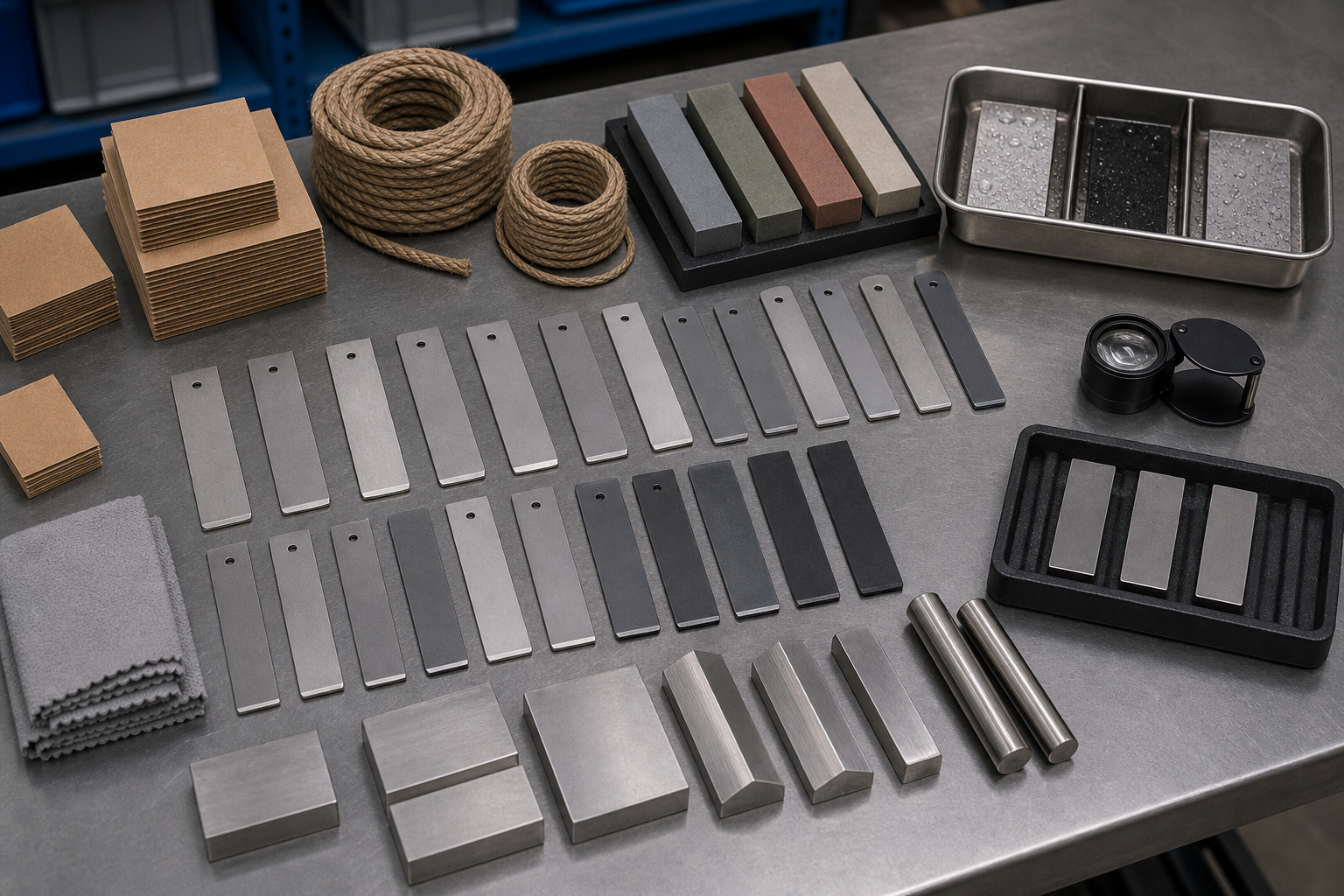
S30V has a good edge-retention story. Niagara lists S30V at 145 percent in CATRA testing relative to 440C ESR. The MagnaCut data sheet lists MagnaCut at 135 percent in its CATRA table. These numbers suggest that S30V can have a small abrasive-wear advantage in this type of test. But I do not treat that as the whole buying decision. CATRA is useful, but it is still a controlled test.
MagnaCut's advantage is balance. Its data sheet lists high toughness values and says MagnaCut is resistant to chipping and breaking. It also says the steel can support thinner edges with reduced chipping risk. For outdoor and daily-use knives, this matters. A knife edge can fail by wear, rolling, chipping, corrosion, or poor geometry. Knife Steel Nerds makes this point clearly when explaining that edge retention is more than wear resistance.
For B2B buyers, I translate this into customer risk. S30V works well when users understand normal stainless care and want proven edge holding. MagnaCut works well when the buyer wants better protection against chipping and corrosion complaints, especially in wet or outdoor use. The steel choice must match the expected user behavior.
| Performance area | S30V | MagnaCut |
|---|---|---|
| Abrasive edge retention | Strong and proven | Strong, but usually not the main advantage |
| Toughness story | Good for a stainless powder steel | Stronger premium positioning |
| Corrosion story | Good stainless behavior | Stronger corrosion-resistance positioning |
| Best buyer message | Proven balance | Modern high-balance performance |
What Heat Treatment and QC Details Should Buyers Control?
Premium steel can still fail if heat treatment is vague. The steel name does not inspect the product for you.
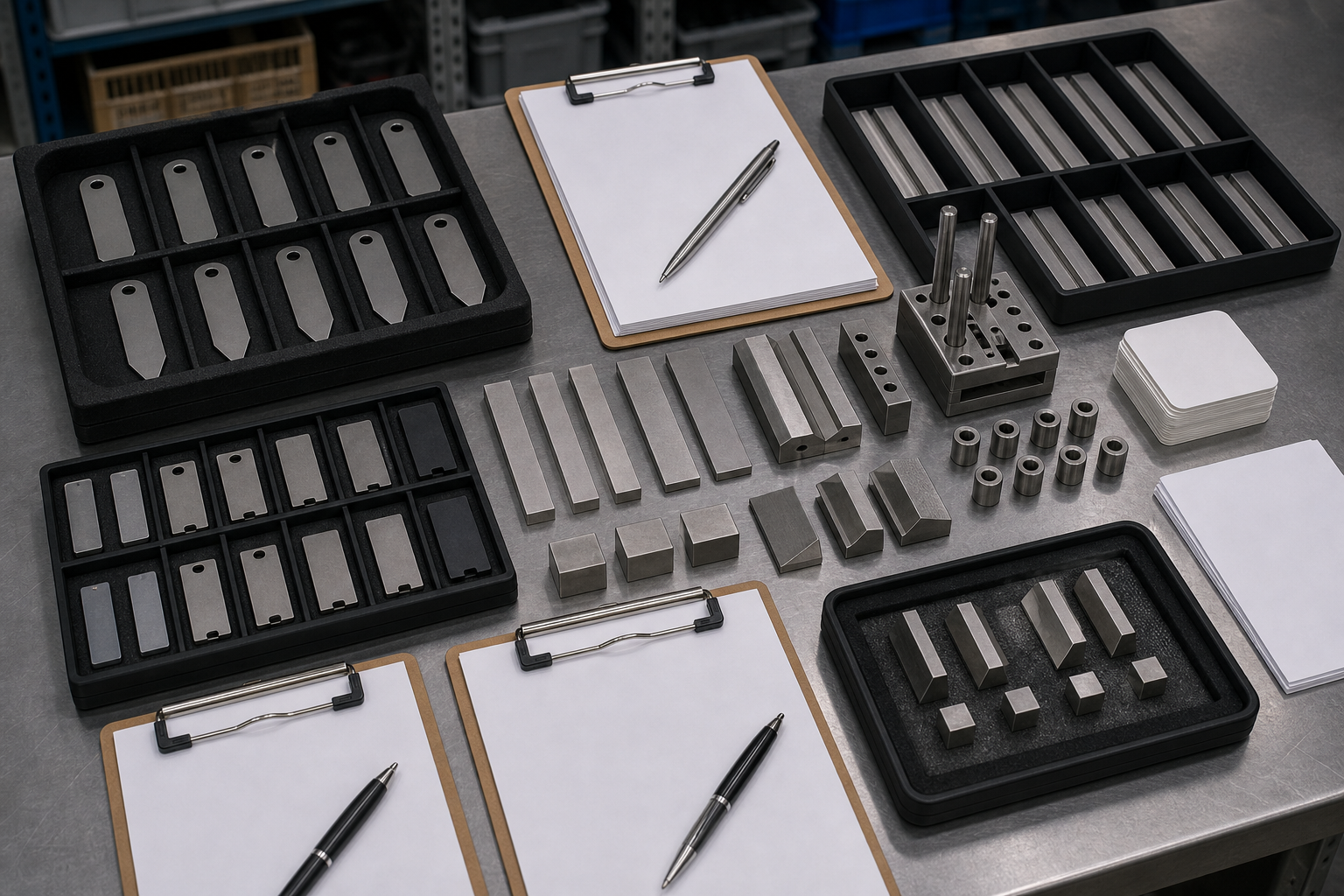
Buyers should control hardness target, heat treatment route, cold treatment need, grinding plan, edge geometry, hardness testing, blade flatness, finish quality, and final functional inspection.
I Make the Steel Choice Measurable
The S30V data sheet gives a recommended heat treatment of 1950 F austenitize, quench below 125 F, double temper at 600 F, and possible freezing treatment between tempers. It lists an aim hardness of 58-61 HRC. The MagnaCut data sheet gives a recommended heat treatment of 2050 F austenitize, quench below 125 F, double temper at 350 F, and possible freeze treatment after quench. It lists an aim hardness of 60-63 HRC. These details should not stay hidden inside a supplier conversation. They should become part of the sample plan.
I also want buyers to understand that hardness readings are not magic numbers. NIST's Rockwell hardness guide explains that Rockwell testing can vary and that good practice reduces measurement errors. This matters when a buyer asks for a narrow HRC range. The factory must use proper testing practice, and the buyer must understand acceptable tolerance.
For S30V, I pay attention to consistency, sharpening finish, and corrosion-care messaging. For MagnaCut, I pay attention to using the steel's toughness and corrosion advantage correctly. If the blade geometry is too thick, MagnaCut's benefit may not be felt. If the heat treatment is weak, the steel name will not protect the final product.
| QC item | Why it matters | What I ask buyers to define |
|---|---|---|
| HRC target | Controls strength, edge behavior, and toughness | Target range and testing method |
| Heat treatment route | Changes final performance | Process notes and sample validation |
| Edge geometry | Affects cutting and chipping risk | Edge thickness and sharpening angle |
| Final inspection | Protects premium positioning | Flatness, finish, sharpness, assembly, packaging |
Which Knife Projects Fit MagnaCut or S30V Better?
The same steel can be smart in one product and wasteful in another. Product positioning should lead the choice.
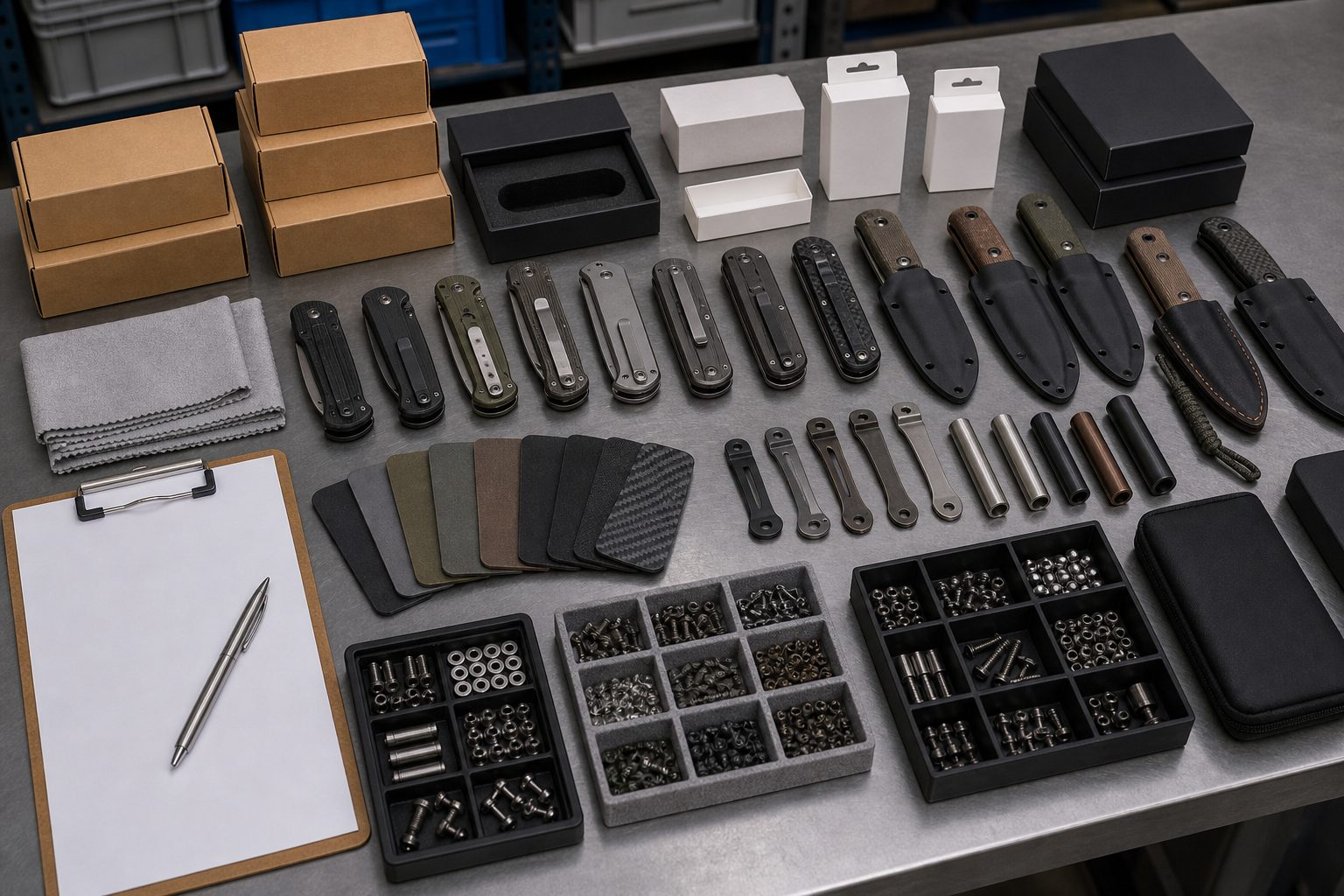
MagnaCut fits premium outdoor, fishing, hard-use EDC, and corrosion-conscious knives. S30V fits proven premium folders, general EDC knives, private label upgrades, and projects where buyer education and cost control matter.
I Fit the Steel to the Sales Channel
For outdoor brands, MagnaCut often gives a cleaner message. Buyers can talk about toughness, corrosion resistance, and balanced stainless performance. This is useful for camping knives, fishing knives, premium fixed blades, and EDC knives sold to users who may face rain, sweat, humidity, or coastal air. It also helps when the brand wants to look current in the knife market.
For many private label buyers, S30V can be easier to manage. The steel has a long history in premium knives, and many customers already recognize it. It can upgrade a product line without forcing the brand into the highest current steel expectation. S30V also has a practical production story. Niagara notes that S30V is easier to machine than S90V and comparable to D2 in the annealed condition, which helps buyers understand why it is not only a marketing steel.
I also consider user sharpening. A buyer selling to knife enthusiasts can choose a more specialized or newer steel because that customer may understand care and sharpening. A buyer selling to a broader retail channel may benefit from a balanced steel that is easier to explain. The best steel is the one the brand can support after sale.
| Product type | Better fit | Reason |
|---|---|---|
| Premium outdoor fixed blade | MagnaCut | Toughness and corrosion story are strong |
| General premium EDC folder | S30V or MagnaCut | Depends on price and marketing goal |
| Private label upgrade line | S30V | Proven premium value is easier to explain |
| Fishing or humid-market knife | MagnaCut | Corrosion positioning matters more |
How Should Buyers Build an RFQ for MagnaCut or S30V?
A vague RFQ creates vague pricing. Steel choice must be tied to geometry, quality checks, and commercial targets.
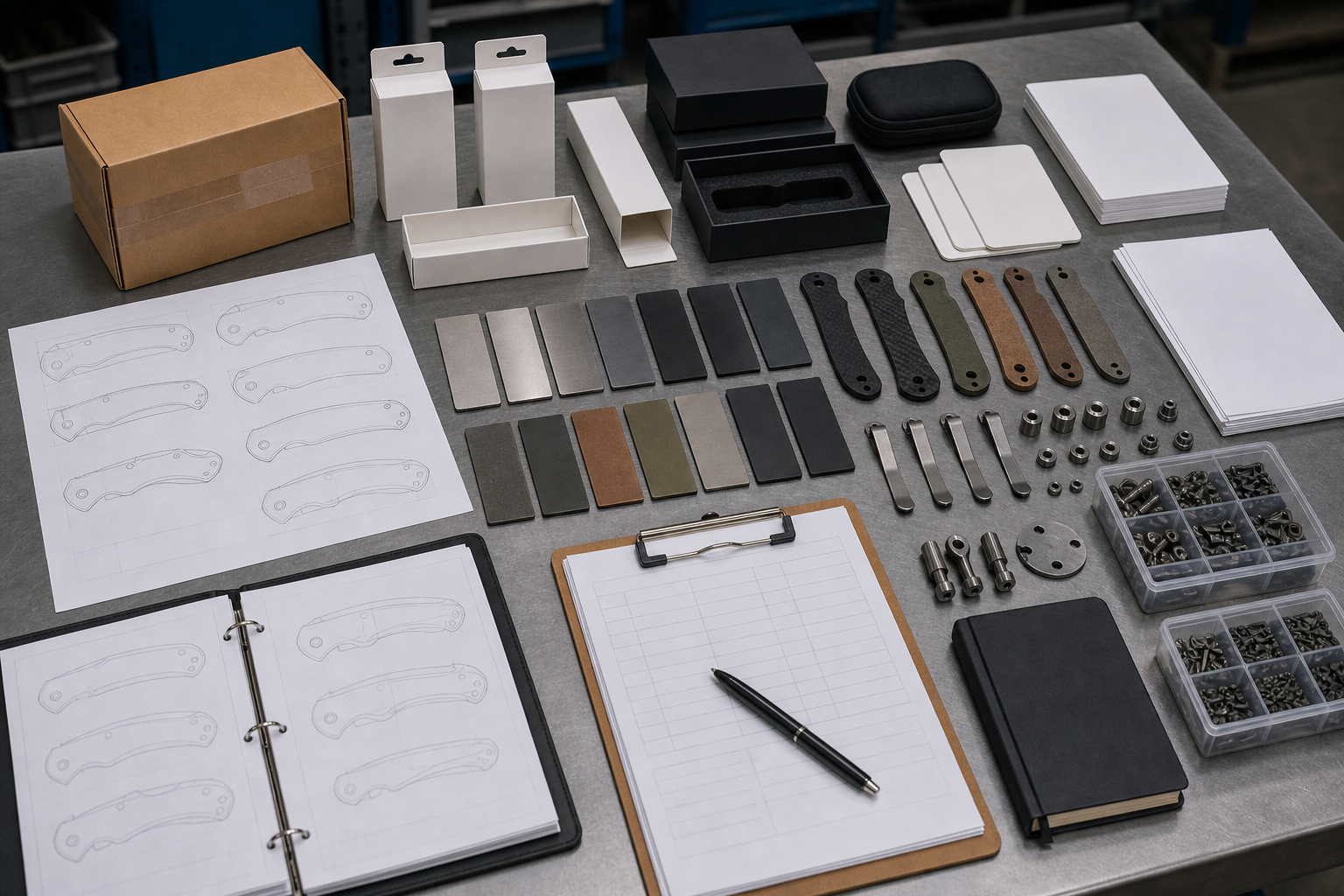
An RFQ should include knife type, target user, steel choice, backup steel, HRC target, blade geometry, finish, handle material, lock type, MOQ, target price, inspection plan, packaging, and delivery term.
I Turn the Steel Name Into a Workable Brief
When a buyer asks Vast State for a MagnaCut or S30V quote, I do not only ask for the steel name. I ask for knife type, target user, blade length, blade thickness, blade shape, edge geometry, finish, handle material, lock type, packaging, target price, expected MOQ, and target market. If the project is a folding knife, I also ask about pivot, washer or bearing, pocket clip, lock type, blade centering, and opening action.
I also ask for a backup steel. Premium steel supply, price, and lead time can move. A backup option gives the buyer more control if launch timing matters. The backup does not need to be lower quality. It only needs to support the same product promise at a different cost or availability point.
The commercial side matters too. Trade.gov explains that Incoterms clarify buyer and seller responsibilities in international trade. For OEM knife sourcing, I want the buyer to define FOB, EXW, CIF, or another delivery term early. I also connect this to quality systems. ISO 9001 explains quality management in terms of meeting customer expectations, process control, performance evaluation, and improvement. That is exactly the mindset I want for premium steel projects.
| RFQ field | What to include | Why it helps |
|---|---|---|
| Steel plan | MagnaCut, S30V, and backup option | Controls sourcing risk |
| Technical target | HRC, blade thickness, edge angle, finish | Makes samples measurable |
| Product context | User, market, carry style, use case | Prevents wrong steel choice |
| Commercial terms | MOQ, target price, Incoterm, schedule | Makes quotation realistic |
Ready to use this material in your next knife line?
Vast State can help you compare blade steels, heat treatment ranges, handle materials, finishes, packaging options, and QC requirements based on your target market and quantity.
Conclusion
I choose MagnaCut for modern balanced premium performance and S30V for proven all-around value, then I lock the choice with heat treatment, geometry, and QC.
Source Notes
- Niagara S30V data sheet supports S30V composition, CATRA edge-retention data, heat treatment, HRC target, and machinability notes.
- Niagara MagnaCut data sheet supports MagnaCut composition, no-chromium-carbide design, toughness, CATRA data, heat treatment, and HRC target.
- Niagara cutlery steel overview supports the broader comparison of CPM cutlery alloys by toughness, wear, and corrosion resistance.
- Knife Steel Nerds on MagnaCut supports the idea that edge retention is broader than wear resistance alone.
- NIST Rockwell hardness guidance, ISO 9001, and Trade.gov Incoterms support testing, process, and RFQ clarity.