Florida can look easier than other knife markets. But a loose product name or risky mechanism can still create selling problems.
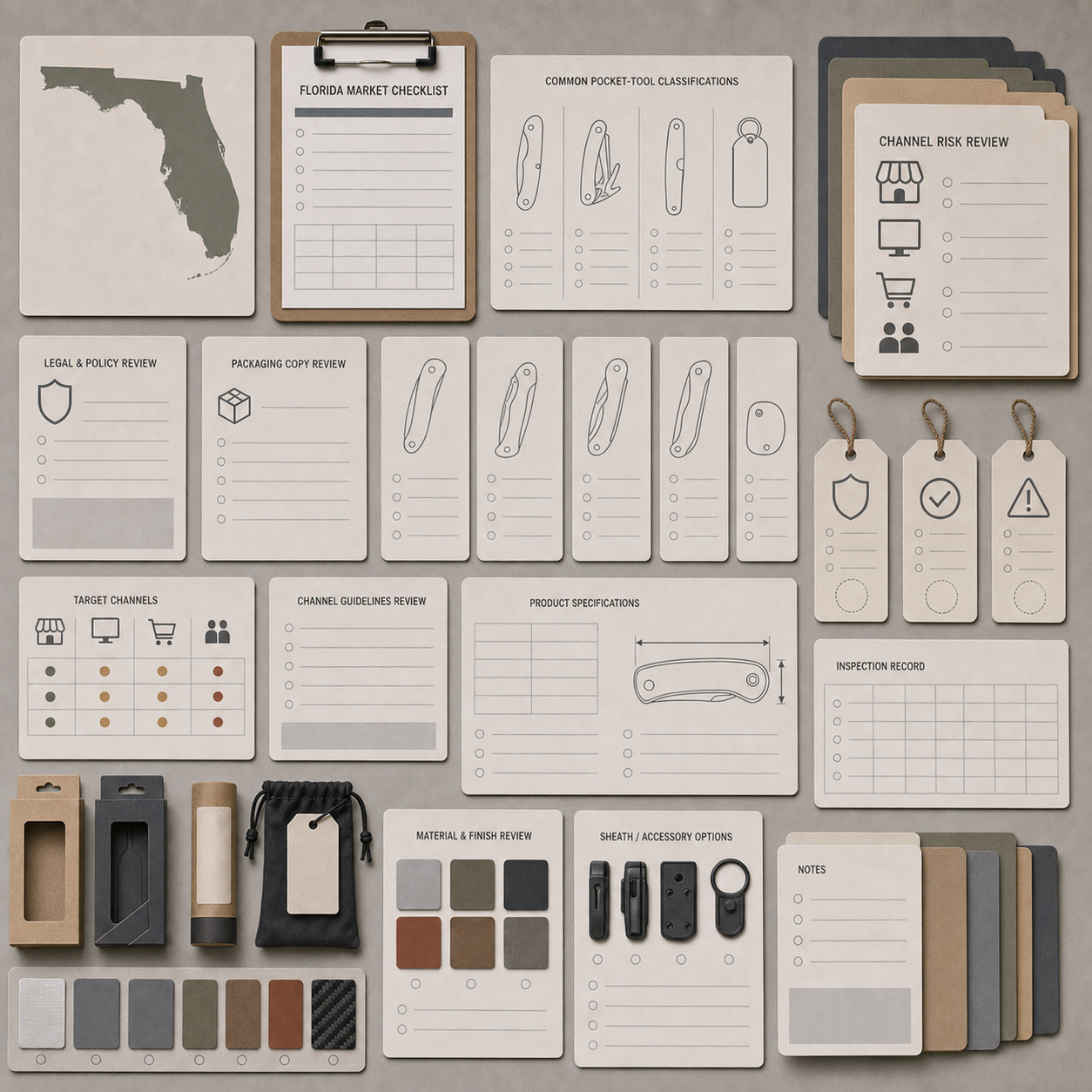
Before selling pocket knives in Florida, buyers should check whether the product is a common pocketknife, how the blade opens, blade length, product shape, restricted product types, school or airport channel risks, packaging language, and legal review. This is B2B sourcing guidance, not legal advice.
Quick buyer brief:
- Answer: Treat Florida as a design-and-documentation review, not only a sales destination.
- Buyer context: Useful for importers, distributors, private label brands, and sourcing teams.
- Key checks: Common pocketknife status, mechanism, blade length, restricted SKUs, channel notes, packaging copy, and RFQ evidence.
Planning a private-label knife line for this market?
Use this article as an early planning reference, then prepare your target market, product category, labeling needs, and buyer-specified compliance requirements before production.
When I support buyers for the U.S. market, I do not describe any knife as "Florida legal" without context. Florida has a common pocketknife exception in its weapon definition, but that does not make every folding knife risk-free. Knife shape, blade length, opening method, retail channel, and product wording still matter. For OEM/ODM work, I want the buyer to settle these questions before samples, packaging, and dealer listings are approved. It is cheaper to adjust a drawing than to fix a shipment that was designed for the wrong market assumption.
What Florida Knife Rules Should B2B Buyers Review First?
A buyer may assume Florida is simple. That assumption can hide product-category details that matter for sales and documentation.
Florida buyers should first review the common pocketknife exception, hidden-carry qualification language, licensing definitions, restricted ballistic self-propelled knives, and school or campus rules before approving a knife SKU.
I Start With the Statutory Category
The first question is not price. The first question is product category. Florida Statutes 790.001 define "weapon" and exclude a common pocketknife, plastic knife, and blunt-bladed table knife from that definition. That is important for ordinary folding knife projects, but it is not a blank approval for every knife design.
I also look at Florida Statutes 790.01, which connects hidden weapon possession with the qualification language in Section 790.06. Then I check Florida Statutes 790.225, because it addresses ballistic self-propelled knives and should stop certain product concepts before sampling. For B2B sellers, the practical rule is to separate common pocket knives, larger or unusual folders, fixed-blade products, multi-tools, and restricted concepts into different review lanes. One product family can contain several compliance profiles.
| Review area | What I check | Why it matters |
|---|---|---|
| Common pocketknife | Folding design, size, everyday utility role | Helps decide the basic category |
| Hidden-carry section | Whether the item may be treated as a weapon | Affects dealer notes and legal review |
| Restricted product type | Ballistic self-propelled concepts | Stops unsuitable designs early |
| Channel limits | Schools, airports, and private property | Affects packaging and listing cautions |
Private-label Planning Checklist
Before starting production, prepare the market and product details your importer or compliance advisor needs to review.
| RFQ Field | What to Prepare |
|---|---|
| Target market | Country, state, region, or sales channel |
| Product category | Folding knife / fixed blade / multi-tool / outdoor tool |
| Intended use | EDC / camping / kitchen / hunting / rescue / promotional |
| Buyer requirements | Testing, labeling, documentation, or packaging rules |
| Blade and lock details | Blade length, opening method, lock type, edge style |
| Packaging text | Warnings, claims, care notes, language requirements |
| Documents | Drawing, sample photo, logo file, packaging artwork |
| Review owner | Importer, legal advisor, testing lab, or internal compliance team |
Why Does the Common Pocketknife Exception Matter?
The phrase sounds simple, but it still needs careful product documentation. Buyers should not rely on a casual label.
Florida's weapon definition excludes a common pocketknife, so buyers should document folding construction, blade size, everyday utility positioning, and product copy before calling a SKU a common pocketknife.
I Do Not Let Marketing Define the Product
Florida Statutes 790.001 create an important exception for a common pocketknife, but the statute itself does not give a detailed product drawing. That means B2B buyers need clean evidence. I want to see the blade shape, folding construction, closed position, length, handle design, opening method, and normal utility purpose. If a buyer wants an ordinary EDC pocket knife, the product should look and read like one.
Florida case law also adds context. In L.B. v. State, the Florida Supreme Court discussed a common pocketknife and did not create a simple factory checklist. This is why I avoid overconfident claims. A buyer may hear people mention a four-inch idea from legal commentary, but I do not use that as a universal promise. I use it as a reason to document blade length and keep the SKU practical. If the design becomes larger, unusual, aggressive in appearance, or hard to explain as everyday utility, the buyer should get legal review before ordering.
| Evidence item | What to prepare | Practical value |
|---|---|---|
| Folding structure | Photos and drawing of closed knife | Supports pocketknife classification review |
| Blade length | Exact dimension and tolerance | Reduces listing and inspection gaps |
| Utility purpose | Outdoor, EDC, work, or general use | Keeps marketing grounded |
| Legal review note | Buyer counsel confirmation if needed | Avoids supplier-side guesswork |
How Should Buyers Treat Blade Length and Knife Shape?
Length is easy to print but harder to manage across drawings, samples, packaging, and websites. Shape also affects perception.
Buyers should define blade length, blade profile, edge style, handle size, closed size, and product use in the RFQ. Florida does not give a simple statutory blade-length rule for every pocket knife SKU.
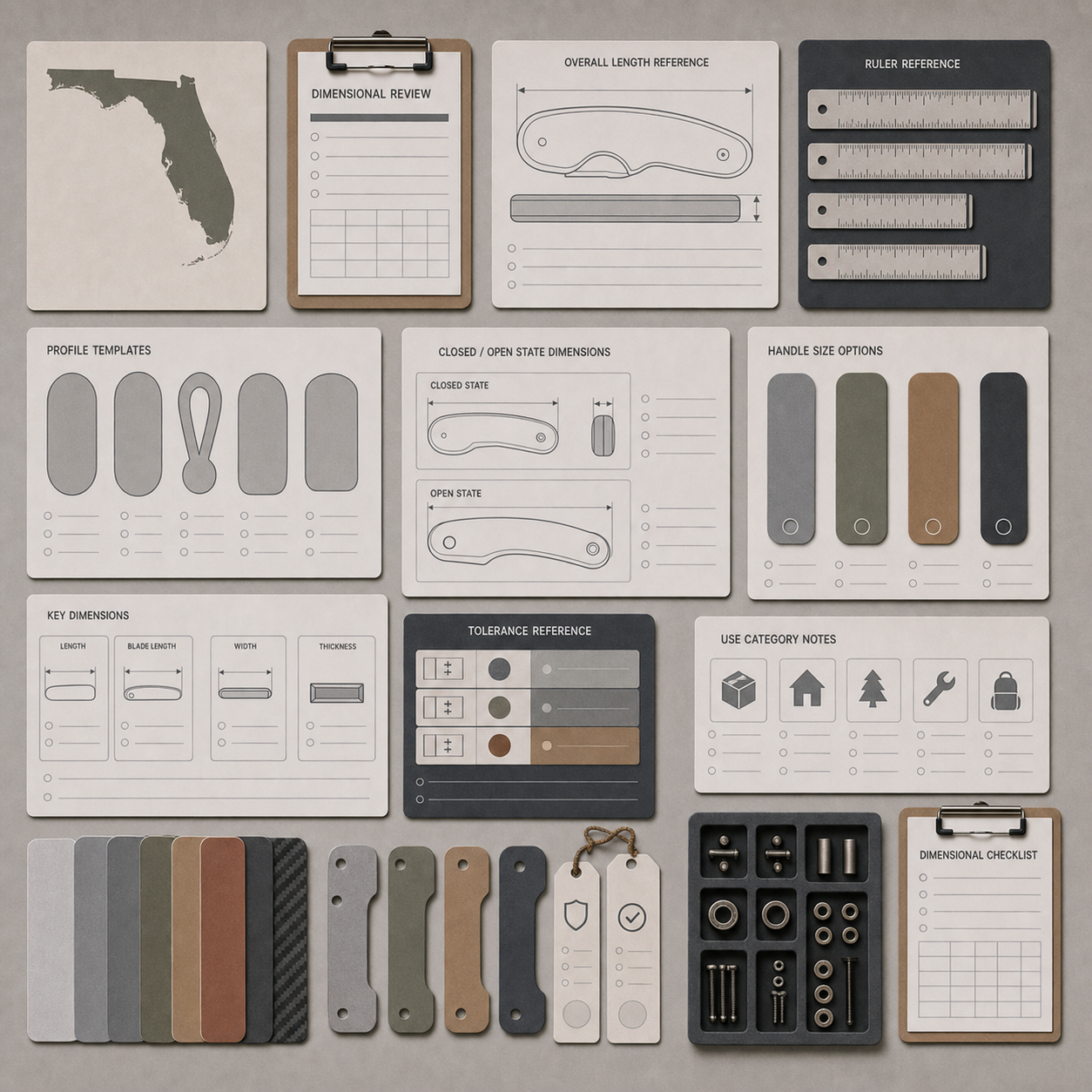
I Keep the Design Inside the Buyer Story
Blade length should not be decided after the sample is made. It should be part of the buyer story from the beginning. A small utility pocket knife, a larger outdoor folder, and a tactical-style folder may all be folding knives, but they do not create the same retailer comfort. If the buyer wants a Florida-market pocket knife, I normally suggest a practical blade size, simple utility shape, and clear listing language.
Shape matters too. A dramatic blade profile may help a product look different, but it may also make the listing harder to explain. Double-edge styling, aggressive naming, oversized handles, or unclear mechanisms can move the conversation away from everyday utility. For B2B orders, I want the buyer to decide whether the product is a safe mainstream catalog item or a specialty SKU that needs extra legal review. The factory can control blade length, grind, handle material, finish, and packaging, but the buyer must decide the legal and retail path.
| Design factor | Buyer risk | Practical control |
|---|---|---|
| Blade length | Listing value does not match sample | Use one approved measurement source |
| Blade profile | Product looks harder to classify | Keep utility shape when possible |
| Edge style | Retailer may ask more questions | Match copy to function |
| Closed size | Pocket product feels too large | Confirm market use before tooling |
What Opening Mechanisms Need Extra Review in Florida?
Mechanism wording can confuse buyers. A folding knife, automatic knife, and ballistic self-propelled product are not the same sourcing problem.
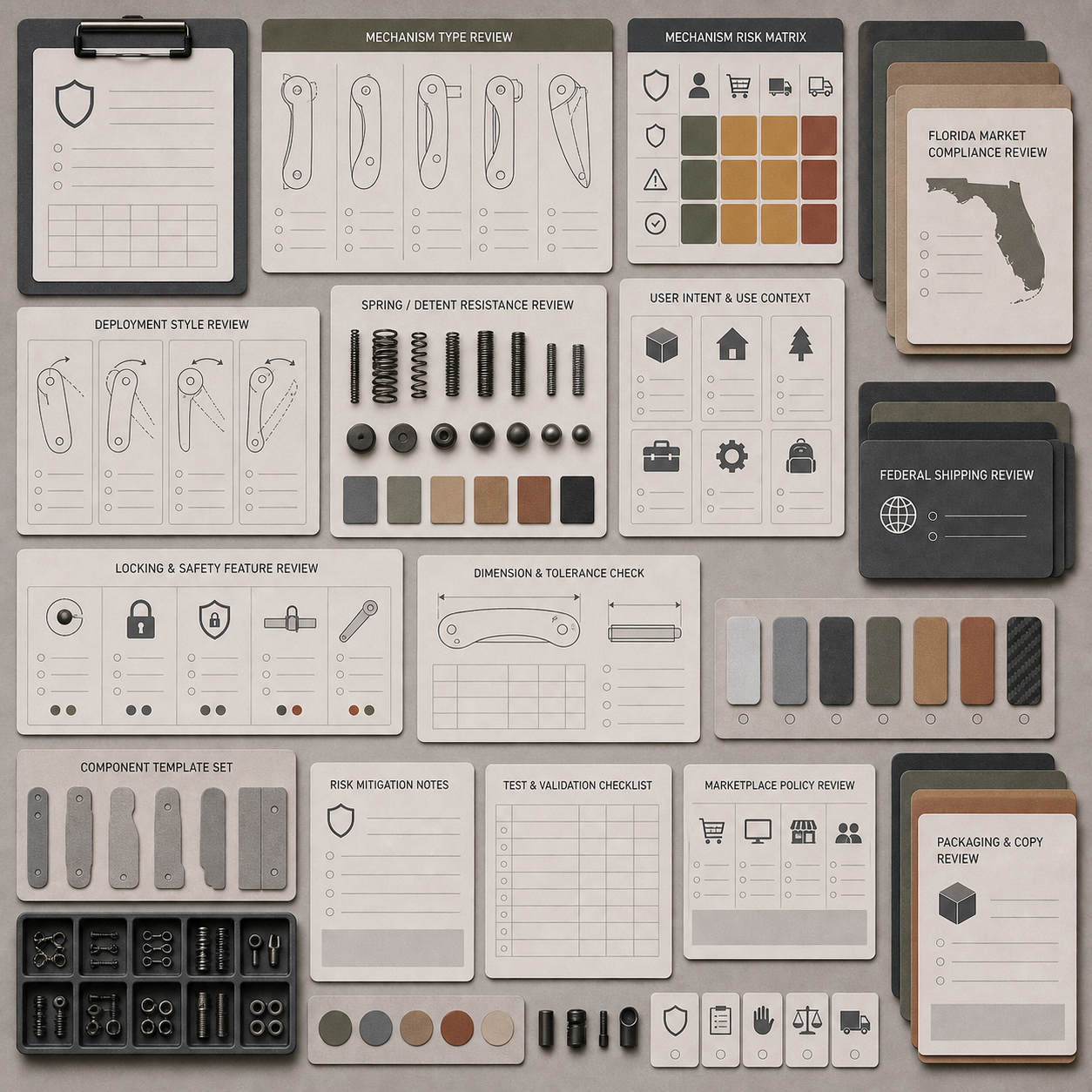
Florida does not have the same switchblade wording as some states, but buyers should still review automatic-opening mechanisms, assisted-opening claims, out-the-front designs, and federal shipping rules before production.
I Separate State Product Category From Federal Shipping Review
Florida's statutes do not make every automatic-opening discussion the same as California's switchblade rule. But B2B buyers still need caution. If a product uses a button, spring, sliding front mechanism, or another automatic-opening structure, the buyer should review state rules, federal rules, marketplace policy, carrier policy, and end-customer channel. A design that can be sold in one channel may create problems in another.
For interstate commerce, the U.S. Code page for 15 U.S.C. 1242 and related sections is relevant because it addresses switchblade distribution in interstate commerce and related exceptions. That does not mean every manual folder is affected. It means automatic-opening projects should not be treated like normal pocket knife SKUs. In OEM/ODM work, I ask for a mechanism drawing, sample video, product listing draft, and buyer legal review before quoting such designs. This keeps the project from drifting into a risky structure without anyone naming it.
| Mechanism type | Review level | Buyer action |
|---|---|---|
| Manual nail nick | Normal product review | Document ordinary pocket use |
| Thumb stud folder | Normal to moderate review | Show detent and manual action |
| Assisted-opening claim | Moderate review | Check wording and channel rules |
| Automatic-opening design | High review | Get state, federal, and platform review |
Which Product Types Should Be Stopped Before Sampling?
Some concepts should not reach the prototype table. A low unit price cannot fix a product that the market should reject.
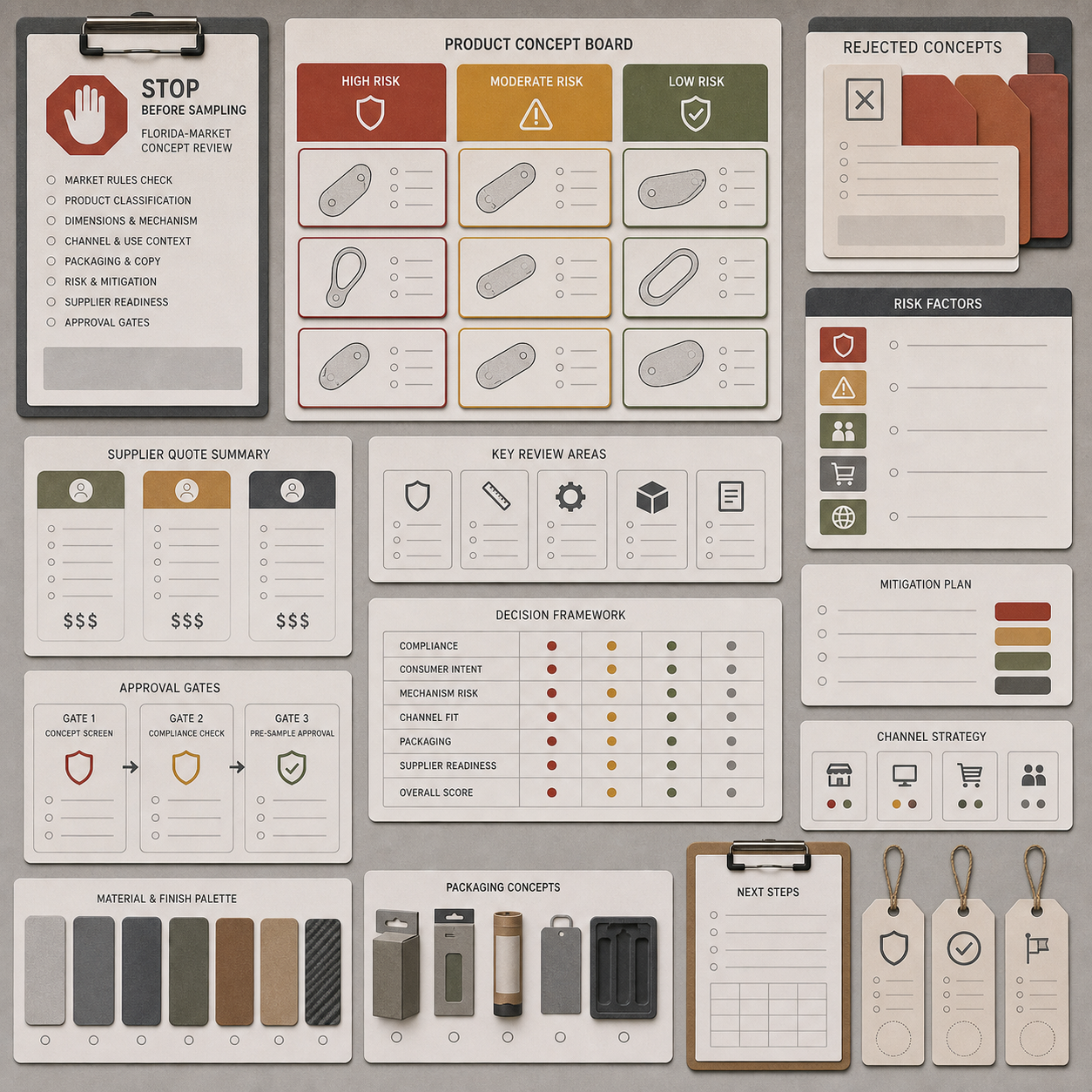
Buyers should stop ballistic self-propelled knife concepts, projectile-style blades, unsafe gimmick structures, and products with unclear blade separation before sampling for the Florida market.
I Prefer a Clear Stop Signal
Florida Statutes 790.225 is direct about ballistic self-propelled knives. It describes a device that propels a knifelike blade as a projectile and physically separates the blade from the device by spring, elastic material, or compressed gas. For a B2B manufacturer, this category is not a place for creative interpretation. It is a stop point.
This also shapes how I handle unusual buyer ideas. Sometimes a customer sends a concept that looks more like a novelty mechanism than a practical outdoor tool. I will ask what problem it solves, where it will sell, and whether counsel has reviewed it. If the answer is unclear, I prefer to redirect the customer toward practical folding knives, fixed-blade utility tools, camping tools, rescue tools, or multi-tools. Good OEM/ODM support is not only saying yes to every drawing. It is helping the buyer avoid a project that creates risk before it creates value.
| Concept signal | Why I stop it | Better direction |
|---|---|---|
| Projectile blade concept | Florida law directly addresses it | Do not sample without counsel |
| Blade separation mechanism | Creates high legal and safety concern | Redesign as normal fixed or folding tool |
| Novelty release structure | Hard to explain in retail | Use a proven manual mechanism |
| Aggressive product theme | Weakens utility positioning | Reframe around outdoor or work use |
How Should School, Airport, and Restricted-Place Risks Affect Packaging?
A knife can be ordinary in one sales channel and sensitive in another location. Packaging should not ignore that context.
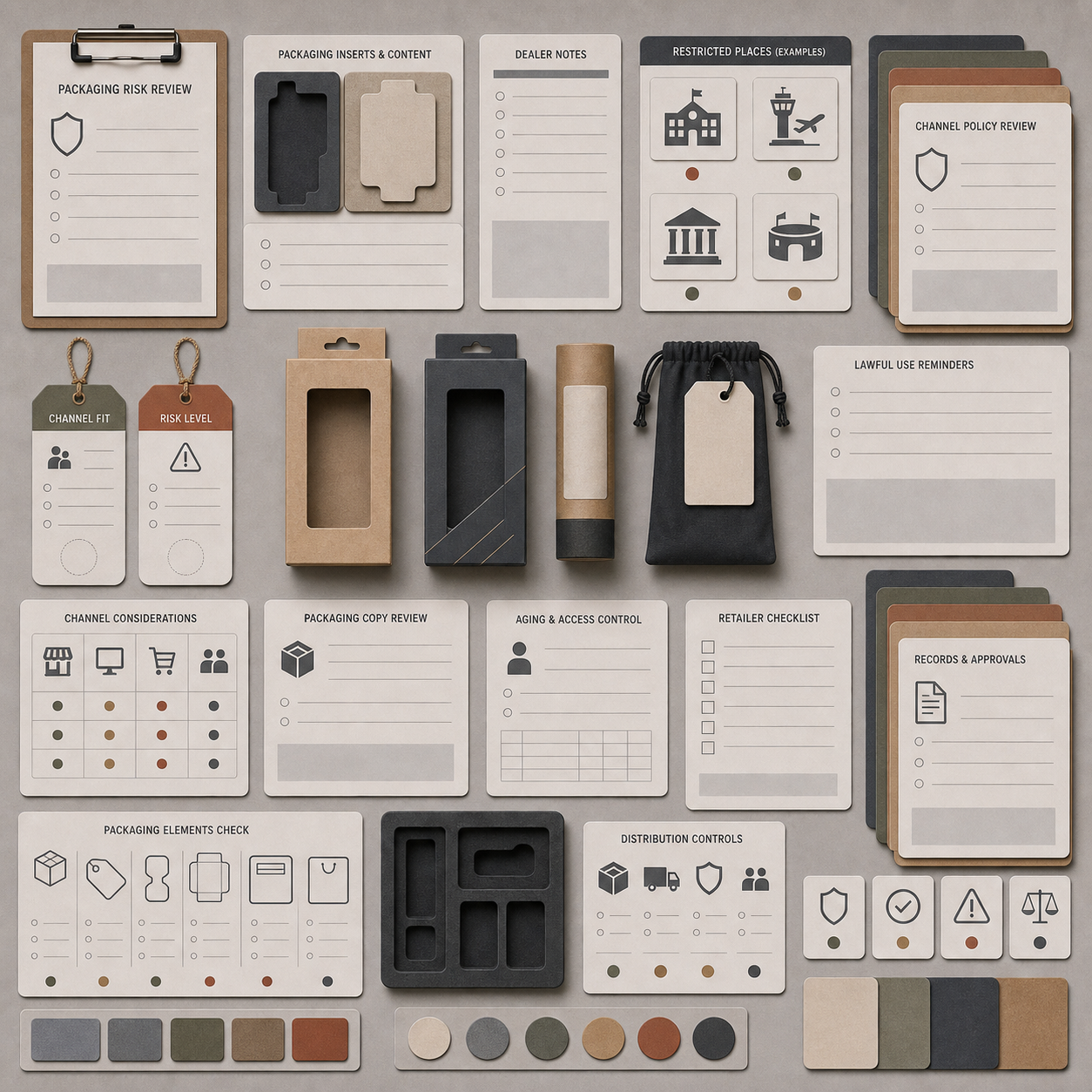
Florida buyers should use packaging and dealer notes that avoid school-oriented marketing, airport-use assumptions, and broad legal promises. The product copy should remind sellers and users to follow applicable laws.
I Use Caution Language Without Giving Legal Advice
For consumer products, location language matters. Florida Statutes 790.115 addresses weapons and firearms at school-sponsored events or school property, and it also mentions common pocketknife in that location context. Florida Statutes 810.095 addresses school property trespass with a weapon or firearm. Florida Statutes 790.06 also lists place-related limits for licensed carry, including airport sterile areas and other restricted places.
I do not convert these statutes into consumer instructions. I use them to shape packaging and dealer notes. A pocket knife should not be marketed to school users. A travel-oriented SKU should not imply that airport screening will accept it. A dealer sheet should remind the buyer that location rules, private-property rules, and platform policies may apply. This protects the brand and the distributor. It also keeps the factory documentation honest. A manufacturer can provide clear specs, but the seller must verify local sale and use rules for the target channel.
| Channel issue | Packaging action | Dealer note |
|---|---|---|
| School-related settings | Avoid school-use marketing | Seller must verify location rules |
| Airport travel | Avoid screening approval claims | Check TSA and airline rules separately |
| Private property | Do not promise universal access | Respect owner and venue policies |
| Multi-channel sales | Use neutral utility wording | Keep SKU specs attached |
How Should Product Listings and Dealer Notes Be Written?
A safe design can still be described badly. Overexcited listing copy can create questions for retailers and platforms.
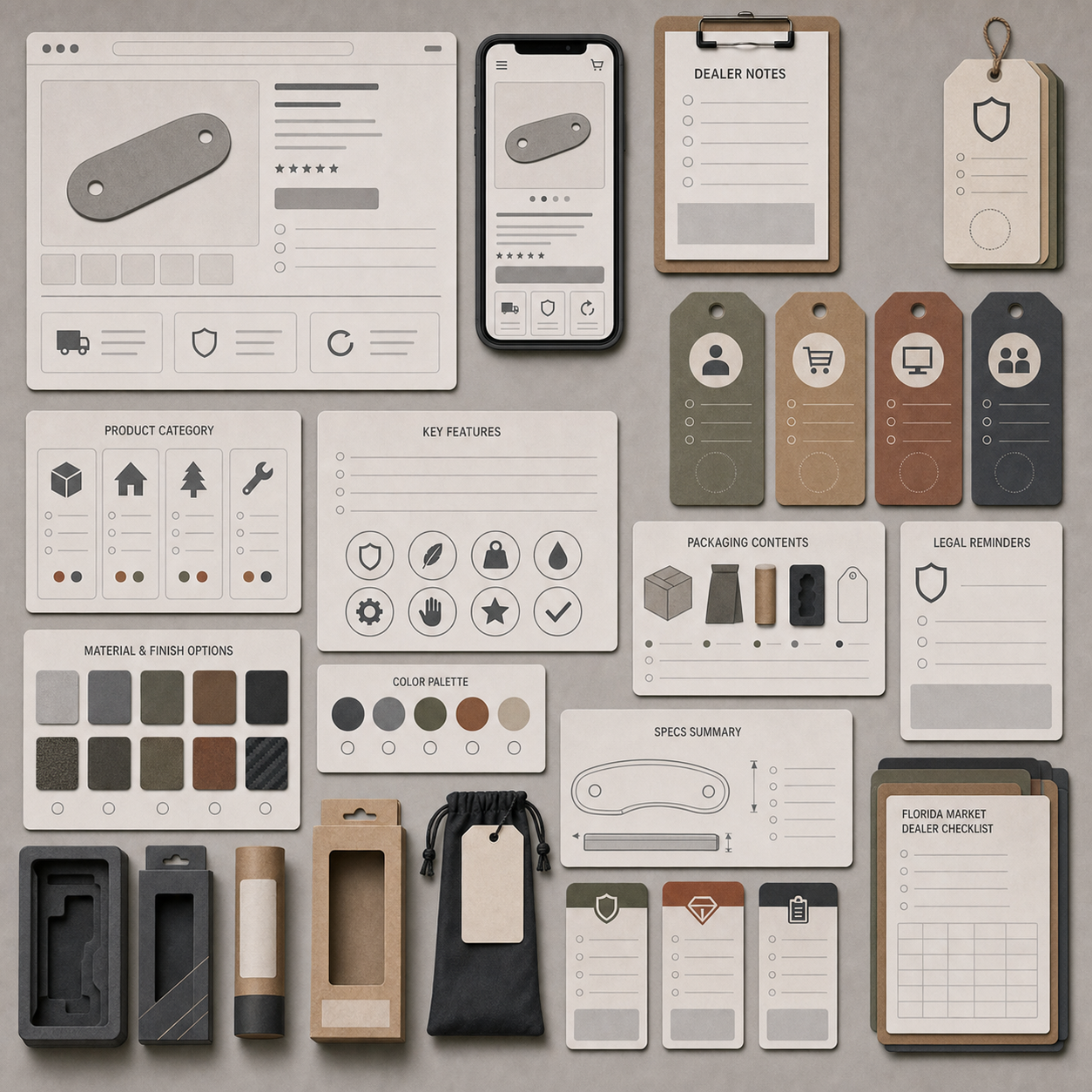
Listings and dealer notes should state product category, manual or other opening method, blade length, lock type, materials, packaging contents, and a clear reminder that buyers must follow applicable laws.
I Make the Copy Match the Product
When a buyer prepares a Florida-market listing, I want the copy to be plain. If the knife is a manual folding pocket knife, say that. If it has a thumb stud, say that accurately. If the lock is a liner lock, frame lock, back lock, or slip joint, use the correct term. If the blade length is a selling point, make sure it matches the drawing and final inspection record.
I also ask buyers to avoid legal conclusions in consumer copy. Phrases like "legal everywhere" or "approved for all carry" create risk because laws can change and local rules can vary. A better dealer note is more practical: it lists the product specifications, explains the intended utility category, and tells distributors or retailers to verify applicable rules before sale. This is especially useful for importers and wholesalers that sell to several states. A clear product sheet can travel with the SKU and reduce repeated questions.
| Copy field | Better wording focus | Avoid |
|---|---|---|
| Product title | Manual folding pocket knife | Broad legal claims |
| Feature list | Steel, handle, lock, length | Dramatic use claims |
| Dealer note | Specs and review reminder | One-size-fits-all legality statements |
| Packaging insert | Safe storage and lawful-use reminder | Location-specific promises |
What Should a Florida-Market Knife RFQ Include?
A short RFQ can hide the exact issues that matter. The factory needs more than a target price.
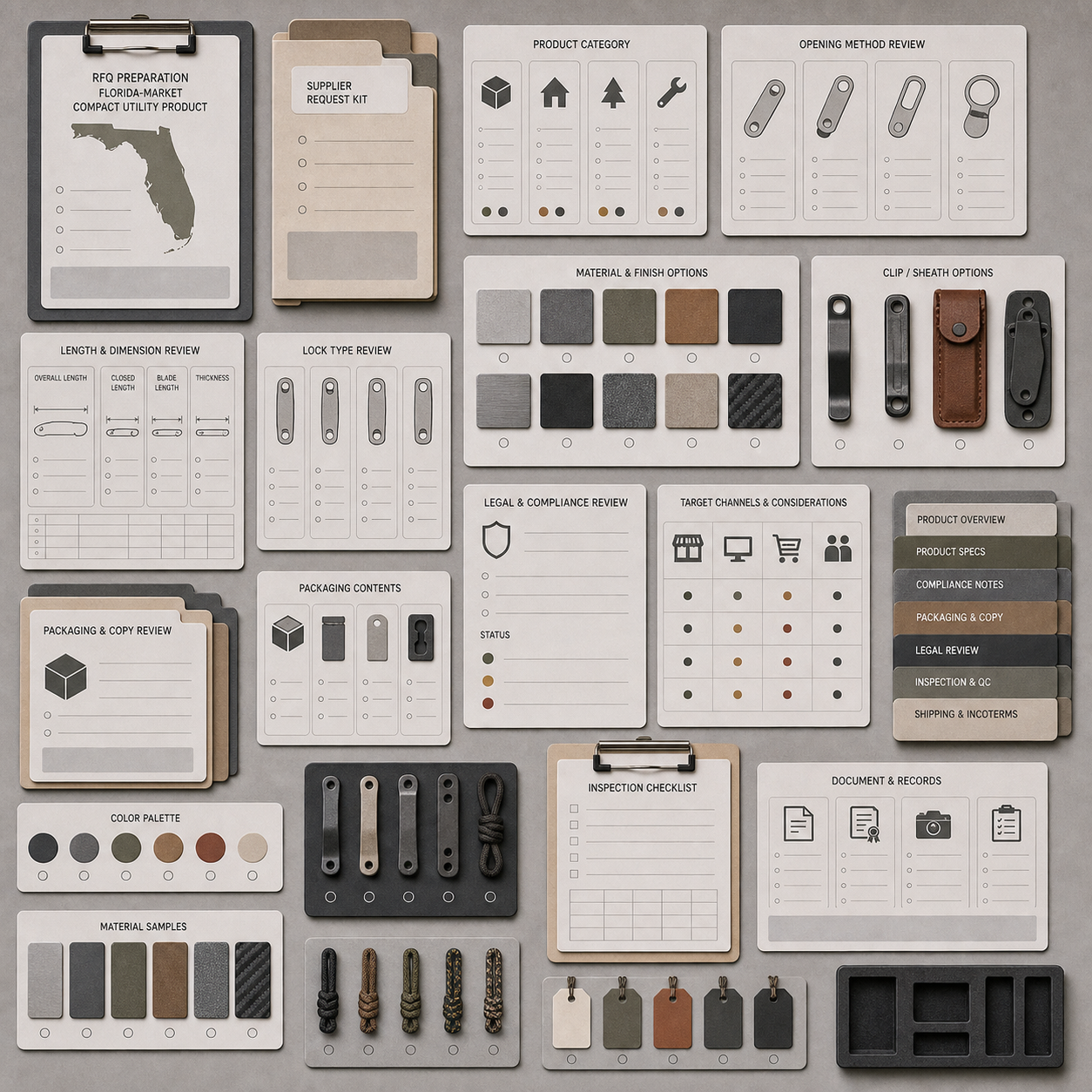
A Florida-market knife RFQ should include product category, opening mechanism, blade length, lock type, blade shape, steel, handle, clip or sheath, packaging copy, target channel, legal-review status, and inspection needs.
I Build the RFQ Around Reviewable Facts
For Florida-market orders, I prefer an RFQ that creates evidence. The buyer should tell me whether the product is intended to be a common pocketknife, a larger outdoor folder, a fixed-blade utility knife, a multi-tool, or another category. The RFQ should include the opening method, blade length, lock type, steel grade, handle material, clip or sheath design, packaging style, and target sales channel.
The RFQ should also say whether legal review has already been completed. If not, I can still help with drawings, samples, photos, mechanism details, and production records that the buyer can send to counsel. For mass production, I would add inspection checks for blade length, opening action, lock function, edge finish, package wording, and final carton labels. This makes the project easier to quote and easier to manage. It also keeps the supplier and buyer aligned before money is spent on a product that may need redesign.
| RFQ field | What to request | Why it helps |
|---|---|---|
| Product category | Common pocketknife, folder, fixed blade, multi-tool | Starts the right review lane |
| Mechanism | Nail nick, thumb stud, assisted, automatic, other | Controls legal and listing questions |
| Blade data | Length, thickness, shape, tolerance | Supports QC and product copy |
| Packaging | Box, insert, dealer note, barcode label | Keeps market wording consistent |
| Legal status | Reviewed, pending, or needs support | Avoids supplier-side assumptions |
Planning a private-label knife line for this market?
Use this article as a planning reference, then confirm local requirements with your importer or compliance advisor before OEM/ODM production.
Conclusion
Florida knife projects work best when buyers document category, mechanism, size, copy, channel, and legal review before production.
Source Notes
- Florida Statutes 790.001 supports the weapon definition and common pocketknife exception.
- Florida Statutes 790.01 and 790.06 support the hidden-carry and qualification context for weapons and knives.
- Florida Statutes 790.225 supports the warning against ballistic self-propelled knife concepts.
- Florida Statutes 790.115 and 810.095 support school-location caution.
- 15 U.S.C. 1242 supports federal review for switchblade distribution in interstate commerce.