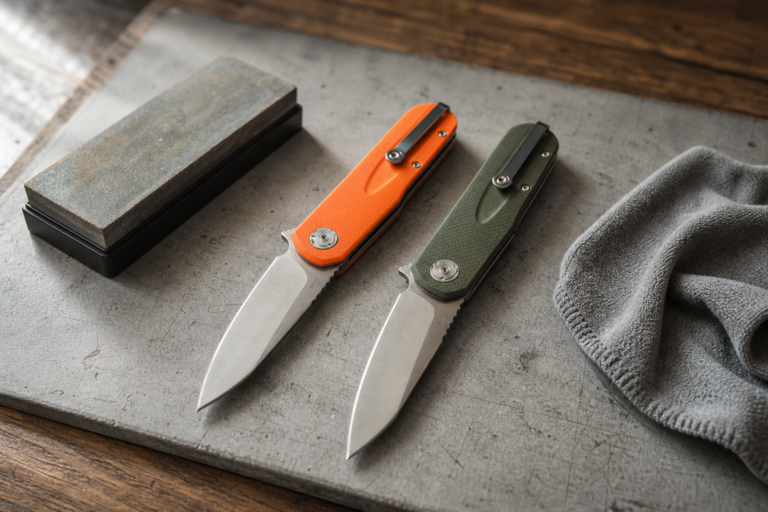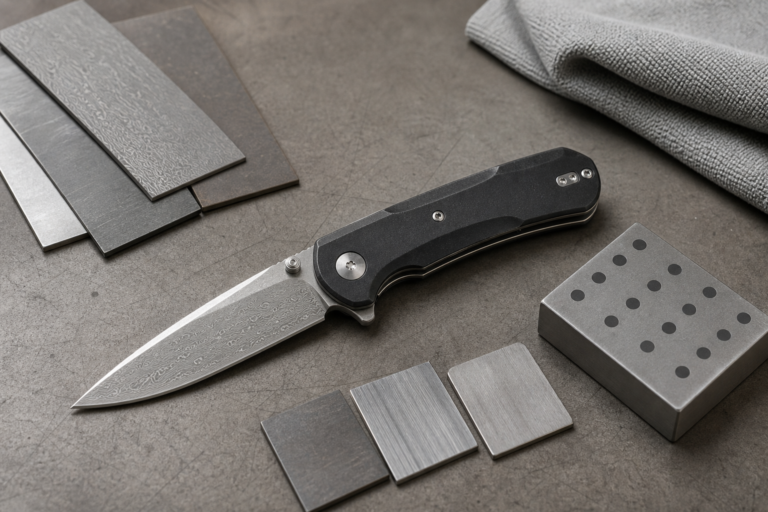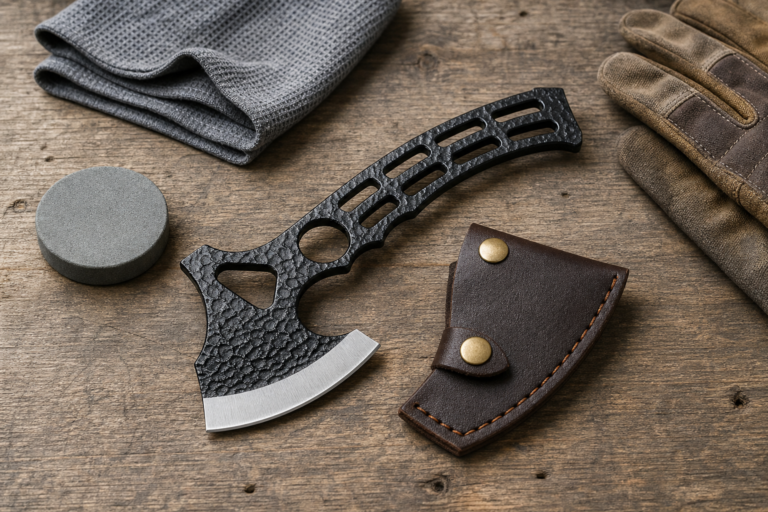
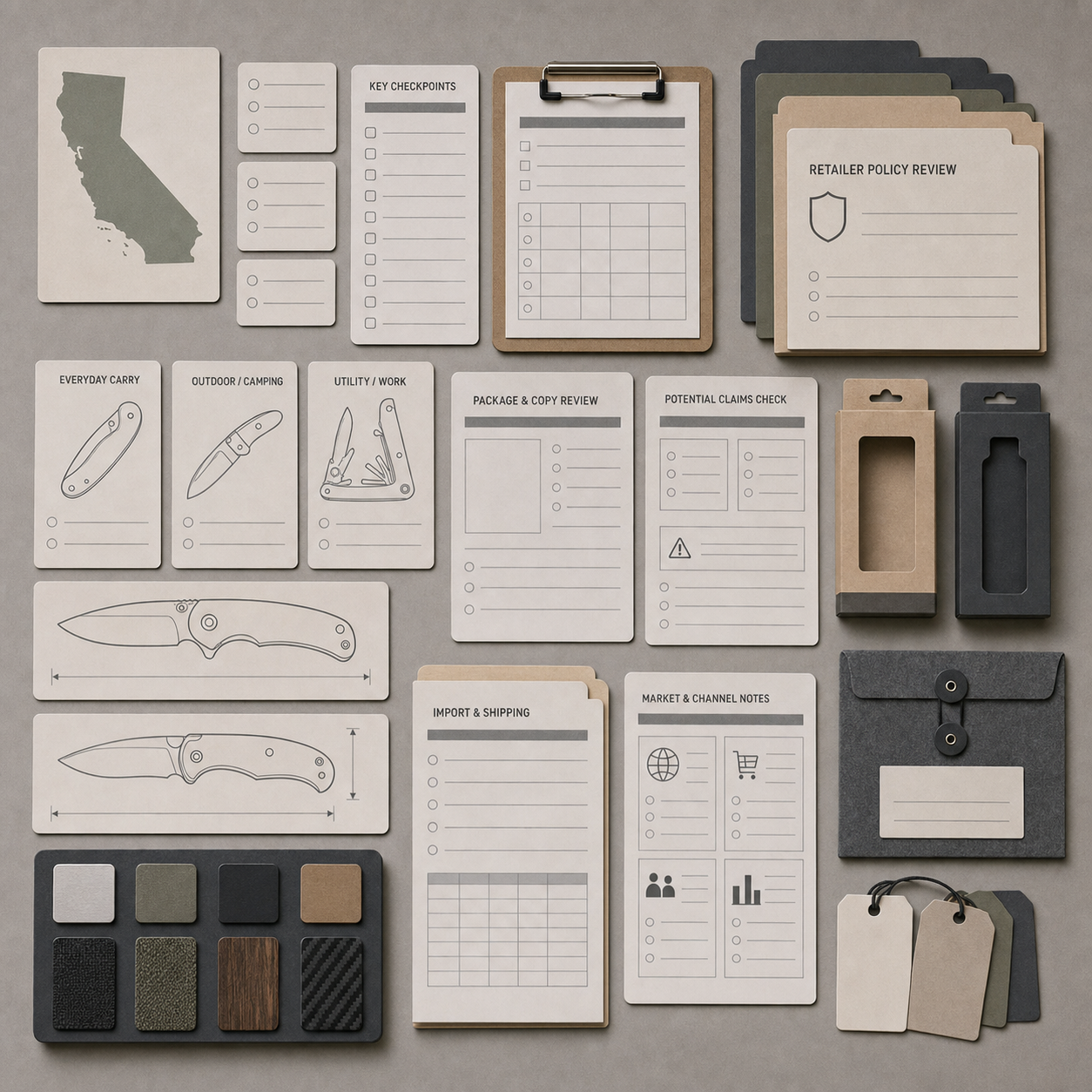
California can look like a simple pocket-knife market. But one mechanism detail, blade-length claim, or product listing can create avoidable selling risk.
Before selling pocket knives in California, buyers should check the opening mechanism, blade length, lock design, product category, packaging claims, online listing language, federal shipping rules, local requirements, and legal review. This article is B2B sourcing guidance, not legal advice.
Quick buyer brief:
- Answer: Screen the knife design before production, not after shipment.
- Buyer context: California rules affect some opening mechanisms, blade categories, school locations, and restricted product types.
- Key checks: Mechanism, blade length, lock position, SKU description, package wording, dealer notes, and import/shipping review.
Planning a private-label knife line for this market?
Use this article as an early planning reference, then prepare your target market, product category, labeling needs, and buyer-specified compliance requirements before production.
When I work with buyers for the U.S. market, I do not treat "California legal" as a casual product label. I treat it as a checklist that needs product review, sales-channel review, and legal confirmation. A normal manual folding knife may be very different from a restricted automatic-opening product. A small blade-length detail may change how a product is handled. A retailer also needs to think about locations such as schools and about online listing language. For OEM/ODM production, the safest time to check these points is before tooling, sampling, packaging, and mass production.
What California Knife Rules Matter Most for B2B Sellers?
A buyer may ask for a "California-friendly" knife, but that phrase is too vague. The factory needs specific design limits.
California sellers should first review restricted switchblade knives, automatic-opening definitions, dirk or dagger rules, fixed-blade treatment, ballistic knife restrictions, and school-location limits before finalizing an OEM or ODM knife SKU.
I Start With Product Category Before Price
California compliance review should start with product category. A buyer may use one word, such as pocket knife, but the law may care about details such as opening method, blade length, blade position, lock behavior, and whether the product is a fixed blade or folding knife. The California Legislative Information page for Penal Code 21510 is especially important because it addresses switchblade knives with blades of two or more inches and includes sale and transfer language.
I also check definitions. Penal Code 17235 defines switchblade knife and gives an exclusion for certain one-hand opening knives that use thumb pressure on the blade or thumb stud, provided there is resistance or bias toward the closed position. That distinction matters for design. It affects the mechanism, product copy, and whether the buyer should ask a lawyer to review the SKU before purchase. For B2B buyers, the practical answer is simple: do not quote or approve a California-market knife until the product category is documented.
| Rule area | What I check | Why it matters for buyers |
|---|---|---|
| Switchblade rule | Mechanism and blade length | It can affect sale and transfer |
| Definition rule | How the blade opens | It separates many manual folders from restricted designs |
| Fixed-blade rule | Sheath and product description | It affects buyer education and packaging |
| Location rule | School and campus limits | It affects retailer warnings and channel fit |
Private-label Planning Checklist
Before starting production, prepare the market and product details your importer or compliance advisor needs to review.
| RFQ Field | What to Prepare |
|---|---|
| Target market | Country, state, region, or sales channel |
| Product category | Folding knife / fixed blade / multi-tool / outdoor tool |
| Intended use | EDC / camping / kitchen / hunting / rescue / promotional |
| Buyer requirements | Testing, labeling, documentation, or packaging rules |
| Blade and lock details | Blade length, opening method, lock type, edge style |
| Packaging text | Warnings, claims, care notes, language requirements |
| Documents | Drawing, sample photo, logo file, packaging artwork |
| Review owner | Importer, legal advisor, testing lab, or internal compliance team |
How Should Buyers Screen Pocket Knife Opening Mechanisms?
A knife can look like a normal folder but still raise questions. The opening mechanism decides much of the risk.
Buyers should document whether a pocket knife opens manually, by thumb stud, by nail nick, with assisted resistance, or by automatic release. The design should be reviewed against California's switchblade definition before samples are approved.
I Ask for Mechanism Proof, Not Only a Product Name
In OEM/ODM work, I do not accept "manual folder" as enough detail when the knife is for a regulated market. I want to know how the blade starts moving, what part the user presses, whether the handle contains a release button, whether the blade has resistance before opening, and whether the blade is biased toward the closed position. These are not only engineering questions. They are product-listing and compliance questions.
California's definition in Penal Code 17235 includes knives with a pocketknife appearance and a blade of two or more inches that releases automatically through specified mechanical actions. The same section also excludes certain one-hand opening knives when thumb pressure is applied to the blade or thumb stud and the knife has a detent or similar resistance. This is why a buyer should not let marketing language lead the design. Words such as "fast open" or "automatic feel" may sound attractive, but they can create questions for a retailer. I prefer plain, accurate descriptions. If the SKU is a manual one-hand folder, the sample should prove it.
| Mechanism detail | Buyer question | Supplier proof |
|---|---|---|
| Thumb stud opening | Is pressure applied to the blade or stud? | Sample video and exploded view |
| Detent or resistance | Does the blade resist opening from closed position? | Mechanism test and assembly note |
| Handle release | Is there a button or handle trigger? | Structure photo and legal review flag |
| Product copy | Does the listing overstate opening speed? | Approved wording before production |
Why Does the Two-Inch Switchblade Threshold Matter for Product Listings?
Small measurement differences can become big sales problems. A casual blade-length claim may be read differently by buyers, retailers, and regulators.
California Penal Code 21510 applies to switchblade knives with blades of two or more inches. B2B buyers should measure consistently, keep drawings aligned with samples, and avoid product listings that blur blade length or mechanism details.
I Separate Blade Length From Overall Knife Size
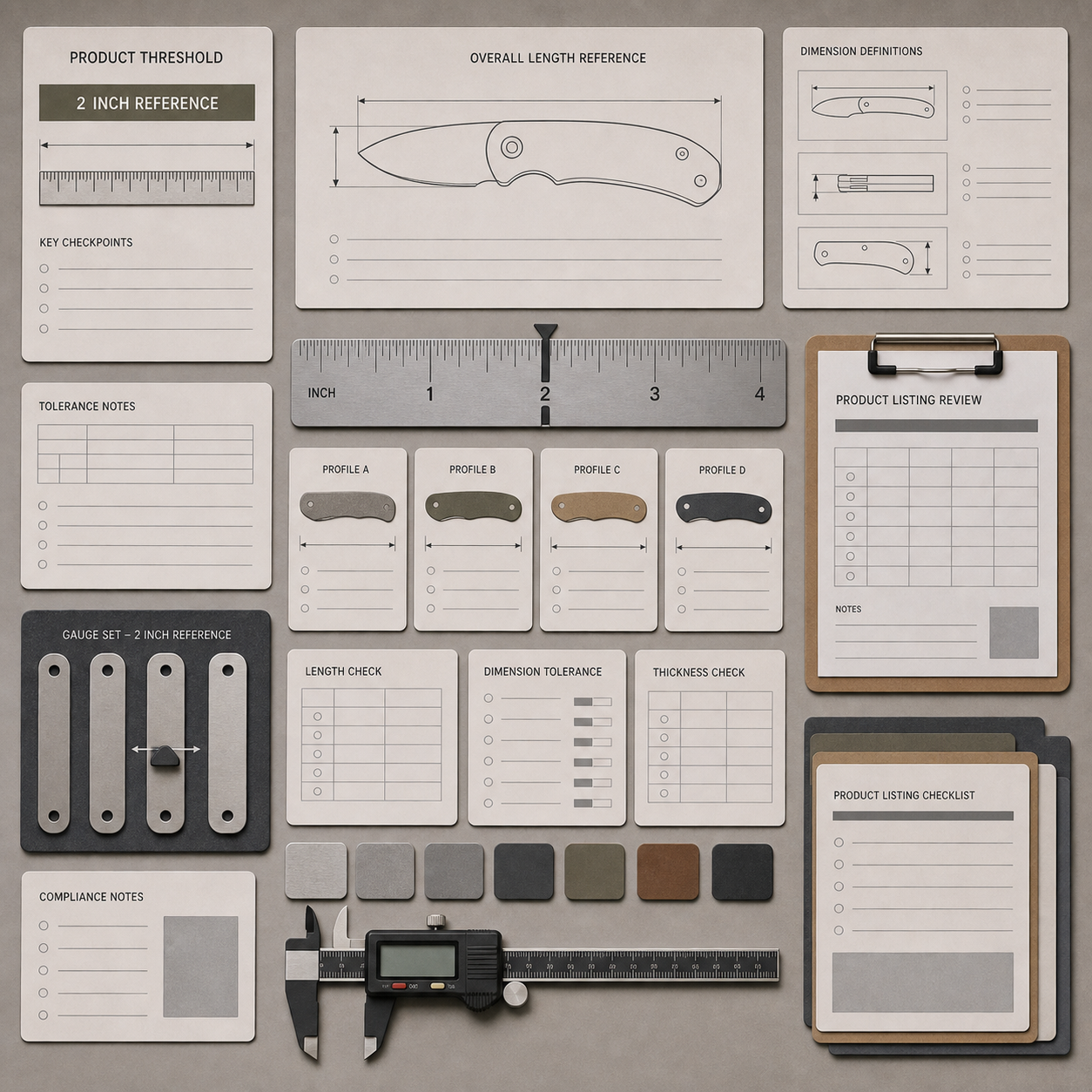
California Penal Code 21510 uses a two-inch threshold for switchblade knives. That does not mean every folding knife over two inches is automatically restricted. The mechanism matters. But it does mean a buyer should be very careful when the design is close to that threshold and the mechanism raises questions. I recommend defining blade length clearly in drawings, inspection sheets, product listings, and packaging files.
This is especially important for online sellers. A factory may measure from one point. A retailer may list a rounded number. A marketplace may use a different product field. A customer may complain based on the number printed on the page. These small gaps can create unnecessary risk. For California-market SKUs, I prefer to lock the blade-length value during sample approval and keep the same value across the quote sheet, QC report, packaging, and website copy. If the product is near a regulated limit, the buyer should get legal review before committing to production.
| Measurement item | What can go wrong | Practical control |
|---|---|---|
| Drawing length | Engineering value differs from listing | Use one approved dimension source |
| Sample length | Actual part exceeds target | Check pre-production samples |
| Product listing | Rounded number causes confusion | Approve exact wording |
| Batch control | Mass production varies | Add final inspection sampling |
How Should Folding Knife Lock and Blade Position Be Described?
Some buyers focus only on blade length. They miss the difference between a closed folder and a blade exposed and locked open.
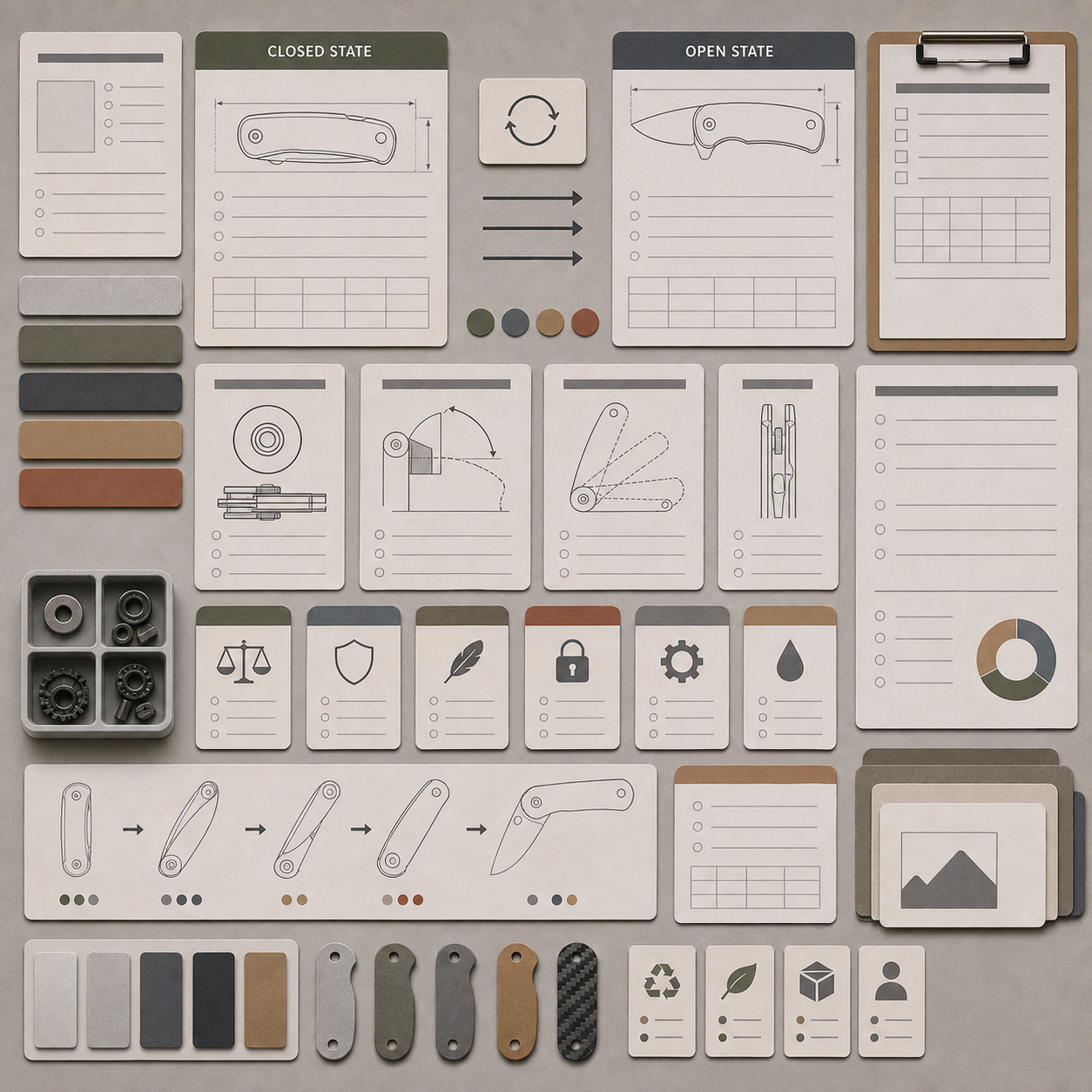
Buyers should describe folding knives by closed position, lock type, opening method, and intended retail category. California Penal Code 16470 treats folding knives differently when the blade is exposed and locked into position.
I Keep Structure Language Precise
For folding knives, California's Penal Code 16470 is useful because it defines dirk or dagger and includes language about a nonlocking folding knife, a folding knife not prohibited by Section 21510, or a pocketknife. The key production point is that blade position and lock status matter. A closed pocket knife is not described the same way as a blade exposed and locked into position.
For sourcing, I turn that into a documentation rule. The RFQ should not only say "liner lock knife." It should say whether the product is a manual folder, how it opens, what lock structure it uses, what blade length is planned, and how it will be described in retail copy. This protects the buyer from confusing a lock-quality feature with a compliance claim. A strong lock can improve user experience, but it does not replace legal review. I prefer to describe structure in plain manufacturing terms and leave legal conclusions to the buyer's counsel.
| Folding knife detail | Manufacturing meaning | Compliance review note |
|---|---|---|
| Closed position | Blade sits inside handle | Important for product description |
| Lock type | Liner, frame, back, button, or other | Needs accurate structure review |
| Opening method | Manual, thumb stud, nail nick, or other | Must match listing language |
| Blade status | Exposed and locked or closed | Affects how the product is assessed |
What Should Buyers Know About Fixed-Blade and Straight Knife SKUs?
A straight knife can be easier to understand mechanically, but that does not mean the selling risk disappears.
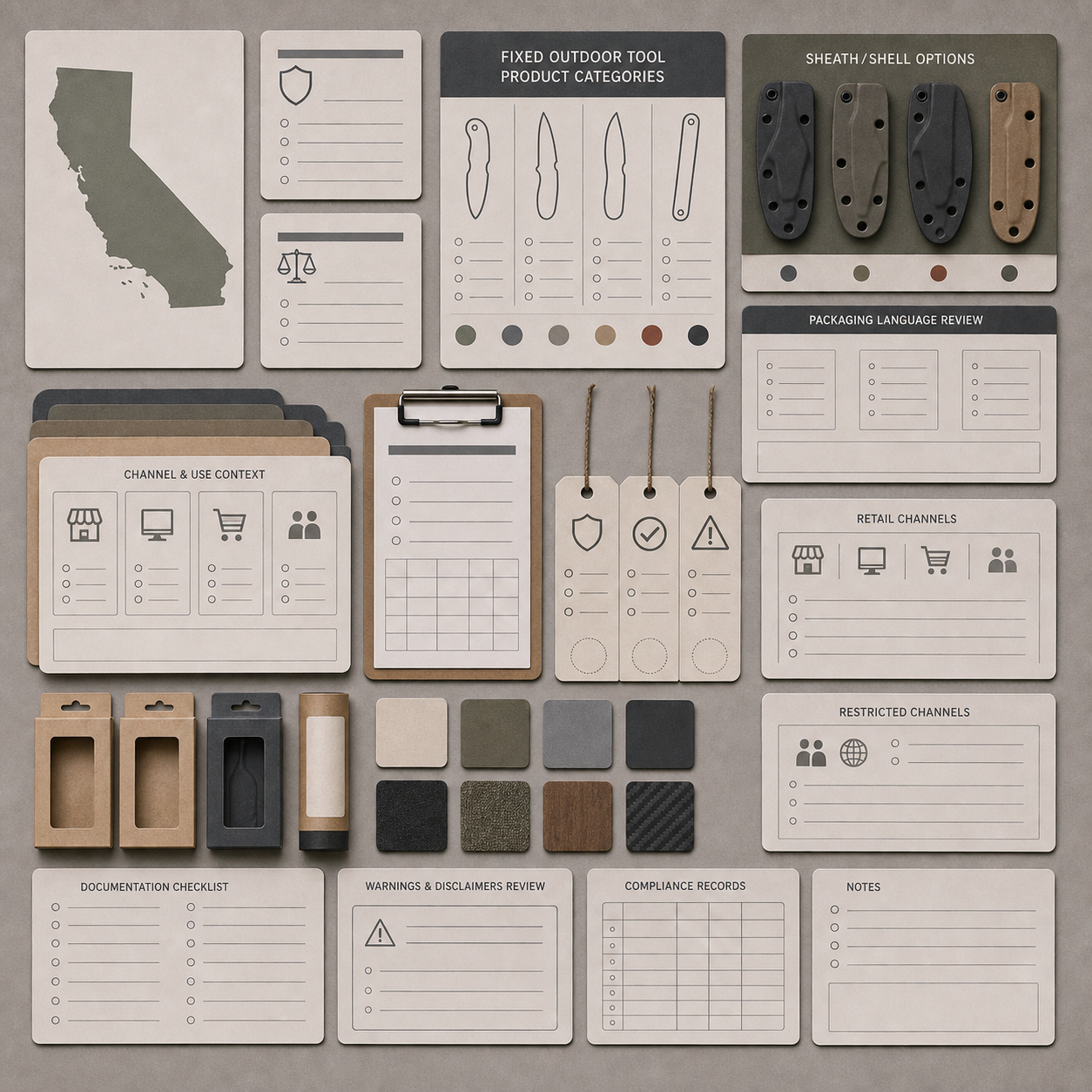
For fixed-blade and straight knife SKUs, buyers should review sheath design, packaging language, blade length, channel use, and California rules such as Penal Code 20200 and 21310 before production.
I Treat the Sheath as Part of the Product
Many buyers separate the knife from the sheath when they build a sourcing request. I do not. For a fixed-blade or straight knife, the sheath is part of the product system. It affects packaging, user instructions, retail display, and how the buyer explains the SKU. California Penal Code 20200 addresses a knife carried in a sheath worn openly from the waist in relation to certain carry rules. I do not turn that into consumer advice, but I do use it to remind buyers that sheath language matters.
Penal Code 21310 also matters for dirk or dagger treatment when a product is hidden on the person. For B2B selling, the practical answer is to avoid vague packaging copy that suggests the knife is made for hidden carry or aggressive use. A camping knife, fishing knife, rescue knife, or outdoor utility knife should be described by work function, materials, sheath retention, and safe storage. The supplier can help with product structure and packaging, but the importer or retailer should confirm legal language for the market.
| Fixed-blade item | Buyer should define | Why it matters |
|---|---|---|
| Sheath material | Nylon, Kydex-style, leather, or plastic | Affects safety and retail positioning |
| Attachment method | Belt loop, clip, or pack mounting | Affects product description |
| Blade length | Exact drawing and listing value | Supports channel review |
| Packaging copy | Outdoor, camping, fishing, or utility use | Reduces vague or risky claims |
What Product Types Need Extra Caution Before California Sales?
Some knife ideas should be stopped before sampling. A supplier quote cannot fix a restricted product concept.
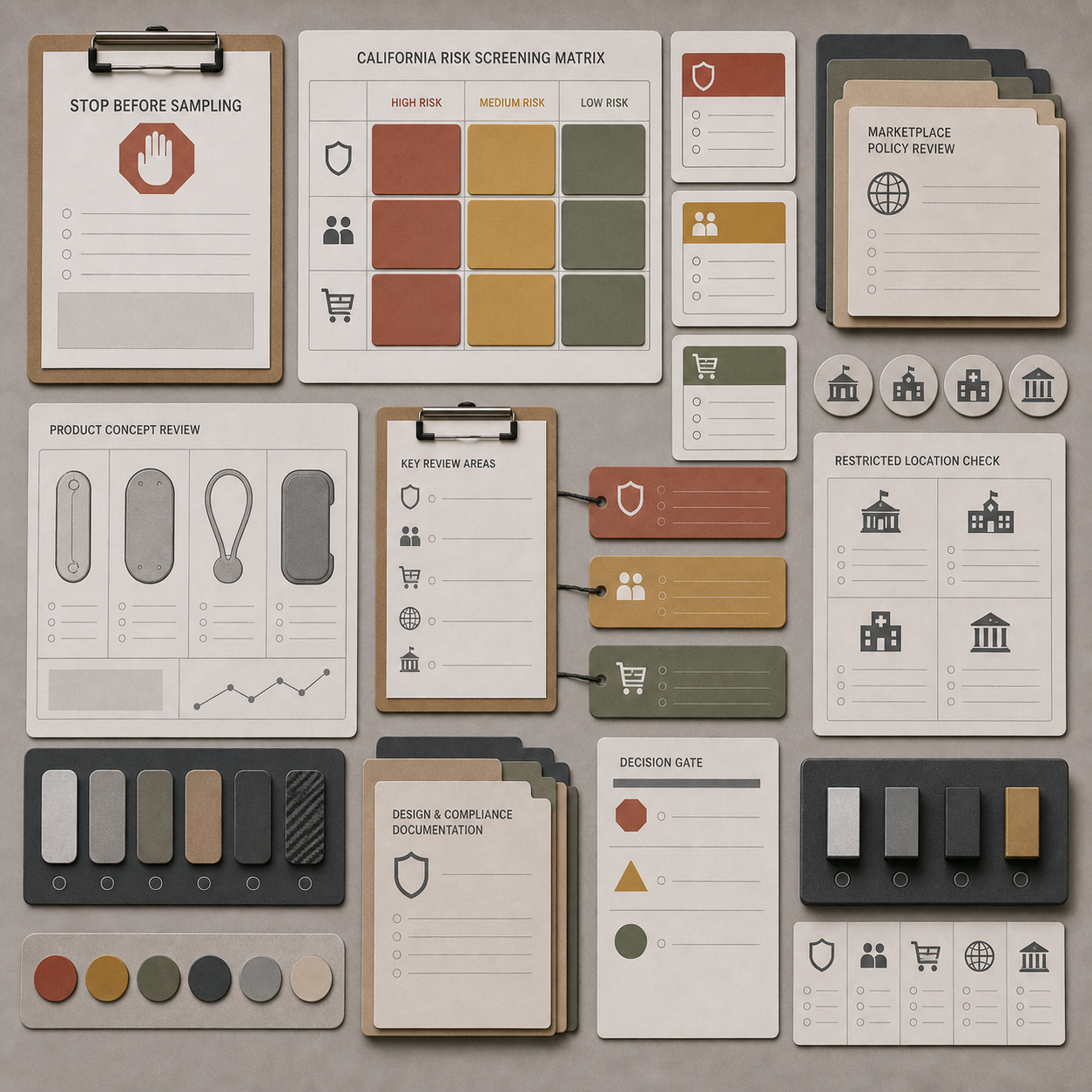
Buyers should use extra caution with switchblade designs, ballistic knife concepts, gravity-style mechanisms, automatic release structures, and products aimed at restricted locations such as schools or campuses.
I Prefer to Reject Risky Concepts Early
Some concepts do not need a better price. They need a stop sign. California Penal Code 21110 addresses ballistic knives and includes manufacturing, import, sale, transfer, and possession language. Federal law also addresses switchblade distribution in interstate commerce and ballistic knives. The govinfo U.S. Code page for 15 U.S.C. 1242 and related sections is a useful source for that federal layer.
I also watch for location-based issues. California Penal Code 626.10 contains rules for schools and campuses, including knife categories and blade-length language. For a manufacturer, this does not mean every general utility SKU is a problem. It means the buyer should avoid school-oriented marketing, youth-focused positioning, or any copy that ignores location limits. I prefer to keep California-market knife products in clear adult retail, outdoor, work, camping, fishing, rescue, or general utility categories, with legal review from the buyer's side.
| Product or channel issue | Why it needs caution | Buyer action |
|---|---|---|
| Switchblade-style mechanism | California and federal rules may apply | Get legal review before sampling |
| Ballistic knife concept | State and federal restrictions are serious | Do not proceed without counsel |
| School or campus channel | Location rules can apply | Avoid inappropriate marketing |
| Ambiguous product copy | Retailers may reject the SKU | Use precise functional wording |
How Should Packaging, Web Listings, and Dealer Notes Be Written?
A compliant structure can still be sold badly. Loose product copy can create problems that the drawing never had.
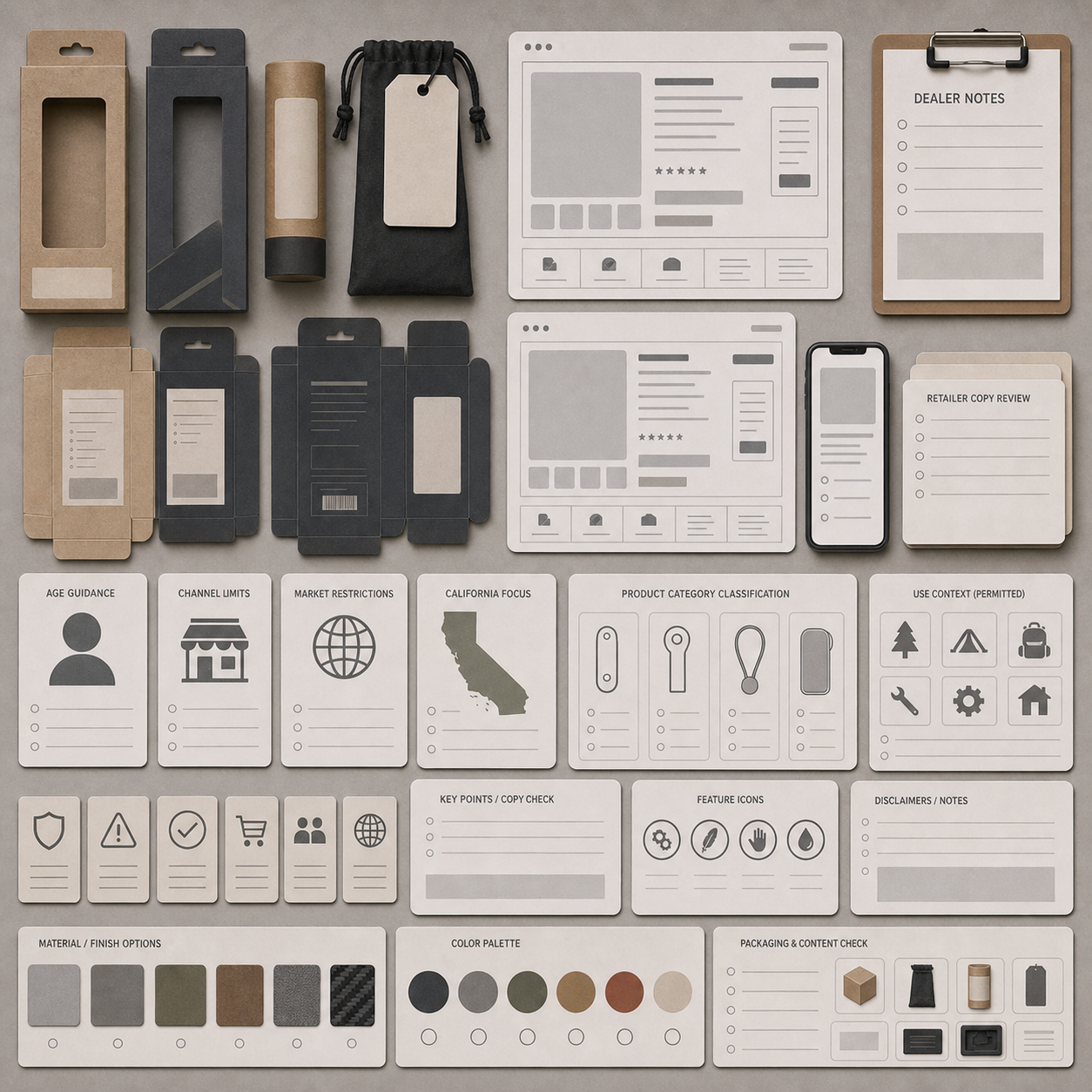
Packaging and listings should state product category, opening method, blade length, lock type, intended utility use, age/channel limits where appropriate, and a note that buyers must follow applicable laws.
I Match Marketing Words to the Actual Mechanism
For California-market knife SKUs, I like packaging that is boring in the right way. It should be accurate, consistent, and easy for a retailer to review. If a knife is a manual folding pocket knife with a thumb stud and detent, the packaging should not use language that implies automatic release. If the knife is a fixed-blade outdoor utility product, the packaging should not imply hidden carry or threatening use. Clear product copy protects the buyer more than dramatic wording.
I also recommend keeping dealer notes separate from consumer marketing. A dealer note can state that the buyer must verify state, local, and channel rules before sale. It can list the product's mechanism, blade length, lock type, and package contents. It can also note that laws may vary by city, county, marketplace, and end-use location. This is useful for importers, distributors, and private label buyers because they often sell through several channels. A strong supplier can provide accurate product specifications, but the seller owns the final market-entry decision.
| Copy area | Good practice | Risk to avoid |
|---|---|---|
| Product title | Manual folding pocket knife | Vague automatic-style wording |
| Feature bullets | Steel, handle, lock, blade length | Claims that sound like legal approval |
| Package insert | Safe storage and lawful-use reminder | Location-specific legal promises |
| Dealer sheet | Mechanism and inspection details | Missing SKU-level documentation |
What Should an RFQ Ask Before Producing California-Market Knives?
If the RFQ is too short, the supplier must guess. Guesswork is a poor foundation for a regulated market.
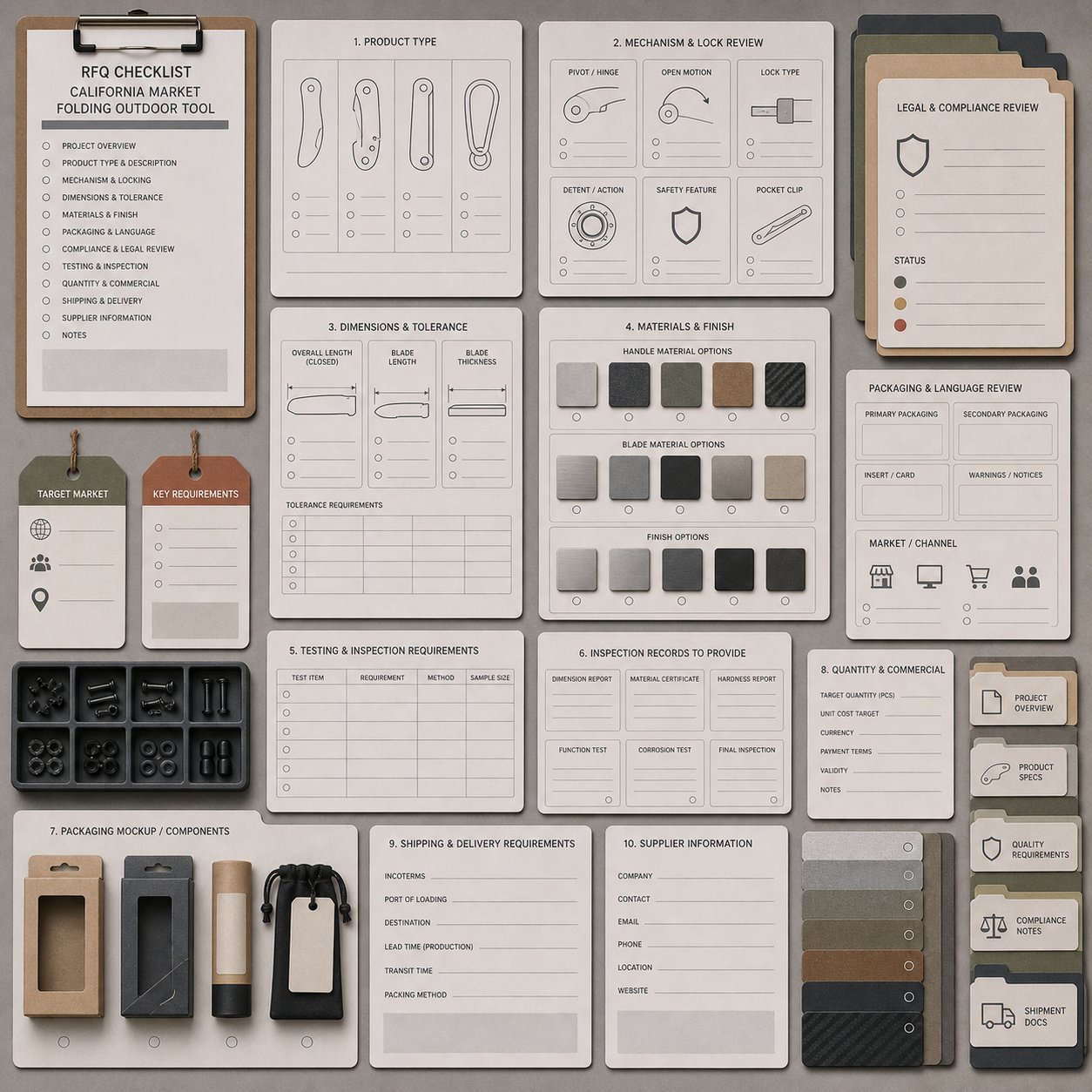
A California-market knife RFQ should ask for product type, mechanism, blade length, lock structure, steel, handle, sheath or clip, packaging language, channel limits, legal-review status, inspection records, and shipment requirements.
I Build the RFQ Around Product Evidence
When a buyer asks Vast State for a California-market pocket knife, I want the RFQ to do more than request a price. I want the RFQ to identify the product category, target buyer, sales channel, blade length, opening method, lock type, steel, handle material, finish, packaging plan, and inspection needs. If the buyer has already received legal review, the RFQ should say what design limits must be protected.
The RFQ should also ask for evidence. That can include drawings with blade length, photos of the mechanism, sample videos, lock test notes, package artwork approval, and final inspection data. For importers, shipping and federal review matter too, especially for automatic-opening or restricted concepts. A factory can help design a practical product, but the buyer should confirm the legal path for California and the wider U.S. market. This is where a supplier with OEM/ODM experience can help: we can ask the right product questions before the buyer spends money on a design that should never have entered production.
| RFQ field | What to request | Why it protects the buyer |
|---|---|---|
| Product category | Pocket knife, folding knife, fixed blade, multi-tool | Starts compliance review correctly |
| Mechanism details | Manual, thumb stud, detent, lock type | Prevents unclear design assumptions |
| Blade data | Length, thickness, drawing, tolerance | Supports listing and QC control |
| Packaging copy | Retail box, insert, dealer sheet | Keeps language consistent |
| Legal review | Buyer counsel notes or restrictions | Aligns production with market entry |
Planning a private-label knife line for this market?
Use this article as a planning reference, then confirm local requirements with your importer or compliance advisor before OEM/ODM production.
Conclusion
California knife sales need product-level review. I help buyers control mechanism, length, copy, packaging, and QC before production starts.
Source Notes
- California Penal Code 21510 supports the switchblade sale, transfer, and two-inch threshold discussion.
- California Penal Code 17235 supports the opening-mechanism and manual-folder distinction.
- California Penal Code 16470 supports the folding-knife blade-position discussion.
- California Penal Code 20200 supports the sheath-related fixed-blade discussion.
- California Penal Code 21110, Penal Code 626.10, and 15 U.S.C. 1242 support extra caution for restricted product types, school locations, and federal shipping review.