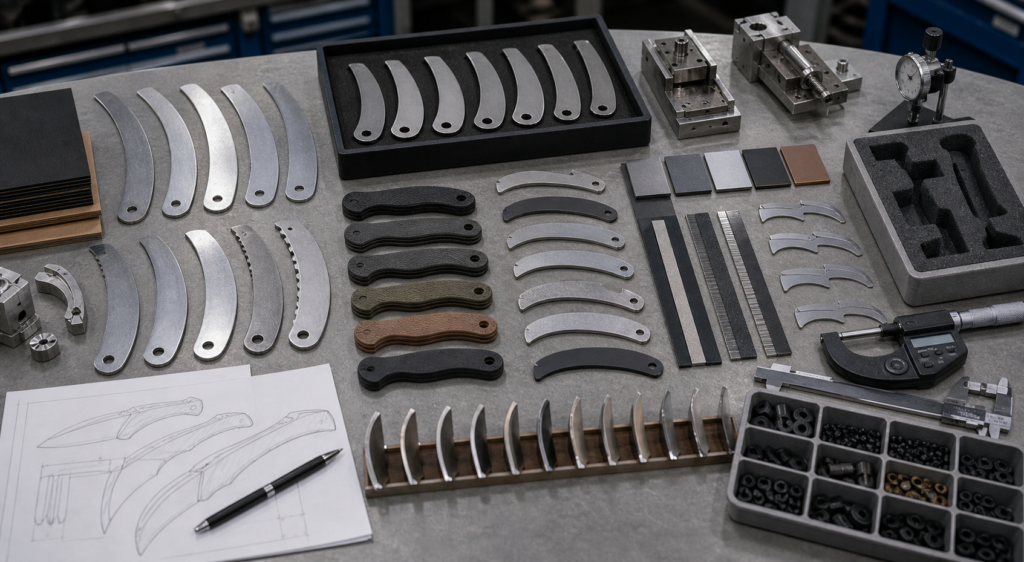
A hawkbill blade looks distinctive, but the shape can become a sourcing problem. Wrong geometry can hurt cutting feel, sharpening, and market fit.
Knife buyers should source hawkbill blades by matching the curved edge, tip control, steel, heat treatment, handle ergonomics, serration choice, finish, safety expectations, and quality checks to the product's real cutting task and target buyer.
Quick buyer brief:
- Answer: A hawkbill blade is a task-focused curved blade, not a universal blade shape.
- Buyer context: This helps knife brands, outdoor brands, importers, wholesalers, distributors, and private label buyers develop hawkbill folders or fixed blades.
- Key checks: Confirm cutting task, curve depth, tip shape, edge style, steel, handle grip, lock strength, sharpening plan, packaging, and inspection standard.
Have a knife or multi-tool project in mind?
Send your sketch, CAD file, sample photo, or product idea. Vast State can review manufacturability, suggest materials, estimate MOQ, and prepare a quote for your OEM/ODM project.
When a buyer asks me for a hawkbill blade, I do not start with the shape alone. I ask what the blade must cut, how the user will hold it, whether the buyer wants plain edge or serrations, and what price range the product must hit. A hawkbill blade can be useful for pull cuts, rope, cord, packaging, pruning-style work, rescue tasks, and some outdoor utility tasks. But it can also disappoint buyers if the curve is too deep, the point is too aggressive, the handle does not support the pull motion, or the edge is difficult for the end user to maintain. In OEM and ODM sourcing, the right hawkbill knife is built around a use case, not around a dramatic profile.
What Makes a Hawkbill Blade Different From a Standard Blade?
Many buyers notice the curved profile first. But the real difference is how the edge enters and holds material during a pull cut.
A hawkbill blade has a concave cutting edge and a downward-pointing tip. This shape helps the edge catch and draw through material, but it needs careful geometry, handle support, and user expectation control.
I Treat the Curve as a Functional Geometry
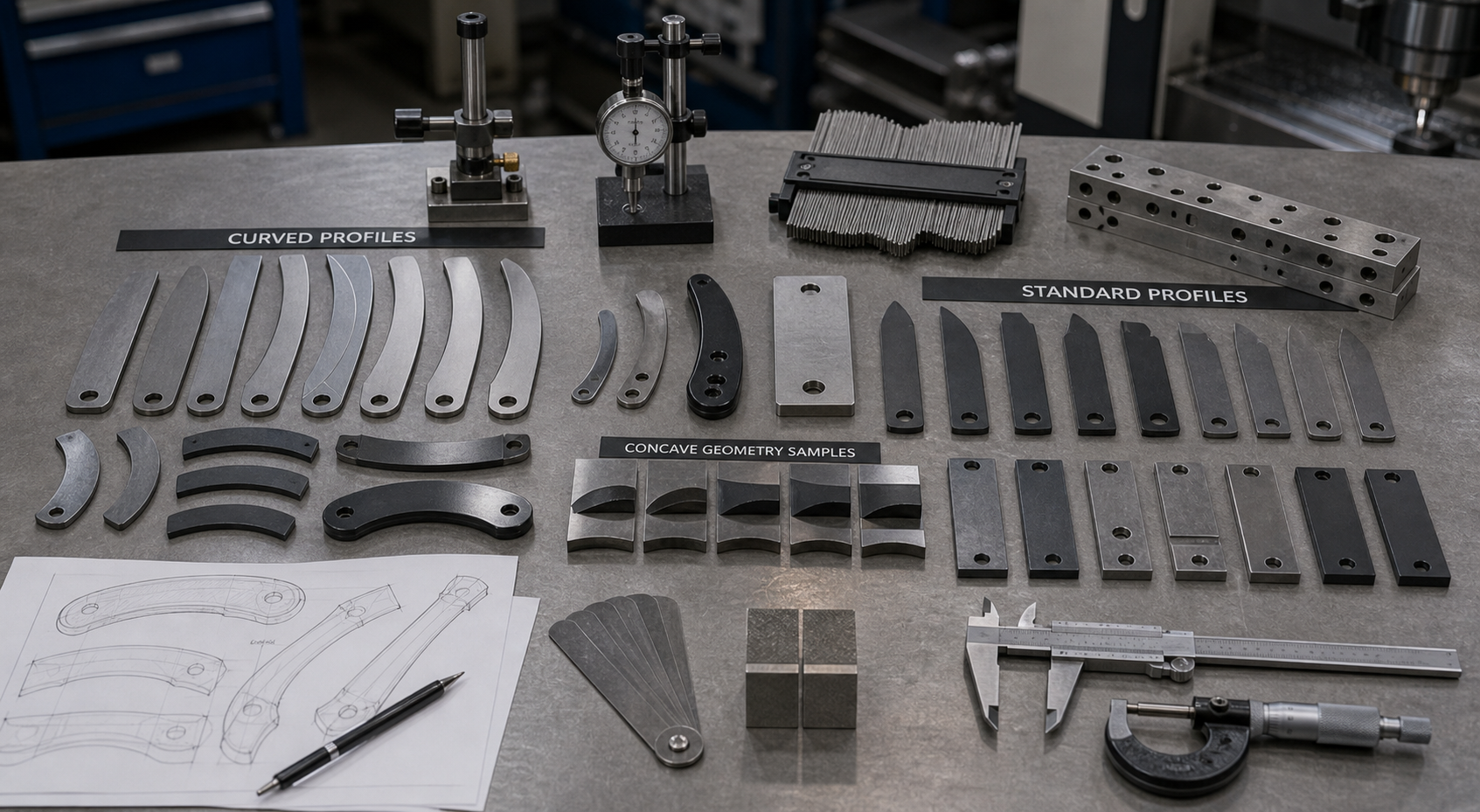
The hawkbill shape changes the cutting experience. A straight or drop point blade often pushes or slices across material. A hawkbill blade tends to catch material and pull it into the edge. This can help with cord, rope, webbing, packaging straps, plant stems, netting, carpet, and similar materials. The shape can also make tip control more direct in some cutting angles. But this same catching action can feel too aggressive if the product is sold as a general EDC knife.
In production discussions, I separate three parts of the blade. The first is the curve depth. A shallow curve is easier to use for more tasks. A deep curve can feel more specialized. The second is the tip. A needle-like tip may look sharp, but it can be fragile or risky for some markets. A stronger working tip is often better for B2B orders. The third is the belly and edge path. The edge must be grindable, sharpenable, and repeatable in production.
For buyers, the main question is not whether the hawkbill looks unique. The question is whether the shape solves a real cutting problem for the target user.
| Blade feature | What it changes | Sourcing takeaway |
|---|---|---|
| Concave edge | Pulls material into the cutting path | Useful for cord, straps, and fibrous material |
| Downward tip | Improves hooking and controlled entry | Needs strength and safety review |
| Curve depth | Changes specialization level | Shallow curves are easier for broader markets |
| Edge length | Affects cutting stroke and sharpening | Match length to task and handle size |
OEM/ODM RFQ Checklist
Prepare these details to help Vast State review your project and provide a more accurate quotation.
| RFQ Field | What to Prepare |
|---|---|
| Project type | OEM from drawing / ODM private label / wholesale catalog |
| Product category | Folding knife / fixed blade / multi-tool / outdoor tool |
| Design status | Idea / sketch / 2D drawing / 3D CAD / physical sample |
| Target price | Ex-factory target price or retail price range |
| MOQ expectation | 500 / 1,000 / 3,000 / 5,000+ pcs |
| Logo method | Laser engraving / etching / printing / molded logo |
| Packaging | Standard packaging / custom retail box / Amazon-ready |
| Market | USA / EU / Japan / Korea / Middle East / other |
| Compliance needs | Buyer-specified testing / documentation / labeling |
| Timeline | Sample deadline / mass production deadline |
Which Cutting Tasks Fit a Hawkbill Blade Best?
A hawkbill blade can be excellent in the wrong market and wrong in the right catalog. The task decides the value.
Hawkbill blades fit pull-cut tasks such as rope, cord, webbing, packaging straps, pruning-style work, rescue utility, and controlled material cutting. They are less ideal as all-purpose slicing blades.
I Connect the Shape to the End User
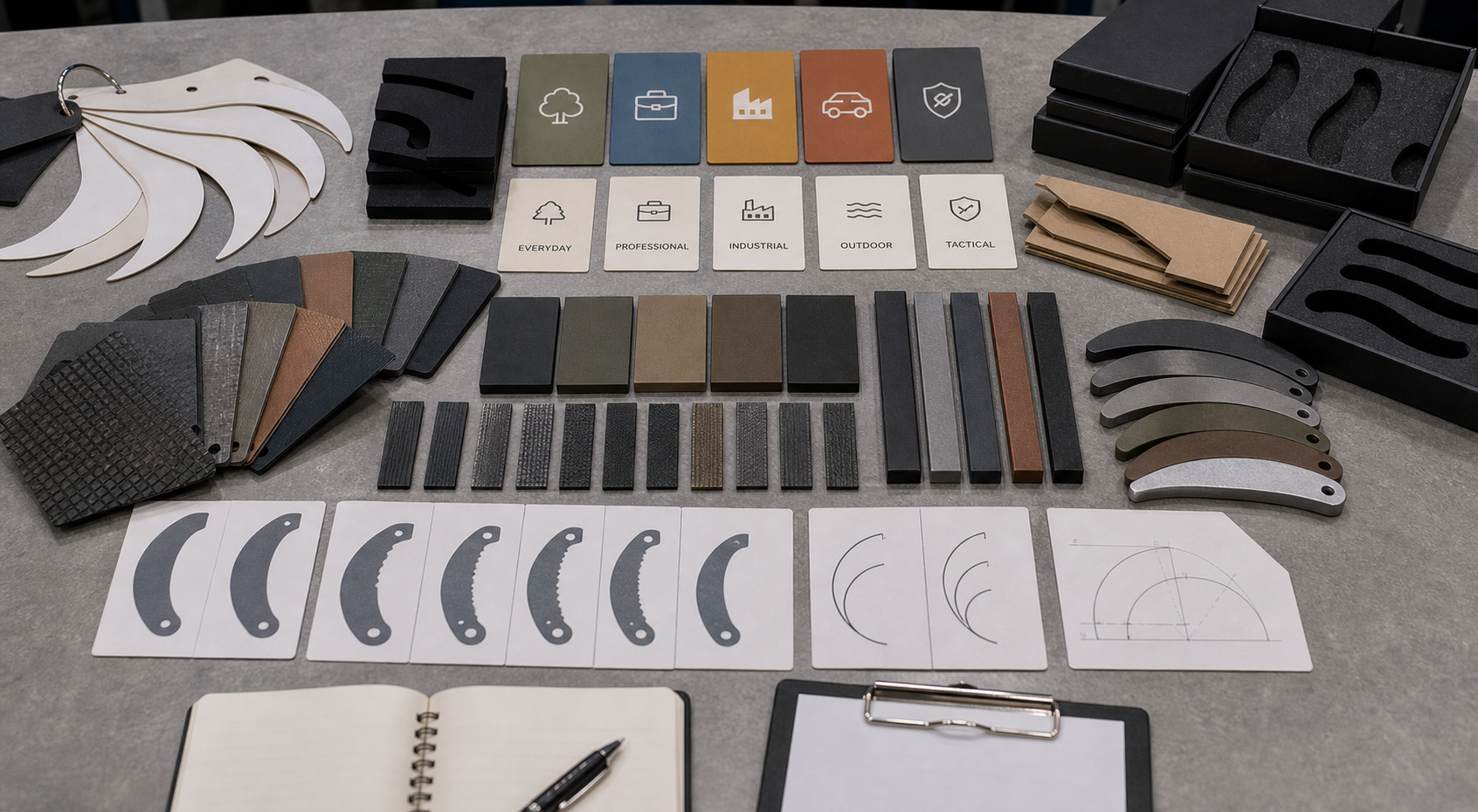
When I review a hawkbill project, I ask who will buy the knife and what they expect. An outdoor buyer may want a compact tool for cord, rope, fishing line, or camp utility. A warehouse or industrial buyer may care about packaging straps, shrink wrap, and safety around contents. A rescue-oriented buyer may care about webbing, seatbelt-like material, and fast pull cuts. A gardening or pruning-style buyer may care about stems and controlled cuts.
Official safety guidance can help buyers think beyond blade shape. WorkSafe Queensland's knives at work guidance discusses matching knife type to task, including safer cutters for packaging and knives with non-slip handles. That does not prove a hawkbill is the best knife for every job. It does support the sourcing principle that cutting tool selection should start with task, material, and user safety.
I also watch for over-positioning. If a buyer wants one SKU to satisfy EDC, tactical, rescue, gardening, packaging, and outdoor users at once, the hawkbill shape may become too broad in promise and too narrow in use. It is better to define one primary task and two secondary tasks. That makes the blade shape, handle, edge, and packaging message much easier to control.
| Target task | Hawkbill advantage | Buyer caution |
|---|---|---|
| Rope and cord | Edge catches round material well | Serration may be needed for some users |
| Packaging straps | Pull cut can be controlled | Tip safety and contents protection matter |
| Outdoor utility | Useful for cordage and camp material | Less universal than a drop point |
| Pruning-style work | Curved edge supports draw cuts | Steel and cleaning needs matter |
How Should Buyers Match Hawkbill Geometry to the Target Market?
The same curve can look exciting online and feel awkward in hand. Geometry must match price, use, and customer skill level.
Buyers should define curve depth, blade length, tip strength, spine thickness, edge angle, serration area, and handle clearance based on whether the knife is for EDC, outdoor, work, rescue, or specialty cutting.
I Avoid Overbuilding the Curve
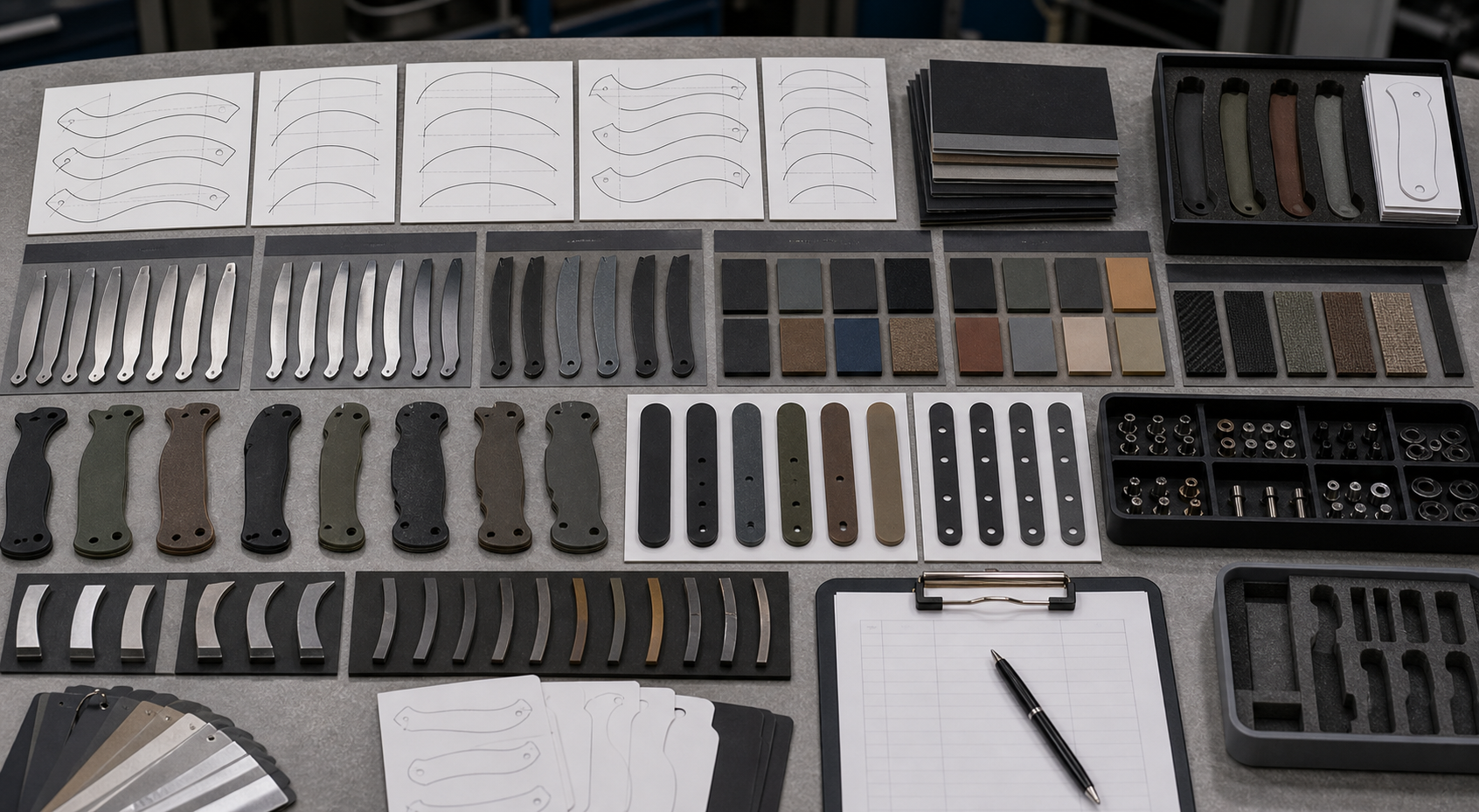
A hawkbill blade does not need to be extreme to work. In many OEM projects, a moderate curve is more useful than a dramatic curve. A very deep curve can catch material strongly, but it can also reduce general slicing ability and make sharpening harder. A very thin tip can improve entry, but it may be easier to damage. A thick tip can improve strength, but it may reduce precision. These are trade-offs, not decoration choices.
Blade length also matters. A short hawkbill folder can be easy to carry and useful for cord. A longer hawkbill may give better reach and cutting stroke, but it may feel less friendly for everyday carry. Spine thickness affects strength, grinding time, weight, and price. Edge angle affects sharpness, durability, and maintenance. The buyer should not approve a CAD shape only because it looks aggressive. The buyer should approve it after checking the real hand position, cutting material, and sharpening plan.
For B2B buyers, market positioning is the filter. A budget utility hawkbill should be simple, durable, and easy to produce. A higher-end outdoor hawkbill can justify better steel, smoother action, stronger finish, and more refined handle material. A rescue-focused version may need a different tip, handle color, glass breaker, or belt cutter, depending on the product concept and local compliance review.
| Geometry decision | Market effect | Manufacturing effect |
|---|---|---|
| Shallow curve | More general utility | Easier grinding and sharpening |
| Deep curve | More task-specific pull cutting | Higher consistency challenge |
| Stronger tip | Better durability | May reduce piercing precision |
| Serrated section | Better fibrous material cutting | Requires clear sharpening and QC plan |
Which Steel and Heat Treatment Choices Matter for Hawkbill Blades?
A hawkbill blade often works on tough, fibrous, or dirty material. A poor steel choice can turn that task advantage into edge complaints.
Steel and heat treatment for hawkbill blades should balance edge retention, toughness, corrosion resistance, sharpening difficulty, price, and repeatability. The best option depends on the buyer's target market.
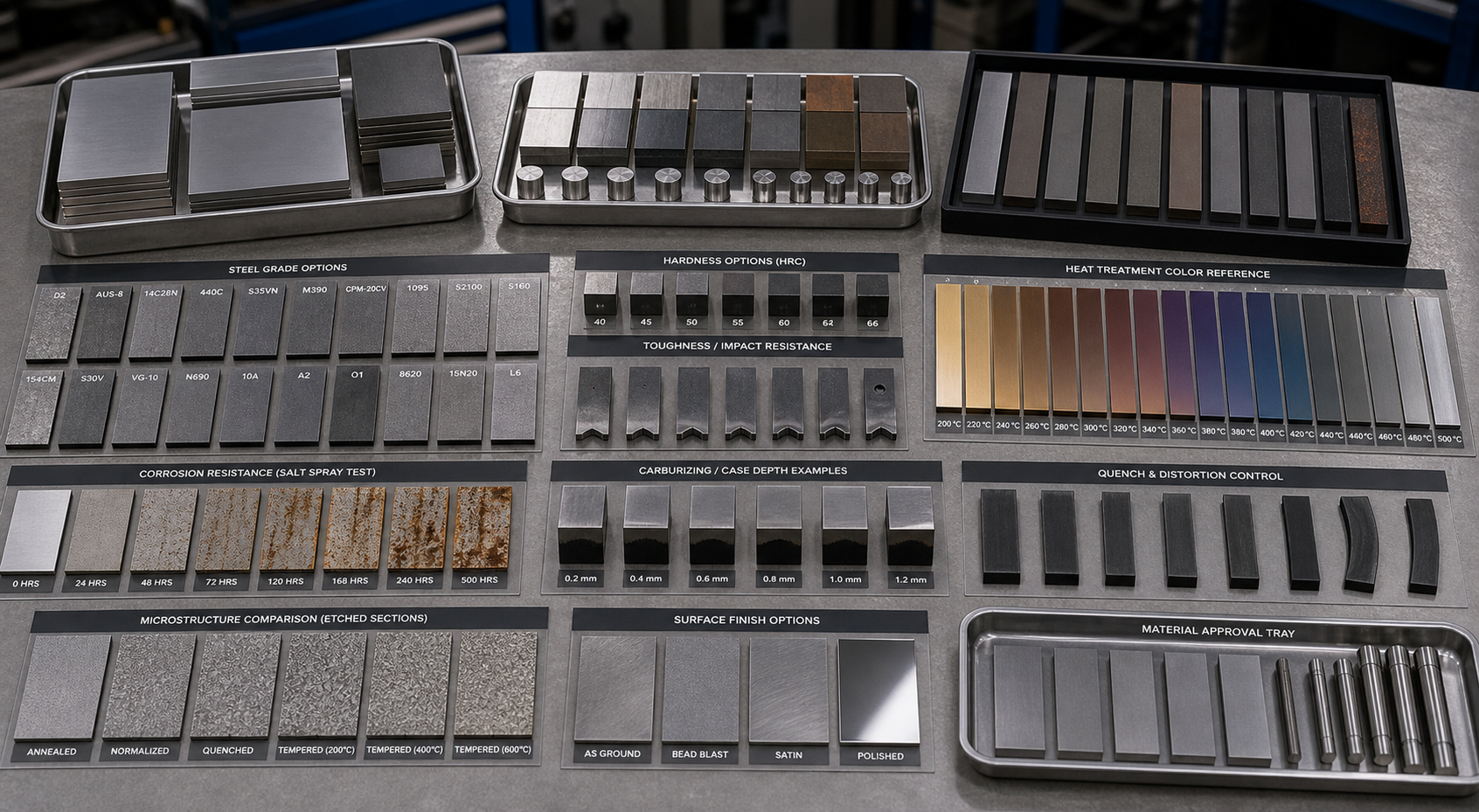
I Balance Edge Performance With Real Maintenance
The steel decision should follow the use case. A hawkbill used around rope, straps, and outdoor moisture may need better corrosion resistance and stable edge performance. A pruning-style product may face sap, dirt, and moisture. A warehouse or packaging tool may see cardboard, tape adhesive, and repeated edge contact. A private label EDC knife may need a balance of cost, corrosion resistance, and easy maintenance.
Alleima describes 14C28N knife steel as a knife steel option designed for applications where edge performance, hardness, and corrosion resistance matter. I do not treat one steel as the answer for every buyer. I use sources like this to explain trade-offs. A buyer can choose 8Cr, 9Cr, D2, 14C28N, or another steel depending on target price and market expectation. The key is to avoid choosing steel only by name.
Heat treatment is just as important. A good profile with poor hardness control is still a poor blade. A technical reference such as the NIST guide to Rockwell hardness measurement helps explain why hardness testing must be controlled and repeatable. In actual sourcing, I ask for target hardness range, batch testing method, and sample performance review. I also check whether the edge is plain, serrated, or mixed, because serrations change grinding and inspection work.
| Steel factor | Why it matters | Buyer checkpoint |
|---|---|---|
| Corrosion resistance | Outdoor, rope, garden, and moisture use | Match steel to use environment |
| Toughness | Tip and edge durability | Avoid brittle geometry and overhardening |
| Edge retention | Repeated cutting of fibrous material | Confirm heat treatment and edge angle |
| Sharpening ease | End-user maintenance | Explain plain edge or serration care |
How Do Handle Ergonomics and Safety Affect Hawkbill Knife Design?
A hawkbill blade pulls material into the edge. If the handle is wrong, the user may feel less control.
Handle ergonomics for a hawkbill knife should support pull cuts, grip security, finger clearance, opening method, lock access, and stable wrist position. Safety starts with how the user holds the tool.
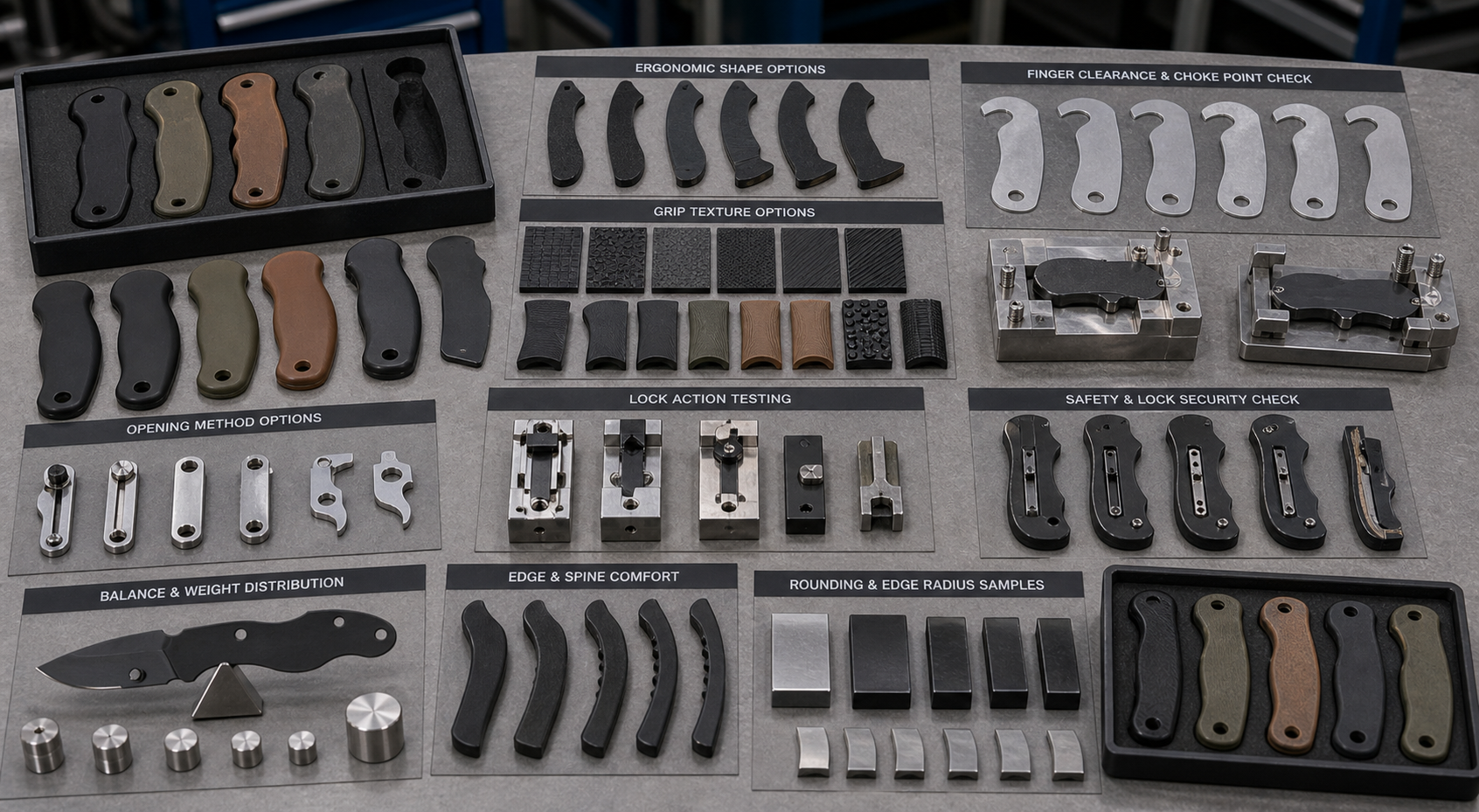
I Design the Handle Around the Pull Motion
The handle is not separate from the blade. A hawkbill knife often works with a pulling motion, so the handle must help the user control that motion. A slippery handle can make the blade feel risky. A handle that is too thin may reduce leverage. A handle with poor finger clearance may feel uncomfortable when the user pulls through resistant material. The wrong pocket clip position or opening method can also make the product less friendly for daily carry.
The Canadian Centre for Occupational Health and Safety has a useful hand tool ergonomics resource that discusses fit, grip, wrist posture, and tool selection. It is not a knife design manual, but it supports an important sourcing point: tool design should reduce awkward hand positions and improve control. For hawkbill knives, I translate that into handle contour, texture, finger guard, choil shape, lock access, and opening method.
For a folding hawkbill, I also check lock strength and closing safety. A curved blade can have a strong visual identity, but the moving structure must still be stable. The pivot, washers or bearings, stop pin, lock face, liner, frame, and handle screws all affect user confidence. For fixed hawkbill knives, sheath retention and draw angle matter. The blade should not cut the sheath during repeated draw and insertion.
| Handle detail | Why it matters | Practical sourcing check |
|---|---|---|
| Texture | Supports grip during pull cuts | Compare G10, FRN, rubber-like, or metal handles |
| Finger clearance | Protects comfort and control | Test with realistic hand positions |
| Lock access | Affects safe closing | Check release comfort and blade path |
| Sheath or clip | Controls carry experience | Test retention, rub marks, and draw angle |
What Manufacturing Challenges Make Hawkbill Blades Harder to Produce?
A hawkbill blade may look simple in a drawing. In production, the curved edge changes grinding, sharpening, inspection, and assembly.
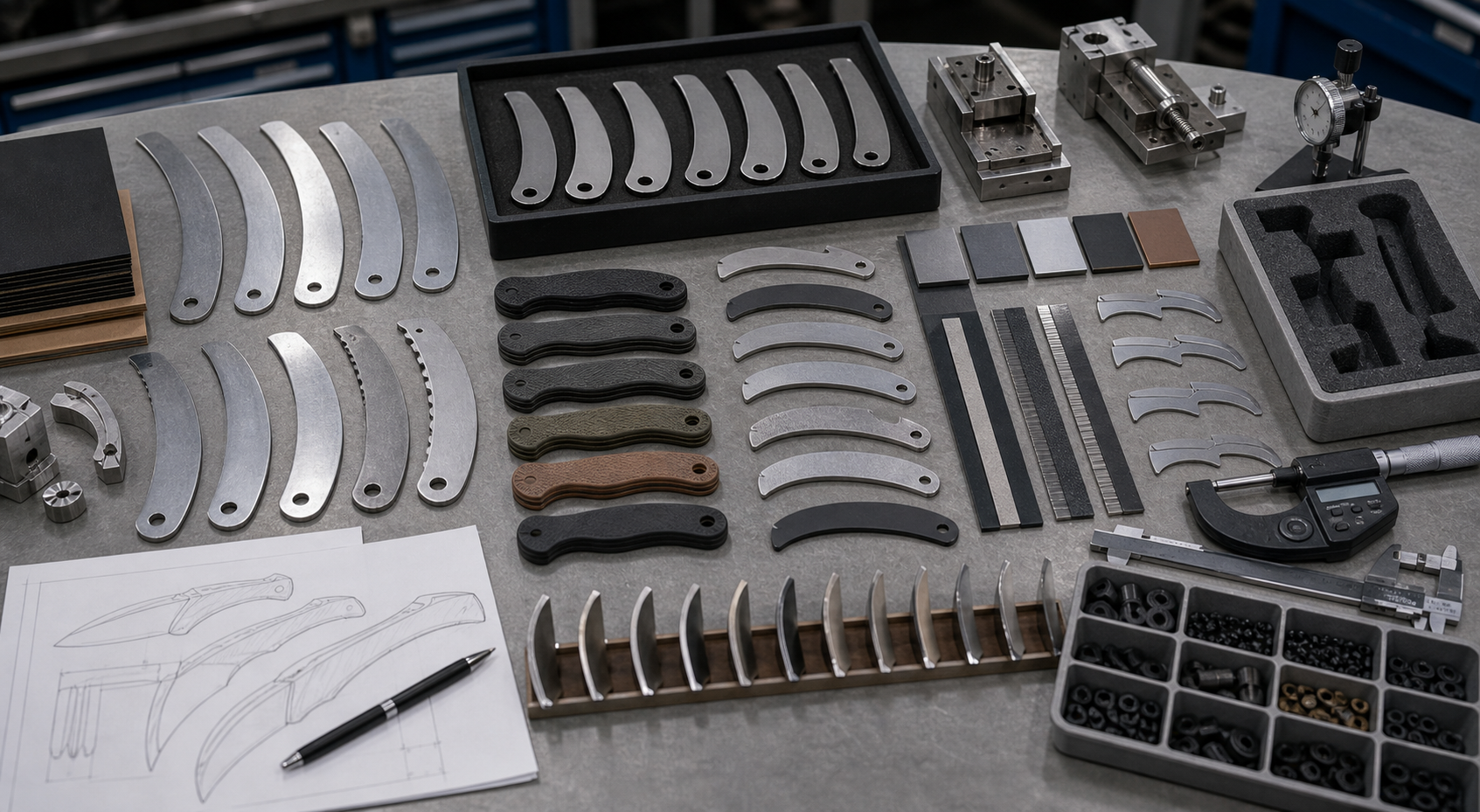
Hawkbill manufacturing challenges include profile accuracy, concave bevel grinding, tip consistency, serration setup, burr removal, coating coverage, sharpening access, blade centering, and edge protection during assembly.
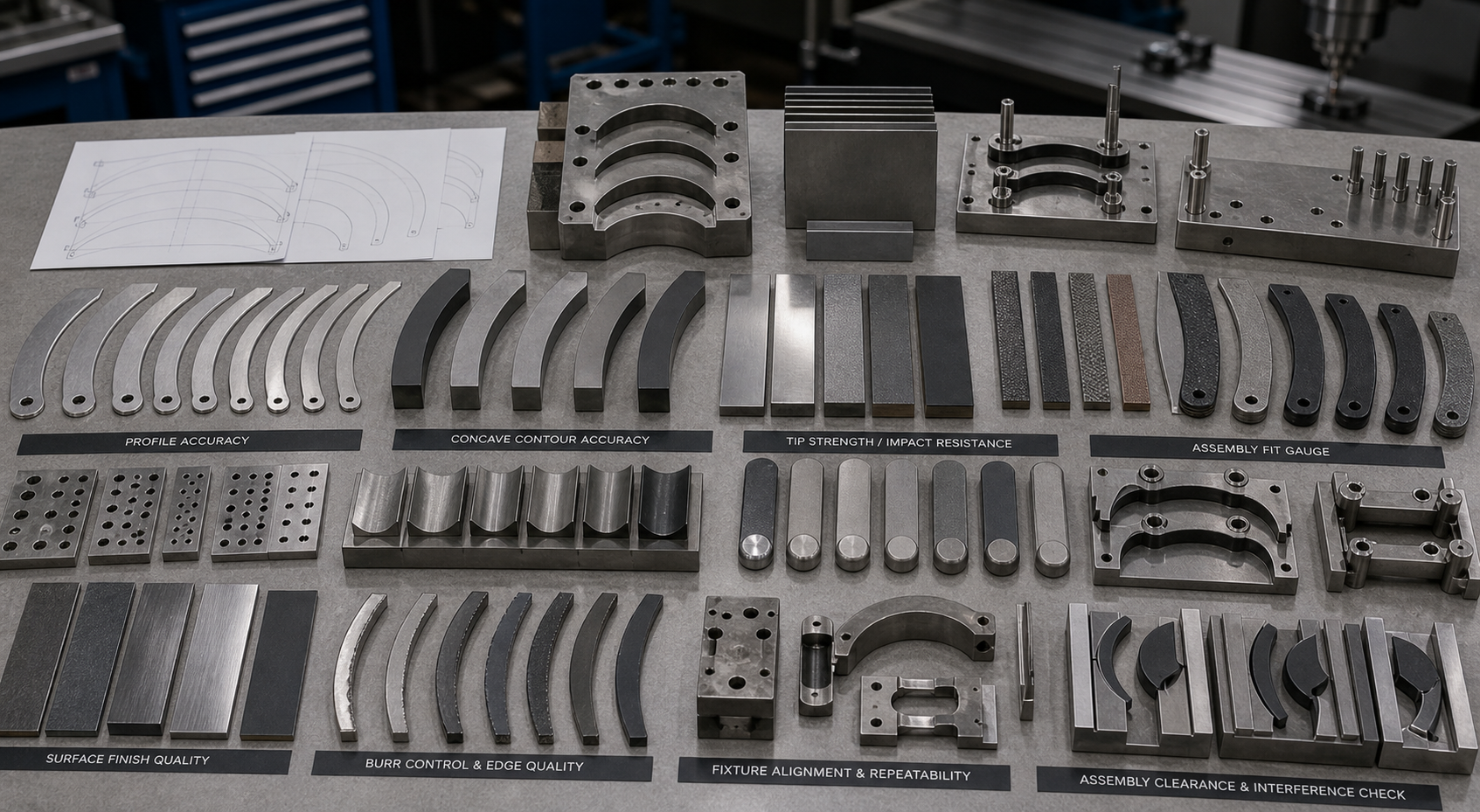
I Watch the Edge Path From Blank to Final Knife
The curved edge is the main production challenge. On a standard blade, grinding and sharpening can be more straightforward. On a hawkbill blade, the concave edge needs controlled contact with the belt, wheel, or sharpening tool. If the operator changes pressure, the edge line can become uneven. If the tip is too thin, it can overheat or deform during grinding. If serrations are included, the setup must be consistent from piece to piece.
The pivot and tang also need attention on folding hawkbill knives. The blade must close into the handle safely. The tip must sit inside the handle without exposure. The edge must not contact backspacers, liners, or screws. Blade centering can be affected by the same issues as any folder, but the visual curve makes mistakes more noticeable. If the knife has a thumb hole, flipper, nail nick, or opening slot, the designer must check how those features fit the curved blade profile.
Coating and finishing can add more challenges. A dark coating may highlight uneven bevels. Stonewashing may soften visual contrast but can also change the final look. Laser marking on a curved blade must be positioned carefully. Packaging must also protect the tip and edge during shipping. This is why I prefer to approve a production-intent sample before mass production.
| Manufacturing point | Main risk | Control method |
|---|---|---|
| Profile cutting | Curve variation | Check template or CNC profile tolerance |
| Bevel grinding | Uneven edge line | Use controlled fixtures and trained operators |
| Tip finishing | Weak or overheated point | Define tip strength and inspection method |
| Folding assembly | Tip exposure or blade rub | Test closed position and centering |
Which Finish, Edge, and Serration Options Should Buyers Consider?
Finish and edge style can change how a hawkbill knife sells and how users maintain it. These choices should not be added late.
Buyers should choose plain edge, serrated edge, combo edge, satin, stonewash, bead blast, coated finish, or black oxide based on cutting task, price, maintenance, corrosion expectation, and brand positioning.
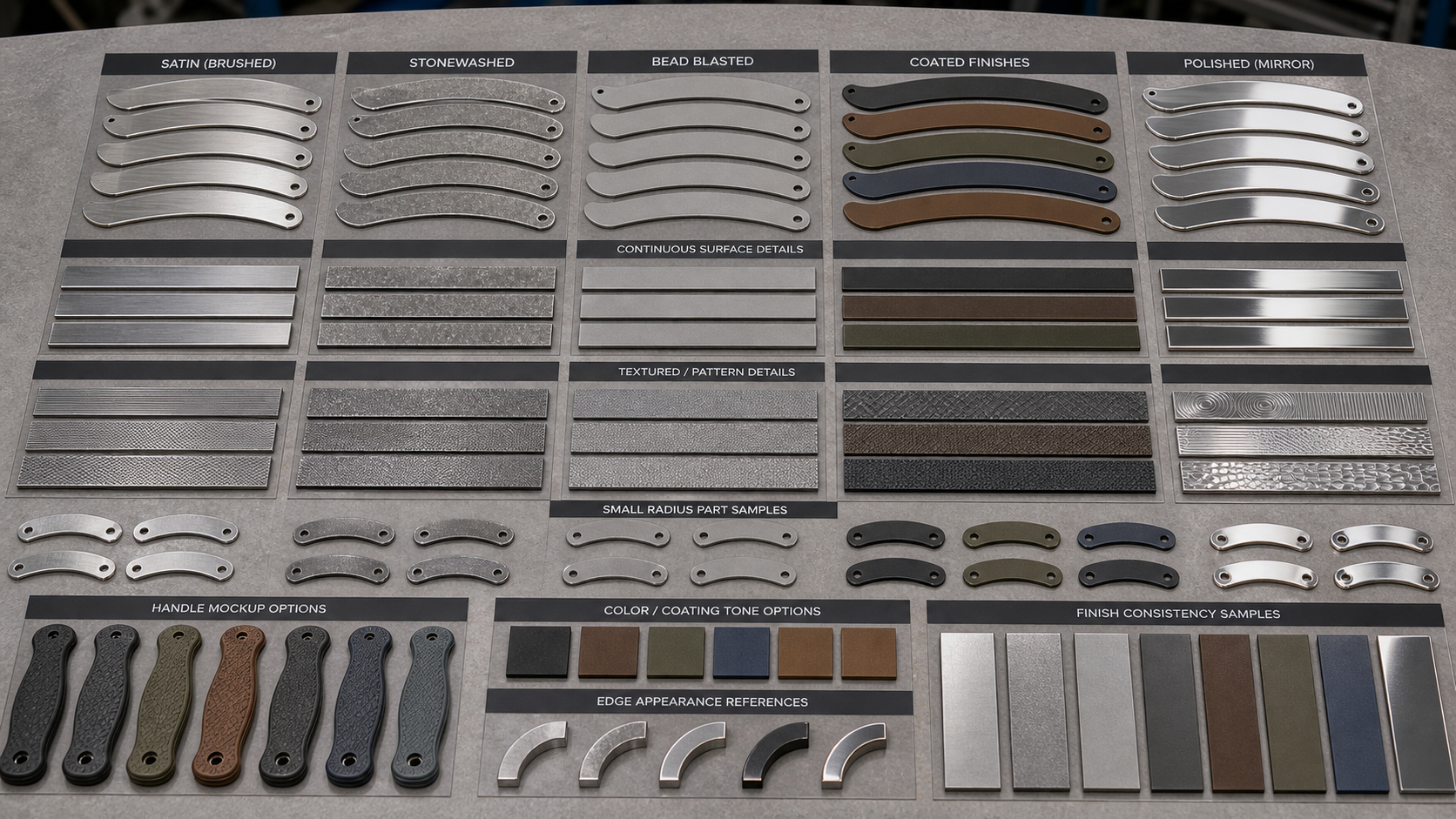
I Make Edge Style Part of the Product Brief
Plain edge hawkbill blades are easier for many users to sharpen, especially if the curve is moderate. They can work well for clean pull cuts and general utility. Serrated hawkbill blades can cut rope, straps, and fibrous materials more aggressively, but they are harder for many consumers to sharpen. Combo edges can offer a compromise, but the short edge length on compact hawkbill knives can make the division feel crowded.
Finish choice also matters. Satin can look clean and premium but may show scratches. Stonewash can hide wear better and fit outdoor or utility positioning. Bead blast can look matte but may need corrosion care depending on steel. Coatings can add color and corrosion or wear support, but they can also wear at contact points. If the buyer wants a coated hawkbill, I ask whether the blade will be plain edge or serrated, because sharpening after coating may expose steel on the cutting edge and serration points.
If the buyer wants to make performance claims about wear or corrosion, I prefer to connect those claims to supplier data or recognized methods. For example, ASTM D4060 is a recognized method for evaluating abrasion resistance of organic coatings. This does not automatically prove a hawkbill coating will survive every real use, but it gives buyers a better way to discuss testing than using vague words.
| Option | Good fit | Buyer caution |
|---|---|---|
| Plain edge | Easier maintenance and clean slicing | Curve still needs proper sharpening support |
| Serrated edge | Rope, webbing, and fibrous material | Harder consumer maintenance |
| Stonewash | Utility look and wear hiding | Must match brand positioning |
| Coating | Color and surface protection story | Contact points and exposed edge can wear |
What Quality Checks Should a Hawkbill Blade Order Include?
Hawkbill defects can hide in the curve. A buyer needs inspection points that match the blade shape.
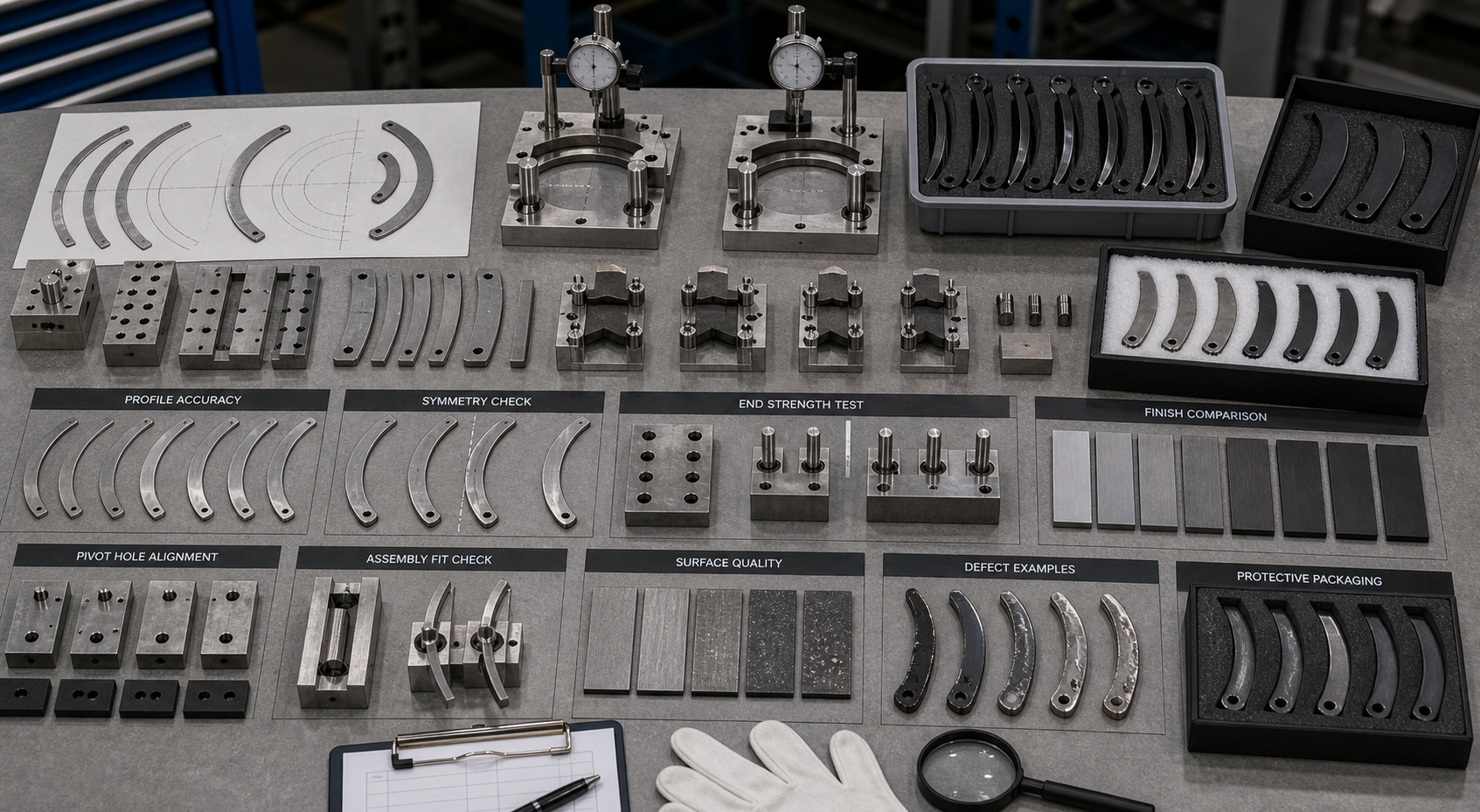
Hawkbill QC should check blade profile, curve symmetry, tip strength, edge sharpness, serration consistency, hardness, finish, pivot fit, lockup, blade centering, closed safety, packaging, and batch consistency.
I Inspect Function, Not Only Appearance
Quality control for a hawkbill blade should start before assembly. The blade profile should match the approved sample. The curve should be consistent. The tip should not be too thin unless the buyer accepts that design. The bevel should be even. The edge should be sharp along the curve, not only near the straightest area. If the blade is serrated, tooth depth and spacing should be checked. Burrs should be controlled because curved edges can hold burrs in small sections.
For folding hawkbill knives, assembly inspection is critical. I check blade centering, pivot smoothness, lock engagement, side play, vertical play, detent strength, opening action, closing path, screw tightness, and whether the tip is safely enclosed when closed. For fixed hawkbill knives, I check handle fit, sheath retention, draw path, coating rub, and packaging protection.
Quality systems also matter. ISO explains that ISO 9001 quality management is built around requirements for a quality management system. The article does not mean every knife order must claim a specific certification. It supports the broader point that repeatable process control, customer requirements, and documented checks matter. For B2B buyers, the best QC plan is not only final inspection. It is incoming material check, in-process check, assembly check, and final shipment check.
| QC stage | What I check | Why it matters |
|---|---|---|
| Blade blank | Profile, holes, tang, tip | Protects fit and function |
| Heat treatment | Target hardness and distortion | Protects edge performance |
| Assembly | Lockup, centering, closed safety | Protects user experience |
| Final inspection | Sharpness, finish, packaging | Protects sellable quality |
What Should Buyers Put in a Hawkbill Knife RFQ?
A vague RFQ creates vague samples. Hawkbill projects need clear details before the factory can quote well.
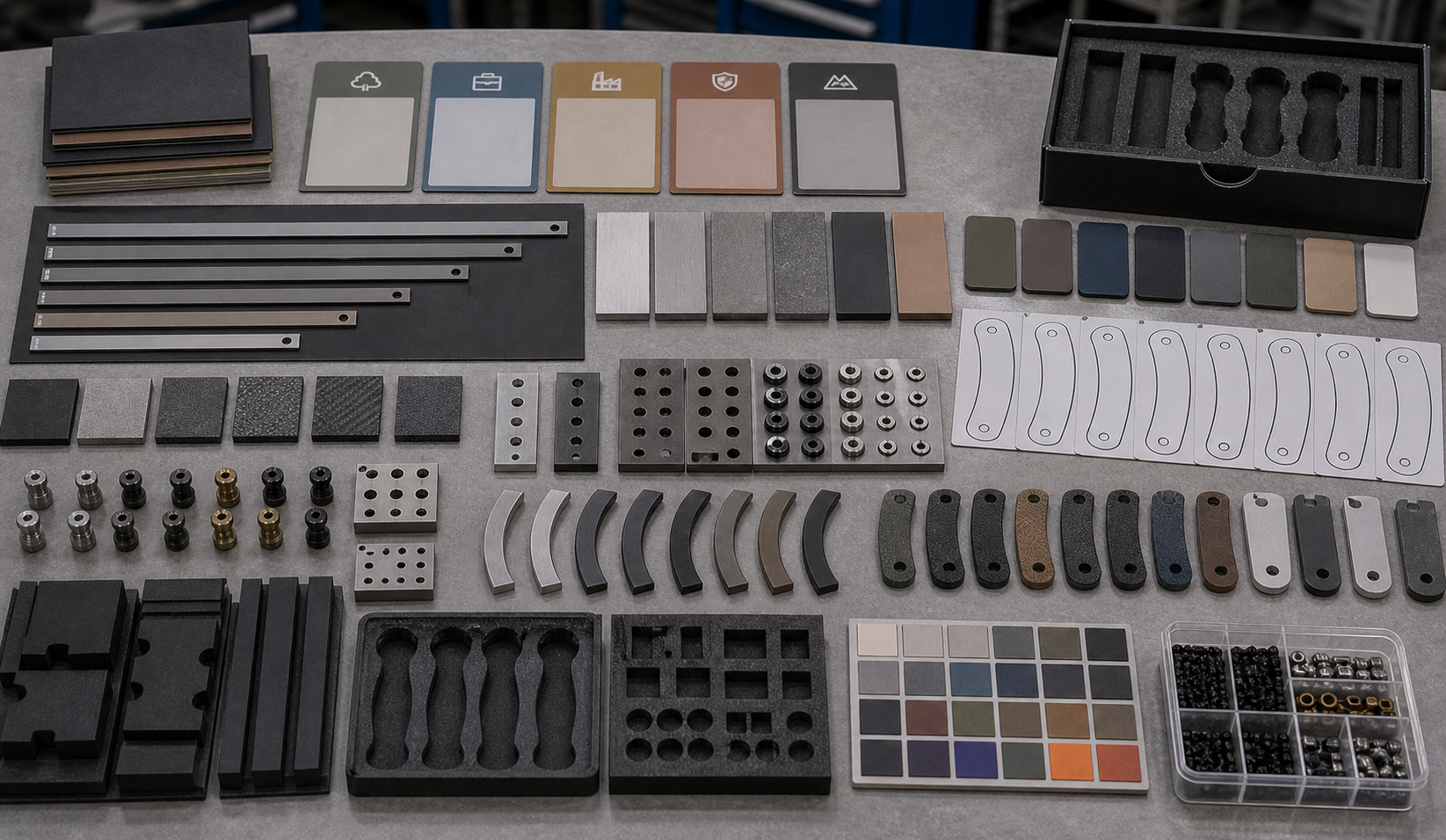
A hawkbill knife RFQ should include target market, use case, blade length, steel, hardness, curve depth, edge style, handle material, lock type, finish, MOQ, packaging, branding, inspection needs, and target price.
I Quote Better When the Buyer Defines the Job
When a buyer sends only "hawkbill knife" as a request, the supplier has to guess too much. A rescue-style hawkbill folder, a compact EDC hawkbill, a pruning-style fixed blade, and a packaging utility knife can all look related, but they need different materials, handle shapes, edge styles, and inspection points. The RFQ should start with the target user and cutting task.
For OEM and ODM work, I like to receive blade length, closed length, blade thickness, steel preference, hardness target, handle material, lock type, opening method, edge style, finish, logo method, packaging type, target price, expected order quantity, and target market. If the buyer has a sample or drawing, that helps. If the buyer only has an idea, I can help convert it into a manufacturable direction, but I still need the market goal.
Buyers should also mention restrictions early. Some markets may have rules about blade length, locking knives, carry type, safety labeling, or packaging claims. I cannot replace legal review, but I can help avoid design choices that create obvious sourcing risk. A clear RFQ saves prototype time, reduces cost surprises, and makes sample approval more meaningful.
| RFQ field | What to specify | Why it helps |
|---|---|---|
| Use case | Rope, packaging, outdoor, rescue, pruning-style | Guides blade geometry and edge style |
| Product level | Budget, mid-range, or higher-positioned | Guides steel, handle, finish, and packaging |
| Structure | Folder, fixed blade, lock type, opening method | Controls tooling and assembly plan |
| Inspection need | Hardness, sharpness, lockup, finish, packaging | Makes quality expectations clear |
Turn your idea into a quote-ready knife project.
Share your drawing, sample photo, target quantity, market, and packaging needs. Vast State will review manufacturability and prepare OEM/ODM options.
Conclusion
I source better hawkbill knives by matching the curved blade to real cutting tasks, manufacturable geometry, stable materials, safe handling, and clear RFQ details.
Source Notes
- WorkSafe Queensland knife guidance supports the idea that cutting tools should match task and safety needs.
- CCOHS hand tool ergonomics supports grip, wrist posture, and tool-fit thinking for handle design.
- Alleima 14C28N knife steel gives material context for balancing hardness, edge performance, and corrosion resistance.
- NIST Rockwell hardness guidance supports the need for controlled hardness measurement.
- ASTM D4060 gives context for abrasion testing when coated hawkbill blades are discussed.
- ISO 9001 supports the value of documented quality management and process control.