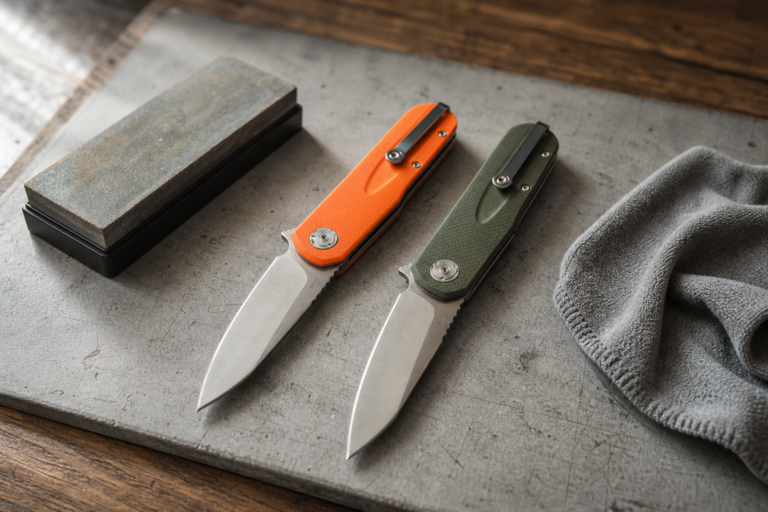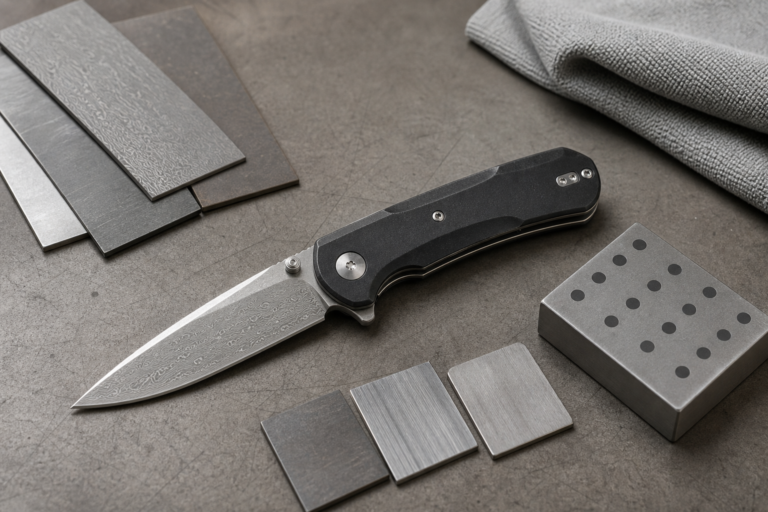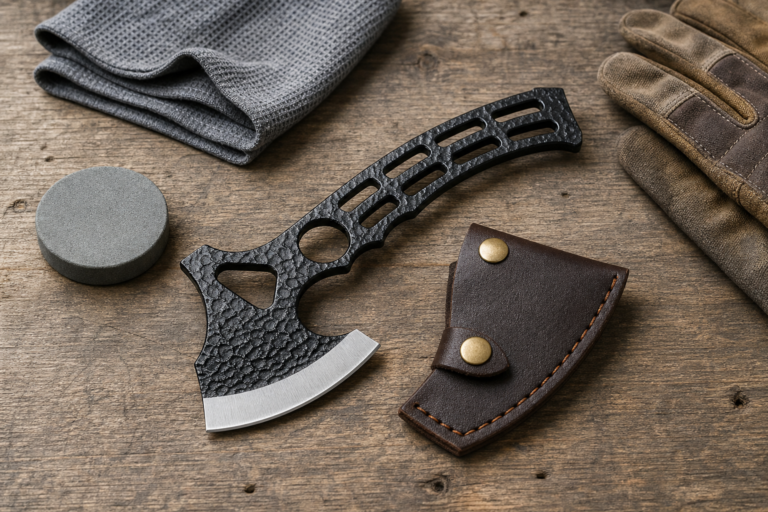
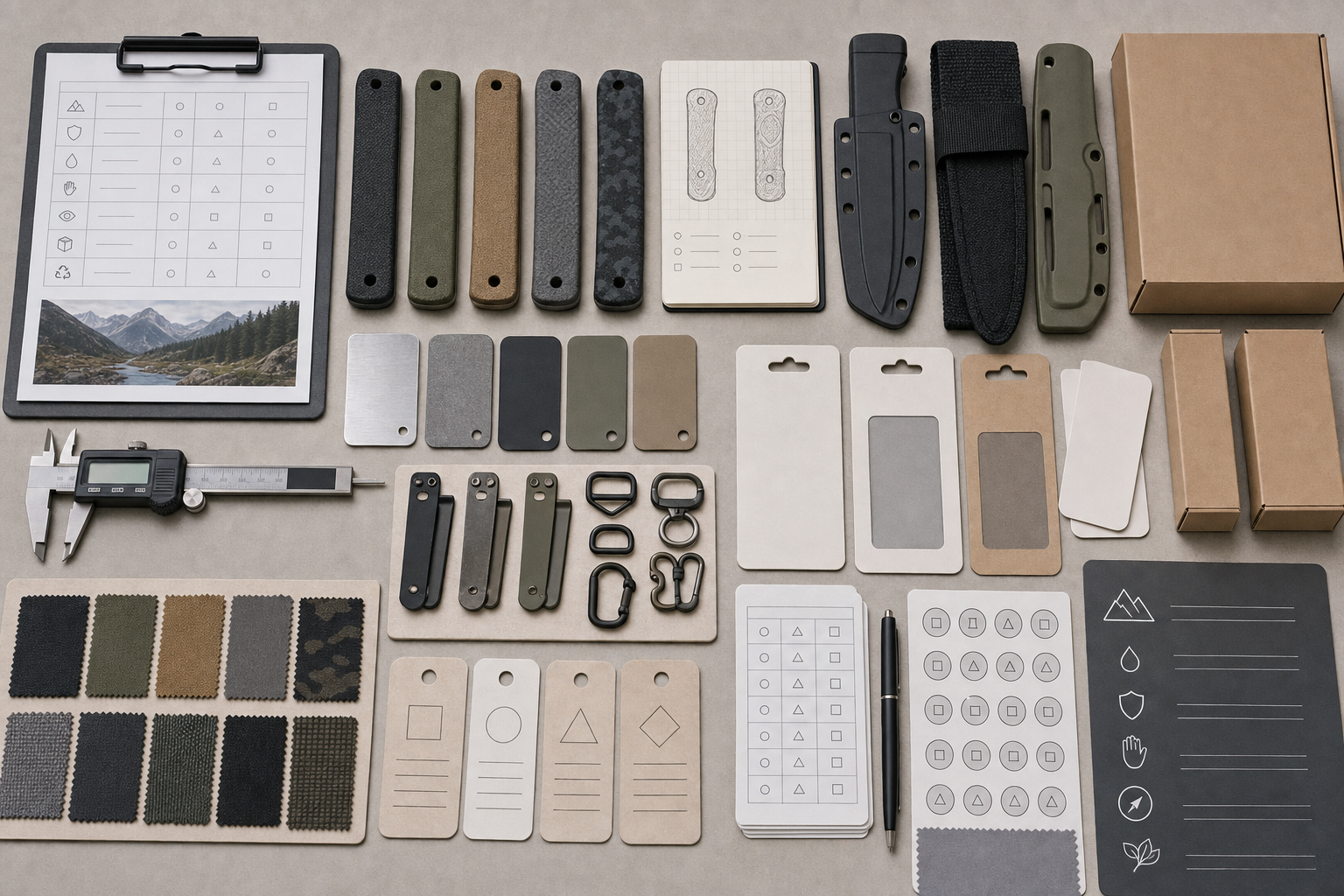
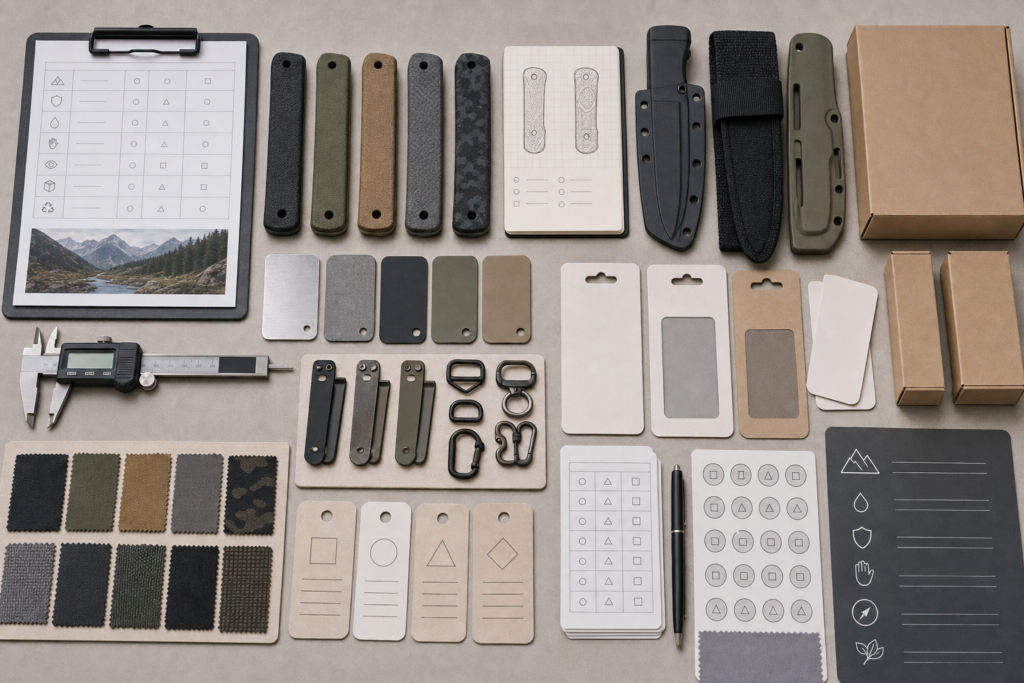
A hunting knife can look rugged but still disappoint buyers. Wrong geometry, weak sheath fit, or poor corrosion control creates real market problems.
Buyers should develop a hunting knife by defining the lawful target market, blade shape, steel, heat treatment, handle grip, sheath retention, packaging claims, and QC checks. A practical OEM/ODM hunting knife must support outdoor utility, controlled production, and responsible market positioning.
Quick buyer brief:
- Answer: Define the outdoor task, fixed-blade format, steel, handle, sheath, packaging, compliance notes, and inspection plan before sampling.
- Buyer context: Useful for hunting brands, outdoor brands, sporting goods importers, wholesalers, distributors, and private label buyers.
- Key checks: Blade geometry, corrosion resistance, target HRC, handle grip, sheath fit, packaging claims, legal review, and batch QC.
Planning a fixed blade or outdoor knife project?
Share your target use, blade size, steel preference, handle direction, sheath needs, quantity range, and packaging plan. Vast State can help turn it into a quote-ready specification.
When I work on a hunting knife project, I do not treat it as a dramatic product. I treat it as an outdoor tool that must fit a buyer's market, price range, and responsibility. The blade must be useful without being overbuilt. The handle must work in cold, wet, or dirty conditions. The sheath must hold the knife securely in packaging and normal outdoor transport. The packaging must avoid claims that the buyer cannot support. This is where OEM/ODM development becomes practical: every detail must serve the user, the sales channel, and repeat production.
What Makes a Hunting Knife Different From a General Outdoor Knife?
Many knives are sold as outdoor knives. But a hunting knife needs a more focused balance of cutting control, grip, cleaning, and sheath security.
A hunting knife is usually a fixed blade outdoor tool designed for controlled cutting tasks in lawful hunting and outdoor settings. Buyers should define blade size, point style, handle grip, sheath, and market positioning before sampling.
I Start With the Tool Role
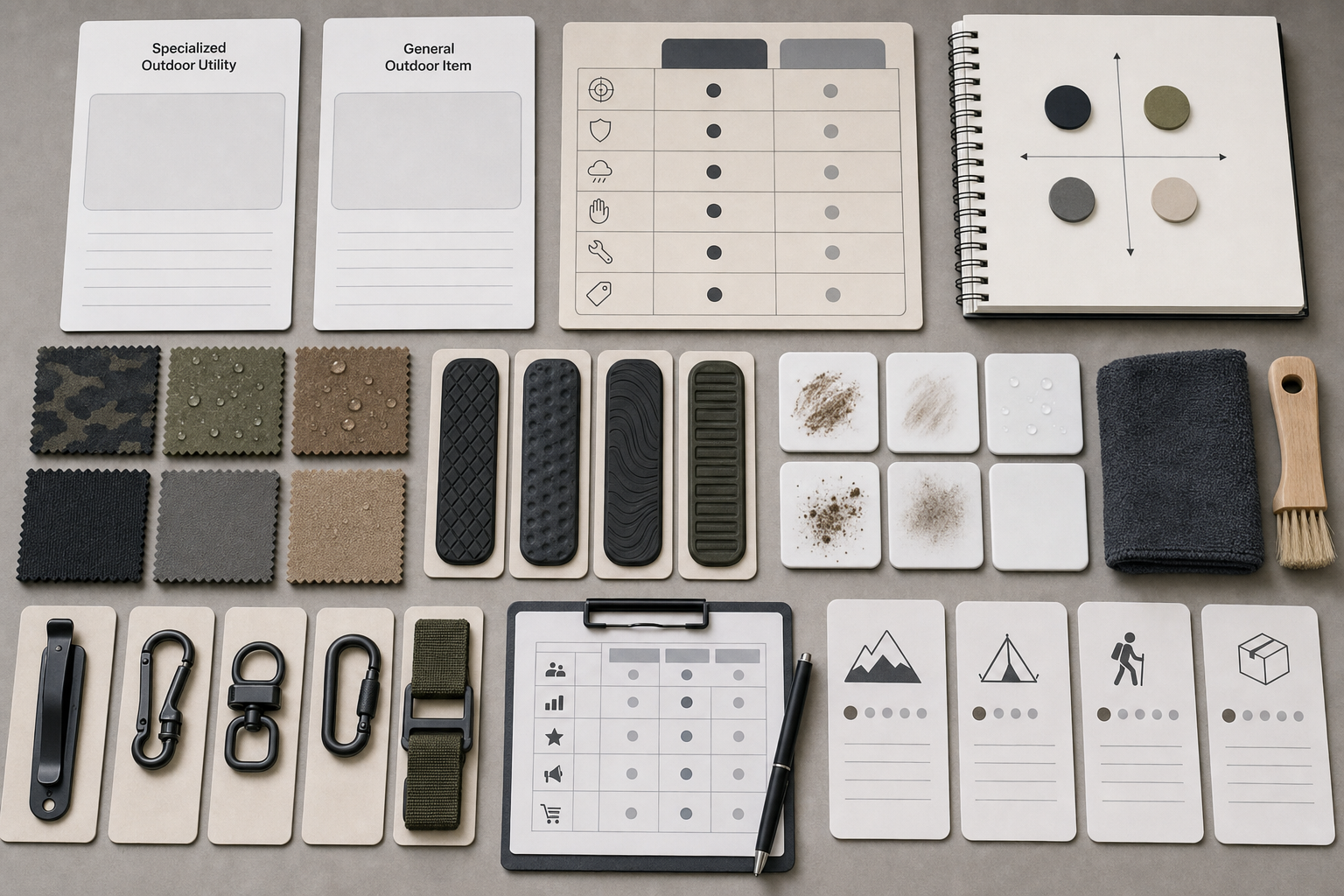
The word "hunting knife" can mean different products. Some buyers mean a compact fixed blade for outdoor kits. Some mean a classic drop point hunting knife. Some mean a skinning-style knife. Some mean a heavier camp-adjacent knife that will be sold to hunting and outdoor buyers. These choices affect blade length, blade thickness, point shape, grind, steel, handle material, sheath type, and packaging.
I usually begin by asking what the knife should do in the buyer's channel. A hunting brand may care about traditional appearance and sheath quality. A sporting goods importer may care about price, packaging, and broad appeal. A private label outdoor brand may need a knife that looks modern but stays practical. A distributor may care about repeat supply and carton efficiency. The product should not be built only from a photo. It should be built from the buyer's real selling plan. This keeps the design grounded and avoids overspending on features that do not help the customer.
| Definition point | What I ask | Why it matters |
|---|---|---|
| Product role | Hunting, outdoor kit, camp-adjacent, or sporting goods | Guides blade and sheath design |
| Blade format | Fixed blade, compact fixed blade, or set component | Affects production and packaging |
| User context | Wet, cold, gloved, or general outdoor use | Guides handle and finish |
| Sales tier | Value, mid-range, or higher-position line | Controls steel and sheath budget |
OEM/ODM RFQ Checklist
Prepare these details to help Vast State review your project and provide a more accurate quotation.
| RFQ Field | What to Prepare |
|---|---|
| Project type | OEM from drawing / ODM private label / wholesale catalog |
| Product category | Folding knife / fixed blade / multi-tool / outdoor tool |
| Design status | Idea / sketch / 2D drawing / 3D CAD / physical sample |
| Target price | Ex-factory target price or retail price range |
| MOQ expectation | 500 / 1,000 / 3,000 / 5,000+ pcs |
| Logo method | Laser engraving / etching / printing / molded logo |
| Packaging | Standard packaging / custom retail box / Amazon-ready |
| Market | USA / EU / Japan / Korea / Middle East / other |
| Compliance needs | Buyer-specified testing / documentation / labeling |
| Timeline | Sample deadline / mass production deadline |
Which Target-Market Rules Should Buyers Check First?
Outdoor knife projects can cross many markets. If legal review comes late, packaging, import, and sales plans can change painfully.
Buyers should check target-market hunting rules, knife rules, import requirements, labeling needs, and retailer policies before approving a hunting knife design. This article gives product-development guidance, not legal advice.
I Keep Compliance Separate From Design Taste
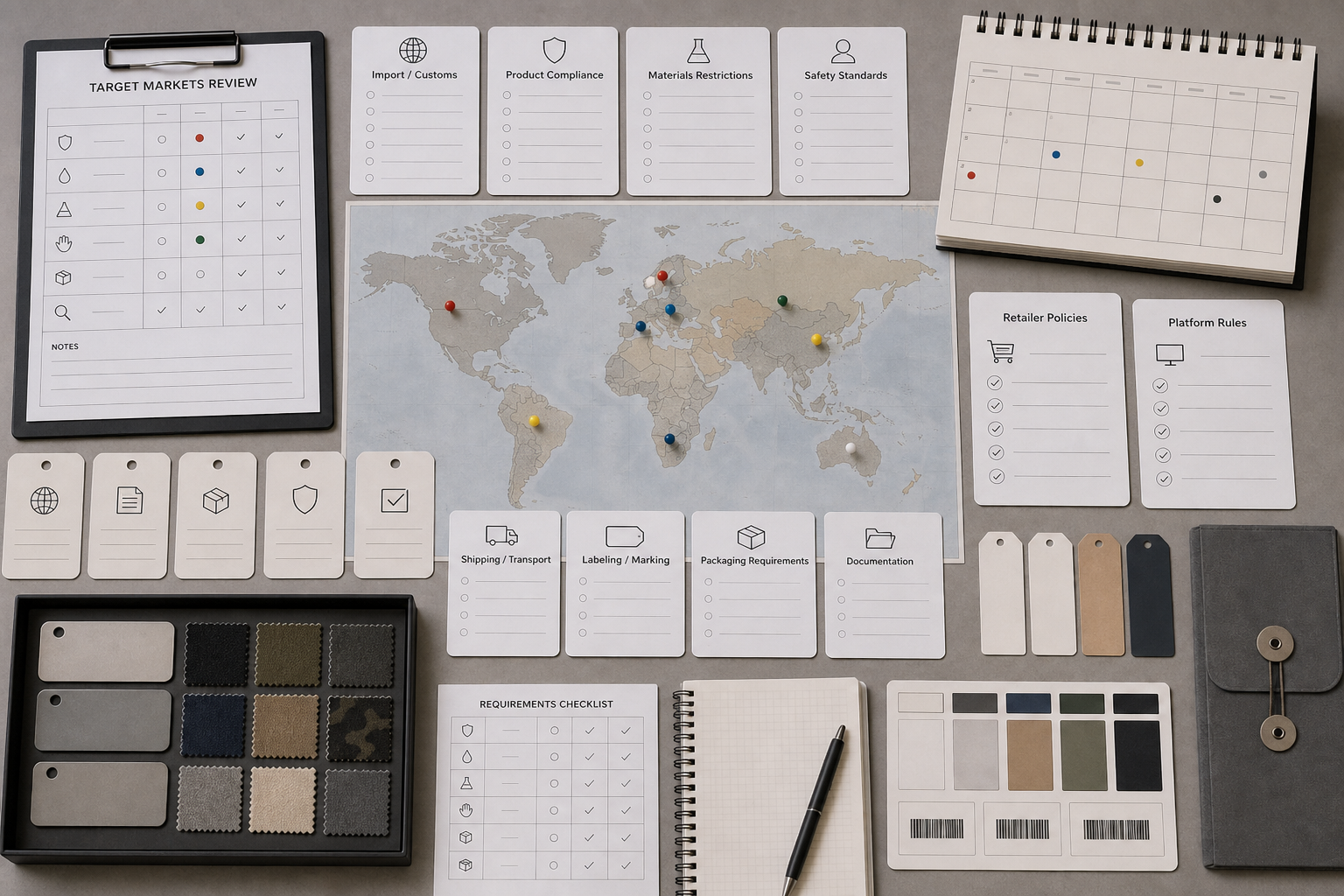
Buyers often ask about blade shape first. I understand why. Shape is visible. But target-market review should happen early. Hunting laws, outdoor product rules, import rules, and retailer rules can differ by country, state, province, platform, and sales channel. The U.S. Fish and Wildlife Service hunting laws page is useful because it reminds buyers that hunting rules are controlled by current federal and state requirements. The U.S. Forest Service also points hunters toward state hunting regulations, which supports the same practical point: the buyer must check the real target market.
For OEM/ODM work, I do not give legal advice. I ask buyers to confirm where the knife will be sold and what claims can appear on packaging. Some buyers need age labeling, warning labels, retailer documents, country-of-origin review, or packaging language review. Some buyers also need to avoid product names or images that create the wrong market signal. A responsible hunting knife project should look like an outdoor utility product, not a risky novelty item.
| Review item | Buyer should confirm | Why it matters |
|---|---|---|
| Target market | Country, state, retailer, or platform | Rules may differ |
| Product type | Fixed blade size and sheath style | Affects listing and sales approval |
| Packaging claims | Outdoor, hunting, utility, steel, sheath, care | Claims need support |
| Import notes | Documents, labels, and buyer records | Prevents late shipment issues |
How Should Blade Shape and Size Be Selected?
Blade shape creates the user experience. A knife that is too thick, too long, or too pointed can lose practical value.
Blade shape should match the buyer's outdoor task, target user, blade length, thickness, point style, grind, edge belly, and sheath plan. Buyers should approve geometry through samples, not only drawings.
I Choose Geometry Before Decoration
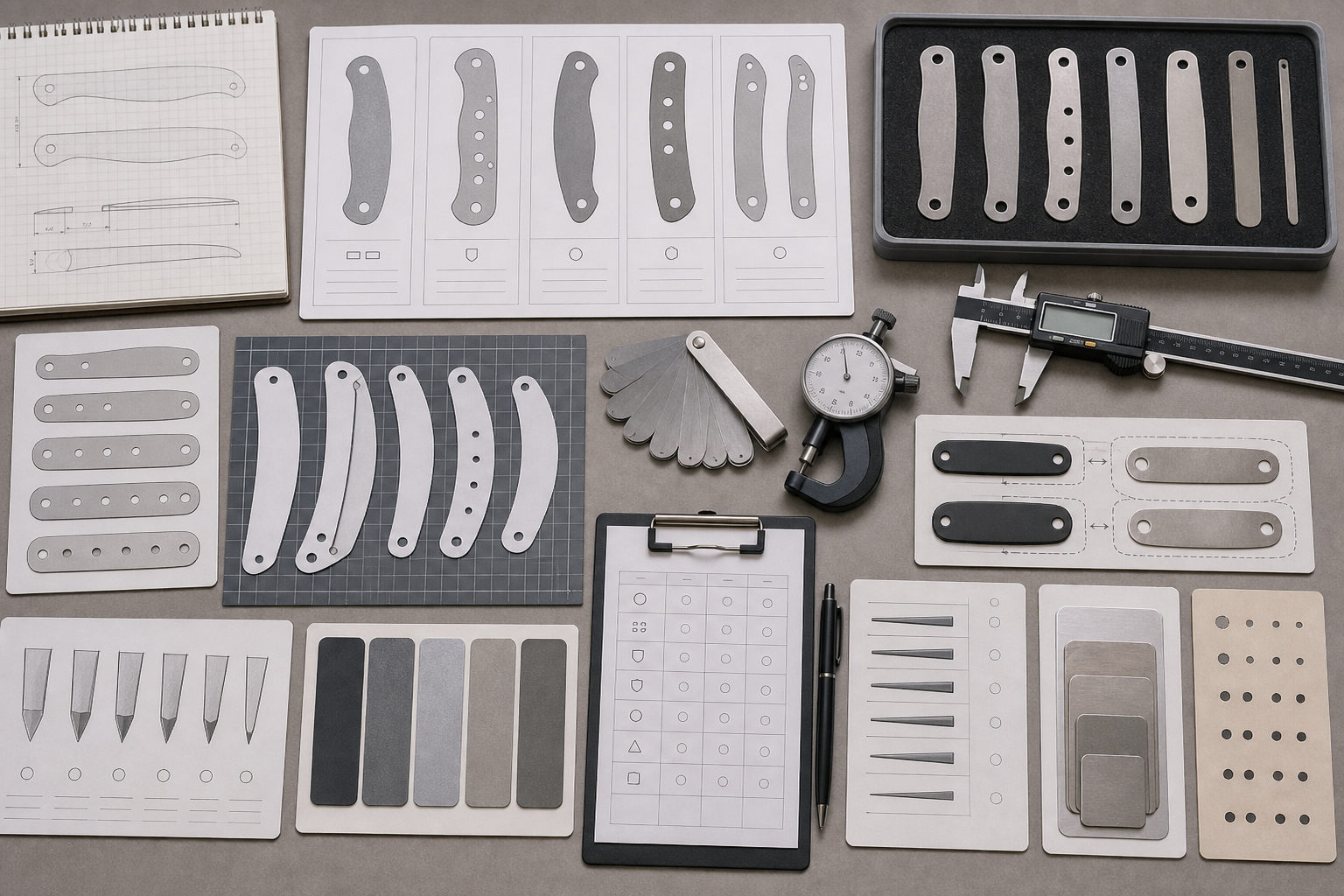
For hunting knife projects, blade geometry matters more than decorative styling. A drop point shape can offer useful tip control and broad outdoor appeal. A trailing style can suit some skinning-focused designs, but it may not fit every channel. A thicker spine can feel strong, but it may make the knife heavy and harder to use for detailed tasks. A very thin edge can cut well, but it may not survive rough use if the steel, heat treatment, and grind are not matched.
I prefer to define the blade with practical numbers. The RFQ should include blade length, overall length, blade thickness, grind type, edge angle expectation, tang structure, handle length, and weight target. The buyer should also decide whether the knife needs a finger guard, jimping, lanyard hole, or full tang appearance. These details affect production time and cost. They also affect how the sheath must be designed. A good hunting knife should feel controlled in the hand and should be repeatable in mass production. It should not depend on heavy hand correction after assembly.
| Blade choice | What it affects | Buyer decision |
|---|---|---|
| Drop point | Broad outdoor utility and tip control | Good general hunting style |
| Blade length | Reach, control, packaging, and cost | Match channel and user |
| Thickness | Strength, weight, and grind difficulty | Avoid overbuilding |
| Grind type | Cutting feel and edge strength | Match steel and price |
| Tang design | Strength, balance, and handle assembly | Confirm before tooling |
Which Steel and Heat Treatment Fit Hunting Knives?
Steel choice can become a marketing shortcut. But the wrong heat treatment can make even good steel perform poorly.
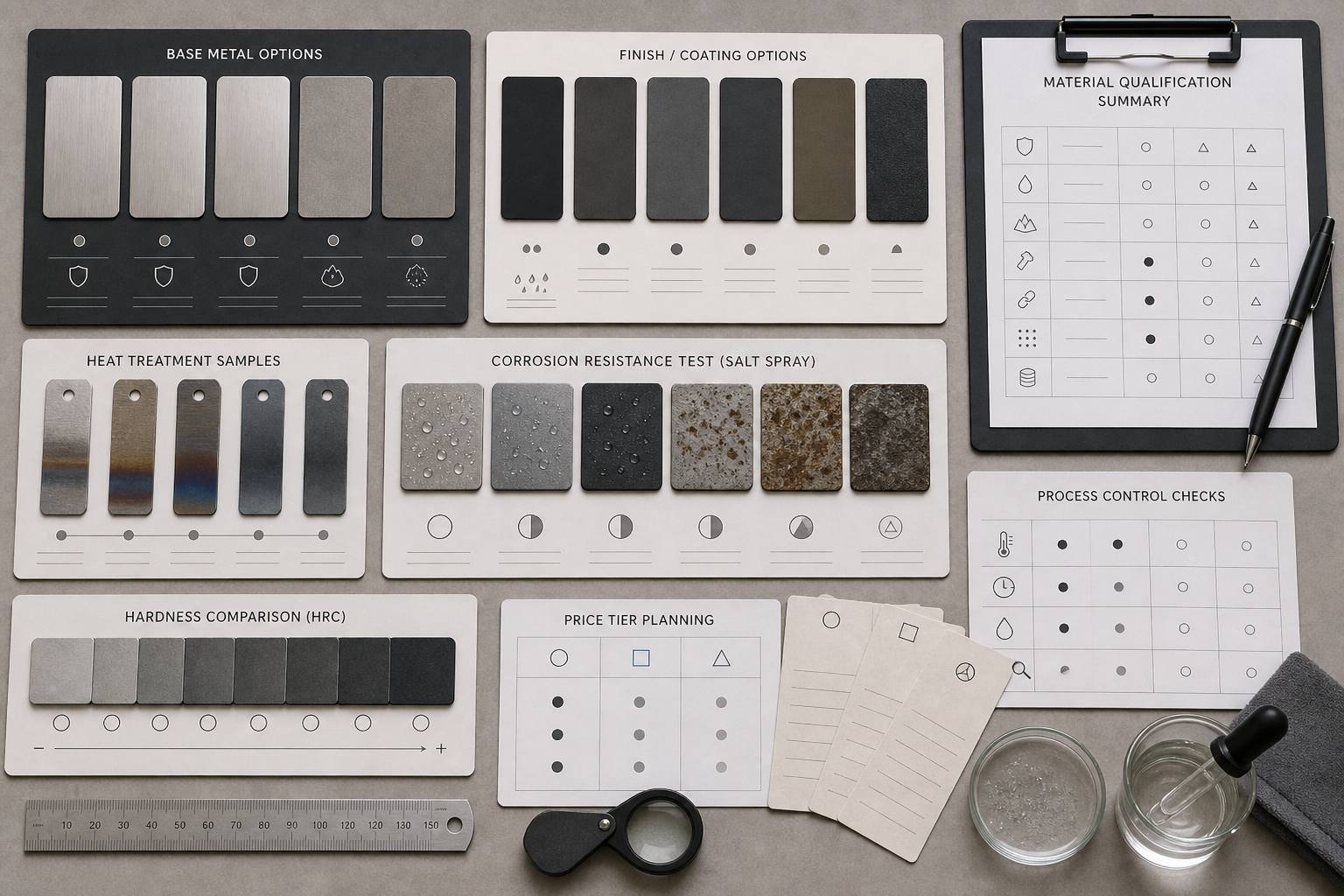
Hunting knives usually need a practical balance of edge retention, toughness, corrosion resistance, sharpenability, and controlled hardness. Steel choice must match heat treatment, blade thickness, grind, and target price.
I Balance Edge Life With Field Maintenance
Buyers often ask for harder steel because it sounds better. I usually slow the discussion down. A hunting knife may need edge life, but it also needs toughness and practical sharpening. If the blade is too hard for the geometry, it may become less forgiving. If it is too soft, it may lose edge performance too quickly. The right answer depends on the buyer's price tier, target user, corrosion needs, and expected care.
Official steel information helps guide this discussion. Alleima lists 12C27 knife steel with edge performance, toughness, hardness, and corrosion resistance. Alleima lists 14C28N knife steel for knife applications including hunting knives, with edge sharpness, edge stability, hardness, and corrosion resistance. These sources do not choose the final steel for the buyer. They help explain why stainless knife steels can be useful for outdoor markets. The factory still needs a heat-treatment plan, grinding control, HRC checks, and sample review.
| Material decision | Practical question | QC focus |
|---|---|---|
| Entry stainless | Does the price tier need easy care? | Stable heat treatment |
| 12C27 option | Does the buyer want better stainless positioning? | Edge and hardness checks |
| 14C28N option | Does the channel justify higher steel value? | Corrosion and grind control |
| Tool steel option | Does the buyer accept more care needs? | Clear care wording |
| Target HRC | Does hardness match blade geometry? | Batch measurement |
How Should Handle Design Support Outdoor Grip?
A good blade can still fail in the hand. Wet, cold, or gloved use exposes weak handle decisions fast.
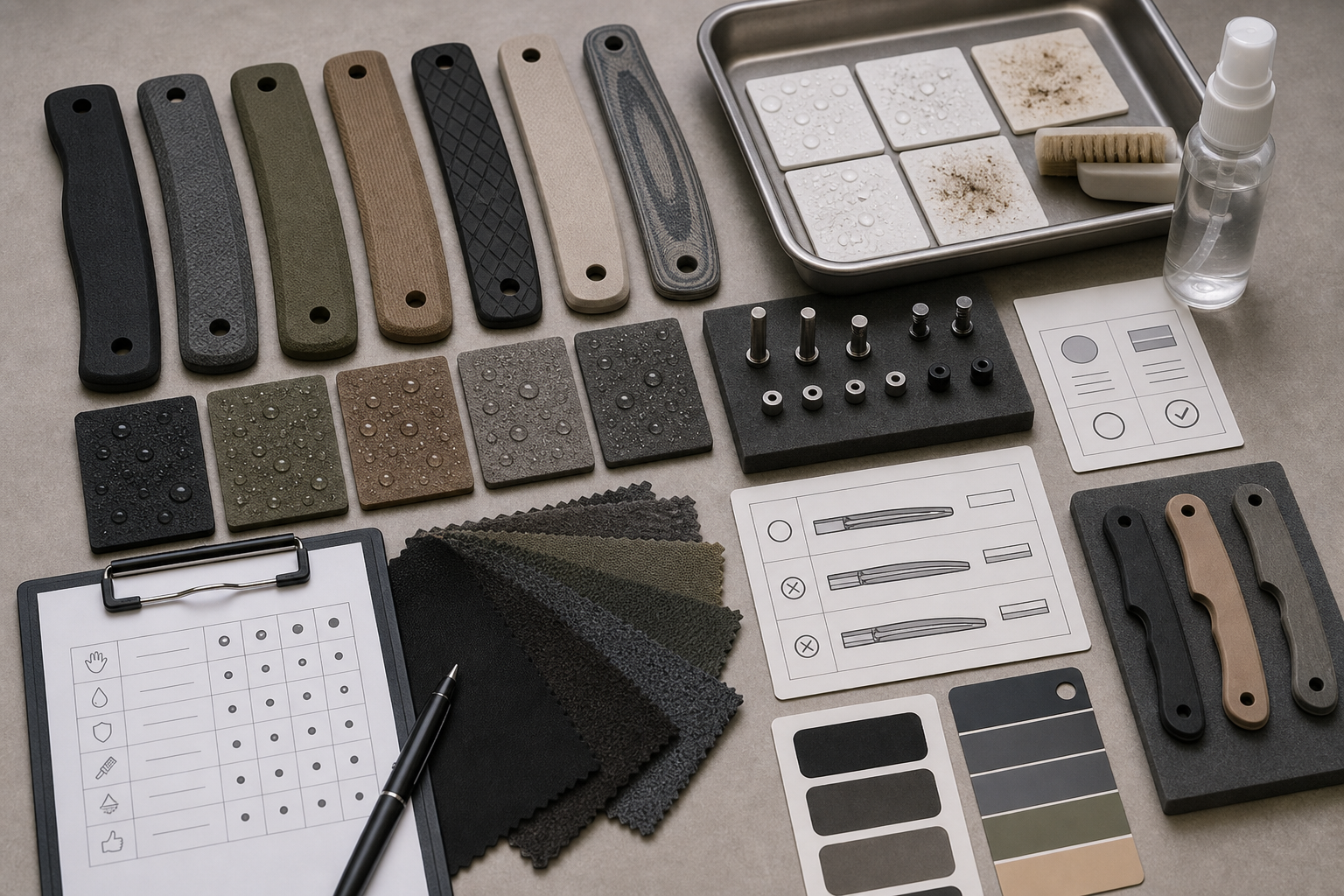
Hunting knife handles should balance grip, comfort, durability, cleaning, weight, and brand appearance. Buyers should define material, texture, shape, color, fasteners, and gap control before sampling.
I Treat the Handle as a Control Surface
The handle is not only decoration. It is the control surface between the user and the knife. Outdoor buyers may need grip when the hand is wet or cold. Some users may wear gloves. Some brands want a traditional wood look. Others want G10, rubber-like material, polymer, or micarta-style material. Each choice changes cost, weight, texture, cleaning, color, and production consistency.
I ask buyers to define the handle from several angles. First, what grip level is needed? Second, what material fits the price tier? Third, how should the handle attach to the tang? Fourth, how much texture is acceptable before it becomes uncomfortable or hard to clean? Fifth, what color or logo method supports the brand? A handle can look good in photos but feel wrong in use. It can also create assembly problems if the tang fit, fastener holes, or surface finish are not controlled. For repeat orders, handle consistency is just as important as blade sharpness.
| Handle factor | What I check | Why it matters |
|---|---|---|
| Material | Wood, G10, polymer, rubber-like, or composite | Controls cost and feel |
| Texture | Smooth, patterned, or high-grip | Affects comfort and control |
| Shape | Palm swell, guard, and handle length | Affects hand fit |
| Fasteners | Rivets, tubes, screws, or molded assembly | Affects strength and appearance |
| Gaps | Tang and scale fit | Supports cleaning and quality feel |
What Sheath and Packaging Details Matter?
The sheath is part of the product. A poor sheath can damage user trust even when the knife itself is good.
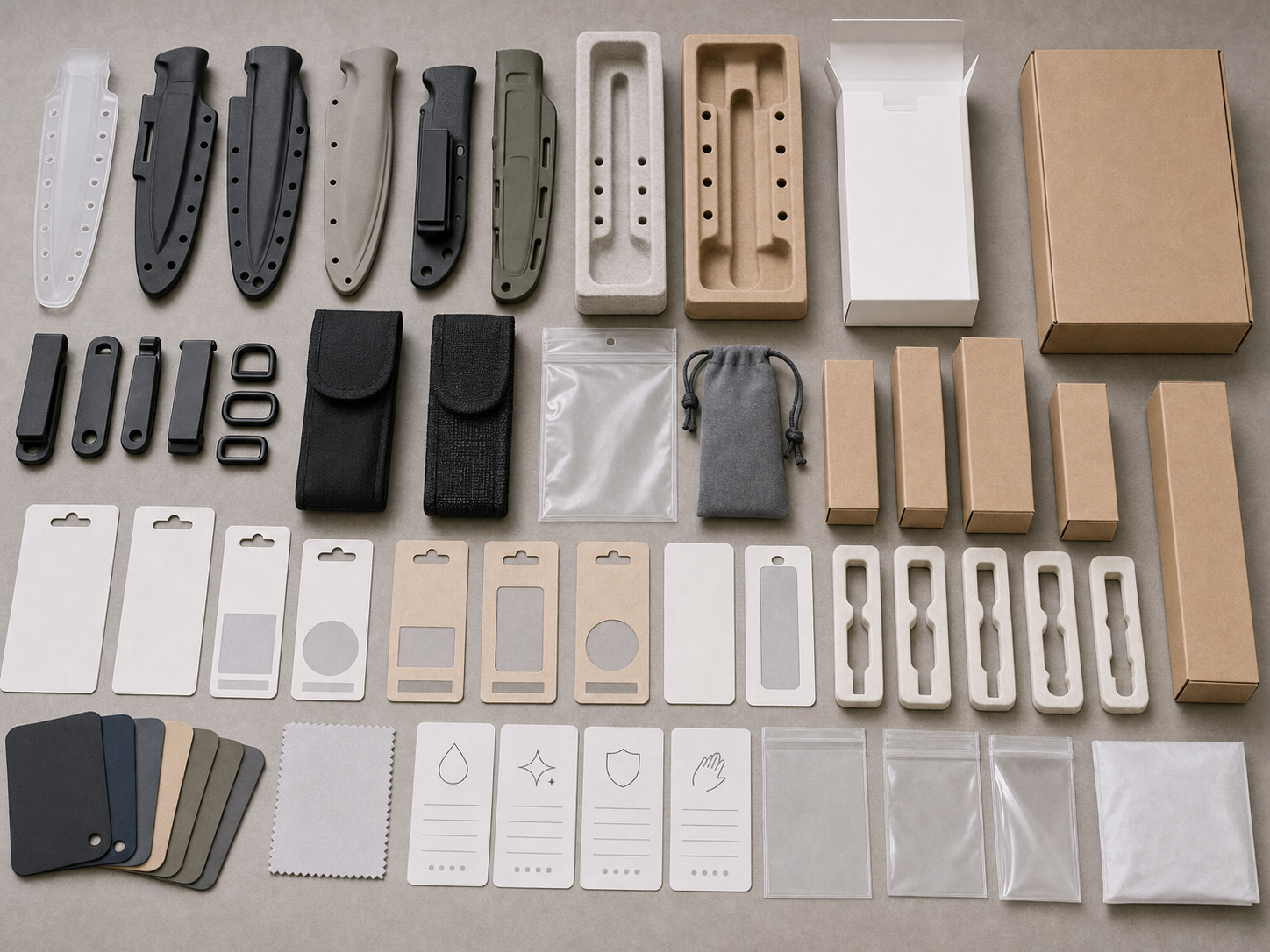
Sheath and packaging should secure the blade, protect the edge, fit the handle shape, support normal outdoor transport, present the brand clearly, and avoid unsupported safety, steel, or performance claims.
I Develop the Sheath With the Knife
For fixed blade hunting knives, the sheath should be planned early. If the knife changes after the sheath is designed, retention and fit can change. A molded sheath may need precise dimensions. A nylon sheath may need strong stitching and insert control. A leather-style sheath may fit a traditional line, but it can raise cost and consistency questions. A simple blade guard may work for a low-cost package, but it may not support the same retail value.
I also check packaging claims. Buyers may want to highlight full tang construction, stainless steel, outdoor use, sheath retention, or handle material. These claims should match the real product. If the buyer needs care instructions, age labeling, warning labels, country-of-origin language, or retailer documentation, those should be planned before packaging artwork. A good sheath and package help the buyer sell the product, but they also help prevent confusion. I prefer practical packaging that protects the edge, explains care, and keeps the brand promise realistic.
| Sheath or packaging item | Practical option | Risk to manage |
|---|---|---|
| Sheath material | Molded, nylon, leather-style, or hybrid | Cost and consistency |
| Retention | Snap, friction, strap, or insert | Too loose or too tight |
| Edge protection | Guard, insert, or fitted sheath | Shipping damage |
| Retail format | Box, card, blister, or kit pack | Carton and display fit |
| Claims | Steel, tang, grip, sheath, care | Must match evidence |
What Manufacturing and QC Checks Protect Repeat Orders?
One approved sample can hide production risk. Thin changes in grinding, heat treatment, or sheath fit can affect the whole order.
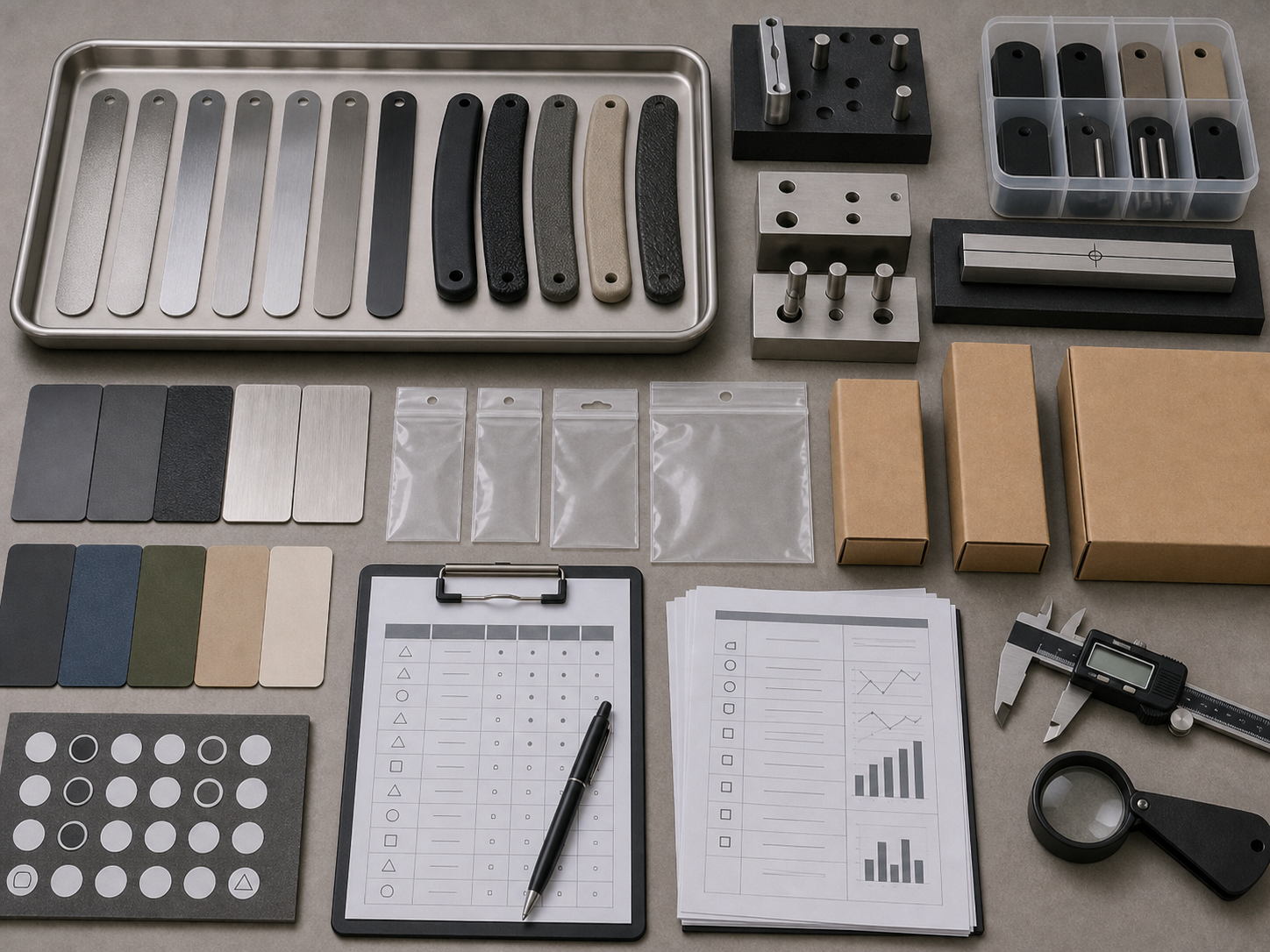
Manufacturing and QC should control blade blanking, grinding, heat treatment, straightness, handle fit, edge sharpening, sheath retention, surface finish, packaging, and final inspection records.
I Build the QC Plan Around Failure Points
Hunting knife production needs more than a final appearance check. The blade blank must match the approved profile. The bevel must be even. Heat treatment must match the steel and target hardness. The blade should stay straight. The handle scales or molded handle should fit cleanly. The edge should be sharp and controlled. The sheath should fit the approved sample. Packaging should protect the product through normal shipping.
Hardness checks are important because buyers often discuss HRC values. The NIST Rockwell hardness guide supports the need for good measurement practice to reduce errors. Quality management also matters across the full process. ISO 9001 gives useful context for customer requirements, operation control, performance evaluation, and improvement. I do not use those sources to claim certification unless documents prove it. I use them to shape better buyer questions. A clear QC plan makes repeat orders easier and helps buyers compare supplier offers fairly.
| QC stage | What to check | Why it protects the buyer |
|---|---|---|
| Incoming material | Steel grade, thickness, handle material | Prevents wrong inputs |
| Heat treatment | HRC, warping, batch records | Controls performance |
| Grinding | Symmetry, edge thickness, heat marks | Protects cutting feel |
| Assembly | Handle fit, fasteners, gaps | Protects quality perception |
| Final inspection | Edge, sheath, finish, packaging | Supports sellable product |
What Should a Hunting Knife OEM/ODM RFQ Include?
A vague RFQ may get a quick price. It rarely gets a knife that fits the buyer's market.
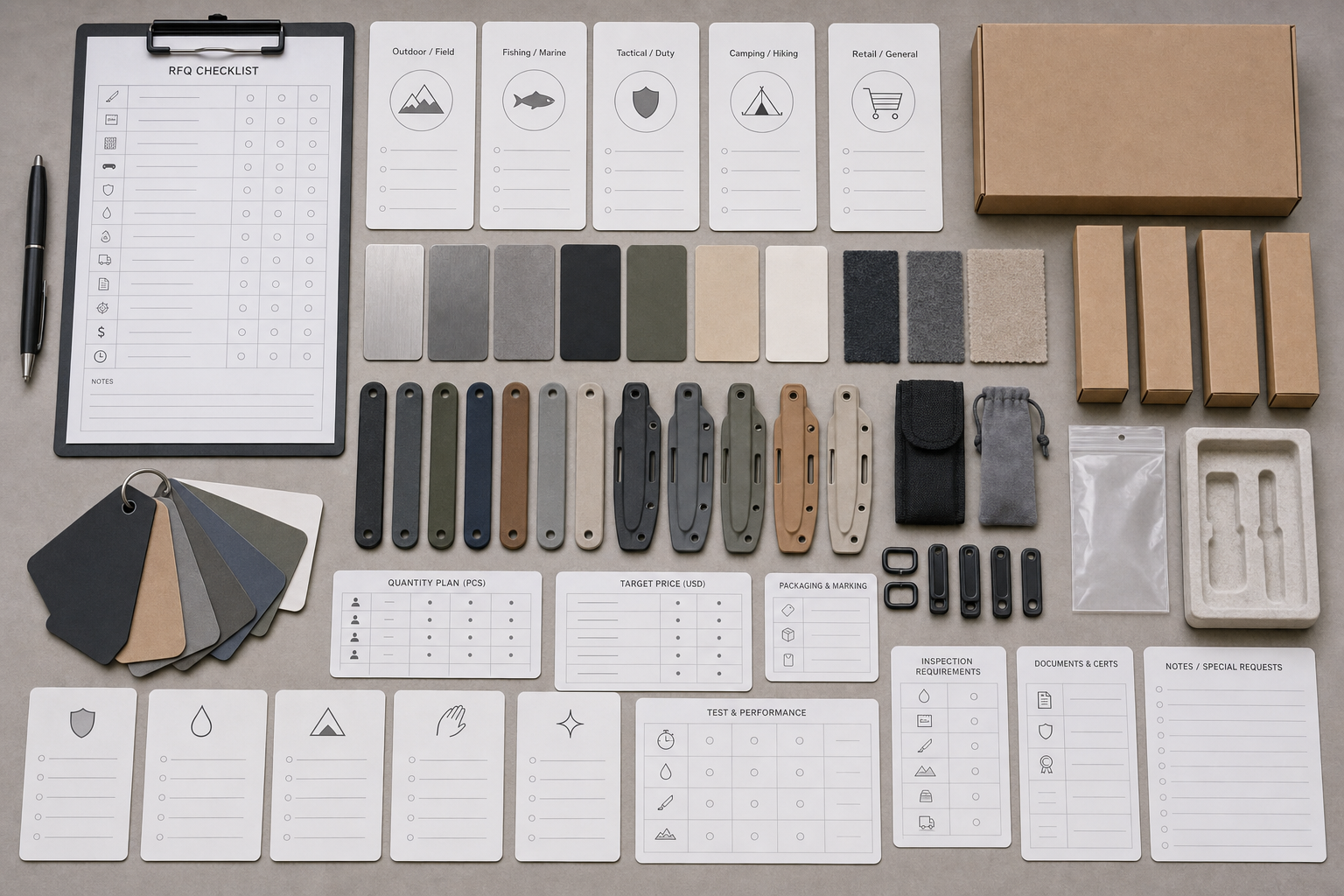
A hunting knife RFQ should include target market, lawful sales channel, blade shape, size, steel, HRC, handle material, sheath type, packaging, branding, documentation needs, quantity, target price, and inspection requirements.
I Use the RFQ to Turn Taste Into Production
The RFQ should convert the buyer's idea into a manufacturable product. I ask for target market, lawful sales channel, buyer price tier, blade length, blade thickness, blade shape, grind, steel, target HRC, handle material, handle color, logo method, sheath material, sheath retention expectation, packaging type, quantity, target price, and sample timing. If the buyer has a reference knife, that helps, but the buyer should still identify what should change.
I also ask about documentation. Some buyers need material certificates, HRC records, packaging claim review, country-of-origin review, retailer documents, or inspection reports. These items can affect cost and lead time. They should appear in the RFQ before sampling. A complete RFQ helps the supplier give a useful answer. It also helps the buyer compare quotes fairly. A lower price may not include the same steel, sheath, packaging, or QC records. Clear requirements reduce misunderstanding and support long-term supply.
| RFQ field | What to include | Why it helps |
|---|---|---|
| Product target | Hunting, outdoor, kit, or sporting goods channel | Aligns design direction |
| Blade details | Shape, length, thickness, grind, steel, HRC | Supports accurate sampling |
| Handle details | Material, color, texture, fasteners | Controls grip and cost |
| Sheath and packaging | Sheath type, retention, box, card, or kit pack | Defines presentation and safety |
| QC and documents | Material, HRC, edge, sheath, packaging records | Protects repeat orders |
Turn this article into a fixed blade project.
Send your target use, blade size, steel, handle direction, sheath needs, quantity, and packaging plan. Vast State can help shape it into a quote-ready project.
Conclusion
I develop better hunting knives by matching lawful market needs, blade geometry, steel, handle grip, sheath fit, responsible packaging, and QC.
Source Notes
- U.S. Fish and Wildlife Service hunting laws support the need to check current hunting requirements for the target market.
- U.S. Forest Service hunting guidance provides context that hunters should review state regulations before hunting.
- Alleima 12C27 knife steel supports stainless knife steel selection context.
- Alleima 14C28N knife steel supports hunting knife steel context for edge stability, hardness, and corrosion resistance.
- NIST Rockwell hardness guide supports controlled hardness measurement practice.
- ISO 9001 provides quality-management context for customer requirements and process control.