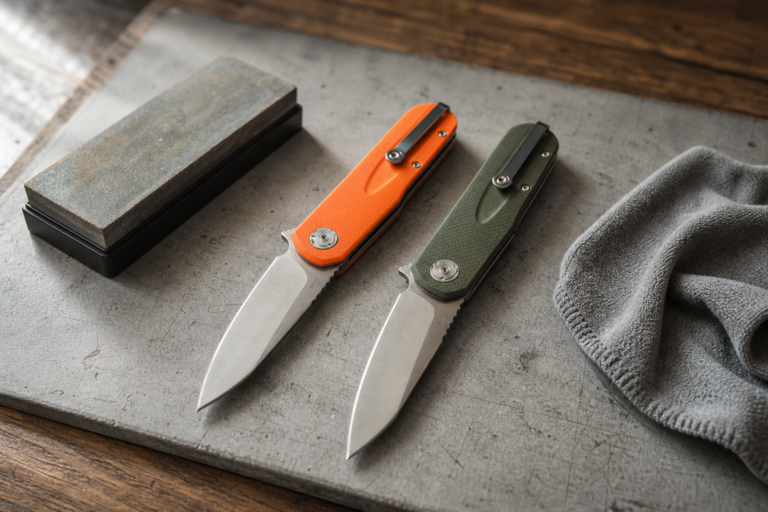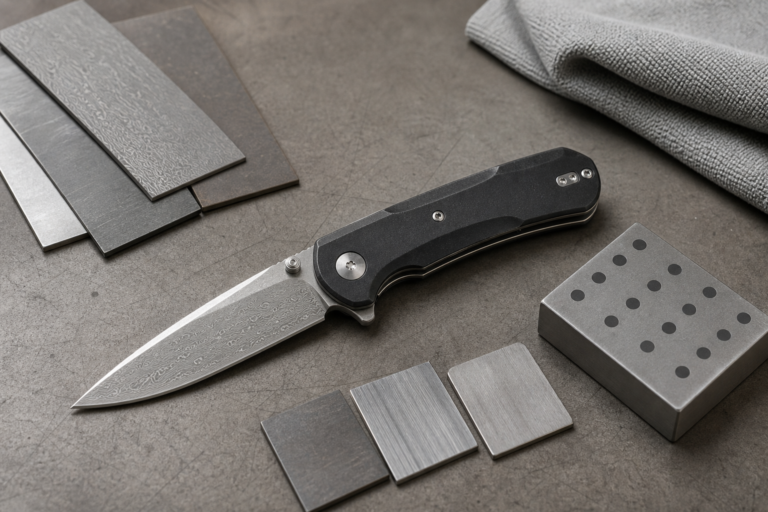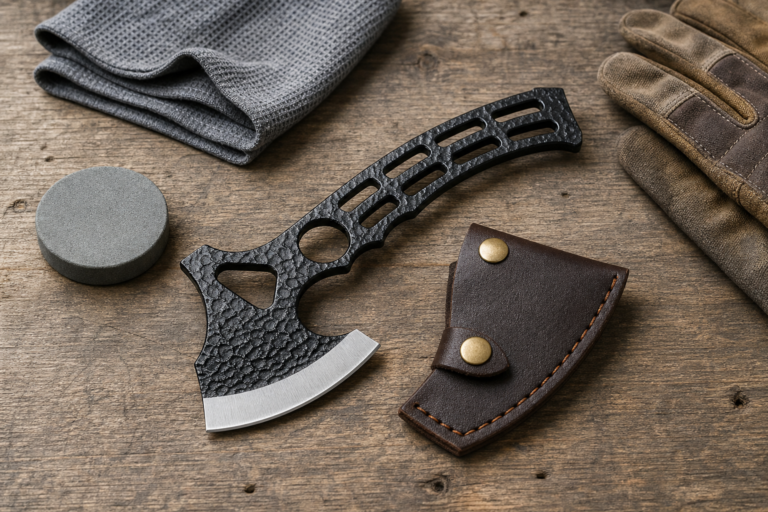
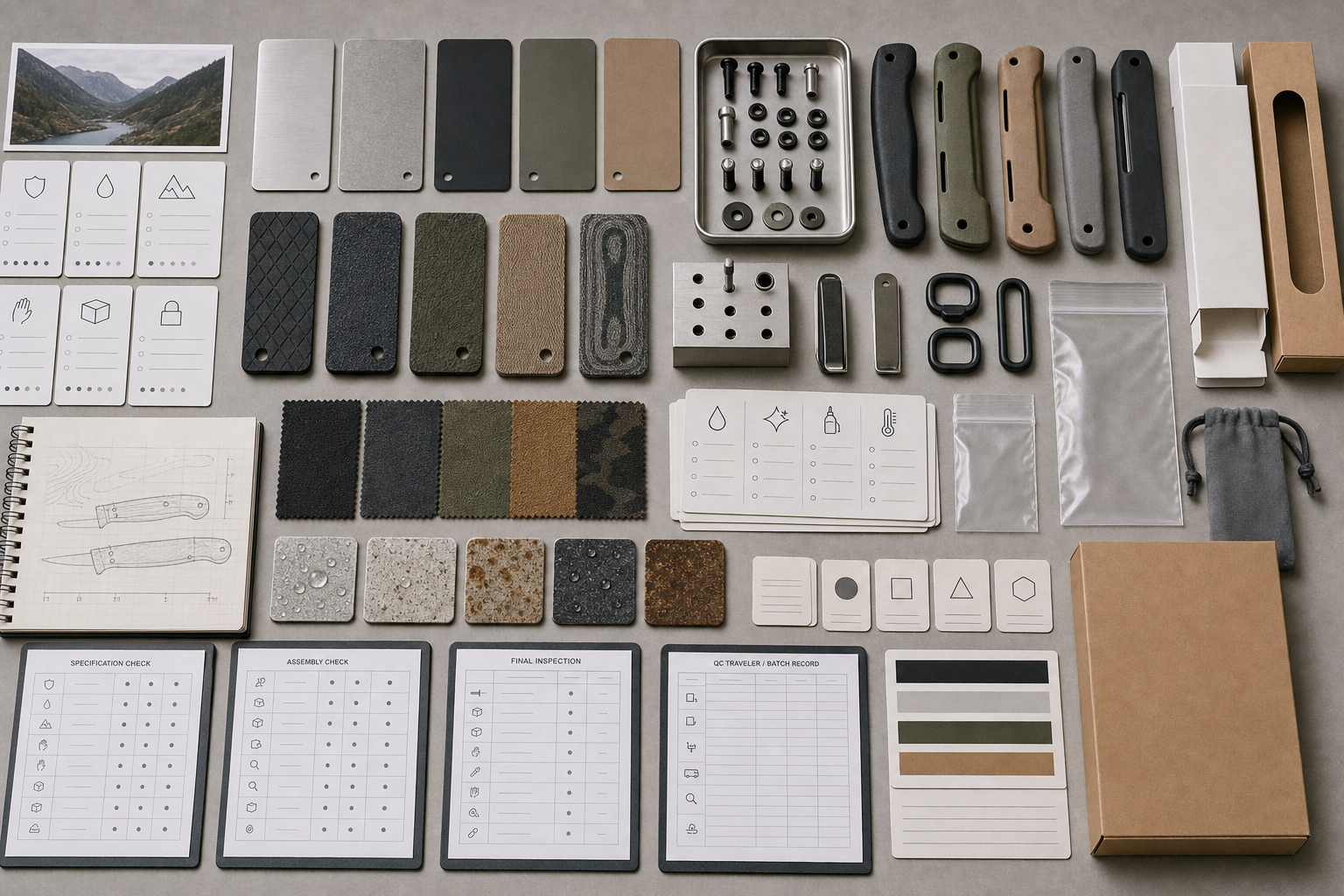
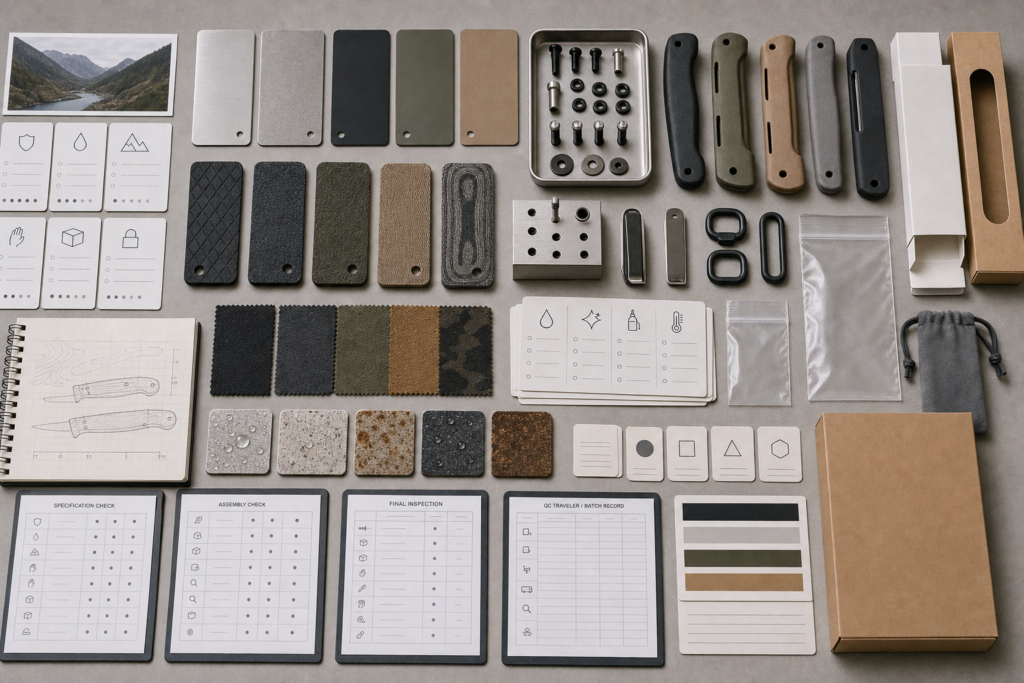
A fixed blade knife looks simple, but hidden construction choices decide cost, feel, strength, and repeat quality. Good development makes those choices clear.
Buyers should develop fixed blade knives by defining the product role, tang structure, blade steel, heat treatment, handle assembly, sheath, finish, maintenance instructions, QC checks, and RFQ details. A good OEM/ODM fixed blade project turns a design idea into a repeatable product.
Quick buyer brief:
- Answer: Define construction, materials, sheath, finish, maintenance guidance, and inspection before sampling.
- Buyer context: Useful for outdoor brands, hunting brands, camping brands, importers, wholesalers, distributors, and private label buyers.
- Key checks: Tang type, blade geometry, steel, HRC, handle fit, sheath retention, corrosion control, maintenance copy, and batch QC.
Planning a fixed blade or outdoor knife project?
Share your target use, blade size, steel preference, handle direction, sheath needs, quantity range, and packaging plan. Vast State can help turn it into a quote-ready specification.
When I work on a fixed blade project, I do not only ask what the knife should look like. I ask what the buyer needs it to become in the market. A camping knife, hunting knife, utility outdoor knife, rescue-adjacent tool, and kitchen-adjacent fixed blade do not share the same priorities. The blade geometry affects cutting feel. The tang affects strength and cost. The handle affects comfort and assembly. The sheath affects user trust. The maintenance instructions affect complaints after sale. That is why I treat fixed blade development as a full product system.
What Defines a Fixed Blade Knife in an OEM/ODM Project?
A fixed blade knife has fewer moving parts than a folder. That does not make the project easy.
A fixed blade knife is built around a fixed blade and handle structure. In OEM/ODM projects, buyers should define the product role, blade length, tang type, handle, sheath, finish, target price, and inspection needs before sampling.
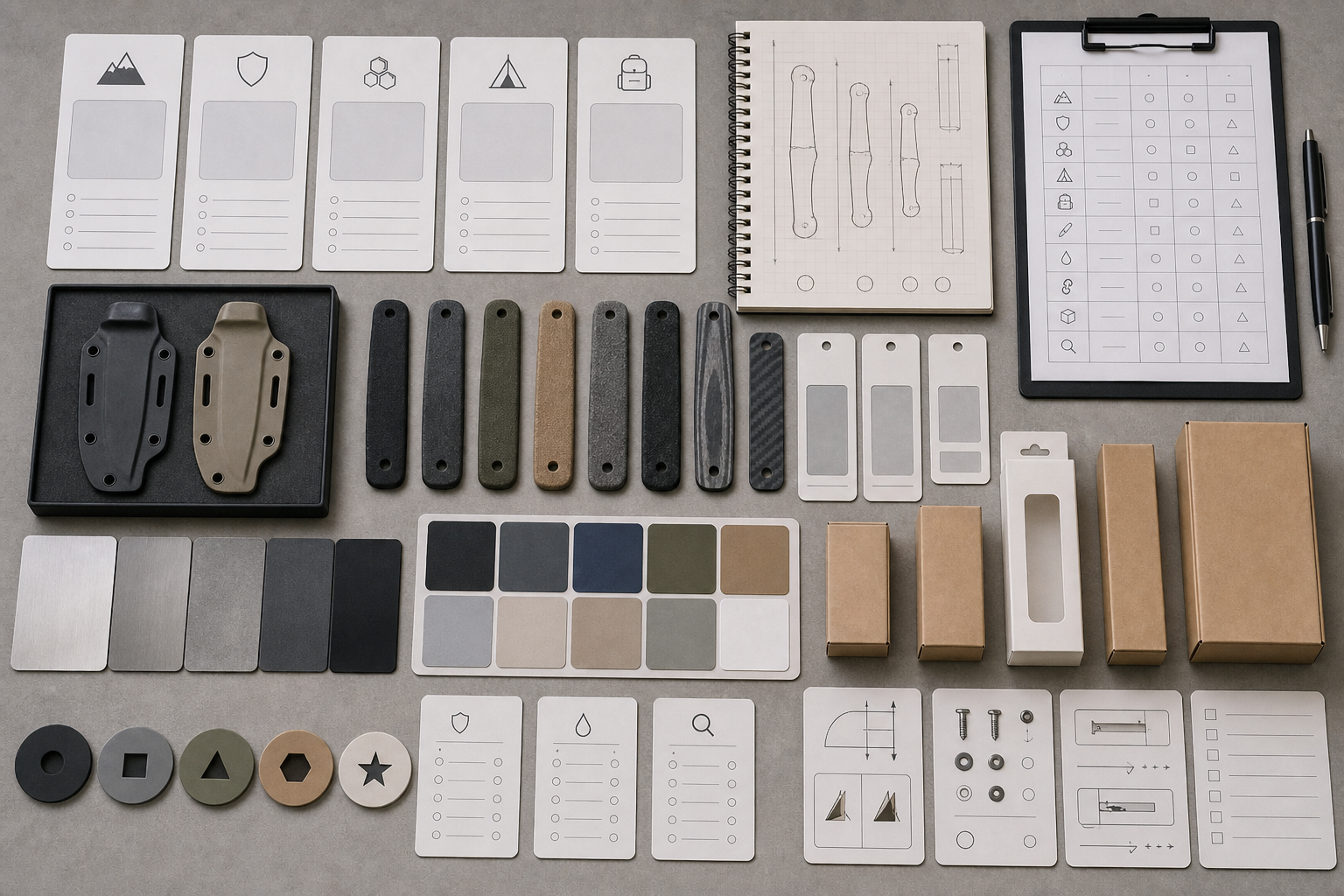
I Define the Product Role Before the Drawing
The phrase "fixed blade knife" is broad. Some buyers mean a compact outdoor knife. Some mean a hunting-style knife. Some mean a camping tool. Some mean a utility product for an outdoor kit. Some mean a value retail knife with simple packaging. Each direction changes the design. A compact outdoor knife may need a shorter blade and molded sheath. A hunting-style knife may need a controlled drop point profile and comfortable handle. A camping product may need a stronger spine and more durable handle material.
I usually begin with the buyer's channel. I ask where the knife will be sold, what price tier it should reach, what user problem it should solve, and what visual style fits the brand. I also ask whether the buyer already has drawings or only a reference idea. A fixed blade knife is easier to make than a folding knife in some ways, but it can still become expensive if the construction is overdesigned. Clear product definition helps the buyer avoid a sample that looks attractive but cannot match MOQ, margin, packaging, or repeat production.
| Definition point | What I ask | Why it matters |
|---|---|---|
| Product role | Outdoor, hunting, camping, utility, or set component | Guides structure and size |
| Price tier | Entry, mid-range, or higher-position line | Controls steel and handle choice |
| Blade format | Compact, medium, heavy, or specialty profile | Affects weight and sheath |
| Sales channel | Retail, wholesale, kit, or private label | Affects packaging and claims |
OEM/ODM RFQ Checklist
Prepare these details to help Vast State review your project and provide a more accurate quotation.
| RFQ Field | What to Prepare |
|---|---|
| Project type | OEM from drawing / ODM private label / wholesale catalog |
| Product category | Folding knife / fixed blade / multi-tool / outdoor tool |
| Design status | Idea / sketch / 2D drawing / 3D CAD / physical sample |
| Target price | Ex-factory target price or retail price range |
| MOQ expectation | 500 / 1,000 / 3,000 / 5,000+ pcs |
| Logo method | Laser engraving / etching / printing / molded logo |
| Packaging | Standard packaging / custom retail box / Amazon-ready |
| Market | USA / EU / Japan / Korea / Middle East / other |
| Compliance needs | Buyer-specified testing / documentation / labeling |
| Timeline | Sample deadline / mass production deadline |
How Should Tang and Blade Construction Be Chosen?
Tang structure is easy to hide in photos. But it strongly affects strength, balance, cost, and buyer confidence.
Tang and blade construction should match the product role, target price, handle method, blade size, weight target, and sheath plan. Buyers should confirm tang drawings and samples before tooling or production.
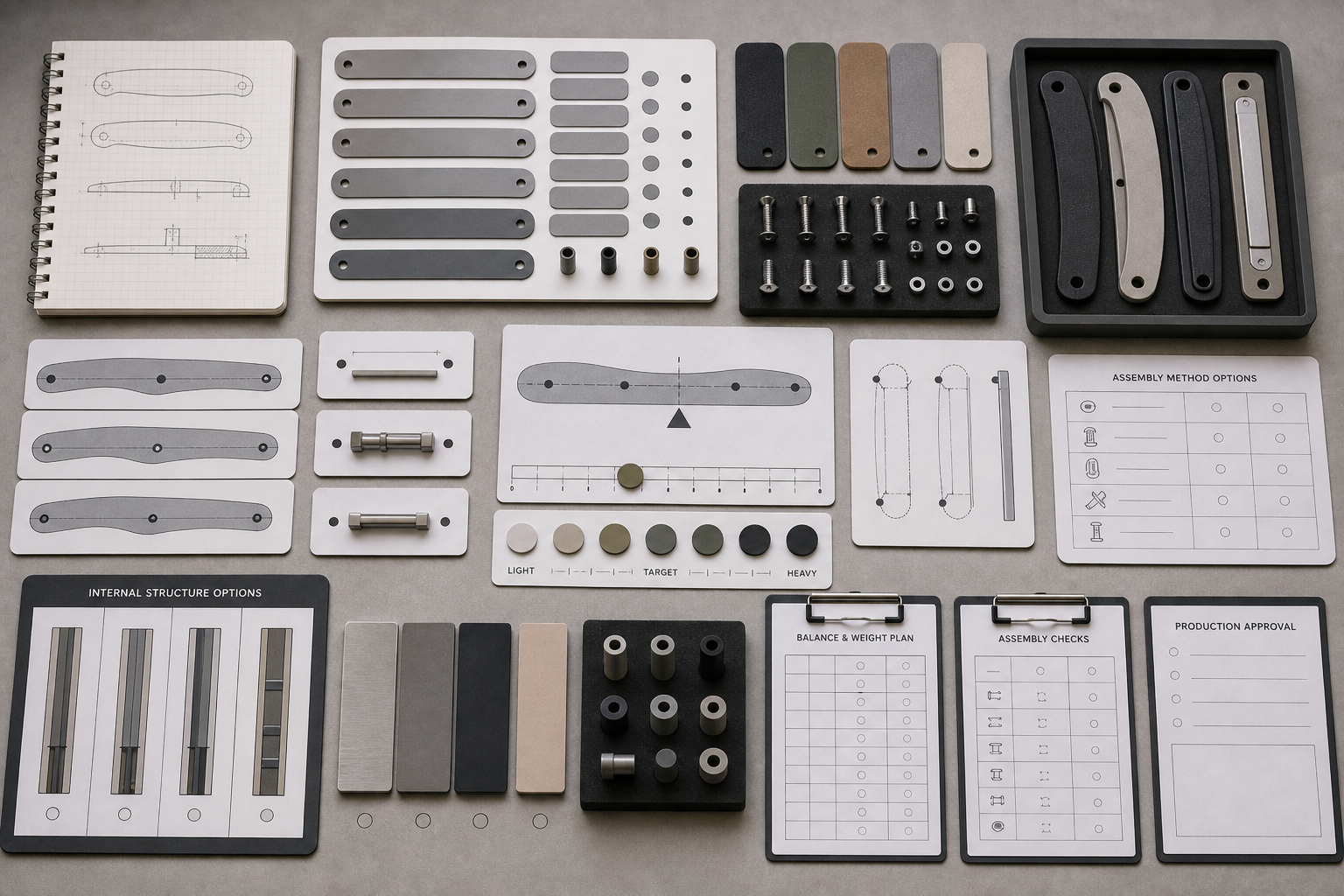
I Match Structure to Real Use and Cost
The tang is the part of the blade steel that extends into the handle. Buyers often ask for full tang because it sounds strong and easy to market. Full tang can be a good choice, but it is not always the only practical choice. A hidden tang or partial tang structure can work for some products if the design, material, and assembly are suitable. The right choice depends on product role, price tier, blade size, handle material, and brand positioning.
Full tang construction usually gives a strong visual signal and can support handle scales, pins, tubes, and lanyard holes. It can also increase steel usage and weight. Hidden tang construction may create a cleaner handle appearance and lower visible metal exposure, but it needs careful fit and adhesive or mechanical retention. For OEM/ODM work, I want the tang decision made early because it affects blanking, drilling, handle tooling, assembly time, balance, and packaging. A buyer should not approve a handle look without understanding what is under it.
| Construction choice | Good fit | Production concern |
|---|---|---|
| Full tang | Outdoor and higher-trust fixed blade lines | Higher steel use and weight |
| Skeletonized tang | Weight reduction and modern look | Cutout accuracy and handle fit |
| Hidden tang | Cleaner handle style | Retention and alignment control |
| Molded handle over tang | Value or high-volume channels | Tooling and insert positioning |
| Handle scales | Custom colors and materials | Gap, fastener, and finish control |
Which Steel and Heat Treatment Fit Fixed Blade Knives?
Steel names can make buyers feel safe. But without the right heat treatment, steel alone cannot protect performance.
Fixed blade knives need steel and heat treatment matched to blade geometry, edge use, toughness, corrosion needs, sharpening expectations, and target price. HRC readings should be checked as part of batch control.
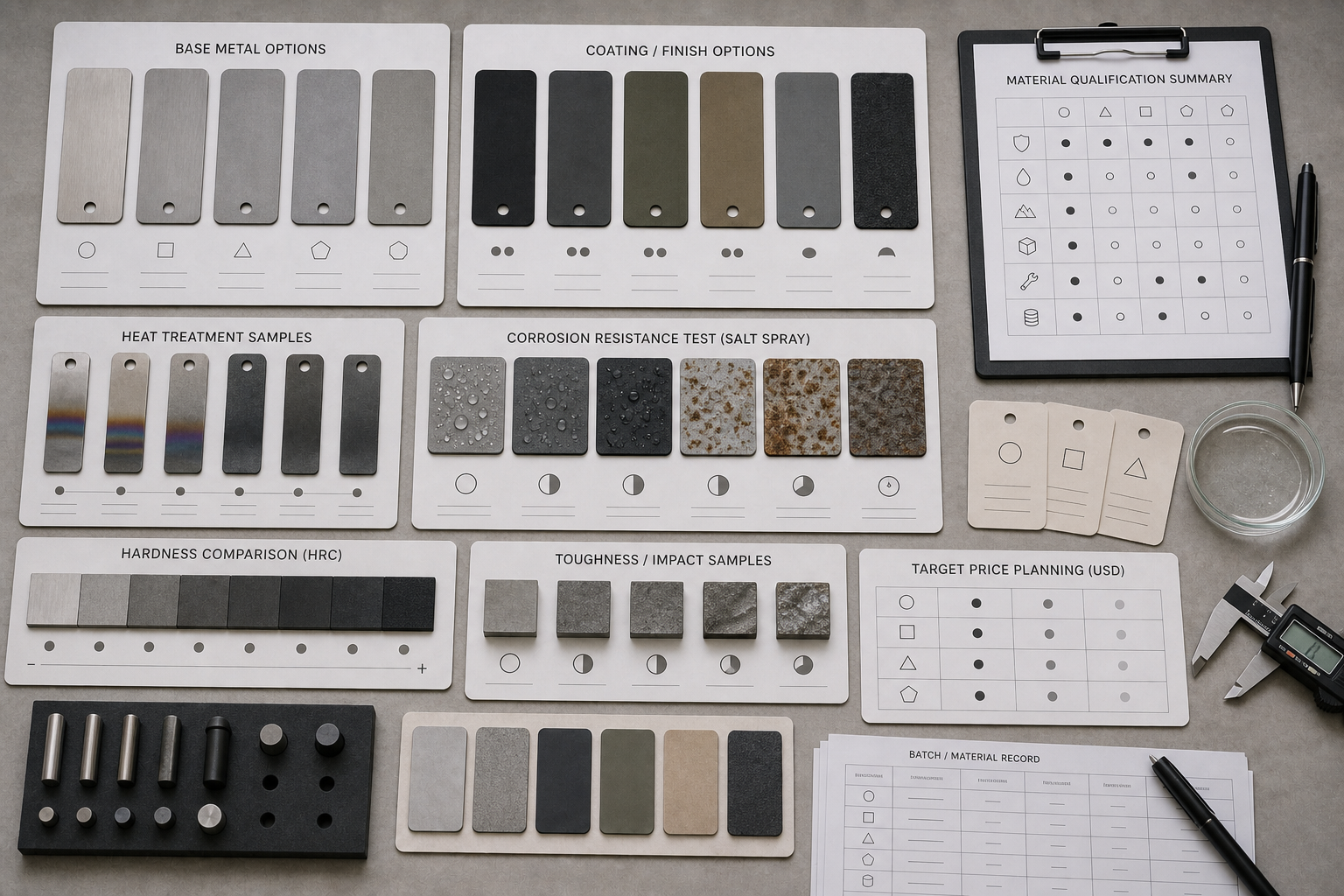
I Connect Steel Choice With Geometry
For fixed blade knives, the best steel is not always the most expensive steel. The best steel is the one that fits the buyer's product role and can be processed consistently. A camping-oriented fixed blade may need toughness and easy maintenance. A hunting-style knife may need edge stability and corrosion resistance. A value outdoor knife may need a practical stainless option that supports cost and repeat supply.
Official material information helps frame the discussion. Alleima lists 14C28N knife steel for knife applications that demand edge sharpness, edge stability, hardness, and corrosion resistance, including hunting knives. Alleima also explains that hardening and tempering of knife steel changes the material so it can reach useful hardness while reducing brittleness through tempering. I use these points to explain why steel grade and heat treatment must be discussed together. The buyer should ask for target HRC, sample testing, and batch records, not only a steel name.
| Steel decision | Practical question | QC focus |
|---|---|---|
| Entry stainless | Does it support price and easy care? | Stable heat treatment |
| 14C28N option | Does the market justify better steel value? | HRC and grinding control |
| Carbon or tool steel option | Does the buyer accept more care needs? | Clear maintenance guidance |
| Target HRC | Does hardness fit geometry and use? | Batch hardness checks |
| Edge geometry | Is the edge too thin or too thick? | Bevel and edge inspection |
How Should Handle Materials and Assembly Be Planned?
A blade can pass inspection while the handle fails the user. Gaps, poor texture, and weak fasteners are common problems.
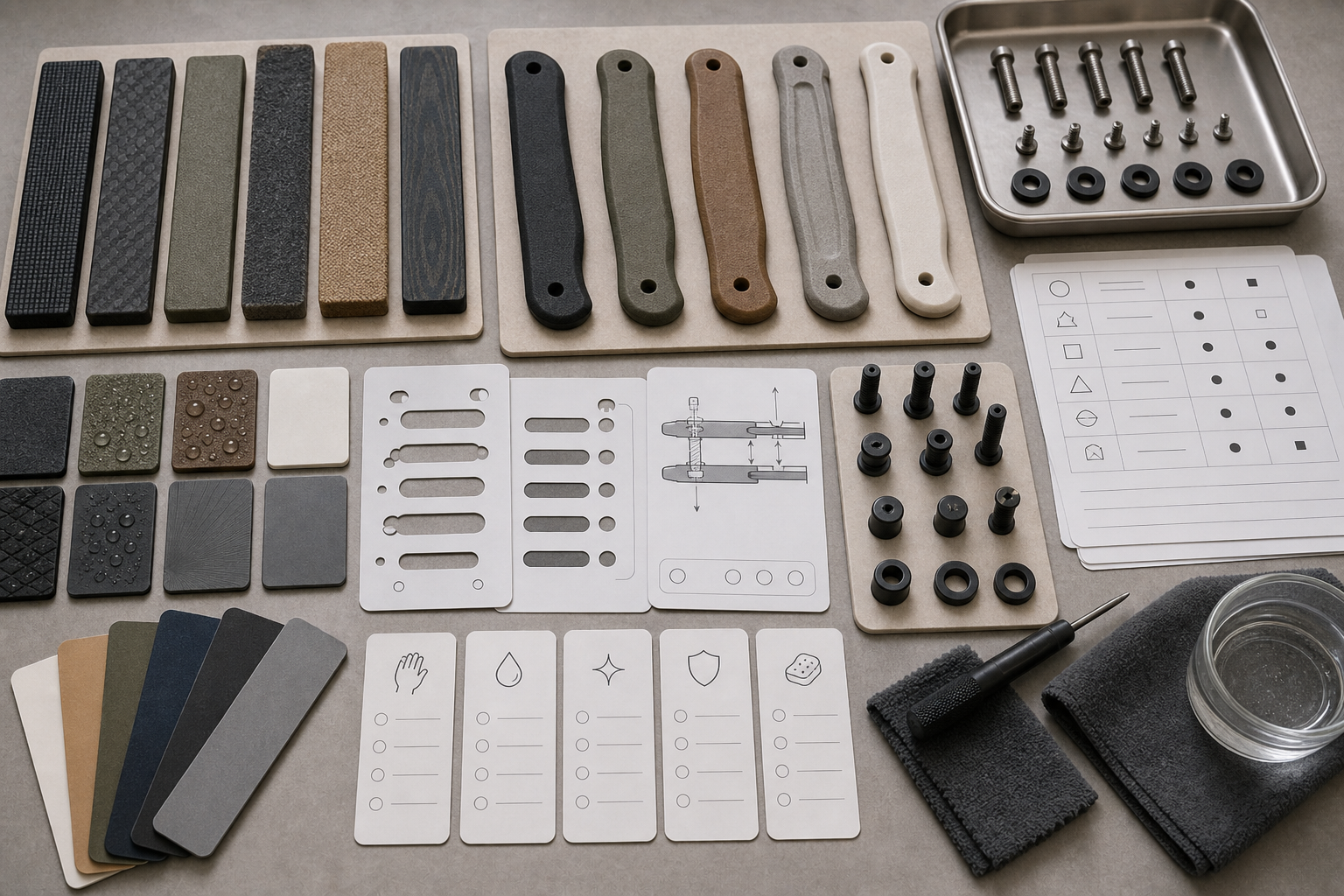
Handle planning should cover material, texture, shape, tang fit, fasteners, color, logo method, assembly process, gap control, and cleaning expectations. The handle must match both user comfort and factory repeatability.
I Treat the Handle as an Assembly System
The handle must feel good, but it also must be built well. Buyers may choose G10, wood, polymer, rubber-like material, stainless, aluminum, or micarta-style material. Each option changes cost, grip, weight, cleaning, finish, and color control. Wood can create a warm look, but it may need more attention to moisture and natural variation. G10 can support outdoor positioning, but machining and edge finishing must be clean. Rubber-like material can help grip, but the tooling, surface texture, and odor control should be checked.
Assembly details matter just as much as material. Full tang scales may use pins, tubes, screws, or rivets. Molded handles need insert control. Hidden tang handles need alignment and retention checks. I look for gaps around the tang, uneven scale edges, loose fasteners, sharp corners, and color variation. A handle problem often becomes a customer complaint because the user touches it every time. For B2B orders, handle QC should be written into the inspection plan before mass production.
| Handle item | What I check | Why it matters |
|---|---|---|
| Material | G10, wood, polymer, rubber-like, or metal | Controls grip and cost |
| Texture | Smooth, patterned, or high-grip | Affects comfort and control |
| Fasteners | Pins, tubes, screws, or rivets | Affects strength and appearance |
| Gap control | Tang and scale fit | Supports quality perception |
| Logo method | Laser, print, engraving, or molded mark | Supports brand positioning |
What Sheath and Packaging Details Should Buyers Define?
The sheath is often planned late. That can create poor fit, weak retention, and packaging changes after sample approval.
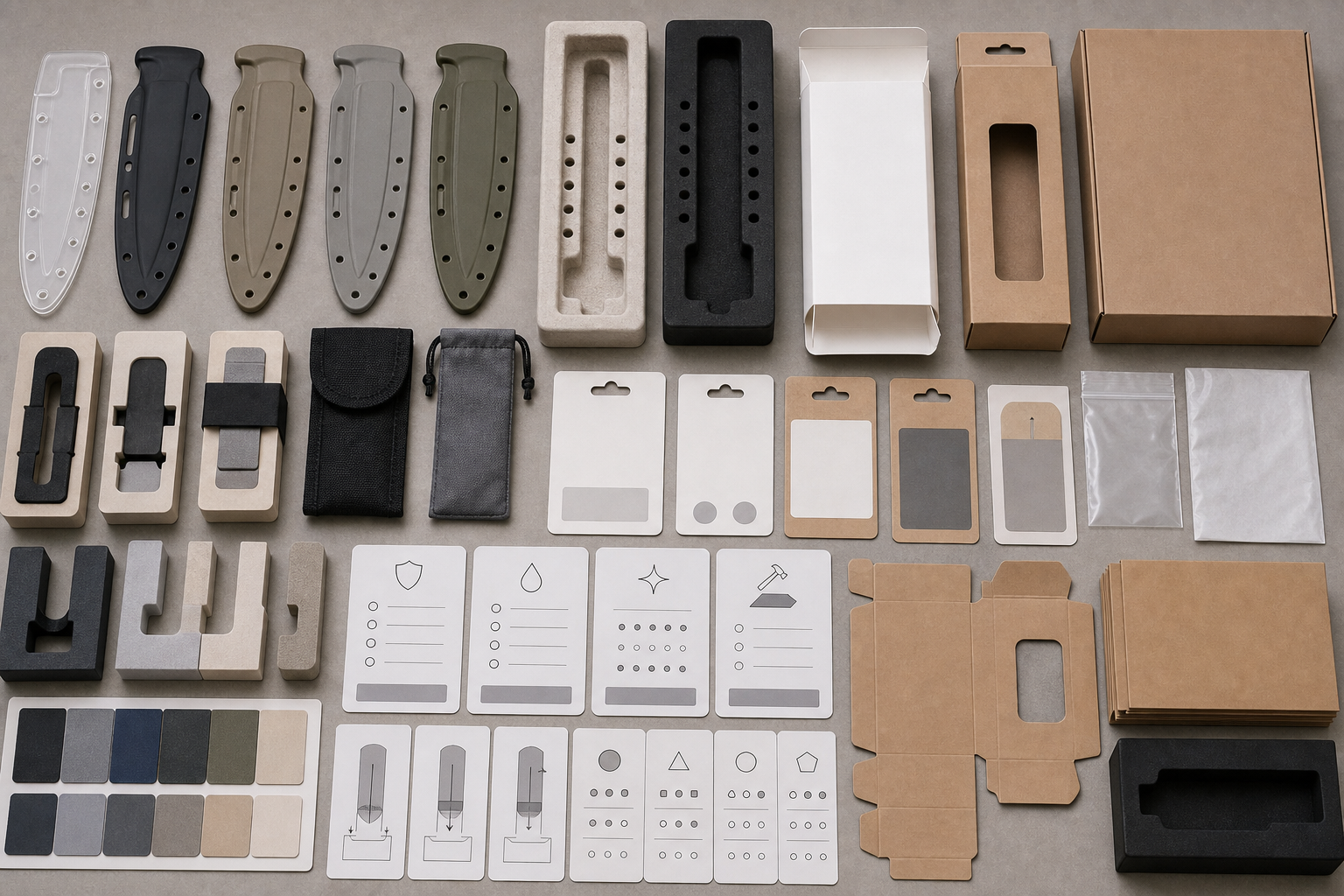
Buyers should define sheath material, retention method, drain or cleaning needs, belt or kit attachment, edge protection, retail packaging, carton plan, and supported packaging claims during development.
I Develop the Sheath With the Knife
For fixed blade knives, the sheath is part of the product experience. If the sheath is too loose, the buyer loses trust. If it is too tight, the user may dislike the product. If it scratches the finish, the buyer may get returns. If it does not fit the packaging, carton cost can change. This is why I prefer to develop the sheath together with the knife, not after the knife is already approved.
Molded sheaths can offer accurate fit, but tooling and shrinkage need control. Nylon sheaths can support lower MOQ or traditional outdoor styling, but stitching, insert, and strap details matter. Leather-style sheaths may create a higher-position look, but cost and consistency should be reviewed. Packaging should also be clear. Buyers should define whether the product uses a color box, card, blister, bulk pack, or kit packaging. Any claim about steel, full tang, sheath retention, corrosion resistance, or maintenance should match real product features and documentation.
| Sheath or packaging item | Practical option | Risk to manage |
|---|---|---|
| Sheath material | Molded, nylon, leather-style, or hybrid | Fit and cost |
| Retention | Friction, strap, snap, or insert | Too loose or too tight |
| Edge protection | Guard, insert, or full sheath | Shipping damage |
| Retail format | Box, card, blister, or kit pack | Display and carton fit |
| Claims | Steel, tang, finish, sheath, care | Must match evidence |
How Should Surface Finish and Corrosion Control Be Managed?
Finish can make a knife look finished. But it also affects corrosion risk, scratches, coating consistency, and maintenance expectations.
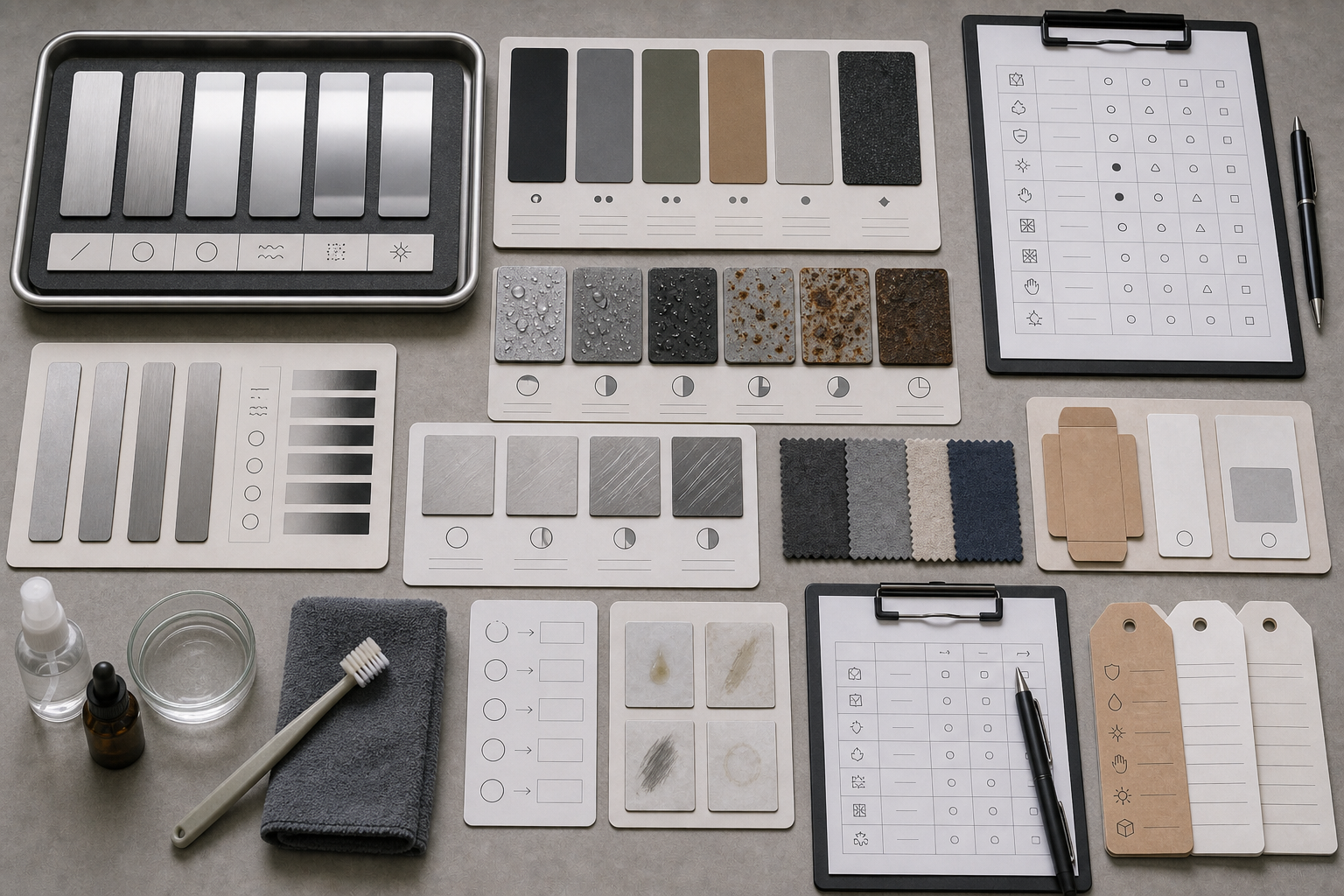
Surface finish should be chosen based on steel, target market, appearance, corrosion needs, coating durability, cleaning, and packaging rub. Buyers should approve finish samples and define inspection criteria.
I Do Not Treat Finish as Decoration Only
Finish affects both appearance and product risk. Satin can look clean, but scratches may be more visible. Stonewash can hide minor marks, but the buyer must approve the look because variation can be part of the process. Bead blast can look attractive, but it may need more care depending on steel and surface condition. Coating can add a strong visual style, but coating adhesion, thickness, edge wear, and packaging rub need review.
Corrosion control starts with steel choice and heat treatment, but it does not end there. Grinding heat, surface roughness, polishing, cleaning residue, and packaging moisture can all affect the final product. If the buyer wants low-maintenance wording, stainless steel and finish choice should support that claim. If the buyer chooses a carbon or tool steel option, the maintenance instructions should be very clear. I prefer to define finish samples, inspection lighting, scratch tolerance, coating acceptance, and packaging protection before mass production. This gives both sides a shared standard.
| Finish choice | Benefit | Concern |
|---|---|---|
| Satin | Clean retail appearance | Shows scratches more easily |
| Stonewash | Hides minor handling marks | Variation must be approved |
| Bead blast | Matte outdoor look | Surface care must be reviewed |
| Coating | Strong visual style | Adhesion and edge wear |
| Polished edge | Better perceived sharpness | Needs controlled burr removal |
What Maintenance Instructions Should Be Built Into the Product?
Maintenance is often written after production. That is too late when the material, finish, and packaging already set user expectations.
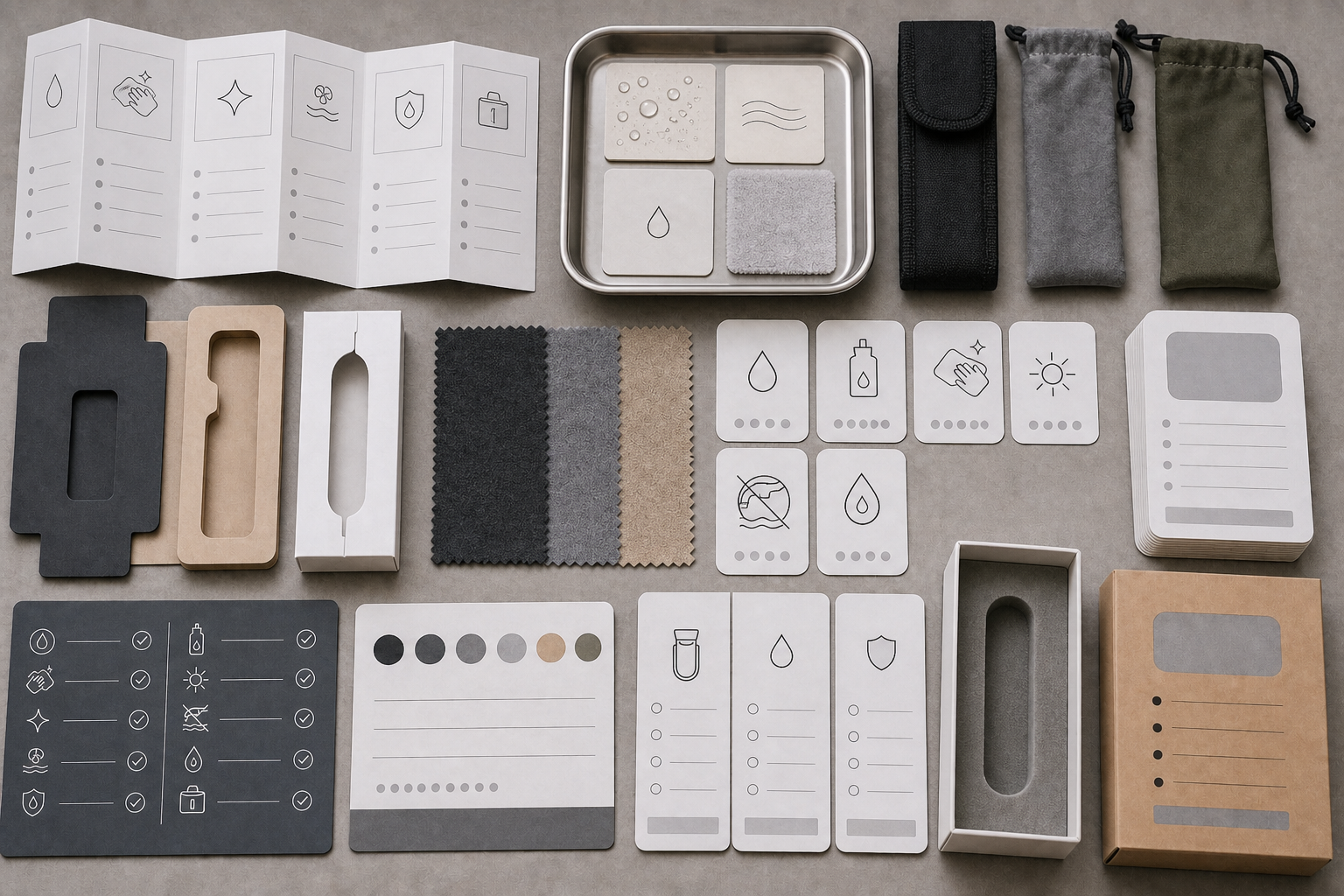
Maintenance guidance should match steel, finish, handle material, sheath, and target market. Buyers should define cleaning, drying, storage, sharpening, oiling, and care warnings before packaging artwork.
I Write Care Guidance From the Product Choices
Maintenance copy should not be generic. It should be based on real product choices. A stainless fixed blade still needs cleaning and drying. A coated blade may need guidance about abrasive cleaning. A wood handle may need different care from a polymer handle. A sheath may trap moisture if the user stores the knife wet. If the buyer chooses a carbon steel option, the care guidance should be more direct about drying and oiling. If the buyer sells into outdoor channels, the packaging should help users understand practical storage.
For OEM/ODM projects, I like to discuss maintenance before packaging artwork. This prevents unsupported claims. If the packaging says "low maintenance," the material and finish should support that message. If the knife is part of a kit, the care card must fit the kit format. If the buyer sells through a retailer, the retailer may have wording requirements. Maintenance guidance also reduces complaints. Users often blame the product when care instructions are unclear. A simple, honest care card can protect the brand and reduce after-sale friction.
| Maintenance topic | What to say clearly | Why it matters |
|---|---|---|
| Cleaning | Clean after use | Reduces residue problems |
| Drying | Dry before storage | Helps corrosion control |
| Sheath storage | Avoid long wet storage | Protects blade and sheath |
| Sharpening | Use suitable method and angle | Protects edge geometry |
| Handle care | Match material needs | Reduces handle complaints |
What QC and RFQ Details Protect Repeat Production?
A good first sample does not guarantee a good shipment. Repeat quality needs written checks and clear RFQ details.
The RFQ should define blade shape, tang, steel, HRC, handle, sheath, finish, packaging, maintenance copy, quantity, target price, documentation, and inspection requirements. QC should check each batch against the approved sample.
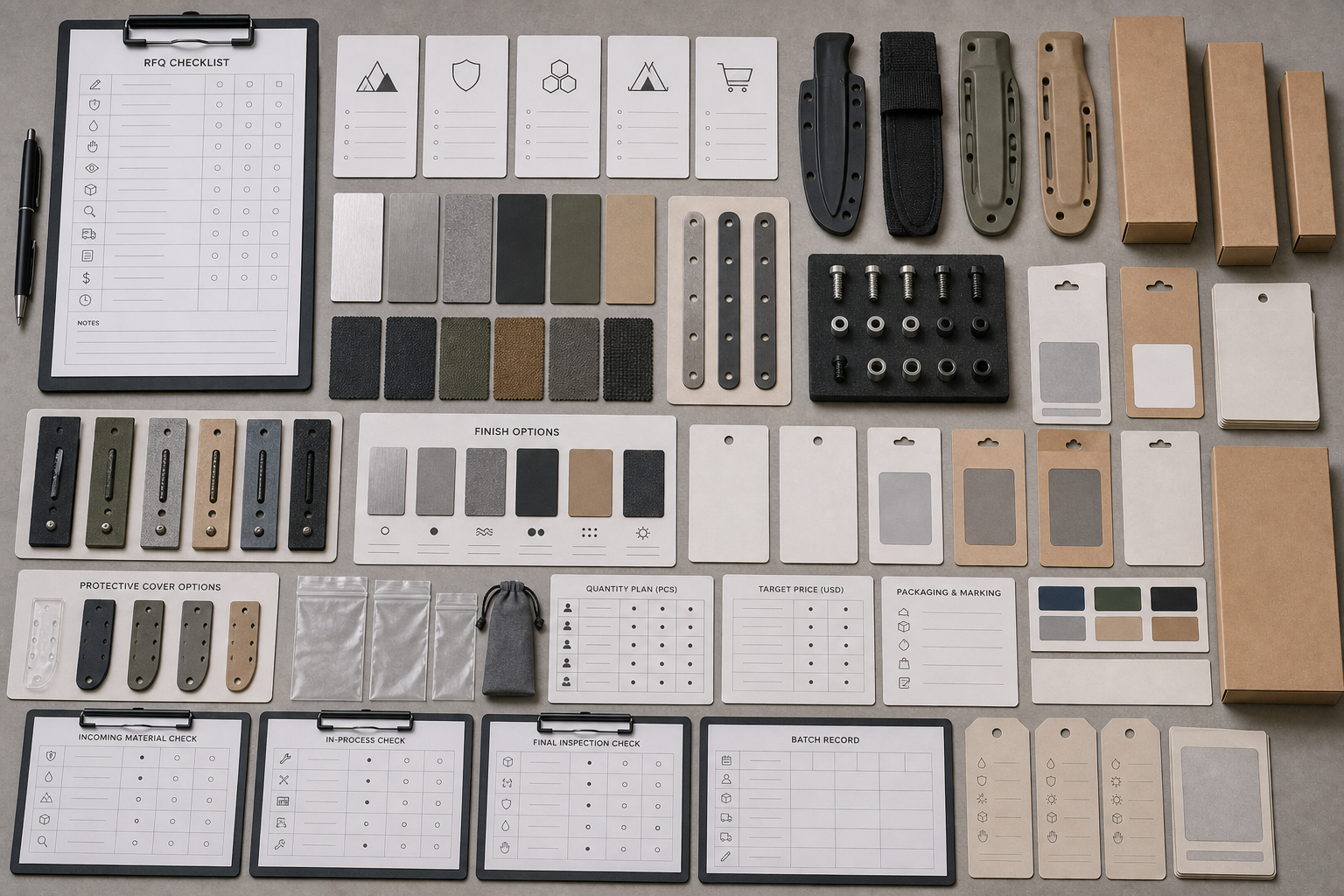
I Turn the Design Into a Production Standard
The RFQ should turn the buyer's idea into measurable requirements. I ask for product role, target market, blade length, thickness, tang type, steel, target HRC, grind, edge requirement, handle material, handle color, fastener method, sheath type, finish, logo method, packaging type, quantity, target price, and maintenance copy needs. If the buyer has a reference sample, I still ask which details should be copied and which should be changed.
QC should match the real risks. The NIST Rockwell hardness guide supports careful hardness measurement practice. ISO 9001 provides quality-management context for customer requirements, operation control, performance evaluation, and improvement. I do not use these sources to claim certification unless documents prove it. I use them to shape better buyer questions. For fixed blade orders, useful checks include steel verification, blade profile, thickness, HRC, bevel symmetry, handle gap, fastener security, sheath retention, finish, packaging, and final report.
| RFQ or QC item | What to define | Why it helps |
|---|---|---|
| Blade structure | Shape, tang, thickness, grind | Prevents wrong samples |
| Material | Steel, handle, sheath, finish | Supports accurate quote |
| Performance checks | HRC, edge, sheath retention | Protects function |
| Appearance checks | Finish, logo, handle fit, packaging | Protects retail quality |
| Documentation | Material, inspection, packaging claims | Supports buyer review |
Turn this article into a fixed blade project.
Send your target use, blade size, steel, handle direction, sheath needs, quantity, and packaging plan. Vast State can help shape it into a quote-ready project.
Conclusion
I build better fixed blade knives by linking construction, steel, handle, sheath, finish, maintenance guidance, RFQ details, and QC from the start.
Source Notes
- Alleima 14C28N knife steel supports stainless knife steel context for edge sharpness, edge stability, hardness, and corrosion resistance.
- Alleima hardening and tempering guide supports the need to discuss heat treatment together with steel choice.
- NIST Rockwell hardness guide supports controlled hardness measurement practice.
- ISO 9001 provides quality-management context for customer requirements and process control.