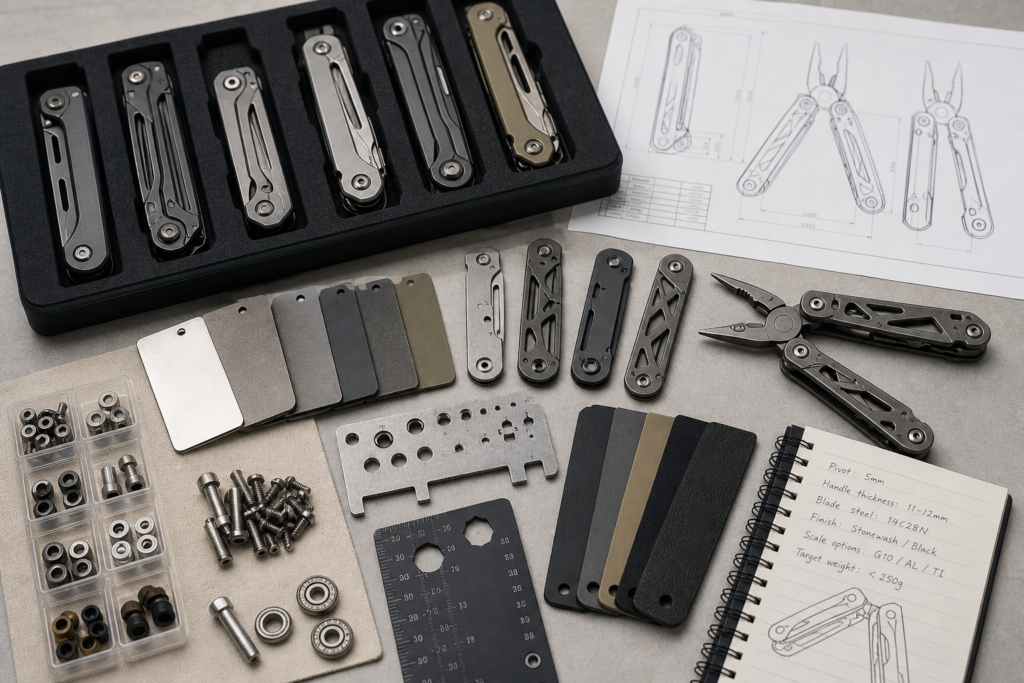
Multi-pliers look compact and useful, but one weak pivot or poor jaw alignment can hurt the whole product. Good development controls every moving part.
Buyers should develop multi-pliers by defining the target user, plier head, tool functions, steel and hardness, pivot system, handle comfort, surface finish, packaging, maintenance guidance, and QC checks. A practical OEM/ODM multi-plier must feel solid, open smoothly, and repeat well in production.
Quick buyer brief:
- Answer: Define the plier head, tool mix, materials, pivots, finish, packaging, and inspection plan before sampling.
- Buyer context: Useful for outdoor brands, tool brands, EDC brands, importers, wholesalers, distributors, and private label buyers.
- Key checks: Jaw alignment, cutter function, pivot tension, tool fit, hardness, corrosion control, packaging claims, and batch QC.
Planning a custom multi-tool project?
Send your function list, reference photo, target quantity, and budget range. Vast State can review materials, tooling, assembly, inspection, and packaging options.
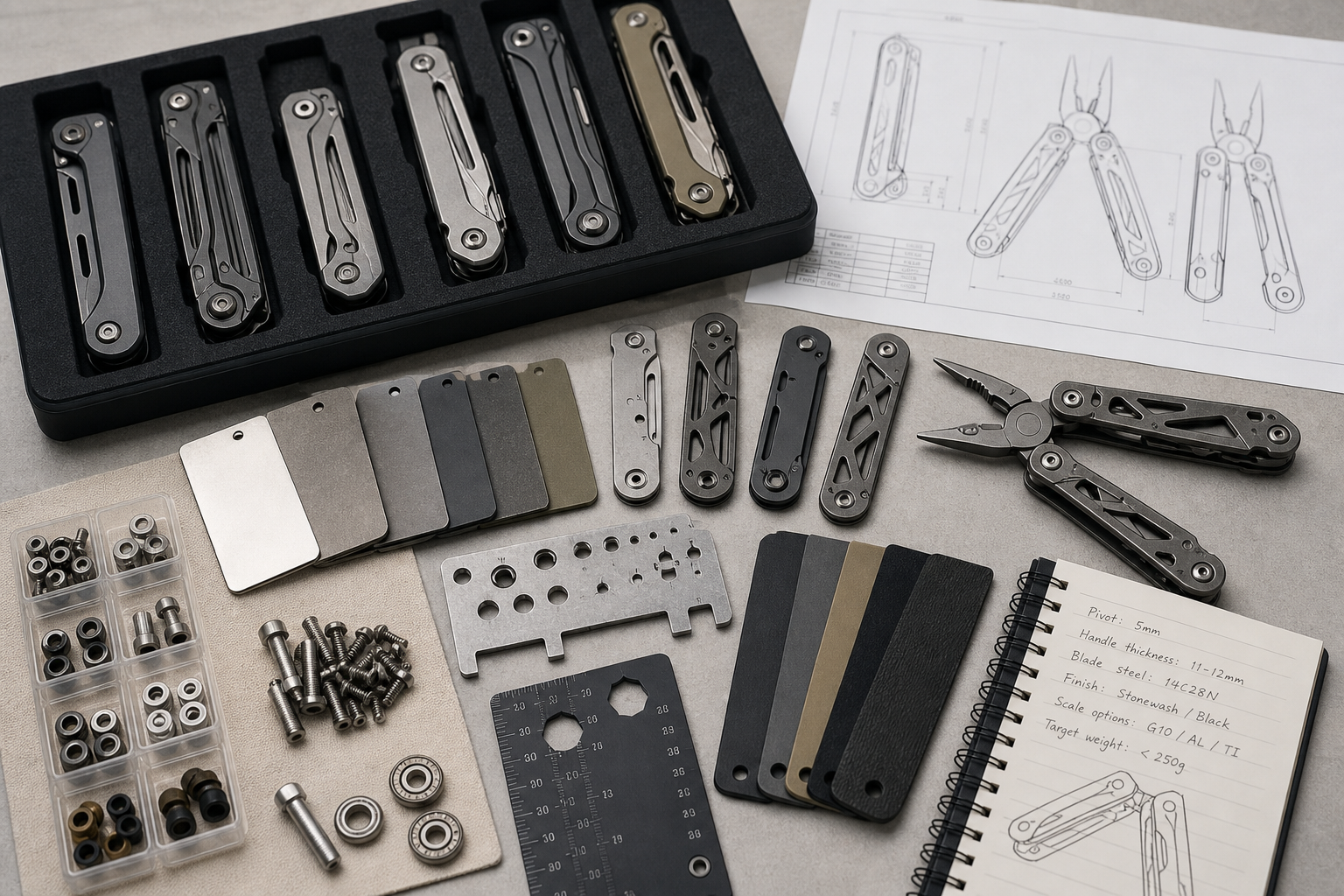
When I work on a multi-plier project, I do not think of it as one tool only. I think of it as a small mechanical system. The plier head must align. The cutters must close correctly. The pivots must feel controlled. The handles must not pinch the user. The internal tools must open without scraping each other. The finish must survive handling. The packaging must explain the real functions without promising too much. For B2B customers, the best multi-plier is not the one with the longest feature list. It is the one that fits the buyer's channel, price range, and repeat production plan.
What Defines a Multi-Plier in a B2B Product Line?
A multi-plier can be sold as a tool, outdoor item, EDC product, or kit component. A vague definition creates wrong samples.
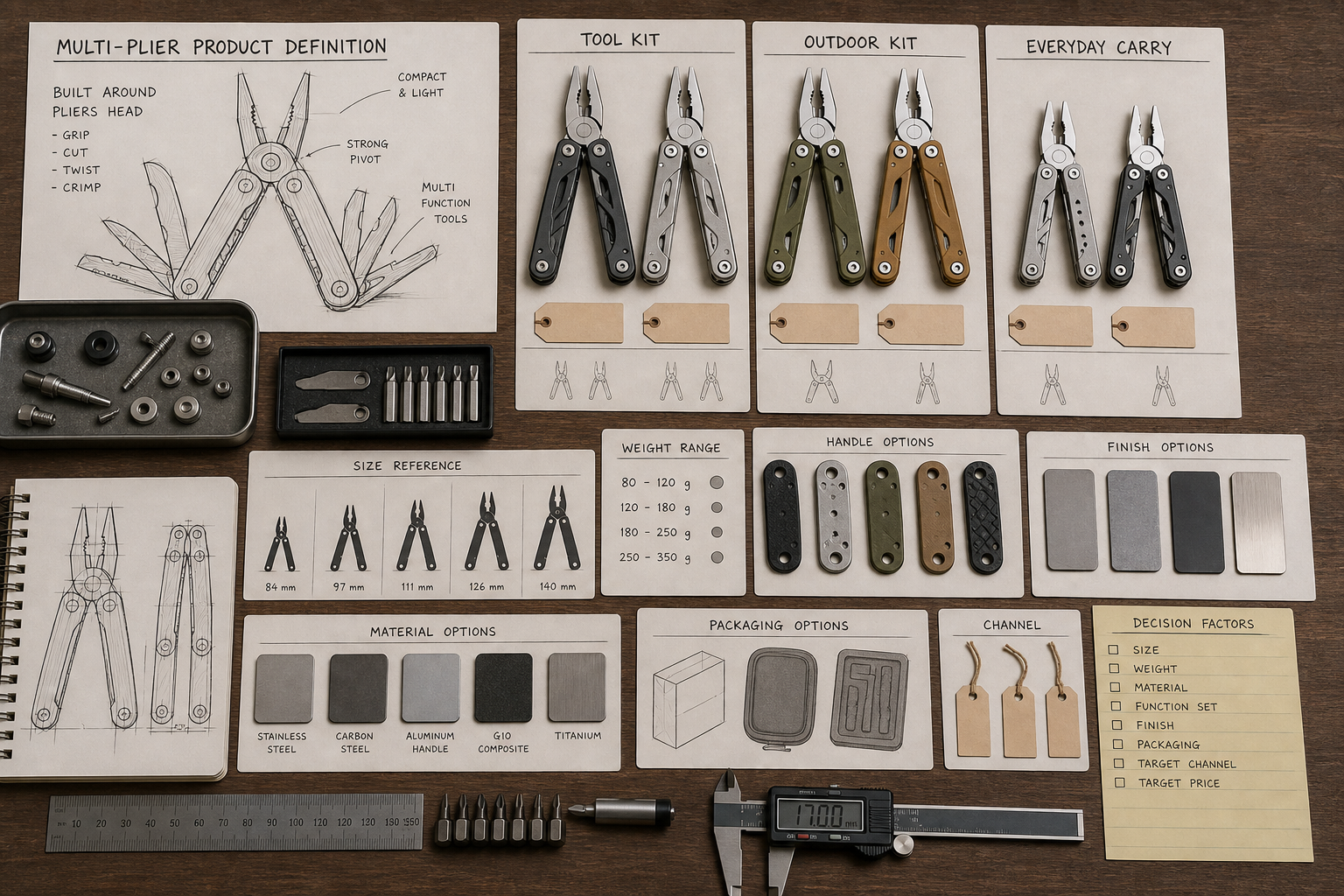
A multi-plier is a compact multi-tool built around a plier head. In OEM/ODM projects, buyers should define target user, plier type, tool functions, size, weight, handle, finish, packaging, and inspection needs before sampling.
I Start With the Real Use Case
The name "multi-plier" can mean different products. Some buyers want an outdoor multi-tool with pliers, wire cutters, screwdrivers, and a small blade. Some want a compact EDC tool for daily repair tasks. Some want a value gift set item. Some want a camping or fishing kit component. Some want a private label tool with a specific function mix and branded pouch. Each direction changes the structure, cost, weight, finish, and packaging.
I usually ask buyers to define the target user first. Is the product for outdoor retail, hardware, promotional gifts, tool kits, fishing, camping, or general utility? Then I ask for the expected size and price range. A heavy full-size tool may feel strong, but it may not fit a pocket line. A small tool may be easy to carry, but the plier head and cutters may be limited. A large tool count may look good on packaging, but it can create assembly problems and higher defect risk. A clear product definition helps the supplier build a realistic first sample.
| Definition point | What I ask | Why it matters |
|---|---|---|
| Product role | Outdoor, EDC, tool kit, gift, or private label | Guides size and function mix |
| Plier style | Needle nose, regular, or hybrid head | Controls main use case |
| Tool count | Essential tools or full feature set | Affects cost and assembly |
| Target price | Entry, mid-range, or higher-position line | Controls materials and finish |
OEM/ODM RFQ Checklist
Prepare these details to help Vast State review your project and provide a more accurate quotation.
| RFQ Field | What to Prepare |
|---|---|
| Project type | OEM from drawing / ODM private label / wholesale catalog |
| Product category | Folding knife / fixed blade / multi-tool / outdoor tool |
| Design status | Idea / sketch / 2D drawing / 3D CAD / physical sample |
| Target price | Ex-factory target price or retail price range |
| MOQ expectation | 500 / 1,000 / 3,000 / 5,000+ pcs |
| Logo method | Laser engraving / etching / printing / molded logo |
| Packaging | Standard packaging / custom retail box / Amazon-ready |
| Market | USA / EU / Japan / Korea / Middle East / other |
| Compliance needs | Buyer-specified testing / documentation / labeling |
| Timeline | Sample deadline / mass production deadline |
How Should the Plier Head and Jaw Design Be Specified?
The plier head is the heart of the product. If the jaws do not align, the whole multi-tool feels cheap.
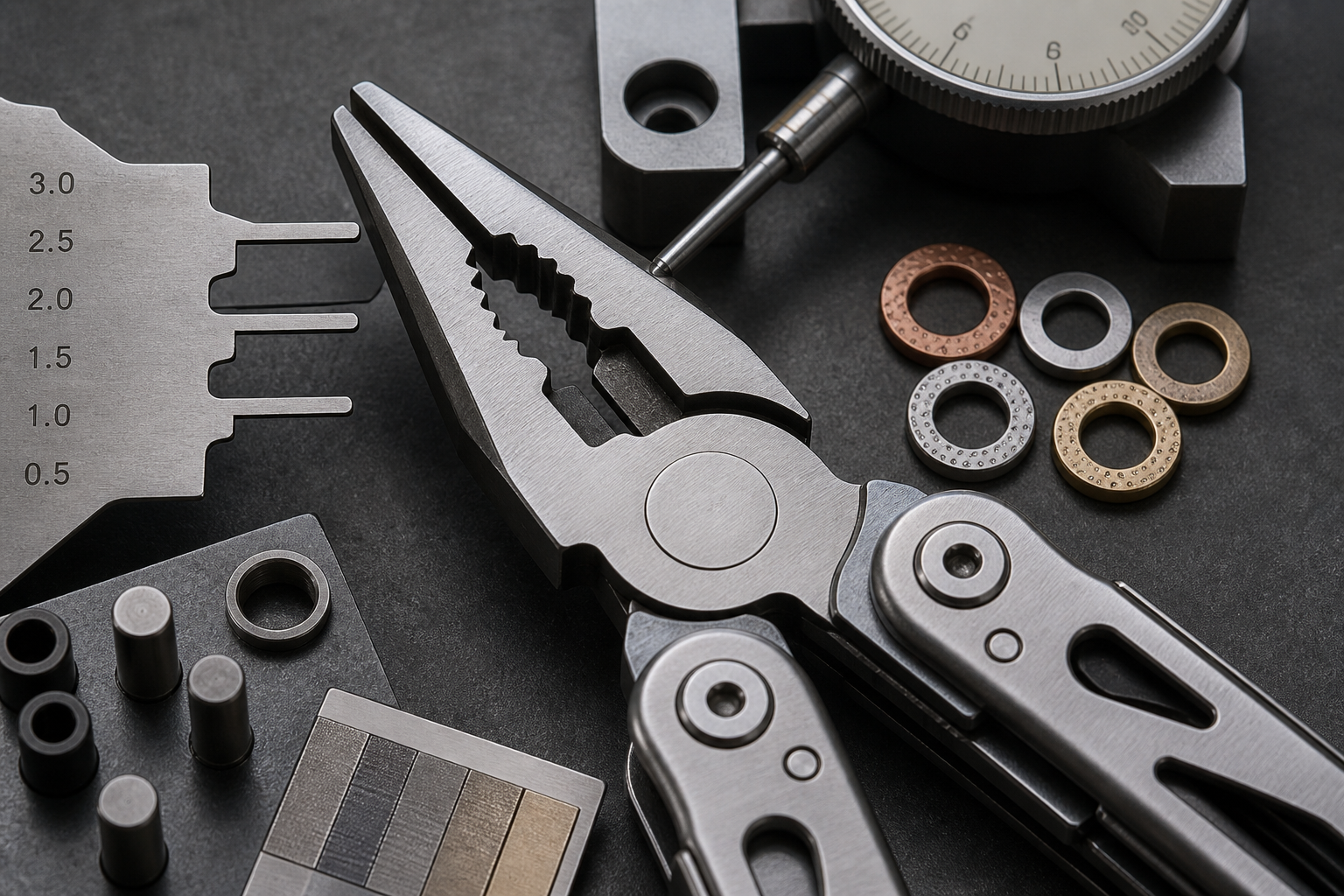
The plier head should specify jaw shape, gripping teeth, cutter type, nose length, pivot fit, jaw alignment, hardness target, and opening feel. Buyers should approve physical samples and functional checks.
I Treat the Plier Head as a Precision Part
Many buyers focus first on the number of tools. I focus first on the plier head. The plier head is the main reason the product is called a multi-plier. If the nose is twisted, the teeth are uneven, the cutters do not meet, or the pivot feels loose, the user notices immediately. The head must be designed and checked carefully.
Official standards help frame the conversation. ISO 5743:2021 covers general technical requirements for pliers and nippers. ISO 5744:2004 covers methods of test for checking correct functioning of pliers and nippers. I do not claim that every multi-plier order is certified to those standards unless the buyer requests and verifies it. But these sources are useful because they remind buyers that pliers are testable tools, not only visual products. For OEM/ODM sourcing, the RFQ should define jaw alignment, cutter function, opening and closing feel, surface finish, and the sample test method.
| Plier head item | What to define | Why it matters |
|---|---|---|
| Jaw shape | Needle nose, regular, or hybrid | Matches target use |
| Teeth pattern | Fine, coarse, or mixed grip | Affects holding feel |
| Cutter area | Wire cutter or no cutter | Affects steel and hardness |
| Pivot fit | Smooth but stable movement | Controls perceived quality |
| Jaw alignment | Even closing and nose contact | Protects function |
Which Tool Functions Should Be Included?
More functions can look attractive on packaging. But too many tools can increase cost, thickness, weight, and defect risk.
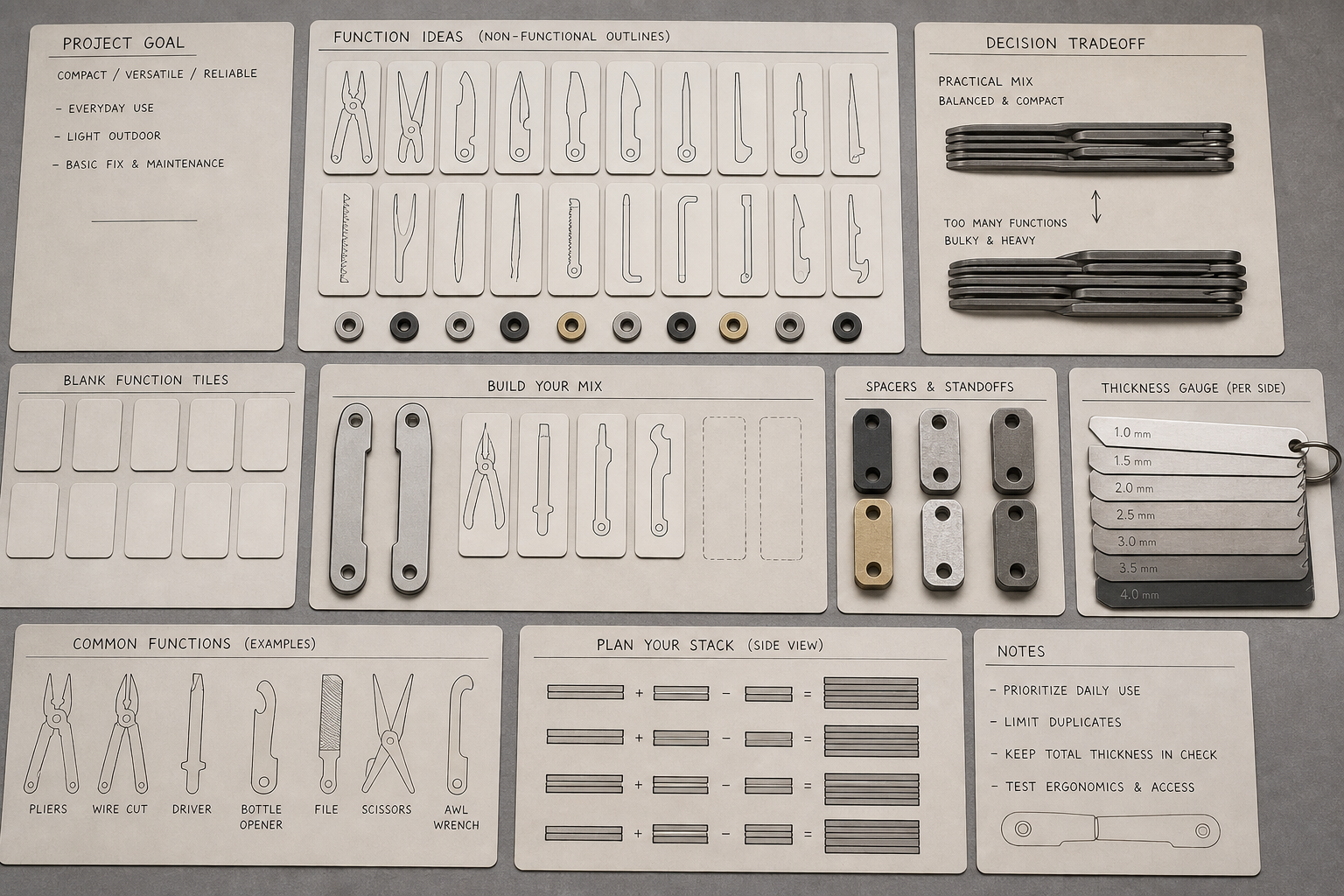
Buyers should choose tool functions based on the target channel, user tasks, tool size, safety expectations, assembly space, cost, and QC risk. A practical multi-plier needs useful tools, not the longest list.
I Build the Tool Set Around the Buyer
The tool list should come from real use. Outdoor buyers may need pliers, cutters, screwdriver functions, opener, file, saw, and a small cutting blade. Hardware channels may care more about screwdrivers, wire work, and grip. Gift channels may want a balanced function list and attractive packaging. EDC buyers may care about size, weight, pocket feel, and smooth opening. A fishing kit may need pliers and corrosion-resistant finish more than a large number of small tools.
Every added function has a cost. It uses steel, machining, stamping, grinding, washers, springs, pins, space, and assembly time. It can also create interference if the tools rub, hit each other, or open too tightly. I prefer to create a function map before sample making. The buyer can rank each tool as must-have, nice-to-have, or remove. This helps reduce unnecessary thickness and keeps the product honest. A well-selected 8-function tool can be better than a messy 15-function tool that feels weak.
| Tool function | Buyer question | Production concern |
|---|---|---|
| Screwdrivers | Which sizes and shapes are useful? | Tip hardness and fit |
| Cutter | What wire or task is expected? | Edge hardness and alignment |
| File | Is it functional or visual? | Tooth consistency |
| Scissors | Does the size justify complexity? | Spring and edge fit |
| Blade component | Does the channel need it? | Edge, lock, and packaging review |
Which Materials and Heat Treatment Fit Multi-Pliers?
A multi-plier has many small parts. Weak material decisions can cause loose pivots, dull cutters, bent tools, or rust complaints.
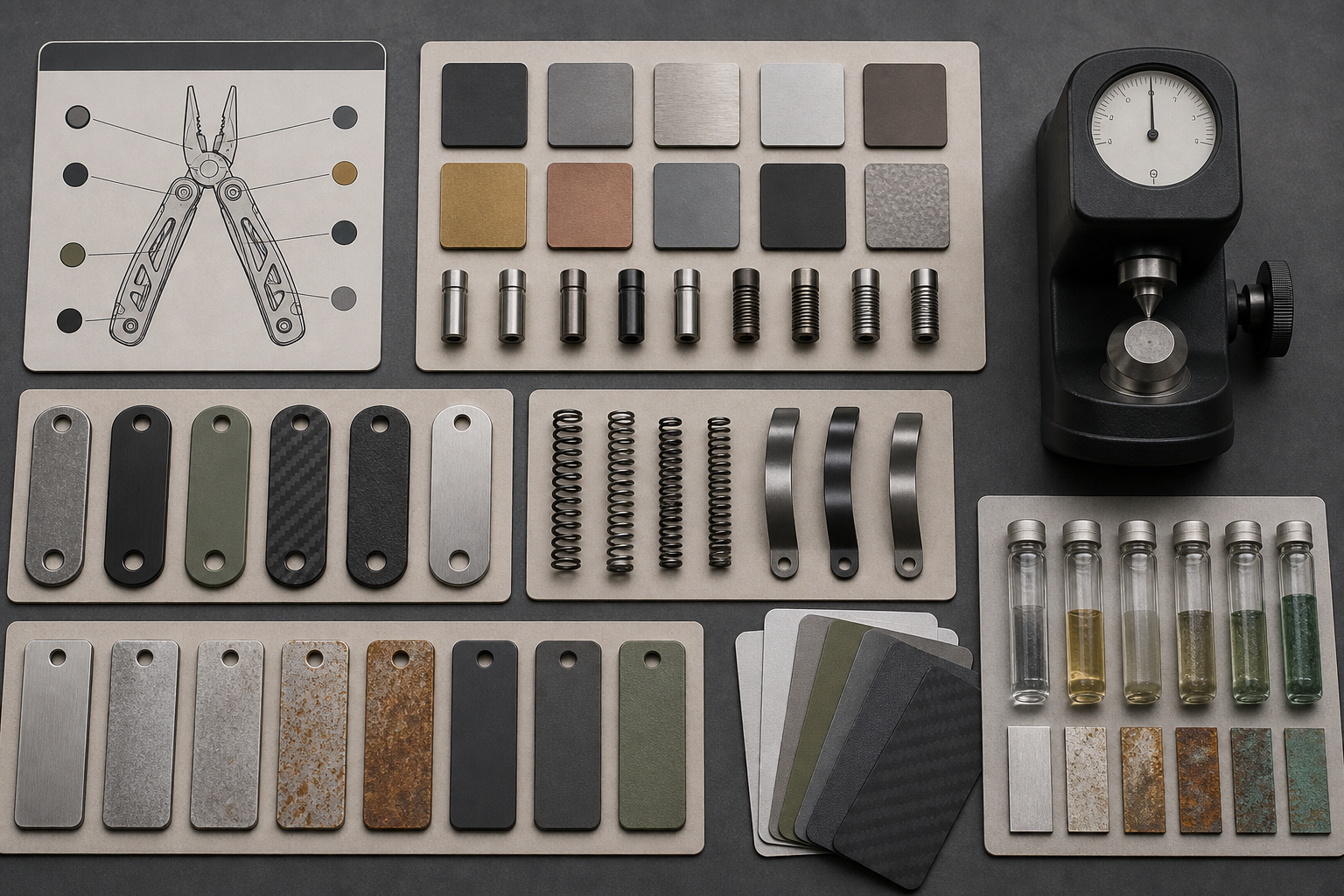
Materials and heat treatment should be chosen by part function. Plier heads, cutters, blades, screwdrivers, springs, handles, and pivots may need different hardness, toughness, corrosion resistance, and surface finish.
I Match Each Part to Its Job
Multi-pliers are not one material problem. They are a group of small material problems. The plier head needs strength and alignment. The cutter area needs edge durability. Screwdriver tips need resistance to deformation. A blade component needs edge performance and corrosion control. Springs need elastic behavior. Handles need enough strength without making the product too heavy. Pivots and pins need stable fit.
This is why I avoid choosing a steel name for the whole product too quickly. Some parts may use stainless steel. Some parts may need localized heat treatment. Some parts may need different hardness targets. If the product includes a blade component, official knife steel information such as Alleima 14C28N can help explain edge sharpness, edge stability, hardness, and corrosion resistance. For plier and cutter parts, the buyer should ask for material, hardness range, and sample testing based on function. The NIST Rockwell hardness guide supports careful hardness measurement practice, which matters when buyers discuss HRC values.
| Part | Material concern | QC focus |
|---|---|---|
| Plier head | Strength and alignment | Hardness and jaw fit |
| Cutter area | Edge durability | Closing and cutting test |
| Screwdriver tips | Deformation resistance | Tip shape and hardness |
| Blade component | Edge and corrosion control | HRC and edge inspection |
| Springs and pivots | Stable movement | Opening force and wear feel |
How Should Pivot, Lock, and Opening Feel Be Controlled?
Multi-pliers can fail through feel before they fail through breakage. Loose pivots, rough tools, and weak retention make buyers nervous.
Pivot, lock, and opening feel should control smooth movement, tool retention, side play, handle symmetry, spring force, lock engagement where used, and repeat feel across production.
I Design the Feel Into the Assembly Process
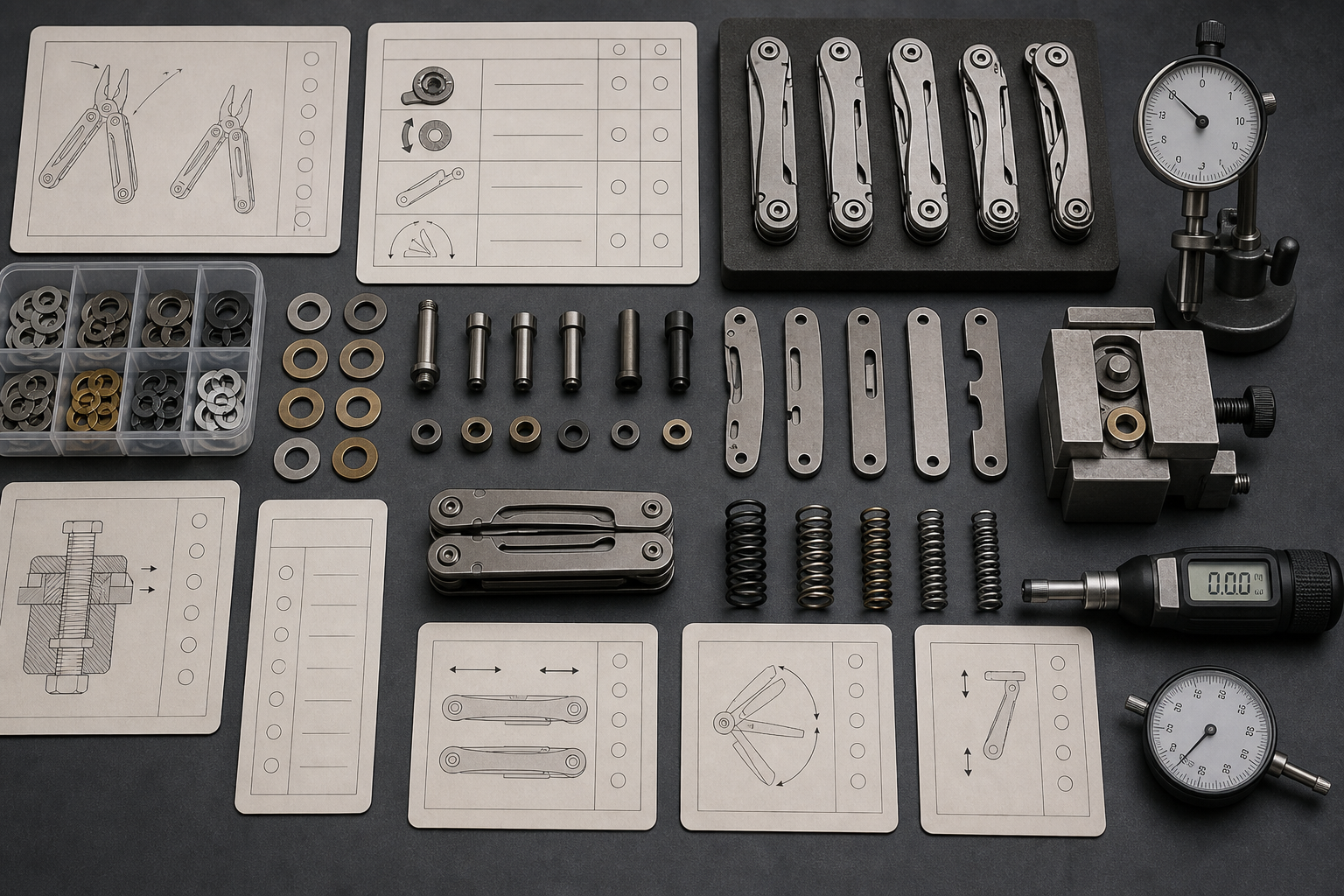
The feel of a multi-plier depends on many small relationships. The plier pivot must move smoothly but stay stable. The handles must open evenly. Internal tools must not scrape too much. The spring or slipjoint force must be strong enough to hold the tool, but not so strong that users struggle to open it. If a locking system is used for any tool, the engagement and release must be checked carefully. Even without a lock, tool retention matters.
For production, feel cannot depend only on a worker's final adjustment. The design should define washer thickness, spacer order, pivot screw torque, rivet setting, spring force, and acceptable side play. If the tool stack is too tight, the user feels rough movement. If it is too loose, the product feels cheap. If each sample is adjusted by hand without a standard, mass production will drift. I prefer to create a feel reference sample and inspection checklist. The buyer should approve not only the appearance but also the movement.
| Movement item | What to check | Why it matters |
|---|---|---|
| Plier pivot | Smooth movement and low side play | Main user impression |
| Tool stack | No heavy scraping or looseness | Protects feel and finish |
| Spring force | Openable but secure | Controls usability |
| Lock or retention | Stable engagement where used | Supports function |
| Handle symmetry | Even opening and closing | Improves perceived quality |
How Should Handle Design and Surface Finish Be Planned?
A multi-plier lives in the hand. Poor edges, slippery surfaces, or weak finish can make the product feel unfinished.
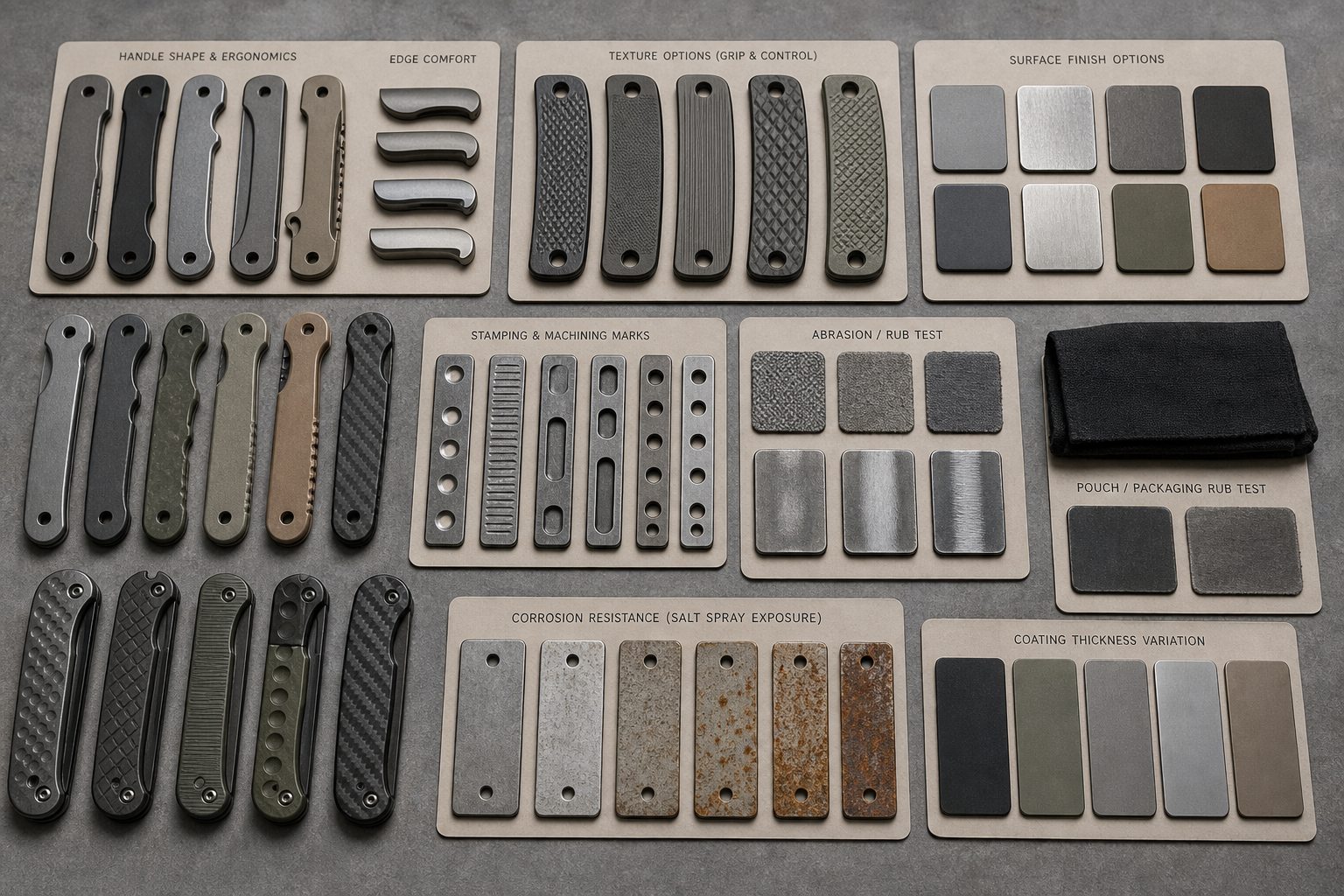
Handle and finish planning should cover grip, edge comfort, stamping marks, coating, polish, stonewash, bead blast, corrosion control, logo method, and packaging rub.
I Look for Comfort Before Decoration
The handle is where users judge comfort. Thin stamped handles can save cost, but sharp edges must be controlled. Thick handles can feel strong, but they may make the tool heavy. G10 or polymer inserts can improve grip and brand identity, but they add assembly steps. A plain stainless handle may fit value or tool channels, but it needs good deburring and finish control. A coated handle can look strong, but coating wear and packaging rub must be reviewed.
Surface finish should match the target market. Satin can look clean. Stonewash can hide small marks. Bead blast can create a matte look but may need more attention to corrosion and cleaning. Coating can add color but needs adhesion and scratch review. Logo methods also matter. Laser marking, stamping, etching, printing, or molded marks all create different costs and durability. I ask buyers to approve finish boards, logo samples, and handling tests before mass production. A beautiful finish that scratches during packing is not a finished solution.
| Finish or handle item | Benefit | Risk to manage |
|---|---|---|
| Stainless handle | Clean and practical | Sharp edges and fingerprints |
| Coated handle | Strong visual identity | Scratch and adhesion review |
| Stonewash | Hides minor marks | Variation control |
| Insert scales | Better grip and brand look | Assembly gap control |
| Laser logo | Durable and clean | Contrast and placement |
What QC Checks Protect Multi-Plier Repeat Production?
A multi-plier has many small failure points. Final appearance alone cannot protect repeat orders.
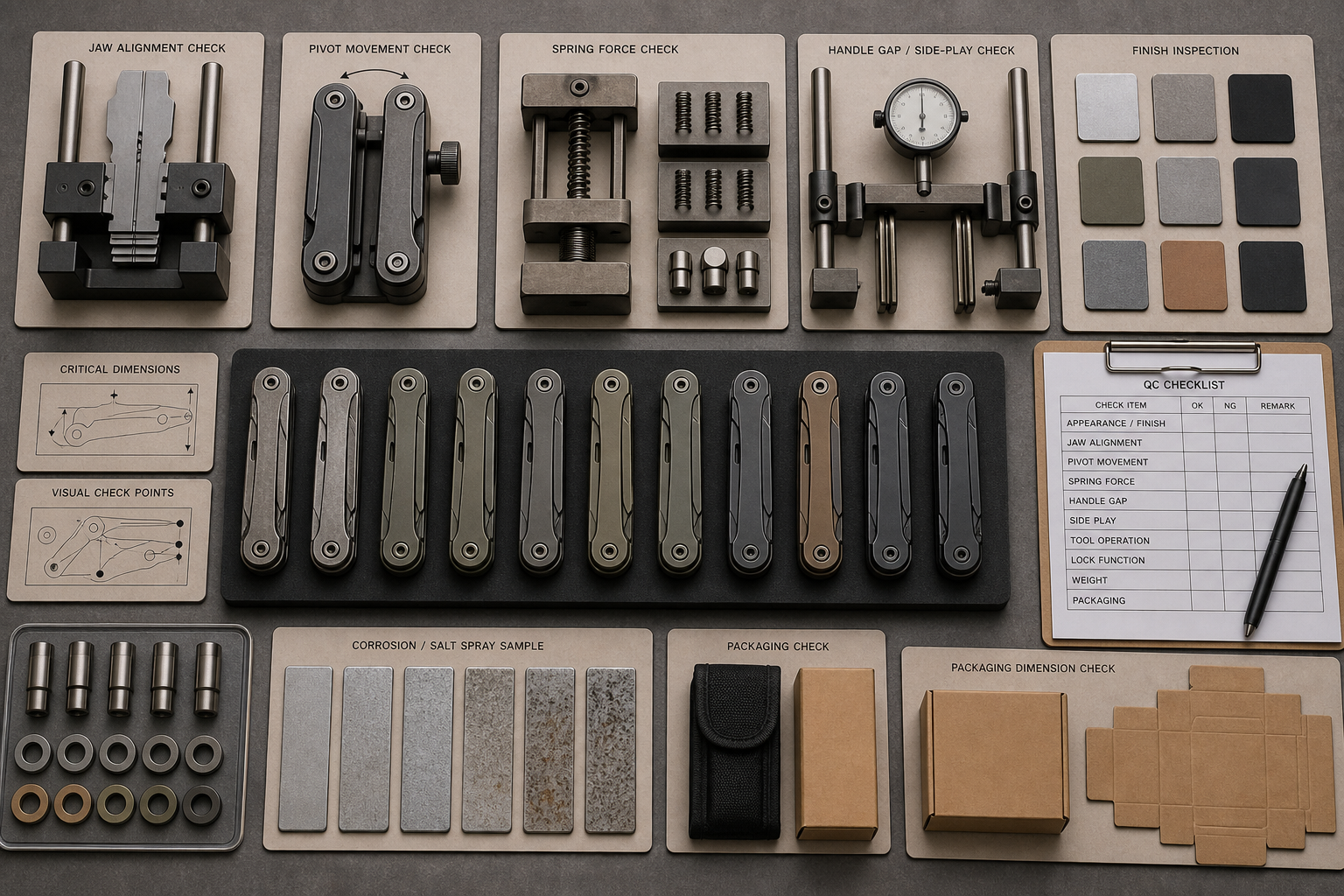
QC should check plier alignment, cutter contact, pivot movement, tool retention, hardness, tool fit, spring force, handle finish, logo, pouch or packaging, and final function against the approved sample.
I Check Function Before Packing
Multi-plier QC should happen in layers. Incoming material should be checked before parts are made. In-process checks should review stamping, machining, heat treatment, tool profiles, pivot holes, and surface finish. Assembly checks should review plier action, internal tool movement, spring feel, lock or retention where used, and handle alignment. Final checks should review finish, logo, pouch, packaging, and function.
The challenge is that a multi-plier can look fine while one function fails. A screwdriver tip may be soft. A cutter may not close. A file may be poorly formed. A blade component may have burrs. A pivot may loosen. A pouch may be too tight. For repeat orders, buyers should ask the supplier how each important function will be checked. ISO 5744 is useful context because it focuses on methods of test for pliers and nippers. ISO 9001 also provides quality-management context for customer requirements and process control. Clear QC prevents arguments later.
| QC stage | What to check | Why it protects buyers |
|---|---|---|
| Incoming material | Steel, handle, pouch, packaging | Prevents wrong inputs |
| Part processing | Profiles, holes, heat treatment, finish | Controls assembly fit |
| Assembly | Pivot, spring force, tool retention | Protects user feel |
| Function check | Jaw, cutter, tools, blade component | Finds hidden problems |
| Final inspection | Logo, finish, pouch, carton | Supports sellable quality |
What Should a Multi-Plier OEM/ODM RFQ Include?
A short inquiry may get a price, but it rarely defines the tool. Multi-pliers need more detail.
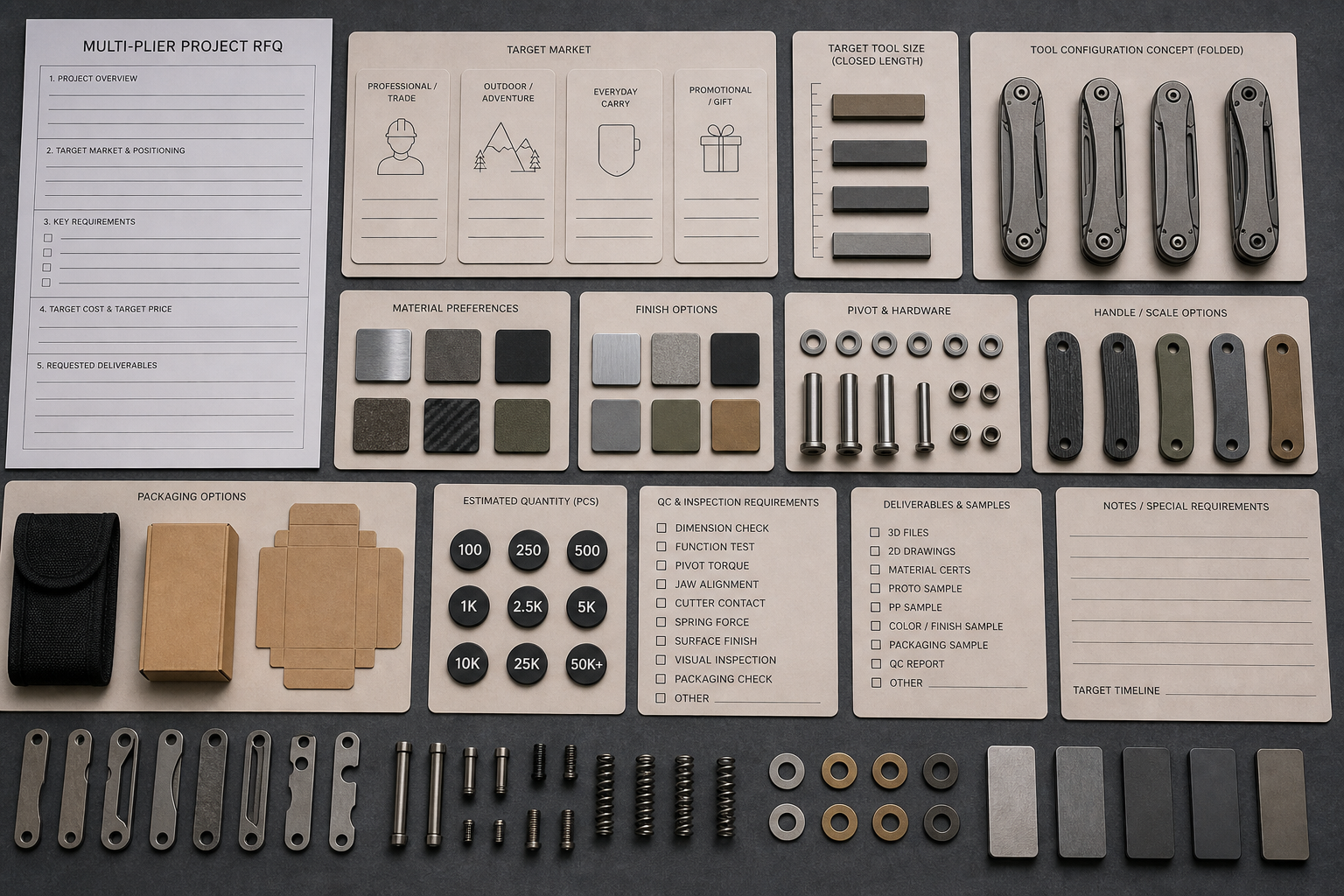
A multi-plier RFQ should include target market, tool size, function list, plier head type, materials, hardness targets, pivot system, finish, handle, pouch or packaging, branding, quantity, target price, and inspection requirements.
I Use the RFQ to Control Complexity
The RFQ should turn the buyer's idea into a buildable product. I ask for target channel, target price, product size, folded length, open length, weight target, plier head type, function list, blade component requirement, screwdriver types, cutter expectation, handle material, finish, logo method, pouch type, packaging format, quantity, and sample timing. If the buyer has a reference sample, I also ask what should be improved or removed.
I also ask about documents and testing. Does the buyer need material certificates, hardness readings, functional test records, packaging claim review, carton drop review, or retailer documents? Does the buyer need inspection photos or a final report? These details affect cost and lead time. A complete RFQ helps buyers compare suppliers fairly. One supplier may quote a low price with fewer functions and basic QC. Another may include better finish, stronger pouch, and written functional checks. Clear requirements make the comparison honest.
| RFQ field | What to include | Why it helps |
|---|---|---|
| Product target | EDC, outdoor, tool kit, gift, or private label | Aligns design direction |
| Function list | Pliers, cutters, drivers, file, blade, opener | Controls complexity |
| Materials | Plier head, tools, handle, pivots, pouch | Supports accurate costing |
| Finish and branding | Surface finish, logo, color, packaging | Supports market position |
| QC requirements | Hardness, alignment, movement, function, packaging | Protects repeat orders |
Ready to develop a custom multi-tool?
Send your function list, reference photo, target quantity, and budget range. Vast State can help turn it into a manufacturable OEM/ODM specification.
Conclusion
I develop better multi-pliers by controlling jaw function, tool selection, materials, pivots, finish, packaging, maintenance guidance, RFQ details, and QC.
Source Notes
- ISO 5743 supports the use of technical requirements when discussing pliers and nippers.
- ISO 5744 supports function-test thinking for pliers and nippers.
- NIST Rockwell hardness guide supports controlled hardness measurement practice.
- OSHA hand and power tools provides broad safety and maintenance context for hand tools.
- ISO 9001 provides quality-management context for customer requirements and process control.