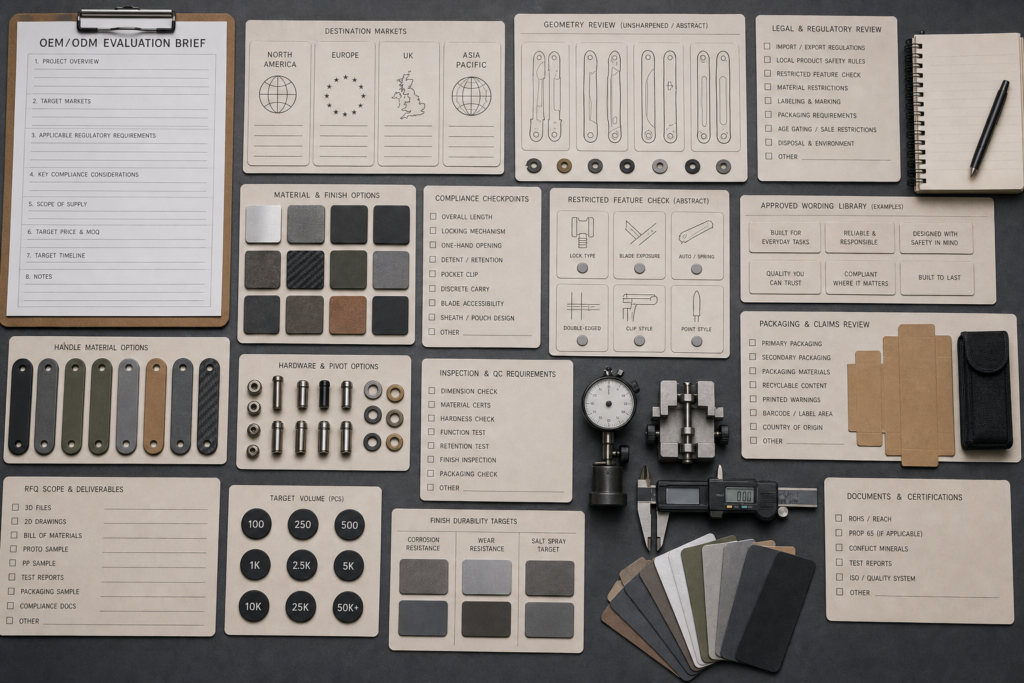
A specialty blade shape can attract attention, but unclear positioning creates compliance, packaging, and brand risk. I treat it as a controlled product-development project.
Buyers should evaluate pikal-style knife projects by reviewing market positioning, local restrictions, blade geometry, steel and heat treatment, handle structure, packaging claims, QC checks, and RFQ details. The goal is responsible manufacturing, not user instruction.
Quick buyer brief:
- Answer: Treat pikal-style projects as compliance-sensitive specialty knife programs.
- Buyer context: This helps brands, importers, and private label buyers reduce launch risk.
- Key checks: Market fit, restrictions, geometry, materials, structure, packaging, QC, and RFQ scope.
Planning a private-label knife line for this market?
Use this article as an early planning reference, then prepare your target market, product category, labeling needs, and buyer-specified compliance requirements before production.
When a buyer asks about a pikal-style knife, I do not start with a dramatic product story. I start with the market, the restrictions, the intended product tier, and the manufacturing controls. This article is not legal advice, and it is not a guide for personal action. It is a B2B sourcing guide for brands that need to decide whether a specialty blade geometry can be developed, positioned, produced, inspected, and sold responsibly.
What Is a Pikal-Style Knife Project in B2B Sourcing?
The name can sound exciting, but vague language creates wrong expectations. I define the product category before any sample work starts.
A pikal-style knife project is a specialty knife development program with reverse-edge-inspired geometry or a distinctive blade layout. In B2B sourcing, I evaluate it as a product-positioning, compliance, structure, and QC project, not as a user guide.
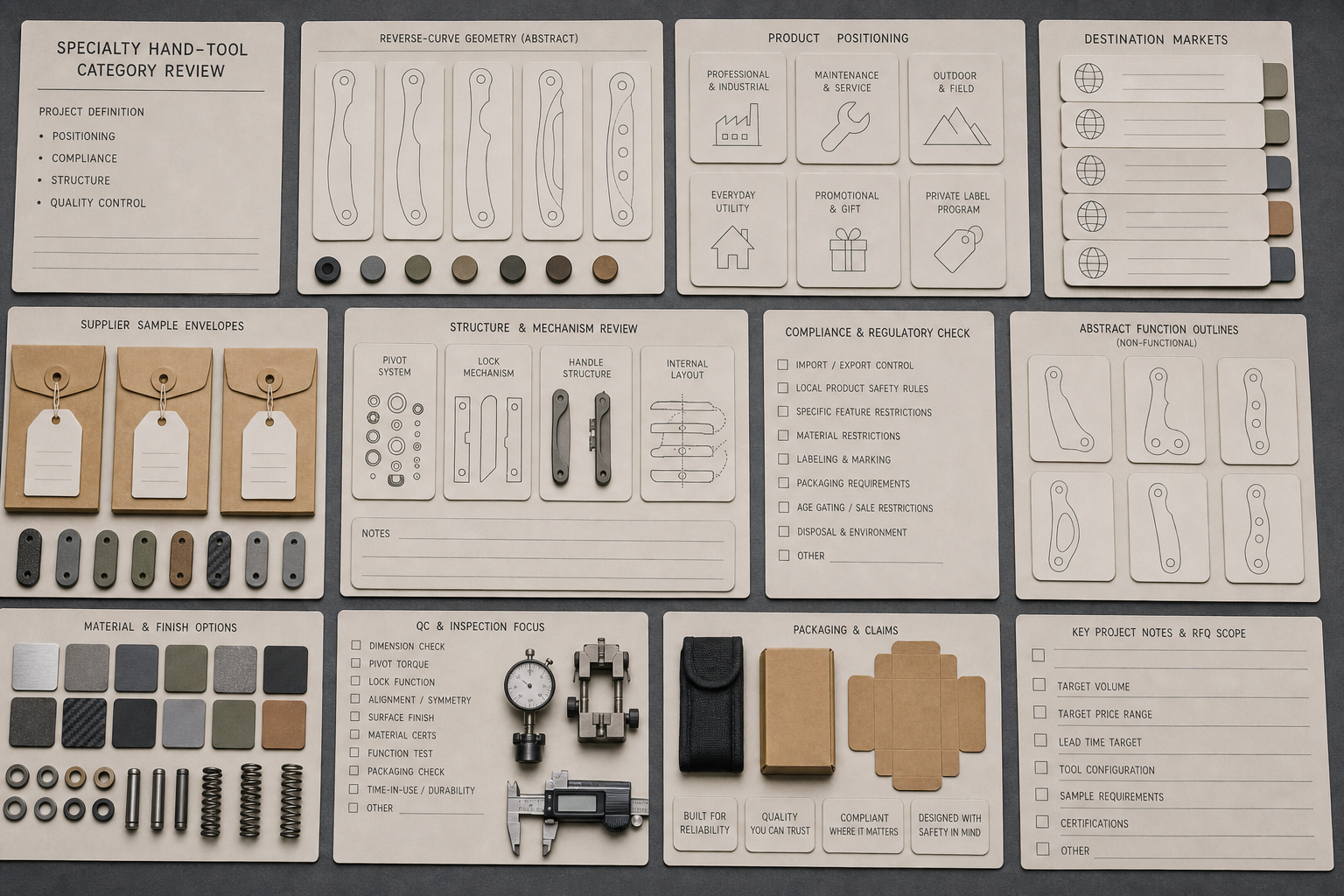
I define the category before I discuss design
In OEM and ODM work, a name is not enough. I need to know whether the buyer wants a folding knife, a fixed blade, a collector-style product, a display-oriented line extension, or a limited specialty design for a controlled sales channel. The same visual idea can create very different production decisions. A folding version needs pivot, detent, lock, screw, washer or bearing, and closing clearance checks. A fixed blade version needs sheath design, edge protection, packaging safety, and carton packing control.
I also ask how the product will be described to the market. The description should stay practical and restrained. It should not promise unsafe outcomes, training value, or aggressive use. For a responsible buyer, the project should be judged by manufacturability, lawful sales channels, material performance, surface finish, packaging, and quality stability. This protects the brand and gives the factory a clearer target.
| B2B question | What I clarify first | Why it matters |
|---|---|---|
| Product format | Folding or fixed blade | Structure and inspection plans change |
| Sales channel | Specialty retail, distributor, or private label | Positioning must match the channel |
| Target price | Budget, mid-range, or higher specification | Material and finish choices depend on it |
| Brand language | Practical product description | It reduces risky marketing claims |
Private-label Planning Checklist
Before starting production, prepare the market and product details your importer or compliance advisor needs to review.
| RFQ Field | What to Prepare |
|---|---|
| Target market | Country, state, region, or sales channel |
| Product category | Folding knife / fixed blade / multi-tool / outdoor tool |
| Intended use | EDC / camping / kitchen / hunting / rescue / promotional |
| Buyer requirements | Testing, labeling, documentation, or packaging rules |
| Blade and lock details | Blade length, opening method, lock type, edge style |
| Packaging text | Warnings, claims, care notes, language requirements |
| Documents | Drawing, sample photo, logo file, packaging artwork |
| Review owner | Importer, legal advisor, testing lab, or internal compliance team |
Why Should Buyers Treat This Geometry as a Compliance-Sensitive Product?
A product can be legal in one place and difficult in another. If a buyer checks too late, packaging and launch plans can fail.
Buyers should treat pikal-style geometry as compliance-sensitive because knife rules vary by destination, channel, blade type, opening system, and packaging claim. I ask buyers to confirm local rules before tooling, bulk production, or public listing.
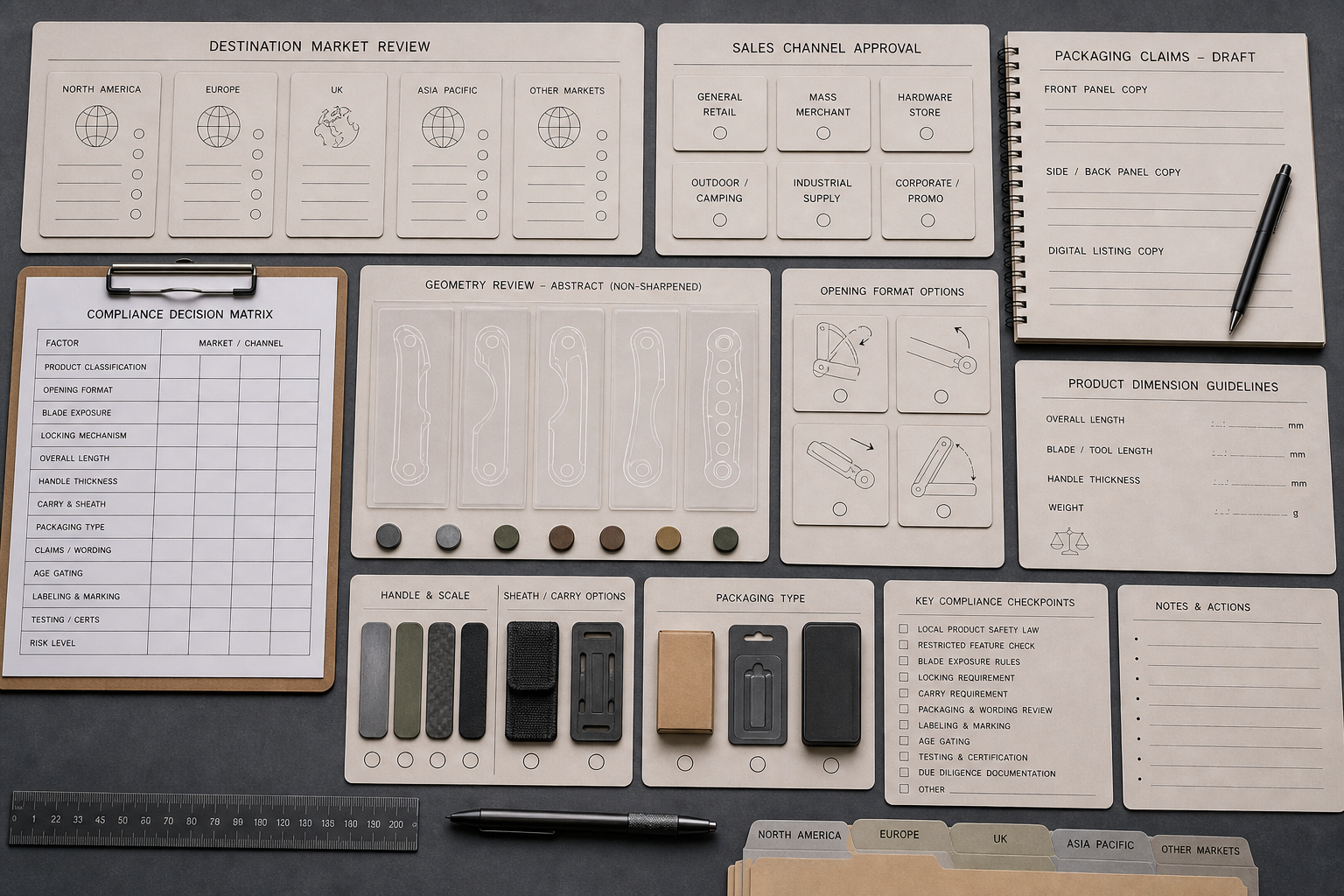
I separate factory work from legal approval
As a manufacturer, I can support structure, materials, samples, packaging, and production follow-up. I cannot replace the buyer's legal review. This is why I tell buyers to confirm rules in each destination market before finalizing blade length, opening system, edge layout, packaging words, online listing language, and import documents. The U.S. Code chapter on switchblade knives shows why opening mechanism language can matter. The TSA page for pocket knives also shows that sharp items can face strict air-travel screening rules.
For me, compliance-sensitive does not mean impossible. It means the RFQ must be more precise. If the product is for a restricted channel, the buyer should say so. If the product needs a manual folding structure, the buyer should state that clearly. If the product needs non-aggressive packaging, that should be part of the artwork brief. This keeps the project practical and reduces surprises after samples are approved.
| Risk area | Buyer should confirm | Factory can support |
|---|---|---|
| Destination rules | Local sale and import limits | Product drawings and specifications |
| Opening system | Allowed mechanism type | Manual structure options |
| Packaging claims | Approved wording and warnings | Packaging layout and sample packs |
| Online listing | Retail platform restrictions | Product dimensions and photos |
How Should Blade Shape Be Evaluated Without Promoting User Techniques?
A specialty blade can be discussed responsibly. The wrong discussion turns a sourcing project into unsafe content and weak brand positioning.
I evaluate blade shape through geometry, manufacturability, edge control, tip protection, grinding symmetry, and packaging safety. I avoid user techniques and focus on product engineering that a buyer can inspect.
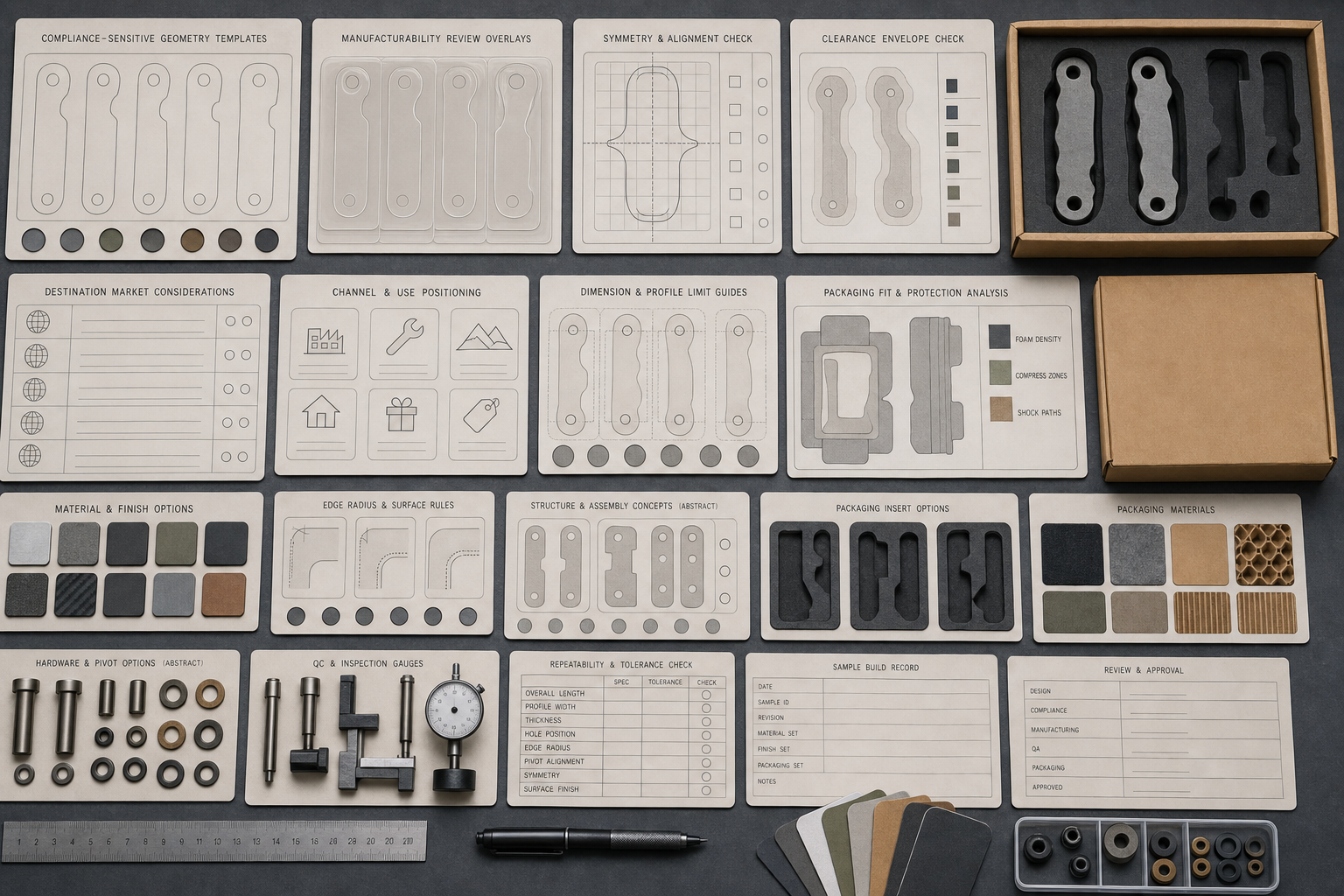
I keep the design review technical
The safest way to evaluate a pikal-style project is to remove dramatic language and look at the part itself. I check blade length, stock thickness, edge orientation, tip exposure, spine shape, ricasso space, pivot location, handle clearance, and final edge protection. These details decide whether the product can be made consistently. They also decide whether packaging can protect workers, warehouse teams, and buyers during handling.
The grinding plan matters as much as the outline. A narrow or curved blade can create uneven bevels if fixtures are not planned early. A thin point can look sharp in a rendering but become fragile in production. A deep curve can increase finishing time. I prefer to review a 2D profile, then a prototype, then a pilot run before bulk production. This gives the buyer evidence instead of guesswork. The factory conversation should stay around dimensions, tolerances, finish, safety covers, and inspection points.
| Shape factor | Manufacturing question | Buyer takeaway |
|---|---|---|
| Blade outline | Can the profile be cut cleanly? | Avoid complex curves that raise cost without benefit |
| Edge layout | Can grinding stay consistent? | Request sample photos and edge checks |
| Tip area | Can it be protected in packaging? | Plan edge guards or rigid inserts |
| Handle clearance | Can the blade sit safely when closed? | Check prototype fit before tooling approval |
Which Steel, Heat Treatment, and Edge Controls Matter?
Good steel cannot fix poor process control. If hardness and grinding drift, the product will disappoint even with a strong design.
Steel, heat treatment, and edge control matter because specialty geometry can place extra pressure on tip strength, bevel consistency, corrosion resistance, and repeatability. I match steel choice to price, target channel, and inspection needs.
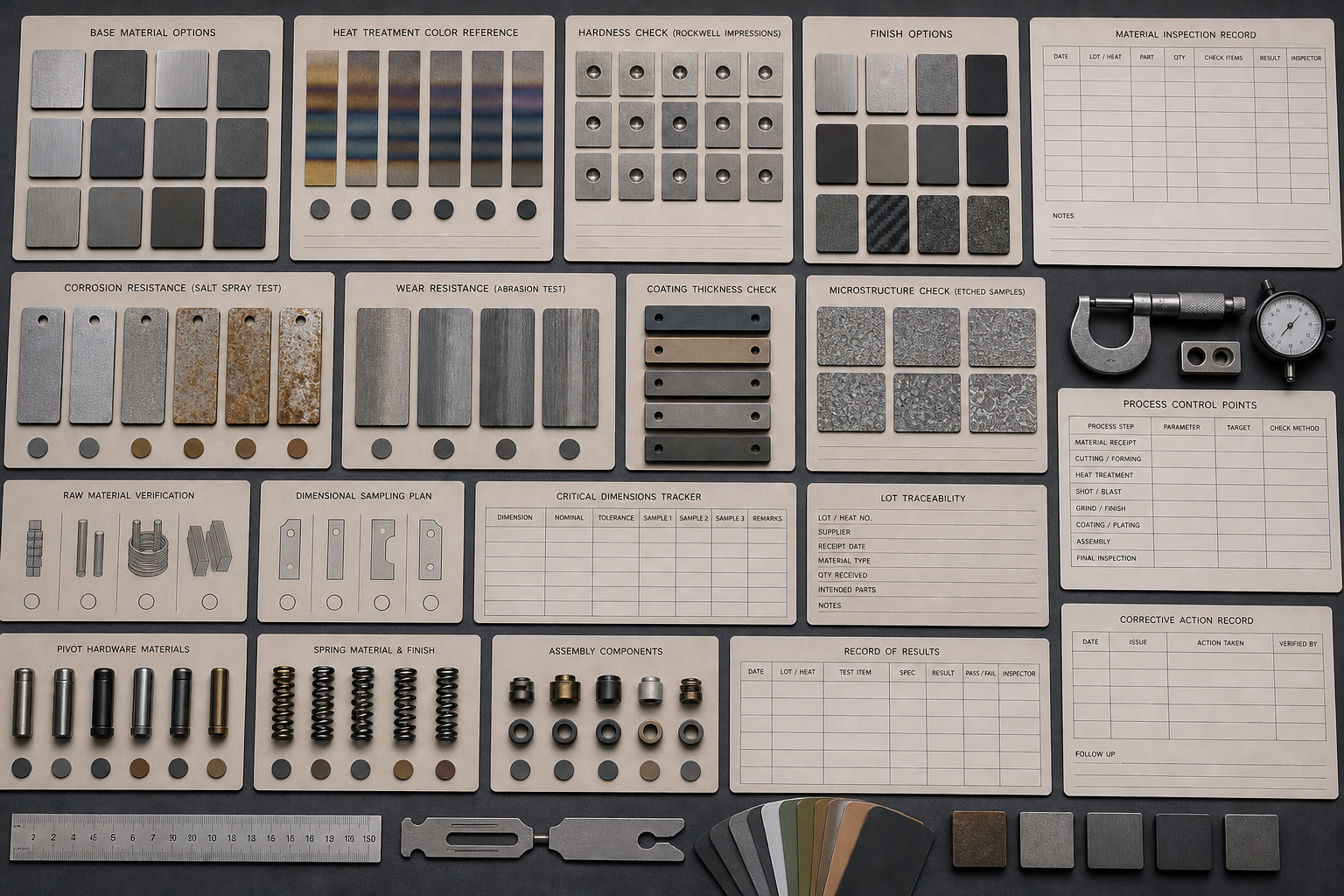
I choose steel through balance, not slogans
Some buyers ask for the highest hardness first. I usually slow that discussion down. A specialty blade needs a useful balance of hardness, toughness, corrosion resistance, grindability, and cost. A steel such as Alleima 14C28N can be relevant when the buyer wants a stainless knife steel designed for edge performance and corrosion resistance. But the final choice still depends on the target price and expected sales channel.
Heat treatment is the real control point. Alleima's guide to hardening and tempering of knife steel explains that hardening increases hardness and tempering reduces brittleness. In production, I connect that idea to batch control, hardness testing, and grinding temperature. The NIST guide to Rockwell hardness measurement is useful because hardness readings can vary if the test process is not controlled. For B2B buyers, I would rather provide stable, documented hardness than a dramatic steel claim that cannot be repeated.
| Control point | What I check | Why buyers should care |
|---|---|---|
| Steel grade | Corrosion, toughness, edge plan, cost | It sets the product level |
| Heat treatment | Batch process and hardness target | It affects edge and strength |
| Grinding | Bevel symmetry and heat control | It protects geometry and appearance |
| Hardness testing | Correct test method and record | It supports repeat production |
How Should Handle and Lock Structure Be Reviewed?
A special blade profile can fail if the handle and lock do not support it. The buyer may notice only after assembly.
Handle and lock structure should be reviewed through fit, alignment, lock engagement, screw control, handle comfort, closed-blade clearance, and repeat assembly. I check the whole mechanism, not only the blade.
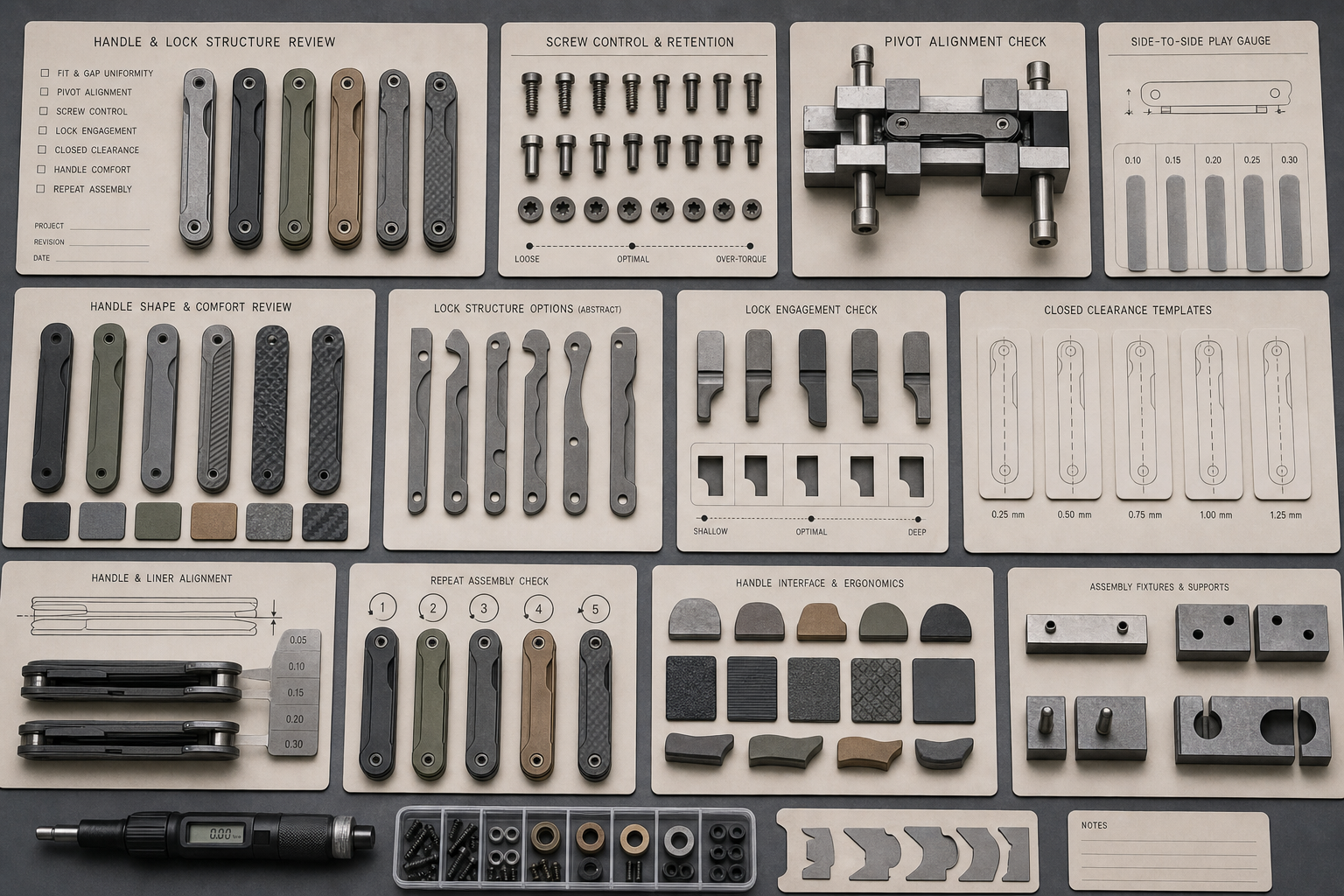
I review movement as an assembly system
For a folding pikal-style project, the blade shape is only one part of the challenge. The handle must protect the edge when closed. The pivot must hold alignment. The lock must engage consistently. The screws must hold under normal product handling. The scale material must give the buyer the look and cost they need without creating unstable assembly.
Different lock structures create different production needs. A liner lock, frame lock, back lock, or button-style structure each has its own tolerance chain. I avoid judging the structure by a single sample only. I want to see whether the design can be assembled repeatedly without excessive hand adjustment. If every unit needs heavy correction, cost and lead time can rise fast. Handle materials also matter. G10, stainless steel, aluminum, micarta, and engineered polymers each affect weight, surface finish, machining time, and price. The best choice is the one that supports the product's market position and repeatability.
| Structure area | Review method | Production concern |
|---|---|---|
| Pivot and washers | Check alignment and smoothness | Poor tolerance creates uneven feel |
| Lock interface | Check stable engagement | Weak fit increases reject risk |
| Handle material | Check weight, finish, and machining | Material choice affects cost and feel |
| Closed clearance | Check edge protection inside handle | Unsafe clearance can damage product or packaging |
What Packaging and Product Positioning Should Buyers Use?
Packaging can make a careful product look risky. Overstated language can also create channel problems after production.
Buyers should use restrained packaging and clear product positioning. I recommend practical descriptions, safety-focused packaging, correct warnings, destination-market review, and brand language that does not promote unsafe behavior.
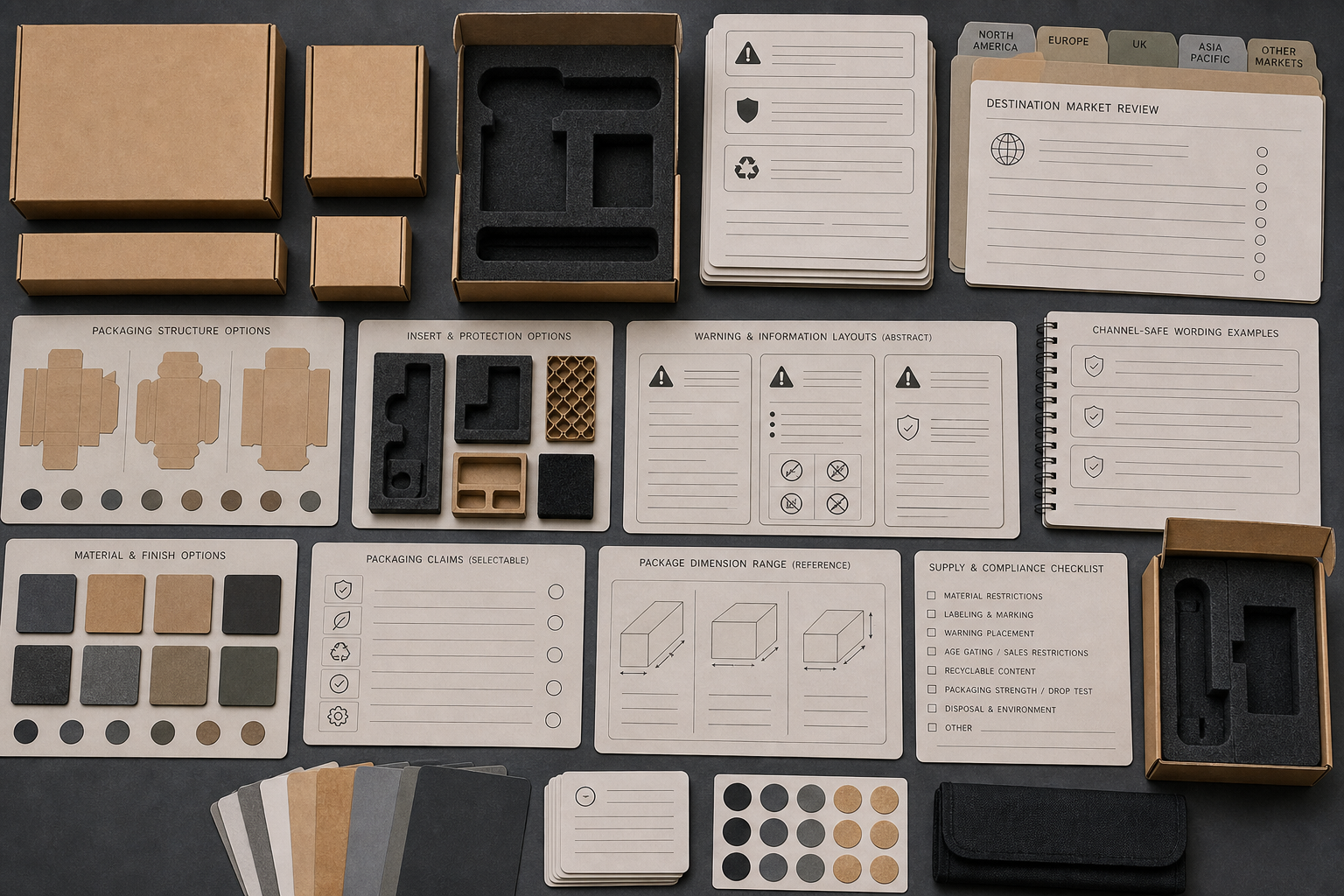
I make packaging part of product control
For this type of product, packaging is not only decoration. It controls first impression, warehouse safety, shipping protection, and retailer confidence. I prefer packaging that explains the product in simple product terms. It can mention blade steel, handle material, finish, dimensions, care, age statement if required, and responsible ownership language approved by the buyer. It should not make exaggerated claims or create unsafe expectations.
The physical pack also matters. A fixed blade may need a sheath, edge guard, or molded insert. A folding knife may need a closed-position check, screw check, oil control, desiccant decision, and carton drop consideration. If the product has a sharp point or unusual profile, the inner tray should prevent movement during shipping. Good packaging also helps QC. A final inspector can check whether the product, instruction leaflet, warning label, spare parts, and carton mark match the approved sample. This is where a practical OEM/ODM partner can help turn a risky idea into a controlled sale-ready product.
| Packaging item | What to decide | Why it matters |
|---|---|---|
| Product description | Neutral product wording | It supports responsible positioning |
| Inner protection | Insert, sleeve, or edge guard | It reduces transport damage |
| Warning language | Buyer-approved market wording | It supports compliance review |
| Carton plan | Quantity, label, and packing method | It helps export follow-up |
What QC Checks Reduce Product and Brand Risk?
Final inspection alone is too late. If the process is weak, one approved sample will not protect a full order.
QC checks reduce risk by confirming material, hardness, dimensions, structure, finish, sharpness, packaging, and batch consistency. I use incoming, in-process, assembly, and final checks for specialty knife projects.
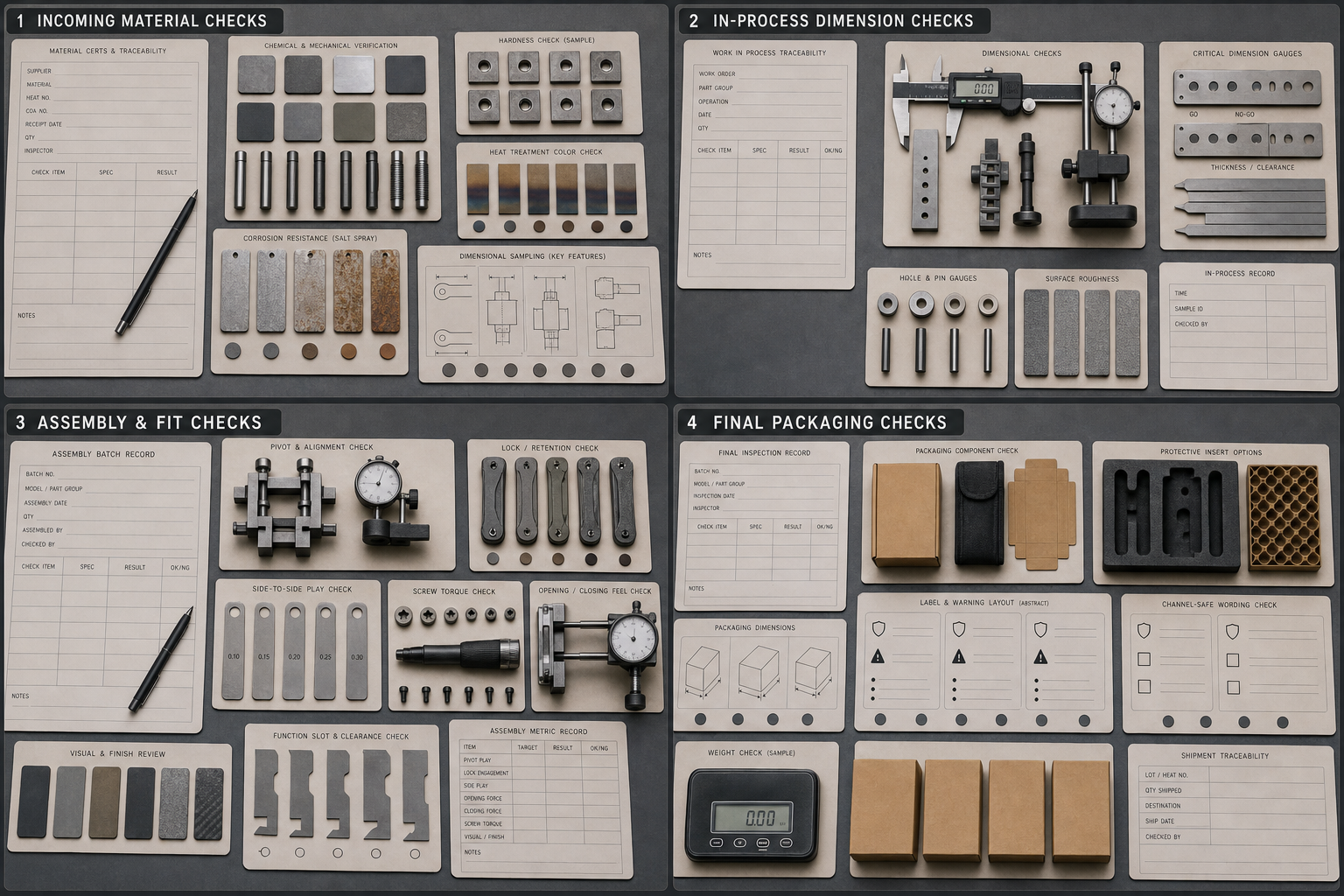
I build the inspection plan before mass production
For a pikal-style project, I do not want the first serious inspection to happen at the packing table. I want checks at several stages. Incoming inspection confirms steel, handle material, hardware, and packaging components. In-process inspection checks profile cutting, hole location, bevel consistency, heat treatment records, surface finish, and fit. Assembly inspection checks pivot tension, lock engagement, screw condition, blade centering, closed clearance, and general hand feel. Final inspection checks appearance, edge condition, packaging accuracy, and carton marks.
This approach follows the same thinking behind quality management systems. ISO describes ISO 9001 as a widely known quality management standard for organizations of different sizes. I do not use that as a magic label. I use it as a reminder that process control matters. For B2B knife buyers, documented checks are more useful than vague promises. They help the buyer compare suppliers, approve samples, track problems, and place repeat orders with less uncertainty.
| QC stage | Main checks | Buyer benefit |
|---|---|---|
| Incoming inspection | Steel, handle material, screws, packaging | Prevents weak inputs |
| In-process inspection | Profile, bevel, heat treatment, finish | Finds problems early |
| Assembly inspection | Lock, pivot, screw, clearance | Protects product function |
| Final inspection | Appearance, edge, pack, carton | Supports sale-ready delivery |
What Should a Pikal-Style Knife OEM/ODM RFQ Include?
A short RFQ can create long delays. If the buyer sends only a picture, the factory must guess too much.
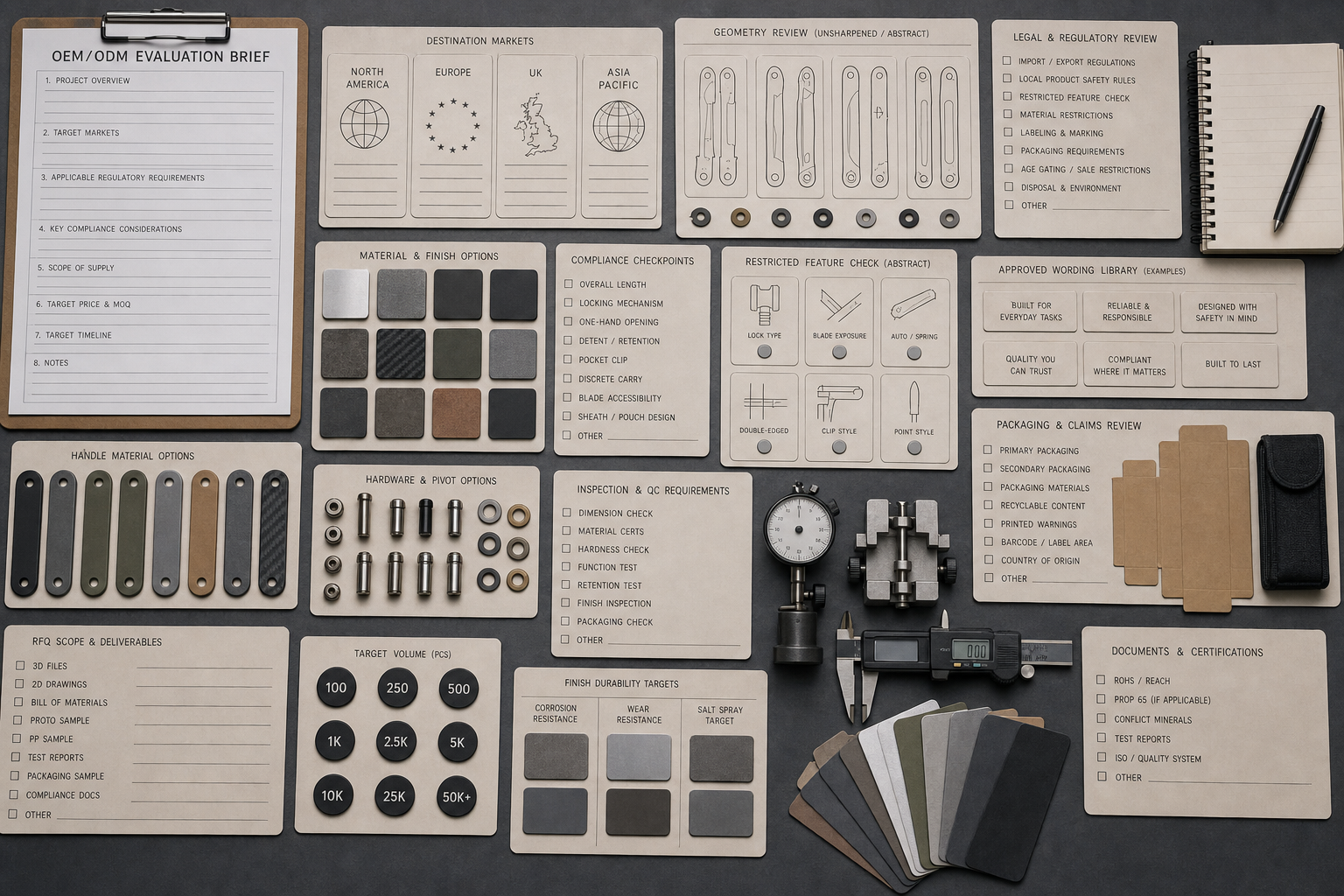
A strong RFQ should include target market, legal review status, knife format, blade steel, handle material, lock type, finish, packaging, MOQ, target price, sample need, inspection standard, and approved product wording.
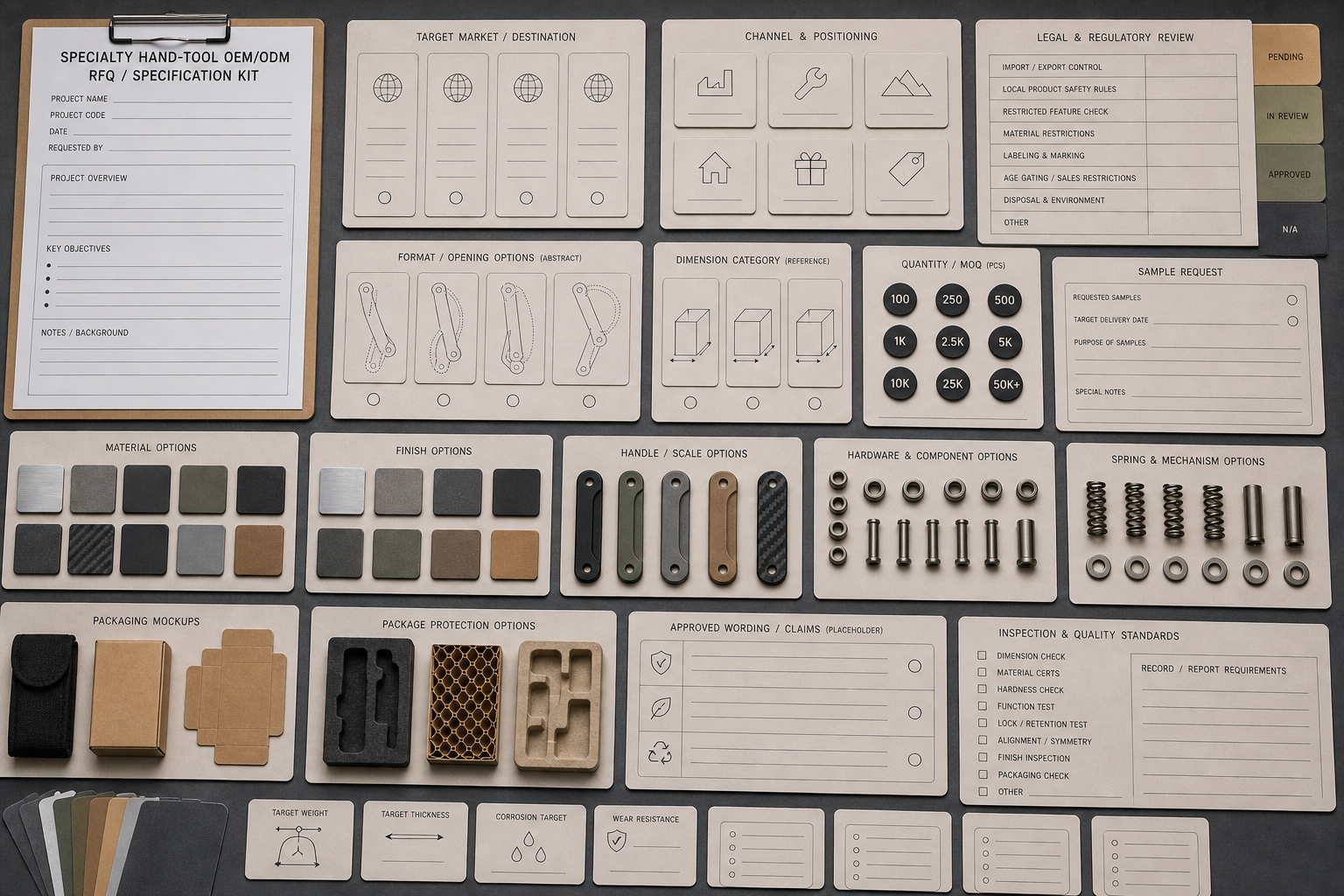
I ask for the decision points that affect cost and risk
When a buyer sends an RFQ, I look for the details that control engineering and quotation. First, I need the product format. Is it folding or fixed blade? Next, I need the target market and whether the buyer has completed legal review. Then I need the blade steel, thickness, finish, handle material, lock preference if folding, packaging format, logo method, target MOQ, expected price range, and sample deadline.
I also ask for the inspection focus. Some buyers care most about surface finish. Some care about action and lock consistency. Some care about packaging and private label presentation. For a specialty geometry, I would add edge protection, closed clearance, point protection, carton packing, and wording approval to the RFQ. The more precise the RFQ is, the faster we can suggest manufacturable options. This is where Vast State can help buyers turn an idea into a controlled OEM/ODM product instead of a loose sample request.
| RFQ field | What to include | Why it helps quotation |
|---|---|---|
| Market and channel | Destination, sales channel, legal review status | Guides structure and wording |
| Product specification | Format, steel, handle, finish, lock | Defines manufacturing route |
| Packaging need | Box, insert, warning, logo, carton | Controls cost and sale readiness |
| QC requirement | Hardness, fit, finish, packaging checks | Reduces dispute risk |
Planning a private-label knife line for this market?
Use this article as a planning reference, then confirm local requirements with your importer or compliance advisor before OEM/ODM production.
Conclusion
I evaluate pikal-style knife projects through responsible positioning, compliance review, manufacturable design, controlled QC, and clear RFQ details.
Source Notes
- U.S. Code Title 15 Chapter 29 supports why opening mechanism language needs legal review.
- TSA pocket knife guidance gives travel-screening context for sharp items, but it is not full product law.
- Alleima 14C28N data supports steel and heat-treatment discussion.
- Alleima hardening guidance supports the balance between hardness and brittleness.
- NIST Rockwell guide supports careful hardness measurement.
- ISO 9001 family page supports process-based quality management thinking.