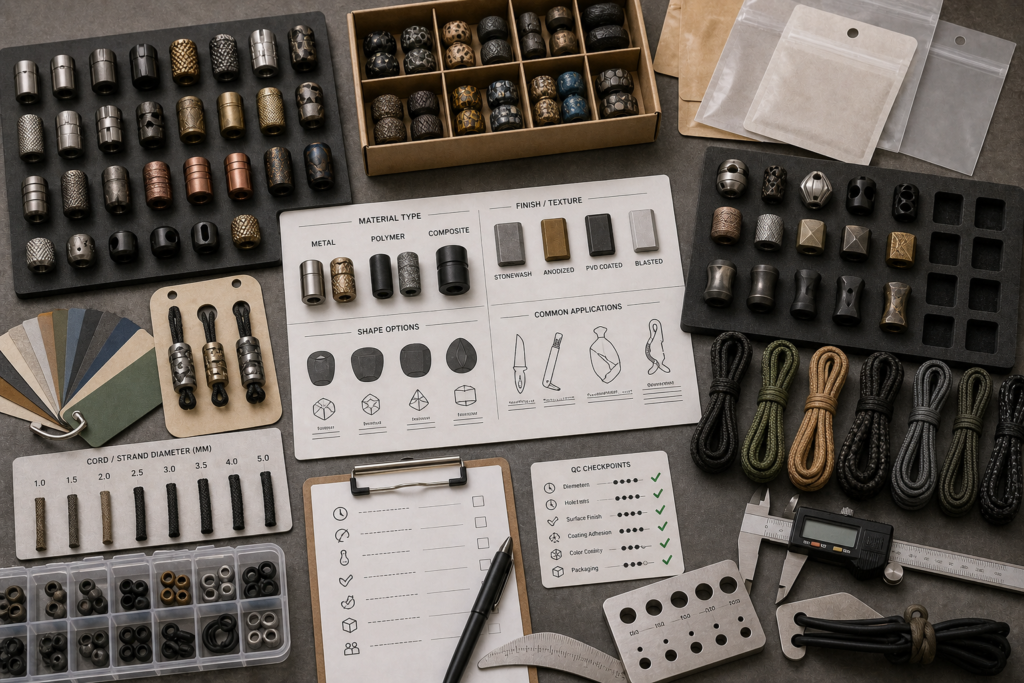
A small bead can improve a knife line, or make it look careless. Poor sizing, finish, and packaging quickly create avoidable complaints.
B2B buyers should choose lanyard beads by matching the knife type, user, cord size, bead hole, material, surface finish, branding goal, packaging method, and compliance needs. A good bead is not only decorative. It must fit the product, stay secure, feel right, and support the brand position.
Quick buyer brief:
- Answer: Choose lanyard beads by function, material, fit, finish, branding, and QC.
- Buyer context: This helps knife brands, outdoor brands, importers, wholesalers, and private label buyers.
- Key checks: Confirm bead material, hole diameter, cord type, finish, attachment method, packaging, and inspection.
Have a knife or multi-tool project in mind?
Send your sketch, CAD file, sample photo, or product idea. Vast State can review manufacturability, suggest materials, estimate MOQ, and prepare a quote for your OEM/ODM project.
When I work on a knife project, I do not treat lanyard beads as an afterthought. They are small, but they affect how the product feels in the hand, how it looks in product photos, and how the buyer positions the final kit. A heavy bead can make a compact knife feel unbalanced. A sharp-edged bead can scratch the handle. A wrong hole size can make assembly slow. A low-quality finish can weaken the brand impression. For OEM and ODM projects, I prefer to decide the bead together with the knife design, cord, packaging, and target market.
What Are Lanyard Beads in OEM Knife and Tool Projects?
Small accessories can be misunderstood. If a buyer only asks for a bead, the supplier may not know the function, fit, or quality level.
Lanyard beads are small components used on knife or tool lanyards to add grip reference, visual identity, cord control, or gift-set value. In OEM projects, buyers should define their function, material, size, finish, and packaging.
I Treat the Bead as Part of the Product System
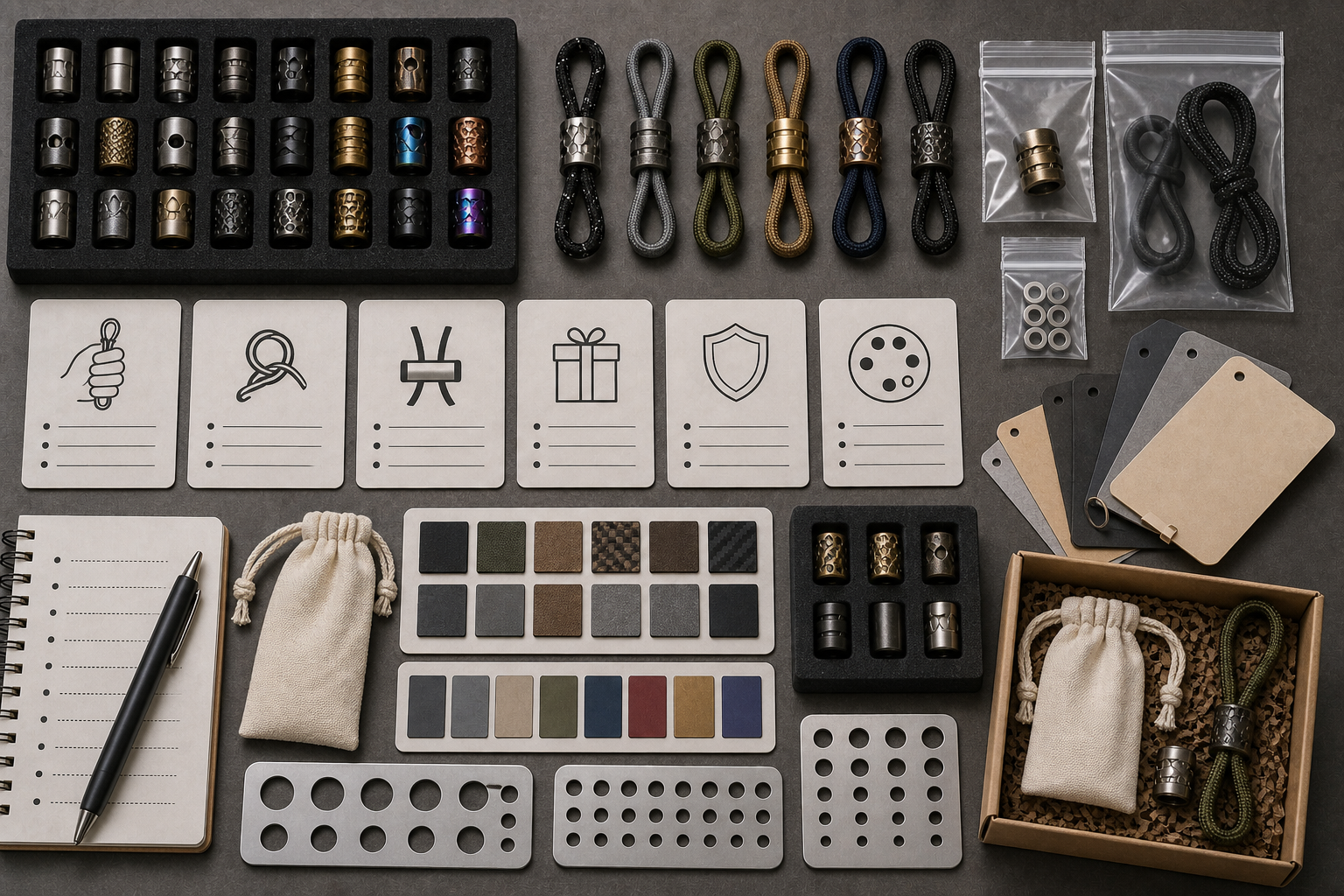
A lanyard bead is not just a small decorative part. It works with cord, handle design, pocket clip, sheath, packaging, and the buyer's brand story. Some customers use beads to make a pocket knife easier to locate in a pouch. Some use them as color accents. Some use them to create a gift-ready kit. Some want them as a low-cost way to add perceived value to a private label line. Each goal leads to different decisions.
The first question I ask is simple: what job should the bead do? If it only adds visual style, then the surface finish and color are important. If it helps organize cord, then hole size and cord fit matter more. If it is part of a premium EDC set, the material and machining quality must match the knife. If it is included with a budget tool, the bead should not make assembly too slow or cost too high. I usually define the bead together with the product plan, not after the knife is already finished.
| Decision point | What I ask | Why it matters |
|---|---|---|
| Main purpose | Decoration, cord control, kit value, brand color | Guides material and finish |
| Product type | Folding knife, fixed blade, outdoor tool, multi-tool | Affects size and weight |
| Assembly method | Pre-tied lanyard, loose bead, accessory pack | Affects labor and packaging |
| Brand level | Budget, value, mid-range, premium | Controls cost and surface quality |
OEM/ODM RFQ Checklist
Prepare these details to help Vast State review your project and provide a more accurate quotation.
| RFQ Field | What to Prepare |
|---|---|
| Project type | OEM from drawing / ODM private label / wholesale catalog |
| Product category | Folding knife / fixed blade / multi-tool / outdoor tool |
| Design status | Idea / sketch / 2D drawing / 3D CAD / physical sample |
| Target price | Ex-factory target price or retail price range |
| MOQ expectation | 500 / 1,000 / 3,000 / 5,000+ pcs |
| Logo method | Laser engraving / etching / printing / molded logo |
| Packaging | Standard packaging / custom retail box / Amazon-ready |
| Market | USA / EU / Japan / Korea / Middle East / other |
| Compliance needs | Buyer-specified testing / documentation / labeling |
| Timeline | Sample deadline / mass production deadline |
When Do Lanyard Beads Add Real Value Instead of Just Decoration?
A bead can look attractive online but add little value in use. If it feels random, buyers may pay for a part users ignore.
Lanyard beads add value when they improve product identity, handling, cord organization, gift-set presentation, or customization. They should match the knife size, target user, and sales channel instead of being added only for decoration.
I Connect Accessory Value to the Buyer Journey
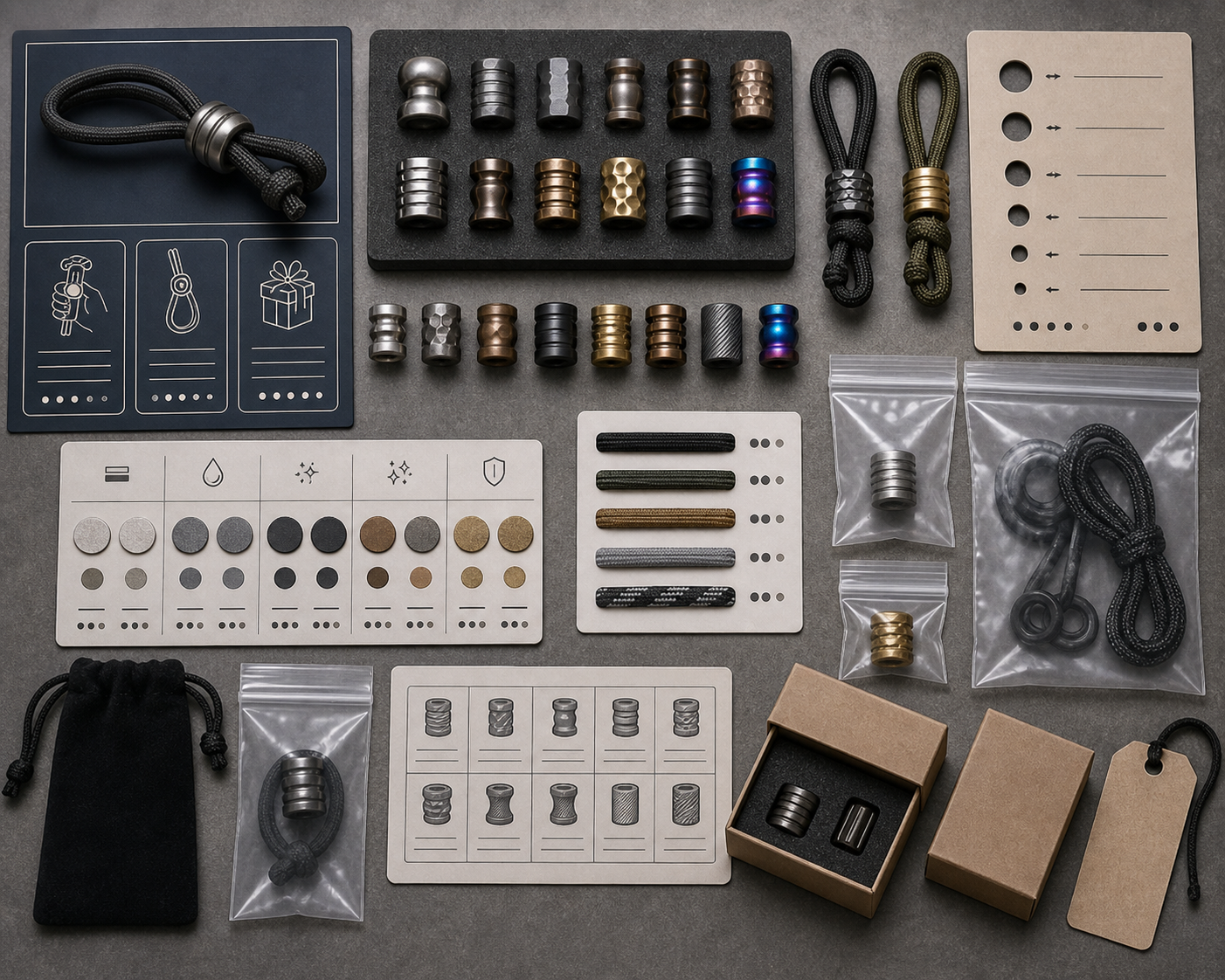
For B2B buyers, lanyard beads can support several commercial goals. A bead can help a private label knife look more complete in product photos. It can create color connection between the knife handle, cord, and packaging. It can also help a buyer build a series: black bead for one model, brass-tone bead for another, orange bead for an outdoor version. This is useful when the brand wants a family look without changing the whole knife structure.
I also think about the end user. A compact knife may benefit from a short lanyard with a small bead because the user can find the knife more easily in a pocket or pouch. A fixed blade in a sheath may use a lanyard for organization or style. But the bead should not swing loosely and mark the handle. It should not be so heavy that it annoys the user. It should not be so large that it makes the knife hard to pack. The bead adds value when it feels intentional. It wastes value when it looks like a random add-on.
| Value area | How a bead helps | Risk if ignored |
|---|---|---|
| Brand identity | Adds color, shape, or material accent | Accessory feels unrelated |
| Product photos | Makes a kit look complete | Product looks plain or unfinished |
| User handling | Helps locate a compact tool | Bead may feel heavy or noisy |
| Customization | Supports private label variations | Too many options slow production |
Which Lanyard Bead Materials Should Buyers Compare?
Material choice changes cost, weight, finish, feel, and durability. A good-looking bead can still be wrong for the knife.
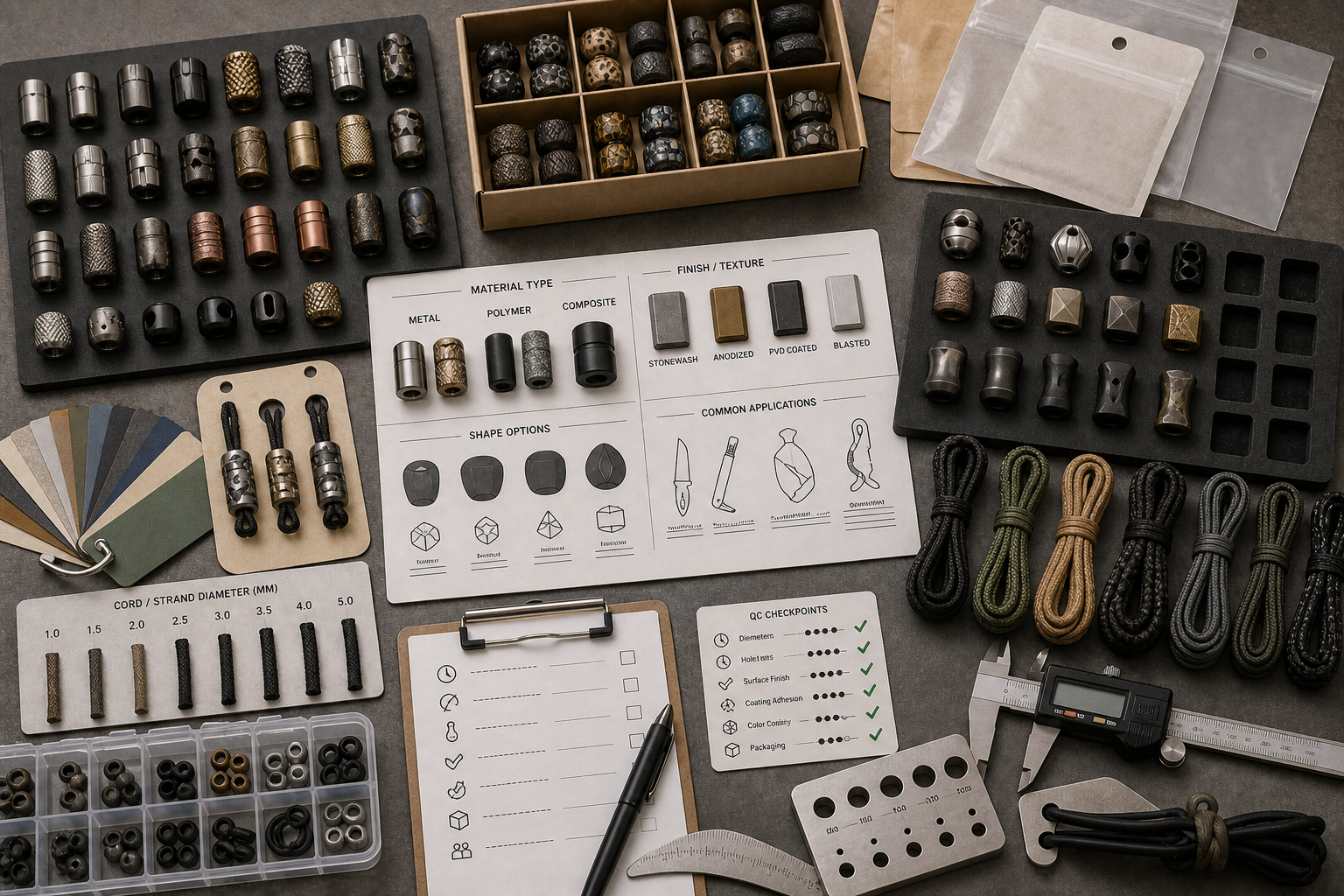
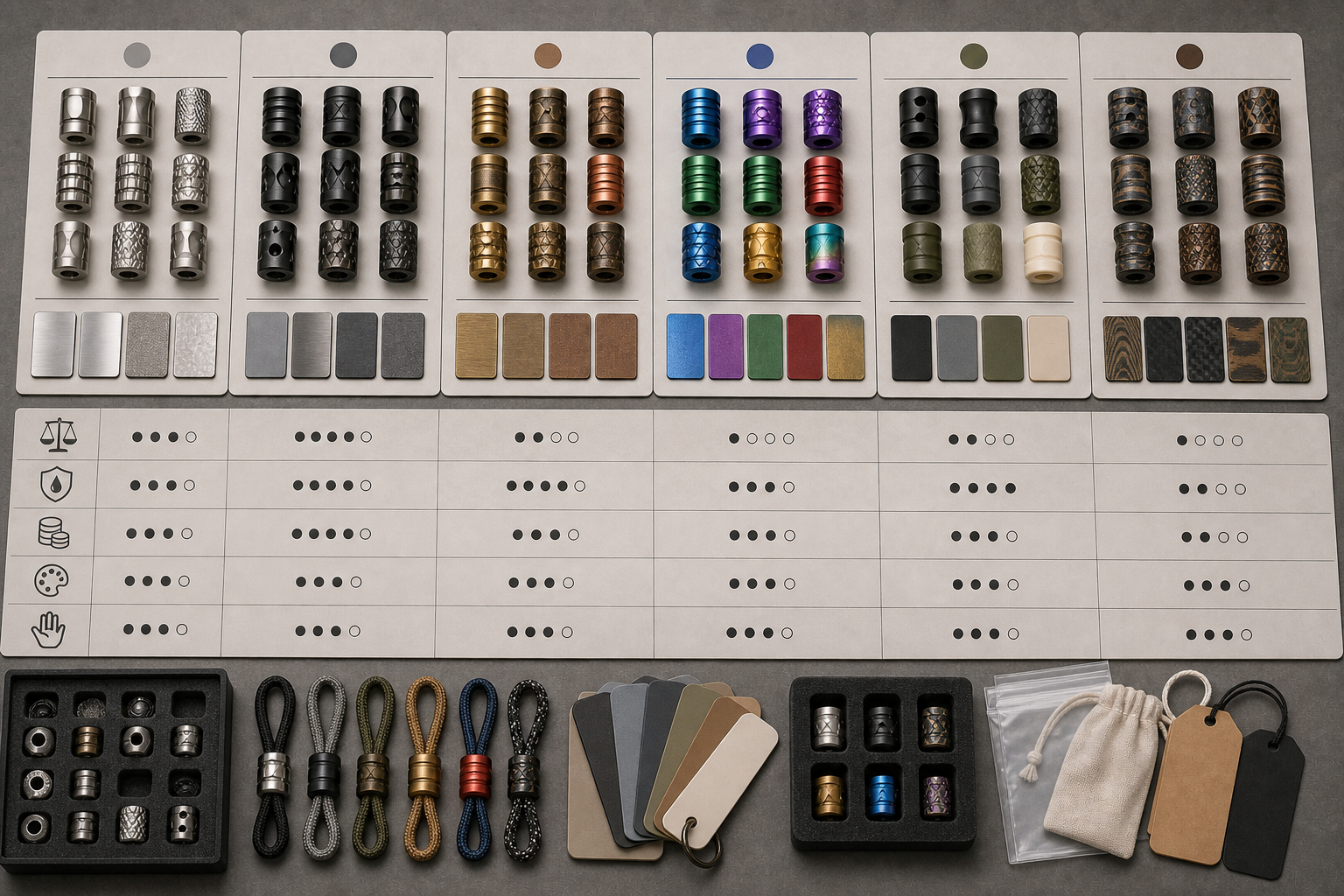
Buyers should compare stainless steel, titanium, aluminum, brass, copper, G10, polymer, and composite beads by weight, corrosion resistance, machining cost, color options, surface feel, and target product level.
I Choose Material by Product Level and Handling
Stainless steel is practical when the buyer wants durability, corrosion resistance, and a clean finish. The British Stainless Steel Association explains that stainless steel uses chromium to form a passive layer, which is why it is often useful for everyday accessories. Titanium is attractive when the buyer wants lower weight and a premium technical story. The ATI Ti-6Al-4V Grade 5 data sheet describes Grade 5 titanium as a high-strength alloy with low density compared with steel, which is why it can make sense for higher-positioned EDC accessories. Aluminum can be cost-effective and easy to color by anodizing, but the finish can show wear. Brass and copper give a warmer look, but they may patina and add weight.
Non-metal choices also matter. G10, micarta-style composites, and polymers can reduce weight and match handle scales. They can also provide color without metal finishing. But they need good machining, clean edges, and stable color control. My practical rule is this: the bead material should match the knife's price point and user expectation. A premium titanium knife with a rough cheap bead feels mismatched. A budget knife with an expensive bead may hurt margin.
| Material | Best use | Buyer caution |
|---|---|---|
| Stainless steel | Durable value-to-mid accessories | Can feel heavy on small knives |
| Titanium | Premium lightweight accessory sets | Higher material and machining cost |
| Aluminum | Colorful value accessories | Finish wear must be considered |
| Brass or copper | Warm visual accent | Patina and weight need buyer approval |
| G10 or polymer | Lightweight color matching | Edge finish and color consistency matter |
How Should Buyers Specify Bead Size, Hole Diameter, and Cord Fit?
A bead can fail before shipment if the hole is wrong. Tight cord slows assembly, while loose cord looks careless.
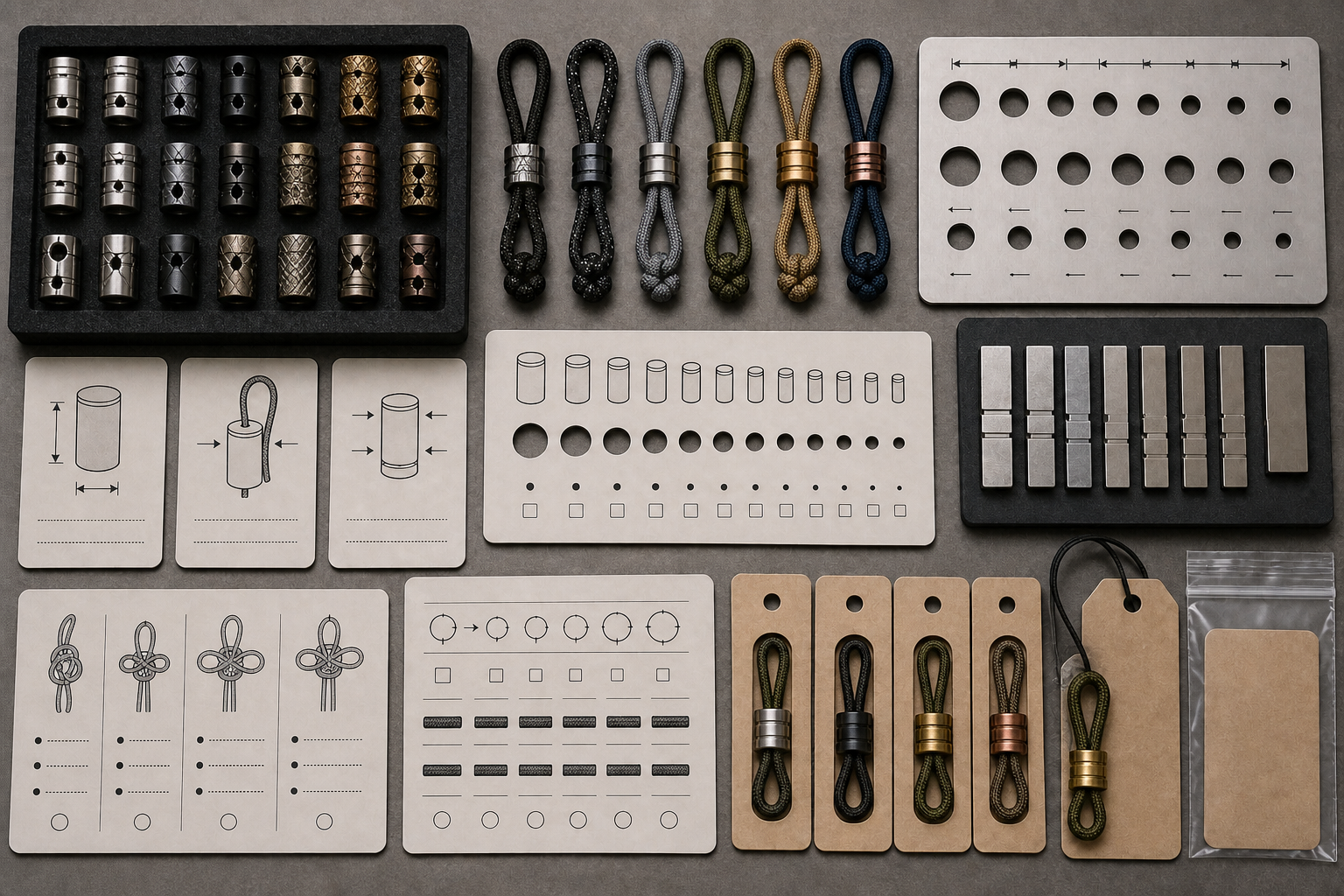
Buyers should specify bead outside diameter, length, hole diameter, cord type, cord diameter, knot style, attachment method, and tolerance. The bead must fit the cord and the knife without adding unwanted bulk.
I Design Around Cord, Not Only the Bead
Cord choice is the first control point. Many buyers use paracord style cord, but not every cord sold as paracord is the same. The PIA-C-5040 document, adopted from MIL-C-5040H, states that the specification covers braided nylon cord. That source is useful because it reminds buyers to define cord type, not only color. In a knife accessory project, cord diameter, construction, stiffness, melting behavior, and colorfastness can all affect assembly.
The bead hole must fit the actual cord and knot method. If the buyer wants the cord doubled through the bead, the hole must be larger. If the bead should sit tight on a single cord, the hole should be closer. If the bead will be supplied loose, the buyer should decide whether the end user can install it easily. I also check whether the bead can contact the handle. If it can swing, it should have rounded edges and a finish that will not scratch easily. Small details like chamfer, deburring, and hole polish matter because cord can fray on rough internal edges.
| Fit detail | What to specify | Why it matters |
|---|---|---|
| Cord type | Nylon cord, paracord style, elastic, leather | Affects feel and assembly |
| Hole diameter | Single cord or doubled cord fit | Prevents loose or tight fit |
| Edge treatment | Chamfer and internal deburring | Reduces cord wear |
| Bead size | Diameter, length, weight | Controls comfort and packaging |
What Machining and Finishing Details Affect Lanyard Bead Quality?
Small parts expose process control. Rough edges, uneven color, and weak engraving can make a low-cost accessory look worse than no accessory.
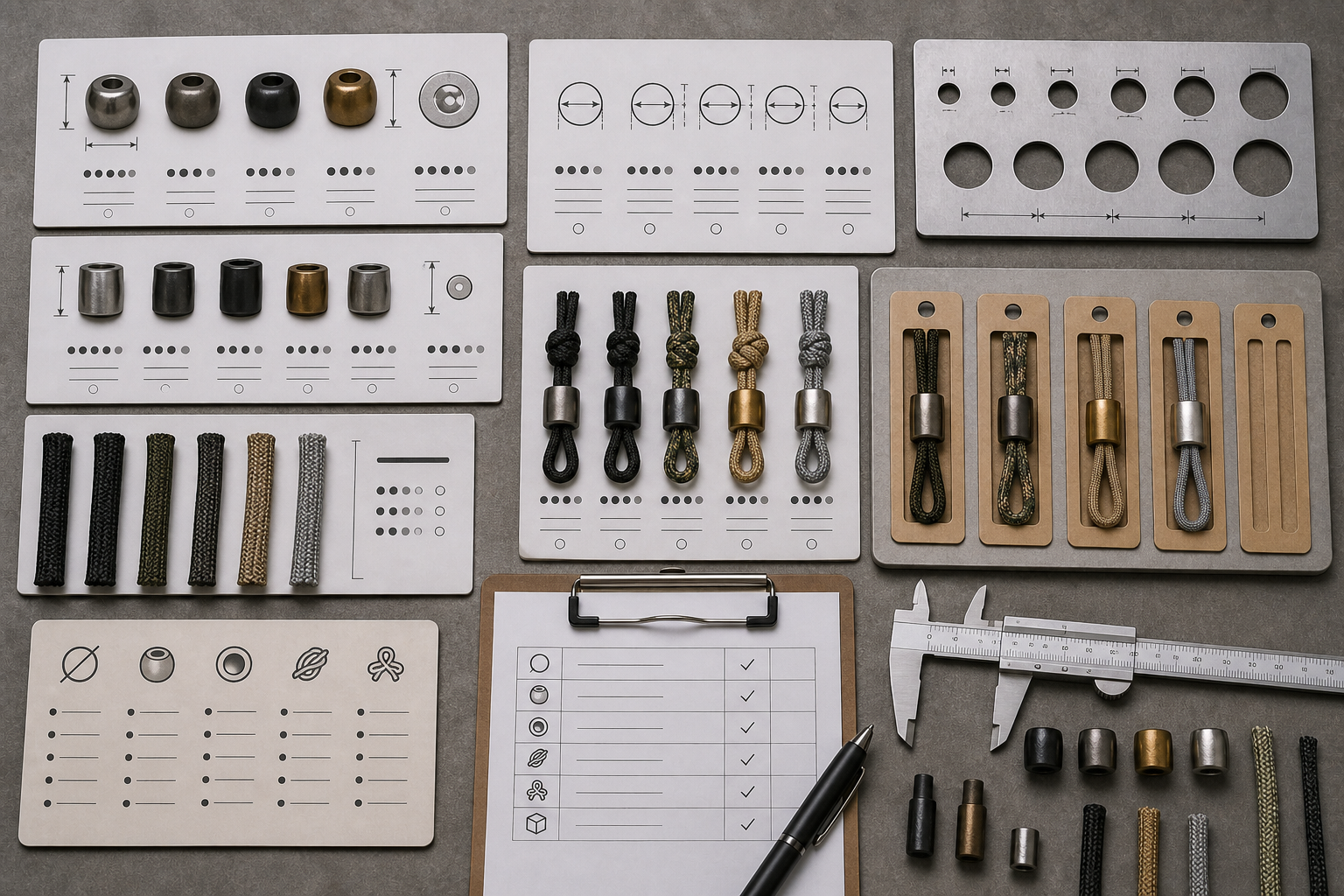
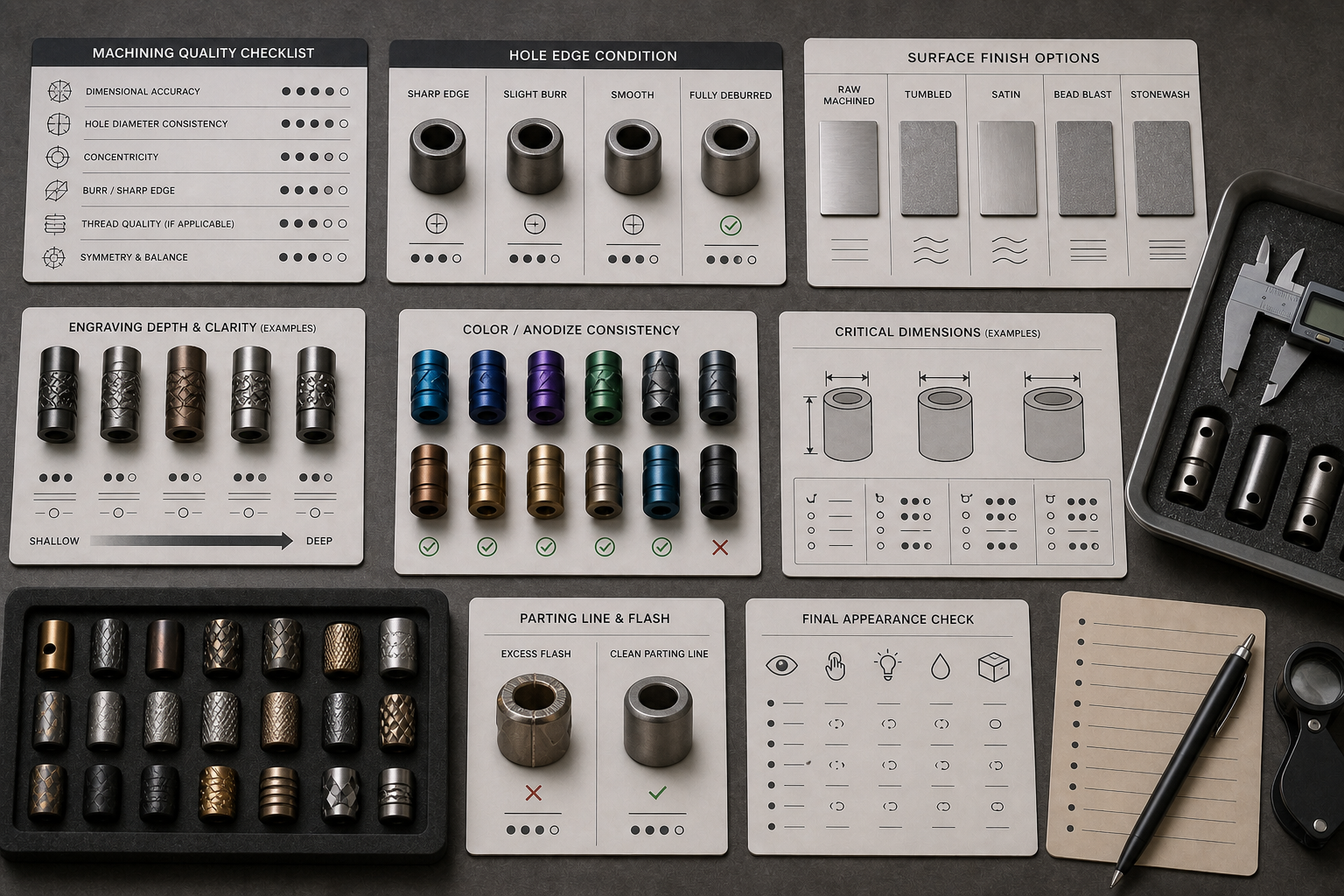
Lanyard bead quality depends on machining accuracy, hole finish, deburring, surface treatment, color consistency, engraving quality, corrosion resistance, and final inspection. Small parts need clear tolerances.
I Check the Inside of the Hole, Not Only the Outside
Most buyers look at the bead's outer surface first. I look at the hole. The cord passes through that area, so rough internal edges can cut, fray, or weaken the cord. A bead may look good in photos but still fail in assembly if the hole is undersized or has burrs. I also check the outer edges because a sharp corner can scratch the knife handle or feel unpleasant in the hand.
Finishing depends on material. Stainless steel may use polishing, bead blasting, stonewash, or black coating. Titanium may use machining marks, blasting, or anodized color effects. Aluminum often uses anodizing for color. Brass and copper may be polished, brushed, or left for patina. G10 and polymer beads need clean machining and consistent color. The quality risk is different for each material. Color variation may matter for aluminum. Surface scratches may matter for polished stainless. Edge fuzz may matter for composite beads. This is why I prefer an approved sample, a finish standard, and inspection photos before mass production.
| Process detail | What I check | Buyer benefit |
|---|---|---|
| Hole finish | Smooth internal edge | Reduces cord damage |
| Deburring | No sharp edges | Improves feel and protects handle |
| Surface finish | Polished, blasted, anodized, coated, stonewashed | Matches brand style |
| Marking | Laser logo or pattern depth | Supports private label identity |
How Should Branding, Color, and Packaging Be Planned?
Accessory options can multiply quickly. Too many colors, bead shapes, and packs can slow production and confuse inventory.
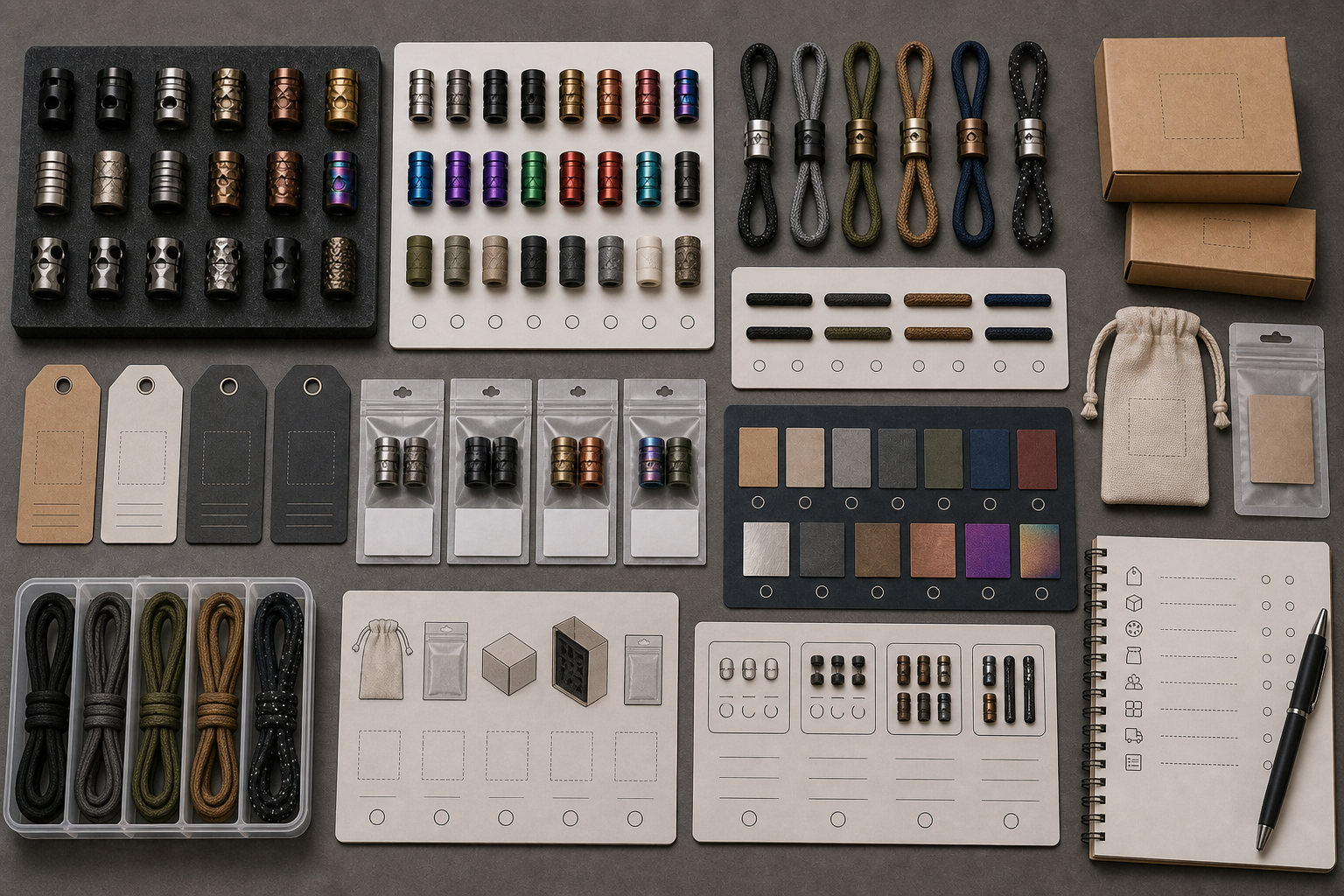
Branding should define bead color, logo, cord color, packaging position, SKU plan, and replacement policy early. Buyers should keep options focused so customization supports sales instead of hurting production.
I Keep Customization Useful and Controlled
Lanyard beads are good customization tools because they are smaller and cheaper to vary than a full knife structure. A buyer can create seasonal colors, brand colors, distributor-exclusive kits, or product-tier differences. But too many options create mistakes. If one order has five bead colors, four cord colors, three packaging styles, and two logo methods, the factory needs very clear work instructions.
I usually suggest a controlled customization matrix. For example, one bead shape, two materials, three colors, and one packaging layout may be enough for a first order. The buyer can expand later after sales data arrives. Packaging should also be planned early. Will the bead be tied to the knife? Will it be packed loose in a small bag? Will it be part of a gift set with spare cord? Will the product page show it installed? These decisions affect labor, inspection, and user experience. A clean accessory system helps the buyer sell the knife as a complete product, not just a blade with extras.
| Branding item | Practical choice | Why it helps |
|---|---|---|
| Color plan | Match handle, cord, clip, or packaging | Creates product family identity |
| Logo method | Laser mark, simple icon, no logo | Controls cost and visual noise |
| Packaging | Tied, loose bag, tray, gift set | Affects labor and presentation |
| SKU plan | Limit colors and versions at launch | Reduces inventory mistakes |
What Compliance and Safety Checks Should Buyers Consider?
A bead is small, removable, and sometimes metal. If the buyer ignores market rules, a simple accessory can create risk.
Buyers should check small-part risk, age positioning, restricted substances, sharp edges, surface coating, cord attachment, labeling, and target-market rules. Lanyard beads should not be treated as children's products unless fully evaluated.
I Separate Adult Knife Accessories From Children's Products
Most knife lanyard beads are adult-oriented accessories. Still, they are small parts, so buyers should be careful with marketing, labeling, and packaging. The CPSC small parts summary explains that U.S. small parts rules focus on products intended for children under three, and that a small part can fit into a test cylinder. This does not automatically make an adult knife accessory a children's product. But it reminds B2B buyers not to market small detachable beads in a way that creates confusion.
Metal content can also matter. If an accessory is sold into jewelry-like or direct skin-contact channels, buyers may need to review restricted substance rules. EUR-Lex shows that the EU REACH lead restriction for jewelry articles uses limits for individual parts. A knife bead is not always jewelry, but the source is useful as a reminder that small metal accessories may need market-specific compliance review. This is not legal advice. It is a sourcing warning. Buyers should confirm requirements for their target country, product category, age positioning, and sales channel. I also check sharp edges, coating adhesion, cord attachment, and packaging instructions before shipment.
| Compliance topic | What to check | Why it matters |
|---|---|---|
| Small parts | Age positioning and detachable part size | Avoids wrong product classification |
| Metal restrictions | Lead, cadmium, nickel, or coating rules where relevant | Supports market entry |
| Edge safety | Burrs and sharp corners | Protects user experience |
| Labeling | Adult accessory, care note, warning where needed | Reduces misuse and confusion |
What Should Buyers Put in a Lanyard Bead RFQ?
A vague accessory RFQ creates weak quotations. Suppliers may quote different materials, sizes, finishes, and packaging without saying so.
A lanyard bead RFQ should include bead purpose, material, dimensions, hole diameter, cord type, finish, color, logo method, packaging, quantity, inspection requirements, target market, and compliance needs.
I Make the Accessory Brief as Clear as the Knife Brief
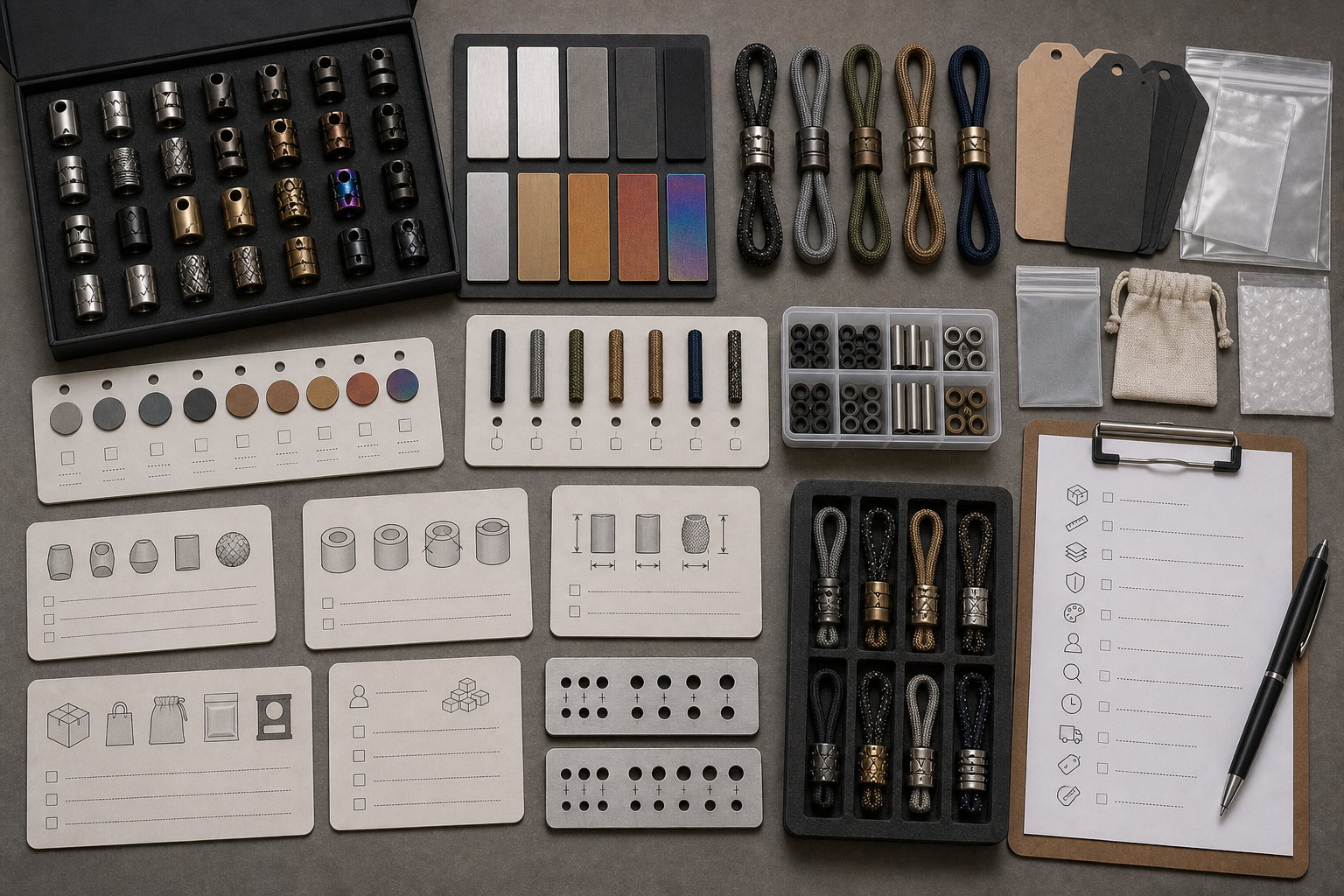
When a buyer requests lanyard beads, I want the RFQ to define the accessory clearly. The buyer should state whether the bead is for a folding knife, fixed blade, outdoor tool, keychain accessory, or gift set. The RFQ should include material, outside diameter, length, hole diameter, cord type, cord color, finish, logo, packaging, quantity, and target price. If the bead is tied before shipment, the buyer should define knot style and attachment position. If it is packed loose, the buyer should define bagging and placement.
I also include the sample approval checklist in the RFQ. The buyer can request bead fit, cord movement, edge smoothness, finish durability, color consistency, logo quality, packaging fit, and attachment-strength checks before mass production. A bead tied to the knife may change how the product sits in the box. A loose bead may scratch the product if it is not packed separately. These checks are simple, but they prevent many small accessory problems from reaching shipment.
I also ask for inspection requirements. For example, the buyer may request no sharp edges, no visible burrs, finish matching the approved sample, hole diameter tolerance, pull check on assembled cord, and packaging photos. The ISO 9001 supply chain document says buyers should specify what they need so suppliers can understand and fulfill requirements. That is exactly how I approach lanyard beads. The clearer the RFQ, the fewer assumptions reach production.
| RFQ field | What to include | Why it helps |
|---|---|---|
| Bead specification | Material, size, hole diameter, weight | Aligns function and cost |
| Cord plan | Type, diameter, color, knot style | Prevents assembly problems |
| Branding | Logo, color, finish, packaging | Supports private label identity |
| Quality requirements | Burr check, tolerance, finish, pull check | Creates shared inspection standards |
Turn your idea into a quote-ready knife project.
Share your drawing, sample photo, target quantity, market, and packaging needs. Vast State will review manufacturability and prepare OEM/ODM options.
Conclusion
I choose lanyard beads by matching function, material, fit, finish, branding, packaging, and compliance to the buyer's real knife project.
Source Notes
- The PIA-C-5040 cord specification and MIL-C-5040H listing support the need to define cord type rather than saying only "paracord."
- The ATI Ti-6Al-4V Grade 5 data sheet supports titanium material context for premium lightweight bead options.
- The British Stainless Steel Association supports the stainless steel corrosion-resistance explanation.
- The CPSC small parts summary supports the age-positioning and small-part caution for small detachable accessories.
- The EUR-Lex REACH lead regulation supports the reminder that metal accessories may need market-specific restricted-substance checks.
- The ISO 9001 supply chain guide supports clear RFQ specifications, supplier communication, and inspection planning.