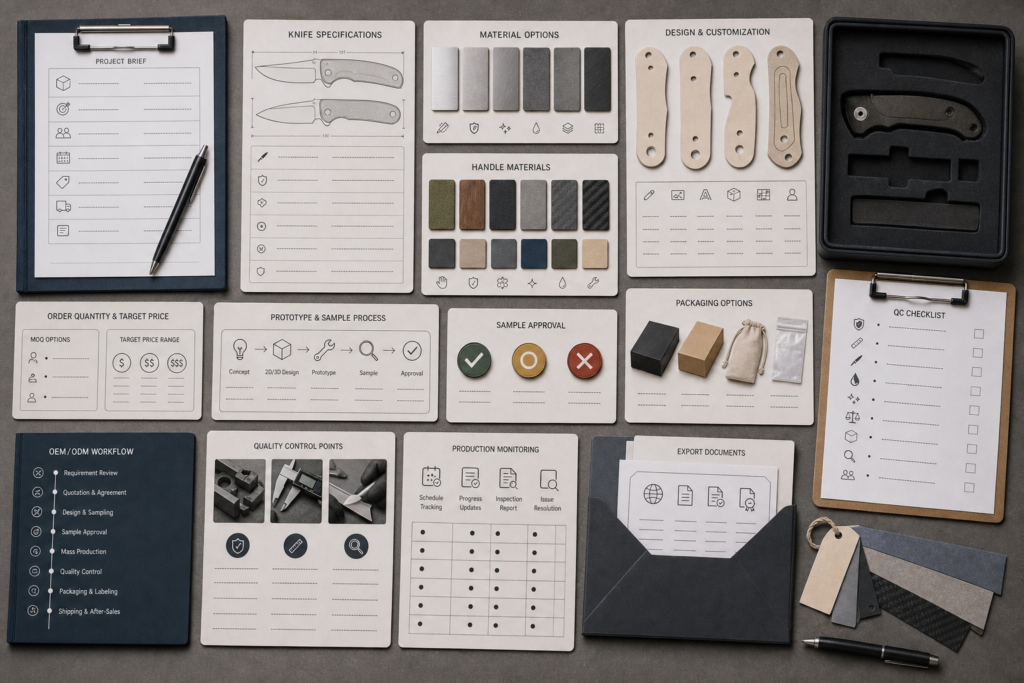
Online ordering looks fast. But unclear knife specifications can turn speed into wrong samples, hidden costs, and delayed launches.
B2B buyers can order custom knives online safely by preparing clear product requirements, confirming manufacturability, approving samples, locking quotation details, defining inspection standards, and managing shipment documents before mass production starts.
Quick buyer brief:
- Answer: Treat online custom knife ordering as a controlled OEM/ODM sourcing process, not a quick checkout.
- Buyer context: This helps knife brands, outdoor brands, importers, wholesalers, distributors, and private label buyers.
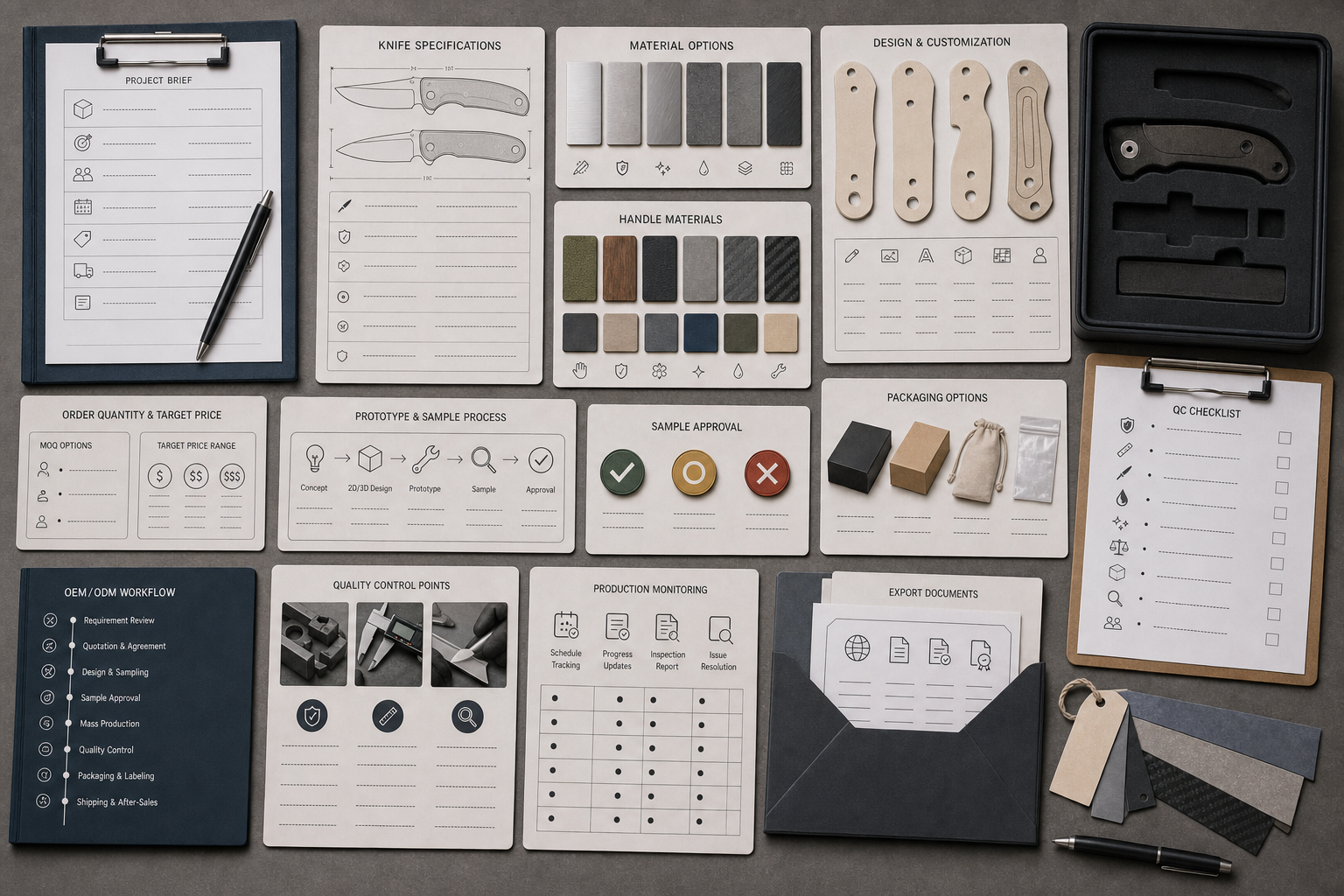
- Key checks: Confirm drawings, materials, lock structure, MOQ, sample approval, payment terms, Incoterms, inspection, packaging, HS code, and customs documents.
Have a knife or multi-tool project in mind?
Send your sketch, CAD file, sample photo, or product idea. Vast State can review manufacturability, suggest materials, estimate MOQ, and prepare a quote for your OEM/ODM project.
When I help a buyer start a custom knife project online, I do not begin with a price alone. I begin with control. The buyer needs control over design intent, material choice, sample approval, packaging, compliance notes, and delivery assumptions. A supplier needs enough detail to quote honestly and produce consistently. If both sides rush, the first sample may look close but miss the target market. A good online order should feel simple for the buyer, but behind it there should be a clear sourcing process.
What Should Buyers Prepare Before Asking for a Custom Knife Quote?
A supplier cannot quote clearly from a rough idea alone. Missing details usually become price changes, sample revisions, or production delays.
Buyers should prepare the knife type, drawing or reference, target market, target price, quantity, blade steel, handle material, lock type, finish, packaging, branding, inspection needs, and delivery expectation before requesting a custom knife quote.
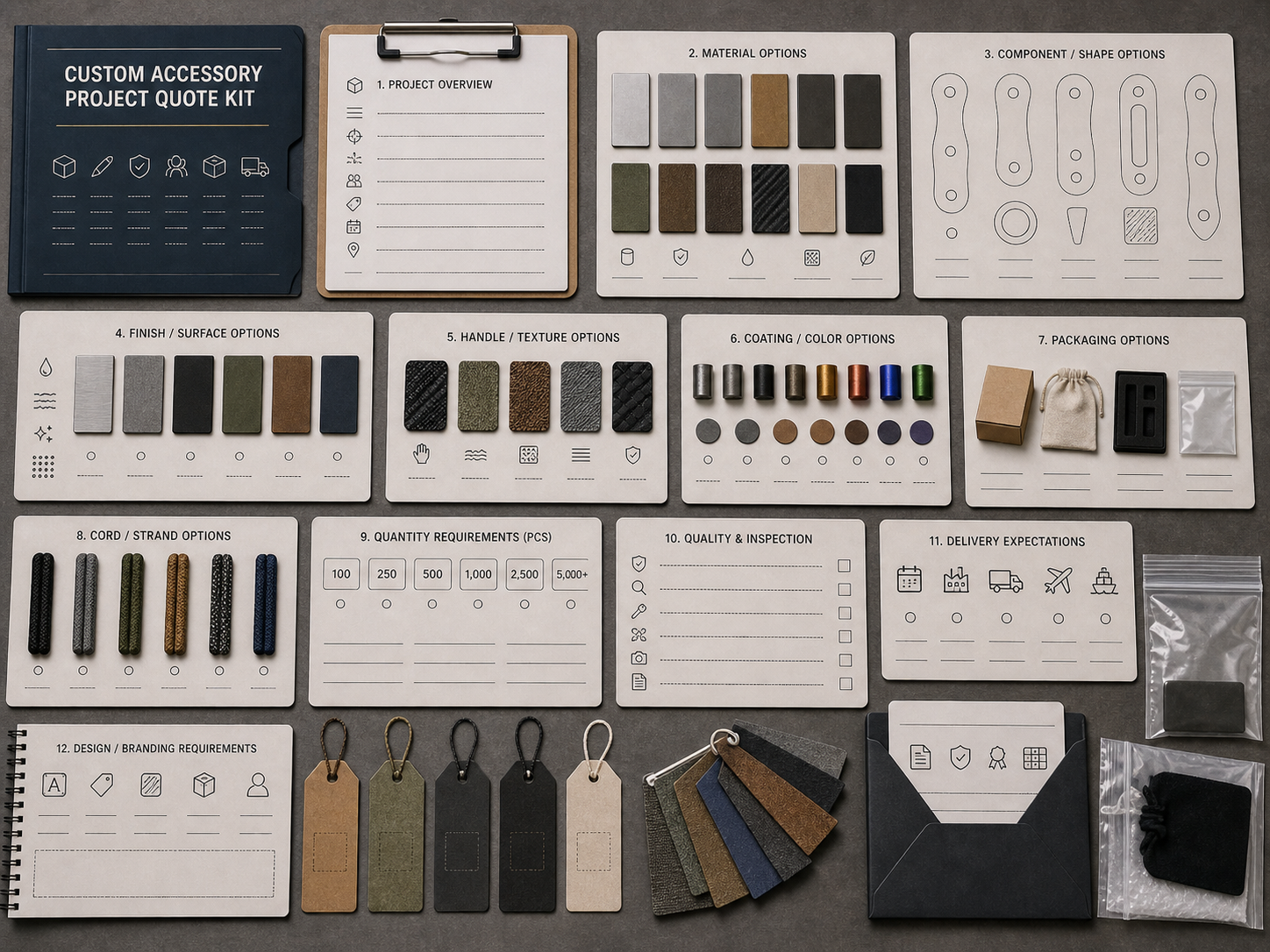
I Start With the Product Brief, Not the Price
When a buyer says, "I want a custom folding knife," I need to know what kind of custom project it is. Some buyers already have 2D drawings, 3D files, approved artwork, and a target retail price. Some buyers only have a rough product idea and need ODM support. These two situations require different quoting paths. A finished design needs engineering review. A rough idea needs product development before a serious price can be stable.
I usually ask for the knife category first. Is it a folding knife, fixed blade, pocket knife, camping tool, rescue tool, or multi-tool? Then I ask about the target user and sales channel. A value EDC product and a higher-positioned outdoor knife should not use the same cost structure. The buyer should also define the blade steel, handle material, lock mechanism, clip, finish, logo, packaging, and order quantity. If those details are not ready, I can suggest options, but the quote should state assumptions clearly.
| RFQ item | What to prepare | Why it matters |
|---|---|---|
| Product type | Folding knife, fixed blade, multi-tool, or outdoor tool | Sets the engineering path |
| Market goal | Budget, value, mid-range, or higher-positioned line | Guides material and finish choices |
| Technical details | Steel, handle, lock, size, finish, hardware | Reduces quote uncertainty |
| Commercial details | Quantity, target price, packaging, delivery | Helps supplier quote realistically |
OEM/ODM RFQ Checklist
Prepare these details to help Vast State review your project and provide a more accurate quotation.
| RFQ Field | What to Prepare |
|---|---|
| Project type | OEM from drawing / ODM private label / wholesale catalog |
| Product category | Folding knife / fixed blade / multi-tool / outdoor tool |
| Design status | Idea / sketch / 2D drawing / 3D CAD / physical sample |
| Target price | Ex-factory target price or retail price range |
| MOQ expectation | 500 / 1,000 / 3,000 / 5,000+ pcs |
| Logo method | Laser engraving / etching / printing / molded logo |
| Packaging | Standard packaging / custom retail box / Amazon-ready |
| Market | USA / EU / Japan / Korea / Middle East / other |
| Compliance needs | Buyer-specified testing / documentation / labeling |
| Timeline | Sample deadline / mass production deadline |
How Should Buyers Check Whether a Custom Knife Design Is Manufacturable?
A knife can look attractive on screen and still be difficult to produce. Small geometry mistakes can create big production problems.
Buyers should ask the supplier to review blade geometry, pivot position, lock contact, handle thickness, screw placement, assembly space, grinding method, finishing process, and tolerance risks before sample production.
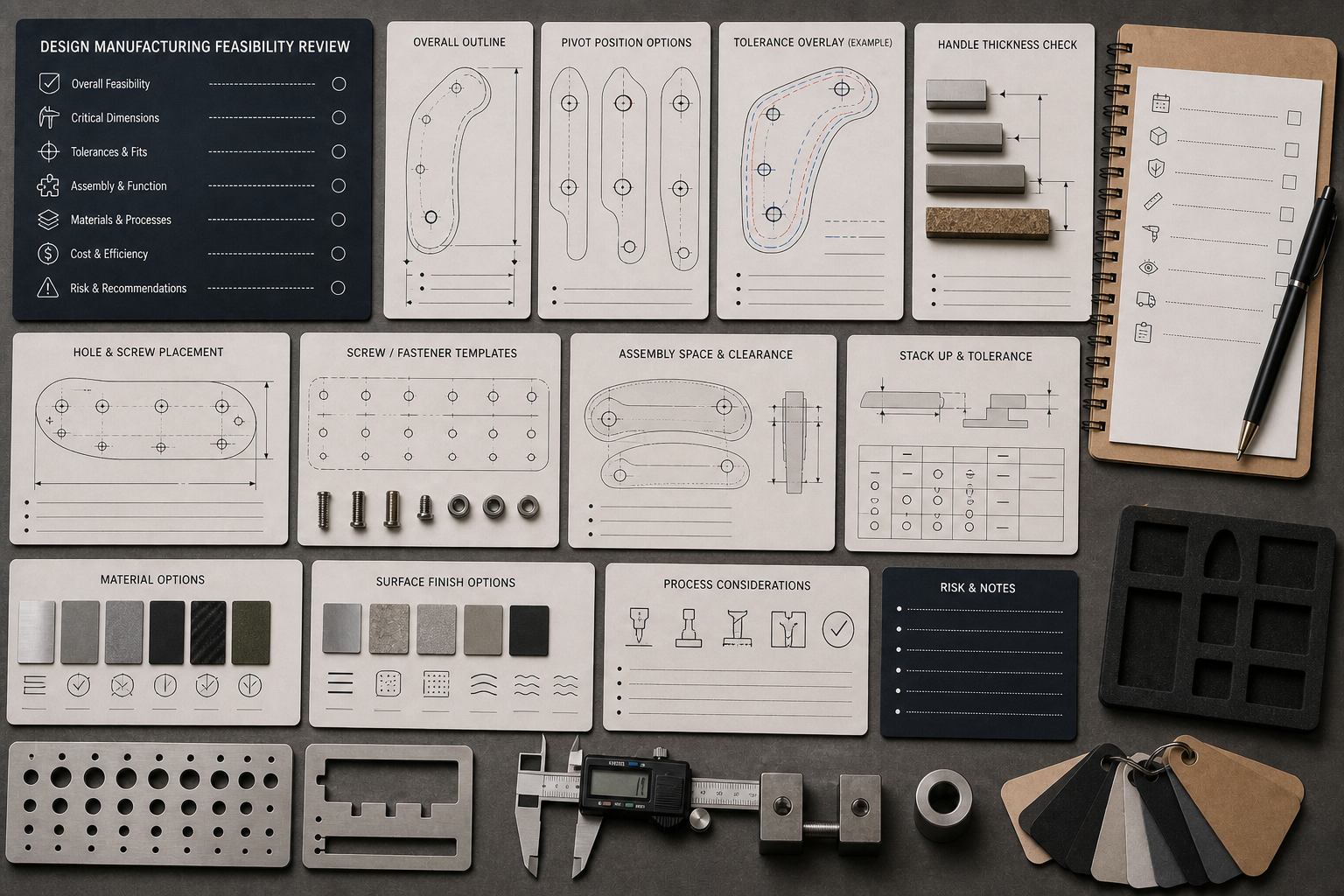
I Look for Production Risk Early
Online custom ordering often makes design approval feel too easy. A buyer may approve a shape from a rendering, but a knife is a mechanical product. The pivot hole must be accurate. The blade tang must match the lock. The handle scales must leave enough space for movement and screws. The clip must not conflict with the user's hand position or packaging. The blade must close safely into the handle. These checks happen before the sample, not after mass production.
I also review whether the requested material and finish match the product level. Some handle materials are easy to machine but add cost. Some coatings look strong in photos but need careful surface preparation. Some steel choices need controlled heat treatment and grinding. A good supplier should explain these trade-offs in plain language. If a buyer wants a lower target price, I may suggest a simpler structure, a more practical steel, or a more stable finish. This is not about making the product cheaper only. It is about making the product repeatable.
| Review area | What I check | Possible risk |
|---|---|---|
| Blade and pivot | Pivot hole, tang, stop area, blade centering | Rough action or poor fit |
| Lock structure | Engagement, release feel, contact surface | Unstable user experience |
| Handle design | Thickness, screw position, scale fit | Assembly difficulty |
| Finish plan | Coating, stonewash, satin, bead blast | Color or surface inconsistency |
What Quote Details Should Be Clear Before Paying for Samples?
A low quote can hide missing assumptions. If sample terms are vague, the buyer may not know what has really been approved.
Before paying for samples, buyers should confirm unit price assumptions, tooling or sample fees, MOQ, material grade, finish, logo, packaging, sample lead time, revision rules, payment terms, and what changes may affect price.
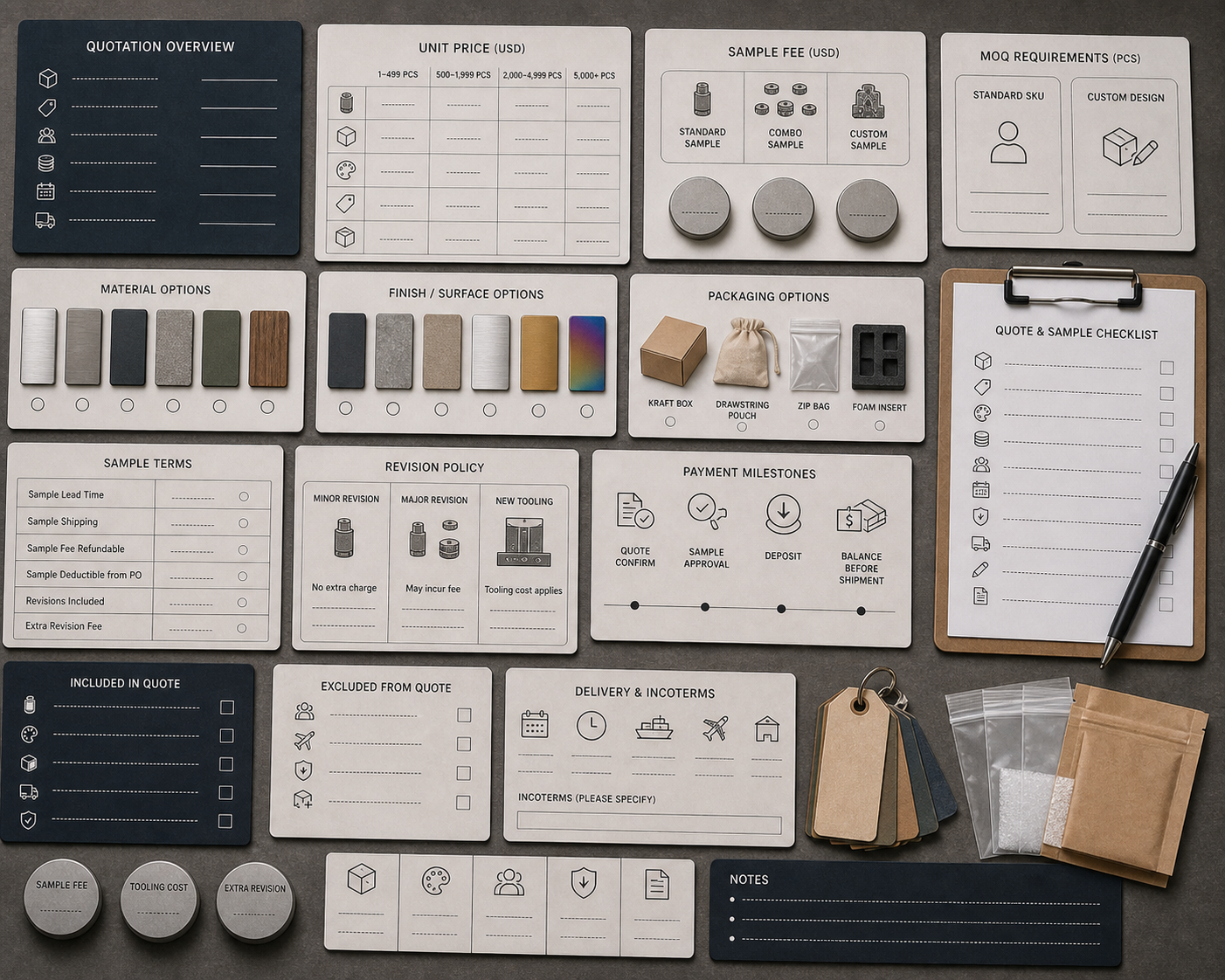
I Separate Price From Assumptions
I prefer quotes that make assumptions visible. The unit price should not stand alone. It should say the material, thickness, finish, logo method, packaging, order quantity, and trade term. If a buyer changes from 5Cr15MoV to D2, or from plain carton packaging to retail box packaging, the quote may change. If the buyer adds laser logo, special screws, color coating, or a pouch, the cost and lead time may change too. This is normal, but it should be clear before the buyer pays for samples.
Sample terms also need definition. The buyer should know whether the sample fee covers one design only, whether color and logo are included, and how revisions are handled. If the project needs a new mold, CNC program, laser marking fixture, or packaging dieline, that should be stated. A sample should answer a specific question: can this design, material, finish, and packaging direction work for the target market? If the quote does not define that question, sample approval becomes weak.
| Quote detail | What to confirm | Why it protects the buyer |
|---|---|---|
| Price assumption | Material, finish, quantity, packaging | Prevents surprise changes |
| Sample fee | What is included and excluded | Controls development cost |
| MOQ | Trial order and repeat order quantity | Helps plan inventory |
| Revision rule | Free changes, paid changes, timing | Keeps sample process clear |
How Should Buyers Approve Custom Knife Samples Online?
Photos alone can hide problems. A sample must be checked for function, finish, assembly, packaging, and repeatability.
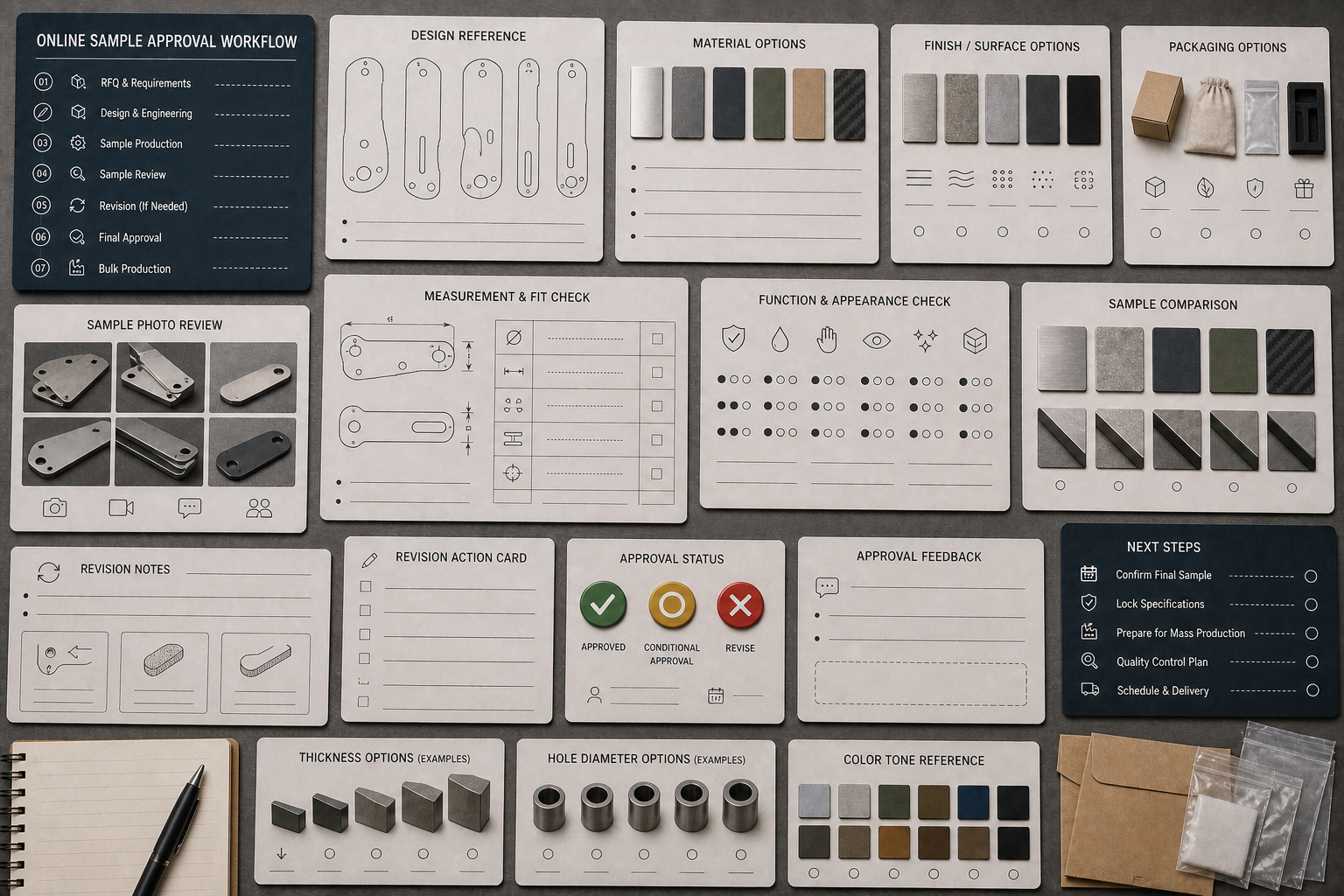
Buyers should approve custom knife samples through photos, videos, physical sample review, measurement checks, material confirmation, function checks, finish comparison, packaging review, and written approval records.
I Make Sample Approval Written and Measurable
I like sample approval to include both human judgment and measurable checks. The buyer should review the sample in hand when possible. Photos and videos help, but they cannot fully show weight, opening feel, handle texture, edge finish, or packaging impression. The buyer should check blade centering, blade play, lock engagement, screw fit, clip position, handle comfort, surface finish, logo quality, sharpening, and packaging fit. If the sample is for a fixed blade, the sheath or packaging should also be checked as part of the project.
Written approval matters because mass production should follow the approved sample. I keep notes on what is approved and what still needs adjustment. For example, the buyer may approve the handle shape but request a deeper logo mark. The buyer may approve the blade finish but request a different box insert. These details should not live only in chat messages. ISO's supply chain guide explains that buyers need to clearly specify what they want and verify supplied products against requirements. I use that idea in practical sample approval.
| Sample check | What to inspect | Approval record |
|---|---|---|
| Structure | Lock, pivot, screws, clip, blade centering | Photo, video, and note |
| Appearance | Finish, logo, color, scratches | Approved sample reference |
| Function | Opening, closing, sharpness, stability | Functional checklist |
| Packaging | Box, insert, label, barcode space | Packaging mockup approval |
How Should Buyers Set Quality Control Before Mass Production?
Final inspection alone is too late. Quality control must start before production problems spread through the order.
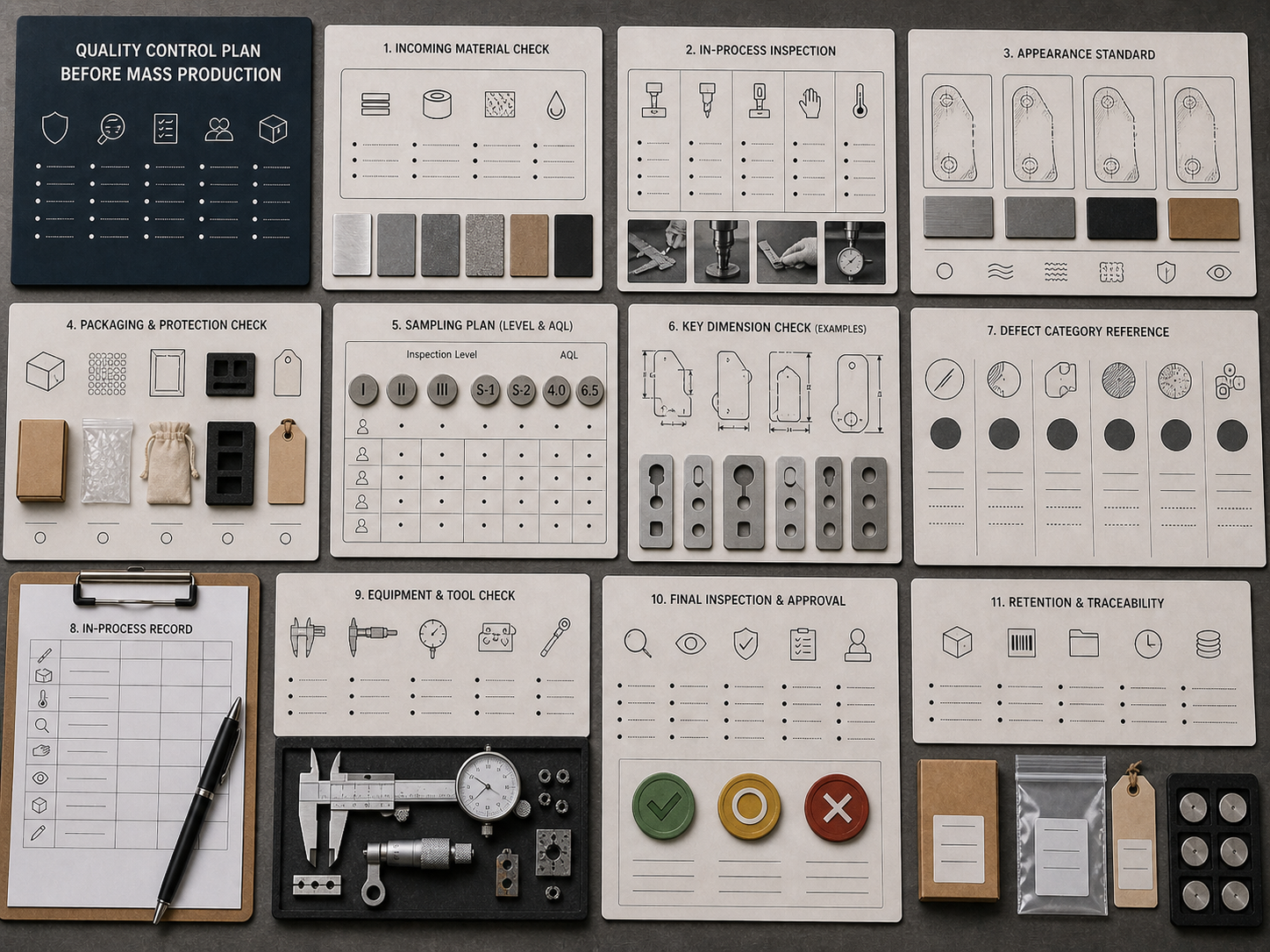
Buyers should define incoming material checks, in-process checks, functional inspection, appearance standards, packaging checks, AQL or sampling plan, defect categories, and final approval requirements before mass production.
I Define Defects Before the Order Starts
For custom knife orders, quality control should be more specific than "good quality." The buyer and supplier should define what is acceptable and what is not. Is a tiny mark on a stonewashed blade acceptable? How much blade centering variation is allowed? What level of screw mark becomes a defect? What should happen if packaging has a dent? These questions sound small, but they shape the final order.
I usually separate defects into function, safety, appearance, and packaging. Function defects are serious because they affect how the product works. Appearance defects affect sellability and brand image. Packaging defects affect the first impression and distribution. The inspection plan should also define who inspects, when inspection happens, and how results are reported. ISO 9001 does not define the product specification for the buyer. The ISO supply chain guide makes clear that the buyer must define product needs, drawings, standards, or other documents. In custom knife production, that means the inspection checklist must match the approved sample and the buyer's market.
| QC stage | What to check | Why it matters |
|---|---|---|
| Incoming material | Steel, handle material, hardware, packaging | Prevents weak inputs |
| In-process check | Grinding, heat treatment, machining, finish | Catches problems early |
| Functional check | Lock, pivot, blade play, sharpness, assembly | Protects user experience |
| Final inspection | Appearance, quantity, packaging, carton marks | Supports sellable shipment |
What Trade Terms, Payment Terms, and Shipping Details Should Buyers Confirm?
Production can be correct but shipment can still go wrong. Trade terms and payment terms decide responsibility, cost, and risk.
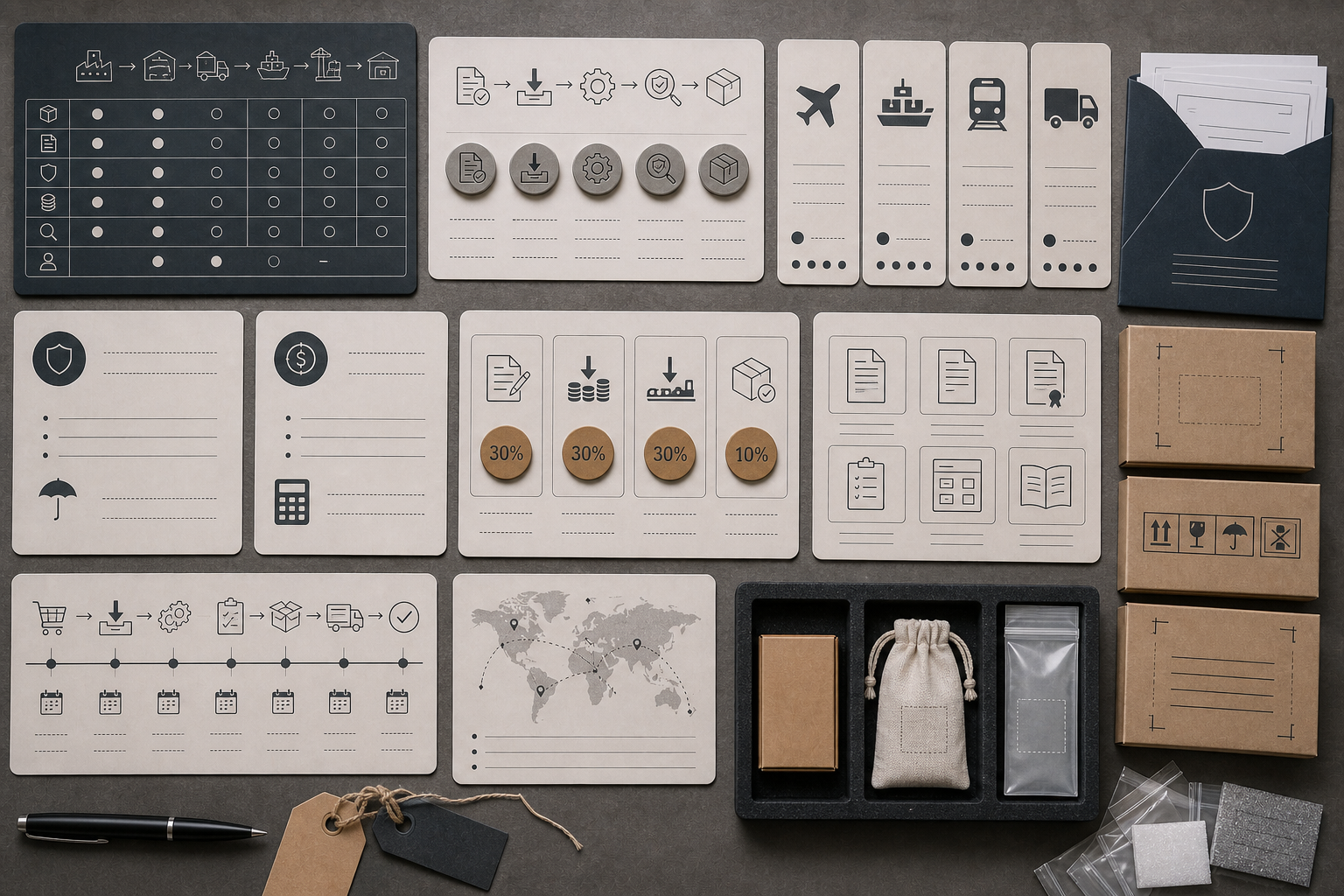
Buyers should confirm Incoterms, payment milestones, deposit, balance timing, freight method, insurance, export documents, inspection timing, shipment address, carton marks, and who handles customs clearance before production finishes.
I Do Not Leave Freight Terms Until the End
Many online custom orders focus on product first and shipment later. That can create confusion. The buyer should know whether the quote is EXW, FOB, CIF, DAP, or another agreed trade term. The International Chamber of Commerce explains that Incoterms help importers and exporters understand responsibilities and reduce misunderstandings in sales transactions. This matters because freight, insurance, delivery point, export handling, and import clearance are not the same under every term.
Payment terms should also match the project risk. A new custom design may need a sample fee, tooling fee, deposit, and balance before shipment. A repeat order may use a simpler process if both sides have stable history. I also ask buyers to confirm inspection timing before the balance payment. If the buyer wants third-party inspection, it should be arranged before goods are packed for shipment. Carton marks, packing list, commercial invoice, and shipping method should also be checked early. Trade details are not paperwork only. They are part of delivery control.
| Trade detail | What to define | Practical result |
|---|---|---|
| Incoterms | EXW, FOB, CIF, DAP, or agreed term | Clarifies responsibility |
| Payment terms | Sample fee, deposit, balance, tooling | Controls cash flow |
| Freight method | Express, air, sea, rail, truck route | Matches cost and deadline |
| Inspection timing | Before balance, before shipment, after packing | Reduces shipment disputes |
What Import and Compliance Details Should Buyers Check Before Ordering?
Custom knives cross borders with rules. If buyers ignore import details, shipment delays or market problems can appear later.
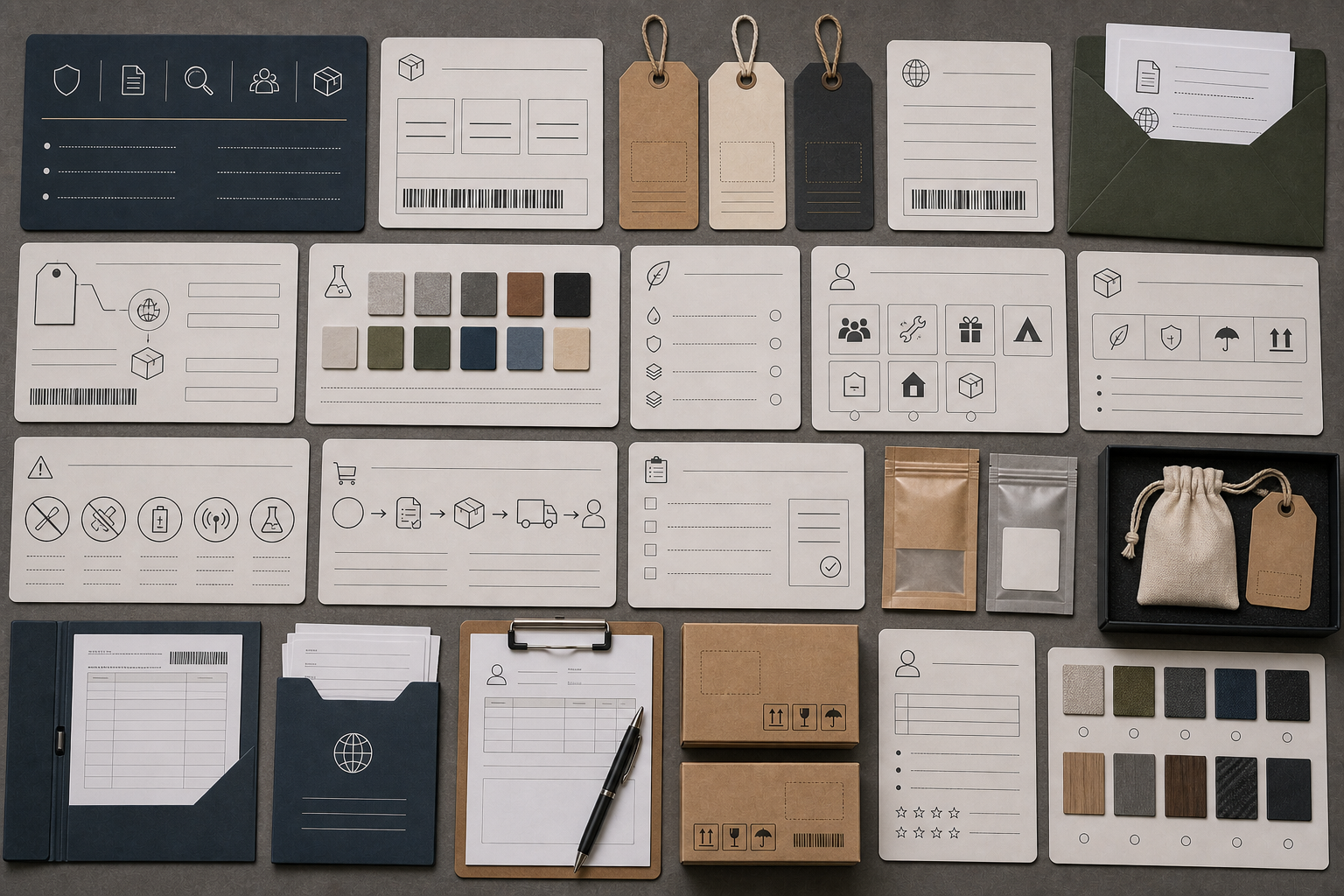
Buyers should check HS code, product description, country of origin, material composition, intended use, import restrictions, labeling, packaging claims, customs documents, and local knife regulations before placing a custom knife order.
I Treat Compliance as a Buyer-Supplier Discussion
I am not a customs broker or legal adviser, so I do not tell buyers that a product is legal in every market. I do help buyers prepare the product information their broker, importer, or compliance team may need. The U.S. CBP tips for importers say import specialists need a full description of the article, country of origin, manufacturer, composition, intended use, and pricing or payment information. That is a useful reminder for any buyer importing custom knives or tools.
HS code planning is also important. Trade.gov explains that HS codes are used through the import and export process to classify goods and support duties, statistics, and shipping documents. A folding knife, multi-tool, spare part, sheath, or accessory may require different descriptions and possibly different classification review. Buyers should confirm with their customs broker or local authority. Trade.gov also notes that some countries may require special documents, certificates of origin, or pre-shipment inspections. For custom knife orders, the safest path is to define product description, material composition, origin marking, packaging claims, and import document needs before shipment.
| Import detail | What to prepare | Who should confirm |
|---|---|---|
| Product description | Knife type, material, components, use | Buyer and supplier |
| HS code | Product classification reference | Broker or customs adviser |
| Country of origin | Marking and document requirements | Importer or broker |
| Special documents | COO, test report, inspection, invoice | Buyer, supplier, forwarder |
How Can Buyers Build Repeat Orders After the First Custom Knife Order?
The first order is only the start. Without records, repeat orders can drift from the approved sample.
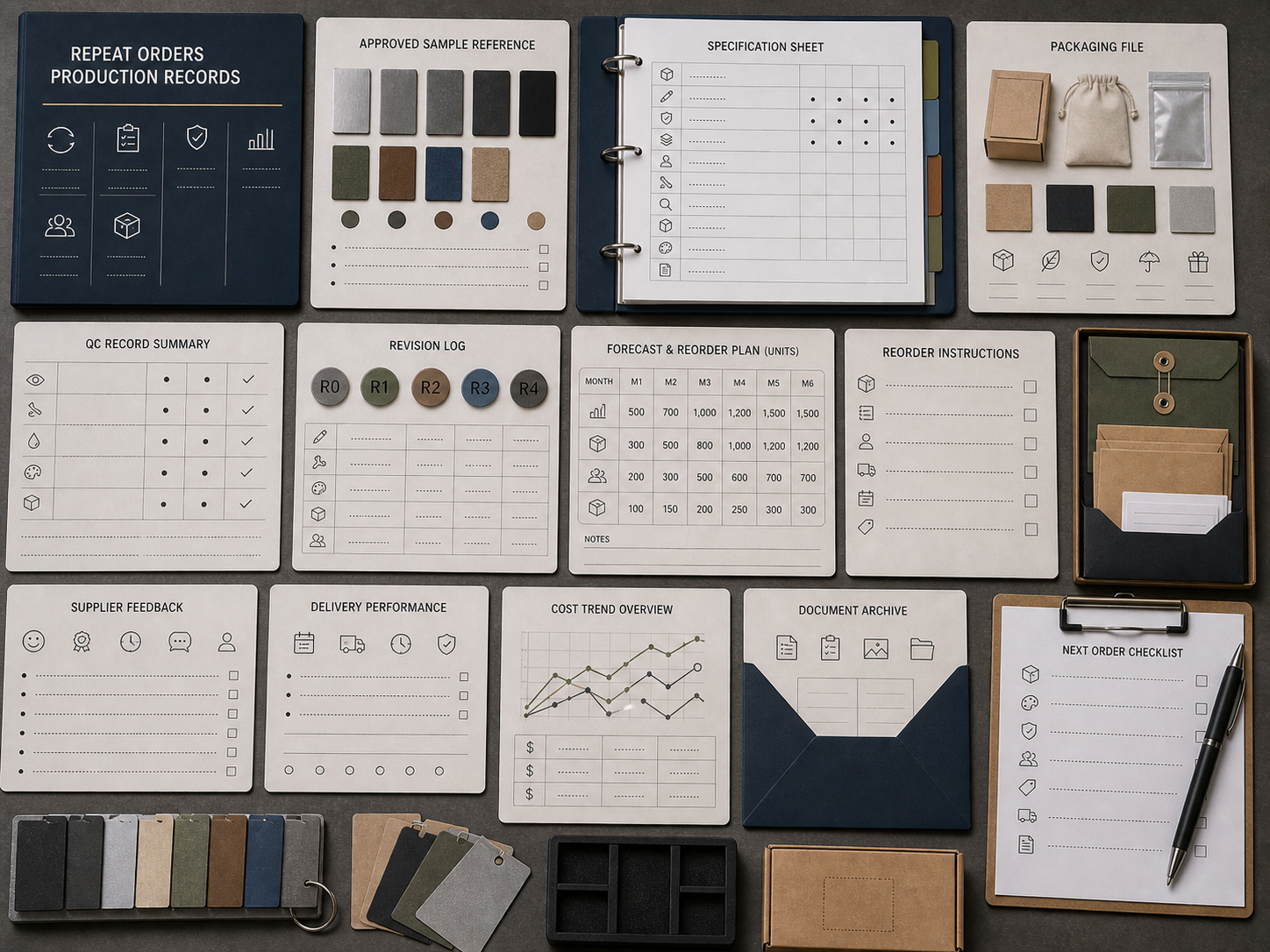
Buyers should build repeat orders with approved samples, specification sheets, packaging files, QC records, supplier feedback, revision logs, forecast planning, and clear re-order instructions.
I Keep the First Order Useful for the Second Order
A custom knife project becomes easier after the first successful order, but only if both sides keep records. I want the buyer to approve and archive the final sample, blade steel, hardness target, handle material, finish, logo file, packaging artwork, carton mark, inspection checklist, and any special assembly notes. If the buyer wants to change color, steel, packaging, or logo later, the change should be recorded as a new version, not mixed into old instructions.
Repeat order planning also helps cost and delivery. If the buyer can forecast future demand, the supplier can plan material purchasing, packaging preparation, and production slots more smoothly. If the buyer sells through distributors, the packaging and barcode details may need to stay stable. If feedback from the first market launch shows a problem, the buyer and supplier should review whether the issue came from design, production, packaging, or user expectation. This is how an online custom order becomes a long-term OEM or ODM relationship. The goal is not only to finish one order. The goal is to build a product that can be repeated.
| Repeat-order item | What to save | Why it helps |
|---|---|---|
| Approved sample | Final product and packaging sample | Keeps the standard clear |
| Specification sheet | Materials, dimensions, finish, logo | Prevents instruction drift |
| QC record | Inspection photos and defect notes | Improves next production |
| Revision log | Version changes and approval dates | Avoids confusion |
Turn your idea into a quote-ready knife project.
Share your drawing, sample photo, target quantity, market, and packaging needs. Vast State will review manufacturability and prepare OEM/ODM options.
Conclusion
I order custom knives online successfully by turning a simple inquiry into a controlled OEM/ODM process from RFQ to repeat production.
Source Notes
- The ISO 9001 supply chain guide supports clear buyer requirements, supplier quality confidence, and verification of supplied products.
- The ICC Incoterms 2020 release supports the role of Incoterms in defining importer and exporter responsibilities.
- The CBP tips for new importers and exporters support the need for full product descriptions, country of origin, composition, intended use, and payment information.
- The Trade.gov HS code guide supports the use of HS codes in import and export classification and documentation.
- The Trade.gov customs brokers and freight forwarders page supports the role of brokers and forwarders in customs entry, classification, valuation, freight, documents, and cargo tracking.
- The Trade.gov special documents page supports early confirmation of certificates of origin, special documents, and import-country document needs.