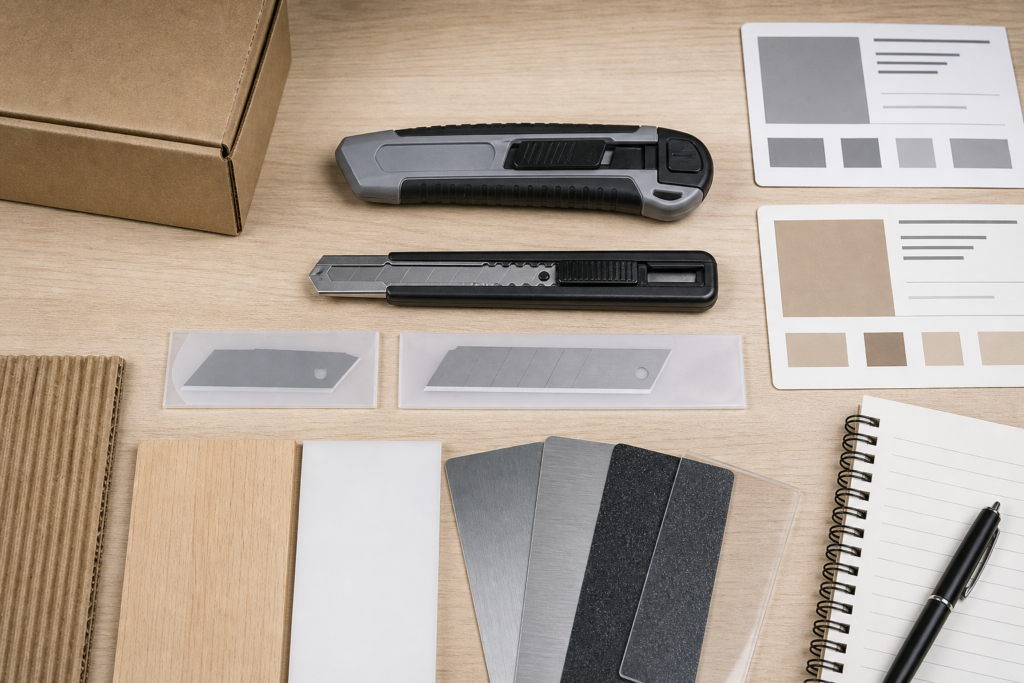
Two cutters can look similar but serve different buyers. Choosing the wrong structure creates weak performance, poor safety fit, and higher returns.
A utility knife is a broader cutting tool for many materials and job sites, while a box cutter is mainly optimized for opening cartons, tape, and packaging. B2B buyers should compare use case, blade format, handle design, safety mechanism, replacement blade plan, packaging, and compliance needs before sourcing.
Quick buyer brief:
- Answer: Utility knives are broader tools; box cutters are packaging-focused cutters.
- Buyer context: This helps knife brands, hardware brands, retailers, importers, wholesalers, and sourcing managers.
- Key checks: Confirm target material, blade type, retracting method, handle ergonomics, blade storage, replacement blade standard, packaging, labeling, HS code, and QC test plan.
Have a knife or multi-tool project in mind?
Send your sketch, CAD file, sample photo, or product idea. Vast State can review manufacturability, suggest materials, estimate MOQ, and prepare a quote for your OEM/ODM project.
When I discuss this product category with buyers, I first separate search words from real product function. Many markets use "utility knife," "box cutter," "safety cutter," and "carton cutter" loosely. But in manufacturing, the structure must be clear. A tool for warehouse carton opening is different from a tool for construction, DIY, carpet trimming, film cutting, or general workshop use. If the buyer defines the task early, I can help match the blade, handle, lock, spring, packaging, and quality control to the actual project.
What Is the Practical Difference Between a Utility Knife and a Box Cutter?
Names can mislead buyers. A supplier may quote a different tool if the buyer only says "cutter" without defining the use.
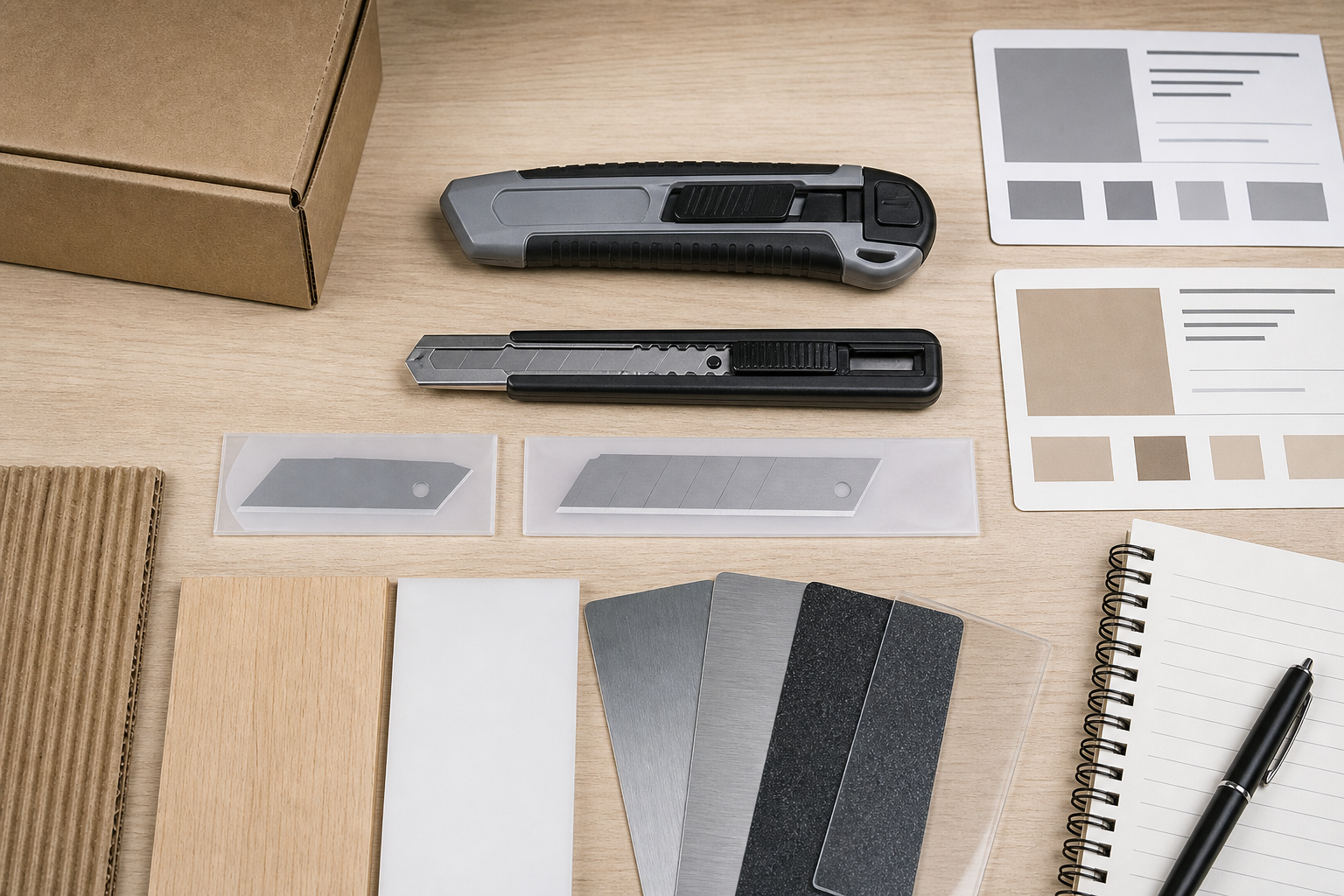
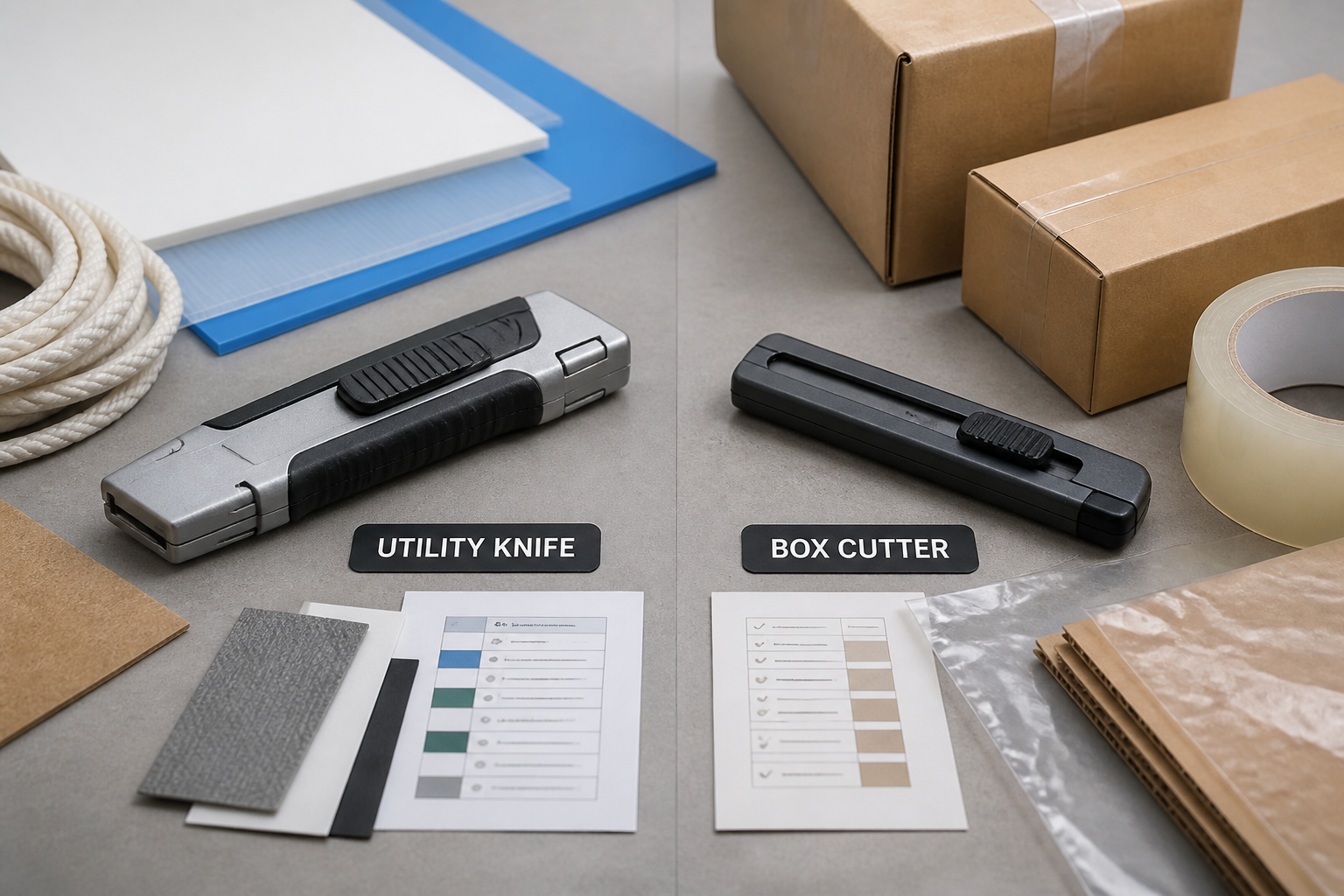
A utility knife is a general-purpose hand cutting tool for broader materials and work settings. A box cutter is a simpler packaging-focused tool for cartons, tape, film, and light warehouse tasks.
I Define the Tool by the Job, Not the Name
For B2B sourcing, I do not rely on product names only. I ask what the user will cut. A utility knife may need stronger body construction, a more secure blade lock, thicker handle support, and compatibility with standard replacement blades. It may be used for cardboard, plastic sheet, rope, flooring material, insulation, film, foam, and general workbench tasks. A box cutter usually has a narrower role. It opens cartons, cuts packing tape, trims light film, and supports repeated packaging work.
This difference affects the whole project. A utility knife may need a metal liner, screw assembly, spare blade storage, rubber grip, or heavy-duty blade. A box cutter may need a shallow blade exposure, fast blade change, lightweight body, and safer storage for retail or warehouse teams. OSHA's hand tool guidance says workers should use the right tool for the job and examine tools for damage. I apply the same idea in product development. If the job is clear, the tool can be built around it.
| Comparison point | Utility knife | Box cutter |
|---|---|---|
| Main use | Broader cutting tasks | Cartons, tape, packaging |
| Structure | Often stronger and more adjustable | Often lighter and simpler |
| Blade exposure | May allow more reach | Usually shorter exposure |
| Buyer focus | Durability and versatility | Speed, control, and packaging safety |
OEM/ODM RFQ Checklist
Prepare these details to help Vast State review your project and provide a more accurate quotation.
| RFQ Field | What to Prepare |
|---|---|
| Project type | OEM from drawing / ODM private label / wholesale catalog |
| Product category | Folding knife / fixed blade / multi-tool / outdoor tool |
| Design status | Idea / sketch / 2D drawing / 3D CAD / physical sample |
| Target price | Ex-factory target price or retail price range |
| MOQ expectation | 500 / 1,000 / 3,000 / 5,000+ pcs |
| Logo method | Laser engraving / etching / printing / molded logo |
| Packaging | Standard packaging / custom retail box / Amazon-ready |
| Market | USA / EU / Japan / Korea / Middle East / other |
| Compliance needs | Buyer-specified testing / documentation / labeling |
| Timeline | Sample deadline / mass production deadline |
Which Tool Fits the Buyer's Target Use Case?
A cutter that works in one channel can fail in another. Warehouse, DIY, retail, and industrial users need different details.
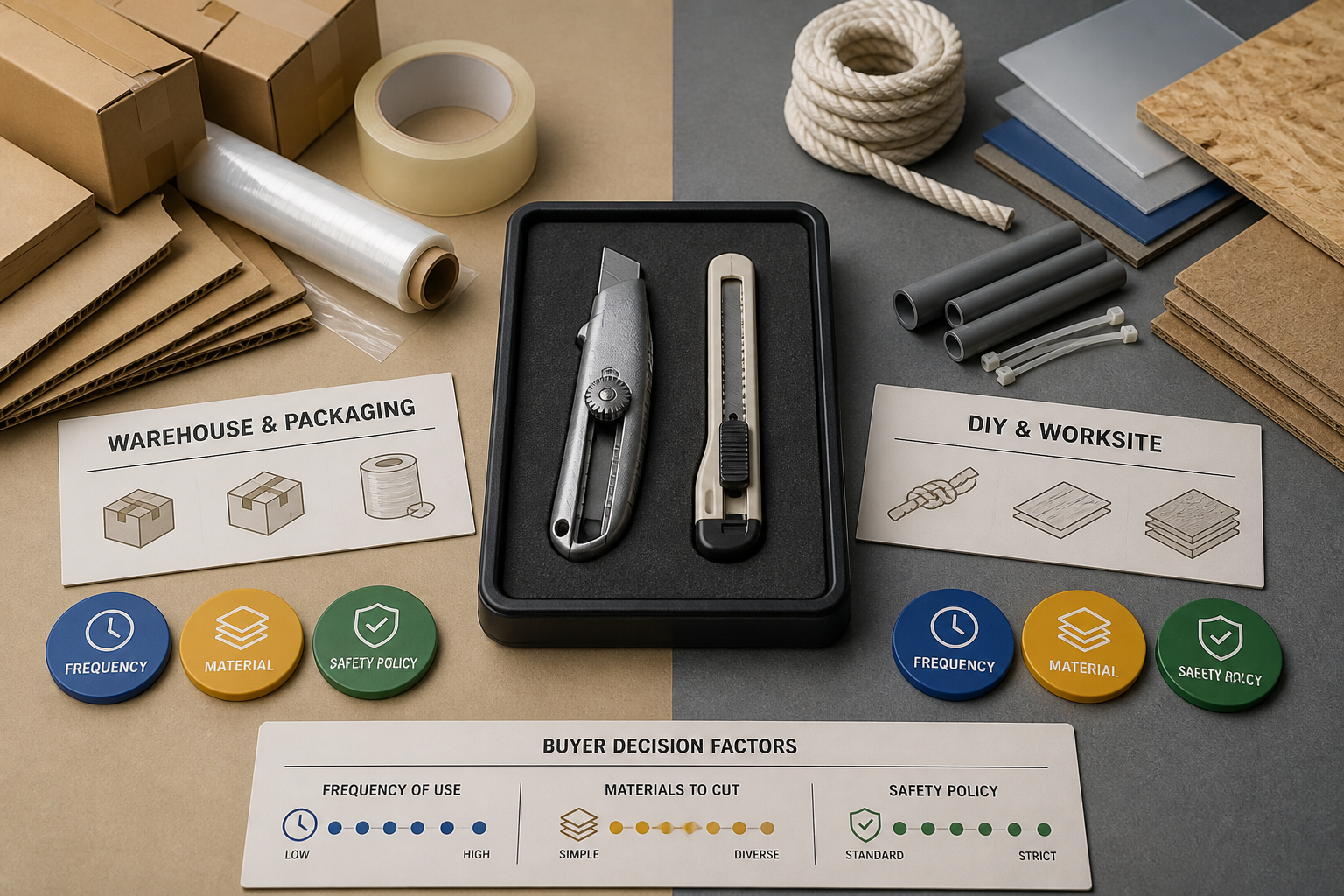
Buyers should choose a utility knife for broader cutting tasks and a box cutter for repeated packaging work. The target user, material, frequency, and safety policy should decide the product direction.
I Match the Tool to the User's Daily Work
I ask buyers to describe the real use scene. A warehouse distributor may care about carton opening, tape cutting, tool retention, and reduced product damage inside the box. A DIY retail brand may care about blade change convenience, handle comfort, and shelf packaging. A construction channel may need a stronger body, secure blade position, and easy replacement blades. A promotional buyer may care most about cost, color, logo, and safe retail presentation.
Frequency matters too. If users cut a few boxes per day, a simple cutter may be enough. If users cut hundreds of cartons, handle comfort, blade change speed, and spring reliability become more important. NIOSH says non-powered hand tools should fit the task and user and should reduce force, repeated movement, and awkward positioning. This is very relevant for box cutters used in warehouse work. A small cost saving on the handle can become a user complaint if the tool is used all day.
| Use case | Better direction | What to specify |
|---|---|---|
| Warehouse carton opening | Box cutter or safety cutter | Shallow exposure, easy blade change |
| DIY and home repair | Utility knife | Comfortable grip, standard blades |
| Construction channel | Heavy utility knife | Strong body, secure blade lock |
| Retail private label | Either, based on channel | Packaging, color, logo, replacement blade plan |
How Should Buyers Specify Blade Format and Replacement Blade Compatibility?
Blade choices drive function and cost. A wrong blade format can make the tool hard to use, hard to source, or hard to repeat.
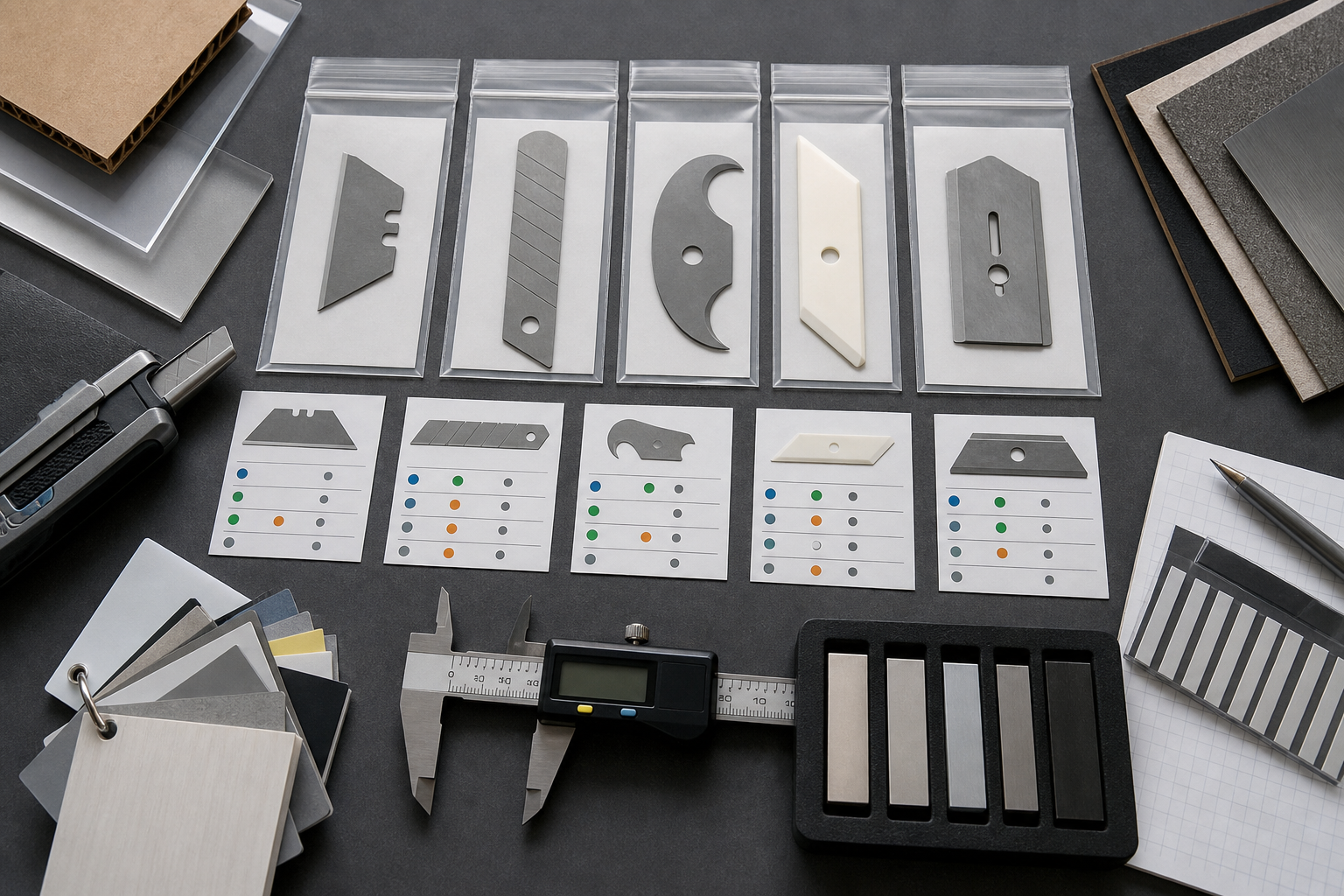
Buyers should define blade shape, thickness, material, edge type, exposure length, replacement blade standard, blade-change method, spare blade storage, and whether the tool uses segmented, trapezoid, hook, ceramic, or guarded blades.
I Treat the Blade as a Supply Chain Decision
The blade is not only a sharp part. It is a replacement system. A buyer should decide whether the tool uses common trapezoid utility blades, snap-off segmented blades, hook blades, ceramic-style blades, or a proprietary blade. Standard blades are easier for users to replace, and they can help a retail product feel practical. Proprietary blades can support a special safety design, but they may create replacement supply issues if the buyer does not plan refills.
Blade thickness and exposure also matter. A tool for heavy use may need a stronger blade and more secure support. A carton cutter may need short exposure to reduce risk of damaging the product inside the box. If the tool includes spare blades, the storage area must hold them securely. If the blade change is tool-free, the mechanism must be tested so it does not open accidentally. OSHA reminds employers to maintain tools, use the right tool, and remove damaged tools from use. In sourcing terms, this means the buyer should define blade fit, replacement path, and inspection checks before production.
| Blade detail | Buyer decision | Production concern |
|---|---|---|
| Blade format | Trapezoid, segmented, hook, ceramic-style, guarded | Tool body must match blade geometry |
| Blade exposure | Short, medium, adjustable | Affects cutting depth and user control |
| Blade change | Screw, slider, tool-free, cartridge | Affects cost and reliability |
| Replacement plan | Standard blade or private refill pack | Affects repeat sales and customer support |
How Do Handle Design and Ergonomics Affect Buyer Choice?
A cutter may look fine in photos but feel poor after repeated use. Handle shape can decide user acceptance.
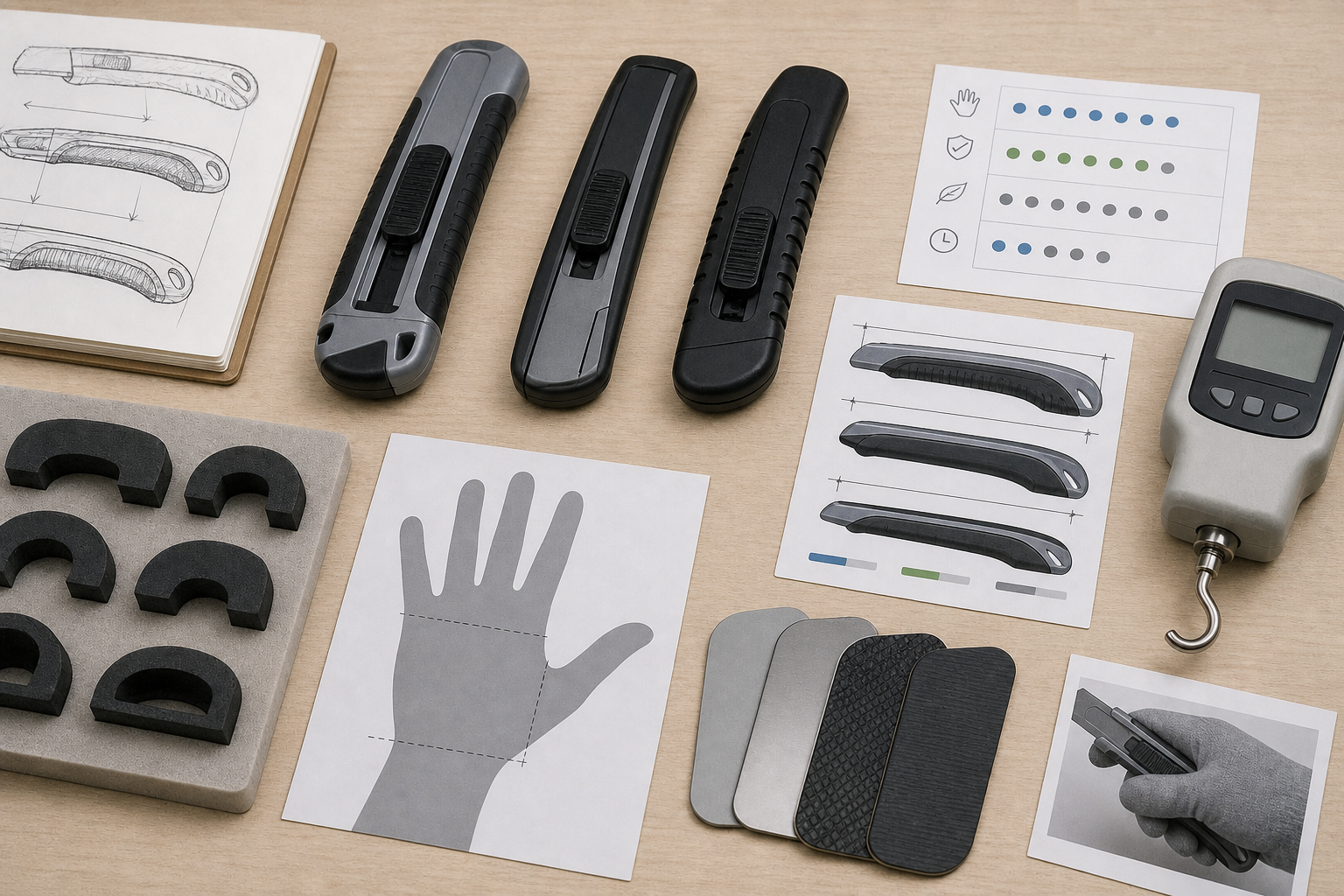
Handle design affects grip comfort, control, finger force, wrist posture, repeated use, durability, and perceived quality. Buyers should review handle length, thickness, texture, trigger or slider position, and edge comfort.
I Check the Hand Feel Before the Color
For many buyers, the first design discussion is color and logo. I prefer to check grip first. A utility knife or box cutter should feel stable in the hand. The slider should be easy to control but not too loose. The handle edges should not press sharply into the palm. The grip texture should help control without making the tool uncomfortable. If the buyer sells to warehouse users, repetitive use matters. If the buyer sells to retail DIY users, the tool should feel intuitive when opened from the package.
NIOSH's hand tool guidance focuses on choosing tools of the right size and shape for the task and user. OSHA's ergonomics guidance also notes that tools that are too large or too small can require excessive finger force, and padded handles can reduce pressure points. I use these principles when reviewing cutter handles. A flat cheap handle may be fine for a low-use promotional item. A repeated-use cutter needs better thickness, texture, and finger force control. The right handle is not always the most expensive one. It is the handle that matches use frequency, user group, and price point.
| Handle factor | What I review | Why it matters |
|---|---|---|
| Length and thickness | Fits common hand sizes | Improves control |
| Texture | Grip pattern, rubber insert, surface finish | Supports repeated use |
| Slider or trigger | Position, force, movement, stop points | Affects user confidence |
| Edge comfort | No sharp body edges or pressure points | Reduces complaints |
What Safety Mechanisms Should Buyers Compare?
Safety claims are easy to write but hard to prove. The mechanism must match the task and be tested in production.
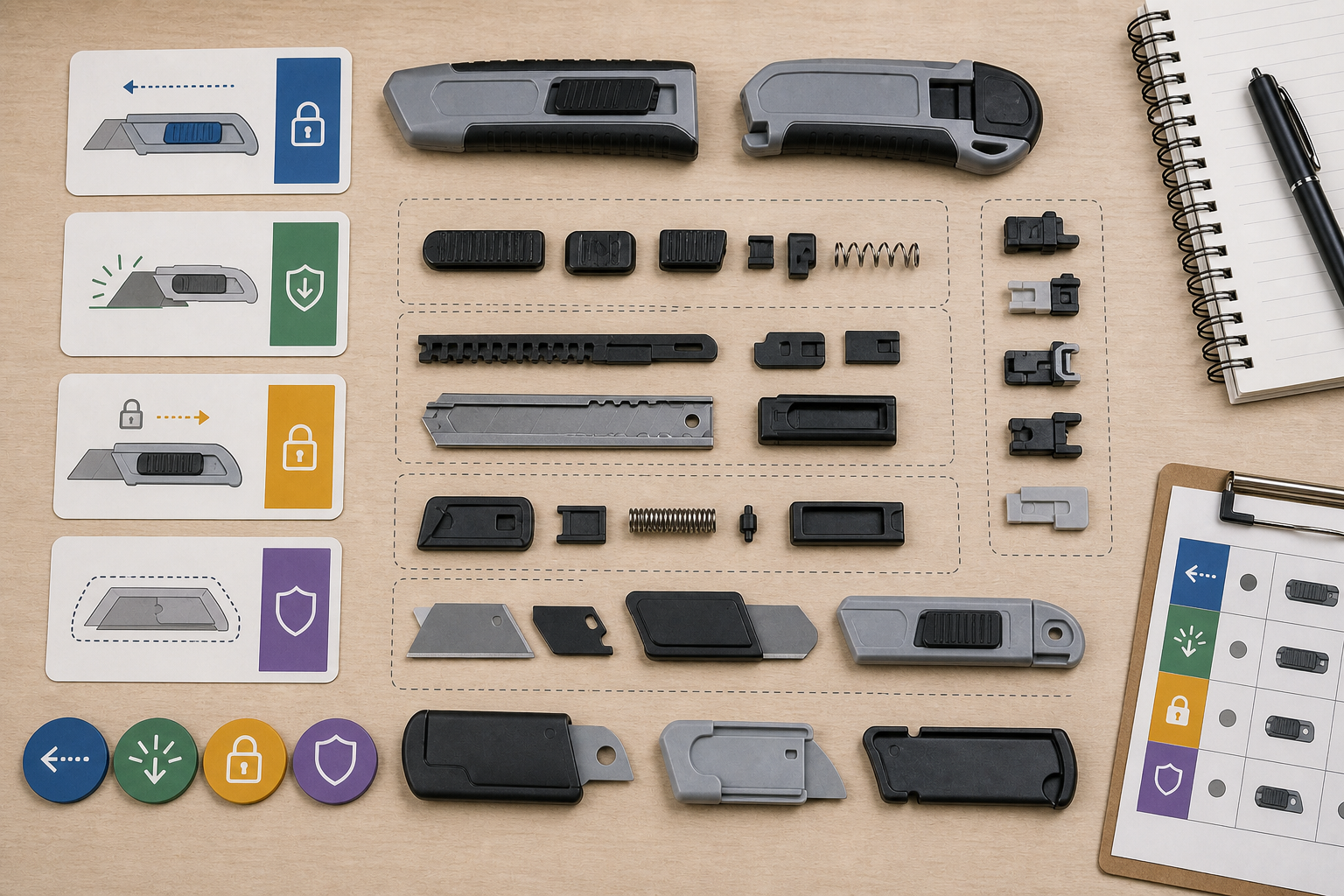
Buyers should compare manual retracting, self-retracting, guarded blade, short-exposure, locking slider, blade cover, storage lock, and blade-change protection based on the target workplace or retail channel.
I Avoid Empty Safety Language
I do not like vague safety claims. A buyer should define what the mechanism actually does. A manual retracting cutter depends on the user sliding the blade back after use. A self-retracting cutter can return the blade when pressure is released, but spring strength and user feel must be tested. A guarded cutter may expose less edge and work well for carton tape, but it may not cut thicker materials. A locking utility knife can support heavier cutting, but it may not fit a workplace that requires automatic blade return.
OSHA's hand tool guidance says workers should use the right tool, keep tools in good condition, examine them for damage, operate them according to the manufacturer's instructions, and use proper PPE. For OEM projects, this tells me that the tool design, instruction card, warning label, and quality control should work together. The product should not promise more than its mechanism can deliver. If the buyer wants a workplace-focused product, the RFQ should define blade exposure, return function, drop test, slider durability, and blade-change protection.
| Mechanism | Best fit | Buyer caution |
|---|---|---|
| Manual retracting | DIY and general use | User must return blade |
| Self-retracting | Warehouse and packaging work | Spring feel and reliability matter |
| Guarded blade | Carton opening and tape cutting | Limited cutting depth |
| Locking utility blade | Heavier general tasks | Safety policy may restrict use |
How Should Buyers Plan Materials, Durability, and QC Tests?
Low-cost cutters can fail quickly if material choices are weak. Cracked bodies, loose sliders, and poor blade fit hurt repeat orders.
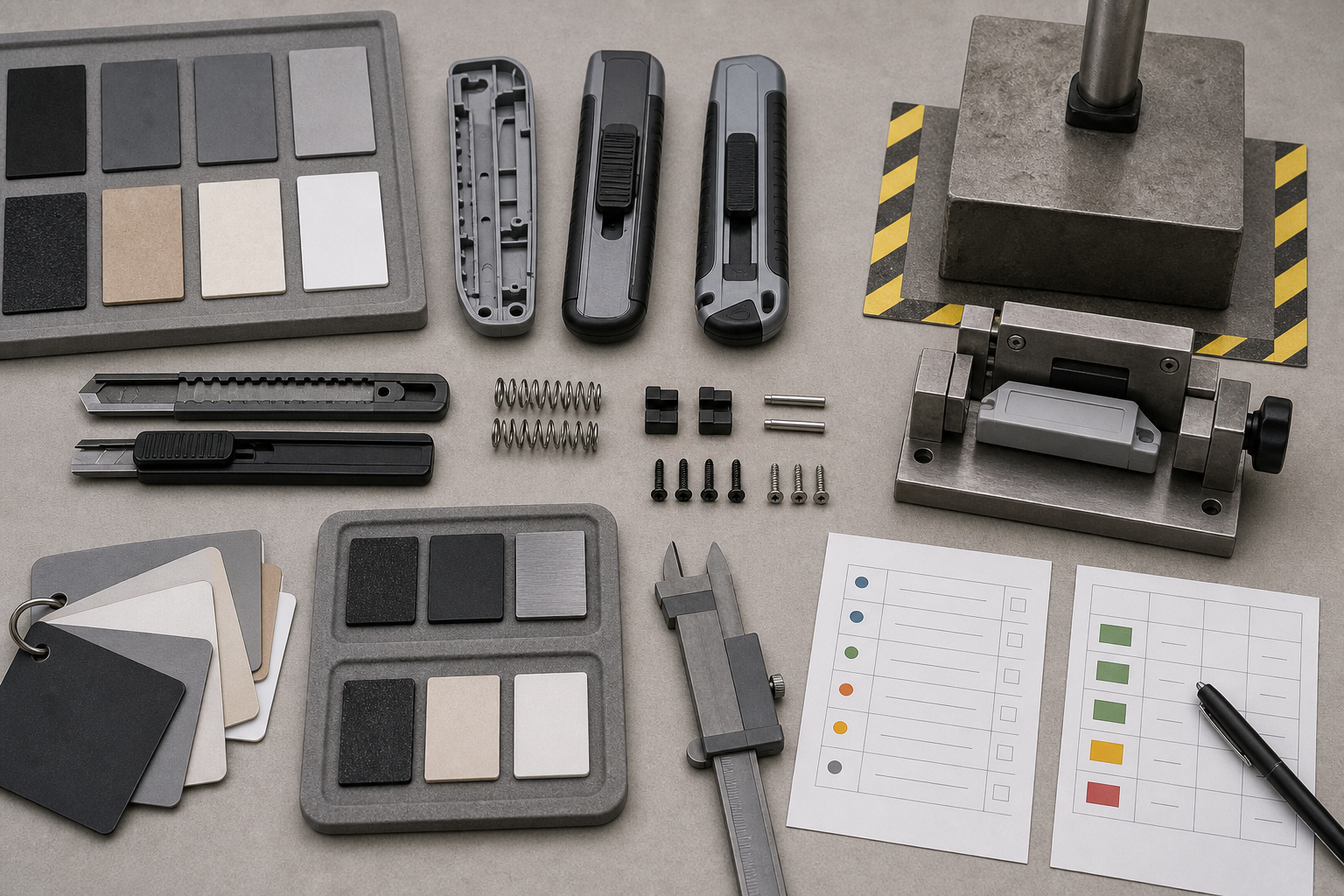
Buyers should specify body material, liner or frame structure, slider material, spring quality, blade holder fit, screw strength, drop resistance, blade retention, corrosion resistance, and production inspection standards.
I Build the QC Plan Around Moving Parts
Utility knives and box cutters are simple compared with folding knives, but they still have moving parts. The slider must move smoothly. The blade must seat correctly. The blade holder must not rattle too much. A spring must return consistently if the design uses automatic return. Screws must not loosen easily. Plastic bodies must resist cracking during normal handling. Metal bodies must avoid sharp unfinished edges. If the cutter includes spare blade storage, the compartment must not open by accident.
I normally divide QC into incoming material checks, in-process checks, assembly checks, and final checks. The approved sample should define the feel of the slider, blade extension length, blade retention, color, logo, body fit, and packaging. ISO's supply chain guide says buyers should clearly define their own needs and verify supplied products against requirements. That applies here. A cutter is a low-margin product in many channels, so rework can hurt the order quickly. The QC plan should be simple but specific.
| QC item | What to test | Why it matters |
|---|---|---|
| Slider function | Smooth travel and stop positions | Controls user experience |
| Blade retention | Fit, rattle, lock or return action | Supports stable cutting |
| Body durability | Drop, squeeze, screw fit, crack check | Reduces returns |
| Finish and branding | Color, logo, surface marks | Protects private label image |
What Packaging and Compliance Details Should Buyers Check?
Small cutting tools need careful packaging. Poor retail cards, loose blades, and vague labels can create avoidable market problems.
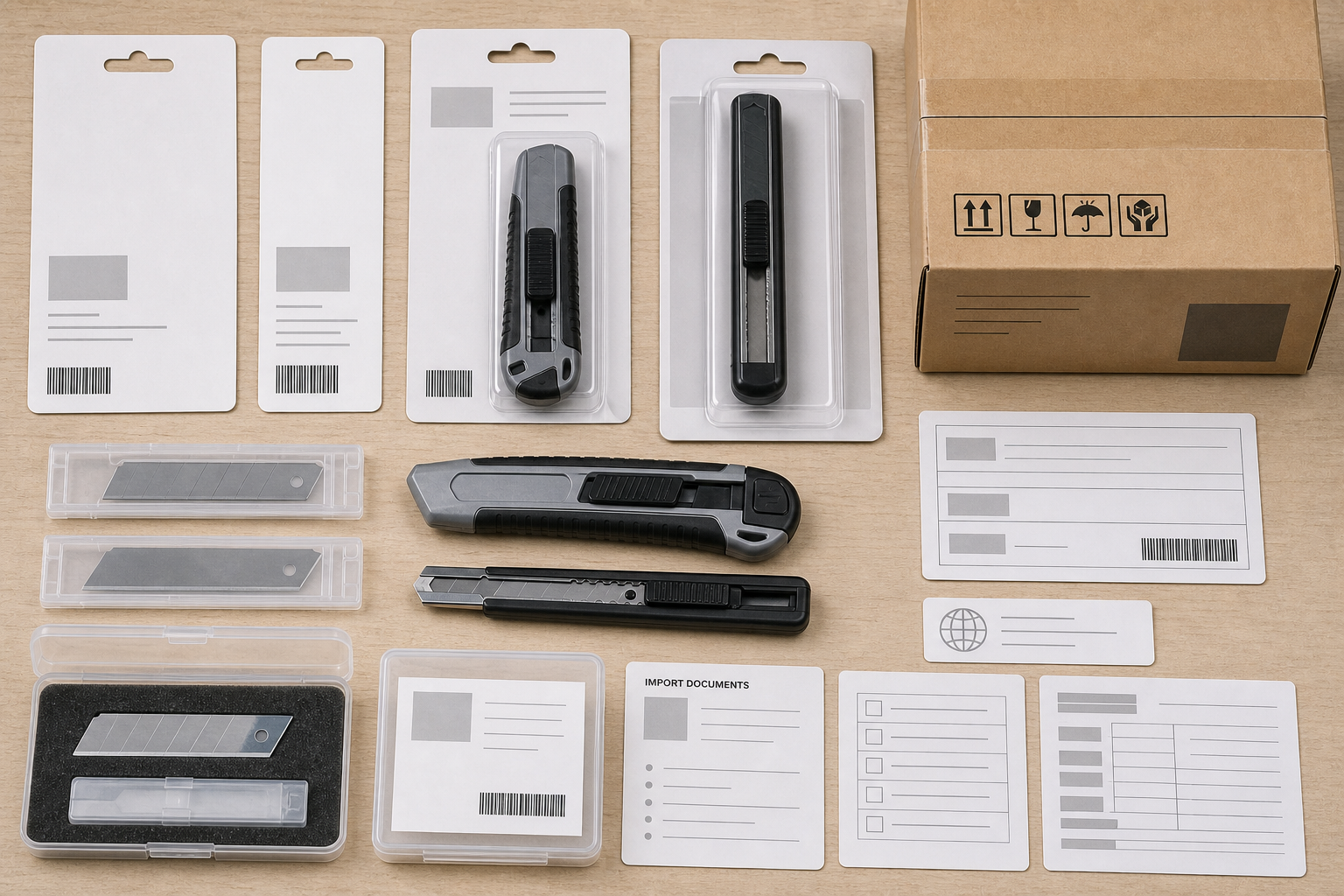
Buyers should check retail packaging, spare blade containment, instruction card, warning label, age positioning, country of origin, barcode space, carton mark, HS code, and import document requirements before production.
I Treat Packaging as Part of Risk Control
Packaging is not only a display decision. It controls how the product is handled before use. If spare blades are included, they should be fixed securely. If the tool has a blade installed, the packaging should prevent movement and exposure. If the product is sold in retail, the buyer may need warnings, instructions, barcode space, country of origin marking, and local language needs. I do not give legal advice, but I do ask buyers to check market-specific rules before approving packaging.
CPSC guidance on small parts is mainly about toys and children's products, but it is a useful boundary reminder. A cutter or replacement blade set should not be positioned for children. If a buyer sells a tool in consumer channels, age positioning and warning language should be reviewed carefully. For cross-border orders, Trade.gov explains that HS codes are used in import and export classification and shipping documents. The buyer should confirm product classification with a broker or customs adviser, especially when selling cutter sets with blades, refills, packaging accessories, or mixed kits.
| Packaging detail | What to define | Why it matters |
|---|---|---|
| Retail format | Blister, card, box, pouch, bulk pack | Affects display and safety |
| Blade containment | Installed blade, spare blade pack, refill box | Prevents loose sharp parts |
| Labeling | Warning, instructions, origin, barcode | Supports market entry |
| Import documents | Description, HS code, invoice, packing list | Reduces customs confusion |
What Should Buyers Put in an OEM RFQ for Utility Knives or Box Cutters?
A vague RFQ creates vague samples. The supplier may quote the wrong body, blade, mechanism, or packaging.
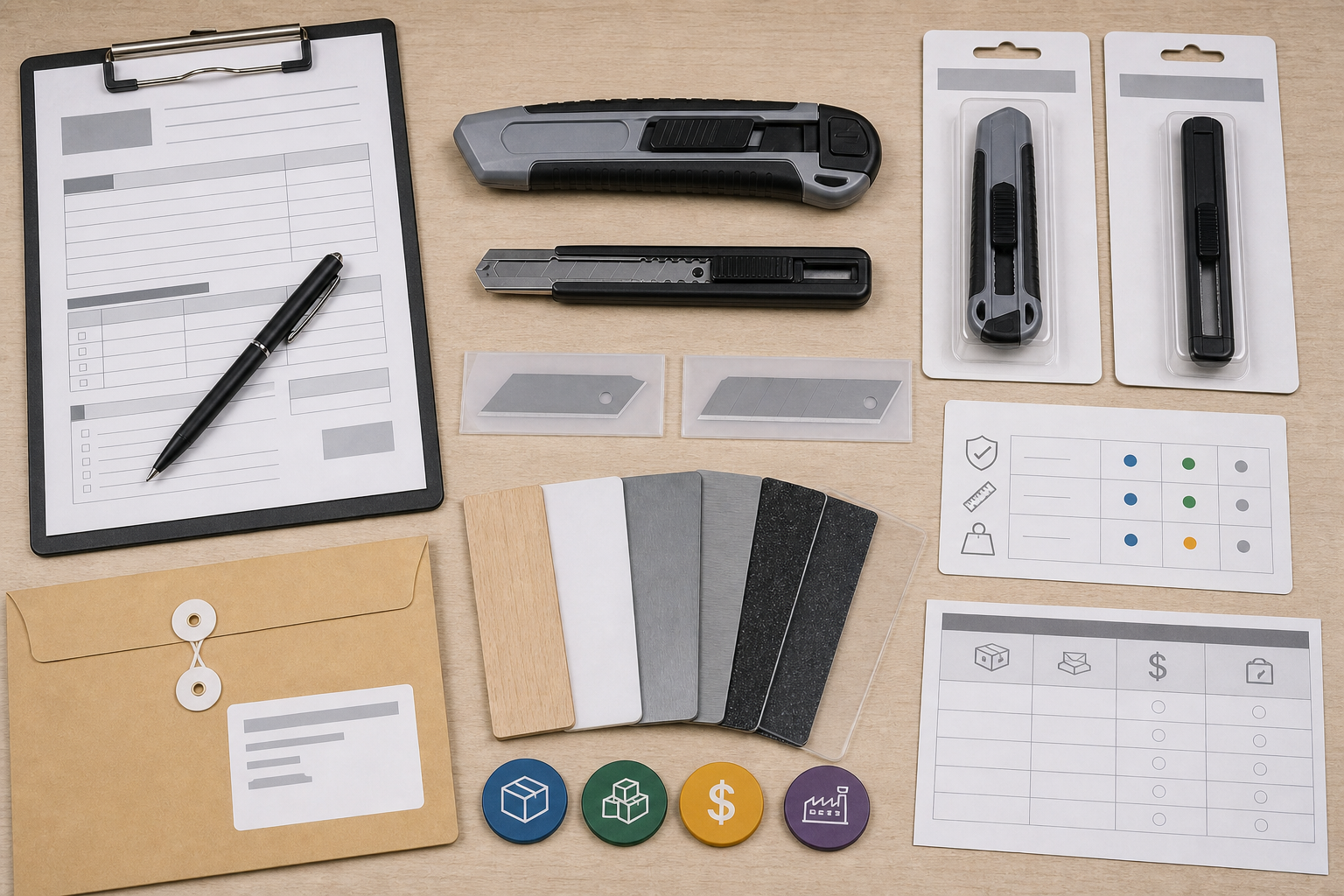
An OEM RFQ should include target use, cutter type, blade format, handle material, mechanism, blade exposure, replacement blade plan, logo, packaging, quantity, target price, inspection standard, and market requirements.
I Make the RFQ Specific Enough to Quote Fairly
When buyers ask Vast State for utility knives or box cutters, I want the RFQ to describe both the product and the business goal. The buyer should say whether the product is for warehouse use, retail DIY, hardware distribution, private label, promotional kits, or industrial supply. Then the buyer should define blade type, body material, grip style, mechanism, color, logo, packaging, spare blades, and quantity. If there is a reference sample, the buyer should also explain what they like and what they want to change.
The RFQ should include quality checks too. For example, the buyer may request slider cycle testing, blade retention testing, spare blade storage checks, drop checks, packaging inspection, and carton drop resistance. If the product is sold in a regulated retail channel, the buyer should list labeling and document needs. A clear RFQ helps both sides. The supplier can quote with fewer assumptions. The buyer can compare offers more fairly. The final product also has a better chance of matching the real market.
| RFQ field | What to include | Why it helps |
|---|---|---|
| Product direction | Utility knife, box cutter, safety cutter, cutter set | Prevents wrong structure |
| Blade system | Format, exposure, replacement blade, spare storage | Controls function and refills |
| Mechanism | Manual, self-retracting, guarded, locking slider | Aligns safety and use case |
| Quality and packaging | Tests, label, retail pack, carton, documents | Supports repeatable delivery |
Turn your idea into a quote-ready knife project.
Share your drawing, sample photo, target quantity, market, and packaging needs. Vast State will review manufacturability and prepare OEM/ODM options.
Conclusion
I choose between utility knives and box cutters by matching the tool structure, blade, handle, safety mechanism, packaging, and RFQ to the real use case.
Source Notes
- The OSHA Hand and Power Tools booklet supports the need to use the right tool, maintain tools, inspect for damage, train users, and use proper PPE.
- The NIOSH hand tool guide supports ergonomic tool selection based on task, user, force, repetition, and body position.
- The OSHA ergonomics guidance for hands and wrists supports handle sizing, reduced finger force, padded handles, and reduced pressure points.
- The CPSC small parts guidance supports the warning that small detachable parts and child-positioned products require careful review.
- The Trade.gov HS code guide supports the need to classify goods and use HS codes in import, export, and shipping documentation.
- The ISO 9001 supply chain guide supports clear buyer specifications and verification of supplied products against requirements.