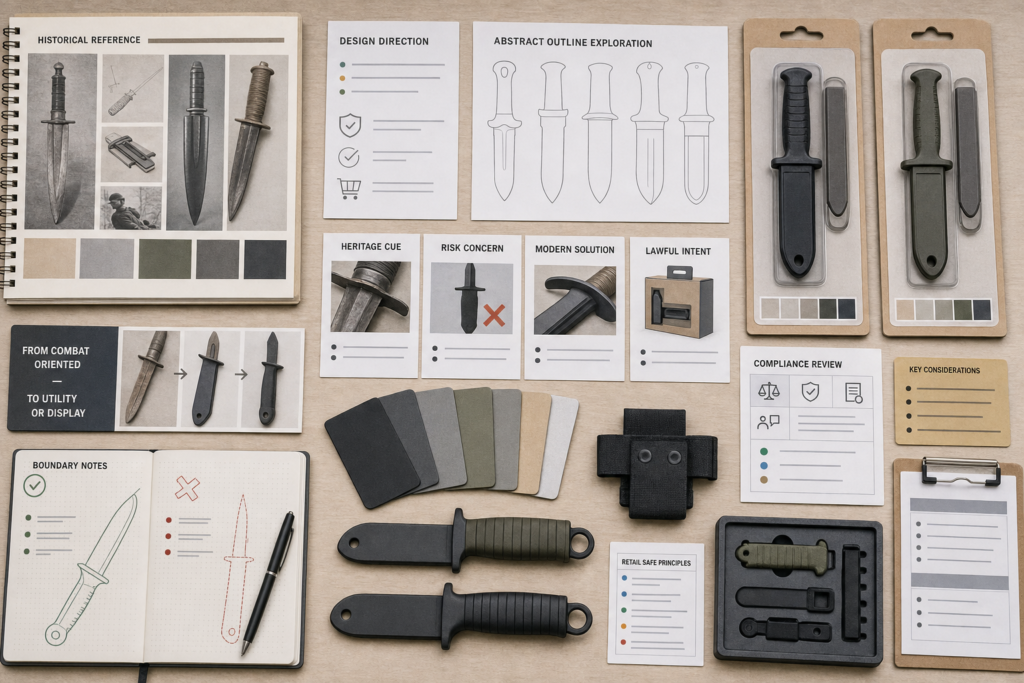
Historical knife styles can attract attention, but careless copying creates legal, branding, and market risks. A controlled design process keeps the project practical.
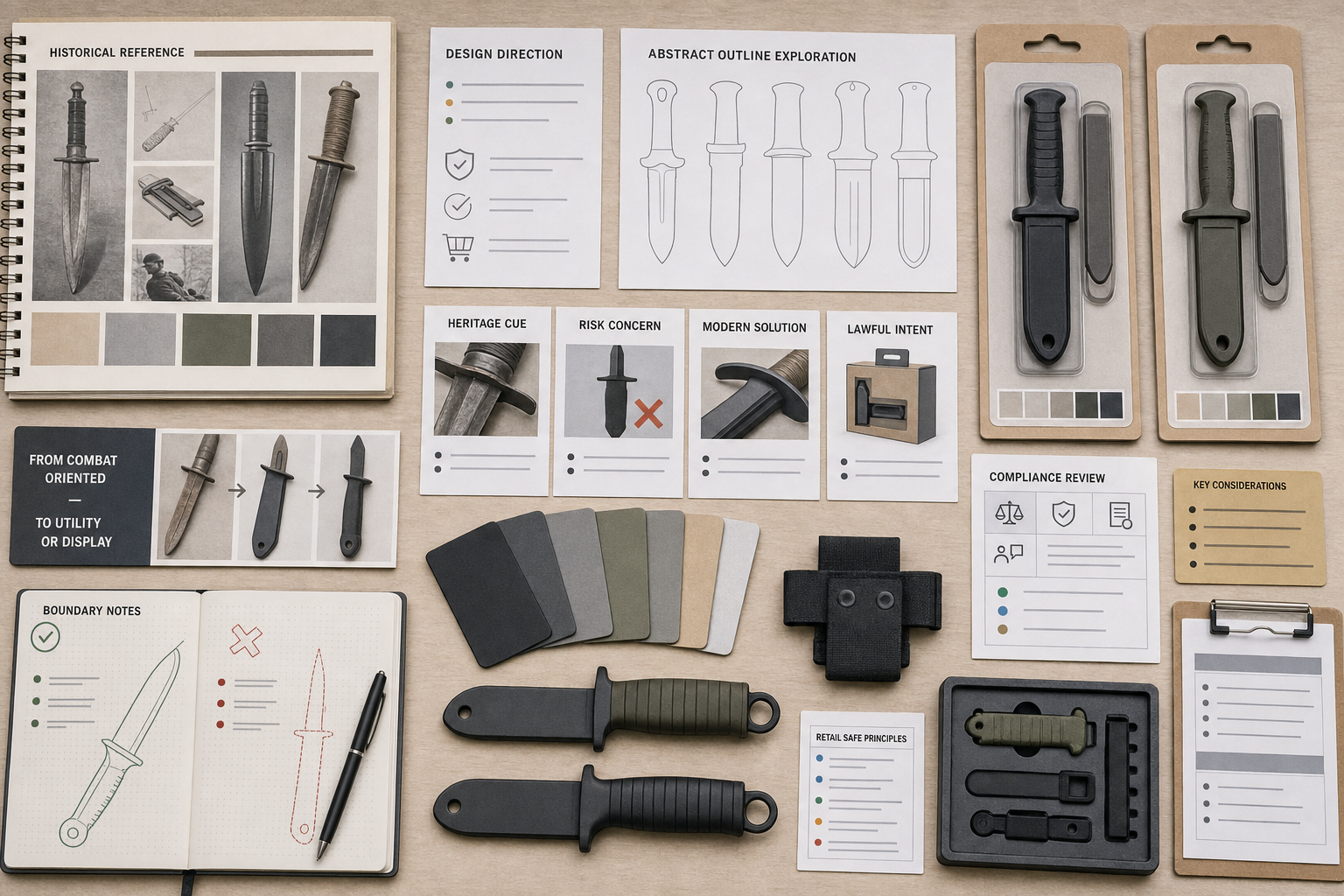
B2B buyers should treat trench-knife-inspired designs as historical references, not direct product instructions. Modern OEM projects should focus on lawful utility, safe packaging, clear market positioning, manufacturable structure, quality control, and local compliance review.
Quick buyer brief:
- Answer: Use trench-knife history as design context, then redesign for modern utility, outdoor, collection, or display-oriented markets.
- Buyer context: This helps knife brands, outdoor brands, importers, wholesalers, distributors, and private label buyers.
- Key checks: Confirm design boundaries, restricted features, target market, blade function, handle structure, sheath or packaging, labeling, HS code, legal review, and QC plan.
Have a knife or multi-tool project in mind?
Send your sketch, CAD file, sample photo, or product idea. Vast State can review manufacturability, suggest materials, estimate MOQ, and prepare a quote for your OEM/ODM project.
When a buyer asks about a trench-knife-inspired product, I slow the project down in a good way. The original style belongs to a difficult historical context. It also includes features that may be unsuitable for modern retail, import, or outdoor use. My job is not to copy the past blindly. My job is to help the buyer translate a visual idea into a practical, lawful, and manufacturable product that fits the buyer's real market.
What Can Modern Buyers Learn From Trench-Knife History?
History can inspire design, but it can also mislead sourcing teams. A famous shape is not automatically a good modern product.
Modern buyers can learn that trench-knife designs came from specific wartime conditions, not normal outdoor or retail needs. The useful lesson is to separate historical reference from modern function, compliance, and brand positioning.
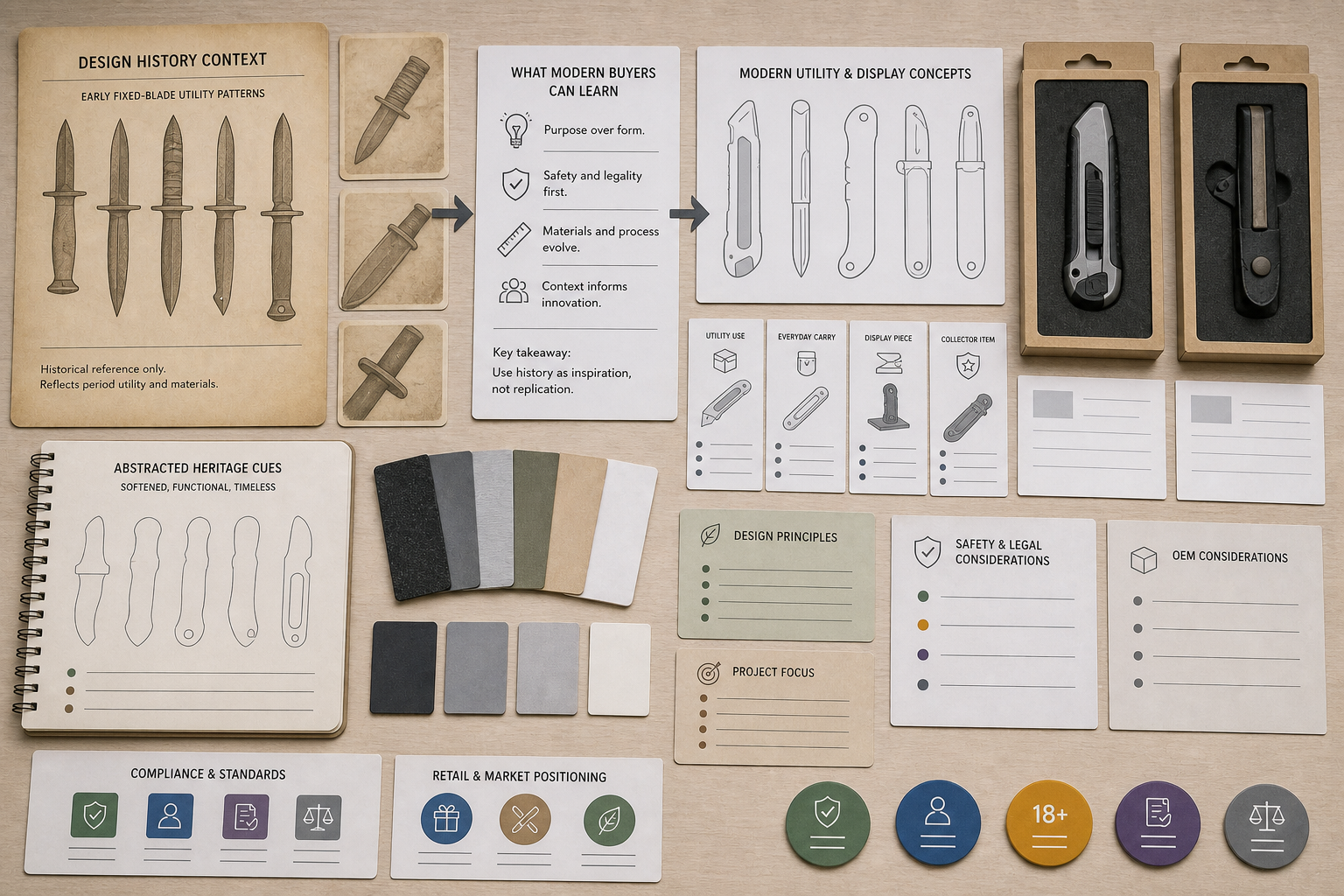
I Use History as Context, Not as a Blueprint
The National WWI Museum explains that trench systems became a defining part of World War I after early movement stopped and armies dug defensive lines on the Western Front. That setting shaped many specialized objects. The Imperial War Museums collection includes a US Model 1917 trench knife with scabbard and identifies it as a First World War item. The National Army Museum also records a 1916 trench knife connected to the Royal Welsh Fusiliers. These sources show that the term has a real historical base.
But a historical base does not mean a modern buyer should copy the original structure. Many original details were created for a very different purpose and a very different legal environment. Modern B2B buyers need to ask a different question: what part of the history is suitable for a lawful product today? The answer may be visual mood, finish, handle texture, collection packaging, or educational storytelling. It should not be a direct copy of high-risk historical features. This is the line I keep clear in OEM work.
| Historical lesson | Modern sourcing meaning | Practical buyer action |
|---|---|---|
| Specific era | The form came from a narrow historical context | Avoid treating it as a normal outdoor pattern |
| Distinct silhouette | Visual identity can be adapted | Redesign for modern use and law |
| Museum records | Historical references need accuracy | Use credible sources in brand copy |
| Different purpose | Original use is not modern retail use | Define a safe modern product goal |
OEM/ODM RFQ Checklist
Prepare these details to help Vast State review your project and provide a more accurate quotation.
| RFQ Field | What to Prepare |
|---|---|
| Project type | OEM from drawing / ODM private label / wholesale catalog |
| Product category | Folding knife / fixed blade / multi-tool / outdoor tool |
| Design status | Idea / sketch / 2D drawing / 3D CAD / physical sample |
| Target price | Ex-factory target price or retail price range |
| MOQ expectation | 500 / 1,000 / 3,000 / 5,000+ pcs |
| Logo method | Laser engraving / etching / printing / molded logo |
| Packaging | Standard packaging / custom retail box / Amazon-ready |
| Market | USA / EU / Japan / Korea / Middle East / other |
| Compliance needs | Buyer-specified testing / documentation / labeling |
| Timeline | Sample deadline / mass production deadline |
Why Should Historical Inspiration Be Handled Carefully?
A dramatic historical style can look marketable at first. It can also create retail, import, platform, and brand problems.
Historical inspiration should be handled carefully because some original features may conflict with modern laws, marketplace rules, buyer policies, or brand positioning. Buyers should redesign risky elements and confirm compliance before sampling.
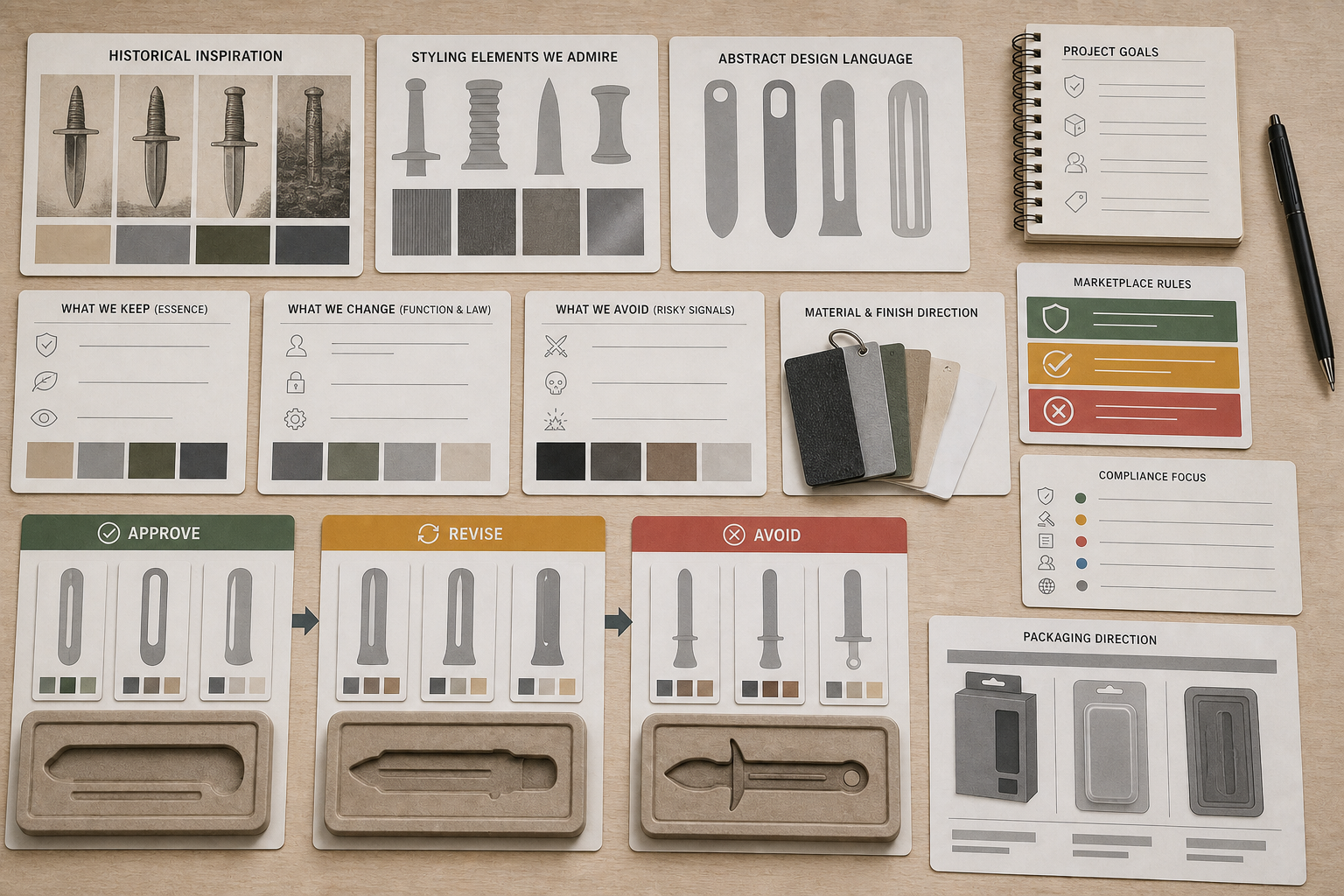
I Remove Features That Create Unnecessary Risk
I tell buyers that a history-inspired product should not depend on the most aggressive parts of the old form. Some historical guards, spike-like profiles, or hand-protection shapes can create trouble in import review, retail approval, online marketplace policy, or local consumer rules. I do not give legal advice, but I do ask buyers to confirm laws and platform rules in their target market before any sample moves forward.
The safer path is to translate the idea. A buyer can use a darker finish, a simple heritage handle texture, a display-style sheath, a collector-style box, or a historically informed name that is careful and factual. The product can become an outdoor utility fixed blade, a display-oriented collectible, or a brand story piece, depending on the market. This method protects the buyer from building a product that looks interesting but cannot be sold through the planned channel. It also helps Vast State keep the project practical, repeatable, and easier to inspect.
| Risk area | What can go wrong | Safer design response |
|---|---|---|
| Legal review | Restricted feature may block sales | Confirm rules before prototype |
| Platform policy | Product listing may be rejected | Use careful product positioning |
| Brand image | Style may feel too harsh for the audience | Shift toward heritage and utility |
| Production | Complex shapes raise cost and defects | Simplify structure and QC points |
Which Historical Elements Can Be Adapted Into Modern Utility Products?
Copying the whole form is rarely smart. The better route is to borrow design language and rebuild the function.
Buyers can adapt neutral historical elements such as finish mood, handle texture, compact fixed blade proportions, sheath style, packaging story, and collector presentation while avoiding restricted or high-risk structural features.
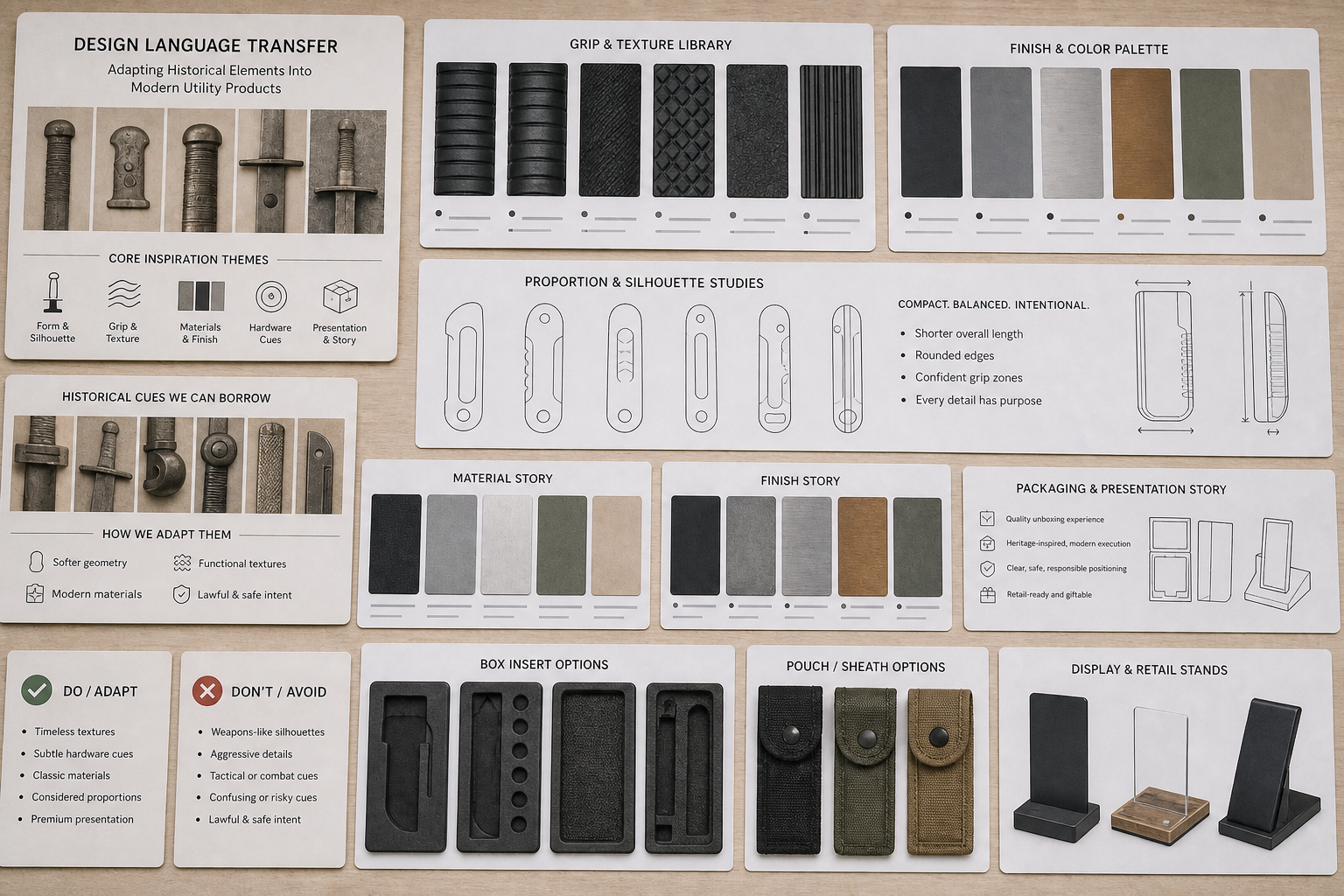
I Translate Mood Into Manufacturing Choices
When I adapt a historical idea, I start with mood, not direct structure. The buyer may like the compact fixed blade shape, the rugged material feeling, the dark finish, or the old-tool appearance. These can become modern design cues. For example, a buyer can choose a simple full-tang fixed blade with a practical drop point or spear-style outline adapted for utility use. The handle can use micarta, G10, wood, or textured polymer. The sheath can use Kydex-style material, nylon, leather, or a retail-safe presentation box depending on the buyer's channel.
I also think about how the product will be described. A modern product should not invite unsafe expectations. It can be positioned as a heritage-inspired outdoor tool, a collection-oriented design, or a display-oriented private label project. This gives the buyer a story without creating unnecessary risk. The key is that every design cue must be connected to a modern purpose: grip, durability, packaging value, brand identity, or collection appeal. If the cue adds only risk, I remove it.
| Adaptable element | Modern version | Buyer benefit |
|---|---|---|
| Aged visual mood | Stonewash, bead blast, dark coating | Heritage feeling without direct copy |
| Compact form | Practical fixed blade or utility tool | Easier outdoor positioning |
| Handle texture | G10, micarta, wood, polymer | Better grip and brand color |
| Presentation | Collector box or display packaging | Supports storytelling |
How Should Buyers Define the Target Market Before Design Starts?
One historical concept can become several different products. If the market is unclear, the design will drift.
Buyers should define whether the project is for outdoor utility, collector display, heritage retail, promotional branding, or limited-edition private label before selecting blade shape, handle material, packaging, and wording.
I Let the Sales Channel Control the Design Direction
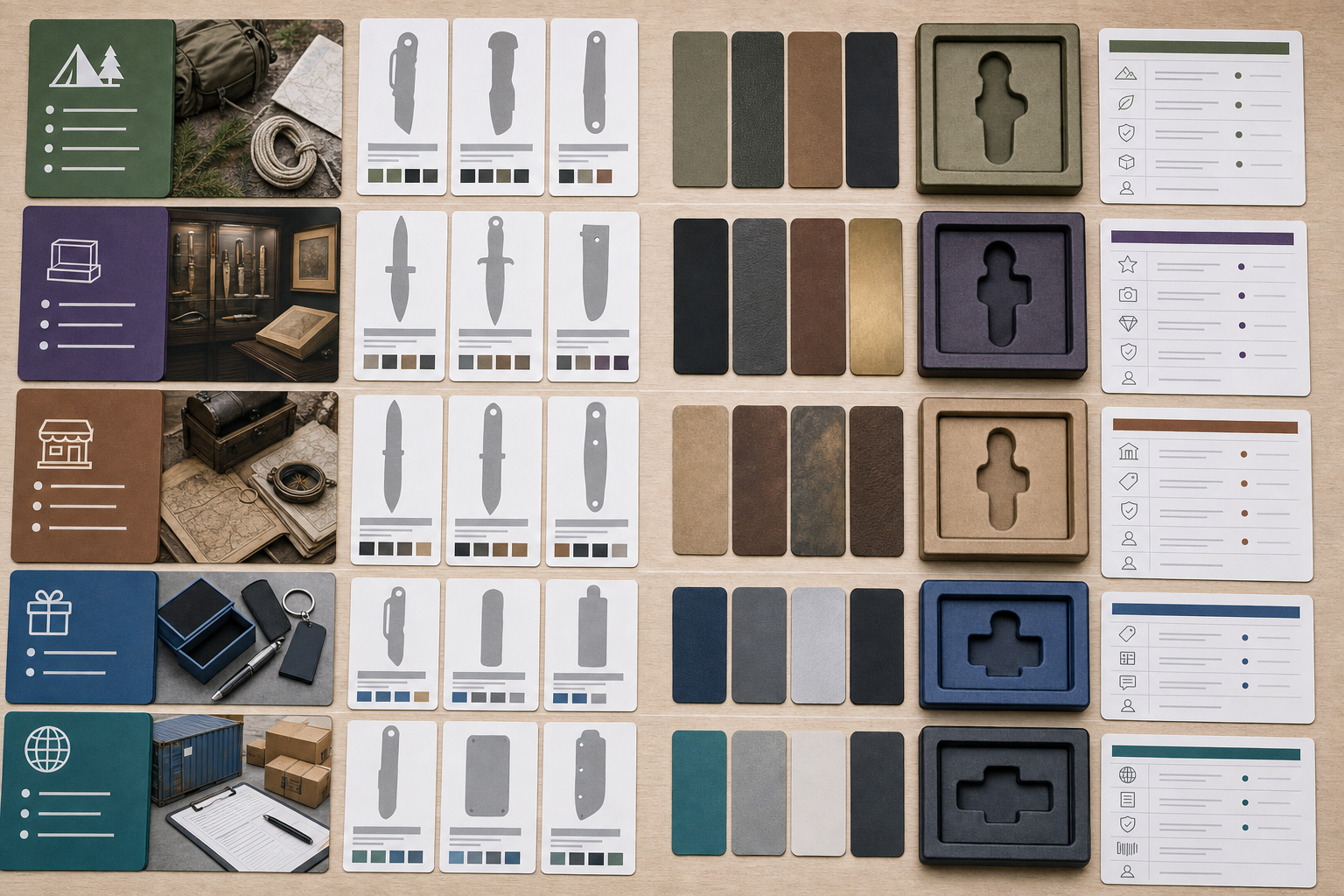
A heritage-inspired knife for an outdoor brand should not be designed the same way as a display item for a collector channel. Outdoor buyers usually care about grip, corrosion resistance, sheath function, edge geometry, and practical packaging. Collector buyers may care more about finish, story card, serial-style marking, display box, and limited-edition color. Retail buyers need shelf-safe packaging, clear labeling, and a product that fits store policies. Importers need document clarity and predictable classification review.
I ask buyers to define the sales channel before choosing materials. This includes target country, customer age positioning, retail policy, online marketplace policy, expected price range, and whether the product is meant for use, display, or collection. The same visual idea can be made safer and more useful when the market is clear. If the buyer cannot explain the channel, I usually suggest a softer design direction and a more neutral product name. This gives the project room to pass review and reach more buyers.
| Target market | Product direction | What to avoid |
|---|---|---|
| Outdoor utility | Practical blade, usable sheath, durable handle | Overly historical risk features |
| Collector display | Story card, finish detail, display box | Unsupported historical claims |
| Retail channel | Clear packaging and warning language | Aggressive wording |
| Importer program | Document-ready specification | Vague description |
What Materials and Structures Make Sense for Modern Projects?
Historical appearance should not control material choice. Modern buyers still need cost, lead time, consistency, and quality.
Modern projects should choose blade steel, handle material, finish, fasteners, sheath, and packaging based on target price, corrosion needs, edge performance, user comfort, manufacturing stability, and inspection requirements.
I Build the Product Around Repeatable Manufacturing
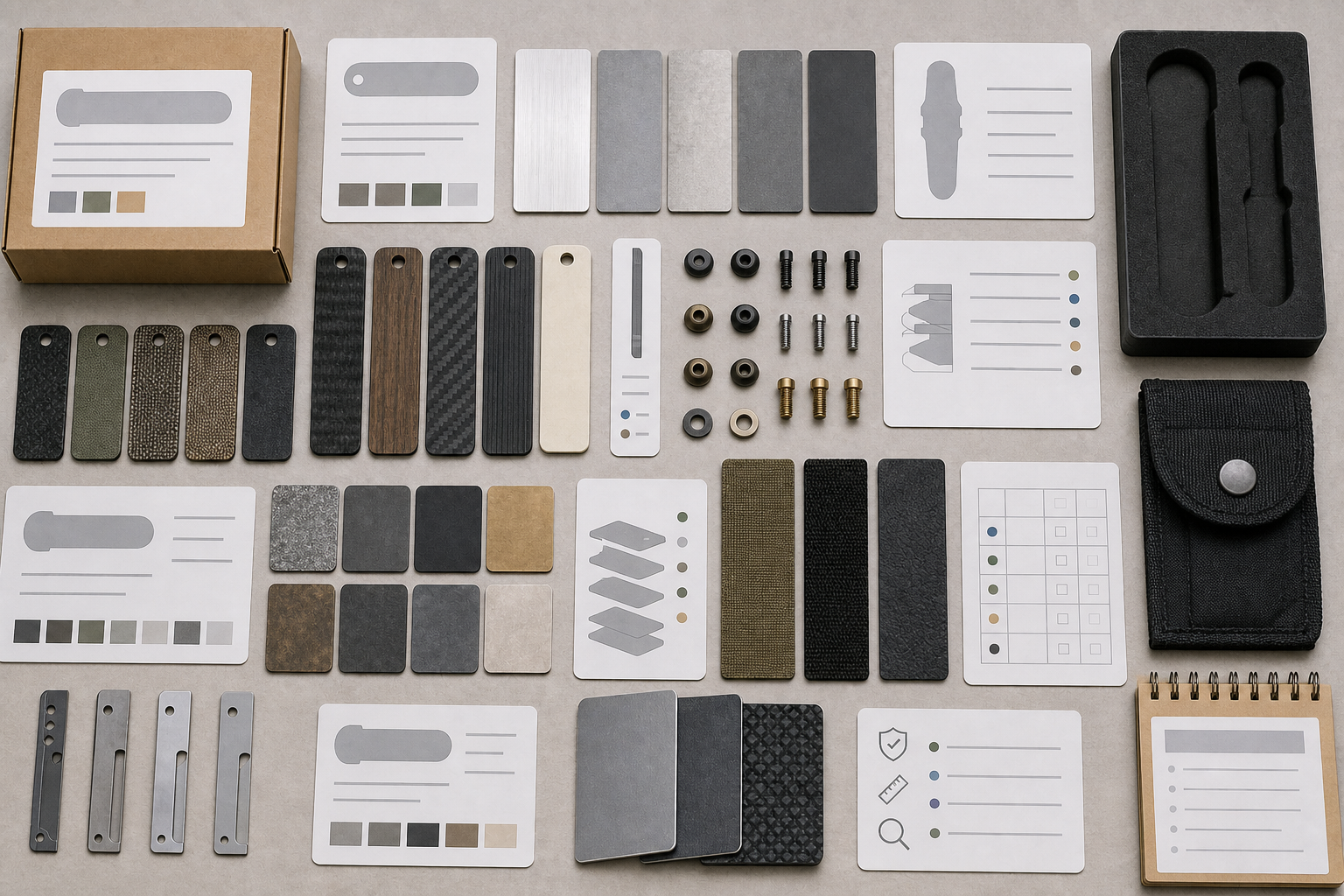
The material plan should match the product level. For a value project, stainless steel and polymer or basic G10 may make more sense. For a higher-positioned project, the buyer may consider D2, 14C28N, 10Cr15CoMoV, micarta, G10, wood, or more refined finishes. The right choice depends on the target buyer, price, expected use, and order quantity. I do not choose steel because it sounds dramatic. I choose it because the heat treatment, grinding, finishing, and cost fit the product.
Structure also matters. A full-tang fixed blade can be practical, but thickness and handle scale fit must be controlled. A guard or extended handle feature may create extra review risk, so I prefer simple and functional shapes. Fasteners should be stable. The sheath should hold the tool securely and protect the edge during shipping. Packaging should prevent movement and keep the product presentable. If the buyer wants a historical finish, I check whether the finish can repeat across a batch. A sample that looks good once is not enough.
| Component | Practical choice | Manufacturing focus |
|---|---|---|
| Blade steel | Stainless or tool steel based on price and use | Heat treatment and grinding |
| Handle | G10, micarta, wood, polymer, metal | Fit, texture, and color stability |
| Finish | Stonewash, satin, coating, bead blast | Batch consistency |
| Sheath or box | Kydex-style, nylon, leather, display box | Retention and shipping safety |
What Compliance, Labeling, and Documentation Checks Are Needed?
Knife laws and import rules vary. A design that works in one market may create problems in another.
Buyers should check local knife laws, restricted features, age positioning, product description, country of origin, HS code, packaging warnings, retail policy, and import documents before approving a trench-knife-inspired OEM sample.
I Put Compliance Before Sample Approval
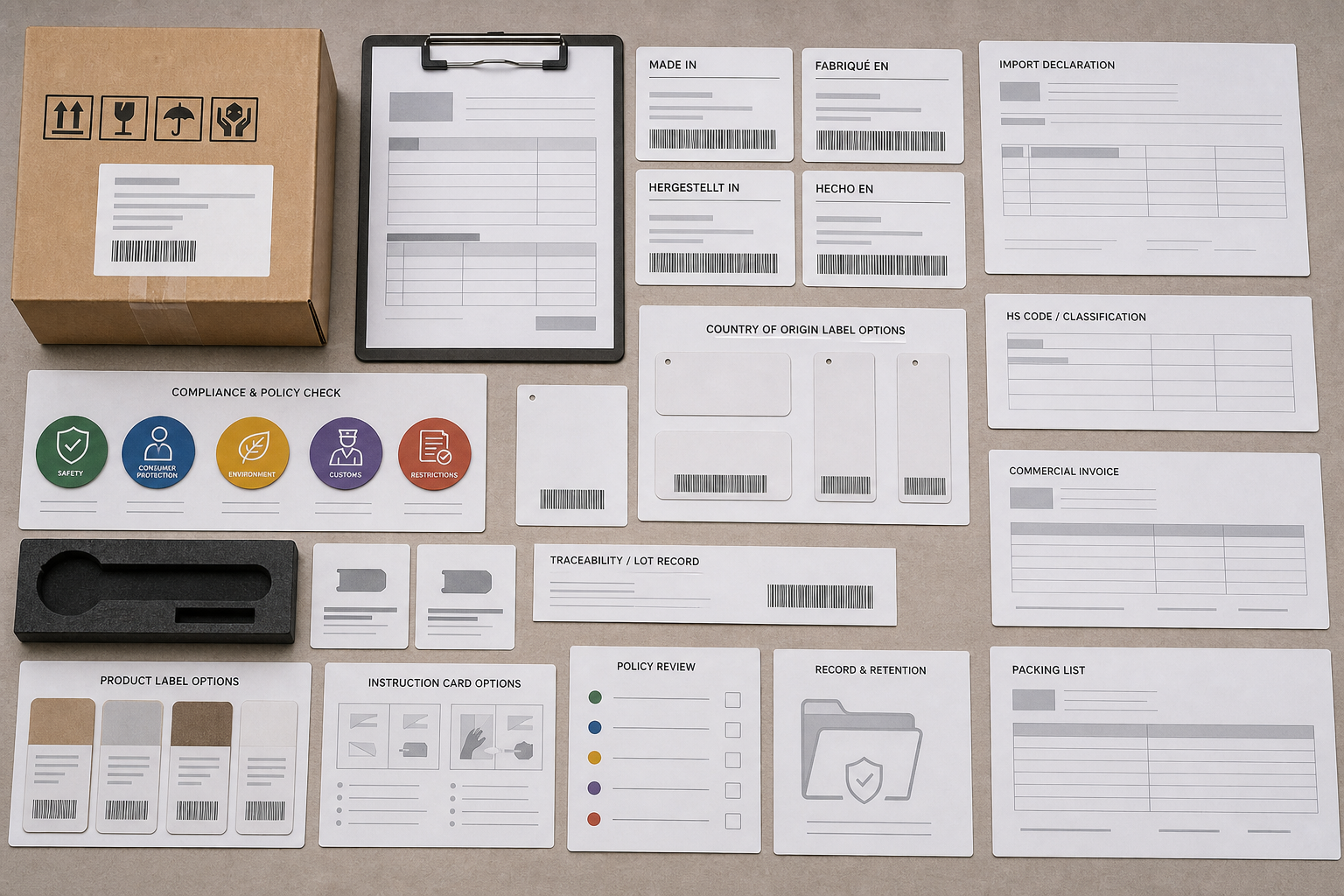
I do not treat compliance as a final shipping task. For this product type, compliance should be discussed before the design is fixed. The buyer should review local knife laws and retailer policies in the target market. The buyer should also check whether any historical feature creates extra restrictions. This is not legal advice. It is a practical sourcing step. A design that cannot be imported or sold through the planned channel is not a successful design.
Documentation also matters. Trade.gov explains that HS codes are used through the import and export process for classification, duties, documents, statistics, and compliance. The buyer should confirm classification with a customs broker or local adviser. Product description should be accurate and neutral. Packaging may need origin marking, warning language, barcode space, and local-language instructions. If the product is sold as a display item, the packaging and listing should make that clear. If it is sold as an outdoor tool, the design and copy should support that purpose.
| Check area | What to confirm | Responsible party |
|---|---|---|
| Local law | Restricted features and retail rules | Buyer and legal adviser |
| Product description | Accurate function and material | Buyer and supplier |
| HS code | Classification and documents | Broker or customs adviser |
| Packaging | Warning, origin, barcode, instructions | Buyer, supplier, importer |
How Should Buyers Set Quality Control for a History-Inspired Knife?
A historical look can hide modern quality problems. Buyers still need clear inspection standards and repeatable production.
Buyers should define approved sample standards, blade dimensions, edge geometry, heat treatment target, handle fit, finish consistency, sheath retention, packaging protection, defect categories, and final inspection method.
I Make the Approved Sample the Production Standard
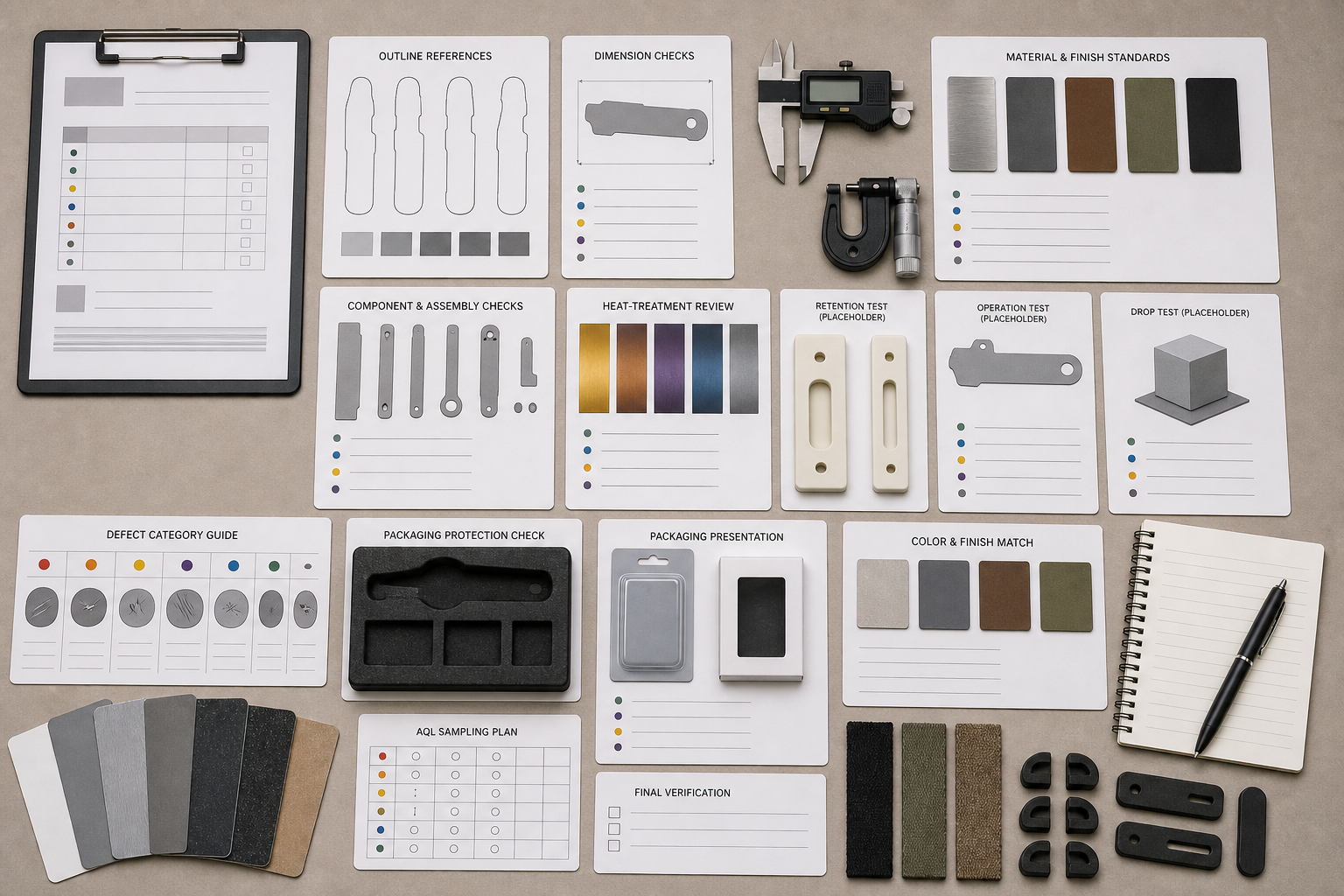
Quality control begins with a clear approved sample. The buyer should approve blade size, thickness, grind, handle material, handle finish, fasteners, sheath fit, surface finish, logo, packaging, and any story card or insert. If the buyer wants an aged look, the approved sample should define how much variation is acceptable. A stonewashed finish, for example, can vary if the process is not controlled. A wood handle can vary by grain. A coating can show edge wear if the preparation is weak.
ISO's supply chain guide explains that buyers should define their own product needs and verify supplied products against requirements. I apply that directly. The inspection plan should define major and minor defects. Major defects may include loose handle scales, poor sheath retention, wrong steel, wrong thickness, sharp unfinished handle edges, packaging damage, or incorrect labeling. Minor defects may include small finish variation within the approved range. The more historical the look, the more important it is to define what is intentional and what is a defect.
| QC item | What to inspect | Why it matters |
|---|---|---|
| Blade | Size, thickness, grind, hardness target | Supports function and consistency |
| Handle | Fit, edge comfort, fasteners, color | Protects user feel |
| Finish | Approved appearance range | Prevents batch drift |
| Packaging | Sheath, box, insert, label, carton | Protects product and brand |
What Should Buyers Include in the RFQ?
A vague heritage request creates risky assumptions. The supplier may not know the market, legal limits, or acceptable design boundaries.
The RFQ should include target market, design reference, restricted-feature limits, blade function, materials, finish, handle design, sheath or packaging, quantity, target price, labeling, compliance needs, and inspection standards.
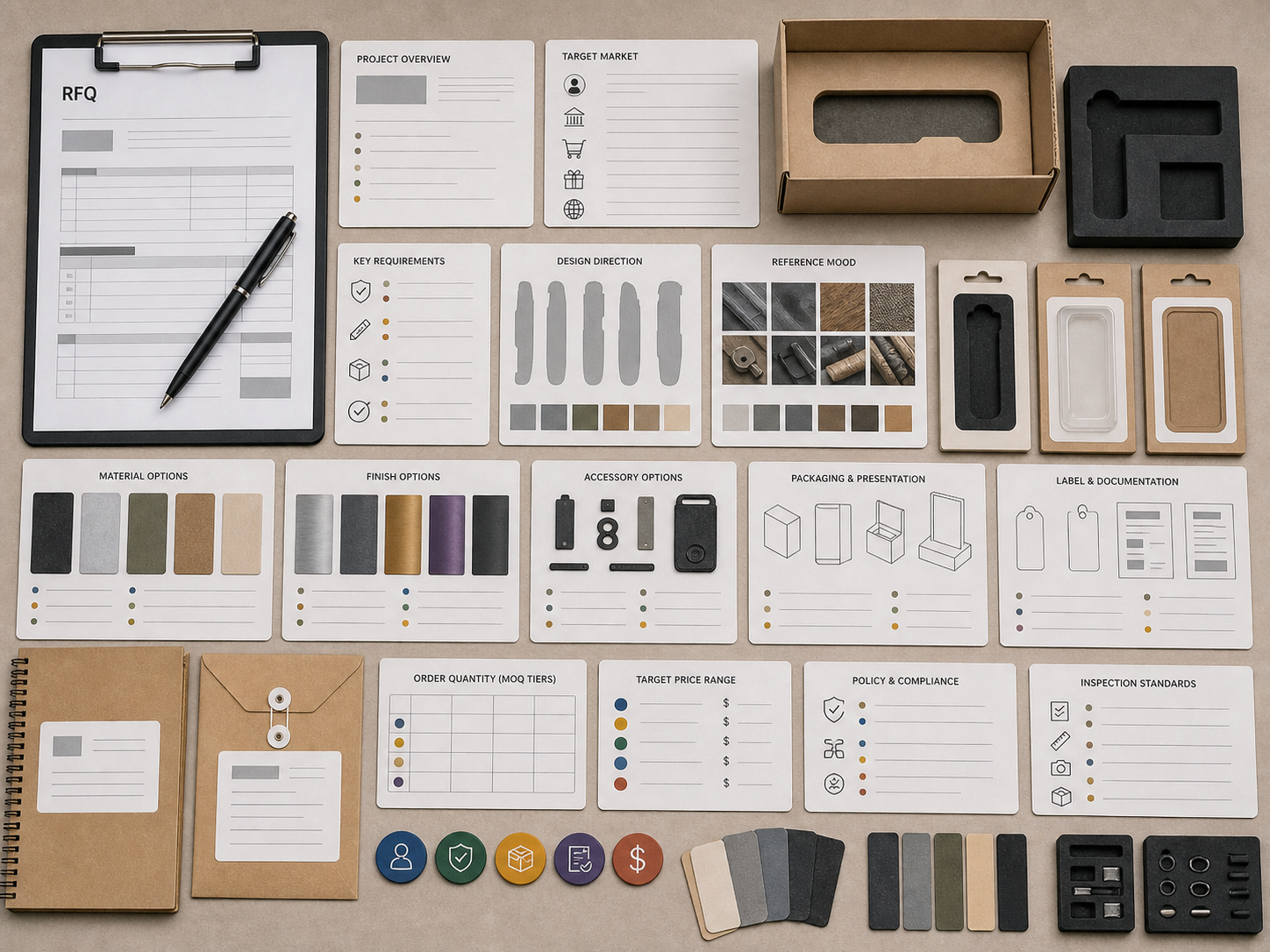
I Ask Buyers to Define the Red Lines
For this category, the RFQ should do more than request a quote. It should define what the product must not become. The buyer should state the target market and intended product positioning. The buyer should also state any restricted features that should be avoided. If the product is for outdoor use, the RFQ should describe practical cutting tasks, sheath needs, corrosion resistance, handle comfort, and packaging. If the product is for collection or display, the RFQ should define presentation, surface finish, story card, and non-use positioning.
I also ask for target price, MOQ, sample needs, packaging artwork, logo file, inspection requirements, destination market, and document needs. If the buyer has a reference image, I ask which parts are only mood reference and which parts must be redesigned. This avoids accidental copying and keeps the product commercially safer. A strong RFQ helps Vast State suggest a practical structure, materials, finish, and production path while keeping the project inside the buyer's market limits.
| RFQ field | What to include | Why it helps |
|---|---|---|
| Market position | Outdoor, collector, display, retail, private label | Guides design boundaries |
| Design limits | Features to avoid or simplify | Reduces legal and listing risk |
| Product specs | Steel, handle, finish, sheath, packaging | Enables accurate quotation |
| QC and documents | Inspection, labeling, HS review, origin mark | Supports shipment and repeat orders |
Turn your idea into a quote-ready knife project.
Share your drawing, sample photo, target quantity, market, and packaging needs. Vast State will review manufacturability and prepare OEM/ODM options.
Conclusion
I handle trench-knife-inspired projects by respecting history, redesigning for modern markets, and controlling compliance, manufacturability, packaging, and quality.
Source Notes
- The Imperial War Museums Model 1917 object record supports the historical existence and specialized nature of trench-knife designs.
- The National WWI Museum trench warfare overview supports the broader historical setting that shaped these objects.
- The National Army Museum object record supports the existence of varied World War I trench-knife patterns and the importance of careful historical attribution.
- The Trade.gov HS code guide supports the need to classify goods and prepare import or export documentation.
- The ISO 9001 supply chain guide supports clear buyer specifications and verification of supplied products against requirements.