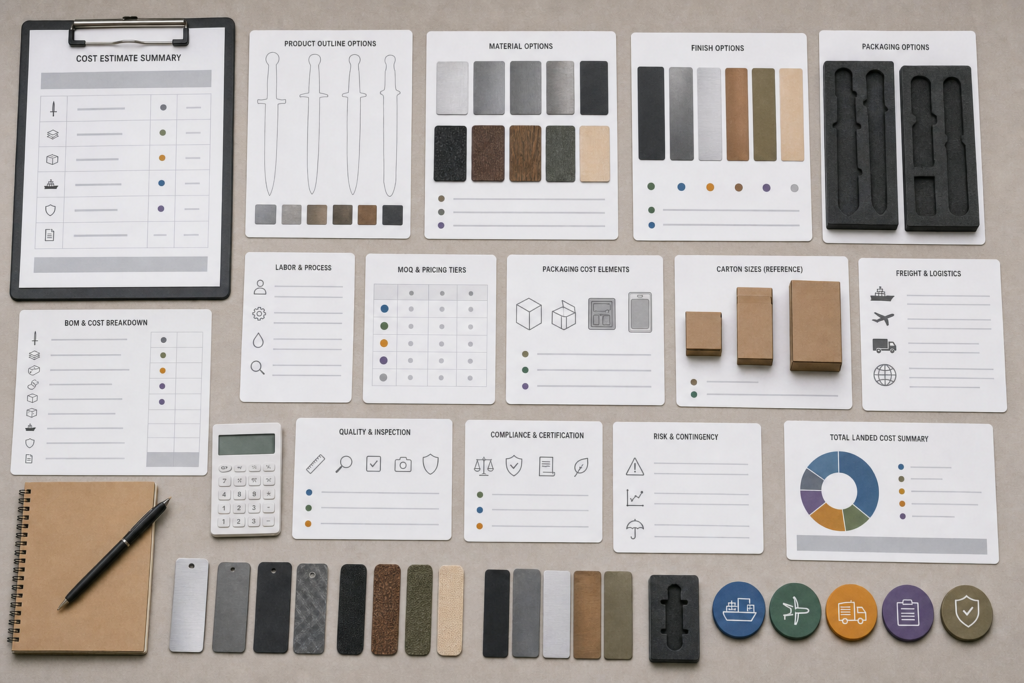
Long-blade projects can look simple in photos. But material, length, fittings, packaging, and compliance can move the real cost quickly.
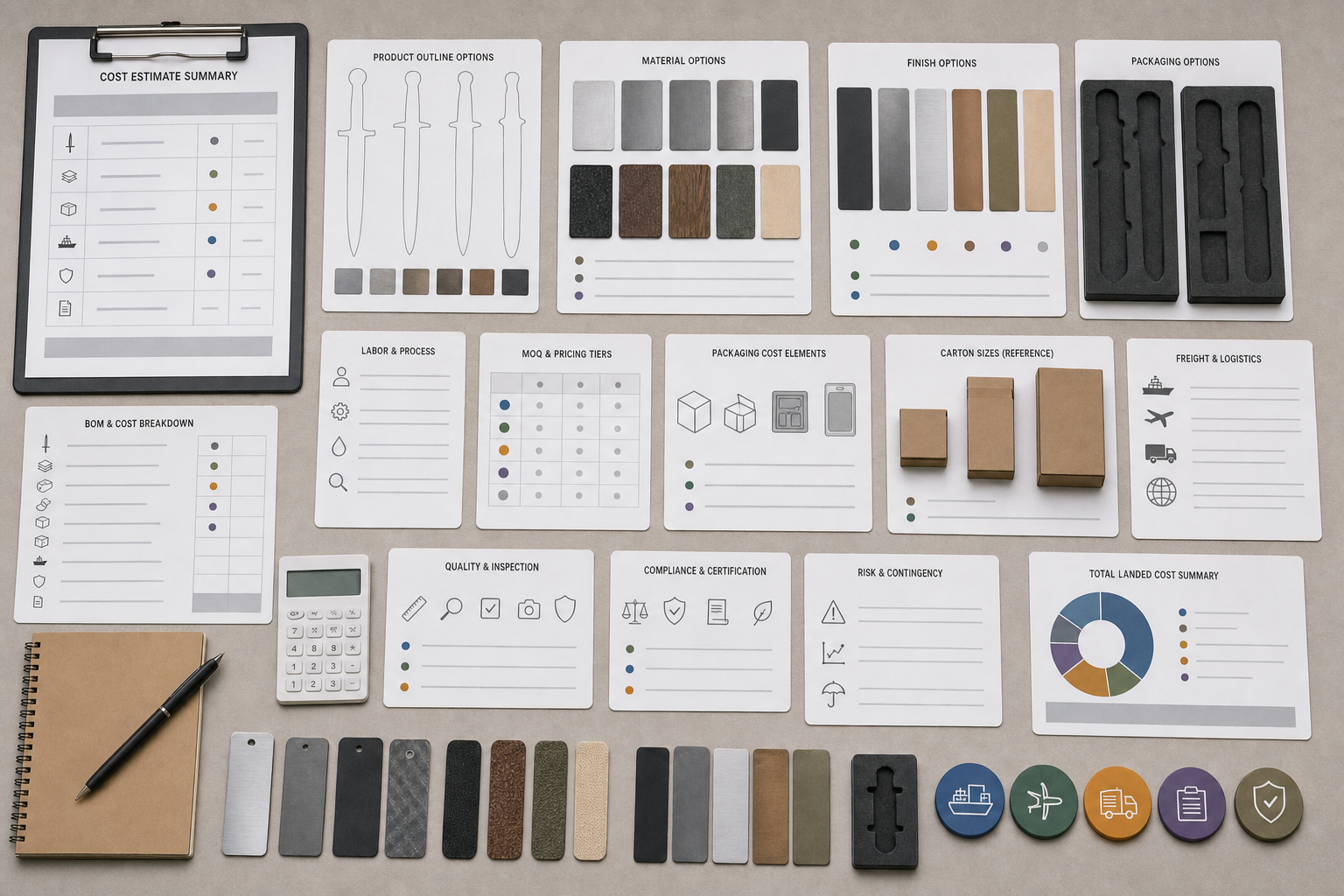
B2B buyers should estimate sword-style OEM product cost by separating blade material, length, heat treatment, grinding, handle parts, scabbard or sheath, finish, branding, packaging, inspection, trade terms, freight, and compliance review. A useful quote shows assumptions, not only a unit price.
Quick buyer brief:
- Answer: Break the price into blade, fittings, finish, packaging, QC, logistics, and compliance assumptions.
- Buyer context: This helps brands, importers, wholesalers, distributors, and sourcing managers evaluating sword-style, decorative, training, or long-blade products.
- Key checks: Confirm product positioning, blade steel, heat treatment target, finish, handle and fittings, sheath or scabbard, packaging, MOQ, inspection, Incoterms, HS code, and import documents.
Have a knife or multi-tool project in mind?
Send your sketch, CAD file, sample photo, or product idea. Vast State can review manufacturability, suggest materials, estimate MOQ, and prepare a quote for your OEM/ODM project.
When a buyer asks for a sword-style product price, I do not answer with one number first. I ask what the product is meant to be: decorative, collector-oriented, training blunt, outdoor long-blade tool, or private label retail item. Each path has a different cost structure. A simple wall-display product and a functional long-blade tool should not be quoted the same way. A good price guide helps the buyer understand where money goes and which decisions really change the final cost.
What Creates the Base Cost of a Sword-Style OEM Product?
A low quote can hide missing parts. If the buyer does not define the product type, suppliers may price different things.
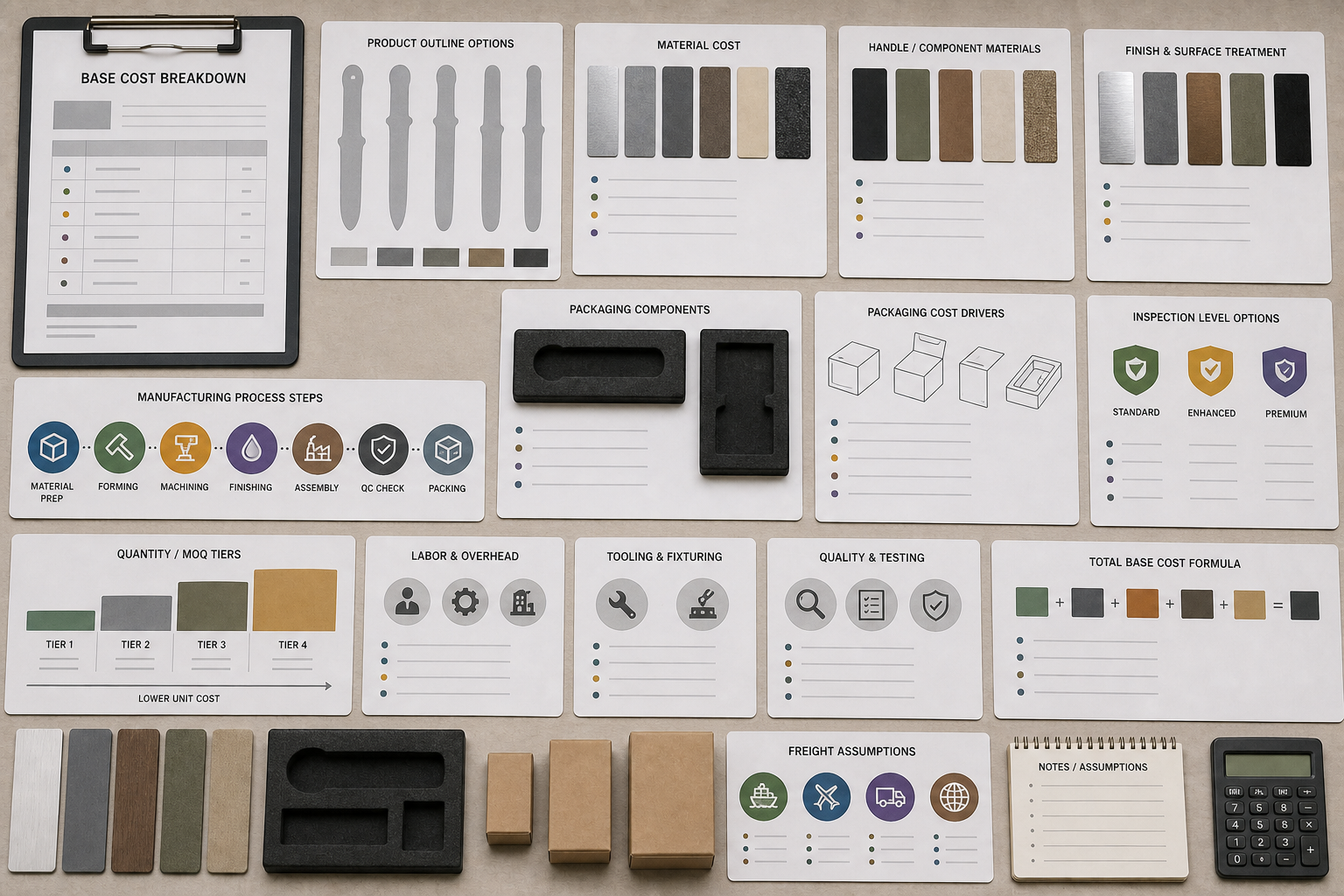
The base cost comes from product positioning, blade size, steel, heat treatment, grinding, handle construction, fittings, sheath or scabbard, finish, packaging, order quantity, inspection level, and shipment assumptions.
I Start With Product Positioning
The first cost driver is not steel. It is the buyer's intended product position. A decorative wall-display item, a collector-style product, a blunt training product, and a practical long-blade outdoor tool all need different specifications. A decorative product may focus on appearance, scabbard detail, and packaging. A training product may focus on blunt edge geometry, balance, and safe presentation. A practical long-blade tool may require stronger material control, heat treatment, edge geometry, and sheath retention.
After positioning, I review size and structure. Longer blades use more material and need more careful straightness control. Larger packaging increases carton size and freight cost. More fittings add labor and inspection points. A detailed scabbard or display box can cost more than buyers expect. This is why I prefer a quote that lists assumptions. The buyer should know whether the price includes packaging, logo, sample fee, tooling, inspection, spare parts, and export documents. A cheap number without assumptions is not useful for serious sourcing.
| Cost area | What it includes | Why it affects price |
|---|---|---|
| Product position | Decorative, collector, training, outdoor tool | Defines material and QC level |
| Blade structure | Length, thickness, profile, straightness | Drives steel and processing time |
| Accessories | Guard, handle, fittings, scabbard, display stand | Adds parts and assembly labor |
| Commercial terms | MOQ, packaging, inspection, freight term | Changes total landed cost |
OEM/ODM RFQ Checklist
Prepare these details to help Vast State review your project and provide a more accurate quotation.
| RFQ Field | What to Prepare |
|---|---|
| Project type | OEM from drawing / ODM private label / wholesale catalog |
| Product category | Folding knife / fixed blade / multi-tool / outdoor tool |
| Design status | Idea / sketch / 2D drawing / 3D CAD / physical sample |
| Target price | Ex-factory target price or retail price range |
| MOQ expectation | 500 / 1,000 / 3,000 / 5,000+ pcs |
| Logo method | Laser engraving / etching / printing / molded logo |
| Packaging | Standard packaging / custom retail box / Amazon-ready |
| Market | USA / EU / Japan / Korea / Middle East / other |
| Compliance needs | Buyer-specified testing / documentation / labeling |
| Timeline | Sample deadline / mass production deadline |
How Do Blade Length, Steel, and Heat Treatment Affect Price?
Blade material is only part of the story. Long parts need more control, more process time, and more inspection.
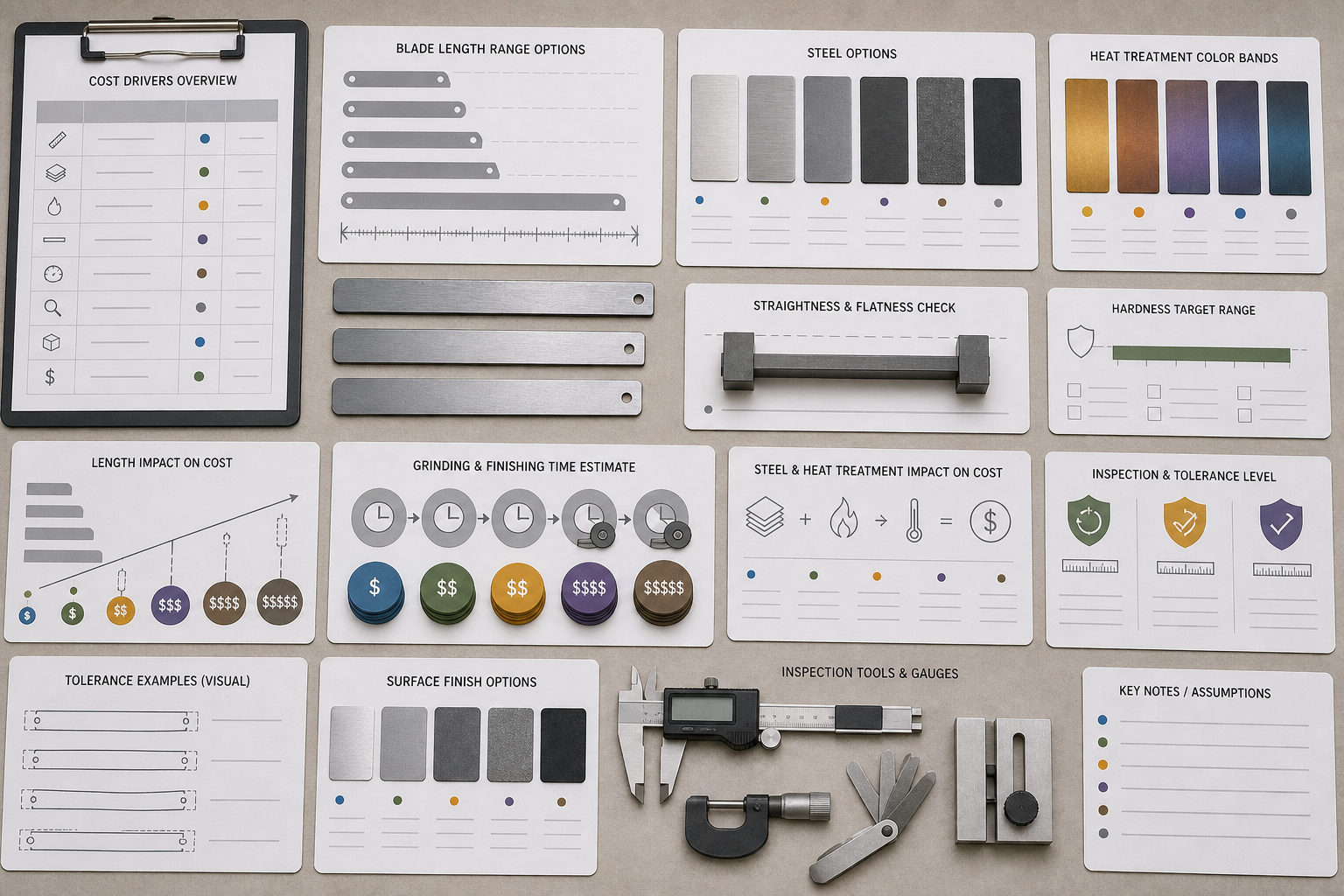
Blade cost changes with steel grade, blade length, thickness, cutting method, straightening, grinding, heat treatment, hardness target, and surface preparation. Longer blades usually need tighter process control.
I Price Steel Together With Process Risk
Buyers often ask whether one steel is cheaper than another. That question matters, but it is not enough. A longer blade can warp more easily during heat treatment. It can require more straightening, more grinding time, and more careful final inspection. A hard blade may hold an edge better, but if the hardness target is not realistic for the design, the project may create defects or rework. A decorative product may not need the same steel or hardness target as a practical tool.
Hardness testing should also be defined. The NIST guide to Rockwell hardness measurement supports the importance of correct measurement practice for metallic materials. For sourcing, this means the buyer should not only ask for "good hardness." The buyer should define target range, test location, sample quantity, and what happens if results are outside range. Clear hardness expectations protect both buyer and supplier.
| Blade factor | Cost impact | Buyer decision |
|---|---|---|
| Steel grade | Material price and processing behavior | Match steel to product position |
| Blade length | More material and straightness control | Define length and tolerance clearly |
| Heat treatment | Hardness, toughness, distortion risk | Set realistic target range |
| Grinding | Labor time and surface consistency | Approve geometry and finish sample |
Why Do Handle, Fittings, and Scabbard Details Change the Cost?
Buyers may focus on the blade and miss the rest. Fittings and scabbards can quietly become major cost items.
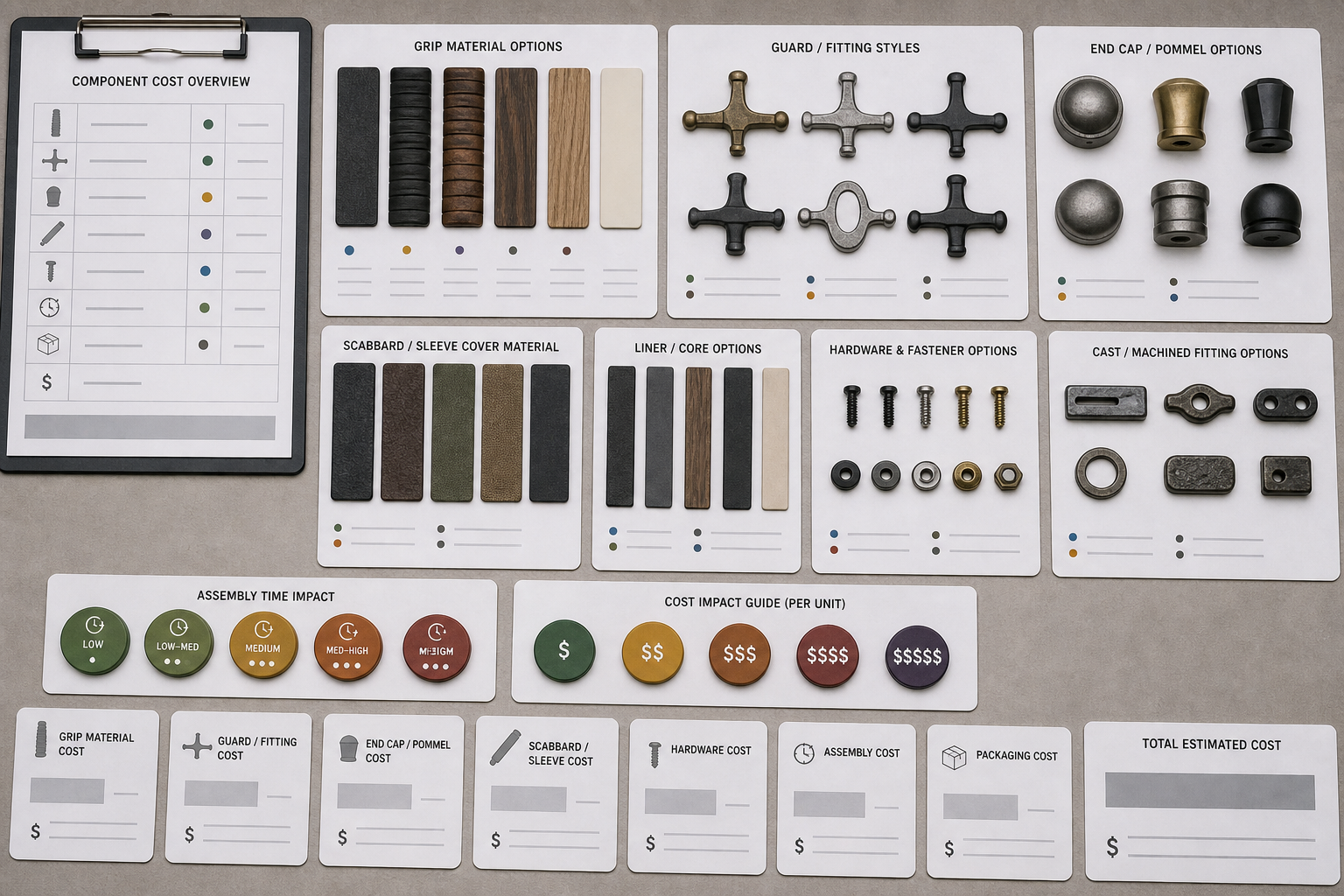
Handle material, guard style, pommel, fasteners, wrapping, casting, machining, scabbard structure, liner, metal fittings, and assembly method all affect sword-style product cost and production stability.
I Treat Accessories as Real Engineering Items
In long-blade projects, the handle and scabbard are not just decoration. They decide user feel, display value, shipping protection, and assembly labor. A simple polymer handle is easier to control than a multi-part handle with metal fittings, wraps, pins, and decorative parts. A cast guard or pommel may need tooling and surface finishing. A wood handle may need more color sorting and moisture control. A wrapped handle may need hand labor and consistency checks.
The scabbard or sheath also needs attention. A simple fabric sleeve, a Kydex-style sheath, a wooden scabbard, a leather-style cover, or a collector box all create different costs. Retention, scratch protection, fit, and carton packing must be tested. If the blade is long, the scabbard must stay straight enough and protect the product during shipping. A beautiful blade can become a complaint if the scabbard scratches it, moves in the box, or makes the carton too large for the buyer's freight plan.
| Component | Cost driver | Inspection point |
|---|---|---|
| Handle | Material, shape, texture, labor | Fit, comfort, color, fasteners |
| Guard and fittings | Casting, machining, polishing, coating | Alignment and surface quality |
| Scabbard or sheath | Material, retention, liner, finish | Fit, protection, straightness |
| Display package | Tray, box, insert, story card | Presentation and shipping safety |
How Do Finish, Decoration, and Branding Affect Unit Price?
Decorative work can look small but take time. Detailed finishes can increase labor, scrap risk, and inspection cost.
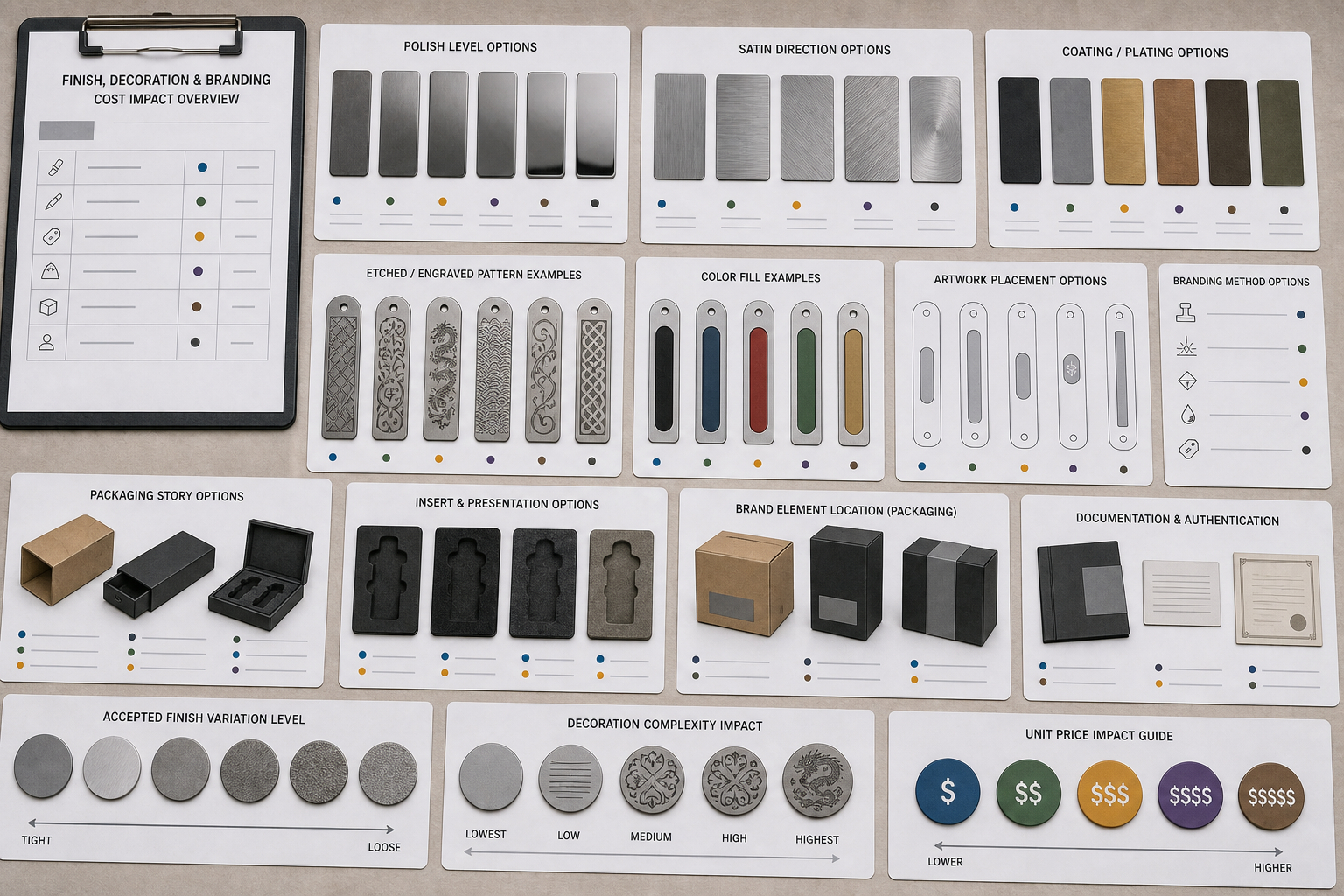
Finish and branding cost depends on polish level, satin direction, coating, etching, laser marking, engraving, color fill, aging effect, logo position, packaging artwork, and accepted variation range.
I Define the Finish Standard Before Sampling
Finish is one of the easiest places for buyers and suppliers to misunderstand each other. A buyer may say "antique finish," "mirror polish," or "dark coating," but those words are not precise enough for production. Mirror polish takes more labor and can show small defects. Dark coatings need surface preparation and adhesion control. An aged effect may vary by batch unless the approved range is defined. Laser marking can be simple, but deep engraving or color fill adds process time.
Branding also affects cost beyond the blade. A logo on the blade, handle, scabbard, retail box, carton, or instruction card all require artwork control and approval. If the product is collector-style, packaging may need a story card, display tray, sleeve, or certificate-style insert. I avoid unsupported historical claims in packaging copy. If a buyer wants historical language, I ask for source-supported wording. This protects the brand and keeps the project easier to approve.
| Finish item | Cost effect | Buyer should define |
|---|---|---|
| Blade finish | Labor, reject rate, visual consistency | Approved sample and variation range |
| Marking | Laser, etching, engraving, color fill | Position, depth, contrast, artwork |
| Handle decoration | Wrap, inlay, texture, color | Repeatability and hand labor |
| Packaging story | Insert, card, display tray | Factual wording and layout |
What Packaging, Freight, and Trade Terms Should Be Included?
A long product can be inexpensive at factory level but costly after packing. Freight and cartons can change the real landed cost.
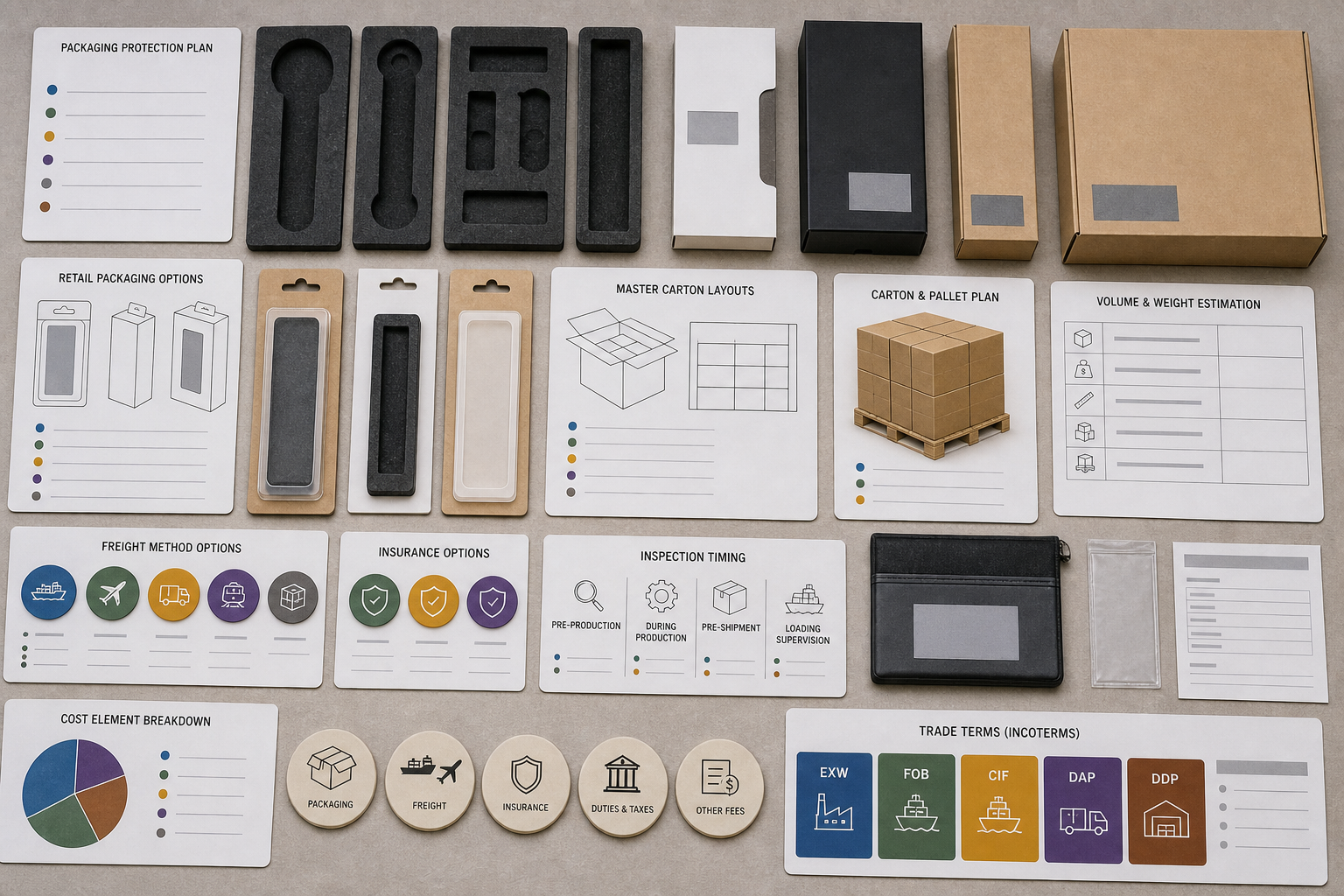
Buyers should include inner protection, scabbard or sheath, retail box, master carton size, carton strength, pallet plan, freight method, Incoterms, insurance, inspection timing, and destination requirements in the cost review.
I Check Total Landed Cost, Not Only Unit Price
Long-blade products create packaging challenges. The carton may be long, which affects shipping volume. The product may need extra protection to avoid scratches or bent packaging. A scabbard or sheath may protect the blade, but it also adds weight and space. A collector box may improve perceived value, but it may increase carton size. These details should be discussed before the buyer compares quotes.
Trade terms also matter. The International Chamber of Commerce explains that Incoterms 2020 helps importers and exporters understand responsibilities and avoid misunderstandings. A factory quote under EXW is not the same as FOB, CIF, or DAP. The buyer should know who pays for inland transport, export handling, ocean or air freight, insurance, import clearance, and final delivery. I prefer to show the trade term clearly in the quote so the buyer can compare real cost, not only factory price.
| Cost item | What to confirm | Why it matters |
|---|---|---|
| Inner packaging | Blade protection, scabbard protection, tray | Prevents scratches and movement |
| Carton plan | Size, weight, quantity per carton | Affects freight and storage |
| Trade term | EXW, FOB, CIF, DAP, or agreed term | Defines cost responsibility |
| Inspection timing | Before balance, before shipment, after packing | Reduces shipment disputes |
What Compliance and Import Details Affect Market Cost?
Compliance is not only a legal topic. It affects design, packaging, documents, labeling, and whether the buyer can sell through the planned channel.
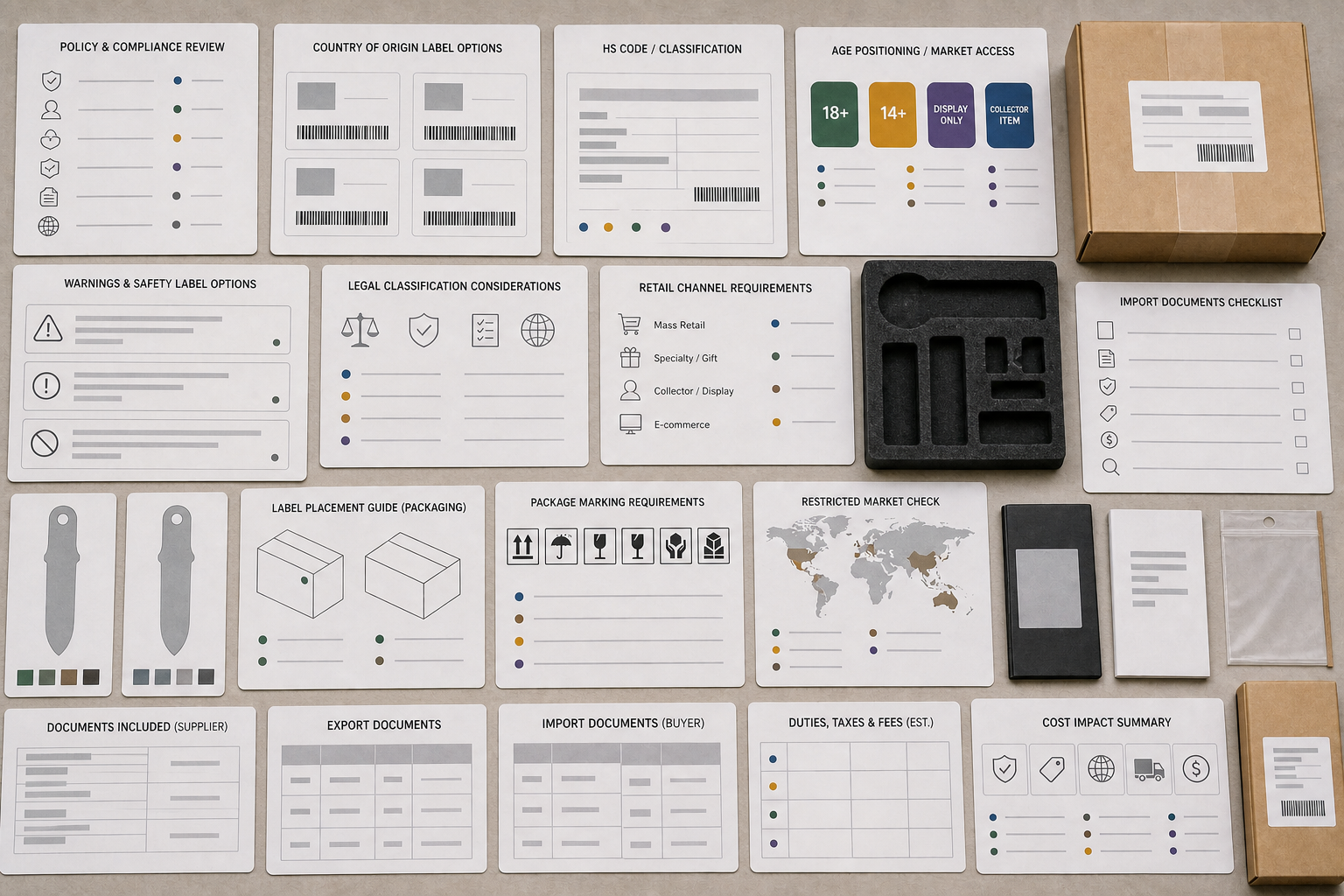
Buyers should review local laws, product positioning, restricted features, age positioning, product description, country of origin, HS code, retail policy, warning labels, and import document needs before confirming price.
I Put Market Review Before Final Quotation
I do not give legal advice, but I do ask buyers to review their target market before sampling. Sword-style products may be treated differently depending on design, length, edge, intended use, and local rules. A decorative item, training blunt, collector item, or outdoor long-blade tool may require different packaging and descriptions. Some retailers or online platforms may also have their own policies. These checks can affect the design and therefore the cost.
Trade.gov explains that HS codes are used through the import and export process to classify goods, assess duties, complete documentation, and support compliance. CBP's tips for new importers and exporters also remind importers to provide a full product description, country of origin, manufacturer, composition, intended use, and pricing or payment information. For buyers, this means the RFQ should prepare accurate product data early. A vague description can delay documents and create avoidable questions.
| Compliance item | What to check | Who should confirm |
|---|---|---|
| Product positioning | Decorative, training, collector, outdoor tool | Buyer and legal adviser |
| HS code | Classification and duty review | Broker or customs adviser |
| Origin and label | Country of origin, warning, barcode | Importer and supplier |
| Documents | Invoice, packing list, COO if needed | Buyer, supplier, forwarder |
How Should Buyers Compare Supplier Quotations Fairly?
Two quotes can look different because they include different assumptions. The lowest unit price may not be the lowest real cost.
Buyers should compare supplier quotations by checking material grade, blade dimensions, heat treatment target, finish level, fittings, scabbard, packaging, MOQ, sample terms, QC plan, trade term, and excluded costs.
I Normalize the Quote Before Judging the Price
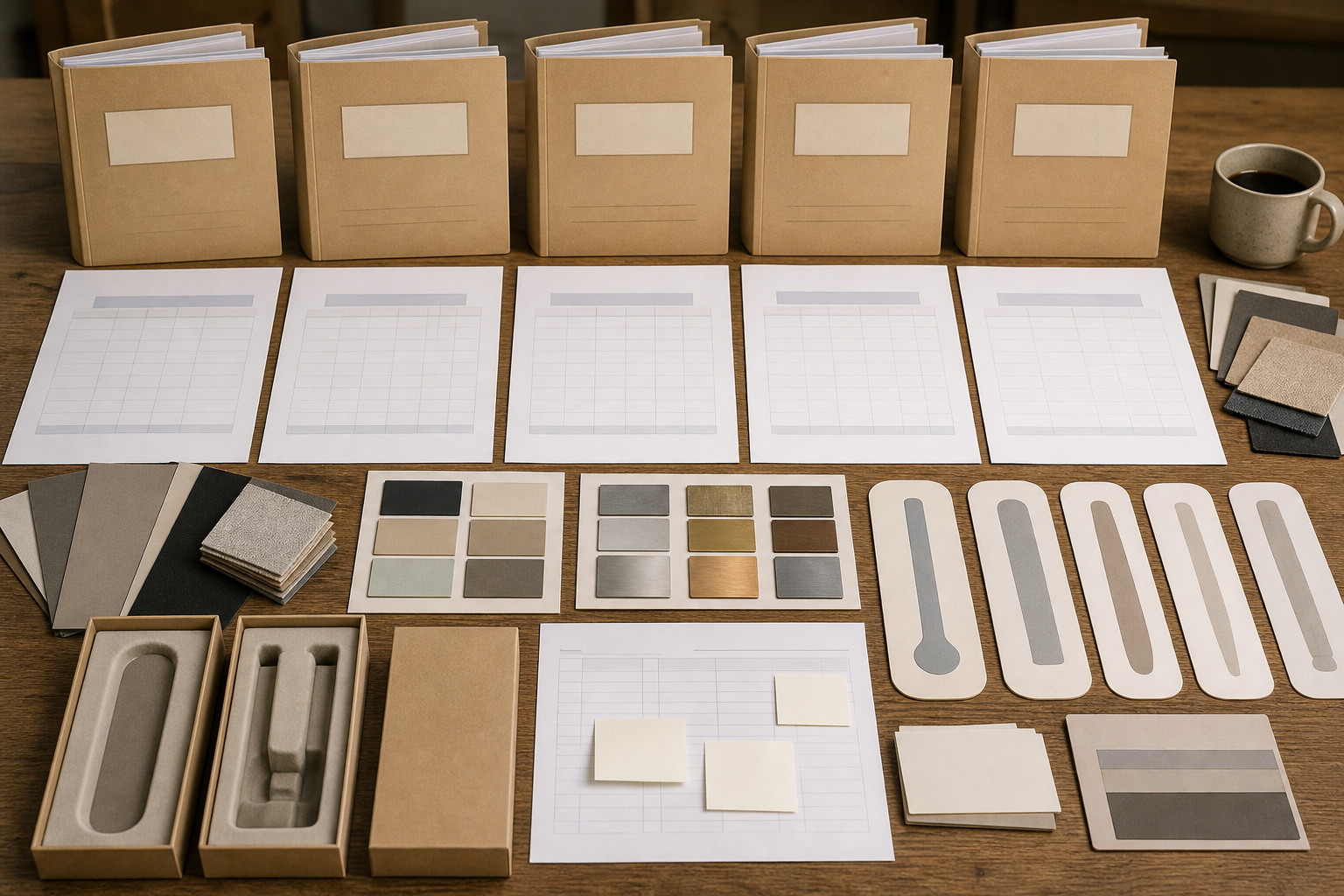
When buyers compare quotations, I ask them to make the quote items equal first. Supplier A may include retail box packaging while Supplier B quotes only bulk pack. Supplier A may include a scabbard, while Supplier B quotes without it. One supplier may quote FOB and another EXW. One supplier may include inspection photos, while another does not. These differences can make one quote look cheaper while the real landed cost is not cheaper.
I suggest making a comparison sheet. The sheet should list steel, blade length, thickness, finish, handle, fittings, scabbard, packaging, logo, sample fee, tooling, MOQ, lead time, QC items, trade term, and freight assumptions. The ISO 9001 supply chain guide explains that buyers should define their own needs through specifications, drawings, standards, or other documents and verify supplied products against requirements. That principle works well in quotation comparison. A good quote should be clear enough for the buyer to trace what is included.
| Quote item | Compare this | Risk if ignored |
|---|---|---|
| Product spec | Steel, size, finish, handle, scabbard | Different product levels |
| Packaging | Inner pack, retail box, carton | Hidden freight or damage risk |
| Quality plan | Hardness, finish, fit, packaging checks | Weak approval standard |
| Trade term | EXW, FOB, CIF, DAP | Misread landed cost |
What Should Buyers Include in a Sword-Style Product RFQ?
A short RFQ creates long discussions. Clear specifications help suppliers quote faster and reduce sample revisions.
The RFQ should include product positioning, blade dimensions, steel, hardness target, finish, handle material, fittings, scabbard or sheath, packaging, branding, target price, quantity, compliance needs, inspection plan, and trade term.
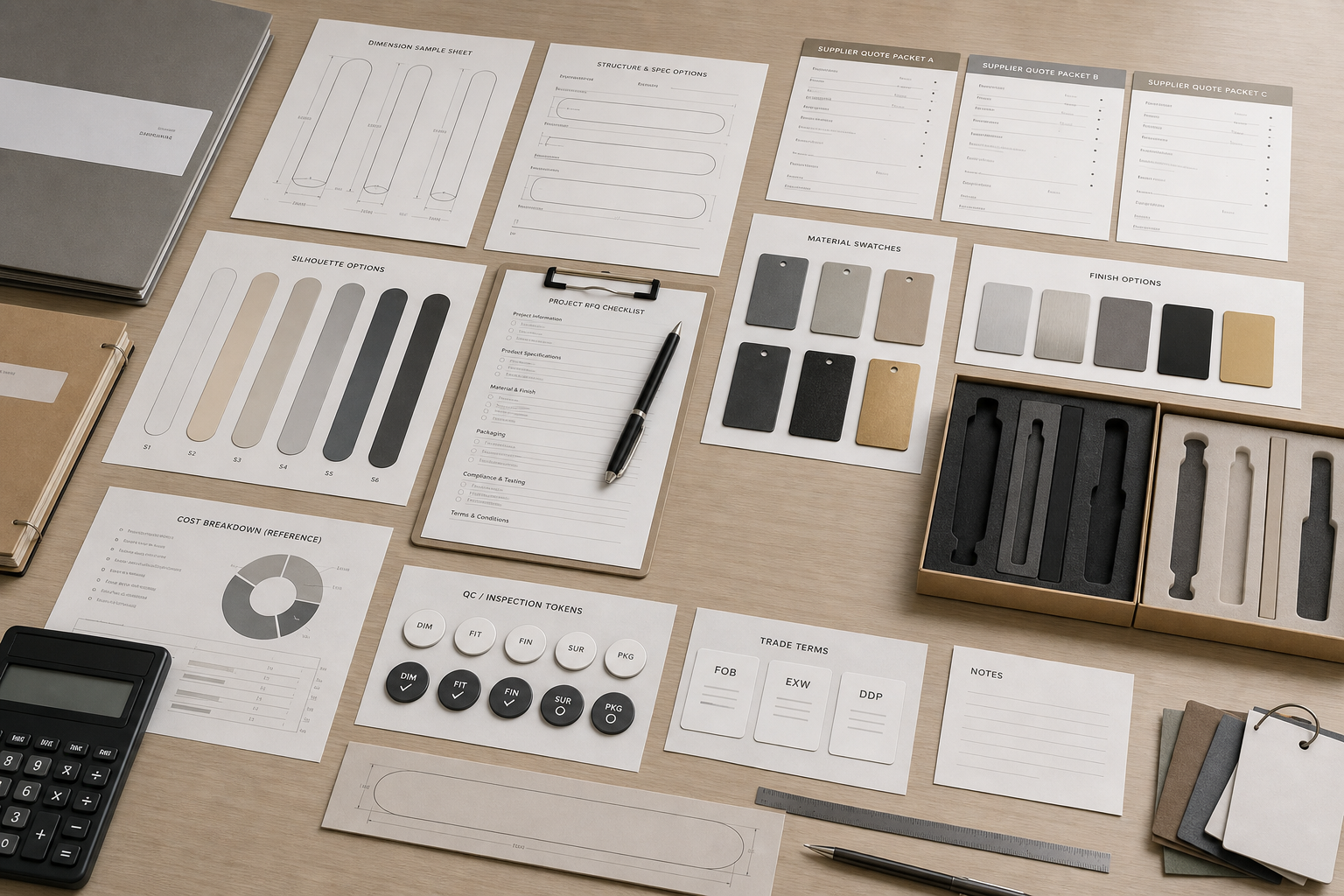
I Ask for Price Targets and Cost Priorities Together
For this category, I want the RFQ to show both the product vision and the cost target. The buyer should state whether the product is decorative, collector-oriented, training blunt, outdoor tool, or private label retail item. Then the buyer should define blade length, thickness, steel, heat treatment target, edge state, finish, handle, fittings, scabbard, packaging, logo, quantity, and target market. If the buyer already has a sample, drawing, or reference image, the RFQ should explain what must match and what can change.
I also ask for cost priorities. Some buyers want the best visual presentation within a fixed budget. Some need stronger packaging. Some care most about blade processing and QC. Some need a lower MOQ for market testing. These priorities help me suggest a practical structure instead of guessing. A strong RFQ makes the project easier to quote, easier to sample, and easier to repeat.
| RFQ field | What to include | Why it helps |
|---|---|---|
| Product goal | Decorative, collector, training, outdoor, retail | Sets design and compliance path |
| Blade details | Length, steel, thickness, hardness, finish | Controls core cost |
| Accessories | Handle, fittings, scabbard, display box | Prevents missing quote items |
| Commercial terms | Quantity, target price, trade term, documents | Clarifies total project cost |
Turn your idea into a quote-ready knife project.
Share your drawing, sample photo, target quantity, market, and packaging needs. Vast State will review manufacturability and prepare OEM/ODM options.
Conclusion
I estimate sword-style product cost by separating every cost driver, then matching design, packaging, QC, freight, and compliance to the buyer's market.
Source Notes
- The NIST Rockwell hardness guide supports the need to define hardness testing expectations for metallic blade products.
- The ICC Incoterms 2020 release supports the need to clarify trade responsibilities and avoid shipping-cost misunderstandings.
- The Trade.gov HS code guide supports the need to classify goods and prepare import or export documentation.
- The CBP importer tips support the need for full product description, origin, composition, intended use, and pricing information.
- The ISO 9001 supply chain guide supports clear buyer specifications and verification of supplied products against requirements.