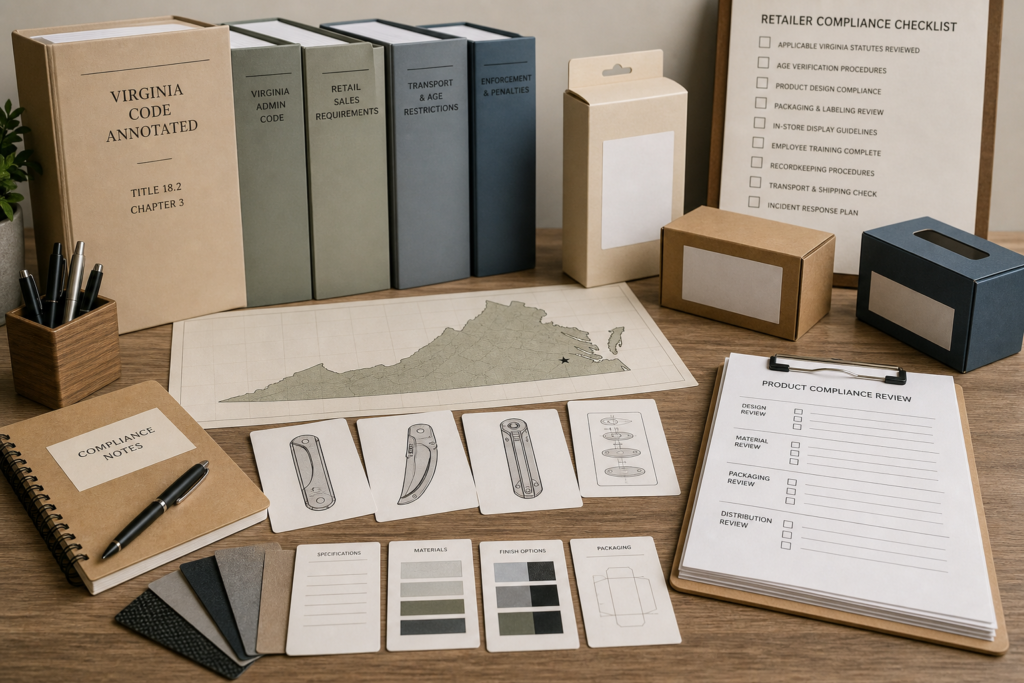
Knife laws change and local interpretation matters. A product that sells elsewhere can still create listing, retail, or import risk in Virginia.
B2B buyers should check Virginia's current knife statutes, product category, blade style, automatic mechanism risk, age restrictions, restricted locations, packaging claims, retailer policy, import documents, and legal counsel review before selling pocket knives in Virginia. This article is sourcing guidance, not legal advice.
Quick buyer brief:
- Answer: Review official Virginia law and buyer-specific sales channels before selling.
- Buyer context: This helps knife brands, outdoor brands, importers, wholesalers, distributors, and private label buyers.
- Key checks: Confirm product type, blade length, opening mechanism, age policy, restricted places, warning labels, product description, HS code, retailer policy, and legal review.
Planning a private-label knife line for this market?
Use this article as an early planning reference, then prepare your target market, product category, labeling needs, and buyer-specified compliance requirements before production.
When I support buyers on U.S. state-specific knife projects, I do not treat law content as marketing decoration. I treat it as a risk checklist. As reviewed on May 23, 2026, Virginia's official code pages should be checked directly before any product launch, because laws, local policies, and retailer rules can change. A supplier can help prepare product data, packaging, and inspection records, but the buyer should confirm legal interpretation with qualified counsel in the target market.
Which Virginia Law Sources Should Buyers Review First?
Outdated summaries can be risky. If a buyer relies on old blog posts, the product brief may miss current legal wording.
Buyers should start with official Virginia Code pages, especially Virginia Code 18.2-308, 18.2-309, 18.2-311, 18.2-307.1, and location-specific sections before approving a pocket knife SKU.
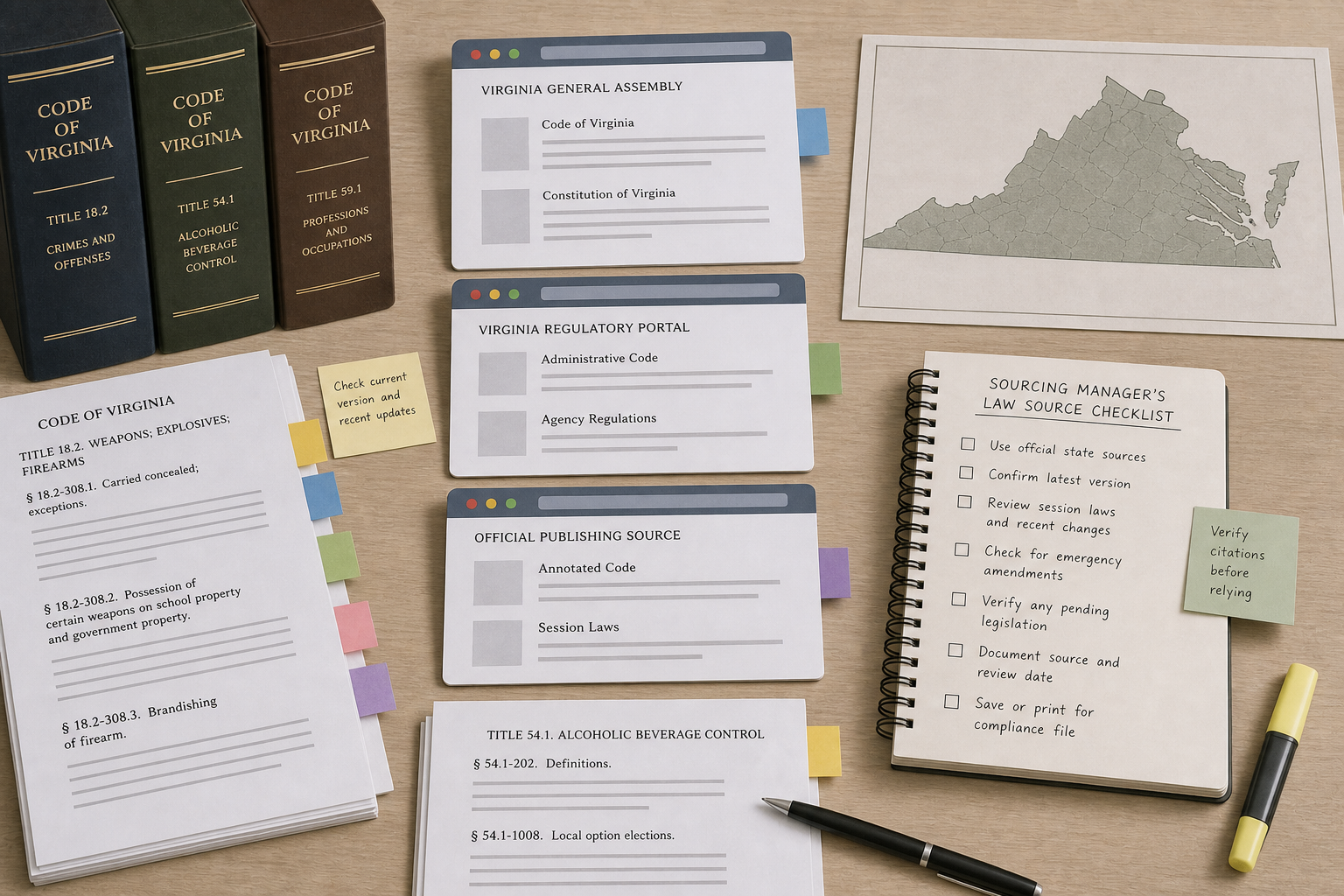
I Use Official Code Before Sales Copy
For legal-compliance articles, I begin with official law sources, not secondary summaries. The Virginia Legislative Information System publishes the current Code of Virginia online. For pocket knife buyers, several sections matter. Virginia Code 18.2-308 covers carrying certain items hidden from common observation. Virginia Code 18.2-309 covers furnishing certain listed items to minors. Virginia Code 18.2-311 covers prohibited manufacture, sale, or possession for certain listed weapons. Virginia Code 18.2-307.1 defines ballistic knives. Other sections can apply in schools, courthouses, or other sensitive places.
I do not tell buyers that a product is legal in Virginia. That decision belongs to the buyer's legal adviser, retailer, or importer. I help buyers prepare the information that an adviser needs: blade type, blade length, opening method, locking method, handle design, packaging, sales channel, and intended customer. This is especially important when an article title says "pocket knives" but the product line includes automatic knives, assisted-opening knives, multi-tools, fixed blades, or novelty products.
| Source area | What to review | Why it matters |
|---|---|---|
| State code | Current Virginia statutory text | Avoids outdated summaries |
| Product category | Folding knife, fixed blade, automatic, multi-tool | Different rules may apply |
| Sales channel | Retail, online, distributor, workplace, outdoor | Policy and labeling can vary |
| Legal review | Counsel, broker, retailer compliance team | Confirms market-specific interpretation |
Private-label Planning Checklist
Before starting production, prepare the market and product details your importer or compliance advisor needs to review.
| RFQ Field | What to Prepare |
|---|---|
| Target market | Country, state, region, or sales channel |
| Product category | Folding knife / fixed blade / multi-tool / outdoor tool |
| Intended use | EDC / camping / kitchen / hunting / rescue / promotional |
| Buyer requirements | Testing, labeling, documentation, or packaging rules |
| Blade and lock details | Blade length, opening method, lock type, edge style |
| Packaging text | Warnings, claims, care notes, language requirements |
| Documents | Drawing, sample photo, logo file, packaging artwork |
| Review owner | Importer, legal advisor, testing lab, or internal compliance team |
How Should Buyers Classify the Pocket Knife SKU?
A product name is not enough. The law may care about physical features, mechanism, blade style, and intended sales context.
Buyers should classify each SKU by blade type, blade length, locking method, opening mechanism, handle design, clip, packaging, replacement blade parts, and whether the product could be confused with a restricted category.
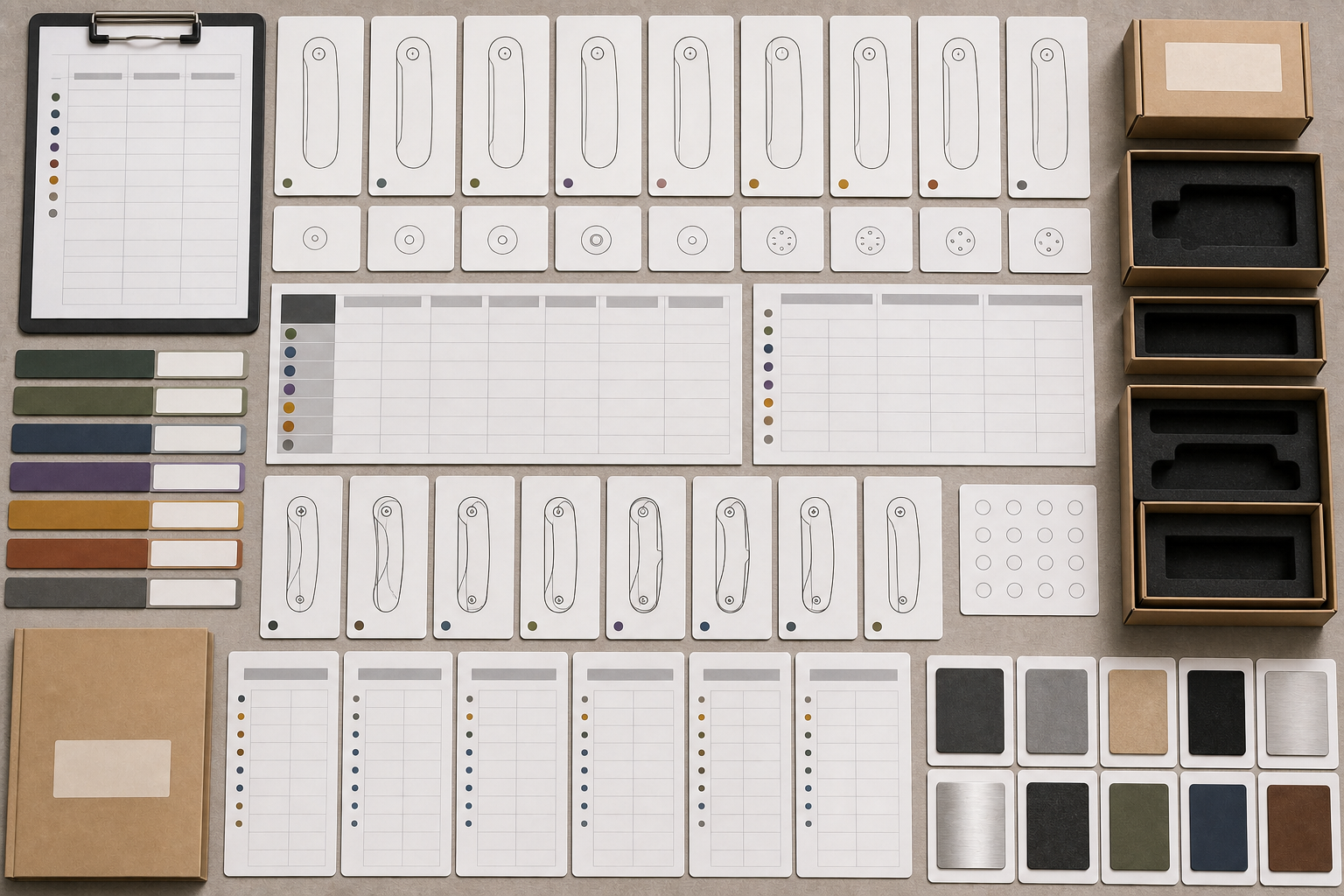
I Do Not Let Marketing Names Replace Specifications
Many buyers use broad names such as EDC knife, pocket knife, utility knife, tactical-style folder, camping knife, or multi-tool. Those names are useful for sales, but they are not enough for compliance review. I want the technical SKU sheet to describe actual features. Does the knife fold? Does it lock? Is it automatic? Is it assisted? What is the blade length? Does the blade have a double edge? Does the handle include unusual fittings? Does the SKU include a sheath, belt clip, or separate accessory?
The purpose is not to make legal conclusions inside the factory. The purpose is to prevent confusion. A buyer may think a product is a normal folding pocket knife, while a retailer may ask about automatic action or state-specific restrictions. If the product has a spring, button, sliding lock, strong flipper tab, or unusual blade profile, I want those details on the RFQ and sample approval sheet. Clear classification helps legal advisers, distributors, and import teams review the same product.
| SKU detail | What to record | Why it helps |
|---|---|---|
| Blade | Length, profile, edge, steel | Supports legal and product review |
| Mechanism | Manual, assisted, automatic, lock type | Prevents category confusion |
| Carry format | Clip, sheath, pouch, box only | Affects marketing and use claims |
| Accessories | Spare parts, lanyard, tool bits | May change product description |
What Does Virginia Law Say About Restricted Knife Categories?
Some categories create more risk than normal pocket knives. Buyers need to identify them before quoting or sampling.
Buyers should review Virginia Code 18.2-311, 18.2-307.1, and related sections for listed categories such as ballistic knives and other restricted items. Do not assume a product is acceptable because it is small or folding.
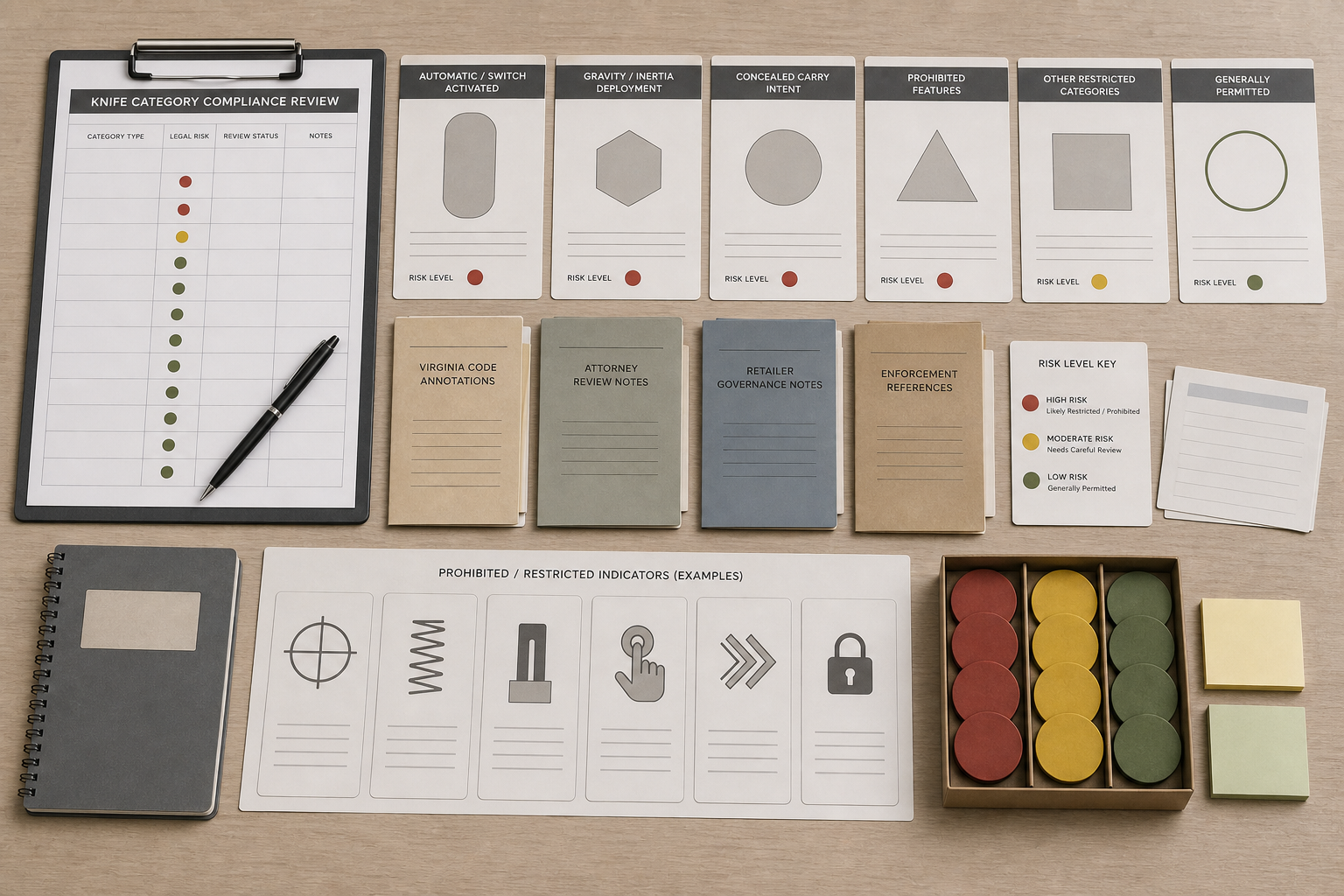
I Separate Ordinary Folders From High-Risk Categories
As of my May 23, 2026 review, Virginia Code 18.2-311 lists certain items that are prohibited for manufacture, sale, offer for sale, or possession, and Virginia Code 18.2-307.1 defines ballistic knife language. A normal pocket knife project should be reviewed to confirm that it does not drift into a restricted category. This is especially important if the buyer wants unusual mechanisms, novelty structures, or dramatic design features.
I also ask buyers to review old assumptions. Knife law changes over time. Some online summaries may mention older restrictions that are no longer written the same way. That does not mean the buyer can ignore federal law, retailer policy, local rules, or age restrictions. It means the buyer should check the official current text and get advice before building a SKU. From a manufacturing side, I prefer conservative design choices: simple manual opening, clear product description, no exaggerated claims, and packaging that avoids risky wording.
| Category check | What to ask | Buyer action |
|---|---|---|
| Ballistic mechanism | Does any blade detach or project by spring force? | Avoid and seek legal review |
| Automatic action | Does the mechanism trigger special state or federal review? | Confirm with counsel |
| Novelty structures | Could the item be treated as a restricted category? | Redesign or document clearly |
| Product description | Is the SKU described accurately and neutrally? | Align copy with product facts |
What Should Buyers Know About Sales to Minors?
Age rules can affect retail programs. A product can be legal for adults but still create risk in youth-facing channels.
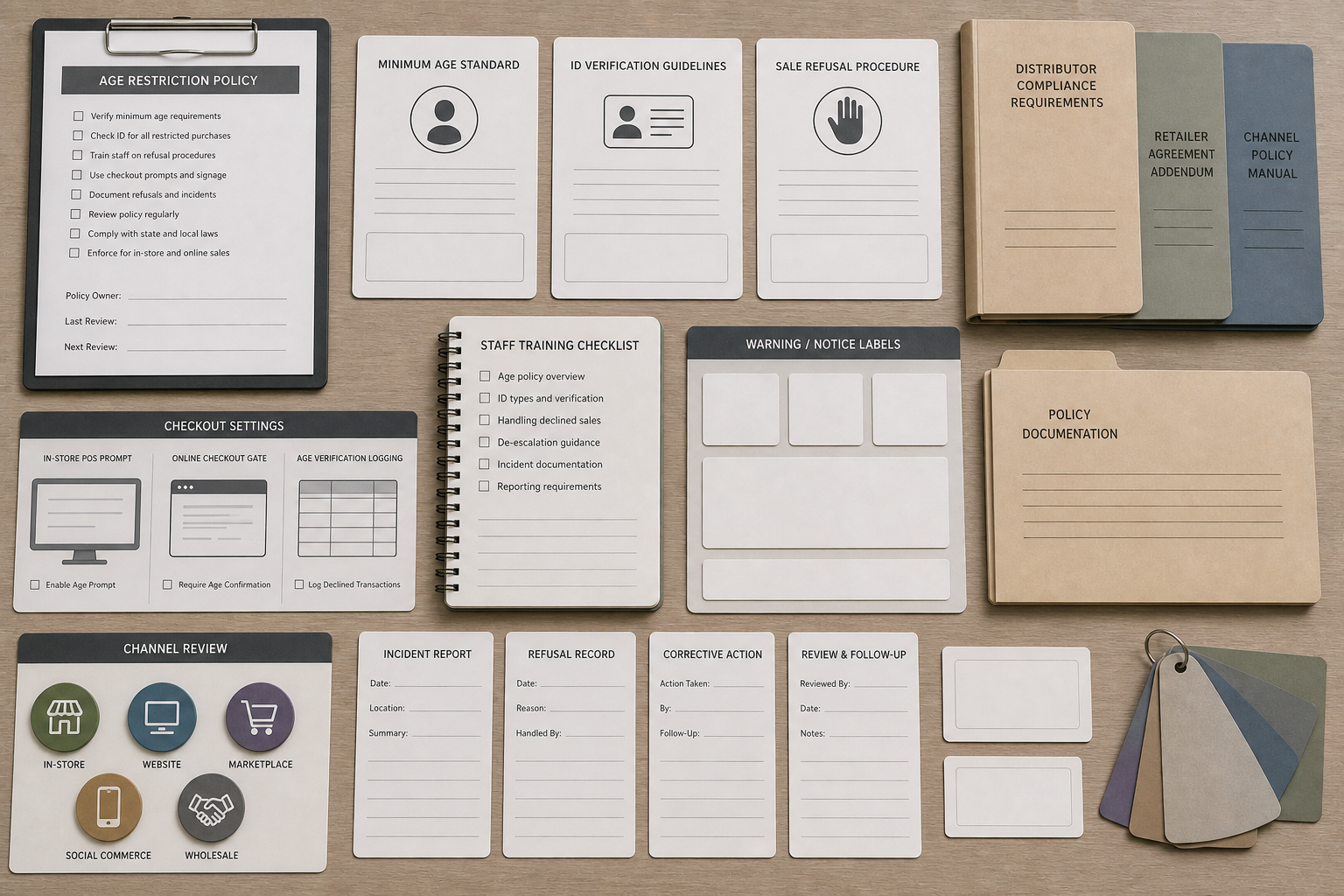
Virginia Code 18.2-309 addresses furnishing certain listed knife categories to minors. Buyers should review age policy, retail controls, packaging warnings, online checkout settings, and distributor rules before selling.
I Build Age Review Into Packaging and Channel Planning
Virginia Code 18.2-309 is important for buyers because it addresses furnishing certain listed items to a minor. Buyers should review the exact statutory language and ask counsel how it applies to their product and channel. A buyer selling through retail, online marketplaces, outdoor stores, or distributors should not wait until listing time to think about age controls. The product brief should include customer age positioning from the start.
Packaging should not make the product look child-directed. Images, names, colors, and display format should match an adult tool or outdoor product, not a youth novelty item. Online channels may need age-gating, warning language, or platform-specific category controls. Wholesale customers may also require their own compliance statement. I do not write "Virginia legal" on packaging unless the buyer's counsel approves the exact claim. A safer approach is factual product labeling, clear specifications, and channel-specific sales controls.
| Age-related item | What to check | Practical result |
|---|---|---|
| Buyer policy | Adult-oriented sales policy | Reduces channel risk |
| Packaging | No child-directed design | Supports responsible positioning |
| Online listing | Category, age gate, warnings if needed | Aligns with platform rules |
| Distributor rules | Retailer or wholesaler requirements | Avoids listing rejection |
What Restricted Locations Should Be Considered in Marketing and Packaging?
State law can treat certain places differently. Retail packaging should not imply broad unrestricted carry or use.
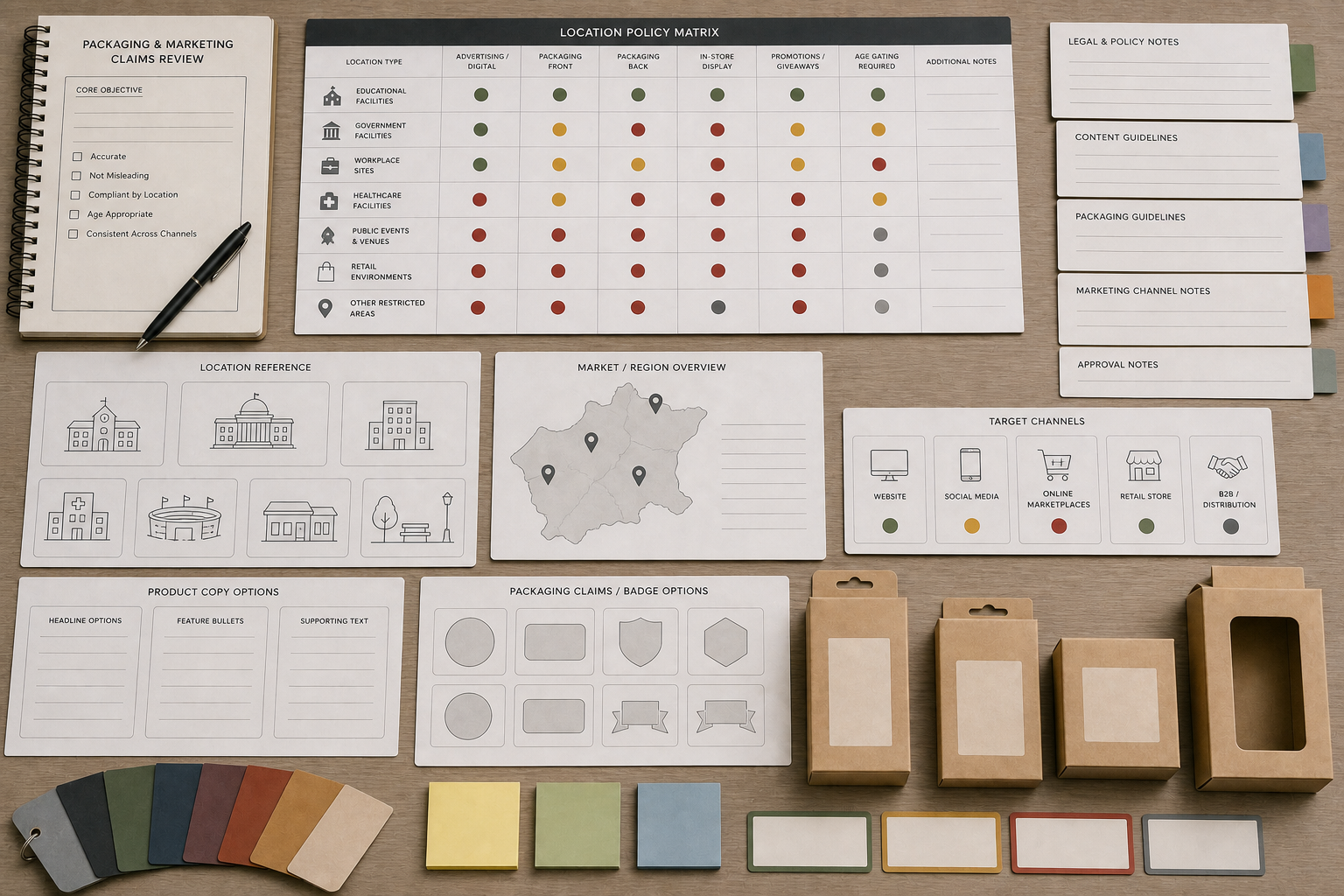
Buyers should review Virginia school-property, courthouse, airport, government-building, workplace, and local policy issues before writing packaging claims, instruction cards, or online product descriptions.
I Avoid Broad Carry Claims
I do not like packaging phrases that suggest a product can be carried anywhere. Virginia Code 18.2-308.1 covers weapons on school property and treats certain folding pocket knives with metal blades under three inches differently in that context, but this should not be turned into a marketing claim. A school-property law is not a sales slogan. Buyers should also review courthouse and other location rules, retailer policy, workplace policy, and local enforcement context.
The practical lesson is simple. Product copy should stay neutral. It can describe blade steel, handle material, locking structure, pocket clip, packaging, and intended outdoor or utility use. It should avoid broad claims about lawful carry, self-defense, or unrestricted use. If a buyer wants state-specific legal language, I recommend asking counsel to draft it. Vast State can support the product specification, labeling space, and packaging layout, but the buyer should own the legal interpretation.
| Location topic | What to review | Packaging approach |
|---|---|---|
| School property | Official Virginia section and exceptions | Do not market around this |
| Courthouse or public building | Location-specific rules | Avoid broad carry claims |
| Workplace policy | Employer or distributor restrictions | Keep use copy neutral |
| Local rules | City, county, or retailer policy | Ask counsel or channel partner |
How Should Buyers Treat Automatic, Assisted, and One-Hand Opening Designs?
Mechanism words can create confusion. A button, spring, flipper, or assist feature may trigger extra review.
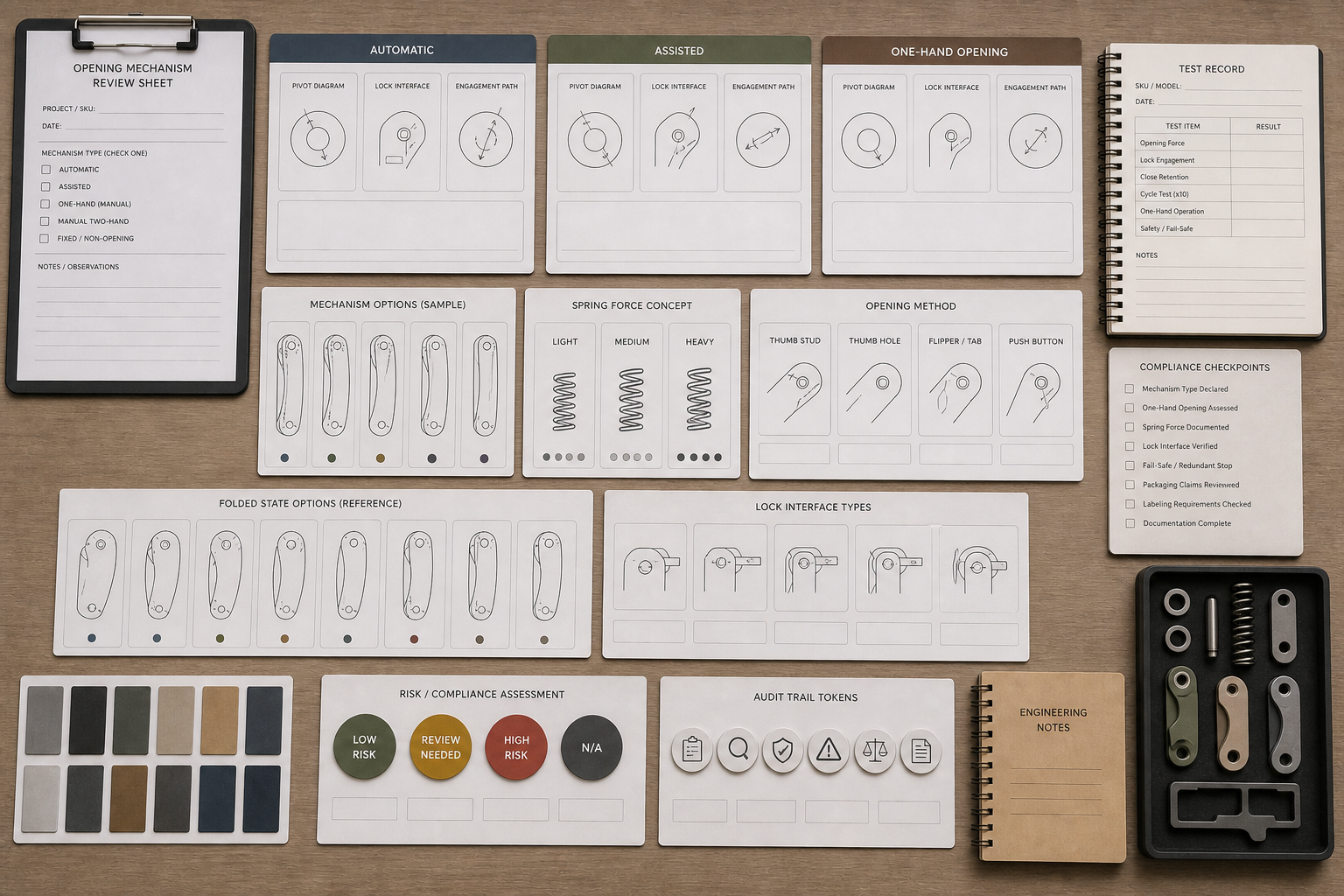
Buyers should classify opening mechanism carefully, review Virginia law, review federal switchblade restrictions, check import and interstate commerce rules, and document how the sample actually opens before selling.
I Ask for Mechanism Proof, Not Marketing Words
I want every mechanism described clearly in the product file. A manual thumb-stud folder, assisted-opening folder, automatic button knife, gravity-related design, or sliding mechanism may be treated differently by law, retailers, or marketplaces. Buyers should not rely on casual terms like "fast open" or "quick action." The sample should be documented with photos, videos, mechanism notes, and supplier confirmation.
For U.S. projects, federal law can matter in addition to state law. The U.S. Code includes switchblade-related restrictions in 15 U.S.C. 1241 through 1245, with definitions and restrictions that may affect interstate or import activity. Buyers should ask counsel and brokers how federal law interacts with their product, destination, and sales path. From the factory side, I can provide clear technical details: opening method, spring type, lock type, blade length, packaging, and intended product description. This helps the buyer's legal team make a better decision.
| Mechanism type | What to document | Why it matters |
|---|---|---|
| Manual folder | Thumb stud, nail nick, flipper, lock type | Shows ordinary operation |
| Assisted opening | Spring assist details and user action | Needs legal and policy review |
| Automatic | Button, spring, release method | Higher review need |
| Gravity-related design | Opening path and locking method | Avoid vague classification |
What Packaging, Labeling, and Product Copy Should Buyers Prepare?
Packaging can create risk even when the product is ordinary. Bad wording can turn a tool into a compliance problem.
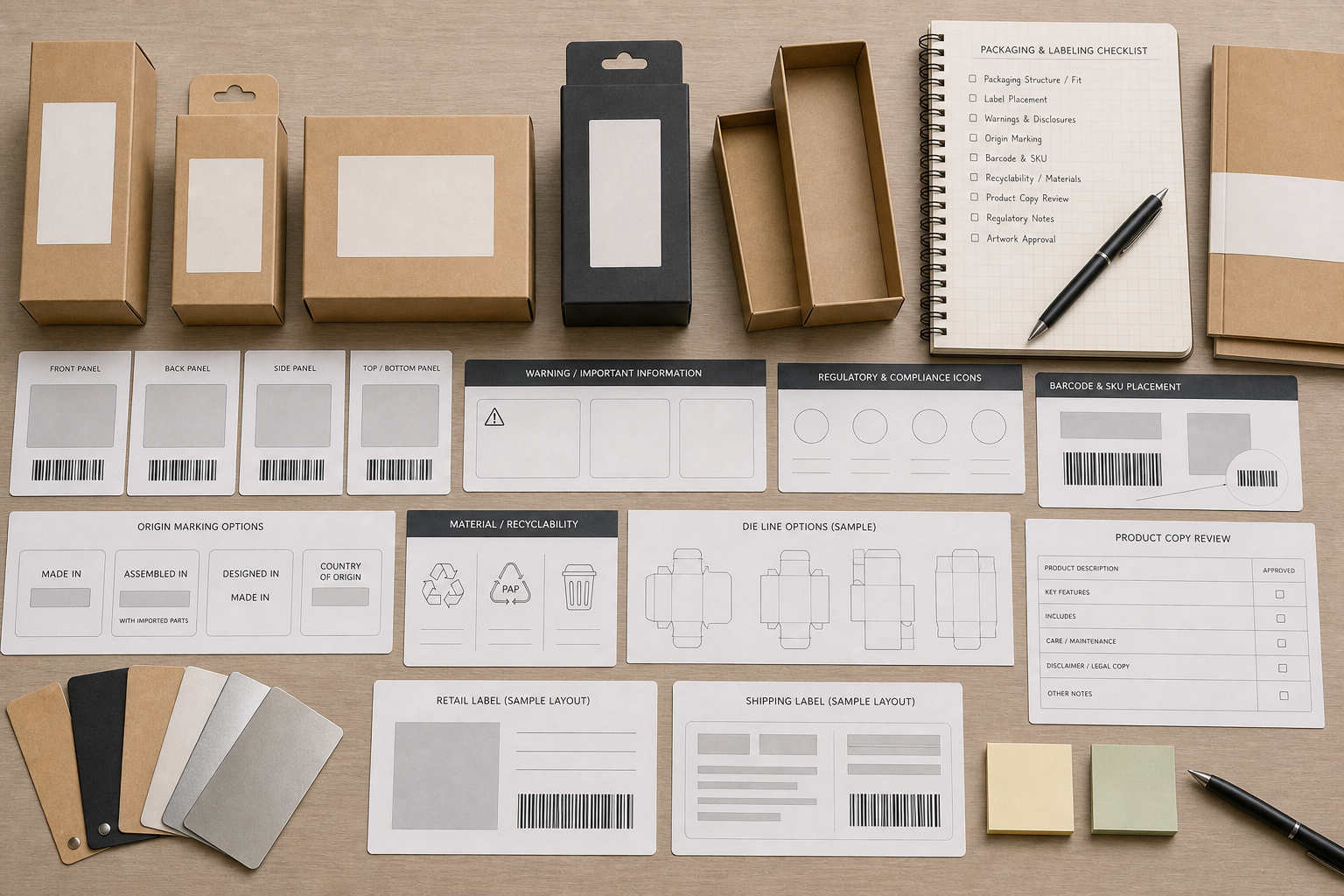
Buyers should prepare neutral product names, accurate specifications, age-policy language, origin marking, warning area, barcode space, retailer category data, and no unsupported legal claims for Virginia-bound SKUs.
I Keep Claims Factual and Easy to Audit
For Virginia-bound products, I prefer packaging that describes what the product is, not what the law allows. Factual copy is easier to review: blade steel, handle material, blade length, locking method, weight, finish, pocket clip, and packaging contents. Risky copy makes broad claims about lawful carry, public use, defense, or suitability for restricted places. I avoid those claims unless the buyer's lawyer approves them.
The product description should also match import and sales documents. CBP's tips for new importers and exporters remind importers to provide a full article description, country of origin, manufacturer, composition, intended use, and pricing or payment information. That means the packaging, invoice, specification sheet, and listing should not conflict. If the product is a folding pocket knife, call it that. If it has an automatic mechanism, do not hide that. Clear documentation protects the buyer more than clever wording.
| Copy item | Better approach | Avoid |
|---|---|---|
| Product name | Neutral tool or outdoor wording | Legal claims in the name |
| Specification | Blade length, steel, lock, handle | Vague category labels |
| Warning space | Buyer-approved label area | No warning plan |
| Origin and barcode | Document-ready packaging | Last-minute artwork changes |
What Should Buyers Include in a Virginia-Focused RFQ?
Suppliers cannot review law for the buyer. But suppliers can provide clean technical data for the buyer's legal and sales review.
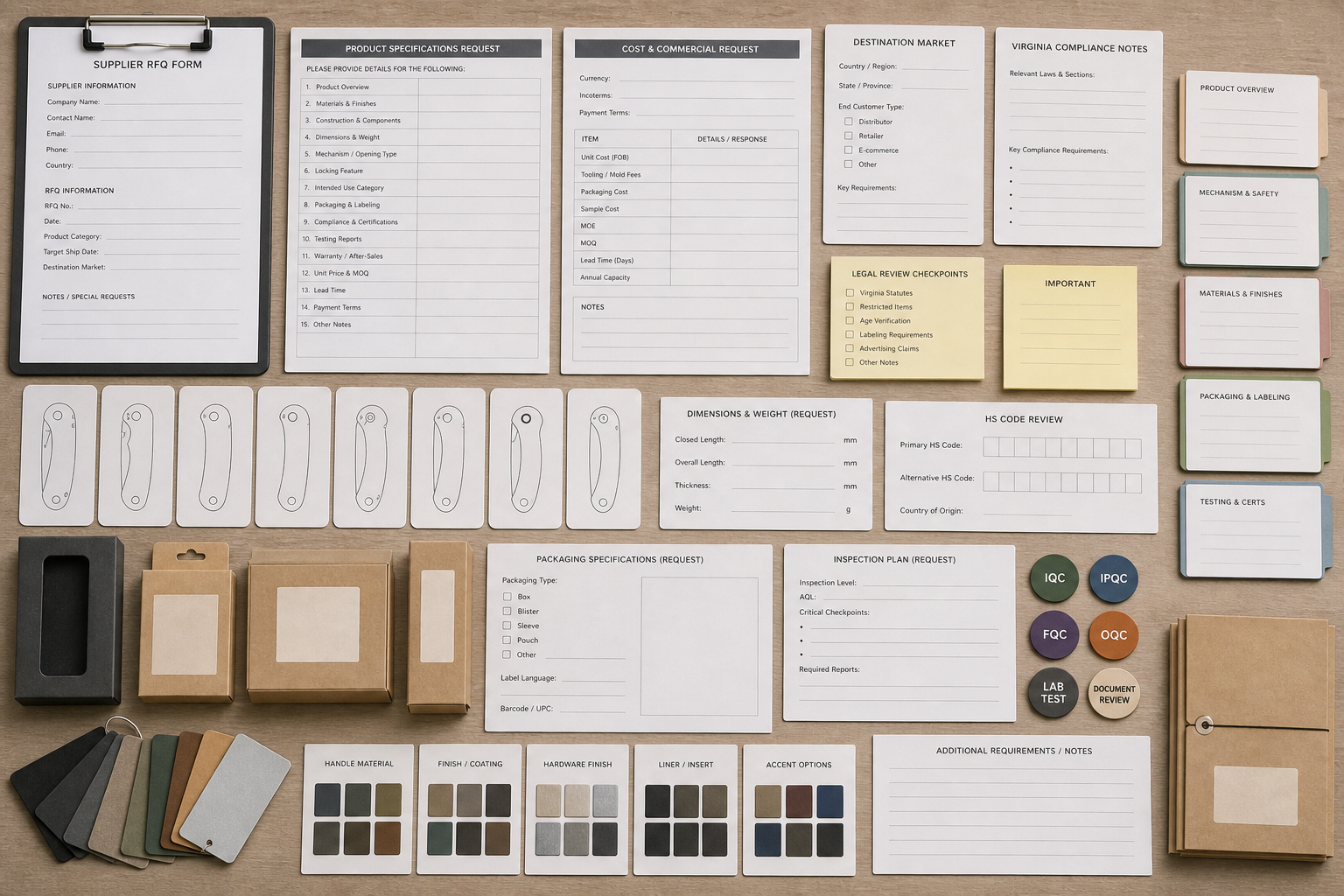
A Virginia-focused RFQ should include product type, blade length, opening mechanism, lock type, target customer, sales channel, packaging, age policy, warning needs, destination, HS code review, and legal-review notes.
I Make the RFQ Useful for Counsel, Retailers, and Production
The RFQ should not only ask for price. It should collect the facts that the buyer needs for legal review and channel approval. I ask for target market, destination state, blade length, opening method, lock type, clip or sheath, packaging format, customer age positioning, sales channel, warning label plan, and any retailer restrictions. If the buyer plans to sell through multiple states, the RFQ should say that too.
From production side, I need the same information to choose a suitable design. If the buyer wants a simple manual pocket knife for outdoor retail, the engineering path is different from an automatic product or a display item. The RFQ should also list inspection needs: blade length check, mechanism check, lock function, edge finish, packaging label placement, carton marks, and sample approval. This gives the buyer a product file that can support sourcing, legal review, and repeat production.
| RFQ field | What to include | Why it helps |
|---|---|---|
| Product facts | Blade length, mechanism, lock, handle | Supports legal review |
| Sales channel | Retail, online, distributor, outdoor store | Supports policy review |
| Packaging | Warning, age policy, origin, barcode | Supports listing and shipment |
| Compliance notes | Counsel review, broker review, state list | Keeps responsibility clear |
Planning a private-label knife line for this market?
Use this article as a planning reference, then confirm local requirements with your importer or compliance advisor before OEM/ODM production.
Conclusion
I approach Virginia pocket knife sales by checking official law, documenting product facts, avoiding broad claims, and giving buyers review-ready sourcing records.
Source Notes
- Virginia Code 18.2-308 supports review of Virginia's hidden-carry weapon language for listed items.
- Virginia Code 18.2-309 supports the need to review furnishing certain listed items to minors.
- Virginia Code 18.2-311 and Virginia Code 18.2-307.1 support restricted-category review, including ballistic knife language.
- Virginia Code 18.2-308.1 supports the need to review school-property restrictions and exceptions.
- 15 U.S.C. 1241-1245 supports the need to review federal switchblade-related restrictions.
- CBP importer tips and the Trade.gov HS code guide support document, origin, product-description, and classification planning.