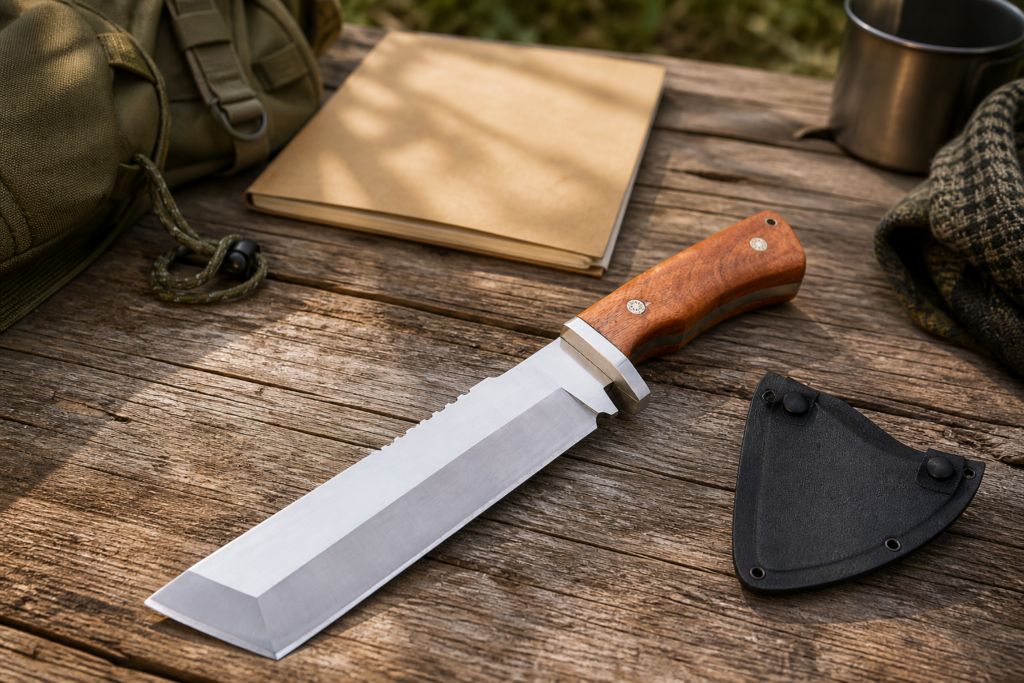
"Use a machete perfectly" is the wrong starting point for sourcing. Buyers need a safe product brief, not a field technique tutorial.
Buyers should specify machete-style outdoor cutting tools by defining the lawful vegetation or field-utility task, blade geometry, handle grip, sheath protection, PPE and warning copy, travel limits, material durability, marketing restrictions, and QC tests before production.
Quick buyer brief:
- Answer: A machete-style tool should be sourced as an adult outdoor, agricultural, landscaping, or vegetation-management product with clear task limits, safe storage, conservative labels, and documented inspection.
- Buyer context: This guide is for garden tool brands, outdoor gear importers, agricultural tool buyers, hardware distributors, private label teams, e-commerce sellers, and OEM/ODM sourcing managers.
- Key checks: Adult-use positioning, task list, blade length, blade thickness, steel grade, heat treatment, grind, tip design, handle material, guard or stop, sheath fit, warning card, PPE note, travel copy, corrosion review, and final inspection records.
Planning a fixed blade or outdoor knife project?
Share your target use, blade size, steel preference, handle direction, sheath needs, quantity range, and packaging plan. Vast State can help turn it into a quote-ready specification.
This article treats machete-style products as lawful adult outdoor, agricultural, landscaping, garden, or field-utility cutting tools. It does not cover combat, self-defense, intimidation, weapon use, clearing tactics, or swing technique instruction. Buyers should review local laws, retailer policies, worksite requirements, travel rules, and platform restrictions before launch.
The practical sourcing question is not how to teach customers to swing the tool. The better question is how to design, label, package, and inspect a long-blade outdoor tool so the product promise stays realistic and responsible.
What Should "Machete-Style Tool" Mean in a Buyer Brief?
The category needs discipline.
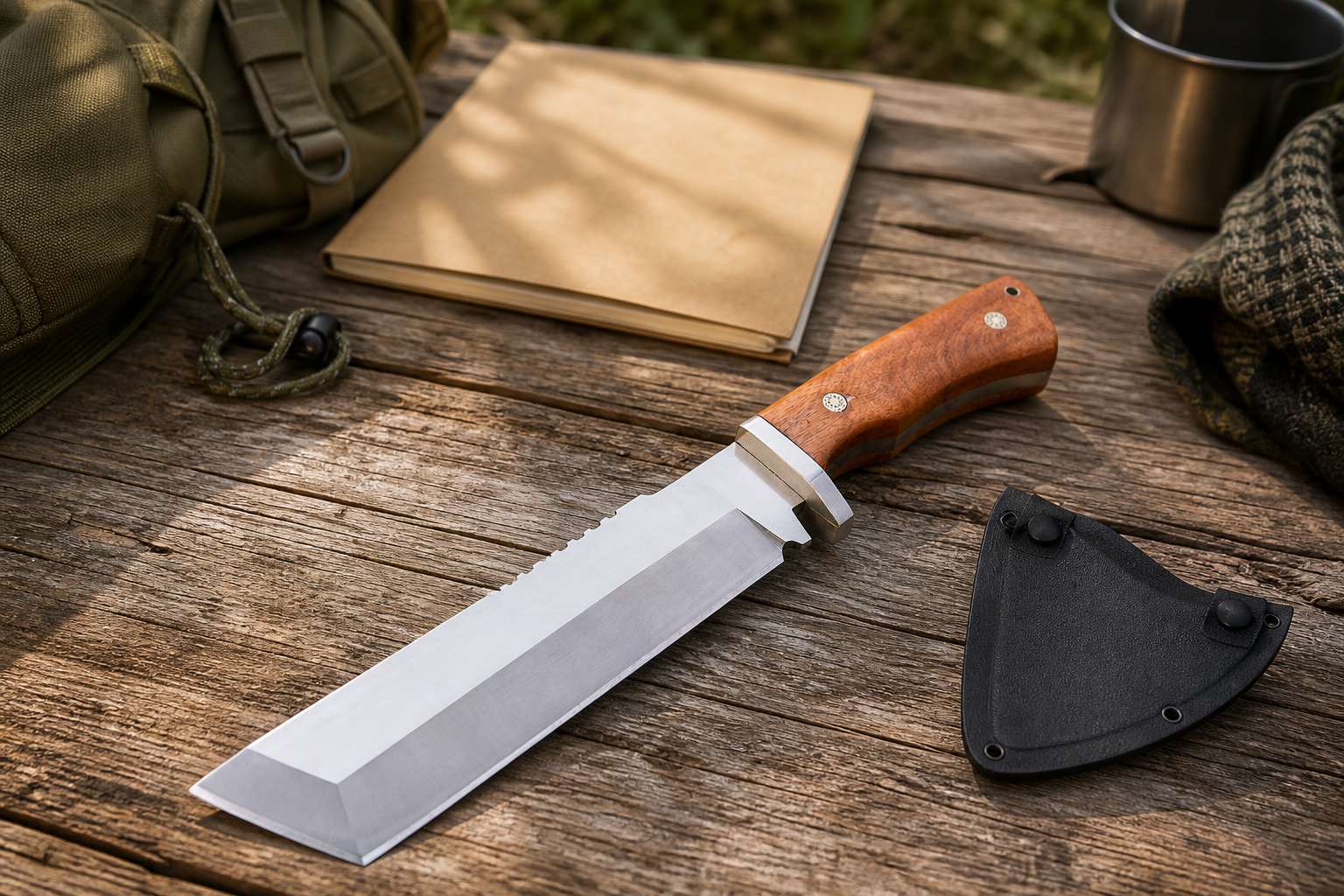
In OEM/ODM sourcing, a machete-style tool should mean a long-blade outdoor cutting tool for lawful vegetation, garden, agricultural, camp-maintenance, or field-utility tasks.
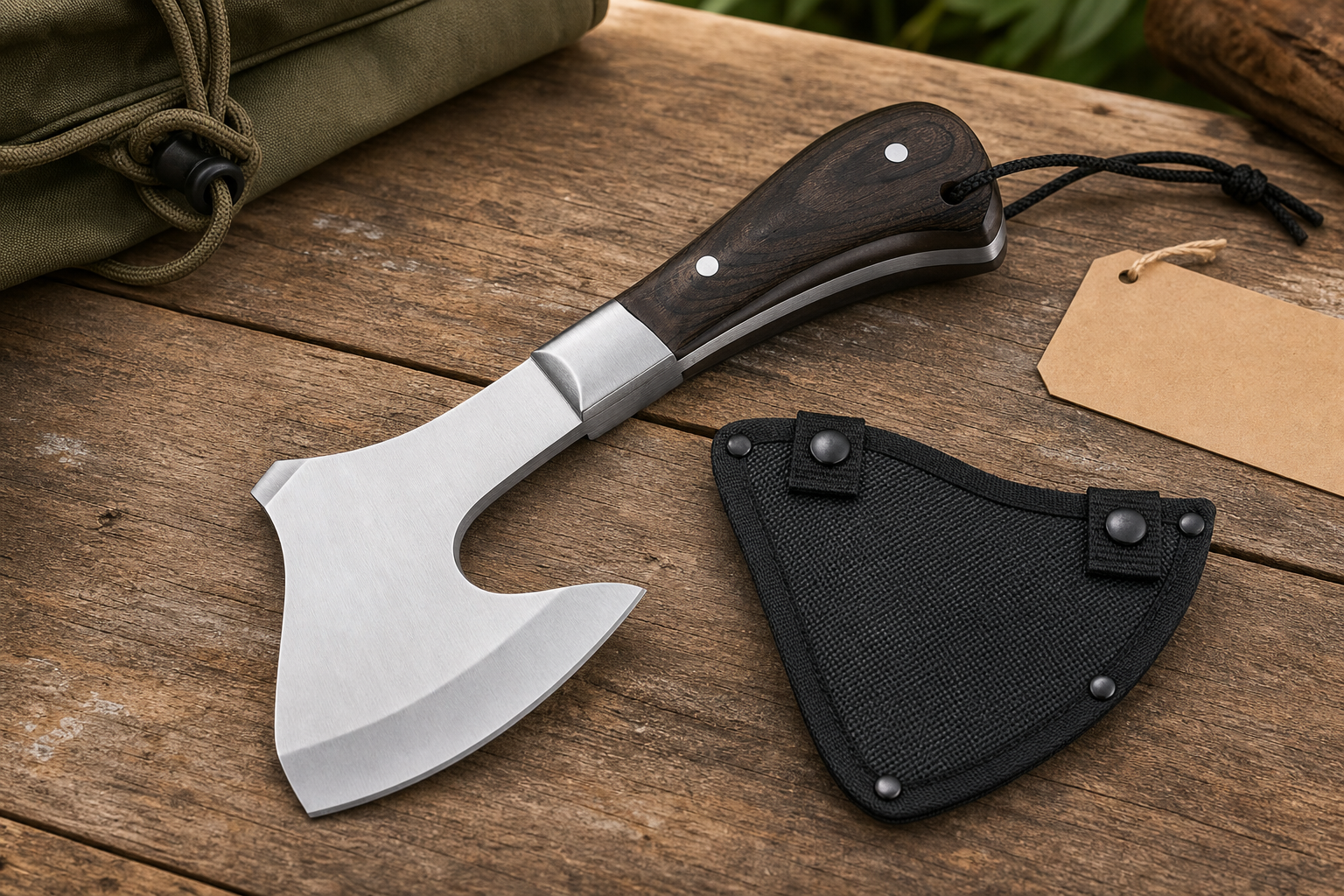
I Define the Tool by Work, Not Drama
The word "machete" can pull marketing toward dramatic language. A sourcing brief should pull it back toward practical use. The buyer should define whether the tool is for garden brush, agricultural harvest support, trail maintenance by trained users where permitted, campsite maintenance, or general outdoor utility.
The OSHA hand and power tools overview explains that tools can cause severe injuries when used or maintained improperly and that attention to tool safety is necessary to reduce hazards. This is a workplace source, but its product-development lesson is clear: a long sharp tool must be designed and documented with safety in mind.
The brief should define:
- Target adult user
- Lawful task category
- Blade length and profile
- Blade thickness
- Handle length and texture
- Sheath or edge cover
- Warning and PPE copy
- Storage and transport requirements
- Retail channel restrictions
- QC tests and inspection records
If a title says "tips to use a machete perfectly," I would not rewrite it as a usage guide. I would turn it into a safer product specification article.
Which Tasks Should Shape the Blade Geometry?
Task fit controls geometry.
Blade geometry should be based on whether the product is meant for light brush, agricultural cutting, garden clearing, camp maintenance, or general field utility.
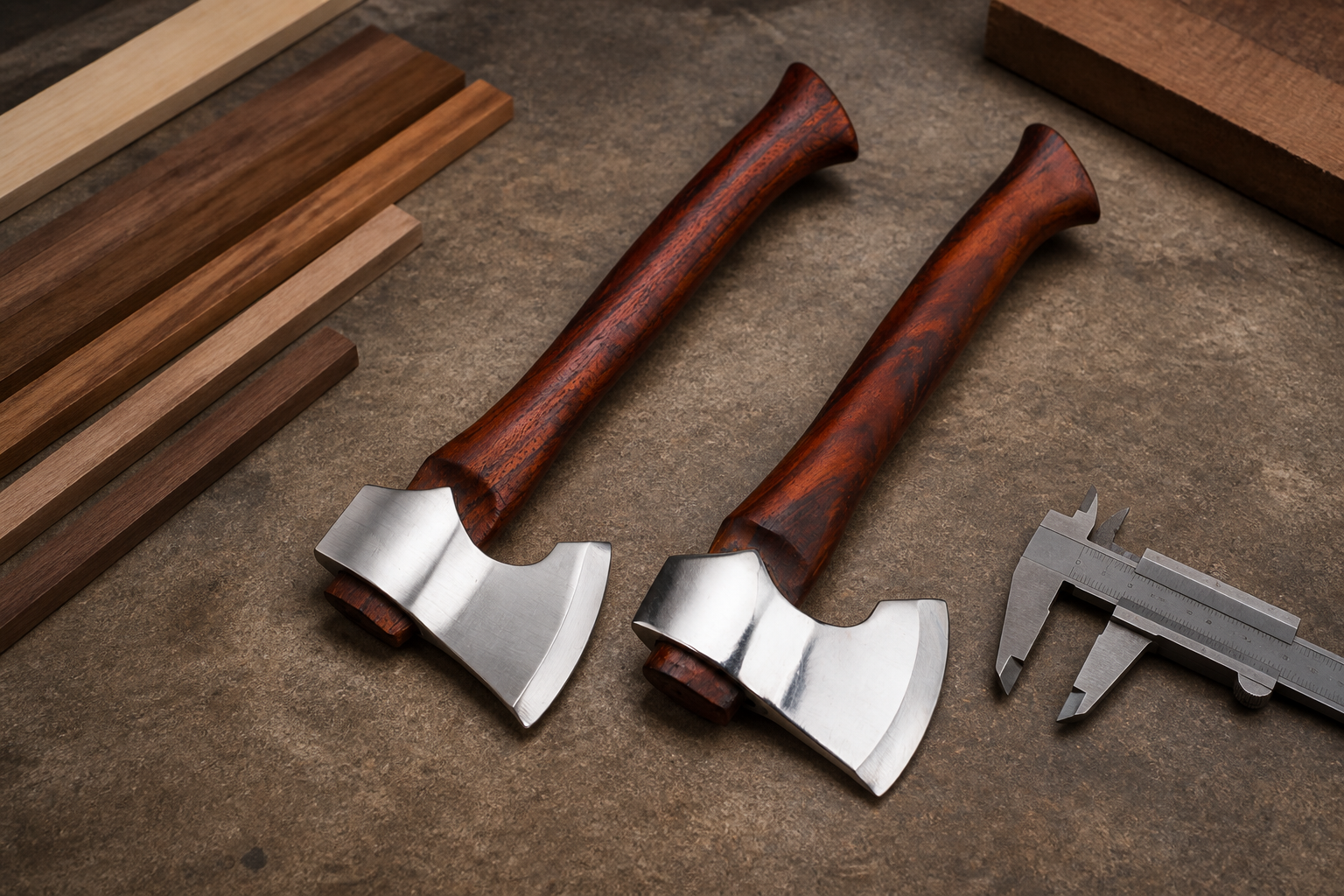
I Avoid One-Tool-Fits-All Claims
A long blade for light vegetation is not the same as a heavier brush tool. A compact garden machete is not the same as a large agricultural blade. Buyers should not ask suppliers for one generic "perfect" machete and expect it to satisfy every user.
The CCOHS sharp blades guidance supports basic sharp-tool principles such as choosing the right tool for the job, inspecting the tool, working in good visibility, avoiding excessive pressure, and storing tools safely. For B2B buyers, those points translate into task-fit design and warning copy.
Geometry choices should cover:
- Blade length
- Blade width
- Forward weight or neutral balance
- Tip shape
- Edge curve
- Spine shape
- Blade thickness
- Grind type
- Edge angle
- Coating or finish
- Sheath clearance
The buyer should also write exclusions. If the tool is not designed for heavy chopping, digging, prying, throwing, or impact abuse, the listing and instruction card should not imply those uses.
How Should Buyers Specify Blade Material and Heat Treatment?
Steel choice must match the environment.
Buyers should define steel grade, heat treatment, hardness range, toughness expectation, corrosion resistance, coating, edge angle, and maintenance instructions.
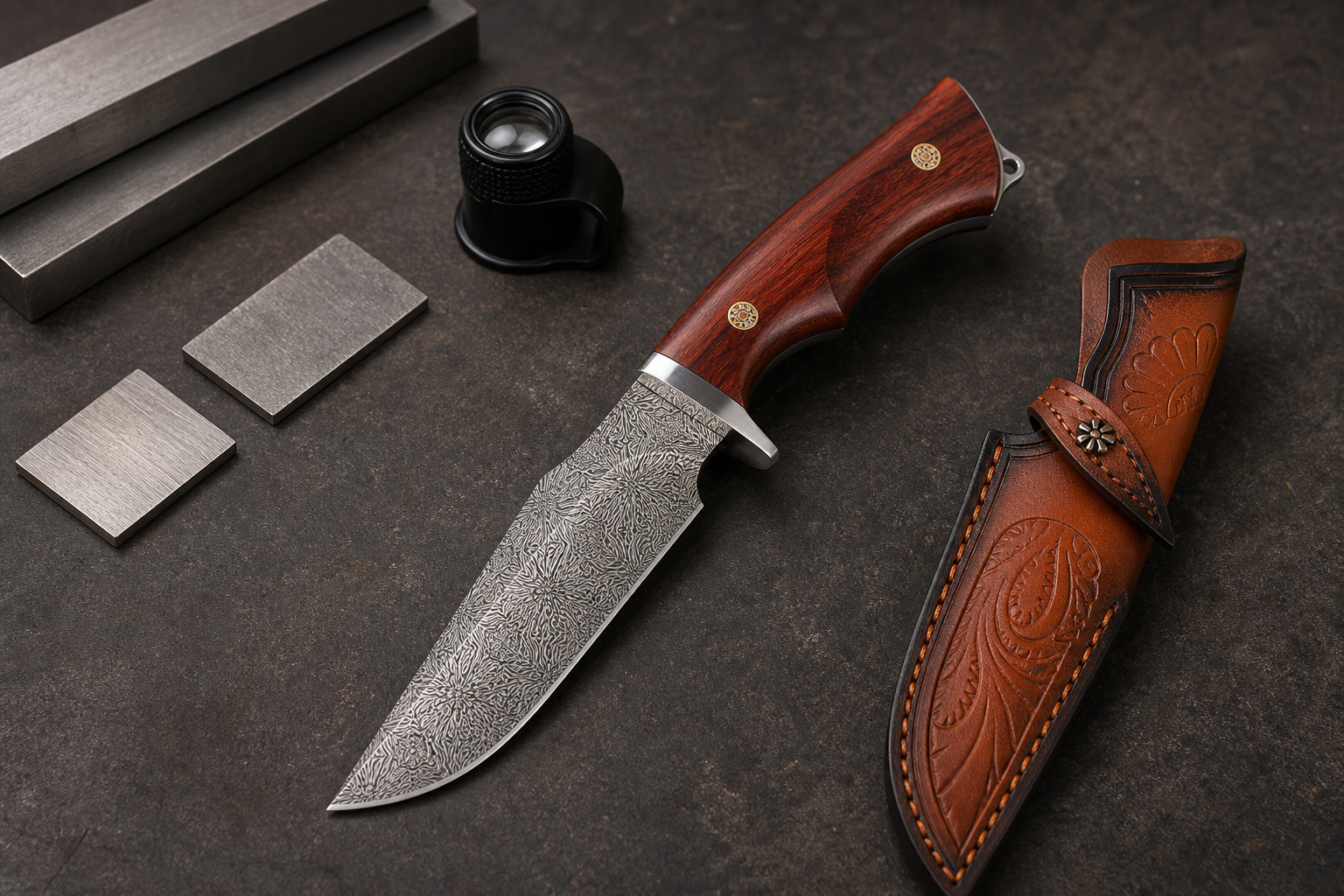
I Balance Toughness, Edge, and Corrosion
Outdoor cutting tools face dirt, plant moisture, sweat, rain, storage sheds, vehicle trunks, and sometimes salt air. A buyer may want a carbon steel feel, a stainless option, a coated blade, or a budget steel. Each choice has tradeoffs.
The NIST dimensional metrology page supports measurement-based production control. For machete-style tools, buyers should measure blade length, thickness, width, tang geometry, handle fit, edge angle, and sheath clearance. Material decisions should be supported by inspection, not only by a catalog steel name.
Material and heat-treatment fields should include:
- Steel grade
- Heat-treatment route
- Hardness range
- Toughness or bend review, if used
- Edge angle target
- Coating or finish
- Corrosion review method
- Burr removal method
- Sharpening method
- Care instruction
The buyer should avoid unsupported claims such as "unbreakable," "rust proof," or "maintenance free." Outdoor tools need honest care language.
What Handle Details Matter for Long-Blade Control?
Handle design is a safety issue.
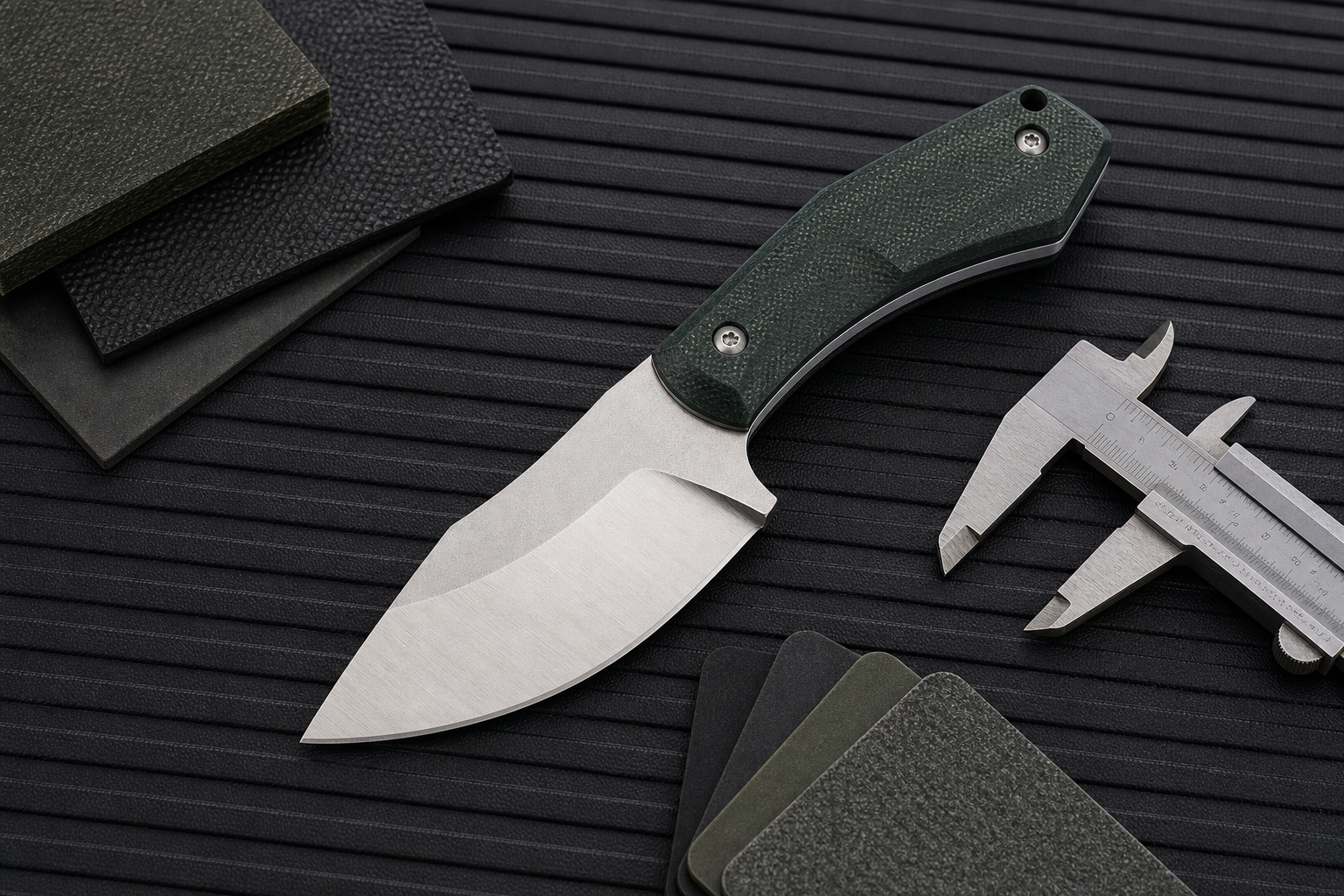
A machete-style handle should support secure adult grip, hand retention, wet or gloved control, shock comfort, cleanability, and safe storage.
I Review Grip Before Styling
A long blade magnifies handle problems. If the handle is slippery, too short, too sharp at the edges, poorly fastened, or badly balanced, the product can feel unsafe and cheap. Buyers should approve handle geometry with the blade, not after the blade is finished.
Handle specification should include:
- Handle material
- Surface texture
- Handle length
- Handle thickness
- Guard, hook, or palm stop
- Fastener type
- Tang coverage
- Lanyard hole finish, if included
- Wet-grip review
- Glove review
- Cleanability
- Odor or chemical resistance
The CPSC manufacturing best practices page supports safety by design, foreseeable use and misuse review, supplier controls, and documentation. Handle grip and attachment should be part of that safety-by-design review.
Buyers should ask suppliers for handle pull or attachment tests when the construction needs it. A nice-looking handle that loosens in use is not a finished product.
How Should Sheath, Edge Cover, and Packaging Be Designed?
The edge needs controlled storage.
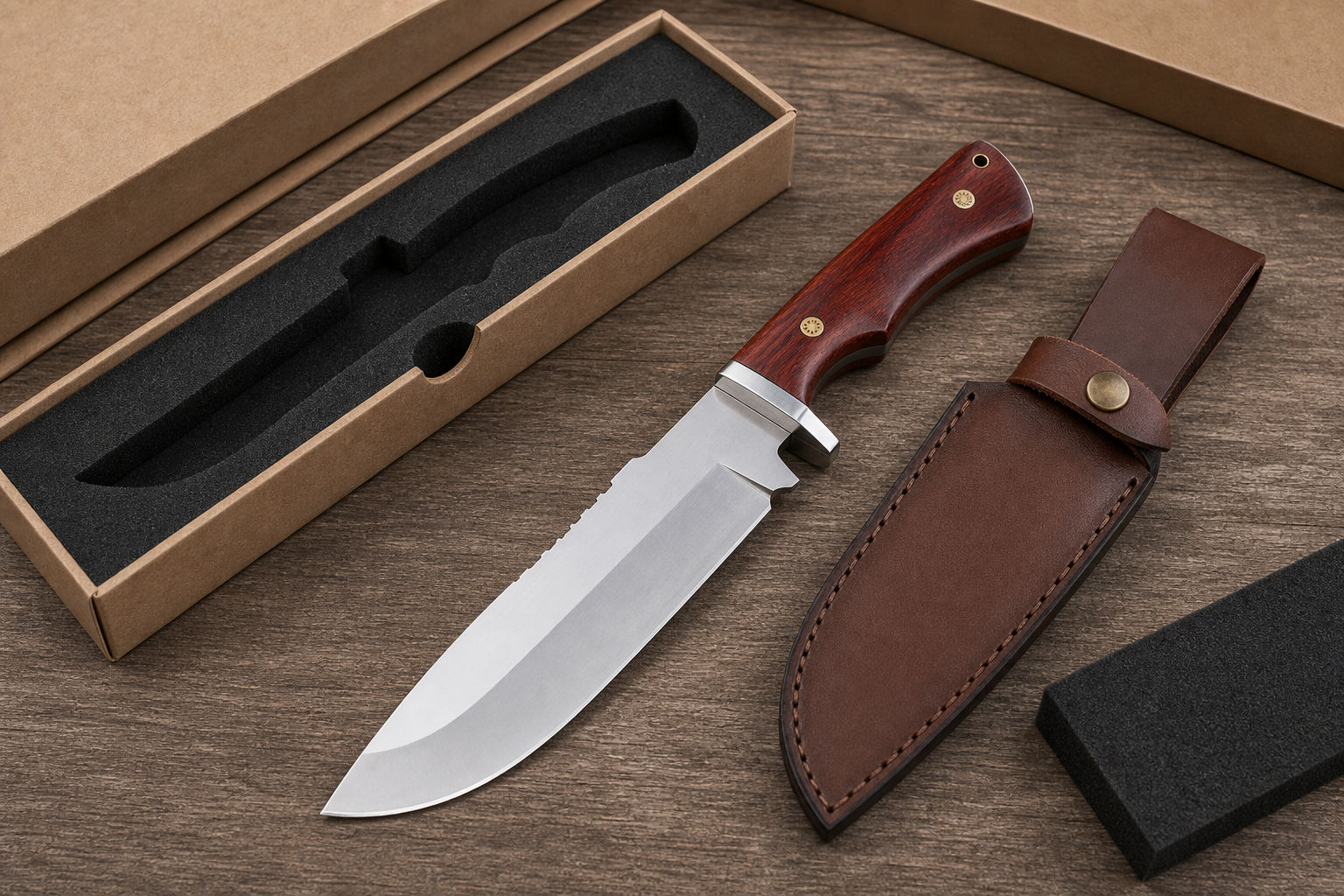
Sheath and packaging should fully protect the edge and tip, prevent carton cuts, support safe unboxing, and give customers a clear storage method.
I Do Not Ship a Long Blade Without a Storage Plan
Machete-style tools are long. A weak guard or thin sleeve can fail in shipping. A poor sheath can expose the tip. A package without enough reinforcement can be cut from the inside. Buyers should review packaging from shipping, unboxing, retail display, and customer storage perspectives.
The CPSC labeling requirements overview reminds businesses that labels may depend on product type, design, components, and intended audience. For long-blade tools, warning placement and edge-protection copy should be highly visible.
Packaging review should include:
- Full edge coverage
- Tip protection
- Sheath retention
- Belt or storage loop strength, if included
- Carton puncture review
- Retail display stability
- Warning card location
- Care instruction location
- Moisture and corrosion note
- Storage instruction
Travel copy also needs care. The TSA What Can I Bring page states that sharp objects in checked bags should be sheathed or securely wrapped to prevent injury to baggage handlers and inspectors, and that knives are generally not allowed in carry-on bags except plastic or round-bladed butter knives. Buyers should not call a long-blade tool "travel friendly."
What Safety Labels and PPE Notes Should Buyers Include?
Labels should be direct.
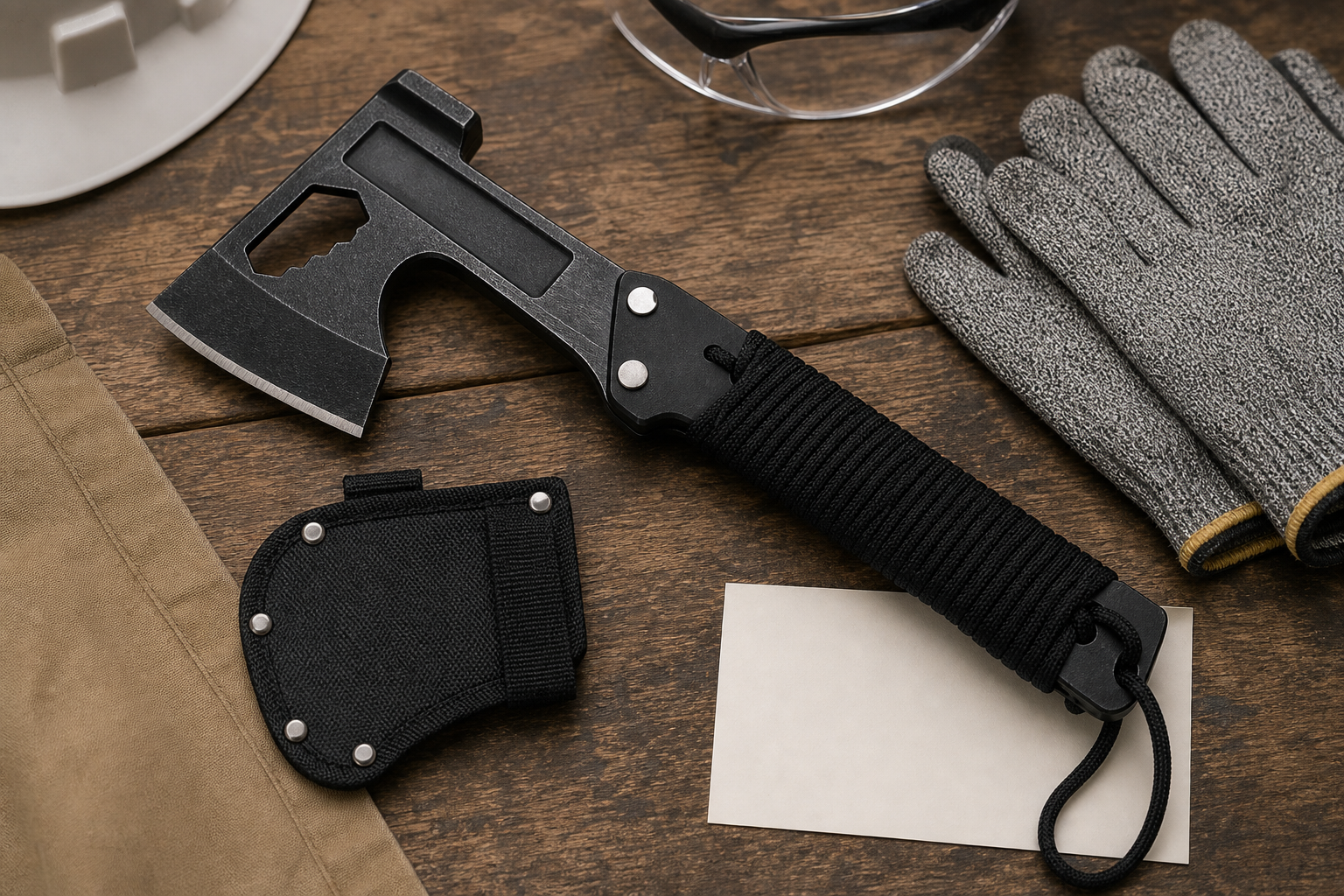
Safety copy should explain sharp-edge risk, adult use, proper storage, inspection, PPE consideration, local rules, restricted locations, and care instructions.
I Keep Instructions Safe and Non-Tactical
The product should not include a detailed swing tutorial in a marketing article. It should include clear safety language: inspect before use, wear appropriate protective gear for the task, keep bystanders away, use only for lawful outdoor work, store covered, and keep away from children.
The OSHA hand and power tools publication discusses the importance of appropriate personal protective equipment for tool hazards. Buyers can translate that into simple consumer-facing PPE notes without making workplace compliance claims beyond their scope.
Useful label themes include:
- Sharp long blade
- Adult use only
- Keep away from children
- Wear appropriate eye and hand protection for the task
- Inspect handle and blade before use
- Keep edge covered when not in use
- Use only where lawful and permitted
- Do not use around bystanders
- Do not use a damaged tool
- Clean, dry, and store safely
If the product is sold in multiple countries, buyers should review translations carefully. Poor translation can weaken warnings.
How Should Marketing Avoid Weaponized Positioning?
Copy should stay practical.
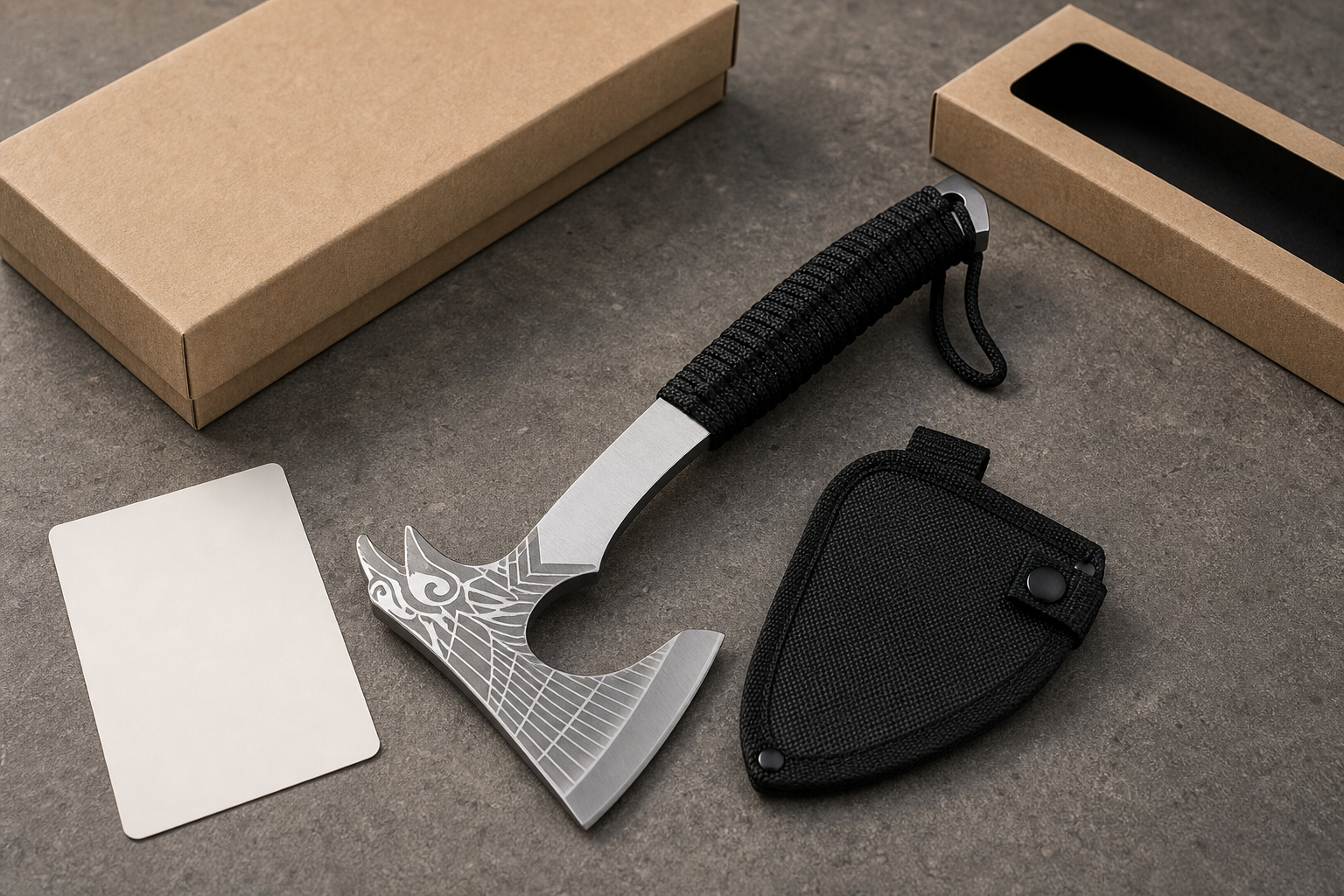
Marketing should describe lawful vegetation management, garden work, outdoor utility, and emergency-kit support without implying combat, intimidation, self-defense, or unrestricted carry.
I Replace Fear Language With Task Language
Some machete listings use aggressive words. That may reduce channel acceptance and increase risk. Buyers should describe what the tool is for, not how threatening it looks.
The FTC advertising and marketing basics page supports truthful, non-deceptive, evidence-based claims. If the buyer claims a coating resists corrosion, the buyer needs supporting evidence. If the buyer claims secure grip, the buyer should have sample review notes. If the buyer claims heavy-duty construction, the specification and test plan should support it.
Safer claim directions:
- Designed for adult outdoor utility tasks
- Suitable for lawful garden or vegetation work
- Protective sheath included
- Textured handle designed for secure grip
- Corrosion-resistant finish, clean and dry after use
- QC checked to buyer-defined requirements
Claims to avoid:
- Combat ready
- Self-defense tool
- Intimidating power
- Legal everywhere
- Airport friendly
- Indestructible
- Perfect for every task
The strongest copy is specific and boring in a good way. It helps buyers sell the product without inviting the wrong interpretation.
What QC Tests Should Be Included Before Shipment?
Long blades need disciplined checks.
QC should verify blade dimensions, thickness, straightness, edge angle, burr removal, hardness, coating, handle attachment, sheath fit, package protection, labels, and lot records.
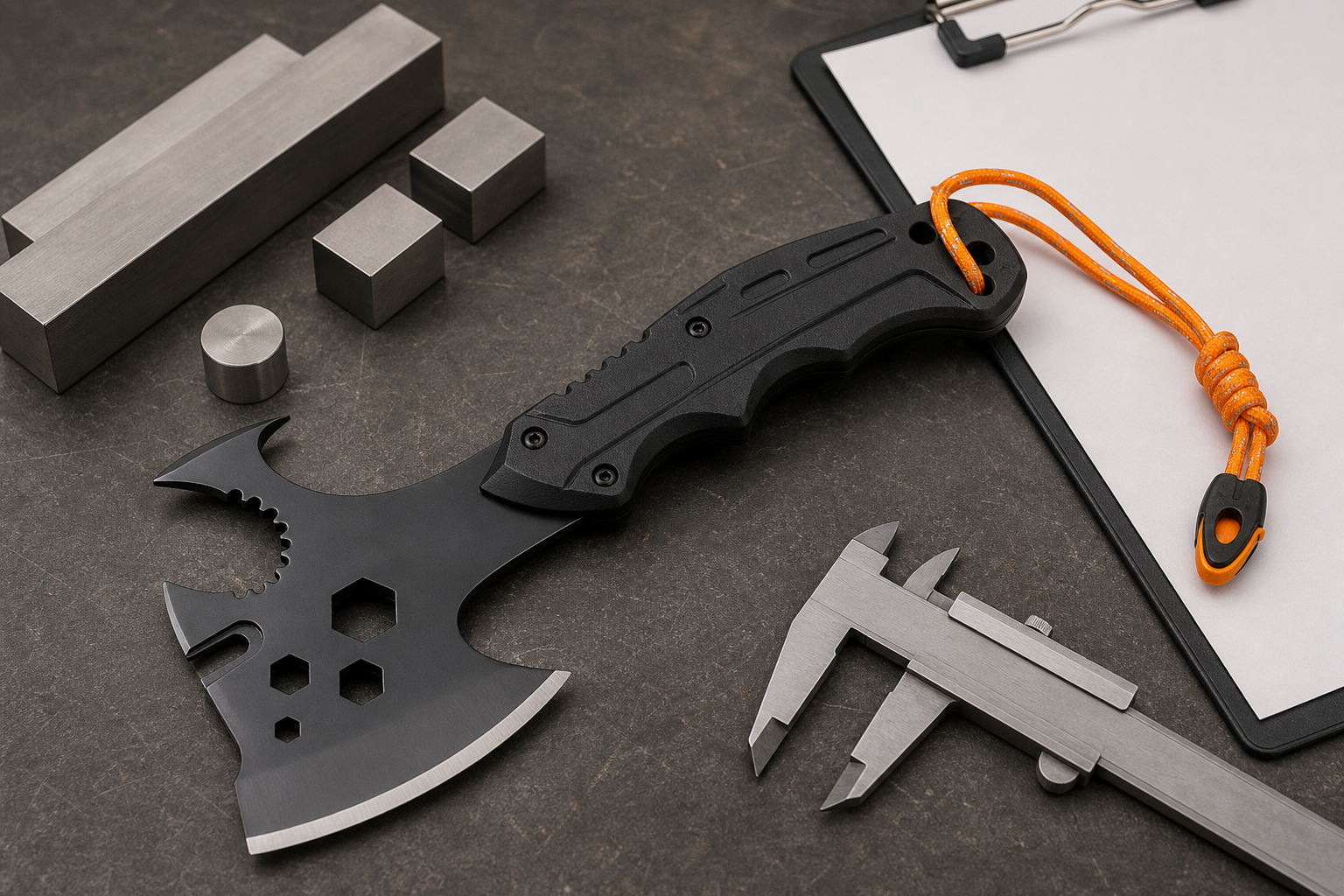
I Inspect the Tool as a System
The blade, handle, sheath, packaging, and label all matter. If the blade is strong but the handle loosens, the product fails. If the handle is excellent but the sheath exposes the edge, the product fails. If the product is safe but the listing overclaims, the buyer still has risk.
The CPSC Handbook for Manufacturing Safer Consumer Products supports safety planning, design review, production control, documentation, and inspection procedures. The NIST metrological traceability page supports the importance of documented measurement methods and calibration chains when buyers need stronger QC records.
QC fields should include:
- Blade length
- Blade thickness
- Blade straightness or warp check
- Edge angle
- Burr inspection
- Hardness range
- Coating defects
- Corrosion review, when relevant
- Handle fit and pull check
- Fastener inspection
- Sheath retention
- Edge and tip coverage
- Package puncture review
- Warning label presence
- Lot traceability
The buyer should keep approved samples and production photos. Long-blade tools can vary visually across lots, and records reduce disputes.
How Should Outdoor Responsibility Fit the Product Story?
Responsible use protects the category.
Outdoor copy should encourage preparation, local-rule awareness, safe storage, waste removal, and respect for land without teaching harmful clearing behavior.
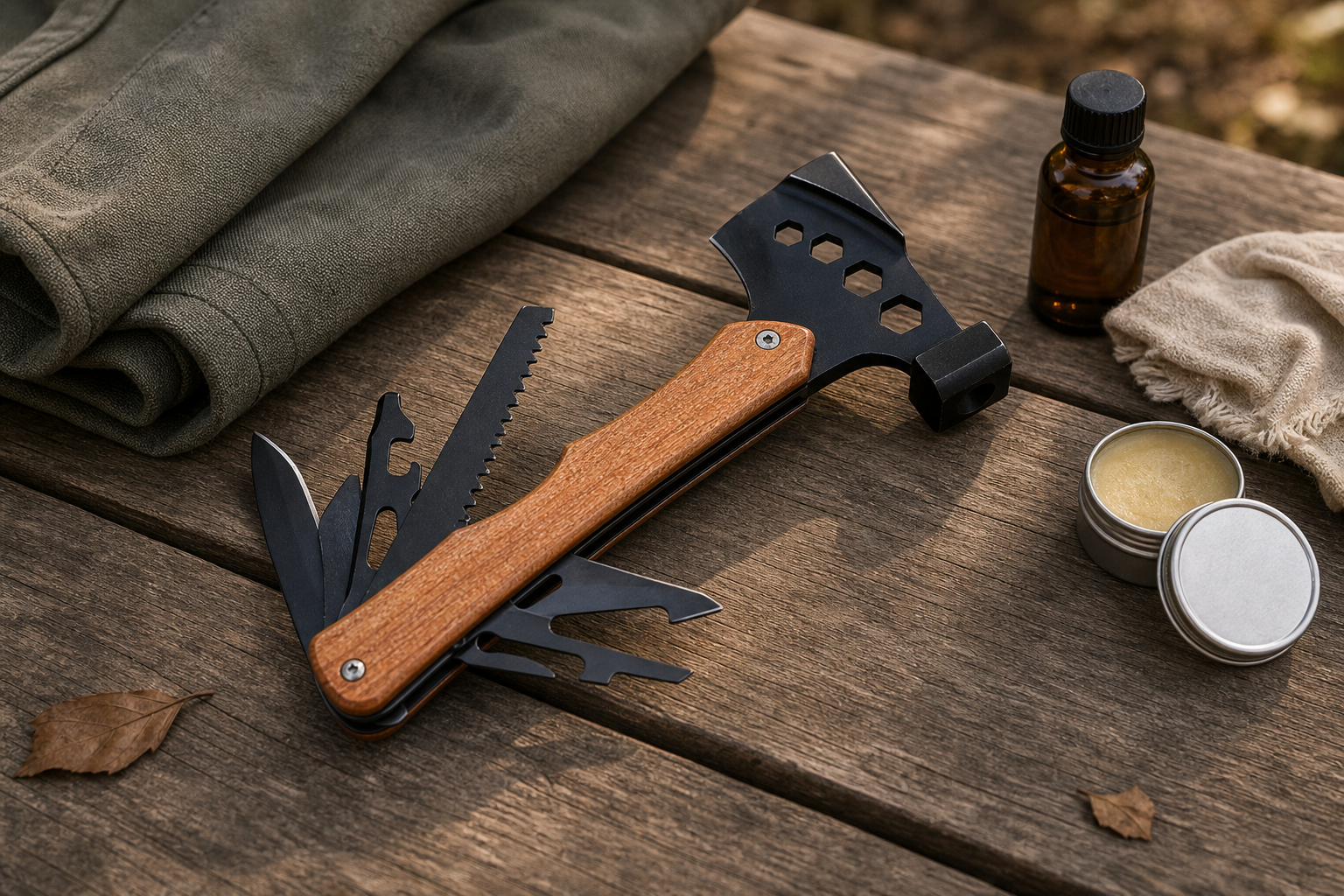
I Do Not Encourage Damage to Public Land
A machete-style product page should not encourage cutting live trees, damaging trails, clearing public vegetation, or ignoring land rules. It should tell users to know local regulations and use the tool responsibly.
The National Park Service Leave No Trace Seven Principles page highlights planning ahead, disposing of waste properly, leaving what you find, minimizing campfire impacts, respecting wildlife, and being considerate of others. That is a strong reference for outdoor product copy.
Responsible copy may include:
- Know local rules before use
- Use only where permitted
- Keep the blade sheathed during transport and storage
- Pack out waste and packaging
- Do not damage public property or protected vegetation
- Respect wildlife and other visitors
- Store away from children
- Clean and dry after outdoor use
This kind of copy is not glamorous. It is better than reckless "perfect use" content.
What Should Go Into a Machete-Style Tool RFQ?
The RFQ should prevent dangerous ambiguity.
A strong RFQ should define lawful task scope, blade geometry, material, handle, sheath, warnings, PPE notes, packaging, marketing limits, and QC records.
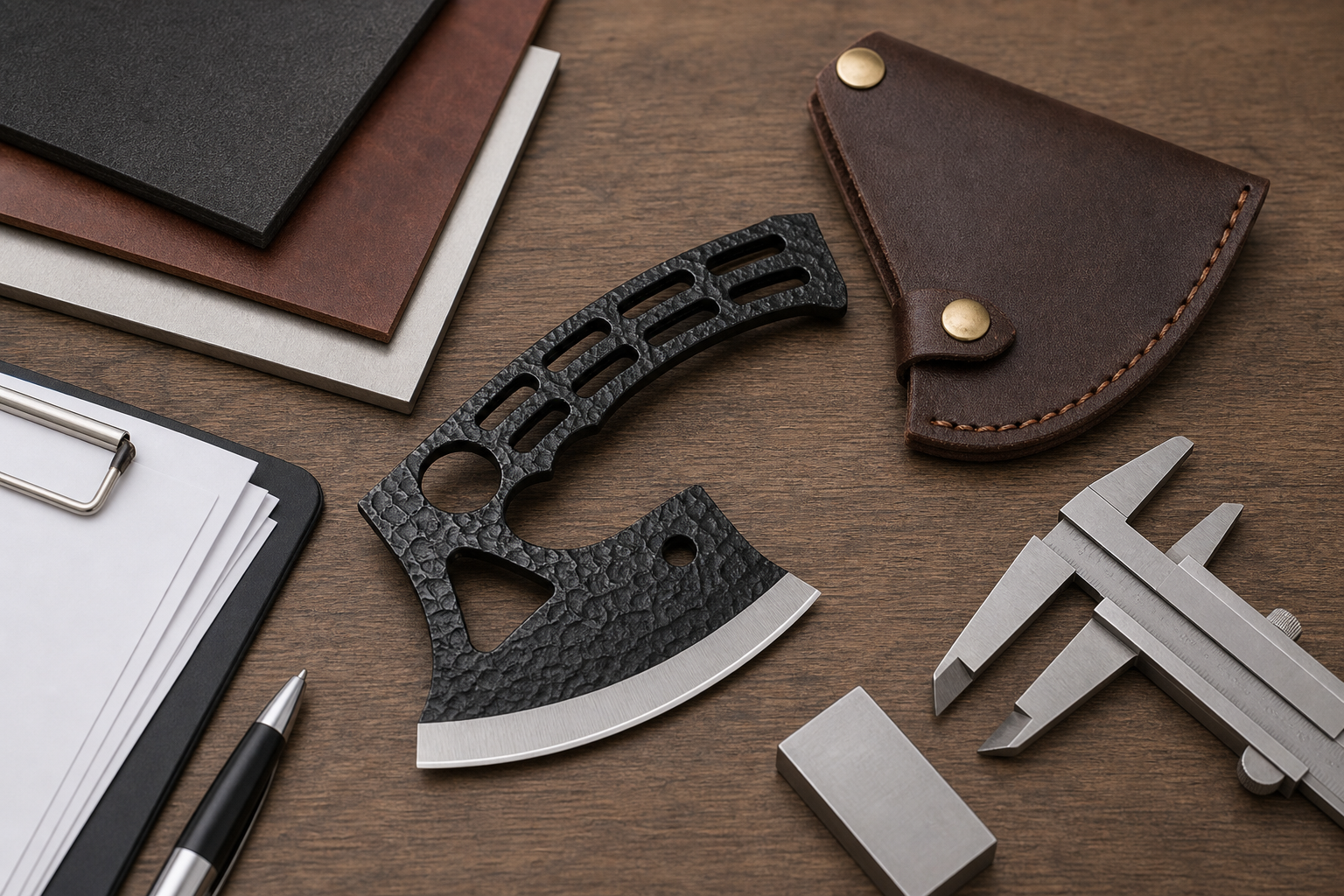
I Ask Suppliers for Safety Evidence
The supplier should not only send a dramatic sample photo. The buyer should request drawings, material details, heat-treatment targets, handle attachment records, sheath samples, packaging mockups, warning copy, and inspection reports.
The RFQ should include:
- Adult target user
- Lawful task category
- Blade length and width
- Blade thickness
- Steel and hardness range
- Grind and edge angle
- Handle material and texture
- Guard or palm stop
- Sheath or edge cover
- Carry or storage method
- Warning and PPE copy
- Travel disclaimer
- Claim language to avoid
- Corrosion review
- Handle attachment test
- Final inspection plan
I also ask suppliers what failure they worry about most. If they say sheath fit, handle cracking, coating wear, blade warp, or carton puncture, that answer points directly to the next sample review.
Turn this article into a fixed blade project.
Send your target use, blade size, steel, handle direction, sheath needs, quantity, and packaging plan. Vast State can help shape it into a quote-ready project.
Conclusion
Buyers should source machete-style tools as adult outdoor utility products, with clear task limits, safe storage, conservative labels, and documented QC.
OEM/ODM RFQ Checklist
Prepare these details to help Vast State review your project and provide a more accurate quotation.
| RFQ Field | What to Prepare |
|---|---|
| Project type | OEM from drawing / ODM private label / wholesale catalog |
| Product category | Folding knife / fixed blade / multi-tool / outdoor tool |
| Design status | Idea / sketch / 2D drawing / 3D CAD / physical sample |
| Target price | Ex-factory target price or retail price range |
| MOQ expectation | 500 / 1,000 / 3,000 / 5,000+ pcs |
| Logo method | Laser engraving / etching / printing / molded logo |
| Packaging | Standard packaging / custom retail box / Amazon-ready |
| Market | USA / EU / Japan / Korea / Middle East / other |
| Compliance needs | Buyer-specified testing / documentation / labeling |
| Timeline | Sample deadline / mass production deadline |