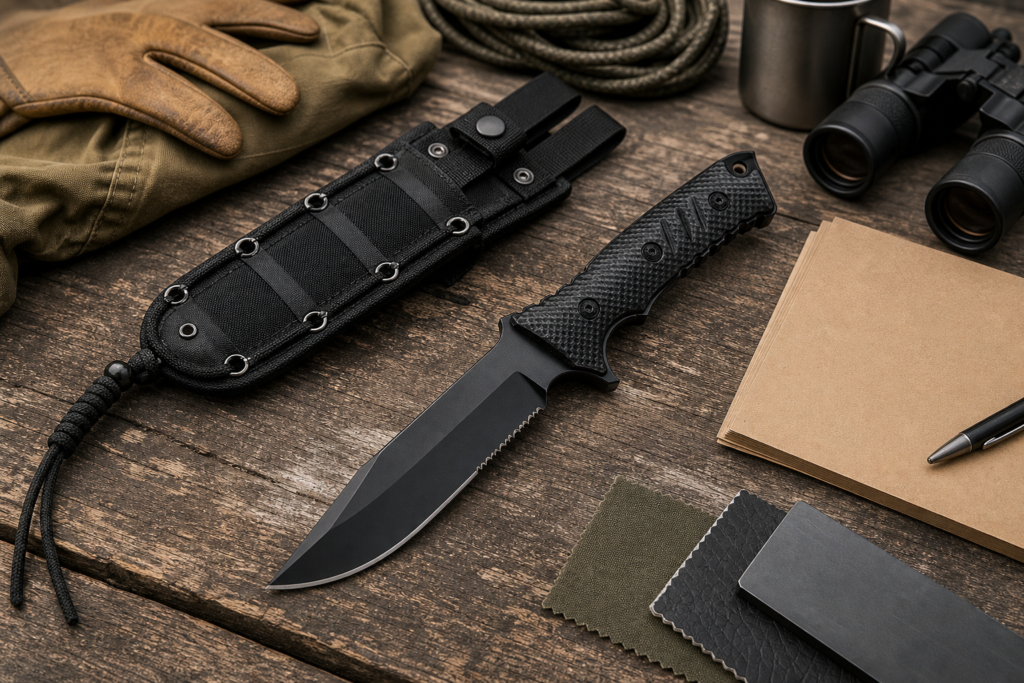
"Survival knife" is a powerful product name. If the brief is vague, the project can drift into unsafe claims, poor sheath design, or weak QC.
Buyers should specify survival knife products as lawful adult outdoor utility tools by defining the real task set, blade structure, handle grip, sheath retention, corrosion resistance, warning copy, travel limits, claim support, and final inspection method before production.
Quick buyer brief:
- Answer: A survival knife should be sourced as an outdoor utility and emergency-preparedness tool, not as a weapon. The product must be built around realistic tasks, safe storage, durable materials, and conservative marketing.
- Buyer context: This guide is for outdoor knife brands, camping gear importers, emergency-kit suppliers, private label teams, distributors, catalog sellers, and OEM/ODM sourcing managers.
- Key checks: Adult-use positioning, lawful outdoor task list, blade length, blade thickness, steel grade, heat treatment, grind, handle material, sheath lock, belt or pack carry, travel copy, warning label, corrosion review, and QC records.
Planning a fixed blade or outdoor knife project?
Share your target use, blade size, steel preference, handle direction, sheath needs, quantity range, and packaging plan. Vast State can help turn it into a quote-ready specification.
This article treats survival knives as lawful adult outdoor, camping, emergency-preparedness, and field utility tools. It does not cover combat, self-defense, weapon use, intimidation, concealed carry, traps, or survival technique instruction. Buyers should review local laws, travel rules, retailer policies, and platform restrictions before selling any knife product.
The commercial question is not "How aggressive can the knife look?" The better question is "What outdoor utility tasks can this product safely support, and can the supplier prove the design will hold up through production?"
What Should "Survival Knife" Mean in an OEM/ODM Brief?
The term needs boundaries.
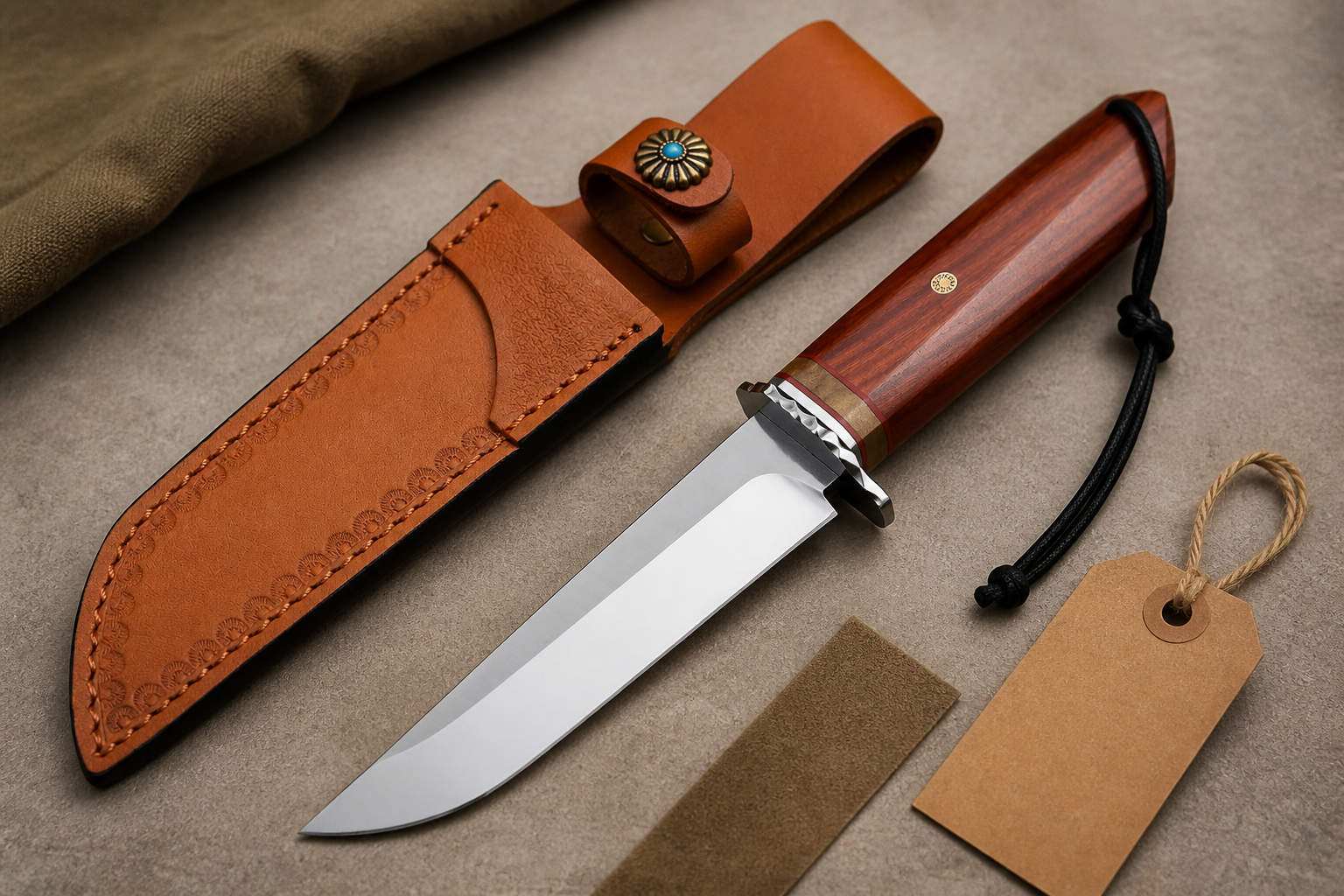
In OEM/ODM sourcing, a survival knife should mean a durable adult outdoor utility knife for lawful preparedness tasks, with safe sheath storage and clear instructions.
I Define the Category Before the Shape
The word "survival" can mean many things in the market. It can mean camping, emergency kits, bushcraft-inspired gear, rescue preparation, fishing support, vehicle kits, or outdoor utility. Buyers should define the category before discussing blade shape.
The Ready.gov emergency supply kit checklist is useful because it frames preparedness as practical supplies, planning, and individual needs. It does not give buyers permission to make dramatic weapon claims. A knife project should sit inside a responsible gear story, not a fear-based one.
A clear brief should answer:
- Is the product for camping, vehicle kits, emergency kits, fishing, field repair, or general outdoor use?
- Is the buyer selling a fixed blade, folding knife, multi-tool companion, or set component?
- Which tasks are in scope?
- Which claims are not allowed?
- What carry method is included?
- What warning copy is required?
- Which laws or channels must be checked?
I like to write the category sentence first: "This is an adult outdoor utility knife for lawful camping and emergency-preparedness tasks." That sentence keeps the project grounded.
Which Outdoor Tasks Should Shape the Specification?
Tasks should be realistic.
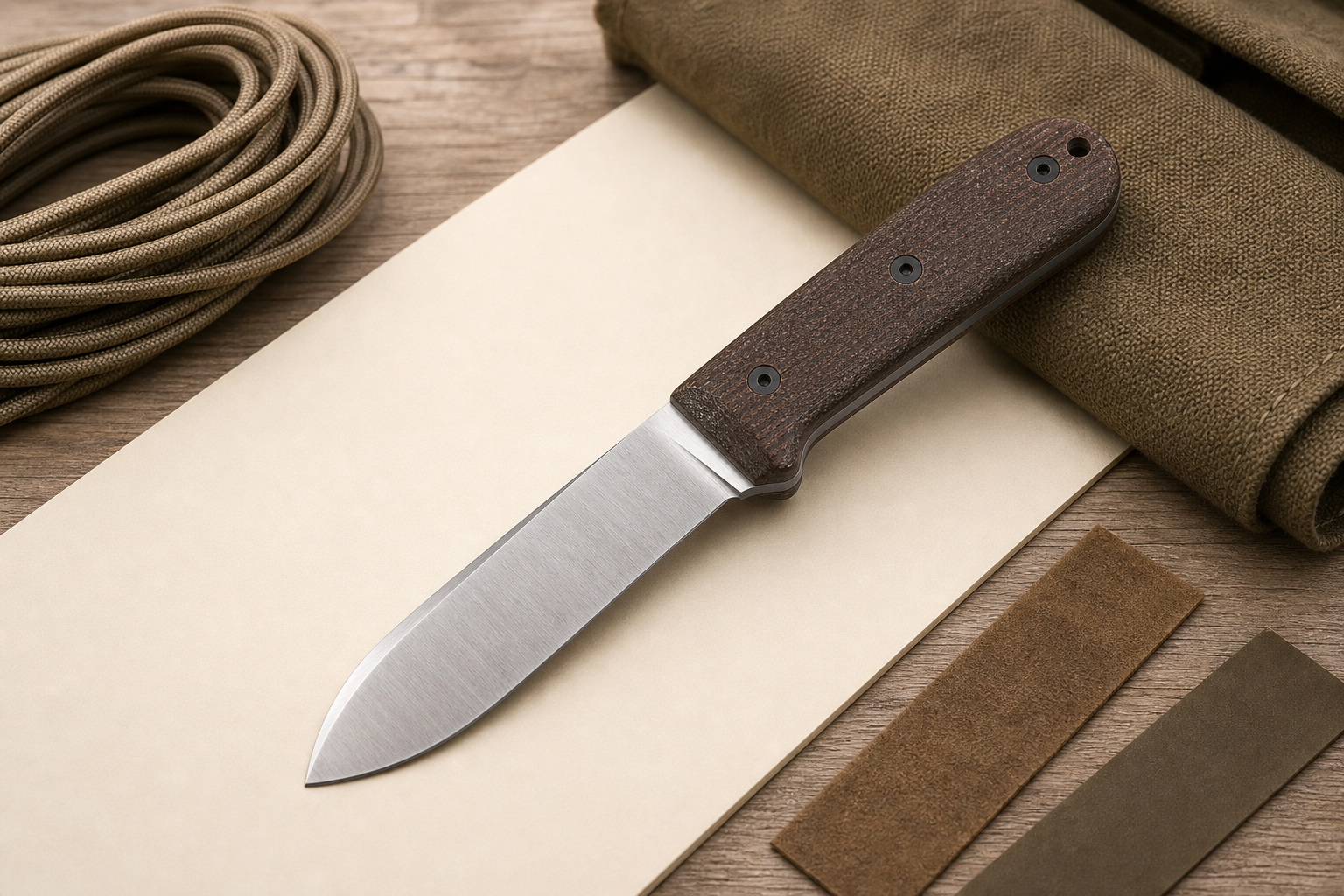
Survival knife specifications should be based on safe, lawful tasks such as cord cutting, light food prep, camp maintenance, package opening, repair support, and general outdoor utility.
I Avoid Turning the Article Into a Use Manual
Buyers need a task list, but they do not need to publish risky technique instructions. The purpose of the sourcing brief is to guide product design. It is not to teach customers how to use a blade in hazardous conditions.
The CCOHS sharp blades guidance supports basic sharp-tool principles: use the right tool, inspect it, keep it sharp enough to avoid excessive force, cut away from the body, and store it safely. Those ideas are directly relevant to outdoor utility products.
Common design-driving tasks may include:
- Cord or rope cutting
- Camp kitchen prep where lawful and sanitary
- Packaging and gear repair support
- Light carving or shaving tasks
- Field maintenance
- Emergency kit utility
- Tackle or line support
- General campsite organization
The task list should also say what the knife is not designed for. If the product is not designed for heavy prying, chopping, throwing, baton abuse, or rescue entry, the buyer should not imply those uses in the listing.
How Should Blade Structure Be Specified?
Structure controls durability.
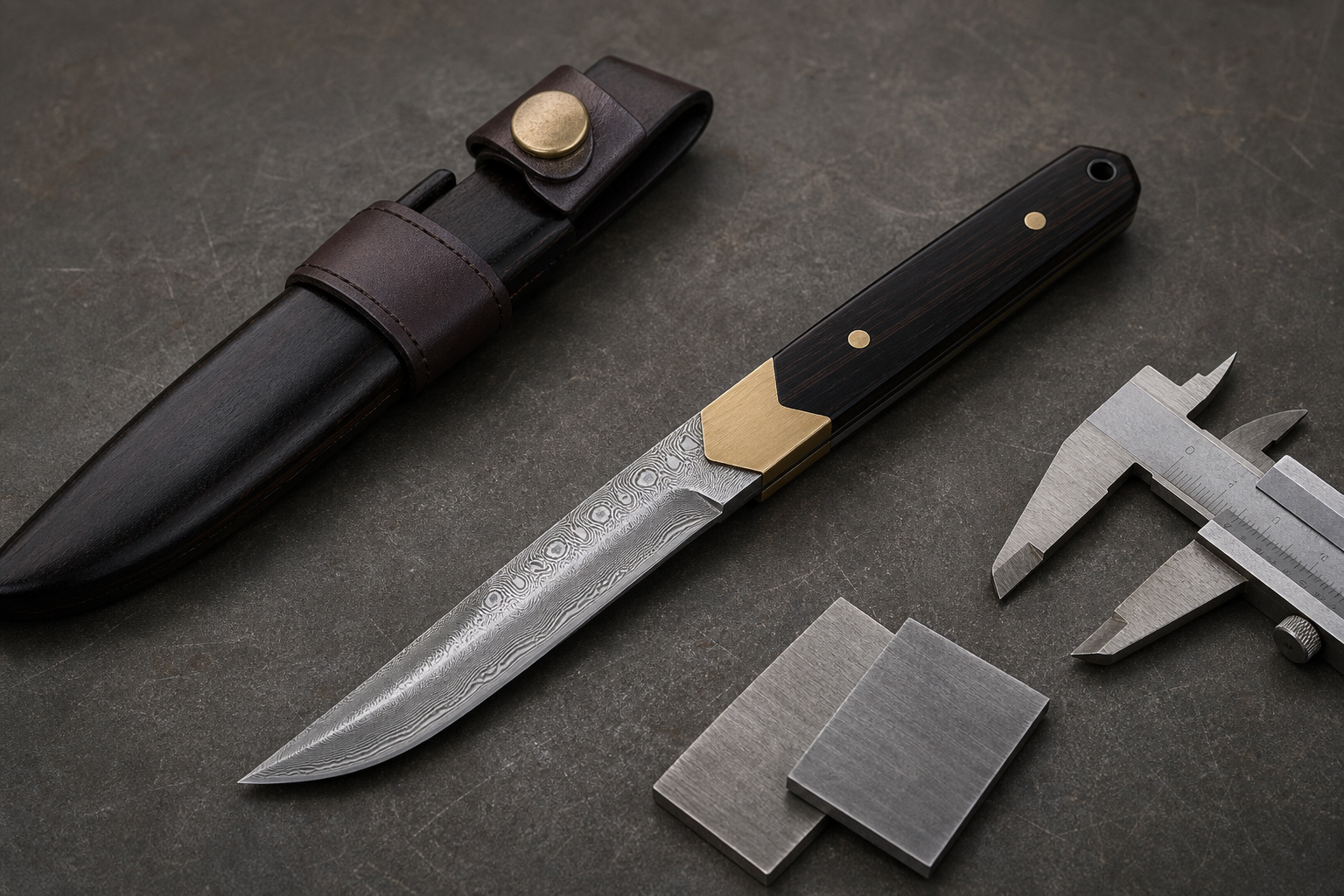
Buyers should define blade length, thickness, tang construction, steel grade, hardness, grind, tip shape, edge angle, coating, and tolerance limits.
I Do Not Let "Heavy Duty" Stay Vague
"Heavy duty" is not a drawing. Buyers should specify what strength means for the product category. A lightweight emergency kit knife, a camp utility fixed blade, and a larger outdoor knife need different geometry.
The NIST dimensional metrology page supports the idea that dimensional measurement helps control manufactured parts. For survival knife projects, this means blade length, thickness, width, tip position, tang geometry, handle fit, and sheath clearance should be measurable.
Important blade fields include:
- Overall blade length
- Effective edge length
- Blade thickness
- Tang construction
- Steel grade or approved alternatives
- Hardness range
- Grind type
- Edge angle target
- Coating or finish
- Tip profile
- Jimping or spine texture, if used
- Allowed tolerance range
Buyers should be careful with exaggerated pry-bar claims. A knife can be robust without being sold as a substitute for every tool. If the product is expected to handle high lateral load, the buyer needs a defined test method and a supplier that can support it.
What Handle and Ergonomic Details Matter Outdoors?
Grip is part of safety.
Outdoor knife handles should support wet, cold, gloved, and tired hands while remaining cleanable, durable, and comfortable for controlled utility cuts.
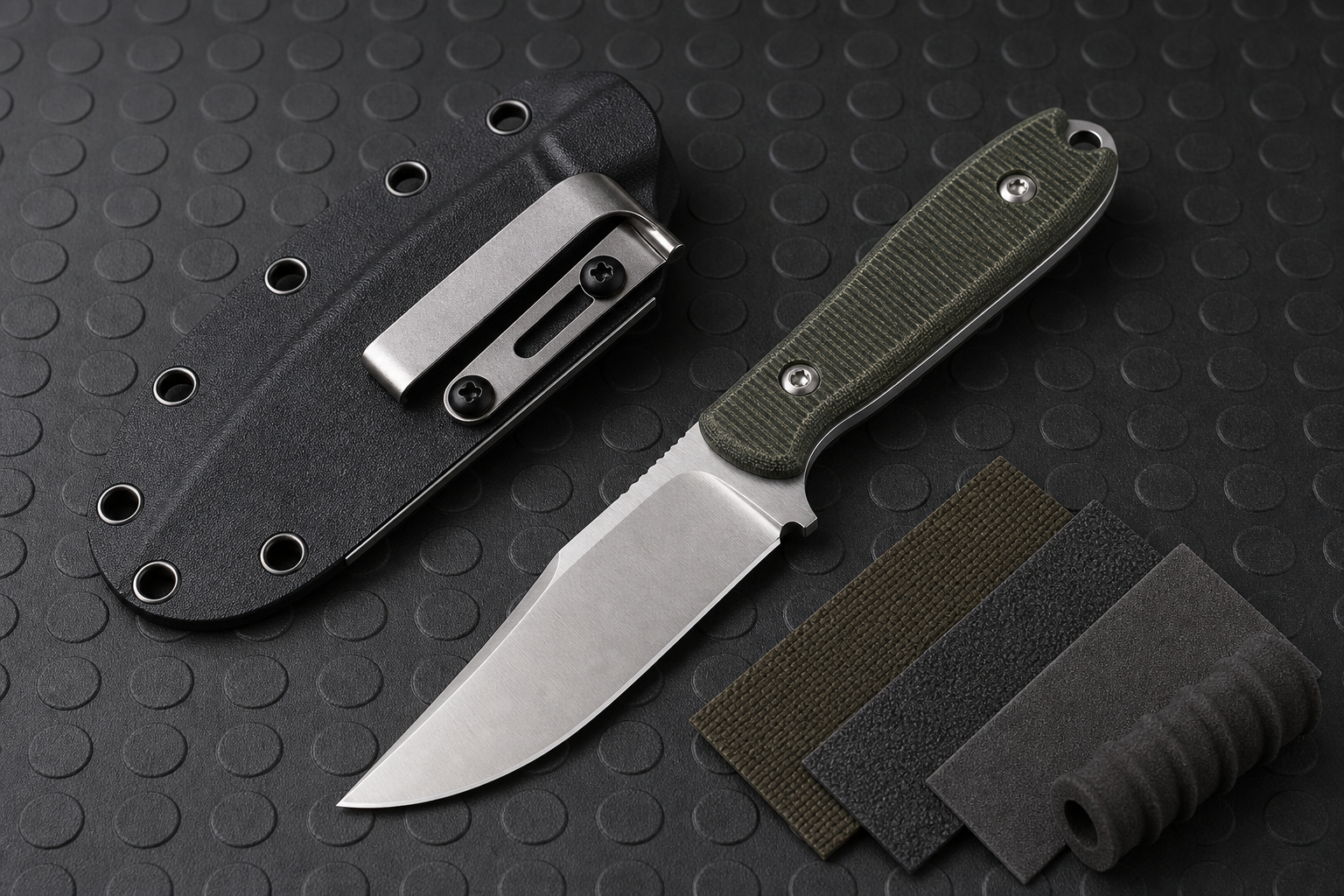
I Review Grip With the Use Environment in Mind
Outdoor handles face sweat, rain, dirt, sunscreen, gloves, cold fingers, and long storage. A handle that looks good in a studio may feel slippery outdoors. A handle that has deep texture may trap dirt. A hard handle may last well but feel uncomfortable in repeated cuts. A soft handle may feel secure but wear faster.
Handle specification should cover:
- Material
- Texture depth
- Guard or finger stop
- Palm swell
- Handle length
- Handle thickness
- Balance point
- Tang attachment
- Fastener type
- Lanyard hole finish, if used
- Cleanability
- Odor or stain resistance
If the knife may be used for food prep, buyers should consider hygiene and cleaning. The FoodSafety.gov four steps page reminds users to clean utensils and surfaces, especially around raw food. That matters for handle joints, textured grips, and sheath drainage.
The buyer should ask for wet-hand sample feedback. It is a small step, but it catches many handle problems early.
How Should Sheath and Carry Systems Be Designed?
The sheath is a safety component.
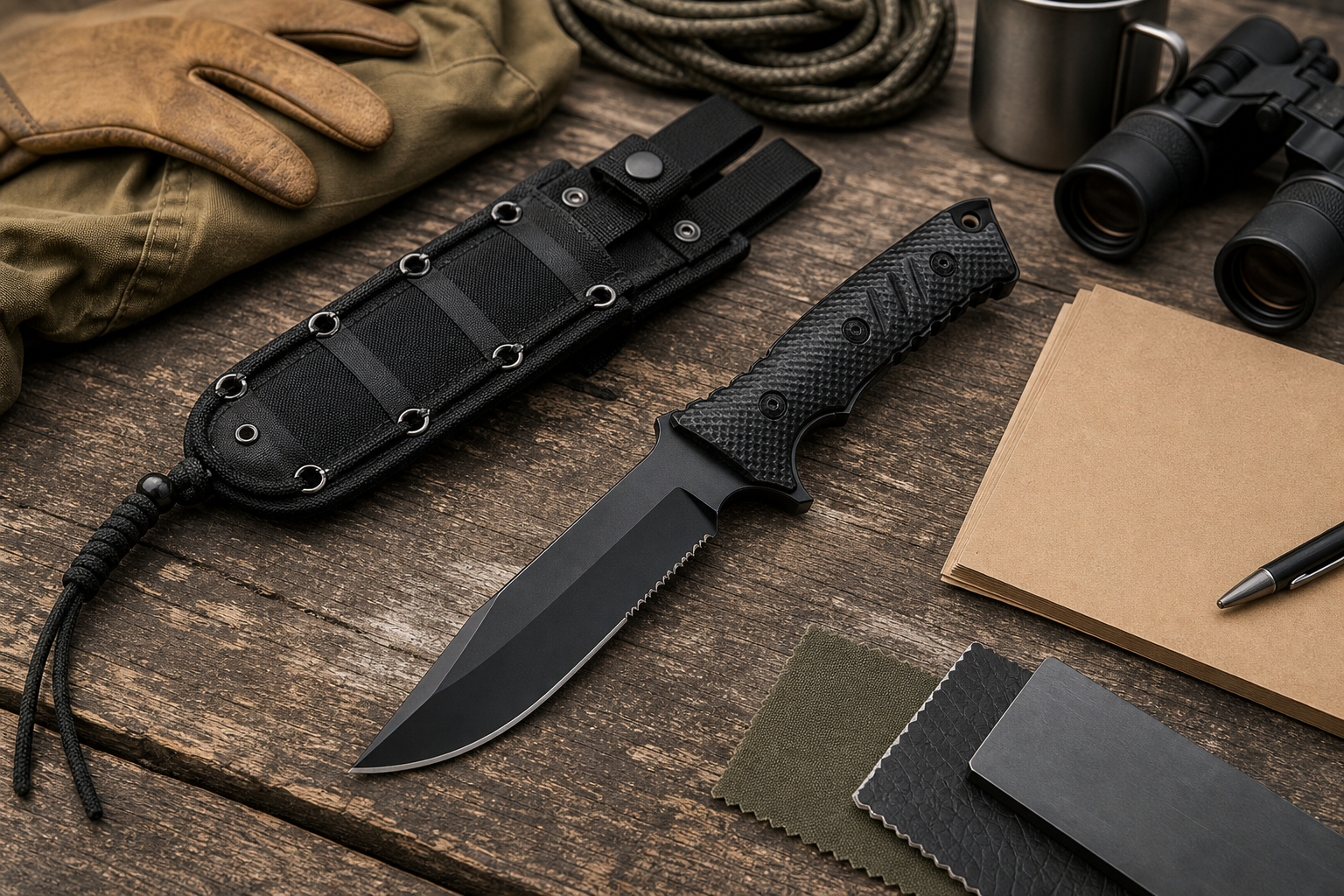
A survival knife sheath should fully cover the edge and tip, retain the knife during normal movement, support safe removal, and fit the intended belt, pack, or storage system.
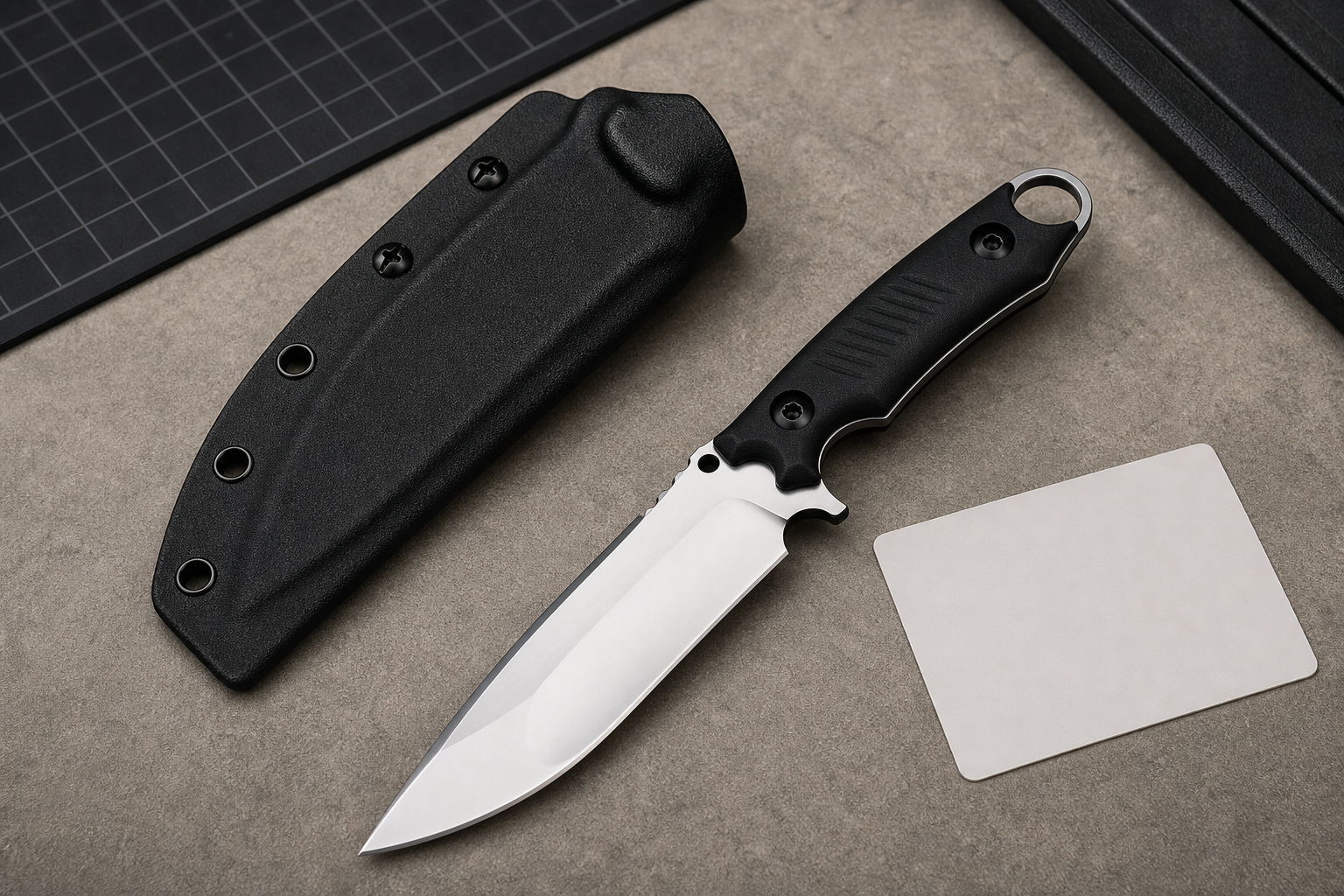
I Approve the Knife and Sheath Together
For an outdoor fixed blade, the sheath is not optional decoration. It protects the edge, the user, the package, and the customer after purchase. A weak sheath can turn a good blade into a poor product.
The CPSC manufacturing best practices page supports safety by design, foreseeable use and misuse review, supplier control, and documentation. Sheath design fits that thinking because buyers must consider movement, storage, unboxing, and transport.
Sheath review should include:
- Edge and tip coverage
- Retention force
- Shake or movement test
- Drainage, if intended for wet use
- Belt or pack attachment strength
- Clip or loop durability
- Insertion and removal direction
- Rattle and edge rub
- Package fit
- Warning card placement
Travel copy also needs care. The TSA What Can I Bring page states that knives are not allowed in carry-on bags except plastic or round-bladed butter knives, and sharp objects in checked bags should be sheathed or securely wrapped. Buyers should not write "travel friendly" without precise limits.
What Materials and Finishes Fit Outdoor Utility?
Environment changes the material brief.
Outdoor utility knives need material choices that match corrosion exposure, edge retention, toughness, cleaning, coating durability, handle wear, and storage conditions.
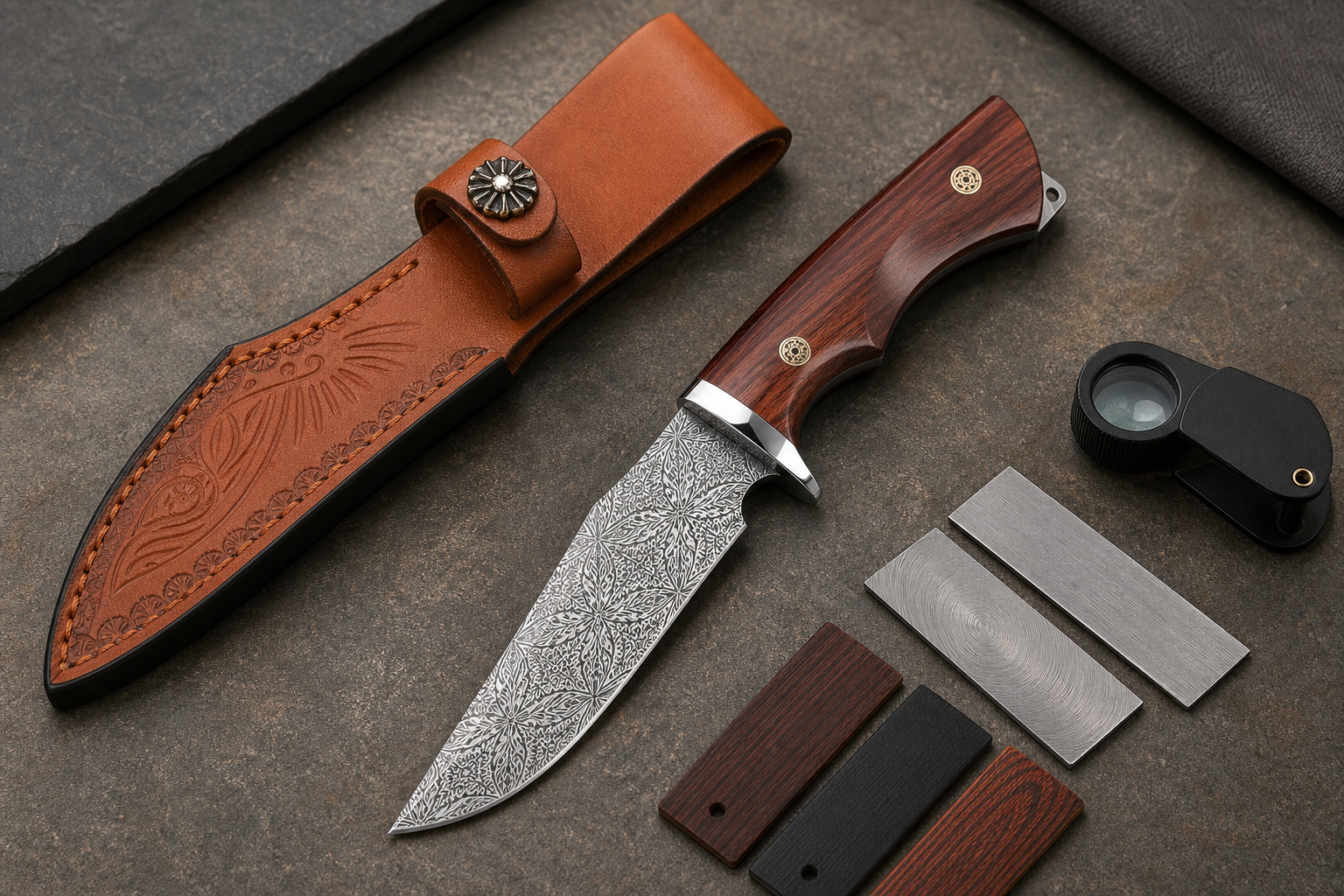
I Match Steel to the Actual Customer
Some buyers want corrosion resistance. Some want ease of sharpening. Some want edge retention. Some want toughness. Some want a price point that works for a bundled outdoor kit. No single steel or coating solves every project.
If the product may touch food, buyers should review food-contact material questions. The FDA explains that food contact substances include materials that come into contact with food and are not intended to have a technical effect in food. Its food packaging and food contact substances page helps buyers think about material declarations, coatings, handles, adhesives, and packaging.
Material fields should include:
- Steel grade
- Heat-treatment range
- Hardness range
- Coating or finish
- Corrosion review method
- Handle material
- Fasteners
- Adhesive or liner material
- Sheath material
- Cleaning instructions
- Storage instructions
Buyers should avoid unsupported claims such as "rust proof," "unbreakable," or "maintenance free." Outdoor products need honest care guidance.
What Testing and QC Should Buyers Require?
Testing should match claims.
QC should verify blade dimensions, edge finish, hardness, grind, handle attachment, sheath retention, corrosion review, package protection, labels, and lot records.
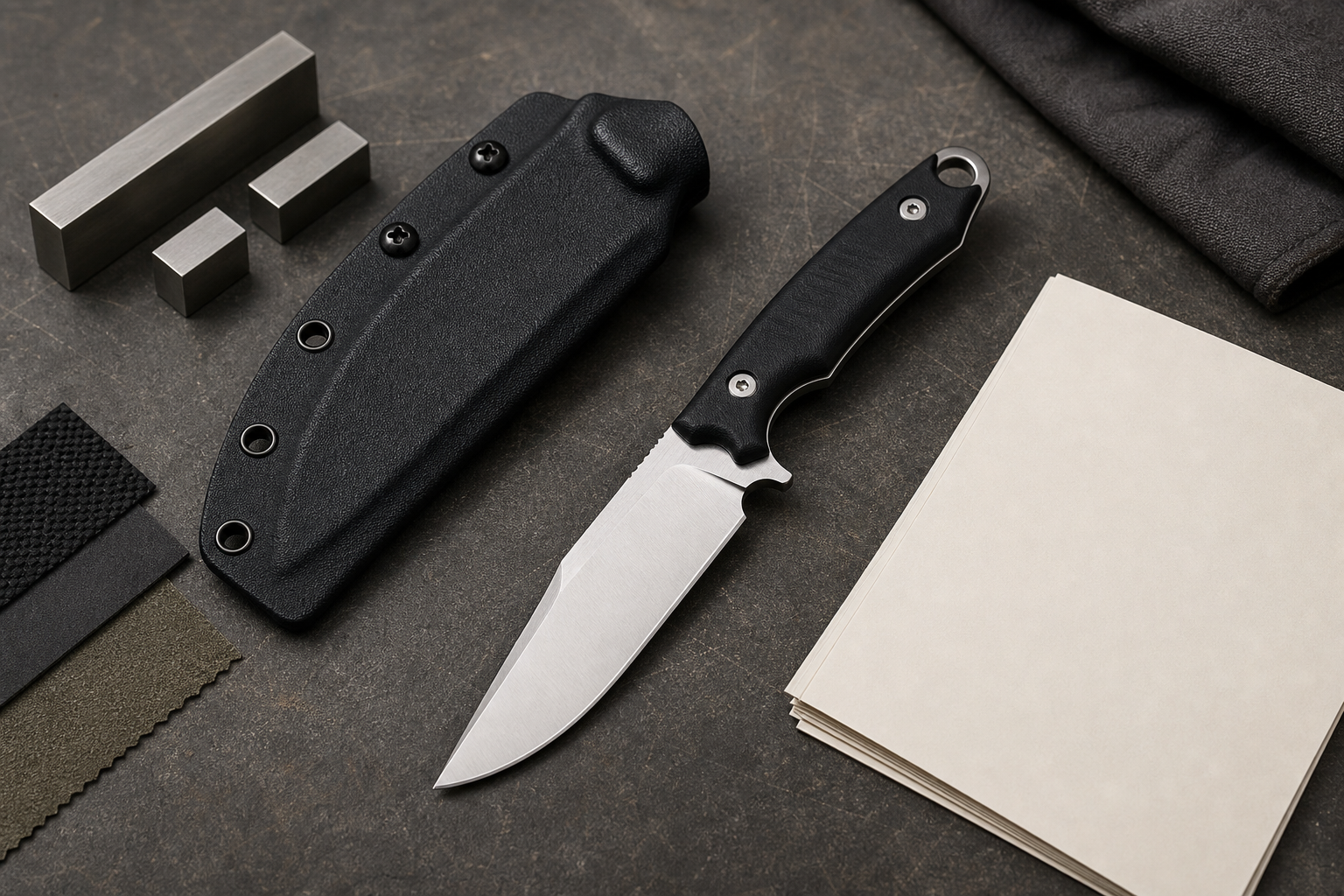
I Test the Product Around Its Claims
If marketing says the knife is corrosion resistant, the buyer needs a corrosion review. If the listing says secure sheath, the buyer needs sheath retention testing. If the product says outdoor utility, the buyer needs handle, edge, and packaging checks. Claims should drive QC.
The ISO 8442-5:2004 page supports the principle that sharpness and edge retention for hand knives used in food preparation can be evaluated through defined methods. Buyers may use other methods for outdoor knives, but the same discipline applies: define the test before making the claim.
The CPSC Handbook for Manufacturing Safer Consumer Products supports safety planning, design review, production control, and documentation. A survival knife QC plan should include records, not just sample photos.
QC fields should include:
- Blade length and thickness
- Tang and handle fit
- Grind symmetry
- Edge angle
- Burr removal
- Hardness range
- Coating defects
- Corrosion or salt exposure review, when relevant
- Handle pull or fastener check
- Sheath retention
- Package protection
- Warning card presence
- Lot traceability
The NIST metrological traceability page is useful when buyers require gauge control, calibration records, or traceable measurement evidence.
How Should Labels and Marketing Avoid Risky Claims?
Words can change the product.
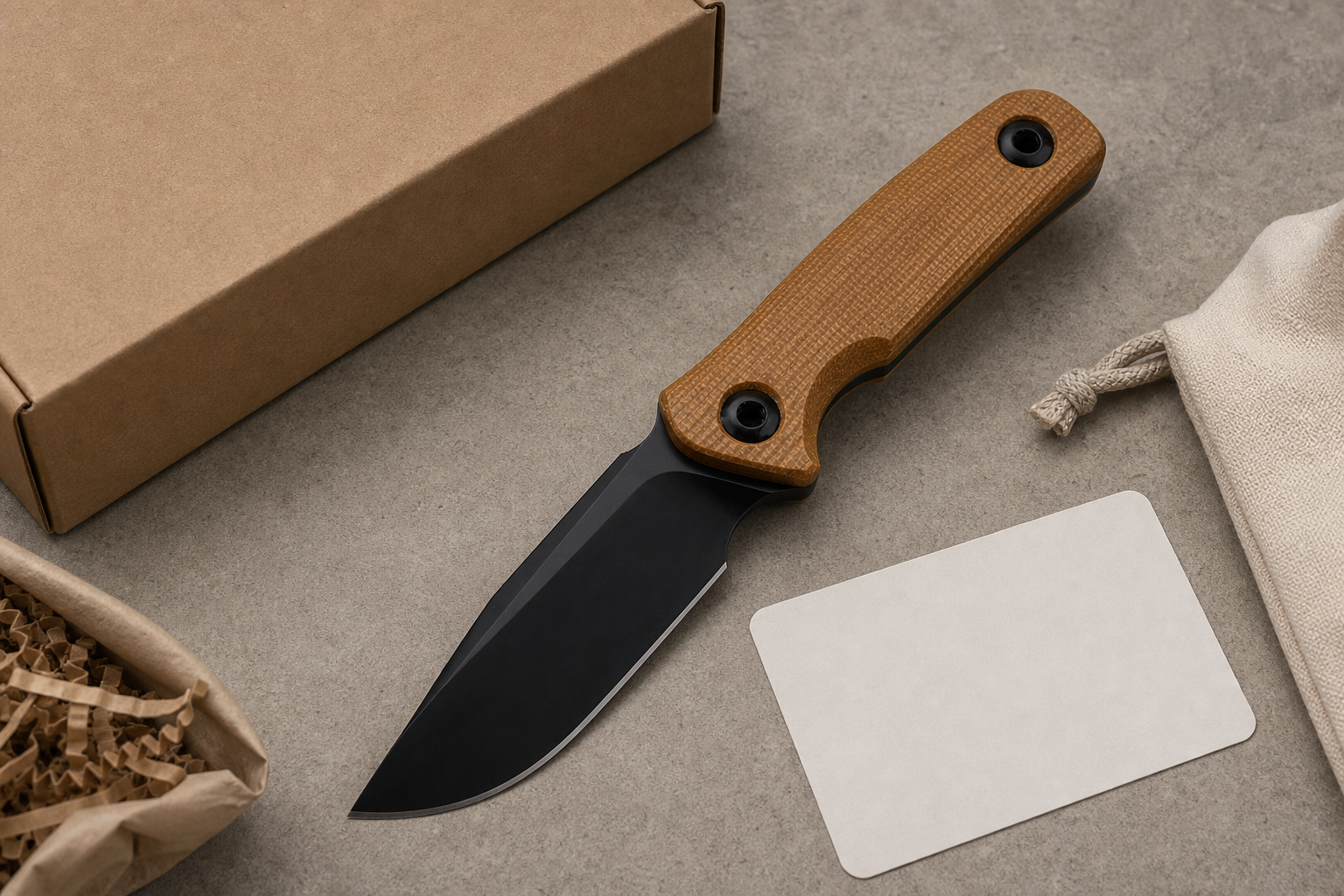
Marketing should describe lawful outdoor utility, emergency preparedness, sheath safety, material choices, and care instructions without implying combat, self-defense, unrestricted carry, or universal performance.
I Remove Fear-Based Copy
"Survival" can attract dramatic language. Buyers should be careful. Copy should not say the knife is for fighting, defense, intimidation, or carrying anywhere. It should not promise that one knife can replace all outdoor tools.
The FTC advertising and marketing basics page supports truthful, non-deceptive, evidence-based claims. If the buyer says full tang, the construction should match. If the buyer says secure sheath, retention should be tested. If the buyer says corrosion resistant, the material and review method should support it.
The CPSC labeling requirements overview also supports warning and label review based on product type, design, components, and intended audience.
Safer claim directions:
- Adult outdoor utility knife
- Designed for lawful camping and preparedness tasks
- Secure sheath included
- Corrosion-resistant finish, clean and dry after use
- Full-tang construction when verified
- Tested to buyer-defined QC checks
Claims to avoid:
- Combat ready
- Defensive carry
- Indestructible
- Airport friendly
- Legal everywhere
- Essential weapon
- No maintenance needed
How Should Environmental and Outdoor Ethics Fit the Product Story?
Prepared users should also be responsible users.
Outdoor product copy should encourage preparation, local rule awareness, safe disposal, campsite care, and respect for public lands without teaching harmful field behavior.
I Keep the Outdoor Story Responsible
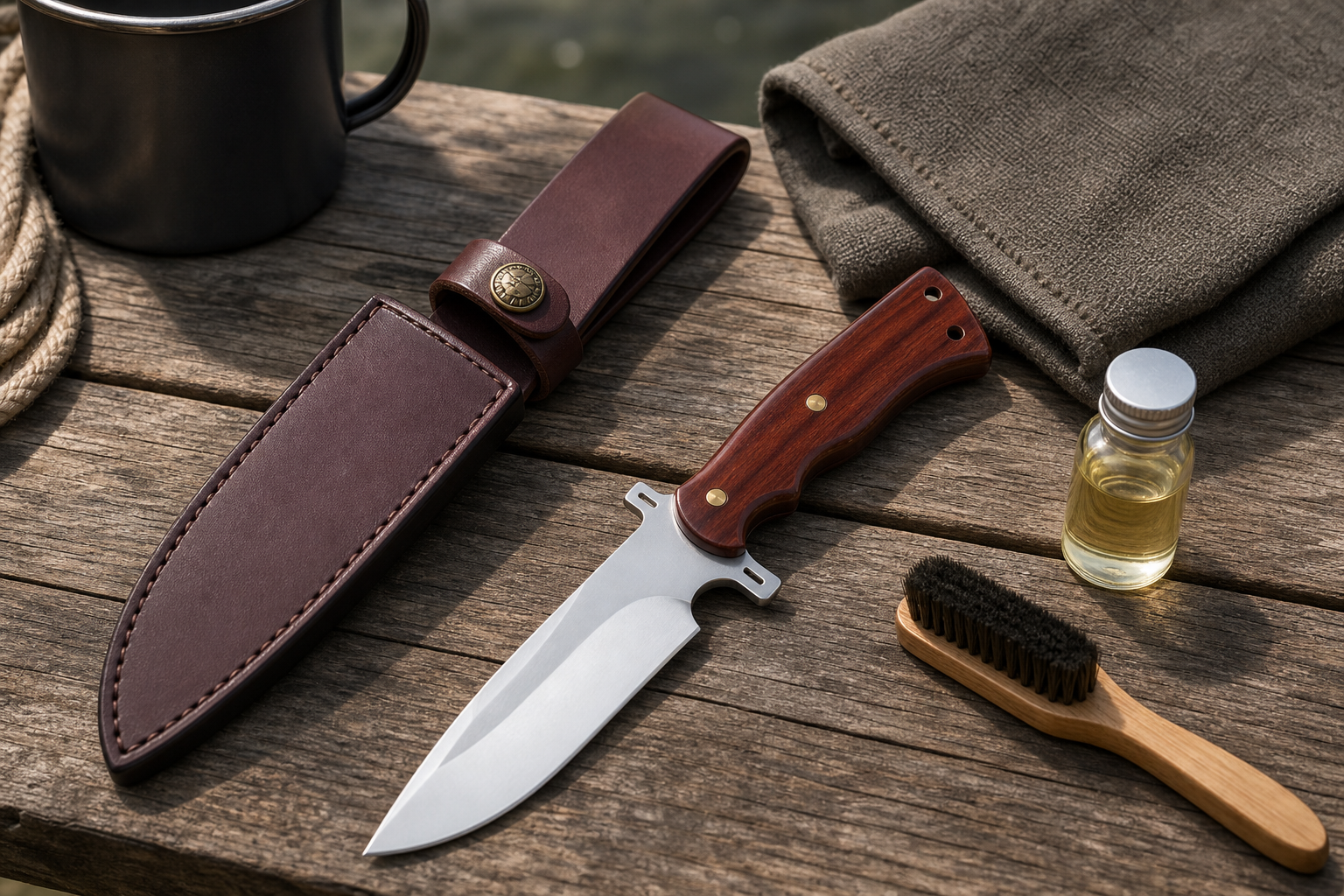
Outdoor customers often care about public lands and safe travel. Buyers can support that with responsible copy. The product should not encourage cutting live vegetation, damaging trails, carving public property, leaving waste, or ignoring local rules.
The National Park Service Leave No Trace Seven Principles page highlights planning ahead, disposing of waste properly, leaving what you find, minimizing campfire impacts, respecting wildlife, and being considerate of others. For a knife product page, that means the product story can mention preparation and responsible use without turning into a field instruction guide.
Packaging or care cards may include:
- Know local regulations before use
- Keep the blade sheathed when not in use
- Pack out damaged packaging or waste
- Do not damage live trees or public property
- Follow local fire rules
- Store safely away from children
- Clean and dry the knife after outdoor use
Responsible outdoor copy helps the buyer avoid the worst version of "survival" marketing. It makes the product feel useful, not reckless.
What Should Go Into a Survival Knife RFQ?
The RFQ should make the category disciplined.
A strong RFQ should define lawful outdoor tasks, blade structure, material system, handle, sheath, travel copy, warnings, marketing limits, testing, and QC records.
I Ask Suppliers for Proof, Not Posture
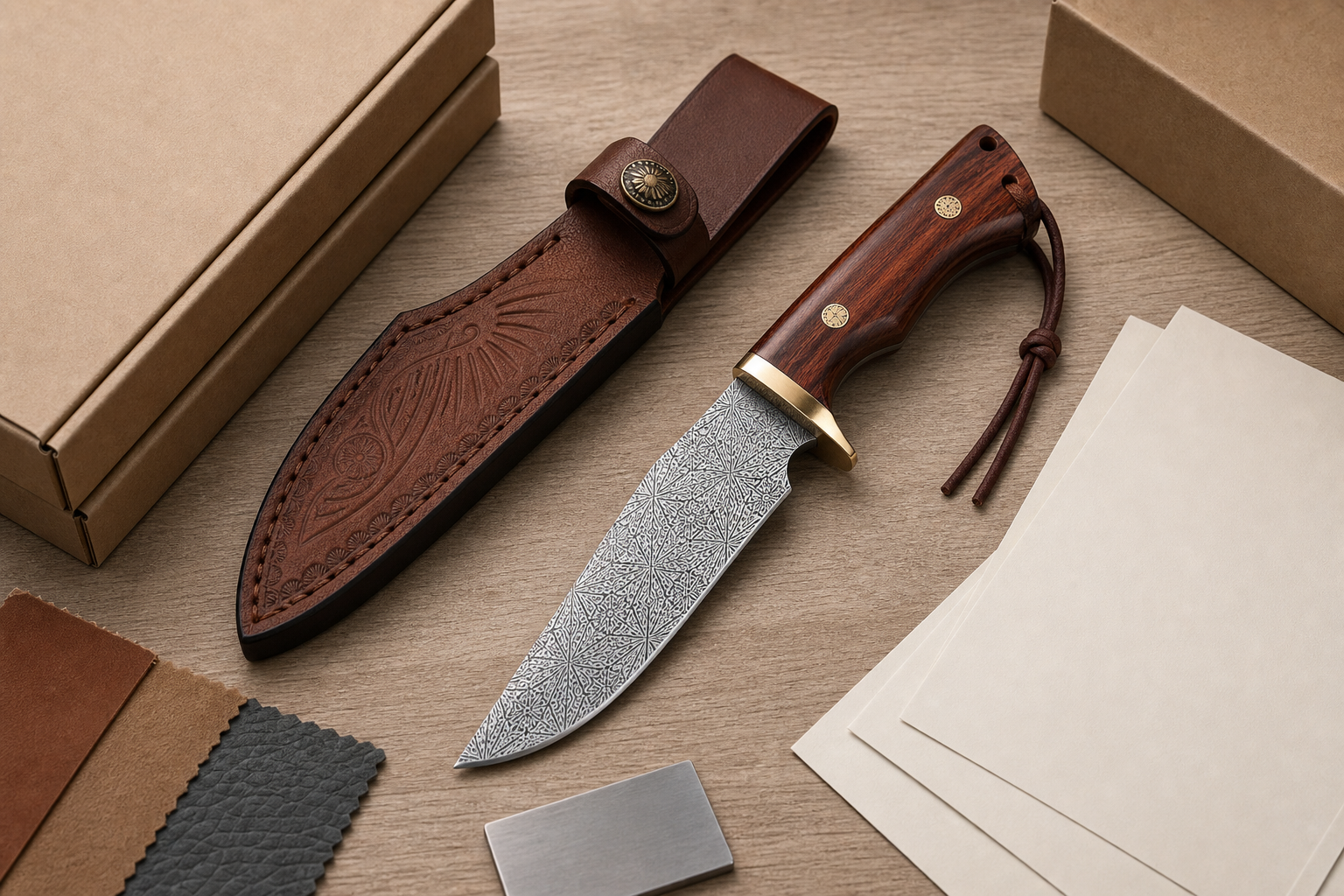
The supplier should not only send a tough-looking sample. The supplier should show drawings, material declarations, heat-treatment targets, sheath retention records, packaging samples, warning copy, and inspection reports.
The RFQ should include:
- Adult target user
- Lawful outdoor task list
- Blade length and thickness
- Tang construction
- Steel and hardness range
- Grind and edge angle
- Handle material and texture
- Sheath material and retention target
- Carry method
- Coating or finish
- Travel and legal disclaimer copy
- Warning label
- Claim language to avoid
- Sharpness or edge test
- Corrosion review
- Final inspection plan
I also ask for a failure-mode discussion. What breaks first? The sheath clip, handle fasteners, coating, edge, tip, or packaging? A good supplier will answer honestly. That answer helps the buyer improve the product before production.
Turn this article into a fixed blade project.
Send your target use, blade size, steel, handle direction, sheath needs, quantity, and packaging plan. Vast State can help shape it into a quote-ready project.
Conclusion
Buyers should source survival knives as adult outdoor utility tools, with clear task limits, safe sheath design, honest claims, and documented QC.
OEM/ODM RFQ Checklist
Prepare these details to help Vast State review your project and provide a more accurate quotation.
| RFQ Field | What to Prepare |
|---|---|
| Project type | OEM from drawing / ODM private label / wholesale catalog |
| Product category | Folding knife / fixed blade / multi-tool / outdoor tool |
| Design status | Idea / sketch / 2D drawing / 3D CAD / physical sample |
| Target price | Ex-factory target price or retail price range |
| MOQ expectation | 500 / 1,000 / 3,000 / 5,000+ pcs |
| Logo method | Laser engraving / etching / printing / molded logo |
| Packaging | Standard packaging / custom retail box / Amazon-ready |
| Market | USA / EU / Japan / Korea / Middle East / other |
| Compliance needs | Buyer-specified testing / documentation / labeling |
| Timeline | Sample deadline / mass production deadline |