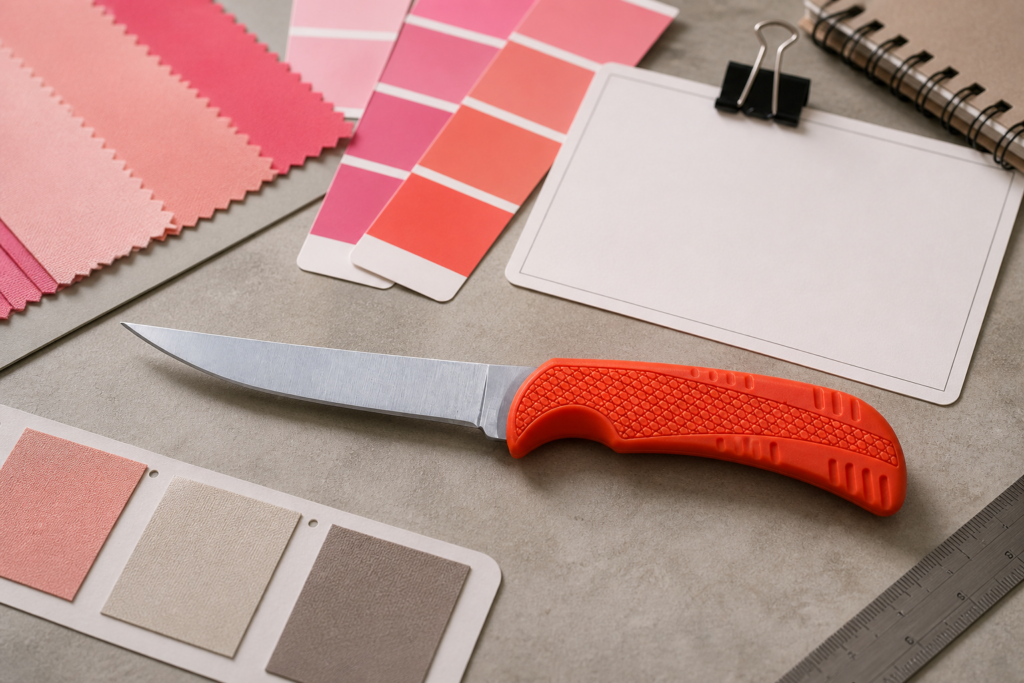
A pink knife can stand out quickly online. If the color brief is weak, it can also create durability, compliance, and audience-positioning problems.
Buyers should specify pink knife colorways by defining the adult user, knife category, exact color target, coating or handle material, food-contact review, cleaning limits, child-appeal risk, packaging tone, claim support, and color QC method before production.
Quick buyer brief:
- Answer: Pink can be a useful product color for visibility, line differentiation, lifestyle positioning, kitchen sets, outdoor kits, or private label collections, but it must be controlled like any other functional specification.
- Buyer context: This guide is for kitchen knife brands, outdoor knife brands, utility knife importers, private label teams, distributors, e-commerce sellers, and OEM/ODM sourcing managers.
- Key checks: Adult-use positioning, target customer, Pantone or digital color reference, material type, coating adhesion, color fastness, food-contact review, cleaning instructions, warning label, child-product risk, claim wording, and final inspection records.
Planning a private-label knife line for this market?
Use this article as an early planning reference, then prepare your target market, product category, labeling needs, and buyer-specified compliance requirements before production.
This article treats pink knives as lawful adult kitchen, outdoor, craft, or utility tools. It does not cover combat, self-defense, intimidation, weapon-use advice, or toy-like child positioning. A bright color can change how a product is perceived, so buyers should review both the physical product and the marketing context before launch.
The key idea is simple: color is not only decoration. Color affects shelf recognition, target audience, coating choice, handle material, cleaning expectations, claim language, and QC. A pink knife can be practical, but only when the color system is specified as carefully as the blade.
Why Does a Pink Knife Colorway Need a Real Specification?
Color changes product perception.
A pink knife colorway needs a real specification because color affects audience positioning, material choice, coating durability, photo accuracy, packaging, and customer expectations.
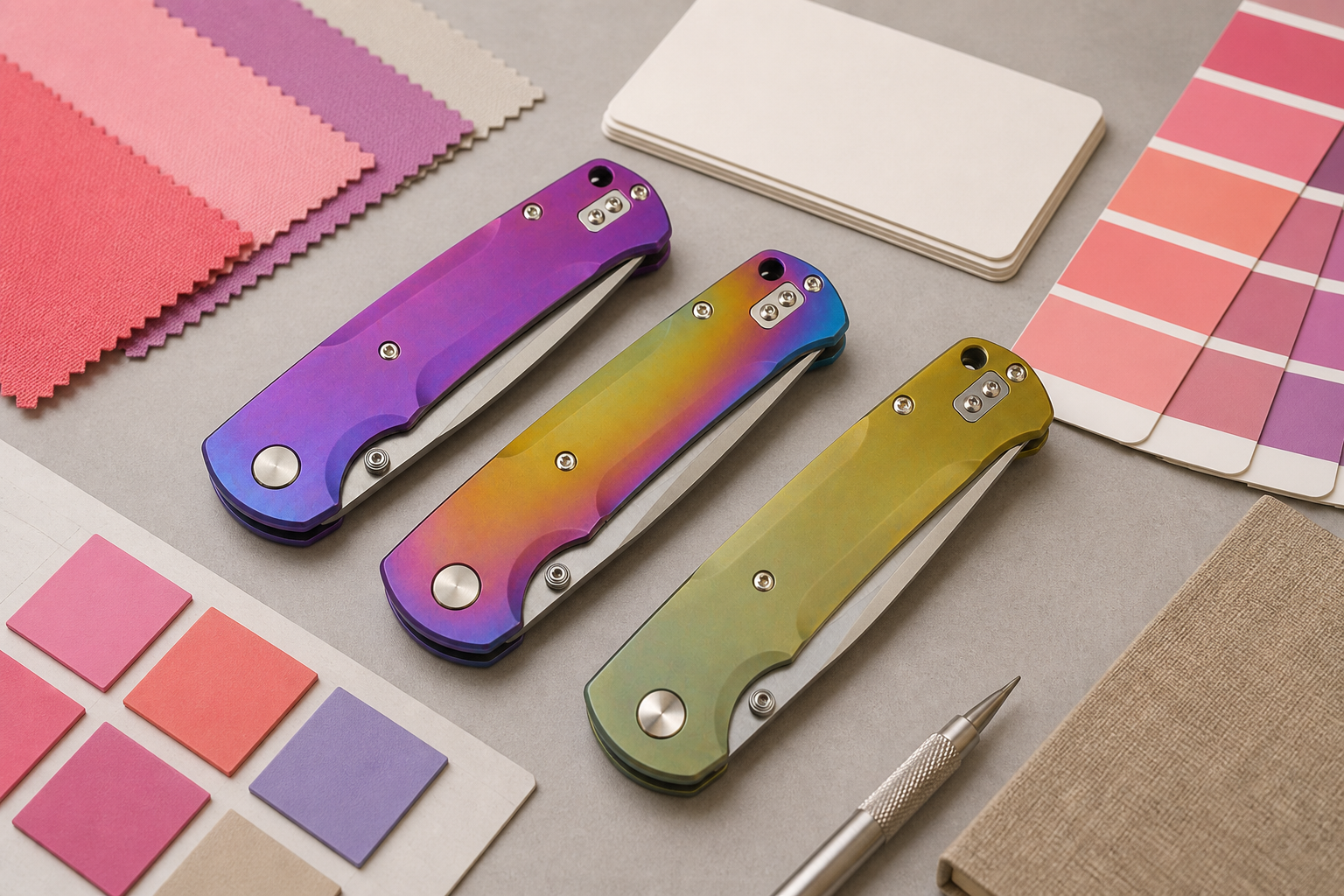
I Treat Pink as a Product System, Not a Paint Note
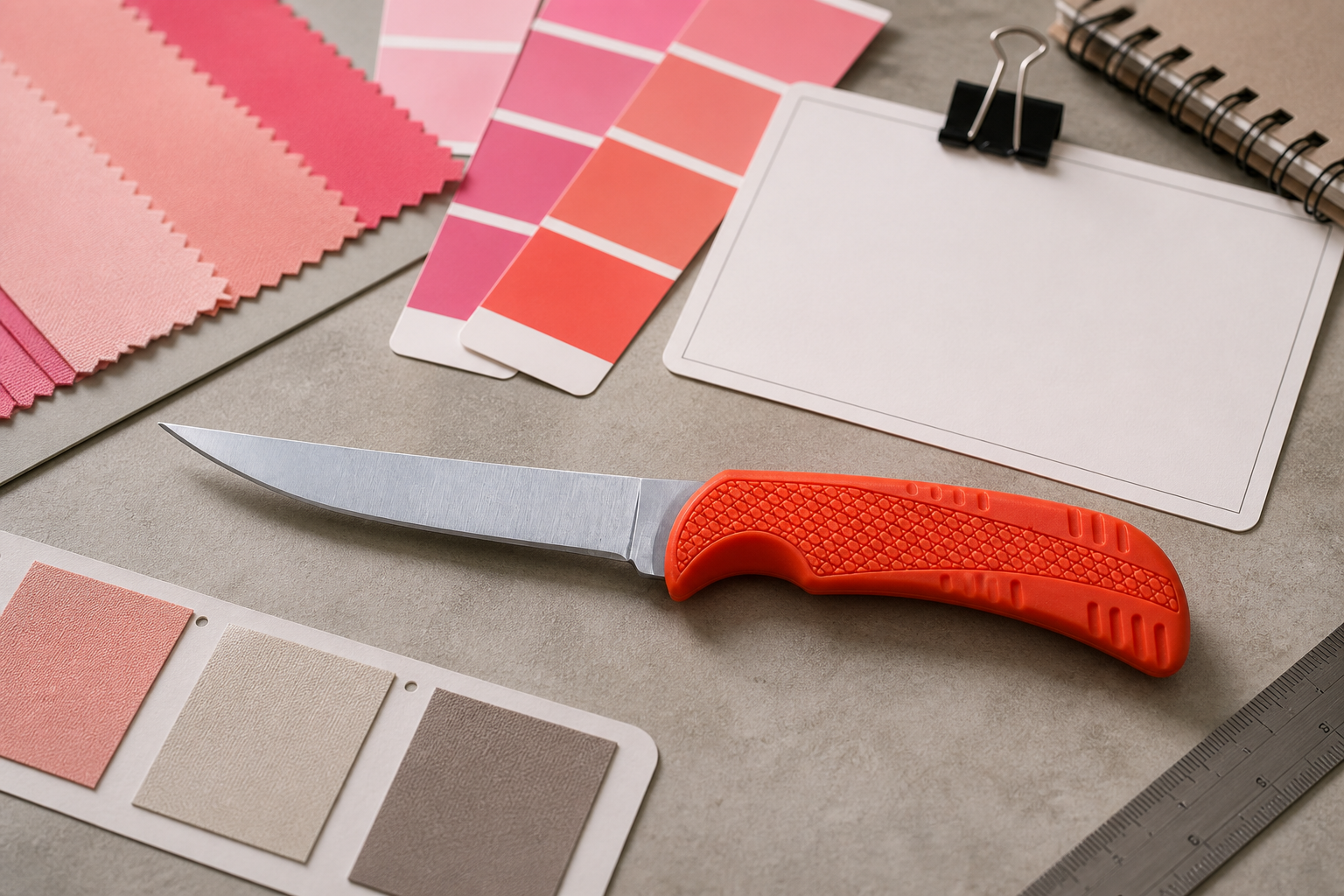
Many RFQs say only "make it pink." That is not enough. Pink can mean soft pastel, bright rose, hot pink, dusty blush, coral pink, salmon pink, or translucent pink. Each one can look different under studio lighting, warehouse light, outdoor light, and phone cameras.
The buyer should define the color target and the product reason. Is the pink color for kitchen set differentiation, field visibility, a lifestyle collection, a private label theme, or a limited seasonal run? The answer changes materials, packaging, price point, and QC.
The NIST chapter on color and appearance explains why color and appearance measurement matters commercially. For buyers, this means visual approval alone can be unstable. Color should be tied to a reference, a tolerance, and an inspection method.
The RFQ should include:
- Color name and reference
- Approved physical color swatch
- Material or coating system
- Gloss or matte finish
- Lighting condition for approval
- Photo sample approval
- Cleaning and abrasion expectations
- Packaging color match
- Reorder color tolerance
If the color is important to the product promise, it deserves measurement and records.
Who Is the Target User and Why Does That Matter?
Audience changes compliance risk.
Buyers should define whether the pink knife is for adult kitchen users, outdoor users, craft users, work users, or collectors, and avoid child-focused packaging or language.
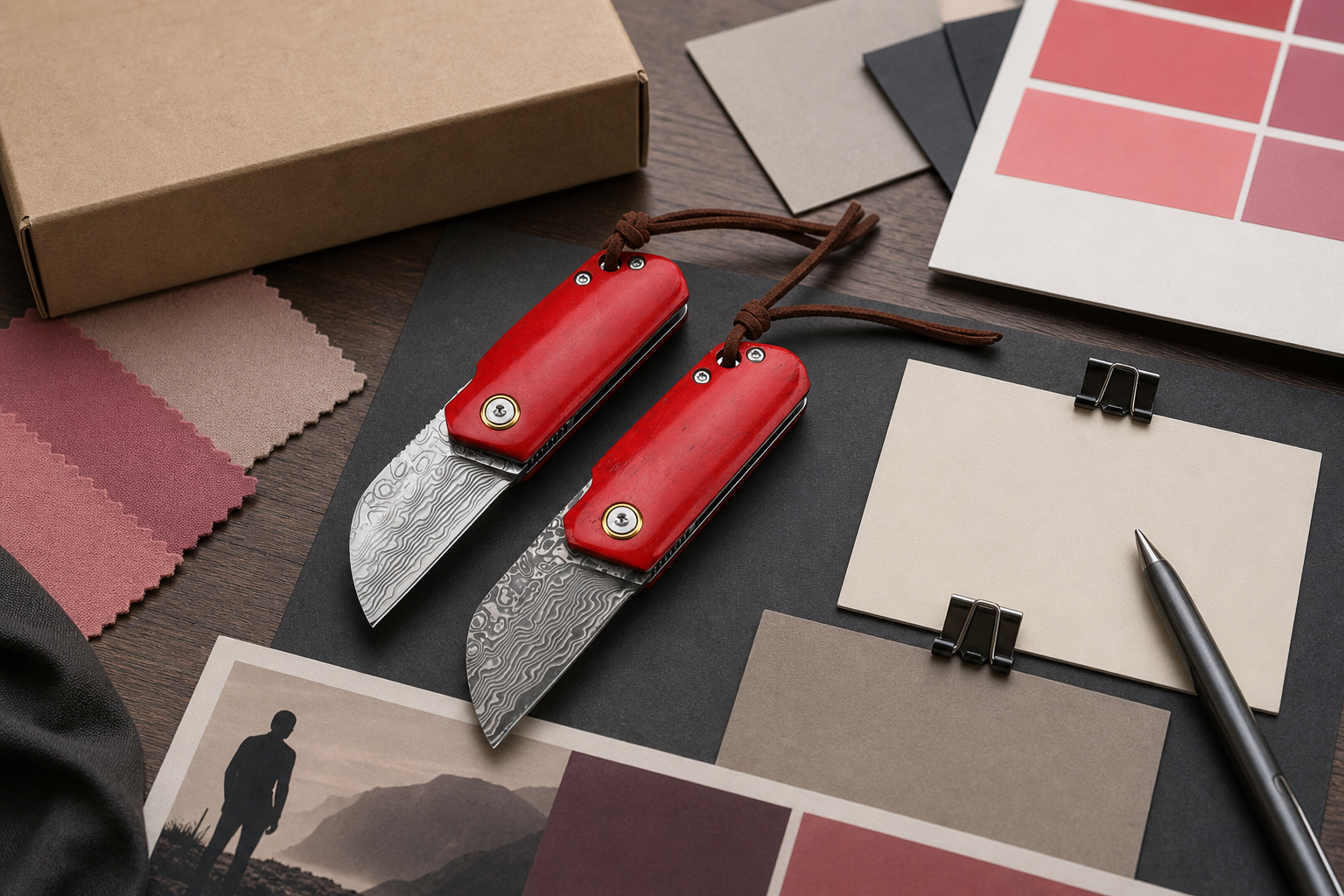
I Do Not Let Bright Color Become Child Positioning
Pink can be mature, premium, practical, playful, or toy-like depending on the total presentation. A knife should not be marketed to children. Buyers need to review color together with packaging graphics, product name, cartoon elements, font style, influencer content, and sales channel.
The CPSC children's products guidance explains that a children's product is designed or intended primarily for children 12 years of age or younger, and it lists factors such as manufacturer statements, packaging, promotion, advertising, and consumer recognition. For a pink knife, that means the color alone is not the only issue. The whole presentation matters.
Safer audience framing may include:
- Adult kitchen colorway
- Adult outdoor visibility color
- Private label color collection
- Workshop or craft utility color
- Women's market only when the buyer has a real audience strategy
- Not a toy
- Keep away from children
The buyer should avoid child-like names, mascot art, toy packaging, candy styling, or school-supply imagery. A knife can be colorful without becoming child-directed.
Which Parts Should Be Pink: Blade, Handle, Sheath, or Packaging?
Placement changes function.
Buyers should decide whether pink belongs on the handle, sheath, packaging, blade coating, accent hardware, or full set because each location has different durability and safety implications.
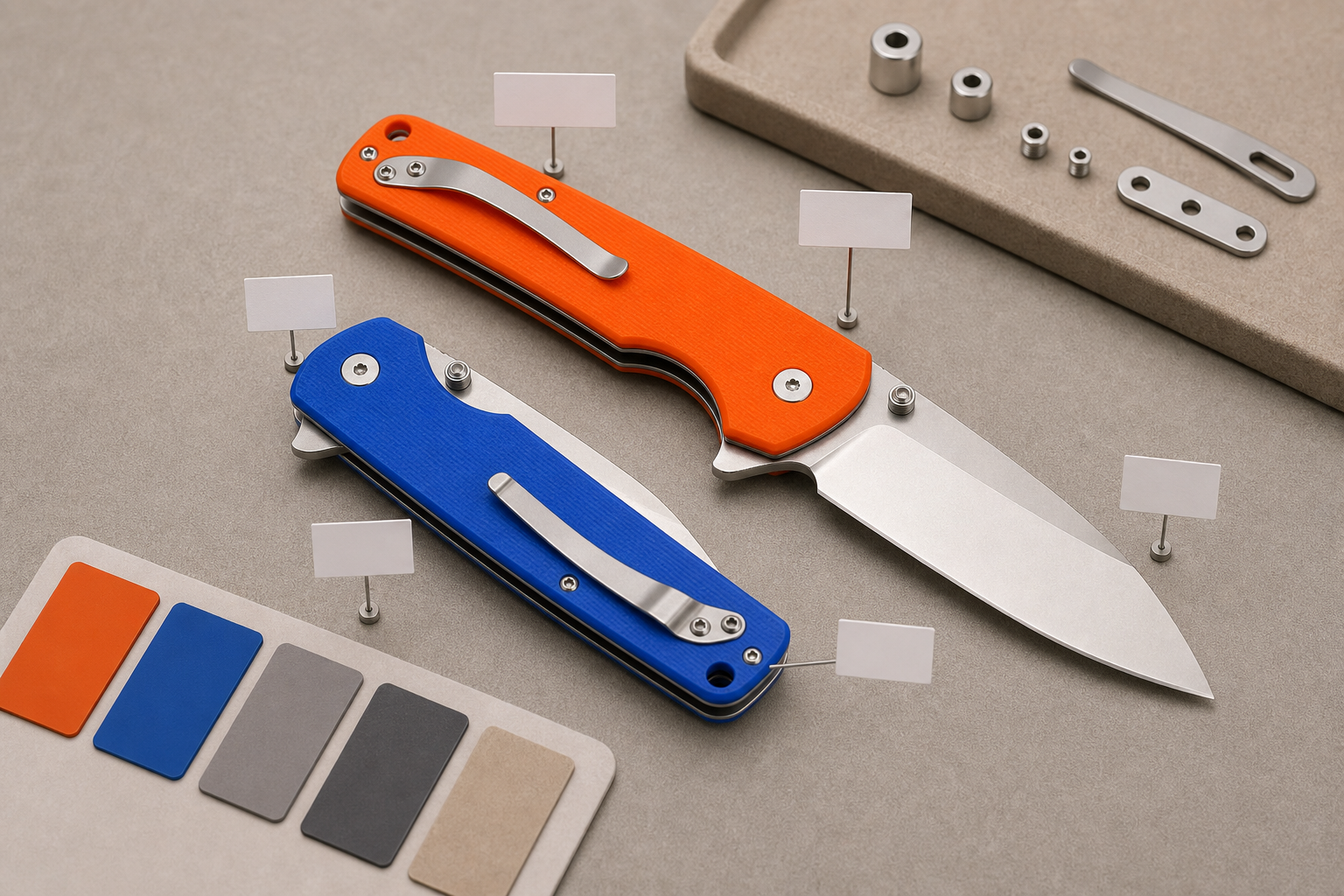
I Choose the Color Location Before Choosing the Material
A pink handle is not the same as a pink blade coating. A pink sheath is not the same as pink packaging. Each option has tradeoffs.
Pink handle material may be durable and easy to clean if the polymer, rubber, composite, or resin is selected well. Pink blade coating may create visual impact, but it needs adhesion, abrasion, scratch, corrosion, and food-contact review. Pink sheath material may help visibility in outdoor kits. Pink packaging may deliver the color story without changing the functional knife.
The CPSC manufacturing best practices page supports safety by design, foreseeable use review, supplier controls, documentation, and production records. Color placement belongs in that review because coatings, handles, and sheaths can affect use, cleaning, and wear.
The buyer should ask:
- Does the color touch food?
- Does the color touch the hand?
- Does the color rub against the sheath?
- Does the color affect grip?
- Does the color show scratches quickly?
- Does the color fade under sunlight or cleaning?
- Does the packaging color misrepresent the real product?
When in doubt, color the handle or sheath before coating the blade. Blade coatings can be valid, but they carry more testing and claim burden.
How Should Materials, Coatings, and Food Contact Be Reviewed?
Pink must be material-safe for the use case.
Materials and coatings should be reviewed for food contact, skin contact, cleaning chemistry, abrasion, heat exposure, odor, staining, and supplier declarations.
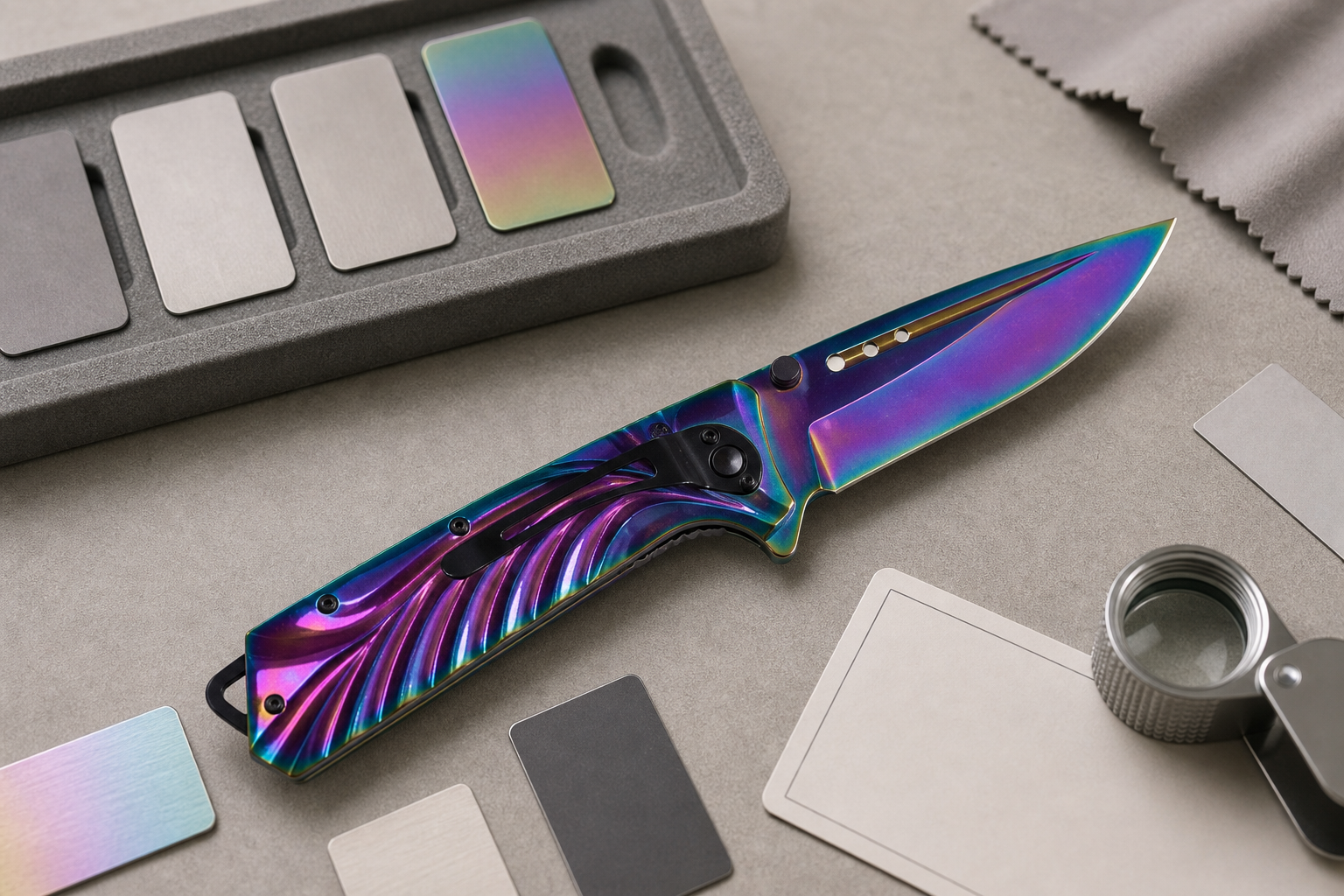
I Review Colorants Like Components
Color comes from pigment, dye, resin, coating, anodizing, plating, paint, powder coat, or molded material. Buyers should not assume all pink materials are equal. A kitchen knife project has different expectations than a display item or outdoor utility product.
If the knife may be used around food, buyers should review food-contact expectations. The FDA explains that food contact substances include materials that come into contact with food and are not intended to have a technical effect in food. Its food packaging and food contact substances page helps buyers think about material declarations, not just marketing terms like "food grade."
Material review should cover:
- Handle resin or polymer
- Colorant or pigment
- Coating or finish
- Adhesives and inserts
- Blade steel and surface treatment
- Sheath material
- Packaging ink that may touch the product
- Supplier declarations
- Cleaning and care limits
The buyer should ask the supplier what the pink color cannot tolerate. Dishwashers, alcohol wipes, saltwater, sunscreen, oils, acids, and UV light can all affect color systems.
How Should Buyers Test Pink Color Durability?
Pretty is not enough.
Pink color durability should be tested through color matching, abrasion review, cleaning exposure, UV or light exposure, coating adhesion, handle staining, and production lot comparison.
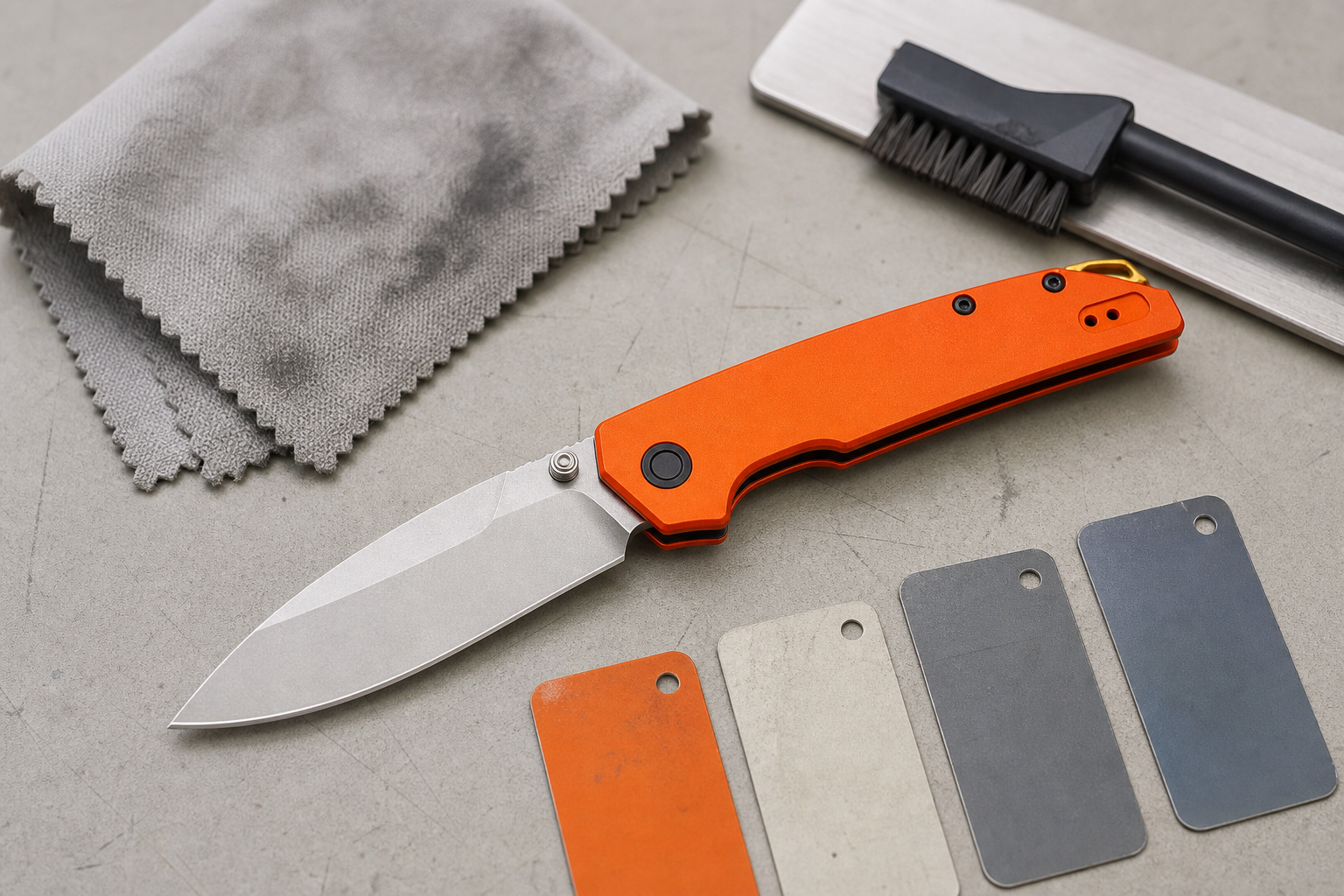
I Test the Color Against the Customer's Real Use
Color durability depends on where the knife will live. A kitchen knife may face dish soap, acidic food residue, hot water, drying racks, and drawer contact. An outdoor knife may face sun, rain, dirt, salt, sweat, and sheath friction. A utility knife may face oils, packaging dust, and workbench abrasion.
Buyers should define test conditions before mass production. A simple test plan may include:
- Approved color swatch comparison
- Gloss or matte finish check
- Dry rub and wet rub
- Cleaning exposure
- Scratch or abrasion check
- Sheath rub check
- UV or light exposure review
- Stain review from common materials
- Lot-to-lot color comparison
The NIST color and appearance reference supports the importance of color measurement in commercial products. For higher-volume projects, buyers may use a colorimeter or spectrophotometer with a defined tolerance. For smaller projects, an approved physical master sample and controlled lighting can still reduce disputes.
The buyer should also keep a golden sample. Without one, repeat orders may drift from blush pink to neon pink without anyone noticing until the shipment arrives.
What Safety and Labeling Copy Should a Pink Knife Use?
Color should not soften the warning.
A pink knife should still carry clear sharp-edge warnings, adult-use positioning, safe storage instructions, cleaning guidance, local law reminders, and package copy that matches the product.
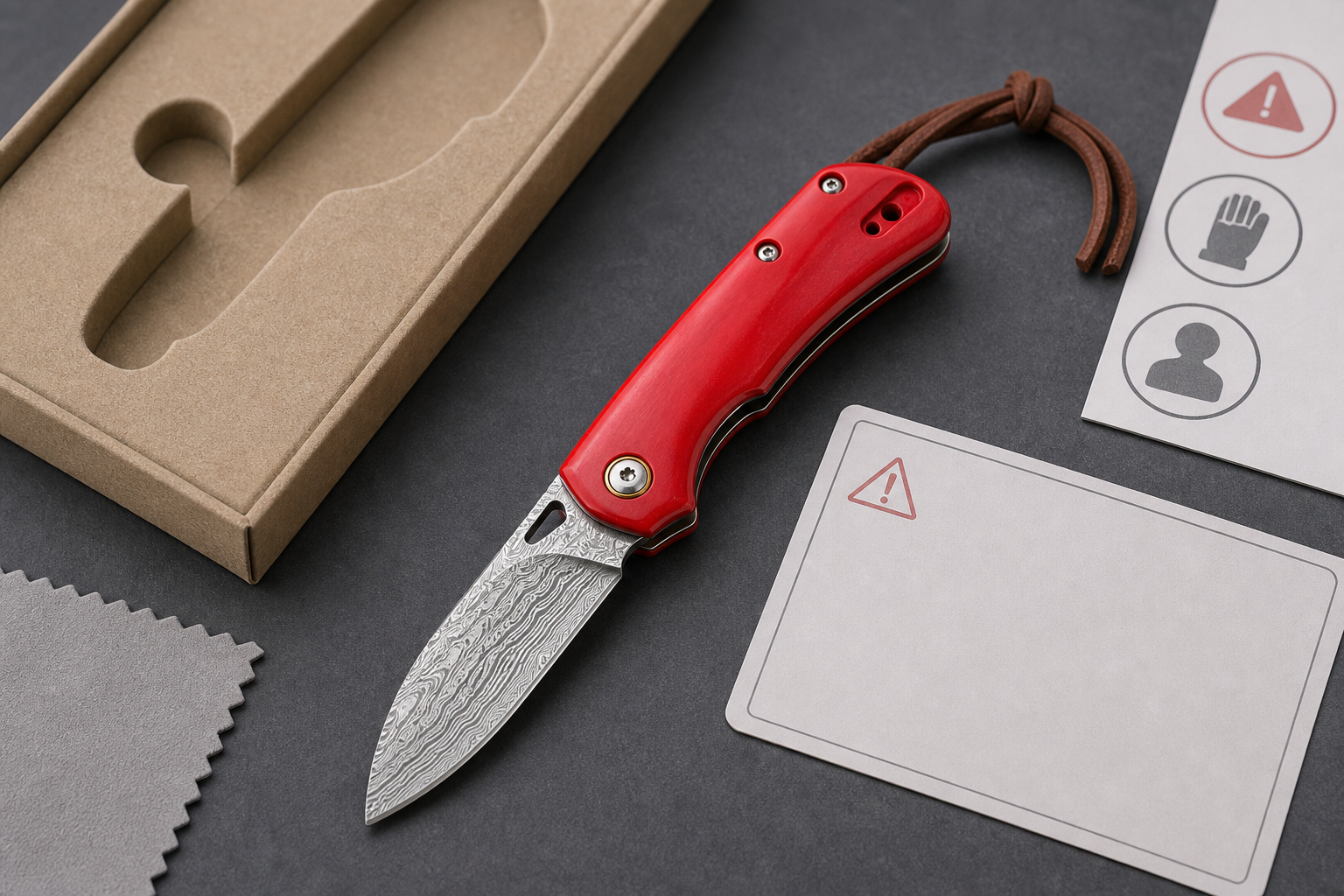
I Keep Safety Language Plain
Pink color can make a product feel friendly. That can be good for retail appeal, but it should not hide the sharp-edge risk. Buyers should keep warning copy direct and visible.
The CPSC labeling requirements overview reminds businesses that labeling can depend on product type, design, components, and intended audience. For pink knives, labeling should match the knife category, not only the color story.
Useful copy elements include:
- Sharp edge warning
- Adult use only where appropriate
- Keep away from children
- Use the right tool for the task
- Keep sheathed or protected when not in use
- Clean and dry after use
- Follow local laws
- Do not use damaged products
- Hand wash only if the color system requires it
The CCOHS sharp blades guidance supports practical sharp-tool safety, including correct tool selection, inspection, and safe storage. That guidance is useful even when the buyer is writing consumer-facing care and safety copy.
How Should Marketing Explain the Appeal Without Stereotypes?
Appeal should be specific and respectful.
Marketing should explain pink as visibility, collection identity, kitchen styling, outdoor kit recognition, or brand color without stereotypes, unsupported claims, or child-directed messaging.
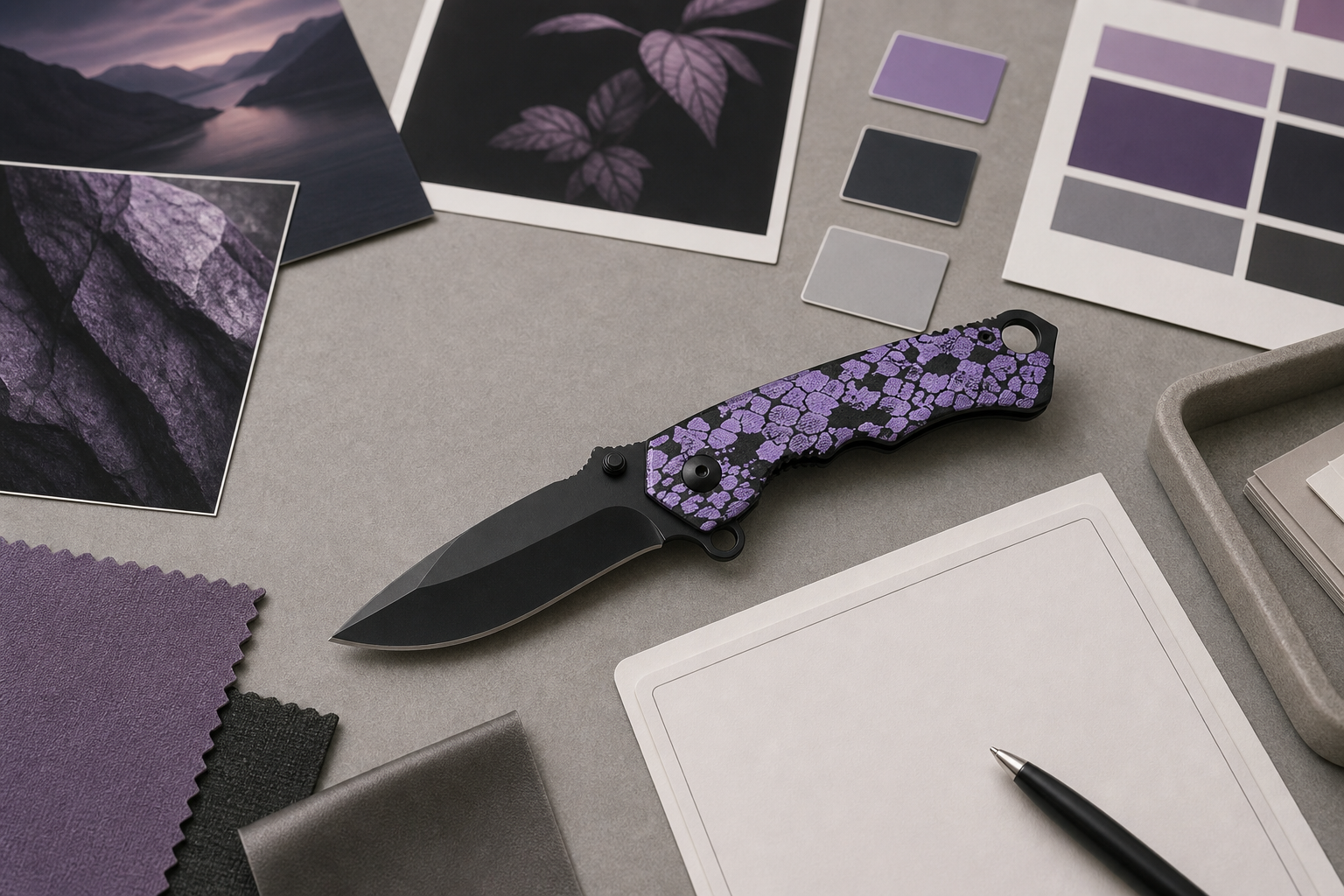
I Avoid Lazy Gender Claims
Pink does not need to be explained through stereotypes. It can be about visibility in a drawer, easy kit identification, a softer kitchen palette, a brand collection, a color-coded prep system, or a retailer's seasonal theme. Buyers should write the reason clearly and respectfully.
The FTC advertising and marketing basics page supports truthful, non-deceptive, evidence-based claims. If the buyer says the pink coating is scratch resistant, the buyer should have test notes. If the buyer says it is easy to spot outdoors, the buyer should avoid overstating visibility in every condition. If the buyer connects the product to a cause campaign, the claim should be documented and approved.
Safer claim directions:
- Pink handle for quick drawer recognition
- Color-coded kitchen prep option
- Bright sheath color for easier kit identification
- Private label colorway for adult lifestyle collections
- Coating tested under the buyer's defined cleaning conditions
Claims to avoid:
- For girls only
- Child-friendly
- Makes knives safe
- Never scratches
- Rust proof without evidence
- Charity or cause claims without documentation
Good copy respects the customer and protects the buyer.
What QC Checks Keep Pink Production Consistent?
Color drift is common.
QC should verify color match, gloss, coating adhesion, surface defects, handle fit, blade finish, sheath fit, labeling, warnings, packaging color, and lot-to-lot records.
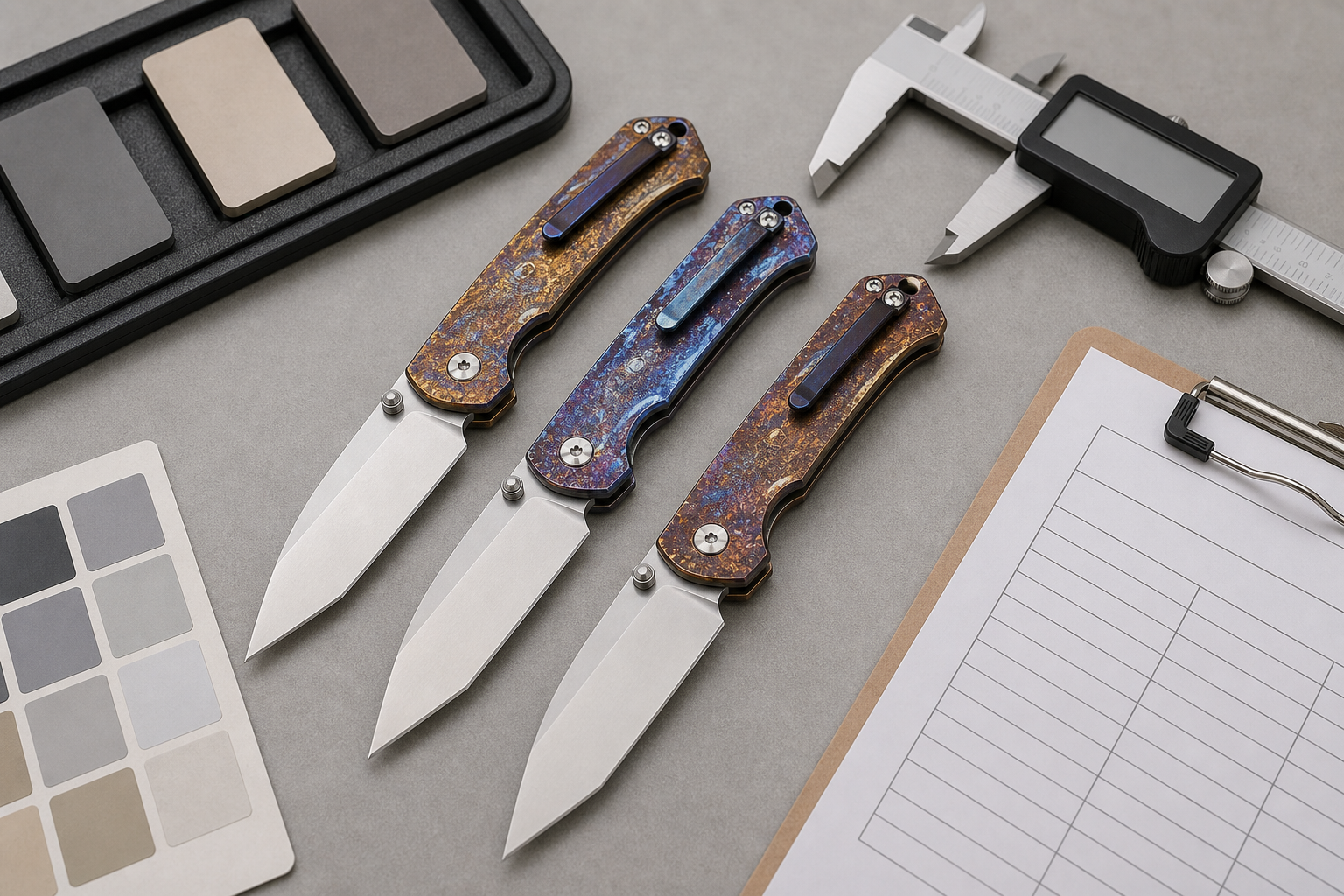
I Inspect Color Alongside Knife Function
Color QC should not replace knife QC. The blade still needs correct dimensions, edge finish, handle attachment, sheath fit, warnings, and packaging protection. Pink color adds another layer of inspection.
The CPSC Handbook for Manufacturing Safer Consumer Products supports design review, production control, documentation, and product safety procedures. The CPSC manufacturing best practices page also supports supplier records and spot checks.
QC fields should include:
- Color match to master sample
- Gloss level
- Coating or molded surface defects
- Adhesion or rub check
- Stain or cleaning exposure result
- Blade dimensions
- Edge finish
- Handle fit
- Sheath or guard fit
- Warning card presence
- Package artwork match
- Lot photo record
The NIST metrological traceability page is useful when buyers require documented gauge control, calibration records, or traceable measurement evidence. For color products, that same mindset helps buyers define who measures, how they measure, and which reference sample controls shipment approval.
What Should Go Into a Pink Knife RFQ?
The RFQ should remove color ambiguity.
A strong RFQ should define knife category, adult target user, color target, material system, food-contact review, cleaning limits, package tone, marketing claims, and color QC.
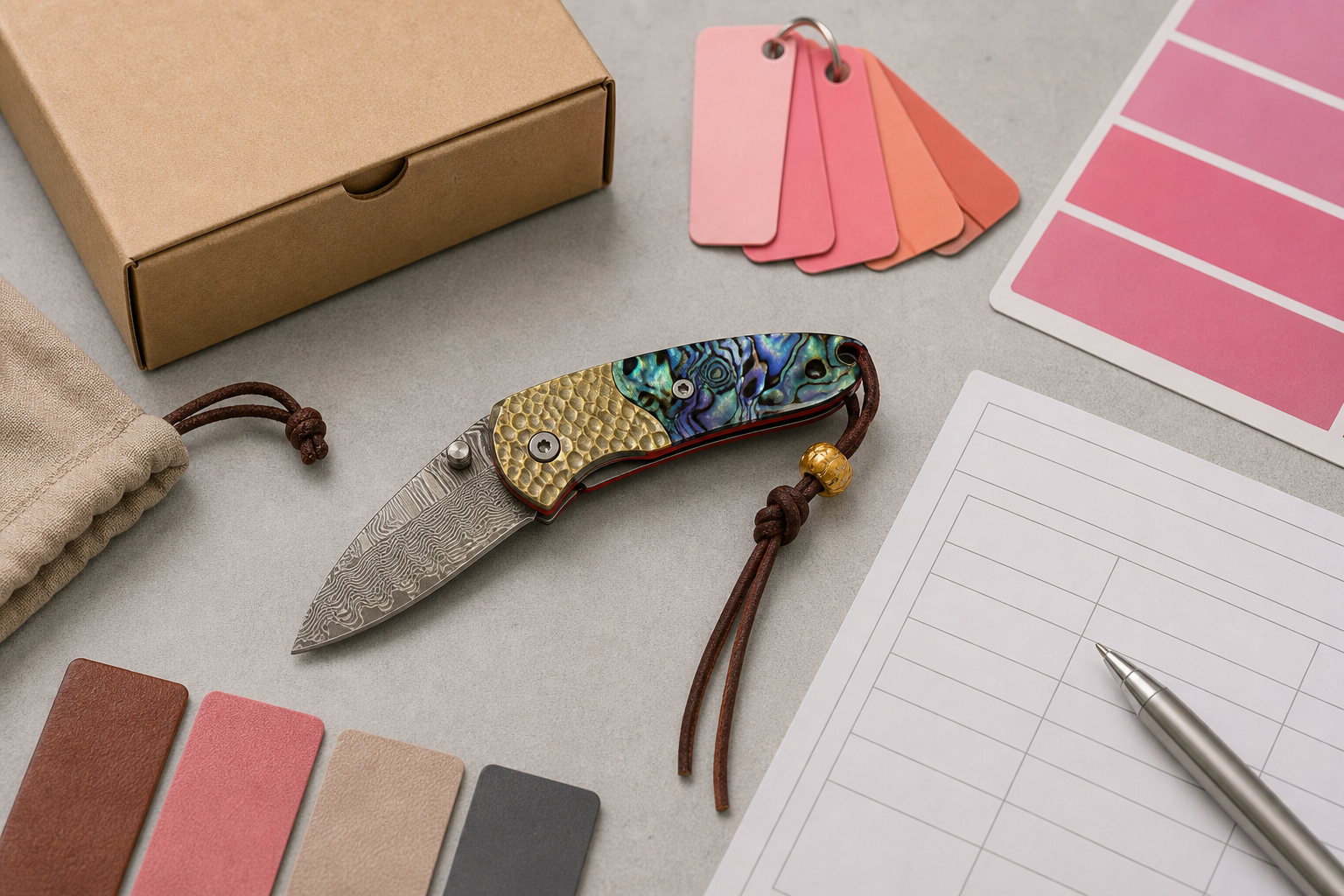
I Ask for a Color System, Not Just a Pink Sample
The supplier should provide more than one attractive photo. The buyer needs a color reference, material proposal, test approach, packaging sample, warning copy, and production inspection plan.
The RFQ should include:
- Knife category
- Adult target user
- Intended use case
- Exact color reference
- Handle, sheath, blade, or packaging color placement
- Material and coating system
- Food-contact review when relevant
- Cleaning and care limits
- Color durability test
- Warning copy
- Child-appeal review
- Marketing claim limits
- Final inspection photos
- Reorder color control method
I also ask the supplier to send a failed sample if available. A sample with scratches, color migration, fading, or coating chips can teach the buyer what to avoid. It is not glamorous, but it is useful sourcing work.
Planning a private-label knife line for this market?
Use this article as a planning reference, then confirm local requirements with your importer or compliance advisor before OEM/ODM production.
Conclusion
Buyers should specify pink knives as adult colorway products with clear material, food-contact, marketing, safety, and color-QC controls before production.
Private-label Planning Checklist
Before starting production, prepare the market and product details your importer or compliance advisor needs to review.
| RFQ Field | What to Prepare |
|---|---|
| Target market | Country, state, region, or sales channel |
| Product category | Folding knife / fixed blade / multi-tool / outdoor tool |
| Intended use | EDC / camping / kitchen / hunting / rescue / promotional |
| Buyer requirements | Testing, labeling, documentation, or packaging rules |
| Blade and lock details | Blade length, opening method, lock type, edge style |
| Packaging text | Warnings, claims, care notes, language requirements |
| Documents | Drawing, sample photo, logo file, packaging artwork |
| Review owner | Importer, legal advisor, testing lab, or internal compliance team |