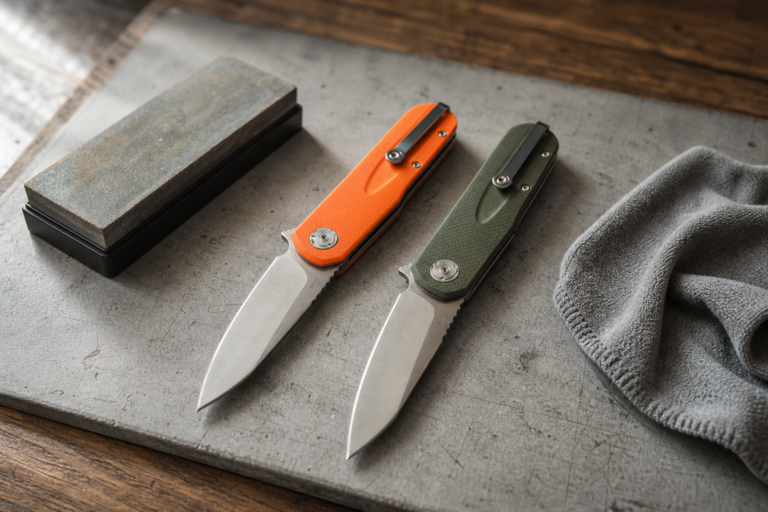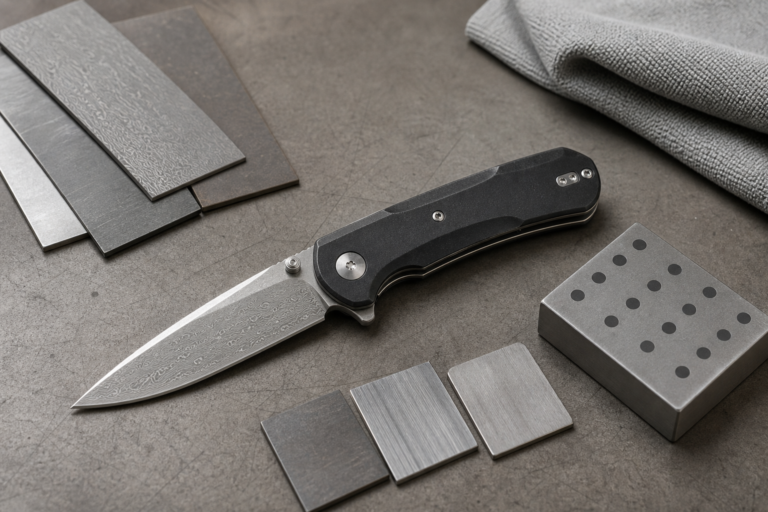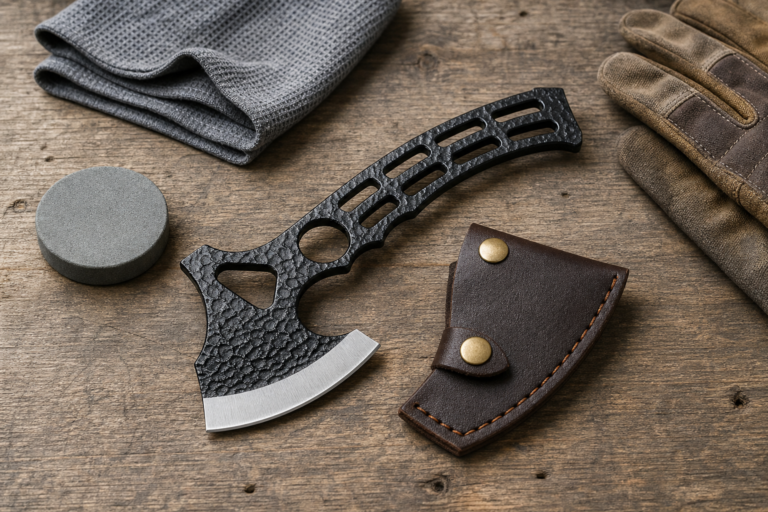
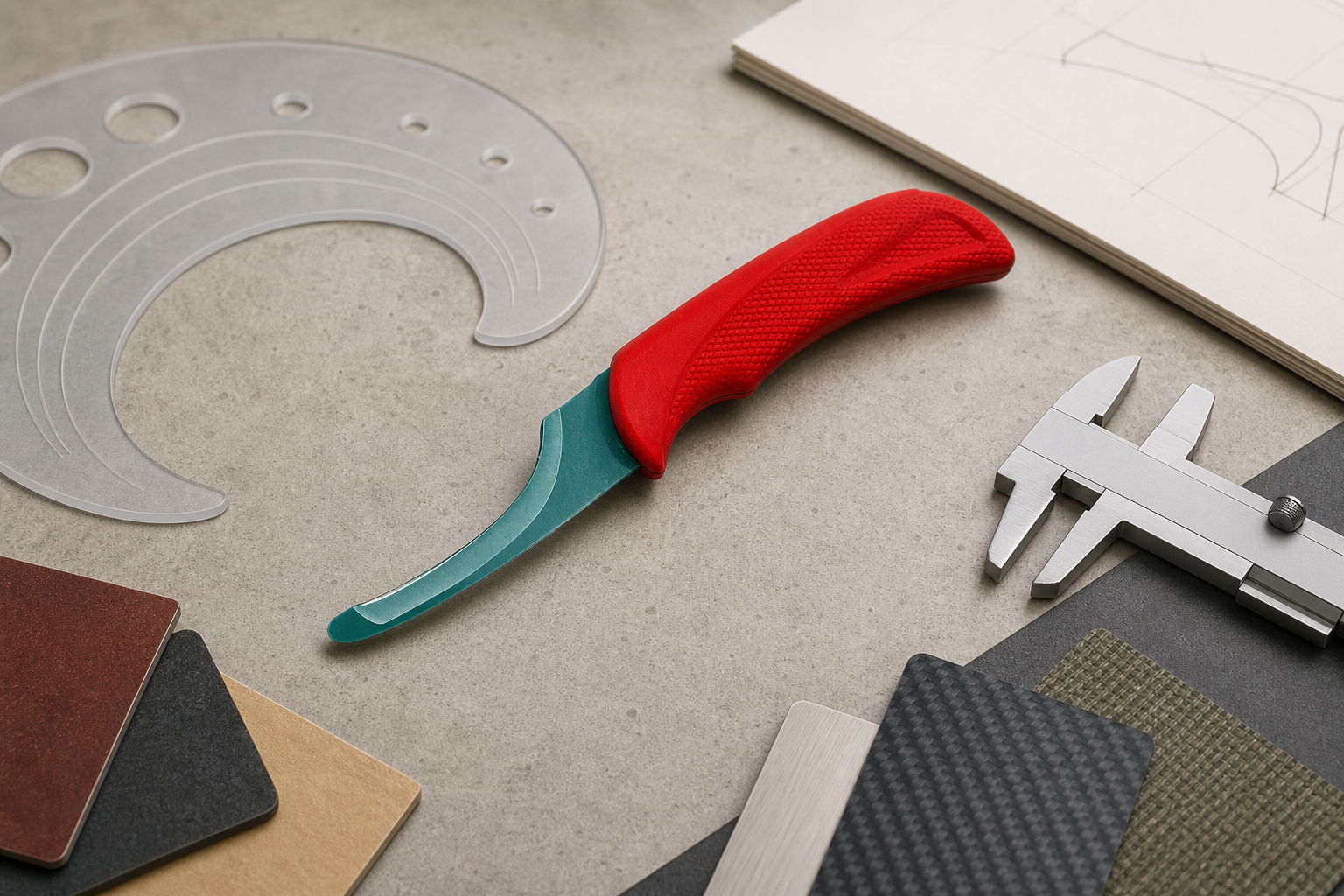
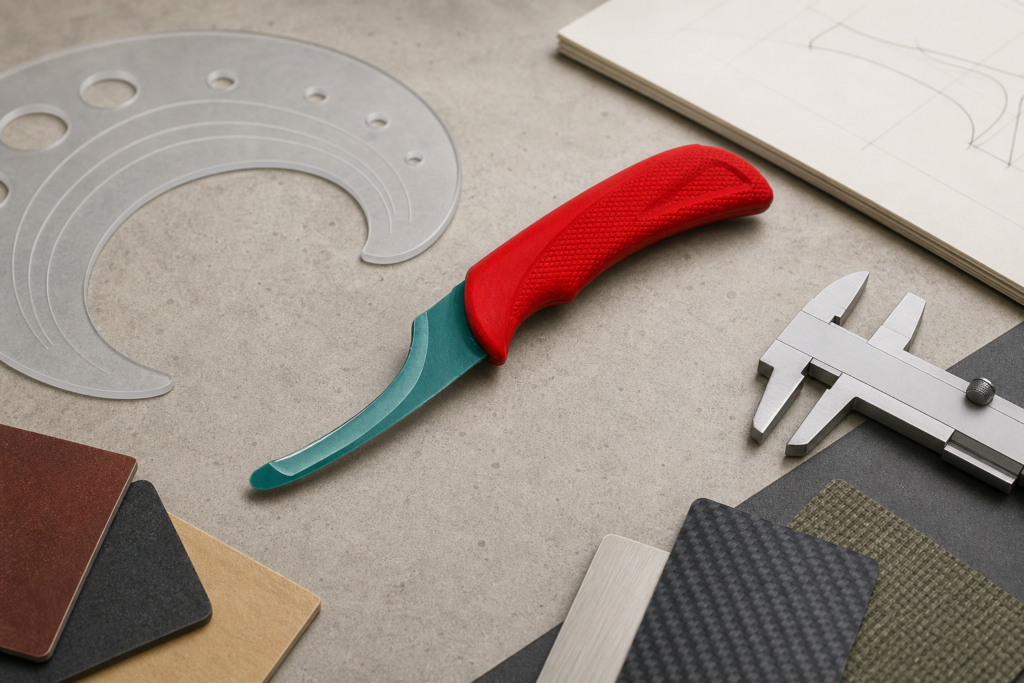
A curved blade can look more capable than a straight blade. In sourcing, that assumption is risky unless the curve solves a real cutting problem.
Buyers should choose curved blade geometry when the intended task benefits from longer edge contact, draw cutting, rocking motion, contour following, slicing belly, or ergonomic hand clearance, and when testing proves the curve does not hurt safety, cleaning, sharpening, packaging, or QC.
Quick buyer brief:
- Answer: A curved blade is not automatically better than other knives. It is advantageous only when its edge path matches the target material, motion, user, storage method, and marketing claim.
- Buyer context: This guide is for kitchen knife brands, outdoor knife brands, agricultural tool buyers, utility knife importers, private label teams, distributors, and OEM/ODM sourcing managers.
- Key checks: Intended cut, material being cut, blade curve radius, belly height, tip position, handle angle, steel and heat treatment, edge angle, cleaning path, sheath or tray fit, safety copy, test evidence, and final inspection records.
Have a knife or multi-tool project in mind?
Send your sketch, CAD file, sample photo, or product idea. Vast State can review manufacturability, suggest materials, estimate MOQ, and prepare a quote for your OEM/ODM project.
This article treats curved blade knives as lawful kitchen, outdoor, agricultural, craft, or utility tools. It does not cover combat, self-defense, weapon-use advice, intimidation, or concealed carry. The goal is to help buyers decide when curved geometry is useful and when a simpler straight or shallow-belly blade is the better product decision.
The safest sourcing principle is simple: geometry should follow the job. A curve can create real value. It can also create avoidable cost, difficult sharpening, inconsistent grinding, packaging problems, or exaggerated claims if the buyer treats the curve as a style feature instead of a task feature.
What Is the Real Advantage of a Curved Blade?
The advantage is edge path control.
A curved blade can be useful when its edge shape keeps more of the cutting edge in contact with the material during slicing, pulling, rocking, trimming, or contour-following tasks.
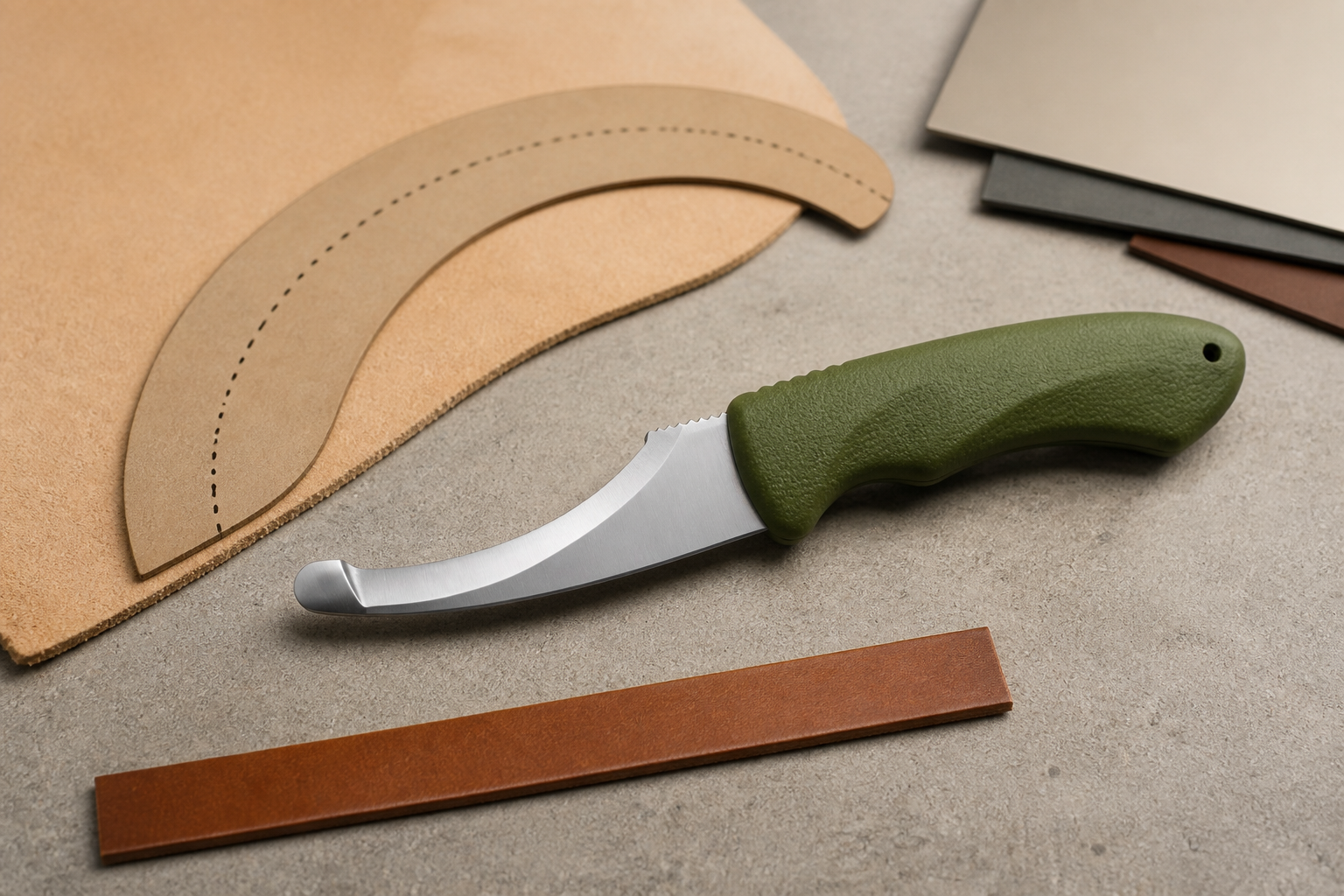
I Start With the Cut, Not the Shape
The word "advantage" can mislead buyers. It sounds like a curved blade beats every other knife. That is not how product design works. A curved blade can help in one task and be awkward in another. The buyer should ask what the user is cutting, how the hand moves, what surface supports the cut, and how the product will be stored.
The CCOHS sharp blades guidance supports a practical safety principle: use the right tool for the job, inspect tools, and store sharp tools safely. For B2B knife sourcing, that means the curve should match the intended task and the storage system.
Curved geometry may help with:
- Pull cuts where the edge draws through material
- Rocking cuts on a board
- Slicing cuts that need a belly
- Trimming around curved surfaces
- Harvesting or pruning motions
- Skinning or food-prep tasks where edge contact matters
- Package identity when the function supports the visual design
Curved geometry may not help with:
- Straight push cuts
- Tasks needing a flat reference edge
- Products that require easy automated sharpening
- Very compact packaging with limited tray space
- Users who need simple maintenance
- Claims that cannot be supported by testing
Which Cutting Tasks Benefit Most From Curved Geometry?
Task fit decides the value.
Curved blade geometry is most useful when the task needs controlled contact through a curved motion, a long slicing belly, or a pull cut that engages the edge smoothly.
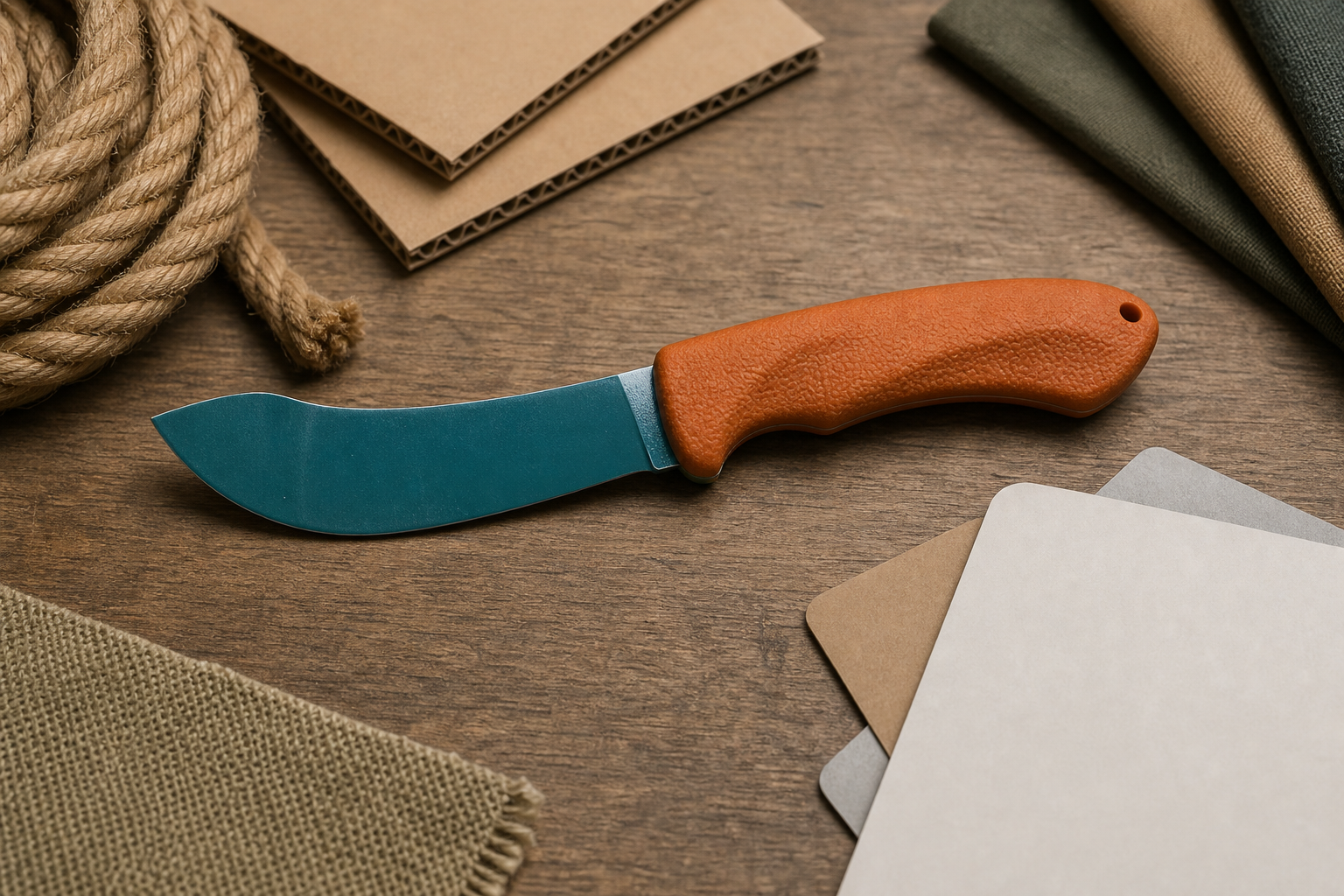
I Build a Task Matrix Before Drawing the Blade
A curved blade can support many categories, but the curve should not be copied across them without thought. A kitchen rocker, an outdoor slicer, a pruning tool, a craft trimming blade, and a compact utility knife all use different hand motions.
The buyer can build a task matrix:
- Product category
- Material being cut
- Cutting motion
- Required edge contact
- Needed tip control
- Cleaning requirement
- Sharpening expectation
- Storage method
- Claim evidence needed
The FoodSafety.gov four steps page is useful when the curved blade is intended for food preparation because it reminds users to clean utensils and surfaces after contact with raw food. If a curved kitchen or seafood knife creates hard-to-clean recesses, the design should be reconsidered.
For outdoor and agricultural tools, the buyer should ask a different question: does the curve improve controlled cutting without encouraging unsafe force? A deep hook or aggressive curve may look powerful, but it can make sharpening, sheathing, and general use harder. The buyer should test sample motions before approving the profile.
How Should Buyers Measure Curved Blade Geometry?
The curve must become a number.
Buyers should measure curve radius, belly height, tip position, edge length, spine curve, blade width, thickness, grind height, edge angle, and tolerance limits.
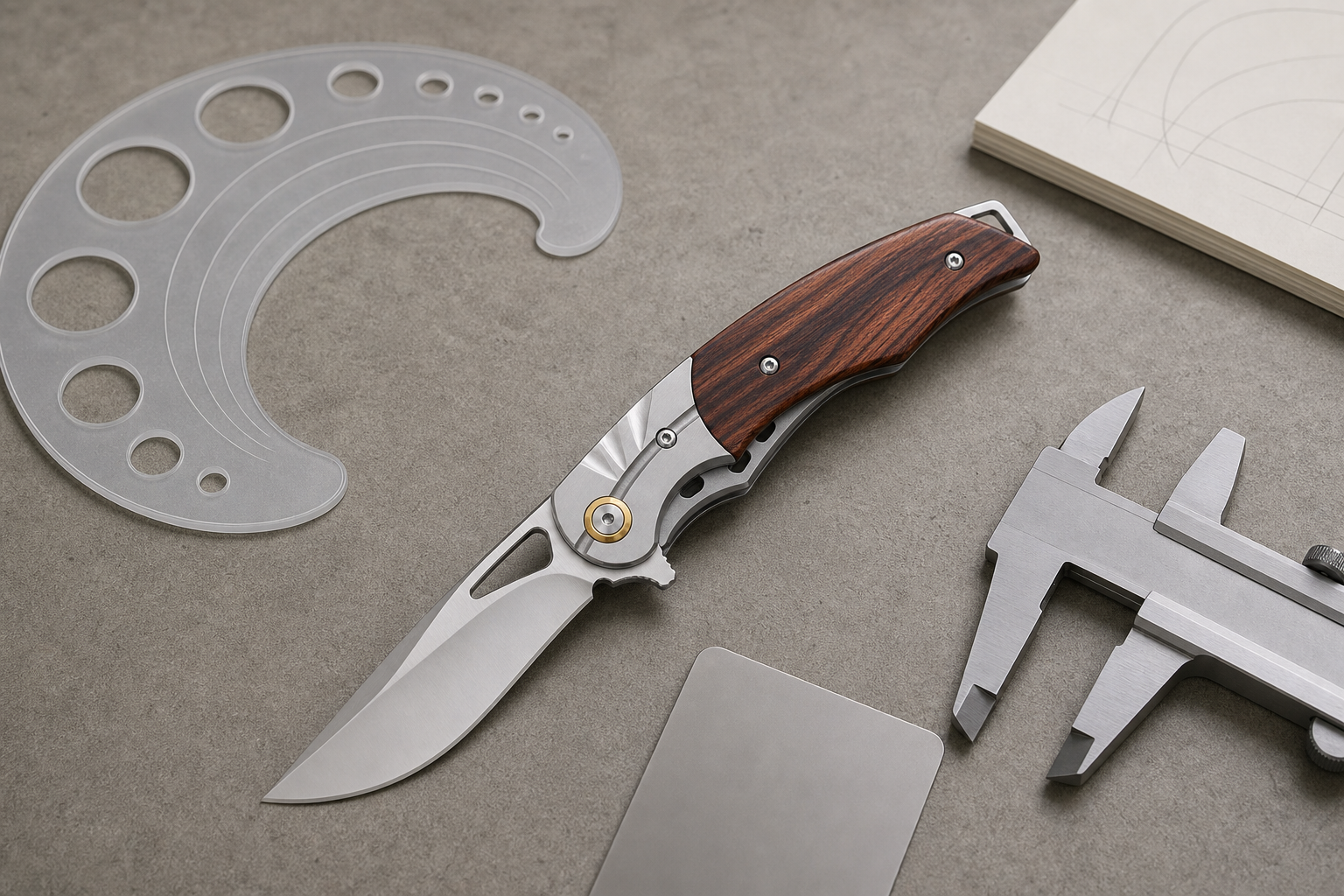
I Do Not Approve a Curve From a Photo
Photos are useful for style review, but they are weak for production control. A factory needs a drawing, a profile template, or a digital curve reference. Otherwise, the approved sample can drift during stamping, grinding, heat treatment, polishing, and final sharpening.
The NIST dimensional metrology page supports the manufacturing value of measurement for quality control and part improvement. Curved blade projects need this thinking because small profile changes can affect cutting feel, tip safety, sheath clearance, and shelf appearance.
Useful geometry fields include:
- Overall blade length
- Effective edge length
- Curve radius or template profile
- Belly height
- Tip height and tip position
- Spine profile
- Width at key stations
- Thickness at key stations
- Grind height
- Edge angle
- Tolerance range
Buyers should request an approved profile overlay. The QC team can compare production samples against that overlay before shipment. This is especially useful when the curve is part of the product identity.
How Does Curved Geometry Affect Sharpness and Edge Retention?
The test must match the use.
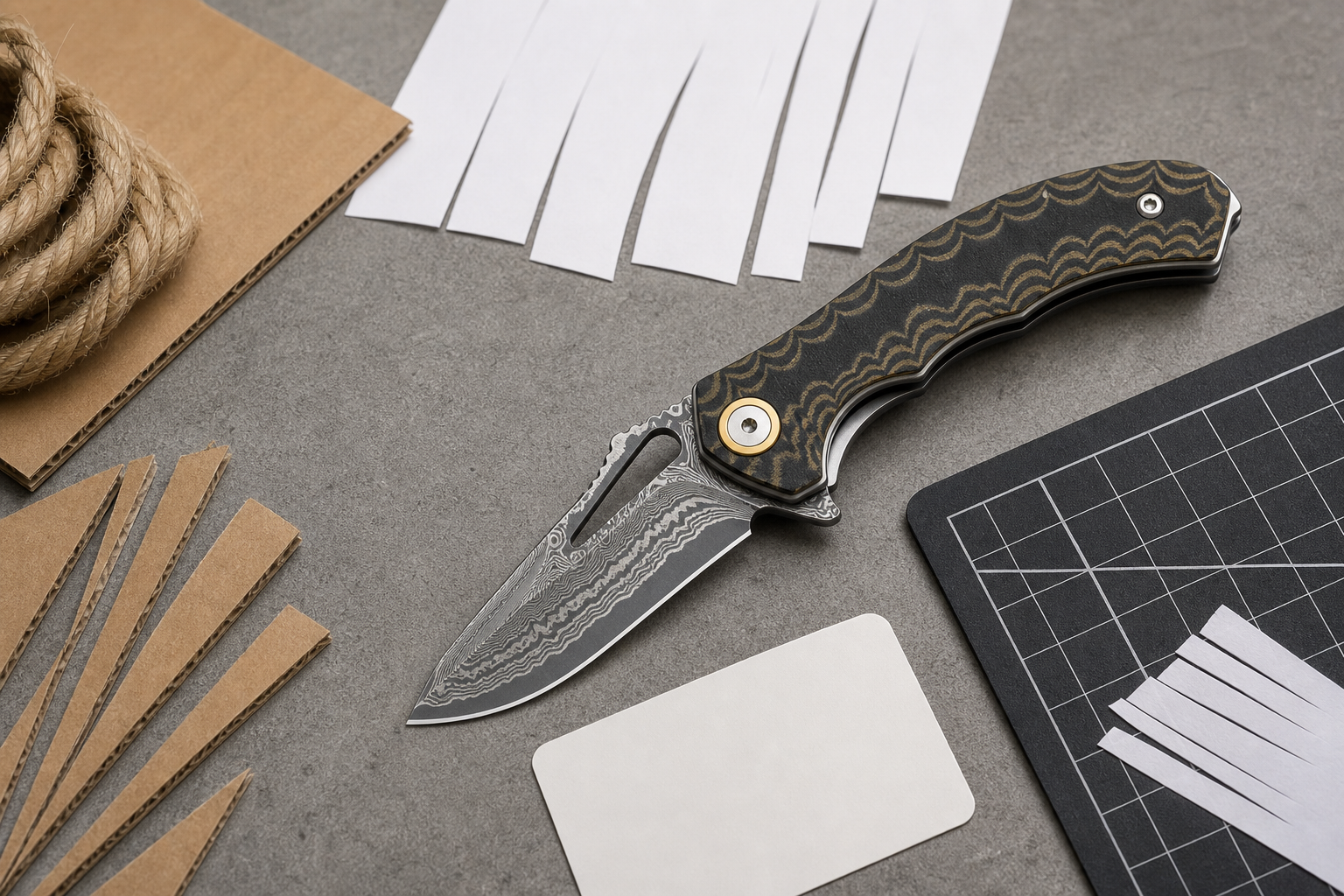
Curved geometry can change cutting feel, but sharpness and edge retention still depend on steel, heat treatment, grind, edge angle, finish, and test method.
I Separate Geometry Claims From Edge Claims
A curve can improve edge contact, but it does not magically improve sharpness. A poorly sharpened curved blade is still a poor cutting tool. Buyers should separate the geometry claim from the edge claim.
The ISO 8442-5:2004 page states that the standard specifies sharpness and edge retention testing for hand knives used in professional and domestic food preparation. Buyers may use different internal methods, but the lesson is clear: performance should be measured by a defined test, not by visual drama.
For curved blade projects, test planning should include:
- Initial sharpness
- Edge retention
- Cutting path control
- Burr removal
- Edge angle consistency along the curve
- Sharpening access near the belly and tip
- Material release
- Cleaning after use
The buyer should also make sure the sharpening method can follow the curve consistently. A factory may need different fixtures or trained operators for deep curves. If the edge angle changes along the belly, users may feel uneven cutting performance.
What Tradeoffs Can Make a Curved Blade the Wrong Choice?
Every curve has a cost.
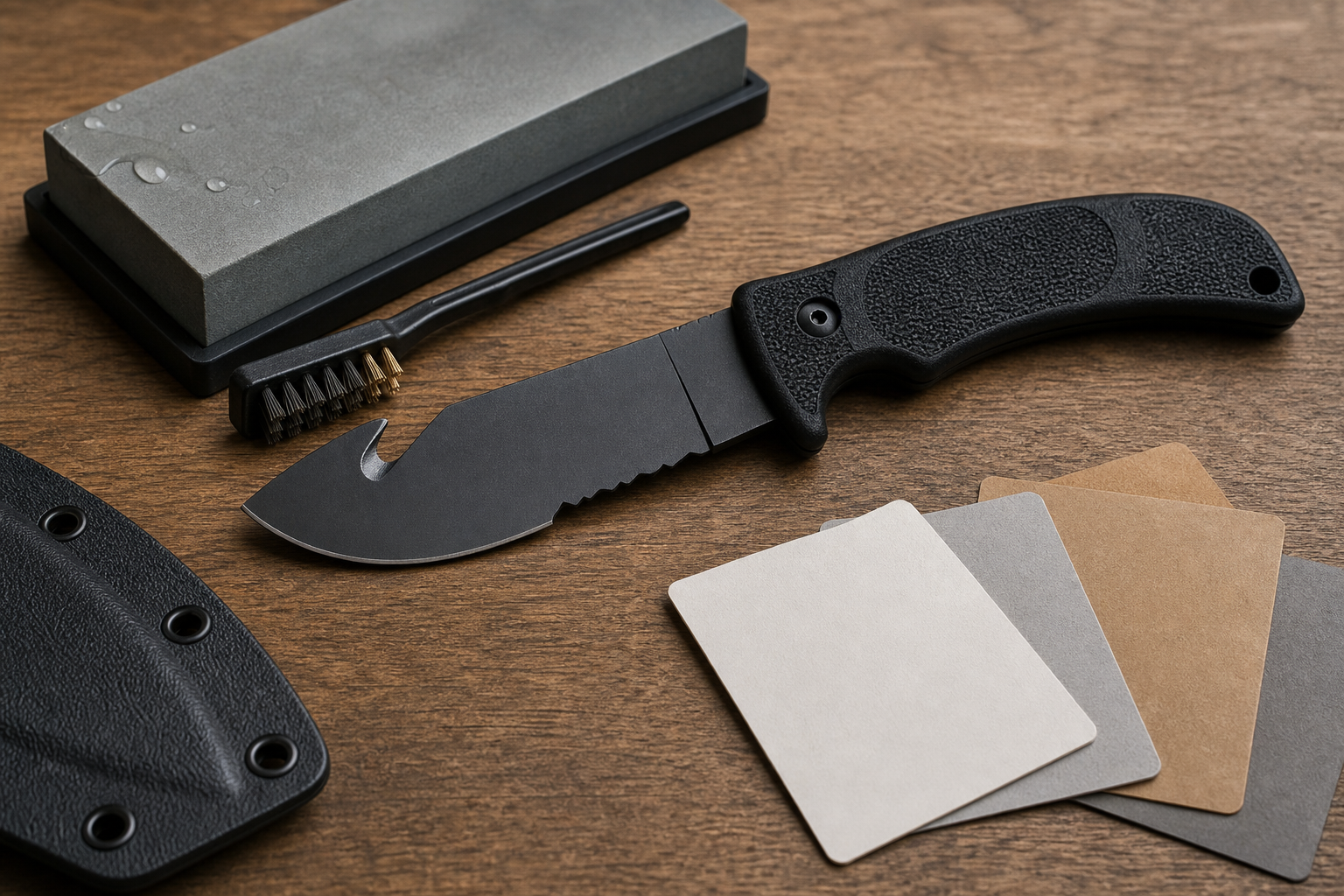
A curved blade can be the wrong choice when it makes sharpening, cleaning, packaging, sheath fit, tip protection, user instruction, or quality control harder than the task benefit justifies.
I Write Down the Reasons Not to Use the Curve
Good sourcing work includes saying no. If a buyer cannot explain why the curve helps, the product may be better with a straight blade, a shallow belly, or a different tool category.
Tradeoffs may include:
- Higher tooling complexity
- Slower grinding
- Less consistent edge angle
- Harder consumer sharpening
- More difficult cleaning
- Larger packaging tray
- Sheath pinch points
- Tip exposure risk
- More complex warning copy
- Higher claim-support burden
The CPSC manufacturing best practices page supports design review, foreseeable use, supplier control, and documentation. That mindset helps buyers compare the real product risk, not only the visual concept.
I like to create a simple decision note: "We chose this curve because..." If the team cannot finish that sentence with a task-based reason, the curve may be decoration, not design.
How Should Materials and Food-Contact Review Change the Decision?
Use context drives material choice.
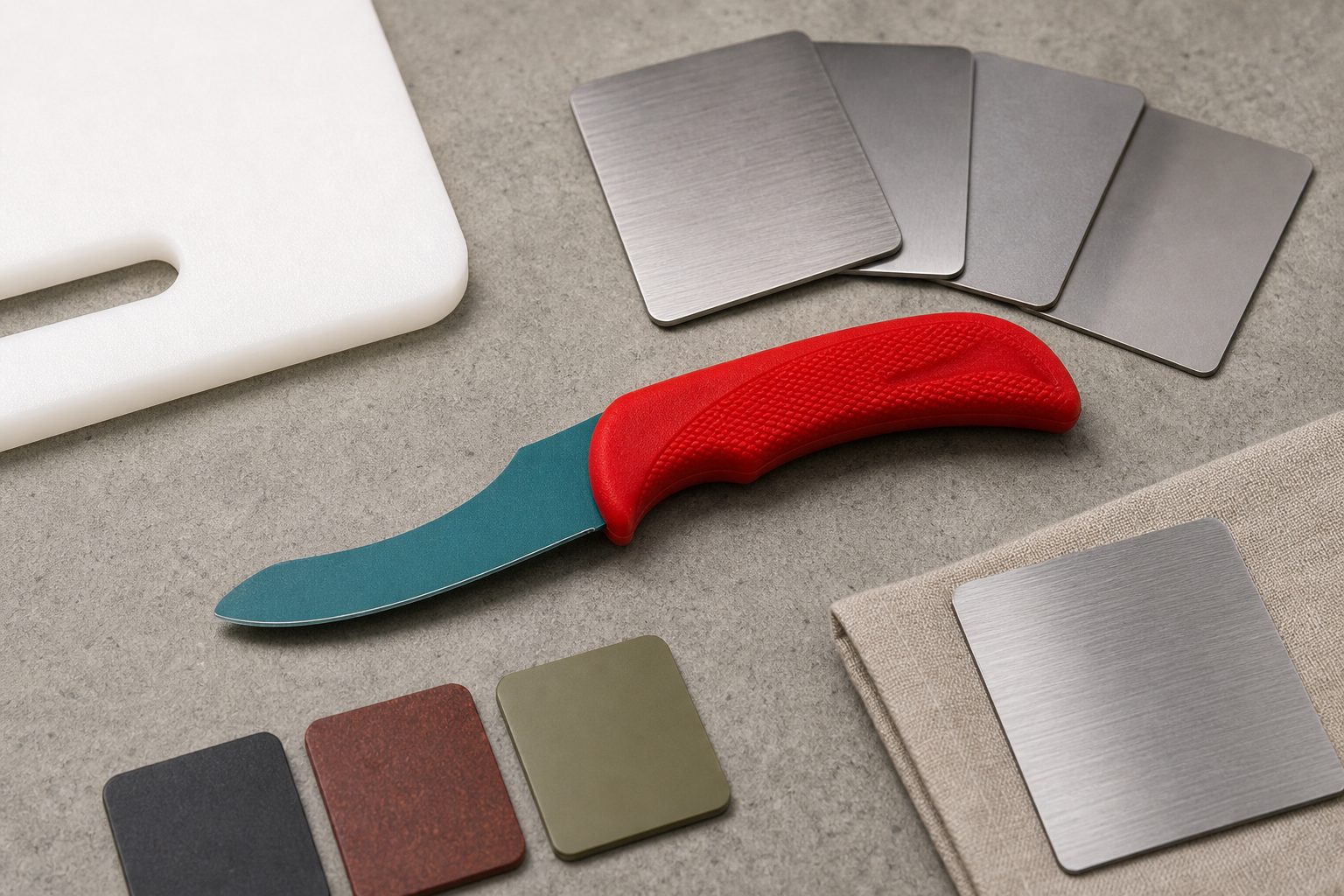
Curved blade materials should be selected around the actual use case, including corrosion exposure, food-contact expectations, cleaning, coating, handle material, and price target.
I Match Steel and Handle to the Environment
A curved kitchen knife, curved fillet knife, curved outdoor slicer, and curved agricultural cutter do not share the same material brief. Some need corrosion resistance. Some need easy cleaning. Some need toughness. Some need a handle that resists moisture or residue.
If the product is used around food, buyers should review food-contact materials. The FDA explains that food contact substances include materials that come into contact with food and are not intended to have a technical effect in food. Its food packaging and food contact substances page helps buyers think about material declarations and compliance review, not just marketing phrases.
Material questions include:
- Which steel grade is approved?
- What hardness range is targeted?
- What finish or coating is used?
- Does the coating touch food?
- What handle material is used?
- Are adhesives, inserts, or coatings declared?
- Can the product be cleaned as advertised?
- What corrosion or stain review is required?
The curve should not distract from these basics. A beautiful profile cannot fix the wrong material system.
How Should Sheath and Packaging Be Designed for Curved Profiles?
The package must follow the edge.
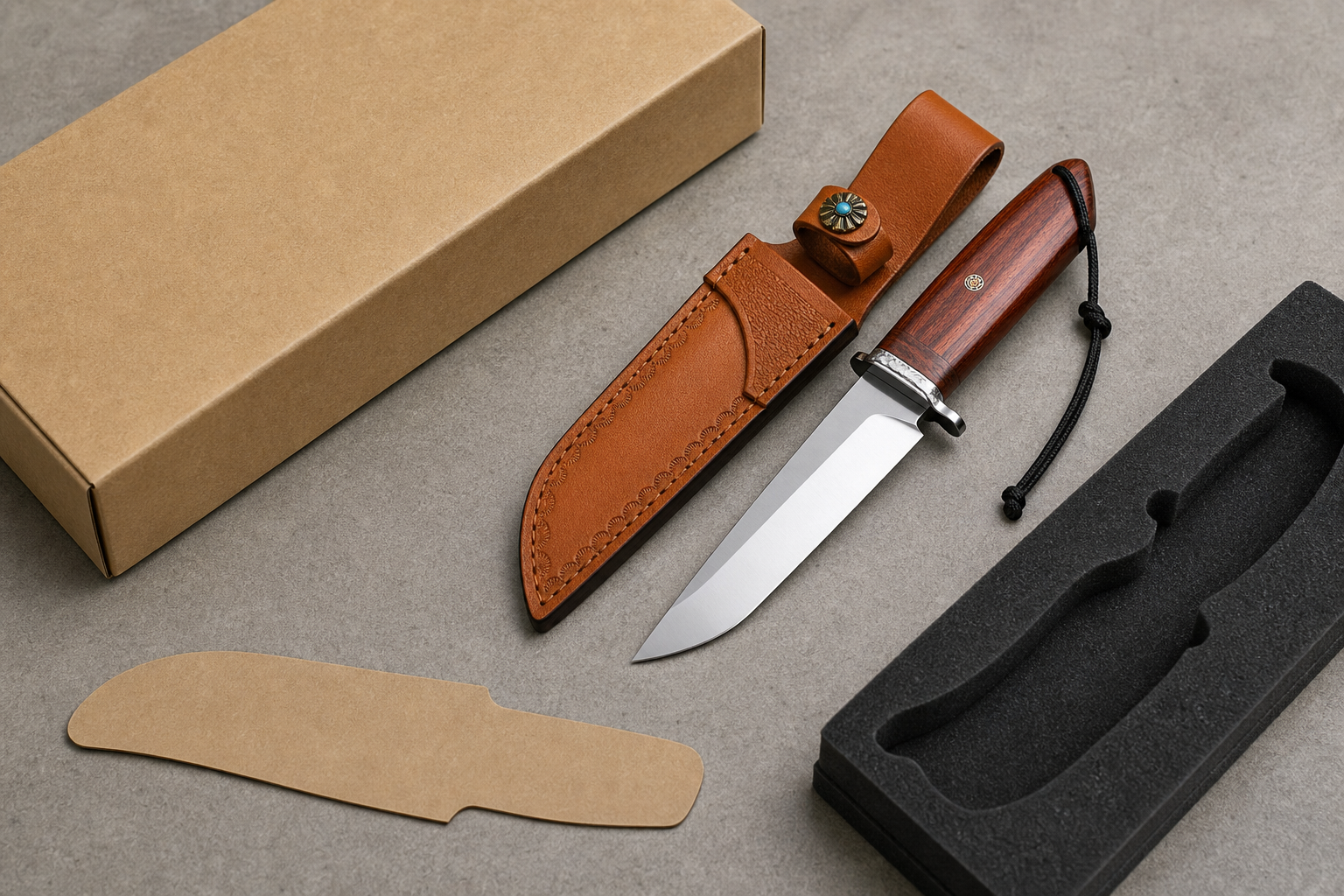
Curved blade packaging should protect the belly, edge, and tip, prevent package cuts, support safe unboxing, and keep the product stable through shipping.
I Review the Package Before Finalizing the Profile
Curved blades often need special packaging. A straight tray may not support the belly. A sheath may pinch the curve. A cardboard sleeve may rub the tip. A retail blister may flex and expose the edge during shipping. These are not small issues. They can create damage, returns, and safety complaints.
The CPSC labeling requirements overview reminds businesses that labels may depend on product type, design, components, and intended audience. For curved blades, the package should include warning and care copy that matches the actual product.
Packaging review should cover:
- Edge and tip protection
- Belly clearance
- Sheath insertion path
- Tray support
- Carton pressure
- Unboxing direction
- Warning card visibility
- Care instruction placement
- Moisture or corrosion note when relevant
- Retail channel requirements
If the product needs a custom sheath, buyers should approve sheath tooling together with blade tooling. The blade and storage system should be treated as one project.
How Should Marketing Explain Curved Blade Advantage?
Claims should be conditional.
Marketing should explain where the curve helps, what task it supports, and what evidence supports the claim, without saying curved blades are better than all other knives.
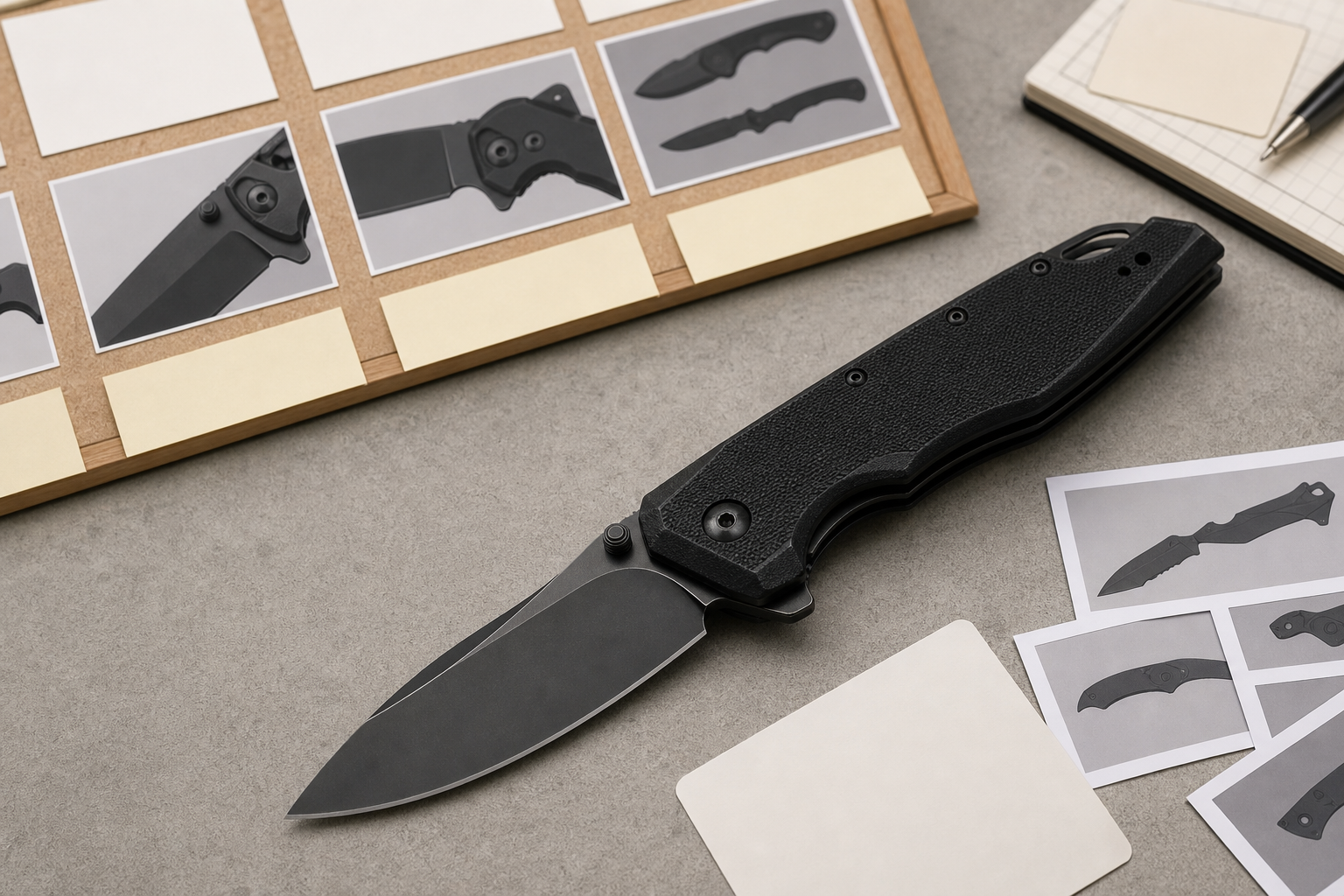
I Replace Superiority Claims With Task Claims
The phrase "advantage over other knives" should be handled carefully. It can invite unsupported comparison. A safer claim says the curved edge is designed for a certain cutting motion or material. The buyer can still communicate value, but the claim becomes specific.
The FTC advertising and marketing basics page supports the principle that advertising should be truthful, not deceptive or unfair, and evidence-based. If the buyer claims that the curve improves slicing, the buyer should keep sample notes, test records, or design rationale.
Safer claim examples:
- Curved edge designed for controlled draw cuts
- Belly profile supports smooth slicing motion
- Curved profile helps follow rounded materials
- Handle angle designed for hand clearance during the intended task
- Protective sheath designed around the curved edge
Claims to avoid:
- Better than every straight blade
- Best for all cutting tasks
- Never needs sharpening
- Professional performance without evidence
- Defensive or weapon-oriented wording
The copy should make the product easier to understand, not harder to prove.
What Should Go Into a Curved Blade RFQ?
The RFQ should prove the advantage.
A strong RFQ should connect the curve to task fit, measurable geometry, material selection, edge testing, packaging design, claim support, and QC records.
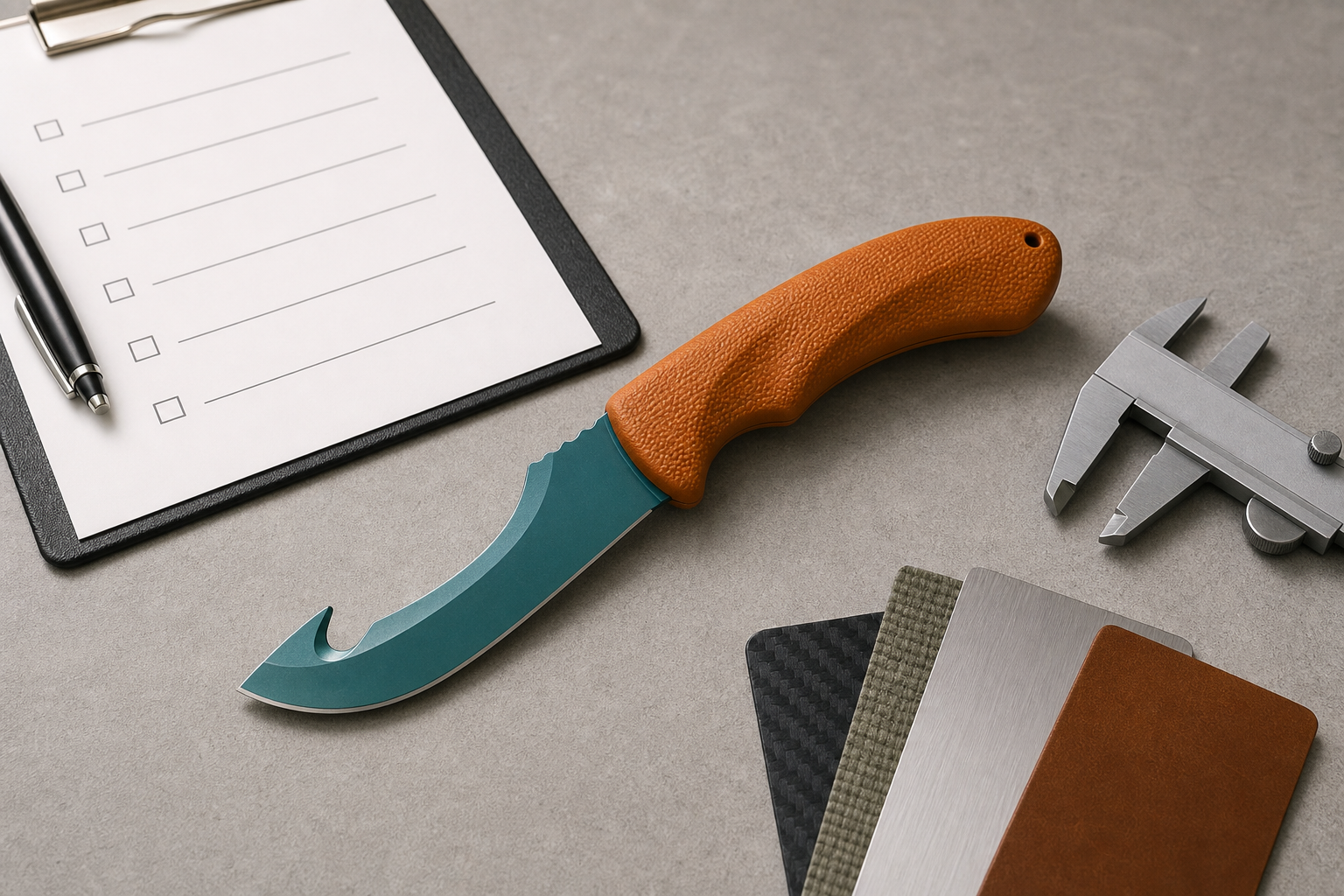
I Ask Suppliers to Show Why the Curve Works
The supplier should not only send a curved sample. The supplier should explain the blade profile, production method, sharpening method, package fit, and inspection plan. Buyers should ask for a straight or shallow-curve alternative when the decision is not clear. That does not turn the article into a ranking; it simply protects the buyer from approving a shape that adds cost without value.
The RFQ should include:
- Intended cutting task
- Material being cut
- Cutting motion
- Curve radius or profile template
- Belly height
- Tip position
- Steel and hardness range
- Grind and edge angle
- Cleaning and maintenance notes
- Sheath or packaging plan
- Label and care copy
- Sharpness or cutting test method
- Profile tolerance
- Final inspection evidence
The CPSC Handbook for Manufacturing Safer Consumer Products supports safety planning, design review, production control, and documentation. The NIST metrological traceability page can support buyers who need documented gauge control or calibration records.
The best curved blade project has a clear sentence behind it: "This curve helps because..." When that sentence is task-based, tested, and documented, the buyer has a stronger product.
Turn your idea into a quote-ready knife project.
Share your drawing, sample photo, target quantity, market, and packaging needs. Vast State will review manufacturability and prepare OEM/ODM options.
Conclusion
Buyers should choose curved blade geometry only when the task, tests, packaging, materials, claims, and QC records prove the curve adds real product value.
OEM/ODM RFQ Checklist
Prepare these details to help Vast State review your project and provide a more accurate quotation.
| RFQ Field | What to Prepare |
|---|---|
| Project type | OEM from drawing / ODM private label / wholesale catalog |
| Product category | Folding knife / fixed blade / multi-tool / outdoor tool |
| Design status | Idea / sketch / 2D drawing / 3D CAD / physical sample |
| Target price | Ex-factory target price or retail price range |
| MOQ expectation | 500 / 1,000 / 3,000 / 5,000+ pcs |
| Logo method | Laser engraving / etching / printing / molded logo |
| Packaging | Standard packaging / custom retail box / Amazon-ready |
| Market | USA / EU / Japan / Korea / Middle East / other |
| Compliance needs | Buyer-specified testing / documentation / labeling |
| Timeline | Sample deadline / mass production deadline |